New Hampshire’s unpredictable weather can quickly change outdoor plans, but the state has plenty of indoor attractions worth visiting in any forecast. Massive arcades, impressive art museums, science centers, and other engaging destinations offer something for nearly every interest.
These 12 New Hampshire indoor attractions are much more than rainy-day backups. Spread across the state, each offers a memorable way to spend a few hours when the clouds roll in – or anytime you simply want to head indoors.
1. Funspot, Laconia, New Hampshire
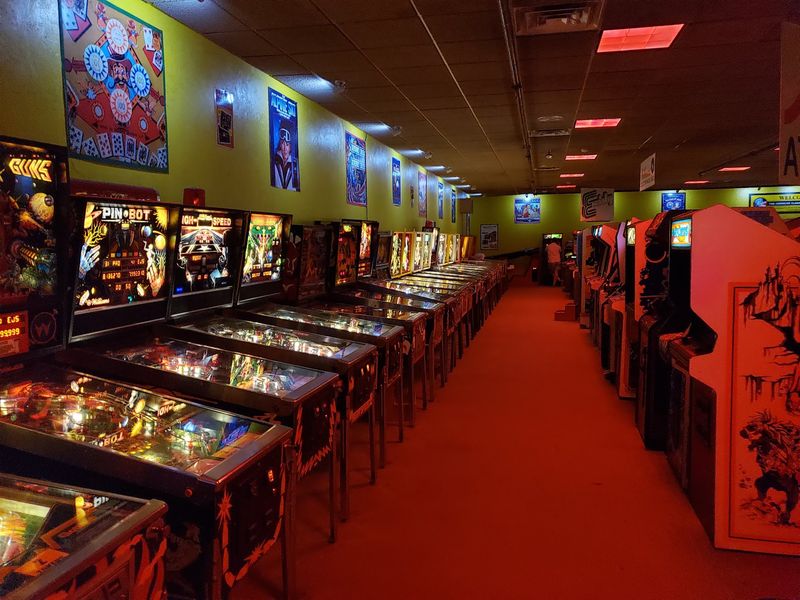
The world’s largest arcade does not need sunshine to deliver a great day. Funspot in Laconia has held a Guinness World Record since 2008, and its three floors packed with over 600 games make that title feel well-earned.
The American Classic Arcade Museum inside preserves more than 250 vintage machines from the 1970s and 1980s, including Pac-Man, Donkey Kong, and Centipede. Adults who grew up with these games can easily lose track of time here, while younger visitors discover why those titles became legendary in the first place.
Beyond the arcade, Funspot offers a 20-lane bowling center with both ten-pin and candlepin options, an 18-hole indoor mini-golf course, and bingo sessions. The Braggin’ Dragon restaurant keeps everyone fed without requiring a trip outside.
Founded in 1952, this Laconia landmark has grown from a modest penny arcade near Weirs Beach into a 75,000-square-foot entertainment destination that genuinely earns a full day of your time.
2. Currier Museum of Art, Manchester, New Hampshire

Not every art museum justifies the trip, but the Currier Museum in Manchester makes a convincing case from the moment you walk through its doors. Founded in 1929 and housed in a striking Italian palazzo-style building, it holds works by Picasso, Monet, Matisse, Georgia O’Keeffe, and Andrew Wyeth, among many others.
The collection spans centuries of European and American art, covering paintings, sculpture, decorative arts, and photography. That range means there is something to hold the attention of visitors who normally skip museums, not just confirmed art enthusiasts.
One detail sets the Currier apart from virtually every other museum in New England: it owns and operates two houses designed by Frank Lloyd Wright, the Zimmerman House and the Kalil House, both accessible through guided tours. These Usonian-style homes are the only Wright-designed buildings open to the public in the entire region.
The museum also runs community programs and offers free admission to its main galleries, making a spontaneous rainy-day visit completely practical.
3. McAuliffe-Shepard Discovery Center, Concord, New Hampshire
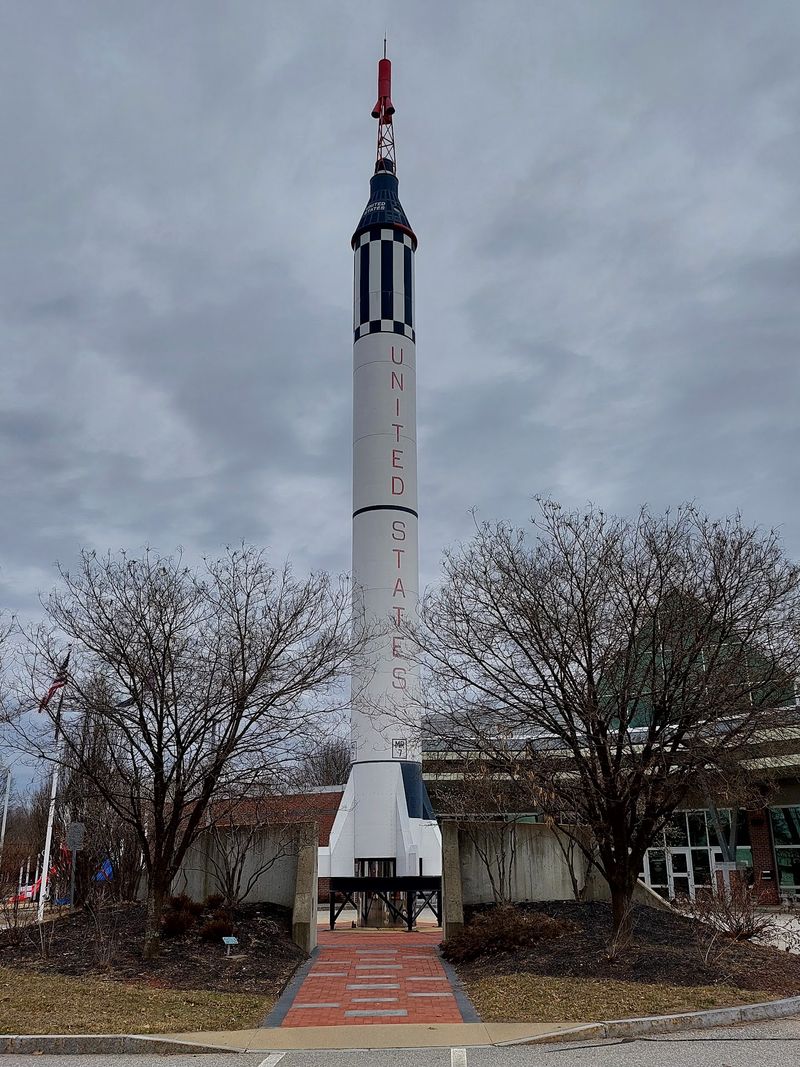
A grey sky outside becomes considerably more interesting when you are learning about the ones that surround other planets. The McAuliffe-Shepard Discovery Center in Concord is a 45,000-square-foot science museum and planetarium named for two of New Hampshire’s most celebrated space pioneers: Christa McAuliffe, the first teacher selected for a space mission, and Alan Shepard, the first American to travel to space.
Two floors of hands-on exhibits cover astronomy, aviation, Earth science, and space exploration. Visitors can attempt to land a virtual space shuttle, program a digital fish, and examine a life-sized Mercury-Redstone rocket replica alongside a 1956 XF8U-2 Crusader jet.
The planetarium uses one of only three 10K projection systems in North America, making its shows genuinely impressive rather than just educational. Programs like “Tonight’s Sky” and “3-2-1 Liftoff” run regularly and suit both children and adults.
When the rain finally stops, an outdoor Science Playground and observatory offer additional reasons to linger before heading back out.
4. SEE Science Center, Manchester, New Hampshire
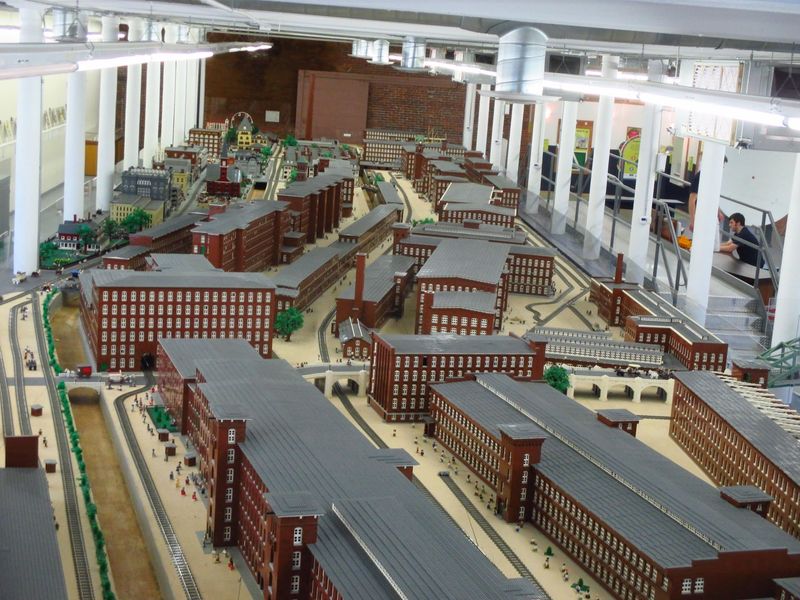
Hands-on science museums can feel repetitive, but SEE Science Center in Manchester has one attraction that stops visitors cold: the LEGO Millyard Project. Recognized by Guinness World Records as the largest permanent LEGO installation at minifigure scale anywhere in the world, this display uses over three million LEGO bricks and roughly 8,000 minifigures to recreate Manchester’s historic Amoskeag Millyard as it appeared around 1900, complete with working train tracks and a water system.
That centerpiece alone justifies the visit, but the rest of the museum delivers too. Exhibits explore light, electricity, forces, momentum, sound, and human biology through activities designed for children who prefer doing over watching.
Founded in 1986 by inventor and businessman Dean Kamen, the center occupies a converted mill building in the historic Millyard district. The “BiologYou!” exhibit covers DNA and biotechnology, while “Cooking and Chemistry” targets younger children ages three through seven.
Educational programs, sensory-friendly evenings, and summer camps round out what is already a strong rainy-day option in southern New Hampshire.
5. Living Shores Aquarium, Glen, New Hampshire
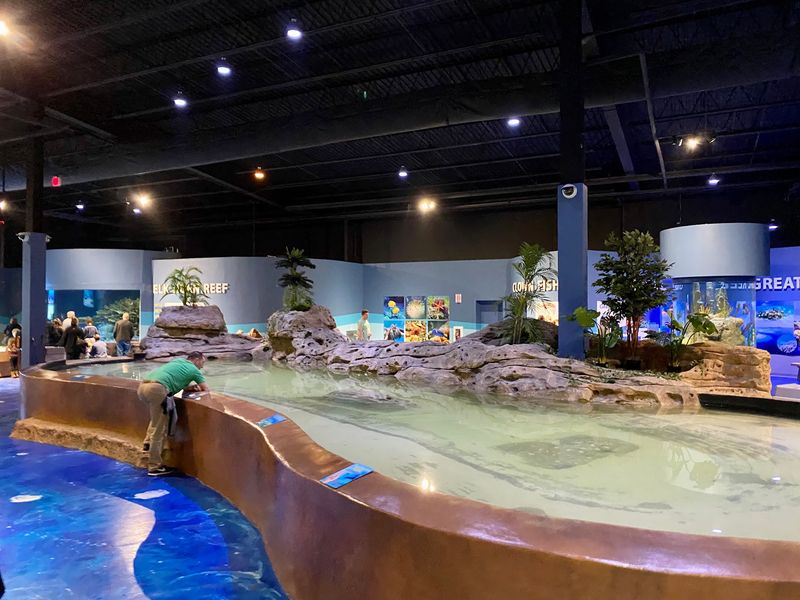
New Hampshire’s only aquarium opened in 2019 and wasted no time making itself essential for families visiting the White Mountains. Living Shores in Glen spans over 32,000 square feet and holds more than 50,000 gallons of water, which is a significant commitment for a landlocked mountain state.
Five touch pools are the main draw, giving visitors direct contact with four species of stingrays, bamboo sharks, horseshoe crabs, sea urchins, and the oddly popular “nibble fish,” a species called Red Garra known for its ticklish interactions. A newer Crittertarium adds lizards, turtles, and snakes to the mix, and a dedicated alligator exhibit features a 50-pound Common Snapping Turtle named Tina.
The aquarium sits next to Story Land, making it a natural pairing for families already in the Glen area. Because its exhibits focus on marine and freshwater ecosystems rather than outdoor scenery, a rainy day does not diminish the experience at all.
It functions as a genuine destination rather than a fallback, particularly for families based around North Conway or Jackson.
6. Seacoast Science Center, Rye, New Hampshire
Rain on the New Hampshire coast does not have to mean abandoning the ocean theme entirely. The Seacoast Science Center at Odiorne Point State Park in Rye keeps the focus on the Gulf of Maine even when the weather makes the actual shoreline unappealing.
Three cold-water touch tanks form the centerpiece of “The Edge of the Sea” exhibit, where naturalists guide visitors through simulated tide pools. Sea stars, baby lobsters, crabs, sea urchins, nudibranchs, and brittle stars are among the species regularly available for close inspection.
A high-powered microscope allows magnified views of organisms that are easy to overlook during a normal tide pool visit.
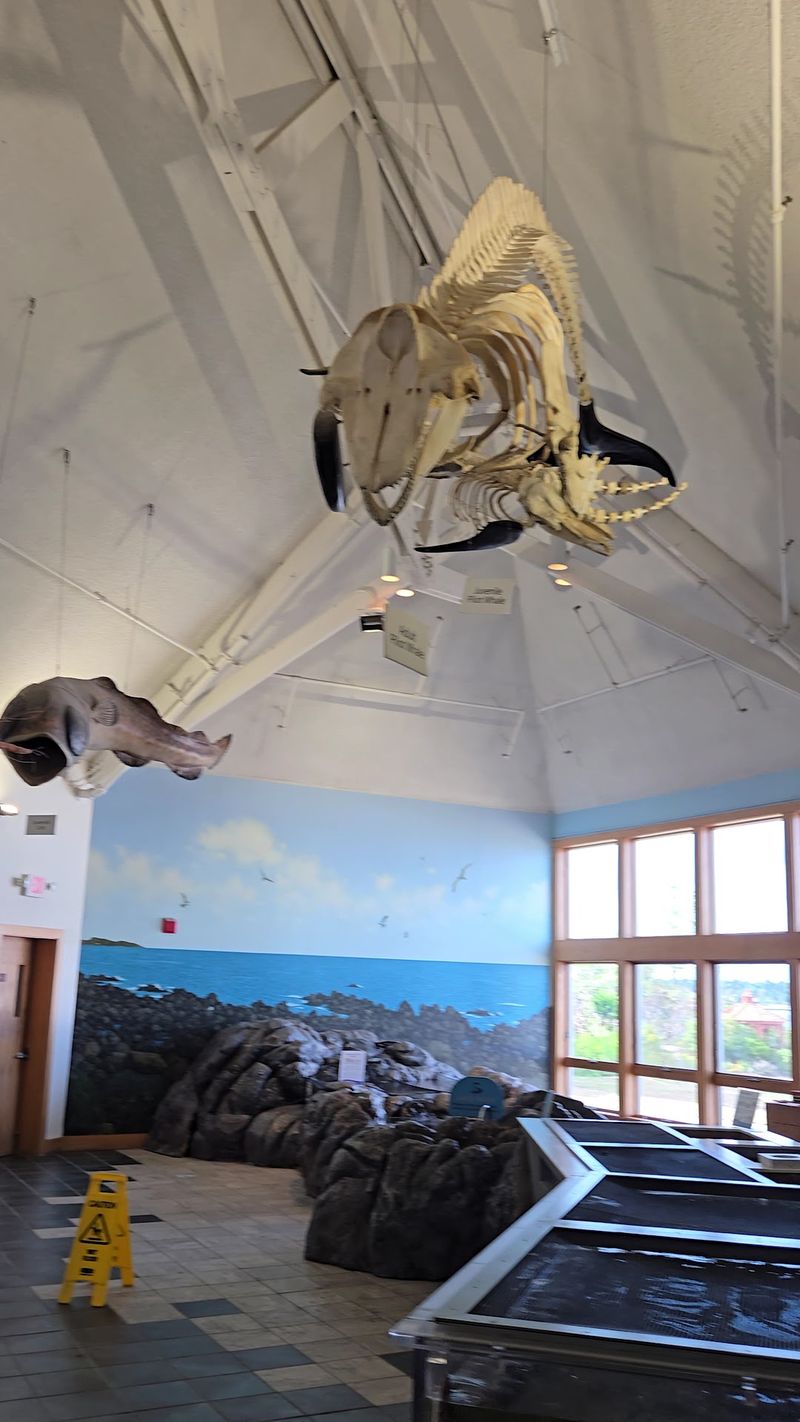
Elsewhere in the center, a 32-foot skeleton of a juvenile humpback whale named Tofu anchors the marine mammals exhibit, and the “Working Under the Sea” section introduces underwater technology including a 1940s hard hat diver display. The center opened in 1992 and offers daily naturalist-led programs alongside sensory-friendly hours, making it a thoughtfully organized stop for coastal visitors caught in a downpour.
7. Hood Museum of Art, Hanover, New Hampshire

Free admission and 74,000 objects make the Hood Museum of Art at Dartmouth College one of the more underrated rainy-day options in New Hampshire. The collection dates to 1772, which technically makes it one of the oldest university art collections in the United States, though the current building opened in 1985 and underwent a major renovation completed in 2019.
Galleries cover art from six continents and span thousands of years, with notable works by Frans Hals, Winslow Homer, Pablo Picasso, Mark Rothko, and Georgia O’Keeffe. Six Assyrian stone reliefs carved around 900 BCE are among the most striking objects in the collection and tend to catch visitors off guard.
With 16,000 square feet of gallery space, the museum is large enough to provide a substantial visit without becoming exhausting. Public programs include guided tours, family workshops, and “Storytime in the Galleries” for younger visitors.
The Hanover location also makes it easy to combine the museum with lunch in the lively downtown before deciding whether the weather has improved enough to explore further.
8. New Hampshire Telephone Museum, Warner, New Hampshire
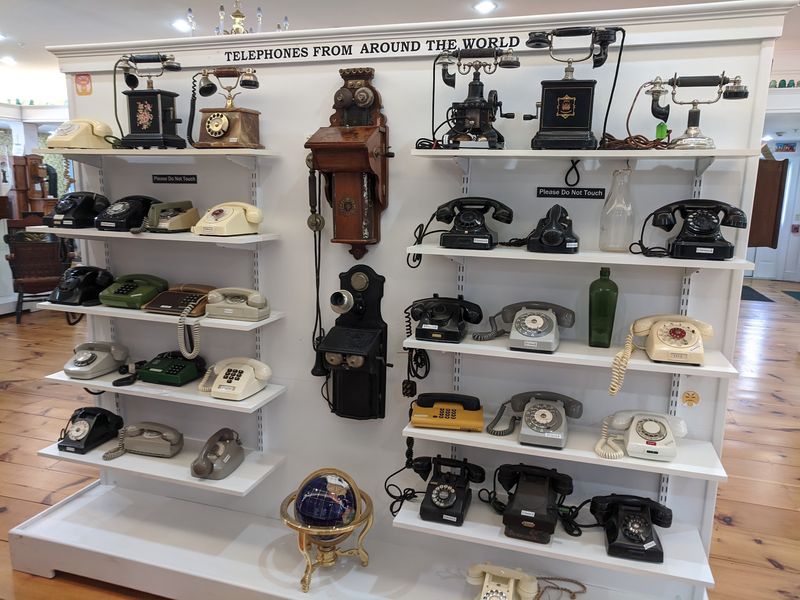
A museum dedicated entirely to telephones sounds like a niche proposition until you start realizing how thoroughly these devices reshaped daily life over the past century and a half. The New Hampshire Telephone Museum in Warner was founded in 2005 by Dick and Paul Violette of the Merrimack County Telephone Company, and its collection now includes over 1,000 artifacts.
Rotary phones, candlestick models, ornate wooden wall-mount units, princess phones, classic phone booths, and vintage switchboards fill the displays, tracing the technology from its earliest forms to modern smartphones. Interactive stations let visitors crank a magneto telephone to connect with an antique switchboard, dial a number to activate a nine-foot-tall stepping switch, and experiment in the Sound Wave Lab.
The museum also features a telegraph with Morse code, an antique typewriter, and a tubulum for visitors who want to push further into communication history. Named “Best Museum” in 2024 and participating in the “Museums for All” program, it has earned its reputation as one of New Hampshire’s more unexpectedly engaging stops on a wet afternoon.
9. Aviation Museum of New Hampshire, Londonderry, New Hampshire
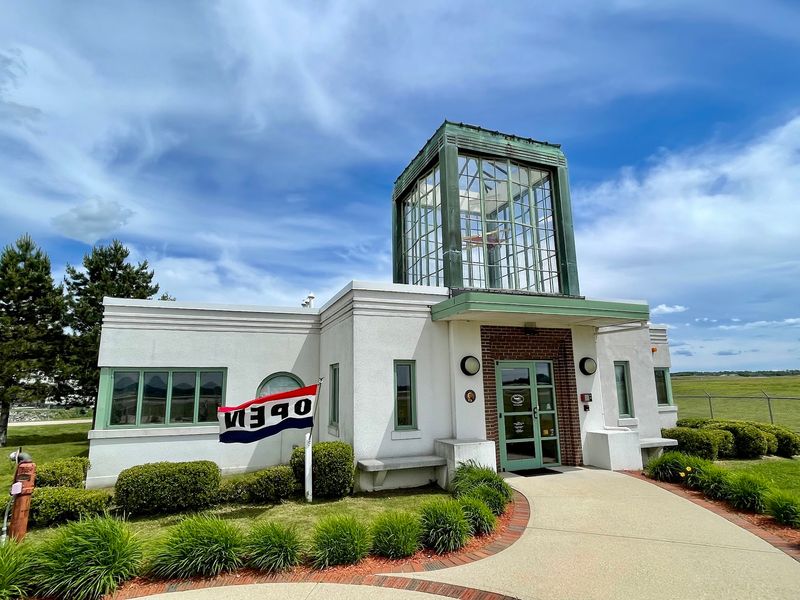
The building itself is part of the story at the Aviation Museum of New Hampshire in Londonderry. The museum occupies a restored 1937 Art Deco terminal and control tower from the Manchester-Boston Regional Airport, a Works Progress Administration project that was saved from demolition and relocated in 2004 before being carefully preserved.
Inside, the focus is on New Hampshire’s contributions to aviation history, explored through vintage aircraft, scale models, historical photographs, and artifacts tracing the evolution of flight. Visitors can climb into a real Embraer cockpit and operate the controls, or run through a flight simulator that offers a more advanced experience for older visitors.
A dedicated kids’ room with LEGO sets and aviation-themed materials introduces younger visitors to the basics of flight without requiring them to read every exhibit label. Educational programs include a high school plane-building initiative and “Flights of Discovery” summer camps.
One practical bonus: the museum’s parking lot offers direct views of aircraft arriving and departing from the adjacent regional airport, providing an active, real-world complement to the historical exhibits inside.
10. Wright Museum of World War II, Wolfeboro, New Hampshire

Military museums often focus exclusively on weapons and battles, but the Wright Museum of World War II in Wolfeboro takes a broader view. Founded in 1994 by David Wright, this 30,000-square-foot institution examines both the overseas conflict and the everyday experience of Americans living through it at home.
The Home Front Gallery recreates a 1940s kitchen, a full-size soda fountain, and displays of toys, posters, and household furnishings that bring the period to life in concrete, relatable terms. A “Time Tunnel” walks visitors through each year from 1939 to 1945, using pop culture, news coverage, and shifting public mood to trace how the war unfolded from an American perspective.
The Military Gallery rotates a collection of more than 20 authentic vehicles, including tanks, half-tracks, jeeps, and motorcycles, some of them fully operational. The collection totals between 14,000 and 20,000 items, making this one of the more comprehensive World War II museums in the Northeast.
New Hampshire Tourism highlights its propaganda art and home front exhibits as particularly notable for visitors interested in social history alongside military hardware.
11. New Hampshire Boat Museum, Moultonborough, New Hampshire
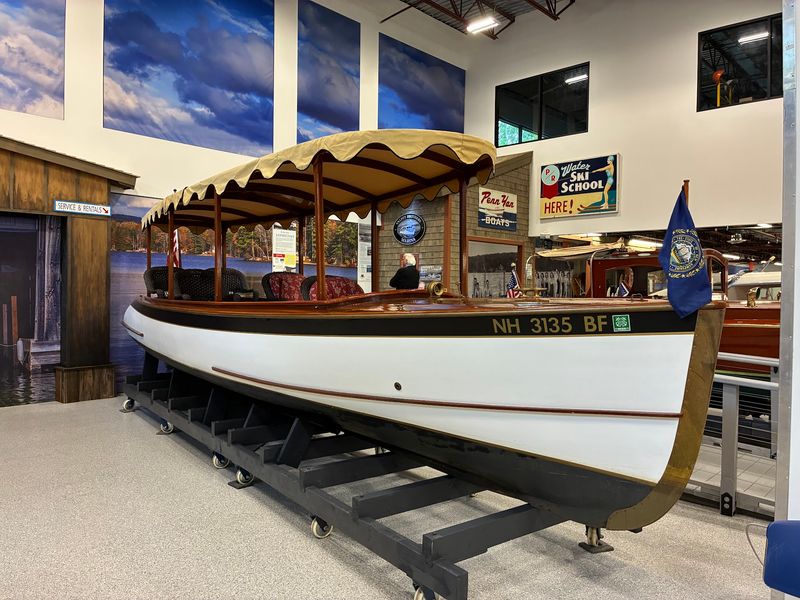
Lake Winnipesaukee looks considerably less inviting during a downpour, but the boating heritage connected to it remains fully accessible indoors at the New Hampshire Boat Museum in Moultonborough. Founded in 1992 by antique boating enthusiasts, the museum recently expanded into a 24,000-square-foot climate-controlled facility that opened on a limited basis in 2024.
The collection covers more than 2,500 objects, including classic mahogany runabouts from Chris-Craft, Dee Wite, Lyman, and Century, alongside canoes, guide boats, ice boats, race boats, sailboats, and a pontoon bicycle boat. Archival photographs, trophies, and models fill in the broader story of boating culture on New Hampshire’s lakes during what the museum calls the “grand era of boating.”
Boat-building workshops for youth, adults, and families run throughout the year, and programs like “Junior Skipper’s Club” and “Lake Discovery Family Days” blend hands-on learning with lake ecology. When the weather clears, narrated tours aboard the “Millie B,” a 28-foot mahogany replica of a 1928 Hacker-Craft, depart from the Wolfeboro Town Docks for a moving history lesson on the water.
12. Children’s Museum of New Hampshire, Dover, New Hampshire
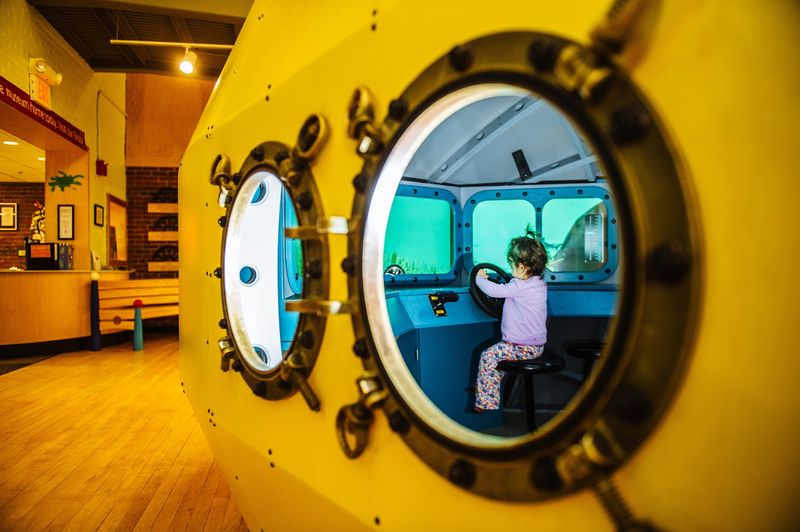
When younger children have reached their limit of scenic drives and adult-oriented itineraries, the Children’s Museum of New Hampshire in Dover provides a reliable reset. Open since 1983 and relocated to a larger Dover facility in 2008, the museum offers two floors of interactive exhibits designed for children ages zero through twelve.
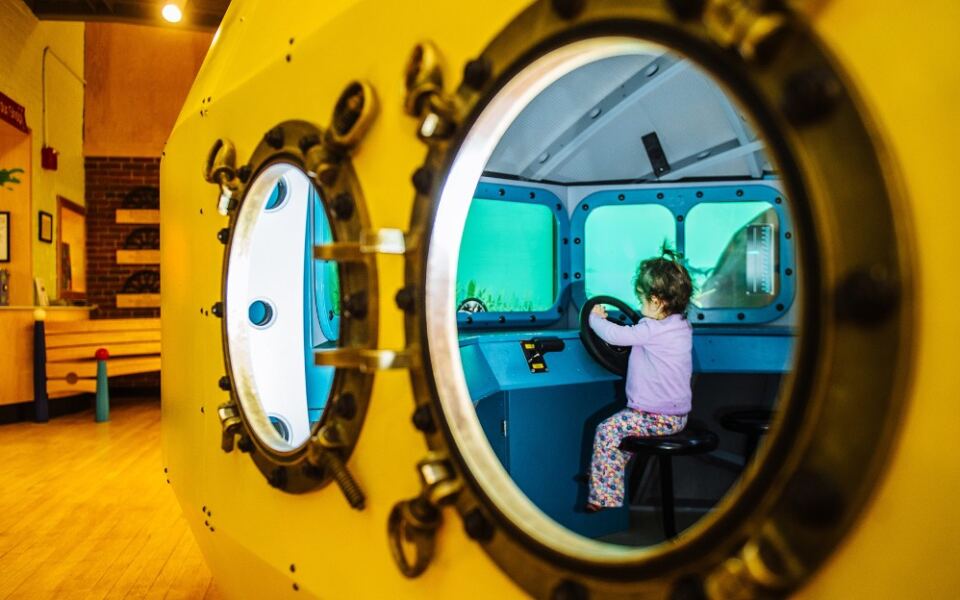
The Yellow Submarine exhibit mimics a research vessel complete with working sonar, a periscope, and a listening station for navigating the virtual Gulf of Maine. “Build It, Fly It” invites budding engineers to design and test flying contraptions in air blowers, while “Cave Explorers” offers a glow-in-the-dark crawl-through experience. A 30-foot climbable light-up sculpture called “The CLIMBER” opened in 2026 and adds a dramatic vertical play element to the museum’s layout.
Additional exhibits cover dinosaurs, a pretend vet clinic, a post office, and “Cochecosystem,” which explores the Cochecho River ecosystem right behind the building. Programs include Baby Storytime, sensory-friendly playtime sessions, Wacky Art Wednesdays, and summer camps.
The museum also participates in “Museums for All,” keeping admission accessible for families on a budget.
Share this story