Switzerland packs glaciers, lakes, vineyards, and palm-lined shores into a country small enough to cross by rail in a day. That makes the train more than a way to get around.
On many routes, the ride itself is the main attraction. This list covers twelve journeys, from long panoramic crossings to short cogwheel climbs, and each one shows a different side of the country.
Some run year-round, while a few operate only in certain seasons, so it helps to check current schedules before you plan. Whether you want a full day of mountain views or a quick ride up a famous peak, there is a track here that fits.
Glacier Express: Zermatt to St. Moritz
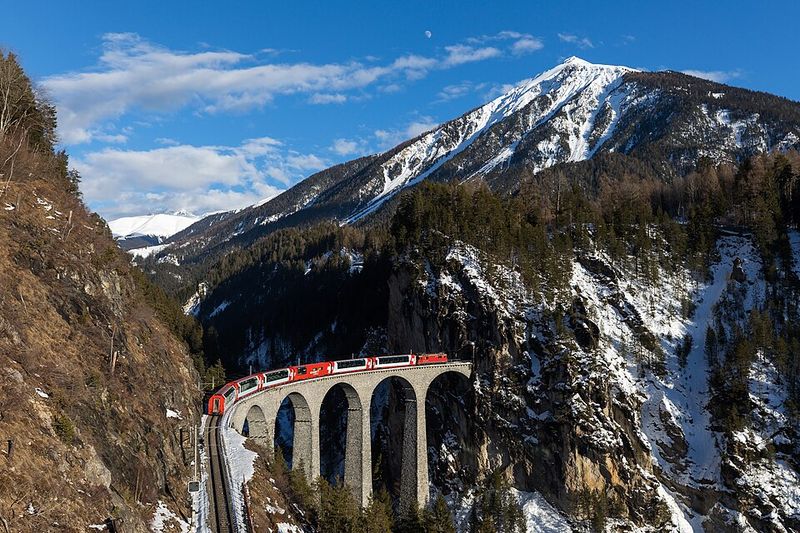
Ninety-one tunnels and 291 bridges. That is the tally on the Glacier Express, which links the mountain resorts of Zermatt and St. Moritz in roughly eight hours.
Nobody boards this train to save time. The whole idea is to slow down and let the Alps roll past the window, from deep valleys and quiet villages to high passes and the dramatic Rhine Gorge.
Plan on a full day, and bring a snack, a charged phone, and plenty of patience for photos through the glass. The panoramic windows make it easier to look up at the peaks, so grab a seat early if you can.
Because the route ends in St. Moritz, it pairs neatly with the Bernina Express, which departs from the same area. Travelers building a longer Swiss rail itinerary can link the two without much backtracking, turning two famous rides into one smooth mountain adventure across the country.
Bernina Express: Chur or St. Moritz to Tirano
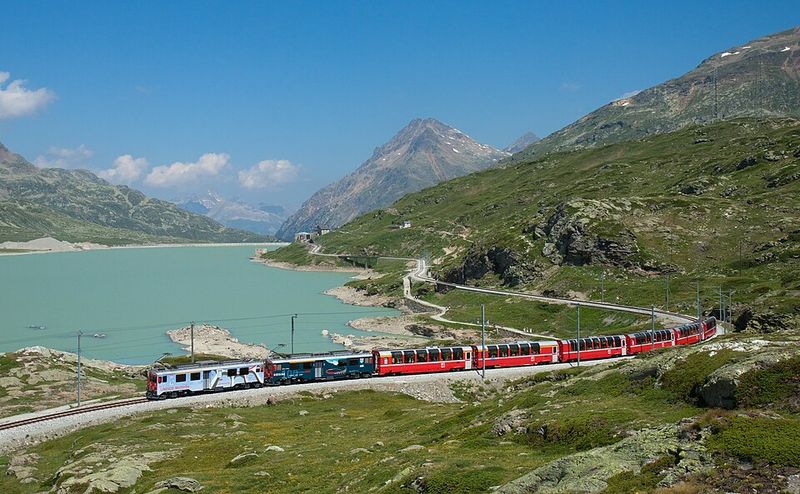
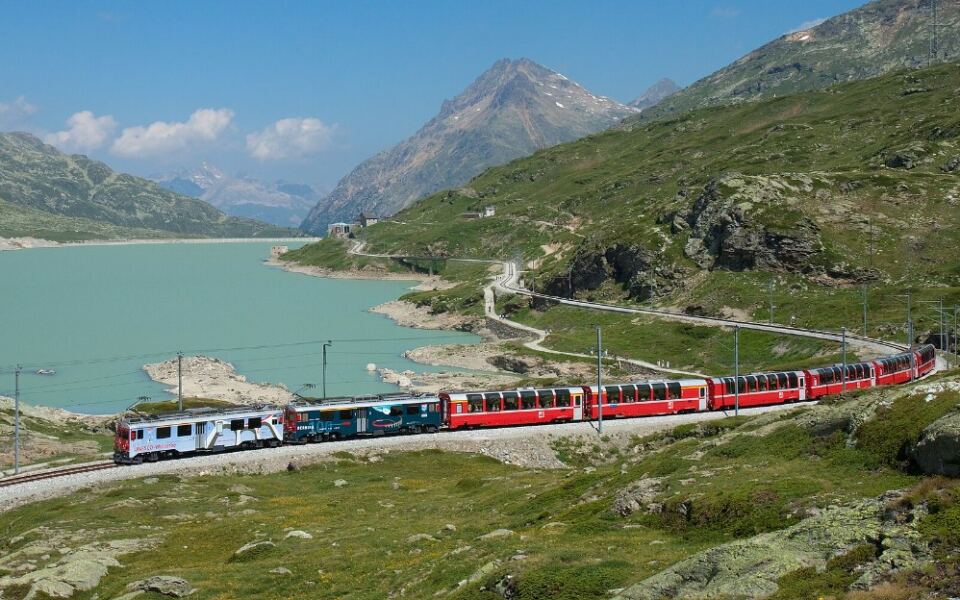
Few Swiss rail trips swing through as many landscapes as the Bernina Express. You can start in Chur or St. Moritz and finish in Tirano, just across the border in northern Italy.
From Chur, the train crosses 196 bridges and passes through 55 tunnels. Highlights include the Landwasser Viaduct, the Bernina Pass, and views of Alpine glaciers along the way.
Part of the line follows the UNESCO-listed Rhaetian Railway, so the engineering is a sight in itself. Keep your camera ready as the tracks curve over stone arches and wind through the high mountains.
The best part is the contrast. In a single day, passengers go from snowy high-mountain terrain to milder scenery near Tirano.
It feels a bit like skipping from one season to another without leaving your seat, and it makes the trip easy to remember.
GoldenPass Express: Interlaken to Montreux
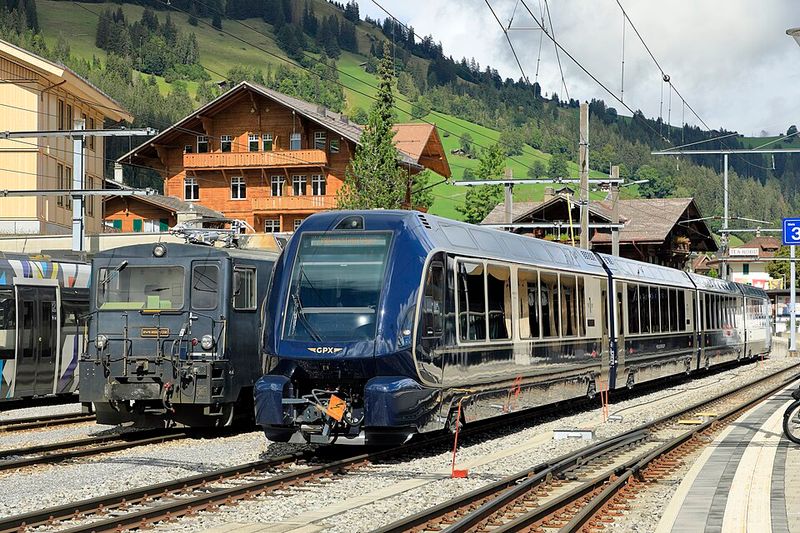
Mountains on one end, a lake on the other. The GoldenPass Express connects Interlaken in the Bernese Oberland with Montreux on the shores of Lake Geneva.
Switzerland Tourism lists it among the principal lines of the Grand Train Tour of Switzerland. Along the way, the scenery moves from Alpine landscapes around Interlaken to rolling countryside and lake views in French-speaking Switzerland.
This route suits travelers who want big scenery without giving up an entire day. It is a handy choice if your schedule is packed but you still want the train ride to feel like a highlight.
Montreux makes a comfortable place to land. It works as an easy base for exploring Lake Geneva and the nearby Lavaux vineyard region, so you can step off the train and start wandering the waterfront almost right away.
Pack a light jacket, since lake breezes can feel cool.
Luzern-Interlaken Express: Lucerne to Interlaken
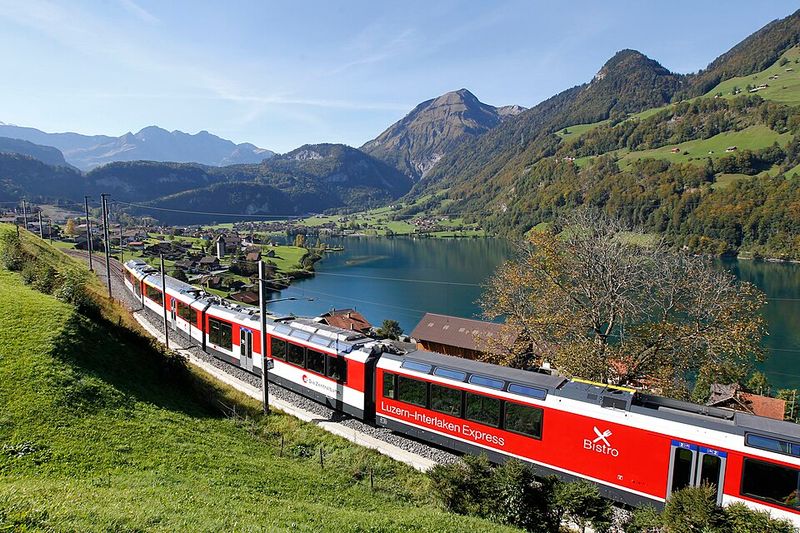
About two hours is all it takes. The Luzern-Interlaken Express proves that a scenic Swiss train ride does not need to swallow your whole day.
The route cuts through the heart of central Switzerland, passing five mountain lakes, waterfalls, and the Brunig Pass before it pulls into Interlaken. Trains run about hourly, so you do not have to build your plans around one fixed departure.
That flexibility is a big plus. You can sleep in, enjoy a slow breakfast in Lucerne, and still be in Interlaken in time for lunch.
The line is especially useful for people linking Lucerne with the Jungfrau region. Instead of treating the transfer as a chore, you get a sightseeing ride built right into your travel plan.
Sit on the side facing the lakes if you can, and keep an eye out for waterfalls tumbling down the slopes.
Gotthard Panorama Express: Central Switzerland to Ticino
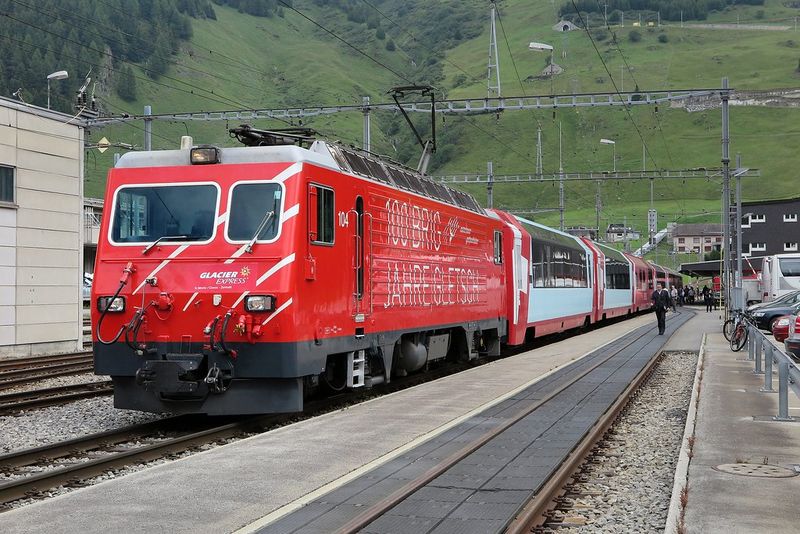
Part boat trip, part train ride. The Gotthard Panorama Express mixes a crossing of Lake Lucerne with a journey along the historic Gotthard route toward Ticino.
SBB describes it as a combination of boat and panoramic train, traveling through central Switzerland and into the Italian-speaking south. Passengers pass through mountain scenery before the landscape starts to feel more southern.
Most city-to-city connections are built for speed. This one is built around the views and the story of the Gotthard corridor, which makes it a fun pick for curious travelers.
One practical note: the dedicated Gotthard Panorama Express is seasonal. Check current operating dates before planning a trip around it, and have a backup idea in case the dates do not match your schedule.
Booking details can change from year to year, so a quick look at the official timetable saves frustration later.
Voralpen-Express: Lucerne to St. Gallen
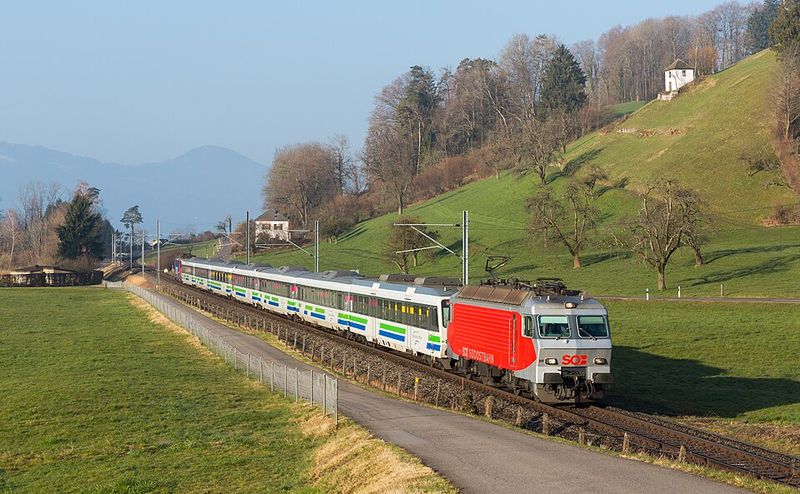
Not every Swiss ride is about glaciers. The Voralpen-Express shows a softer side of the country, with green hills, farmland, and quiet lakes.
Running between Lucerne and St. Gallen, the train passes near Mount Rigi, Lake Zurich, and the landscapes of Toggenburg. It also crosses Switzerland’s highest railway viaduct before reaching St. Gallen.
If you have already spent days among snowy peaks, this line offers a change of pace. The foothills feel gentler, and the countryside has a lived-in quality that the high Alps do not.
It also belongs to Switzerland Tourism’s Grand Train Tour network, so it can slot into a bigger rail plan. Think of it as the calm chapter between louder mountain headliners, a ride for people who like pastures and rolling horizons as much as jagged summits.
Bring a book, because the pace invites it.
Vigezzina-Centovalli Railway: Locarno to Domodossola
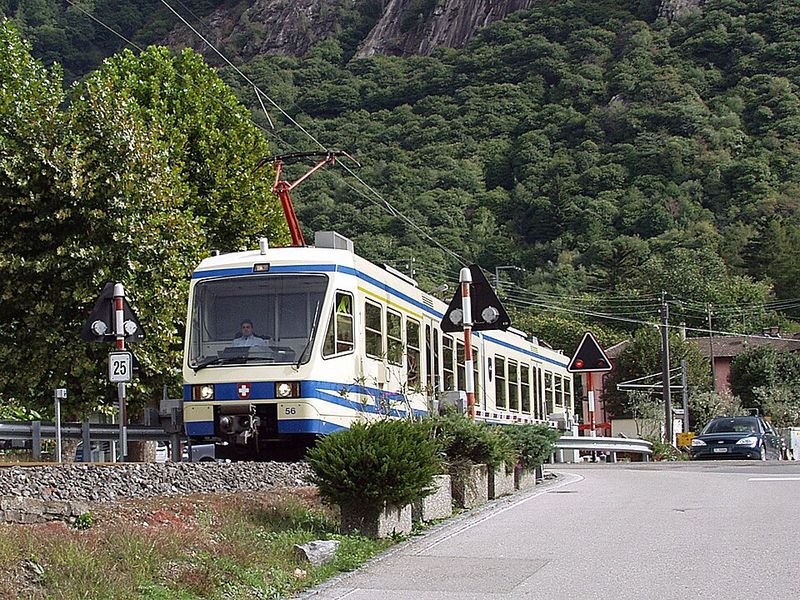
The name means “hundred valleys,” and the railway earns it. Heading west from Locarno, the line winds through steep valleys, forests, villages, ravines, and bridges before reaching Domodossola in Italy.
Switzerland Tourism includes the Vigezzina-Centovalli Railway among the lines featured on the Grand Train Tour of Switzerland.
Compared with the wide-open views of the high Alps, this ride often feels closer and more personal. The tracks thread through wooded slopes and small communities, so you notice details like stone houses and narrow lanes.
It also serves a practical purpose as an international link between Ticino and northern Italy. That means you can fold it into a cross-border trip, ending in a different country from where you started.
For anyone who likes quiet corners over famous summits, this is a rewarding detour, and a nice break from the bigger crowds.
Gornergrat Railway: Zermatt to Gornergrat
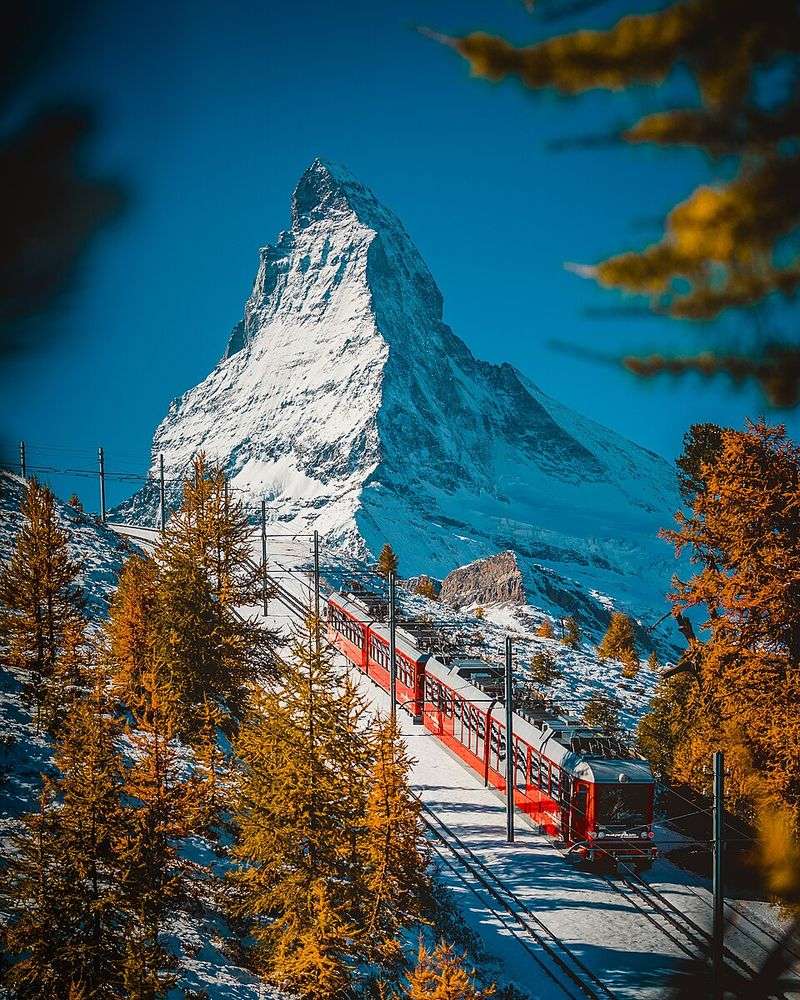
Above 3,000 meters, the Matterhorn gets a lot closer. The Gornergrat Railway climbs from Zermatt to that height, making it one of Switzerland’s standout mountain excursions.
The valley station sits directly across from Zermatt’s main railway station, so adding the ride to a resort stay is simple. You can walk from your arrival platform to the boarding area in minutes.
As the cogwheel train gains height, views open over the surrounding peaks and the high-Alpine landscape. The Matterhorn is the star, but the panorama also includes glaciers and many other mountains above the Zermatt valley.
Timing matters on this one. The railway resumed service on November 15, 2026, after a scheduled construction closure from November 2 through November 14.
Check the latest operating information before you go, and dress warmly, since the summit area is much colder than the village below.
Jungfrau Railway: Kleine Scheidegg to Jungfraujoch
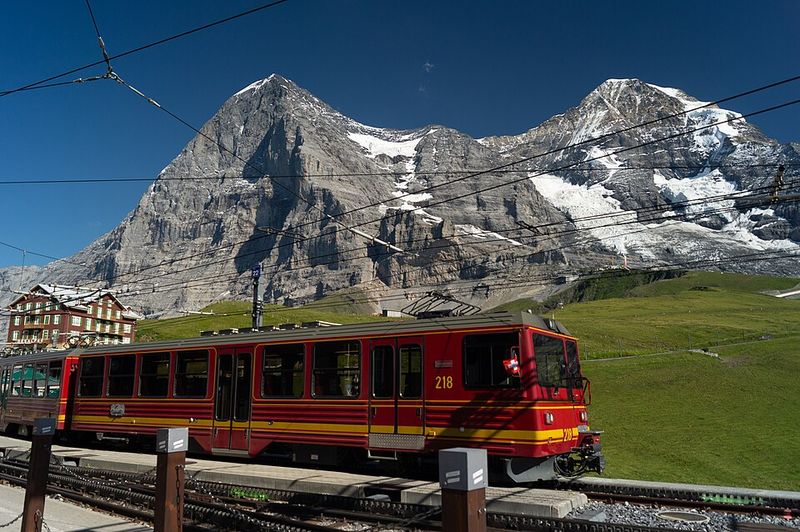
Europe’s highest railway station sits at the end of this line. The Jungfrau Railway carries travelers deep into the high Alps and finishes at Jungfraujoch.
A classic approach starts in Lauterbrunnen or Grindelwald aboard the Wengernalp Railway. From there, you continue to Kleine Scheidegg and switch to the Jungfrau Railway, which travels via Eigergletscher and through the Eiger and Monch mountains.
Part of the ride runs inside the mountain, yet the full excursion still delivers wide views of the Jungfrau massif and the valleys around it.
If scenery is your priority, take the traditional Wengernalp approach. It adds a second classic mountain railway to the day, and the meadows and villages along the way make the climb feel like a story with a proper beginning.
Bring layers, sunglasses, and some patience, because a trip like this rewards an unhurried schedule.
Rigi Cogwheel Railway: Vitznau to Rigi Kulm
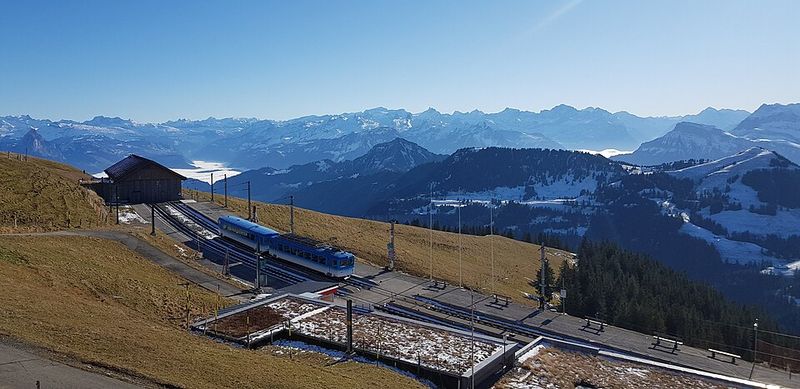
Back in 1871, Mount Rigi welcomed what became Europe’s first mountain railway. That bit of history still rides along today on the cogwheel line from Vitznau.
The trip climbs from near Lake Lucerne to the summit area in roughly 30 minutes, so it fits easily into a half day.
At Rigi Kulm, clear conditions can reveal a panorama with many lakes and snow-covered Alpine peaks. Weather matters here, so a bright forecast is worth waiting for.
You do not have to return the same way, either. Travelers can also approach Rigi Kulm by cogwheel railway from Arth-Goldau, which makes a loop possible.
Going up one side and down the other gives you two different views for a single outing. It is a tidy way to combine railway heritage with a lakeside day, especially if you enjoy simple plans.
Pilatus Cogwheel Railway: Alpnachstad to Pilatus Kulm
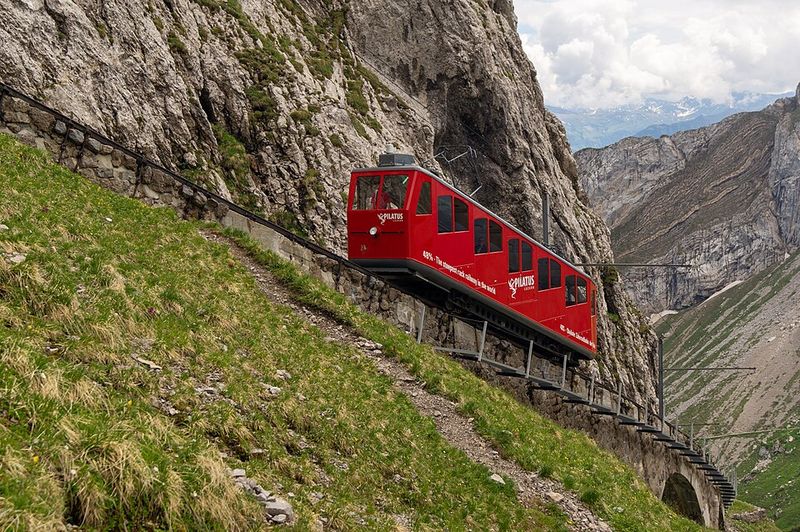
Gradients of up to 48 percent set this railway apart. That makes the Pilatus Cogwheel Railway the steepest cogwheel railway in the world.
Running from Alpnachstad to Pilatus Kulm, the line climbs about 1,635 meters through Alpine meadows and rocky mountain terrain. The whole ascent lasts only about half an hour, so the change in scenery happens fast.
This is a seasonal railway, not a year-round service. For 2026, the cogwheel railway operates from May 11 through November 29, so plan your visit inside that window.
If your dates line up, the route packs a lot of mountain scenery into a short outing. It works well as a half-day trip from Lucerne, and the steep climb is part of the fun.
Hold onto your seat and enjoy how quickly the lake falls away beneath you, because the view changes with every turn.
Share this story