West Virginia does not get nearly enough credit for how much it packs into a single weekend without emptying your wallet. The Mountain State has ancient burial mounds, underground coal mines, a cavern full of record-breaking formations, and a radio observatory where your phone has to go on vacation too.
You can spend a Saturday exploring a Gothic Revival prison, a reconstructed frontier fort, or a park built around warm mineral springs that George Washington himself once visited. The destinations on this list are all currently operating, each costing less than $50 per person before transportation and meals, and a handful of them charge absolutely nothing at all.
These 12 stops prove that the best adventures in West Virginia tend to come with a surprisingly small price tag.
1. Coopers Rock State Forest, Bruceton Mills, West Virginia
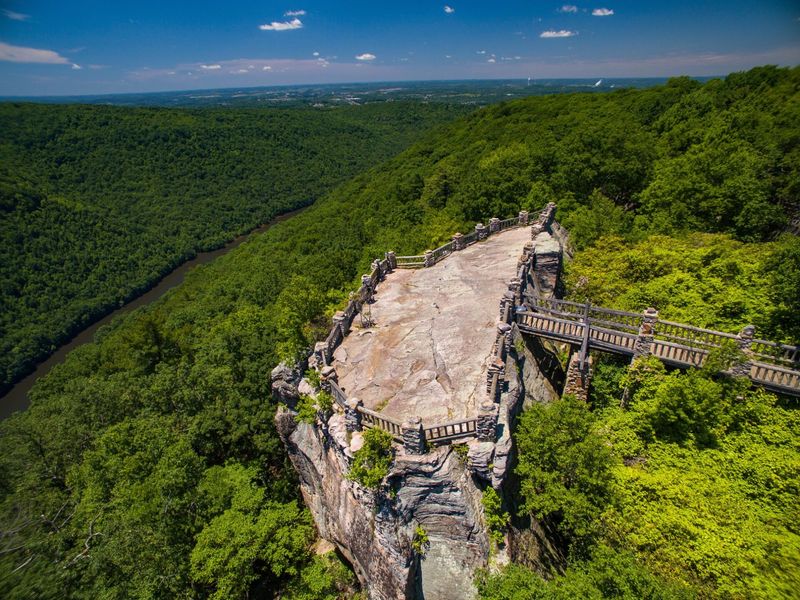
Just east of Morgantown, roughly 12 miles down a winding road, Coopers Rock State Forest delivers mountain scenery on a budget that basically starts at zero. The forest covers more than 12,700 acres and is best known for its dramatic overlook above the Cheat River Gorge, a wide canyon view that regularly stops first-time visitors mid-stride.
Beyond the overlook, the forest offers approximately 50 miles of trails for hiking and mountain biking, sandstone cliffs popular with rock climbers, and a stocked six-acre pond where trout fishing is available with a valid license. Picnic areas are scattered throughout, making it easy to pack a lunch and spend most of the day without spending a dollar on admission.
Day-use visitors pay no entrance fee, which makes this one of the most practical outdoor destinations in northern West Virginia. A full Saturday here costs only as much as you bring in a cooler.
2. Grave Creek Mound Historical Site, Moundsville, West Virginia
At roughly 69 feet tall with a base diameter of 295 feet, Grave Creek Mound is not the kind of landmark you expect to stumble across in a small West Virginia city. The mound was constructed by the Adena people between 250 and 150 B.C., making it one of the largest conical burial mounds of its type in the entire United States and one of the oldest human-built structures in the state.
The Delf Norona Museum, located directly at the site, provides context through exhibits on Adena culture, the construction process, and the history of archaeological study at the site. An outdoor Interpretive Garden adds a practical dimension by showcasing crops first cultivated by indigenous peoples, including gourds and sunflowers.
Admission to both the mound and the museum is completely free, which makes this one of the most accessible history stops in the Ohio Valley. Pair it with the West Virginia Penitentiary across town and you have a full Moundsville day for well under budget.
3. West Virginia Penitentiary, Moundsville, West Virginia
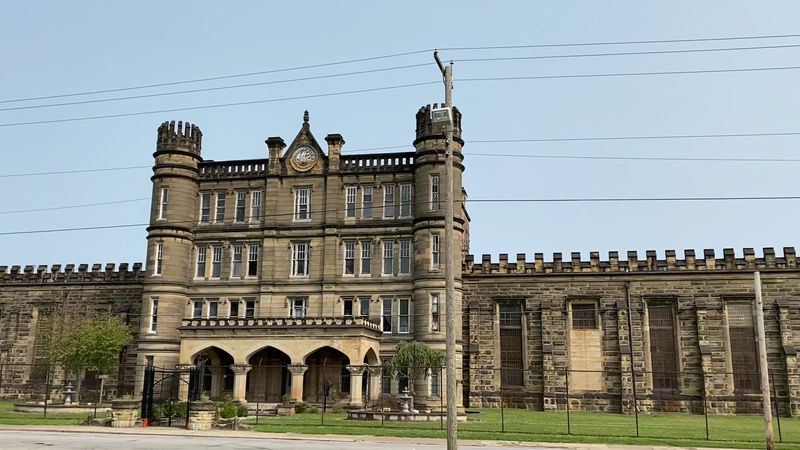
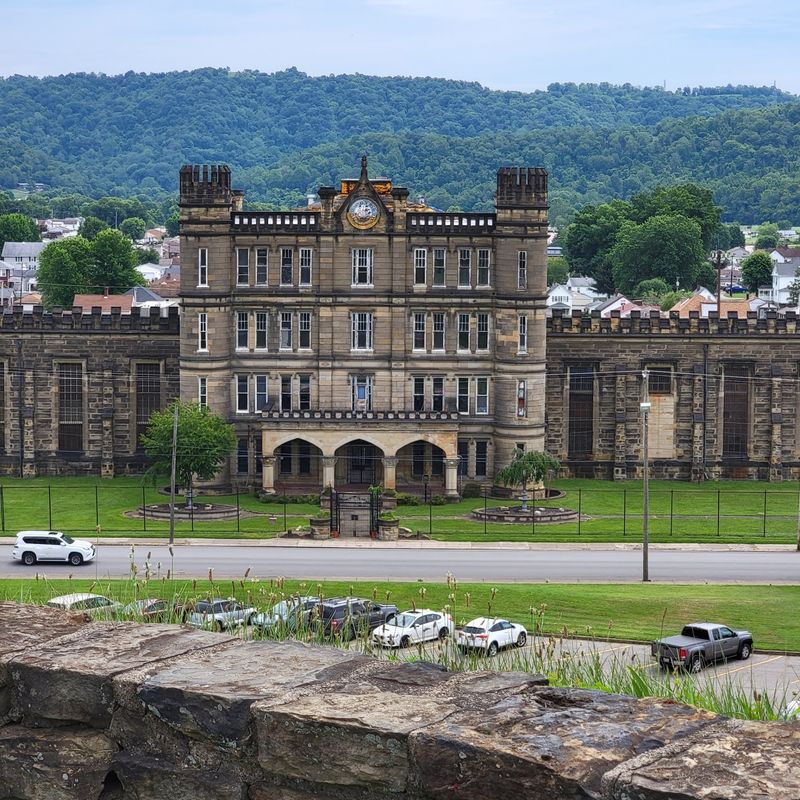
The West Virginia Penitentiary operated from 1876 to 1995, and its Gothic Revival stone exterior makes the building look exactly as serious as its history suggests. Regular guided day tours take visitors through select sections of the former prison, covering the facility’s operations, its architecture, and the complicated human stories attached to nearly 120 years of institutional history.
Tours run approximately 90 minutes and are priced starting at $15 per person, which puts this well within a tight weekend budget. The building’s sheer scale is one of its most striking features, with long cell blocks, a central rotunda, and details that no guided narration can fully prepare you for until you are standing inside.
Its location directly across from Grave Creek Mound makes combining both stops into a single Moundsville day trip an easy call. Two very different chapters of West Virginia history, separated by roughly two thousand years and about a hundred yards of road, make for an unusually thought-provoking afternoon.
4. Kruger Street Toy and Train Museum, Wheeling, West Virginia
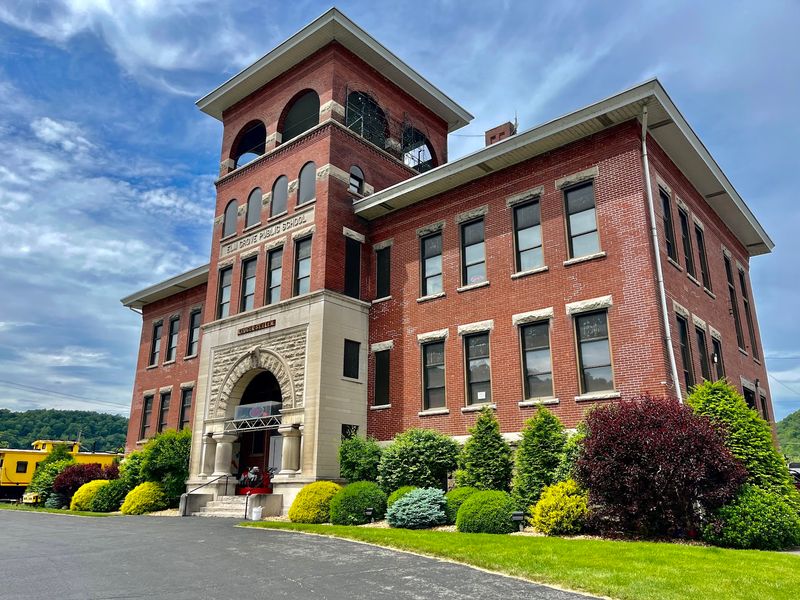
Not every worthwhile weekend stop needs to involve ancient history or dramatic scenery. Wheeling’s Kruger Street Toy and Train Museum makes a strong case for the power of nostalgia, housed inside a restored historic school building and packed with model trains, vintage dolls, toy soldiers, transportation toys, and collectibles spanning decades of American playtime.
The collection is organized across multiple rooms, and different generations tend to gravitate toward completely different sections. Adults who grew up in the mid-20th century often recognize specific pieces from their own childhoods, while younger visitors focus on the sheer mechanical detail of the running train layouts.
Adult admission is $15, with a reduced rate of $7.50 for students aged 4 to 17 and $12 for seniors. AAA, military, and TCA members receive a 10 percent discount.
The museum is the kind of place where a planned one-hour visit quietly turns into two, which is a reasonable outcome for $15 on a Saturday afternoon in Wheeling.
5. Berkeley Springs State Park, Berkeley Springs, West Virginia
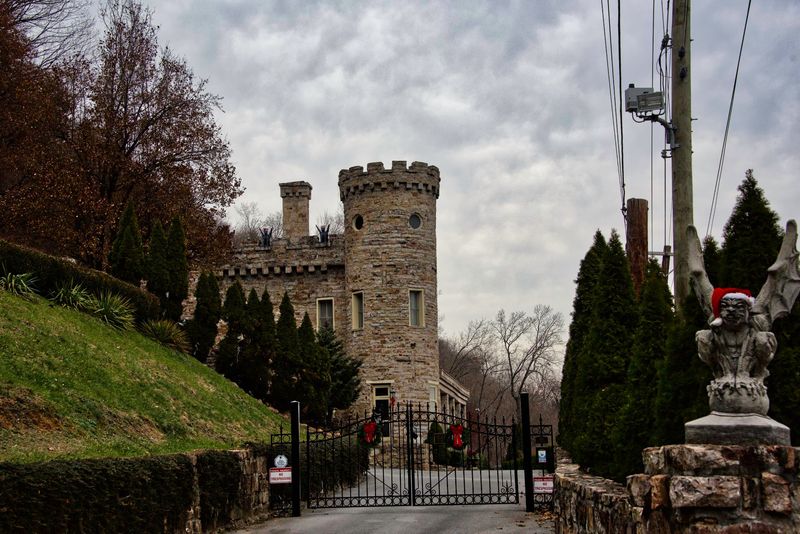
George Washington visited Berkeley Springs so many times that the town eventually named a bathtub after him, and the warm mineral springs he favored are still accessible today inside Berkeley Springs State Park. The park sits right in the middle of town, making it one of the few state parks in the country where you can walk from the historic bathhouses to a coffee shop in under five minutes.
Exploring the park and the surrounding downtown on foot costs nothing. The outdoor spring tap provides free access to the mineral water year-round, and the compact layout means the whole area is easy to cover in an afternoon without a car.
For visitors who want to use part of the $50 budget on something restorative, the Old Roman Bathhouse offers a 30-minute private mineral water soak starting at $32 for the first person. The springs maintain a natural temperature of 74 to 76 degrees Fahrenheit and are heated to 102 to 104 degrees for the baths.
6. Pricketts Fort State Park, Fairmont, West Virginia
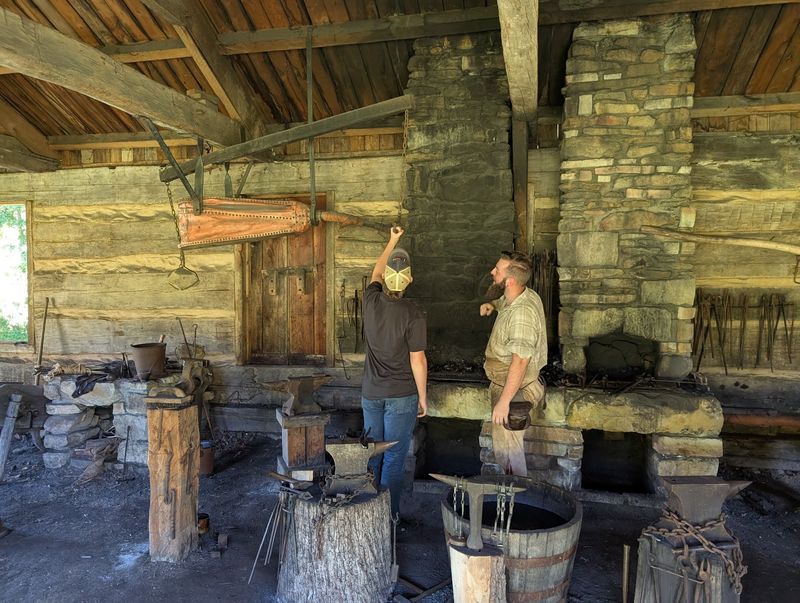
History has a way of feeling more real when you are standing inside a reconstructed log fort rather than reading about it in a textbook. Pricketts Fort State Park in Fairmont offers exactly that kind of hands-on encounter with West Virginia’s 18th-century frontier past, centered on a meticulous re-creation of the 1774 refuge built to protect settlers in the region.
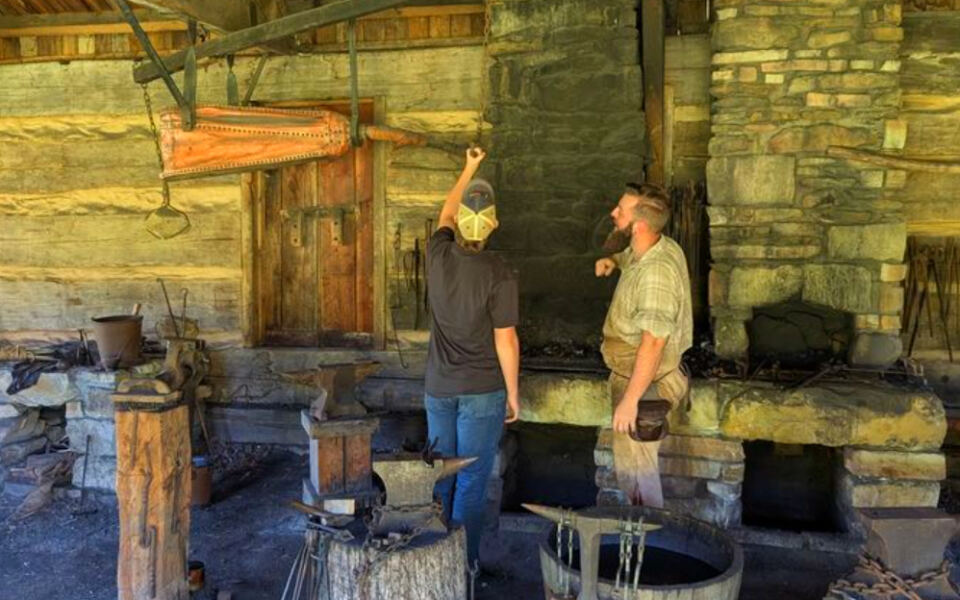
During the regular season, the park hosts demonstrations of traditional trades including blacksmithing, weaving, and hearth cooking, giving visitors a concrete sense of daily survival skills from that era. The restored 1859 Job Prickett House adds another layer of historical depth, illustrating how domestic life in the region changed over the following century.
Fort admission for adults runs about $8, with lower rates for seniors and children. The surrounding park grounds, which include nature trails, picnic areas, and river access, are free to explore.
A full afternoon here costs very little and covers a surprising amount of history.
7. Harpers Ferry National Historical Park, Harpers Ferry, West Virginia
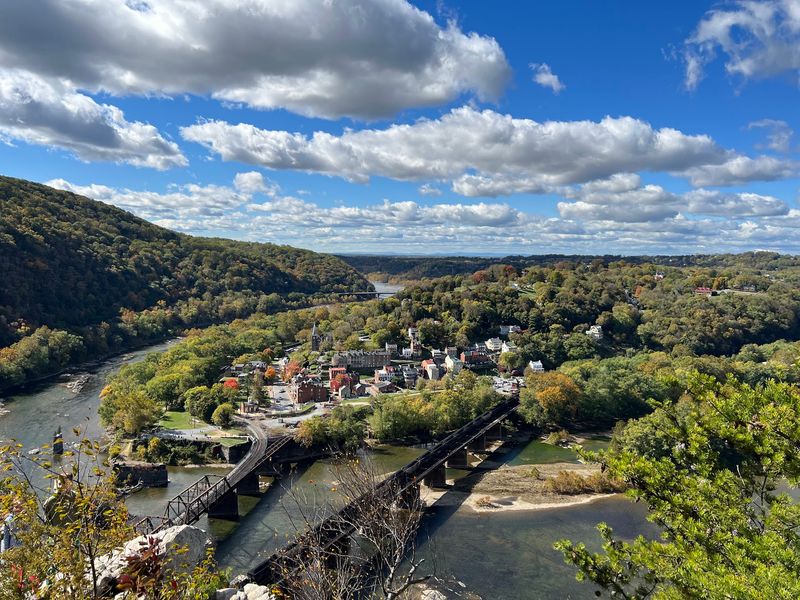
Harpers Ferry sits at the confluence of the Potomac and Shenandoah rivers, and its Lower Town preserves one of the most concentrated stretches of 19th-century American history anywhere in the Mid-Atlantic. The park covers the site of John Brown’s 1859 raid, Civil War-era events, and the story of a community that changed hands multiple times during the conflict.
A private vehicle entrance pass costs $20 and remains valid for three consecutive days, covering all passengers in the vehicle. That pricing makes it particularly economical for couples or families who want more than one day to explore the trails, museums, and historic structures spread across the park.
More than 20 miles of hiking trails extend beyond Lower Town, including a section of the Appalachian Trail with views of both river valleys. The Chesapeake and Ohio Canal Towpath runs along the Maryland side of the river and is accessible for cycling from the park.
For $20 per car, the variety here is hard to match.
8. Canyon Rim Visitor Center, Lansing, West Virginia
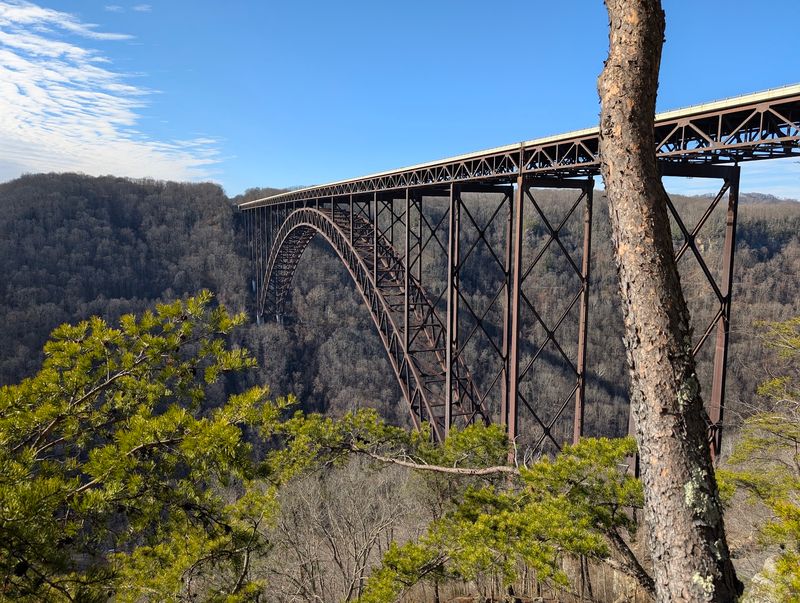
The New River Gorge Bridge is the longest steel arch bridge in the Western Hemisphere, and the Canyon Rim Visitor Center puts you at one of the best vantage points for appreciating just how big that actually is. The center serves as a primary gateway to New River Gorge National Park and Preserve, offering exhibits on the gorge’s geology, ecology, and coal mining history alongside multiple overlooks above the canyon.
Nearby trails descend toward the river and provide closer looks at the landscape below the bridge. The Long Point Trail, roughly 3.2 miles round trip, leads to an exposed rock outcropping with an unobstructed view of the bridge from a different angle.
New River Gorge National Park and Preserve charges no entrance fee, which makes this one of the most straightforward budget stops on the entire list. The visitor center itself is free, the overlooks are free, and the trails are free.
Bring water, wear comfortable shoes, and plan to spend most of the day without spending a dollar.
9. Beckley Exhibition Coal Mine, Beckley, West Virginia
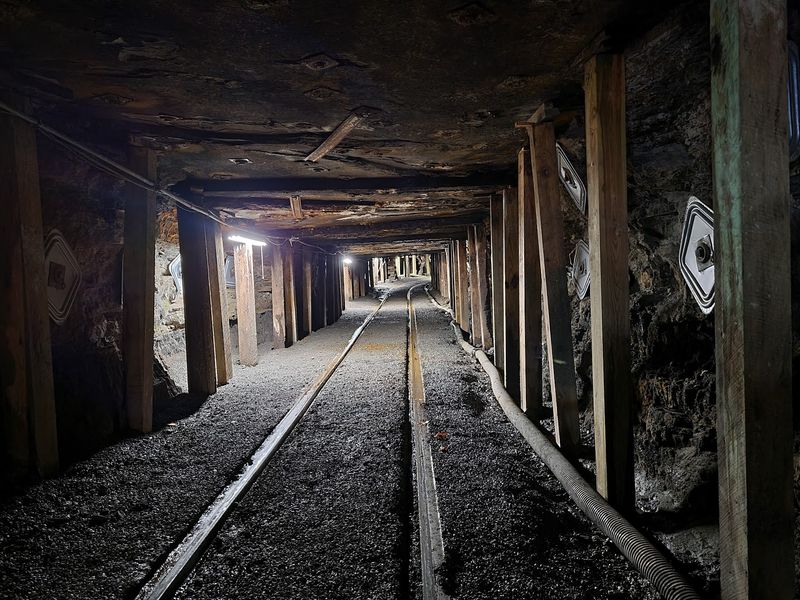
Coal mining built much of West Virginia’s modern economy, and the Beckley Exhibition Coal Mine is one of the few places in the state where visitors can experience that history from the inside out, literally. The tour takes guests into a genuine former mine via a man-trip car, the same basic type of transport that miners used to reach their work stations underground.
The underground portion covers the different methods of coal extraction used at various points in the mine’s history, with guides explaining the mechanics and conditions of the work. Above ground, the preserved coal camp buildings provide a detailed look at how mining families lived, including a company store, a superintendent’s house, and a church.
Adult admission is $22 and covers the underground tour plus access to the Youth Museum and Mountain Homestead attractions on the same property. Budget roughly two to two and a half hours for the full experience.
For context and scale, this is one of the most thorough mining history sites in the Appalachian region.
10. Lost World Caverns, Lewisburg, West Virginia
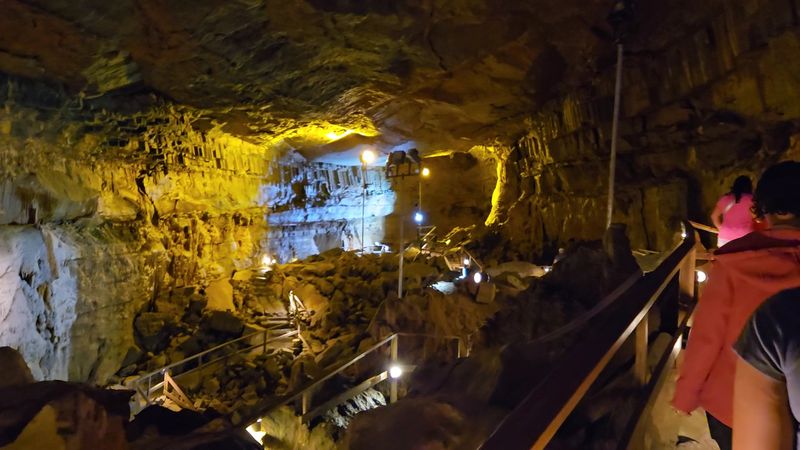
A few miles outside Lewisburg, a modest roadside entrance opens into one of West Virginia’s more dramatic underground spaces. Lost World Caverns features a half-mile self-guided trail through chambers filled with stalactites, stalagmites, and larger formations including the Snowy Chandelier, a calcite formation estimated to weigh around 30 tons.
The self-guided format is a practical advantage for a weekend trip, since there is no need to time your arrival around a scheduled tour. Informational signs along the route explain the geology and formation processes, giving the visit real educational substance without requiring a guide.
The cavern stays at a constant 52 degrees Fahrenheit, which makes it a natural choice for a hot summer afternoon or a mild winter escape.
Adult admission is $14, making this one of the more affordable cavern experiences in the region. The site also includes a small dinosaur exhibit and gem mining for an additional fee if you want to extend the visit.
Pair it with a walk through downtown Lewisburg for a well-rounded southern West Virginia day.
11. Trans-Allegheny Lunatic Asylum, Weston, West Virginia
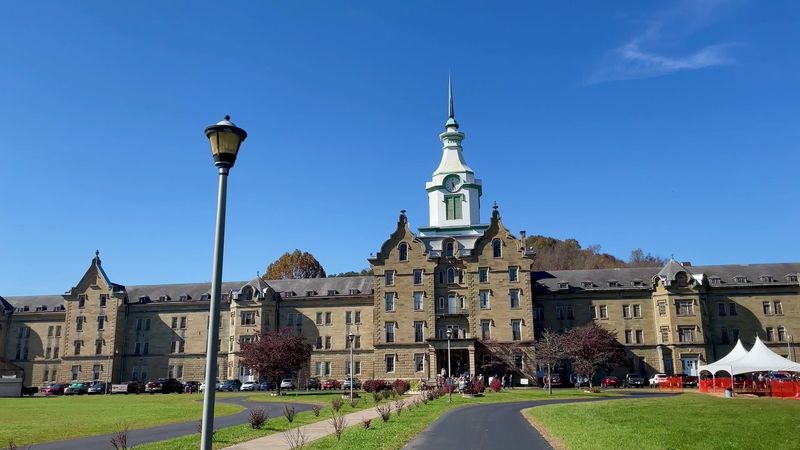
The Trans-Allegheny Lunatic Asylum in Weston is one of those buildings that earns a second look before you even step inside. The Gothic Revival structure is the largest hand-cut stone building in North America and one of the largest in the world, a fact that becomes easier to believe the longer you stand in front of it.
Daytime historical tours focus on the institution’s architecture, its operational history from the Civil War era through its closure in 1994, and the lives connected to the property across more than a century of use. The 45-minute first-floor and Criminally Insane tours offer a solid introduction, while the 90-minute VIP Tour covers more of the building in greater detail.
Daytime historical tours are priced at $35 per person plus tax, keeping the experience within the $50 budget while still delivering one of the most architecturally significant stops in the state. Separate paranormal evening experiences are available for visitors interested in that aspect of the site’s reputation, though those are priced differently.
12. Green Bank Observatory, Green Bank, West Virginia
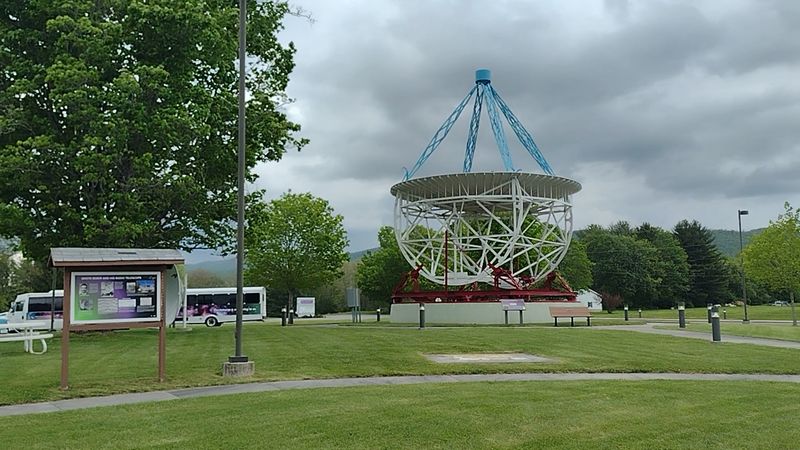
Green Bank Observatory is home to the Robert C. Byrd Green Bank Telescope, the world’s largest fully steerable radio telescope, and the whole facility operates under a strict no-wireless-electronics policy that makes it unlike any other tourist destination in the state.
The surrounding National Radio Quiet Zone bans most wireless transmissions to protect sensitive scientific equipment, which means your phone goes into airplane mode the moment you arrive.
The Science Center and Exhibit Hall are free to enter and include interactive displays on radio astronomy, the history of the observatory, and the research conducted there. Visitors can also walk or bike portions of the grounds to get closer views of the instruments in the surrounding landscape.
For $10 per person, the standard guided site tour adds a presentation and an approximately one-hour experience that includes a ride on a specially outfitted radio-quiet bus. The combination of genuine cutting-edge science, a completely car-free and device-free atmosphere, and a $10 tour price makes Green Bank one of the most unusual and underrated weekend stops in West Virginia.
Share this story