Amusement parks promise fun, thrills, and lasting memories. But behind the bright lights and cheerful music, some parks have witnessed tragedies that left lasting marks on history.
From deadly fires and mechanical failures to shocking ride accidents, these stories reveal how thin the line between controlled excitement and real danger can be. The parks on this list range from beloved landmarks to places that no longer exist, and every single one has a story worth knowing.
Action Park – Vernon, New Jersey
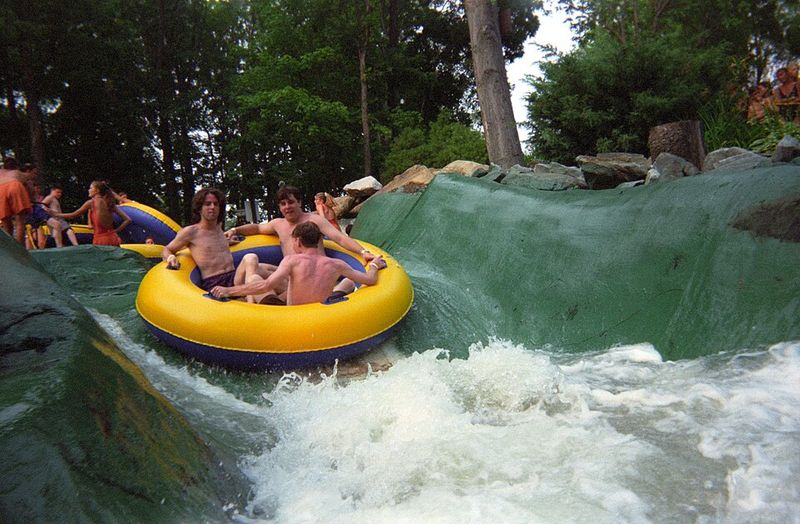
Some places earn their nicknames the hard way. Action Park in Vernon, New Jersey, became so notorious for injuries that visitors started calling it “Accident Park,” and the reputation was well-earned.
The park gave riders an unusual level of personal control over attractions, which sounds exciting until you realize that not everyone handles speed and momentum well.
Its Alpine Slide was a prime example. Riders piloted small wheeled carts down a concrete-and-fiberglass track at speeds they controlled themselves.
New Jersey records documented at least 26 serious head injuries and 14 fractures tied to that single attraction. The wave pool was another hotspot, with lifeguards sometimes pulling dozens of struggling swimmers out of the water on busy days.
A 19-year-old became the park’s first fatality after leaving the Alpine Slide track and suffering a fatal head injury. By the time Action Park closed in 1996, six deaths had been connected to the park, including drownings.
Its story has since taken on an almost legendary quality, but the facts are disturbing enough without any added drama. The park briefly reopened years later under a new name before eventually closing again.
Six Flags Great Adventure – Jackson, New Jersey
May 11, 1984 started as an ordinary spring day at Six Flags Great Adventure in New Jersey. By the end of it, eight teenagers were dead, and the amusement industry would never look at haunted attractions the same way again.
A fire broke out inside the park’s Haunted Castle, a walk-through attraction made up of interconnected trailers packed with foam decorations and other combustible materials.
An NFPA investigation found that roughly 30 visitors were inside when the blaze began. A teenager had used a lighter to see in the dark interior, accidentally igniting the polyurethane foam lining the walls.
Flames spread with terrifying speed. The victims died from smoke inhalation and carbon-monoxide poisoning before they could escape the maze-like structure.
The tragedy triggered intense scrutiny of fire safety standards at amusement attractions across the country. Haunted houses and walk-through structures faced new questions about exit routes, fire suppression systems, and the materials used in their construction.
Six Flags Great Adventure survived and remains one of the most visited theme parks in the United States. However, the Haunted Castle fire is permanently woven into the park’s history as one of the darkest chapters in American amusement-park records.
Luna Park Sydney – Sydney, Australia
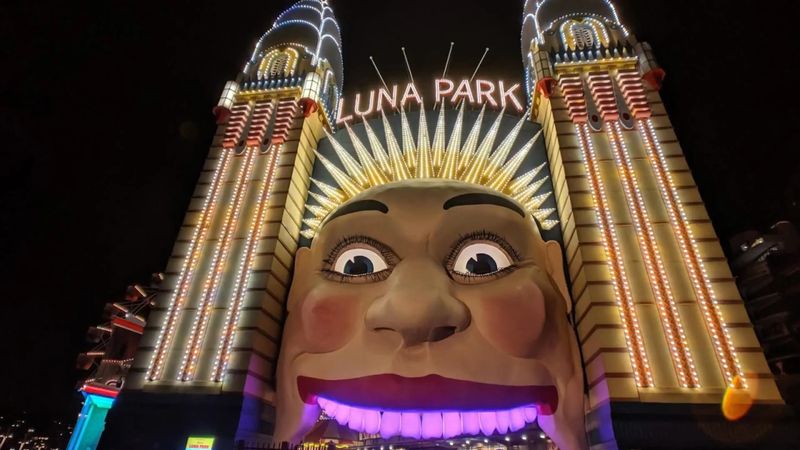
That giant grinning face at the entrance to Luna Park Sydney is one of the most photographed spots in the entire city. Cheerful, cartoonish, and impossible to miss, it has welcomed visitors for decades.
But the smile hides a tragedy that Australians have never fully stopped talking about.
On June 9, 1979, a fire swept through the park’s Ghost Train ride while visitors were still inside. Seven people died: one adult and six children.
The New South Wales Coroners Court conducted a formal inquiry into the deaths, examining the fire’s origin, the safety precautions in place, and whether criminal negligence played a role. Questions about exactly how the blaze started persisted for decades, keeping the case alive in public memory long after the park had moved on.
Luna Park survived the disaster and still operates beside Sydney Harbour today, drawing tourists and locals alike. The park has been closed, reopened, and renovated multiple times over the years, and its current incarnation is a popular destination for families.
But the Ghost Train fire remains an unresolved wound in the park’s story. The smiling entrance keeps welcoming visitors, even as the tragedy of 1979 quietly lingers just behind that famous grin.
Dreamworld – Gold Coast, Australia
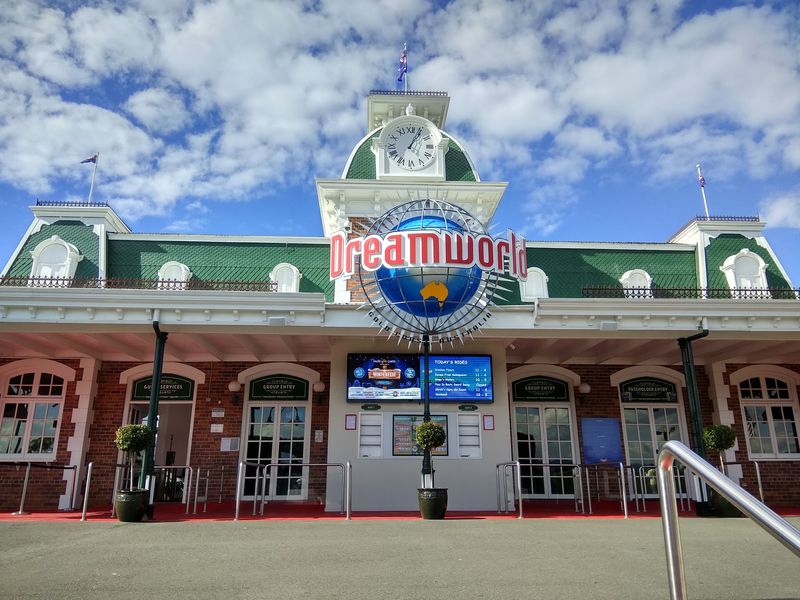
Thunder River Rapids sounded like the kind of ride you could take with your grandparents. It was billed as a family-friendly water attraction, the sort of gentle raft ride that gives you a splash without the stomach-dropping terror of a roller coaster.
That reputation made what happened on October 25, 2016 all the more shocking to witness.
A raft carrying six people approached the ride’s conveyor system after another raft became lodged in the mechanism. The resulting collision caused a raft to flip, killing Kate Goodchild, Luke Dorsett, Cindy Low, and Roozbeh Araghi.
Two children on board survived the incident. Queensland’s Coroners Court launched an extensive investigation covering the ride’s design, maintenance records, operational procedures, and the sequence of events that led to the malfunction.
The Thunder River Rapids Ride was permanently removed from the park following the disaster. The tragedy sparked a national conversation about amusement ride safety standards in Australia and led to major reviews of how parks manage aging attractions.
Dreamworld continues to operate on the Gold Coast, but October 25 is now a date the park marks with solemnity. For many Australians, it changed the way they think about what can go wrong on a ride that looks perfectly safe.
Alton Towers – Staffordshire, England
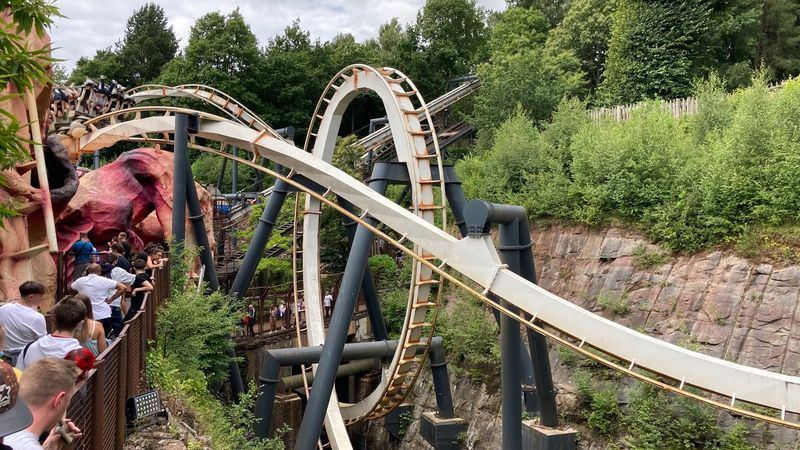
Fourteen inversions. That was the headline number when The Smiler opened at Alton Towers, and the roller coaster delivered every single one of them with maximum theatrical intensity.
Its entire identity was built around psychological unease, disorientation, and the feeling that something had gone terribly wrong. On June 2, 2015, something actually did.
A passenger train collided with an empty stationary carriage that had been left on the track after a technical problem. Sixteen people were injured in the crash.
Two young women suffered such severe injuries to their legs that each later required an amputation. Britain’s Health and Safety Executive concluded that Merlin Attractions Operations had failed in its legal duty to protect riders from harm.
The company admitted breaching health-and-safety law and was fined 5 million pounds, one of the largest penalties ever handed down for an amusement ride incident in the United Kingdom. The Smiler was eventually reopened after safety procedures were overhauled.
Alton Towers remains one of Britain’s biggest and most popular theme parks, drawing millions of visitors each year. But the crash permanently altered how people perceive a ride whose entire brand had been built around the theatrical pretense of losing control, which turned out to be far less fun when it became real.
Grona Lund – Stockholm, Sweden
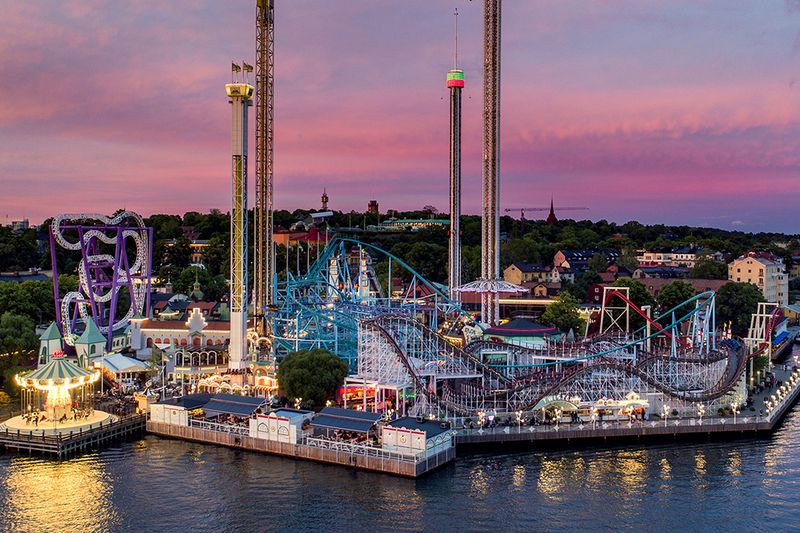
Perched on a small island in Stockholm harbor, Grona Lund is the kind of amusement park that feels like it belongs in a fairy tale. It has operated there since 1883, making it one of Europe’s oldest urban amusement parks.
Generations of Swedish families have shared the same rides, the same food stands, and the same views of the water. Then came June 25, 2023.
The Jetline roller coaster, which had been running at the park since 1988, partially derailed during operation. Three riders were thrown from the train.
One person died, and several others suffered serious injuries. Sweden’s Accident Investigation Authority conducted a thorough investigation and traced the failure to an improperly manufactured control arm.
The inquiry also found shortcomings in the inspection process that had allowed the defective component to enter service without being detected.
Following the investigation, Gröna Lund retired the Jetline rather than attempting to reopen it. The case generated recommendations for broader improvements to how amusement rides are overseen across Sweden.
The park itself remains open and continues to welcome visitors to its waterfront location. For a place with such a long and beloved history, the 2023 derailment was a painful reminder that age and familiarity are no guarantee of safety on any ride.
Galaxyland at West Edmonton Mall – Edmonton, Canada
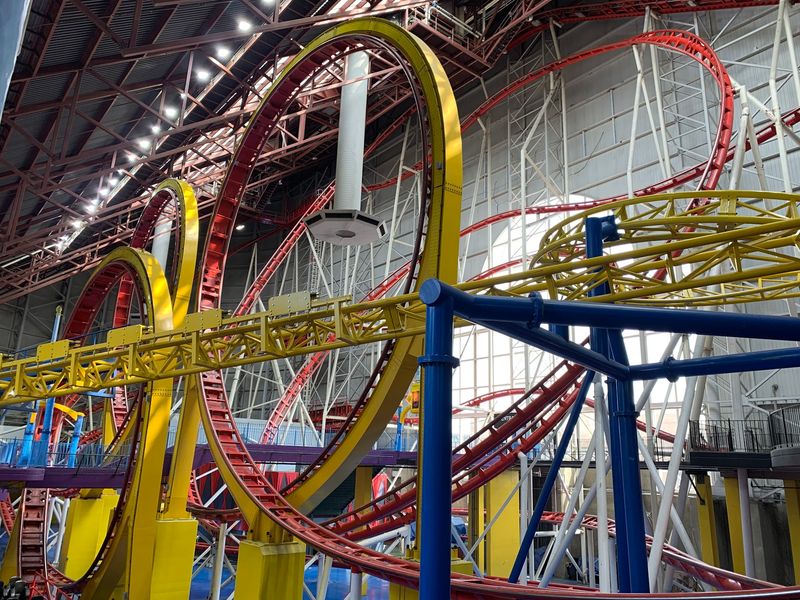
West Edmonton Mall was already one of the most jaw-dropping places on earth when it opened its indoor amusement park. Shoppers could walk past clothing stores, grab a pretzel, and then board a full-size roller coaster without stepping outside.
The Mindbender was the star attraction: a triple-loop steel coaster running entirely inside a shopping mall, which sounds like something out of a science fiction movie.
On June 14, 1986, a train derailed during operation, killing three people and injuring 19 others. The accident was serious enough that the Province of Alberta established a dedicated Board of Inquiry to investigate it.
The board examined the coaster’s mechanical design, maintenance history, personnel practices, provincial safety regulations, and inspection requirements. Their findings led to recommendations aimed at preventing similar accidents.
The Mindbender was eventually modified and returned to service, operating for decades afterward before being permanently closed in 2023 for reasons unrelated to the 1986 tragedy. Galaxyland continues to operate inside the mall, offering rides to visitors who may not know the history beneath their feet.
The derailment remains one of Canada’s most significant amusement-ride disasters and serves as a reminder that even the most extraordinary attractions carry real responsibilities to the people riding them.
Krug Park – Omaha, Nebraska
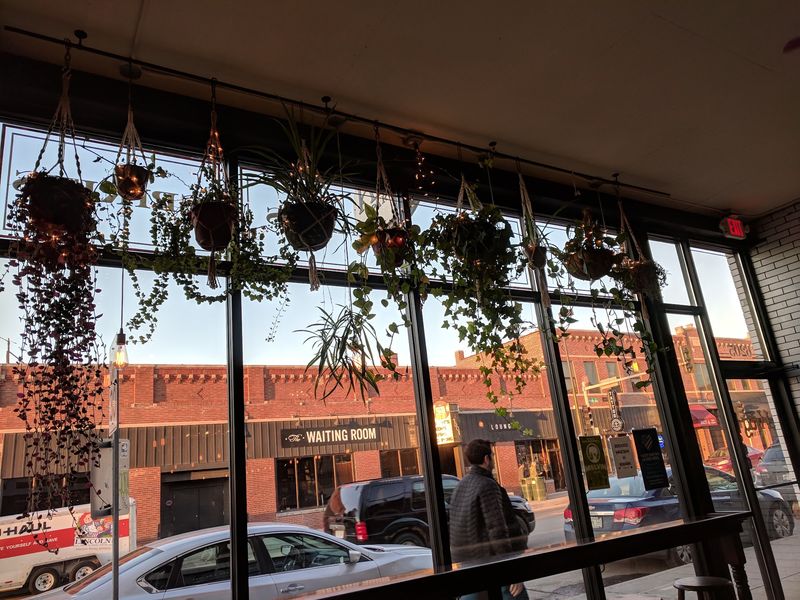
Krug Park is gone now, replaced by a quiet recreational area called Gallagher Park. Most people walking through it today have no idea what happened there on July 24, 1930.
On that afternoon, a car on the park’s Big Dipper roller coaster plunged roughly 35 feet after a mechanical failure. Four people were killed and 17 others were injured in what HISTORY describes as the deadliest roller-coaster accident in United States history.
The public reaction was swift and fierce. Omaha authorities moved to ban roller coasters entirely within the city.
Krug Park’s attendance collapsed in the aftermath of the disaster, and the park never truly recovered. It struggled on for another decade before shutting down for good in 1940.
The crash happened during an era when amusement-ride safety regulations were minimal and inspections were inconsistent at best. Operators were largely left to manage their own equipment without much outside oversight.
The Krug Park disaster became one of several incidents from the early 20th century that gradually pushed lawmakers and industry groups toward stricter standards. Today, the former park site sits quietly in Omaha with no roller coasters, no crowds, and no visible trace of the catastrophe that once defined it.
The story, however, endures.
Schlitterbahn Kansas City – Kansas City, Kansas
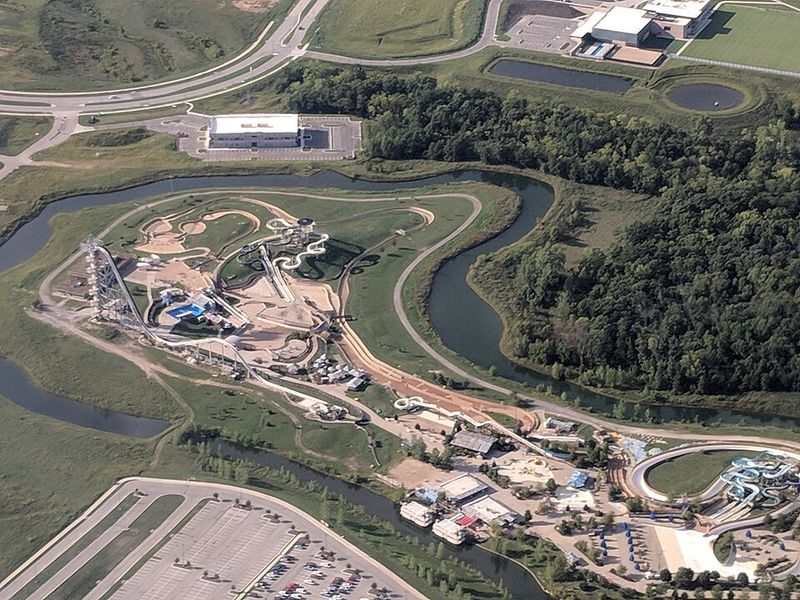
The name said it all. Verruckt is German for crazy or insane, and the designers of this 168-foot water slide clearly took that as a challenge rather than a warning.
Promoted as the world’s tallest water slide, it sent riders plunging down a near-vertical drop in multi-person rafts before launching them skyward on a secondary hill. Record-breaking height was the entire point of its existence.
On August 7, 2016, 10-year-old Caleb Schwab was killed while riding it. Investigators determined he died from a catastrophic neck injury.
The tragedy reignited a national debate about oversight of amusement rides across the United States, particularly in states where regulation was minimal. TIME reported that Kansas relied heavily on private inspections and that state records showed no government inspection of Verruckt after it opened in 2014.
Schlitterbahn announced the slide would never operate again and later dismantled it entirely. The Kansas City water park subsequently closed permanently.
Criminal charges were eventually filed against individuals connected to the slide’s design and operation, making the case one of the most legally complex amusement-ride disasters in recent American history. A ride conceived entirely around breaking a height record ended up becoming the most sobering example of what happens when ambition is not matched by rigorous safety standards.
Dreamland – Coney Island, New York
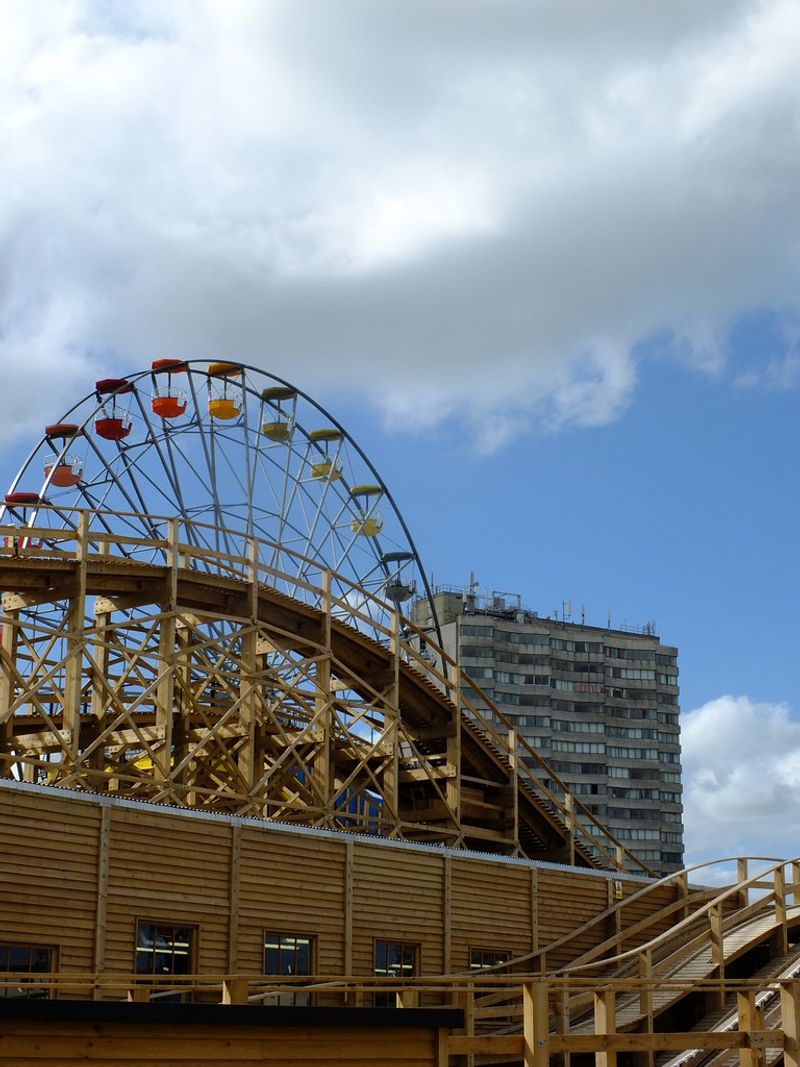
Before the modern era of theme parks, Dreamland was the kind of place that made people’s jaws drop. Opened at Coney Island in 1904, it featured more than a million electric lights, elaborate architectural towers, animal acts, and a ride called Hell Gate.
For a brief period, it was one of the most spectacular entertainment venues in the world. The name Hell Gate turned out to be darkly prophetic.
During repair work in May 1911, a fire ignited at Hell Gate and raced through the park with devastating speed. Dreamland was built largely from wood and other highly flammable materials, and the combination of combustible construction and a massive electrical system made it a fire waiting to happen.
Within hours, the park was effectively destroyed. Thousands of spectators watched the enormous blaze light up the Coney Island sky.
Dreamland never reopened. Its destruction stands as one of the most dramatic examples of a danger that threatened early amusement parks everywhere: crowds were being packed into attractions built cheaply and quickly from materials that burned fast.
The lesson was learned slowly and at great cost across the industry. Today, nothing remains of the original Dreamland, but its fiery end is still cited as a turning point in how amusement venues approached fire risk.
Luna Park – Coney Island, New York
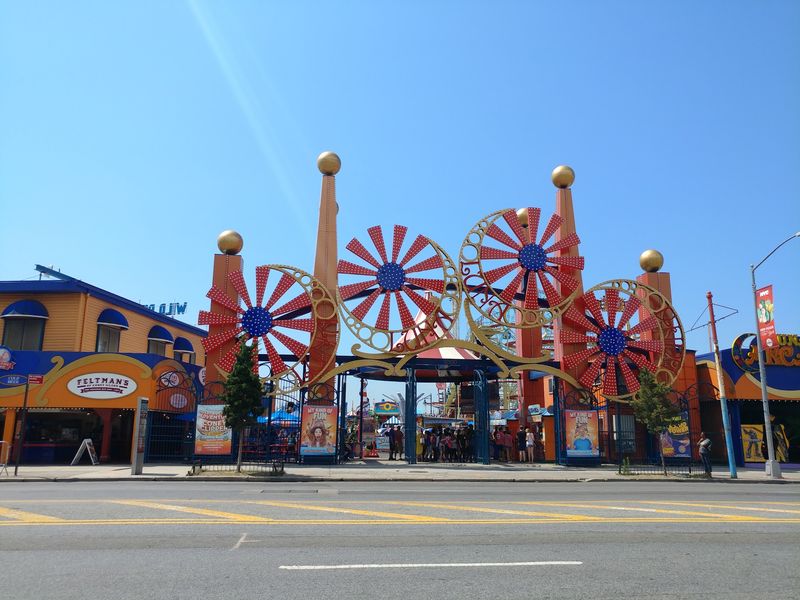
Coney Island’s Luna Park was the kind of place that made Dreamland jealous. Opened in 1903, it dazzled visitors with fantastic towers, illuminated domes, exotic animals, staged disaster spectacles, and over a million electric lights blazing against the night sky.
It was loud, wild, and utterly irresistible. Sadly, the park famous for simulated catastrophes eventually faced a very real one.
Fire had always been a threat along Coney Island’s densely packed entertainment strip, and Luna Park was not immune. A major blaze struck the park in 1944, gutting significant portions of the attraction.
The park never truly recovered from the damage. It limped along before closing during the 1940s, and subsequent fires damaged whatever structures remained standing afterward.
The Luna Park name eventually returned to Coney Island decades later under entirely new ownership, with modern rides and a completely different character. Today’s Luna Park is a legitimate and popular amusement destination, but it shares nothing but a name with the original early-20th-century marvel that burned.
The original park’s story is a reminder that even the most celebrated and beloved attractions of their era were vulnerable to the same basic hazards: combustible construction, dense crowds, and the unpredictable nature of fire in an age before modern suppression systems existed.
Kings Island – Mason, Ohio
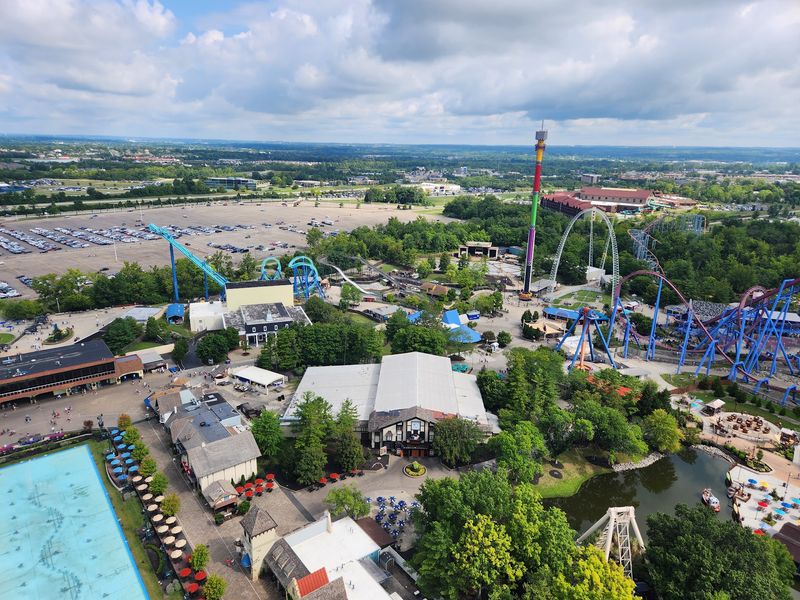
June 9, 1991 is remembered at Kings Island as Black Sunday, and the name fits. Within roughly an hour, three people died in two completely separate incidents at the park.
It was the kind of day that defies easy explanation and leaves a permanent mark on a place’s identity, no matter how many happy summers come after it.
The first tragedy occurred near a pond in the park’s Oktoberfest area. Two men drowned after an electrical fault energized the water.
One of the victims was a Kings Island employee who entered the water while trying to help during the rescue attempt. A third man survived.
Investigators later focused on a pump as the likely source of the electrical leak that made the water deadly.
Later that same evening, 32-year-old Candy Taylor fell approximately 60 feet from the Flight Commander ride and died from her injuries. The Associated Press covered both incidents, and the double tragedy quickly became part of the park’s darker history.
Kings Island remains one of the most visited theme parks in Ohio, beloved by generations of Midwestern families. Roller coasters, water rides, and seasonal events continue to draw enormous crowds each year.
But no single date in the park’s long history carries the weight that June 9, 1991 still does.
Share this story