Some places on Earth make you stop and question what you are seeing. A lake surrounded by giant sand dunes.
A grove of tall palms rising from cracked, dry ground. A pool of clear water in the middle of one of the hottest places on the planet.
Desert oases have fascinated travelers, traders, and explorers for thousands of years, and for good reason. They appear where water has no business being, yet they have supported entire civilizations, sheltered ancient trade routes, and created some of the most striking landscapes anywhere in the world.
This list covers 15 real oases across Peru, Africa, the Middle East, Asia, and even the American Southwest. Whether you are planning a trip or just love discovering places that seem almost impossible, these oases are worth knowing about.
Al Ain Oasis, Abu Dhabi, United Arab Emirates
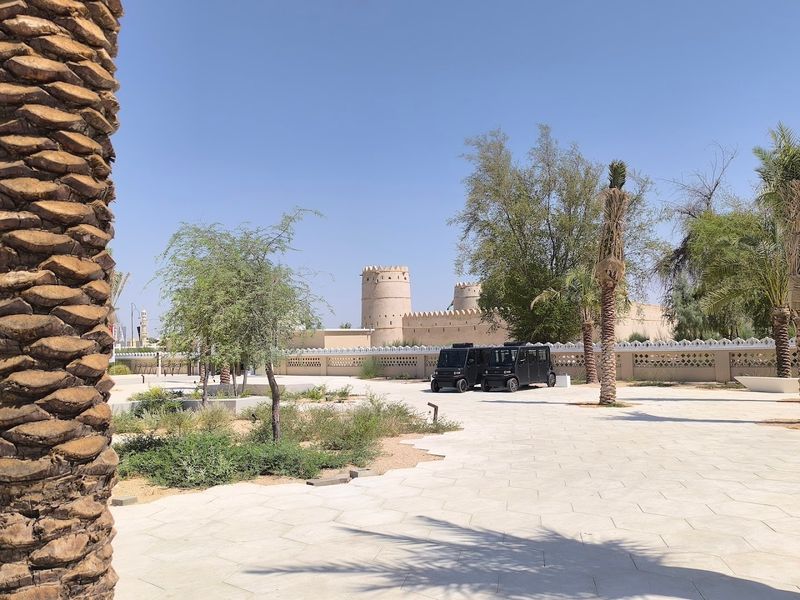
Al Ain Oasis carries a kind of quiet weight that most desert attractions do not. It is not just a patch of green in a dry landscape.
It is part of Abu Dhabi’s UNESCO-listed Al Ain heritage landscape, recognized as one of the world’s oldest continuously inhabited settlements and a living example of how communities learned to survive in extreme desert conditions.
The oasis is fed by a falaj irrigation system, an ancient network of channels that carries underground water to date palms and cultivated plots without pumps or modern machinery. Walking the shaded pathways here, visitors move through an agricultural tradition that stretches back roughly 4,000 years.
In a region famous for glittering skylines and wide modern roads, Al Ain Oasis feels like a deliberate pause. Visit Abu Dhabi describes it as a place where the older identity of the oasis city is still visible, preserved, and open to explore at no entry cost.
Liwa Oasis, Abu Dhabi, United Arab Emirates
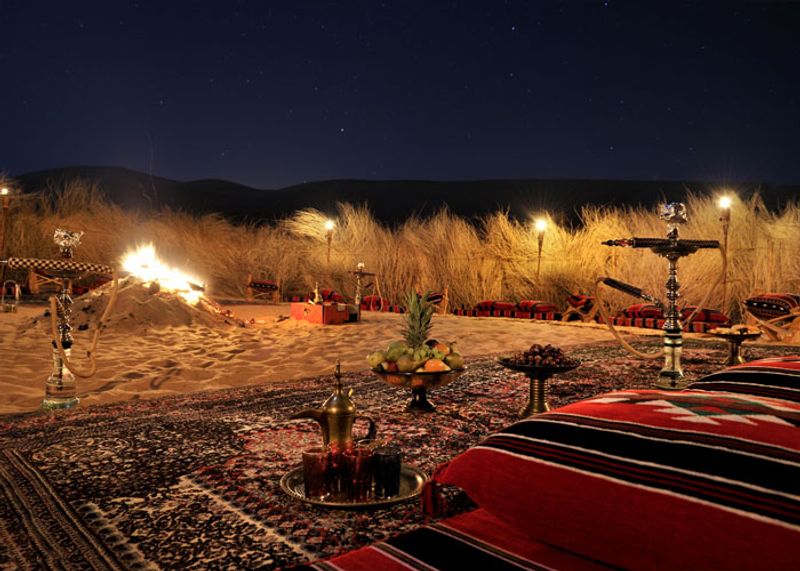
Liwa Oasis does not look like the small, pool-centered oases that most people picture. Instead of one lagoon, Liwa is an extended oasis region made up of scattered settlements, farms, date palm groves, and roads that cut through some of the largest dunes on Earth.
It sits at the northern edge of the Rub’ al Khali, the vast sand desert also called the Empty Quarter, which covers parts of Saudi Arabia, Oman, Yemen, and the UAE.
The scale here is part of what makes Liwa so striking. Cultivated fields and village clusters appear among dunes that dwarf everything around them, creating a visual contrast that is hard to describe until you see it.
Liwa is also known for Moreeb Dune, one of the tallest dunes in the region, and for the Liwa International Festival, which draws visitors annually. Travel information for reaching Liwa from Abu Dhabi is available through official UAE tourism channels.
Siwa Oasis, Egypt
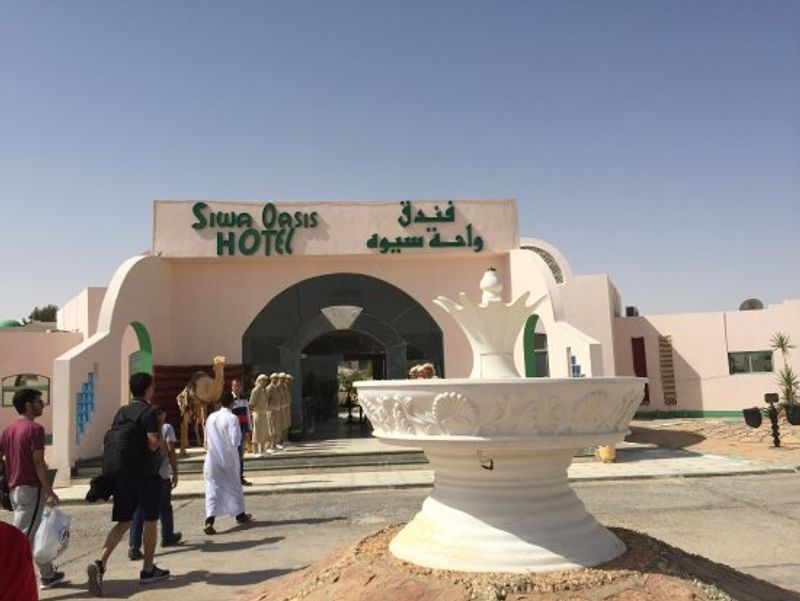
Remote is not a strong enough word for Siwa. This oasis sits deep in Egypt’s Western Desert, close to the Libyan border, far from the tourist circuits that run along the Nile.
Getting there takes effort, and that distance is a big part of why Siwa feels so different from anywhere else in Egypt.
Siwa is known for natural springs, salt lakes, palm groves, and a distinct local culture with its own Siwi Berber language and traditions. The ancient Temple of the Oracle, historically linked to Alexander the Great, still stands here.
So does Shali Fortress, a crumbling mud-brick structure at the center of the old town that becomes especially atmospheric in the late afternoon light.
Visit Egypt describes Siwa as a destination where natural beauty, history, and cultural identity overlap in ways that feel genuinely rare. Modern lodges and restored heritage guesthouses make it more accessible than it once was, though the sense of arriving somewhere apart from the rest of the world has not changed.
Bahariya Oasis, Egypt
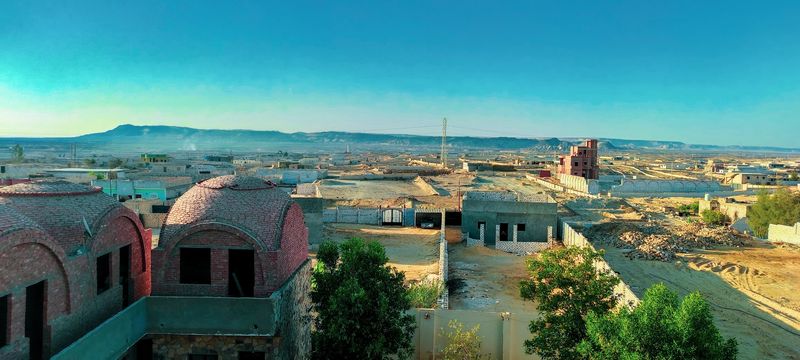
Bahariya Oasis works as a practical gateway into some of Egypt’s most dramatic desert landscapes. Located in the Western Desert northwest of Cairo, it sits within reach of both the Black Desert, where dark volcanic rock covers the ground, and the White Desert, where chalk formations rise from the sand in shapes that look completely otherworldly.
The oasis itself is a working community. Visit Egypt notes that Bahariya’s economy is grounded in agriculture, with date palms, olive trees, and fruit orchards supported by underground springs.
Tourism has grown steadily here because Bahariya offers a base for desert excursions that would be difficult to reach otherwise.
Hot springs are another draw, with several natural thermal pools accessible to visitors. The oasis also holds archaeological sites, including a discovery of Greco-Roman mummies that became known as the Valley of the Golden Mummies.
Bahariya is the kind of stop that rewards travelers who look past the surface.
Dakhla Oasis, Egypt
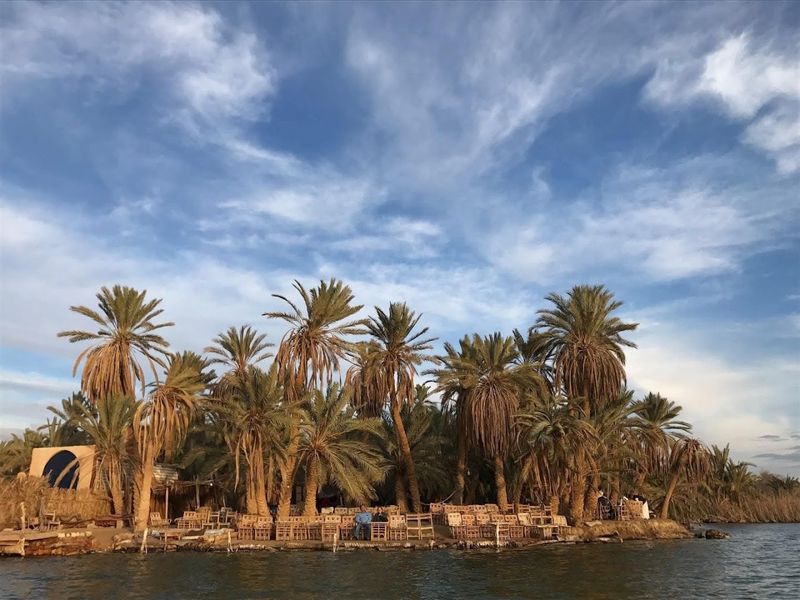
Dakhla Oasis sits in Egypt’s Western Desert between Farafra and Kharga, and it carries more history per square kilometer than most places on the planet. The oasis has been inhabited for tens of thousands of years, and evidence of that long occupation shows up in mud-brick architecture, ancient ruins, and thermal springs that people have been using since long before recorded history.
Recent archaeological work brought Dakhla fresh attention when researchers uncovered a well-preserved Byzantine-era city within the oasis, including residential quarters, public spaces, and a basilica-style church. That kind of discovery is a reminder that oases were not just survival spots.
They were the foundations of real urban life in the desert.
Current travel guides describe Dakhla as a destination for natural landscapes, hot springs, and archaeological exploration. The old town of Al-Qasr features medieval Islamic architecture built from local mud brick, and the surrounding desert offers some of the Western Desert’s quieter and more atmospheric scenery.
Huacachina Oasis, Ica, Peru
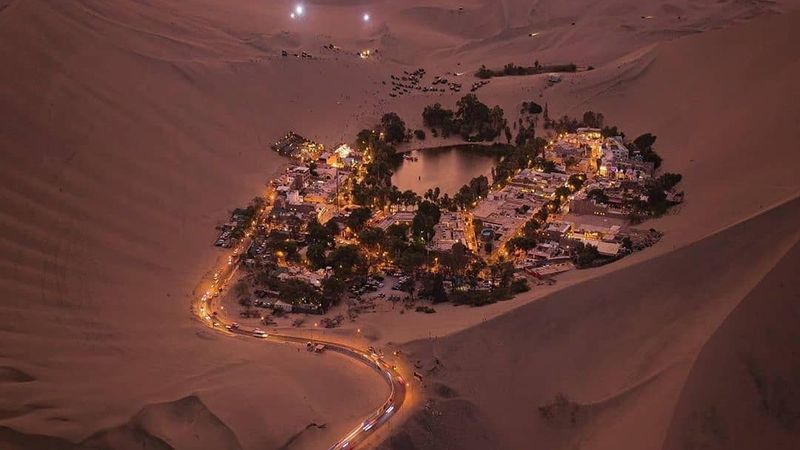
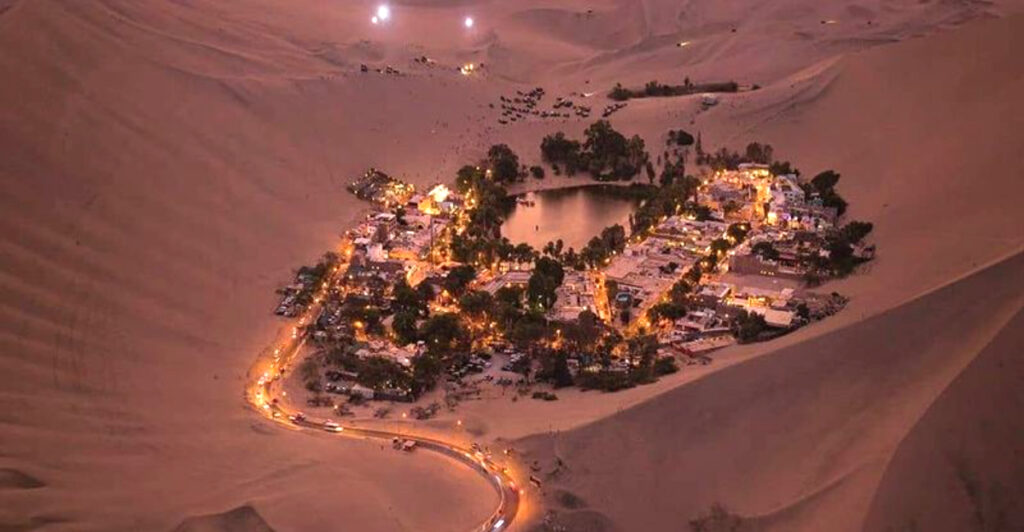
Few places on Earth look as improbable as Huacachina. A small lagoon sits at the bottom of a desert bowl near the city of Ica in southern Peru, completely ringed by sand dunes that rise high enough to cast long shadows across the water in the afternoon.
It is widely promoted as South America’s only natural desert oasis, and that claim alone draws visitors from across the world.
The appeal goes beyond the scenery. Travelers come here for dune buggy rides that send passengers flying over steep sandy ridges, and for sandboarding runs down the same slopes.
Sunset from the dune tops is a popular ritual, and the view looking down at the lagoon with its palms and painted buildings makes for one of Peru’s most photographed moments.
The official Huacachina tourism information continues to list tours and transportation options from Ica, which makes it one of the easier oases on this list to plan a visit around.
Tozeur Palm Grove, Tozeur, Tunisia
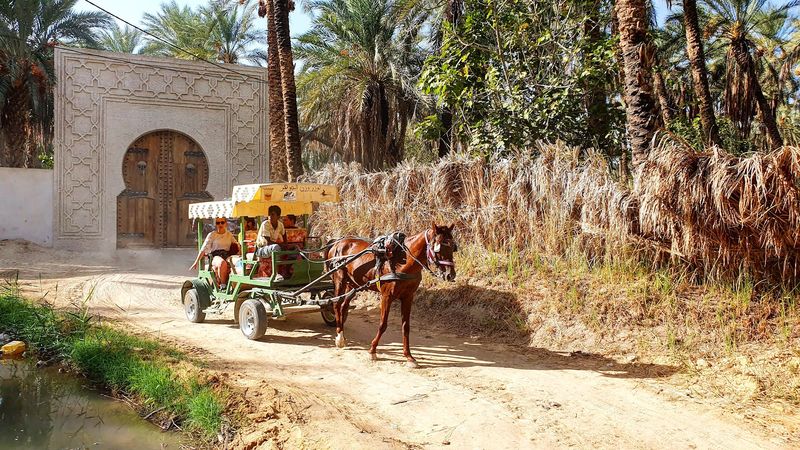
Tozeur sits at the edge of the Sahara in southwestern Tunisia, and the palm grove that defines the town is one of the classic oasis landscapes in all of North Africa. The grove covers a large area and contains hundreds of thousands of date palms fed by traditional irrigation channels that distribute spring water through the cultivated land.
What makes Tozeur memorable as a destination is the layering of experiences. The old medina features distinctive yellow-ochre brick architecture with geometric patterns pressed into the facades.
The nearby Chott el Jerid, a vast salt lake, creates a surreal flat horizon that stretches to the south. Desert excursion routes into the surrounding region pass through mountain oases and open dune landscapes.
Current tourism guides continue to describe Tozeur as a major desert gateway, and visitor infrastructure here is well developed compared to more remote oasis stops. The palm grove itself is walkable and gives a clear sense of how water shaped this entire corner of the Sahara.
Chebika Oasis, Tozeur Governorate, Tunisia
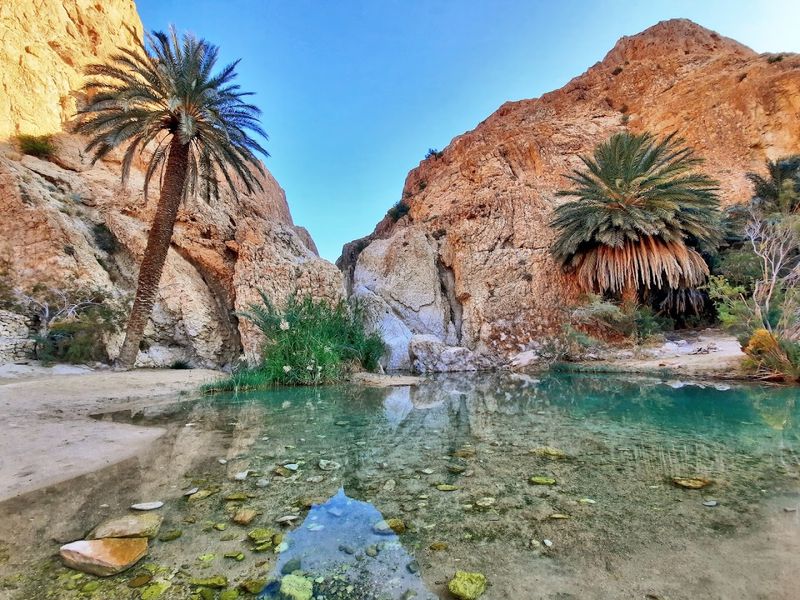
Chebika is not the kind of oasis that spreads out across a wide valley floor. It is compact, rocky, and surprisingly vertical, with spring water cutting through cliff faces and palms clustered tightly in a canyon-like setting near Tunisia’s border region.
The contrast between the surrounding dry desert and the sudden greenery here is sharper than at almost any other oasis on this list.
The ruins of an old village sit above the current oasis, abandoned after a major flood in 1969 that forced residents to relocate. Those mud-brick remains add a quiet historical layer to the visit.
Chebika is typically visited on desert routes from Tozeur, often combined with nearby Tamerza and Mides, both of which share a similar rugged mountain-oasis character.
Recent travel guides continue to describe Chebika as a destination for short hikes, photogenic scenery, and spring-fed pools. The setting rewards visitors who take time to walk through the palms and follow the water to its source rather than just stopping at the entrance.
Nefta Oasis, Tozeur Governorate, Tunisia
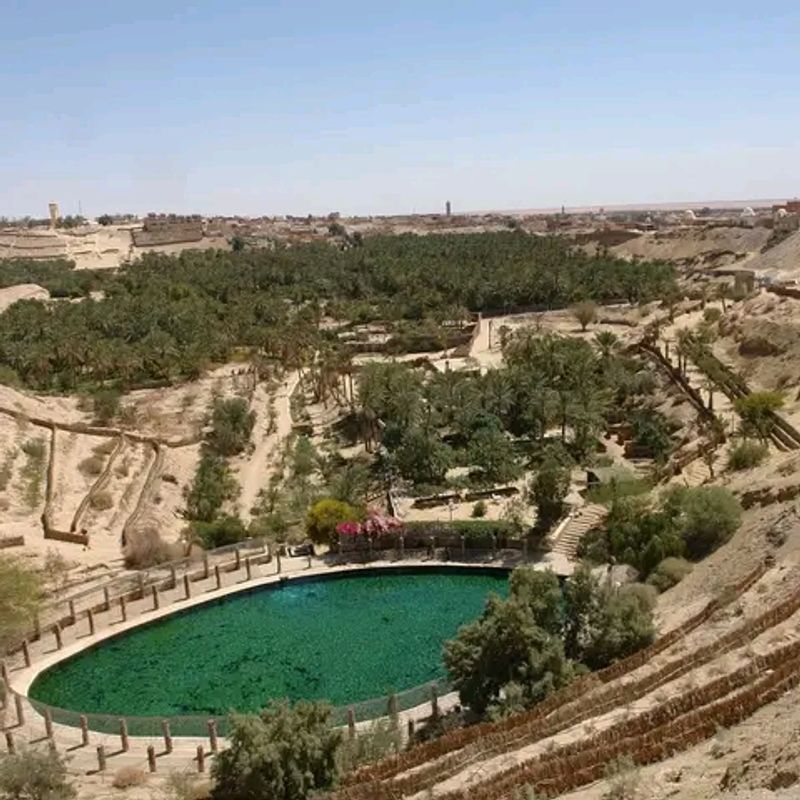
Nefta has a reputation in southwestern Tunisia that goes beyond its geography. Known for centuries as a center of Sufi Islamic culture, the town carries a contemplative character that sets it apart from the more adventure-focused desert stops nearby.
The oasis itself is set in a natural bowl, called the Corbeille, where palms fill the hollow below the town’s edge.
For travelers, the shift from the surrounding dry Saharan landscape to the greenery of the oasis is immediate and striking. Old streets, traditional architecture, and quiet squares give Nefta a different pace from Tozeur, even though the two towns are close in distance.
Film enthusiasts may recognize the wider Tozeur region from Tunisia’s Star Wars filming locations, though Nefta’s appeal stands independently of that connection. Current travel guides describe the oasis as a natural and cultural landmark worth a dedicated stop.
It is the kind of desert town that rewards slow walking and genuine curiosity over quick sightseeing.
Tinghir Palm Grove, Tinghir, Morocco
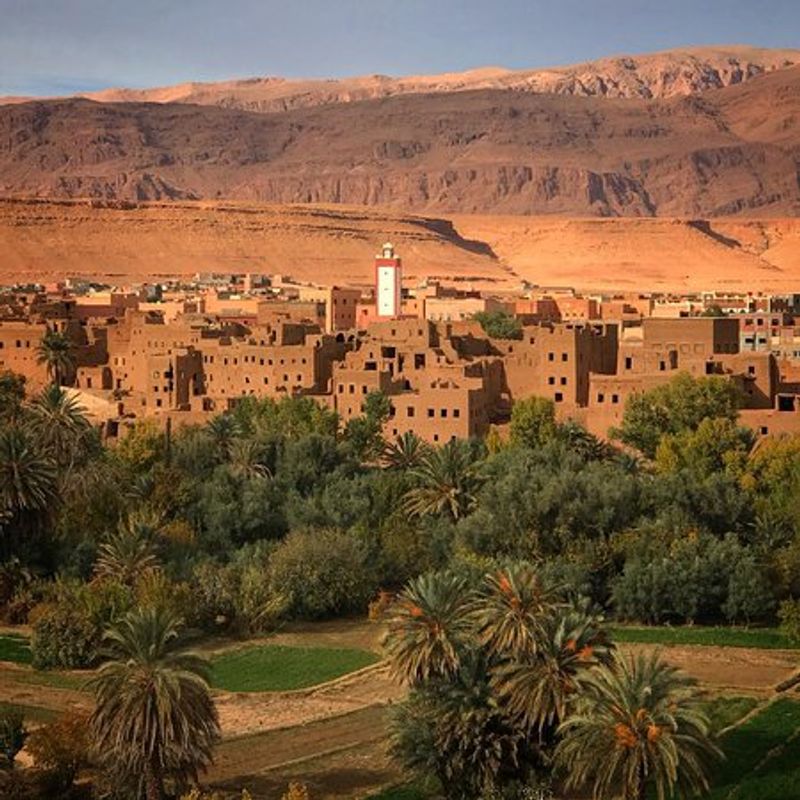
From a viewpoint above the town of Tinghir, also spelled Tinerhir, the palm grove below looks like a river of green cutting through a landscape of red rock and dry earth. The contrast is vivid and immediate, and it explains why this stop on southern Morocco’s desert routes has drawn travelers for generations.
The grove runs along the valley floor near the Todra River and serves as a green corridor connecting the town to the famous Todra Gorge, one of Morocco’s most dramatic canyon landscapes. Visitors often walk or cycle through the oasis before heading deeper into the gorge, where the canyon walls narrow dramatically and the light changes by the hour.
Recent Morocco travel guides continue to describe Tinghir’s palm oasis as a standout feature of the region. The combination of the grove, the gorge, and the surrounding High Atlas and desert scenery makes Tinghir one of the more complete oasis stops on any southern Morocco itinerary.
Markets and traditional crafts add to the local character.
Wadi Bani Khalid, Oman
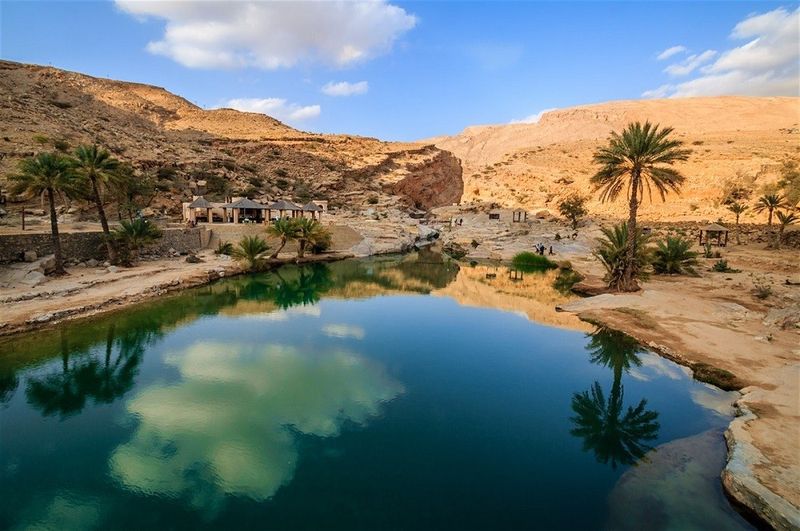
Wadi Bani Khalid delivers one of the most visually surprising experiences in Oman: clear, turquoise pools sitting in the middle of a rugged desert landscape of pale limestone and date palms. It is technically a wadi, meaning a seasonal desert watercourse, rather than a traditional still-water oasis.
But the pools here are permanent and well known, which makes the distinction feel academic once you are standing at the water’s edge.
The wadi is commonly visited as a day trip from Muscat or as part of a route that includes the Sharqiya Sands, Oman’s most famous dune region. Moving from rolling sand dunes to clear swimming pools within a single afternoon gives the contrast a particular kind of impact.
Current travel guides describe Wadi Bani Khalid as an accessible visitor destination with walking paths, facilities, and shaded areas near the main pools. It is one of Oman’s most photographed natural sites, and the combination of cliffs, palms, and water explains that popularity without any exaggeration.
Crescent Lake, Dunhuang, China
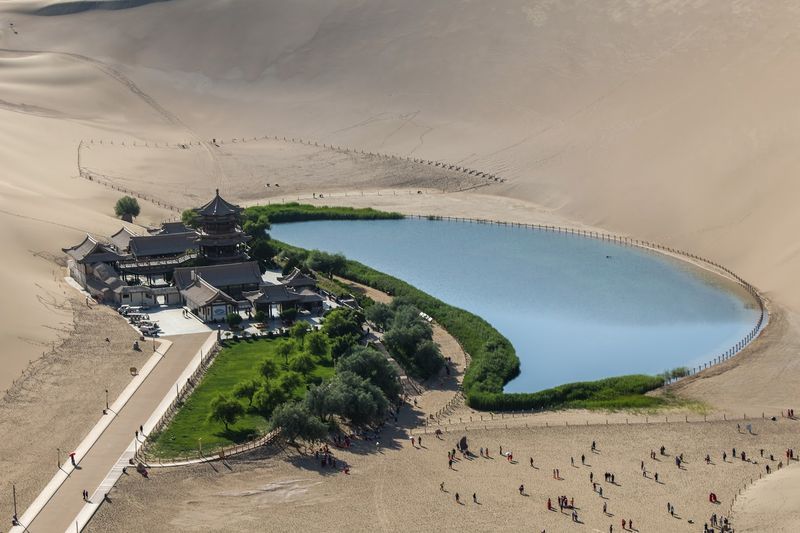
Crescent Lake, known in Chinese as Yueyaquan, earns its name from the narrow, curved shape that gives it the appearance of a sliver of moon pressed into the desert floor. It sits beside the Mingsha Shan, or Singing Sand Dunes, near Dunhuang in Gansu Province, along what was once a key section of the ancient Silk Road.
The lake has faced environmental pressure over the decades, with water levels dropping significantly at various points due to groundwater extraction and land use changes in the surrounding area. Conservation and water-management efforts have helped stabilize the lake as a visitor landmark, though its long-term preservation remains an ongoing concern.
Current China travel guides describe Crescent Lake as a major tourist attraction with organized activities including camel rides, sand sledding, and sunset viewpoints from the dune ridges. The combination of the curved lake, the surrounding dunes, and the Dunhuang area’s Silk Road heritage makes this stop one of the most historically layered oasis experiences on the entire list.
Thousand Palms Oasis Preserve, California, United States
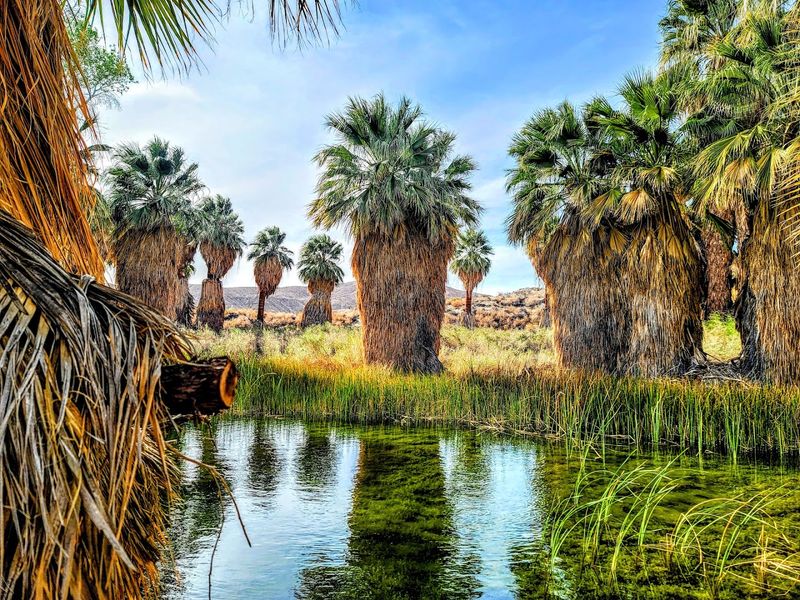
Not every oasis requires a passport and a long-haul flight. Thousand Palms Oasis Preserve in California’s Coachella Valley, not far from Palm Springs, protects one of the largest native California fan palm groves in the state.
The palms grow here because fault lines connected to the San Andreas system push underground water up to the surface, creating a genuine desert oasis through geological forces rather than human irrigation.
The Bureau of Land Management and the Center for Natural Lands Management both recognize the preserve’s ecological value, which includes freshwater wetland, desert sand dunes, palm woodland, desert wash, and desert scrub habitats within a relatively compact area. That variety makes it an interesting stop for hikers and naturalists as well as casual visitors.
Trails wind through the palm groves and give access to the wetland areas where water surfaces visibly from the ground. For anyone who assumed that desert oases were only found in the Sahara or the Arabian Peninsula, Thousand Palms is a convincing and close-to-home counterargument.
Share this story