Some buildings stop you in your tracks the moment you walk through the door. Historic American theaters are exactly that kind of place.
Built during an era when going to the movies or seeing a live show was considered a grand event, these theaters were designed to impress, transport, and overwhelm in the best possible way. From ceilings painted to look like starry night skies to grand staircases inspired by Parisian opera houses, these venues tell stories that go far beyond what happens on stage.
Whether you are a history lover, an architecture fan, or just someone who appreciates a jaw-dropping room, this list covers thirteen theaters that have stood the test of time and still deliver something genuinely spectacular. Each one has its own personality, its own backstory, and its own reason to visit.
Fox Theatre, Atlanta, Georgia
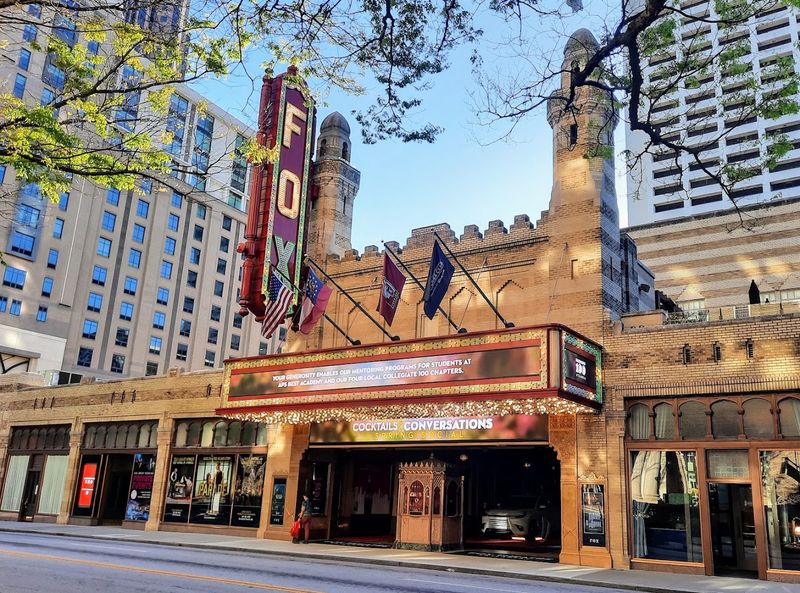
Before it ever showed a single film, the Fox Theatre in Atlanta was planned as a grand Shriners temple. That origin story explains a lot about why this 1929 building looks unlike anything else in the city.
The design blends Moorish and Egyptian influences in a way that feels theatrical even before the curtain rises.
The auditorium ceiling is one of its most talked-about features, designed to mimic a glowing night sky complete with twinkling stars and drifting cloud effects. Elaborate arches, painted details, and ornate public spaces fill the rest of the building with the same sense of spectacle.
Designated a National Historic Landmark, the Fox Theatre remains one of Atlanta’s most active performing arts venues. It regularly hosts Broadway productions, concerts, ballet, classic films, and guided tours.
Seeing a show here means experiencing architecture that was built to make ordinary nights feel extraordinary.
Ohio Theatre, Columbus, Ohio
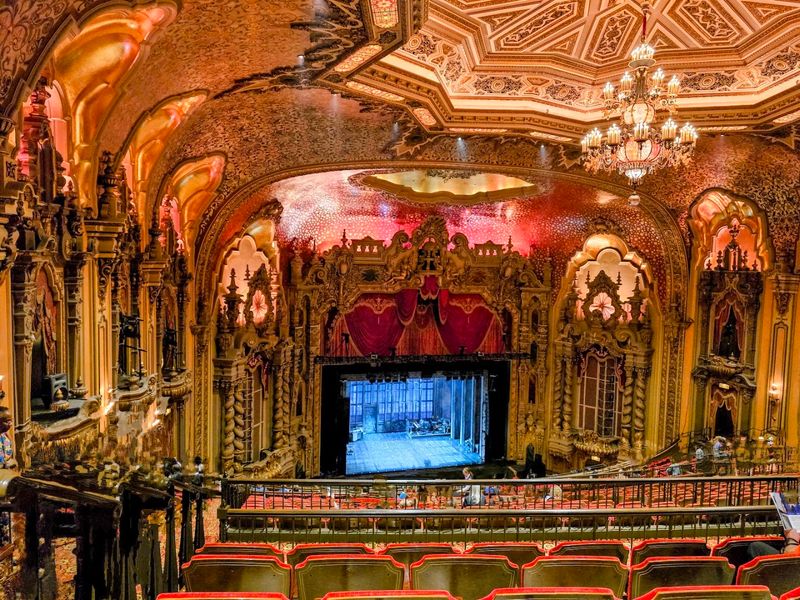
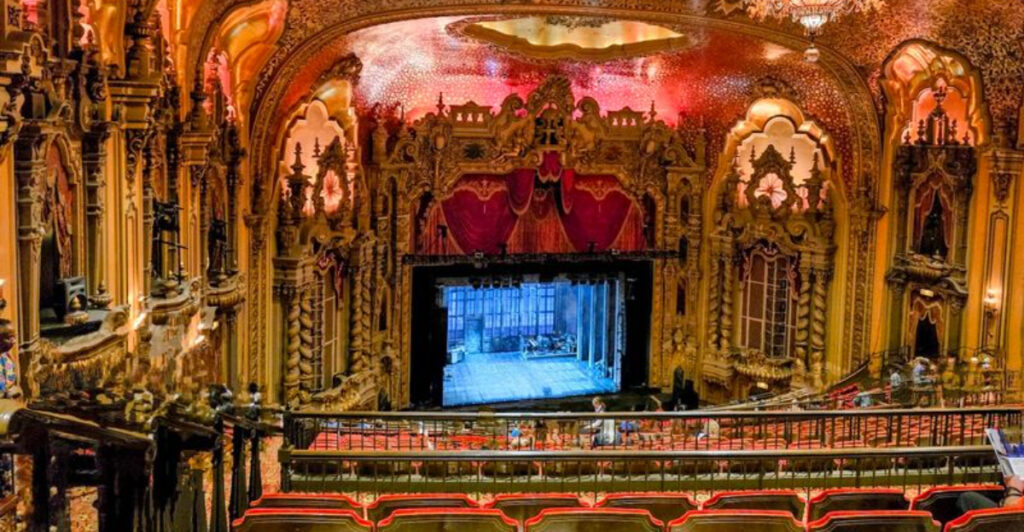
Thomas W. Lamb designed the Ohio Theatre in Columbus in 1928 with one clear goal: pull people away from everyday life the moment they walked in.
The Spanish Baroque interior achieves exactly that, with ornate detailing, layered architectural elements, and a scale that still feels grand nearly a century later.
By 1969, the theater faced demolition, which would have been a real loss for Columbus. A community effort led by what became CAPA saved and restored the building, and today it stands as proof that historic preservation genuinely pays off.
The Ohio Theatre is still one of the city’s most active performing arts spaces, hosting the Columbus Symphony, BalletMet, Broadway touring productions, opera, and a beloved summer classic film series. The combination of an intact old-theater atmosphere and a full calendar of events makes it one of the most compelling venues on this entire list.
Majestic Theatre, San Antonio, Texas
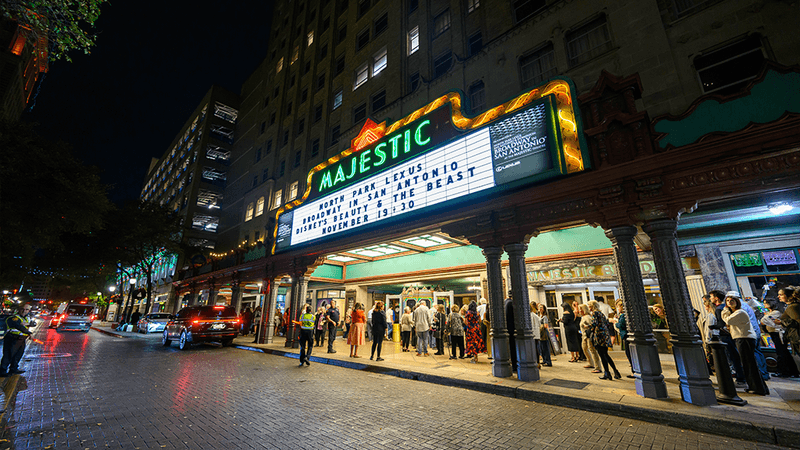
John Eberson was known for designing theaters that felt less like indoor halls and more like open-air courtyards, and the Majestic Theatre in San Antonio is one of his finest examples. Opened in 1929, it is the oldest and largest atmospheric theater in San Antonio, with Spanish and Moorish design elements that make the auditorium feel like something between a palace and an outdoor plaza.
The ceiling and upper walls are decorated to suggest a sky and architecture beyond, which gives the whole space a sense of depth that standard theaters simply do not have. It is a design trick that still works beautifully today.
The Majestic continues operating as a major touring venue, with Broadway productions, concerts, comedy, and special events filling its calendar year-round. Its 2026-27 Broadway season alone includes more than 100 performances, which says everything about how relevant this 1929 building remains in modern San Antonio.
Saenger Theatre, New Orleans, Louisiana
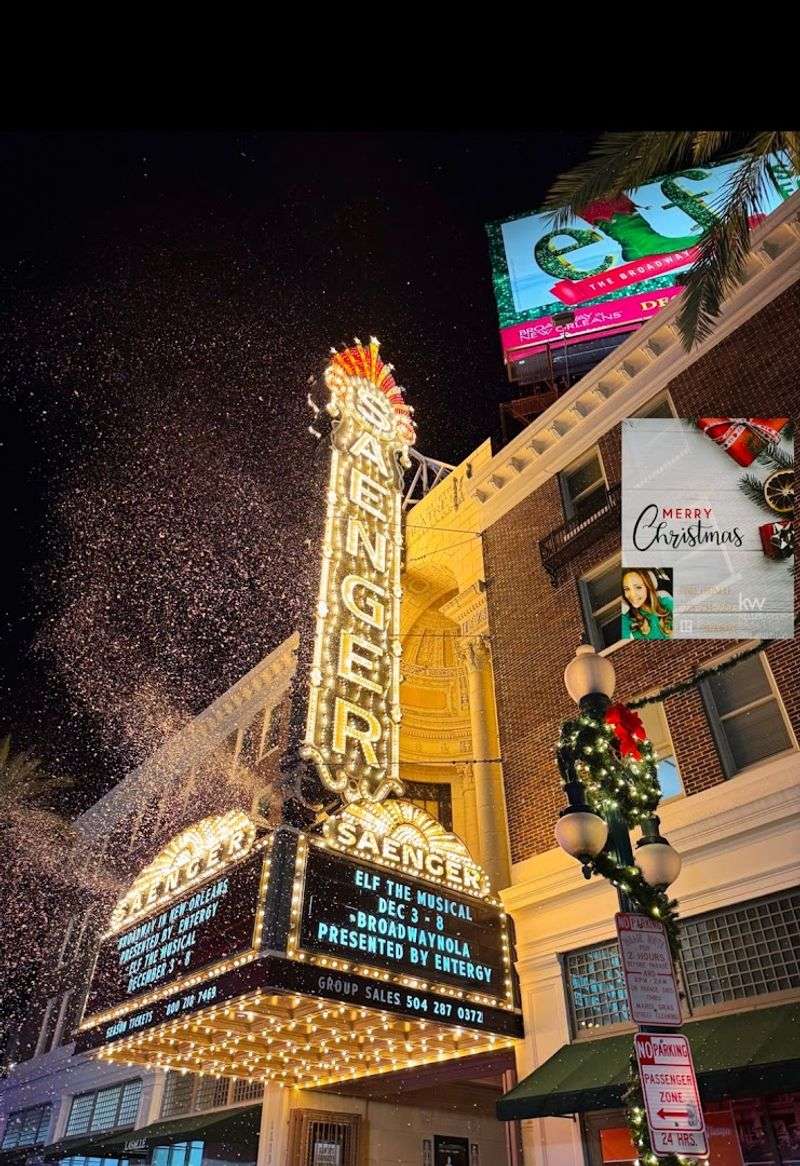
When the Saenger Theatre opened in New Orleans in 1927, its designers wanted audiences to feel like they were sitting in an Italian Baroque outdoor courtyard, complete with a ceiling arranged to suggest constellations and moving sky effects. That kind of theatrical ambition was common in the golden age of movie palaces, but the Saenger pulled it off particularly well.
Hurricane Katrina caused serious damage to the building, and its eventual restoration was one of the more meaningful historic preservation stories in post-storm New Orleans. The theater came back with its character largely intact and rejoined Canal Street as one of the city’s signature live-performance venues.
Today, the Saenger hosts Broadway tours, concerts, comedy, and a range of other events that keep the building active throughout the year. For visitors to New Orleans who want to experience the city’s cultural depth beyond the French Quarter, a show at the Saenger is a strong choice.
Kings Theatre, Brooklyn, New York
Kings Theatre has one of the more dramatic comeback stories in American theater history. It opened in 1929 as one of the Loew’s Wonder Theatres, a small group of extraordinarily lavish movie palaces built across the New York area.
Then it sat dark and deteriorating for decades, becoming a kind of ghost palace in Brooklyn’s Flatbush neighborhood.
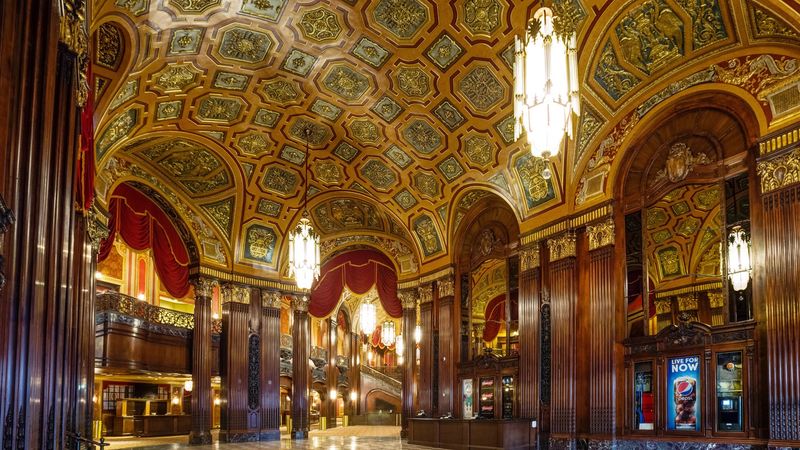
Its 2015 reopening after a major restoration brought back the full French Baroque splendor of the original design, including a grand lobby, towering ceilings, richly decorated lounges, and a 3,250-seat auditorium filled with intricate plasterwork.
Now operated by ATG Entertainment, Kings Theatre hosts concerts, comedy, cultural events, and touring performances on a regular basis. The restoration was thorough enough that the building feels genuinely historic rather than like a reproduction.
For anyone curious about what a great 1929 movie palace actually looked like at its peak, Kings Theatre answers that question beautifully.
Paramount Theatre, Oakland, California
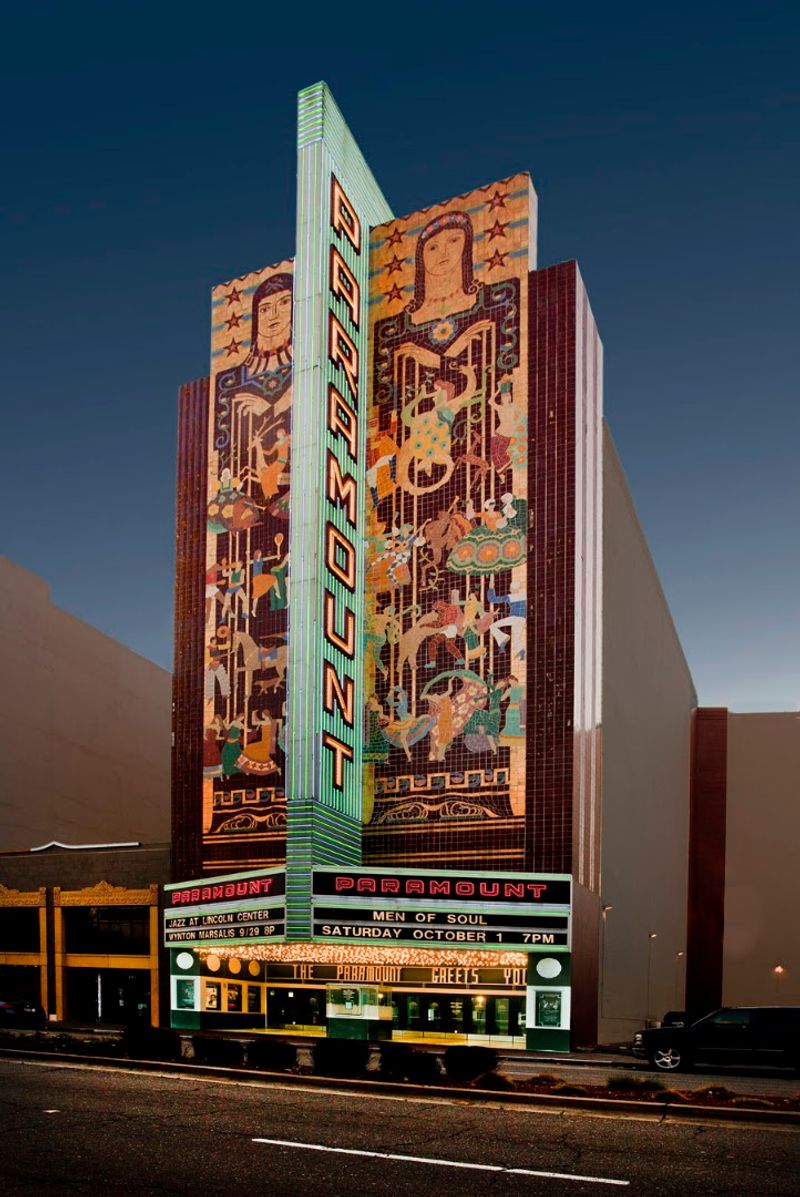
Art Deco and Moorish atmospheric theaters are very different animals, and the Paramount Theatre in Oakland shows exactly what the Art Deco approach could achieve at its most confident. Opened in 1931, it was the largest multi-purpose theater on the West Coast at the time, and its design still communicates that sense of scale and ambition.
The dramatic lobby, geometric decorative details, and the famous Fountain of Light elements give the Paramount a visual language that feels distinct from the Spanish and Baroque theaters elsewhere on this list. It is bold, structured, and unmistakably of its era in the best possible way.
Today, the Paramount serves as home to the Oakland Symphony and Oakland Ballet, while also hosting concerts, comedy, classic movies, and special events throughout the year. The combination of a functioning arts institution and a genuinely preserved Art Deco interior makes this one of the West Coast’s most worthwhile historic theater visits.
Shea’s Buffalo Theatre, Buffalo, New York
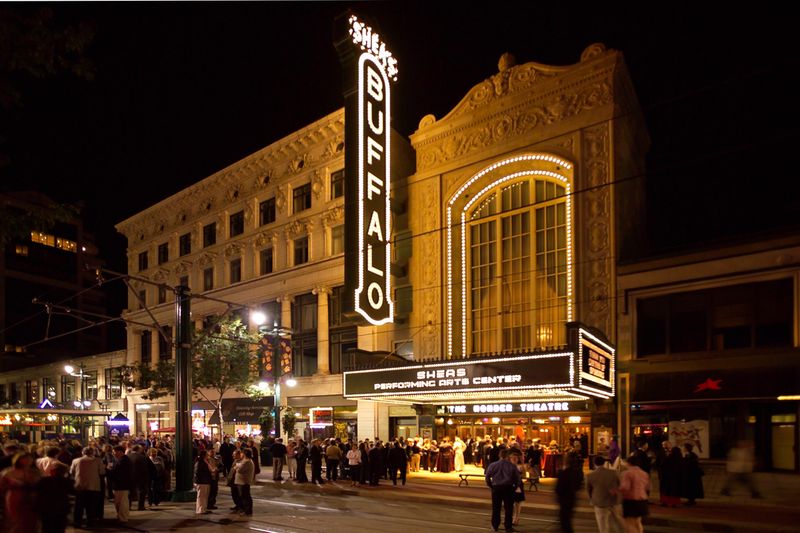
Shea’s Buffalo Theatre opened in 1926 as a silent movie palace, which means it was designed during an era when the building itself had to do a lot of the entertaining. Designed by the Rapp brothers, the interior is the kind of space where visitors tend to look up before they even find their seats, drawn in by layers of ornate detail overhead.
One of its most distinctive features is its original theater organ, which is among the few in the United States still operating in the exact theater it was built for. That kind of continuity is genuinely rare and adds a dimension to the Shea’s experience that most restored theaters simply cannot replicate.
Now the centerpiece of Shea’s Performing Arts Center in downtown Buffalo, the theater remains active with touring Broadway musicals, concerts, and special events throughout the year. Its long history and well-preserved interior make it one of the most compelling historic venues in upstate New York.
Pabst Theater, Milwaukee, Wisconsin
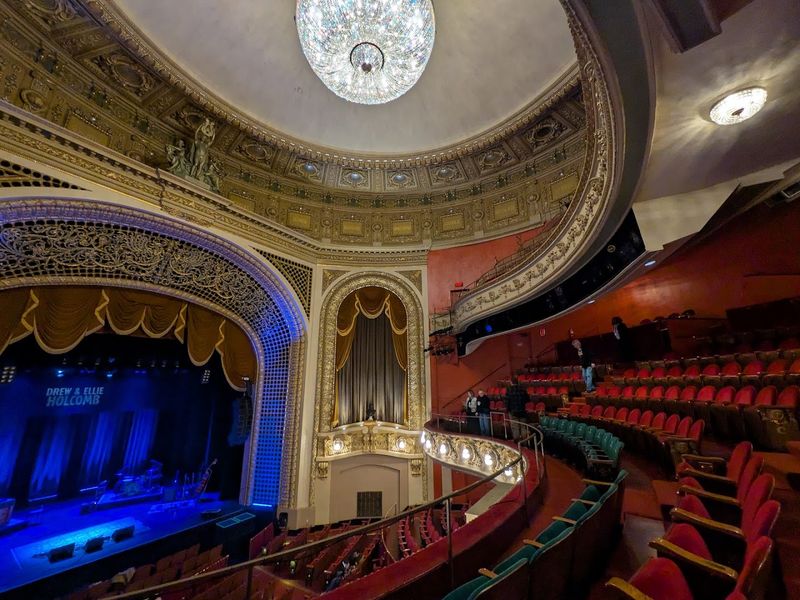
Opening in 1895 puts the Pabst Theater in a completely different category from the 1920s movie palaces on this list. It is one of the oldest continuously operating theaters in the United States, and its German Renaissance Revival design gives it a European opera-house atmosphere that feels more intimate and refined than the grand atmospheric theaters of later decades.
Inside, the auditorium is defined by rich red and gold tones, two balconies, a large Austrian crystal chandelier, marble stair detailing, and a gold-leaf proscenium arch. Every element was chosen to create an elegant, formal setting without feeling cold or stiff.
The Pabst hosts around 100 events per year, covering music, comedy, dance, opera, and theatrical performances across a wide range of styles and audiences. For Milwaukee visitors interested in experiencing a piece of 19th-century American theater culture that has remained genuinely intact, the Pabst is a remarkable and often underappreciated destination.
Fabulous Fox Theatre, St. Louis, Missouri
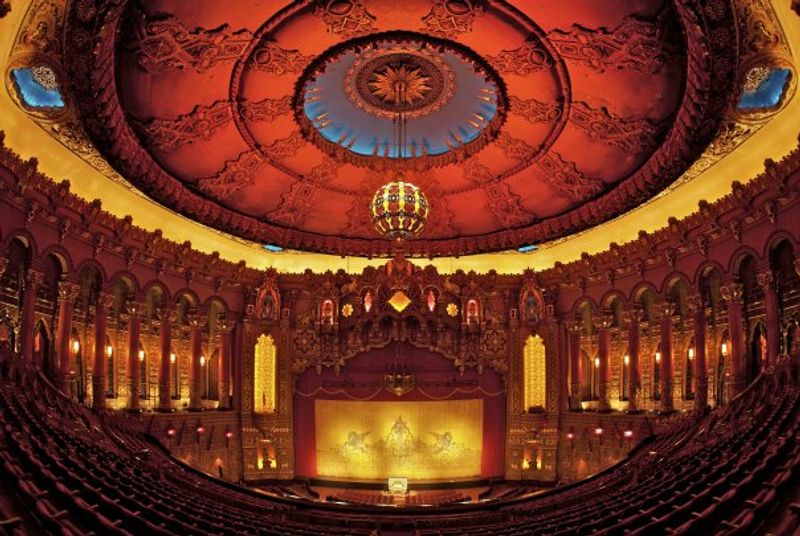
The description most often attached to the Fabulous Fox Theatre in St. Louis is Siamese Byzantine, which is a phrase that tells you immediately this building does not follow the usual playbook. Designed by C.
Howard Crane and opened in 1929, the interior leans into Asian-inspired decorative motifs, bold color, and a layered ornamental style that feels genuinely unlike any other theater in the country.
After closing in 1978, the theater sat unused until a restoration effort brought it back in 1982. That revival has proven durable, and today the Fabulous Fox is one of St. Louis’s most active performing arts venues, hosting Broadway tours, major concerts, comedy, and other large-scale live events.
The sheer visual extravagance of the interior is the main draw for first-time visitors, but the consistent programming keeps people coming back. If you have ever wondered what a 1929 movie palace designed to look Siamese Byzantine actually means in practice, St. Louis has your answer.
Alabama Theatre, Birmingham, Alabama
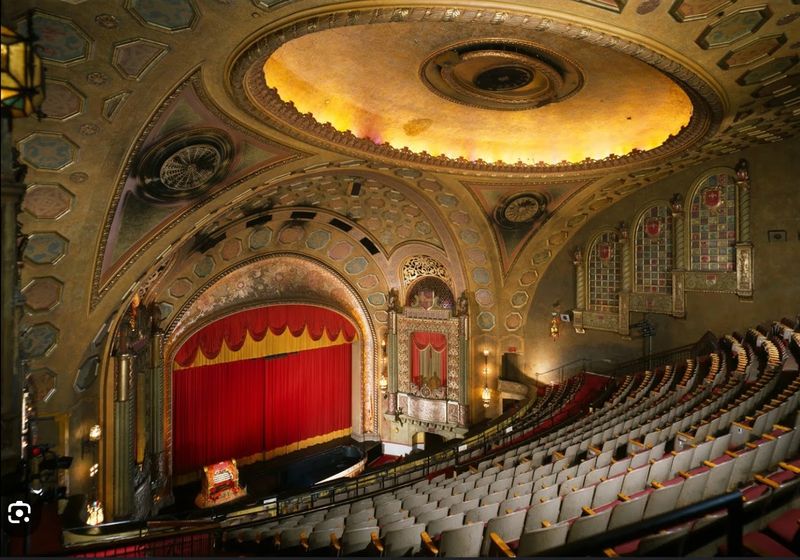
Built in 1927 as the southeastern flagship of the Publix Theatres chain, the Alabama Theatre in Birmingham was designed to be impressive from the moment it opened. Its Mission and Spanish Revival design, original Wurlitzer organ, and grand auditorium gave the South a movie palace that could compete with anything being built in larger American cities at the time.
The theater eventually fell into disuse, but Birmingham Landmarks stepped in and led a restoration that brought the Alabama back to operating condition. That preservation effort is what makes the theater’s current activity possible, and the results are significant.
Today, the Alabama Theatre hosts approximately 250 events each year, covering concerts, films, ballet, opera, and theatrical performances. That volume of programming, combined with a well-maintained historic interior and a working Wurlitzer, makes it one of the most active and atmospheric surviving movie palaces in the American South.
It earns its place on any serious list of great historic theaters.
Byrd Theatre, Richmond, Virginia
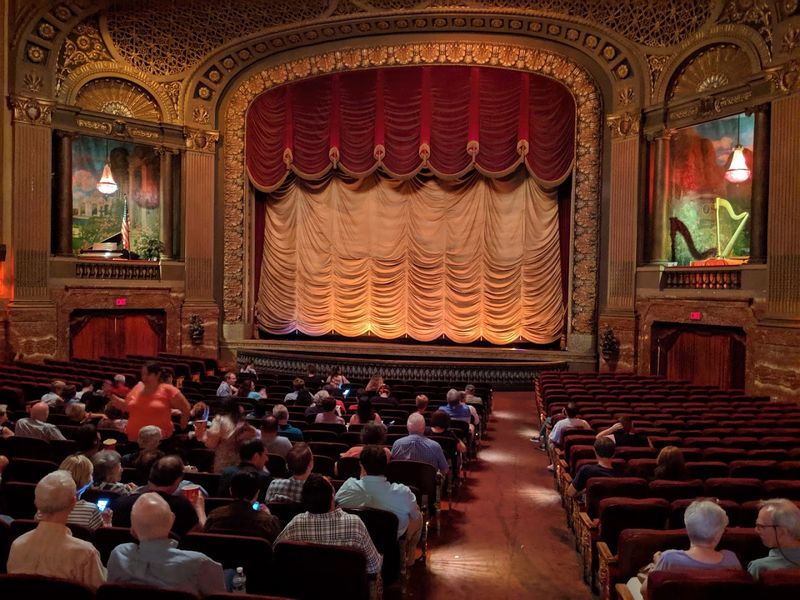
Opening on Christmas Eve in 1928, the Byrd Theatre has carried the nickname Richmond’s Movie Palace for nearly a century, and the interior makes clear why that title has stuck around. The French Empire design includes a marble foyer, original murals, a grand chandelier, and a Wurlitzer organ that still gets played before certain screenings, giving the whole experience a layer of old-fashioned ceremony that modern multiplexes have completely abandoned.
Located in Richmond’s Carytown neighborhood, the Byrd continues to show films rather than transitioning entirely to live performances. The programming includes classic films, family movies, art-house selections, and festival screenings, which keeps the theater connected to its original purpose in a way that feels refreshingly authentic.
The Mighty Wurlitzer remains central to the Byrd’s identity, regularly reminding audiences that this is not just a screen in a decorated room but a genuine surviving piece of American cinema culture. For film lovers, it is a rare find.
Louisville Palace, Louisville, Kentucky
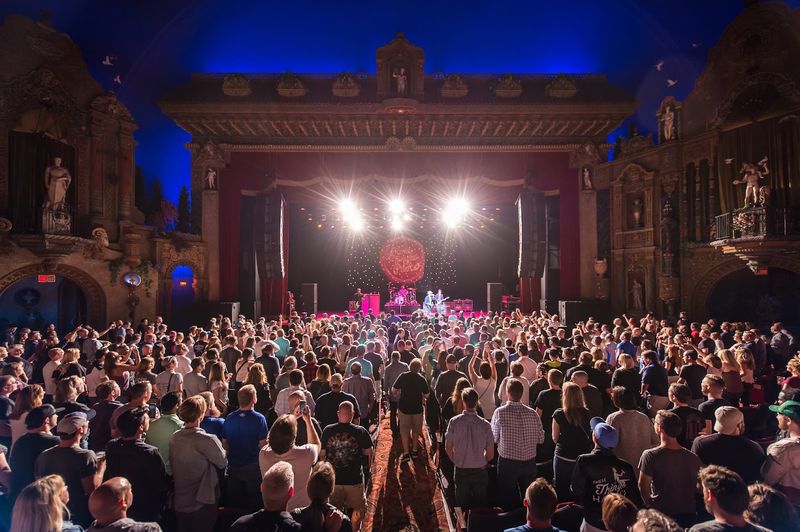
John Eberson designed the Louisville Palace with the same atmospheric philosophy he brought to the Majestic in San Antonio, but the result here has its own distinct personality. Opened in 1928 as Loew’s Theatre, the building features Spanish Baroque arcades, balconies, turrets, bold color choices, and a vaulted ceiling decorated with dozens of sculpted faces looking down at the audience.
The auditorium also includes an imitation nighttime sky, which was Eberson’s signature touch and still creates an unusually immersive feeling for theatergoers seated below it. Few interior design choices in American theater history have aged as well as a well-executed atmospheric ceiling.
After being rededicated in 1994, the Louisville Palace became an active music and event venue that continues to host concerts, films, and touring performers throughout the year. For visitors to Louisville who want something more memorable than a standard concert hall, the Palace delivers a setting that genuinely adds to the experience of any event held inside it.
Chicago Theatre, Chicago, Illinois
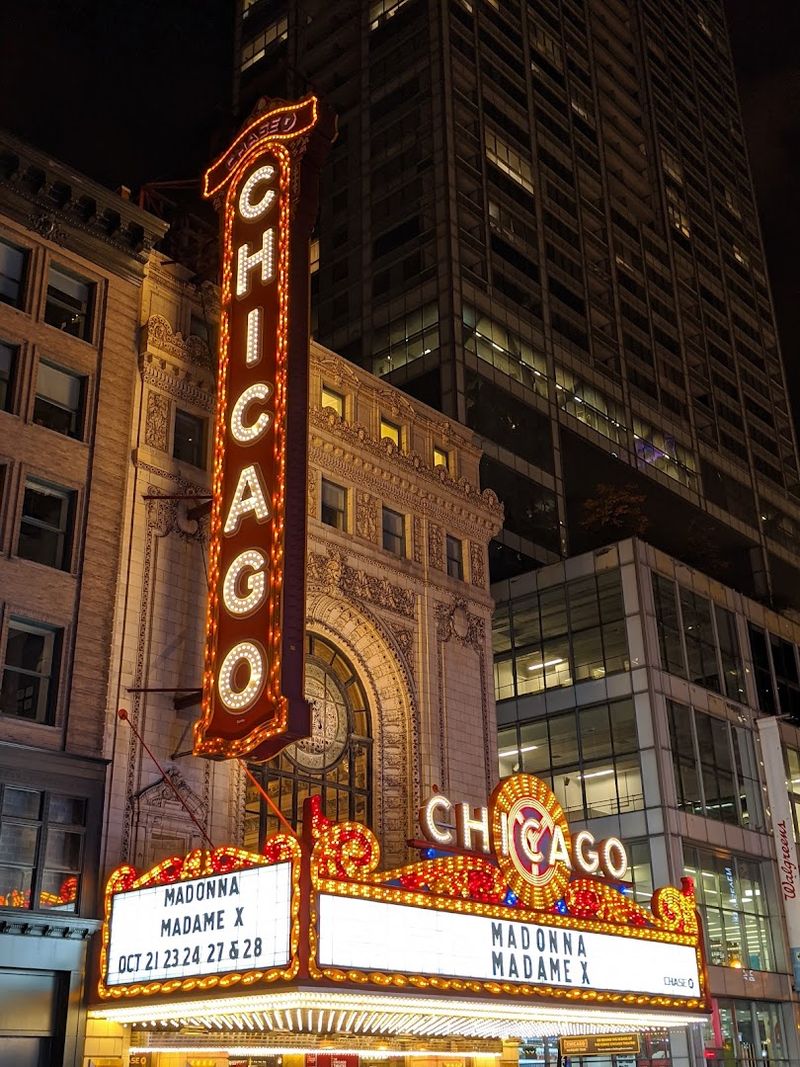
The Chicago Theatre’s famous marquee on State Street is one of the most photographed signs in the city, but the interior is the part that genuinely earns the building its reputation. The grand staircase was modeled after the Paris Opera House, which sets a high bar for what visitors encounter the moment they move past the lobby.
Crystal chandeliers, bronze light fixtures, and richly decorated public spaces fill the rest of the building with a level of detail that reflects the ambitions of the 1920s theater industry at its most confident. The architects wanted every inch of the building to feel significant, and that intention still reads clearly today.
Located in the heart of downtown Chicago, the theater remains one of the city’s landmark venues for touring shows, concerts, comedy, and special performances. The architecture here is not just backdrop; it genuinely shapes how a show feels.
Attending an event at the Chicago Theatre means the building is part of what you are paying for.
Share this story