Long before computers, cranes, or reinforced concrete existed, ancient builders were already solving some of the toughest engineering puzzles on earth. Using stone, timber, and lime mortar, they created bridges that have carried people across rivers for hundreds, even thousands, of years.
Some of these bridges are still in use today, which is pretty incredible when you think about it. From Roman arches to Ottoman masterpieces, these 13 bridges prove that brilliant engineering did not start with the Industrial Revolution.
Pons Fabricius, Italy
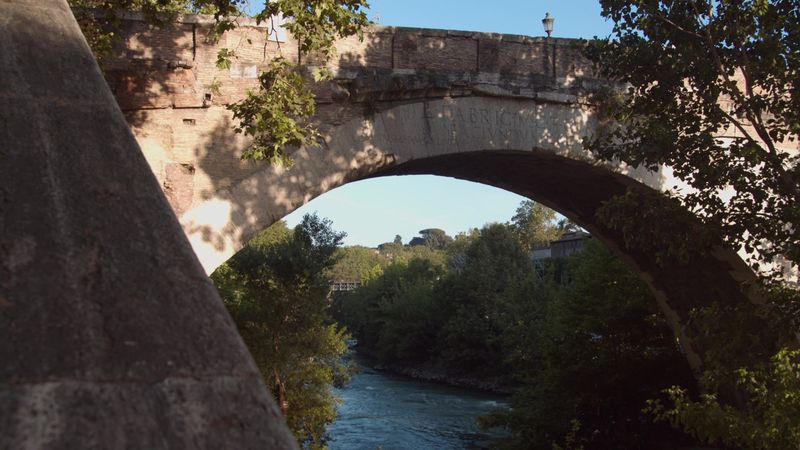
Over 2,000 years old and still carrying foot traffic, Pons Fabricius is basically the overachiever of ancient bridges. Built in 62 B.C., it connects Tiber Island with Rome’s eastern bank and replaced an earlier wooden crossing.
Inscriptions carved directly into the stone preserve the name of Lucius Fabricius, the official who commissioned it.
Flood damage prompted repairs even within the first century B.C., and later popes ordered additional restoration work over the centuries. Yet despite those interventions, the core Roman masonry has never stopped doing its job.
The fact that it survived countless floods, political upheavals, and two millennia of wear is almost unbelievable.
Visitors walking across it today are treading the same path Roman citizens used during the age of Julius Caesar. No modern reinforcement holds it together.
The arch geometry the Romans perfected simply works, and Pons Fabricius is the best surviving proof of that in the entire city. It remains the oldest bridge in Rome still serving its original purpose.
Alcantara Bridge, Spain
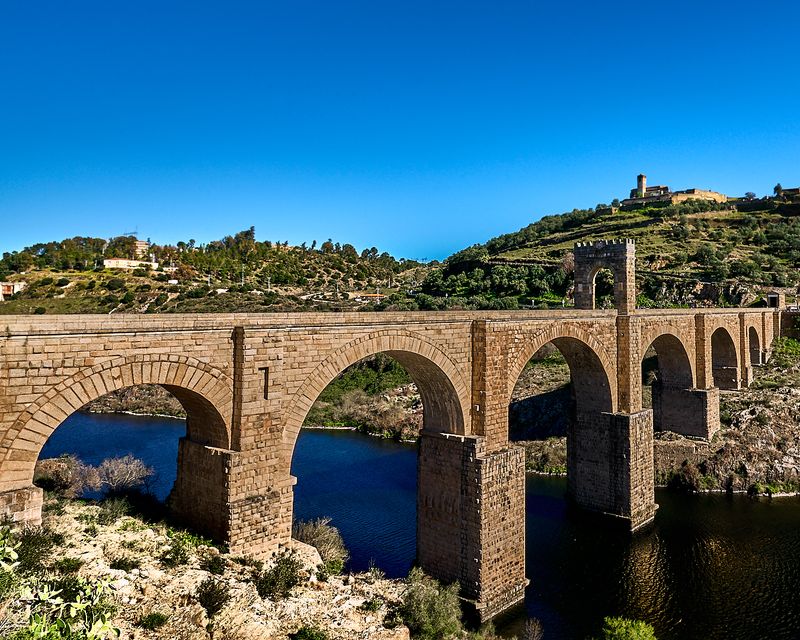
Standing nearly 71 meters above the Tagus River gorge, the Alcantara Bridge looks less like a road and more like something a giant carved out of the earth. Roman builders completed it in the early second century A.D., stretching six massive semicircular arches across roughly 194 meters of open air and rushing water below.
A triumphal arch dedicated to Emperor Trajan crowns the bridge’s center, and a small temple at one entrance still bears the name of its builder, Gaius Julius Lacer. That level of personal pride in public infrastructure was rare, which tells you how impressive even the Romans considered this project.
Wars have battered the bridge repeatedly over the centuries, and repairs have been necessary more than once. Still, the principal Roman form remains clearly visible and structurally sound.
Engineers today study it to understand how ancient builders distributed enormous loads across stone arches without a single bolt or steel cable. Alcantara is one of the most powerful reminders that Roman construction was not primitive.
It was precise, thoughtful, and built to last far longer than anyone could have predicted.
Ponte Sant’Angelo, Italy
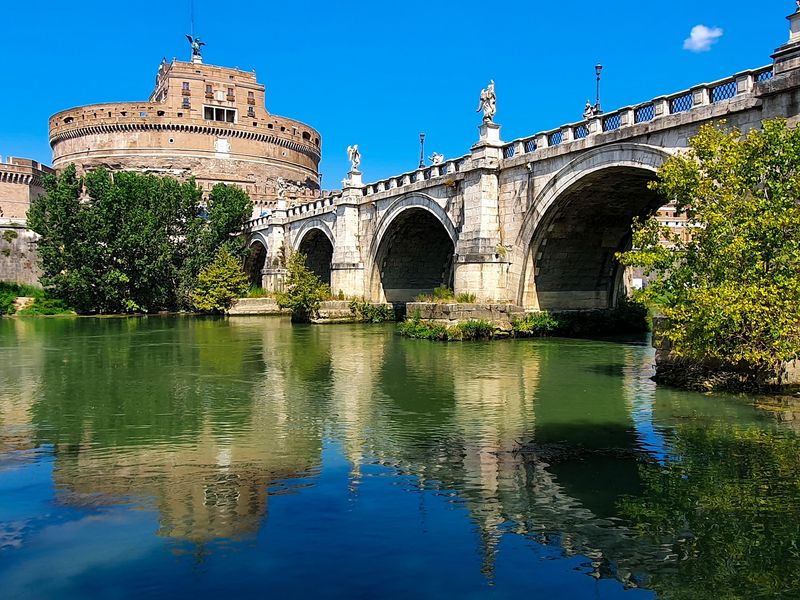
Picture a Roman emperor deciding his mausoleum needed a worthy front entrance, so he built an entire bridge to match. That is essentially how Ponte Sant’Angelo came to exist.
Emperor Hadrian commissioned it around A.D. 136, originally naming it Pons Aelius after his own family, to connect Rome with his grand new tomb.
Centuries later, it became the main route for Christian pilgrims walking toward St. Peter’s Basilica, which dramatically changed its cultural meaning. Rome’s tourism records note that defensive towers were eventually demolished and statues of Saints Peter and Paul were added to mark its religious importance.
The transformation that really turned heads came in the 17th century, when Bernini designed a celebrated series of angel sculptures for the railings. His pupils executed most of them, and the result is one of the most theatrical bridge experiences in the world.
Today’s visitors are essentially walking across a Roman engineering achievement that later became a Baroque art installation. The bones of the structure date back nearly 1,900 years, even as its dramatic skyline silhouette belongs to a much later artistic era.
Few bridges carry that many layers of history at once.
Zhaozhou Bridge, China
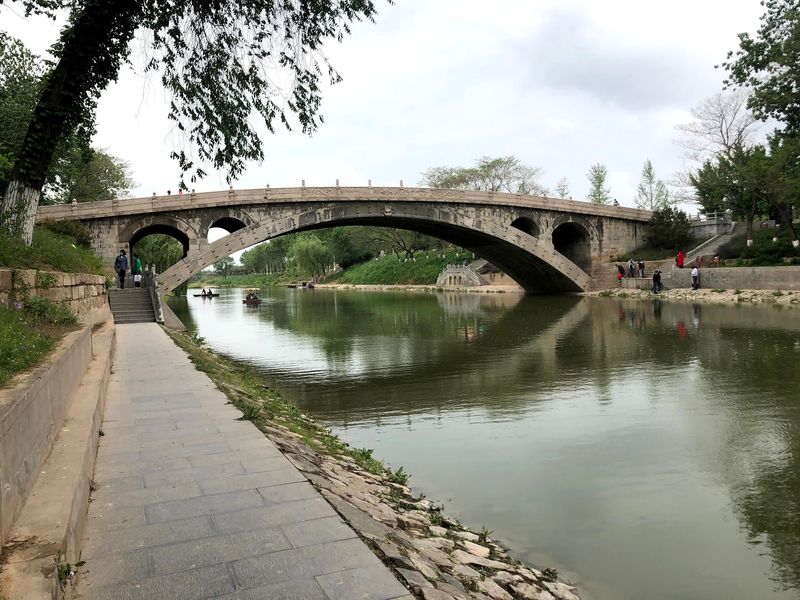
Imagine solving a structural problem so cleverly that engineers are still talking about your solution 1,400 years later. That is the legacy of master builder Li Chun, who constructed Zhaozhou Bridge between approximately A.D. 595 and 605 during China’s Sui dynasty.
His main innovation sounds almost obvious once you hear it, but nobody had done it quite like this before.
Instead of filling the space above the main arch with solid stone, he cut smaller arches into those areas. This reduced the bridge’s total weight significantly and gave floodwater extra paths to pass through, protecting the structure from hydraulic pressure.
The main span stretches 37.02 meters across a total bridge length of 64.4 meters.
UNESCO technical documentation identifies it as the world’s oldest surviving open-spandrel segmental arch bridge, a title it has held for over fourteen centuries. The segmental arch itself was a bold choice because it is flatter than a semicircular arch, which creates greater outward thrust at the foundations.
Li Chun solved that problem too. Zhaozhou Bridge sits in Hebei Province today as both a working monument and a reference point for anyone studying the history of structural engineering worldwide.
Phra Phutthos Bridge, Cambodia
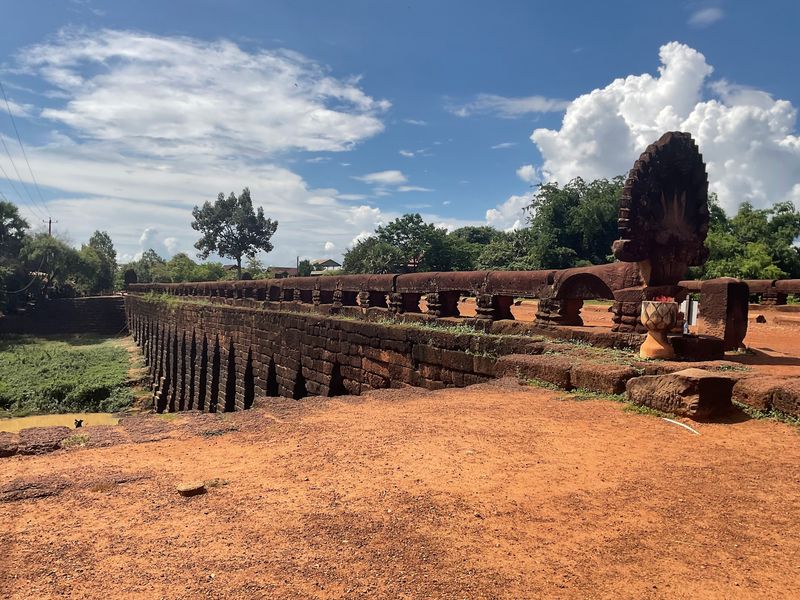
Hidden in the Cambodian countryside near Kampong Kdei, this ancient Khmer crossing has quietly outlasted empires, wars, and centuries of tropical rain. Built around the late 12th century during the reign of Jayavarman VII, Phra Phutthos Bridge was part of a royal road network radiating outward from the legendary city of Angkor.
What makes it structurally fascinating is the construction technique. Rather than using true wedge-shaped arch stones, Khmer builders gradually projected stone courses inward from each side until the two sides met in the middle.
This older method, called corbelling, creates a different kind of arch that works through careful weight stacking rather than compression through angled joints.
UNESCO documentation counts more than 20 of these narrow corbelled arches stretching across roughly 75 meters of river. Armies, officials, pilgrims, and merchants once crossed it regularly as part of the empire’s organized road system.
The fact that massive stone construction using a pre-Roman technique survived centuries of tropical weather, flooding, and jungle growth says a great deal about Khmer builders’ skill in selecting stone and managing drainage. It remains one of Southeast Asia’s most underappreciated engineering achievements from the ancient world.
Malabadi Bridge, Turkiye
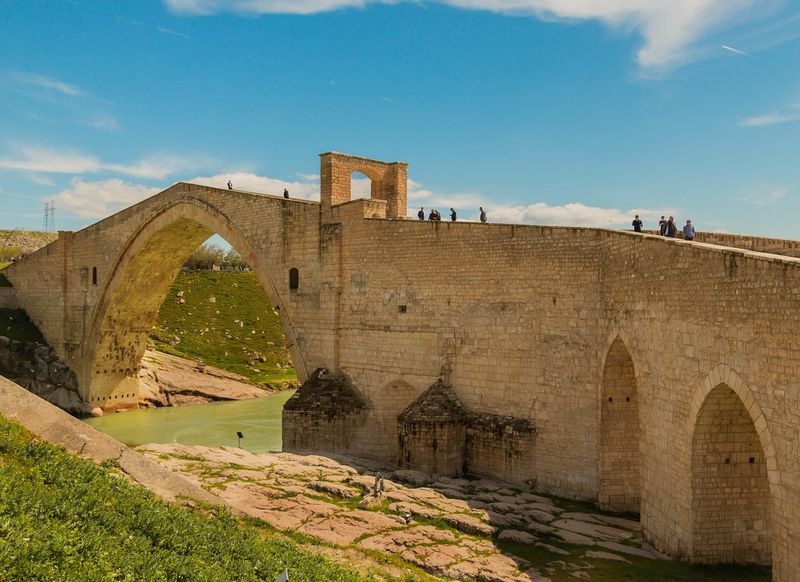
At roughly 40.86 meters, the main span of Malabadi Bridge was one of the widest masonry arches anywhere in the medieval world when it was built during the 12th-century Artuqid period. Spanning the Batman River in southeastern Turkiye, it immediately signals that this was no ordinary transport crossing.
The sheer width of that pointed arch required a level of structural confidence that most builders of the era simply did not attempt.
GoTurkiye highlights the bridge as one of the most important historic structures in the region, and for good reason. Built into the approaches and interior of the structure are rooms where travelers could rest, take shelter from weather, or sleep safely on long journeys.
The bridge was essentially a roadside service station made of stone.
The choice of a pointed arch rather than a semicircular one was deliberate. Pointed arches direct forces more efficiently downward into the piers, allowing for greater spans without proportionally thicker supports.
Medieval builders understood this principle through observation and experience, not mathematical formulas. Malabadi demonstrates that centuries before structural calculations existed, bridge builders were already making sophisticated decisions about geometry, load paths, and the practical needs of the people using their work every day.
Ponte Vecchio, Italy
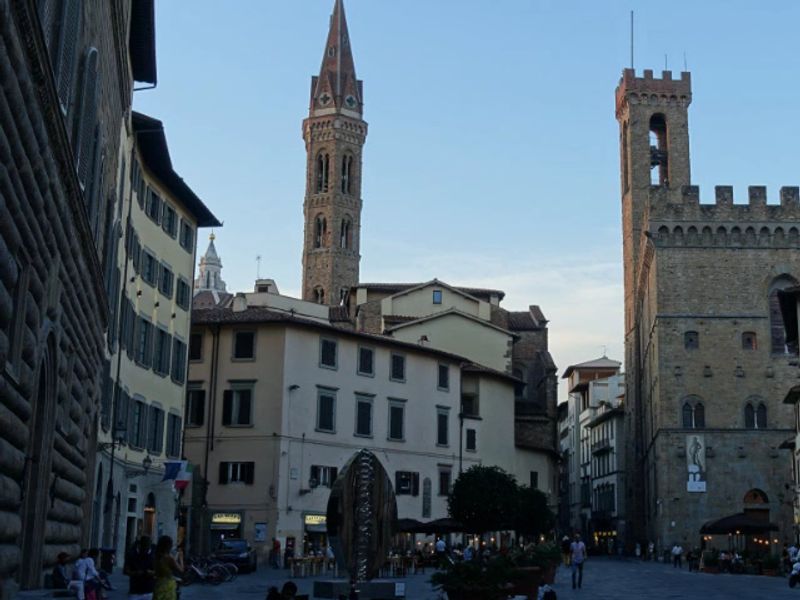
Few bridges on earth double as a shopping street, but Florence’s Ponte Vecchio has been doing exactly that since the 14th century. After a catastrophic Arno flood wiped out an earlier crossing in 1333, builders completed the current three-arch stone bridge in 1345.
The design is traditionally attributed to Taddeo Gaddi, who kept the river piers to just two, creating a stronger and more flood-resistant structure than its predecessor.
Rows of masonry shops were built along both sides from the beginning, originally occupied by butchers and fishmongers. In 1593, the Medici family decided the smells were unbecoming for a bridge they regularly crossed and replaced the food vendors with goldsmiths.
That tradition continues today, making the Ponte Vecchio one of the world’s most unusual retail destinations.
Giorgio Vasari added his elevated corridor above the bridge in 1565, connecting the Uffizi with the Pitti Palace. During the German retreat in 1944, Ponte Vecchio was the only major bridge in Florence spared from demolition, reportedly on Hitler’s personal orders.
Even the devastating 1966 Arno flood, which caused enormous destruction throughout the city, did not compromise its fundamental structure. Medieval engineering and a remarkable run of luck have kept it standing for nearly 700 years.
Charles Bridge, Czech Republic
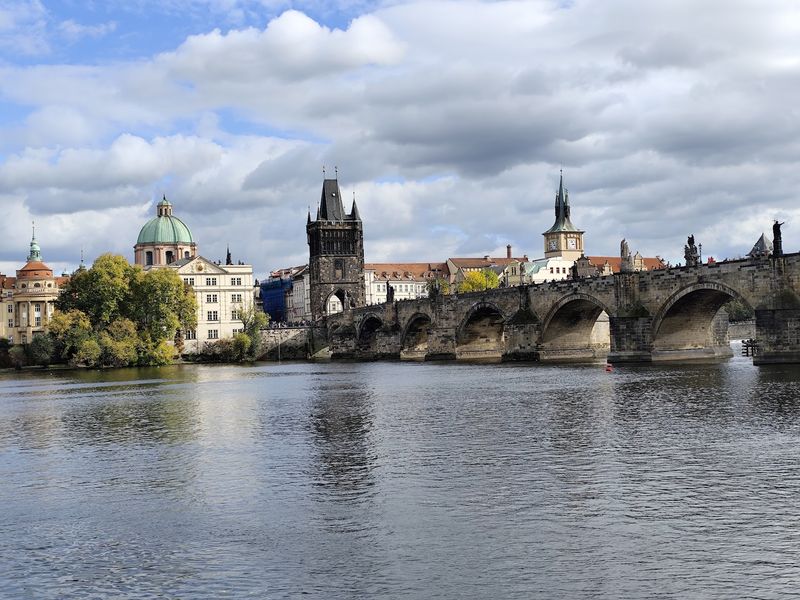
Construction on Prague’s Charles Bridge began in 1357, and the medieval builders who started it were thinking about more than just getting people across the Vltava. King and Holy Roman Emperor Charles IV wanted a crossing that would endure.
Work continued for decades, with completion placed around 1402, and the bridge stretches roughly 516 meters over one of Central Europe’s most powerful rivers.
Builders used sandstone blocks, massive piers, and pointed ice guards to resist the current and seasonal flooding. Even so, the Vltava won some battles.
Severe flooding in 1890 collapsed several arches, requiring significant repairs. The Gothic towers at each end survived intact and remain some of the finest examples of medieval tower architecture in Europe.
The Baroque statues lining the railings were added between the 17th and 18th centuries, giving the bridge a dramatically different visual personality from its original Gothic bones. Today it is one of Europe’s most photographed historic crossings, and on busy mornings it feels more like a slow-moving outdoor art gallery than a road.
Charles Bridge illustrates something true of most medieval infrastructure: survival depends not just on good original construction but on generations of people choosing to maintain and care for what was built before them.
Ponte de Lima, Portugal
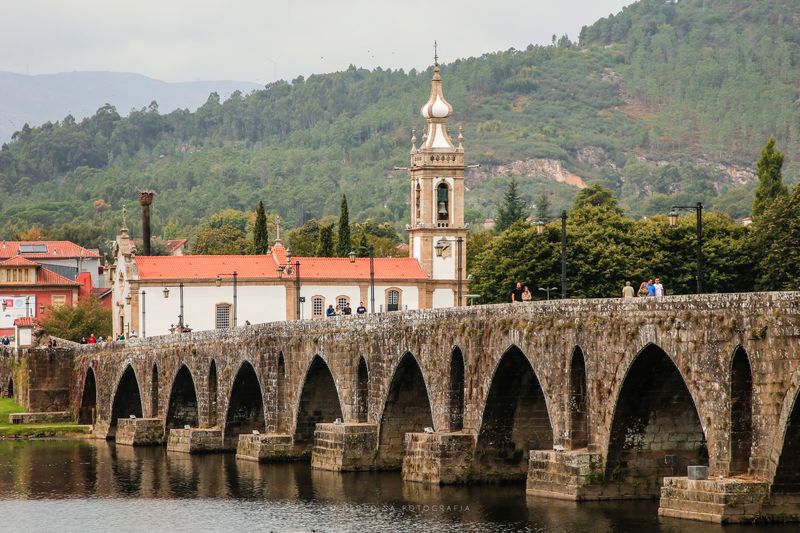
The bridge at Ponte de Lima is less a single engineering achievement and more a conversation between different centuries. A Roman crossing first carried an important road across the Lima River, and that original structure eventually became the foundation for medieval rebuilding and expansion that stretched the bridge considerably.
The town that grew around it eventually took the bridge’s name as its own.
Portugal’s official tourism organization still describes Ponte de Lima through its Roman origins, even though the surviving crossing preserves masonry from several distinct historical periods. Walk across it and you are essentially reading an architectural timeline laid out in stone, each section reflecting a different era’s priorities, materials, and construction methods.
This kind of incremental evolution was common before modern engineering brought master plans and total rebuilds. Rather than tearing down what worked and starting fresh, generations of builders repaired, extended, and adapted structures to meet changing river conditions and growing traffic demands.
The result is a bridge that no single engineer designed from scratch, but that every generation contributed something to. Ponte de Lima is a living example of how infrastructure used to grow organically over time, shaped as much by practical necessity as by any deliberate vision.
Stari Most, Bosnia and Herzegovina
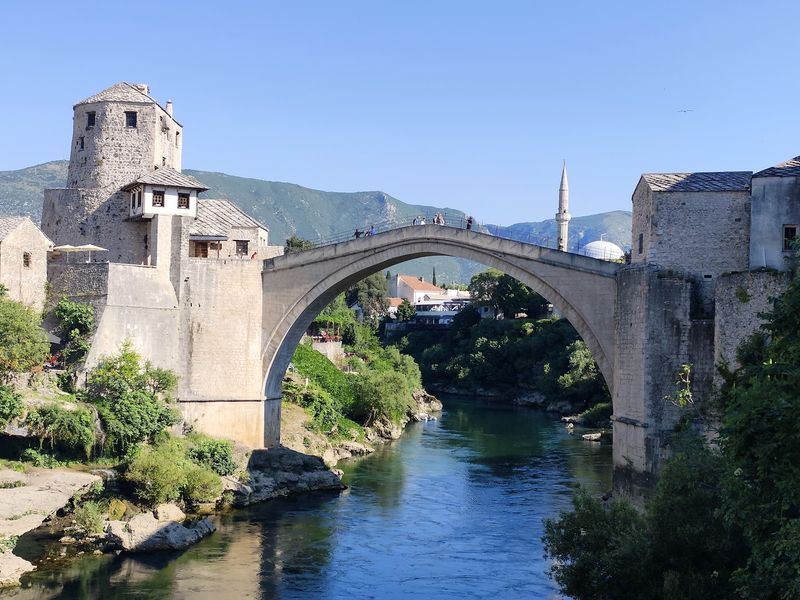
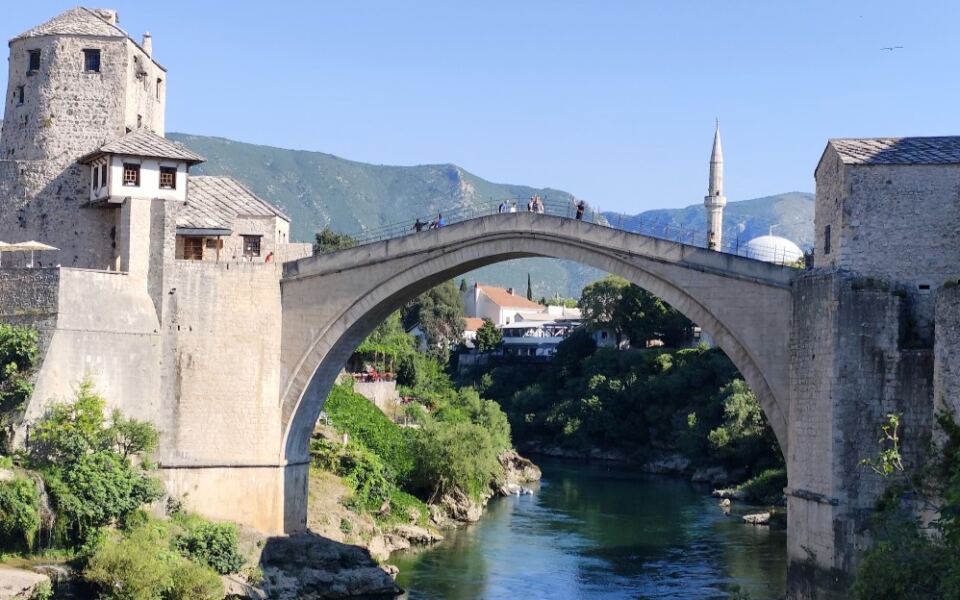
Watching a diver leap from the top of Stari Most into the emerald Neretva far below is one of those travel moments that makes your stomach drop even from the shore. The bridge itself rises steeply from both banks and meets at a single graceful stone arch that seems almost too elegant to be functional.
Mimar Hayruddin, a pupil of the great Ottoman architect Sinan, completed the original in 1566.
Its single arch crossed roughly 27 meters of river while climbing high above the water, creating a profile so distinctive that it became inseparable from Mostar’s identity. UNESCO called it an extraordinary achievement in bridge construction, and for centuries it was the defining symbol of a city built around the idea of connection between communities on opposite banks.
The original bridge was destroyed on November 9, 1993, during the war in Bosnia and Herzegovina. The reconstruction completed in 2004 used stone from the historic quarry and deliberately followed 16th-century construction methods.
Today’s Stari Most is not untouched Ottoman fabric, but a faithful and deeply intentional recreation of one of the Balkans’ greatest premodern engineering achievements. The distinction matters, and so does the bridge’s continued role as a symbol of rebuilding after conflict.
Mehmed Pasa Sokolovic Bridge, Bosnia and Herzegovina
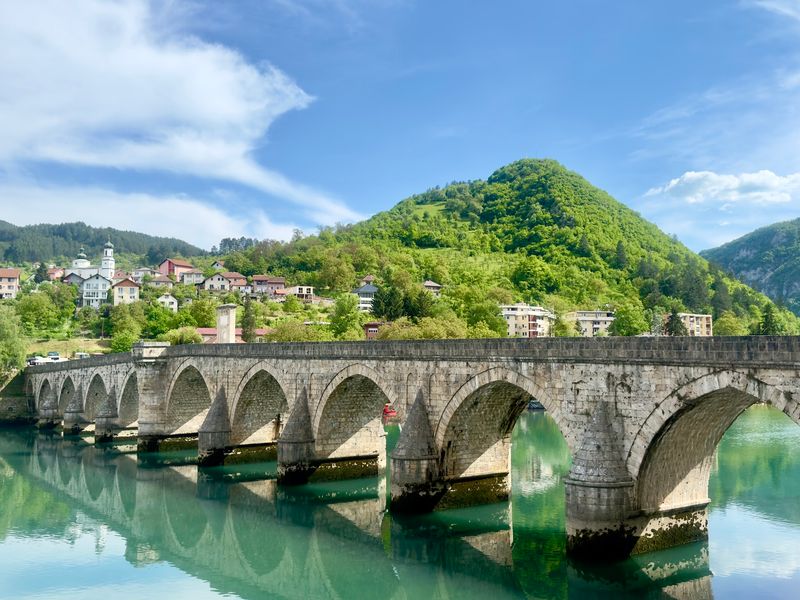
When the Ottoman Empire wanted to make a statement about power and permanence, it built something like the Mehmed Pasa Sokolovic Bridge at Visegrád. Commissioned by Grand Vizier Mehmed Pasa Sokolovic and designed by the celebrated imperial architect Mimar Sinan, construction ran from 1571 to 1577.
The result is 11 masonry arches crossing the Drina River with a total length of about 179.5 meters.
Individual spans range from roughly 11 to 15 meters, and an angled access ramp containing four additional arches connects the main bridge to the riverbank at a natural angle rather than forcing an awkward approach. That kind of thoughtful site-specific design is a Sinan hallmark.
His bridges were not just crossings but civic statements, and this one proved durable enough to outlast the empire that built it.
Floods and both World Wars caused damage, requiring reconstruction of some sections. UNESCO, which lists the bridge as a World Heritage Site, notes that it has generally retained its authenticity through successive repairs.
The proportions and engineering represent the Ottoman Empire at the height of its architectural ambition, showing that major infrastructure could simultaneously function as monumental art. Few bridges in the Balkans carry that combination of historical weight and structural elegance so convincingly.
Rialto Bridge, Italy
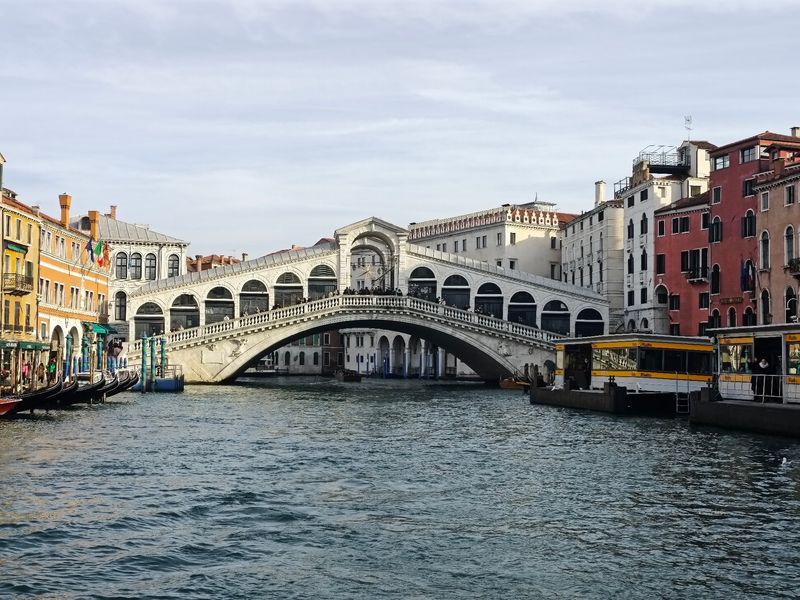
Venice built several wooden bridges at the Rialto crossing before finally committing to stone in the late 16th century. The current Rialto Bridge was constructed between 1588 and 1592 to a design by Antonio da Ponte, who won a competition that reportedly included proposals from Michelangelo and Palladio.
Building a broad stone arch over one of Venice’s busiest waterways while managing the city’s notoriously soft lagoon foundations was a serious engineering challenge.
The solution involved thousands of wooden piles driven deep into the ground on both banks, a technique Venetian builders had perfected over centuries. The arch itself had to be wide enough for boats to pass beneath without restricting Grand Canal traffic, which meant the geometry needed careful calculation to avoid too much outward thrust at the foundations.
Rows of shops were built into the bridge’s structure from the beginning, continuing the trading tradition associated with the Rialto district for centuries. Venice’s official tourism service describes it as something like an early shopping center linking the political hub near San Marco with the commercial heart of the city.
More than 430 years later, gondolas and water taxis still glide beneath the arch while tourists crowd the elevated walkways above, doing what Venetians have always done at the Rialto: shopping, watching, and enjoying the view.
Khaju Bridge, Iran
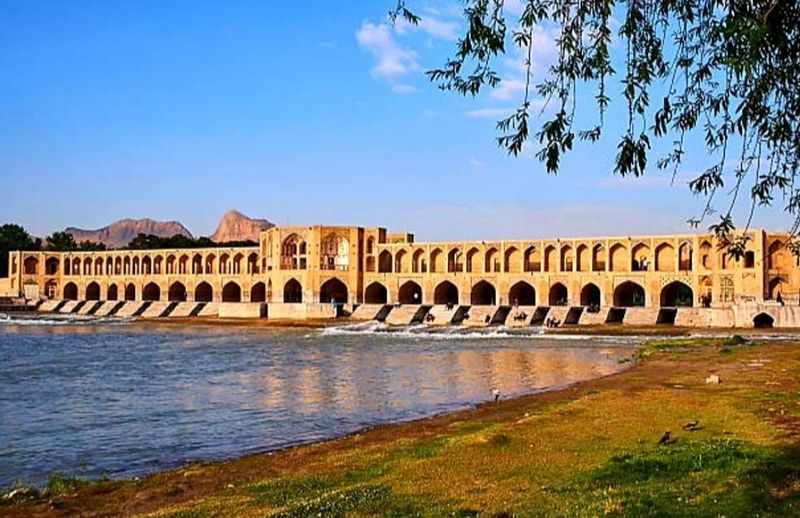
Most bridges do one thing well. Khaju Bridge in Isfahan does about six things simultaneously and looks beautiful doing all of them.
Completed around 1650 during the reign of Safavid ruler Shah Abbas II, it was designed to serve as a road crossing, pedestrian promenade, dam, water-control system, royal viewing pavilion, and public gathering place all at once.
Encyclopaedia Iranica describes raised pedestrian passages, a central route for horses and carts, and adjustable sluice arrangements capable of controlling the Zayandeh Rud’s water level. Closing the bridge’s water-control structures could create a lake upstream on demand.
Stepped stone platforms below the arches provided spaces for social gatherings when river levels were low enough to use them comfortably.
The central pavilion was used by the Shah himself for viewing the river, making this a piece of royal architecture as much as public infrastructure. Ornate tilework and painted interiors added decorative layers that pure engineering bridges rarely received.
Khaju shows that early modern builders were thinking simultaneously about transport, irrigation, hydraulics, architecture, and civic life, centuries before those fields became separate engineering specialties with separate budgets and separate teams. As a single structure that does the work of many, it has never really been matched.
Share this story