Some hotels hand you a key and wave goodbye. Others hand you a falcon glove, a secret bunker tour, or a front-row seat to a duck parade.
The thirteen historic hotels ahead belong to the second group, and each one proves that a room is only the starting point. You will find mountain resorts with archery ranges, a seaside palace with its own museum, a lobby where artists paint in public, and a porch so long it needs its own zip code.
Some of these places welcomed travelers before the United States was a country. Others rose from fires, wars, and close calls with the wrecking ball.
Every one of them still opens its doors to guests who want to learn something, try something, or simply sip tea in a very fancy room. Ready to meet them?
Pack comfortable shoes, bring your curiosity, and keep reading. The first stop hides a Cold War secret under a mountain resort.
1. The Greenbrier, White Sulphur Springs, West Virginia
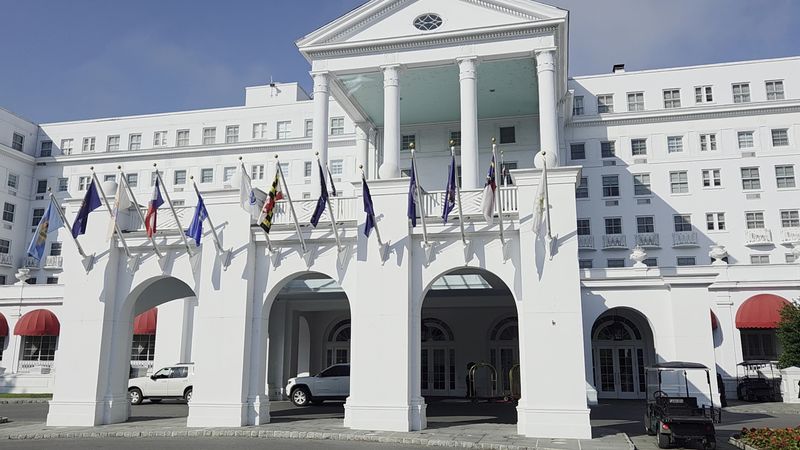
Beneath this mountain resort sits a bunker built to shelter Congress. The Cold War facility stayed secret from 1961 until 1992, and daily tours now walk guests through it.
A cover company called Forsythe Associates pretended to repair televisions while crews worked below. The tour lasts about 90 minutes and shows the dorms, the clinic, and the blast doors.
Above ground, designer Dorothy Draper reshaped the interiors in the late 1940s. Her bold stripes and oversized florals still fill the halls, and the Victorian Writing Room keeps her original look.
Activities stretch well past the lobby. Guests can book falconry, archery, carriage rides, fly fishing, or a round on courses designed by Donald Ross and Jack Nicklaus.
The spa leans on mineral soaks tied to the property’s old sulfur springs. Afternoon tea is a daily habit worth planning around.
2. The Omni Homestead Resort & Spa, Hot Springs, Virginia
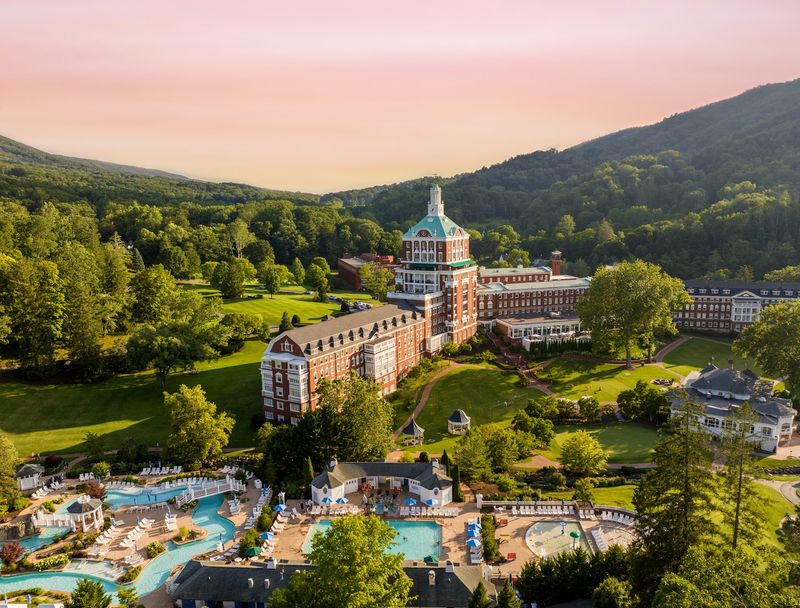
Falconry lessons are a real option here, which is not something most hotel desks can say. At The Mews, guests meet trained birds of prey and learn how the ancient sport works.
The resort traces its hospitality to 1766, and its tower was added in 1929. Natural warm springs started it all, and the Warm Springs Pools reopened in 2022 for guests and the public.
Golfers can tee off on the Old Course, whose first tee has been in constant use since 1892. The Cascades Course, designed by William S.
Flynn, draws plenty of attention too.
Other choices include archery, clay shooting, horseback riding, and mountain biking across the 2,300 acres.
Families head to Allegheny Springs for a lazy river and slides. Winter brings skiing, tubing, and ice skating, so the calendar never runs dry.
3. Hotel del Coronado, Coronado, California
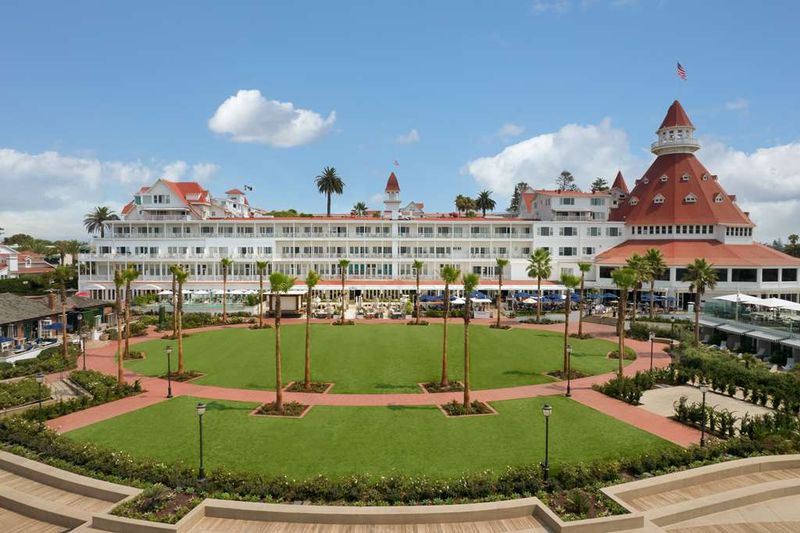
Movie fans may spot this red-roofed landmark before they even read the sign. It played a part in the 1950s comedy Some Like It Hot with Marilyn Monroe, and legend says it inspired the Emerald City in The Wizard of Oz.
Opened in 1888, the Queen Anne Victorian was the largest resort in the world at the time. It became a National Historic Landmark in 1977.
The Ice House Museum, set in a restored 1889 building, shows the hotel’s past through photos and memorabilia. Rocking chairs line the rebuilt front porch for anyone who wants a break.
On the active side, guests can try surf lessons, paddleboarding, yacht rentals, or beach yoga. Bicycles make it easy to reach the Ferry Landing.
Evenings bring beach bonfires with s’mores. Restaurants range from Nobu to casual taco shacks.
4. The Broadmoor, Colorado Springs, Colorado
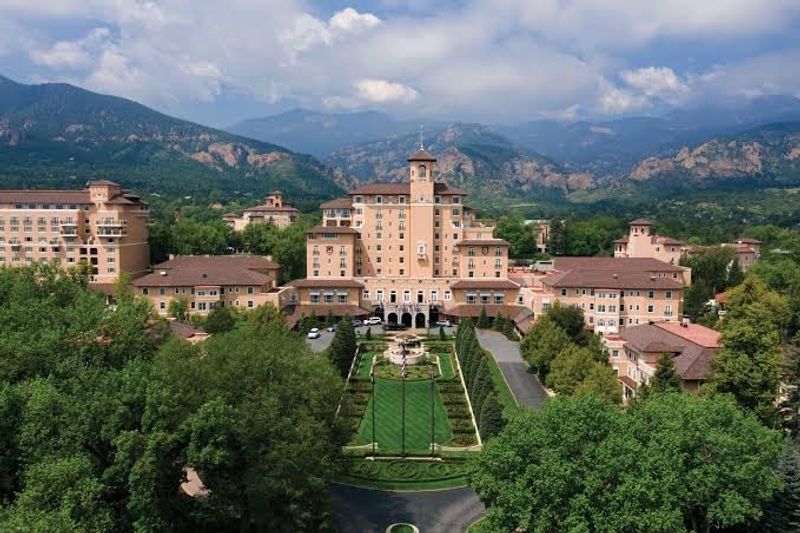
Spencer and Julie Penrose opened this pink resort in 1918, and the family’s taste for big ideas never left. Today it runs three separate wilderness properties, each with its own personality.
The Ranch at Emerald Valley sits in Pike National Forest. Cloud Camp perches at 9,100 feet on Cheyenne Mountain, and the Fly Fishing Camp lies along the Tarryall River.
The resort also owns the Pikes Peak Cog Railway and Seven Falls, a set of seven waterfalls in a tall canyon. Guests can try zip-lining, rock climbing, falconry, or horseback riding without leaving the Broadmoor family.
Golf fans have the East and West Courses, which have hosted national tournaments.
The Penrose Heritage Museum displays vintage carriages and race cars from the Pikes Peak Hill Climb. With 18 restaurants and lounges, nobody has to eat the same thing twice.
5. The Breakers Palm Beach, Palm Beach, Florida
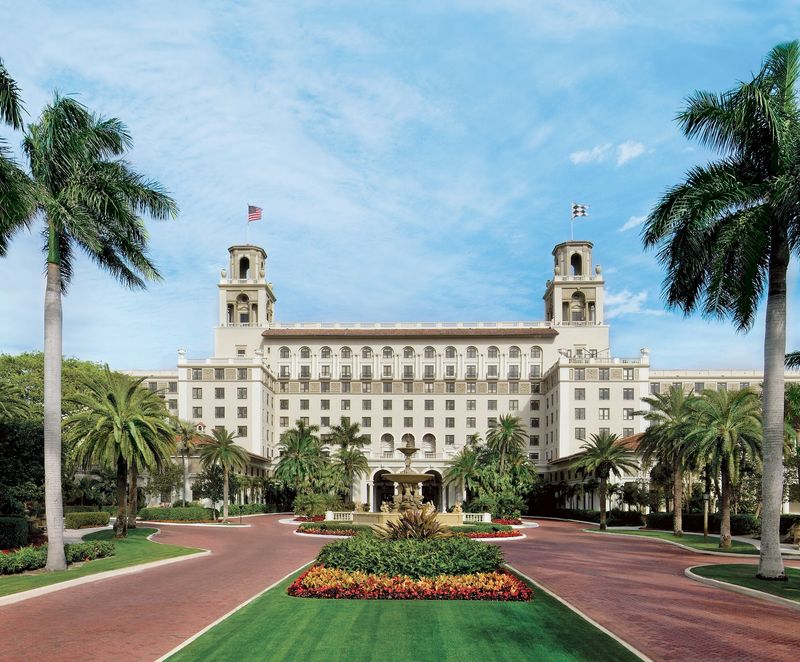
Rebuilding a burned hotel in 11 and a half months sounds like a bragging contest. The Breakers did exactly that after a 1925 fire and reopened in December 1926.
The design drew inspiration from Rome’s Villa Medici. Artisans from Italy painted the ceilings by hand, and the main lobby runs 200 feet long.
The Flagler family still owns the resort and reinvests about $30 million each year in upkeep. That steady care keeps its place on the National Register of Historic Places secure.
The Beach Club offers four pools and 25 rentable bungalows. Watersports include paddleboarding and kayaking.
Golfers can play the Ocean Course, Florida’s oldest, redesigned by Rees Jones in 2018. Sixteen racquet courts cover tennis, pickleball, and padel.
The 20,000-square-foot spa has 17 treatment rooms, and shoppers can browse 13 boutiques.
6. The Brown Palace Hotel and Spa, Denver, Colorado
A dent in a fireplace mantel tells a small story about President Eisenhower. He practiced golf shots in his suite, and one wayward ball left its mark.
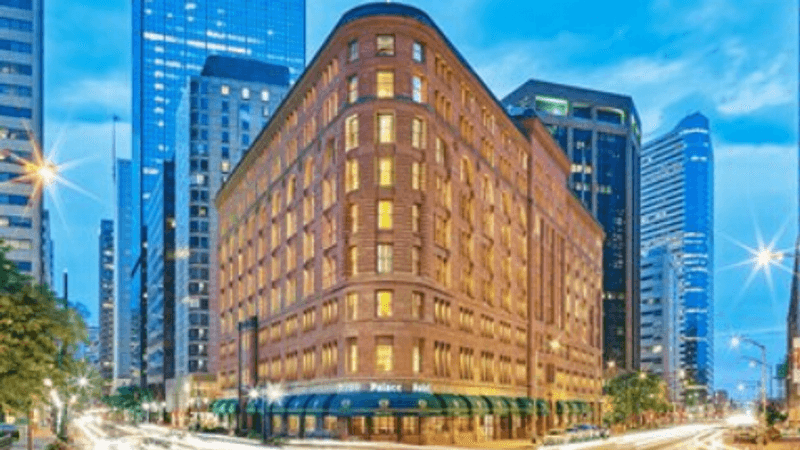
The Brown Palace opened in 1892 and has never closed for renovation. Its triangular shape wraps around an eight-story atrium topped with stained glass.
Afternoon tea happens daily beneath that atrium. Menus include organic loose-leaf teas, finger sandwiches, scones with Devonshire cream, and pastries, with gluten-free and nut-free options available.
The spa offers the Artesian Soak, using water from a well 720 feet below the Ship Tavern floor.
The bakery relies on a carousel oven more than 65 years old, one of only three known worldwide. Honey from rooftop beehives turns up at the coffee shop.
Palace Arms displays Napoleonic artifacts beside a French-inspired menu.
7. Grand Hotel, Mackinac Island, Michigan
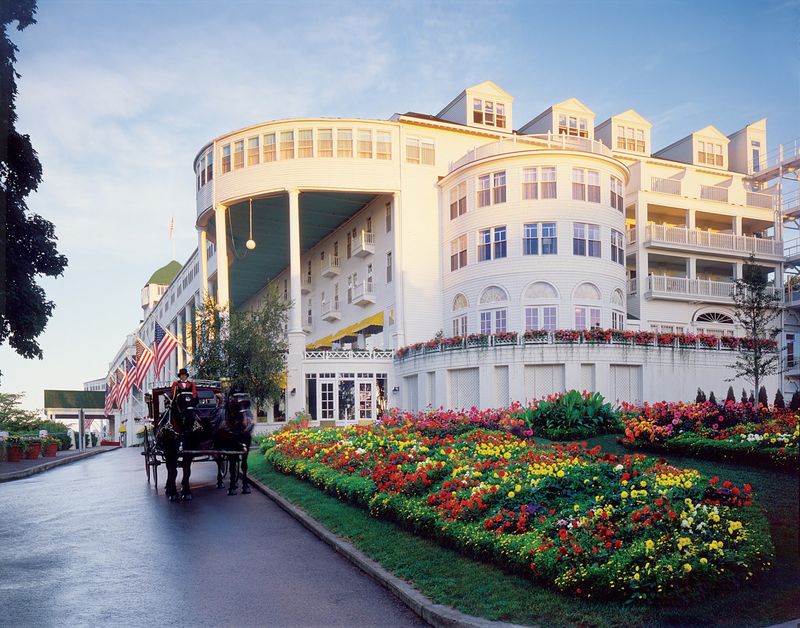
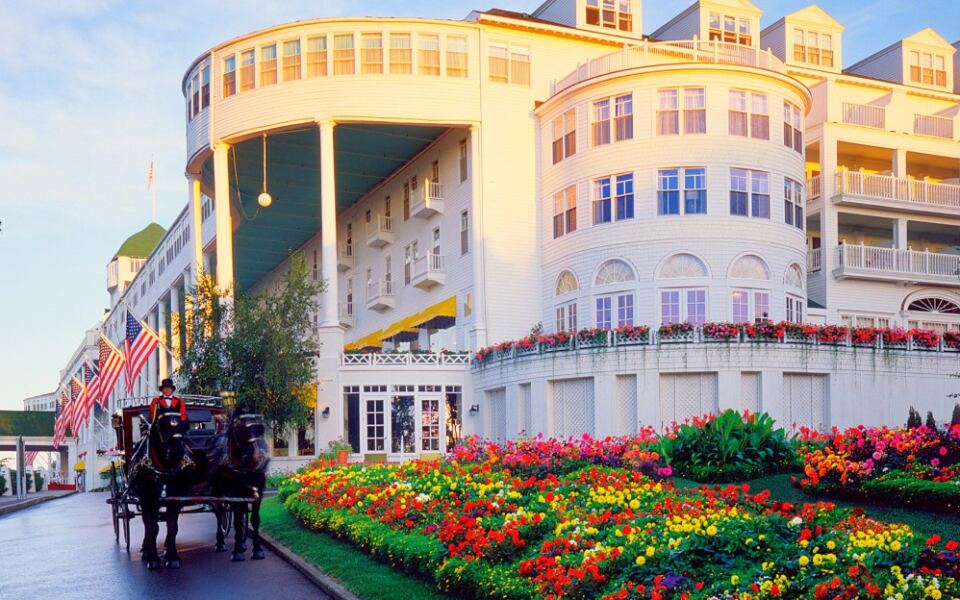
Cars are banned on this island, so your ride to the front door comes with horsepower of the literal kind. Carriages meet ferry passengers and carry them to a hotel that opened on July 10, 1887.
The front porch stretches 660 feet, the longest in the world. It holds white rocking chairs and over a thousand red geraniums in 147 planting boxes.
After 6:30 PM, guests wear evening attire in main parlor-level areas. Denim and shorts are not allowed, so pack accordingly.
Afternoon tea is served in the Parlor with live classical music.
The Esther Williams Swimming Pool honors the actress who filmed there in 1947. Guests can also play croquet or bocce, tour the gardens, and rent bicycles for 70 miles of trails.
The Grand Kitchen Tour and talks with the Resident Historian add a behind-the-scenes angle.
8. The Mission Inn Hotel & Spa, Riverside, California
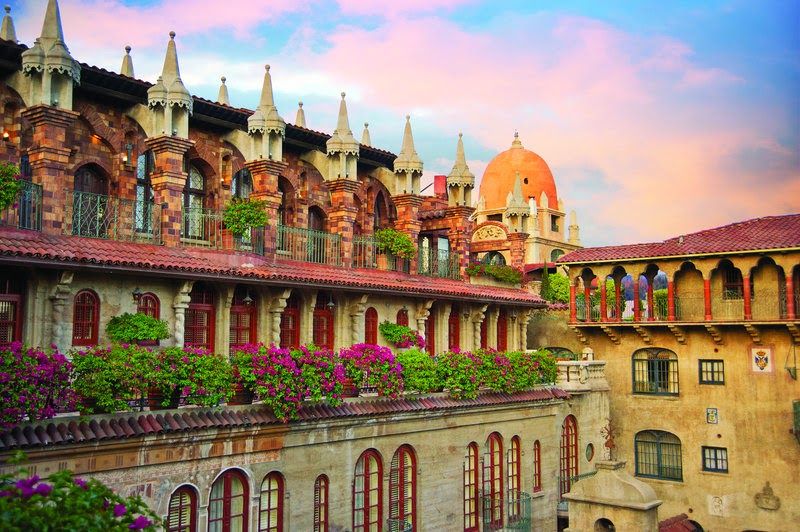
This hotel began as a small adobe boarding house in 1876. Frank Augustus Miller then spent decades expanding it until it filled an entire city block.
The architecture mixes Spanish Mission, Moorish, Gothic, and Renaissance styles. Courtyards, domes, bell towers, and flying buttresses make a walk through it feel like a museum visit.
Miller filled the building with art and artifacts from his travels, including a bell dated to 1247. Guided tours run by The Mission Inn Museum open areas that guests normally cannot enter.
Famous visitors have included Theodore Roosevelt, Amelia Earhart, Albert Einstein, and Ronald Reagan.
Winter brings the Festival of Lights, with more than 10 million lights, nightly snowfall, and a holiday market. VIP options include Breakfast with Santa.
Six restaurants and lounges and a Tuscan-style spa round out the offerings.
9. The Don CeSar, St. Pete Beach, Florida
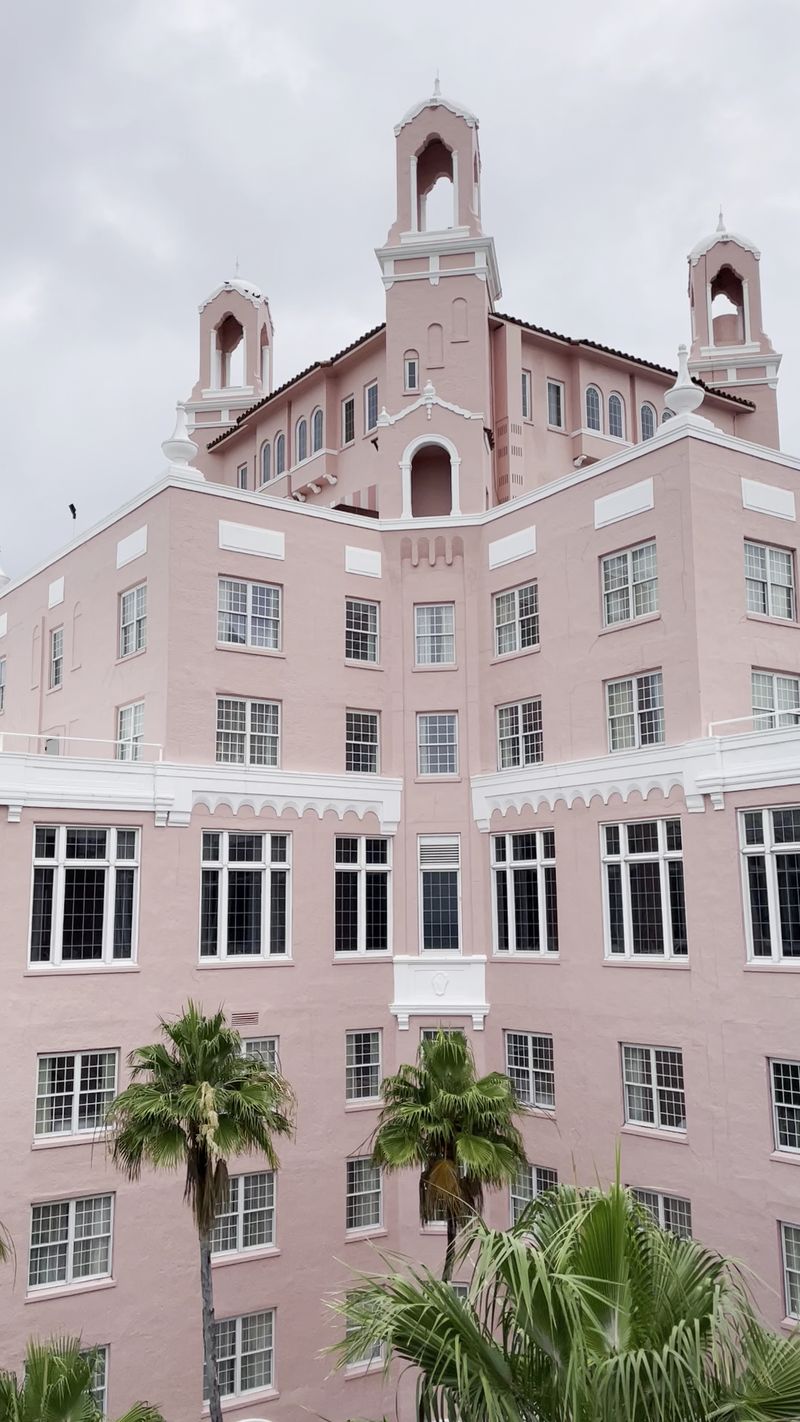
Its pink color is protected by law because mariners use the building as a landmark. Thomas Rowe wanted an immense sandcastle, and the 1928 hotel delivers one.
The Jazz Age brought guests such as F. Scott and Zelda Fitzgerald and Lou Gehrig.
During World War II the hotel served as a military hospital, and later it housed offices for Veterans Affairs.
Local residents rallied to save it from decay, and it reopened in 1973. It joined the National Register of Historic Places in 1975.
The Don CeSar History Tour covers the 1920s, Hollywood appearances, and wartime years.
Guests can use two heated pools, rent kayaks or paddleboards, and book rooftop spa treatments at Spa Oceana.
Six restaurants and lounges include Maritana and The Rowe Bar. Seasonal events and live music keep the beach lively.
10. The Jefferson Hotel, Richmond, Virginia
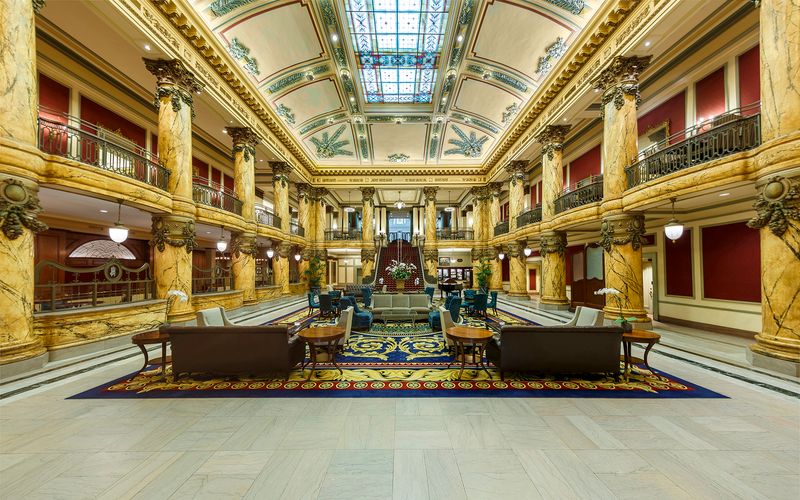
Live alligators once lived in marble pools in this lobby. They stayed until 1948, and bronze gators now honor the tradition.
Tobacco magnate Lewis Ginter built the hotel in 1895 to be the finest in the South. A fire in 1901 forced a rebuild, and it reopened in 1907.
The 36-step grand staircase is rumored to have inspired a famous staircase in Gone With the Wind. A statue of Thomas Jefferson sits under a Tiffany glass dome in the Palm Court.
Southern Afternoon Tea is served on the Mezzanine overlooking the Rotunda. The menu includes chicken salad sandwiches, ham on sweet potato biscuits, scones, and pastries.
A Chocolate Lover’s Tea appears on select Saturdays.
Lemaire, the main restaurant, honors Jefferson’s maitre d’hotel. A small museum near the staircase shows hotel artifacts.
11. The Pfister Hotel, Milwaukee, Wisconsin
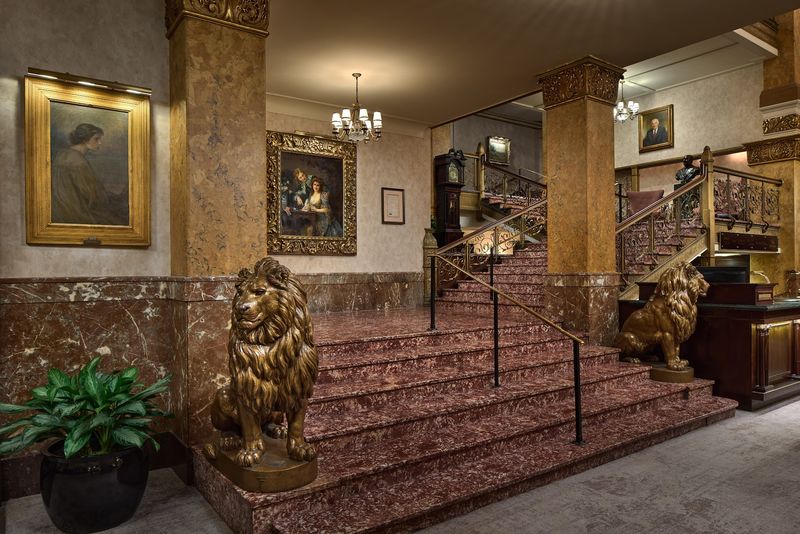
Artists work in the open here, and guests are invited to say hello. The Artist-in-Residence program began in 2009 and keeps a working studio and gallery on the first floor.
Visitors can watch pieces take shape and ask about the process. Each artist also creates a Legacy Piece for the hotel’s permanent collection.
The hotel opened in 1893 and holds the largest hotel collection of Victorian art in the world. Charles Pfister gathered much of it himself, and guests can take a self-guided tour.
It was ahead of its time, with fireproofing, electricity throughout, and a thermostat in every room.
Upstairs, the 23rd floor has an indoor pool with city and lake views. Blu serves afternoon tea and hosts live music on weekends.
Mason Street Grill and the WELL Spa add more reasons to stay downstairs.
12. The Willard InterContinental Washington, Washington, D.C.
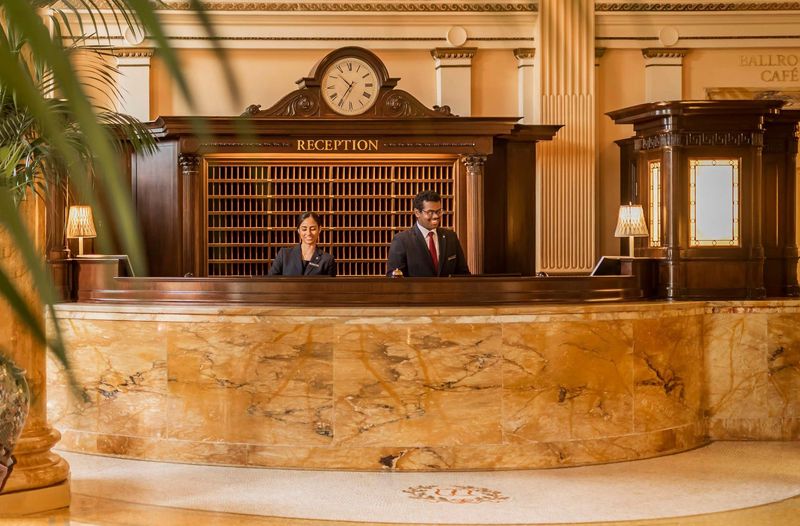
The word lobbying may have started in this very lobby. Folklore says Ulysses S.
Grant gathered there to relax, and people seeking favors found him.
The hotel’s roots go back to 1816, and the current Beaux-Arts building dates to 1901. Nearly every president since Franklin Pierce has stayed or attended an event here.
Abraham Lincoln stayed for ten days before his 1861 inauguration. Julia Ward Howe wrote The Battle Hymn of the Republic here in 1862.
The lobby ceiling displays 48 hand-painted state seals. Peacock Alley hosts afternoon tea with harp music, finger sandwiches, pastries, and fresh scones.
A new Willard Tea Room sits just off the corridor.
Guests can also visit a micro-museum on key historical events and walk The Extra Mile pathway outside the lobby, which honors influential Americans.
13. The Peabody Memphis, Memphis, Tennessee
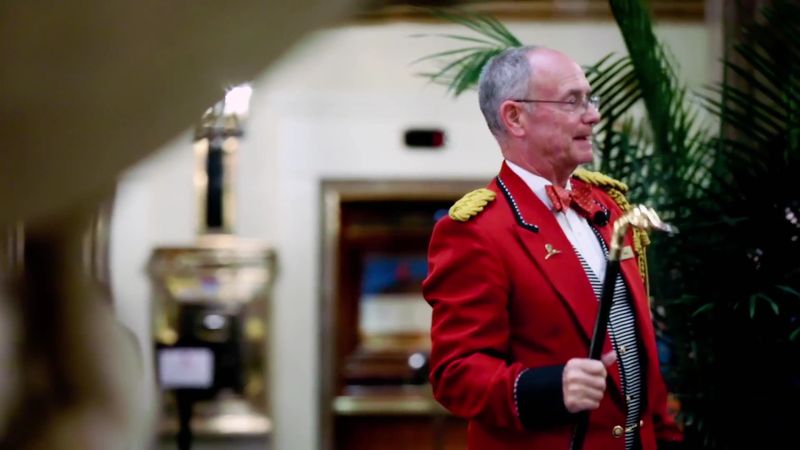
Five Mallard ducks commute to work on a red carpet twice a day. They march at 11 a.m. and 5 p.m. to John Philip Sousa’s King Cotton March.
The tradition began in 1933 when General Manager Frank Schutt placed live decoys in the lobby fountain. Bellman Edward Pembroke, a former circus animal trainer, taught the ducks to march in 1940.
The ducks live in a $200,000 rooftop Royal Duck Palace with glass walls for viewing. The hotel states clearly that duck is never served in its restaurants.
Daily tours led by the Duckmaster cover the lobby, the rooftop, and the Peabody Memorabilia Museum on the Mezzanine.
The current building opened in 1925 and is known as The South’s Grand Hotel. Its travertine lobby is often called the living room of Memphis.
Chez Philippe, afternoon tea, and rooftop parties fill out the schedule.
Share this story