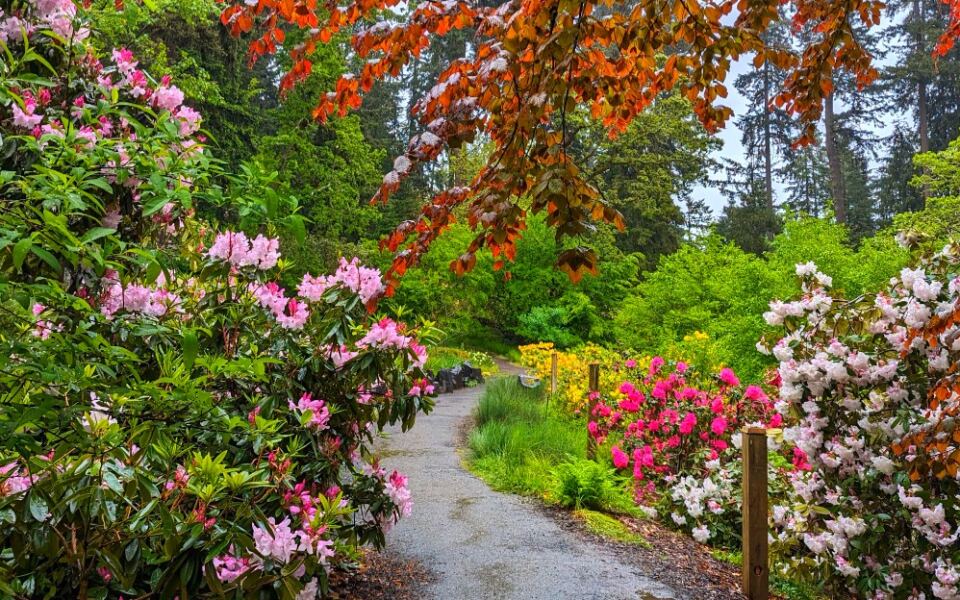
Some rhododendrons grow so tall you can walk beneath their branches. Others cover entire mountain slopes with pink and purple flowers, creating displays that last only a few weeks each year.
In Washington, a 22-acre botanical garden holds more than 700 wild rhododendron species. New Hampshire has a natural grove that blooms in July, while North Carolina’s Roan Highlands are famous for their massive displays of native Catawba rhododendrons.
You can find these flowers in coastal gardens, city parks, and mountain forests across the country. But knowing when to visit makes all the difference.
Here are 13 places where rhododendrons put on an unforgettable show, along with the best times to catch them in bloom.
1. Crystal Springs Rhododendron Garden, Portland, Oregon
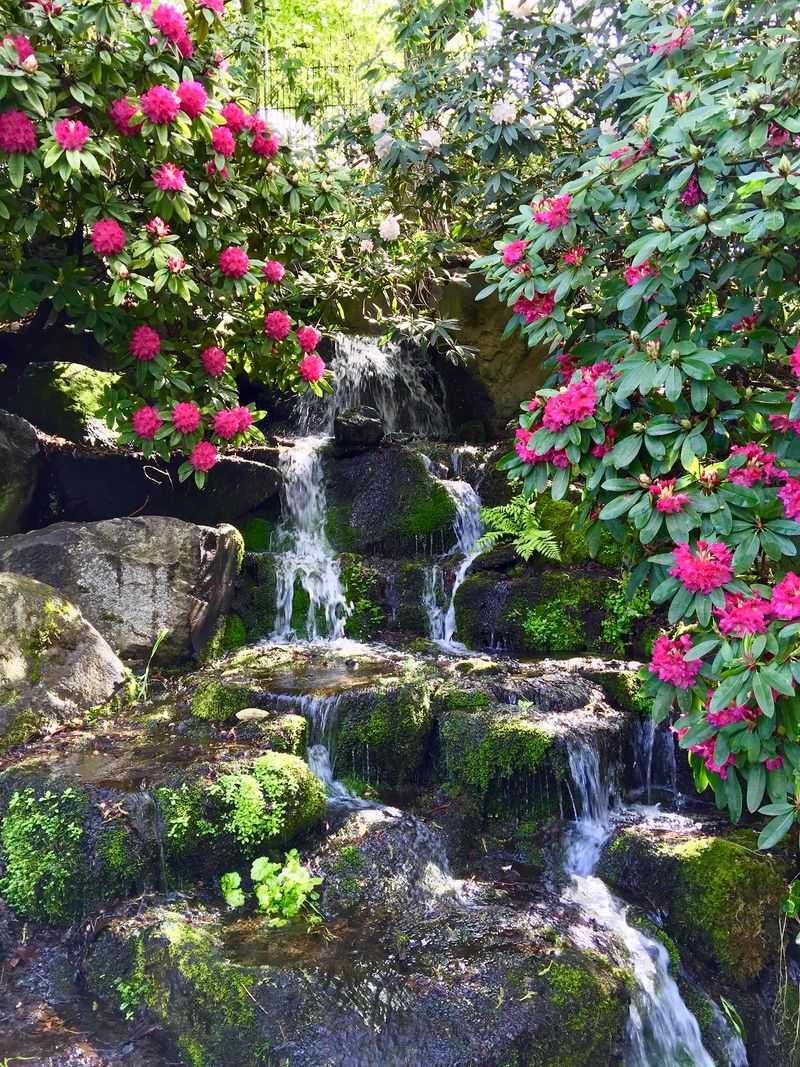
Ducks, geese, and herons often get as much camera time here as the flowers do. Crystal Springs Lake wraps around much of the garden, so the blooms come with waterfowl and reflections included.
The garden covers about 9.5 acres in southeast Portland, right across from Reed College. Paths wind past bridges, small waterfalls, and a large collection of rhododendrons and azaleas.
Peak color usually arrives in April and May. If you like photography, the spots near the lake let you frame bright shrubs against the water.
The garden is run by Portland Parks and Recreation with help from the Portland Chapter of the American Rhododendron Society. Volunteers have cared for it since the 1950s, which explains the mature size of many plants.
A small seasonal admission fee applies during part of the year, so check before you go. Then slow down and take the long loop.
Address: 5801 SE 28th Ave, Portland, OR 97202
2. Rhododendron Species Botanical Garden, Federal Way, Washington
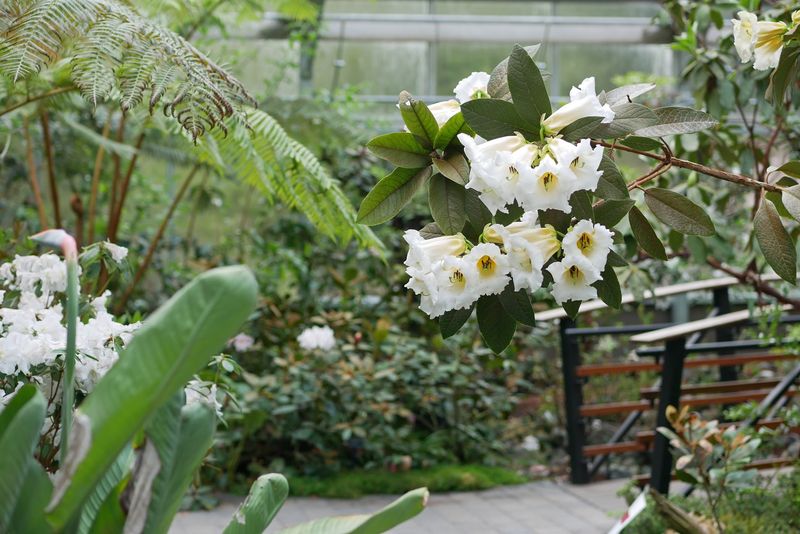
How many kinds of wild rhododendrons exist? This garden has made it a mission to find out, and it holds one of the largest collections of rhododendron species anywhere.
The focus here is on species, not hybrids. That means plants grown from wild sources in places like China, the Himalayas, and Japan.
Around 22 acres of forest shelter the collection. Tall Douglas firs, western red cedars, and hemlocks shade the paths and give the shrubs room to look natural.
Keep an eye out for Himalayan blue poppies in late spring. Their sky-blue petals are tricky to grow, so spotting them feels like a bonus prize.
The garden also includes ferns, a pond area, and other companion plants. Many rhododendrons bloom from early spring into summer, giving you more than one good window.
The entrance sits near the Pacific Bonsai Museum, so plan extra time.
Address: 2525 S 336th St, Federal Way, WA 98003
3. Heritage Museums & Gardens, Sandwich, Massachusetts
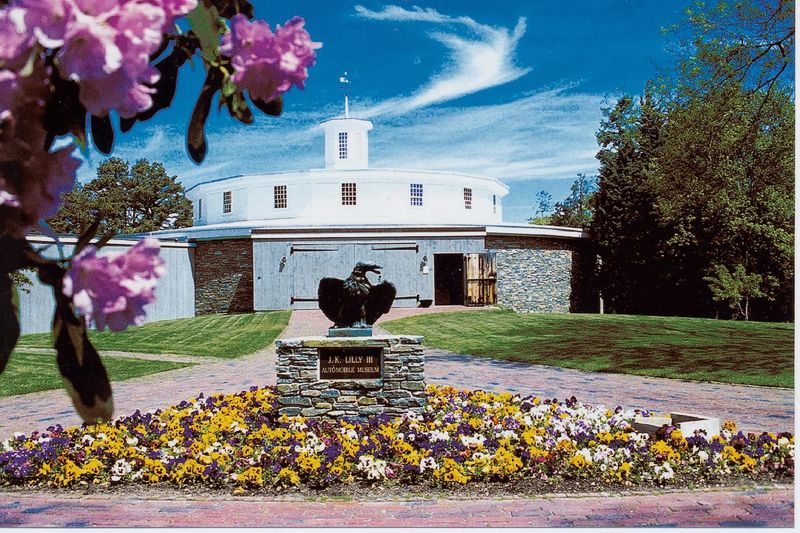
Back in the 1920s, a textile businessman named Charles Owen Dexter started crossing rhododendrons on his Cape Cod estate. His experiments produced thousands of seedlings, and many of his hybrids still bloom on these grounds.
Those Dexter rhododendrons are known for large flowers and strong growth. Some plants on the property have grown into towering shrubs over the decades.
The grounds cover around 100 acres in Sandwich. Rhododendron season usually runs from early May into June, and the garden celebrates it each year.
Plants aren’t the only draw. The museum side includes a well-known collection of classic automobiles shown in a round barn, plus a restored carousel.
That mix makes it easy to plan a full day. You can stroll the bloom-filled paths, then head indoors for cars and folk art.
Families also like the Hidden Hollow outdoor play area.
Address: 67 Grove St, Sandwich, MA 02563
4. Rhododendron State Park, Fitzwilliam, New Hampshire
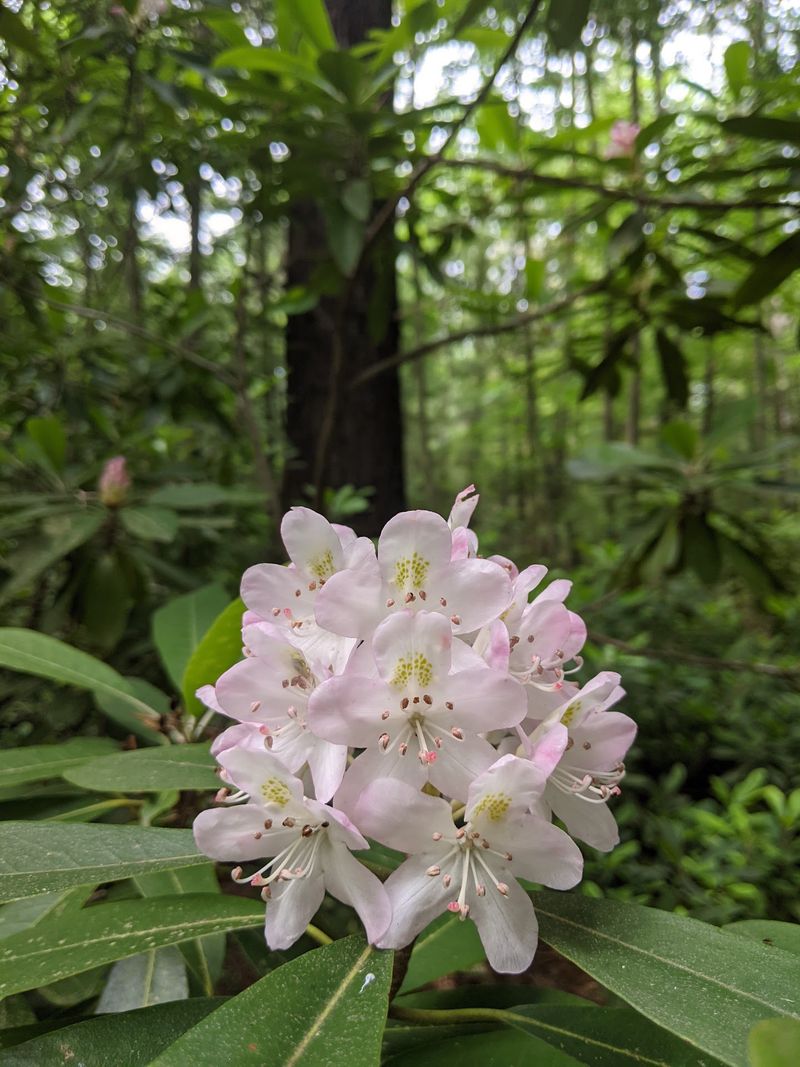
Nobody planted this garden in neat rows. The park protects a natural grove of great rhododendrons covering about 16 acres, a rare sight this far north.
The shrubs can grow taller than your head. Walking the loop trail through them can make you feel a bit like you shrank.
Timing is unusual here. Blooms tend to appear in mid-July, long after most spring gardens have quieted down.
The flowers are pale pink and white, clustered among glossy dark leaves. The grove is a National Natural Landmark, which shows how special scientists consider it.
Bring sturdy shoes, since the paths are woodland trails. A wildflower trail and nearby Little Monadnock Mountain trails add more ways to explore.
Picnic tables sit near the parking area. Pack lunch and make a summer afternoon of it.
Address: 424 Rockwood Pond Rd, Fitzwilliam, NH 03447
5. Hamilton Rhododendron Gardens, Hiawassee, Georgia
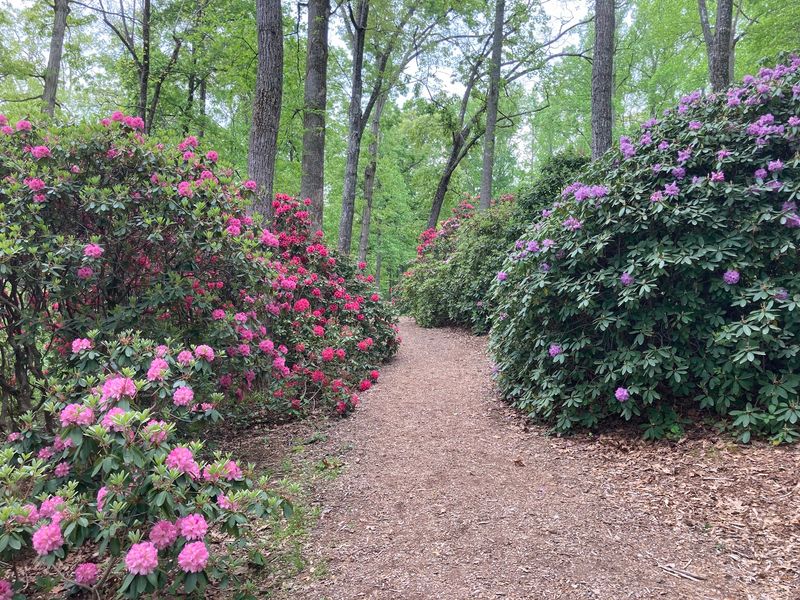
Lake Chatuge sparkles below a hillside here, and in spring that slope fills with color. The garden sits on the grounds of the Georgia Mountain Fairgrounds.
It’s named for Fred and Hazel Hamilton, who donated their rhododendron collection. Their gift helped grow the garden into a large regional showcase.
Walking trails loop through the woods past rhododendrons, azaleas, and native wildflowers. Some paths climb, so comfortable shoes are a smart choice.
April and May are the usual peak months. Mountain weather can shift bloom timing, so a quick check before driving helps.
The fairgrounds host concerts and festivals during the year, so your visit might overlap with an event. The lake views alone make the hill worth climbing.
Address: 1311 Music Hall Rd, Hiawassee, GA 30546
6. Hendricks Park Rhododendron Garden, Eugene, Oregon
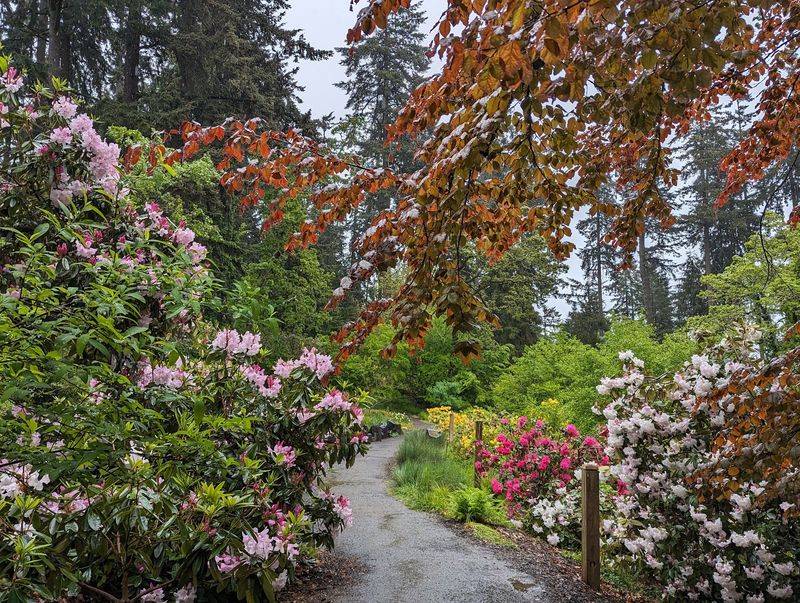
Eugene’s oldest city park dates to 1906. Today it holds a rhododendron garden that has drawn plant lovers for decades.
The garden spreads across a wooded hillside on the east side of town. Paths wind under Douglas firs and Oregon white oaks, mixing native forest with planted color.
The collection includes many rhododendrons, plus azaleas and other woodland plants. A native plant garden sits nearby, which gives you a fun comparison.
Spring is prime time, with April and May bringing the heaviest bloom. Benches along the paths are handy for resting your legs on the slopes.
Trails also connect into the forested parts of the park. You can turn a flower stroll into a real hike.
Since it’s a city park, entry is free. That makes it easy to return more than once as different plants open through the season.
Address: 1800 Skyline Park Loop, Eugene, OR 97405
7. Point Defiance Rhododendron Garden, Tacoma, Washington
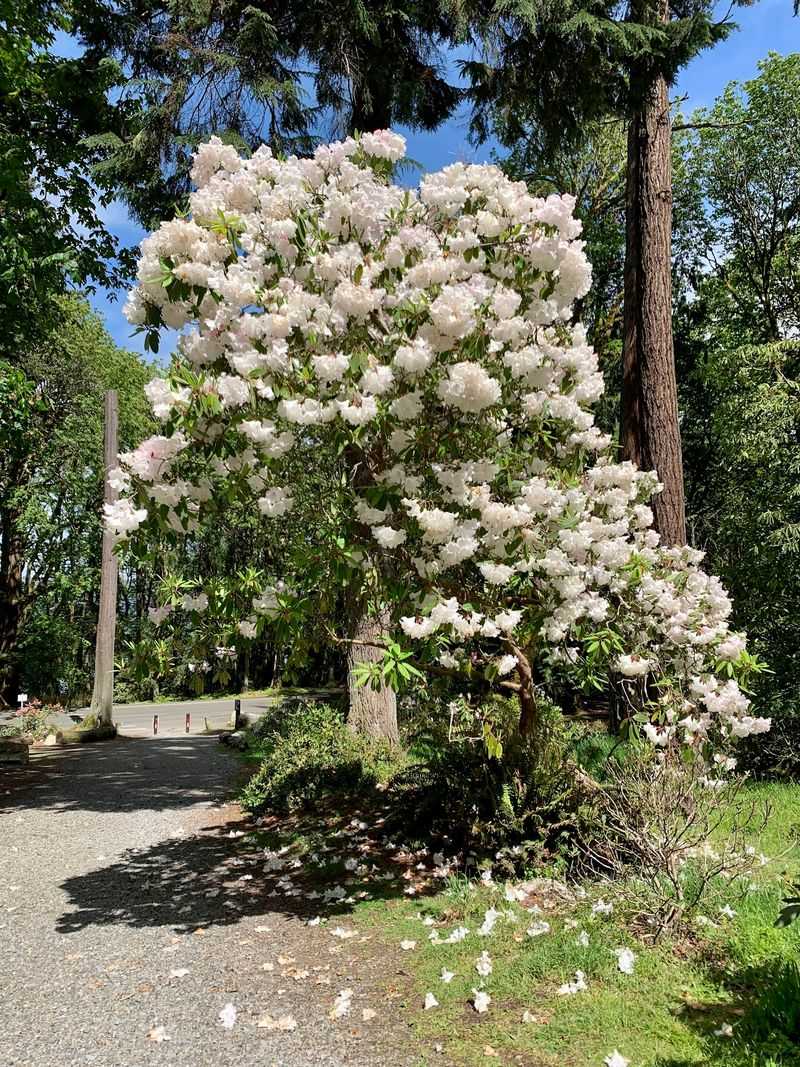
Few gardens share a park with a zoo, an aquarium, and old-growth forest. This one does, since it sits inside Tacoma’s huge Point Defiance Park.
The rhododendron garden is a shady woodland spot. Paths weave past rhododendrons, azaleas, and other plants under tall evergreens.
Bloom season usually peaks in spring, roughly April through May. Volunteers with local garden groups help care for the plantings.
Point Defiance covers more than 700 acres. The park also has a Japanese garden, a rose garden, and a dahlia trial garden, so flower fans can keep going.
Five Mile Drive loops through the forest with views over Puget Sound. Pick a sunny day, and the water views pair nicely with your garden walk.
Address: Five mile Rd, Tacoma, WA 98407
8. Meerkerk Gardens, Greenbank, Washington
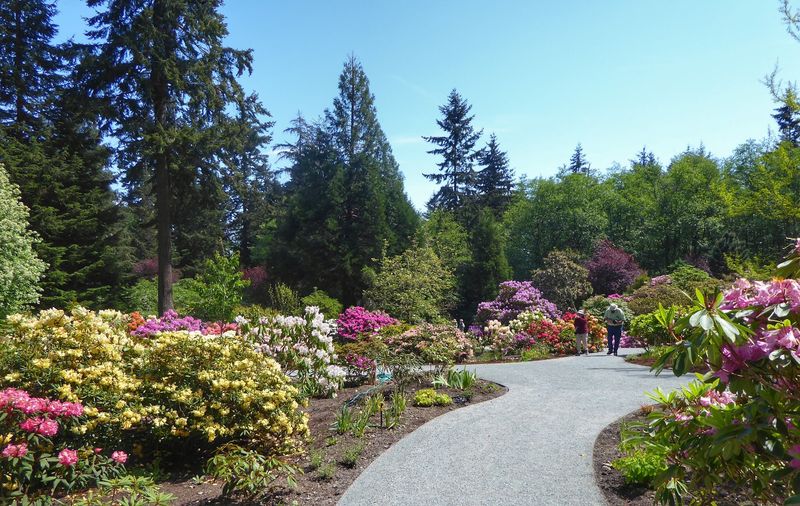
Ann Meerkerk started planting here in the 1960s with her husband, Max. What began as a private passion became a public garden on Whidbey Island.
Today the property includes about 10 acres of display gardens. Around 43 acres of woodland surround them, laced with walking trails.
Rhododendrons are the headline, with hybrids and species from around the world. Spring brings the peak show, often in April and May.
The garden is now managed by a nonprofit and supported by members and volunteers. It also has a test garden for evaluating new rhododendron hybrids.
Getting here can be part of the fun. Many visitors arrive by ferry or across Deception Pass Bridge.
A plant nursery on site sells rhododendrons, so you can bring a bit of the island home. Check hours ahead, since they vary by season.
Address: 3531 Meerkerk Ln, Greenbank, WA 98253
9. Roan Mountain Rhododendron Gardens, Bakersville, North Carolina
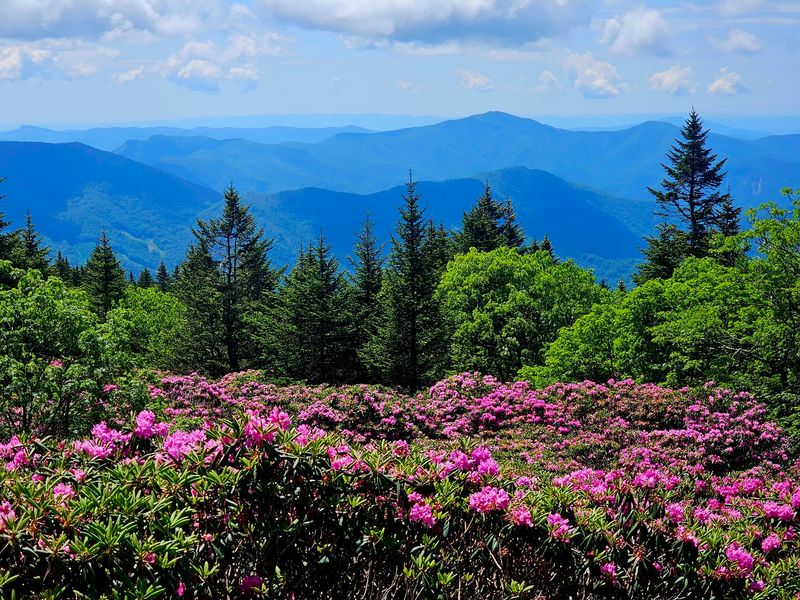
At over 6,000 feet, the Roan Highlands grow one of the largest natural Catawba rhododendron displays in the world. No gardener planted them.
The gardens sit in Pisgah National Forest along the North Carolina and Tennessee line. Mid to late June usually brings the peak bloom of pink and purple flowers.
A paved loop trail leads through the shrubs, with overlooks along the way. Longer trails let you explore more of the high country.
The Appalachian Trail crosses nearby grassy balds. Those open summits give wide views over rolling ridges.
Weather up here changes fast. Pack a jacket, even in summer, because it can feel much cooler than the valleys.
A small day-use fee applies. Roads close in winter, so plan a warm-season trip.
Address: State Rd 1348, Bakersville, NC 28705
10. Craggy Gardens, Blue Ridge Parkway, North Carolina
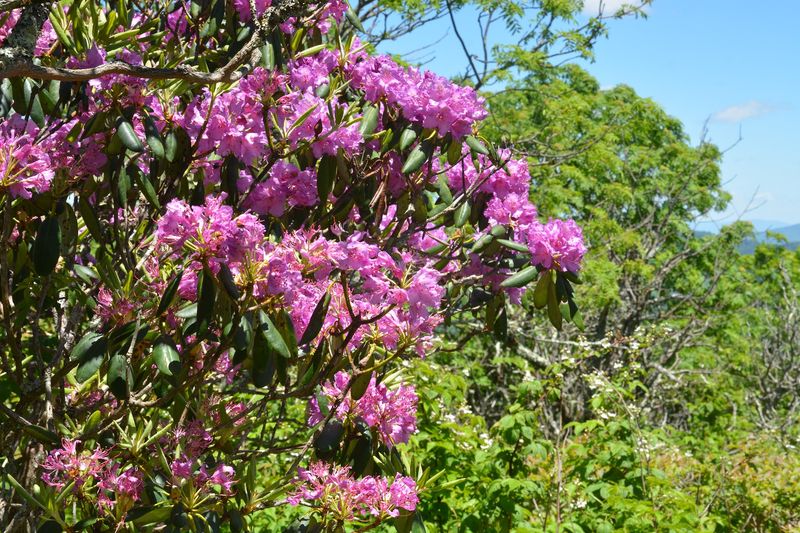
Pink and purple tunnels form on this mountain in June. Catawba rhododendrons arch over the trail, creating a path that feels hidden from the world.
Craggy Gardens sits above 5,000 feet near milepost 364 of the Blue Ridge Parkway. It’s northeast of Asheville and easy to reach by car.
The Craggy Gardens Trail climbs through the shrubs to a grassy bald. From there, the view stretches across the surrounding peaks.
Bloom timing usually lands in mid to late June. Higher elevation means flowers open later here than in town.
Hurricane Helene caused serious damage along the Parkway in 2024. Some roads, trails, and the visitor center have faced closures.
Check the National Park Service updates before you drive. That quick step can save a long, disappointing detour.
Address: 364 Blue Ridge Pkwy, Black Mountain, NC 28711
11. Mendocino Coast Botanical Gardens, Fort Bragg, California
How many gardens end at an ocean bluff? This one does, with paths that lead right to views of the Pacific.
The gardens cover 47 acres in Fort Bragg. Mild coastal weather lets many plants thrive here year-round.
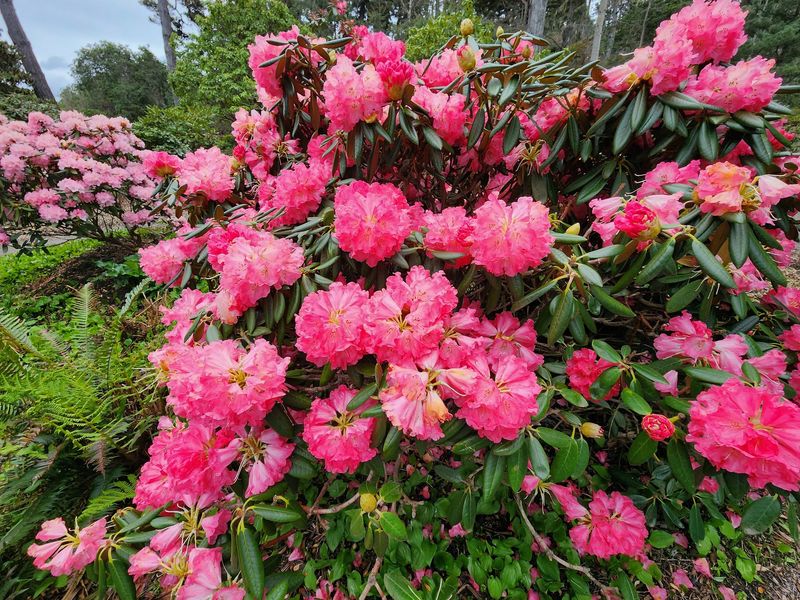
Rhododendrons are a big highlight, with large collections of species and hybrids. Spring is the main bloom period, often March through May.
Heathers, succulents, and a dahlia garden add variety in other seasons. Whale watching from the bluffs is possible during migration months.
Leashed dogs are welcome on the grounds, which is great news for road-trippers with pups. Bring layers, since coastal fog rolls in often.
Address: 18220 N Highway 1, Fort Bragg, CA 95437
12. Kruse Rhododendron State Natural Reserve, Cazadero, California
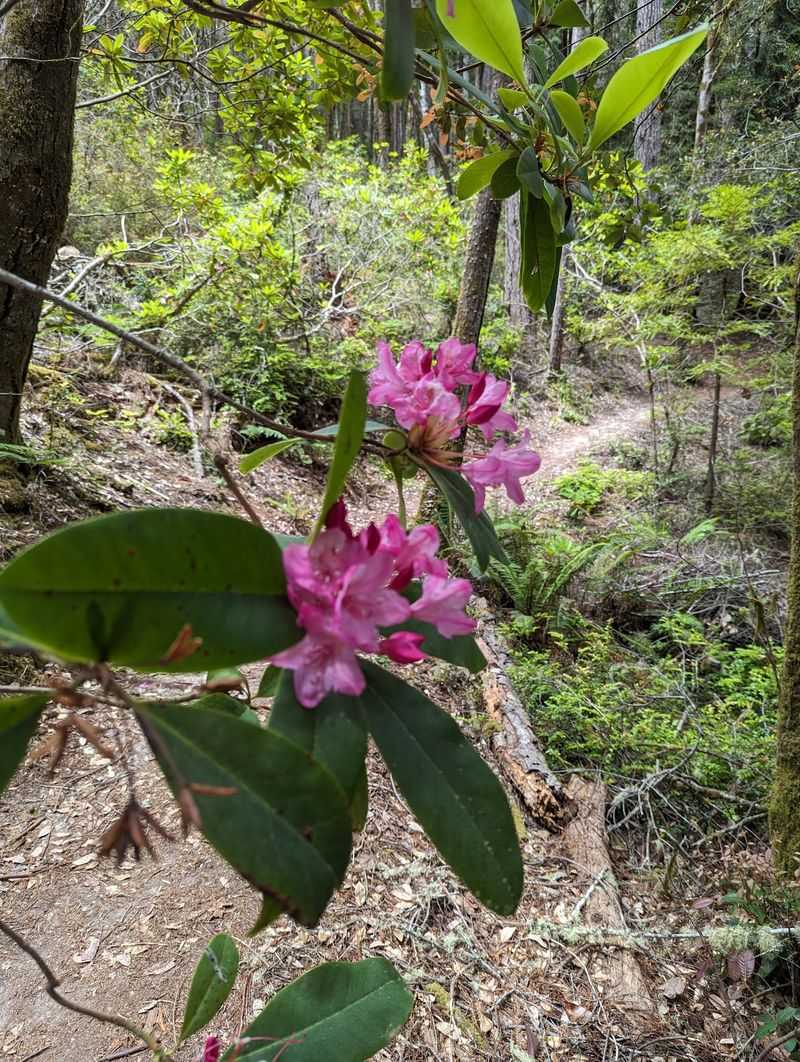
A wildfire in the past helped create this reserve’s blooms. Pacific rhododendrons love sunny openings, and they spread after fire cleared parts of the forest.
Today the plants grow beneath second-growth redwoods, Douglas firs, and tanoaks. In spring, usually April into May, pink flowers brighten the understory.
The reserve covers over 300 acres near the Sonoma Coast. It was donated to the state by Edward Kruse in honor of his father.
About five miles of hiking trails wander through the woods. Footbridges cross small creeks along the way.
Facilities are basic, with no big visitor center. Bring water and snacks, since services are limited nearby.
Getting here means a winding drive off Highway 1. Take it slowly and enjoy the coastal scenery.
Address: Cazadero, CA 95421
13. San Francisco Botanical Garden, San Francisco, California
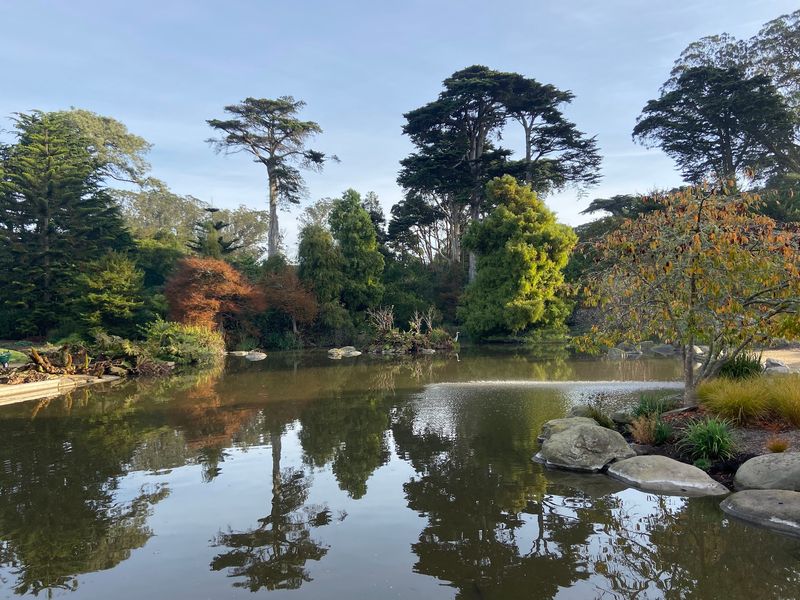
San Francisco’s foggy weather turns out to be great for rhododendrons. The cool, damp climate helps them grow well in Golden Gate Park.
The San Francisco Botanical Garden covers 55 acres. It holds thousands of plant types from around the world.
Its rhododendron collection includes many species and hybrids. Some bloom as early as winter, while others peak in spring.
Look for the big-leaf Himalayan types. A few have leaves larger than your hand.
The garden also features a cloud forest area and a redwood grove. Each section showcases plants from a different region.
San Francisco residents get in free. Others pay a small fee, with free days offered at times.
Nearby, the Japanese Tea Garden and California Academy of Sciences sit in the same park. Mix and match for a full day.
Address: 1199 9th Ave, San Francisco, CA 94122
Share this story