Some meals are forgettable, but a great buffet is an event. Around the world, a handful of restaurants have taken the all-you-can-eat concept to jaw-dropping extremes, with hundreds of dishes, dozens of live cooking stations, and dining rooms the size of small airports.
These are not ordinary cafeteria spreads. From Las Vegas casino palaces to a Tokyo restaurant that literally gave Japan a new word for buffet, the places on this list are worth planning a trip around.
Bacchanal Buffet at Caesars Palace, Las Vegas
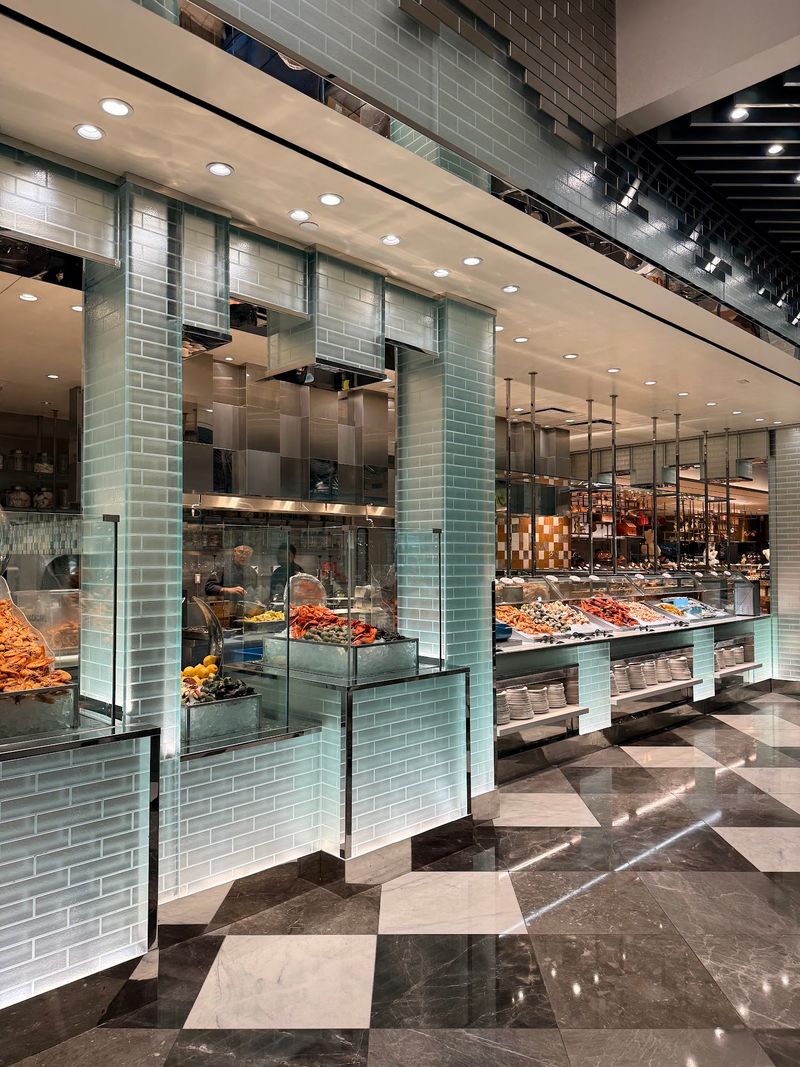
Walking into Bacchanal at Caesars Palace feels less like entering a restaurant and more like stumbling into a food city. The dining room stretches across more than 25,000 square feet and operates 10 separate kitchens alongside nine chef-attended action stations.
Over 250 menu items rotate through the spread at any given service, covering seafood, carving stations, Asian specialties, Latin American dishes, brunch classics, and a dessert section that could occupy its own zip code.
Chefs finish most preparations in open kitchens, so the food arriving on your plate has usually been cooked moments before. In 2026, Caesars added a special anniversary station celebrating the resort’s 60th year, featuring dishes inspired by earlier Caesars Palace menus.
That historical touch makes the meal feel like a tribute as much as a feast.
Bacchanal consistently tops lists of the best buffets in Las Vegas, and the competition there is fierce. Reservations are strongly recommended, especially on weekends.
Pricing varies by day and meal period, so checking the Caesars website before visiting saves surprises at the door. This is the kind of place where skipping breakfast beforehand is not a suggestion but a survival strategy.
The Buffet at Wynn, Las Vegas
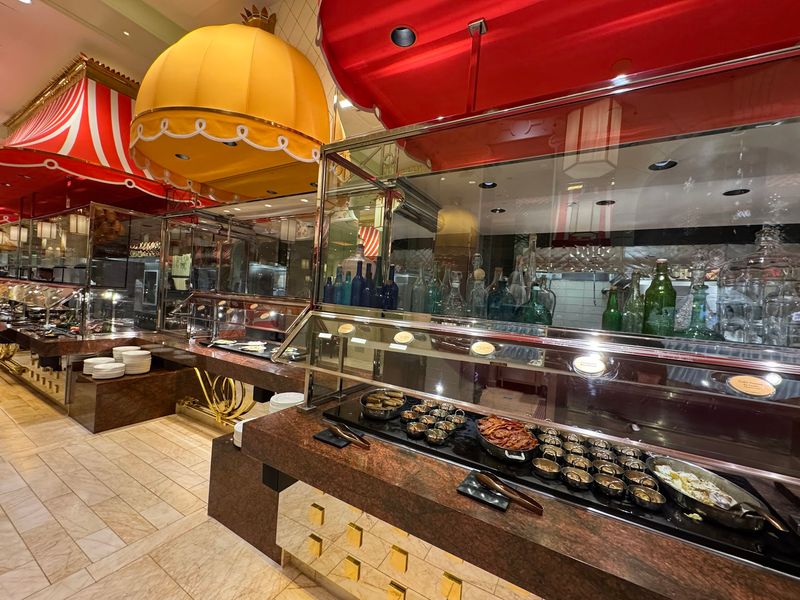
Sixteen live cooking kitchens running simultaneously is not a buffet setup, it is a culinary production. At Wynn Las Vegas, chefs are constantly carving meats, rolling sushi, cooking pasta, preparing tacos, and finishing dishes throughout service at all 16 stations.
The result is a buffet that feels more like a collection of specialty restaurants than a single long counter piled with warming trays.
The daily schedule splits into a Gourmet Brunch and a Seafood Gourmet Dinner, and the menu shifts meaningfully between the two. Brunch brings eggs Benedict and made-to-order breakfast items, while dinner loads up on chilled seafood and more elaborate savory preparations.
Current pricing sits at $59.99 for the Gourmet Brunch and $79.99 for the Seafood Gourmet Dinner, though holiday periods can push those numbers higher.
What sets Wynn apart from other Las Vegas buffets is the emphasis on live cooking rather than sheer dish count. Watching a chef finish your plate right in front of you changes the experience noticeably.
Portions feel fresher, the stations feel interactive, and the whole thing has an energy that a standard buffet line simply cannot replicate. Come hungry and plan for at least two hours.
Shady Maple Smorgasbord, East Earl, Pennsylvania

Forget the casino glam and the luxury hotel settings because Shady Maple Smorgasbord in Lancaster County’s Pennsylvania Dutch country plays by its own rules entirely. The restaurant claims the title of the largest smorgasbord in the United States and backs it up with roughly 200 feet of continuous serving space.
That is not a typo. Two hundred feet of food, stretching across a dining room that handles thousands of guests per day during peak season.
The focus here is honest, hearty Pennsylvania Dutch cooking rather than imported luxury ingredients. Grilled meats, home-style sides, baked goods, made-to-order items, and an overwhelming dessert section anchor the spread.
Menus shift between breakfast, lunch, and dinner throughout the day, so the lineup you encounter at noon looks noticeably different from what fills the trays at dinnertime.
Shady Maple is also part of a larger complex that includes a farm market and a sprawling gift shop, which means a visit can easily turn into a half-day outing. Prices are refreshingly reasonable compared to resort buffets, making it genuinely family-friendly.
The atmosphere is warm, unpretentious, and completely unapologetic about serving second and third helpings of shoofly pie. Regional food culture at its most generous.
Saffron at Atlantis The Palm, Dubai
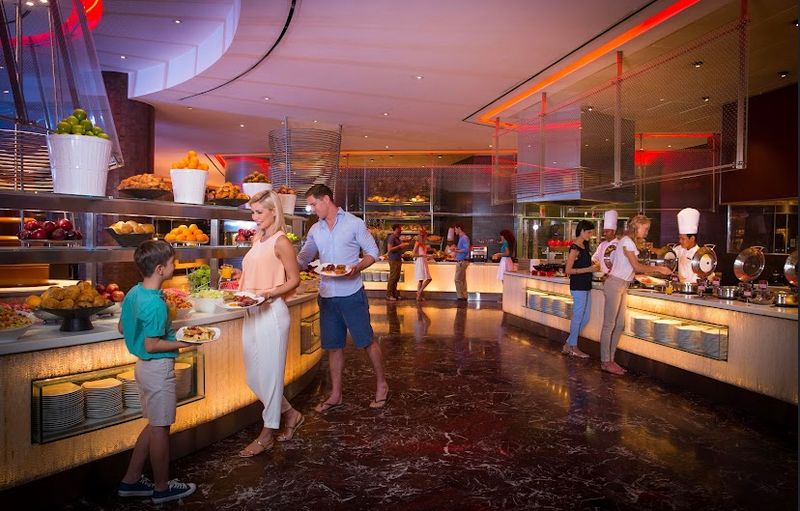
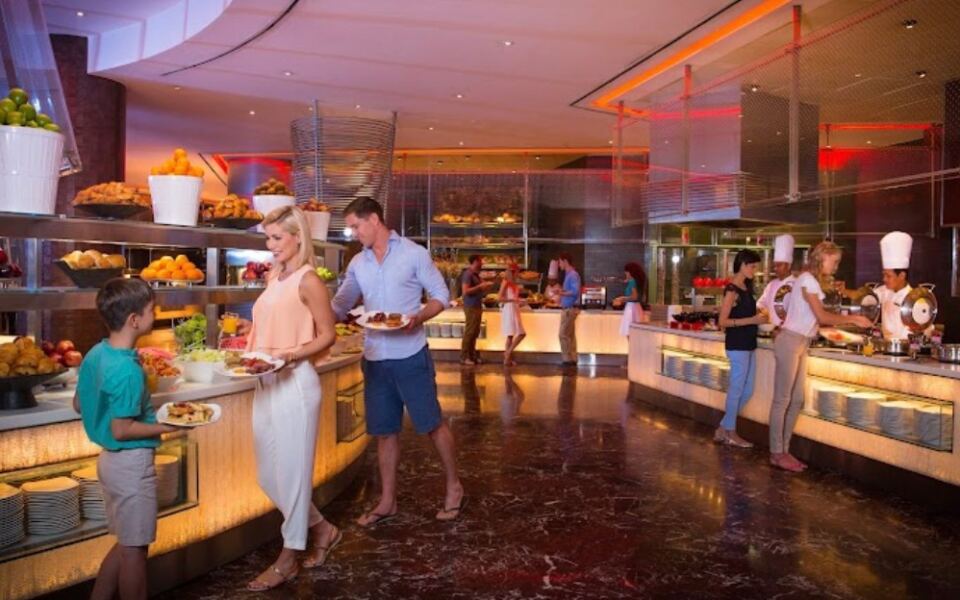
Atlantis, The Palm does not use the phrase ‘largest buffet’ lightly, and Saffron earns that label with more than 220 dishes running across 20 live cooking stations. The stations lean heavily into Asian cuisines while extending into broader international cooking, and chefs prepare everything directly in front of diners rather than behind closed kitchen doors.
Even breakfast maintains that 220-plus-dish scale, which is a commitment most restaurants cannot match at dinner.
Evenings rotate through themed dinner nights that shift the character of the spread depending on the day of the week. Saturday transforms Saffron into a high-energy brunch venue complete with entertainment, turning what would otherwise be a meal into more of a social event.
The sheer number of stations creates a genuine navigation challenge, and first-time visitors often suggest doing a full lap before picking up a plate.
Dubai’s dining scene is famously competitive at the luxury end, but Saffron holds its position by combining volume with genuine cooking quality. The Atlantis setting adds a theatrical backdrop, with the Palm Jumeirah visible beyond the resort.
Reservations are essential, particularly for Saturday brunch. Budget accordingly because the experience sits firmly in the premium tier, though the scale of what arrives on your plate tends to justify the spend.
Colony at The Ritz-Carlton Millenia, Singapore
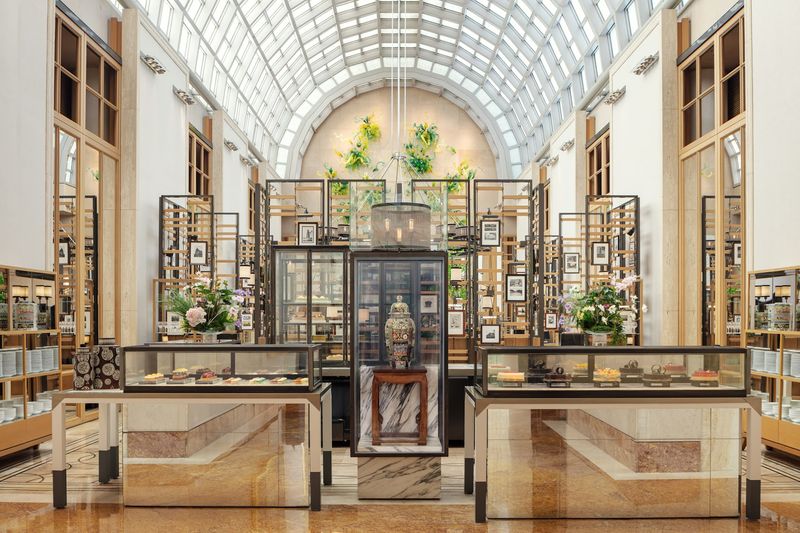
Seven live kitchens, each functioning like its own culinary workshop, is the organizing idea behind Colony at The Ritz-Carlton Millenia Singapore. Rather than confronting a single overwhelming buffet counter, diners move between distinct stations where freshly prepared dishes arrive in small batches.
The Ritz-Carlton describes the design as drawing inspiration from Singapore’s colonial-era history, and the interior carries that through with considered elegance.
Singaporean and other Asian specialties anchor the selection, supported by seafood, grills, baked items, and a dessert spread that holds its own against anything else in the city. Sunday brunch expands the experience significantly and can include unlimited Champagne, which tends to extend the average visit considerably.
Singapore has one of the most competitive luxury-buffet markets anywhere in the world, and Colony earns its reputation by prioritizing live preparation over raw dish count.
The seven-kitchen format means the food quality stays noticeably higher than at venues relying on large holding trays. Dishes come out in smaller, fresher batches, and the stations feel interactive rather than passive.
For visitors to Singapore who want a buffet that reflects the city’s genuine culinary identity rather than a generic international spread, Colony is one of the strongest choices on the island. Book well ahead for Sunday brunch.
RISE Restaurant at Marina Bay Sands, Singapore
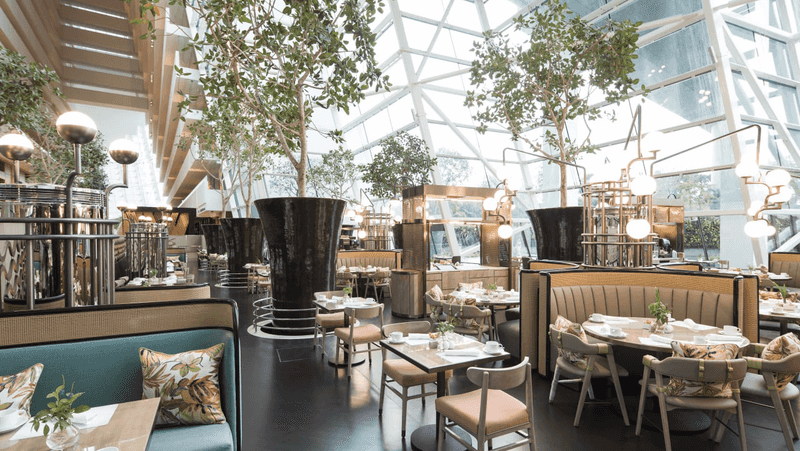
Marina Bay Sands built RISE around a genuinely ambitious idea: ‘The World at Your Table.’ More than 100 dishes span Southeast Asian specialties, seafood, Western cooking, breads, desserts, and rotating carving selections, served daily at both lunch and dinner. The menu reads like a greatest-hits compilation of flavors from across the region, with Singapore chilli crab and Wagyu beef-cheek rendang sitting alongside Norwegian salmon and freshly baked artisan breads.
Current dinner menus also include sashimi, pork rack, and a rotating selection of live seafood preparations. The restaurant occupies Tower 1 of the Marina Bay Sands hotel and offers outdoor seating surrounded by greenery, which makes it one of the more pleasant physical environments among Singapore’s hotel buffets.
Eating al fresco next to a garden while working through a plate of chilli crab is a genuinely good way to spend an evening.
What distinguishes RISE for international visitors is that Singaporean food receives real attention rather than being treated as a token regional nod. Local and regional dishes sit alongside the global buffet standards with equal prominence and care.
For travelers who want to experience the flavors of Singapore without hunting across multiple hawker centers, RISE condenses a lot of that culinary range into one sitting. Practical, delicious, and unexpectedly scenic.
The Line at Shangri-La, Singapore
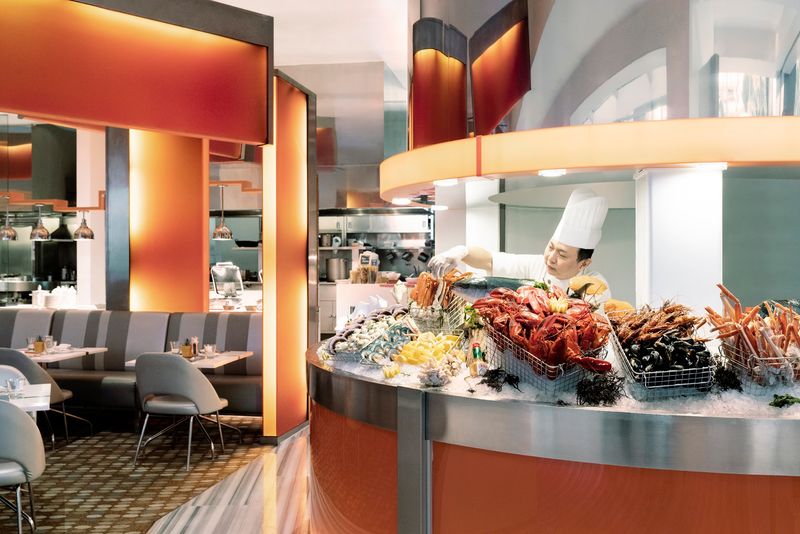
Nine live stations covering Middle Eastern, Indian, Western, Peranakan, and broader Asian cooking would already make The Line at Shangri-La Singapore one of the more ambitious hotel buffets in the city. Then the actual menu list arrives, and the scale becomes clearer: Korean barbecue, Singapore chilli crab, satay, laksa, prawn noodles, roasted duck, seafood, sushi, and multiple carving stations can all appear during the same service period.
That is a genuinely staggering range for a single meal.
Seasonal programming pushes things even further. In September and October 2026, visiting Shangri-La chefs from across China are rotating through regional cuisines from Beijing, Chengdu, Guangzhou, and Yunnan, effectively turning an already enormous buffet into a temporary tour of Chinese regional cooking.
Finding that kind of culinary depth at a buffet is unusual enough to be worth noting.
The Line operates in one of Singapore’s most storied luxury hotels, and the service quality matches the surroundings. Weekends tend to fill up quickly, particularly for the more elaborate dinner service when the chilled seafood counter reaches its full spread.
Checking the Shangri-La’s website for current themed promotions before booking is worthwhile because the seasonal programs genuinely change what you will encounter on the night. Consistent quality, remarkable variety.
The Market at Hotel ICON, Hong Kong
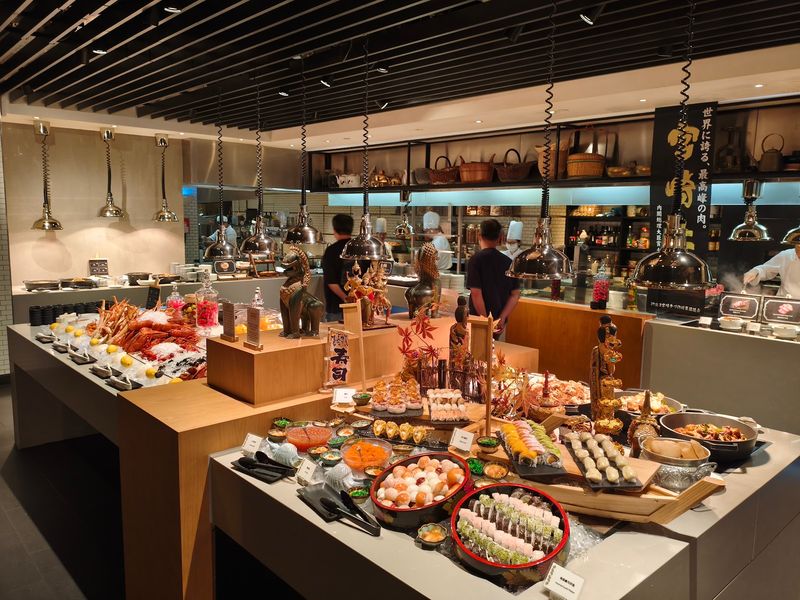
Hotel ICON’s The Market takes its inspiration from the great food markets of Asia and Europe, then organizes that energy across seven open kitchens staffed by chefs from the countries whose cuisines are being represented. The range is unusually broad even by Hong Kong standards: Chinese, Singaporean, Malay, Indian, Thai, Japanese, Southeast Asian, and Western cooking all share space under the same roof.
Chefs from each cuisine tradition handle their own stations rather than a generalist kitchen team covering everything.
Recurring signatures include fresh seafood and durian desserts, but the 2026 dinner program has gone further. A5 Miyazaki Wagyu preparations, Alaskan crab, sashimi, Thai dishes, unlimited specialty doughnuts, and house-made durian ice cream have all appeared on recent menus.
The rotating nature of the spread means repeat visits tend to surface different highlights, which keeps things interesting for Hong Kong locals who make The Market a regular habit.
OpenRice, one of Hong Kong’s most trusted dining platforms, has recognized The Market for over a decade, which reflects consistent guest satisfaction rather than a single good season. The seven-kitchen format keeps food quality higher than a traditional single-line buffet because smaller batches cycle through more frequently.
For a city as food-obsessed as Hong Kong, that attention to freshness matters. Strongly recommended for dinner.
The Grand Buffet at Grand Lisboa Palace, Macau
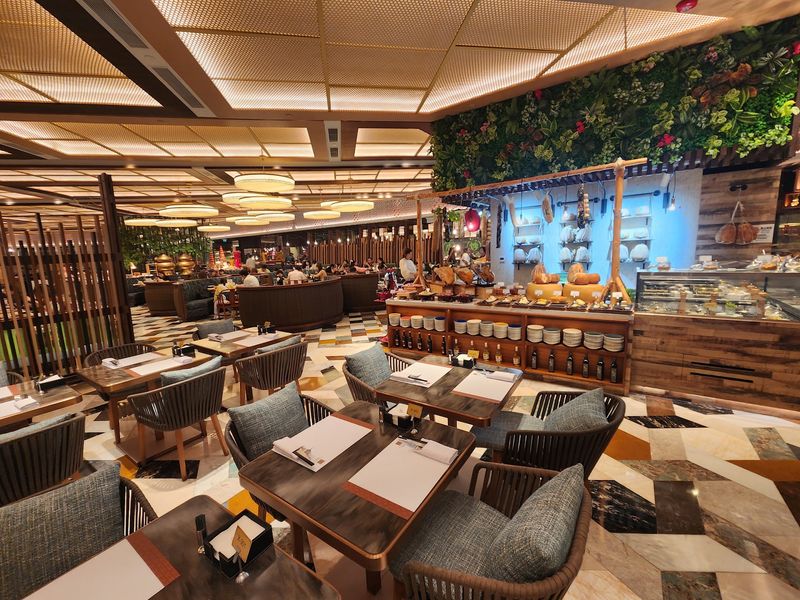
Grand Lisboa Palace designed The Grand Buffet to feel like stepping inside a bustling Asian food market rather than sitting down at a conventional hotel restaurant. Live cooking stations cover Chinese, Malaysian, Singaporean, Indian, and broader international cuisines alongside sushi, sashimi, and chilled seafood.
The indoor market atmosphere is not just a design choice; it genuinely shapes how the meal unfolds, with different stations pulling attention in different directions throughout the evening.
Dinner is where the operation becomes especially serious. Eight varieties of seafood sit on ice, and unlimited cook-to-order live seafood options include lobster, crab, and prawns prepared in multiple styles.
An outdoor grill called La Parilla handles additional meat and seafood preparations, adding a smoky dimension that the indoor stations cannot replicate. Chefs also present highlighted dishes such as suckling pig and giant grouper during service, adding a theatrical element to the evening.
Weekend dinners stretch for more than four hours, which signals that this is designed for leisurely grazing rather than a rushed meal. Macau’s casino resort dining scene is intensely competitive, and The Grand Buffet keeps pace by leaning into seafood volume and live preparation quality.
Arriving early to scout the stations before committing to a first plate is genuinely useful advice here. The lobster alone justifies the trip from Hong Kong.
Imperial Viking Sal, Tokyo, Japan
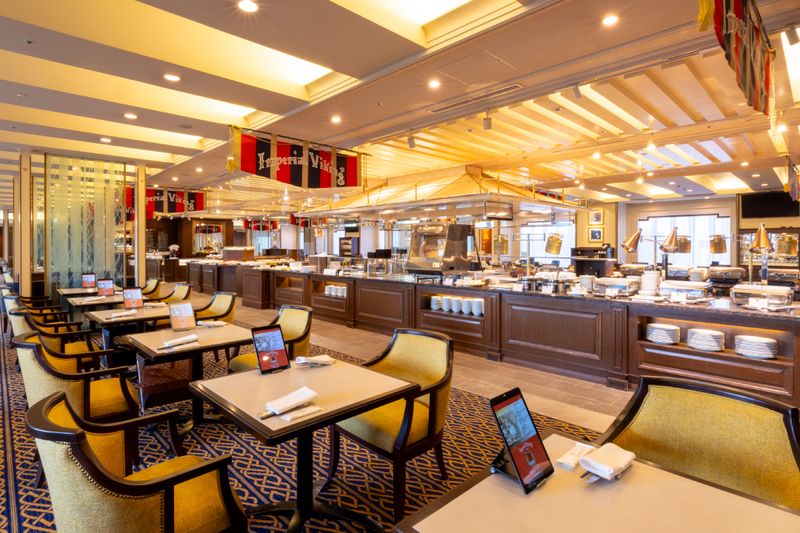
On August 1, 1958, the Imperial Hotel in Tokyo opened a restaurant that would quietly change the Japanese language. Hotel president Tetsuzou Inumaru had encountered Scandinavian smorgasbord dining in Copenhagen and brought the concept back to Japan under the name Imperial Viking.
The format proved so popular that ‘viking’ became the standard Japanese word for buffet dining, a linguistic legacy that persists in restaurants and hotel menus across the country to this day.
The 160-seat restaurant now occupies the Imperial Hotel’s 17th floor and serves a broad international assortment of appetizers, soups, salads, roasts, hot dishes, and desserts, with several items prepared live. Lunch and dinner menus continue to change seasonally in 2026, which means the spread reflects the time of year rather than staying locked into a permanent rotation.
That seasonal commitment is a mark of a kitchen that takes the buffet format seriously.
Visiting Imperial Viking Sal carries a dimension that no other restaurant on this list can offer: you are eating at the place that introduced buffet dining to Japan. The views from the 17th floor over central Tokyo add a memorable backdrop to a meal that already has history built into it.
Prices sit in the premium range, but for what amounts to a piece of living culinary history, most guests find it worthwhile.
Vikings Luxury Buffet, Manila, Philippines
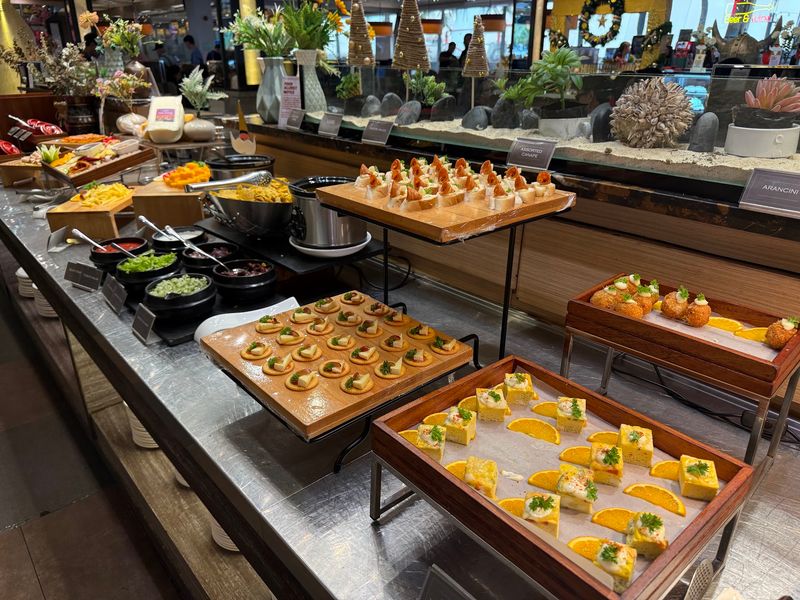
Vikings did not quietly become the largest buffet restaurant in the Philippines; it earned that title by building a spread so enormous and family-friendly that it became the default venue for celebrations across the country. The original location near SM By the Bay and the Mall of Asia set the template: a massive international selection covering seafood, meat, vegetarian dishes, desserts, and live cooking stations, all priced for large groups rather than expense-account solo diners.
The concept proved popular enough that Vikings expanded into multiple locations across Metro Manila and provincial cities, with related buffet brands following the same format. Current 2026 promotions confirm the core operation remains fully active across its network.
Weekends bring extended families, birthday parties, and graduation celebrations filling tables that seat dozens of guests at a time, creating an atmosphere that feels more like a communal feast than a restaurant meal.
What makes Vikings genuinely distinct from the luxury-hotel buffets elsewhere on this list is that the buffet is the whole point. There is no hotel lobby to walk through, no resort amenity tacked on as context.
Vikings exists entirely to deliver a huge, satisfying spread at an accessible price, and it executes that mission with consistent reliability. For anyone visiting Manila with a large group and a serious appetite, this is the obvious first call.
Grand Seafood Buffet at Sheraton Grand Sydney Hyde Park, Australia
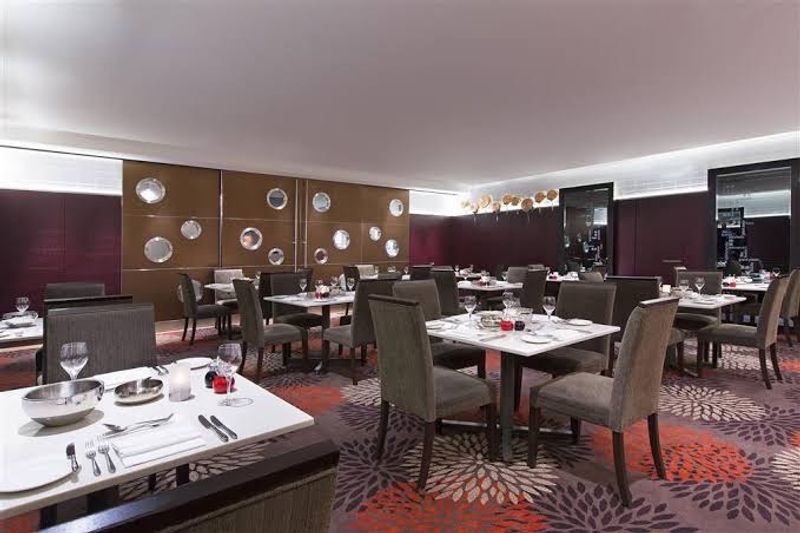
Sydney rock oysters piled high, tiger prawns chilled on ice, mussels, clams, and live seafood service running for three straight hours on a Sunday afternoon: the Sheraton Grand Sydney Hyde Park’s Grand Seafood Buffet is not trying to cover every cuisine on the planet. It has a specific identity built around outstanding Australian seafood, and that focus gives it a clarity that broader international buffets sometimes lack.
The event runs from 12:30 to 3:30 p.m. every Sunday, which makes it a proper occasion rather than a casual drop-in.
International dishes and carving selections round out the spread beyond the seafood centerpiece, and brunch classics fill in the gaps for guests who want something more familiar alongside the shellfish. The 2026 price sits at A$135 per adult, with coffee, tea, and soft drinks included.
An optional beverage package adds wine and beer for guests who want to extend the Sunday afternoon mood a little further.
By the standards of the giant Asian hotel buffets on this list, the cuisine range here is deliberately narrower. But the seafood quality and the relaxed three-hour format make it one of the most enjoyable buffet experiences in Australia.
Booking ahead is essential because Sunday slots fill quickly, especially during warmer months when the appeal of a long seafood lunch feels particularly strong. A genuinely satisfying way to spend a Sydney Sunday.
COSMO World Buffet, United Kingdom
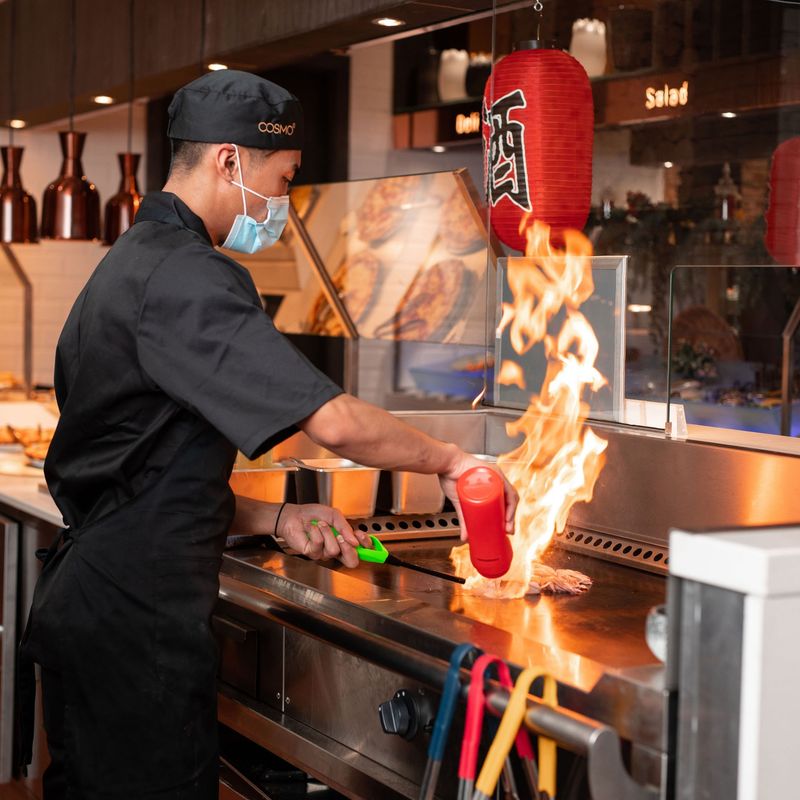
COSMO approaches the buffet concept with the kind of ambition that treats ‘world tour’ as a literal operational brief. The British chain runs large all-you-can-eat restaurants with dedicated sections for Chinese, Japanese, Indian, Italian, carvery, deli, live cooking, and dessert, all under one fixed price.
Several branches advertise more than 150 dishes available simultaneously, which means a diner could theoretically eat sushi, a lamb curry, a roast dinner, and a cannoli without moving more than twenty feet.
The chain launched in 2003 and has since spread across the United Kingdom and Ireland, with Edinburgh’s location serving Chinese, Japanese, Thai, Indian, continental, and British food as part of its current offering. Each branch adapts slightly to its local market while maintaining the core multi-cuisine format.
The price point is considerably more accessible than the resort buffets of Dubai or Singapore, making COSMO a practical option for families and students as well as dedicated food explorers.
There are no palm-tree views or Champagne pairings here, and the surroundings are cheerfully functional rather than architecturally impressive. COSMO earns its place on this list through sheer cuisine count and the genuine effort to maintain quality across so many different cooking traditions simultaneously.
For European buffet options that match Asian all-you-can-eat venues in ambition, very few competitors come close to what COSMO has built over two decades.
Share this story