A mansion with 65 fireplaces, the world’s longest known cave system, and a Florida fort built from seashells are just three reasons to plan a trip through the South.
Some of these places have been famous for generations, but plenty of Americans still haven’t made the trip. From Elvis Presley’s Graceland to the historic streets of Savannah, each destination offers something you won’t find on an ordinary weekend getaway.
Many are easy to explore by car, trolley, or short walks, although some attractions require more effort. We’ve included practical tips on when to visit, what to see, and how to avoid the busiest crowds.
Here are 13 Southern destinations that deserve a place on your travel calendar.
1. Biltmore Estate, Asheville, North Carolina
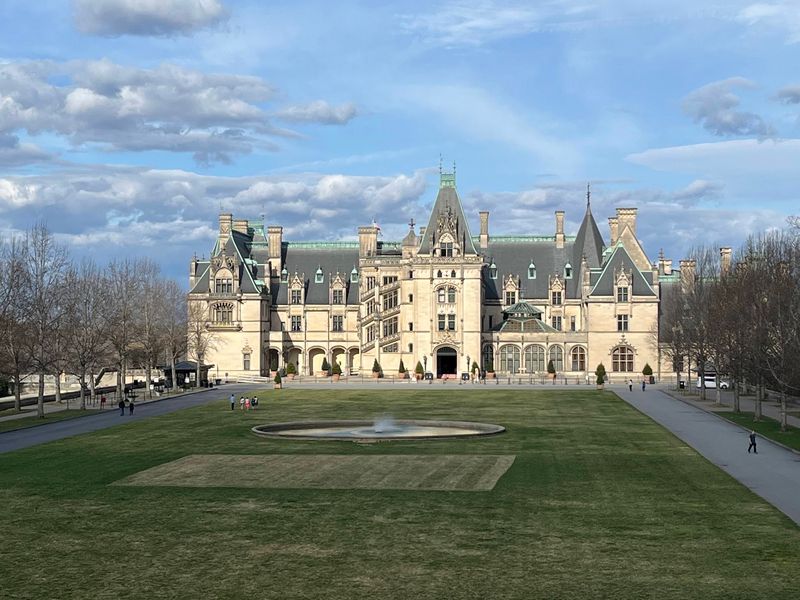
Sixty-five fireplaces, 43 bathrooms, and 250 rooms make Biltmore the biggest privately owned home in America. George Vanderbilt built it between 1889 and 1895, and he clearly did not believe in cozy.
Architect Richard Morris Hunt modeled the house on French castles, complete with turrets and steep roofs. Frederick Law Olmsted, the man behind New York’s Central Park, designed the grounds.
Today the estate covers about 8,000 acres. That sounds huge until you learn it once stretched to 125,000.
Plan on a full day here. The self-guided house tour comes with an audio guide, and special backstairs and rooftop tours show the parts the servants knew best.
Save energy for the gardens. The four-acre Walled Garden and the Italian Garden with its lily pools are highlights.
Spring brings tulip season, while Christmas turns the house into a holiday showpiece. Book ahead for both, since tickets go fast and the parking lots fill even faster.
2. Great Smoky Mountains National Park, Gatlinburg, Tennessee
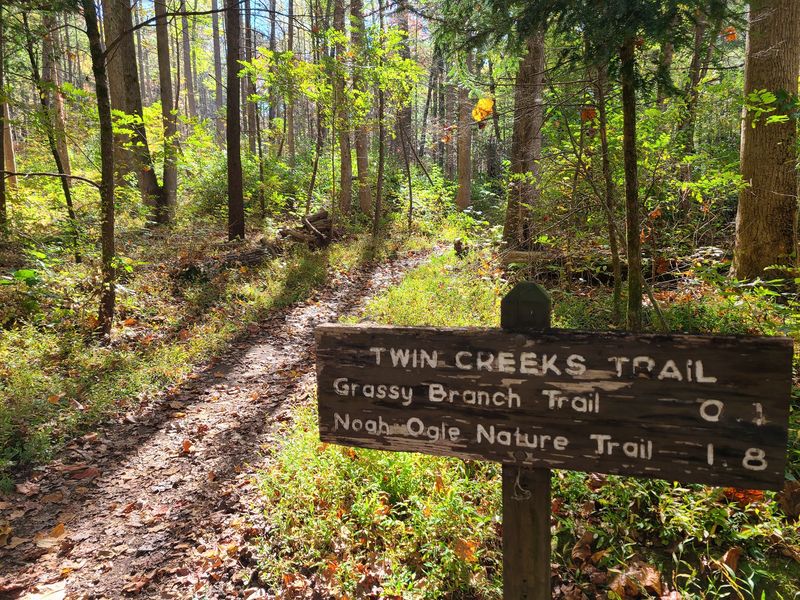
More than 12 million visitors a year cannot all be wrong. The Smokies are the most visited national park in the country, and entry is free, though a parking tag is needed for stops longer than 15 minutes.
Start with Newfound Gap Road, a 31-mile route linking Gatlinburg to Cherokee. It climbs to 5,046 feet, where temperatures often run 10 to 15 degrees cooler than town.
A short side road leads to Kuwohi, formerly Clingmans Dome, the highest point in Tennessee.
Cades Cove is the other must-see. The 11-mile one-way loop passes three churches, an 1867 gristmill, and the John Oliver Cabin from the 1820s.
Deer and wild turkeys show up often, and black bears make occasional cameo appearances. Bring binoculars and patience.
Early morning is best for wildlife. September and early November offer fall color with smaller crowds than October, which is the park’s second busiest month.
3. Savannah Historic District, Savannah, Georgia
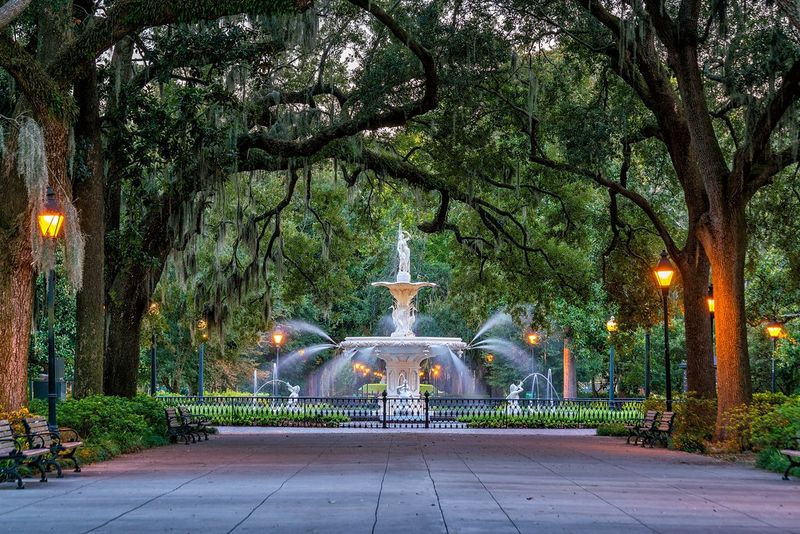
General James Oglethorpe sketched out Savannah in 1733, and the city still follows his homework. His plan arranged the town around 22 public squares, each one its own small park.
That layout makes Savannah easy to explore in bite-sized pieces. Walk a few blocks, sit on a bench, then move on to the next square.
The live oaks overhead wear Spanish moss, which is not actually moss and does not harm the trees. It simply enjoys the humid weather, much like the locals do.
Homes here range from Greek Revival to Queen Anne. The Owens-Thomas House and the Davenport House Museum open their doors for tours of 19th-century daily life.
Forsyth Park anchors the south end with 30 acres of paths and its famous fountain.
Knees not feeling chatty? Hop-on, hop-off trolleys cover more than 75 points of interest, letting you see the district without wearing out your shoes.
4. Natchez Trace Parkway, Natchez, Mississippi
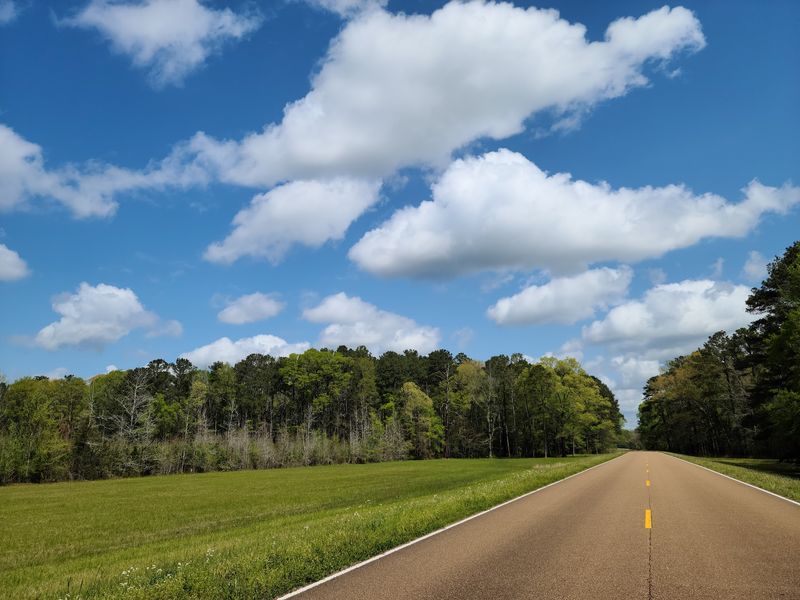
No billboards, no stoplights, and no trucks. The Natchez Trace Parkway may be the most peaceful 444 miles in the South.
The road follows a travel corridor people have used for roughly 10,000 years. It runs from Natchez, Mississippi, through a corner of Alabama, all the way to Nashville.
The speed limit is 50 mph, so nobody is in a rush.
History pops up at the mileposts. Emerald Mound, near milepost 10.3, is the second-largest Mississippian ceremonial mound in the country.
Mount Locust at milepost 15.5 is the last surviving inn from the old travel days. At milepost 41.5, the Sunken Trace shows a path worn deep by thousands of footsteps and hooves.
One practical tip matters a lot here. There is no gas, food, or lodging directly on the parkway, so fill the tank and pack snacks before you start.
Nearby towns make easy overnight stops along the way.
5. French Quarter, New Orleans, Louisiana
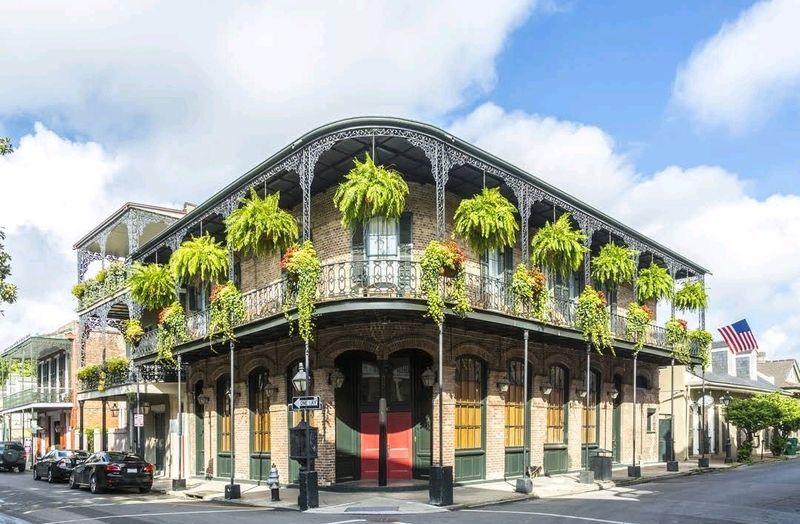
Here is a fun twist for trivia night. The French Quarter’s famous buildings are mostly Spanish, built after a huge fire in 1788 wiped out much of the original French town.
The neighborhood still sits on the same 6 by 13 block grid laid out in 1722. That makes it compact and easy to cover on foot.
Jackson Square is the center of the action. Artists set up easels along the iron fence, and St. Louis Cathedral, the oldest continuously active cathedral in the United States, rises behind them.
Royal Street is the calmer cousin of Bourbon Street. Its 13 blocks are packed with antique shops, art galleries, and jewelers, and parts close to cars during certain hours.
For music, Preservation Hall offers traditional jazz in a small, no-frills room.
Then head to Cafe du Monde, open since 1862, for beignets and cafe au lait. Wear dark clothes at your own risk, because powdered sugar travels.
6. Charleston Historic District, Charleston, South Carolina
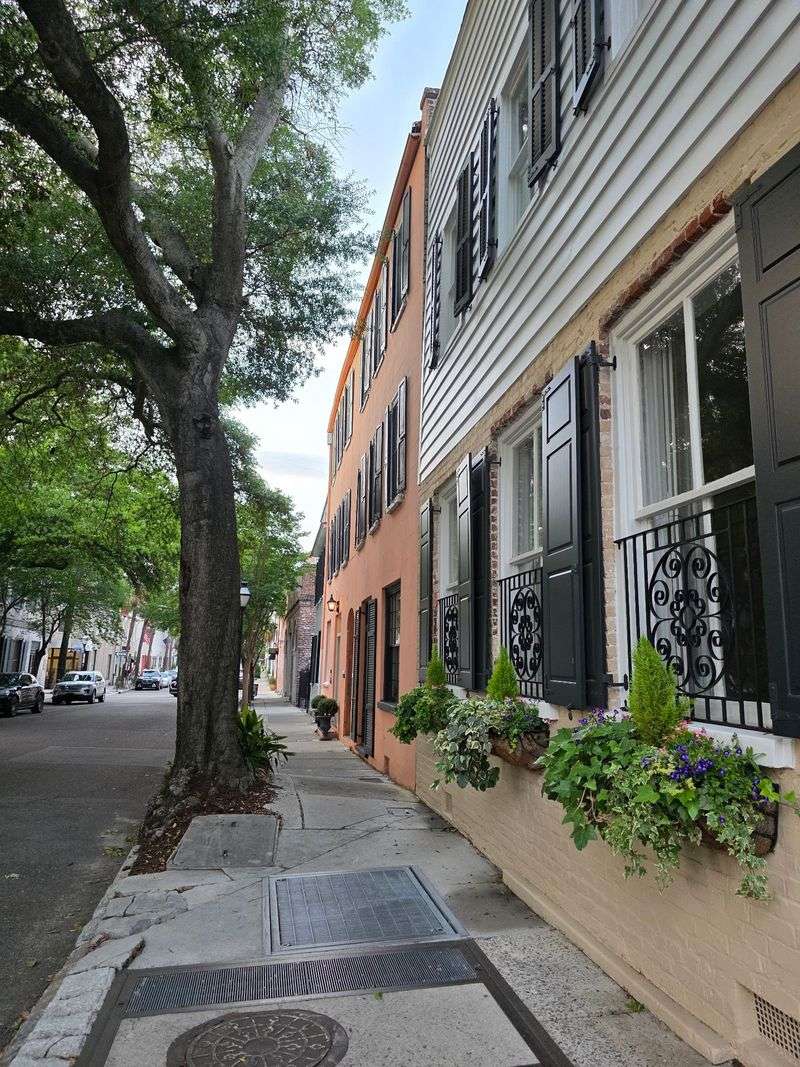
Charleston was preserving old buildings back when most cities were busy knocking them down. In 1931 it passed some of the first local historic preservation laws in the nation.
That early effort paid off. The peninsula is packed with Georgian, Federal, Italianate, and Victorian homes, some dating to the 1700s.
A few streets still have their cobblestones. Chalmers Street and Longitude Lane are paved with stones that arrived as ship ballast from Europe.
They look charming, but they can be tough on ankles, so wear sturdy shoes.
Meeting Street earned the nickname Museum Mile for its historic houses and churches. King Street is the place for shopping and lunch.
A horse-drawn carriage ride is a relaxing way to cover ground while a guide shares stories.
Got an extra afternoon? Magnolia Plantation, the oldest public garden in the country, and Middleton Place, with gardens dating to 1741, sit a short drive outside town.
7. Blue Ridge Parkway, Asheville, North Carolina
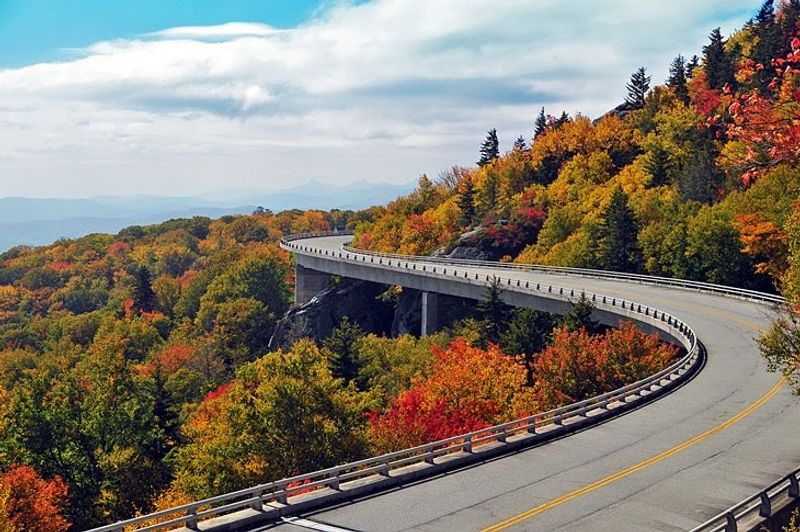
Nobody charges admission to America’s Favorite Drive. The Blue Ridge Parkway is free, and it stretches 469 miles from Shenandoah National Park down to the Great Smokies.
Construction started in 1935 and did not wrap up until 1987. That is a long wait, but the views make it clear why the builders took their time.
More than 200 overlooks and parking areas mean you can enjoy big scenery without a big hike. Mileposts count up from zero in Virginia, which makes planning stops simple.
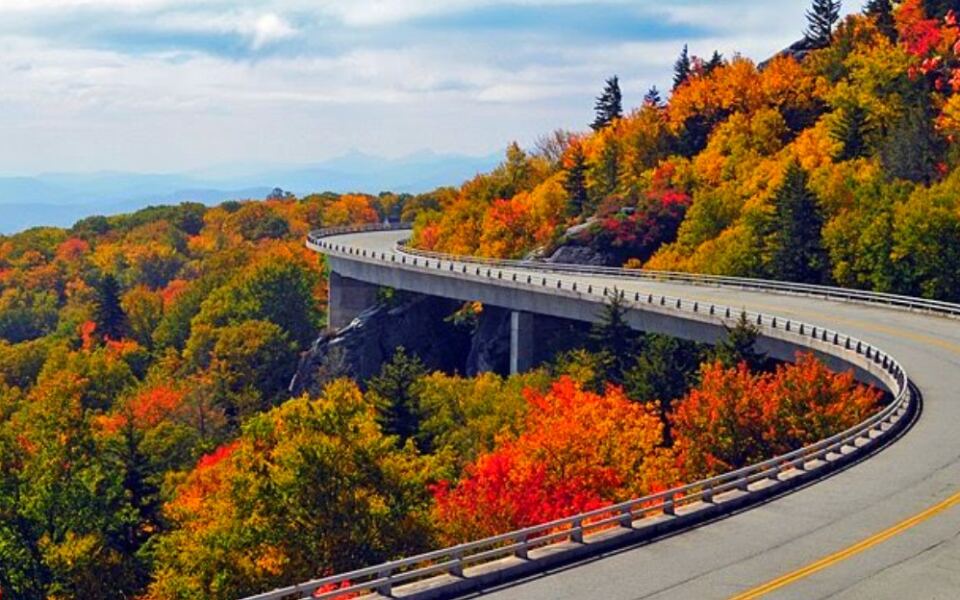
The star attraction is the Linn Cove Viaduct at milepost 304.4. This 1,243-foot bridge curves around Grandfather Mountain and was built from the top down to protect the slope below.
A small visitor center explains how engineers pulled it off.
Leaves usually peak in mid to late October. Book your hotel early for that window, or come in spring for wildflowers and far less traffic at the overlooks.
8. Graceland, Memphis, Tennessee
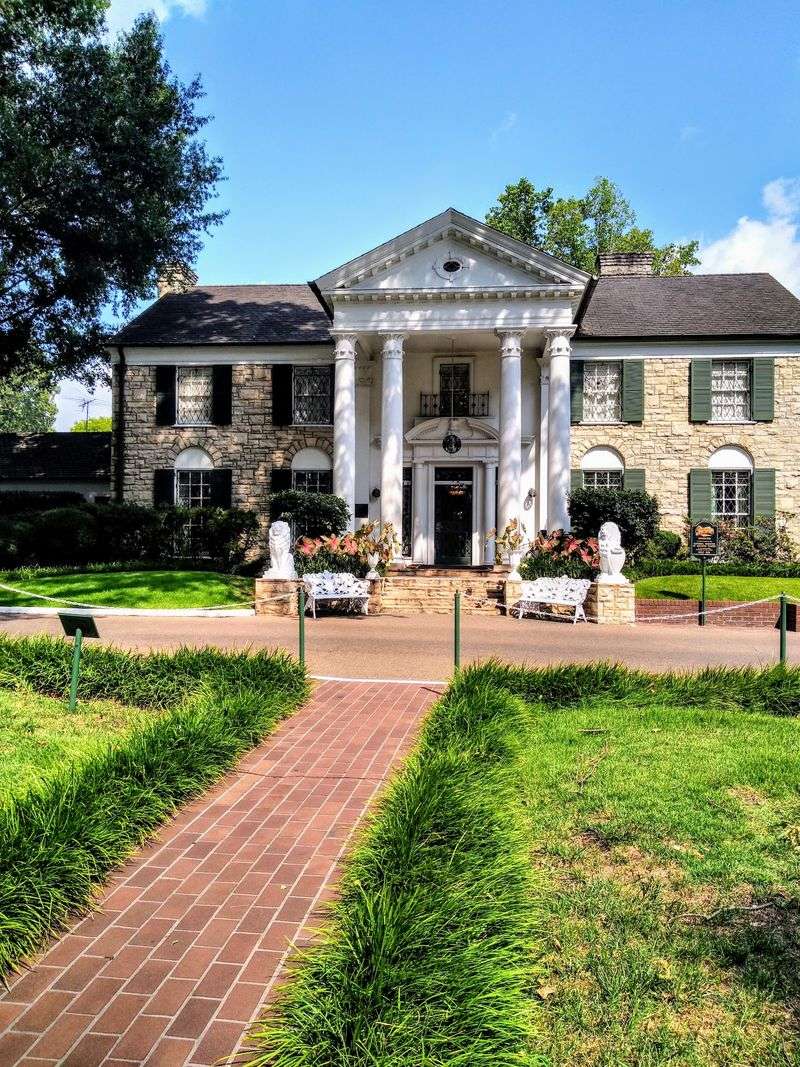
Green shag carpet on the ceiling was not a mistake. It was Elvis, and the Jungle Room at Graceland proves the King decorated exactly the way he wanted.
He bought the house in 1957 for $102,500. Today it ranks as the second most visited home in America, right behind the White House.
The audio-guided tour walks you through 23 rooms of colorful 1970s style. Photos without flash are usually allowed, so bring your phone.
The Jungle Room even served as a recording studio, where Elvis cut much of his last two albums in 1976.
Across the street, Elvis Presley’s Memphis holds the rest of the treasure. You can see his jumpsuits, gold records, and the famous pink Cadillac.
You can also step aboard his private jet, the Lisa Marie.
Avoid early January and mid-August if crowds bother you. Elvis Birthday Celebration and Elvis Week pack the place with devoted fans.
9. Mammoth Cave National Park, Mammoth Cave, Kentucky
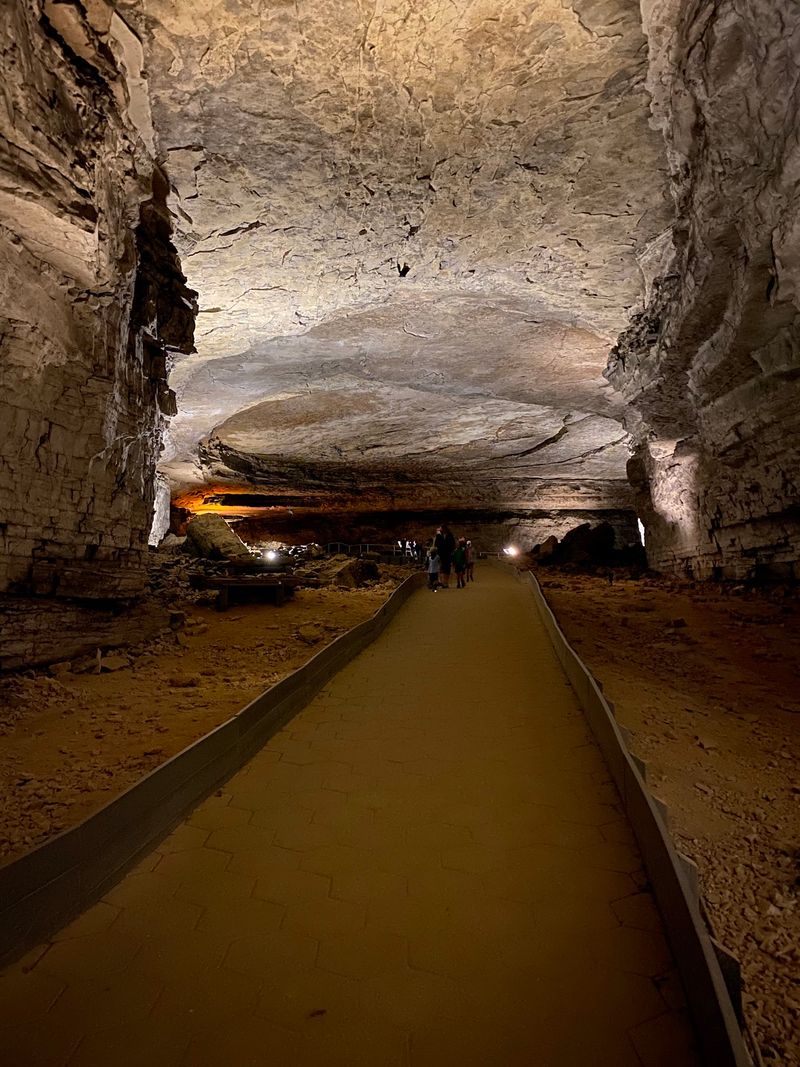
Over 426 miles of mapped passages, and explorers keep finding more. Mammoth Cave holds the title of the longest known cave system on Earth.
People have explored it for at least 5,000 years. Early Native Americans left behind cane torches and woven slippers, and in the 1800s a guide named Stephen Bishop mapped huge new sections.
The only way inside is on a ranger-led tour. Options range from easy lit walkways to rugged lantern routes.
The Frozen Niagara Tour is short and shows off dramatic dripstone formations. The Historic Tour is longer and includes plenty of stairs.
For limited mobility, the Accessible Tour uses an elevator to reach part of the cave.
Reserve early, since tickets can sell out weeks ahead. Pack a light jacket, because the cave stays near 54 degrees all year.
Also double-check directions, since GPS has a habit of getting lost around here.
10. Bathhouse Row, Hot Springs, Arkansas
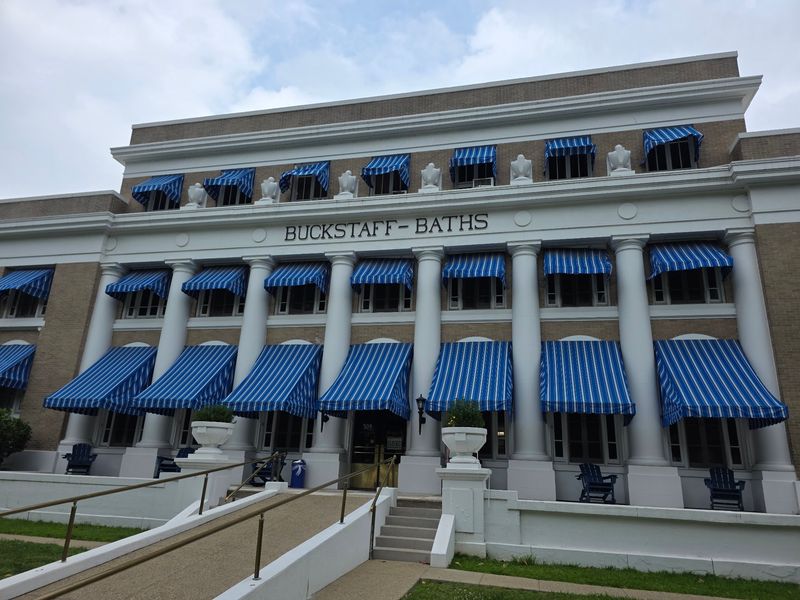
Back in 1832, the federal government set aside these springs before Yellowstone was even a national park. That makes Hot Springs one of the oldest protected areas in the country.
Eight grand bathhouses line Central Avenue, built between 1892 and 1923. Each one has its own style, from Spanish domes to classical columns.
Start at the Fordyce Bathhouse, now the park visitor center. Free self-guided tours show restored bath halls, a gymnasium, and even a basement bowling alley.
Ready for a soak? Only two bathhouses still offer thermal bathing.
The Buckstaff has run nonstop since 1912 and follows the classic routine of mineral baths and hot towel packs. Quapaw Baths and Spa offers modern thermal pools.
After that, stroll the Grand Promenade behind the row. Free fountains along the street serve cooled spring water, so bring a bottle and fill up like a local.
11. Castillo de San Marcos National Monument, St. Augustine, Florida
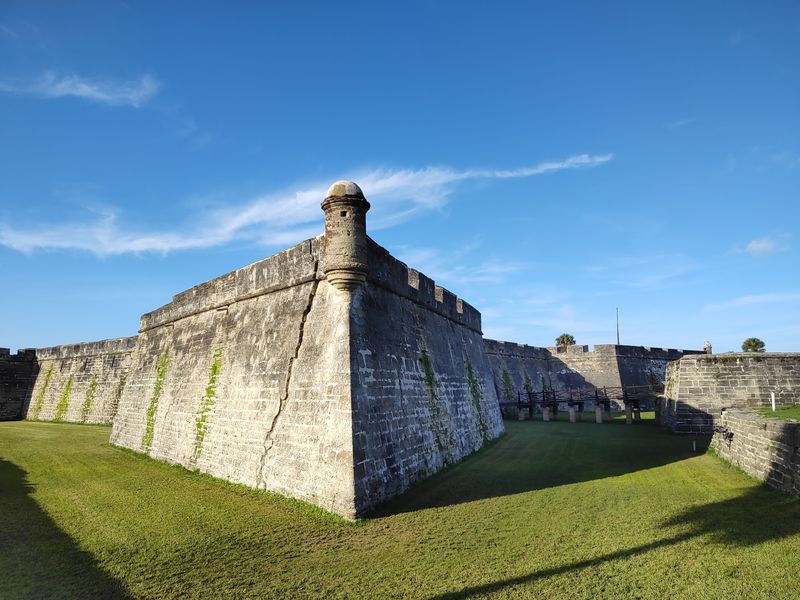
Cannonballs fired at this fort did not crack the walls. They sank into them, thanks to coquina, a soft stone made of ancient seashells.
Spain started building the Castillo in 1672 and finished 23 years later. It is the oldest masonry fort in the continental United States.
Some walls reach 19 feet thick. English forces laid siege twice, in 1702 and 1740, and never got inside.
The fort changed hands five times, always peacefully, among Spain, Britain, and the United States. Under American control it was renamed Fort Marion, and the Spanish name returned in 1942.
Climb to the gun deck for views of Matanzas Bay and the old city. On select days, rangers fire historic cannons, so check the schedule before you go.
Visit between mid-September and mid-November for the lightest crowds. The grounds and moat wall are free to explore, even if you skip the inside.
12. Shenandoah National Park, Front Royal, Virginia
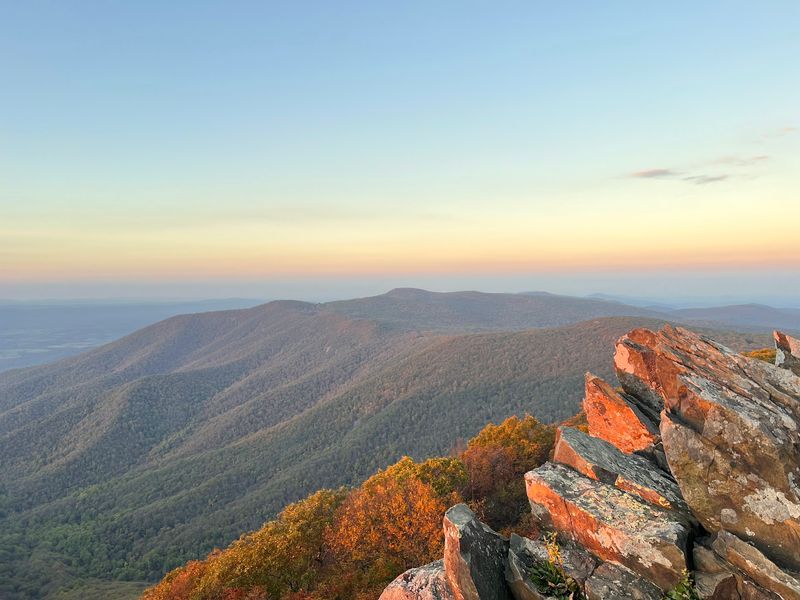
Thirty-five miles per hour is the top speed on Skyline Drive. Trust us, you will not mind.
The road runs 105 miles from Front Royal to Waynesboro, where it connects to the Blue Ridge Parkway. A full trip takes about three hours, not counting stops.
More than 70 overlooks offer views across the Shenandoah Valley. You can see a lot of park without leaving the driver’s seat.
For a short leg stretch, Stony Man and Blackrock Summit offer big payoffs for modest effort. The park also holds 101 miles of the Appalachian Trail.
Wildflower fans should come in spring. Over 850 species bloom between late March and October, including pink lady’s slippers and mountain laurel.
Fall color usually peaks from mid-October to early November, and weekdays beat weekends. Entry costs $30 per car, and the park is now cashless.
Pack layers too, since the drive can run 20 degrees cooler than the valley.
13. Rainbow Row, Charleston, South Carolina
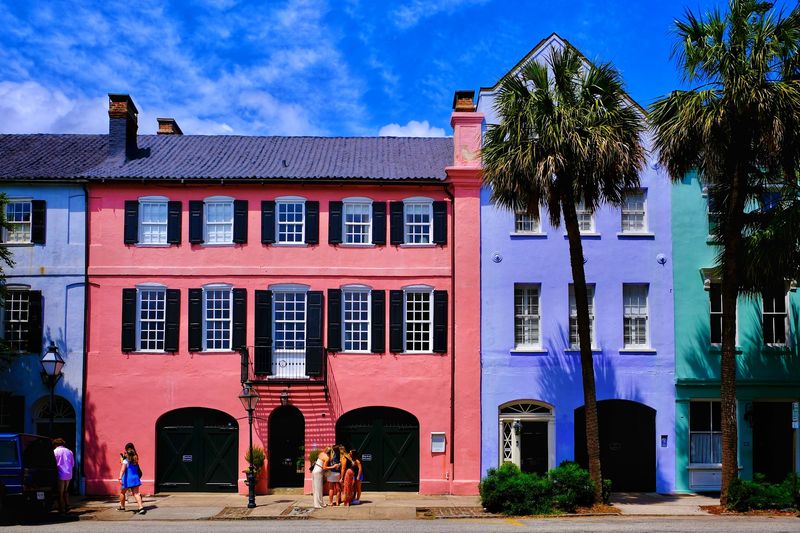
Pink came first. In 1931, Dorothy Porcher Legge bought a run-down house on East Bay Street and painted it a soft pink inspired by Caribbean homes.
Her neighbors liked the idea. Through the next few decades they added blue, green, and yellow, and by the 1950s the block had earned the name Rainbow Row.
You may hear colorful legends about why the houses were painted. Historians agree the real reason was simply that 1930s restoration project.
The buildings date from around 1740 to 1845. Merchants once ran shops downstairs and lived upstairs, close to the busy waterfront.
Today it is the longest cluster of intact Georgian row houses in the country. The homes are private, so admire them from the sidewalk.
Parking on the block is not available, so use a nearby garage. Then wander to Waterfront Park and The Battery, a fine way to close out this Southern road trip list.
Share this story