There is something genuinely thrilling about stepping below the surface of the earth and finding entire worlds hidden underneath. From ancient underground cities to glittering cave rooms the size of football fields, subterranean attractions offer a kind of awe that is hard to find anywhere else.
These places exist on every continent, shaped by geology, human labor, and centuries of history. Whether you are a curious traveler, a family looking for something different, or someone who just wants to see what is really going on beneath your feet, this list covers 13 underground attractions worth knowing about.
Each one has its own story, its own scale, and its own reason to visit.
Carlsbad Caverns National Park, New Mexico
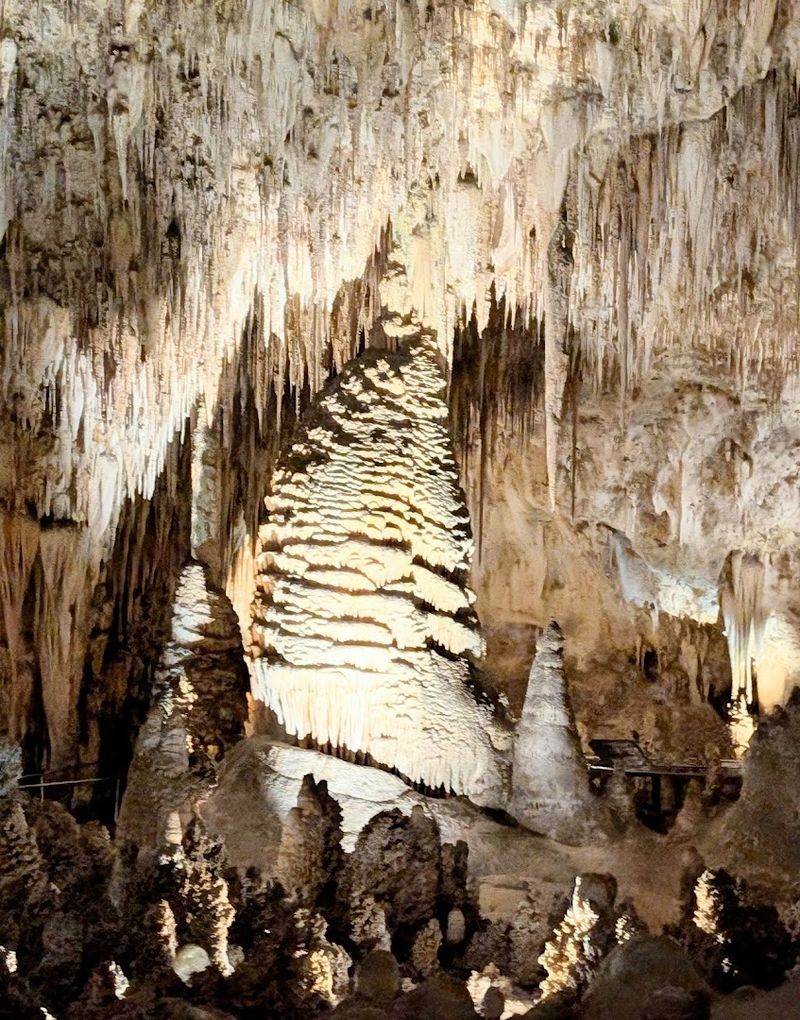
More than 119 caves hide beneath the Chihuahuan Desert at Carlsbad Caverns National Park, and the scale of what is down there genuinely catches people off guard. The Big Room alone stretches nearly 4,000 feet in length, making it one of the largest cave chambers accessible to the public in North America.
Visitors can reach it by elevator or by hiking down through the natural entrance, which adds a sense of earned arrival that the elevator route skips.
The self-guided route through the Big Room winds past mineral formations, open spaces, and carefully lit features that reward a slow pace. Because the National Park Service manages access, the experience is structured and conservation-focused without feeling overly restricted.
Tickets are required, and the park recommends reserving them in advance, especially during busy summer months.
For anyone building a list of underground destinations worth traveling for, Carlsbad is consistently one of the most impressive starting points in the country.
Mammoth Cave National Park, Kentucky
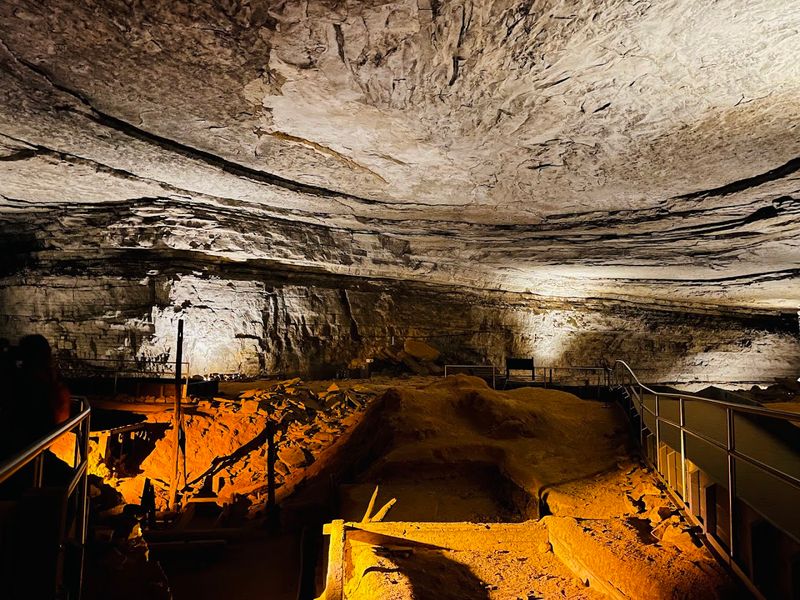
Mammoth Cave holds the title of the world’s longest known cave system, with more than 400 miles of explored passageways mapped beneath central Kentucky. That number alone makes it a different kind of underground experience from most cave attractions, because the scale goes far beyond what any single tour can cover.
Guided tours are the primary way visitors explore the cave, and the National Park Service changes tour availability by season.
Checking the current schedule before booking is genuinely important here, because not every tour runs year-round. Some routes move through wide historic corridors with tall ceilings, while others take visitors into tighter, deeper sections of the system.
The variety means repeat visitors can have meaningfully different experiences on different tours.
For a subterranean attraction that feels less like a single cave and more like an underground landscape with many distinct moods and sections, Mammoth Cave stands in a category by itself among American cave parks.
Waitomo Glowworm Caves, New Zealand
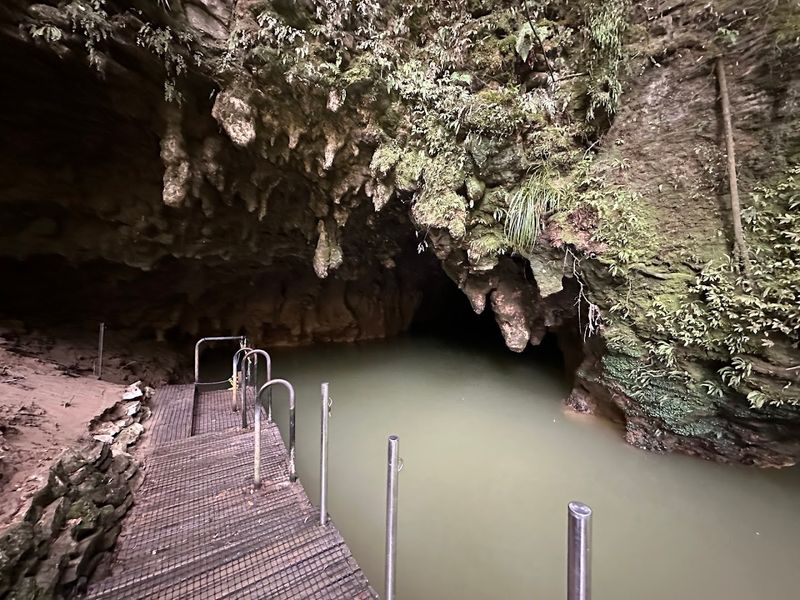
Waitomo Glowworm Caves in New Zealand offers something that almost no other underground attraction in the world can match: a boat ride through a cave ceiling covered in thousands of tiny bioluminescent lights. The glowworms, which are the larvae of a fungus gnat species found in New Zealand, create a natural light display above the dark water that visitors consistently describe as unlike anything else they have seen.
It is one of those places where the description sounds almost too good to be accurate, but the real thing holds up.
The official tour experience includes guided walks through ancient limestone formations before the famous boat ride through the Glowworm Grotto. Discover Waitomo also offers additional adventure options for visitors who want a more active underground experience beyond the standard tour.
The wider Waitomo area combines geological beauty with a genuinely unusual natural phenomenon, making it one of the most memorable subterranean stops in the Southern Hemisphere.
Wieliczka Salt Mine, Poland
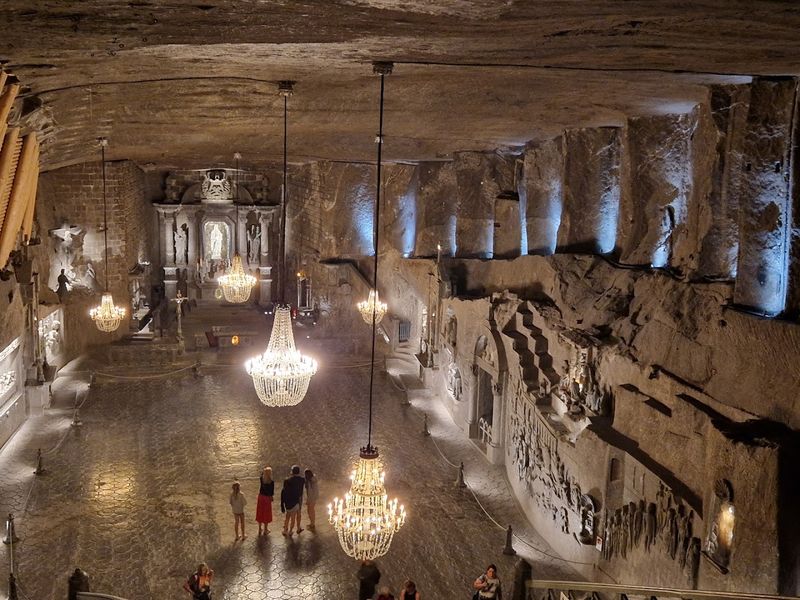
The Wieliczka Salt Mine near Krakow is not just an old industrial site repurposed for tourism. It is a place where miners over centuries carved chapels, sculptures, staircases, and entire rooms out of solid salt, creating an underground environment that is both historically remarkable and visually striking.
The centerpiece of the Tourist Route is St. Kinga’s Chapel, a vast underground space with chandeliers, floor carvings, and wall reliefs all made from salt.
The official Tourist Route covers a significant distance underground and involves more than 800 steps, so comfortable footwear and a reasonable level of mobility matter here. Along the route, visitors also see saline lakes, old mining equipment, and displays that explain how salt extraction shaped the region’s economy for hundreds of years.
What separates Wieliczka from a natural cave tour is the human element: every corridor and chamber reflects generations of labor, craftsmanship, and underground community life that few other sites in the world can match.
Paris Catacombs, France
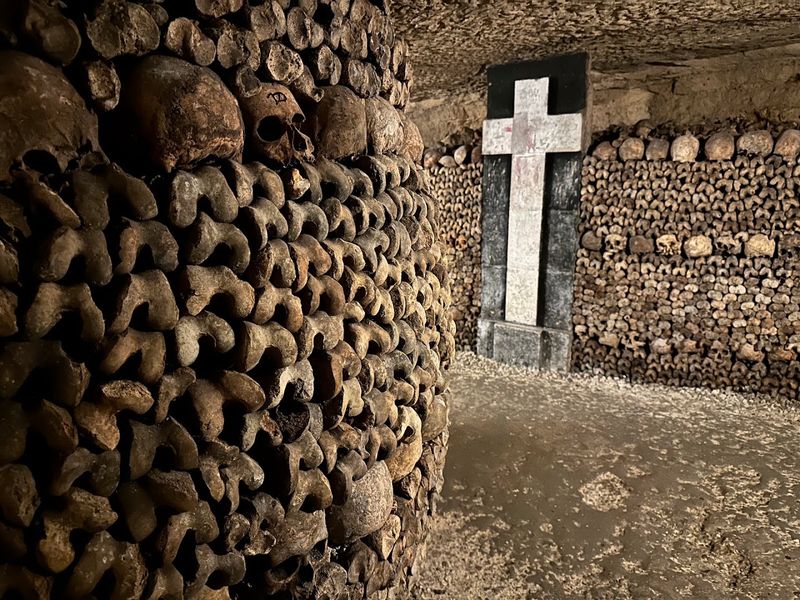
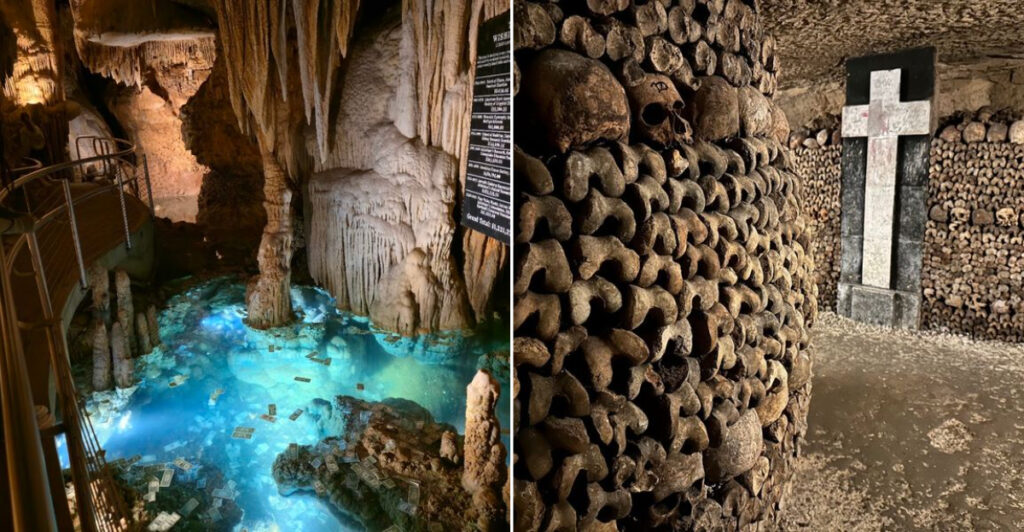
About 20 meters below the streets of Paris, the official Catacombs route takes visitors through stone galleries and into one of the world’s most sobering underground spaces. The ossuary holds the remains of several million Parisians, transferred underground beginning in the late 18th century as a solution to overflowing city cemeteries.
The bones are arranged with a deliberate order that reflects both practicality and a certain grim respect for the scale of what the city needed to manage.
Timed tickets are available through the official Catacombs website, and advance booking is strongly recommended because this attraction draws visitors year-round. The official route is the only section open to the public, and it is worth noting that Paris has a much larger network of underground passages that remain off-limits.
For a list of underground attractions defined by chambers and passageways, the Catacombs bring a completely different energy from any cave tour, blending urban history, ancient quarry architecture, and the weight of the city’s past into a single underground walk.
Derinkuyu Underground City, Turkey
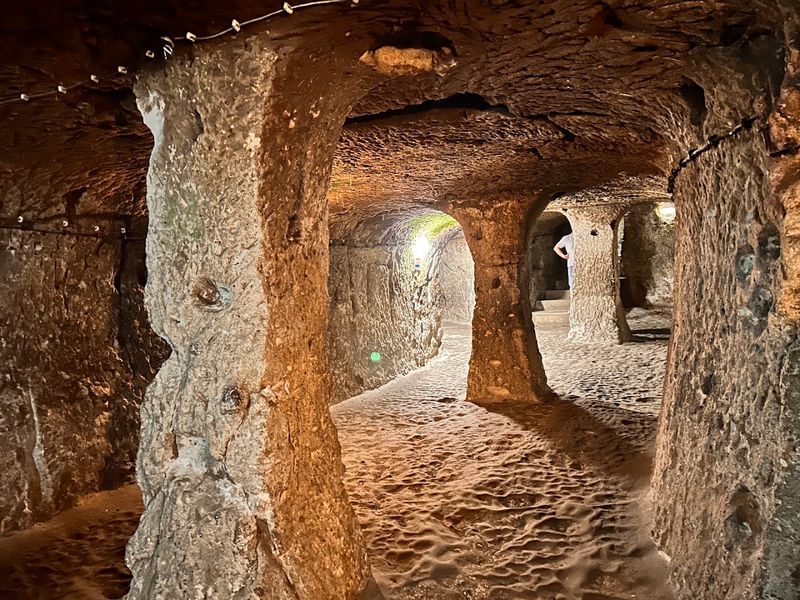
Derinkuyu is not a cave shaped by water or geology. It is a city, built entirely underground by human hands, descending about 85 meters below the surface of Cappadocia.
The site includes stables, cellars, dining halls, churches, and connecting galleries that were designed to shelter entire communities for extended periods. That functional design is what makes Derinkuyu feel so different from every other underground attraction on this list.
The underground city has been open to visitors since 1965, though only around ten percent of the full system is accessible to the public today. That limitation actually sharpens the experience, because the accessible route is clearly just a fraction of something much larger and more complex hidden below.
Knowing that the tunnels extend far beyond what visitors can see adds a layer of genuine wonder to every room and corridor.
For any article about subterranean passageways, Derinkuyu is an essential stop, representing an entirely different category of underground space from caves or mines.
The Real Mary King’s Close, Edinburgh, Scotland
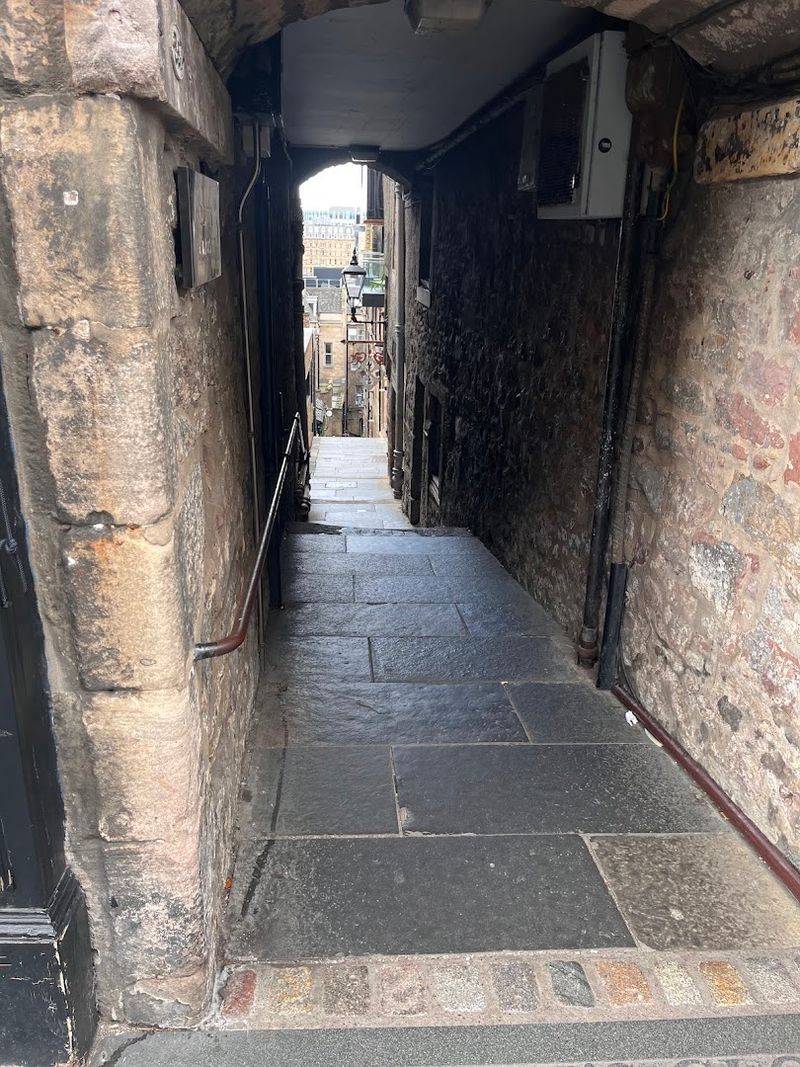
The Real Mary King’s Close sits beneath the Royal Mile in Edinburgh, but it is not a cave or a mine. It is a preserved layer of the city itself, a collection of 17th-century streets and buildings that were sealed beneath later construction and essentially frozen in time.
Visitors descend into narrow closes, small rooms, and connecting passageways that once formed a working part of Edinburgh’s urban life.
Guided storytelling is central to the experience here, with guides leading visitors through spaces connected to daily work, illness, and the shifting fortunes of a city that kept building upward rather than clearing what was below. The atmosphere leans toward the eerie and immersive without crossing into gimmicky territory, which keeps the history feeling grounded and real.
Current visitor information, including opening times and ticket prices, is available through the attraction’s official website. For readers who enjoy history with texture and a slightly unsettling sense of place, this Edinburgh stop is genuinely hard to forget.
Napoli Sotterranea, Naples, Italy
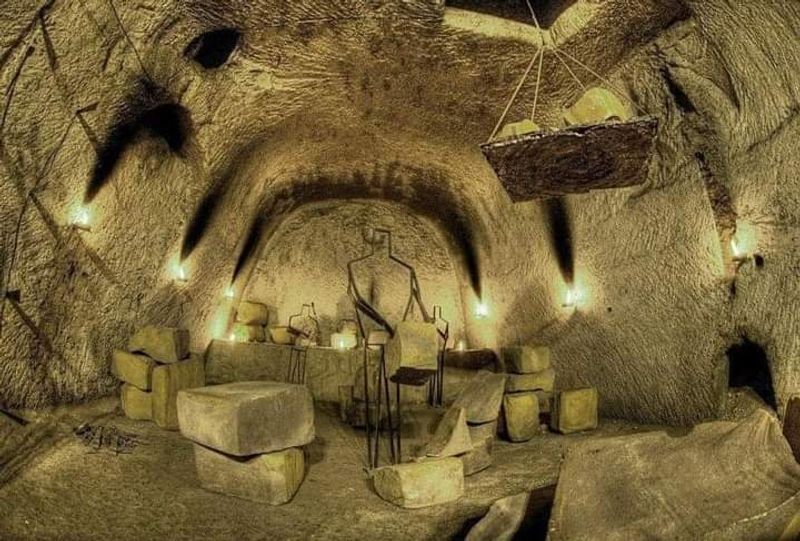
Naples is already one of Italy’s most layered and intense cities at street level, but the version of Naples that exists underground adds an entirely different dimension to understanding the place. Napoli Sotterranea gives visitors access to a network of tuff passageways, ancient aqueduct spaces, cisterns, and areas that were later used as wartime shelters during the 20th century.
The result is not a single chamber but a sequence of underground spaces built and rebuilt across more than 2,000 years.
Guided tours move through the Roman-era engineering that originally supplied the city with water, pulling from sources located far outside the city center. That ancient infrastructure is what makes the underground network so extensive and so directly connected to the life of Naples above.
For travelers who want an urban underground experience rather than a natural cave tour, Napoli Sotterranea is one of the most historically dense options in Europe. The connection between the underground route and the visible city above is unusually direct and satisfying.
Postojna Cave, Slovenia
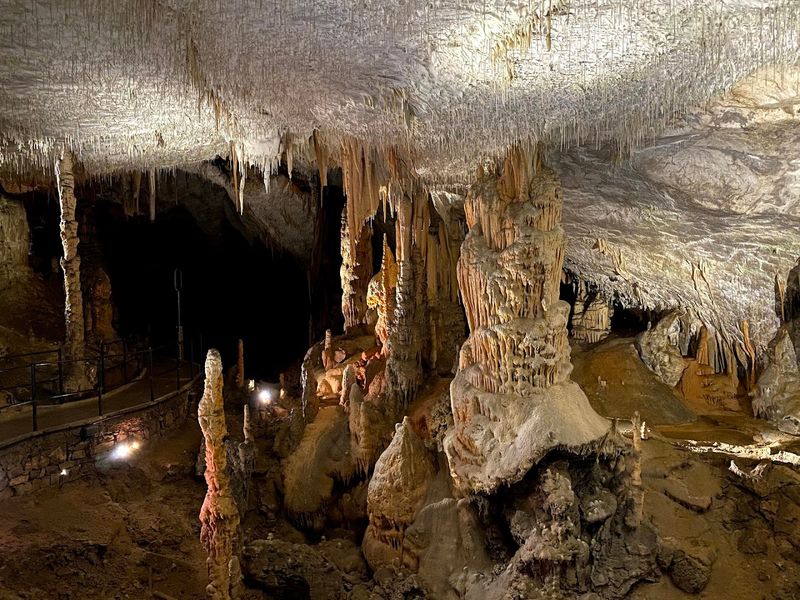
Postojna Cave makes a strong case for being the most visitor-accessible major cave in Europe. The standard tour begins with a ride on a cave train that carries visitors several kilometers into the system before the walking portion begins, which means the experience covers impressive ground without requiring a strenuous hike.
The official site confirms the cave is open daily, including public holidays, and the full tour takes about an hour and a half.
Visitors see roughly five kilometers of the cave during the tour, moving through large chambers, past classic karst formations, and along easy footpaths designed for general public access. The combination of scale and accessibility makes Postojna a strong choice for families or travelers who want genuine cave scenery without the physical demands of a more rugged caving experience.
Slovenia’s cave tourism is genuinely world-class, and Postojna is the most well-developed example of it. The cave train alone gives the visit a distinct character that separates it from nearly every other show cave on the planet.
Škocjan Caves, Slovenia
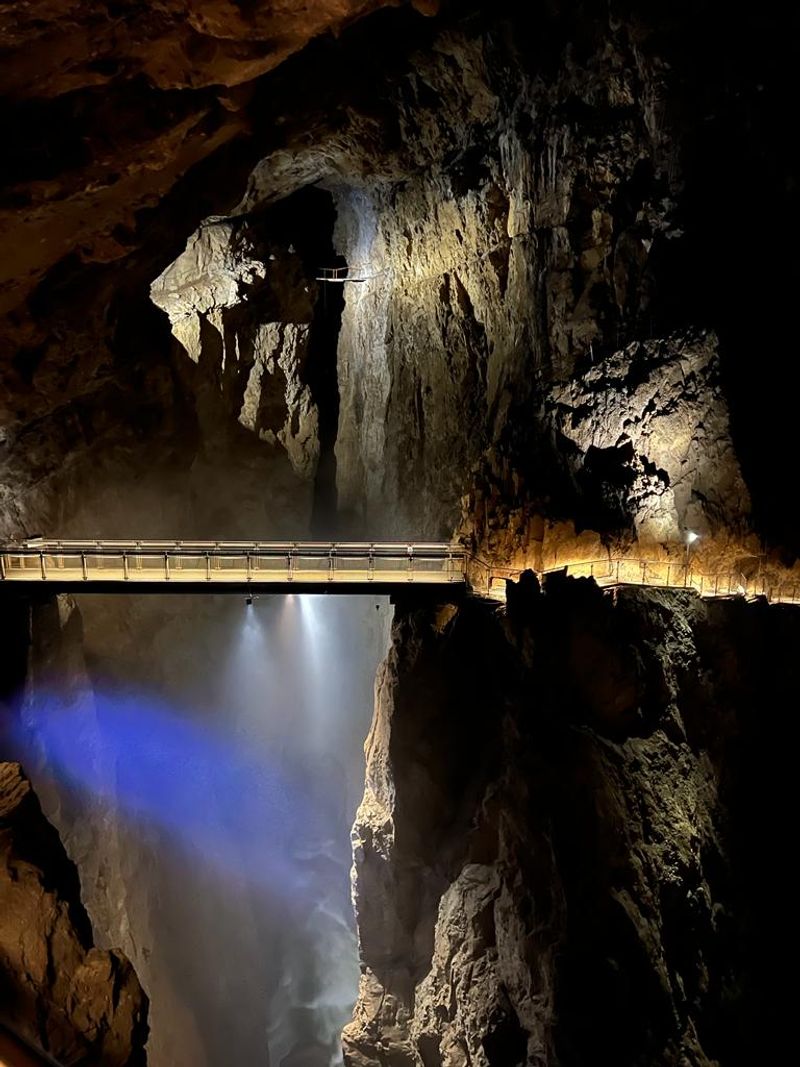
Škocjan Caves offers a fundamentally different underground experience from its Slovenian neighbor Postojna, and the contrast is worth understanding before you plan a trip. Where Postojna feels polished and accessible, Škocjan feels raw and geological in a way that is harder to prepare for.
The cave system centers on an underground river canyon with walls that rise dramatically above visitors, creating a sense of scale that photographs genuinely struggle to capture.
The site holds UNESCO World Heritage status as Slovenia’s first natural monument on that list, recognized for its outstanding example of subterranean karst phenomena. Guided tours move through the cave system along paths that cross the underground canyon and pass through chambers shaped by river erosion over enormous stretches of time.
Škocjan is less about polished presentation and more about confronting the raw power of water and geology working together underground. For readers drawn to dramatic natural settings rather than curated cave experiences, this one belongs near the top of any subterranean travel list.
Luray Caverns, Virginia
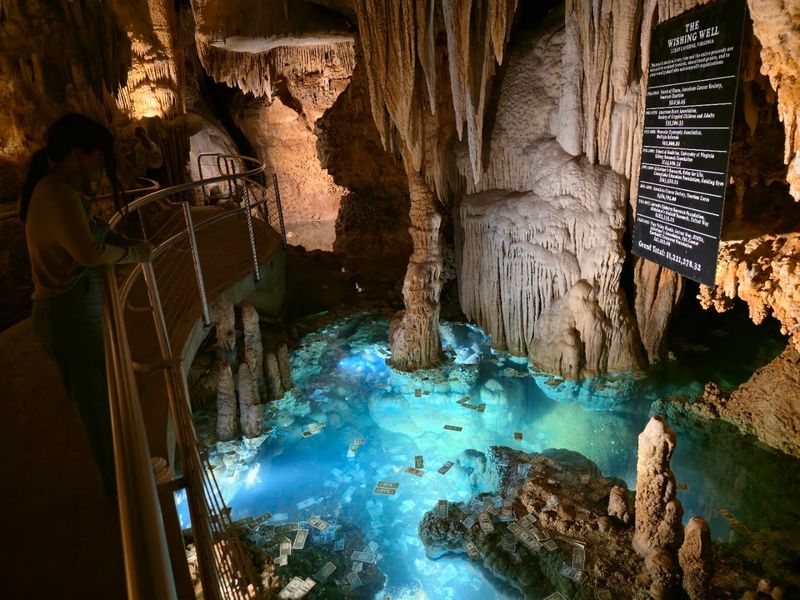
Luray Caverns in Virginia’s Shenandoah Valley has been welcoming visitors since 1878, and it remains one of the most well-attended cave attractions on the East Coast. Self-guided tours run daily throughout the year, with the underground portion taking just over an hour.
The route moves through developed chambers with reflective pools, stalactites, stalagmites, and formations that have been attracting attention for well over a century.
One of Luray’s most distinctive features is the Great Stalacpipe Organ, an instrument that uses rubber mallets to strike cave formations across 3.5 acres of the cavern, producing musical tones from the rock itself. It holds a place in the Guinness World Records as the world’s largest natural musical instrument, which gives the cave a genuinely unusual claim that most underground attractions cannot match.
The property also includes additional ticketed attractions on the grounds above, making it a practical full-day stop in the region. The cave itself is the main draw, and the underground rooms deliver on the expectation.
Cango Caves, South Africa
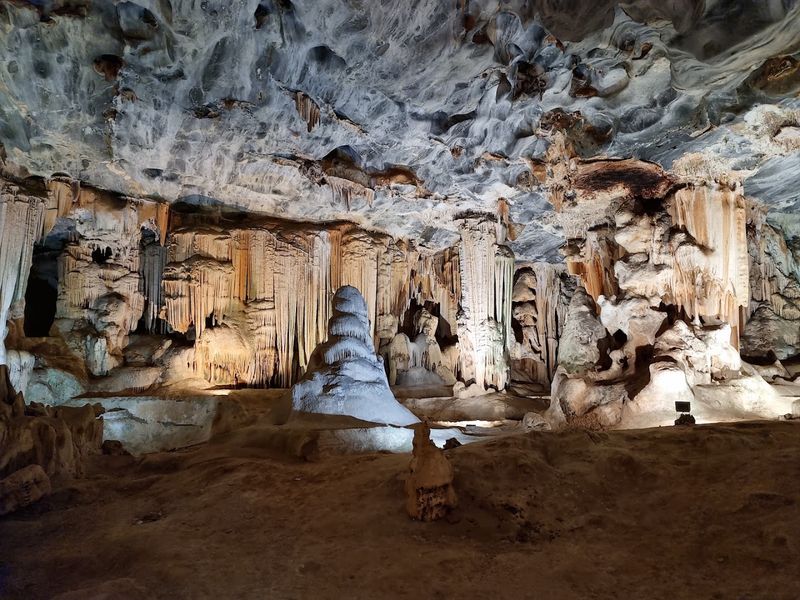
Cango Caves sits in the Swartberg Mountains near Oudtshoorn in South Africa’s Western Cape, and it represents one of the most significant cave systems on the African continent. The limestone formations inside have been developing for millions of years, and the cave’s chambers range from wide, accessible halls to tighter spaces that require more physical effort to navigate.
The Heritage Tour covers the first six large halls and continues to the African Drum Room, making it the more comfortable option for most visitors.
Oudtshoorn itself is a popular stop along the Garden Route, so Cango Caves fits naturally into a broader regional itinerary rather than requiring a dedicated detour. The cave system combines geological drama with a structured visitor experience that works for a wide range of travelers.
For readers looking for an underground attraction outside Europe and North America, Cango Caves brings impressive chamber scale and deep natural history to a part of the world that does not always appear on standard cave tourism lists.
Catacombs of Kom el Shoqafa, Alexandria, Egypt
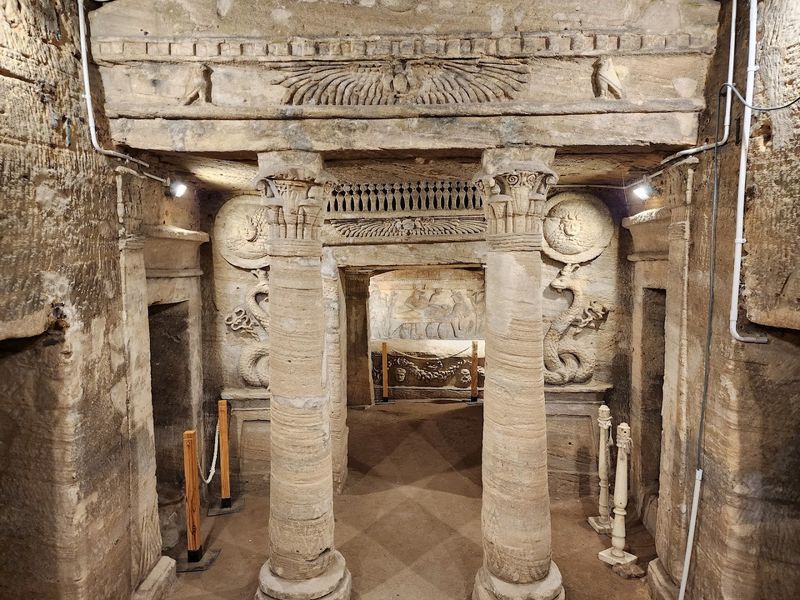
The Catacombs of Kom el Shoqafa in Alexandria represent one of the most architecturally unusual underground sites in the ancient Mediterranean world. Dating back to the 2nd century AD, the complex blends Egyptian, Greek, and Roman funerary traditions in a single subterranean burial site, creating a decorative style that reflects the cultural mixing that defined Alexandria during that period.
The carved statues, tomb reliefs, and chamber layouts draw from all three traditions without fully belonging to any one of them.
Visitors descend below modern Alexandria into a network of chambers that feel distinctly different from Egypt’s better-known temples and pyramids. The scale is more intimate, and the focus on funerary detail gives the site a quieter, more layered quality than the country’s open-air monuments.
Official ticketing is available through Egypt’s monuments platform.
For a subterranean list that spans multiple continents, Kom el Shoqafa adds ancient Mediterranean depth and a genuinely rare example of mixed-culture underground architecture to the collection.
Share this story