Japan is a country where ancient history and modern life exist side by side in the most surprising ways. From a snow-capped volcano that has inspired artists for centuries to a busy city crossing that pulses with thousands of people every few minutes, the country holds an incredible range of sights.
Whether you are drawn to feudal castles, sacred waterfalls, or glowing city towers, Japan has something that will genuinely stop you in your tracks. These 13 landmarks were chosen to show just how layered, beautiful, and endlessly fascinating this country really is.
Mount Fuji, Yamanashi and Shizuoka
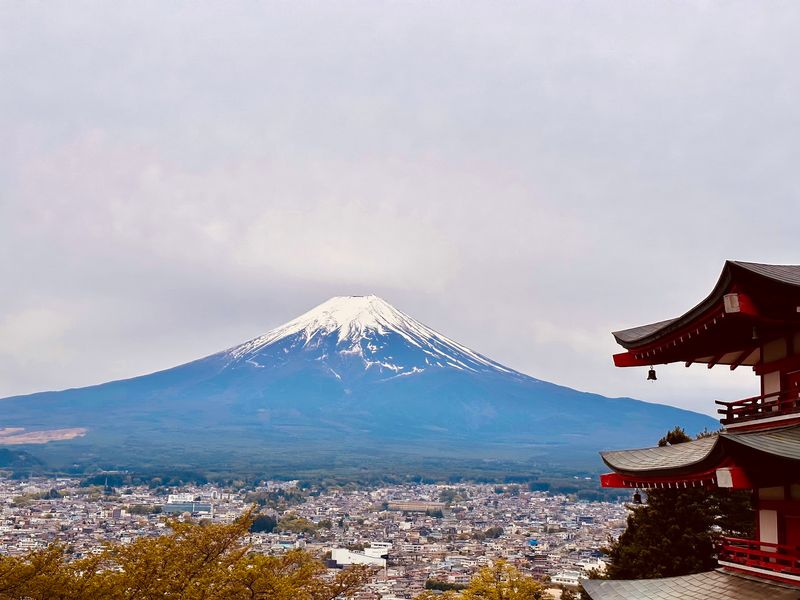
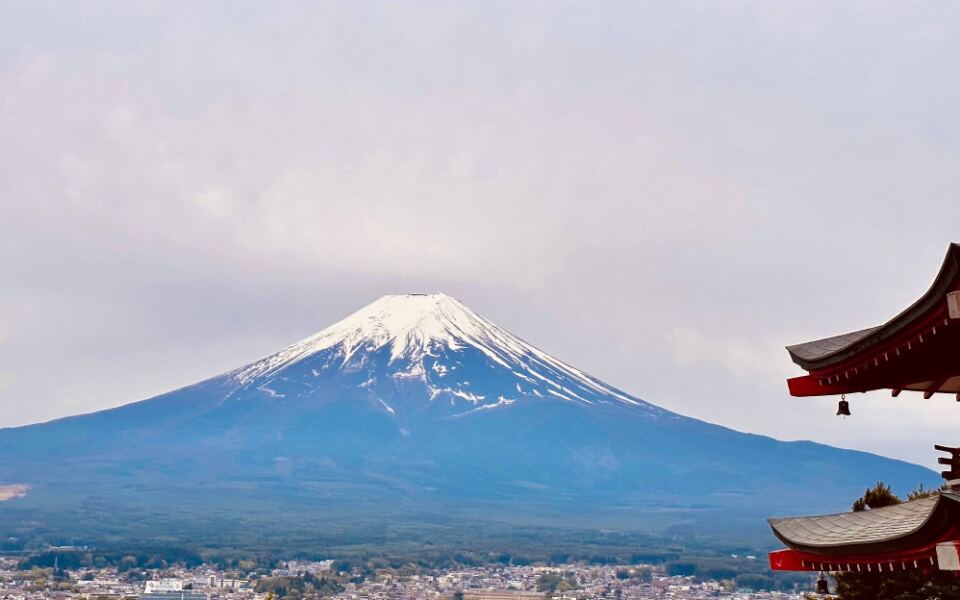
Standing at 3,776 meters above sea level, Mount Fuji is the kind of mountain that makes you stop mid-sentence and just stare. Japan’s highest peak is also one of its most sacred, with religious pilgrims climbing its slopes for centuries before tourists ever arrived.
The volcano began forming roughly 100,000 years ago and is still classified as active, which somehow makes it even more impressive.
Artists have been obsessed with Fuji for generations. Katsushika Hokusai’s famous woodblock print series featuring the mountain turned it into a globally recognized image long before social media existed.
UNESCO added Fuji to its World Heritage list in 2013, recognizing it as a cultural site rather than simply a natural one.
The surrounding area is packed with things to explore, including the Fuji Five Lakes, ancient pilgrimage routes, and Oshino Hakkai, a cluster of spring-fed ponds. The official climbing season runs from early July through early September.
Even if you never reach the summit, watching the mountain emerge from morning clouds is an experience that sticks with you for a very long time.
Fushimi Inari Taisha, Kyoto
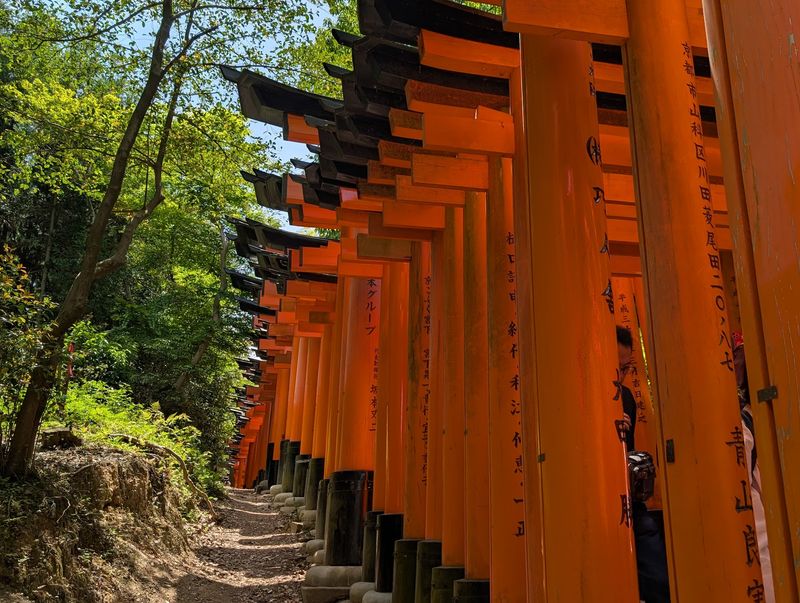
Roughly 10,000 vermilion torii gates line the mountain trails of Fushimi Inari Taisha, and walking through them feels like stepping into a completely different dimension. The shrine is said to have been founded in 711, which means it was already well-established before Kyoto even became Japan’s imperial capital.
That is a seriously long track record.
Fushimi Inari is the head shrine dedicated to Inari, a deity historically connected with rice harvests and later adopted by merchants seeking business success. Many of those thousands of gates were donated by companies and individuals hoping for prosperity, a tradition that continues today.
The famous Senbon Torii section near the lower shrine creates the densest and most photographed tunnels.
The full trail climbs 233-meter Mount Inari and passes stone altars, fox statues, and smaller sub-shrines along the way. Reaching the summit takes roughly two to three hours round trip.
Arriving early in the morning means fewer crowds and softer light filtering through the gates, which transforms the whole experience from busy tourist attraction into something quietly magical and genuinely memorable.
Himeji Castle, Hyogo
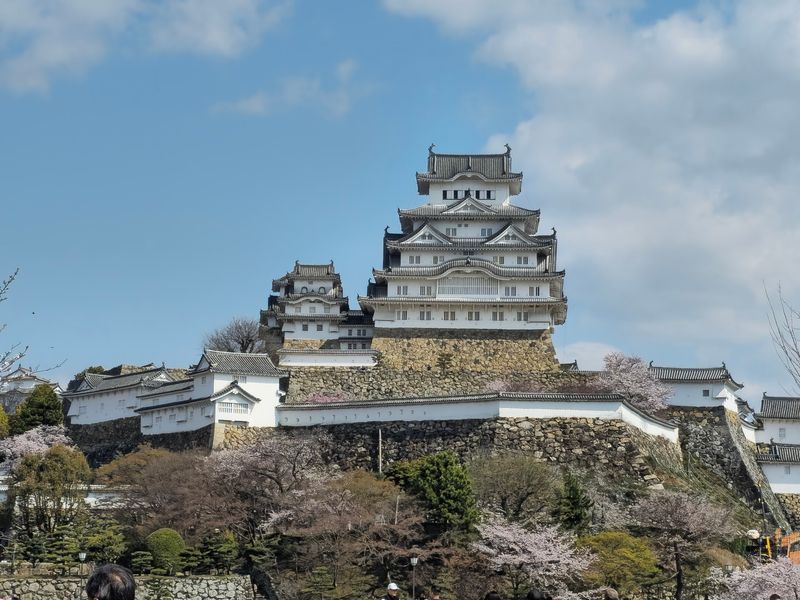
Nicknamed the White Heron Castle because of its brilliant white exterior, Himeji is the kind of place that makes history feel genuinely exciting rather than like a school assignment. The main complex was largely completed in 1609 and contains more than 80 buildings connected by winding, deliberately confusing defensive passages designed to disorient attackers.
It worked beautifully for centuries.
What makes Himeji especially rare is that it survived. Fire, war, and rapid modernization destroyed most of Japan’s original feudal castles, but Himeji still holds its historic wooden structures intact.
It is one of only 12 surviving original castle keeps in the entire country and carries the double honor of being both a National Treasure and a UNESCO World Heritage Site.
Over 1,000 cherry trees grow across the castle grounds, turning late March and early April into a spectacular but very crowded event. Visiting slightly off-peak, perhaps in early spring or autumn, gives you a calmer look at the castle’s extraordinary detail.
Climbing the interior reveals narrow archer slits, steep staircases, and a sense of the real strategic thinking that went into every design choice.
Itsukushima Shrine, Hiroshima
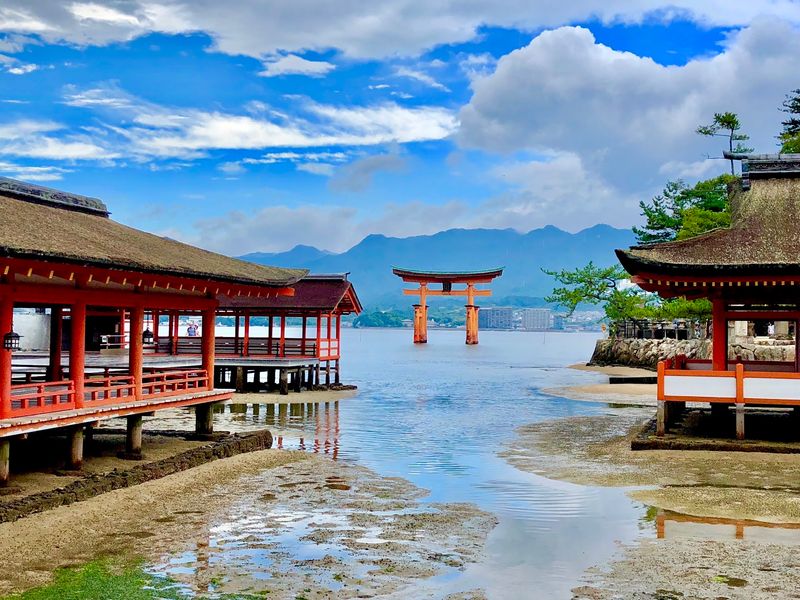
At high tide, Itsukushima Shrine appears to float on the surface of the Seto Inland Sea, its vermilion corridors hovering above the water in a way that genuinely looks too beautiful to be real. A shrine is believed to have existed on Miyajima Island as early as 593, making it one of Japan’s oldest sacred sites.
The powerful Heian-period leader Taira no Kiyomori gave the complex much of its current form in 1168.
The famous offshore Otorii gate rises about 16 meters and once served as the ceremonial entrance for worshippers arriving by boat. At low tide, the seabed is exposed and visitors can walk right up to the base of the gate, which is a completely different but equally striking experience.
The contrast between those two visits is part of what makes Miyajima so special.
The shrine became a UNESCO World Heritage Site in 1996. Deer roam freely across the island and have no fear of visitors, which adds an unexpectedly charming layer to the whole trip.
Catching the shrine at sunset, when the red structures glow against the darkening water, is the kind of travel moment people genuinely never forget.
Kiyomizu-dera, Kyoto
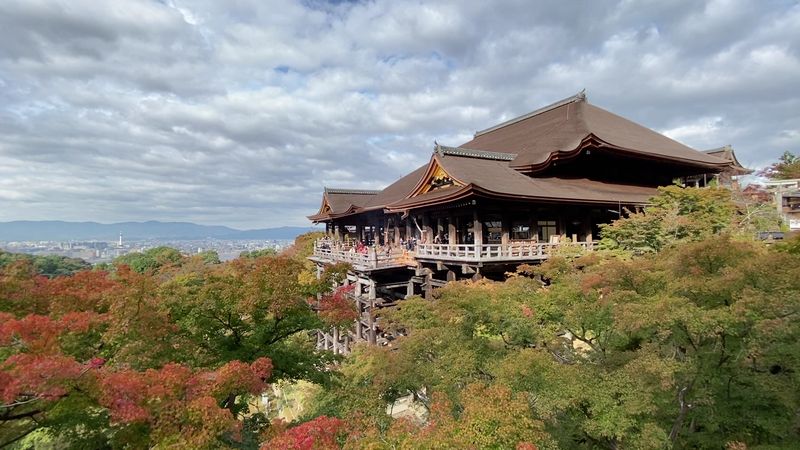
The enormous wooden stage jutting out from Kiyomizu-dera’s main hall has been inspiring awe for well over a thousand years, and it still manages to do the job perfectly. Massive wooden pillars support the platform high above the hillside without a single nail holding the structure together, which is an engineering achievement that deserves far more attention than it usually gets.
The views across Kyoto from that platform are genuinely breathtaking.
Getting to the temple is half the experience. Visitors climb through the beautifully preserved Higashiyama district, passing pottery shops, sweet stalls, and narrow stone-paved lanes before the temple precinct even comes into view.
Spring cherry blossoms and autumn maple foliage transform the surrounding forest into something that looks almost painted.
The temple belongs to the UNESCO-listed Historic Monuments of Ancient Kyoto. Nearby, the Otowa waterfall feeds three separate streams, each associated with a different kind of good fortune.
Visitors traditionally drink from one stream using long-handled cups, choosing carefully because supposedly drinking from all three counts as greedy. Whether or not you believe in the legend, it is a charming ritual that connects you to centuries of pilgrims who climbed the same hill before you.
Todai-ji and the Great Buddha, Nara
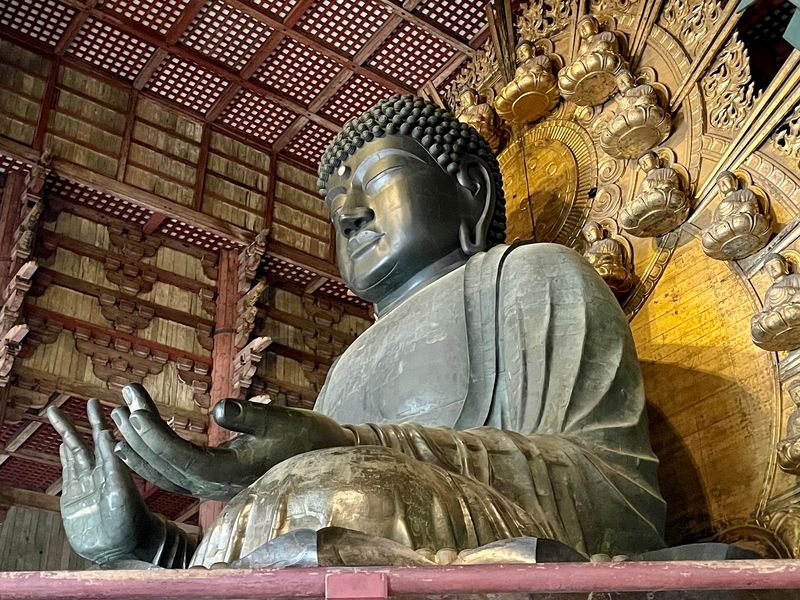
Deer wander freely through Nara Park right up to the entrance of Todai-ji, which means your first encounter with Japan’s most famous giant Buddha might involve a very confident deer demanding your snacks. Inside the Daibutsuden, the colossal bronze Great Buddha stands approximately 14.98 meters tall, with ears alone measuring about 2.54 meters.
Those are ears you could genuinely stand inside.
Emperor Shōmu commissioned the statue in 752 as a symbol of Buddhist protection for the nation. Creating it required resources on an almost unimaginable scale, with estimates suggesting roughly 2.6 million people participated in the wider project across Japan.
The hall surrounding it, rebuilt in 1709 after earlier structures burned, is considered the world’s largest wooden building.
Todai-ji forms part of the UNESCO-listed Historic Monuments of Ancient Nara, which helps explain why the surrounding area feels so well-preserved and historically layered. A small hole carved through one of the hall’s interior pillars is said to match the size of the Buddha’s nostril, and squeezing through it is said to bring good luck.
Visitors of all ages enthusiastically attempt it, which makes for excellent entertainment whether you succeed or not.
Nikko Tosho-gu, Tochigi
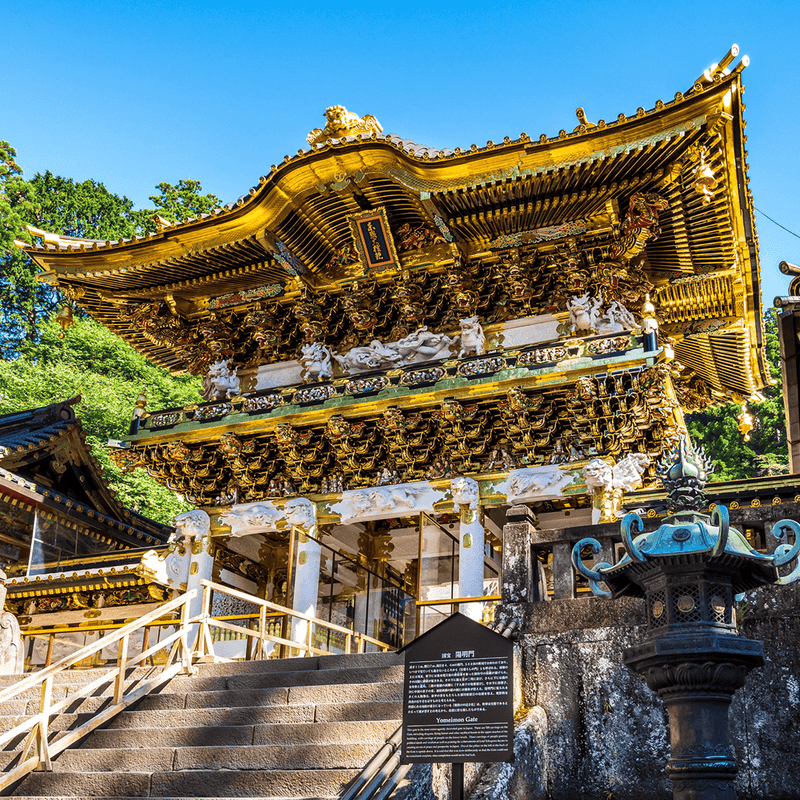
Nothing quite prepares you for the sheer visual intensity of Nikko Tosho-gu. Where many Japanese religious sites favor quiet simplicity, this shrine went in a dramatically different direction, layering brilliant pigments, gold leaf, and hundreds of intricate carvings across nearly every surface.
The result is one of the most visually overwhelming religious complexes in the entire country.
The shrine was founded in 1617 to enshrine Tokugawa Ieyasu, founder of the Tokugawa shogunate that governed Japan for over 250 years. His grandson Iemitsu later transformed the site into the lavish complex that exists today, essentially turning it into a permanent monument to the family’s power.
The celebrated Yomeimon Gate alone contains 508 individual carvings, and visitors are encouraged to find them all.
Other famous images at the shrine include the Three Wise Monkeys, representing the well-known “see no evil, hear no evil, speak no evil” philosophy, and the Sleeping Cat, a small carving that has become surprisingly iconic. The shrine forms part of the UNESCO-listed Shrines and Temples of Nikko, inscribed in 1999 along with the surrounding mountain landscape.
Ancient cedar forests surrounding the complex add a moody, dramatic atmosphere that balances all that visual richness perfectly.
Hiroshima Peace Memorial, Hiroshima
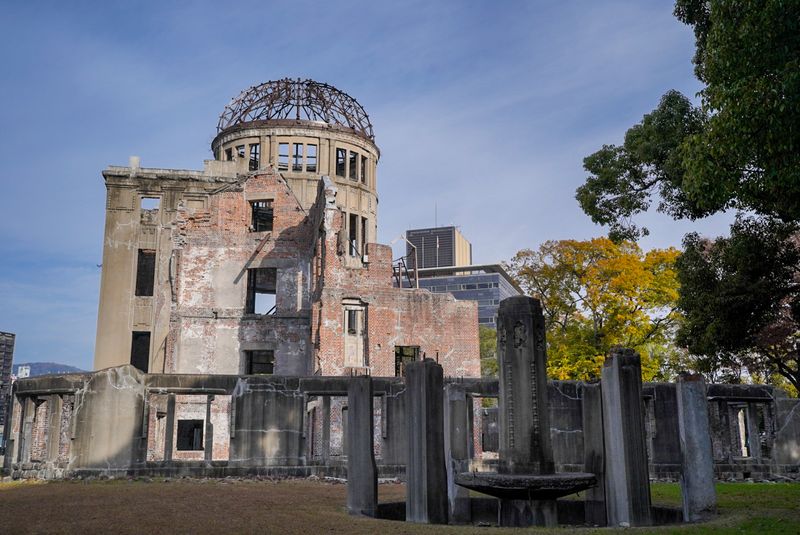
The Atomic Bomb Dome does not need dramatic lighting or a golden hour to be moving. Standing beside the Motoyasu River in Hiroshima, the skeletal remains of what was once the Hiroshima Prefectural Industrial Promotion Hall carry a weight that hits you quietly and completely.
Czech architect Jan Letzel designed the building, which was completed in 1915 and considered one of the city’s most modern structures at the time.
At 8:15 a.m. on August 6, 1945, the world’s first atomic bomb used in warfare exploded almost directly above the building. The near-vertical blast direction destroyed most of the structure but left portions of the walls and the distinctive steel dome frame standing.
Rather than demolishing the ruins, the city chose to preserve them exactly as they were, creating a permanent, unaltered record of what happened.
The memorial became a UNESCO World Heritage Site in 1996 and sits beside Hiroshima Peace Memorial Park, which includes a museum, a flame that will burn until all nuclear weapons are eliminated, and the Children’s Peace Monument. Visiting here is a genuinely sobering experience, but it is also one of the most important things a traveler can do to understand the full scope of 20th-century history.
Shirakawa-go, Gifu
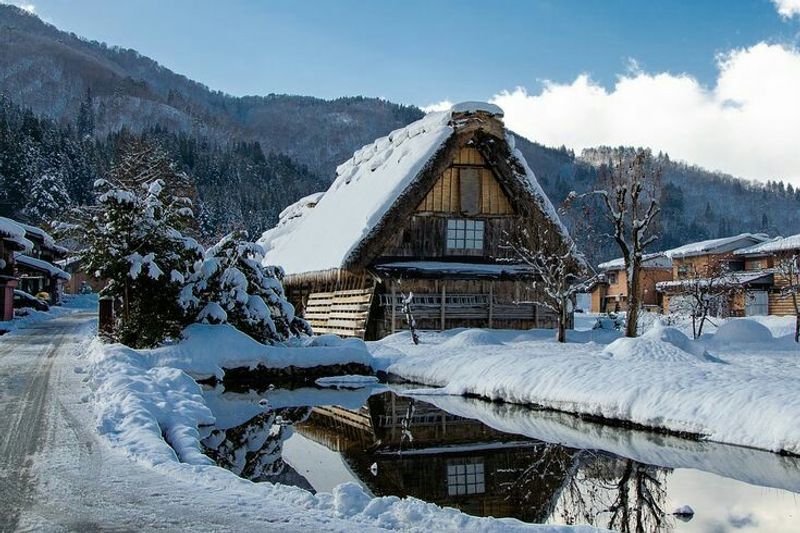
When several meters of snow pile up every winter, your architecture has to respond or you simply do not survive the season. That is exactly the logic behind Shirakawa-go’s remarkable gasshō-zukuri farmhouses, whose roofs slope at angles as steep as 60 degrees specifically to shed accumulated snow before it collapses the structure.
The name gasshō-zukuri translates roughly to “constructed like hands in prayer,” which perfectly describes the steep triangular silhouette.
These houses were built without nails, using interlocking timber construction that allowed structures to flex slightly under heavy loads. Upper floors provided warm spaces for raising silkworms, which was an important regional industry for generations.
Many of these buildings are still in use today as homes, guesthouses, or small museums, giving the village a lived-in authenticity that a purely preserved site often lacks.
Shirakawa-go and the neighboring Gokayama region became a UNESCO World Heritage Site in 1995. The largest settlement, Ogimachi, gives the best overall sense of the village’s scale and atmosphere.
Winter evenings are particularly magical when snow blankets every rooftop and warm light glows from inside the old farmhouses, creating a scene that looks almost too perfectly storybook-like to be a real functioning community.
Nachi Falls and Seiganto-ji, Wakayama
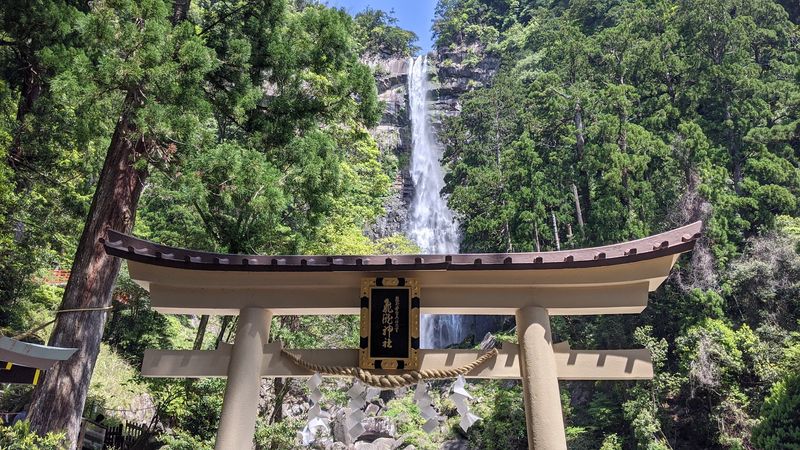
Long before anyone built a shrine or a temple nearby, people were already treating Nachi Falls as sacred. At 133 meters, it is Japan’s tallest single-drop waterfall, and the sheer force and sound of it plunging through the surrounding forest makes the reverence feel completely understandable.
The waterfall itself was the original object of worship, with Hiro Shrine eventually established near its base.
Today the area combines natural spectacle with layers of religious history. A long stone staircase climbs from the falls toward Kumano Nachi Taisha and the Buddhist temple Seiganto-ji.
The most iconic view pairs Seiganto-ji’s striking three-story pagoda with the waterfall visible through the forest behind it, creating an image that manages to feel both ancient and surprisingly modern in its composition.
Nachi lies within the UNESCO-listed Sacred Sites and Pilgrimage Routes in the Kii Mountain Range, a designation that covers a vast network of trails connecting three grand shrines across the Kii Peninsula. The nearby Daimonzaka section of the Kumano Kodo pilgrimage route climbs through towering cedar trees and mossy stone steps, giving visitors a real sense of what centuries of pilgrims experienced on the same path.
Few places in Japan combine landscape and spiritual history so seamlessly.
Matsumoto Castle, Nagano
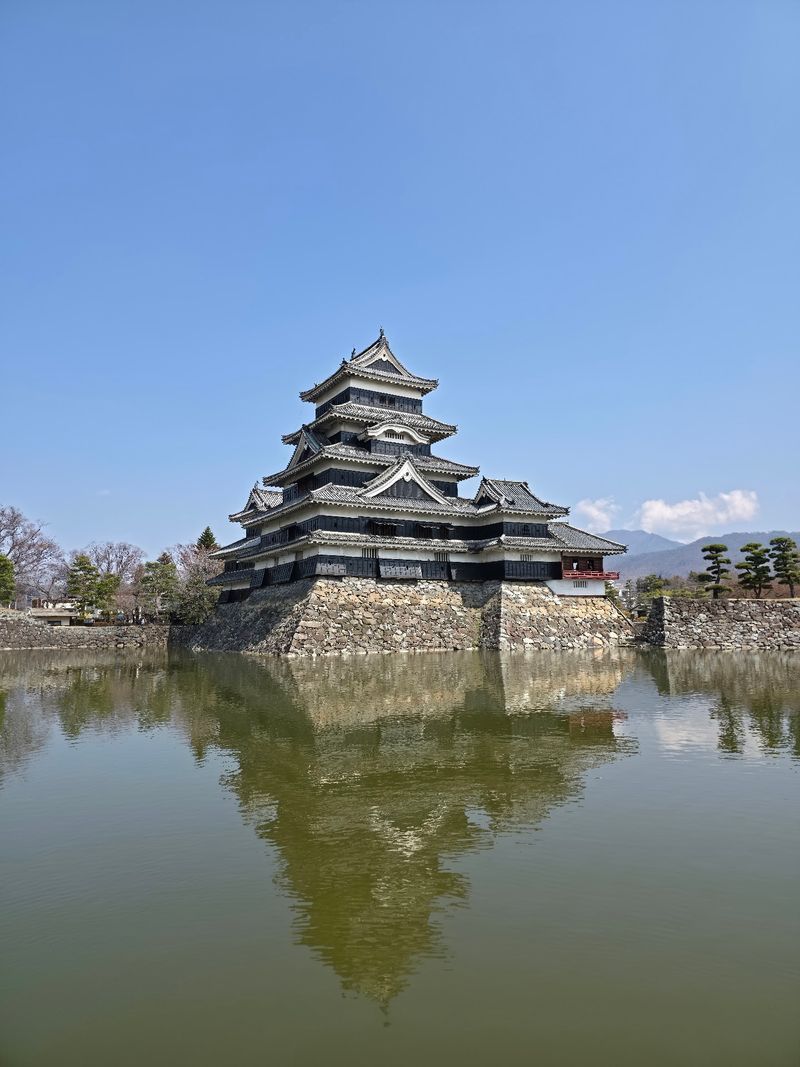
While Himeji dazzles with white plaster walls, Matsumoto takes the opposite approach and goes full dramatic black. The dark exterior earned it the nickname Crow Castle, and the contrast between those dark towers and the snow-covered Northern Japan Alps visible on clear days creates one of the most striking castle views in the entire country.
The reflection in the surrounding moat doubles the impact considerably.
The main keep dates to the late 16th century, making Matsumoto one of Japan’s oldest surviving original castle towers. Inside, visitors climb through the historic wooden structure using staircases so steep they are almost ladders.
Narrow openings in the walls were designed for archers and early firearms, giving you a very practical sense of how this building was intended to function in actual conflict.
Matsumoto is one of just five surviving castle keeps designated National Treasures of Japan, a distinction that reflects both its age and its remarkable physical condition. The castle sits right in the middle of the city, making it easy to combine a visit with exploring Matsumoto’s streets, craft sake breweries, and the nearby Nawate-dori market street.
Winter visits, when snow frames the dark towers against white mountains, are particularly rewarding for anyone who appreciates dramatic scenery.
Tokyo Skytree, Tokyo
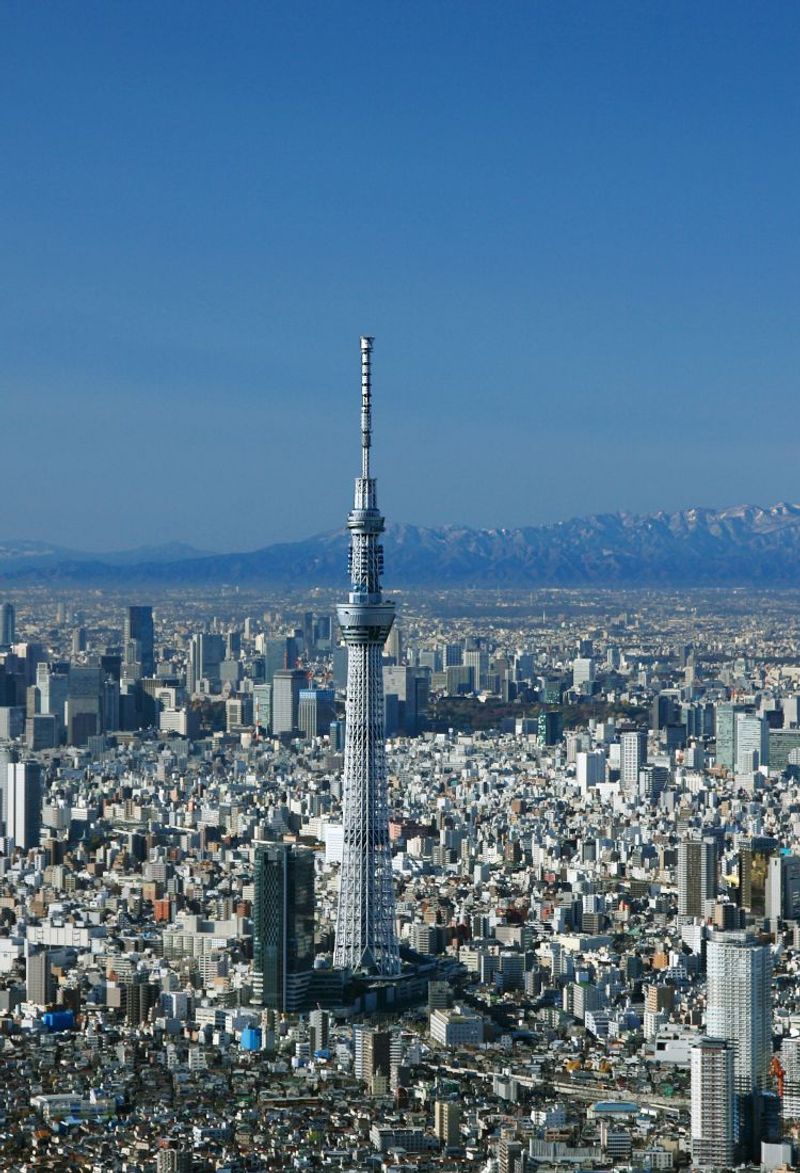
At 634 meters tall, Tokyo Skytree is not just Japan’s tallest structure. It is a building with a number deliberately chosen as a piece of historical wordplay.
In Japanese, 6-3-4 can be read as “mu-sa-shi,” referencing the old name for the region around modern Tokyo. That kind of detail, hiding meaning inside a measurement, feels very Tokyo.
The tower opened in May 2012 and serves primarily as a broadcasting and observation facility. Two observation decks sit at 350 and 450 meters respectively, offering views across the entire Kanto region.
On a clear winter day, Mount Fuji appears on the horizon, which feels like a satisfying connection between Japan’s oldest and newest iconic landmarks.
Skytree is surrounded by the Tokyo Solamachi complex, a large shopping and dining area that keeps the base of the tower lively at almost any hour. The neighborhood also sits close to Asakusa, one of Tokyo’s most historically atmospheric districts, creating a genuinely unusual contrast between centuries-old temples and cutting-edge engineering within easy walking distance.
Seeing the tower illuminated at night, cycling through different color schemes for different occasions, is a reminder that modern Tokyo has its own distinct visual language worth paying attention to.
Shibuya Scramble Crossing, Tokyo
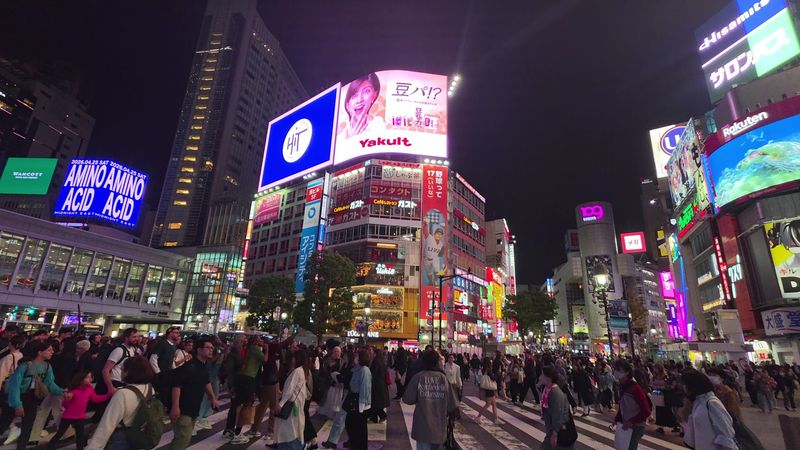
No ancient temple or feudal wall here. Shibuya Scramble Crossing is a landmark built entirely from organized human movement, and somehow it is one of the most thrilling sights in all of Japan.
When the lights change, pedestrians surge across the intersection from every direction simultaneously, weaving between each other with remarkable efficiency and almost zero collisions. Tokyo’s official tourism guide estimates over 1,000 people can cross at once during peak periods.
The crossing sits directly outside Shibuya Station, beside the famous Hachikō statue, which commemorates a dog who waited loyally at the station for his owner every day for nearly a decade after the owner’s death. That combination of the world’s busiest crossing and one of its most touching animal stories makes Shibuya a surprisingly emotional place to stand.
Looking down at the crossing from the second-floor windows of nearby cafes or the Mag’s Park observation area gives a completely different perspective, turning the crowd into a flowing, ever-changing pattern. The surrounding area leads into Center-Gai, packed with youth fashion, music venues, and street food.
Unlike every other landmark on this list, Shibuya’s magic is not found in a single structure. It lives in the movement itself, loud, fast, and completely alive.
Share this story