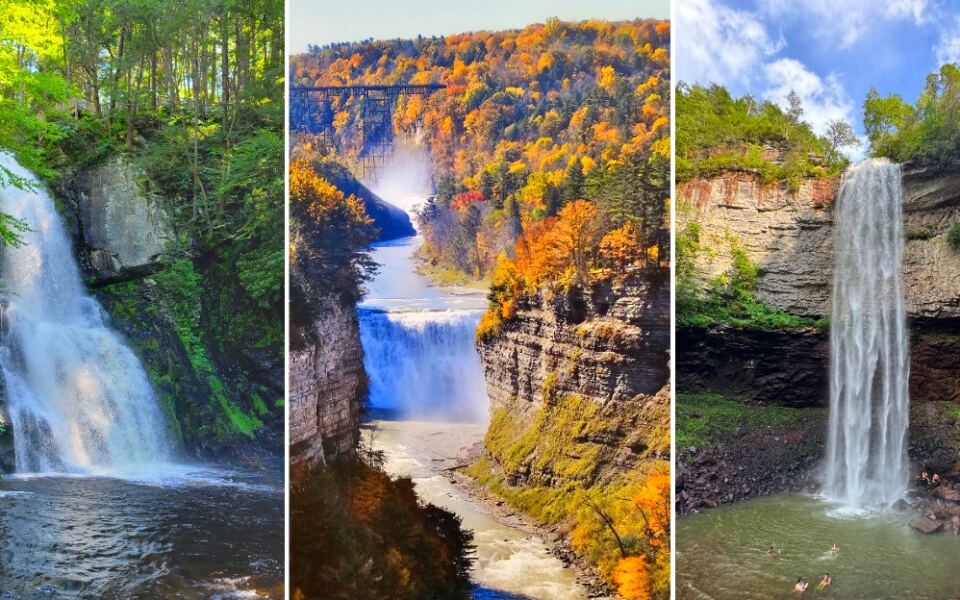
Some places have one famous waterfall and call it a day. Others pack so many cascades into a single trail that stopping after the first one feels like leaving a movie after the opening credits.
Across the country, certain parks hold ten, twenty, or even close to a hundred waterfalls along their creeks and gorges. A few let you walk behind the falling water, and one has water the color of root beer.
Stone staircases built nearly a century ago, swinging suspension bridges, and old mill sites add history to the hiking. Some trails take a full day, while others give you three big drops before lunch.
This list covers 13 spots spread across New York, Pennsylvania, North Carolina, Michigan, Oregon, Tennessee, and Ohio. Each entry shares real numbers, trail lengths, seasonal tips, and the best way to see the most falls without wearing out your legs.
Lace up your shoes, pack a snack, and get ready to count higher than you ever expected.
1. Watkins Glen State Park, Watkins Glen, New York
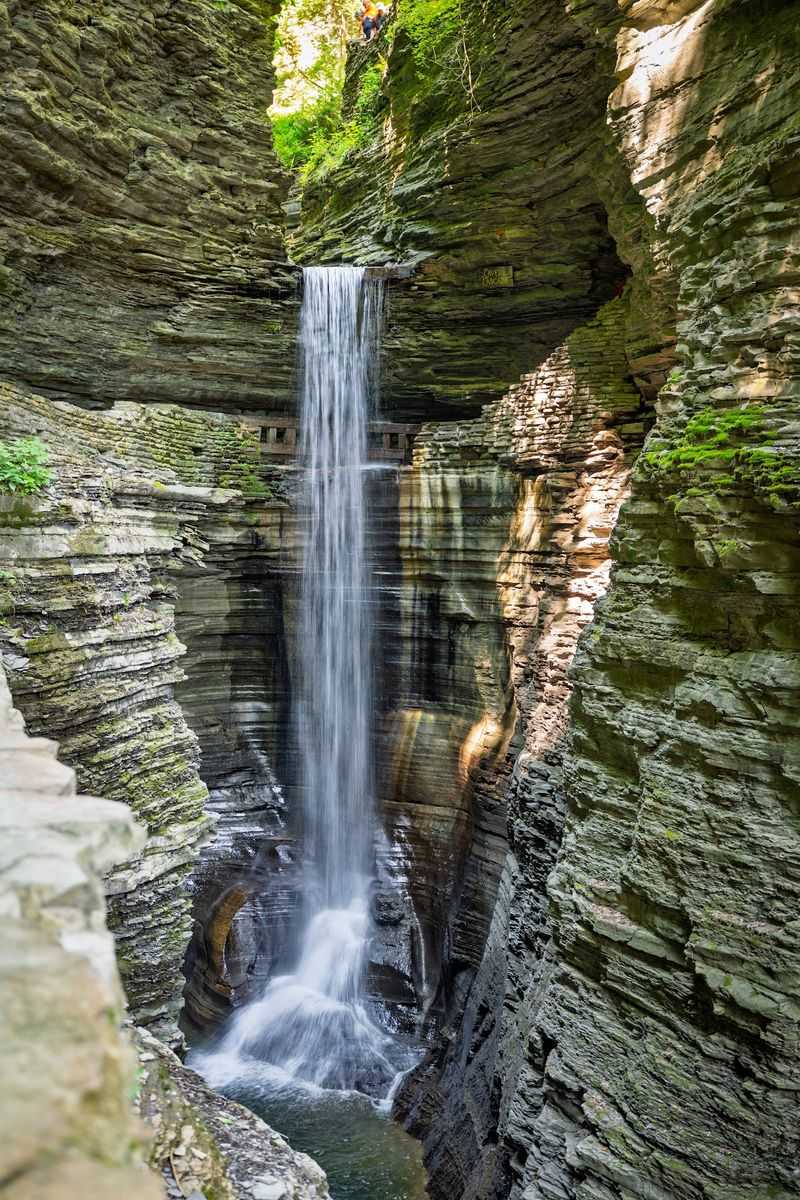
Nineteen waterfalls in under two miles is a pretty strong opening act. The famous gorge sits at the southern tip of Seneca Lake and first welcomed visitors back in 1863.
The Gorge Trail is the main event. It passes through hand-cut stone tunnels, crosses arched bridges, and even sneaks behind the falling water at Cavern Cascade.
More than 800 stone steps line the route, many built by the Civilian Conservation Corps in the 1930s. Rock walls rise as high as 400 feet in places.
Keep an eye out for Central Cascade, Rainbow Falls, and Pluto Falls along the way. Glen Creek carved the shale and limestone into a stack of plunge pools and round potholes.
Here is a smart move. Ride the shuttle to the Upper Entrance and walk downhill through the gorge, saving your knees for later.
The Gorge Trail closes from mid-November to mid-May. The rim trails stay open all year, so off-season visitors still get views from above.
2. Ricketts Glen State Park, Benton, Pennsylvania
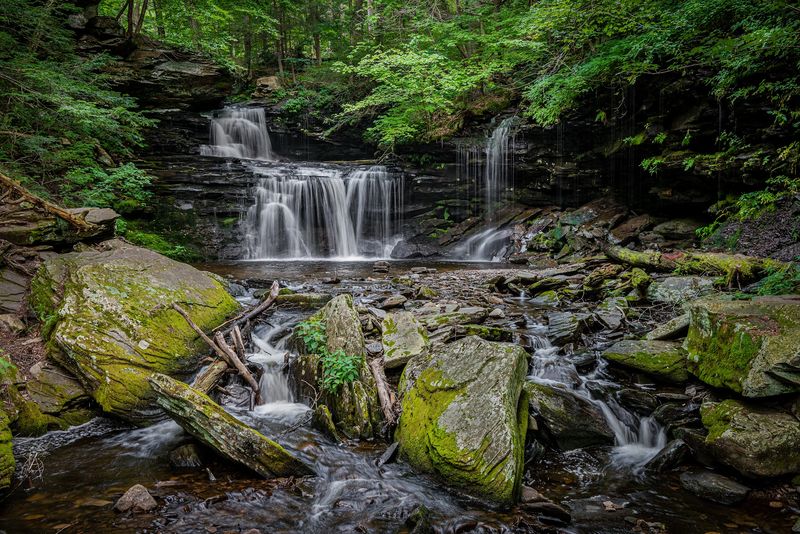
Counting waterfalls at Ricketts Glen can turn into a full-time job. The park has 22 named falls along Kitchen Creek, ranging from a tiny 9 feet to the mighty 94-foot Ganoga Falls.
The Falls Trail runs through two wooded glens called Ganoga Glen and Glen Leigh. Hikers walk right beside many of the drops, which is rare in Pennsylvania.
Mohawk Falls, a two-tiered 37-footer, often kicks things off. Erie Falls follows later with a clean 47-foot plunge.
Credit for all this goes partly to Colonel R. Bruce Ricketts.
He saved the old-growth trees from logging and oversaw trail construction between 1889 and 1893.
The full 7.2-mile loop is rocky, steep, and often slippery. A 3.2-mile shortcut still passes most of the waterfalls, so nobody misses the good stuff.
Autumn is a crowd favorite thanks to bright leaves. In winter, the trail is reserved for properly equipped ice climbers, so plan a warm-weather trip if you prefer sneakers over crampons.
3. DuPont State Recreational Forest, Cedar Mountain, North Carolina
Hollywood scouts liked this forest so much that scenes from The Hunger Games and The Last of the Mohicans were filmed here. Hikers like it for a simpler reason: big waterfalls packed close together.
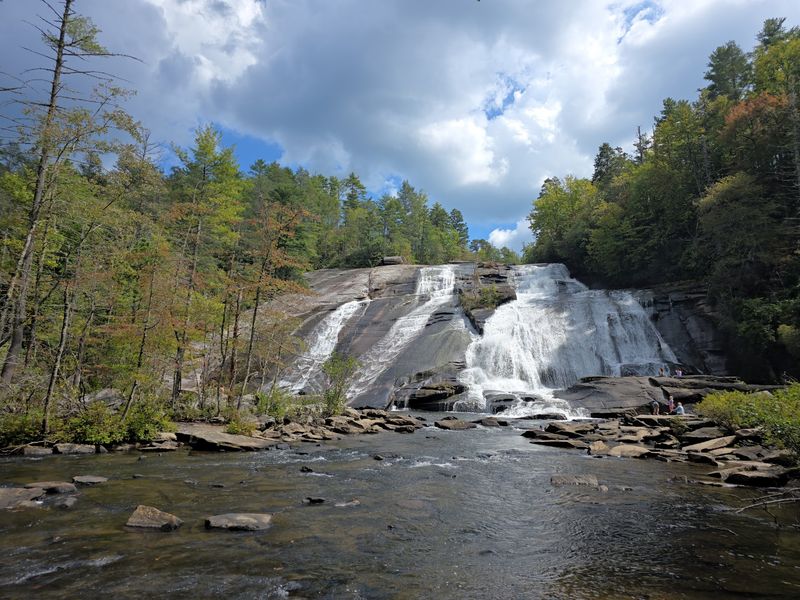
The forest covers more than 12,000 acres with nearly 90 miles of trails. Its headliners are Triple Falls, High Falls, and Hooker Falls, all reachable on a hike of about 2.2 to 3 miles round trip.
Triple Falls drops 120 feet in three neat steps. A set of stairs leads to a wide, flat rock above the third tier for a close view.
About half a mile away, High Falls slides 150 feet down a broad granite slope. Late fall and winter offer the clearest look once the leaves drop.
Hooker Falls is the small one at just 12 feet, yet its wide pool draws waders on hot days.
Want more? Bridal Veil Falls is a 4-mile round trip.
Best of all, entry is free and the forest is open seven days a week.
4. Tahquamenon Falls State Park, Paradise, Michigan
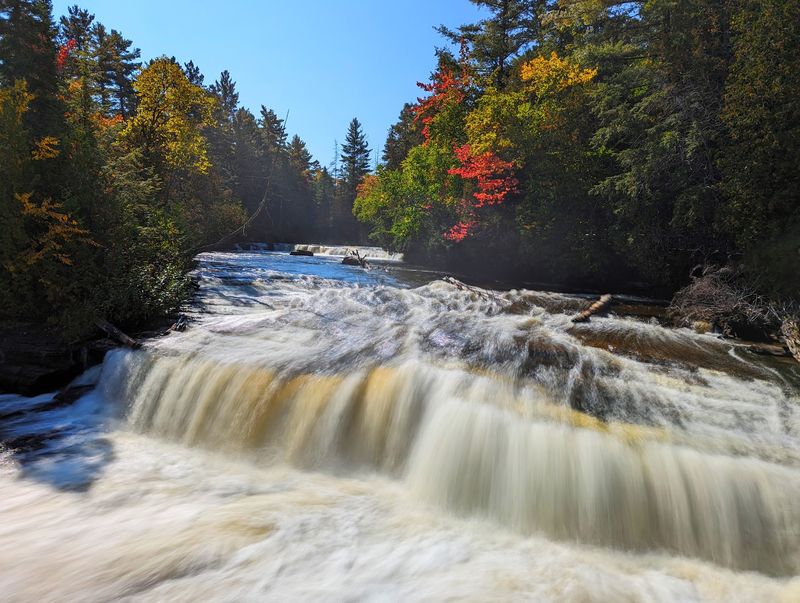
Root beer falls might sound like a candy shop gimmick, but it is the real nickname of this Upper Peninsula park. Tannins from nearby cedar and hemlock swamps tint the river a deep amber brown.
The Upper Falls is the big show. It stretches over 200 feet wide and drops nearly 50 feet.
Only Niagara moves more water among falls east of the Mississippi. In spring, up to 50,000 gallons per second can pour over the edge.
A new 1,100-foot accessible boardwalk replaced an old staircase. Strollers and wheelchairs can now reach great views with signs explaining the gorge.
Four miles downstream, the Lower Falls takes a totally different approach. Several smaller cascades split around an island, and a footbridge carries visitors across without renting a rowboat.
The park covers about 50,000 acres and stays busy in every season. Give yourself time to visit both sets of falls, since each delivers its own version of the show.
5. Silver Falls State Park, Sublimity, Oregon
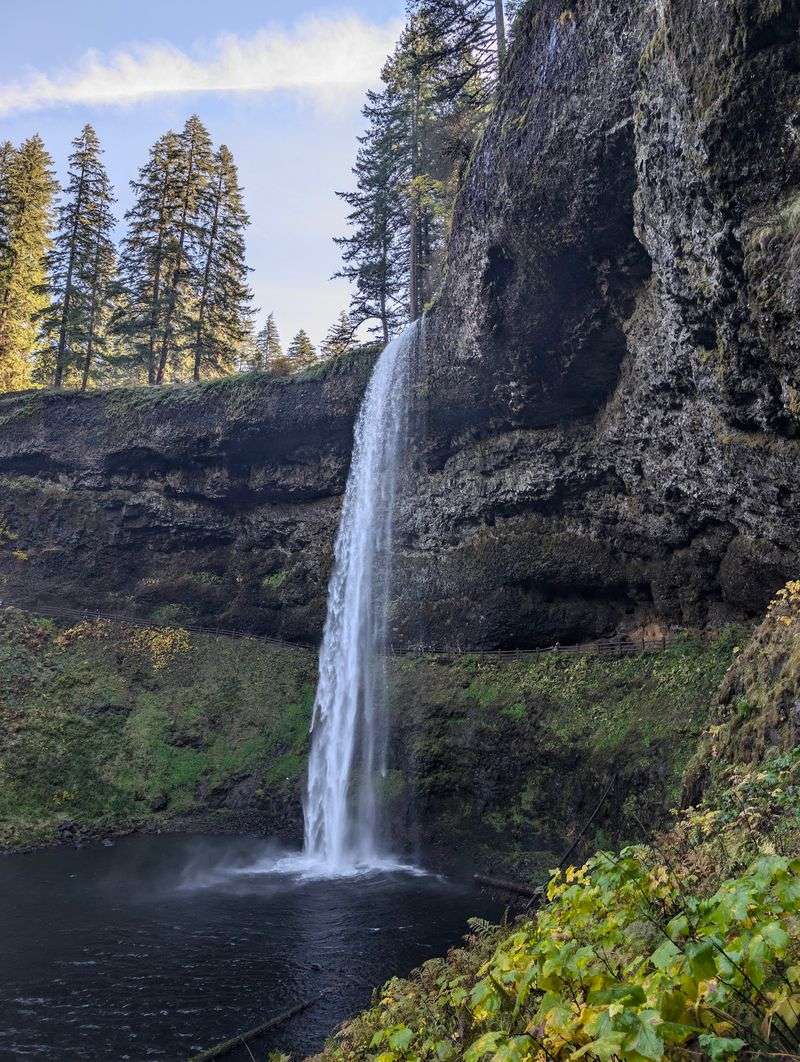
Most waterfalls ask you to stand in front and look. At Silver Falls, four of them let you walk right behind the curtain.
The famous Trail of Ten Falls delivers exactly what the name promises. The loop runs through a forested canyon lined with tall Douglas firs and basalt cliffs.
South Falls is the superstar at 177 feet, and the path ducks into a rock hollow behind it. North Falls, at 136 feet, offers a similar behind-the-water route.
The rest of the lineup is impressive. Double Falls reaches 184 feet, Winter Falls hits 134, and smaller ones like Drake Falls and Twin Falls fill the gaps.
The full loop runs roughly 7.2 to 8.7 miles depending on the route, with around 1,300 feet of elevation change. Connector trails make shorter loops easy.
Spring brings the biggest flows, while autumn adds color. One heads-up for dog owners: pets are not allowed on the Canyon Trail, so leave Fido at the campground.
6. Fall Creek Falls State Park, Spencer, Tennessee
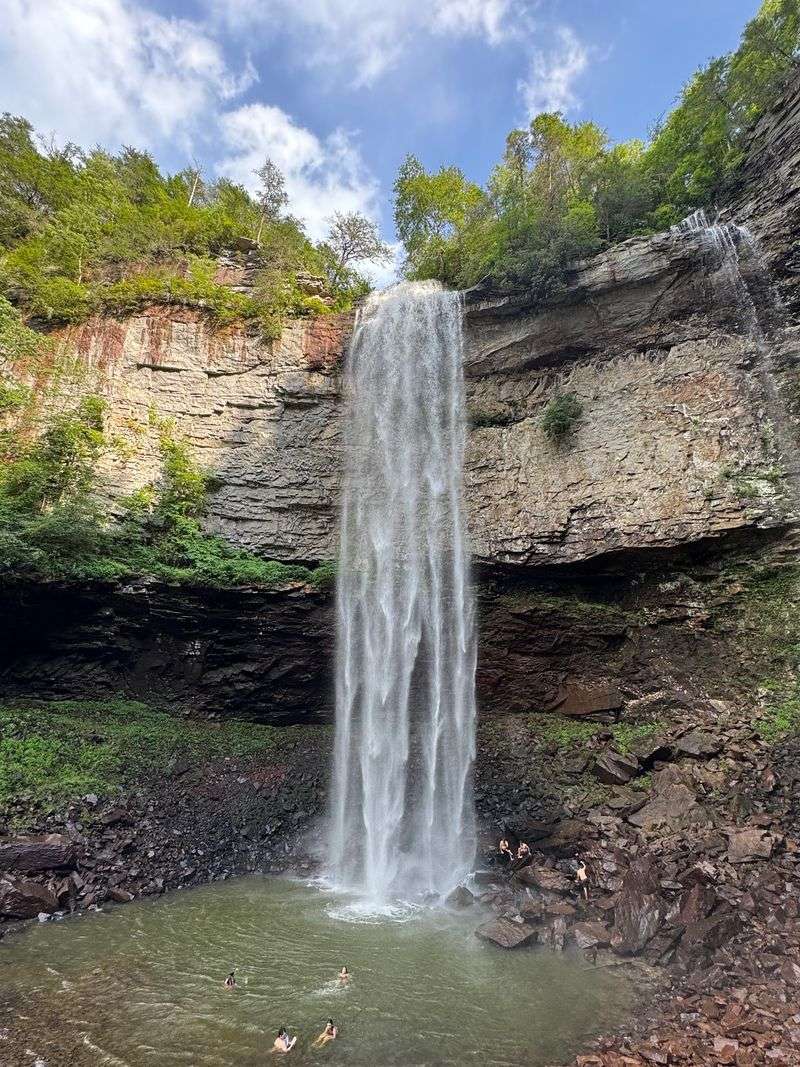
A 256-foot free fall is a tough act to follow. Fall Creek Falls ranks among the tallest free-falling waterfalls east of the Mississippi, yet the park has seven more waiting nearby.
Cane Creek Falls drops about 80 feet, with the 45-foot Cane Creek Cascades sitting close by. Piney Creek Falls also tumbles around 80 feet in two tiers.
Rockhouse Falls rounds out the main supporting cast. Some can be seen from easy overlooks, while others need a steeper hike to the base.
Fans of wobbly adventures will enjoy the suspension bridges over Cane Creek. The Betty Dunn Nature Center serves as a handy starting point and runs educational programs.
The park spans more than 25,000 acres of mixed forest. That kind of space practically begs for an overnight stay.
Luckily, options are plentiful. There is a lodge with 85 rooms, lakeside cabins, and more than 200 campsites, plus pools and an 18-hole golf course for anyone needing a break from counting waterfalls.
7. Bushkill Falls, Bushkill, Pennsylvania
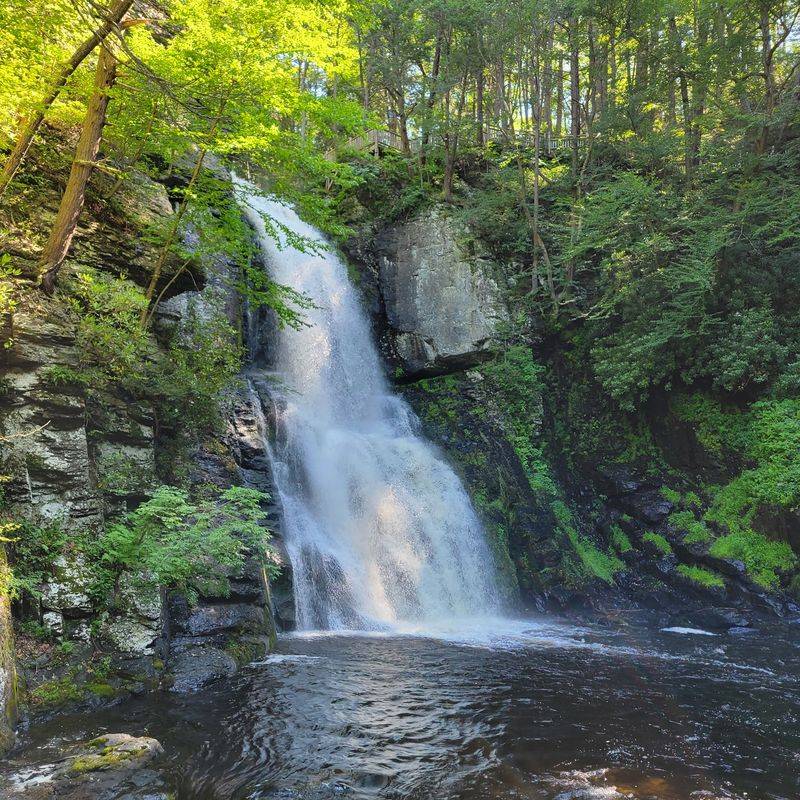
Calling yourself the Niagara of Pennsylvania takes confidence. Bushkill Falls backs up the bragging with eight waterfalls on a privately owned property in the Poconos.
Charles E. Peters opened the site to the public in 1904.
Today it covers over 300 acres connected by wooden bridges, stairways, and viewing platforms.
The Main Falls anchors everything with a 100-foot drop into a deep pool. Smaller falls include Bridal Veil, Bridesmaid, Laurel Glen, Pennell, Lower Gorge, and Upper Canyon.
The color-coded trail system makes planning simple. The Green Trail reaches the Main Falls in about 15 minutes, and the Yellow Trail adds three more falls in roughly 45 minutes.
The Blue Trail stretches to Pennell Falls in about an hour and 15 minutes. The Red Trail covers almost two miles and all eight falls in over two hours.
Fair warning: the Red route has about 1,200 steps, so sturdy shoes matter. Admission is charged, and the gates usually open from spring through November.
8. Letchworth State Park, Castile, New York
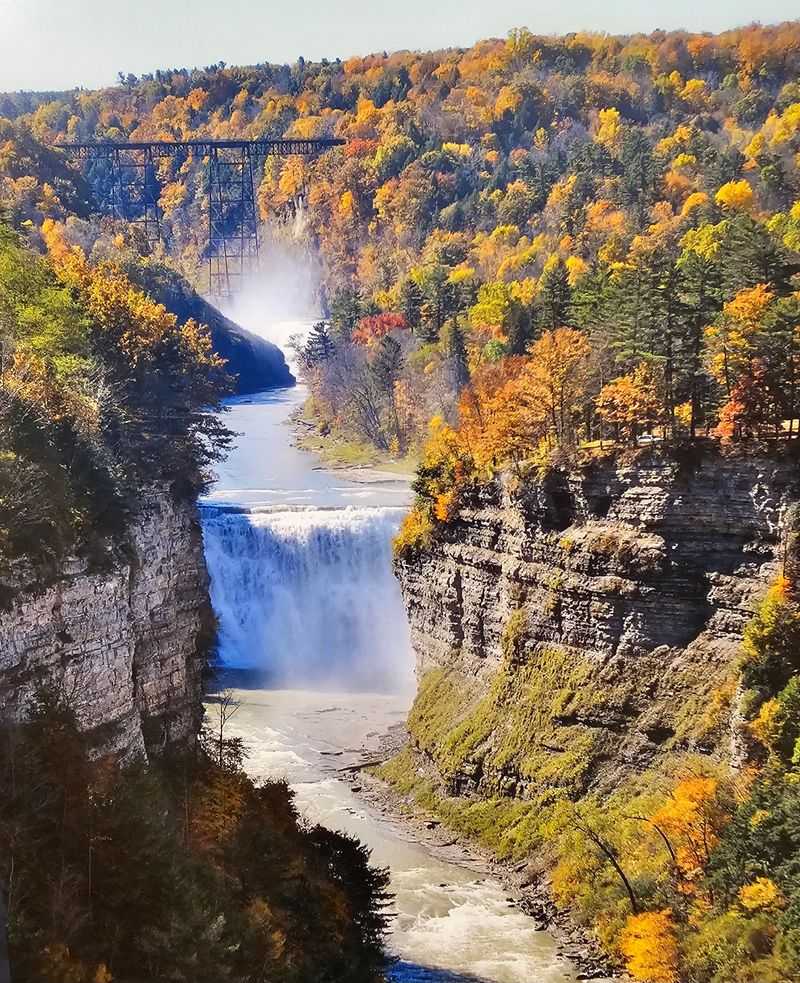
Long before it earned the title Grand Canyon of the East, the Seneca people called this place Sehgahunda, meaning the vale of three falls. Both names fit perfectly.
The park follows the Genesee River for about 17 miles. Cliffs climb as high as 600 feet in some spots.
Upper Falls is roughly 70 feet tall and sits under the towering Genesee Arch Bridge. Trains still rumble overhead, which makes for a great photo when timing works out.
Middle Falls is the powerhouse, dropping 107 feet across a 300-foot-wide ledge. Lower Falls adds another 70 feet farther downstream.
Those three are just the headliners. Side creeks hold up to 50 more falls, including the 350-foot Inspiration Falls, the tallest in New York.
William Pryor Letchworth began buying land here in 1859 and gave his estate to the state in 1906. Visitors can now enjoy 66 miles of trails, many drive-up overlooks, cabins, rafting trips, and even hot air balloon rides.
9. Robert H. Treman State Park, Ithaca, New York
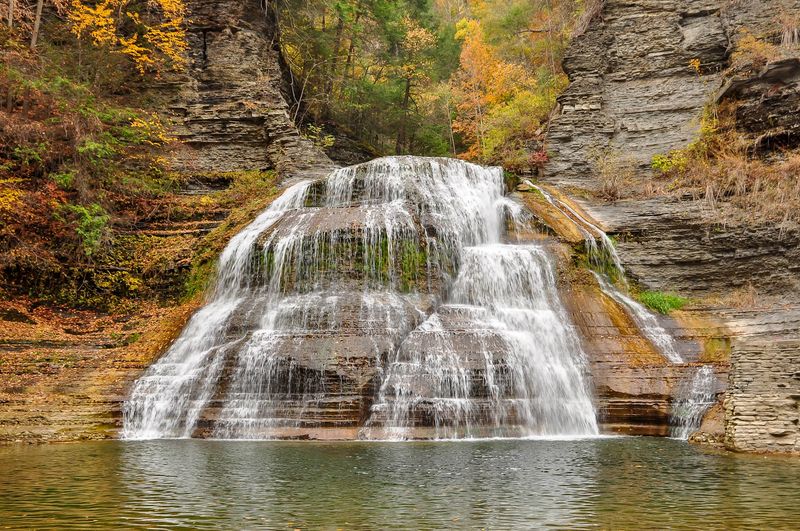
Exactly 222 steps make up the Cliff Staircase here, and every one of them earns its place. They lead hikers through Enfield Glen, a winding gorge stuffed with cascades.
Robert H. Treman and his wife Laura donated the original land to New York in 1920.
The park has since grown to 1,110 acres in the Finger Lakes region.
Lucifer Falls is the star. It drops about 115 feet in several tiers into the ravine below, and the overlook near the staircase gives a full view.
Smaller falls pop up all along the gorge, so the walk never gets dull. The cliffs are made of shale and sandstone from the Devonian period.
Plan your energy wisely. The gorge trail climbs a total of 1,035 feet one way.
After the climb, cool off at the lower entrance. A waterfall feeds a swimming area there, open in warm months when lifeguards and water conditions allow, making it a summer favorite for local families.
10. Burgess Falls State Park, Sparta, Tennessee
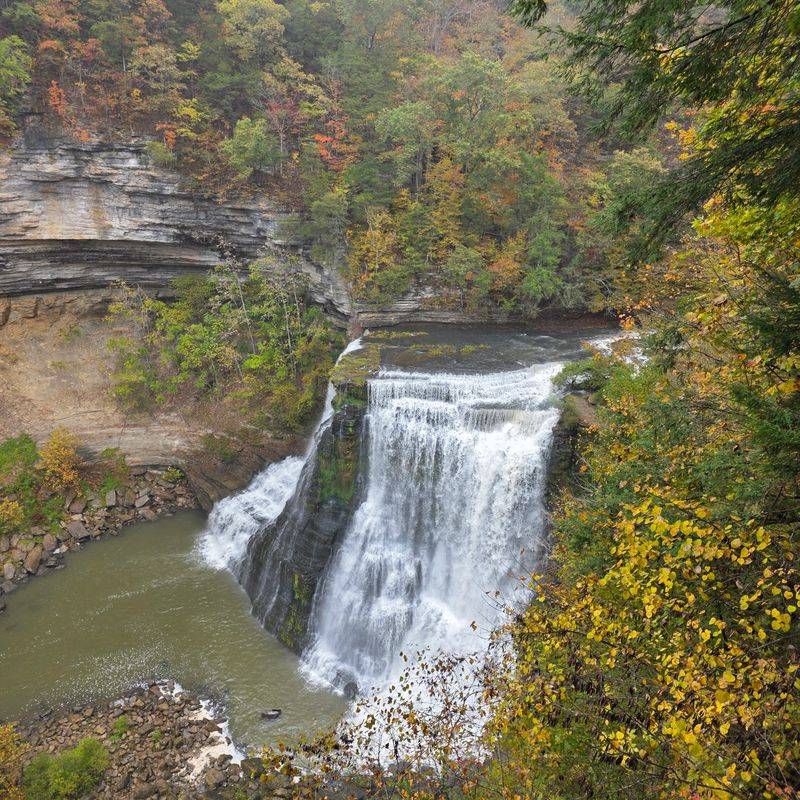
A river named Falling Water was clearly destined for this job. It drops nearly 250 feet in less than a mile, delivering four waterfalls in a row.
The lineup builds slowly. First comes the 10-foot Falling Water Cascades, then the 30-foot Little Falls.
Next is the 80-foot Middle Falls. The grand finale is Burgess Falls itself, a 136-foot plunge into a limestone gorge with walls up to 200 feet high.
The River Trail passes all four falls in a 1.5-mile round trip. It is rated difficult, mostly because of the steep climb back up.
For an easier stroll, try the one-mile Ridge Top Trail. It offers solid canyon views with less huffing and puffing.
Reaching the base of the main falls is usually done by boat or kayak from the Cane Hollow Recreation Area. The park’s name comes from the Burgess family, who once ran a gristmill on the river, giving this small park of around 350 acres a slice of local history.
11. Ohiopyle State Park, Ohiopyle, Pennsylvania
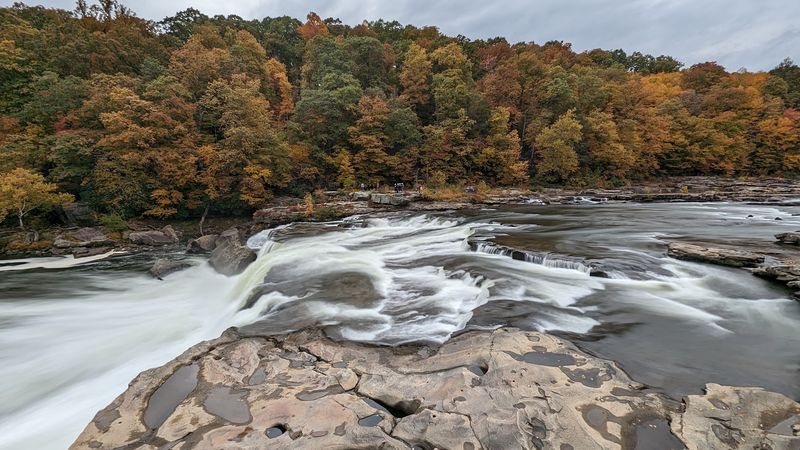
George Washington tried to float down this river in 1754 and quickly changed his plans. The falls and rapids blocked his boat, forcing him to travel by land.
Modern visitors have it much easier. Ohiopyle Falls sits right next to the small town, where the whole Youghiogheny River drops over a wide sandstone ledge about 15 to 20 feet tall.
Grab a snack downtown, then walk a few minutes to the viewing area. Water levels change with rainfall, so the falls can look wild one month and calmer the next.
A short drive away, Cucumber Falls drops into a quiet wooded ravine. It feels far from town even though it is not.
Meadow Run adds a playful twist. Its natural waterslides let visitors scoot through rock channels in the creek bed, though checking water levels first is wise.
Don’t skip Ferncliff Peninsula, a National Natural Landmark wrapped by a horseshoe bend in the river. Between trails, overlooks, and town shops, a full day disappears fast.
12. Buttermilk Falls State Park, Ithaca, New York
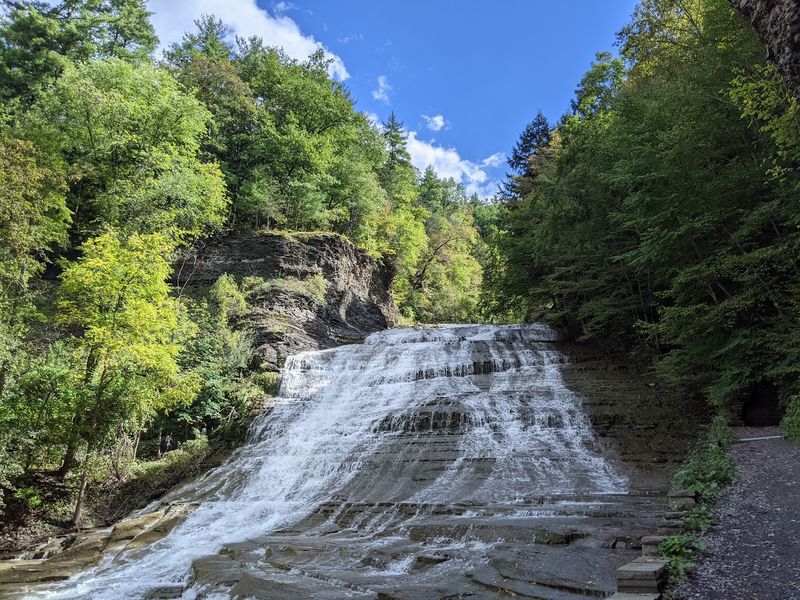
Frothy white water rushing down the slope reminded early locals of churning buttermilk. The name stuck, and the creek has been living up to it ever since.
The main waterfall drops 165 feet down a wide, sloping rock face. It looks like a giant staircase, and it is only the first of ten falls along Buttermilk Creek.
The Gorge Trail climbs beside the creek past smaller drops, narrow pools, and carved rock. Watch for Pinnacle Rock, a freestanding stone column shaped after the last ice age.
Expect several hundred stone steps on this moderate hike. The rock is often wet, so shoes with good grip are a must.
The park basically offers two trips in one. Down low, there is a campground and a natural swimming pool at the base of the main falls.
Up high, the gorge reveals its hidden extras. If stairs are not your thing, the Rim Trail loops through the forest with peeks into the gorge and connects toward Lake Treman.
13. Cuyahoga Valley National Park, Peninsula, Ohio
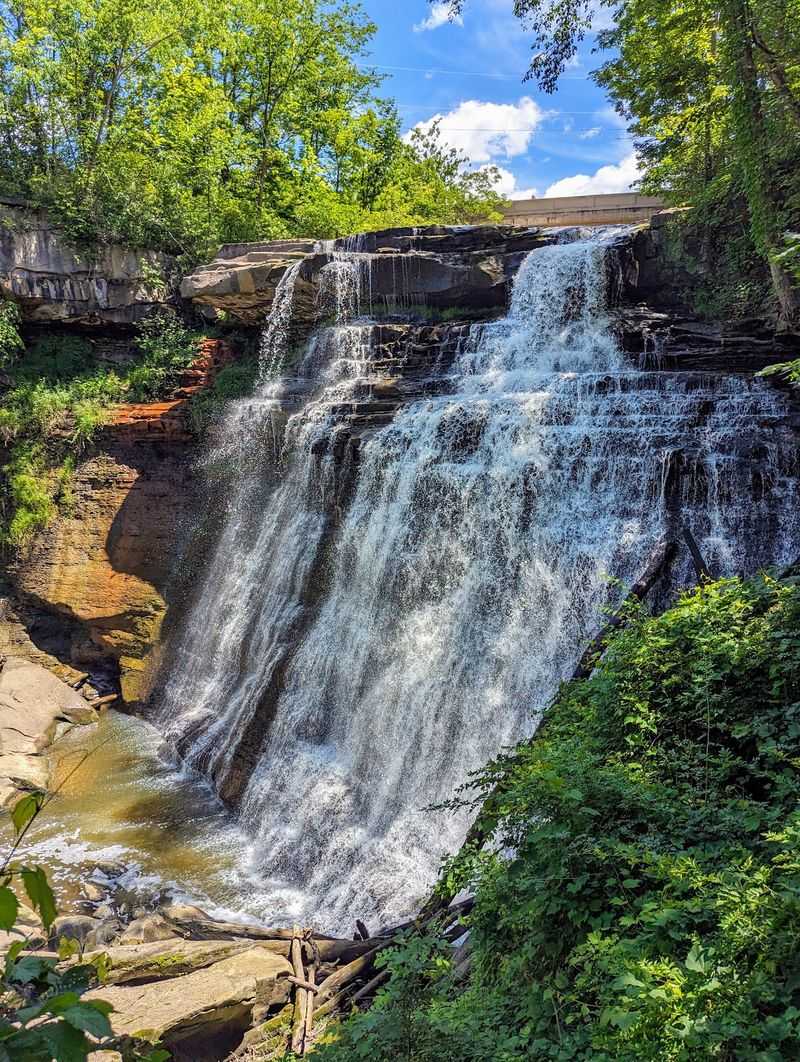
Roughly 100 waterfalls hide inside Ohio’s only national park, which is a lot for a place sandwiched between Cleveland and Akron. The park covers about 33,000 acres of ravines, river valley, and history.
Brandywine Falls gets top billing. It drops 65 feet over layered rock, and a sturdy boardwalk leads to a great viewing spot.
Blue Hen Falls is the quieter sibling. Its 15-foot drop spills into a small pool, and the forest hike often starts near the Boston Mill Visitor Center.
The falls are scattered across different parts of the park. Plan a mix of short drives and quick hikes to see several in one day.
History buffs get plenty too. The Ohio and Erie Canal Towpath Trail runs about 20 miles through the park, and a scenic railroad carries riders through the valley.
Save time for the Ritchie Ledges, shaped by glaciers, and Beaver Marsh, a restored wetland full of wildlife. It is a fitting final stop for any waterfall counter.
Share this story