Missouri’s stretch of Route 66 is packed with the quirky roadside attractions that made the Mother Road legendary. Giant landmarks, unusual museums, recreated ghost towns, nostalgic shops, and plenty of unexpected surprises make the drive between St. Louis and the Oklahoma border an adventure of its own.
As Route 66 celebrates its 100th anniversary in 2026, these memorable Missouri stops offer a fitting way to experience its enduring character. Some are historic, others wonderfully strange, but each makes the journey more interesting.
1. Route 66 State Park, Eureka, Missouri
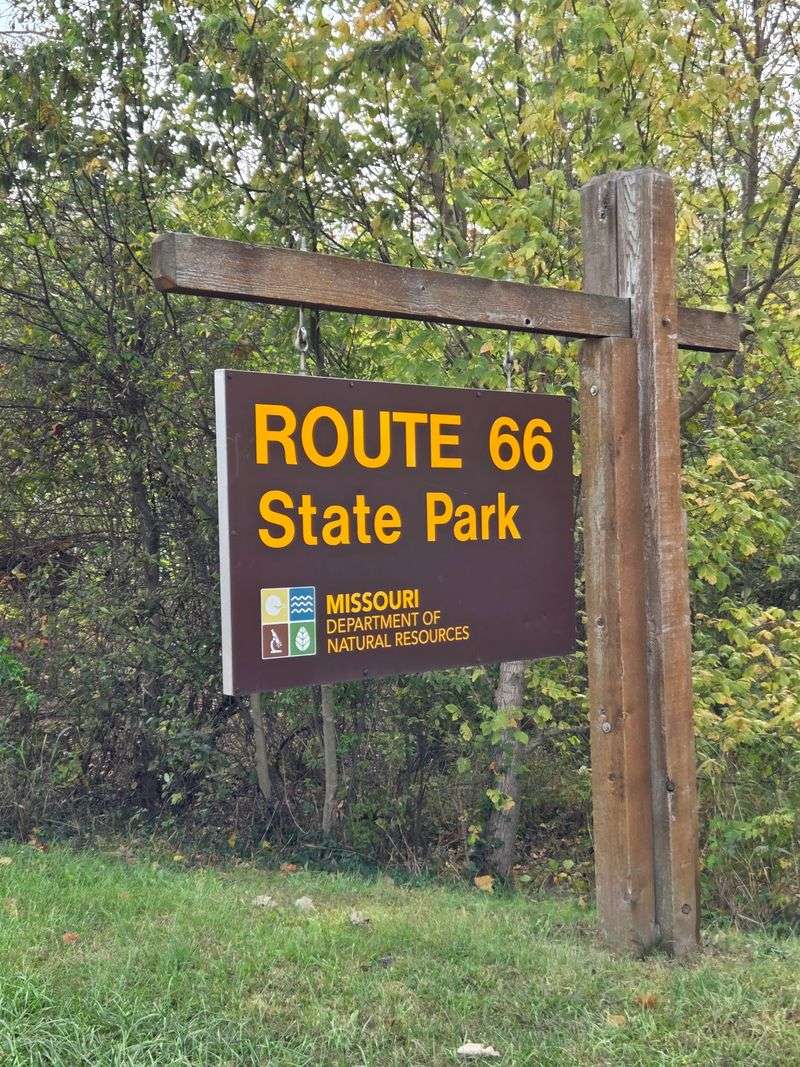
There is something genuinely strange about a state park built on the site of a town that no longer exists. Route 66 State Park in Eureka occupies what was once Times Beach, a community evacuated in the 1980s after serious dioxin contamination was discovered there.
The EPA used the old Bridgehead Inn as an office during the cleanup, which wrapped up in 1997. Two years later, the site reopened as a park, and the 1935 roadhouse became the visitor center it remains today.
Inside, displays feature Route 66 memorabilia, vintage gas station signs, and artifacts including a neon sign from the Sylvan Beach Restaurant. The park offers hiking, cycling, and equestrian trails along the Meramec River.
A compacted mound inside the grounds quietly contains the remains of Times Beach itself, which is an unusual footnote most visitors never expect.
2. Meramec Caverns, Stanton, Missouri
Before bumper stickers became a standard part of road trip culture, Lester B. Dill was already printing them to advertise Meramec Caverns, and he is widely credited as the person who invented them for that purpose.
Dill purchased the caverns in 1933 and opened them to tourists in 1935, turning a limestone cave system into one of Route 66’s most enduring attractions.
The caves themselves have a much longer history. Native Americans used them for shelter, and in the 1700s the site was mined for saltpeter.
During the Civil War, Confederate guerrillas reportedly destroyed a Union powder mill operating inside.
The Jesse James hideout legend, promoted heavily by Dill, added another layer of mystique. Today the caverns welcome around 150,000 visitors annually.
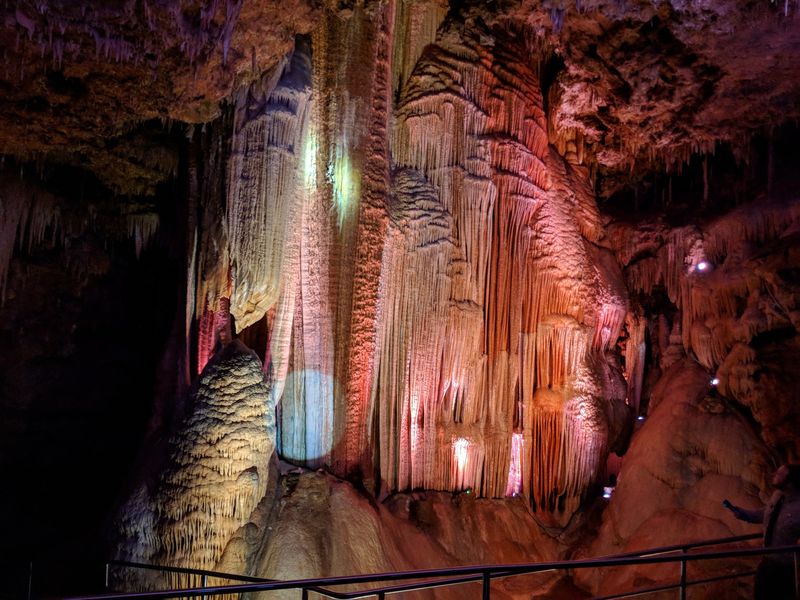
Highlights include the Stage Curtain formation, claimed to be the largest single cave formation in the world, and a classic light show that has been running for decades.
3. Murals of Cuba, Cuba, Missouri
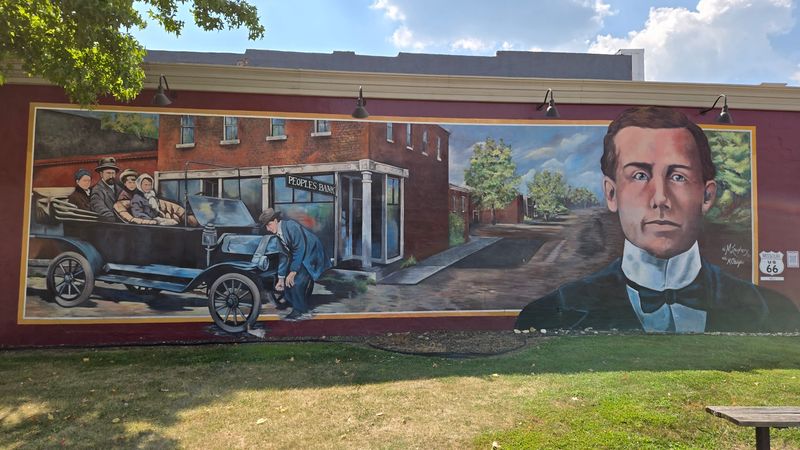
Cuba, Missouri, did not put its history in a museum. Instead, the town painted it across its downtown buildings for everyone to see from the sidewalk.
Between 2001 and 2007, the community organization Viva Cuba commissioned 14 to 15 large outdoor murals that now cover walls throughout the old Route 66 corridor.
Missouri officially recognized Cuba as the Route 66 Mural City in 2002. Artists including Canadian muralist Michelle Loughery and local painter Shelly Smith Steiger created scenes depicting President Harry S.
Truman campaigning in town, Amelia Earhart after a forced landing nearby, and Hollywood actress Bette Davis during a visit.
Five panels focus on Civil War history, while others honor local servicemen from World War II and document industries like barrel-making that once defined the area. A mural map is available for visitors, and some murals include QR codes linking to additional historical context.
Photographers tend to stay longer than they plan.
4. Route 66 Rocker, Cuba, Missouri
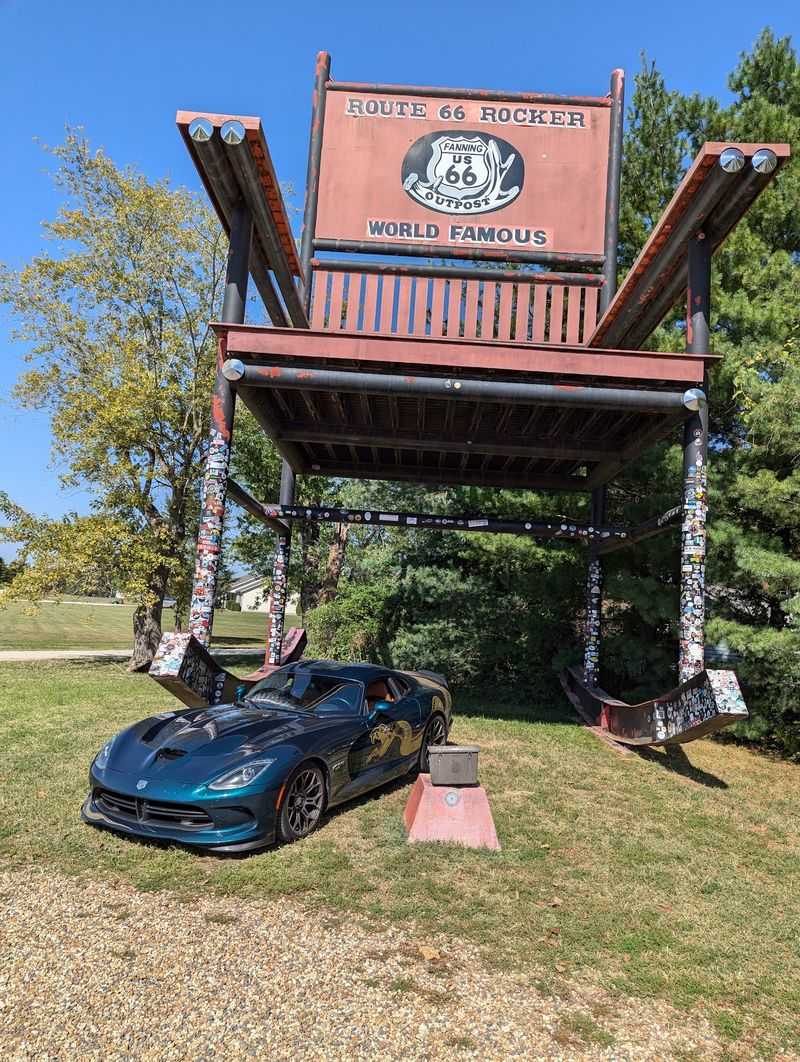
At 42 feet and 1 inch tall, weighing 27,500 pounds, and spanning 20 feet wide, the Route 66 Rocker near Fanning is the kind of roadside object that makes drivers slow down before they even fully register what they are looking at. Designer John R.
Bland and fabricator Joe Medwick built it in 2008 outside the Fanning 66 Outpost.
It earned a Guinness World Record for the world’s largest rocking chair that same year. The chair actually rocked initially, but was bolted down for safety after its motion proved too intense for a structure that size.
A taller chair built in Casey, Illinois, claimed the top title in 2015, prompting a repaint from black and white to red and a rebrand as the largest rocking chair on Route 66. Special events occasionally allow visitors to sit in the giant seat via a lift, which is exactly as memorable as it sounds.
5. Stonehenge, Rolla, Missouri
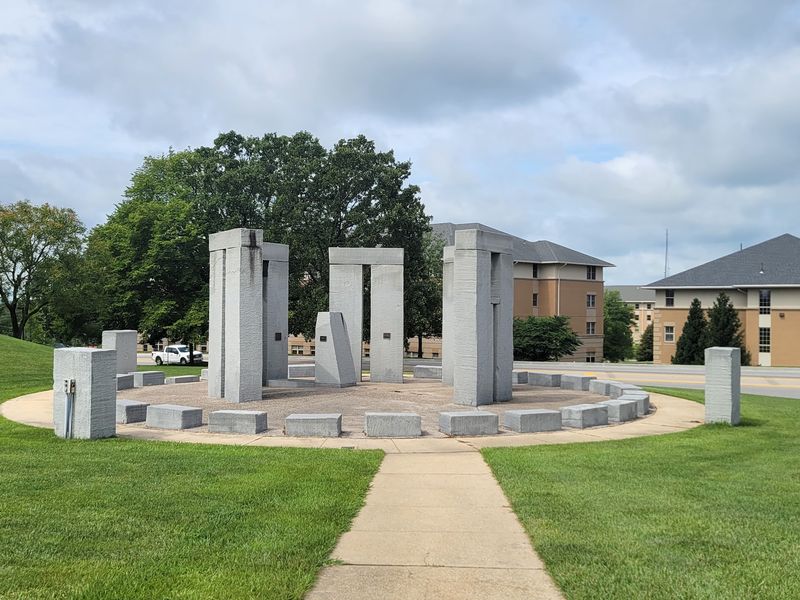
Most universities build statues of their founders. Missouri University of Science and Technology built Stonehenge.
The half-scale replica on campus in Rolla was conceived in 1982 by Dr. Joseph Marchello and Dr. David A. Summers, partly to show off the university’s high-pressure water-jet stone-cutting technology.
About 160 tons of Georgia granite went into the project, and the stones were cut in roughly one month using that water-jet equipment, a process that would have taken ancient builders decades. The monument was dedicated on the summer solstice, June 20, 1984, with a white-robed Druid from England participating in the ceremony.
That same year, the National Society of Professional Engineers ranked it among the top 10 outstanding engineering achievements in the country, alongside the Hubble Space Telescope. The replica functions as a working solar calendar and includes an analemma stone for tracking dates by a dot of light.
Admission is free, and parking is available near the campus observatory.
6. Uranus Fudge Factory & General Store, St. Robert, Missouri
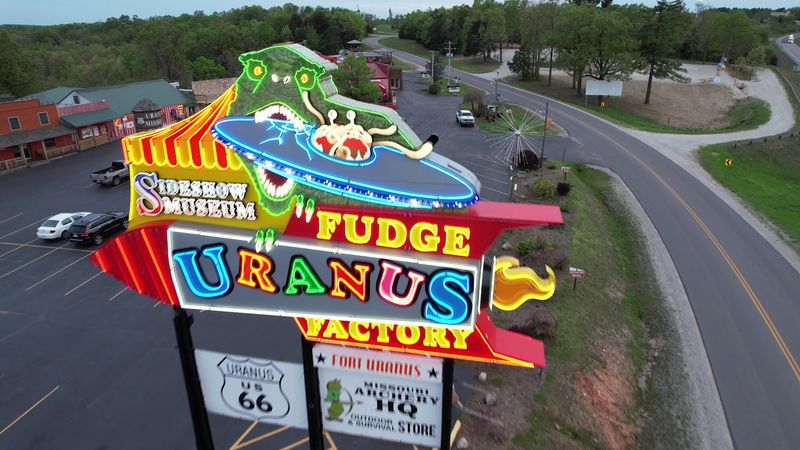
Opened on July 2, 2015, by self-proclaimed Mayor Louie Keen, the Uranus Fudge Factory and General Store has built an entire roadside empire on the premise that its name is funny, and it is correct. Slogans like “The Best Fudge Comes from Uranus” are printed on everything from signs to packaging.
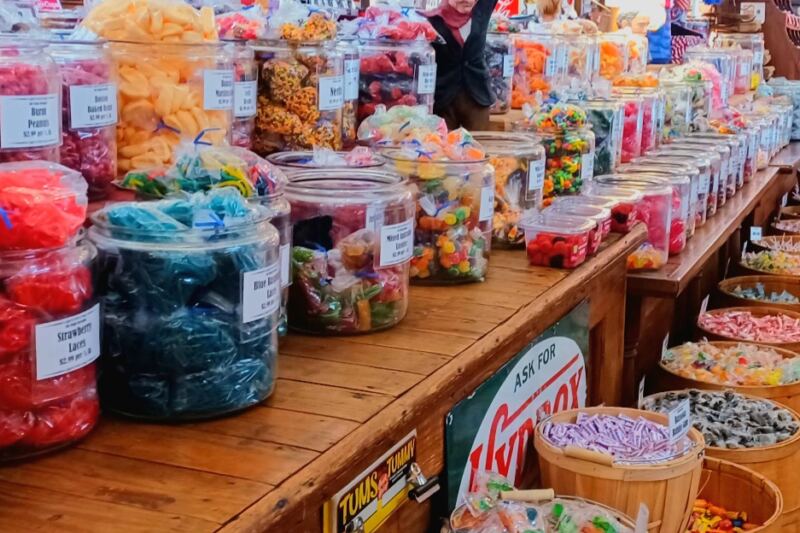
The store carries dozens of handmade fudge flavors made fresh daily, over 80 flavors of saltwater taffy, gourmet popcorn, and more than 250 varieties of glass bottle sodas. A viewing window lets visitors watch the fudge being prepared on site.
Beyond the sweets, the complex has grown into a full entertainment destination. Putt Pirates Mini Golf, Escape Uranus escape rooms, the Uranus Ice Cream Company, and the Uranus Sideshow Museum all share the property.
Outside, the Funkyard features giant dinosaurs, a rocket ship, a Route 66 mural, and what the attraction calls the World’s Largest Belt Buckle.
7. Route 66 Neon Park, St. Robert, Missouri
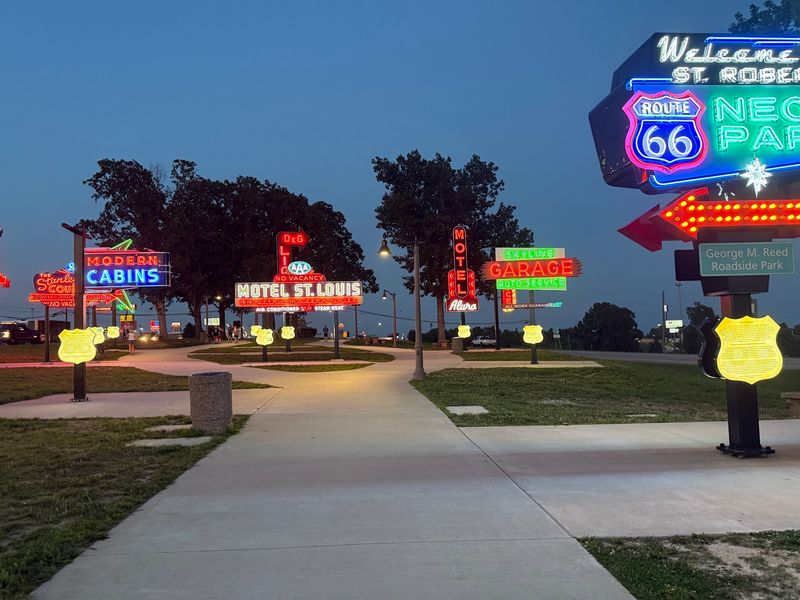
George M. Reed Roadside Park has been open continuously since 1952, making it Missouri’s longest-running roadside park on Route 66.
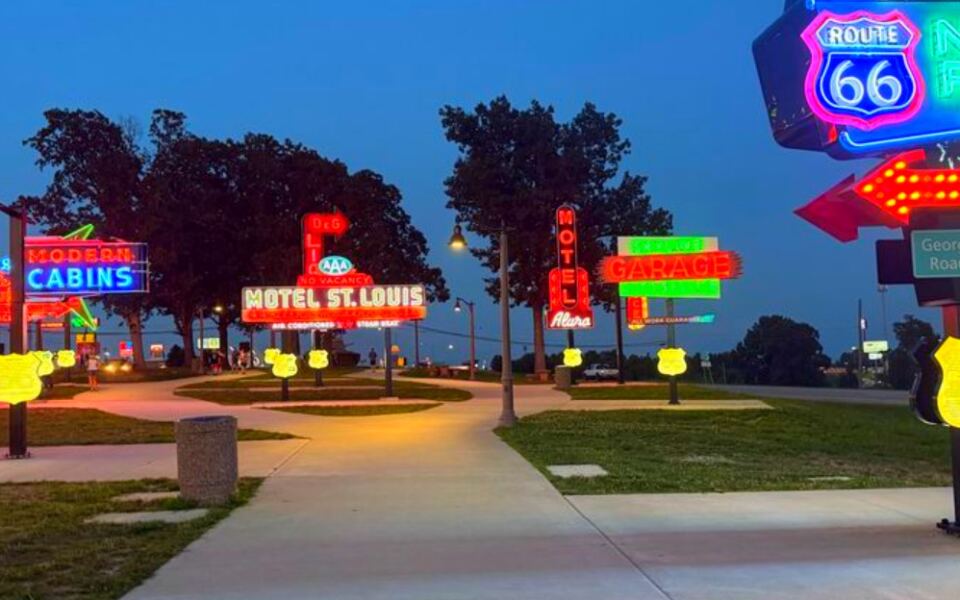
The original concrete picnic tables from its opening year are still there. What is new is the collection of restored vintage neon signs that now fills the park with color after dark.
Route 66 Neon Park held its official lighting ceremony in May 2025, making it the first outdoor neon museum of its kind along the entire 2,448-mile length of the Mother Road. Project director Beth Wiles of the Pulaski County Tourism Bureau spent over a decade developing the concept before the City of St. Robert took over in 2020.
The rescued signs include the Al-Pac Motel sign, the Alura Motel sign with its distinctive triple-stroke neon lettering, and a Modern Cabins sign that spent decades stored in a garage. The park is open sunrise to midnight daily, with admission and parking free.
Neon runs from dusk to midnight every night.
8. Devil’s Elbow Bridge, Devils Elbow, Missouri
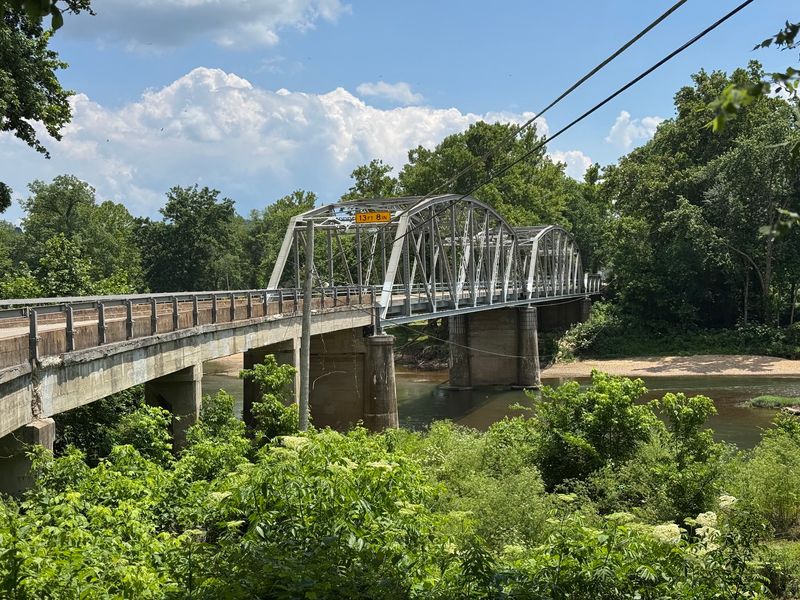
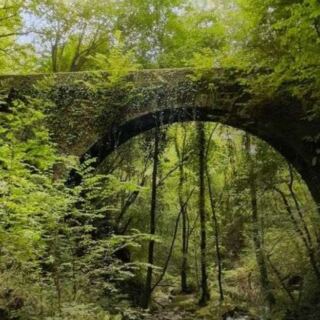
The name Devil’s Elbow comes from lumberjacks, not road builders. A sharp bend in the Big Piney River caused notorious logjams in the late 1800s, and workers called it a devil of an elbow to navigate.
The name stuck to the community, and eventually to the bridge that crossed the river there.
Built in 1923 and incorporated into Route 66 in 1926, the 588-foot steel truss bridge is one of only two historic Route 66 bridges with a curve. It is the only one of those two still open to vehicle traffic.
The State Planning Commission named the surrounding area one of Missouri’s Seven Beauty Spots in 1941, citing the 200-foot limestone bluffs above the river.
Route 66 was straightened in the 1940s with the Hooker Cut, bypassing the bridge entirely and leaving the community quieter ever since. The bridge has been repaired after a 2017 flood and remains drivable.
Missouri Life magazine named it the Best Route 66 Location in 2019.
9. Route 66 Museum, Lebanon, Missouri
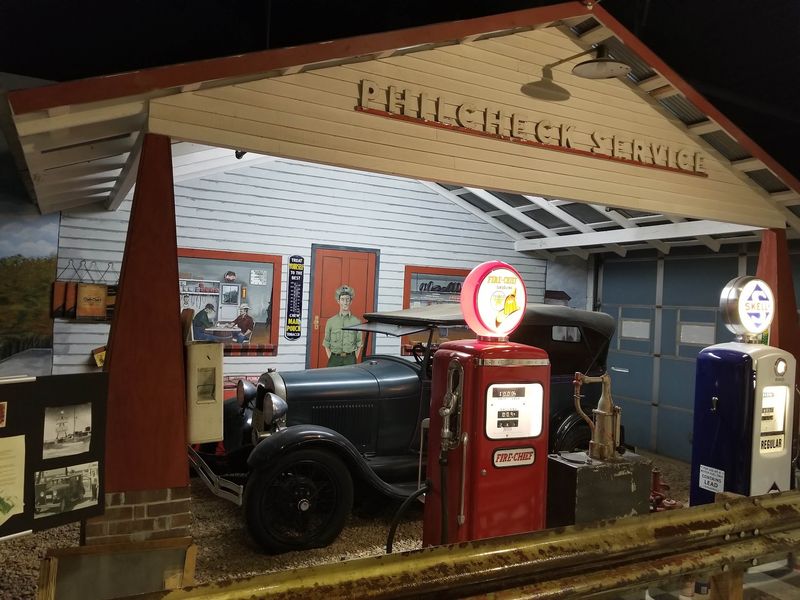
Most road trip museums celebrate the highway from a distance. The Route 66 Museum inside the Lebanon-Laclede County Library puts visitors directly inside it, with full-scale re-creations of a 1950s gas station, a classic diner built from two old streetcars, and a tourist cabin from the 1920s or 1930s.
Admission is free, and the museum is self-guided. Exhibits trace the evolution of travel through the Ozarks from Native American footpaths through early automobile highways, with maps, historic photographs, and transportation artifacts filling the displays.
Standout artifacts include a rare cast-iron Highway 14 marker that predates Route 66 and a vintage Highway 66-Highway 5 directional sign. The museum also showcases Ozark tourist pottery, a distinctive concrete-based roadside craft from the 1930s that earned a mention in a 1943 National Geographic article.
A gift shop and research collection round out the visit for anyone wanting to go deeper into Route 66 history.
10. Route 66 Car Museum, Springfield, Missouri
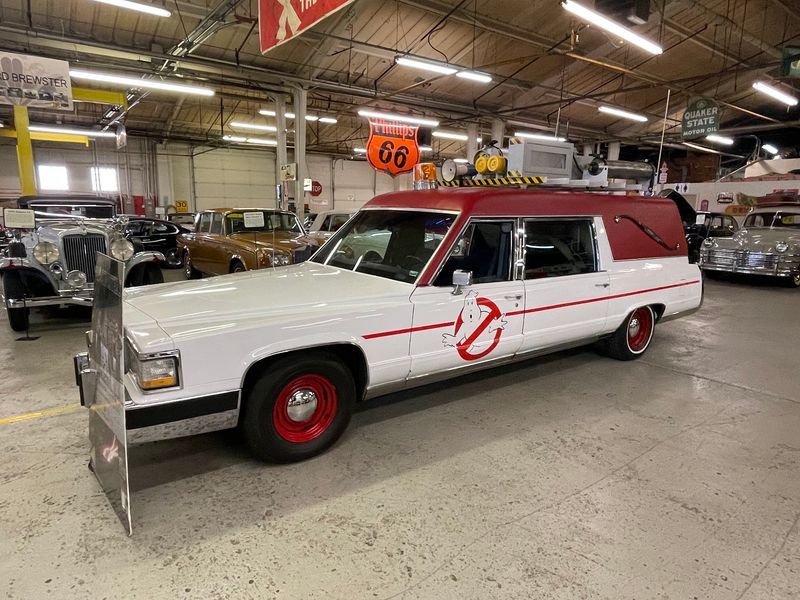
Springfield calls itself the birthplace of Route 66 because the highway’s name was suggested there on April 30, 1926. It seems fitting, then, that the city is home to a museum where the automobile itself takes center stage.
Owner Guy Mace began collecting in 1990 with his first Jaguar and eventually opened the museum to the public in 2016.
The 20,000-square-foot space holds over 75 vehicles, spanning from a 1907 REO Model G Runabout to classics from the 1980s. Movie fans will recognize the truck from Grapes of Wrath, a 1991 Ghostbusters Ectomobile, and the Gotham Roadster from Batman.
A 1936 Horch, one of only about 50 built for German military officers, won second place at the 2014 Pebble Beach Concours d’Elegance.
The museum draws around 12,000 visitors annually, with 40 percent being international travelers. Admission is $15 for adults.
The museum is scheduled to close April 17, 2027, when the collection will be auctioned, making the current visiting window worth noting.
11. Gary’s Gay Parita, Ash Grove, Missouri
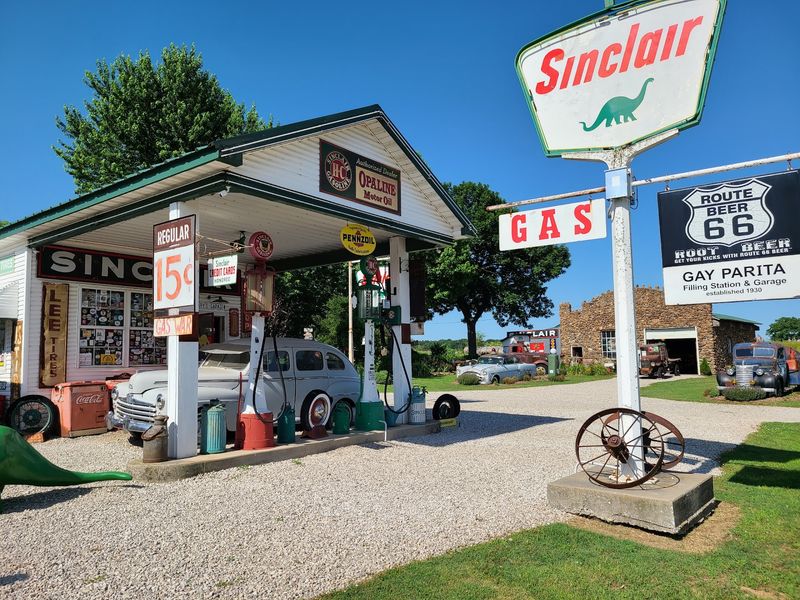
Route 66 enthusiast Gary Turner and his wife Lena rebuilt the Gay Parita Sinclair Service Station in the mid-2000s on the same property where the original stood from 1930 until it burned down in 1955. Fred and Gay Mason had named the original station Gay Parita, with Parita meaning equal in Spanish, as a tribute to Gay herself.
Gary Turner, a Vietnam veteran known for his storytelling and warm welcomes, became one of the most beloved figures on Missouri’s stretch of the Mother Road. He passed away in 2015, and his daughter Barbara Barnes and her partner George Bowick now keep the station running in his spirit.
The property is packed with antique gas pumps featuring Art Deco styling, old oil cans, the iconic Sinclair dinosaur logo, classic cars, license plates from around the world, and farm equipment repurposed as garden beds. Admission is free.
The site gained new recognition in 2023 when it appeared as a backdrop in Chappell Roan’s music video for Hot to Go.
12. Red Oak II, Carthage, Missouri
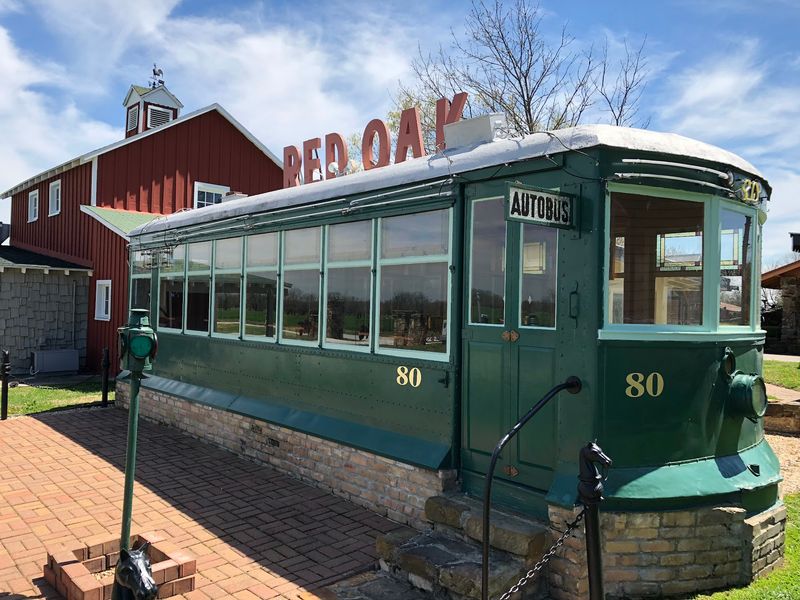
Artist Lowell Davis grew up in Red Oak, Missouri, and when he returned in the 1970s to find his hometown fading into a ghost town, he did not write about it or photograph it. He moved it.
Beginning in 1987, Davis purchased buildings from the original Red Oak and other rural communities, transported them to his Fox Fire Farm near Carthage, and restored them one by one.
Davis described the project as a combination of a painting and a sculpture made from things someone else threw away. The result is a 60-acre open-air village with a general store that once belonged to his father, Grandpa Weber’s Blacksmith Shop from his great-grandfather, a 1920s Phillips 66 gas station, a schoolhouse, a diner, a jail, and Salem Country Church, which still holds Sunday services and Saturday musical jam sessions.
Davis passed away in 2020, but the village remains open and free to visit.
13. Supertam on 66 Ice Cream Parlor and Superman Museum, Carterville, Missouri
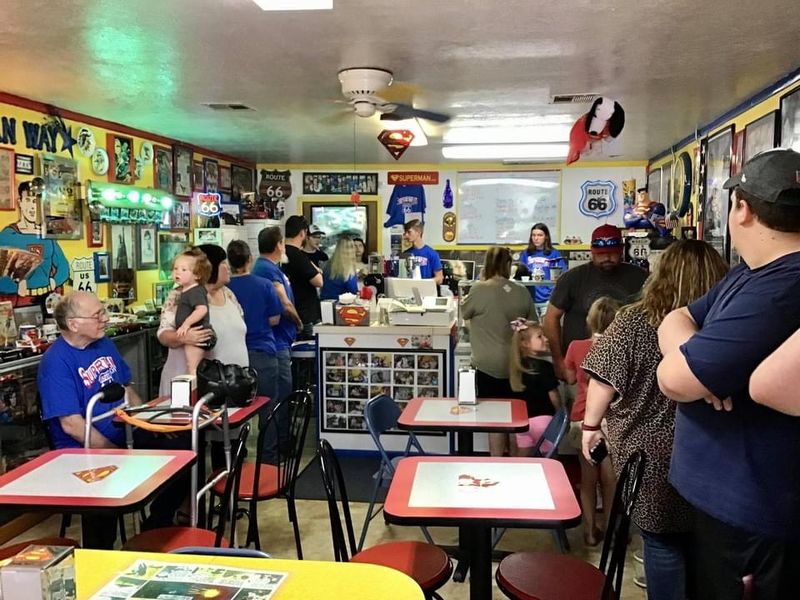
Larry Tamminen spent three to four decades collecting more than 2,600 pieces of Superman memorabilia before deciding the logical next step was to open an ice cream parlor alongside it. He launched the original business in Carterville in 2006, directly on Historic Route 66, and the combination turned out to be more popular than anyone might have predicted.
DC Comics eventually pushed back on the name Superman on Rt 66, leading to the rebranding as SuperTAM. After Tamminen and his wife Barbara closed in May 2021 for health reasons, local couple Chris and Andrea Briley purchased the business and reopened it in September 2021, keeping the collection, the name, and the ice cream flavors intact.
The museum section holds action figures, vintage toys, comics, watches, board games, newspaper clippings, and autographs. The ice cream lineup includes the signature Superman scoop, a colorful blend of Cherry, Blue Moon, and Vanilla, plus flavors named Kryptonite Delight, Fat Elvis, and Yippee Skippee.
Shakes come with over six million possible combinations.
Share this story