West Virginia is one of those states that rewards the curious traveler, but even people who have lived there their whole lives can miss some of its most interesting corners. The state has mountains, railroad history, Civil War battlefields, unusual museums, and natural formations that most people simply never get around to visiting.
Some of these places are tucked inside national forests, others sit quietly in small towns that barely appear on a map. A few are so unexpected that first-time visitors sometimes wonder if they took a wrong turn.
This list covers 13 destinations across the Mountain State that deserve far more attention than they typically get. Some are historic, some are strange, and a couple are just plain hard to explain until you see them for yourself.
Keep reading, because a few of these will genuinely surprise you.
1. Our Lady of the Pines, Eglon, West Virginia
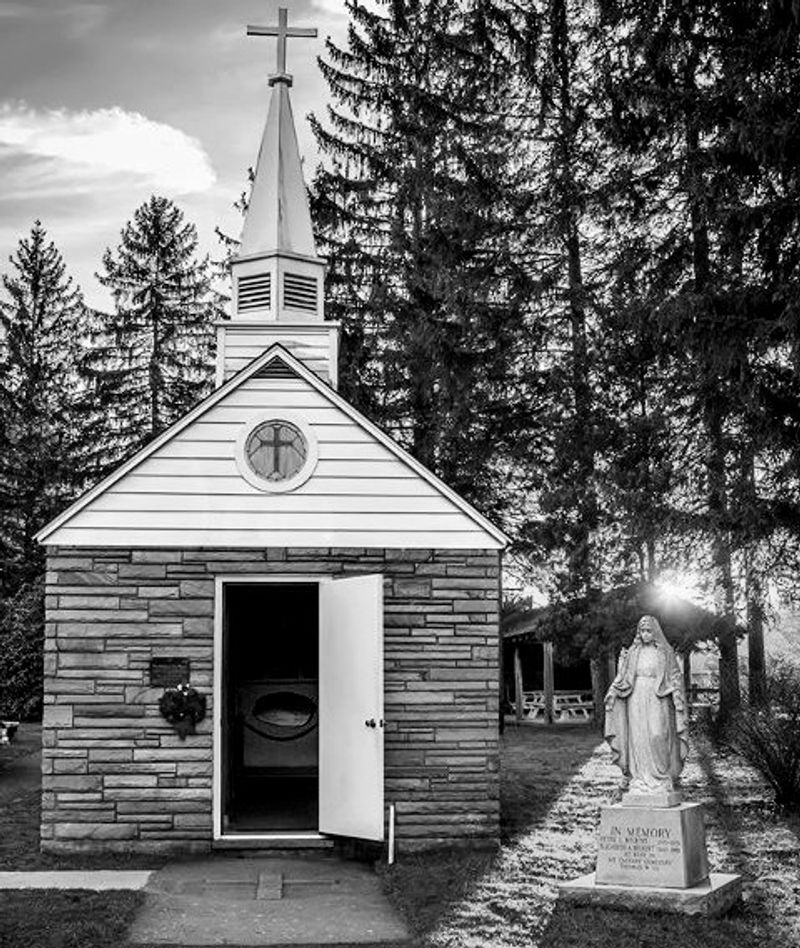
At just 12 by 24 feet on the outside, this little stone chapel in Preston County has spent decades advertising itself as the “smallest church in 48 states,” a claim rooted in the fact that Alaska and Hawaii had not yet joined the Union when it was built in 1958.
Lithuanian immigrant Peter Milkint and his wife Elizabeth constructed the church as a memorial to their parents. Inside, six small pews fit roughly a dozen worshippers, alongside stained-glass windows and a compact confessional.
A tiny mailing office behind the chapel, complete with its own zip code, lets visitors buy and mail postcards on an honor system. The whole stop takes about 15 minutes, but it is the kind of quirky, genuine landmark that sticks with you long after you drive away.
2. The Coal House, Williamson, West Virginia
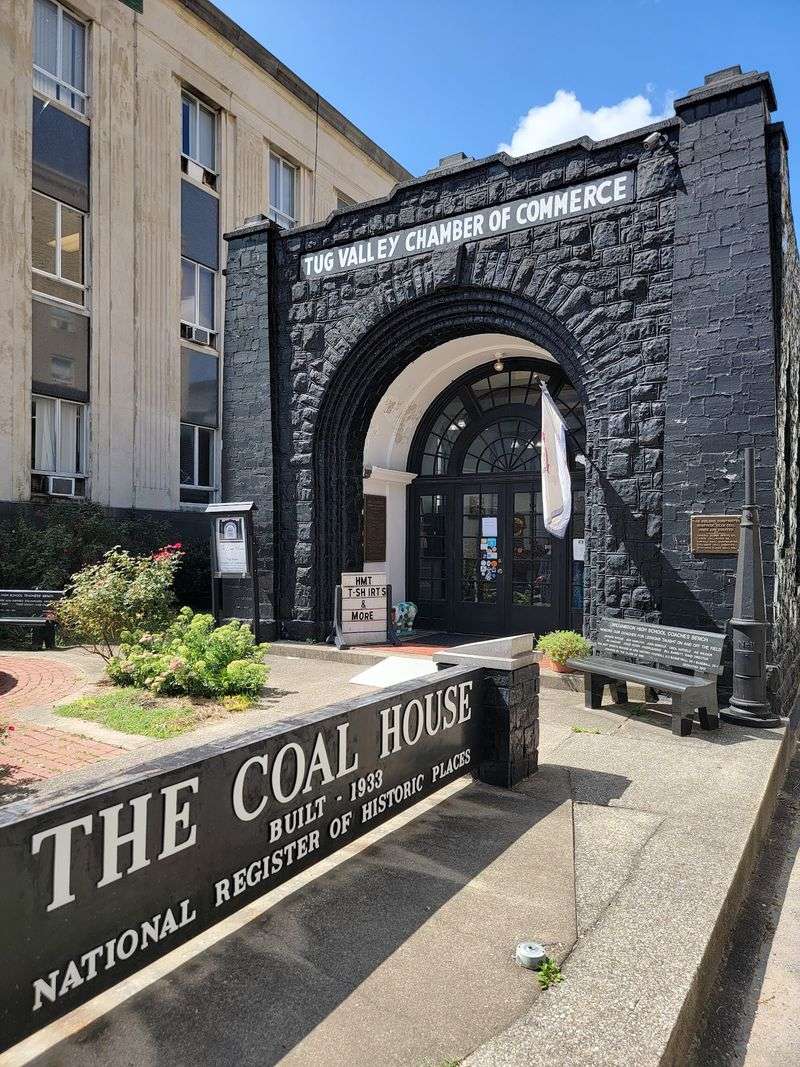
Williamson took the concept of local pride in coal country and turned it into actual architecture. Built in 1933 using approximately 65 tons of bituminous coal cut and stacked like conventional stone blocks, the Coal House stands as one of the most literally named buildings in the entire United States.
The dark, polished exterior gives the structure a distinctive look that photographs well and confuses plenty of first-time visitors who cannot quite figure out what they are looking at from a distance.
Today the building functions as a visitor center for the area, which means you can walk right in and learn more about both the construction and the broader history of Mingo County coal production. It is simultaneously a piece of local engineering history and one of southern West Virginia’s most genuinely unusual architectural landmarks.
3. John Henry Historical Park, Talcott, West Virginia
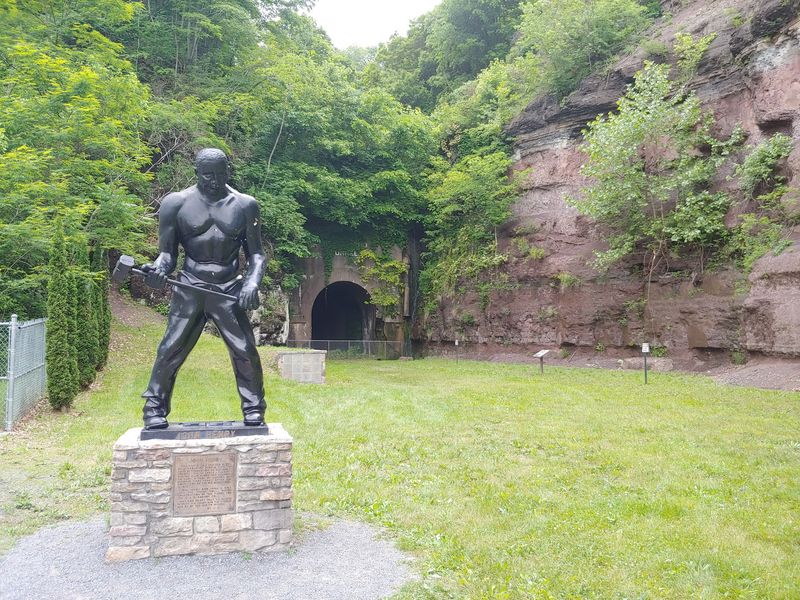
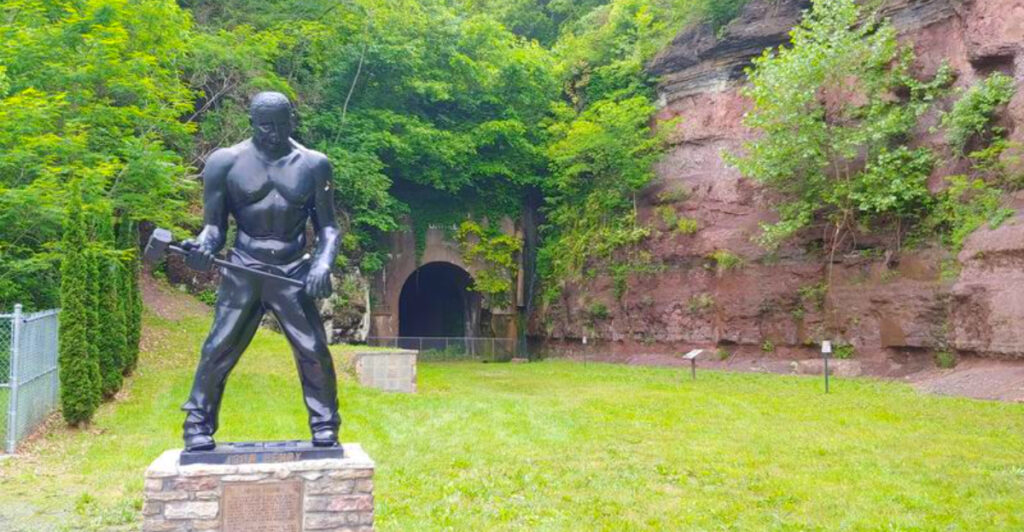
Most Americans learn about John Henry through a song, but far fewer know that the legend has a real geographic anchor in Summers County, West Virginia. The park at Talcott sits directly beside the Great Bend Tunnel, the railroad bore traditionally linked to the famous contest between the steel-driving man and a steam-powered drill.
A large John Henry statue stands near the tunnel entrance, giving the story a physical presence that no classroom lesson can quite match. Interpretive displays at the park explore both the folklore and the actual railroad construction history behind it.
Visitors who make the trip often find the combination of a working tunnel, a bold statue, and a layered historical narrative more compelling than expected. For anyone who grew up hearing the ballad, standing at the actual site carries a certain weight that is hard to dismiss.
4. Nuttallburg, Winona, West Virginia
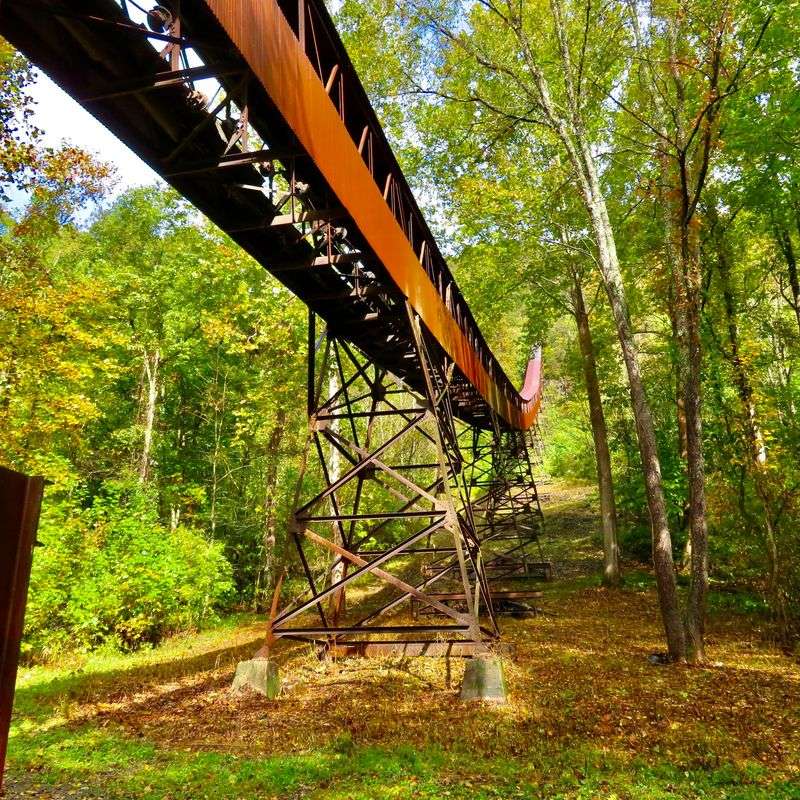
Hidden deep inside New River Gorge National Park and Preserve, Nuttallburg is not a museum and it is not a reconstruction. What visitors find here are the actual remains of a coal community, left largely as the last workers left them, with foundations, coke ovens, and industrial structures slowly being reclaimed by the surrounding Appalachian forest.
The most striking survivor is the enormous coal conveyor and processing complex that still climbs the mountainside in a state of weathered, photogenic decay. Few industrial ruins in West Virginia are this well preserved or this visually dramatic.
Getting there requires a bit of effort since the site sits on a remote road within the national park, but that relative isolation is a big part of the appeal. Visitors who make the trek tend to spend more time here than they planned, wandering among the remnants of a community that coal built and coal eventually abandoned.
5. Thurmond Historic Town, Thurmond, West Virginia
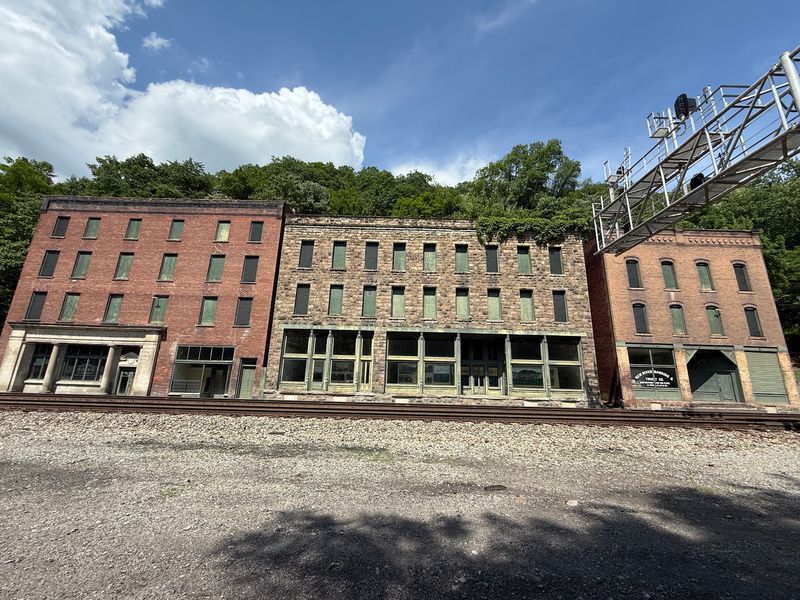
Thurmond’s population once hovered in the single digits, making it one of the smallest incorporated towns in the country, yet its historic footprint tells a much bigger story. The town flourished as a key Chesapeake and Ohio Railway hub along the New River, and at its peak it handled more freight tonnage than Cincinnati.
The National Park Service now preserves much of what remains, including the handsome old railroad depot and a row of commercial buildings that stand directly alongside the still-active tracks. That track layout is what makes Thurmond so visually striking: the railroad effectively serves as the main street, with the river on one side and steep mountains rising on the other.
Trains still pass through regularly, which adds an unexpected element of movement and noise to what might otherwise feel like a frozen moment in time. The depot also houses a visitor center with exhibits on the town’s remarkable railroad-era history.
6. The Museum Of American Glass in West Virginia, Weston, West Virginia
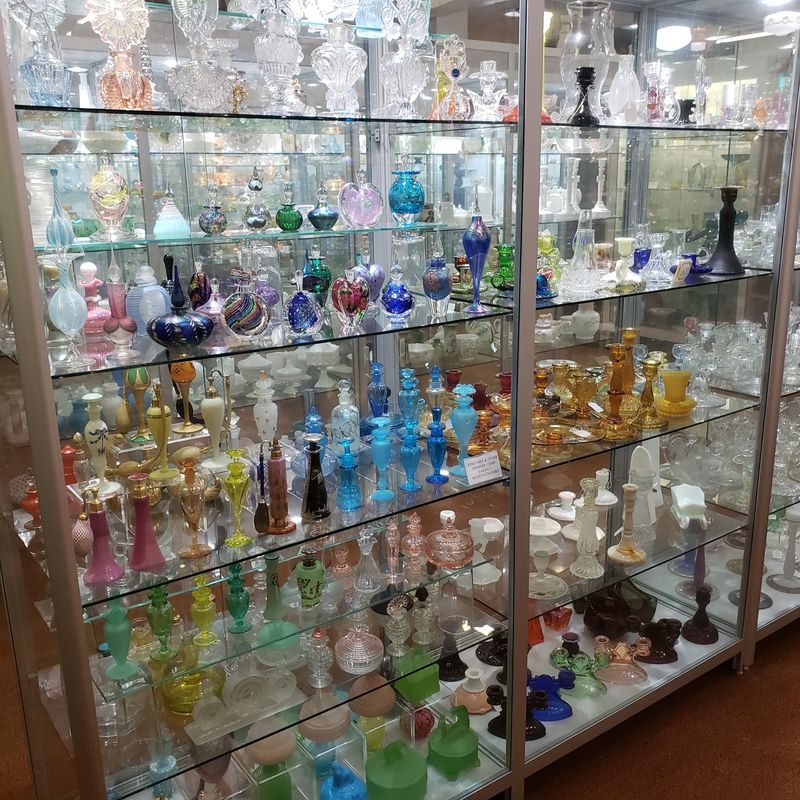
West Virginia produced an enormous amount of American glassware throughout the 20th century, and Weston’s downtown museum is one of the few places in the state dedicated to preserving and explaining that history in depth.
Displays cover American glass production and collecting across multiple eras, while the museum also maintains research materials, historic trade catalogs, and oral history recordings that serious collectors find genuinely useful. A National Marble Museum is tucked within the collection, which adds a colorful and unexpected bonus to the visit.
Many travelers pass through Weston on their way to the Trans-Allegheny Lunatic Asylum tours and never notice this museum at all. That is a missed opportunity.
Anyone interested in vintage tableware, decorative glass, or the industrial communities that once defined central West Virginia can easily spend a couple of hours here without running out of things to look at.
7. Barbour County Historical Museum, Philippi, West Virginia
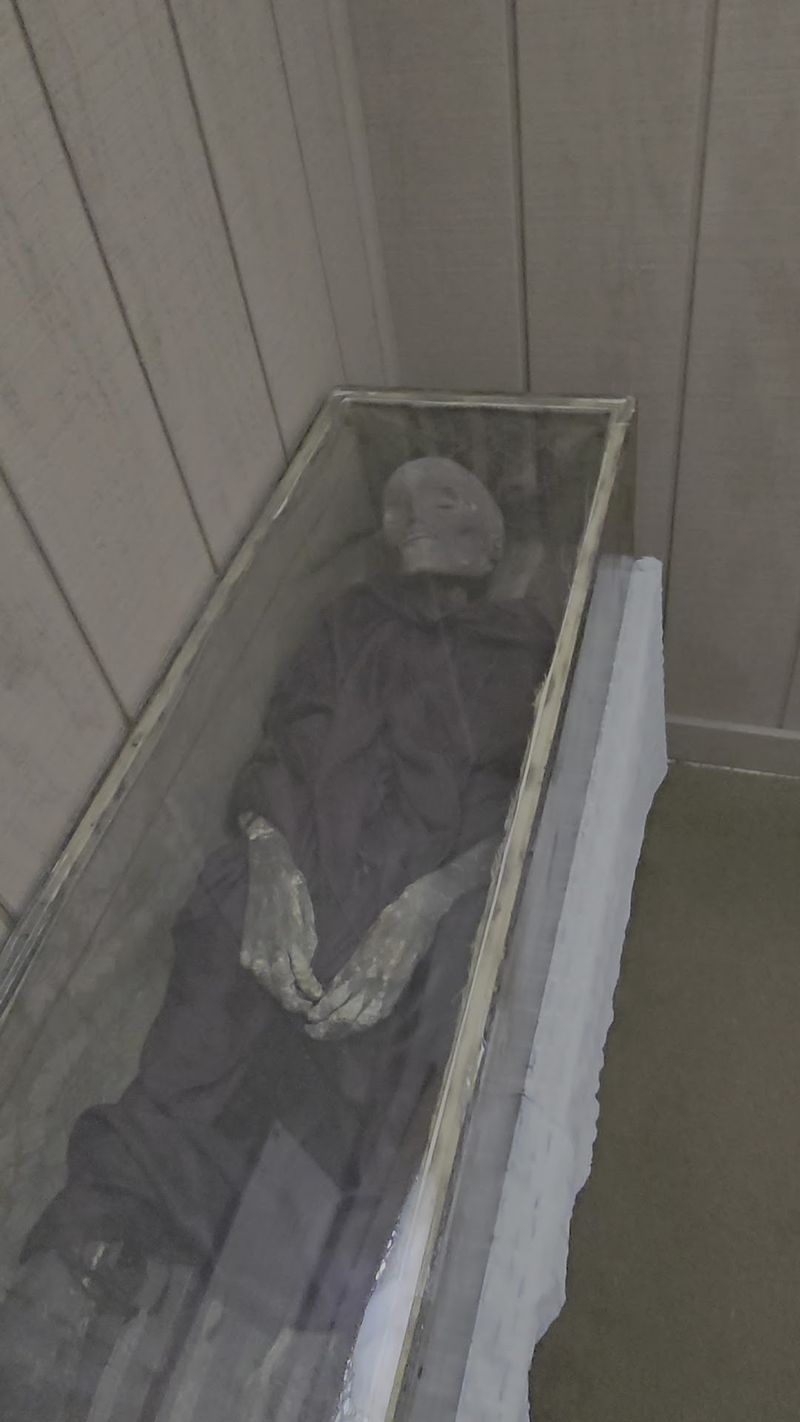
Philippi is already known for its famous covered bridge, but the local historical museum holds something that most visitors do not know to expect. Alongside exhibits covering Barbour County’s broader history, the museum displays the Philippi mummies, two preserved human bodies with a genuinely strange backstory rooted in the late 19th century.
The mummies were discovered in 1888 and became a traveling curiosity before eventually finding a permanent home in Philippi. Their preservation is unusual enough that researchers have studied them over the years, and they continue to draw visitors who are equal parts curious and unsure what they just walked into.
The museum’s location near the covered bridge makes it an easy addition to a Philippi visit rather than a separate trip. First-time visitors consistently report being surprised by how much is packed into what looks like a modest small-town museum from the outside.
8. Beartown State Park, Renick, West Virginia
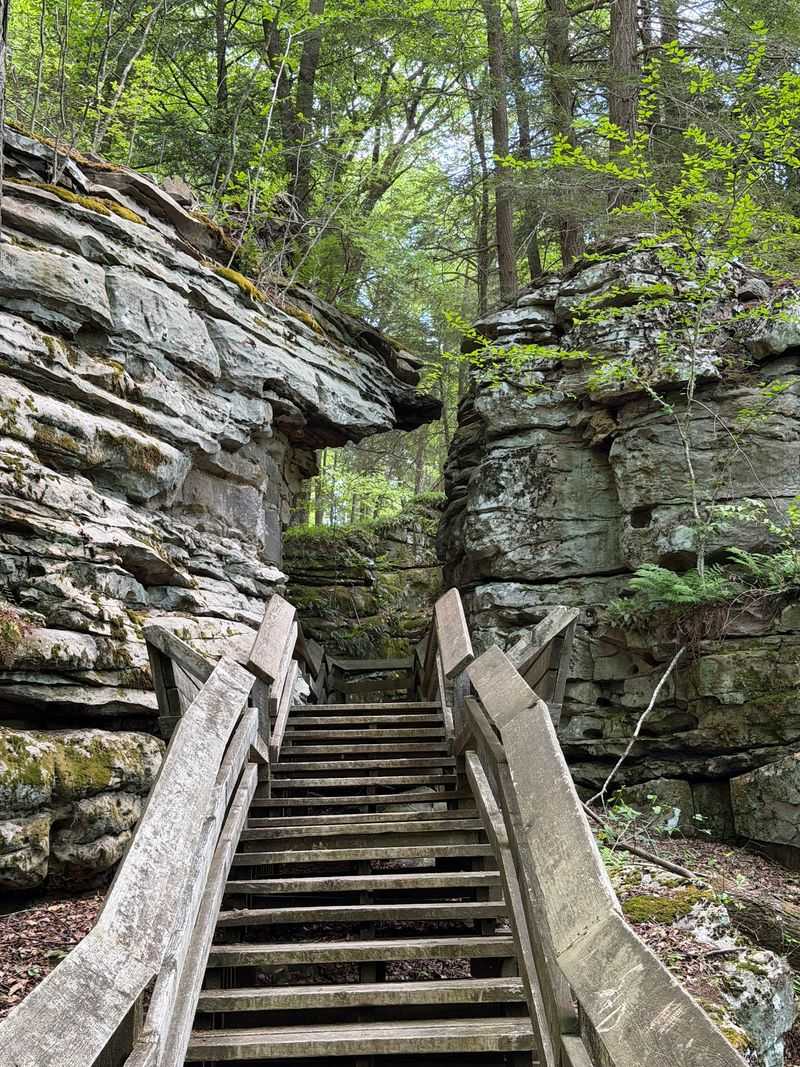
Geology did something genuinely odd at Beartown, and the result is one of West Virginia’s most visually distinctive state parks. Massive Droop Sandstone formations create a network of narrow passages, deep crevices, and dramatic overhangs that give the small park the feel of a natural labyrinth rather than a typical hiking destination.
A boardwalk threads through the formations, which is a practical choice since the rock surfaces and surrounding vegetation are fragile enough that off-trail exploration would cause real damage. The route is not long, but it packs a lot of unusual geology into a short distance.
Beartown sits near Droop Mountain Battlefield, making it easy to combine both stops in a single day. Visitors who are expecting a conventional forest walk tend to stop in their tracks the first time they see the rock formations, which is exactly the right reaction.
9. Droop Mountain Battlefield State Park, Hillsboro, West Virginia
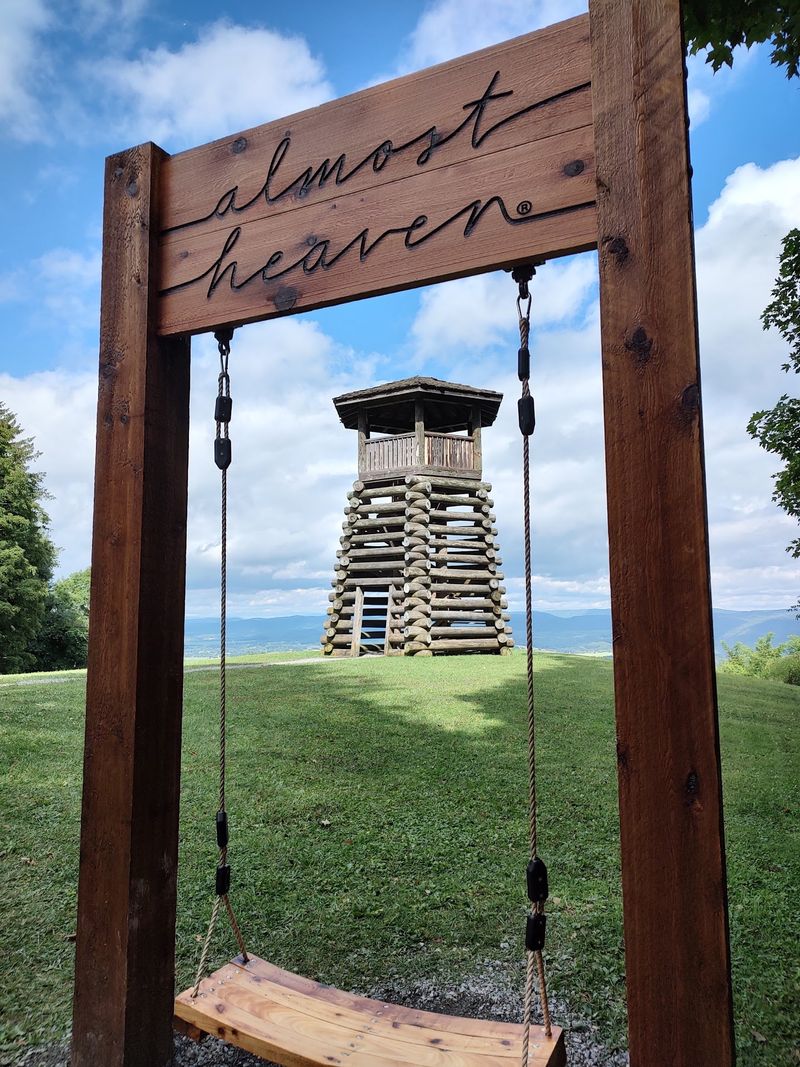
High on a ridge above the Greenbrier River Valley, this park preserves the site of the Battle of Droop Mountain, fought on November 6, 1863, and widely considered the last significant Civil War engagement on West Virginia soil. The Union victory here effectively ended organized Confederate resistance within the state.
A lookout tower constructed by the Civilian Conservation Corps in the 1930s rises above the tree line and offers a broad view of the surrounding ridges and valley. Several other CCC-era structures remain on the property, adding a second layer of history to the site.
Trails cross the battlefield and lead through a landscape that has changed relatively little since the fighting took place. The park is rarely crowded, which gives visitors space to actually think about the history rather than navigate around tour groups.
A small museum provides context for those less familiar with the battle.
10. Blennerhassett Island Historical State Park, Parkersburg, West Virginia
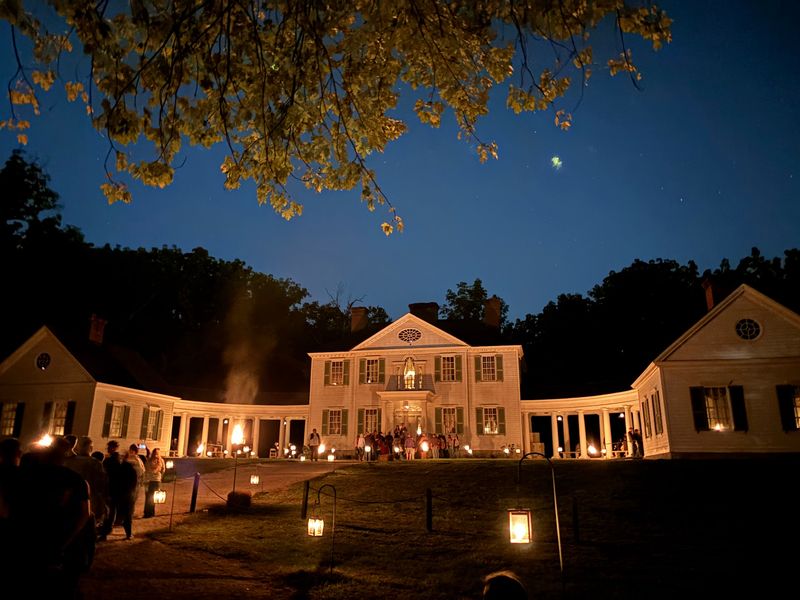
An island sitting in the Ohio River just outside Parkersburg holds one of West Virginia’s more elaborate historical stories, connecting an Irish immigrant’s mansion to the treason trial of former Vice President Aaron Burr. Harman and Margaret Blennerhassett built their grand home on the island in the early 1800s and became entangled in Burr’s controversial western scheme.
The original mansion burned in 1811, but a detailed reconstruction built on the original foundations opened to the public in the 1980s. Period furnishings, costumed interpreters, and exhibits fill the reconstructed rooms and explain both the island’s history and the broader Burr affair.
Visitors reach the island by sternwheeler from Parkersburg, which makes the trip itself feel like a small event rather than just a parking-lot walk to an entrance gate. The island setting, the mansion, and the layered history make this one of the more complete historical outings in northern West Virginia.
11. West Virginia Mine Wars Museum, Matewan, West Virginia
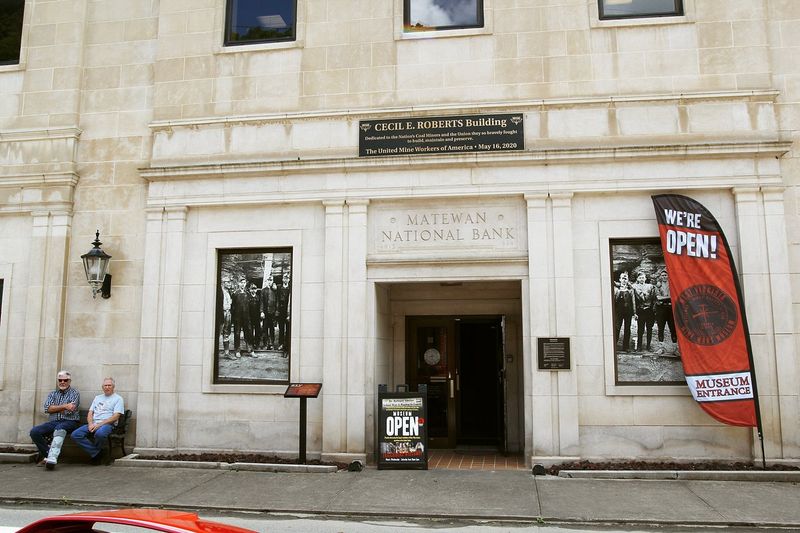
Matewan is a town whose name alone carries significant weight in American labor history, and this small museum inside the former Bank of Matewan building puts that history into clear, well-organized context. Exhibits cover coal camp life, the Paint Creek and Cabin Creek strikes, the 1920 Battle of Matewan, and the Battle of Blair Mountain in a way that connects individual stories to larger national events.
Photographs, firsthand accounts, and artifacts fill the compact space without feeling cluttered. The museum does not shy away from the complicated and sometimes brutal realities of what miners and their families experienced in the southern West Virginia coalfields.
For visitors who arrive knowing only the broad outlines of this history, the museum can genuinely reshape how they see the surrounding region and its communities. The town of Matewan itself, with its historic streetscape, is worth a walk before or after the visit.
12. West Virginia State Wildlife Center, French Creek, West Virginia
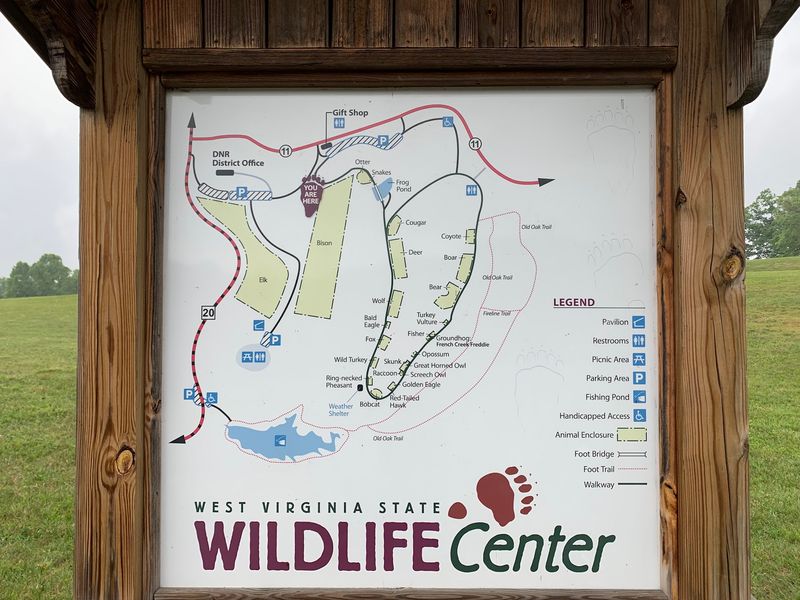
French Creek is not a name that appears on most West Virginia travel lists, but it is home to a wildlife destination that consistently earns strong reviews from families, photographers, and nature enthusiasts who stumble across it. The West Virginia State Wildlife Center focuses specifically on animals associated with the state and the broader Appalachian region, including black bears, mountain lions, white-tailed deer, river otters, and various birds of prey.
Rather than the compact, urban layout of a city zoo, the center spreads through a forested rural property that suits the animals and the setting equally well. A walking route connects the various enclosures, giving visitors a genuine sense of moving through a natural landscape rather than a concrete facility.
Admission is affordable, and the center is operated by the West Virginia Division of Natural Resources. It is the kind of place that local families return to year after year while out-of-state visitors rarely know to look for it.
13. Prabhupada’s Palace of Gold, Moundsville, West Virginia
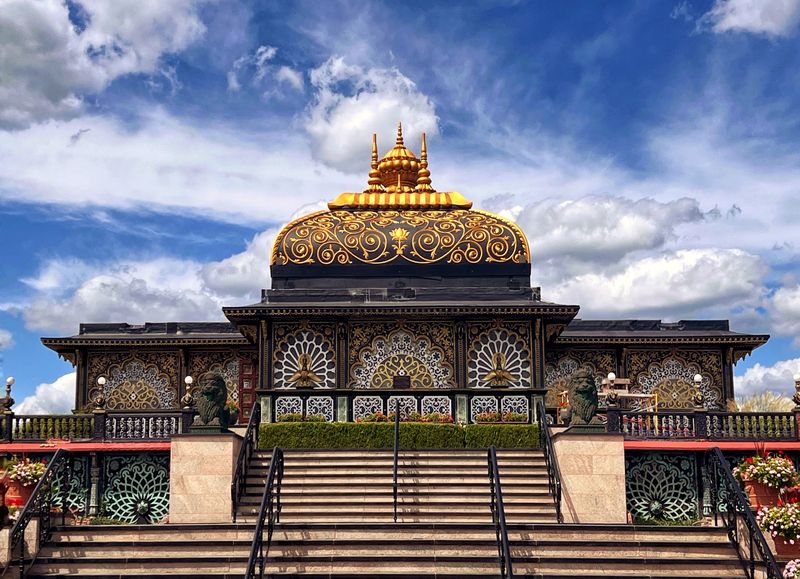
Nothing in the surrounding Appalachian countryside prepares a first-time visitor for what appears at the end of the road outside Moundsville. Prabhupada’s Palace of Gold rises from the hillside within the New Vrindaban community, its domes, decorative surfaces, and detailed craftsmanship creating a visual contrast with the rural West Virginia landscape that is genuinely difficult to overstate.
Construction began in the 1970s as a tribute to A.C. Bhaktivedanta Swami Prabhupada, the founder of the International Society for Krishna Consciousness.
Devotees built much of it by hand, learning new construction and decorative techniques as the project grew.
Gardens, statues, and richly detailed interiors complete a complex that draws visitors from across the country, many of whom learn about it through word of mouth rather than official tourism channels. West Virginians who have spent decades exploring their home state are often genuinely surprised to discover that a place this elaborate exists among the northern hills.
Share this story