Some cities skip the gray and go straight for the rainbow. Around the world, there are places where the streets themselves feel like art galleries, with buildings painted in every color imaginable, murals climbing across entire hillsides, and cobblestones that seem to glow in the afternoon sun.
These cities did not end up colorful by accident. Their colors come from history, culture, community pride, and sometimes a single bold decision that changed everything.
Whether you are planning a trip or just looking for a little inspiration, this list of 14 cities will make you see what a coat of paint and a lot of creativity can do to an ordinary neighborhood.
Burano, Italy: A Venetian Island Painted In Brilliant Colors
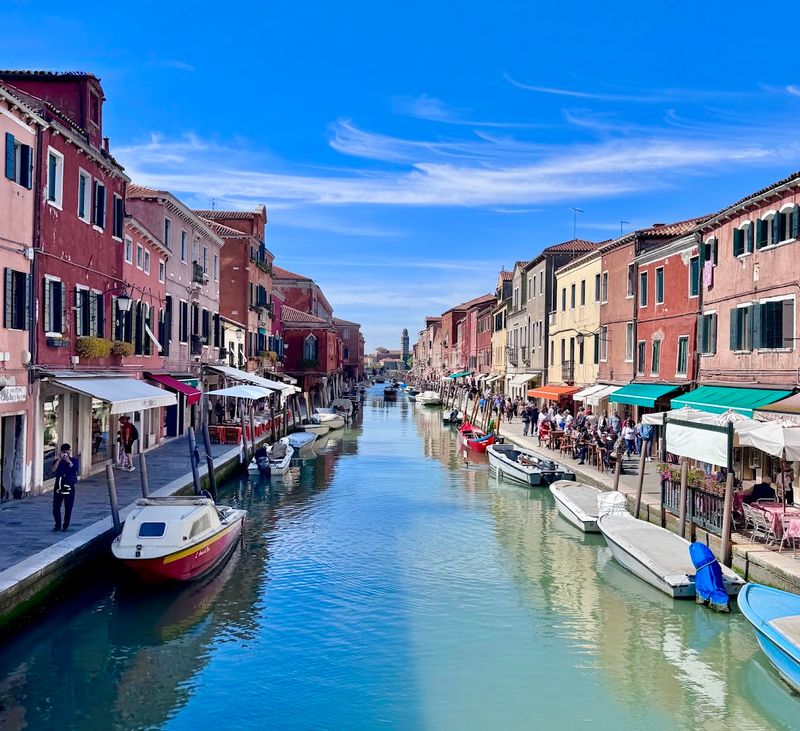
Out in the Venetian Lagoon, Burano looks like someone turned the color dial all the way up. Rows of small houses painted turquoise, pink, red, yellow, green, and purple line narrow pedestrian lanes, creating vivid reflections in the canals below.
The island is closely tied to fishing and traditional lace-making, so there is real substance beneath those photogenic facades. Local workshops still produce handmade lace, and you can visit the Museo del Merletto to see the craft up close.
The leaning bell tower of San Martino rises above the rooftops, giving the island a charming off-kilter landmark. Getting here requires a water bus from Venice, which takes about 40 minutes from Fondamente Nove.
Burano is most enjoyable in the morning before the day-trip crowds arrive. The entire island is small enough to explore on foot in a few hours, making it a very manageable and rewarding side trip.
Guanajuato, Mexico: Hillsides Covered With Rainbow-Colored Homes
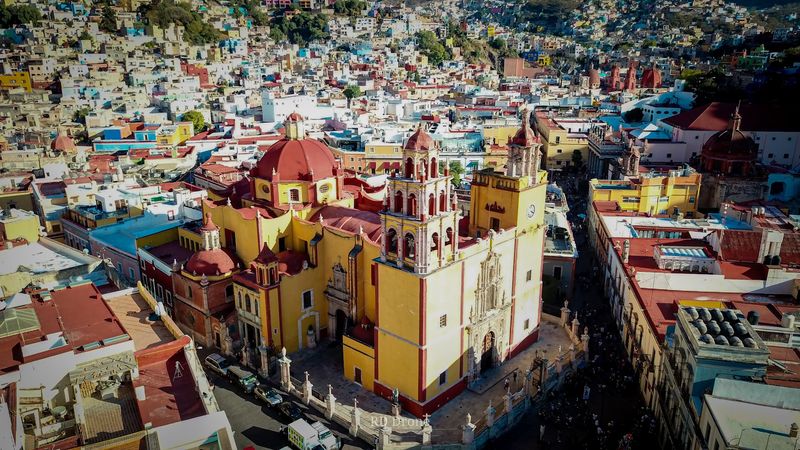
Stand at any elevated viewpoint in Guanajuato and you will see entire hillsides packed with buildings in orange, blue, yellow, pink, and green. The steep terrain stacks them almost on top of each other, creating a visual effect unlike most cities in North America.
At street level, cobblestone lanes wind between colonial plazas, underground tunnels, and narrow staircases. The city’s historic center carries UNESCO World Heritage status, earned through its remarkable preservation and its central role in Mexico’s mining history and independence movement.
Landmarks such as the Juárez Theater, the University of Guanajuato building, and the Alhóndiga de Granaditas add serious architectural weight to the colorful setting. The city also hosts the Festival Internacional Cervantino each October, drawing performers and visitors from around the world.
Even without a festival on the calendar, a simple walk through the alleys reveals unexpected viewpoints and dramatic changes in elevation at every turn.
Valparaíso, Chile: Murals Climbing Across The City’s Hills
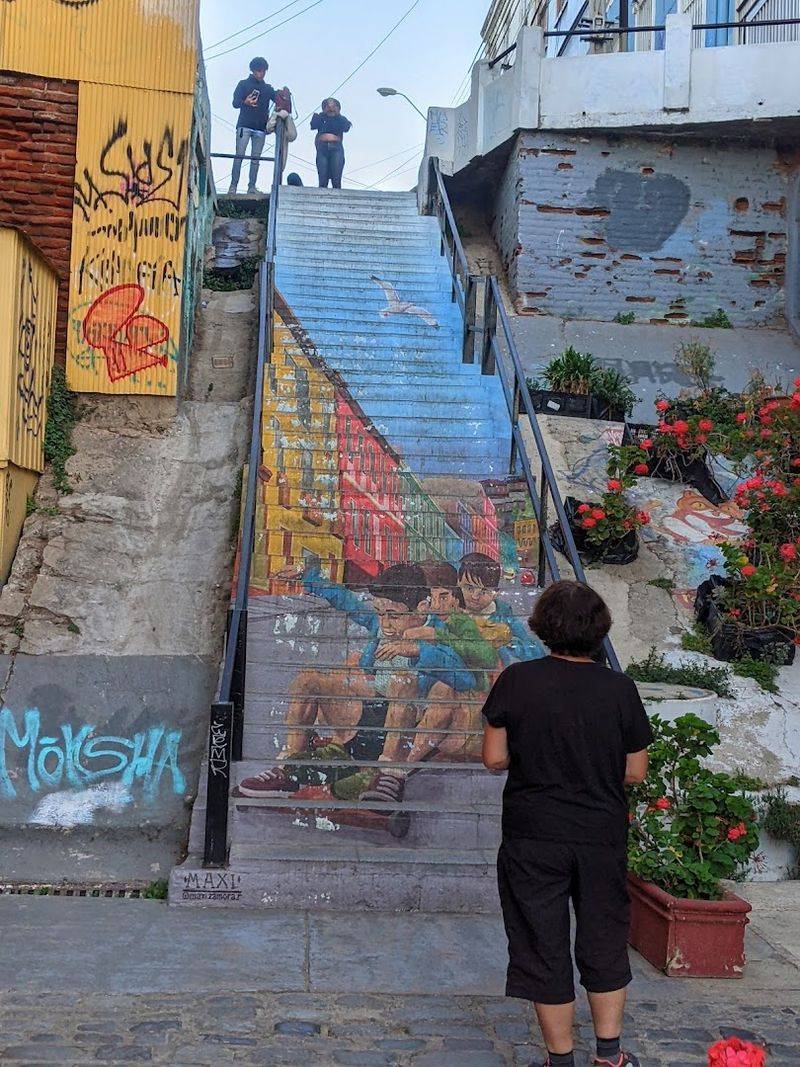
Valparaíso has earned a strong reputation as one of South America’s major street-art destinations, and the hills back it up completely. Cerro Alegre, Cerro Concepción, and Cerro Bellavista are covered with murals that stretch across entire building walls, stairways, and passageways.
Visitors can follow informal street-art routes past the Piano Stairs, small neighborhood galleries, and open lookout points. The Museo a Cielo Abierto on Cerro Bellavista is an open-air mural collection established in the early 1990s and considered one of the earliest organized outdoor art spaces of its kind in Chile.
Historic funiculars called ascensores connect the hillside neighborhoods to the lower city, and promenades such as Paseo Gervasoni and Paseo Yugoslavo offer harbor views worth stopping for. The artwork here is not static.
New pieces replace older ones regularly, which means the city looks a little different each time someone visits. That constant change keeps the streets genuinely interesting.
Chefchaouen, Morocco: A Medina Washed In Shades Of Blue
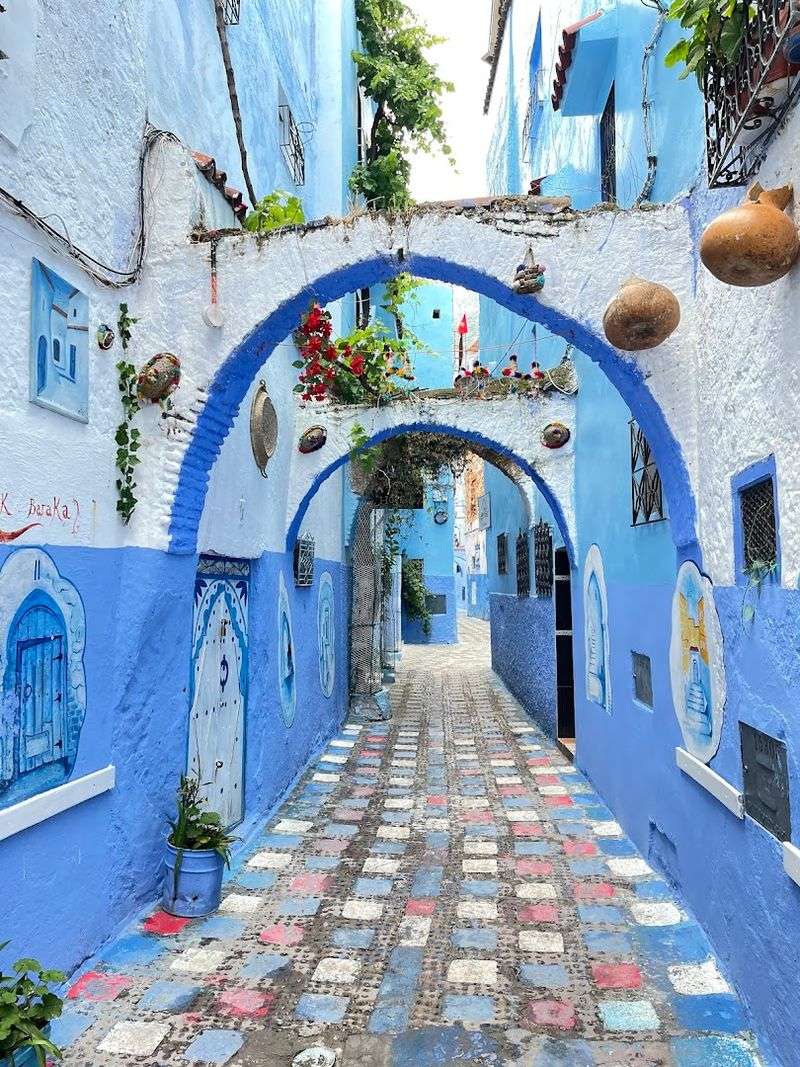
Built against the Rif Mountains in northern Morocco, Chefchaouen is one of those places where the color of the city becomes its identity. Pale sky blue, deep indigo, turquoise, and white wash across walls, staircases, arched doorways, and small flower-filled courtyards throughout the medina.
The narrow streets curve through a historic district filled with traditional workshops, family-run restaurants, craft shops, and residential homes. Outa El Hammam Square serves as the social center of the medina, with the city’s kasbah sitting at its edge.
The blue walls attract photographers from around the world, but Chefchaouen functions as a real working medina. Local residents carry out daily routines alongside tourism, and traditional crafts including wool weaving continue in the area.
The surrounding Rif Mountains also make Chefchaouen a starting point for hiking. The combination of mountain scenery, centuries of history, and one of the most consistently painted streetscapes anywhere makes this city genuinely memorable.
Willemstad, Curaçao: Caribbean Color Along The Waterfront
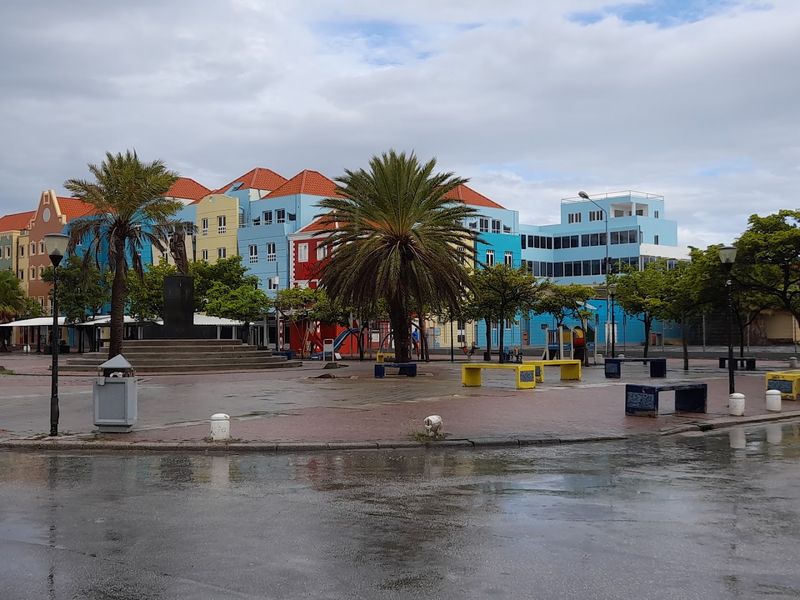
The Handelskade waterfront in Willemstad is one of the most photographed harbor scenes in the Caribbean, and the colors are the main reason. Tall buildings painted yellow, pink, orange, blue, and green line the water’s edge in the Punda district, reflecting Dutch colonial architecture filtered through Caribbean light.
Punda is largely walkable and contains shops, open-air markets, restaurants, museums, and historic buildings. The floating Queen Emma Bridge, a pedestrian pontoon bridge that swings open to allow boat traffic, connects Punda with the Otrobanda district across the harbor.
Otrobanda has its own character, with murals and colorful restored buildings extending the city’s visual appeal beyond the famous waterfront strip. Neighborhoods such as Scharloo and Pietermaai offer restored colonial mansions, galleries, boutique hotels, and additional street art.
Willemstad’s historic area holds UNESCO World Heritage status, recognized for its unique blend of Dutch urban planning and Caribbean building traditions that developed over several centuries.
Cape Town, South Africa: The Bold Houses Of Bo-Kaap
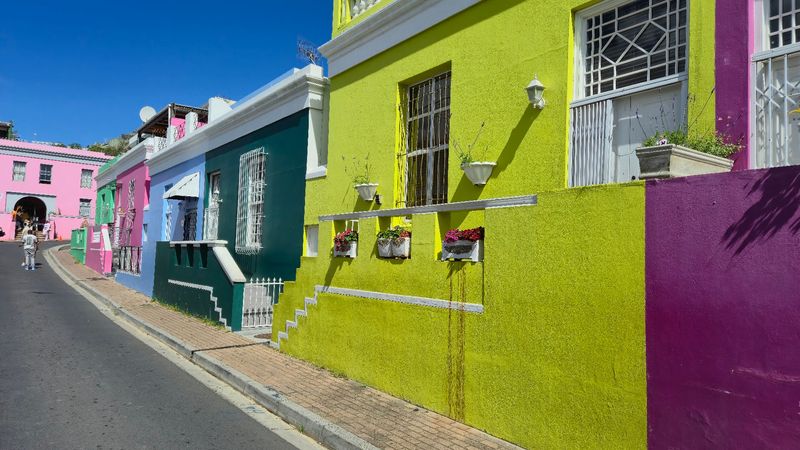
Bo-Kaap is one of Cape Town’s most recognized neighborhoods, and its steep cobblestone streets lined with flat-roofed houses painted in bold pinks, greens, yellows, and blues have become one of the city’s defining images. The colors are not decorative additions.
They carry history.
The neighborhood’s identity is rooted in Cape Malay culture and Cape Town’s Muslim community, with a heritage stretching back to the 18th century when enslaved people and political exiles from Dutch-controlled territories were brought to the Cape. Some of the oldest rental houses in the area date to that period.
The Bo-Kaap Museum on Wale Street tells the community’s story through preserved furniture, domestic objects, and cultural artifacts from the 18th and 19th centuries. Cape Malay food, including dishes such as bobotie and koesisters, can be found at local restaurants nearby.
Because Bo-Kaap is a living residential community, visitors are encouraged to explore respectfully and keep noise to a minimum.
Busan, South Korea: Hillside Art In Gamcheon Culture Village
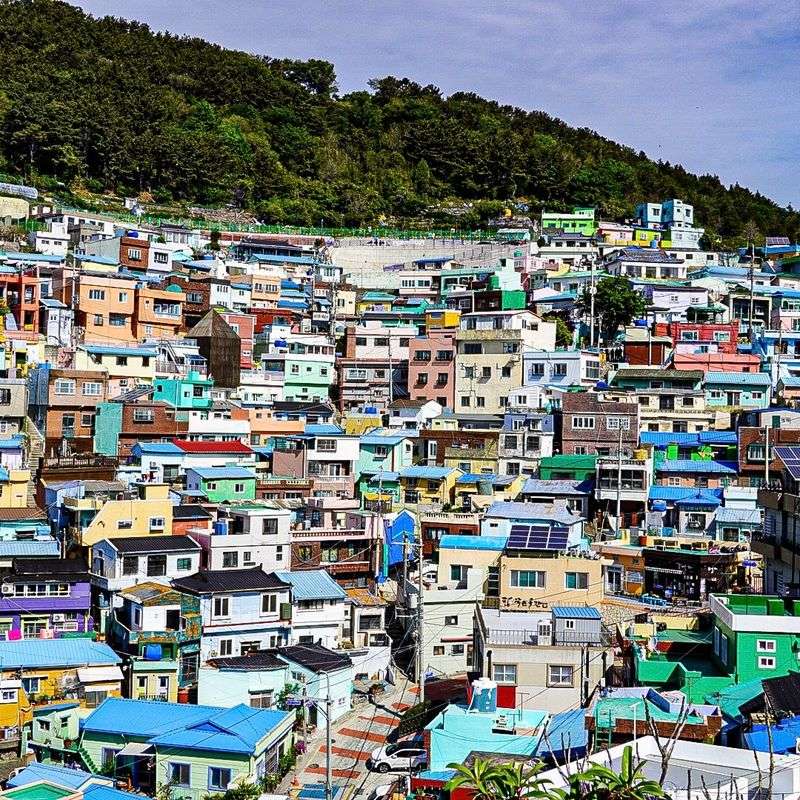
Gamcheon Culture Village clings to a steep hillside in western Busan, with layers of colorful houses arranged in tight rows that look almost like a staircase from a distance. The alleys between them contain murals, small sculptures, observation decks, and a scattering of cafés and cultural workshops.
The neighborhood has a layered history. It originally developed as a settlement for refugees during the Korean War.
Decades later, in 2009, a community art project brought in residents, artists, and students who began painting and decorating the area, gradually transforming it into one of Busan’s most-visited cultural spaces.
Visitors can pick up a stamp map from the information center at the village entrance and follow a marked alley route through the main highlights. The route passes notable murals and small galleries, but it is worth remembering that many of these buildings are still private homes.
The village works best as a slow, curious walk rather than a rushed tour.
Semarang, Indonesia: A Former Neighborhood Reimagined As Kampung Pelangi
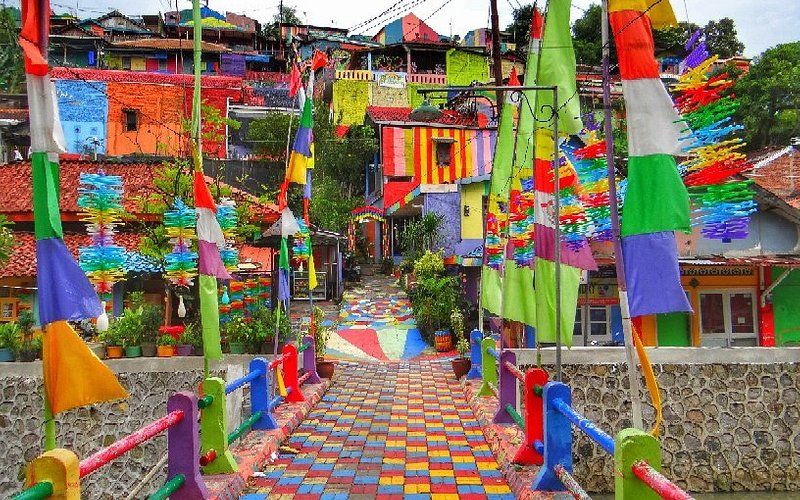
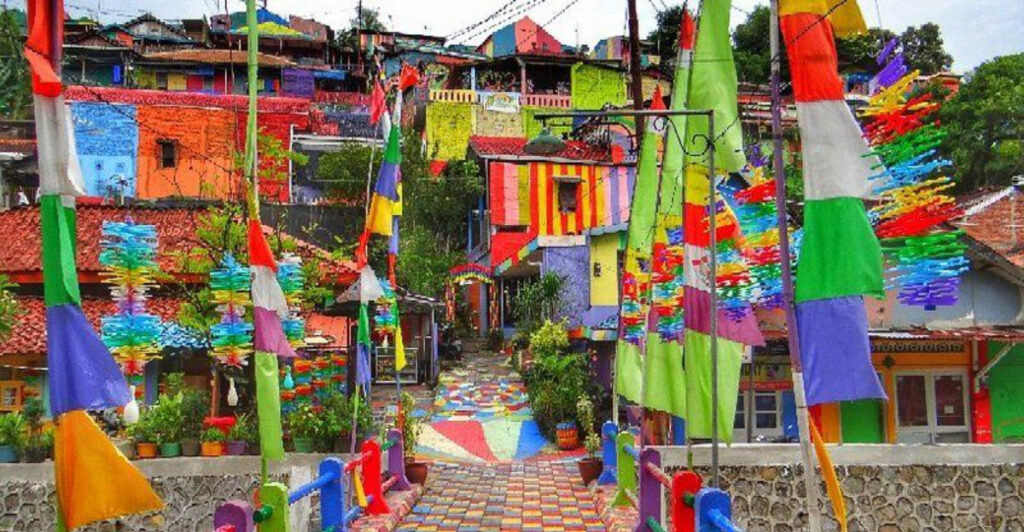
Kampung Pelangi translates to Rainbow Village, and the name fits perfectly. Located near the Kalisari flower market in Semarang, this hillside neighborhood was transformed when houses, retaining walls, rooftops, stairways, and bridges were painted in bold combinations of pink, blue, yellow, purple, orange, and green.
The project began as an environmental renovation effort aimed at improving the area’s appearance and encouraging local economic activity. Before the transformation, the neighborhood was considered one of the city’s neglected areas.
The painting project changed the community’s visibility and gave residents a reason to maintain and take pride in their surroundings.
Murals and decorative patterns now fill the tightly packed lanes, and elevated sections of the neighborhood provide views across the multicolored rooftops below. Unlike a theme park or tourist-only zone, Kampung Pelangi remains a functioning residential community.
Visitors walk through an active neighborhood where families live, children play, and everyday life continues alongside the vibrant and constantly visible color.
Jodhpur, India: Blue Alleys Beneath Mehrangarh Fort
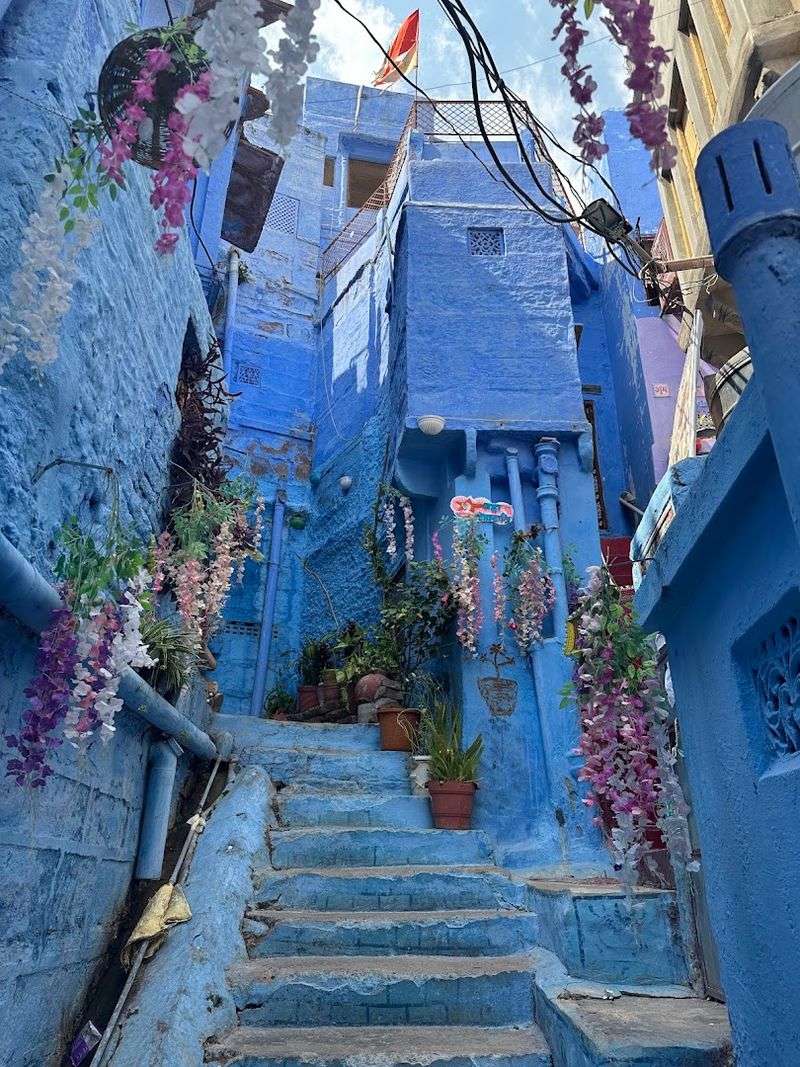
Jodhpur earned the nickname Blue City honestly. Hundreds of homes in the historic quarters are painted in various shades of blue, from pale powder to deep cobalt, creating a color pattern that spreads organically across the dense urban landscape rather than being confined to one designated street.
Some of the most recognizable lanes are found around Navchowkiya and Chandpole, where narrow alleys, staircases, small courtyards, and neighborhood shrines all carry the blue treatment. Walking through these areas feels like exploring a living neighborhood rather than a staged attraction.
Mehrangarh Fort dominates the view from almost anywhere in the old city, rising approximately 410 feet above the surrounding landscape. The fort itself contains museums, galleries, and preserved royal chambers open to visitors.
The combination of the blue city below and the massive sandstone fort above creates a visual contrast that is hard to match anywhere else in Rajasthan. Sunrise and late afternoon light are the best times to photograph both.
Cartagena, Colombia: Colonial Streets Filled With Flowers And Color
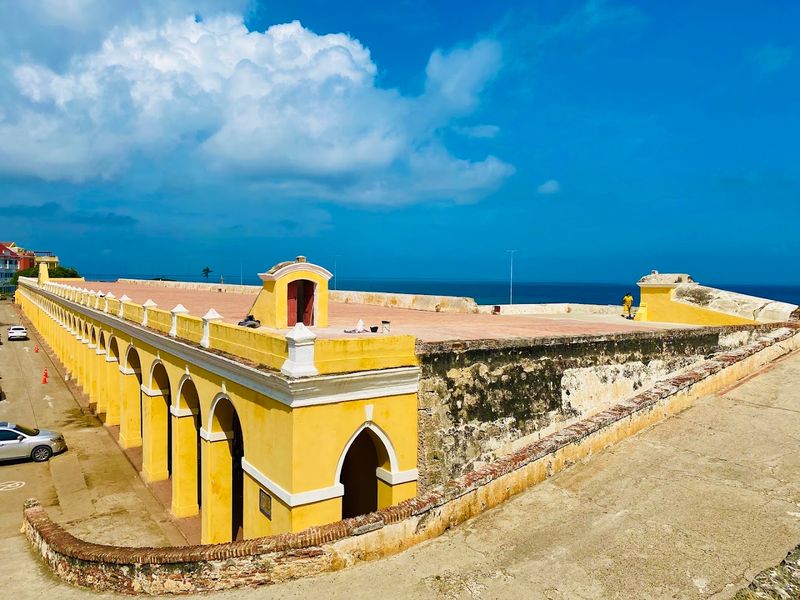
Cartagena’s historic walled center manages to feel both preserved and genuinely alive. Colonial houses painted coral, yellow, blue, pink, and orange line the narrow streets, and wooden balconies on the upper floors are frequently decorated with flowering plants that spill over the railings.
The streets can be explored on foot, by bicycle, or by traditional horse-drawn carriage. Former convents and grand mansions have been converted into hotels, restaurants, museums, and cultural spaces, keeping the historic architecture in active daily use rather than behind velvet ropes.
The city’s massive stone fortifications, including the walls surrounding the old town and the fortress of Castillo San Felipe de Barajas, add a dramatic contrast to the colorful residential streets inside. Caribbean sunlight plays an important role here.
The intensity of the light at different times of day changes how the painted facades appear, making the same street look notably different in the morning compared to late afternoon. Evening walks have their own appeal as well.
San Juan, Puerto Rico: Pastel Facades And Blue Cobblestones
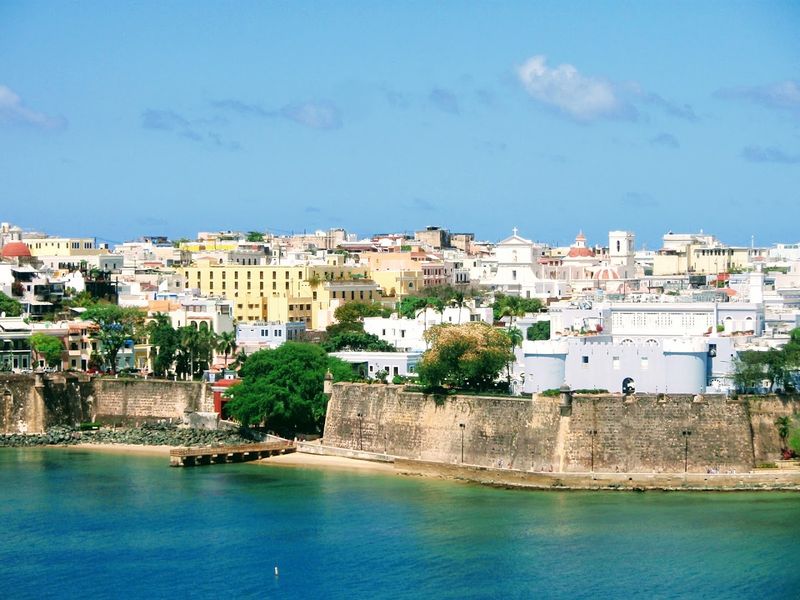
Old San Juan has a very specific visual identity. Pastel-colored colonial buildings in mint, peach, lavender, yellow, and turquoise line streets paved with distinctive blue-toned cobblestones.
Those cobblestones were made from slag, a byproduct of iron smelting, and were brought to Puerto Rico as ballast in Spanish ships before being repurposed as paving material.
Calle Fortaleza is one of the most photographed streets in the district, but the color and architecture continue throughout the neighborhood. Walking between Plaza de Armas, San Juan Cathedral, and La Fortaleza reveals decorated balconies, quiet plazas, and layers of Spanish colonial history at nearly every block.
The Spanish fortifications at Castillo San Felipe del Morro and Castillo San Cristóbal are among the largest in the Americas and provide sweeping views over the Atlantic Ocean and San Juan Bay. Old San Juan is an active district with restaurants, shops, government buildings, and more than 500 years of recorded history woven into its streets.
Buenos Aires, Argentina: Caminito’s Painted Street Museum
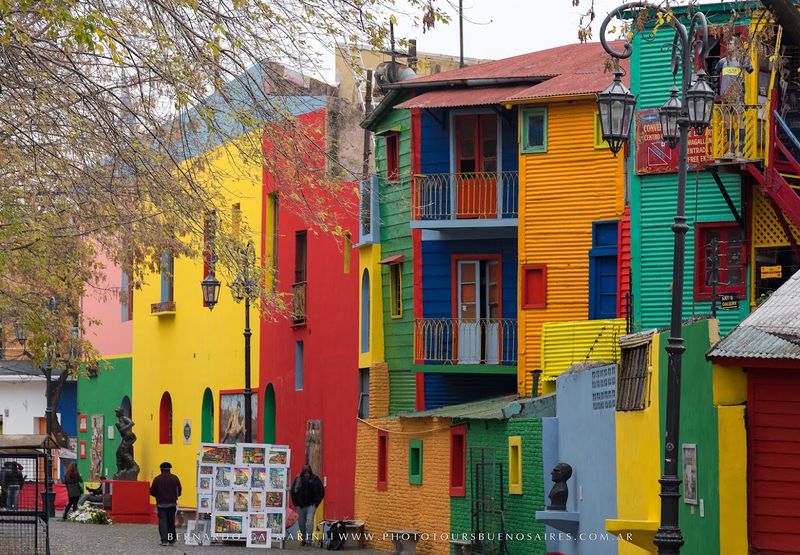
Caminito is technically a street, but it functions more like an outdoor museum. Located in Buenos Aires’ La Boca neighborhood, this short pedestrian lane is lined with corrugated-metal buildings painted in contrasting blocks of red, yellow, green, blue, and orange.
The look reflects the style of immigrant housing historically associated with the port district.
The street follows the path of a former stream and railway line. When the railway closed, the area fell into disuse until the 1950s, when neighbors began working to revive it.
Artist Benito Quinquela Martín played a key role in transforming the surrounding tenement buildings into colorful painted canvases, giving the neighborhood a new identity.
Today, Caminito includes outdoor artwork, tango performers, craft vendors, and restaurants along its short stretch. It is one of the most-visited spots in Buenos Aires, so mornings tend to be less crowded than afternoons.
The nearby Fundación Proa contemporary art center adds another cultural dimension to the La Boca visit.
Tirana, Albania: Apartment Blocks Repainted As Urban Canvases
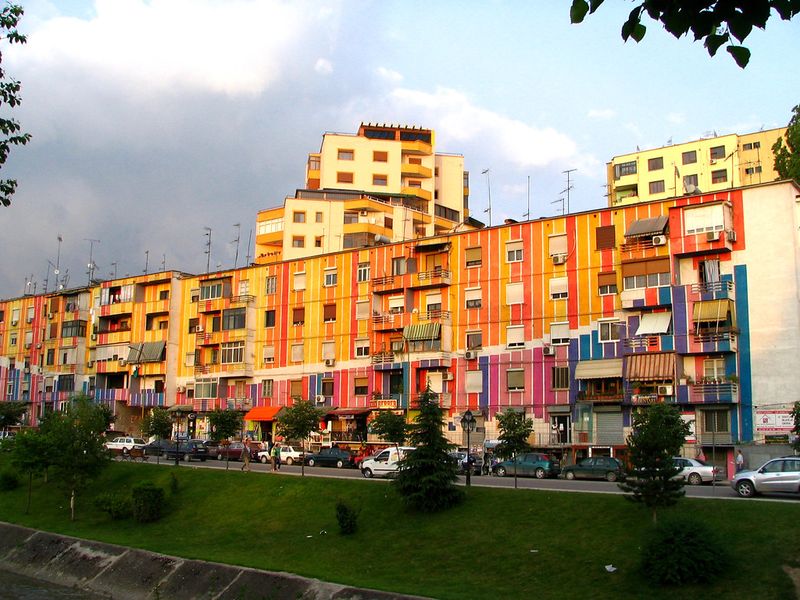
Tirana’s colorful building transformation began in the early 2000s and stands as one of the more unusual urban design stories in Europe. What was once a city of gray communist-era apartment blocks became something far more visually striking after large-scale painting projects introduced bold colors, geometric patterns, and murals across the capital.
Blue, orange, purple, yellow, green, and red now appear on buildings in several parts of the city. Colorful structures can be found along the Unaza ring road, Rruga e Kavajës, and the Shallvare apartment blocks, among other areas.
Newer murals have continued expanding the idea into additional neighborhoods.
What makes Tirana particularly interesting is the architectural mix surrounding all this color. Ottoman remnants, Italian rationalist planning from the 1930s, communist-era concrete towers, and modern glass buildings sit side by side.
The painted facades do not erase that complicated history. They layer something new on top of it, which gives the city a genuinely distinctive character that is still developing today.
Guatapé, Colombia: Facades Decorated With Colorful Zócalos
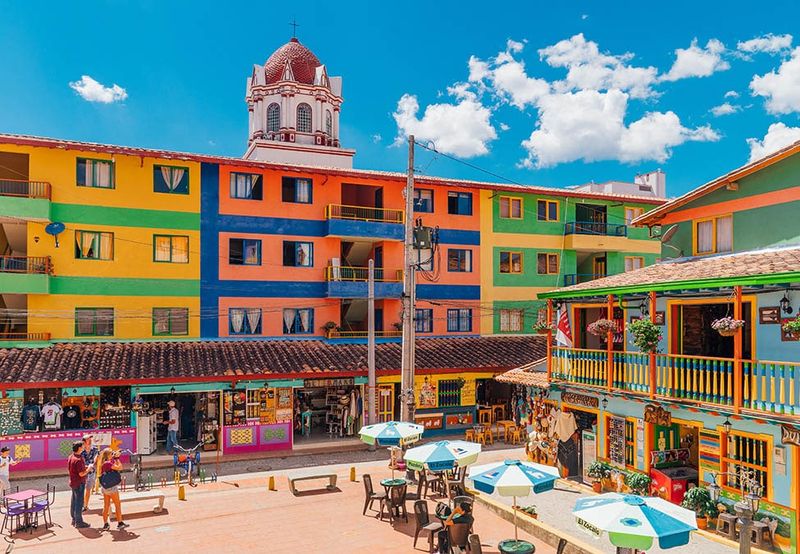
Guatapé might be a small Colombian town, but its streets carry one of the most distinctive decorative traditions in the country. Nearly every building features zócalos, the sculpted or painted panels that run along the lower portion of the facade, turning each structure into a small piece of folk art.
The tradition dates to the early 20th century. Designs cover a wide range of subjects including local occupations, animals, plants, mountain landscapes, family histories, and everyday objects such as Colombia’s famously decorated chiva buses.
No two panels are exactly alike, which makes a slow walk through the town center genuinely worth taking time over.
Beyond the town itself, the nearby Peñol-Guatapé Reservoir offers boat tours and waterfront views, while the massive Piedra del Peñol, a single granite monolith rising from the water, can be climbed via a staircase built into a natural crack in the rock. The view from the top over the surrounding lakes and green islands adds a dramatic natural backdrop to a town already full of handmade beauty.
Share this story