Some animals exist in only one place on the entire planet. They evolved in isolation, adapted to a specific landscape, and never spread anywhere else.
Seeing them in the wild means traveling to their one corner of the Earth, and that journey is unlike anything a zoo or documentary can offer. From a tiny island off the coast of Australia to the cloud forests of Uganda, these destinations give you a front-row seat to wildlife that cannot be found anywhere else.
Whether you are a serious nature traveler or just someone who wants a trip that feels genuinely unforgettable, this list covers fourteen places where the animals themselves are the whole point of going.
Punta Espinoza, Fernandina Island, Ecuador
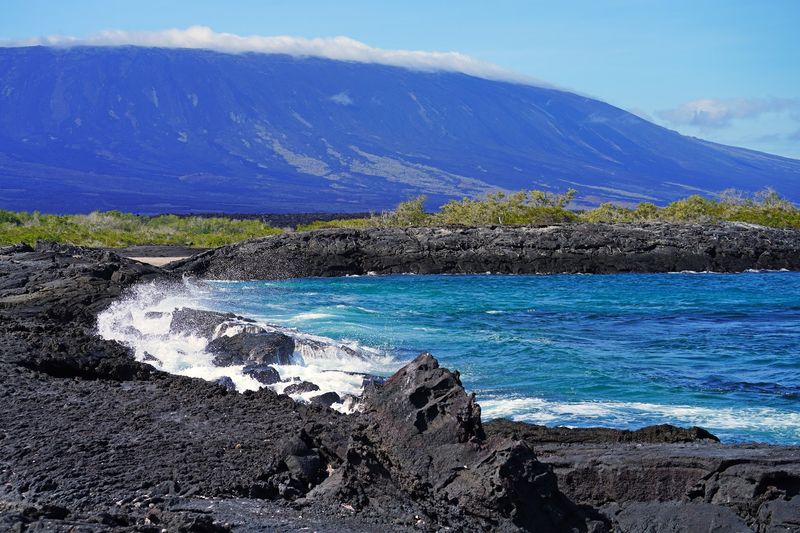
The black lava fields of Punta Espinoza look like another planet, and the creatures living on them only add to that feeling. Marine iguanas, the world’s only ocean-going lizards, pile onto the rocks in numbers that can genuinely stop you in your tracks.
They are prehistoric-looking, salt-crusted, and completely unbothered by human visitors.
These animals feed by diving into the cold Pacific to graze on algae, then return to the lava to warm up in the sun. Watching one slide off a rock and into the sea is one of those wildlife moments that stays with you.
The site also supports Galapagos penguins and flightless cormorants, two more species whose ranges are extraordinarily limited.
Fernandina Island is one of the most volcanically active spots in the Galapagos archipelago, which means getting here requires a guided cruise or tour. That relative difficulty is part of what keeps the wildlife so undisturbed.
Komodo National Park, East Nusa Tenggara, Indonesia
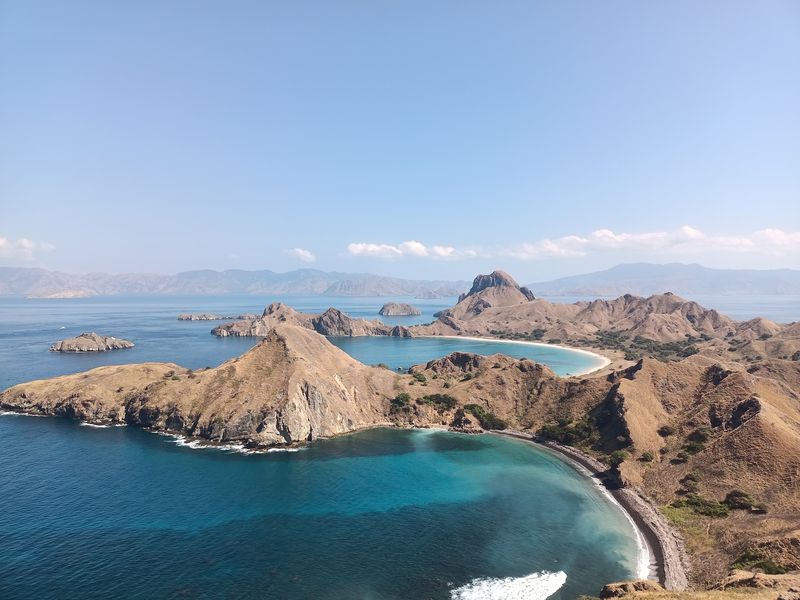
Komodo dragons are the largest living lizards on Earth, and they exist naturally only on a handful of Indonesian islands, most notably Komodo and Rinca inside Komodo National Park. UNESCO recognized the park as a World Heritage Site partly because of how uniquely these animals belong to this place and nowhere else.
Adults can reach three meters in length and are capable hunters. Watching one move through the dry savanna with that low, deliberate stride is a genuinely different experience from observing most wildlife.
Rangers accompany all visitors on trails, which is both a safety measure and a way to learn more about the dragons’ behavior.
The park covers both land and marine areas, so the trip often includes snorkeling and boat travel between islands. Visiting from Labuan Bajo on the island of Flores is the standard entry point, with day trips and liveaboard options both widely available for different travel styles.
Rottnest Island, Western Australia, Australia
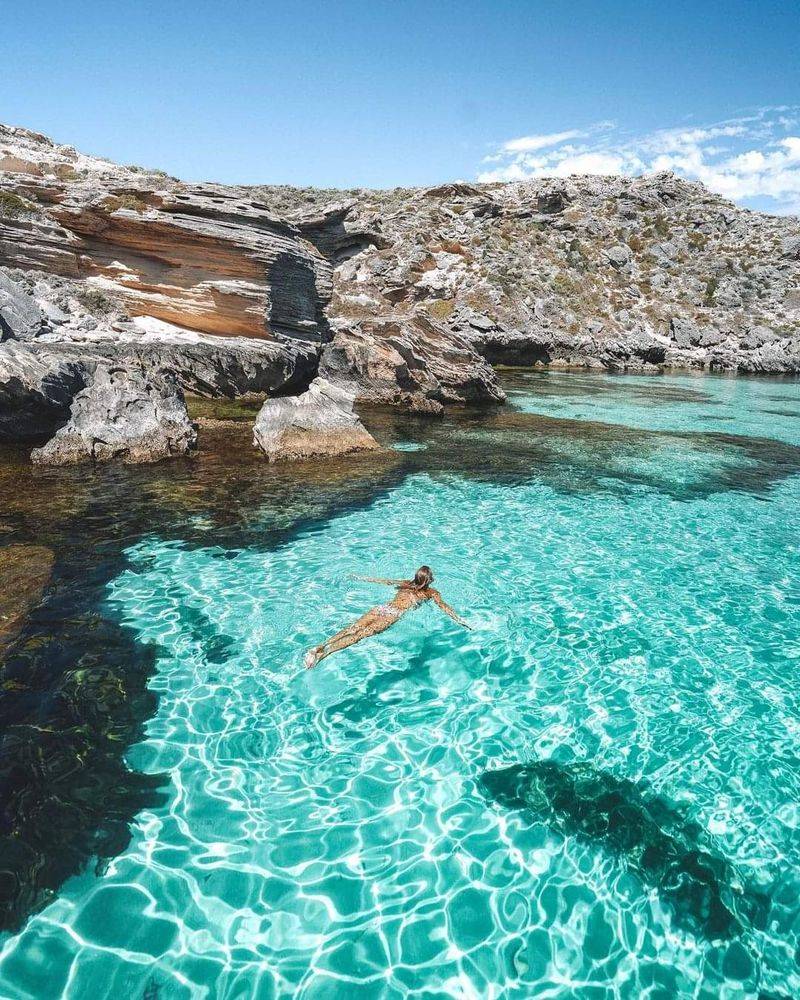
Quokkas have become internet-famous for their seemingly cheerful expressions, but seeing one in person on Rottnest Island is a completely different experience from scrolling through photos. These small marsupials wander through the island’s woodland and scrub with a confidence that comes from generations of living alongside curious visitors.
Rottnest Island, known as Wadjemup in Noongar language, holds the world’s largest wild quokka population. Early mornings and late afternoons tend to offer the best sightings, especially near the main settlement area.
A small number of quokkas survive on the Western Australian mainland, but the island remains by far the most reliable place to find them.
The island itself is car-free, which makes getting around by bicycle or on foot part of the experience. Ferries run regularly from Perth and Fremantle, putting this wildlife encounter within easy reach of one of Australia’s most livable cities.
Rottnest is open to visitors year-round.
Jigokudani Yaen-Koen, Nagano, Japan
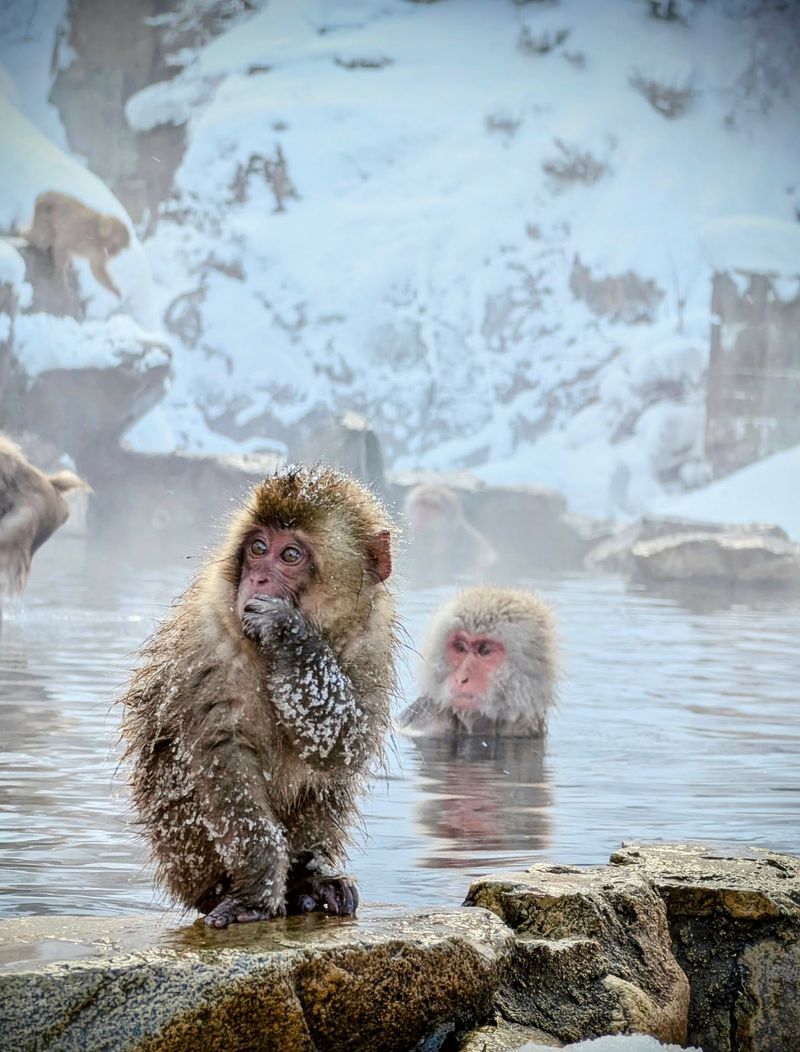
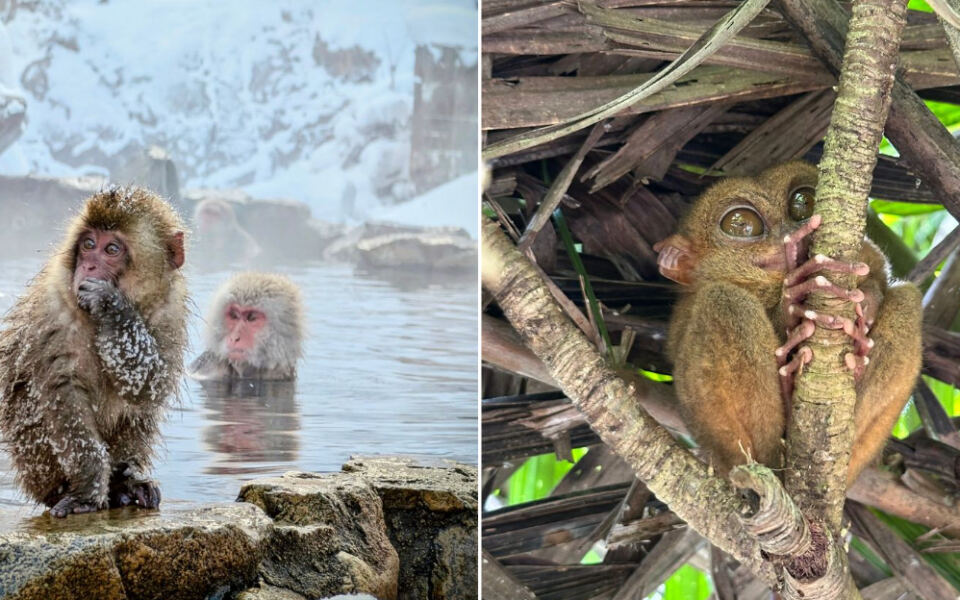
Japanese macaques are the northernmost-living non-human primates in the world, and they are native exclusively to Japan. Jigokudani Yaen-Koen in the mountains of Nagano Prefecture offers one of the most striking ways to observe them, particularly in winter when wild troops soak in natural hot springs surrounded by snow.
The behavior started on its own decades ago and has become a defining characteristic of this particular troop. The park’s name translates roughly to “Hell’s Valley,” a reference to the steam rising from the geothermal landscape, and the contrast of warm-looking monkeys in a snow-covered mountain setting is exactly as remarkable as it sounds.
The park is accessed via a walking trail of roughly 1.6 kilometers from the nearest parking area, which keeps the environment calm and manageable. Daily operating hours and monkey activity updates are posted on the park’s official website.
Winter visits from December through March offer the most iconic viewing conditions.
Maria Island National Park, Tasmania, Australia
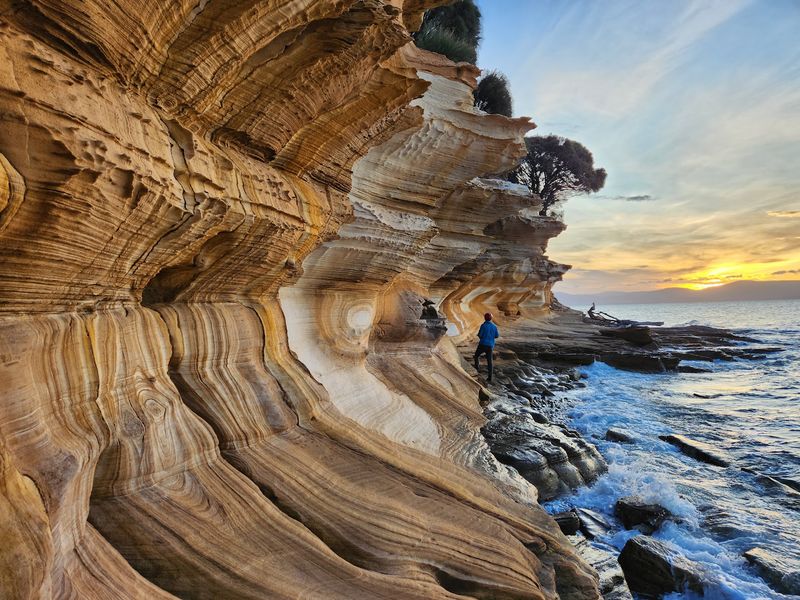
Wild Tasmanian devils are now found only in Tasmania, and Maria Island has become one of the more reliable places to encounter them in a protected setting. Devils were introduced to the island as part of a conservation response to devil facial tumour disease, a condition that severely reduced mainland Tasmanian populations over recent decades.
Maria Island is free of foxes and feral cats, which makes it a safer environment for the species to establish and reproduce. Tasmania’s Parks and Wildlife Service lists the island among the recommended locations for spotting devils, particularly around dawn and dusk when the animals are most active.
Getting to Maria Island requires a passenger ferry from Triabunna, a small coastal town about 85 kilometers northeast of Hobart. The island has no cars and no shops, which gives the whole visit a refreshingly stripped-back quality.
Visitors can camp overnight to increase their chances of spotting devils after dark.
Table Mountain National Park, Cape Town, South Africa
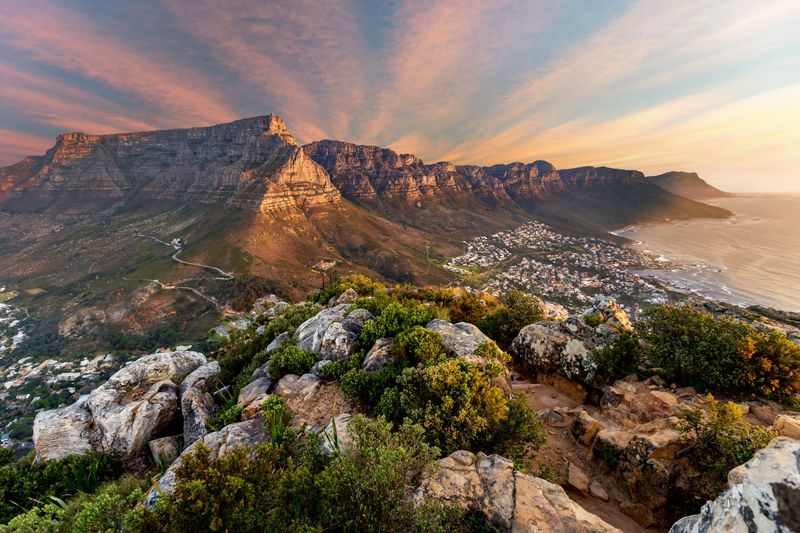
Table Mountain draws millions of visitors every year for its views over Cape Town, but the mountain’s most exclusive resident is one most tourists never think to look for. The Table Mountain ghost frog is an endangered amphibian found nowhere else on Earth, living in and around the cold, fast-flowing streams and shaded ravines of this specific mountain.
SANParks identifies it as one of the park’s endemic species, and its range is genuinely tiny even by the standards of endemic wildlife. The frog depends on particular stream conditions that exist only within a small area of the Cape Peninsula, which makes its survival closely tied to the health of this single ecosystem.
Spotting one requires patience, timing, and ideally a guided visit with someone who knows where to look. The broader park is rich with fynbos plant life and other Cape-endemic species, making any visit worthwhile even if the ghost frog stays hidden.
Table Mountain National Park is open year-round.
Philippine Tarsier Sanctuary, Corella, Philippines
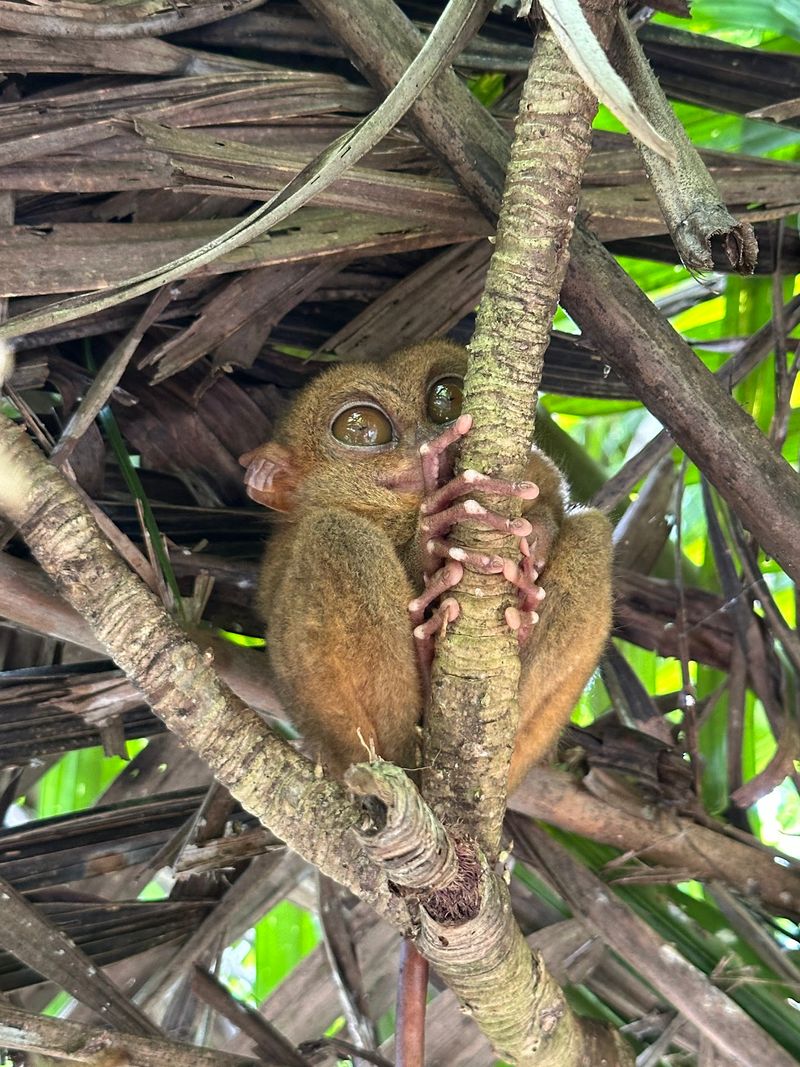
Philippine tarsiers are among the smallest primates in the world, and their enormous eyes relative to their body size make them look almost fictional. The Philippine Tarsier Sanctuary in Corella, on the island of Bohol, was established specifically to protect these animals and their forest habitat while allowing carefully managed visits from the public.
Tarsiers are strictly nocturnal hunters, feeding on insects and small vertebrates. They are also highly sensitive to noise and stress, which is why the sanctuary enforces quiet behavior and keeps visitor numbers manageable.
The approach here prioritizes the animals’ welfare over spectacle, which is actually what makes the experience more meaningful.
Bohol’s provincial tourism office continues to list the sanctuary as one of Corella’s main attractions. Getting there from Tagbilaran City, Bohol’s capital, takes roughly 30 minutes by road.
A visit pairs naturally with other Bohol highlights like the Chocolate Hills and the Loboc River, making it a practical addition to any Bohol itinerary.
Bako National Park, Sarawak, Malaysia
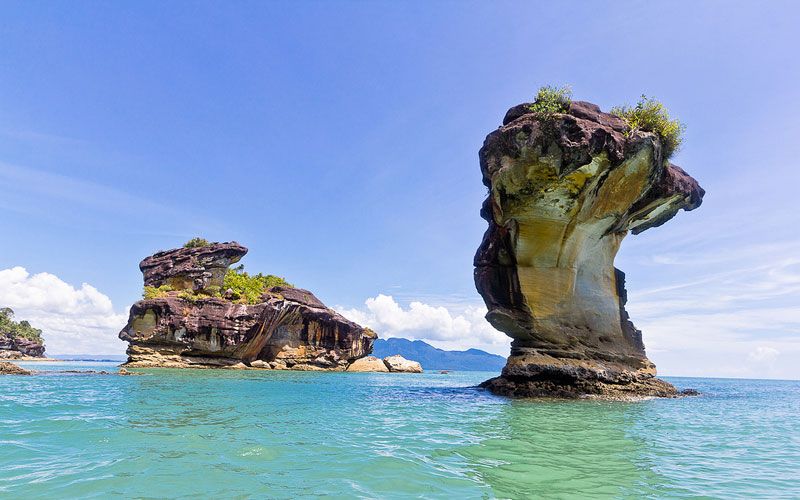
Proboscis monkeys occur naturally only on the island of Borneo, and Bako National Park is consistently regarded as one of the most accessible places to find them. The park sits on a peninsula near Kuching, the capital of Sarawak, and the boat ride to the park entrance is itself a decent introduction to the coastal forest environment these monkeys call home.
They tend to forage in mangroves and coastal forest, especially in the early morning and late afternoon. The area around park headquarters and several established trails offers regular sightings.
Sarawak Tourism currently lists Bako as open daily and specifically highlights proboscis-monkey watching among the park’s main draws.
Beyond the monkeys, Bako protects bearded pigs, silvered leaf monkeys, and a range of endemic plant communities including carnivorous pitcher plants. There are basic accommodations inside the park for those who want to stay overnight, which significantly increases the range of wildlife encounters.
Day trips from Kuching are also common.
Andasibe-Mantadia National Park, Alaotra-Mangoro, Madagascar
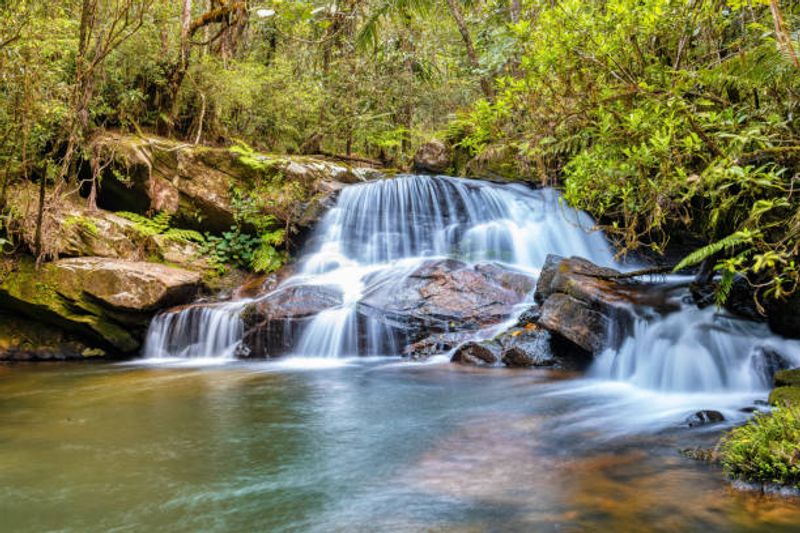
Madagascar separated from the African continent roughly 160 million years ago, and the animals that evolved there since then exist nowhere else. Andasibe-Mantadia National Park protects some of the most striking of those species, led by the indri, the largest living lemur and one of the most vocal animals in the forest.
The indri’s territorial call carries for kilometers through the rainforest canopy and is one of those sounds that genuinely stays with you. Its black-and-white coat and upright posture make it look unlike any other primate.
The park also shelters diademed sifakas, multiple species of endemic chameleons, and a range of frogs and birds found only on Madagascar.
Andasibe is located about 140 kilometers east of Antananarivo, making it one of the more reachable parks in Madagascar’s national system. Guided walks are the standard way to explore, and local guides are exceptionally good at locating wildlife that casual visitors would almost certainly miss on their own.
Zealandia Te Mara a Tane, Wellington, New Zealand
Tuatara look like lizards but belong to an entirely separate reptile lineage with no living relatives anywhere else on Earth. Their closest evolutionary relatives vanished roughly 60 million years ago, which makes every living tuatara a genuinely ancient presence.
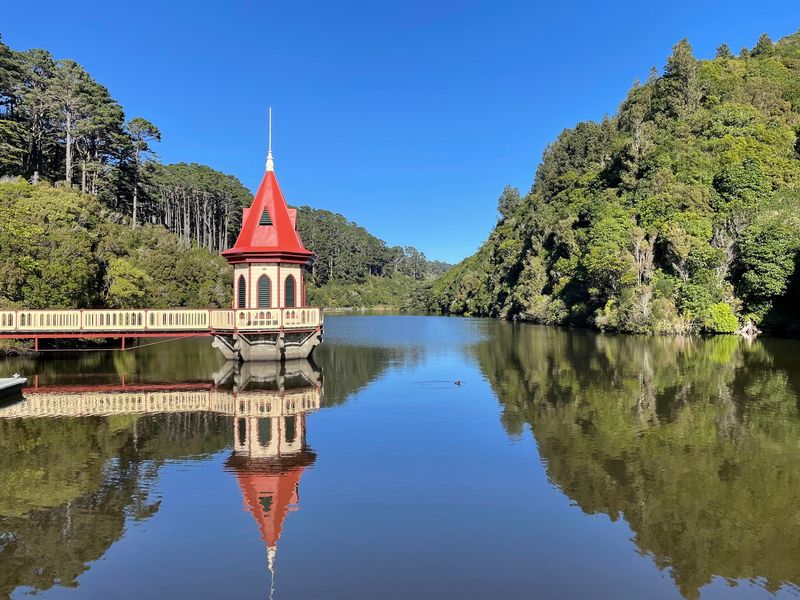
Zealandia Te Mara a Tane, a fenced ecosanctuary in the hills above Wellington, has successfully returned tuatara to mainland New Zealand after predators had pushed them to offshore islands for centuries.
Visitors can occasionally spot tuatara basking near trails and burrows during the day, though the animals are more active at night. The sanctuary offers both daytime and guided evening tours, with the evening option specifically designed to increase wildlife sightings.
Zealandia is currently open to visitors and sits within a short drive of central Wellington.
The sanctuary also supports kaka parrots, little spotted kiwi, and other New Zealand endemics in a predator-free environment. For a relatively urban wildlife experience, the range of native species concentrated here is genuinely impressive.
Simien National Park, Amhara Region, Ethiopia
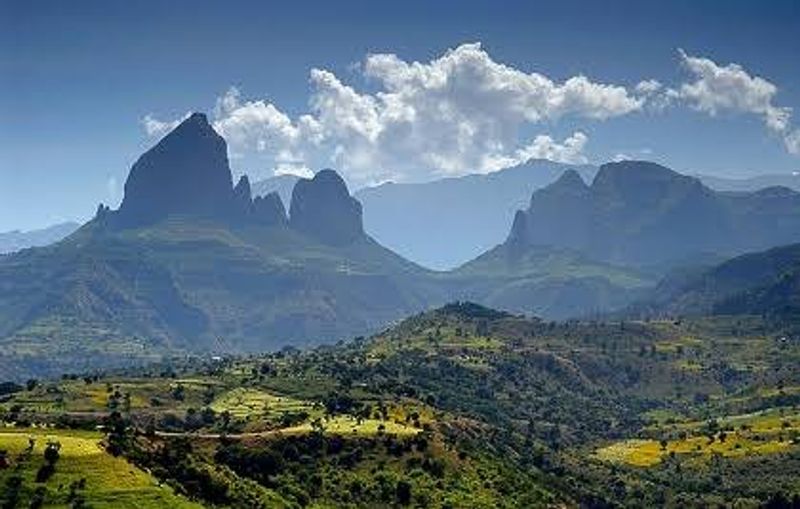
The Simien Mountains of northern Ethiopia are among Africa’s most dramatic highland landscapes, and they are the only place on Earth where the Walia ibex exists. UNESCO identifies this endangered wild goat as endemic specifically to these mountains, and the population has been recovering through conservation efforts over recent decades.
Walia ibex are typically found on the steep cliffs and rocky escarpments of the park, where their sure-footedness gives them an obvious advantage over most predators. Sightings from the main viewpoints and trekking routes are relatively reliable because the ibex have grown accustomed to human presence over time.
The park also supports gelada baboons and Ethiopian wolves, two other animals restricted to Ethiopian highland habitats. Geladas in particular are often seen in large troops on the open grasslands near the cliffs.
Simien National Park is a UNESCO World Heritage Site and remains accessible via Gondar, with trekking routes ranging from day hikes to multi-day expeditions through the highland terrain.
Bwindi Impenetrable National Park, Kanungu District, Uganda
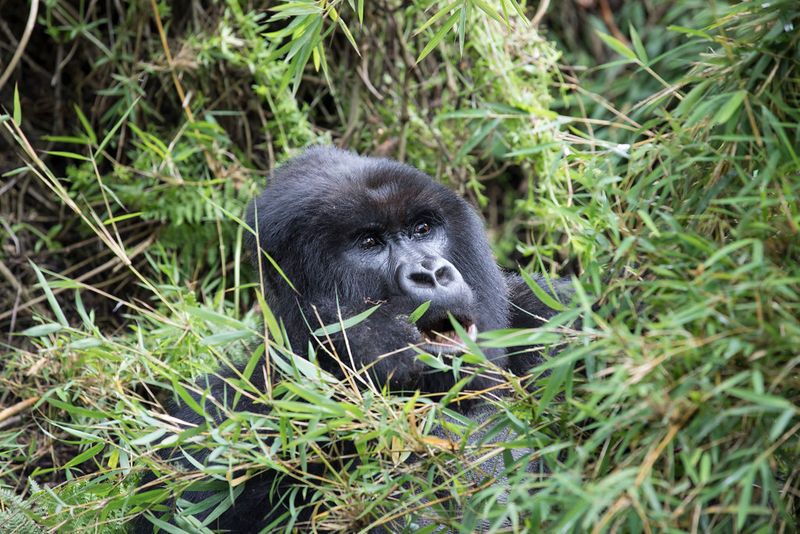
Mountain gorillas survive in the wild in only two small areas of Central Africa, and Bwindi Impenetrable National Park in southwestern Uganda holds roughly half of the world’s entire population. That concentration makes Bwindi one of the most significant wildlife destinations on the planet, not just in Africa.
Uganda Wildlife Authority runs regulated gorilla-tracking treks across four sectors of the park: Buhoma, Ruhija, Rushaga, and Nkuringo. Permits are required and limit the number of visitors per gorilla group per day, which keeps the experience meaningful and protects the animals from excessive human contact.
Treks can last anywhere from one to several hours depending on where the gorillas have moved.
Bwindi is a dense, hilly rainforest, and the terrain can be genuinely demanding. Going with an experienced guide and a reputable operator makes a real difference in both safety and the quality of the encounter.
The surrounding communities have been central to conservation efforts, and many lodges operate with strong local partnerships.
Christmas Island National Park, Christmas Island, Australia
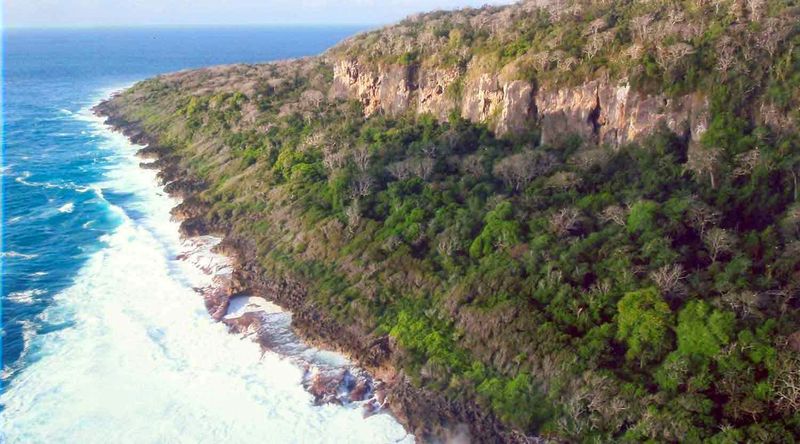
Once a year, tens of millions of red crabs emerge from the forests of Christmas Island and begin moving toward the coast to breed. The migration covers roads, beaches, cliffs, and practically every surface in between, creating one of the most visually overwhelming animal events on Earth.
Parks Australia manages road closures, crab bridges, and specially built underpasses to protect the crabs during their journey.
Christmas Island red crabs are endemic to Christmas Island and neighboring Cocos Keeling Islands, and the migration’s scale has no real comparison anywhere else. The timing varies by year and is tied to lunar cycles, so checking Parks Australia’s official updates before booking is important for anyone hoping to witness the event.
Outside migration season, Christmas Island National Park still covers a significant portion of the island and supports endemic birds, reptiles, and other wildlife. The island is an Australian territory in the Indian Ocean, reachable by flights from Perth.
It is genuinely remote, which is part of what keeps the ecosystem so intact.
Black River Gorges National Park, Mauritius
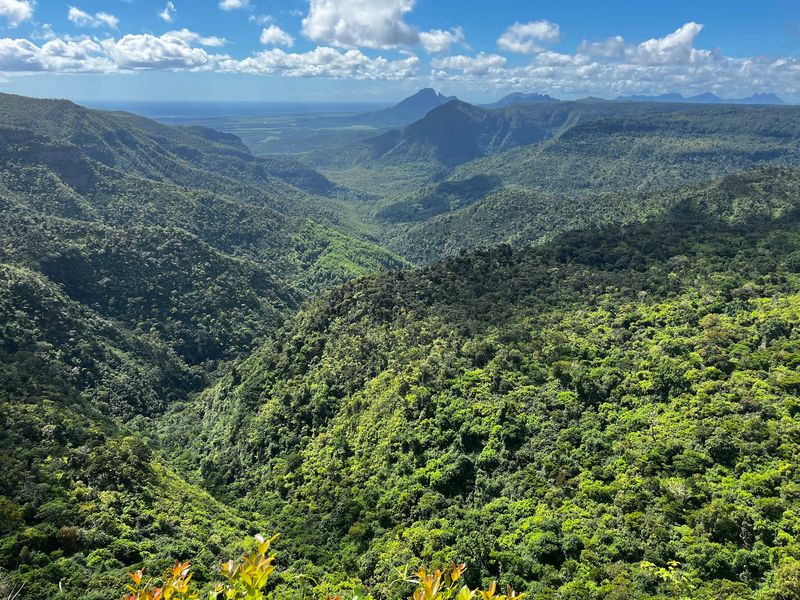
The pink pigeon came so close to disappearing that by the 1990s, fewer than ten individuals were believed to survive in the wild. Conservation work led by the Mauritian Wildlife Foundation reversed that trajectory, and several populations now live within Black River Gorges National Park.
Areas including Petrin, Brise Fer, and Pigeon Wood are among the locations where the species has been documented.
Pink pigeons are endemic to Mauritius, which means seeing one in its native forest is an encounter that simply cannot be replicated anywhere else on the planet. The birds are recognizable by their pale pinkish plumage, reddish bill, and relatively tame behavior around forest visitors who stay quiet and patient.
Black River Gorges National Park covers about 6,574 hectares of native forest in the southwestern part of Mauritius and is the island’s largest protected area. Trails are accessible from multiple entry points, and the park also protects the endangered echo parakeet, another Mauritian endemic that has similarly benefited from targeted conservation programs.
Share this story