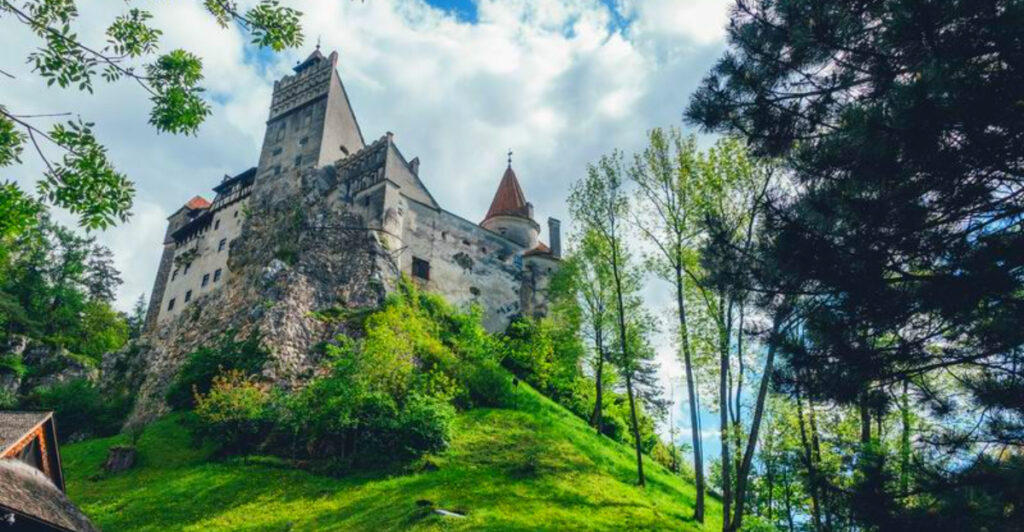
Europe is home to hundreds of castles, but only a select few have that certain quality that makes you instinctively check the corners of every room before entering. We are talking about places with towers that seem to lean just slightly too far inward, corridors that stretch into unexpected darkness, and histories so layered with legend and conflict that the facts alone are enough to raise an eyebrow. Some of these fortresses have direct ties to the Dracula story, while others simply look the part so convincingly that Hollywood has already come calling. From a castle built inside a cliff face to a Gothic masterpiece that once imprisoned a feared warlord, these fourteen real European castles have the architecture, the history, and the atmosphere to make any vampire feel completely at home.
Read on to find out which one tops the list.
1. Corvin Castle, Hunedoara, Romania
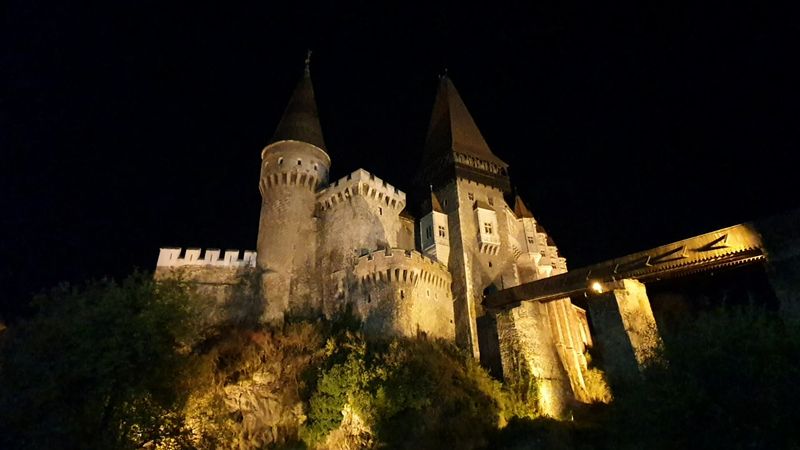
Built by John Hunyadi in the 15th century as both a military fortress and a family seat, Corvin Castle has a silhouette that looks like it was designed specifically to unsettle people.
Needle spires, conical towers, a stone bridge, and ornate Gothic facades combine into one of the most visually striking castle profiles in all of Europe.
Local legend holds that Vlad the Impaler was imprisoned in its bedrock dungeons for seven years by Matthias Corvinus during the 1460s, though definitive proof remains elusive.
The interior includes the magnificent Knights’ Hall with Gothic vaulted ceilings, council chambers, and multiple courtyards that reveal different architectural periods.
Corvin Castle has also served as a filming location for productions including The Nun and the 2024 remake of Nosferatu, proving that even Hollywood agrees on its credentials.
2. Orava Castle, Oravský Podzámok, Slovakia
This castle literally starred in a vampire film over a century ago, and it has been earning that reputation ever since.
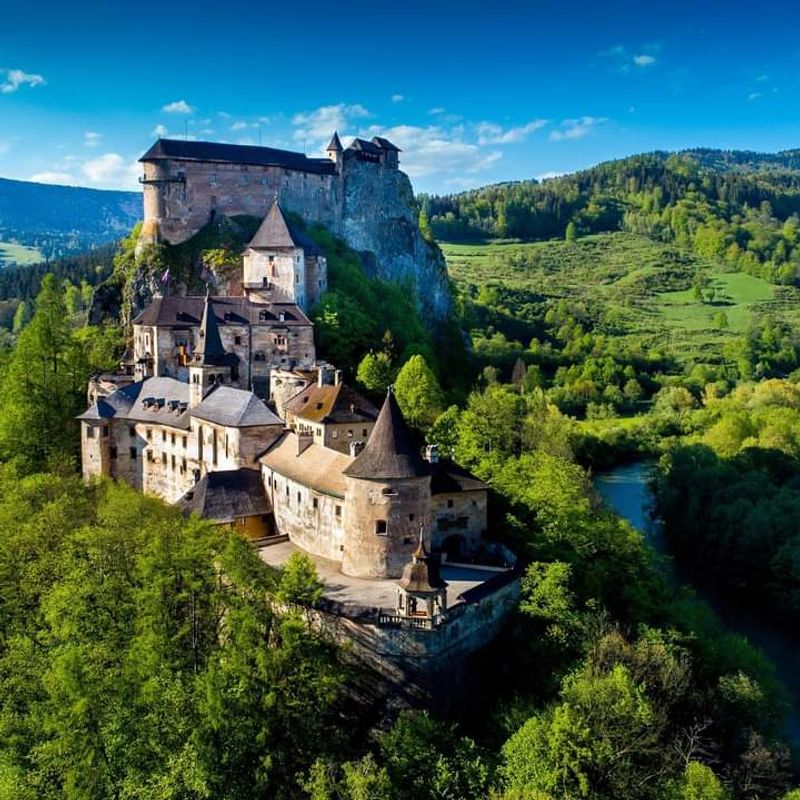
Orava Castle appeared in the 1922 silent horror classic Nosferatu, where its dramatic profile above the Orava River served as Count Orlok’s Transylvanian home, and the choice made complete sense.
The fortress climbs a high rocky formation in stacked sections, with Lower, Middle, and Upper Castle areas built across different centuries in Romanesque, Gothic, Renaissance, Baroque, and Neo-Gothic styles.
Its origins trace to the 13th century, with the Thurzo family completing major rebuilding work by 1611. A fire in 1800 damaged the upper ward, but a post-World War II restoration saved the complex.
Visitors today can navigate narrow corridors, explore towers and underground passages, and browse museum exhibitions covering Slovak history, art, and culture.
3. Predjama Castle, Predjama, Slovenia
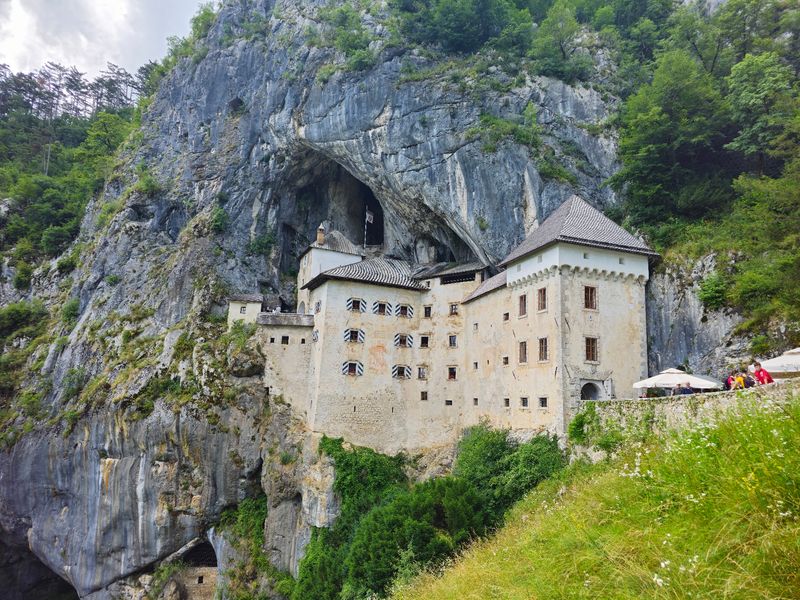
Most castles sit beside dramatic scenery. Predjama Castle decided to become part of it.
This more than 800-year-old fortress is built directly into the mouth of a towering cliff face, with natural caves and passages extending deep into the rock behind the visible structure, earning it the official title of the world’s largest cave castle.
The castle is historically linked to Erazem Predjamski, a defiant 15th-century knight who used the hidden cave networks to withstand a prolonged Habsburg siege for over a year before being betrayed from within.
The combination of sheer cliff above, cave passages within, and centuries of siege history below gives the place a layered, genuinely unsettling character that no amount of restoration could soften.
The castle remains open daily, and visitors can explore both the visible structure and the cave systems that made it so famously difficult to capture.
4. Bojnice Castle, Bojnice, Slovakia
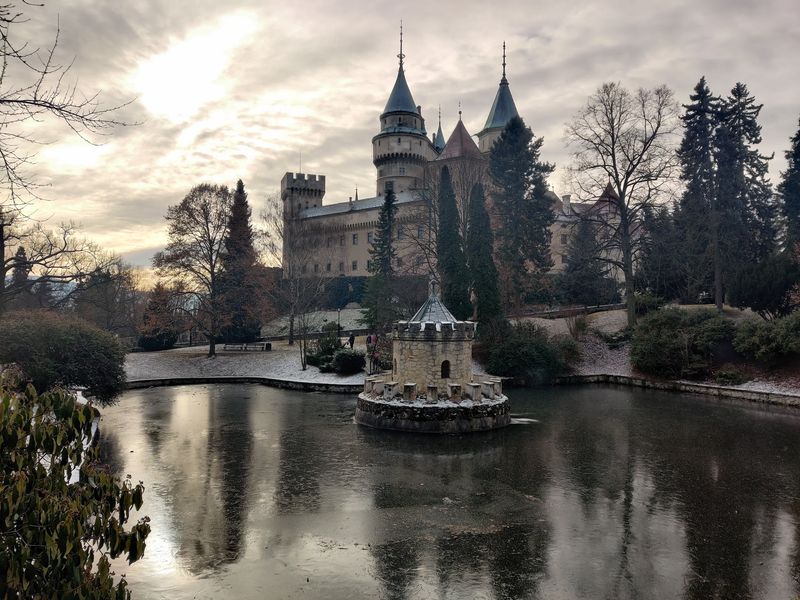
Bojnice Castle has a split personality that makes it especially interesting: on a sunny day it looks like something from a fairy tale, but let the clouds gather and those slender towers take on a noticeably darker character.
The site dates to around the 12th century, with its first written mention recorded in 1113. Centuries of rebuilding by the Thurzó and Pálffy families gradually shaped the romantic exterior visitors see today.
Beneath the fourth courtyard sits a natural travertine cave measuring 22 meters in diameter, accessible to visitors and featuring two ponds 26 meters below the surface.
Count Ján Pálffy, the last noble owner, bequeathed the castle with the condition that its art collections remain in place for public viewing, a wish that has been honored to this day.
The castle also offers night tours and has served as a location for fantasy and fairy-tale film productions.
5. Bran Castle, Bran, Romania
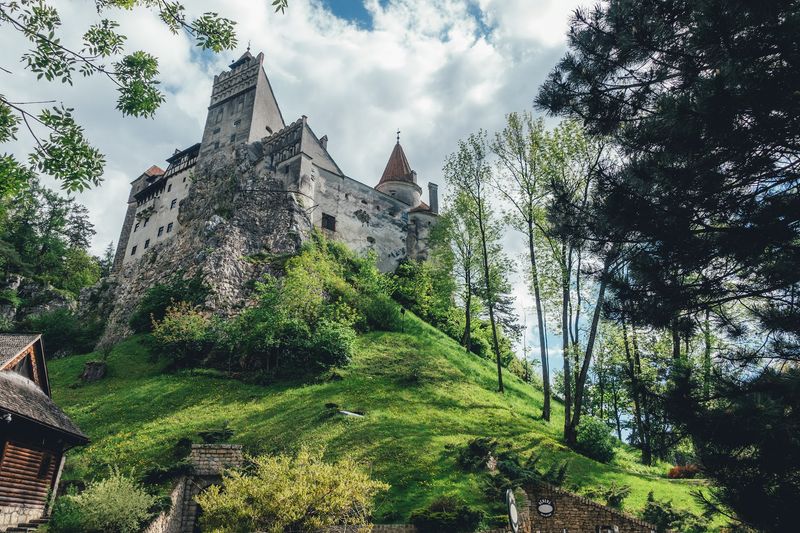
No castle on Earth has done more for the Dracula brand than this one, and yet the truth behind the legend is far more interesting than the myth itself.
Bran Castle dates to the 14th century and was originally built as a Saxon customs post guarding a mountain pass between Transylvania and Wallachia.
Bram Stoker, who never once visited Transylvania, reportedly based his fictional castle on sketches and descriptions of Bran found in British libraries because the architecture matched his vision perfectly.
The historical Vlad the Impaler’s only confirmed connection is a possible brief detention in its dungeons around 1462, a claim historians frequently debate.
Today the castle operates as a museum attracting around 800,000 visitors annually, and Queen Marie of Romania, who once called it home, has her heart preserved in a silver box on the grounds.
6. Eltz Castle, Wierschem, Rhineland-Palatinate, Germany
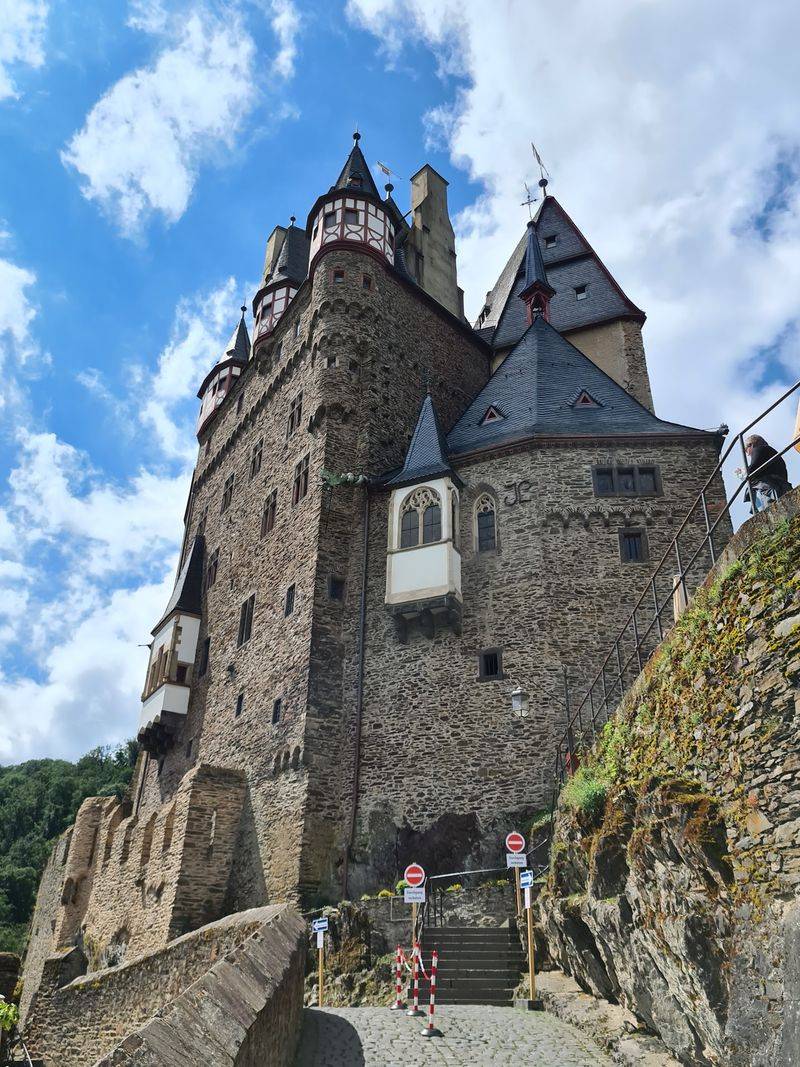
A castle hidden in a wooded valley, owned by the same family for over 850 years, and never once destroyed by war or fire sounds less like history and more like the setup for a Gothic novel.
Eltz Castle rises above the Elzbach river, which flows around three sides of the complex, and its irregular silhouette of eight towers reaching up to 40 meters, steep roofs, oriels, and timber-frame sections is the result of multiple family branches each building their own residential quarters within the same walls.
This arrangement, known as a Ganerbenburg, is why the castle looks so wonderfully asymmetrical from every angle.
Inside more than 100 rooms, visitors find original furnishings, a medieval armory, and a treasury filled with gold, silver, and porcelain artifacts accumulated across 33 to 34 generations of continuous family ownership.
Parts of the castle including the Rübenach and Rodendorf residences are open for guided tours.
7. Peleș Castle, Sinaia, Romania
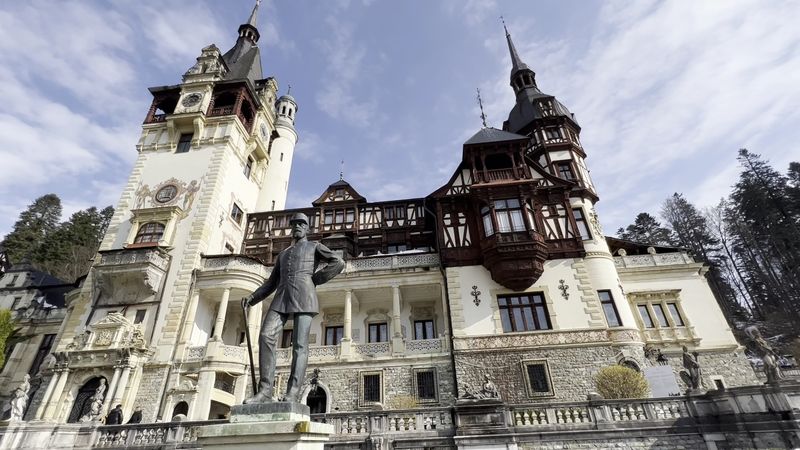
Peleș Castle sits in the Carpathian Mountains and manages to feel both grand and slightly out of place, as if a German palace somehow found its way deep into Romanian forest, which is essentially what happened.
King Carol I commissioned the residence in the 19th century, and construction and expansion continued for decades, producing a detailed blend of German Neo-Renaissance, Gothic Revival, Bavarian, and Art Nouveau influences across the exterior and interior alike.
The castle made history as the first in Europe to be fully powered by electricity generated on site, a technical achievement that matched its architectural ambition.
Today Peleș operates as a museum with more than 160 rooms, each decorated in a distinct style or theme, alongside impressive art collections, historical weaponry, and period furniture.
On a gray Carpathian afternoon, the elaborate exterior and dense surrounding forest give the whole place a wonderfully mysterious quality.
8. Spiš Castle, Spišské Podhradie, Slovakia
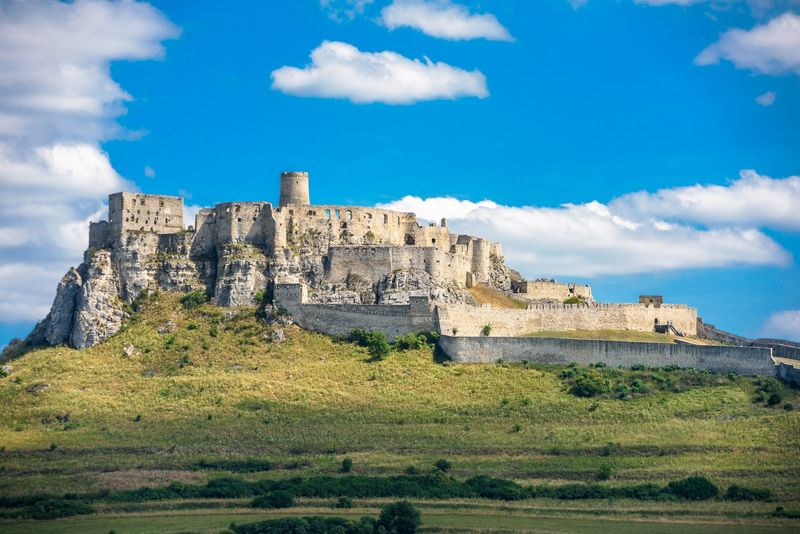
Some castles impress with decoration. Spiš Castle impresses with sheer scale and the kind of exposed hilltop position that makes every approaching visitor feel observed long before they arrive.
One of the largest castle sites by area in Central Europe, Spiš originated in the 12th century as a border fortress of the Kingdom of Hungary and served as the administrative center of the Spiš region for centuries.
Its sprawling ruins include an upper castle, a middle court, and a lower court, with Romanesque and Gothic architectural elements visible throughout the complex.
The UNESCO World Heritage site offers panoramic views across the entire Spiš region, and the combination of ruined walls, imposing towers, and open sky creates a particularly raw and compelling scene when clouds roll across the surrounding hills.
Restoration work means portions of the complex can occasionally be inaccessible, so checking ahead before visiting is advisable.
9. Malbork Castle, Malbork, Pomeranian Voivodeship, Poland
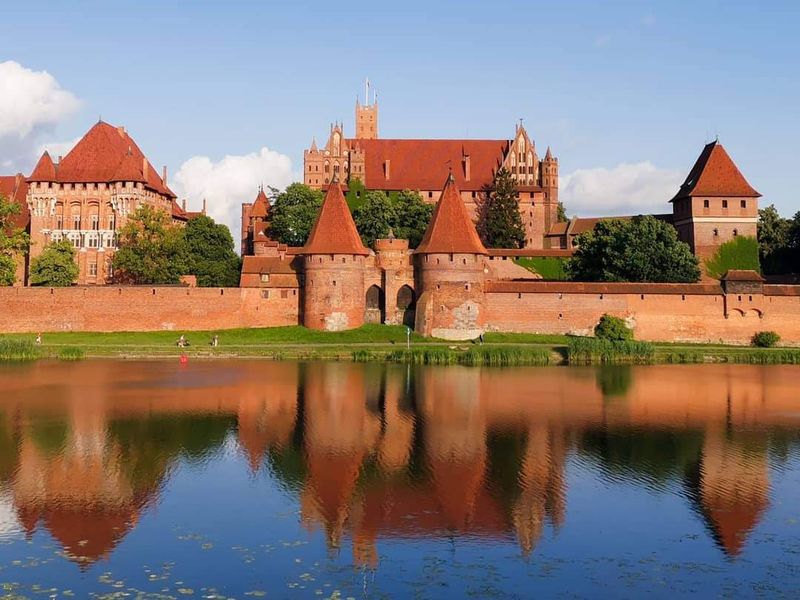
Red brick, enormous scale, and a history built on military conquest make Malbork Castle the least decorative entry on this list and arguably the most genuinely intimidating one.
Construction began in the late 13th century under the Teutonic Order and eventually produced the largest castle by land area in the world, as well as the largest brick castle in Europe, a UNESCO World Heritage Site beside the Nogat River.
The complex divides into three distinct sections: the High Castle, the Middle Castle, and the Outer Bailey, all separated by dry moats and defended by numerous towers.
Multiple drawbridges, formidable gatehouses, and an intricate defensive system made it one of the most difficult fortifications to breach in its era.
The castle’s museum today covers medieval armor, historical weaponry, amber artifacts, Gothic art, chapter houses, and a grand refectory, offering plenty of material for a long visit.
10. Alcázar of Segovia, Segovia, Castile and León, Spain
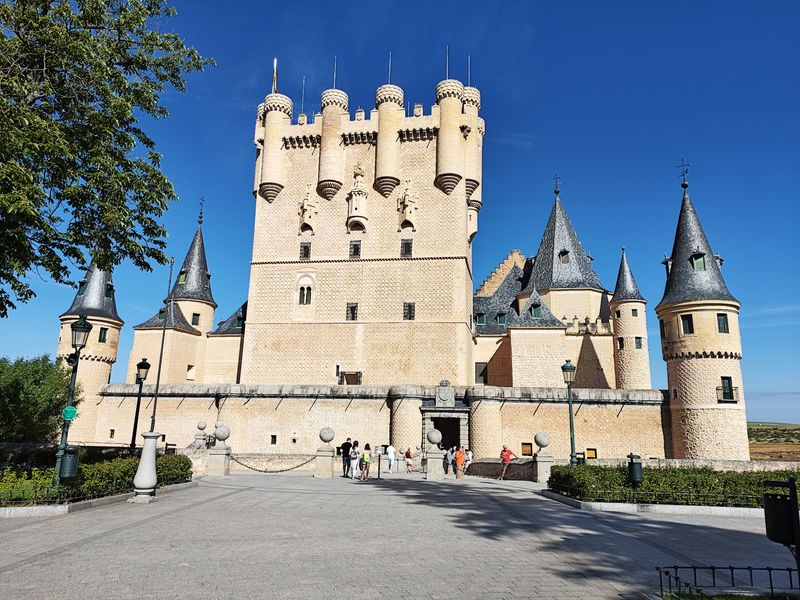
The Alcázar of Segovia has one of the most distinctive silhouettes in European castle architecture, and its prow-like rocky promontory position above the confluence of two rivers only adds to the effect.
Originally a Roman fortress, then an Arabian fort, and eventually a prominent medieval royal palace, the building carries a long and layered history that includes a strong association with Isabella I of Castile, who was proclaimed Queen of Castile here in 1474.
Its architecture blends Romanesque, Gothic, and Mudejar styles across a complex that includes sharply pointed towers and steep slate roofs that give it a profile unlike most Spanish royal buildings.
Inside, the Throne Room, the Hall of Kings, and an extensive Armory Museum are among the highlights for visitors.
Recent reviews continue to praise both the richly appointed interiors and the sweeping panoramic views across Segovia and the surrounding Castilian landscape.
11. Trakai Island Castle, Trakai, Vilnius County, Lithuania
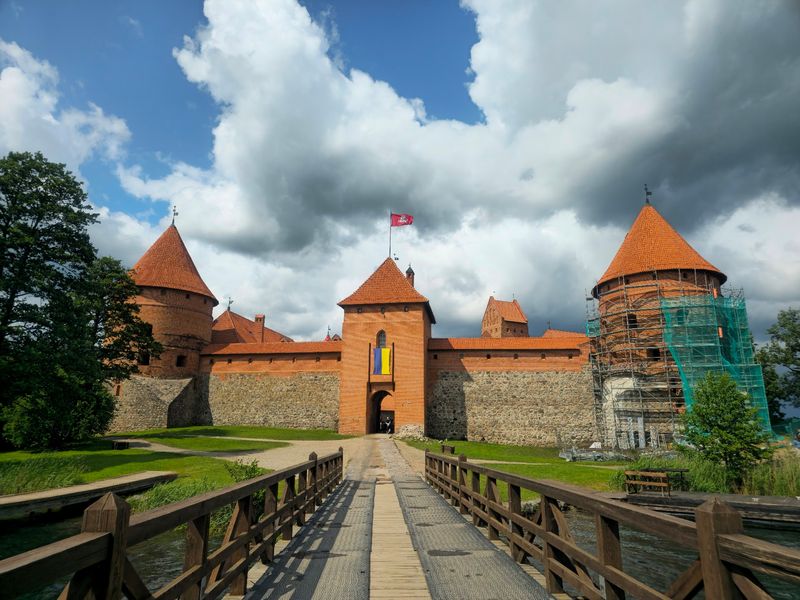
A castle that can only be reached by crossing a long wooden bridge over a lake already has a built-in advantage when it comes to making visitors feel like they are entering somewhere genuinely removed from ordinary life.
Trakai Island Castle rises from Lake Galvė, one of Lithuania’s deepest lakes, in red brick Gothic construction with stout towers and fortified walls that have stood since the 14th century, when the castle served as a residence for the Grand Dukes of Lithuania.
After falling into disrepair by the 17th century, the castle underwent a comprehensive rebuilding effort completed in 1951, and since 1962 it has housed the Trakai History Museum.
The museum’s collections include archaeological findings, ethnographic displays, applied art, furniture, armor, weapons, and nearly 400,000 individual exhibits spread across the castle and its casemates.
In winter, the frozen lake surrounding the island adds an extra layer of strangeness to an already unusual destination.
12. Conwy Castle, Conwy, Wales, United Kingdom
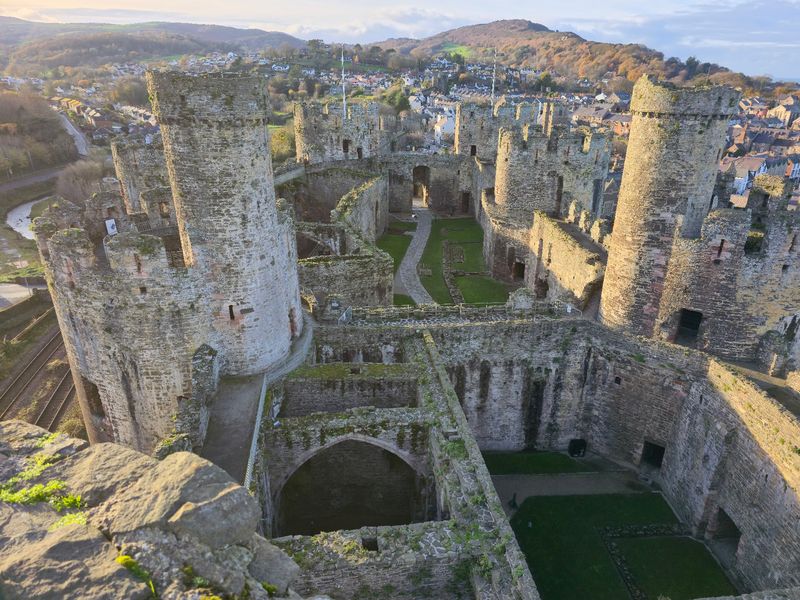
Conwy Castle does not try to impress with decorative flourishes. It impresses by being almost aggressively solid, a fortress built to make a point about power and permanence.
Construction began in 1283 under Edward I, with master architect James of St George overseeing a project that was largely completed by 1287, an extraordinarily fast timeline for a structure of this scale and complexity.
Eight massive towers still define the skyline, and the castle retains some of the earliest surviving stone machicolations in Britain, giving the battlements a particularly purposeful appearance.
The castle is divided into inner and outer wards, each designed to be defended independently, and its construction cost approximately 15,000 pounds, a monumental sum for the period.
Historical records note that Richard II sheltered here in 1399 and that Welsh insurgents besieged it in 1294 to 1295, with Edward I himself temporarily trapped inside during that conflict.
13. Sigmaringen Castle, Sigmaringen, Baden-Württemberg, Germany
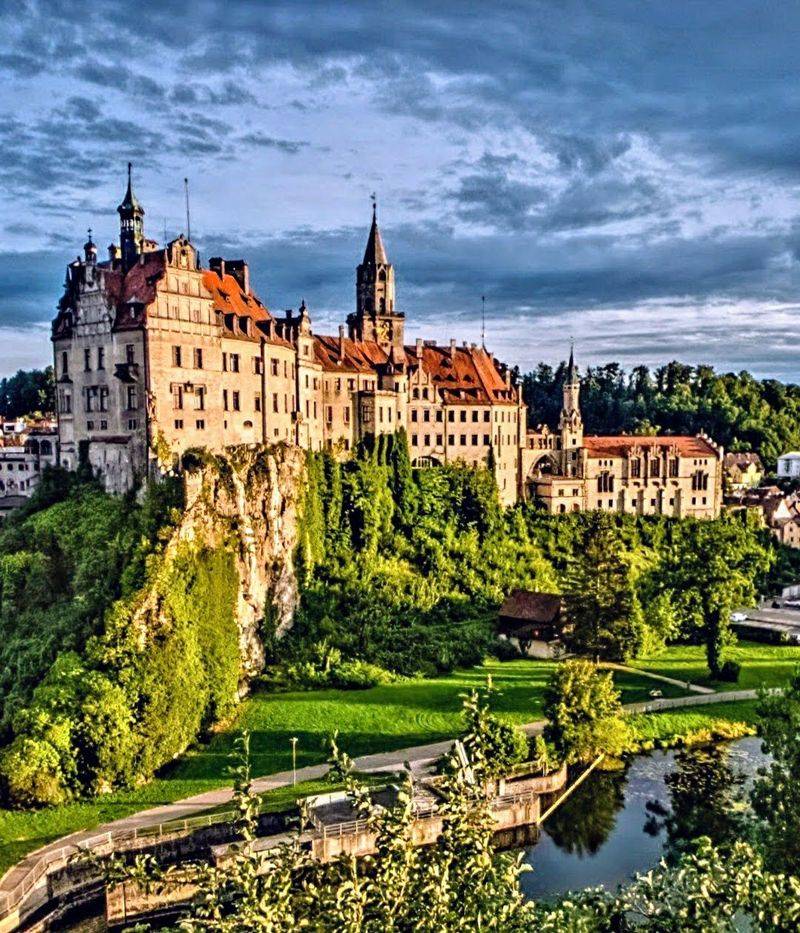
Sigmaringen Castle does not sit on a hill so much as it erupts from one, with towers, roofs, and residential wings stacked above the Danube in a profile that rewards a long look from the town below.
As the ancestral seat of the Swabian branch of the House of Hohenzollern since 1535, the castle carries centuries of noble history, though much of what visitors see today dates to a rebuilding in Neo-Gothic style following a devastating fire in 1858, with work continuing until 1902.
The Great Hall features soaring Gothic vaulted ceilings, and the castle’s private collection of historic weapons and armor comprises over 3,000 pieces, making it one of the most extensive such collections in Europe.
Sigmaringen actively welcomes visitors in 2026, with daily opening hours during its main season and guided tours covering the castle’s furnished rooms and opulent Victorian interiors.
The town of Sigmaringen itself grew organically at the castle’s base over the centuries.
14. Château de Pierrefonds, Pierrefonds, Hauts-de-France, France
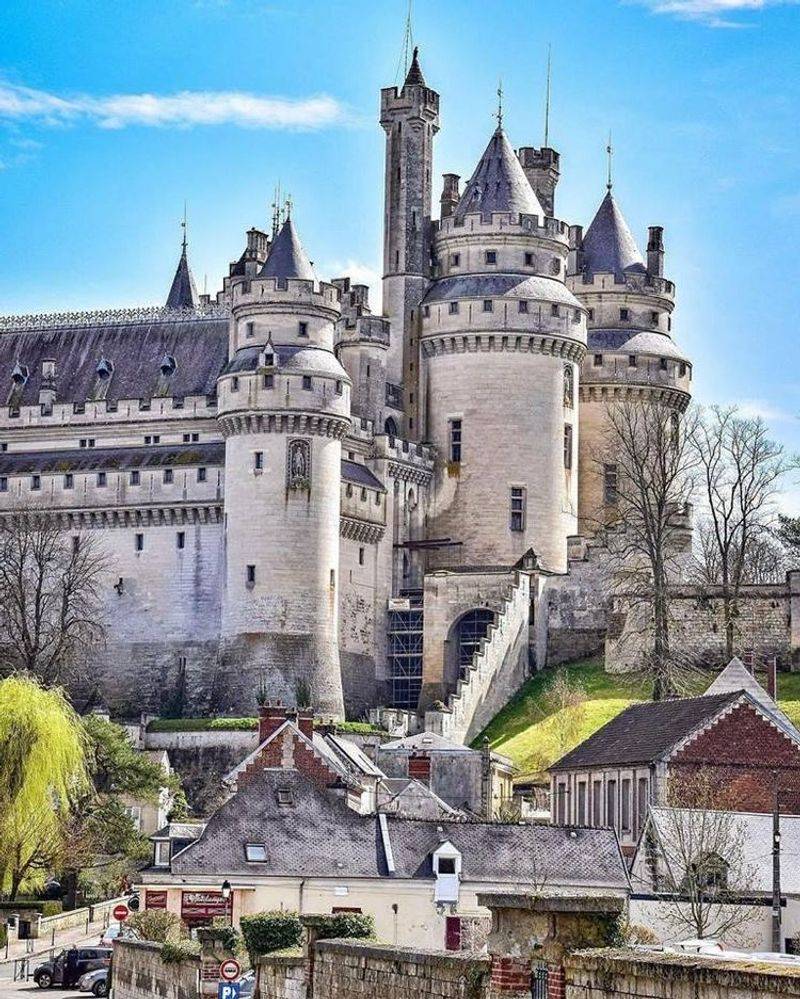
Château de Pierrefonds has an interesting origin story for a place that looks so medieval: much of what visitors see today is a 19th-century interpretation of what a perfect medieval castle should look like, and the result is almost too convincing.
Originally a 14th-century stronghold built by Louis I, Duke of Orléans, the castle fell into ruin before Emperor Napoleon III commissioned architect Eugène Viollet-le-Duc to rebuild it in the 19th century.
Viollet-le-Duc’s vision was not a straightforward historical reconstruction but a romantic reimagining that blended medieval authenticity with imaginative embellishments, producing eight massive towers each named for a legendary hero or virtue.
The interiors showcase rich decorations, intricate stonework, and a large collection of medieval and Renaissance artifacts, while the castle’s silhouette from the village below remains one of the most striking in northern France.
Its convincingly dramatic appearance has made it a popular filming location, and it remains open to visitors with regular hours throughout most of the year.
Share this story