Hagia Sophia has watched over Istanbul for about 1,500 years. It has been a church, a mosque, a museum, and a mosque again.
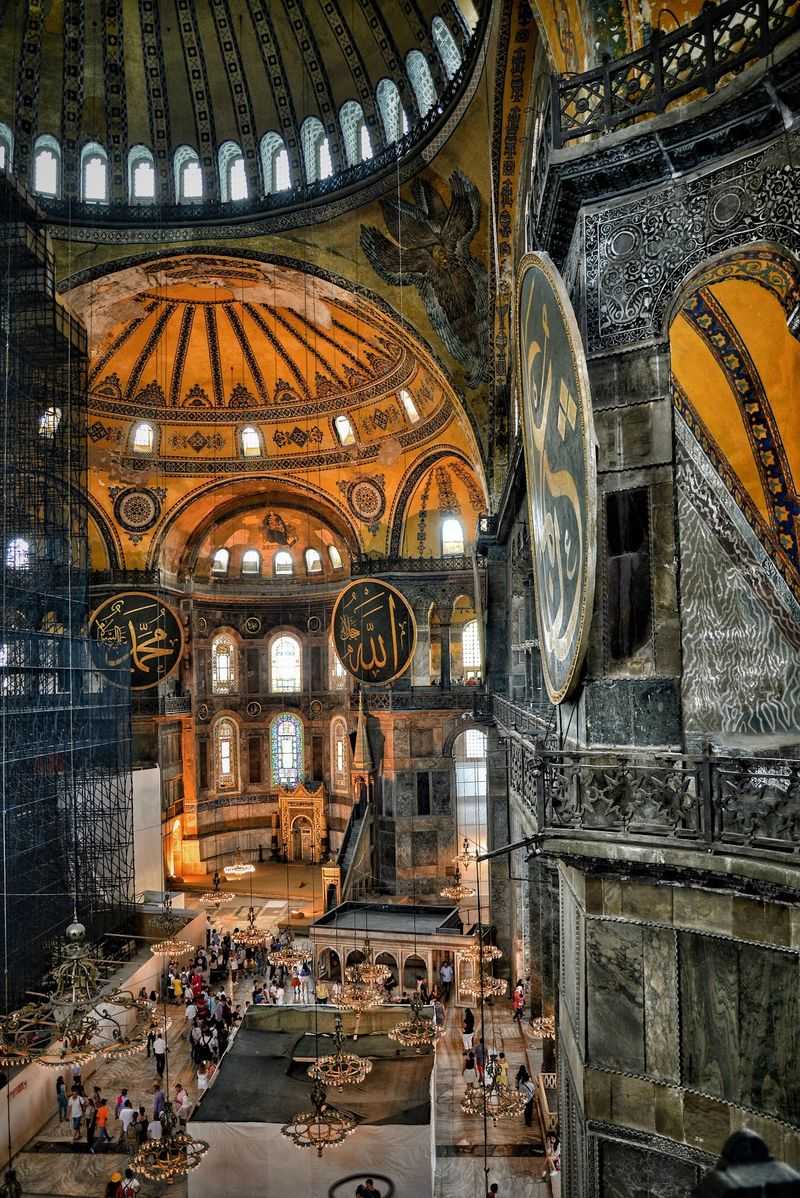
Its giant dome still makes visitors tilt their heads and gasp. Here are fascinating facts that show why this building is so famous.
A Dome That Stunned the Ancient World
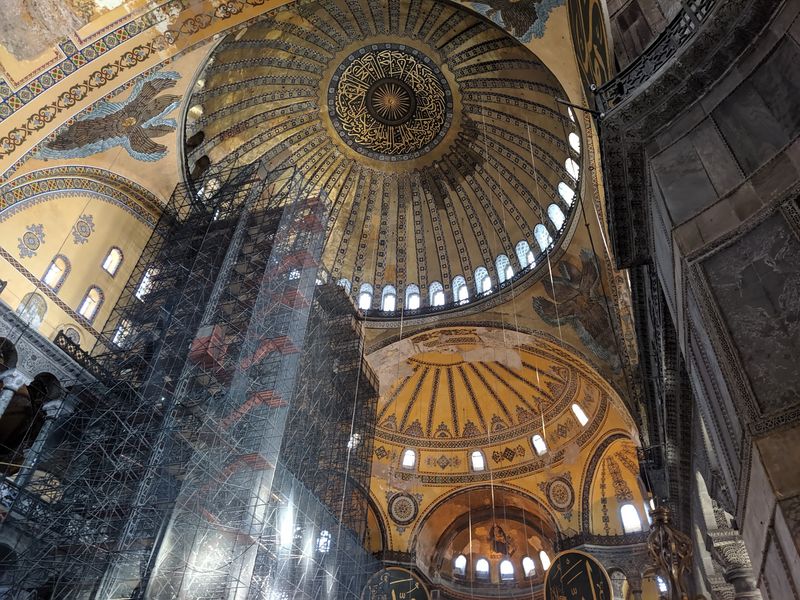
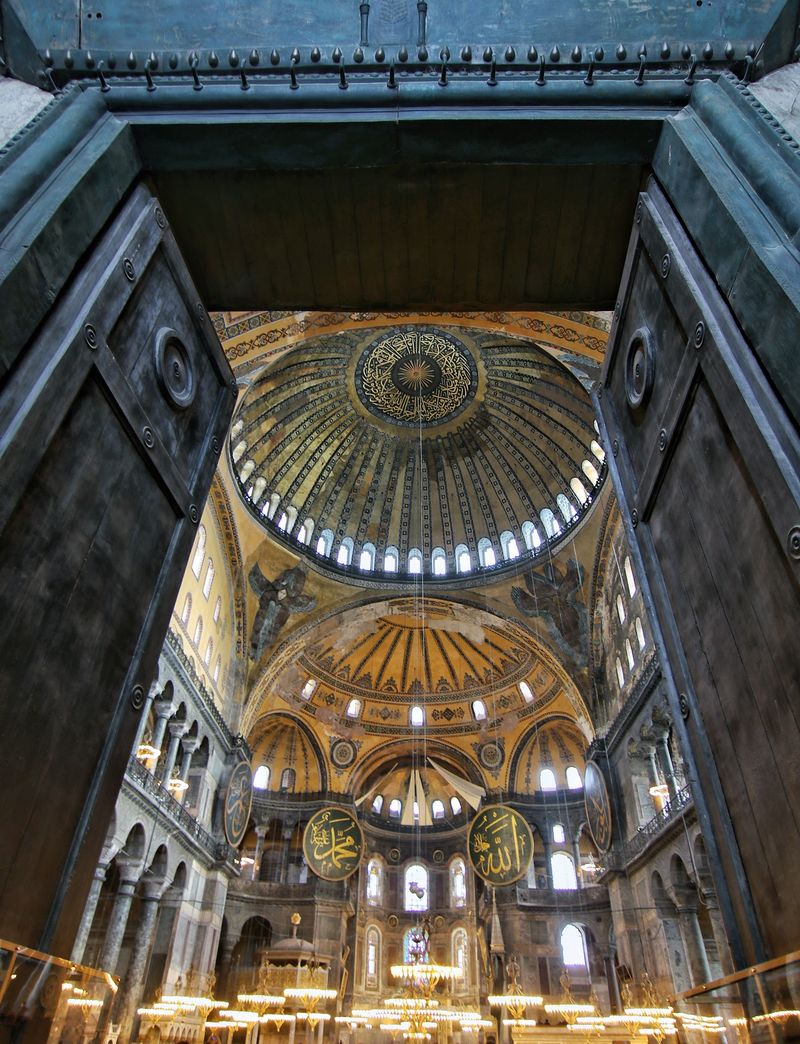
Picture a roof so high and wide that people in the sixth century thought it floated. The central dome of Hagia Sophia was finished in 537 and amazed everyone who stepped under it.
Court writers of the time struggled to describe it, because it seemed to rise right out of the light.
Forty windows circle the base of the dome. When the sun pours through them, the space glows as if the ceiling were hovering on its own.
Builders pulled this off with brick, mortar, and very clever math.
The dome has not had an easy life. Earthquakes cracked it, and parts of it fell and had to be rebuilt in the years after 558.
The repairs made it a little taller and steeper than the first version.
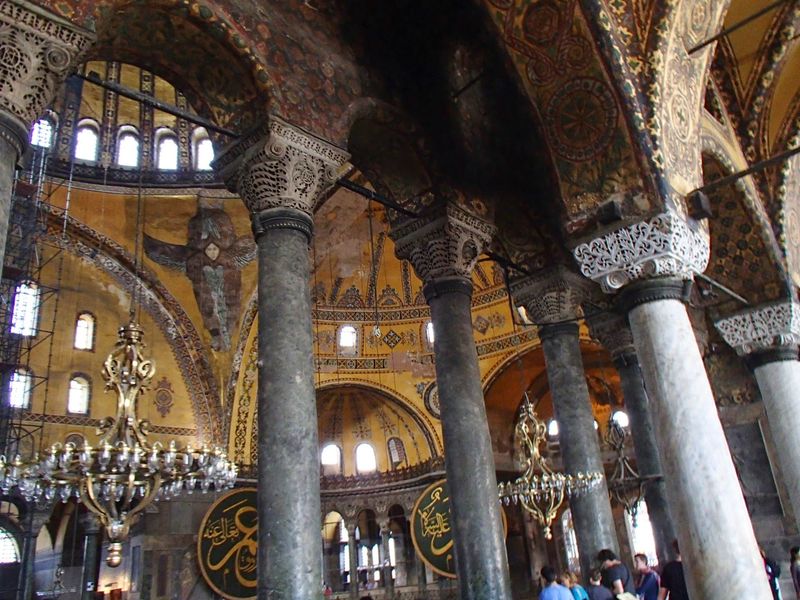
Today the dome is under careful restoration. Scaffolding inside can block some of the view, as several visitors have grumbled.
Even so, looking up still gives you that tiny jolt of wonder that people have felt for centuries, and many guests say they forget the crowds around them for a moment.
Built in Just Five Years
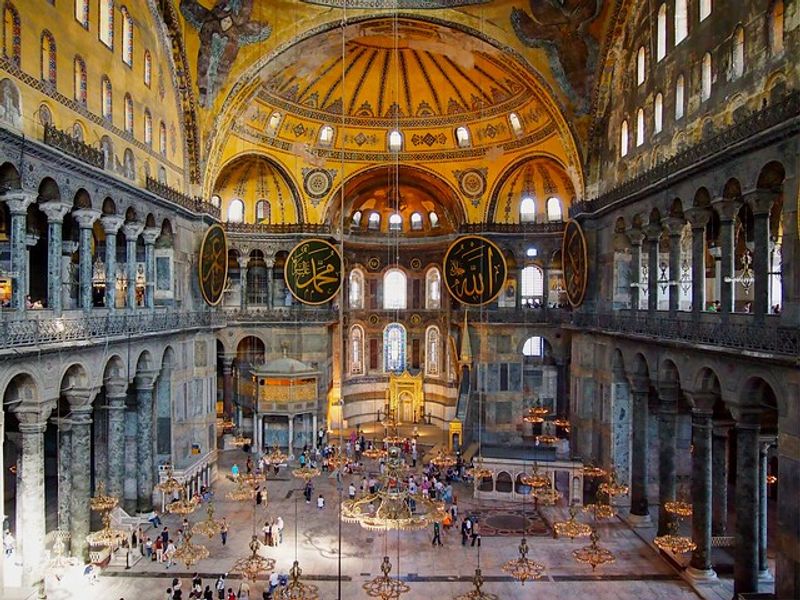
Five years, ten months, and a few days. That is all the time it took to raise Hagia Sophia, which is almost unbelievable for a building this huge.
Emperor Justinian wanted it finished fast after an earlier church burned down during riots in 532.
He hired two brilliant thinkers, Anthemius of Tralles and Isidore of Miletus. They were scholars of math and physics rather than traditional builders.
Thousands of workers hauled stone, brick, and marble to the site.
Materials arrived from across the empire. Columns and marble came from far-off quarries, some taken from older ancient temples.
The speed was part of the point, since Justinian wanted a showpiece that would outshine every church before it.
The opening in 537 was a huge celebration. Legend says Justinian whispered that he had outdone King Solomon’s temple.
Whether or not he said it, standing beside those enormous walls today, you can see why he felt proud of the result.
Three Lives, Many Faiths
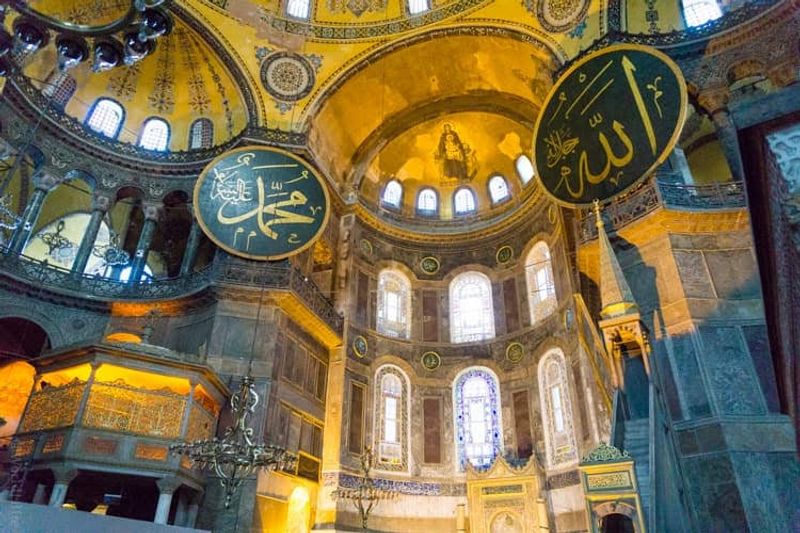
Few buildings have changed hats as often as this one. Hagia Sophia began as a Byzantine cathedral, and for nearly a thousand years it was the main church of Eastern Christianity.
Emperors were crowned beneath its dome.
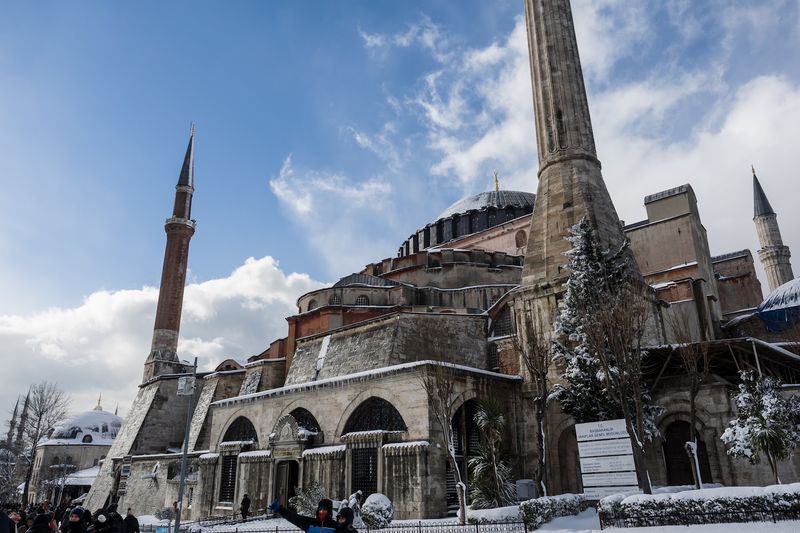
After 1453, Sultan Mehmed II took Constantinople and the building became an imperial mosque. Minarets rose outside, and a mihrab pointing toward Mecca was added inside.
Ottoman builders later modeled many famous mosques on its grand shape.
In 1935 it became a museum, open to people of every background. Then in 2020 it returned to use as a mosque.
Prayers are now held here, and one visitor called hearing the call to prayer echo through the hall like stepping back in time.
That layered past is visible everywhere. Christian mosaics sit near huge Arabic calligraphy plaques.
One traveler loved how the building still keeps its Christian elements, calling it a true masterpiece of shared history.
Mosaics Older Than Many Kingdoms
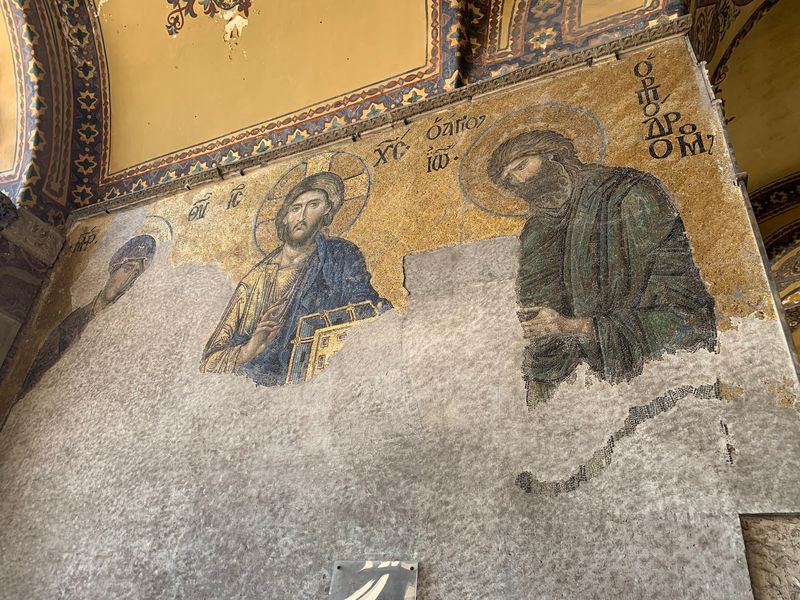
Tiny glass cubes can last a very long time. Hagia Sophia holds golden mosaics that are around a thousand years old, and some still shimmer when light hits them.
Each one is made of thousands of little tiles set at slightly different angles to catch the glow.
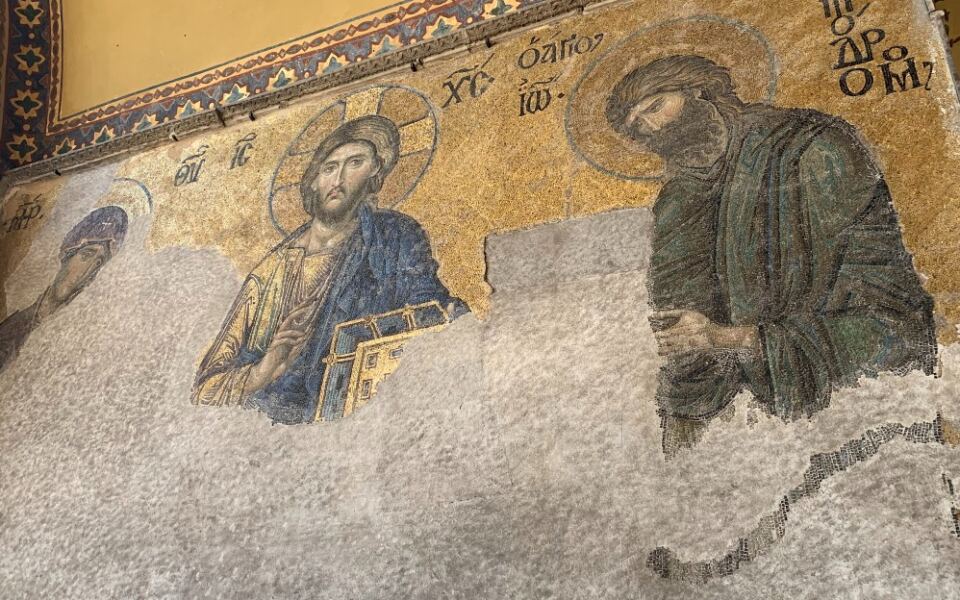
The famous apse mosaic shows the Virgin Mary with the Christ child. Another well known panel, the Deesis, shows Christ with Mary and John the Baptist.
Their faces look surprisingly soft for artwork made of stone and glass.
After the building became a mosque, many mosaics were covered with plaster. In the twentieth century, restorers uncovered several of them again.
That work gave modern visitors a peek at hidden treasure.
One reviewer called these mosaics a living history waiting to be discovered. You will find the best ones up in the galleries, so bring patience and keep looking.
A small mosaic can hide in a corner and surprise you.
The Weeping Column
Stick your thumb in a hole, make a wish, and turn your hand around. That is the tradition at the Weeping Column, one of the quirkiest corners of Hagia Sophia.
The pillar is covered in bronze, and a worn hole in it is polished smooth by centuries of visitors.
The column is said to always feel damp. Legends claim that touching the moisture can bring healing.
Many believers have lined up for it over the years.
Guides tell the story with a grin, and the crowd around it can get thick. Still, it is a fun stop that makes history feel hands-on, even if modern rules may limit how close you can get.
Look closely and you will see the stone has been rubbed shiny. It shows how people from many eras all wanted the same thing: a tiny bit of hope.
If you spot a cluster of tourists gathered at one pillar, you have probably found it.
Viking Graffiti on the Balcony
Somebody named Halfdan was here, and he carved it in stone. On a marble balcony railing in the upper gallery, faint runic letters spell out a Viking name.
Historians think a Scandinavian soldier or traveler left it behind about a thousand years ago.
Many Vikings served in Constantinople as guards for the emperor. Called the Varangians, they were well paid and well known.
Apparently at least one of them had time to doodle during his visit.
The graffiti is small and easy to miss. It sits on the gallery level, which is where visitors are currently directed.
That makes it a nice reward for people who look at the details instead of just the dome.
Spotting it feels like finding a secret note from a very old trip. Remember that the carving is fragile, so look but do not touch.
Take a quiet moment, picture a tall Viking with a knife, and smile at how little human habits have changed.
Restoration and Scaffolding
Scaffolding is the one thing most visitors do not plan for. Big steel frames currently fill part of the main hall, because the dome needs careful repair work.
Several reviewers mention it, and some wish they had known before buying tickets.
Here is the reason for all the fuss. The building is almost 1,500 years old and has survived earthquakes, fires, and wars.
Walls and floors lean in surprising ways, and one visitor noticed how the crooked lines explain why the structure needs support.
Restoration has a long history here. In the nineteenth century, Sultan Abdulmecid ordered major repairs, carried out by the Fossati brothers.
Their detailed drawings carried the monument’s fame around the world.
So the current work is just the latest chapter. It may block a few photos, but it also protects the dome for future generations.
Checking the latest news before your trip is smart, because the amount of scaffolding can change from month to month.
Fossati and the Nineteenth Century Makeover
Two Swiss-Italian brothers once climbed this building with sketchbooks. Gaspare and Giuseppe Fossati were hired by Sultan Abdulmecid in the 1840s to repair Hagia Sophia.
They strengthened the dome, fixed walls, and cleaned up the interior.
They also documented it. Their printed views, made as lithographs, traveled across Europe and made the monument famous.
Scholars used the drawings to study its design and its hidden mosaics.
During the work, some mosaics were uncovered and recorded before being covered again. That means the brothers saved details that might otherwise have been lost.
The large round plaques with Arabic calligraphy were also added in this era. They carry the names of Allah, Muhammad, and early caliphs, and they measure around eleven meters across.
Look up and you will see them hanging high like giant dinner plates, though far more sacred and artistic than any dish.
Visiting Tips From Real Travelers
Go early, and thank yourself later. Travelers say that arriving around opening time means almost no line.
Tour groups tend to show up around ten in the morning, so beating them is a big advantage.
Tickets deserve a close look. Reviewers report that the price can apply separately to the mosque and the museum, so ask clearly before paying.
Some visitors also warned that local guides waiting outside can cost several times more than ones booked online.
Inside, tourists are generally directed to the upper gallery, while the ground floor is for worshippers. A free audio guide is available, but phone signal can be weak for the QR codes.
Download things in advance.
Wear modest clothes and bring a scarf if you are a woman, since it is a working mosque. Plan extra time for security lines.
Visiting the nearby Blue Mosque and Basilica Cistern on the same day makes the trip even richer.
Friday Prayer and Open Doors
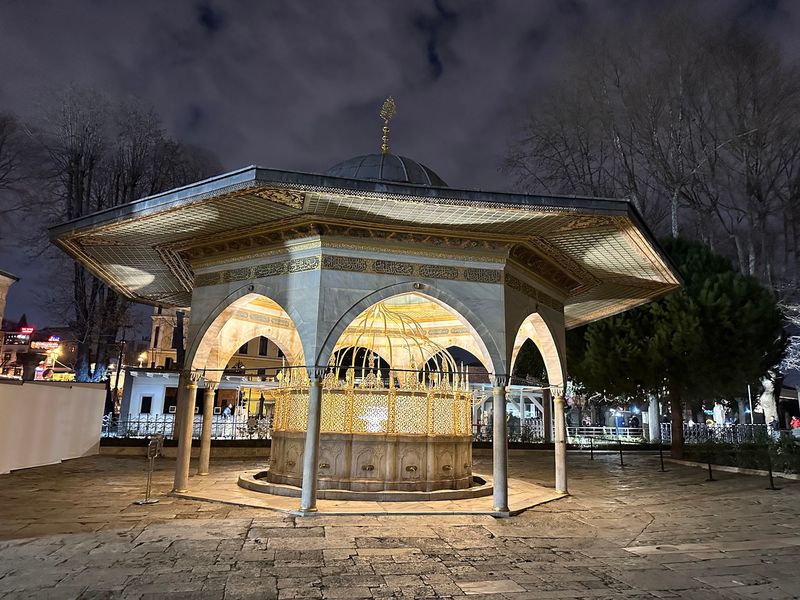
Hear the call to prayer here once and you will not forget it. Worshippers describe the sound rolling under the dome like a wave.
One visitor said joining Friday prayers was the highlight of the whole trip.
Hagia Sophia is again an active mosque, open around the clock according to its listing. The ground floor is set aside for people who come to pray.
Visitors who are not Muslim usually go up to the gallery, which has its own entrance and ticket.
Some travelers are puzzled by this, since other mosques in the city welcome tourists on the main floor. Others see it as a fair trade, because the building is serving its spiritual purpose again.
Whatever your view, the mood inside is calm and respectful. Lower your voice, dress modestly, and leave shoes at the door when asked.
Prayer times shift through the day, so check the schedule before you go and plan your sightseeing around them.
A Landmark Rated Nearly Perfect
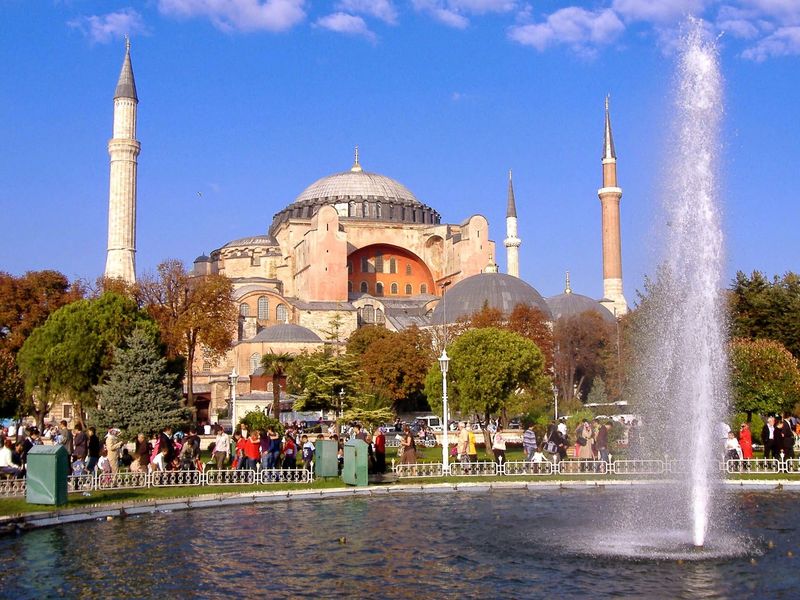
A score of 4.8 stars from over 135,000 reviews is no small feat. Hagia Sophia sits near the top of many Istanbul lists.
Reviewers keep calling it unforgettable, atmospheric, and a must-see.
Not every note is a rave. Some visitors felt the ticket price was steep, and a few were disappointed by scaffolding and crowds.
Others wished more of the historic features were protected from weather and pigeons.
Yet even the grumpy reviews usually agree on one thing. The place has a pull that photos cannot capture.
Standing beneath that dome, people think about the millions who walked here before them.
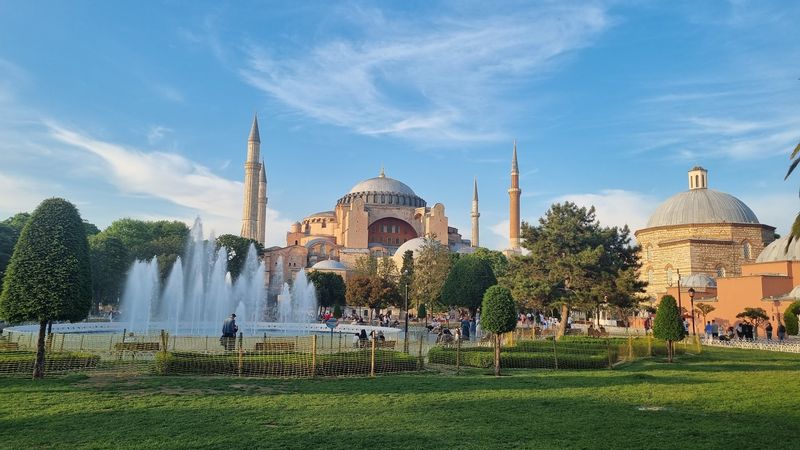
The setting helps, too. The Blue Mosque is only a short walk away, with a park in between.
That makes Sultanahmet Square one of the most crowded and rewarding spots in the city, so pack comfortable shoes and a sense of humor for the lines.
Share this story