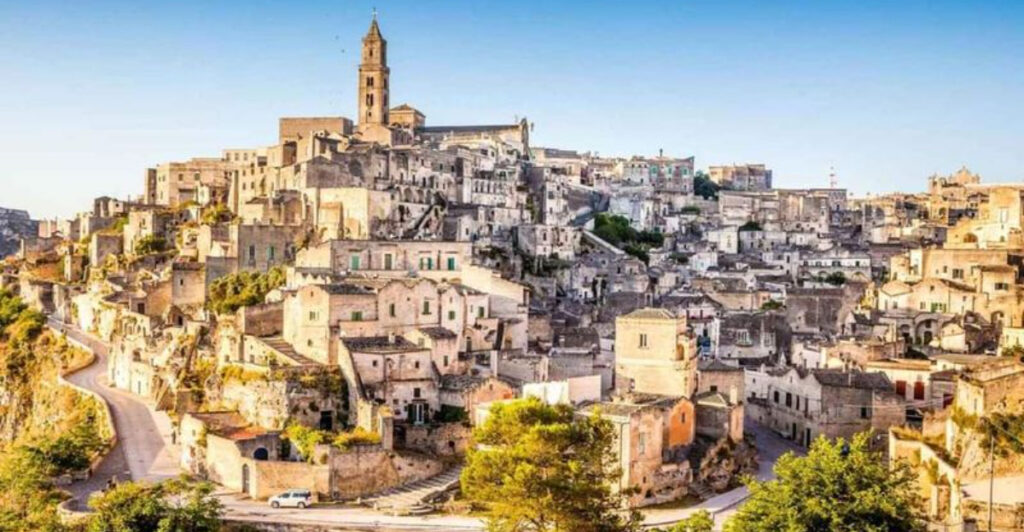
Some cities were not simply built near mountains or beside rivers. They were carved into them, stacked against sheer rock faces, or wedged beneath massive stone overhangs.
These places grew from the land itself, shaped by necessity, creativity, and centuries of human determination. From ancient cave settlements in Italy to silver-mining towns climbing the mountains of Mexico, each city on this list tells a story that no flat-ground neighborhood ever could.
Whether you are a history lover, an architecture fan, or just someone who enjoys a truly jaw-dropping view, these 14 cities prove that some of the most remarkable places on Earth were built where most people would not even consider standing.
Petra, Jordan
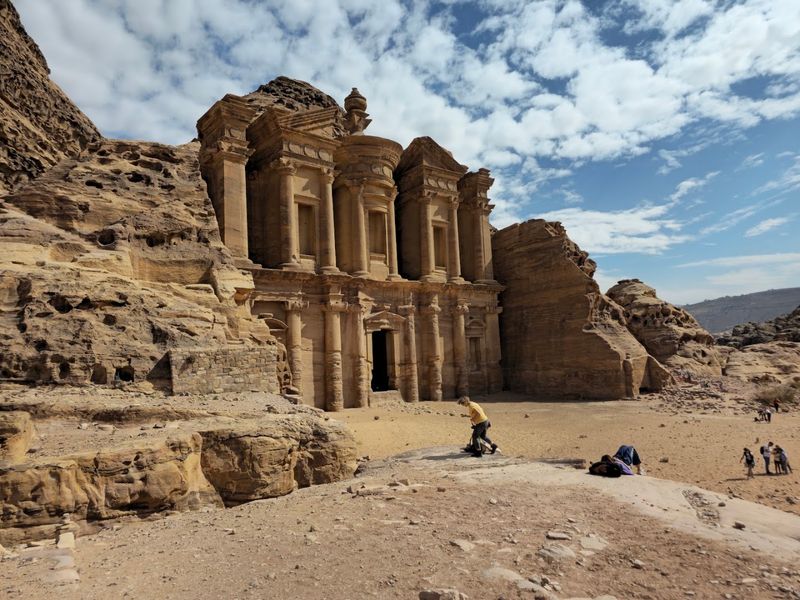
Petra was not built beside a mountain. It was cut directly into one.
The Nabataeans carved this remarkable city from rose-red sandstone cliffs more than 2,000 years ago, creating an urban landscape unlike anything else on the planet.
The traditional route begins at the visitor center and passes through the Siq, a narrow winding canyon that opens dramatically onto Al-Khazneh, commonly called the Treasury. Its columns, pediments, and decorative carvings were not assembled from blocks but chiseled directly from the cliff face in a single continuous effort.
Beyond the Treasury, Petra contains tombs, temples, a theater, ceremonial spaces, water channels, and the long climb to Ad-Deir, known as the Monastery. The Nabataeans also engineered an advanced water-management system that kept the city supplied in an arid desert environment.
Official routes operate from the modern town of Wadi Musa, making access straightforward for most visitors.
Ronda, Andalusia, Spain
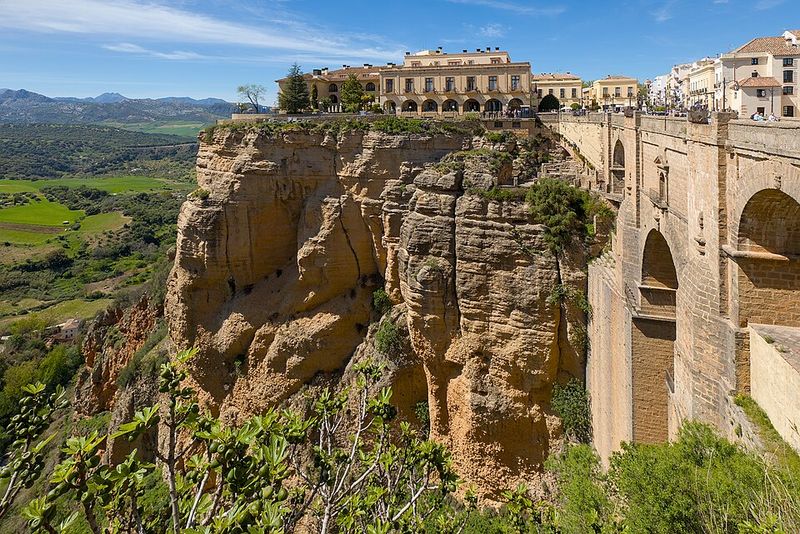
Standing at the edge of El Tajo gorge in Ronda feels like looking down from a different world. The town is split by this dramatic ravine, which drops more than 100 meters straight down, with buildings on both sides sitting close enough to the edge to make even confident visitors pause.
The 18th-century Puente Nuevo connects Ronda’s older Moorish quarter with its newer district. From overlooks near the bridge, the Guadalevin River appears as a thin line far below, while whitewashed houses seem almost balanced on the rocky ridge above it.
Ronda’s historic center holds traces of Celtic, Roman, Islamic, and Christian communities, including former palaces, defensive walls, traditional homes, and historic bathhouses. Although the city was built on top of the cliffs rather than carved inside them, the streets and buildings are completely inseparable from the rocky ridge beneath.
It is a town where geology and human history became one continuous story.
Cuenca, Castilla-La Mancha, Spain
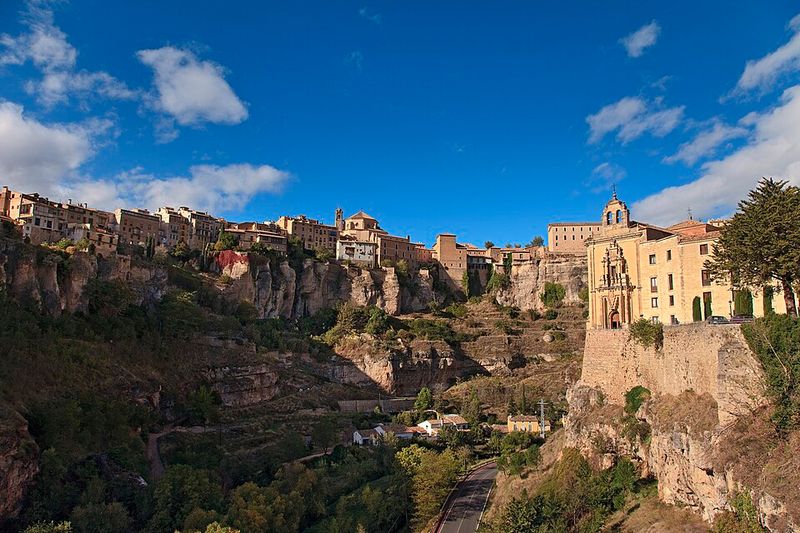
Cuenca’s Hanging Houses are exactly what they sound like. Known as the Casas Colgadas, these medieval structures project wooden balconies directly over the Huecar Gorge, creating one of Spain’s most photographed architectural sights.
The medieval center rises between the steep gorges of the Huecar and Jucar rivers, a natural position that made Cuenca both defensible and visually striking. Only three of the original Hanging Houses can be visited today, but one of them now contains the Museum of Spanish Abstract Art, pairing medieval stone architecture with contemporary artwork in an unexpected combination.
Beyond those famous facades, Cuenca offers winding streets, fortified remains, manor houses, churches, and a cathedral begun in the late 12th century. Crossing the San Pablo Bridge provides one of the best angles for viewing the historic center against its gorge backdrop.
Cuenca shows clearly how medieval builders used narrow ridges and natural cliffs as both a foundation and a form of protection.
Setenil de las Bodegas, Andalusia, Spain
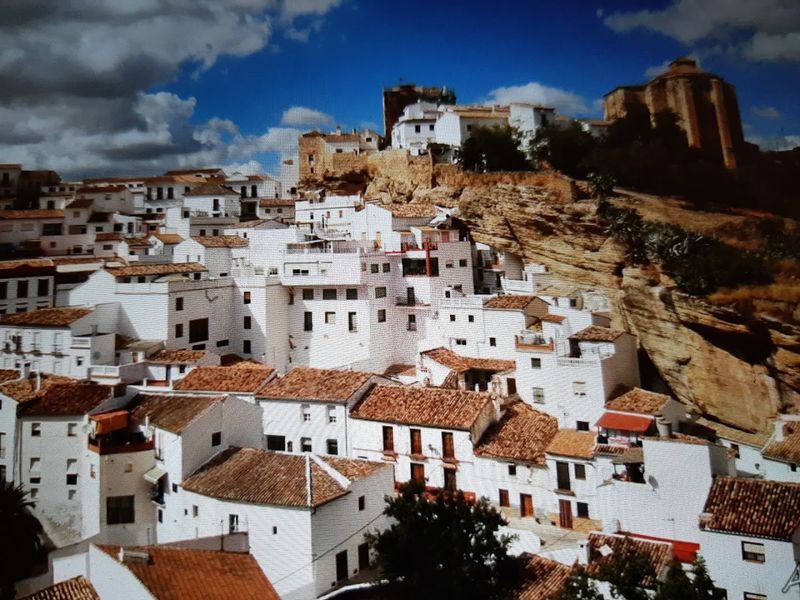
Most towns clear away the rock to build. Setenil de las Bodegas did the opposite.
Builders here constructed exterior walls beneath naturally formed stone overhangs, turning the rock itself into roofs and rear walls for homes, shops, restaurants, and storage spaces.
The most striking examples line Calle Cuevas del Sol and Calle Cuevas de la Sombra. Along these streets, rows of white facades are squeezed between the road surface and the dark stone hanging above them.
Some sections stay bright throughout the day, while others remain shaded beneath the overhanging rock.
Setenil is still a working community with accommodations, restaurants, shops, and a local tourism office. Visitors can climb toward the hilltop fortress ruins for views over the cave-lined streets and the surrounding Cadiz countryside.
This is one of those villages that rewards walking slowly, because the more you look up, the more remarkable the whole arrangement becomes.
Matera, Basilicata, Italy
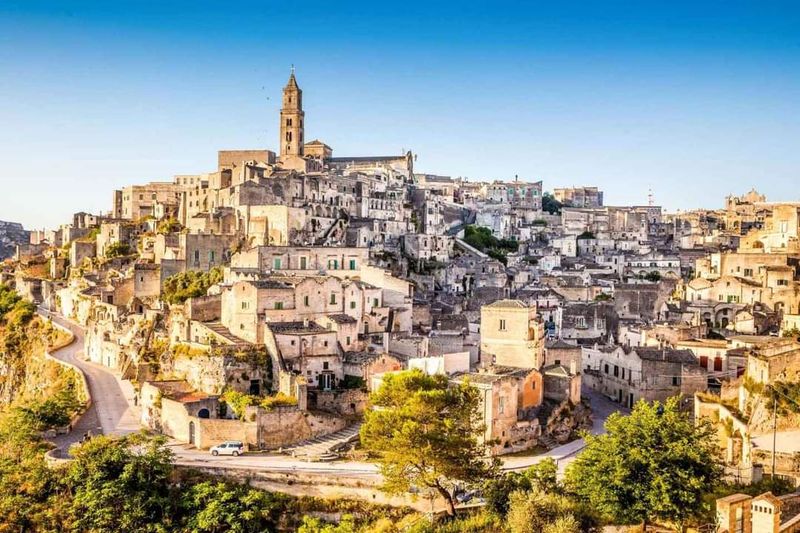
Few places in the world stop you cold the way Matera does. Its ancient Sassi districts appear to grow straight from the sides of a rocky ravine, with homes, churches, stairways, and passageways built around natural caves that people have used since prehistoric times.
The settlement kept evolving for centuries as residents expanded cave interiors and added stone facades around them. During the 20th century, many cave dwellings were abandoned, but later restoration brought them back as museums, boutique hotels, restaurants, and private residences.
Visitors can walk through Sasso Caveoso and Sasso Barisano, step inside preserved cave houses, and find rock churches still marked by traces of historic frescoes. Across the ravine, the Murgia plateau delivers one of the clearest views of Matera’s layered stone landscape.
It is one of those cities that genuinely earns every photograph taken of it.
Bonifacio, Corsica, France
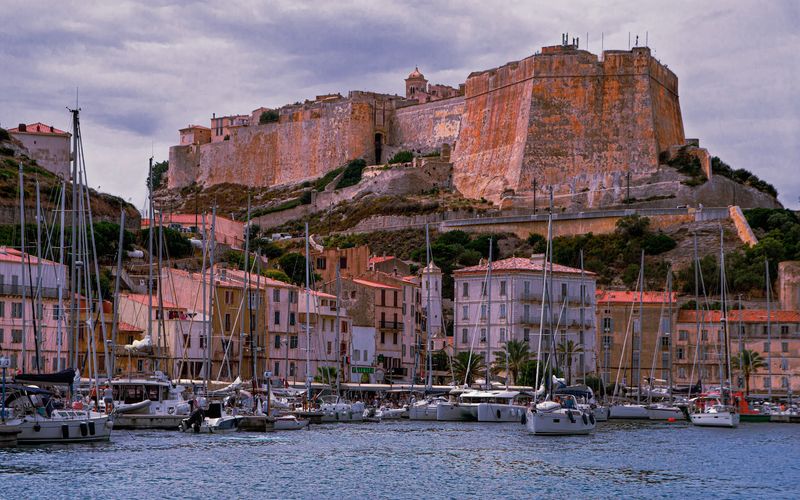
From a boat on the Mediterranean, Bonifacio looks like it might slide off its cliffs at any moment. The medieval citadel rises above pale limestone at the southern tip of Corsica, with sections of the upper town positioned so close to the eroded cliff edge that the effect is genuinely dramatic.
The settlement developed under strong Genoese influence during the Middle Ages, which left behind fortified gateways, churches, defensive walls, and tall stone houses compressed into narrow lanes. The citadel occupies the upper town, while the marina sits in a sheltered inlet below, giving Bonifacio two distinct layers of activity.
Visitors can explore the upper town on foot, join an official historical walking tour, or view the cliffs from a boat on the water. The King of Aragon’s Staircase, a steep passage cut directly into the limestone above the sea, is one of the city’s most memorable features.
Bonifacio holds official French City of Art and History designation.
Rocamadour, Occitanie, France
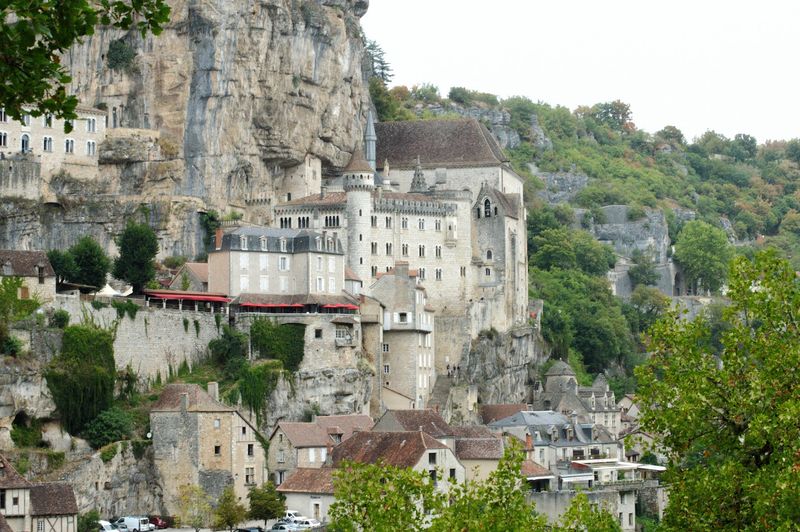
Rocamadour does not spread outward. It climbs upward.
The village is arranged in distinct vertical layers against a limestone cliff rising approximately 150 meters above the Alzou Canyon, with the lower village, religious sanctuary, and castle each occupying a different level of the rock face.
During the Middle Ages, Rocamadour became a major Christian pilgrimage destination. Pilgrims traditionally climbed 216 steps to reach the sanctuary, where chapels and religious buildings appear to emerge directly from the cliff rather than stand apart from it.
Below the sanctuary, a narrow pedestrian street contains stone houses, small shops, restaurants, and historic gateways that give the lower village its medieval character. Above the sanctuary, the castle and ramparts provide wide views across the canyon and surrounding landscape.
Rocamadour remains an active pilgrimage and tourism site today. Its unusual vertical layout makes it look less like a typical village and more like a stone staircase built for giants.
Ortahisar, Cappadocia, Turkiye
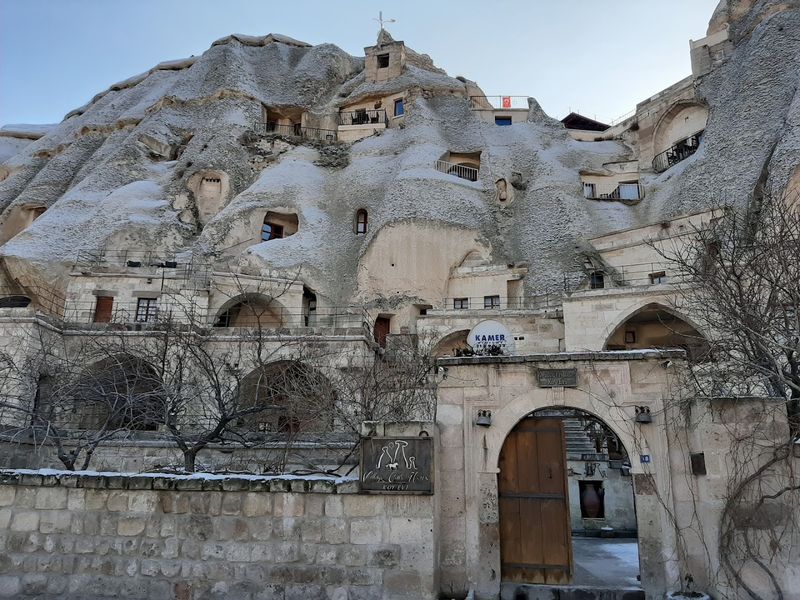
Ortahisar built its entire identity around a single massive rock. The natural volcanic formation known as Ortahisar Castle towers over the town center, riddled with caves, tunnels, dovecotes, carved rooms, and connecting passages that residents used for centuries as a fortress and refuge.
Traditional stone houses crowd the slopes surrounding the rock, creating a tightly packed landscape of terraces, rooftops, narrow lanes, and carved chambers that seem to multiply the closer you look. The town is also known for historic storage caves where naturally stable temperatures helped preserve agricultural products, particularly citrus fruit brought in from coastal regions.
From elevated viewpoints around Ortahisar, visitors can see Cappadocia’s signature valleys, vineyards, fairy chimneys, and distant rock formations stretching across the landscape. Ortahisar recently joined Turkiye’s Cittaslow slow-city network, reflecting its quieter pace compared to nearby Goreme.
The castle formation remains the defining historic landmark of the town and still draws visitors looking for a less crowded Cappadocia experience.
Amasya, Turkiye
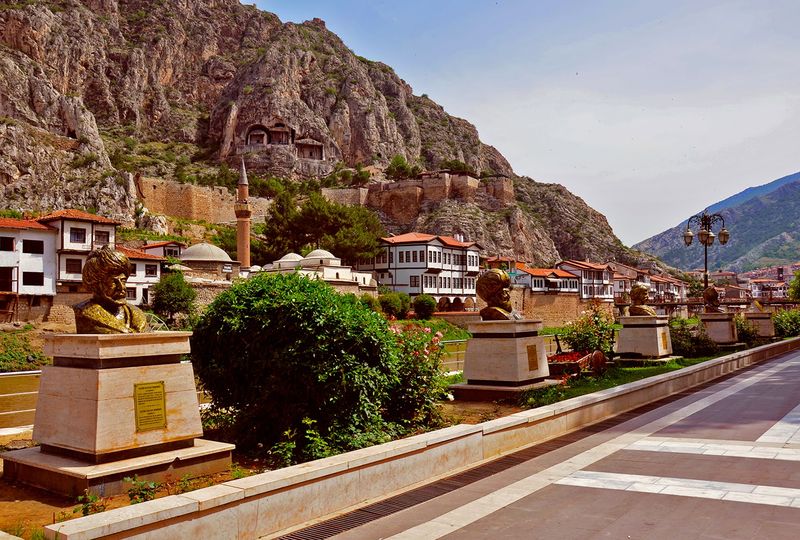
High on the cliffs above Amasya, dark openings carved into the mountainside mark the royal tombs of the ancient Pontic kings. These monumental chamber tombs were cut directly into the face of Harsena Mountain and remain visible from nearly every point in the valley below.
Down at river level, the city presents an entirely different character. Rows of Ottoman-era Yaliboyu houses line the banks of the Yesilirmak River, many featuring timber frames, projecting upper floors, white facades, and courtyards pressed against the base of the mountain.
Bridges connect the riverfront neighborhoods with markets, mosques, museums, and public squares.
Climbing toward Amasya Castle rewards visitors with wider views of the valley and the way the city is genuinely sandwiched between water and rock. The combination of royal cliff tombs, elegant Ottoman architecture, steep slopes, and a river running through the center gives Amasya one of the most distinctive historic settings in all of Turkiye.
Vardzia, Samtskhe-Javakheti, Georgia
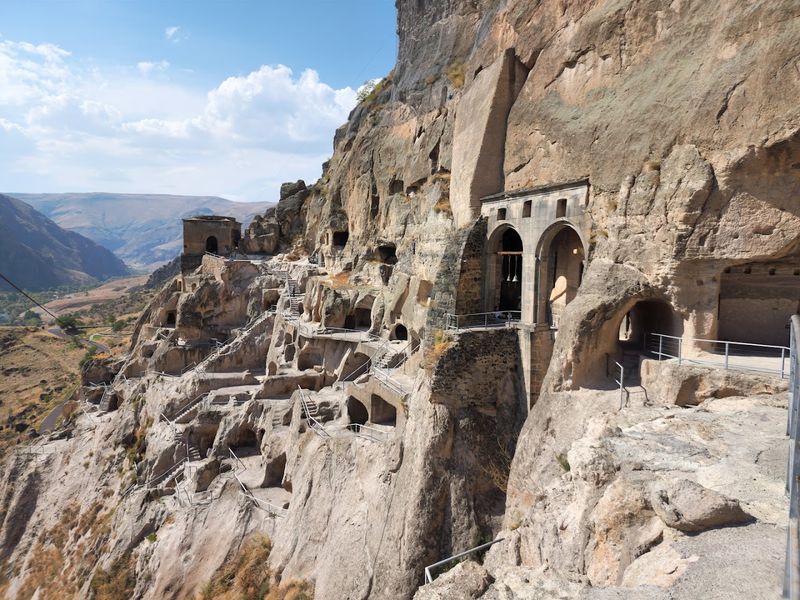
Vardzia is not a city that was built against a cliff. It was built inside one.
This 12th-century fortress city was carved directly into a volcanic rock face above the Mtkvari River in southern Georgia, extending for approximately 900 meters along the cliff with multiple connected levels.
Construction is closely linked to King Giorgi III and his daughter, Queen Tamar, under whose reign Vardzia developed into a significant political, cultural, and religious center. The complex once contained living quarters, storage rooms, wine cellars, chapels, water systems, and defensive tunnels hidden within the mountain itself.
Earthquakes and erosion exposed many chambers that were originally concealed inside the rock. The Church of the Dormition remains one of the most important surviving spaces and still preserves medieval wall paintings.
Vardzia is no longer a functioning city, but it operates as an active monastic and archaeological site promoted by Georgia’s national tourism administration. Few places in the Caucasus match its scale or history.
Ait Ben Haddou, Ouarzazate Province, Morocco
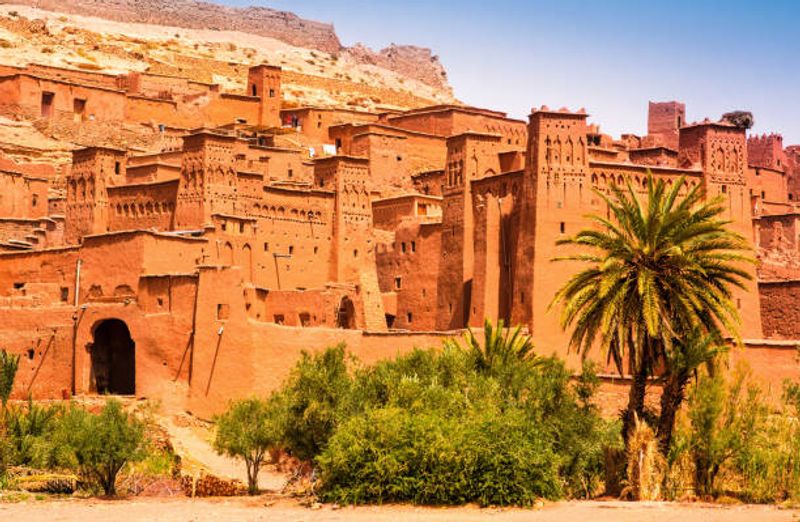
Ait Ben Haddou rises from the landscape like it was shaped by the same hands that formed the surrounding desert hills, because in a sense it was. This fortified earthen settlement was constructed on a slope along the former caravan route between Marrakesh and the Sahara using mud-brick techniques developed over generations.
The ksar is made up of tightly grouped homes enclosed by defensive walls reinforced with corner towers. Buildings rise in layers toward a hilltop granary, creating a unified structure that reads as a single rising form rather than a collection of separate houses.
Narrow passageways connect family homes, small public spaces, towers, and open terraces throughout the interior.
While many residents have moved to a newer village across the river, parts of the historic ksar remain occupied and maintained. UNESCO recognized Ait Ben Haddou as an important example of southern Moroccan earthen architecture.
It is a regular stop on official tourism routes through the Ouarzazate region and remains one of Morocco’s most photographed historic sites.
Mardin, Turkiye
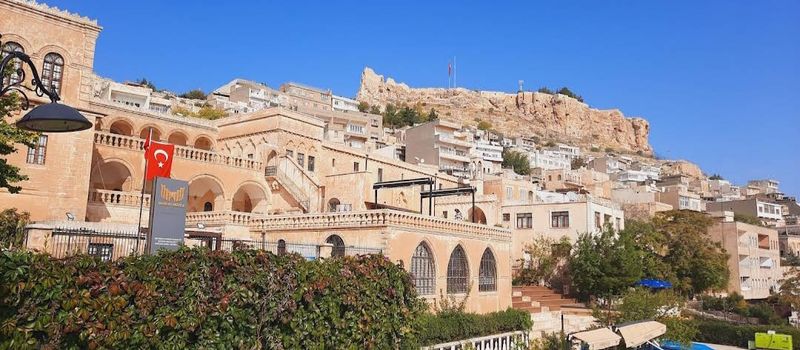
Mardin is a city that uses its hillside the way other cities use their best real estate. Its honey-colored stone buildings spread in terraces from a hilltop down toward the plains of Mesopotamia, with many rooftops functioning almost as open courtyards for the houses built directly above them.
The old city contains narrow lanes, covered passageways, elaborately carved limestone facades, religious buildings from multiple traditions, mansions, bazaars, and historic madrasas. That consistent golden limestone gives the center a unified appearance, particularly in the warm light of late afternoon when the stone seems to glow against the wide plains below.
Mardin’s elevated position provided both defensive advantages and panoramic views stretching far across the surrounding landscape. The city reflects centuries of interaction among different cultures, languages, faiths, and trading communities.
Current official itineraries highlight Mardin Museum, Kasimiye Madrasa, the citadel area, and nearby monasteries. Despite its ancient appearance, Mardin functions as a living city with active neighborhoods rather than a preserved monument.
Taxco, Guerrero, Mexico
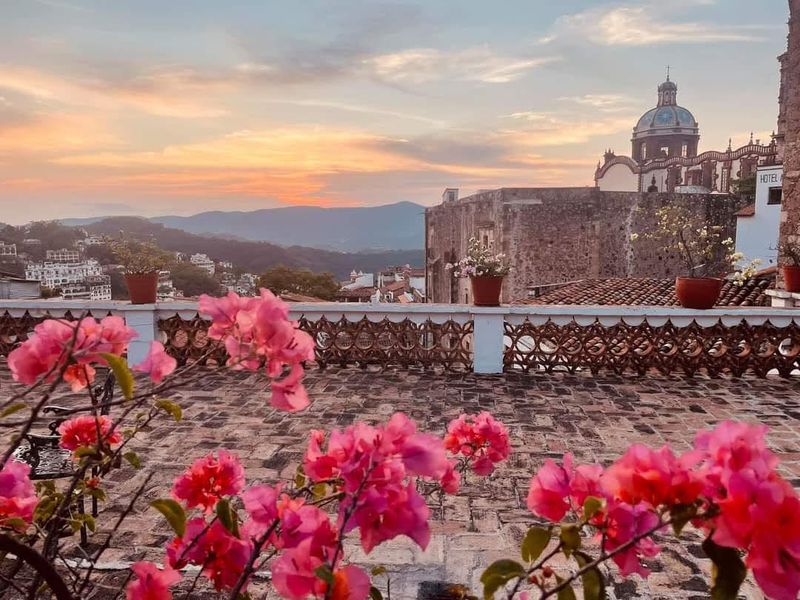
Taxco does not have flat streets. The city climbs across the steep mountains of Guerrero in a tangle of white houses, red-tiled roofs, plazas, and narrow roads that follow every curve and fold of the hillside without apology.
Getting from one neighborhood to another is often a genuine uphill commitment.
The city built its identity around silver. Mining and silver production shaped Taxco’s economy and culture for centuries, and that tradition remains visible today in workshops, jewelry stores, open-air markets, and cultural events that celebrate the craft.
At the center of it all stands the Church of Santa Prisca and San Sebastian, a celebrated colonial landmark featuring an elaborate carved stone facade and a richly decorated interior completed in the 18th century.
Hillside viewpoints reveal just how densely Taxco’s historic buildings are packed together across the terrain. The city holds Pueblo Magico designation and draws visitors to its silver shops, historic center, museums, churches, mountain overlooks, and a pre-Hispanic mine discovered beneath a local property.
Share this story