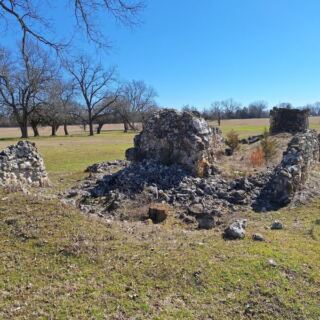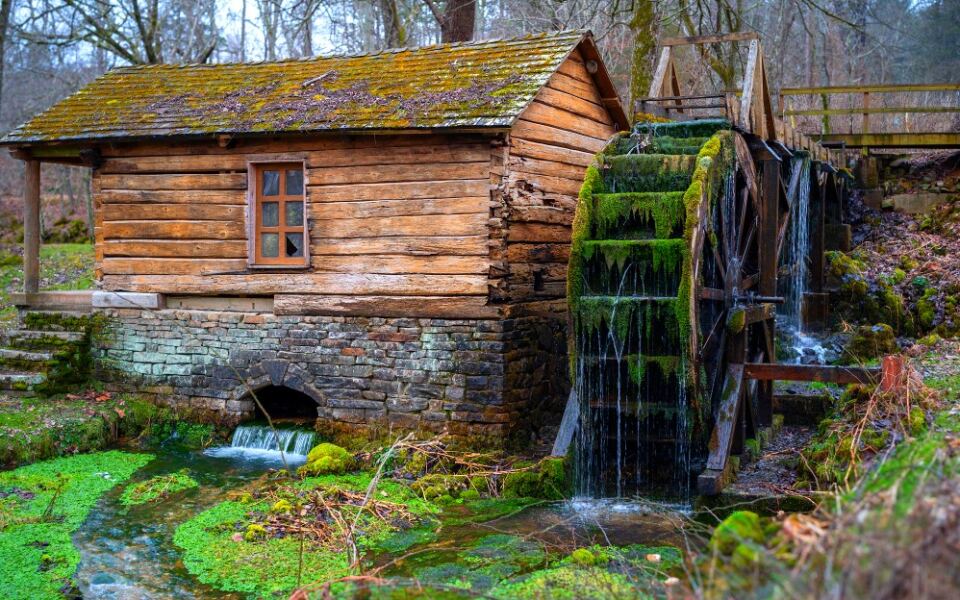
A Missouri mill once showed up on the back of a U.S. quarter. That coin came out in 2017, and the little red building on it still stands beside a spring in the Ozarks.
I love that detail because it hints at how much these old buildings meant. Farmers once hauled wagons of wheat and corn to them.
Rushing water turned the wheels, and families went home with flour and meal.
Many of these mills sit next to springs so clear you can see the bottom. Some have become museums inside state parks.
Others are quiet roadside sights on private land, slowly weathering with each passing year.
The variety surprised me most. One mill made wool cloth with a steam engine.
Another shares a riverbank with a covered bridge. A few hide down gravel roads in the national forest.
Ready to see which ones are worth the drive?
Alley Spring Mill, Eminence, Missouri
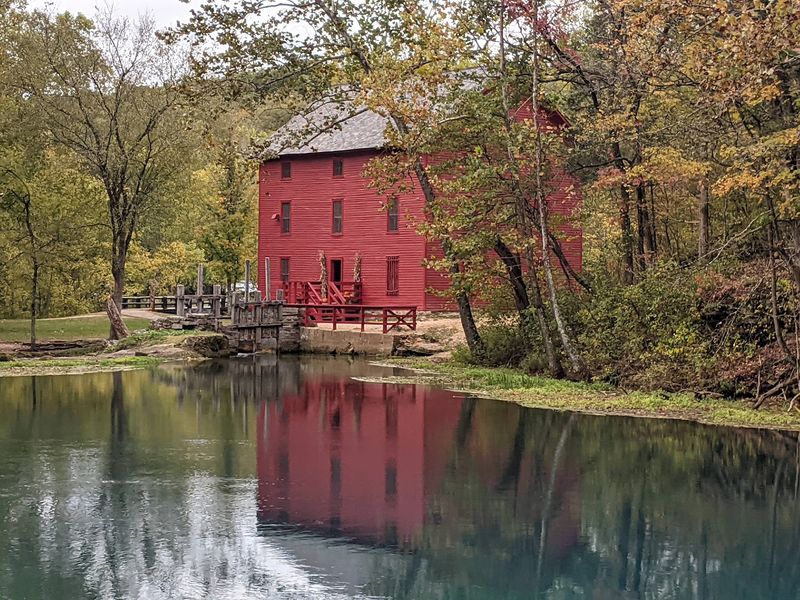
Got any spare change? Check for the 2017 Ozark National Scenic Riverways quarter, because the bright red building on it is this very mill.
Built in 1894, Alley Spring Mill was a roller mill, a newer style that used steel rollers instead of heavy millstones. That upgrade helped local farmers get finer flour without traveling far from home.
The spring next to it pours out millions of gallons of water each day. Its deep blue-green color is a big reason photographers love this spot.
You can walk a short trail that loops around the spring and up to the mill. During seasonal hours, the National Park Service opens the building so you can see exhibits on milling history.
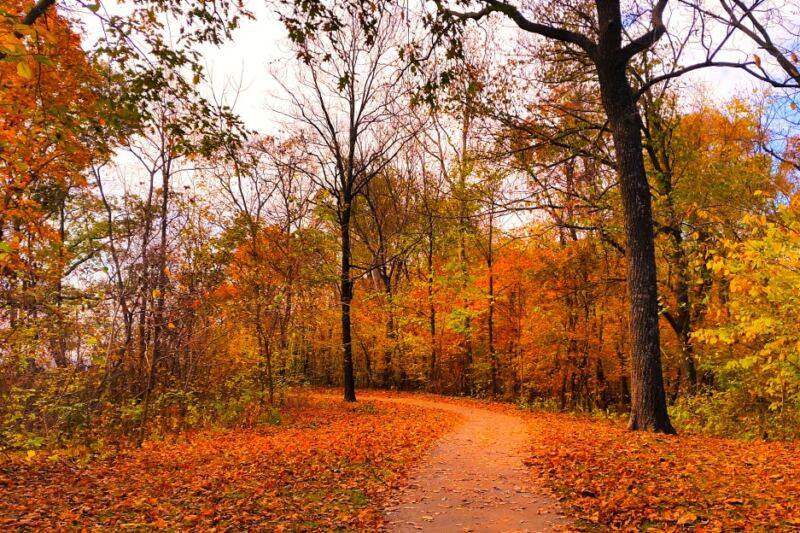
Plan for a picnic, since the area has shaded grounds nearby. Fall color makes the red siding pop even more.
Dillard Mill, Davisville, Missouri
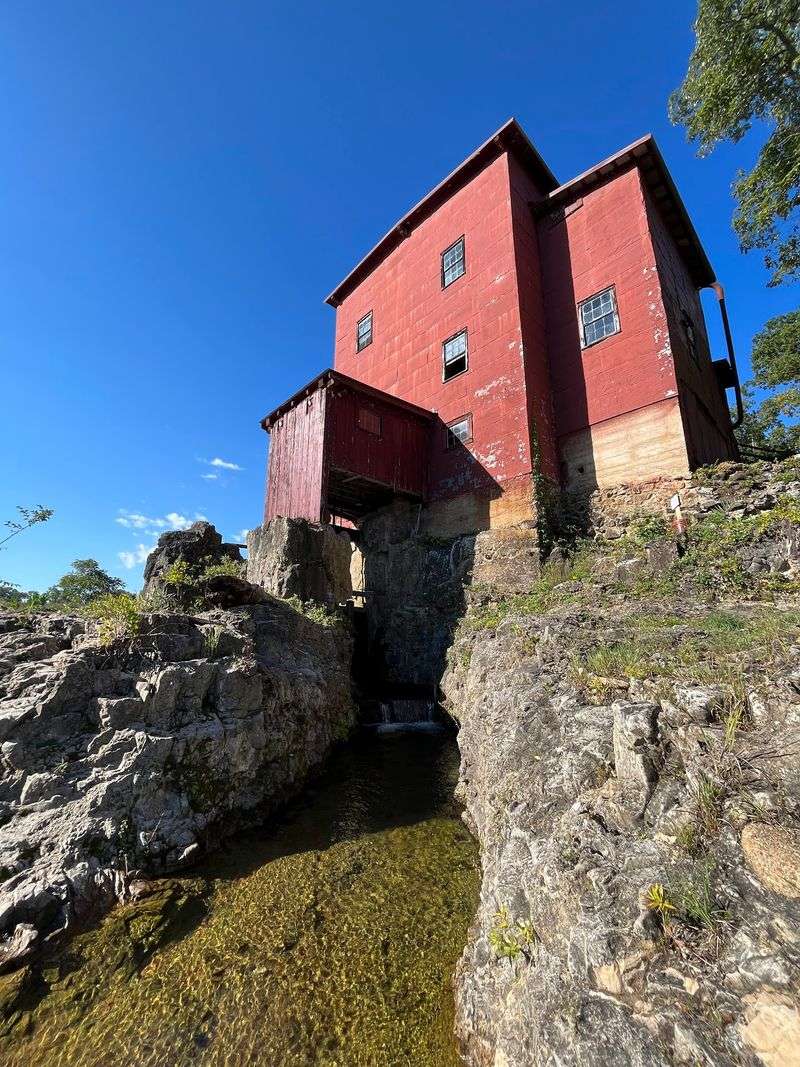
Inside this red mill, much of the original machinery is still in place. That makes Dillard Mill a rare chance to see how wheat actually turned into flour.
The current building dates to 1908, replacing earlier mills on the same spot. Water from Huzzah Creek once powered the whole operation, and a small dam still creates a pretty spill beside the building.
Today the property is a Missouri state historic site. Guided tours walk you through the gears, belts, and grinding equipment, so check the schedule before heading out.
The setting feels far from busy roads, and that’s part of the fun. Fishing is allowed in the creek with a proper license, and a picnic area sits close by.
Autumn is a favorite season here. Golden leaves around red siding make for easy, colorful photos, even with a phone.
Bollinger Mill, Burfordville, Missouri
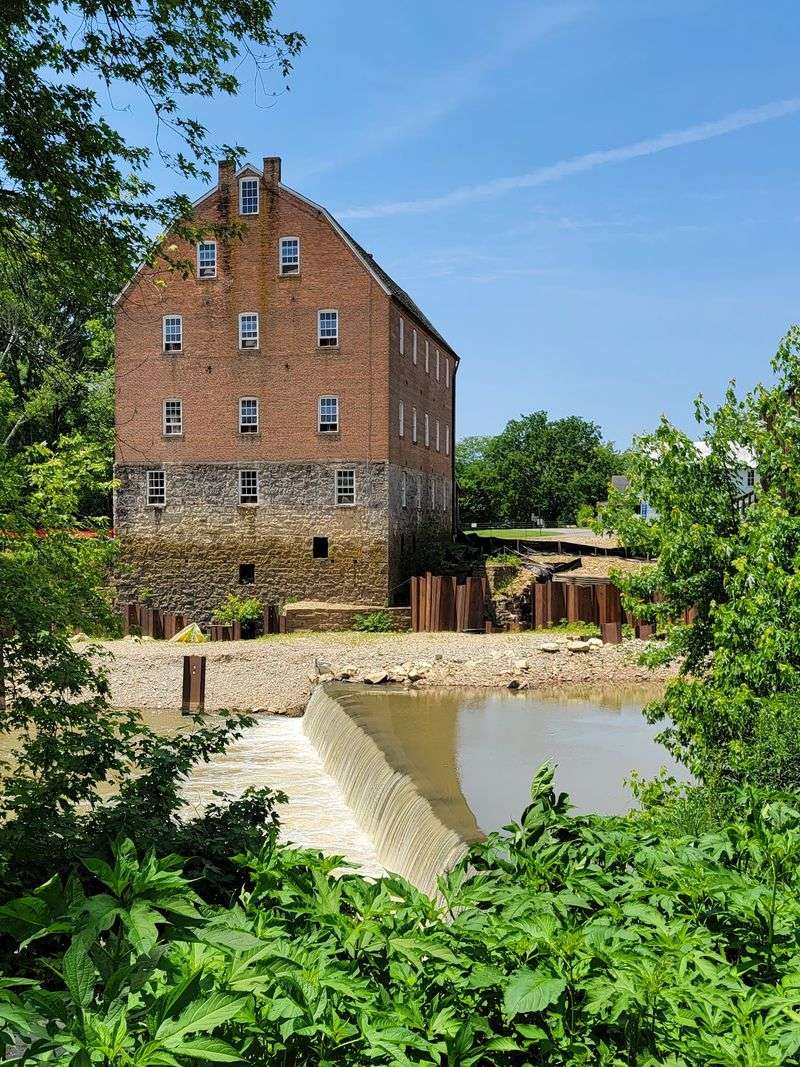
Two historic landmarks for the price of one stop? That’s the deal at Bollinger Mill State Historic Site.
The massive four-story mill rises beside the Whitewater River. Its stone foundation goes back even further than the current building, which was finished around 1867 after an earlier mill was lost during the Civil War era.
Right next door sits the Burfordville Covered Bridge. Only four historic covered bridges survive in Missouri, so seeing one so close to a mill is a real treat for history fans.
Guided tours explain how river power once moved the grinding stones and machinery. The visitor center offers background on the Bollinger family, who settled the area in the early 1800s.
Bring comfortable shoes and take your time. The riverbank offers several angles for photos, especially where the mill and bridge appear together in one shot.
Hodgson Water Mill, Dora, Missouri
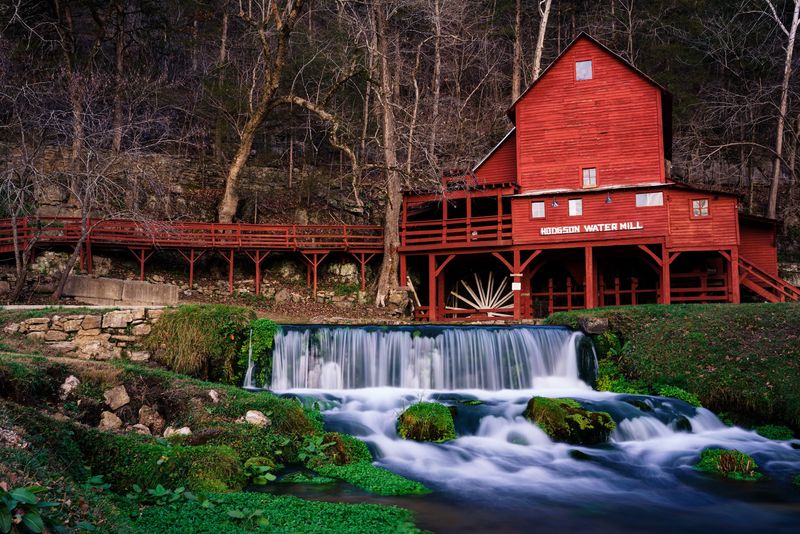
Spring water bubbles up right underneath this red mill. Few buildings anywhere can claim their own natural water source flowing straight out from below.
Hodgson Water Mill dates to 1897 and leans against a wooded limestone bluff in Ozark County. The spring feeds a clear pool before heading into Bryant Creek.
Over the years, that steady water did more than grind grain. It also powered a sawmill and a cotton gin, showing how one good spring could support several local jobs.
The mill is privately owned, so you won’t be touring the inside. You can still admire and photograph the exterior from the roadside without stepping onto the property.
Many photographers rank it among the prettiest mills in the Ozarks. Arrive on a calm day, and the pond often reflects the red siding beautifully.
Falling Spring Mill, Winona, Missouri
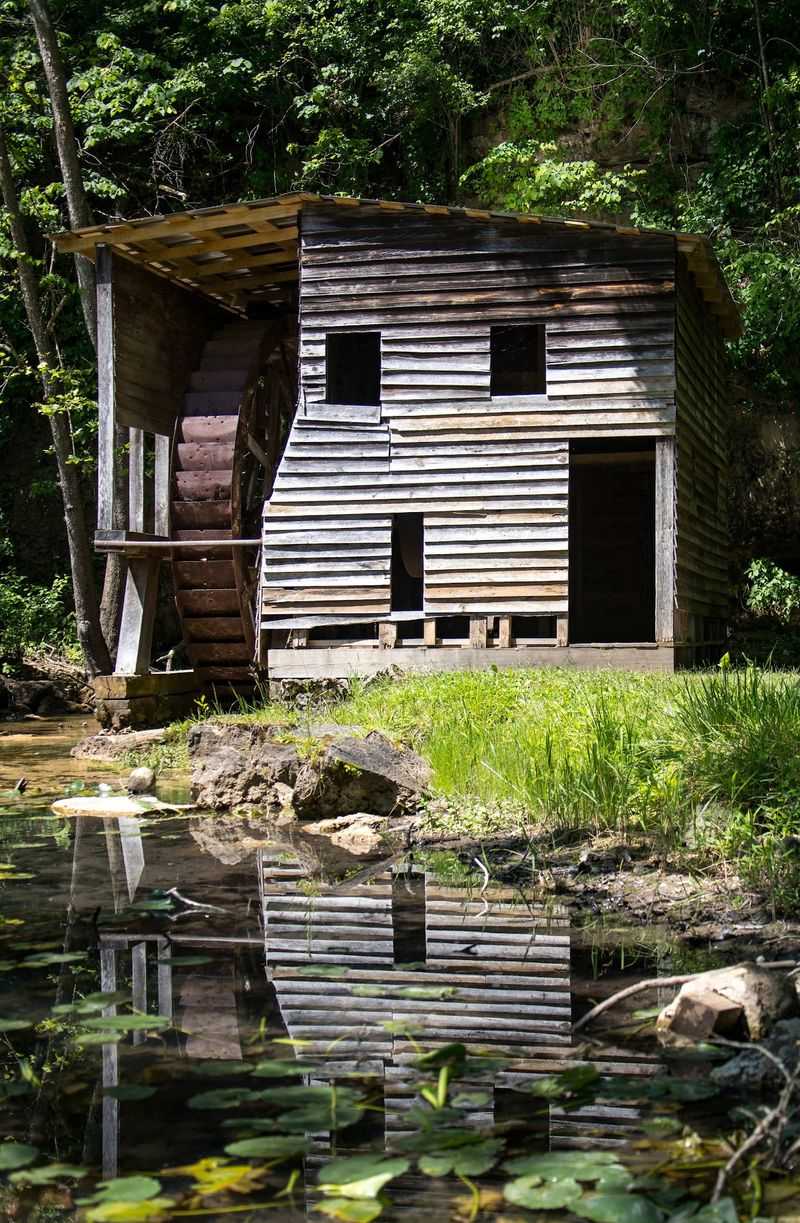
A waterfall pouring out of a rock bluff gives this little mill its name. The spring water drops into a small pond right beside the building.
Falling Spring Mill was built in the 1920s inside what is now Mark Twain National Forest. It was a busy little workhorse, grinding corn, sawing shingles, and even making electricity.
The building is small and plain, with weathered wood siding. That simple look is exactly why it photographs so well.
Nearby, an old log cabin adds more frontier flavor to the scene. A picnic area makes it easy to linger for lunch.
Getting here means taking a gravel forest road, so a slow, careful drive is smart. Road conditions can change after heavy rain, and cell service is spotty.
Klepzig Mill, Winona, Missouri
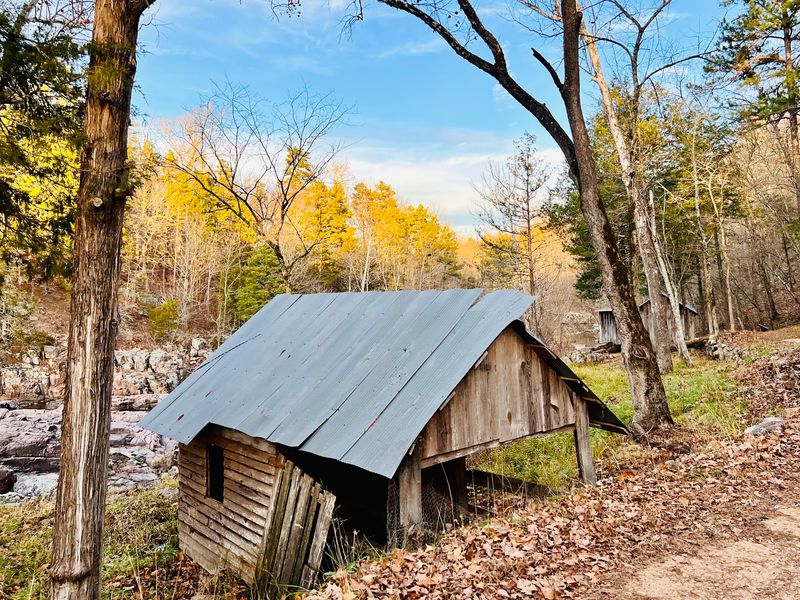
Fancy? Not even close.
Klepzig Mill is a small, rough wooden building, and that plainness is the whole point.
It sits on Rocky Creek inside Ozark National Scenic Riverways. Rock shut-ins along the creek create little chutes and pools, giving the area a wild, rugged setting.
The Klepzig family built the mill in the late 1920s to grind grain for their own farm and neighbors. Some mechanical parts still remain, offering a look at homemade rural engineering.
Reaching it takes some effort. You’ll drive a narrow gravel road or hike in, so high-clearance vehicles and sturdy shoes help.
Bring water and snacks, since there are no services nearby. The quiet creek and rocky pools make the trip feel like a small adventure.
Watkins Woolen Mill, Lawson, Missouri
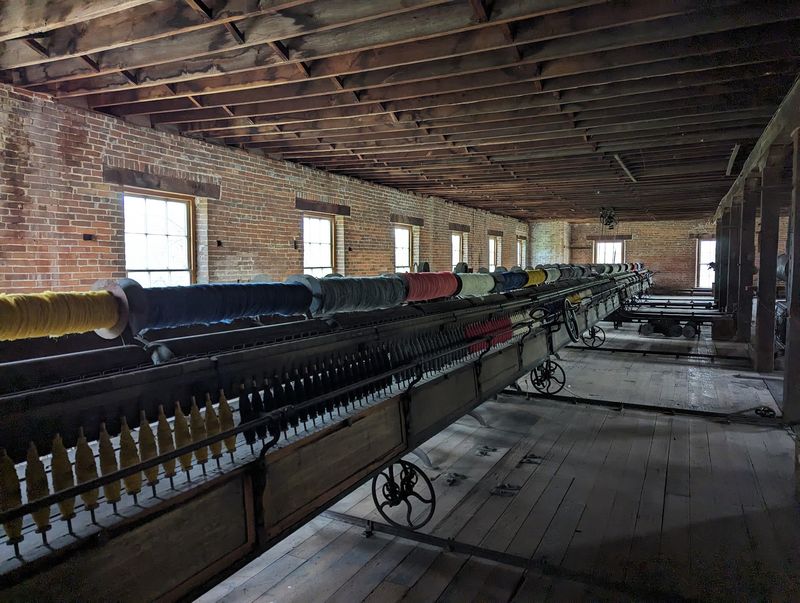
Wool, not wheat, was the business here. Watkins Woolen Mill turned sheep’s fleece into yarn and cloth during the 1800s.
Waltus Watkins built the three-story brick factory in 1860 and powered it with a steam engine. The mill is known for keeping its original textile machinery, which is extremely rare in the United States.
Guided tours show carding machines, spinning equipment, and looms in their original spots. It’s a great lesson for kids who wonder where clothes came from before big stores.
The Watkins family home also still stands, along with a brick church and an octagonal school. Together they show how a whole farm community worked.
The surrounding state park adds a lake, camping, and a paved bike trail. That makes this an easy all-day outing for families.
Wommack Mill, Fair Grove, Missouri
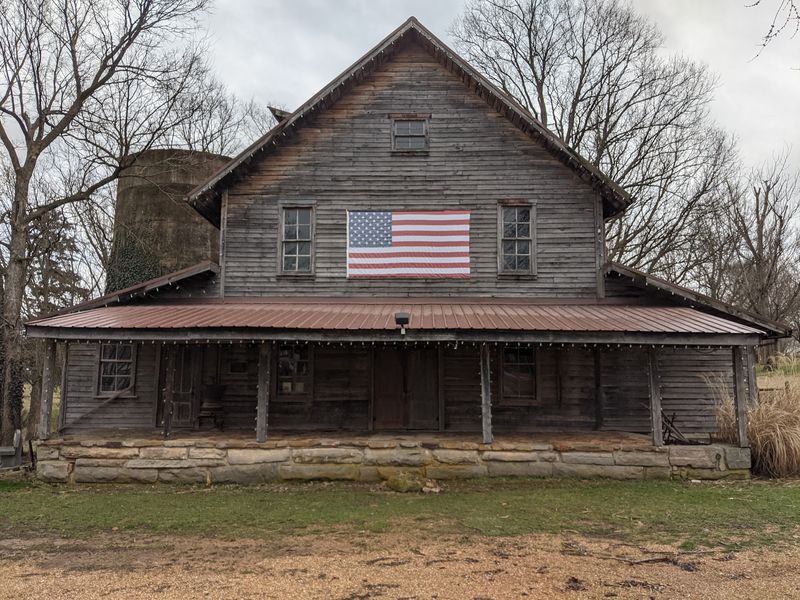
Two tall grain silos give this mill a look you won’t confuse with any creekside gristmill. Wommack Mill ran on steam, so it didn’t need a rushing stream.
The mill was built in 1883 and served farmers in the Fair Grove area for decades. It finally closed as a business in 1969.
Instead of letting it crumble, the Fair Grove Historical and Preservation Society stepped in. Volunteers restored the building, and it now serves as a community landmark.
The mill sits close to town, which makes it an easy stop. Each fall, the Fair Grove Heritage Reunion brings demonstrations, crafts, and old-time activities to the grounds.
Tours can often be arranged through the society. Reach out ahead of time if you’d like to see inside.
Reed Spring Mill, Centerville, Missouri
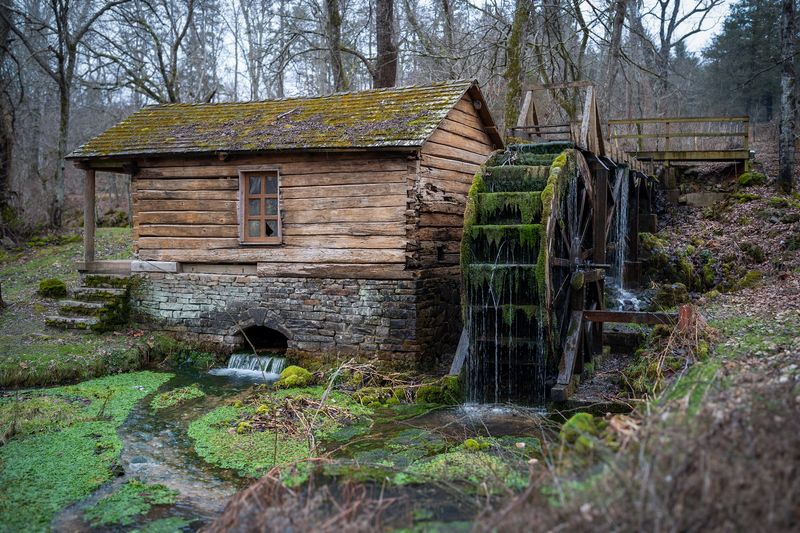
Log walls set this Reynolds County mill apart from the painted wooden and brick mills found elsewhere in the state. It’s a simpler, more rustic piece of Missouri history.
The mill sits in quiet countryside near Centerville, far from major highways. That remote location is part of its appeal for backroads explorers.
Please remember that the property is privately owned. Admire and photograph it from the public road rather than walking onto the land.
Detailed history for this mill is harder to find than for the state park mills. That makes it best enjoyed as a scenic stop rather than an educational tour.
Photographers who like old Ozark buildings will find plenty to frame here. Combine it with a drive through Reynolds County’s hills and nearby rivers for a fuller day.
Greer Mill, Alton, Missouri
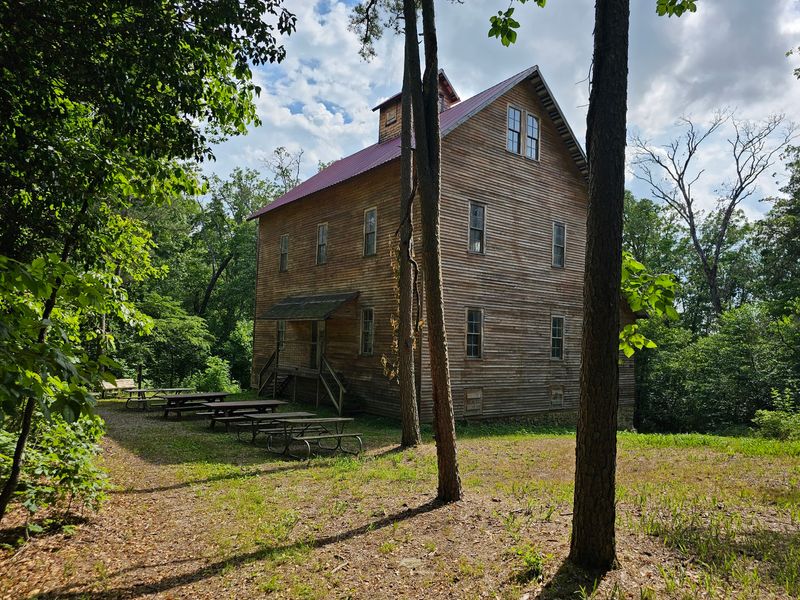
Most mills hug the water, but Greer Mill sits up on a ridge. Builders used a cable system to send power uphill from the spring below.
The surviving mill dates to 1883 and overlooks Greer Spring, one of Missouri’s largest springs. The spring feeds the Eleven Point River with remarkably clear water.
The Forest Service now manages the area within Mark Twain National Forest. Restoration work in 2016 helped stabilize the old wooden building.
Access to the mill itself is limited, so check current rules before visiting. The separate Greer Spring Trail offers a hike down to the spring.
That trail is steep on the way back up. Pack water and allow extra time, especially in summer heat.
Rockbridge Mill, Rockbridge, Missouri
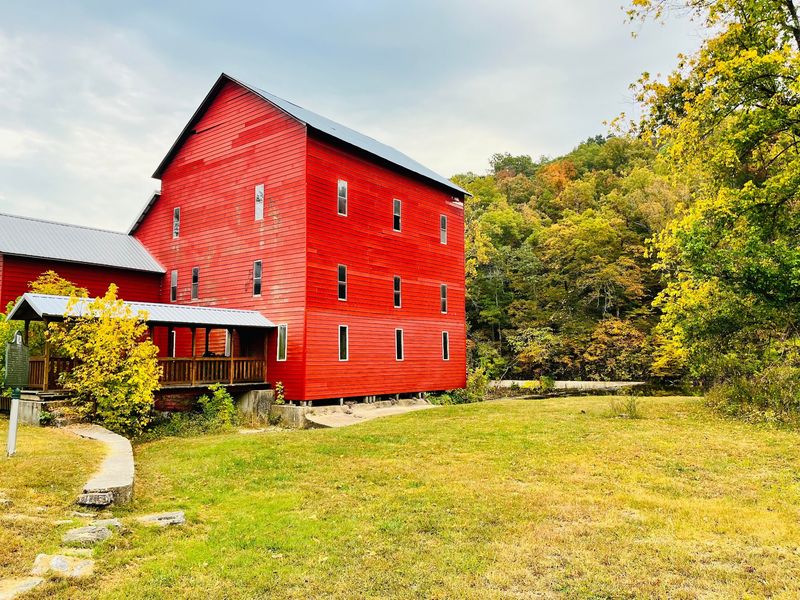
Trout fishing and a historic mill on the same property? Rockbridge pulls off that combination nicely.
The mill stands at the Rockbridge Rainbow Trout and Game Ranch in Ozark County. Its red siding and stonework sit beside Spring Creek, where a small dam spills water below the building.
Rockbridge was once a small village with a bank, general store, and mill. The mill no longer grinds grain, but it remains the heart of the old town site.
Guests come for stocked trout streams, lodging, and an on-site restaurant. You can fish and then stroll over to see the mill up close.
Rules and fees apply for fishing, so check with the resort first. Even non-anglers can enjoy the scenery and history on a quick visit.
Hulston Mill, Everton, Missouri
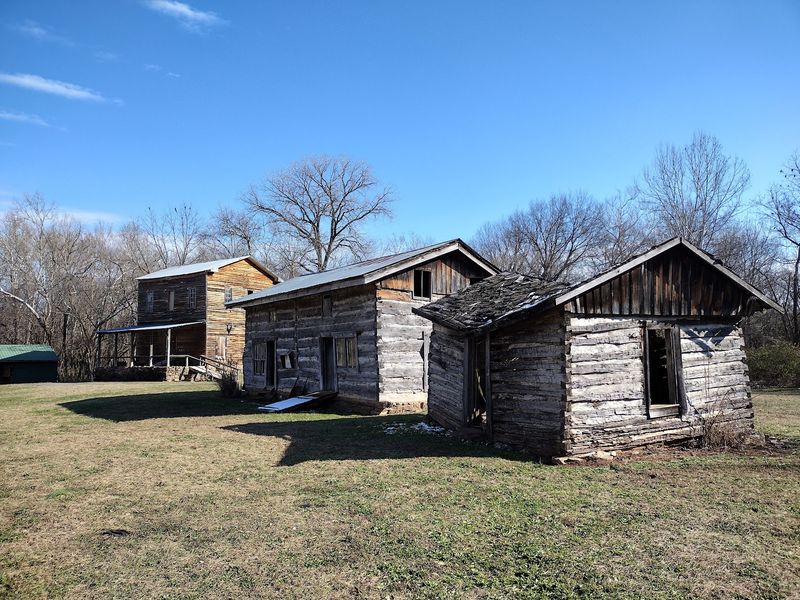
Moved, rebuilt, and lovingly maintained, Hulston Mill has an unusual backstory. The original stood near the Sac River in Dade County before the area changed with the creation of Stockton Lake.
The Dade County Historical Society restored the mill in a historical park near Everton. Today the site serves as a hub for local heritage.
The traditional wooden mill and waterwheel give it an old country look. Other historic structures on the grounds add more to explore.
Crowds here are usually lighter than at the big state park mills. That gives you space to wander and take photos at your own pace.
The park hosts special events, including fall festivals with demonstrations. Check the society’s schedule to plan around one.
Topaz Mill, Cabool, Missouri
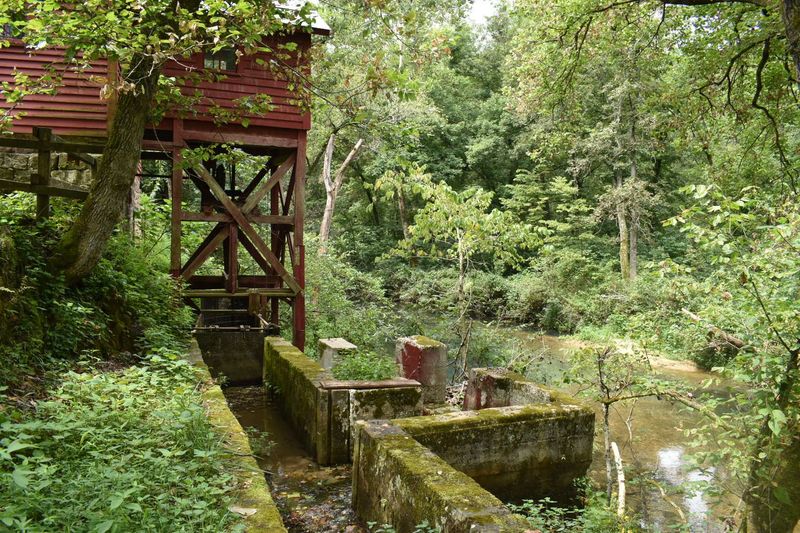
Topaz was once a tiny community with a store, a post office, and this mill. Today the old building is one of the few pieces left of that village.
The mill stands in Douglas County near the North Fork of the White River area. A spring nearby once supplied the power for the operation.
Its weathered wood and remote setting make it a great stop for backroads photographers. You won’t find gift shops or busy parking lots here.
The site is not a public park, and access arrangements can change. Check ahead before making the drive so you know what’s allowed.
Pair your trip with other Ozark mills nearby, like Hodgson or Rockbridge. A loop drive can easily cover several in one day.
Paydown Grist Mill, Belle, Missouri
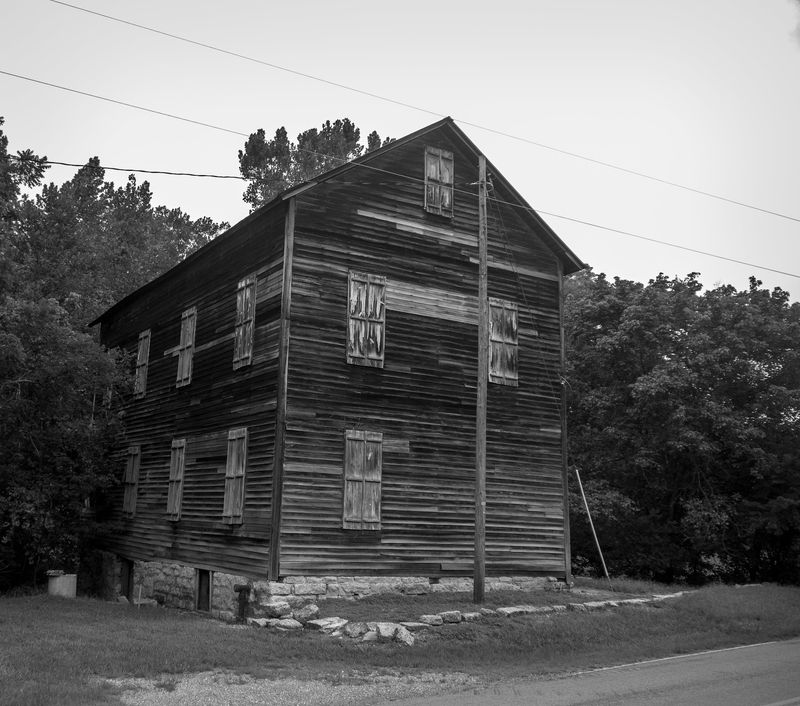
Not every mill gets a fresh coat of paint. Paydown Grist Mill shows what time does to a building left mostly alone.
The three-story structure sits on a limestone foundation along Highway 42 between Belle and Vienna. Paydown was once a small community near the Gasconade River area.
Its sagging lines and faded wood tell a different story than the restored state park mills. Here, you see the history in the wear and tear.
The property is privately owned, so stay on the roadside. Pull off safely and avoid stopping on the highway shoulder.
Photographers often love the textures in old wood and stone. Morning or late afternoon light can bring out those details nicely.
Share this story