Most of us have dropped a plate and swept the pieces straight into the trash. A handful of stubborn artists looked at those same pieces and saw a future.
They glued broken dishes, mirror bits, bottles, shells, and tile onto walls, ceilings, benches, and even bathtubs until whole buildings disappeared under color. One man spent about 29,000 hours on his house.
Another used toilets and electrical scraps to build a kingdom of thousands of figures. Some of these spots are world-famous landmarks with ticket lines, while others are quiet homes that you can admire from the sidewalk.
Each one has a story about patience, a little bit of rebellion, and a lot of glue. Keep reading to find out where these places are, who made them, and what you should know before you visit.
Fair warning: you may never look at a chipped mug the same way again.
1. Philadelphia’s Magic Gardens, Philadelphia, Pennsylvania
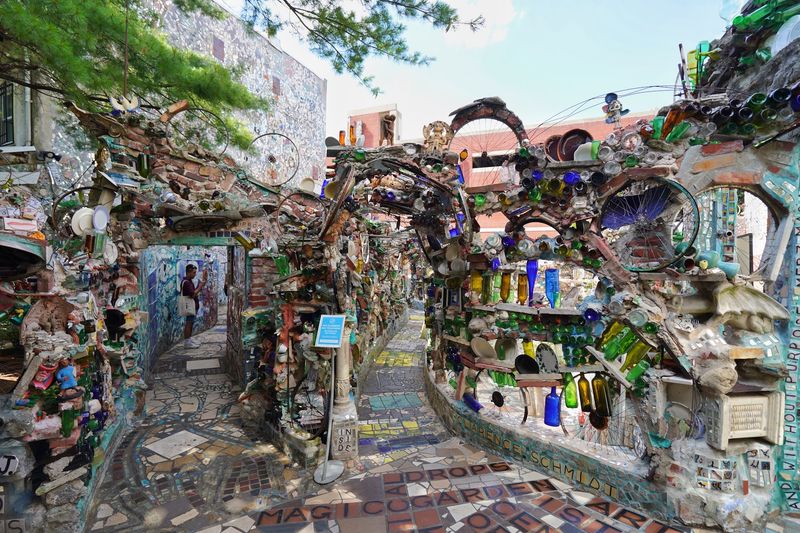
Isaiah Zagar never met a blank wall he could leave alone. Along South Street, he turned buildings and empty lots into a maze of tile, mirror, and found objects.
The site includes indoor galleries plus a two-level outdoor sculpture garden. Look closely and you will spot bottles, bicycle wheels, ceramics, and pieces of folk art pressed into the walls.
Zagar did not stop at the property line. Over decades, he covered more than 200 walls and buildings around the neighborhood, so the art keeps going after you leave.
Here is a tip worth knowing. Some guided visits head into the fully mosaicked basement, where the artwork continues below street level.
Book timed tickets online, since the garden gets busy on weekends. Then take a stroll nearby to hunt for more Zagar murals hiding in plain sight.
2. Maison Picassiette, Chartres, France
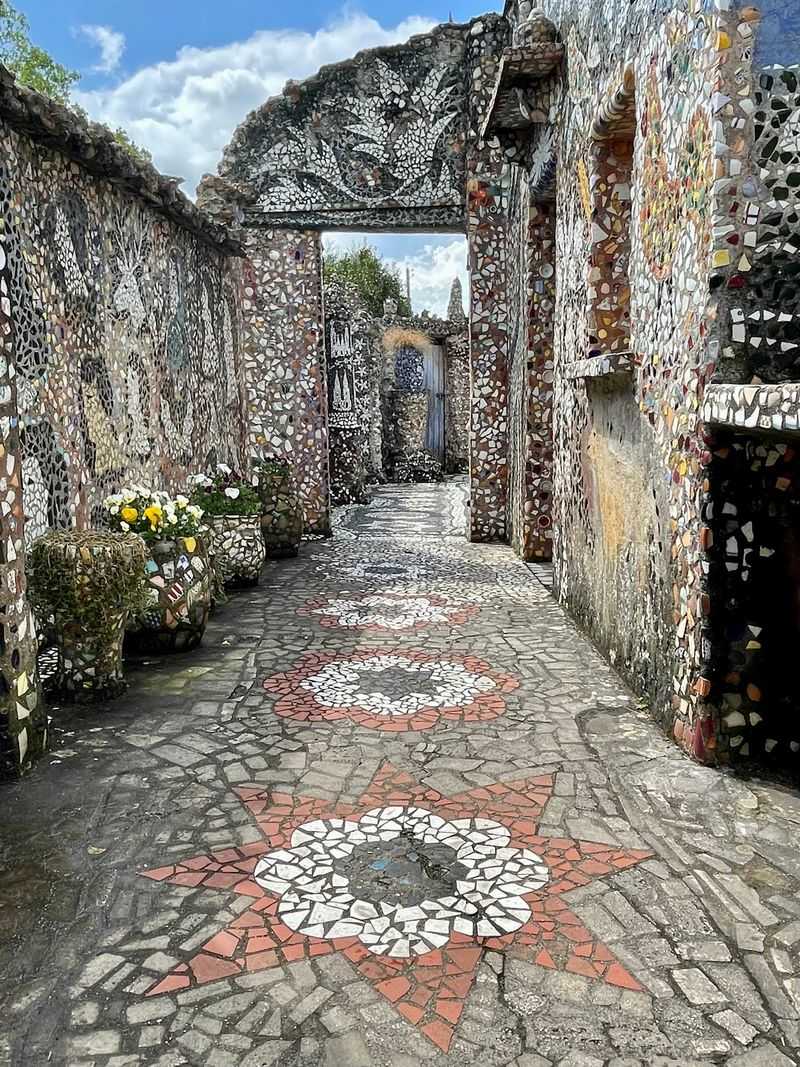
Locals nicknamed Raymond Isidore Picassiette, a playful French term that hints at a plate thief. He earned it honestly by collecting broken dishes, glass, and pottery from anywhere he could.
Back home in Chartres, he got to work. Floors, ceilings, furniture, exterior walls, garden paths, and even a small chapel ended up covered in pieces.
The numbers are staggering. The project took roughly 29,000 hours and used an estimated four million fragments of crockery.
Today, visitors wander through rooms and courtyards filled with faces, animals, flowers, buildings, and religious scenes. Even the furniture joined the party.
Plan your trip between spring and fall, when the house usually opens to the public. The famous Chartres Cathedral sits nearby, so you can see two very different kinds of artistry in one easy day trip from Paris.
3. Watts Towers, Los Angeles, California
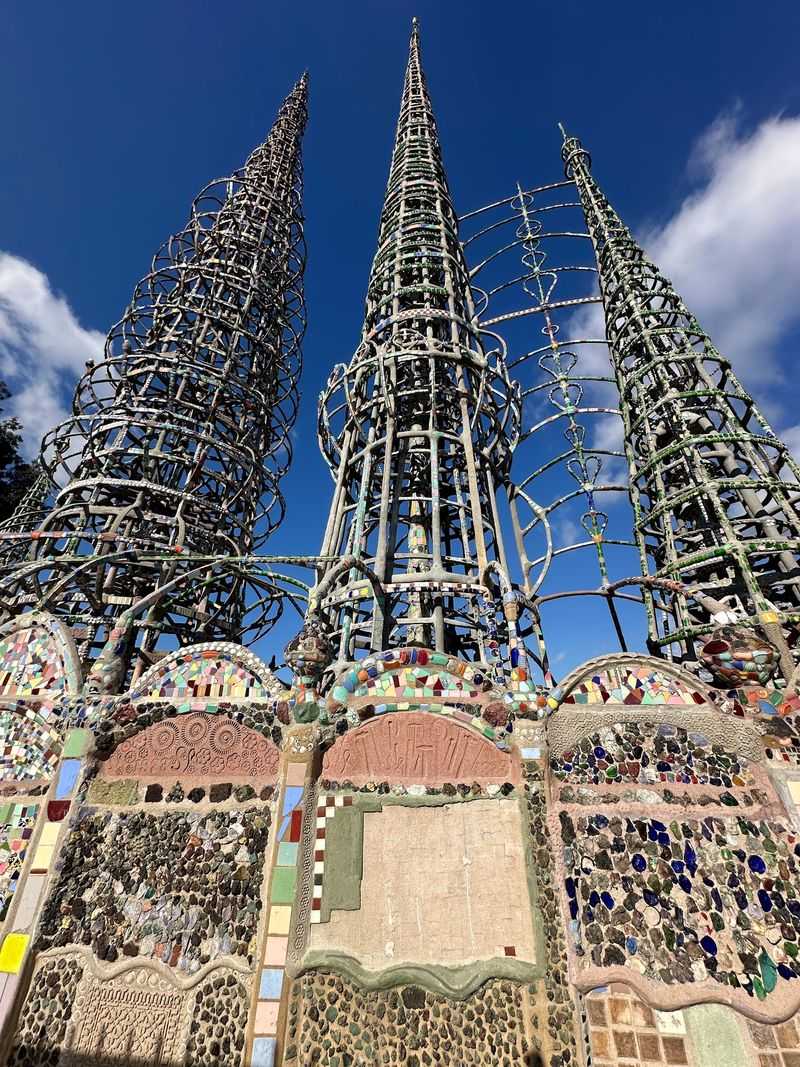
One man, a few hand tools, and more than thirty years of free time. That was the recipe Simon Rodia followed to build the Watts Towers.
The complex holds 17 major structures made of steel and mortar. Rodia decorated them with tile, pottery, glass, shells, rocks, and other materials he found around the city.
Some towers rise high above the surrounding neighborhood, so you can spot them from blocks away. The real fun starts when you get close.
Ordinary fragments turn into patterns on nearly every surface. Keep an eye out for bottle glass and seashells tucked into the designs.
The site reopened for tours in July 2026 after a temporary closure. Check the schedule before you go, because tours are the best way to see the details up close and learn how Rodia pulled it off without any big machines.
4. The Tarot Garden, Capalbio, Italy
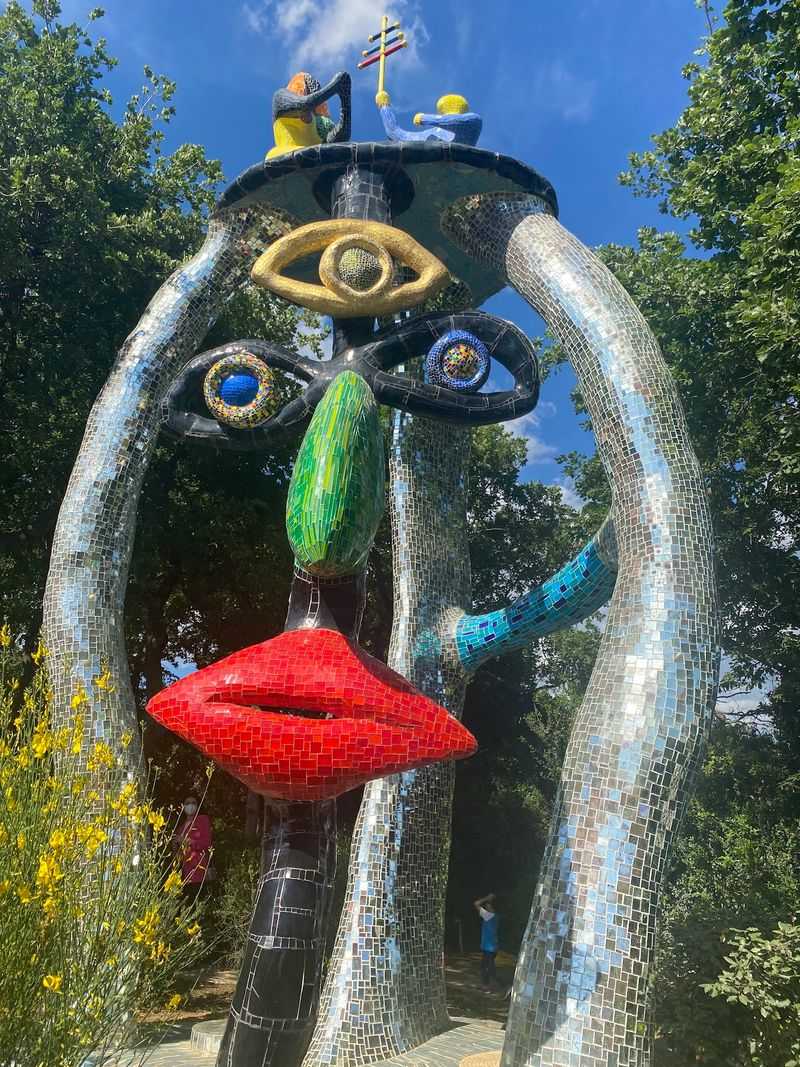
Card readers, take note. Niki de Saint Phalle built an entire hillside in Tuscany around the 22 Major Arcana of the tarot.
Her giant sculptures are covered in ceramic, glass, and mirror mosaics. As the sun moves across the sky, their colors seem to change from hour to hour.
Some figures are big enough to walk inside. Saint Phalle actually lived and worked for a while inside The Empress, which tells you how serious she was about this project.
The result is part sculpture park and part personal fairy tale. Each figure connects to a card, so it helps to read the meanings before you arrive.
The garden is open seasonally, usually from spring into autumn. Wear comfortable shoes for the gravel paths, and give yourself a couple of hours to explore without rushing.
5. Fusterlandia, Havana, Cuba
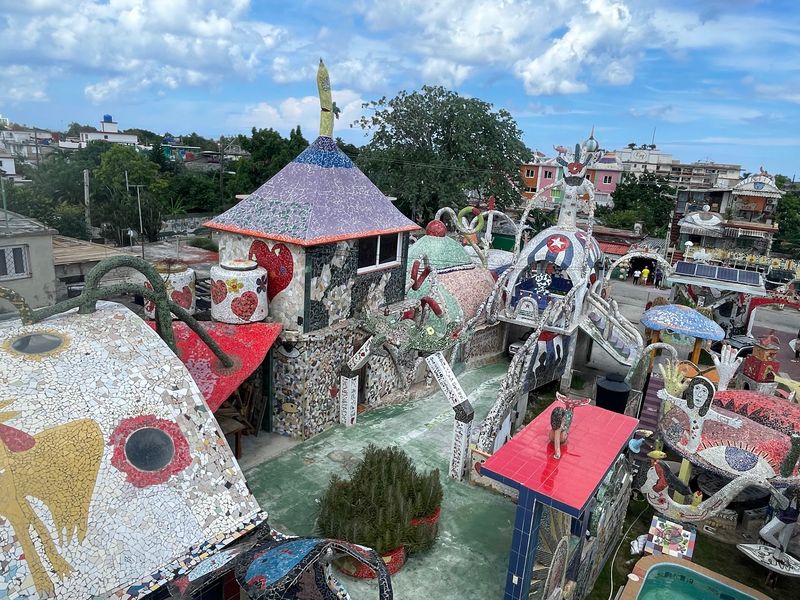
Most artists keep their work inside a studio. José Fuster let his escape into the street.
It started with his home in Jaimanitas, a neighborhood on the edge of Havana. Over the years, his colorful ceramics spread to walls, gateways, benches, fountains, rooftops, and the homes of neighbors.
Now part of the community works as one giant open-air artwork. Bright suns, faces, animals, palm trees, and abstract shapes pop up almost everywhere.
Unlike a museum, there are no velvet ropes here. Kids play, people chat on doorsteps, and daily life carries on right beside the tile.
Bring small change for tips or a souvenir, and remember that real families live in many of these houses. A friendly hello goes a long way.
Taxis from central Havana can get you there in about 30 minutes.
6. Rock Garden of Chandigarh, Chandigarh, India
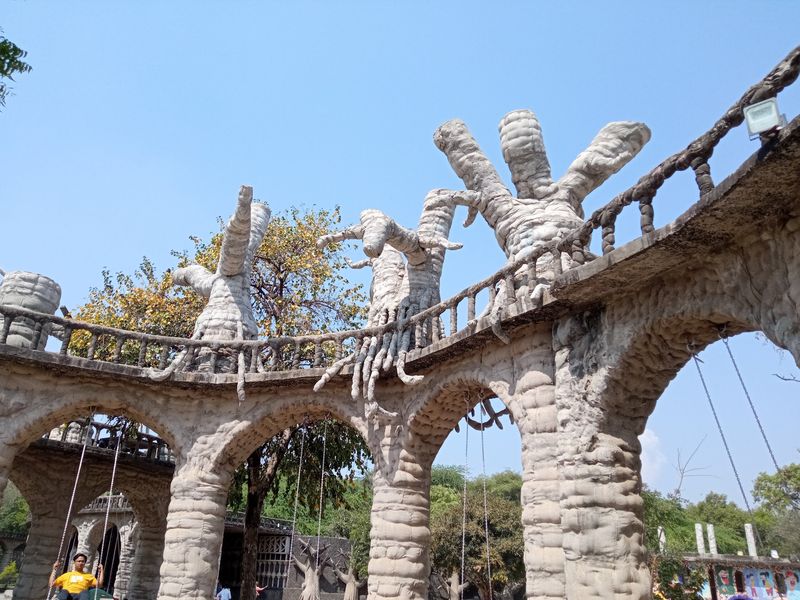
Nek Chand started his garden as a secret. He worked quietly on a patch of land, building figures from things other people threw away.
His supply list was unusual. Broken tiles, ceramic pots, bottles, electrical scraps, bangles, and even old bathroom fixtures all found a new job.
Once the project was discovered, it grew into a huge public attraction. Today, thousands of figures stand in winding courtyards, narrow passages, and beside waterfalls.
The contrast is the whole point. Things that once looked useless now draw big crowds of visitors to Chandigarh.
Arrive early in the day to avoid heat and crowds. Some paths are tight and low, so taller visitors may need to duck.
Tickets are cheap, and you can easily spend two hours following the twisting routes from one section to the next.
7. Mosaic House, London, England
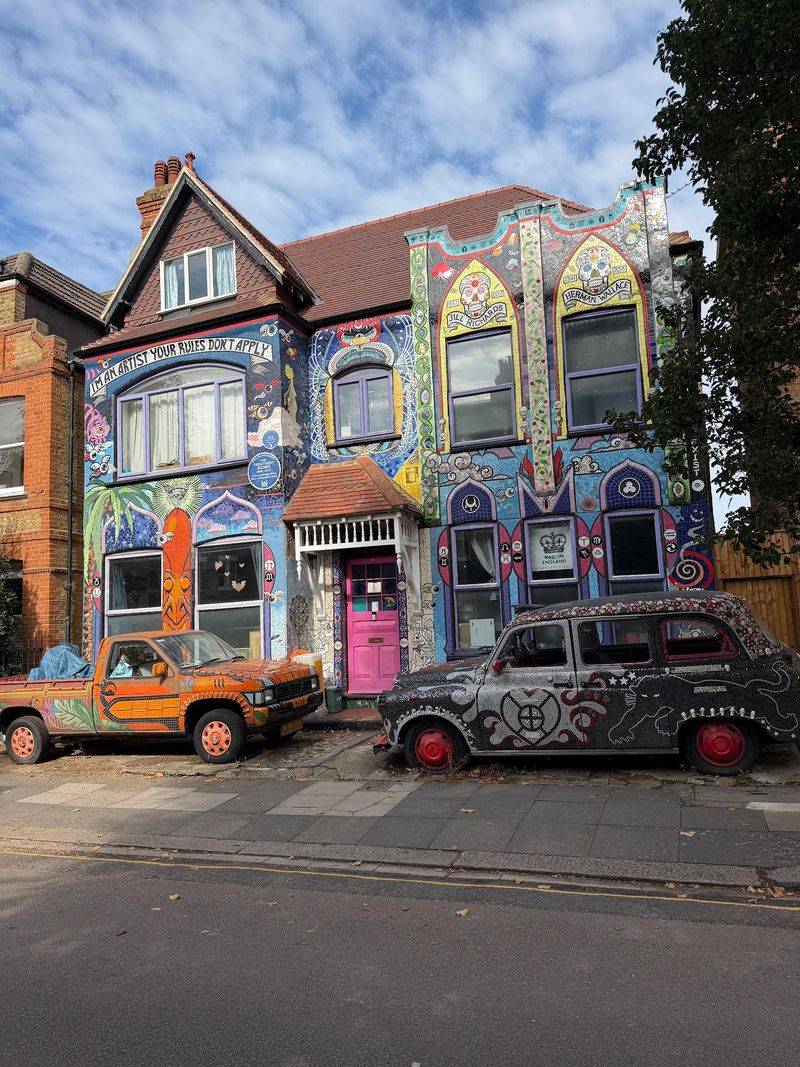
Neighbors in Chiswick have one house on the block that never needs repainting. Carrie Reichardt covered hers in mosaic instead.
From a distance, it simply looks unusual. Up close, you start noticing words, portraits, symbols, political messages, and tiny patterns packed into every section.
Reichardt began on the back wall. Over time, she expanded the work across the property, with help from other mosaic artists who added their own pieces.
The big final push came in 2017. That effort finished the house as you see it today.
Here is the polite part. Mosaic House is still a private home, not a museum, so you cannot go inside.
The exterior, though, is meant to be enjoyed as public art. Stay on the sidewalk, keep your voice low, and snap all the photos you like.
8. Park Güell, Barcelona, Spain
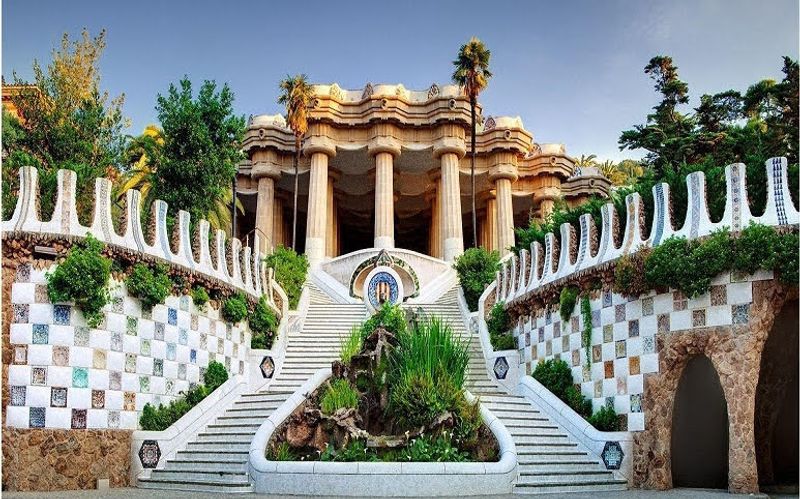
Antoni Gaudí had a talent for turning broken things into something fun. At Park Güell, he proved it with a technique called trencadís.
Trencadís uses irregular pieces of ceramic and tile instead of neat squares. Gaudí spread it across benches, rooftops, and decorative details throughout the park.
The star attraction is the long, wavy bench overlooking Barcelona. Its pattern never repeats, so every few steps you see a new mix of colors and shapes.
Do not miss the famous mosaic lizard on the main staircase. It may be the most photographed reptile in Spain.
The central monumental area requires a timed ticket, and slots often sell out. Book ahead online, and aim for early morning.
The rest of the park is larger than many people expect, so pack water and plan some extra time to wander.
9. La Maison Bleue de Da Costa, Dives-sur-Mer, France
A space dog has a memorial in a Normandy garden. That alone makes La Maison Bleue worth a detour.
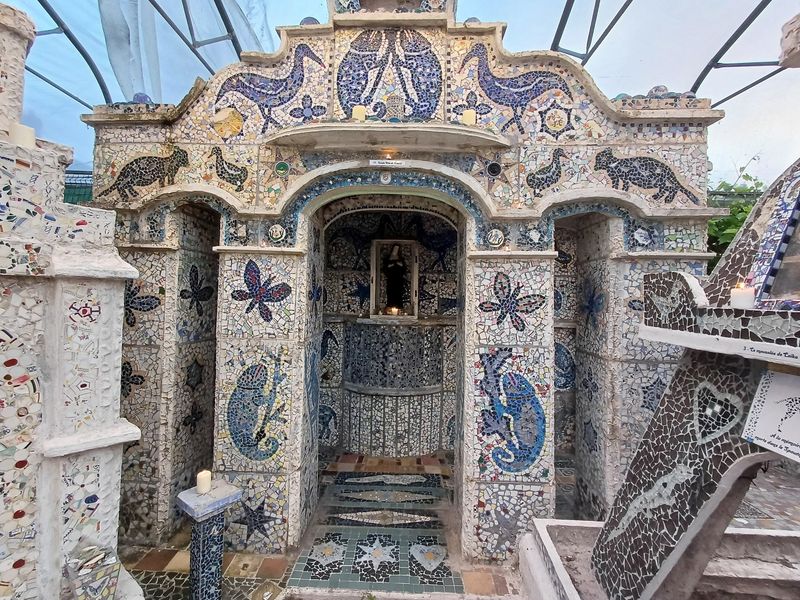
Euclides Ferreira da Costa, a Portuguese-born construction worker, began decorating his home in 1957. He used salvaged ceramic, porcelain, glass, and mirror pieces.
His mosaics feature birds, snakes, deer, religious scenes, and other surprising shapes. The garden also holds small chapels and a tribute to Laika, the dog who flew aboard Sputnik 2.
Da Costa kept creating for decades. Experts now call his home an example of Art Brut, a term for art made by self-taught creators outside the usual art world.
Opening hours are limited and seasonal, so check with the local tourist office first. Dives-sur-Mer sits near the coast, which makes it easy to pair with a beach walk.
10. Palau de la Música Catalana, Barcelona, Spain
Not every mosaic masterpiece needs to cover every inch. Barcelona’s famous concert hall shows what happens when tile shares the stage with other art forms.
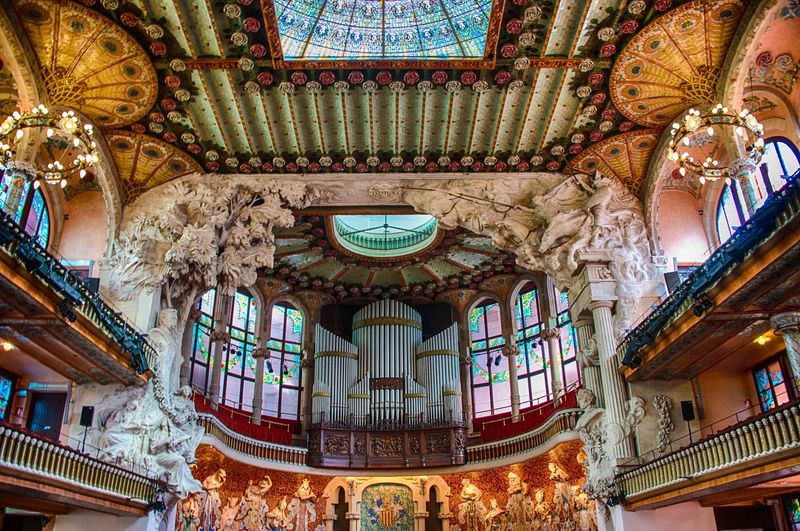
The building celebrates Catalan Modernisme. It mixes mosaics, sculpture, stained glass, ceramics, and detailed architectural decoration.
Outside, a large mosaic crowns part of the front. Inside, mosaic-covered columns compete for attention with a stunning stained-glass skylight above the main hall.
Even the balcony of the Lluís Millet Hall is decorated with mosaics. Many visitors miss it, so look up and around.
You have two ways to see it. Guided tours run most days and explain the history.
For a fuller experience, buy a ticket to a performance and enjoy the art from your seat. Either way, booking ahead is smart, especially during summer travel season.
11. Capela das Almas, Porto, Portugal
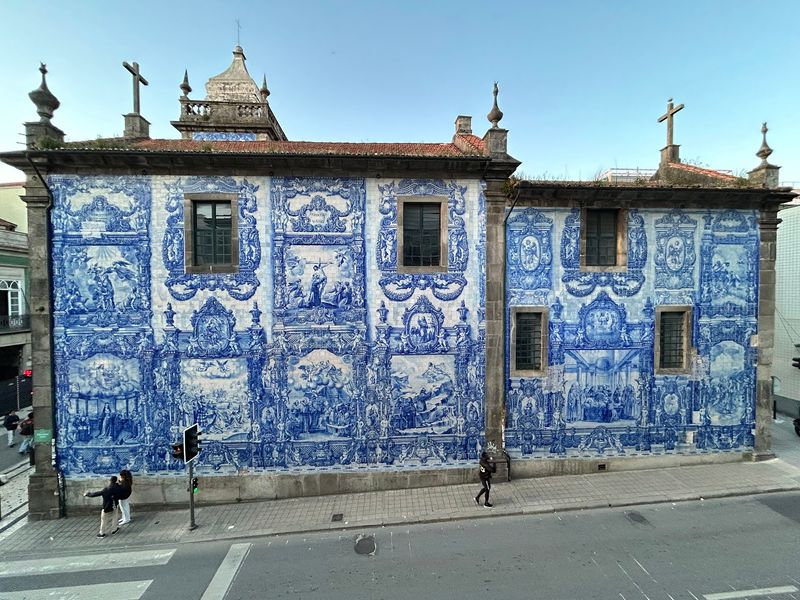
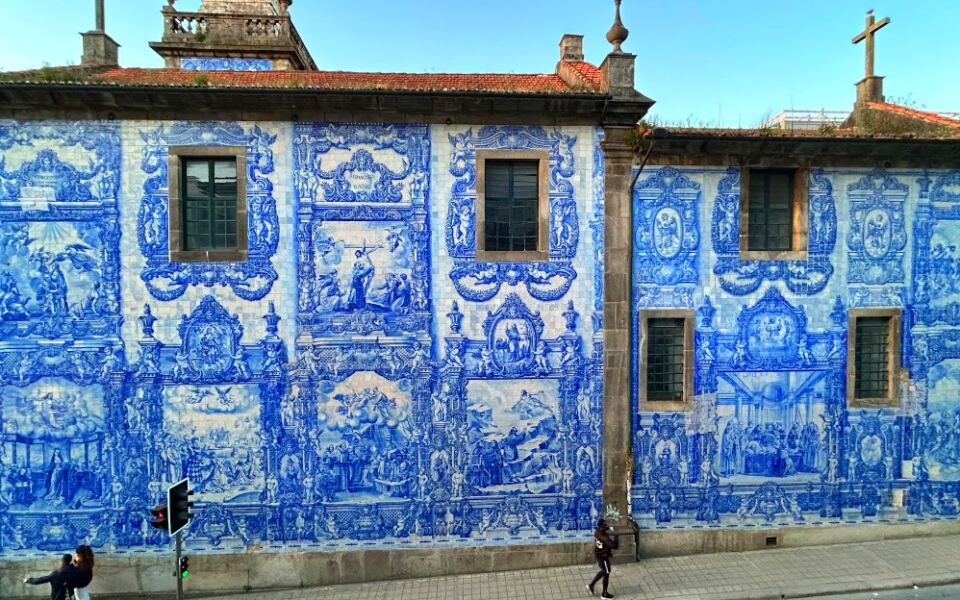
People stop mid-stride on Rua de Santa Catarina all day long. The reason is a small chapel wearing a coat of blue and white.
In 1929, its exterior was covered with azulejo tile panels. They show scenes from the lives of Saint Francis of Assisi and Saint Catherine.
Nearly 16,000 tiles cover about 360 square meters of wall. That turns the building into one giant illustrated story you can read from the sidewalk.
You do not need a ticket to enjoy the outside. Just find a spot across the street for the best view.
Porto is full of tiled buildings, so keep your camera ready. The chapel sits on a busy shopping street, which makes it easy to fit into any walking plan.
Visit early to avoid crowds blocking your shot.
12. Casa de los Azulejos, Mexico City, Mexico
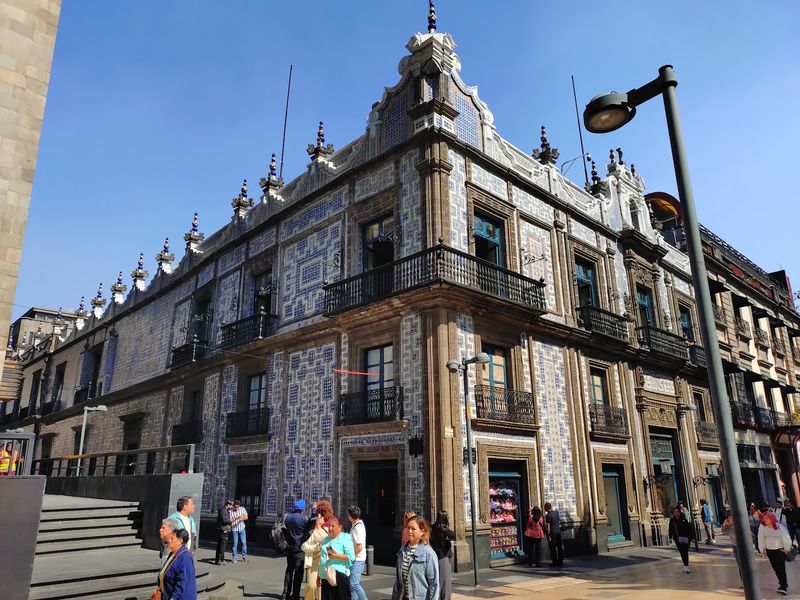
Some buildings need a clever name. This one simply calls itself the House of the Tiles, and that says it all.
Blue-and-white tiles cover the outside of this historic palace in central Mexico City. Many people recognize the front before they even learn its name.
The inside has more to offer. A graceful courtyard sits at its center, and a mural by José Clemente Orozco decorates the staircase.
Here is the best part. You can actually go in and stay a while.
A Sanborns restaurant and store operates inside, so you can grab breakfast or browse while enjoying the historic setting. Order hot chocolate and some pan dulce in the courtyard.
The building sits near the Palacio de Bellas Artes, making it an easy stop on a downtown walking tour.
13. Shah Cheragh, Shiraz, Iran
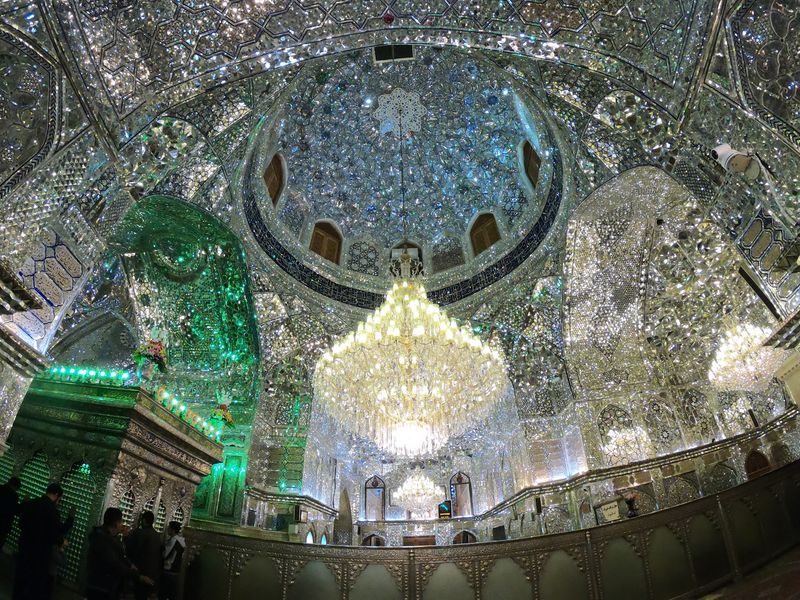
The name Shah Cheragh is often translated as King of the Light. Once inside, the reason becomes clear.
The outside is impressive with its domes and courtyard. The interior, though, is covered in countless small pieces of mirror mosaic, a craft known in Iran as aineh-kari.
The mirror work spreads across walls and ceilings in the burial chambers. It covers so much space that the room’s edges become hard to pick out.
Remember that this is an active and important Shia pilgrimage site. It is not just a tourist attraction.
Visitors must follow the dress code, and women are usually asked to wear a chador, often provided at the entrance. Some areas may have separate entrances or guide requirements for foreign guests.
Be respectful with photos, and ask staff before taking pictures inside.
14. Nek Chand’s Mosaic Chambers, Chandigarh, India
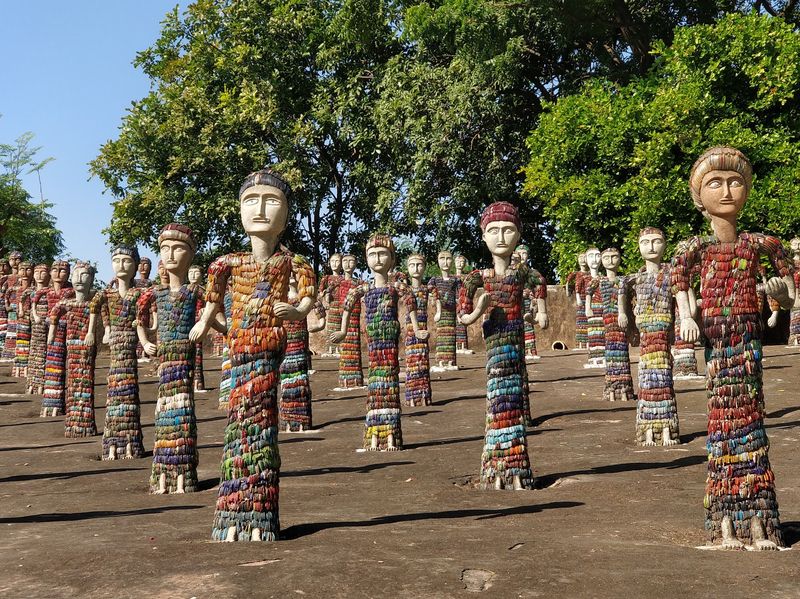
Save the best surprises for last. Deeper inside Chandigarh’s Rock Garden, the paths get twistier and the mosaics get bolder.
Narrow passages suddenly open into wide courtyards. Tile-covered walls lead toward waterfalls, miniature buildings, and long rows of figures made from broken ceramics and household items.
Nek Chand’s quiet side project grew into a giant public art space. The magic comes from repetition rather than one perfect piece.
Thousands of handmade details fill each section. Every chip and shard adds to a bigger imaginary world.
Go slowly here and look at the figures one by one. You will notice that no two faces match.
Bring a hat and water, follow the marked route, and save some energy for the final sections. A full visit makes a fitting ending to any mosaic road trip.
Share this story