Nebraska was more than a stop along the Oregon Trail – it was where the journey west became real. Today, wagon ruts, historic landmarks, museums, and famous rock formations still tell the stories of the pioneers who crossed the plains.
These 14 Oregon Trail stops offer a fascinating look at Nebraska’s role in one of America’s greatest westward migrations.
1. Rock Creek Station State Historical Park, Fairbury, Nebraska
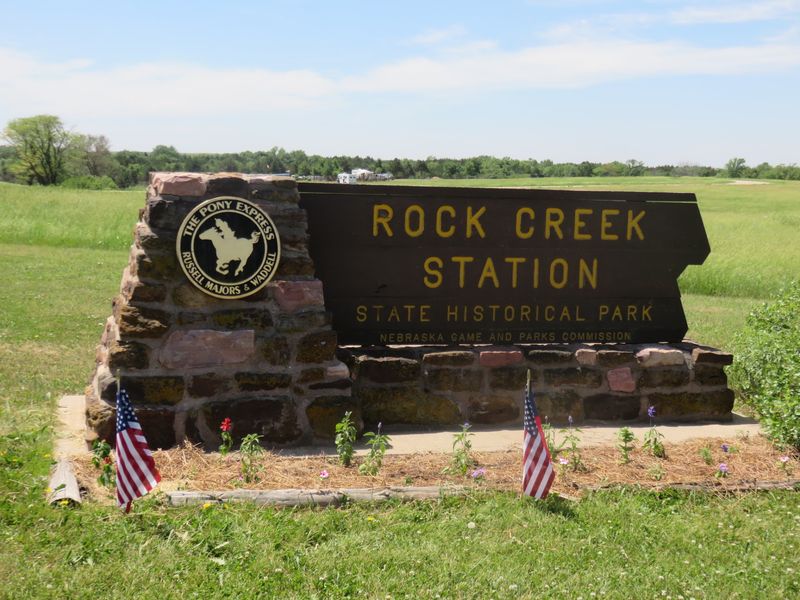
Wild Bill Hickok’s name is forever tied to this stretch of Nebraska prairie, and that alone makes Rock Creek Station worth the detour. The site preserves deep wagon ruts left by thousands of westbound pioneers, and reconstructed buildings give visitors a realistic sense of what a busy trail stop actually looked like during the overland migration era.
Rock Creek later became a Pony Express station, adding another chapter to its already eventful history. The park covers 350 acres of prairie hilltops, creek bottoms, and ravines, with an interpretive center that connects all the layers together.
Hiking trails, picnic areas, and camping options make this more than a quick roadside glance. This is a place where you can spend real time, walking the same ground that emigrants, express riders, and frontier characters once covered.
2. Oregon Trail Marker, Odell, Nebraska
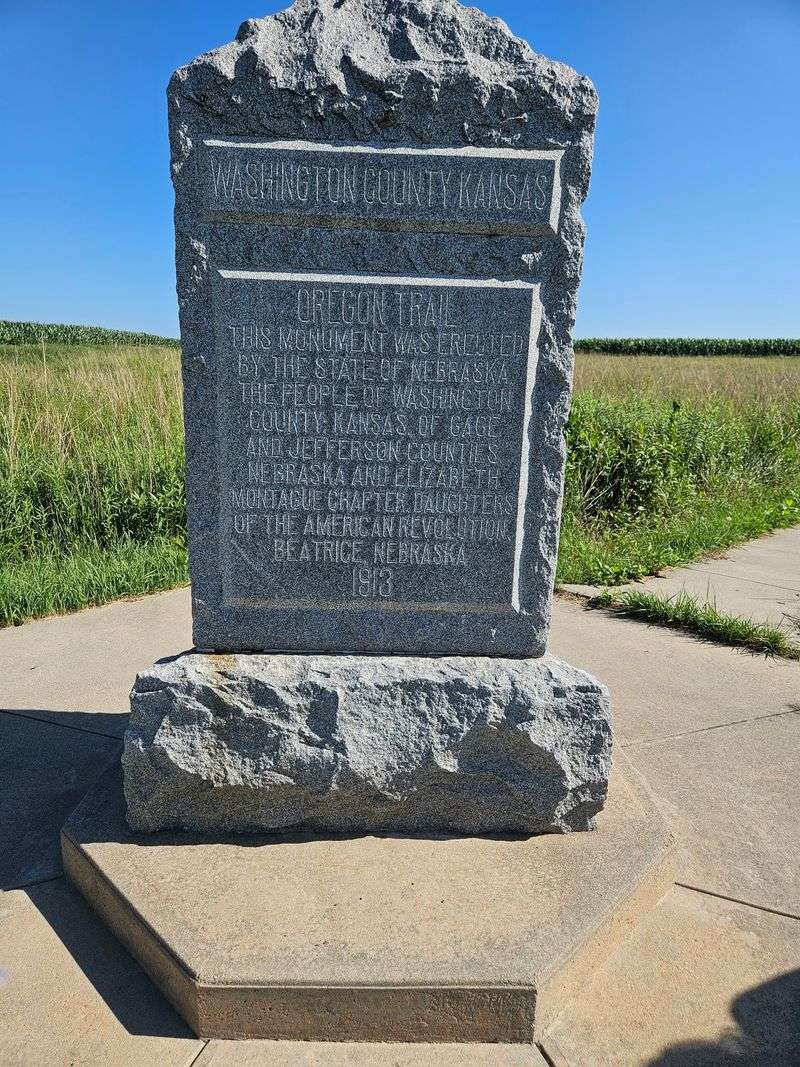
Not every Oregon Trail stop announces itself with fanfare, and the marker near Odell is proof that quiet places can carry big history. This southeastern Nebraska site reminds visitors that the Oregon Trail was never a single road but rather a web of feeder routes that funneled emigrants toward the Platte River corridor.
The surrounding countryside looks much as it would have during the migration years, which makes it easier to picture wagon teams moving across the agricultural landscape before paved roads existed. There are no crowds, no admission fees, and no elaborate exhibits.
What the marker offers instead is perspective. Standing beside it, with open fields stretching in every direction, the sheer distance those travelers covered on foot and by wagon becomes considerably more real than any museum diorama could make it.
3. Townsley-Murdock Immigrant Trail Site, Alda, Nebraska
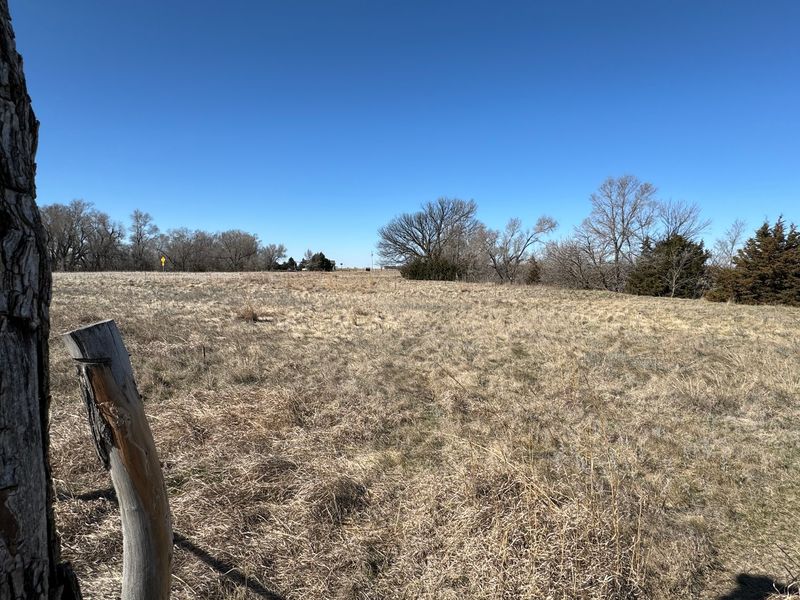
History does not always need a building to make itself known. At this small site west of Grand Island, the ground itself is the exhibit.
A wide, shallow swale remains visible where the terrain funneled emigrants onto a narrow ridge between the Wood River and the Platte River wetlands, and repeated wagon traffic gradually pressed a lasting depression into the earth.
There are no interpretive centers or reconstructed structures here. The surviving trail trace is the entire point, and that simplicity makes it genuinely compelling for visitors who want direct, unfiltered contact with the past.
The site rewards careful observation. Once you recognize the slight dip in the landscape for what it is, the scale of the migration becomes tangible in a way that a photograph or a display case simply cannot replicate.
4. Fort Kearny State Historical Park, Kearney, Nebraska
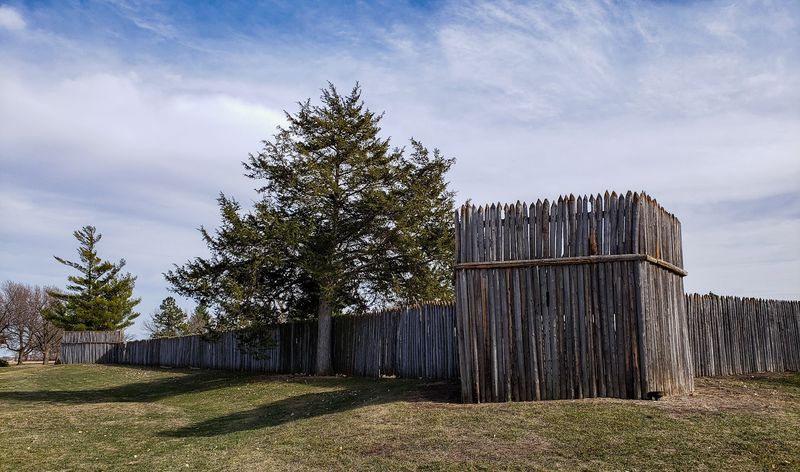
Established in 1848, Fort Kearny holds the distinction of being the first military post built specifically to protect Oregon Trail emigrants, and its location along the Great Platte River Road put it at the center of one of the largest organized migrations in American history. Stage traffic and Pony Express riders later used it as well, layering more history onto an already significant site.
Visitors today can explore a reconstructed stockade, powder magazine, blacksmith shop, and carpenter shop, all arranged around the original parade grounds. The interpretive center provides context for the enormous volume of traffic that once moved along the Platte corridor.
The park also sits along a prime birdwatching corridor, particularly during sandhill crane season, giving it appeal beyond its historical attractions. History and natural spectacle rarely share the same address this conveniently.
5. The Archway, Kearney, Nebraska
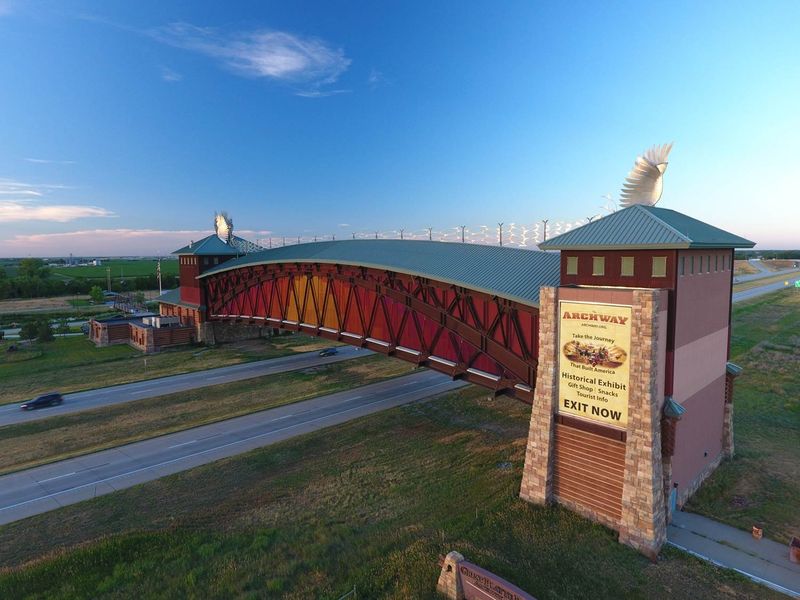
A museum that literally bridges past and present by spanning an active interstate highway is not something you encounter every day. The Archway stretches 310 feet over Interstate 80 in Kearney, and its exhibits trace the full arc of westward movement from Oregon Trail wagon trains through the Pony Express, the transcontinental railroad, the Lincoln Highway, and today’s interstate system.
The experience is deliberately broad rather than narrowly focused, which makes it an excellent orientation stop early in an Oregon Trail road trip. Watching modern traffic rush beneath the building while reading about months-long wagon journeys creates a contrast that hits harder than any timeline graphic.
Interactive displays, a replica sod house, and a hike and bike trail round out the visit. The Archway does not just tell the story of movement west; it puts you inside that story at multiple points in history.
6. Fort McPherson National Cemetery, Maxwell, Nebraska
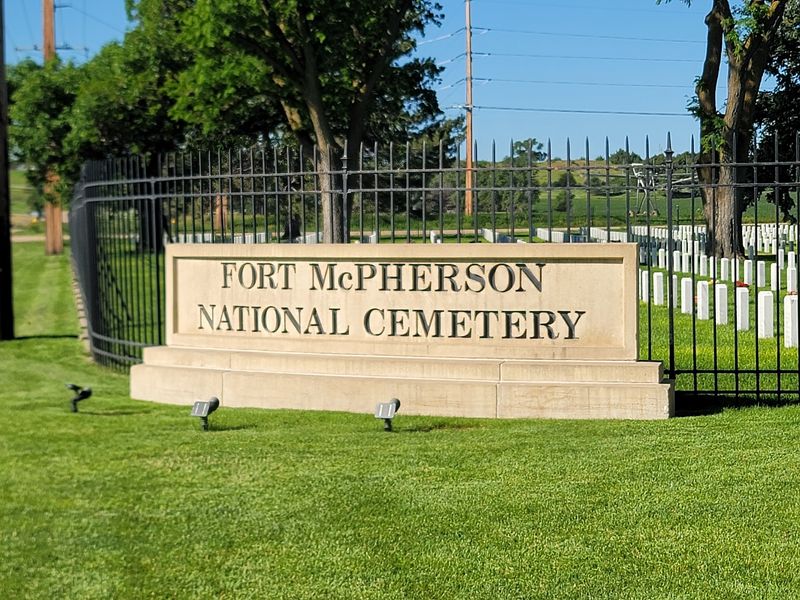
The military post that once stood here is long gone, but the ground it occupied tells a quieter and perhaps more lasting story. Fort McPherson was established in 1863 to protect emigrants, stagecoaches, freighters, and the workers building the transcontinental railroad through the Platte corridor.
When the post closed, part of its land became Fort McPherson National Cemetery.
This is not a stop for dramatic trail scenery or reconstructed frontier buildings. It is a place for reflection, where the later years of the overland migration era are represented by rows of grave markers rather than wagon ruts.
The cemetery underscores how the Platte River corridor evolved from a temporary emigrant road into a permanent transportation and military artery. That transition from transient movement to lasting settlement is one of the more overlooked chapters in the broader Oregon Trail story.
7. O’Fallon’s Bluff, Sutherland, Nebraska
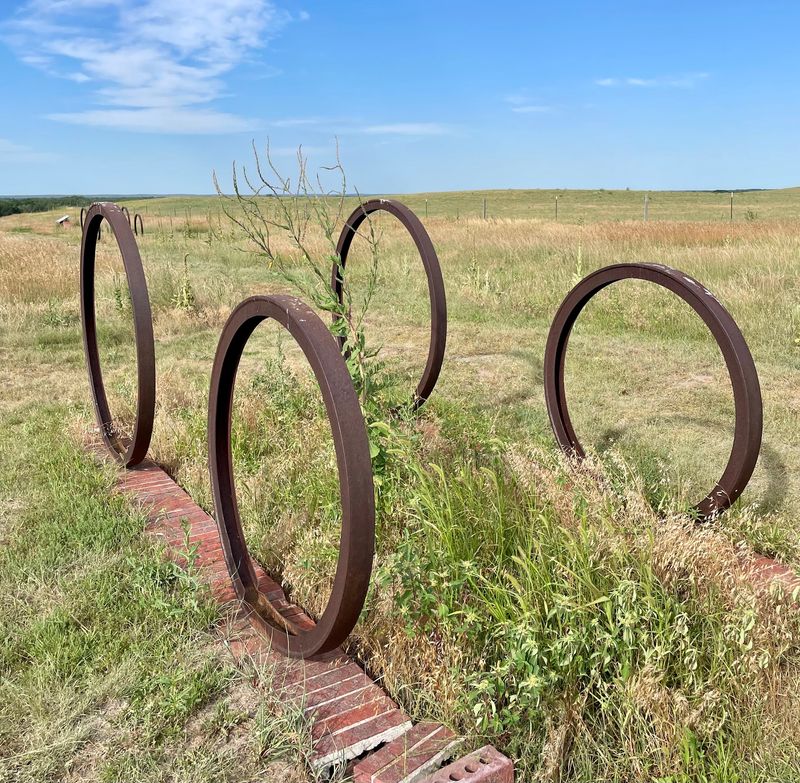
Geography had the final say at O’Fallon’s Bluff, and the emigrants had no choice but to comply. The bluffs pressed so close to the Platte River here that wagon trains could not pass along the riverbank, forcing travelers to climb over the higher ground instead.
Thousands of wagons doing exactly that over many years carved ruts into the earth that are still visible today.
Those ruts can be found near the eastbound Interstate 80 rest area at Sutherland, which makes this one of the more accessible Oregon Trail sites in the state. Large iron hoops at the rest area mark the approximate path of the wagon wheels, bridging the interpretive gap between past and present.
Standing next to a modern highway while looking at 19th-century trail traces is a genuinely odd and memorable experience. The contrast does more historical work than a textbook paragraph ever could.
8. California Hill, Brule, Nebraska
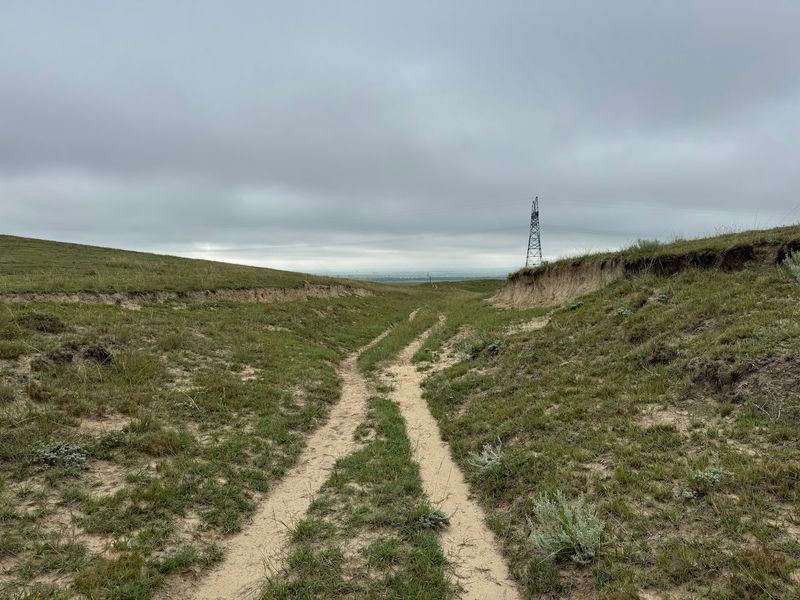
After crossing the South Platte River, emigrants immediately faced California Hill, and it did not ease them in gently. The climb rises roughly 240 feet over about 1.5 miles, and the combined weight of thousands of wagons grinding up that slope over decades left ruts that rank among the most impressive trail traces in Nebraska.
Visitors can walk the historic route today, which puts the physical challenge of overland travel into immediate perspective. The grade is noticeable even on foot without a loaded wagon, and the views from the top span a wide stretch of surrounding countryside.
Unlike a museum exhibit that describes the terrain, California Hill lets you experience it directly. The preserved ruts are not symbolic markers.
They are the actual scars of the actual journey, and that distinction makes this one of the more powerful stops on the entire Nebraska trail corridor.
9. Windlass Hill, Lewellen, Nebraska
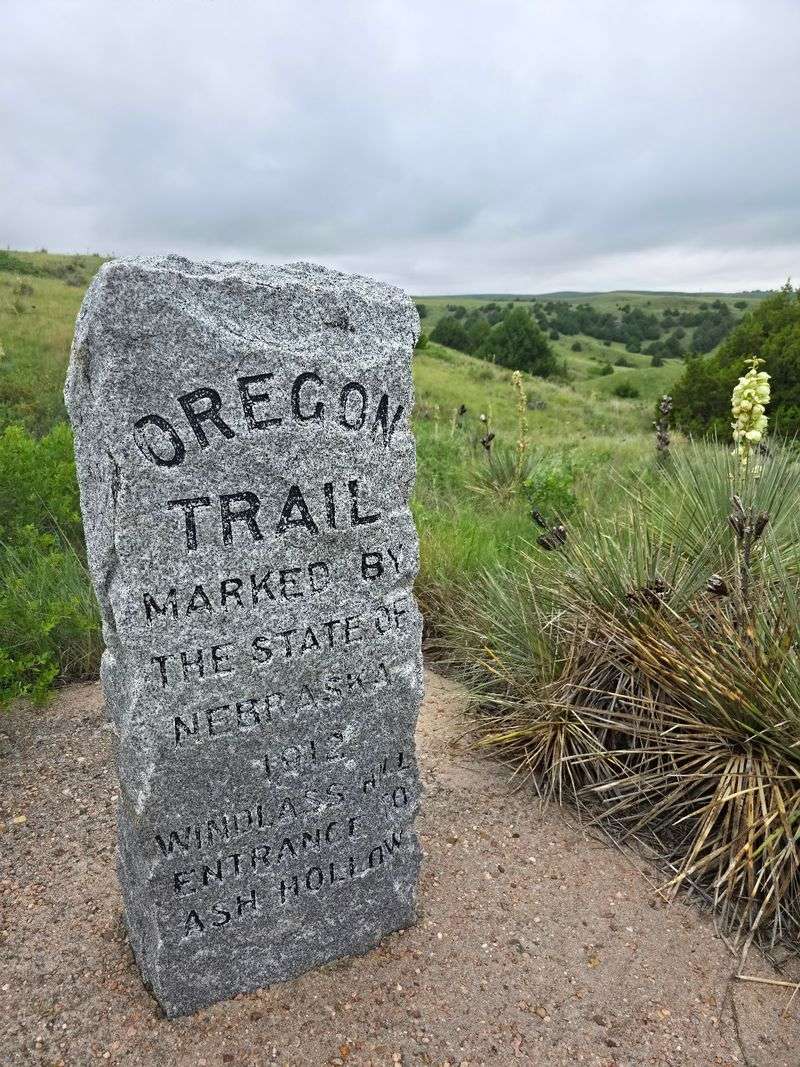
Going downhill sounds easier than going up, but Windlass Hill proved otherwise for wagon trains approaching Ash Hollow. The descent was steep enough that emigrants had to lock their wagon wheels and use ropes and other braking methods just to keep their loads from careening down the slope.
The friction and repeated stress from all that controlled descending carved deeply eroded scars into the hillside that remain clearly visible today.
A walking trail lets modern visitors tackle the grade on foot, and looking down toward Ash Hollow from the top makes the challenge immediately understandable. This was not a leisurely stroll into a pleasant valley.
The ruts at Windlass Hill are among the most dramatic in Nebraska, both in depth and in the story they suggest. Every groove in that hillside represents a family making a calculated decision about how not to lose everything they owned on a single slope.
10. Ash Hollow State Historical Park, Lewellen, Nebraska
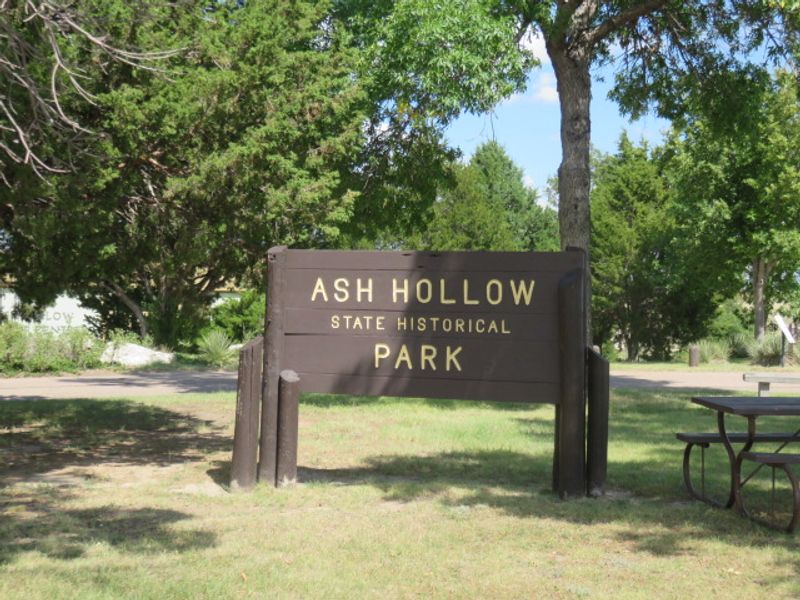
After the demanding descent of Windlass Hill, Ash Hollow delivered exactly what exhausted emigrants needed most. Fresh water from a reliable spring, grass for livestock, and available wood made this hollow one of the most important resting points on the entire Oregon Trail.
Travelers on the Oregon, California, and Mormon Pioneer trails all stopped here before continuing west along the North Platte.
The historical park today combines trail history with evidence of much older human occupation centered around Ash Hollow Cave. Interpretive facilities, a visitor center, a historic schoolhouse, and a replica sod house give visitors multiple ways to engage with the site.
The park’s notably green landscape offers a striking contrast to the open, drier country surrounding it, which gives first-time visitors a small taste of what arriving emigrants must have felt. Finding shade and water in this part of the Plains was never something to take for granted.
11. Courthouse and Jail Rocks, Bridgeport, Nebraska
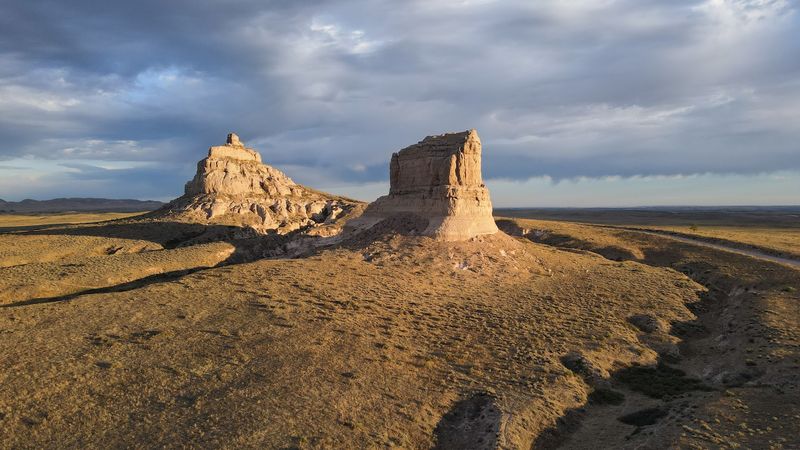
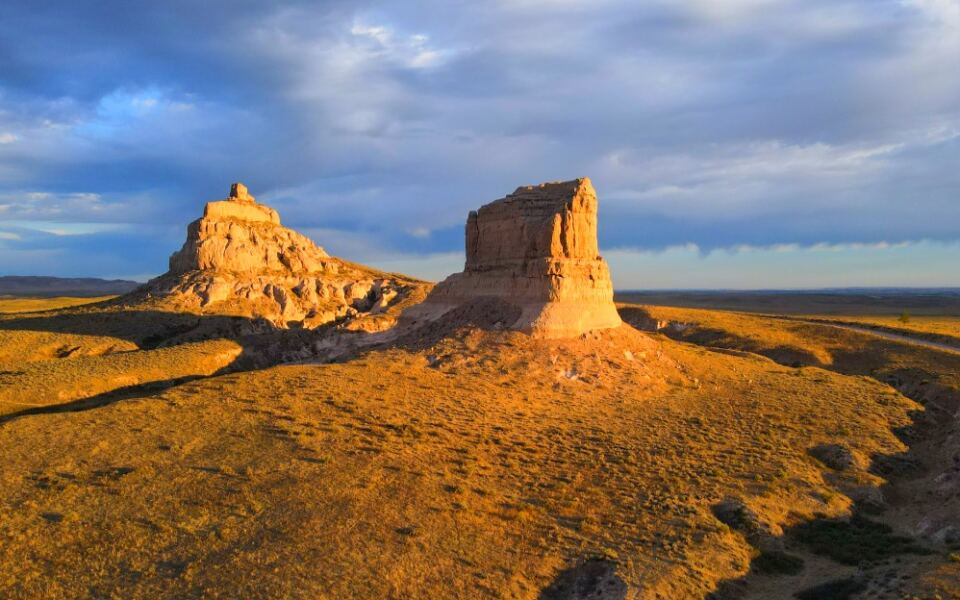
Two colossal clay and sandstone formations rising out of flat Nebraska prairie made such an impression on westbound emigrants that they sketched them, named them, and wrote about them repeatedly in their journals. Courthouse and Jail Rocks were among the first major western landmarks encountered as wagon trains moved through the North Platte Valley, and they showed up in diaries under various names before the courthouse label stuck.
The formations still command the surrounding landscape in exactly the same way they did 175 years ago. Approaching them across open countryside gives a genuine sense of how unmistakable they must have looked from a wagon seat.
An unpaved road leads to the site, and a hiking trail provides access to Courthouse Rock itself, though erosion means some caution is warranted on the approach. The isolation of these formations is a big part of what makes them so historically resonant.
12. Chimney Rock National Historic Site, Bayard, Nebraska
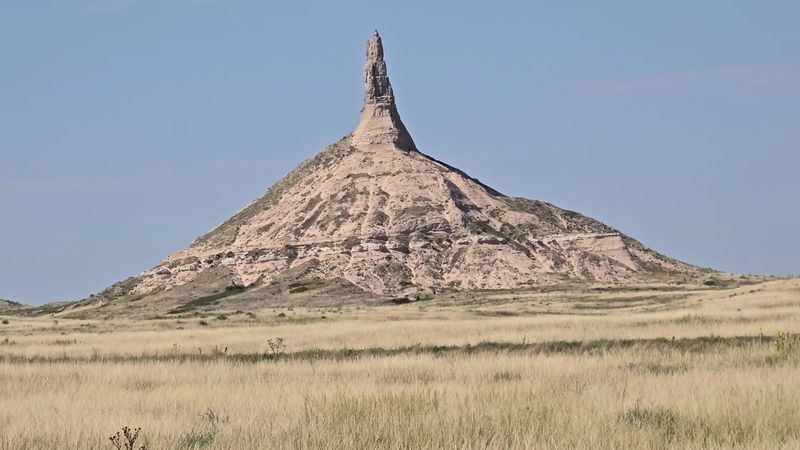
No other Oregon Trail landmark appears in emigrant diaries more often than Chimney Rock, and one look at it explains why. Rising more than 300 feet above the surrounding North Platte River valley, its slender spire was visible from miles away and served as proof that the flat prairies were finally giving way to the rugged terrain ahead.
Travelers described it as grand, splendid, and unlike anything they had ever seen.
The nearby visitor center includes exhibits and a film that interpret the great western migration, while the surrounding landscape provides the classic view that generations of travelers anticipated for weeks before finally reaching it.
Seeing Chimney Rock appear on the horizon for the first time still carries a sense of occasion. It is one of those rare places where the modern experience and the historical one genuinely overlap, and the formation itself has not changed a bit.
13. Legacy of the Plains Museum, Gering, Nebraska
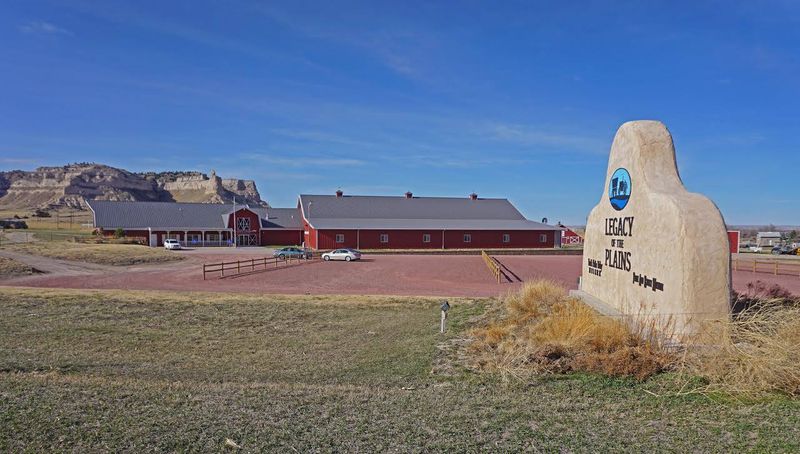
Positioned directly along the historic Oregon Trail route, the Legacy of the Plains Museum takes a wider view of the region’s story than most trail sites attempt. Exhibits cover westward expansion, Native American archaeology, pioneer settlement, irrigation development, and the agricultural communities that eventually grew up on the High Plains, providing depth that goes well beyond wagon trains.
The 80-acre campus includes historic structures, antique farm equipment, and a working farm, making this a hands-on experience rather than a strictly indoor one. Views toward Scotts Bluff National Monument from the property also give the visit a geographic anchor.
Stopping here before heading to the monument is a genuinely useful sequence. The museum fills in the human and agricultural context that the monument’s dramatic geology tends to overshadow, and arriving at Scotts Bluff with that background makes the landscape considerably more legible.
14. Scotts Bluff National Monument, Gering, Nebraska
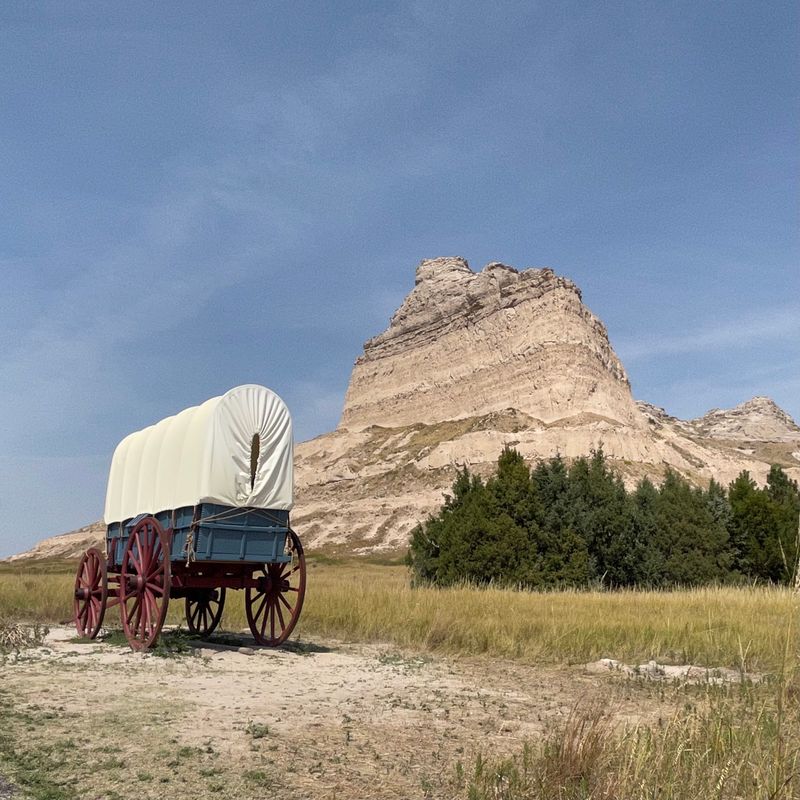
Scotts Bluff is the kind of geological formation that makes people stop mid-sentence and just stare. Rising roughly 800 feet above the North Platte River, the massive bluffs served as one of the defining landmarks for emigrants on the Oregon, California, and Mormon Pioneer trails, and the formation was significant enough that it forced wagon trains to detour through passes rather than travel directly alongside the river.
Portions of the original trail are still visible near the monument, and the Summit Road offers panoramic views that take in the North Platte River Valley, Chimney Rock, and on clear days, Laramie Peak in the distance.
The visitor center houses the Oregon Trail Museum, which includes exhibits on the region’s geology, paleontology, and human history, along with artwork by William Henry Jackson, who traveled the trail in his youth. As a final stop on a Nebraska trail journey, Scotts Bluff earns its dramatic reputation completely.
Share this story