Some places that once drew crowds of excited travelers now sit silent, slowly being reclaimed by nature, sand, or time. These were real destinations where families vacationed, couples honeymooned, and tourists lined up for a chance to experience something special.
Then something changed, whether it was a natural disaster, a war, an environmental collapse, or simply the end of an era, and the visitors stopped coming. What remained behind tells a story that is often more fascinating than anything a functioning resort could offer.
This list covers 14 once-popular vacation spots around the world that fell quiet in dramatic and sometimes heartbreaking ways. Some are completely off-limits, others welcome curious travelers under controlled conditions, and a few exist in a strange middle ground between ruin and revival.
Each one is worth knowing about.
Varosha, Cyprus
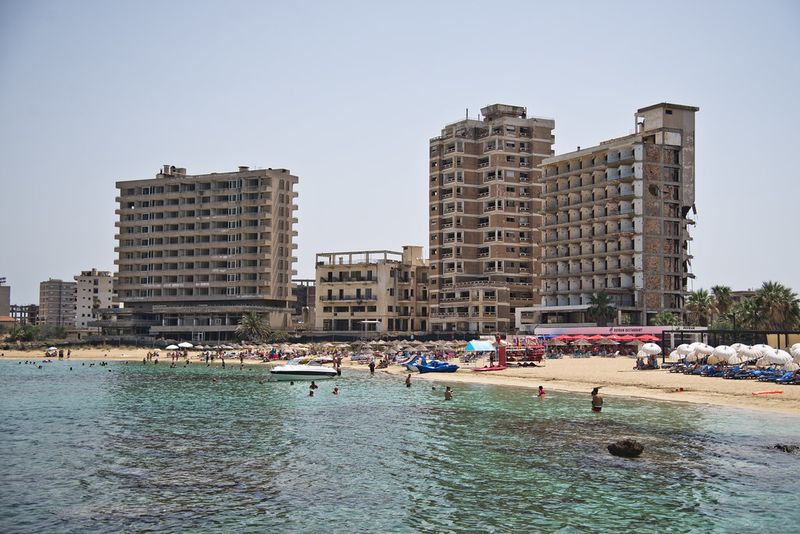
Before 1974, Varosha was the kind of place that belonged on a postcard. The resort district of Famagusta offered long sandy beaches backed by modern hotels, restaurants, high-rise apartments, and entertainment venues.
Famous visitors reportedly included Elizabeth Taylor and Richard Burton, which gives you a sense of just how glamorous this stretch of coastline once was.
Then conflict changed everything. Following the Turkish military intervention in Cyprus, the population fled and the district was fenced off.
Hotels, shops, and homes were left largely as they were, with nature and weather slowly taking over for decades.
The situation remains politically sensitive, and Varosha is not fully open. However, portions became accessible to visitors in 2020.
Travelers can walk or cycle along designated streets and view the abandoned structures from outside restricted areas. Large sections remain off-limits, and local rules must be respected.
Attempting to enter any abandoned building is not permitted.
Villa Epecuén, Argentina
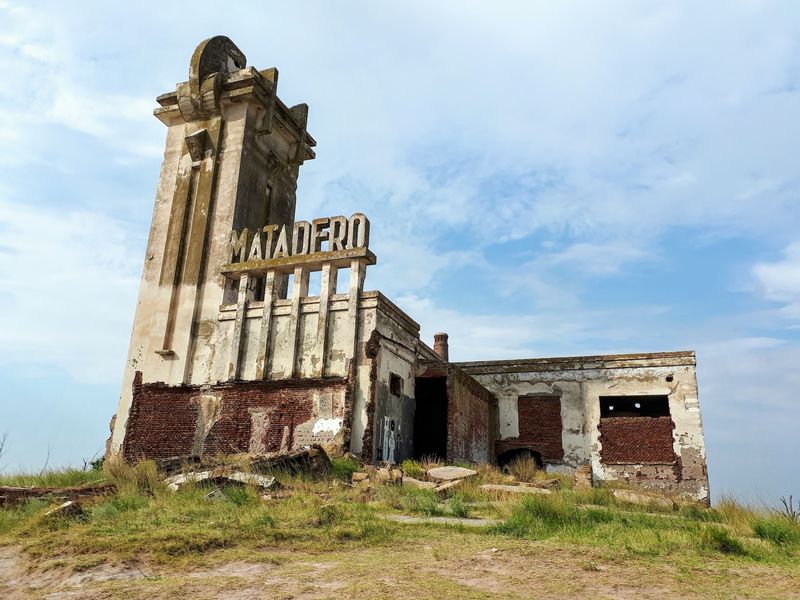
Argentina once had a resort town that seemed to have everything figured out. Founded in 1921 beside Lago Epecuén, Villa Epecuén grew into a major wellness destination built around mineral-rich waters believed to offer therapeutic benefits.
Between the 1950s and 1970s, the area reportedly attracted as many as 25,000 tourists annually.
In December 1985, rising water overwhelmed the protective embankment. The town flooded and eventually sat beneath several meters of salty water, completely submerged and forgotten by the tourism industry that had once relied on it.
What happened next is what makes this place genuinely strange. Changing conditions caused the lake to recede years later, revealing ruined buildings, dead trees, collapsed walls, and streets coated in salt.
The old resort was never rebuilt. Today, the ruins draw travelers who come specifically to see what remains of one of Argentina’s most unusual lost destinations.
The landscape looks almost fictional, but every crumbling wall is real.
Chacaltaya Ski Resort, Bolivia
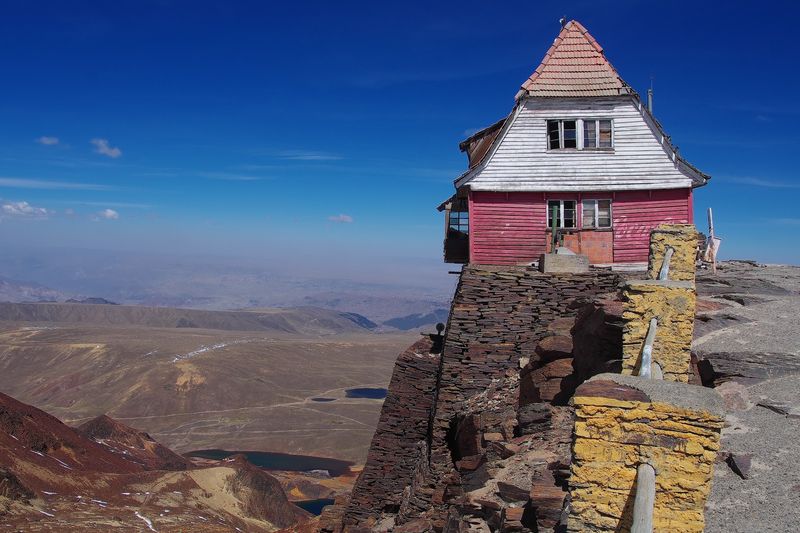
Most people do not picture Bolivia when they think of ski vacations, but Chacaltaya once offered one of the most unusual skiing experiences on the planet. Perched high in the Andes near La Paz at more than 5,000 meters above sea level, the tiny resort drew visitors for the sheer novelty of skiing a tropical glacier at extreme altitude.
The problem was that the attraction depended entirely on ice, and the glacier was retreating. As conditions worsened, maintaining the ski operation became impossible.
Skiing stopped altogether, leaving behind an old lodge and the remnants of lift infrastructure on a mountain that no longer resembled what visitors had once traveled so far to experience.
Chacaltaya can still be visited on excursions from La Paz, though it functions now as a high-altitude sightseeing and hiking destination rather than a ski area. Elevation sickness is a genuine concern, and proper acclimatization before making the trip is strongly recommended for all visitors.
Elkmont, Tennessee
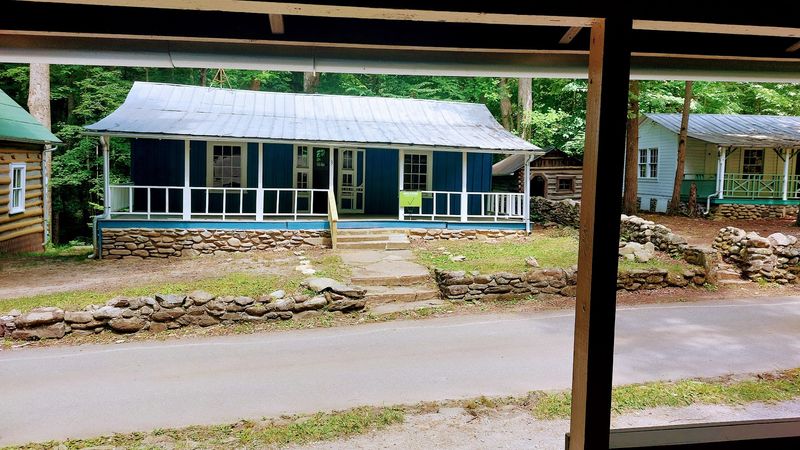
Great Smoky Mountains National Park draws millions of visitors every year, but most of them have no idea they are near the ruins of an early 20th-century vacation community. Elkmont started as a logging settlement and gradually became a mountain retreat for wealthy families from Knoxville and surrounding areas.
Communities including Daisy Town, Society Hill, and Millionaires Row developed around the Appalachian Club.
Vacationers came for fishing, horseback riding, cool mountain temperatures, and Saturday-night dances. When the national park was established, properties came under government ownership, leases eventually expired, and structures were either abandoned or removed over time.
The National Park Service has since preserved a selection of historic buildings. Visitors today can walk through the Elkmont area, explore restored structures in Daisy Town, and follow trails past stone walls and chimneys that mark where vacation cabins once stood.
Elkmont Campground remains active nearby, making this one of the most accessible abandoned resort communities on the entire list.
Hashima Island, Japan
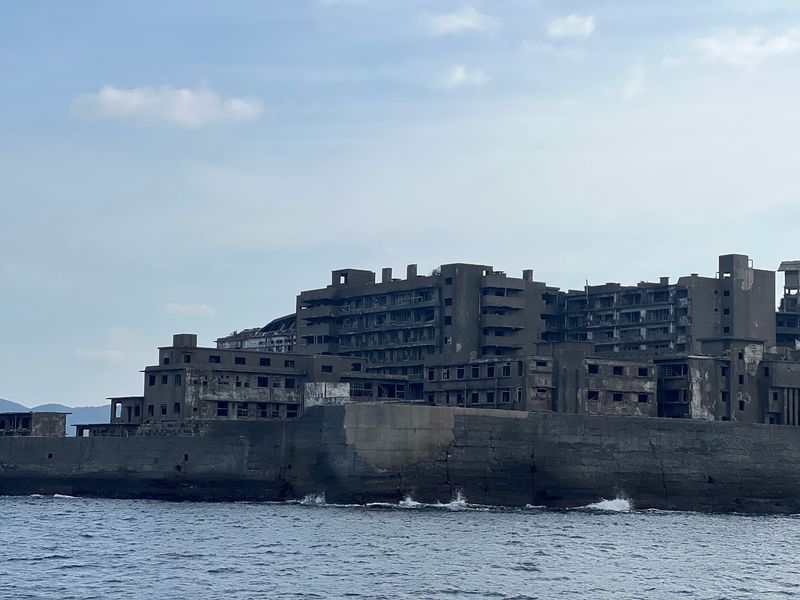
From a distance, Hashima looks less like an island and more like a concrete battleship anchored off the coast of Nagasaki. That appearance gave rise to its famous nickname, Gunkanjima, which translates to Battleship Island.
The tiny landmass developed around undersea coal mining beginning in the late 19th century and eventually supported an incredibly dense community with apartment blocks, schools, stores, a hospital, a temple, and a shrine.
At its peak, more than 5,000 people lived on an island only about 480 meters long. When Japan shifted away from coal, the mine closed and residents departed in 1974, leaving the concrete buildings completely empty.
After decades of abandonment, Hashima reopened for controlled tourism in 2009. Visitors must book authorized tour operators, and access is limited to designated areas because many structures are genuinely unstable.
Tours can also be canceled when rough weather prevents safe landing. The island is now part of the UNESCO-listed Sites of Japan’s Meiji Industrial Revolution.
Craco, Italy
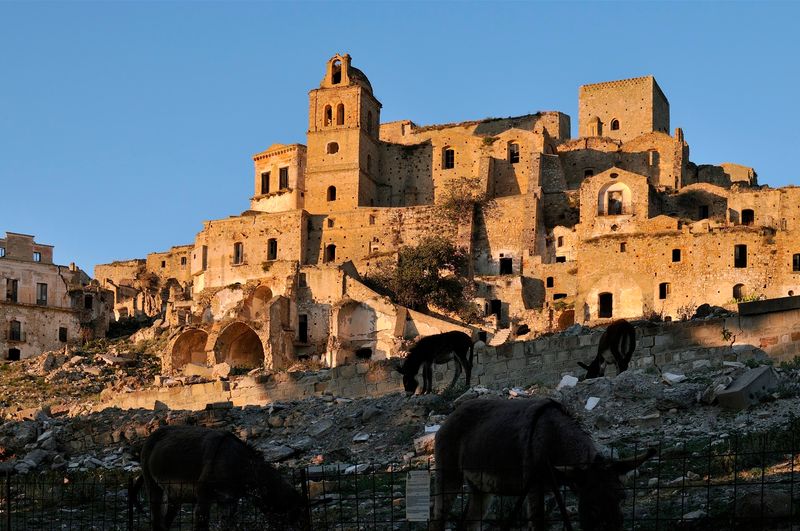
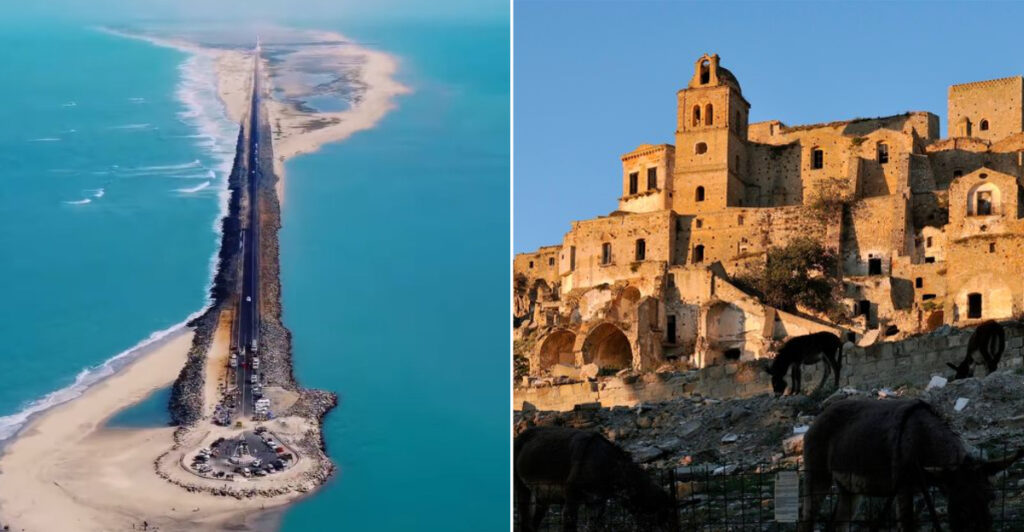
Southern Italy has no shortage of beautiful hilltop towns, but Craco stands apart from all of them for a simple reason: its historic center has been empty for over six decades. Perched dramatically above the landscape of Basilicata, the ancient settlement developed over centuries before geological instability forced residents out after a major landslide in 1963.
What remained behind is an extraordinary collection of roofless churches, crumbling palaces, stone houses, towers, and narrow lanes frozen at the moment of departure. Its cinematic appearance attracted filmmakers, and Craco served as a location for productions including The Passion of the Christ.
Visitors can explore the abandoned historic center under controlled conditions, and Italy’s official tourism resources recommend hiring an expert guide because of unstable ground and structures. Unauthorized entry into deteriorating buildings carries real risk and is not advised.
Craco’s combination of dramatic scenery and empty medieval architecture has turned an unfortunate chapter in local history into one of Basilicata’s most distinctive visitor experiences.
Kolmanskop, Namibia
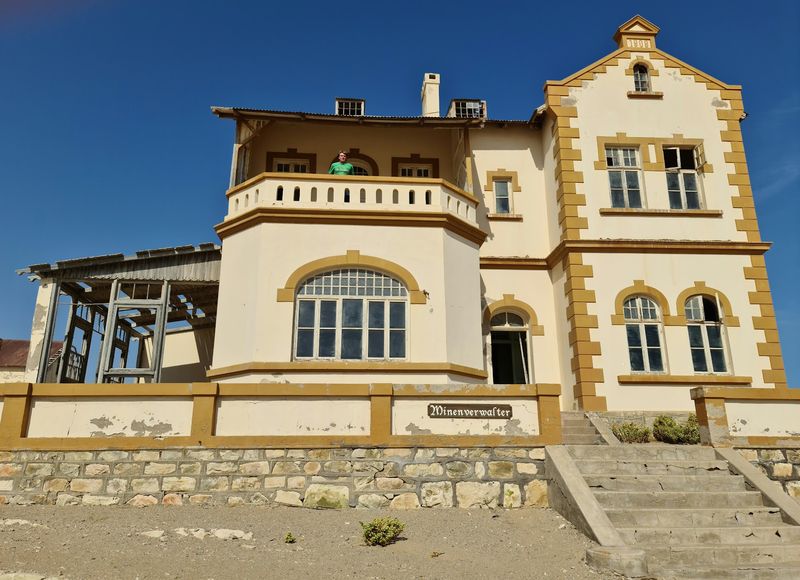
Diamonds built Kolmanskop, and their absence finished it. After diamonds were discovered near Lüderitz in 1908, enormous mining wealth produced an unexpectedly elaborate community in the Namib Desert.
Residents enjoyed amenities including a hospital, school, casino, ballroom, and even an ice-making operation, which was a remarkable luxury given the remote desert location.
As richer deposits were found elsewhere, activity shifted away from the settlement. The community declined steadily until it was abandoned entirely in 1956.
Then the desert moved in.
Sand dunes now pour through doors and windows, gradually filling rooms that once belonged to prosperous mining families. The result has turned Kolmanskop into one of Africa’s most photographed ghost towns, and the images of sand-filled interiors have circulated widely online for years.
Unlike many abandoned sites, this one operates as an established tourist attraction. Tours introduce visitors to its mining history and the story of the community that thrived and then vanished in just a few decades.
Dhanushkodi, India
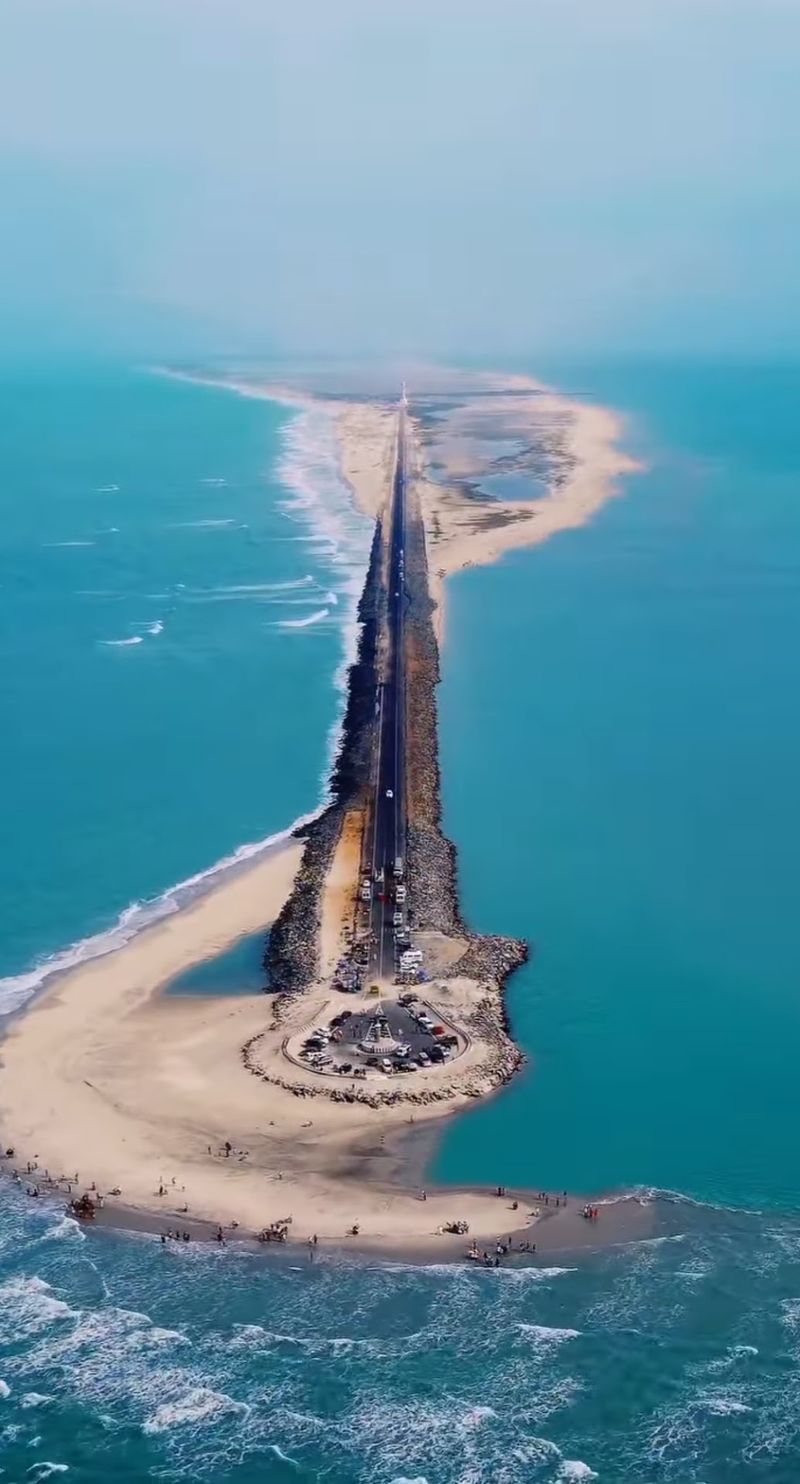
At the very tip of India’s Pamban Island, Dhanushkodi once served as a coastal town, pilgrimage destination, and transportation link between India and what is now Sri Lanka. Its location near Rameswaram brought religious travelers regularly, while its beaches and ocean views drew visitors looking for something off the usual tourist path.
In December 1964, a catastrophic cyclone struck and destroyed much of the town along with critical railway infrastructure. The destruction was severe enough that the old settlement was never rebuilt in its previous form.
What remained were fragments of buildings standing in a dramatic landscape where the Bay of Bengal and the Indian Ocean appear to converge at a single point.
Modern road improvements have made the area much more accessible for travelers, and visitors now arrive for the coastal scenery, the ruined structures, the religious significance of the surrounding region, and the sobering story of how one storm erased an entire functioning town from the map overnight.
Plymouth, Montserrat
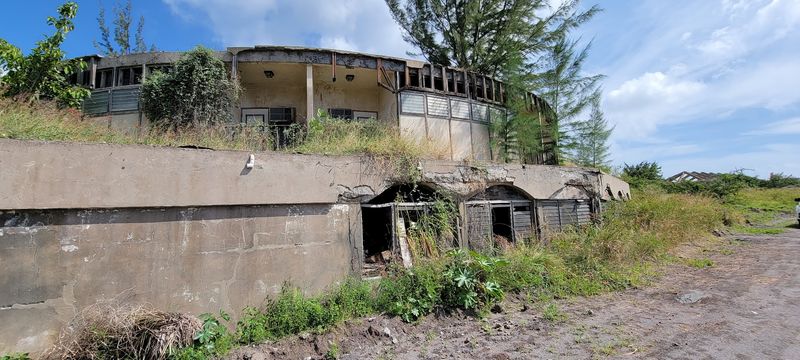
Plymouth was not a resort in the traditional sense. It was the beating heart of Montserrat, a Caribbean island capital containing government offices, shops, restaurants, hotels, and the kind of everyday infrastructure that made the island function for both residents and visitors.
Then the Soufriere Hills volcano, dormant for centuries, began erupting in 1995.
Subsequent eruptions devastated southern Montserrat and buried Plymouth beneath volcanic deposits. The former capital was abandoned, earning comparisons to Pompeii that are not exaggerated when you see photographs of rooftops barely visible above layers of grey ash.
The abandoned city sits within a controlled exclusion zone, so independent wandering through the ruins is not permitted. However, Montserrat continues to welcome tourism, and approved excursions and designated viewpoints allow visitors to observe parts of the former capital and the surrounding volcanic landscape from safe distances.
The contrast between lush Caribbean vegetation and buildings buried in ash creates one of the most surreal sights in the entire region.
Bokor Hill Station, Cambodia
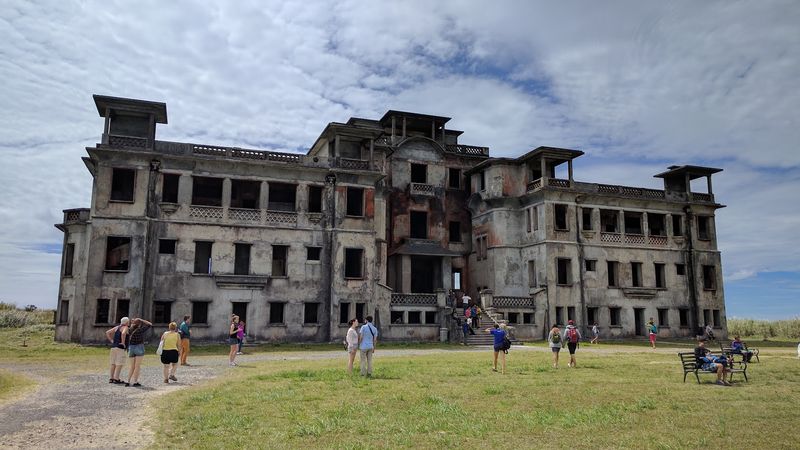
The original idea behind Bokor Hill Station was practical luxury: escape Cambodia’s tropical heat by retreating to a misty mountain retreat with a grand hotel, cool air, and panoramic views of the countryside far below. Developed during the French colonial era, the highland destination offered an escape that felt genuinely removed from the lowland climate.
History had other plans. Bokor endured multiple periods of abandonment as Cambodia experienced war and political upheaval.
The area became associated with the Khmer Rouge, and the resort buildings deteriorated through years of neglect and conflict-related damage.
Bokor Mountain is now accessible to travelers again, though the destination looks quite different from the derelict hill station that photographers documented during its most abandoned period. Some buildings have been renovated or repurposed, while other historic remnants remain in various states of decay.
Visitors today combine the site’s layered and sometimes difficult history with mountain scenery, temples, elevated viewpoints, and the surrounding Bokor National Park.
Salton Sea Resort Communities, California
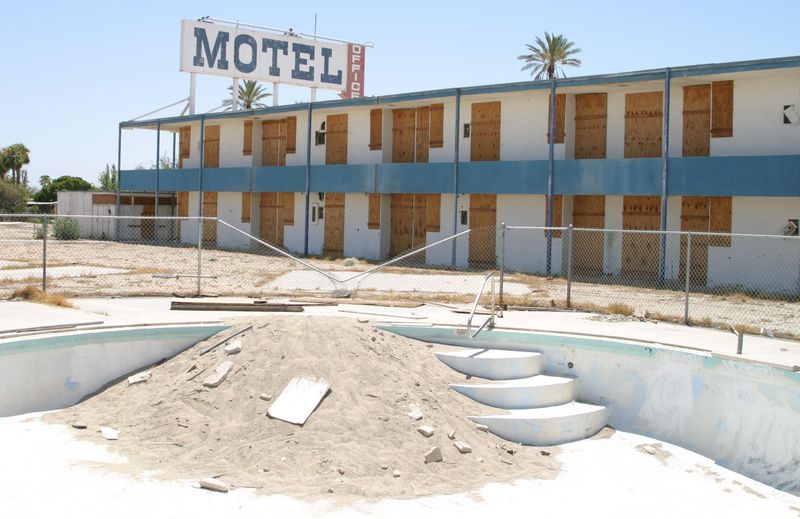
California’s Salton Sea once represented something that is genuinely hard to picture today: a booming desert beach destination. During its mid-20th-century peak, communities along the enormous inland lake attracted boaters, anglers, weekend vacationers, celebrities, and real-estate investors who believed the area had a limitless future.
Yacht clubs, marinas, vacation homes, restaurants, and resorts appeared along the shoreline. Then the lake’s problems compounded.
The Salton Sea has no natural outlet, and over time increasing salinity, pollution, ecological deterioration, fish die-offs, and a receding shoreline gradually destroyed its appeal as a vacation destination.
Tourism collapsed across much of the area. Some former resort communities became dramatically depopulated, filled with empty lots and abandoned structures.
The entire region is not a ghost town, and that distinction matters. Travelers still visit for photography, birdwatching, desert landscapes, and unusual art installations.
The Sonny Bono Salton Sea National Wildlife Refuge remains active. The experience today is almost the opposite of what developers once promised.
Tskaltubo, Georgia
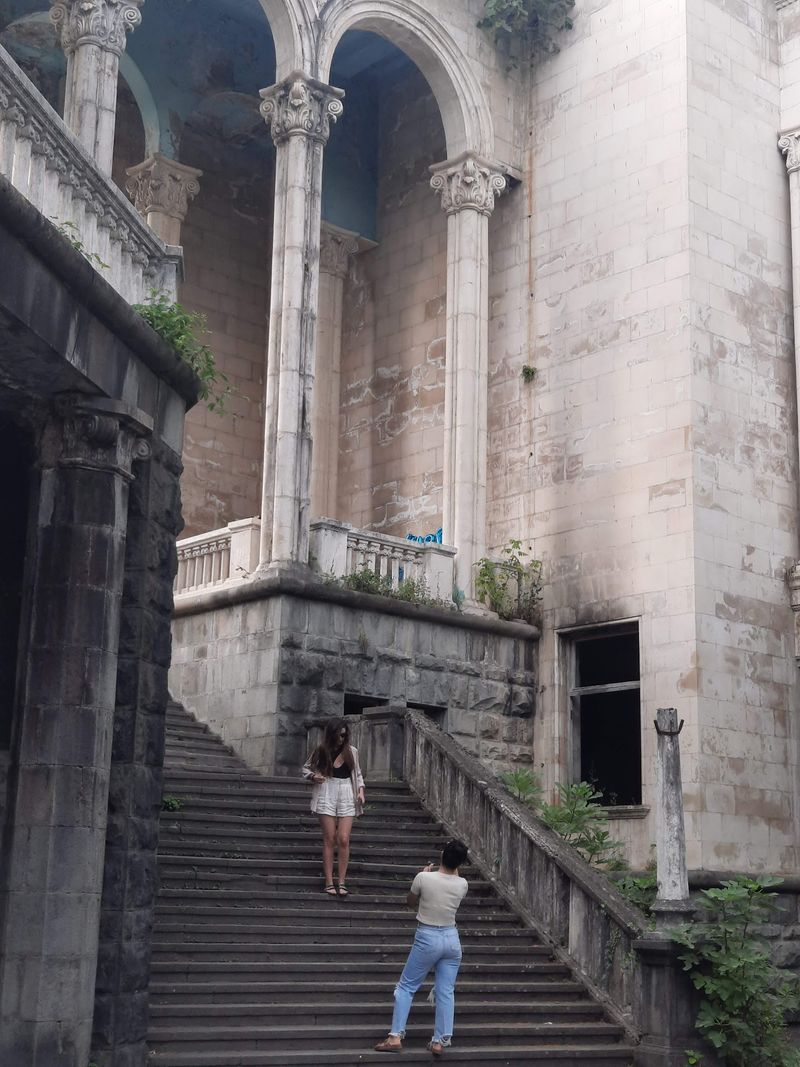
During the Soviet era, a trip to Tskaltubo was considered both a vacation and a medical experience. The Georgian spa town became famous for its natural mineral waters and enormous sanatorium complexes.
At its height, the destination reportedly welcomed more than 100,000 visitors annually, who arrived for therapeutic baths and extended stays in elaborate neoclassical resort buildings.
When the Soviet Union collapsed, the system that funded and filled those grand properties disappeared with it. Staircases, ballrooms, treatment rooms, and ornate courtyards were gradually swallowed by vegetation.
The visual effect inside some of the larger abandoned sanatoriums is genuinely striking, with decay and grandeur occupying the same space.
Tskaltubo is not a ghost town. People live there, some historic bathhouses have been restored, and several facilities continue to operate.
But a significant portion of its famous Soviet-era resort infrastructure remains derelict. Access rules vary considerably from building to building, and travelers should never assume a deteriorating property is open simply because a door or window is missing.
Kayaköy, Turkey
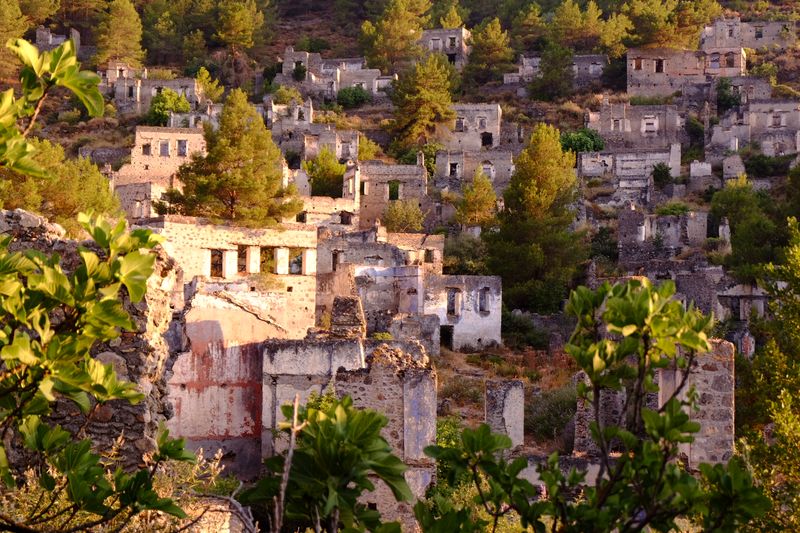
Hundreds of roofless stone houses cover the hillside at Kayaköy, and the scale of the emptiness is what makes the first impression so striking. Known historically as Livissi, the settlement was home primarily to Greek Orthodox residents whose community stretched back centuries.
The population upheavals surrounding the Greco-Turkish War and the compulsory population exchange agreed between Greece and Turkey in 1923 emptied the town almost entirely.
The houses were never fully repopulated, and later earthquake damage accelerated the deterioration of already-vacant structures. What remains today includes stone homes, churches, chapels, schools, and winding lanes scattered across the hillside, all open to the sky.
Kayaköy operates as an open-air archaeological attraction rather than an unauthorized urban-exploration site, and recent visitor information confirms it remains open to tourists. Paths can be steep and uneven, so comfortable footwear is worth considering.
Its location near the popular coastal area around Fethiye and Ölüdeniz creates a genuinely strange contrast: busy modern tourism exists just a short drive from a town where ordinary life ended over a century ago.
The Former Kupari Resort Area, Croatia
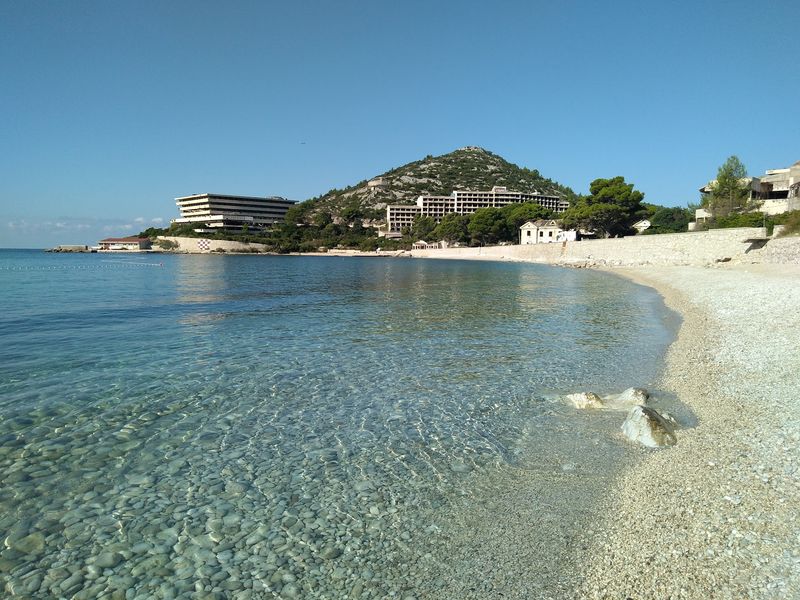
Just outside Dubrovnik, a crescent-shaped Adriatic bay holds the ruins of what was once one of Yugoslavia’s most impressive seaside vacation complexes. Kupari’s hotels served military personnel, officials, and guests during the resort’s glory years, with thousands of vacationers staying along a stretch of coastline that had connections reaching the highest levels of Yugoslav society.
The Croatian War of Independence ended that era abruptly. Buildings were shelled and heavily damaged during fighting in the early 1990s, and for decades afterward ruined hotels lined an otherwise beautiful beach, creating one of Europe’s most striking examples of abandoned resort architecture standing in direct contrast to clear Adriatic water.
Kupari is now entering a new phase. Major redevelopment plans are underway, and demolition and construction activity mean access to individual abandoned buildings can change or be restricted at any time.
Travelers should not enter fenced construction zones or structurally unstable ruins. The safest way to experience Kupari is from legal public areas around the bay while redevelopment continues to reshape the site.
Share this story