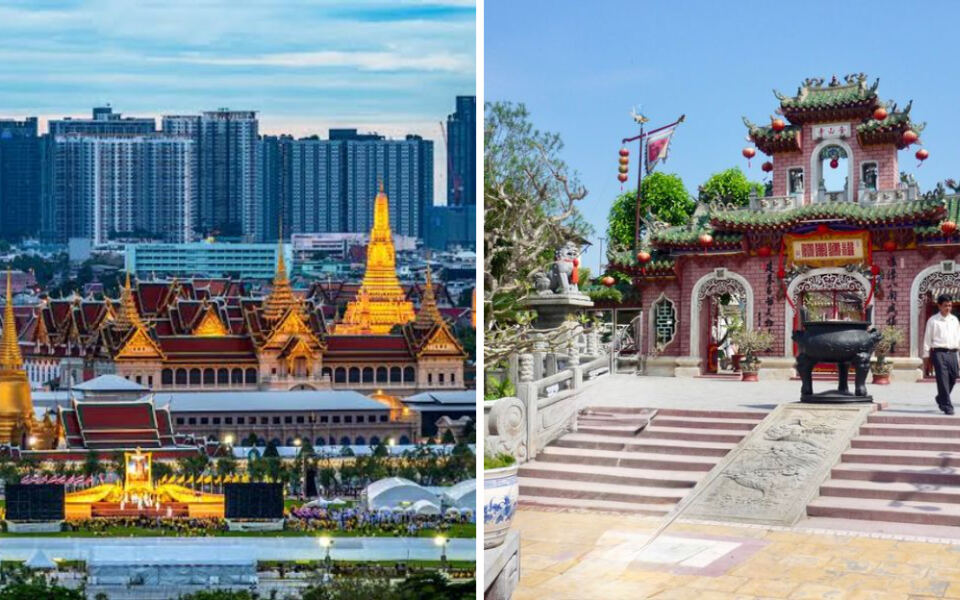
Asia is home to some of the most extraordinary cities on Earth, each one shaped by its own mix of history, culture, food, and geography. From ancient trading ports to futuristic skylines, no two cities feel remotely the same.
Some preserve traditions that go back thousands of years, while others seem to be inventing the future in real time. These 14 cities capture just how wildly different Asia can be, and why travelers keep coming back for more.
Tokyo, Japan
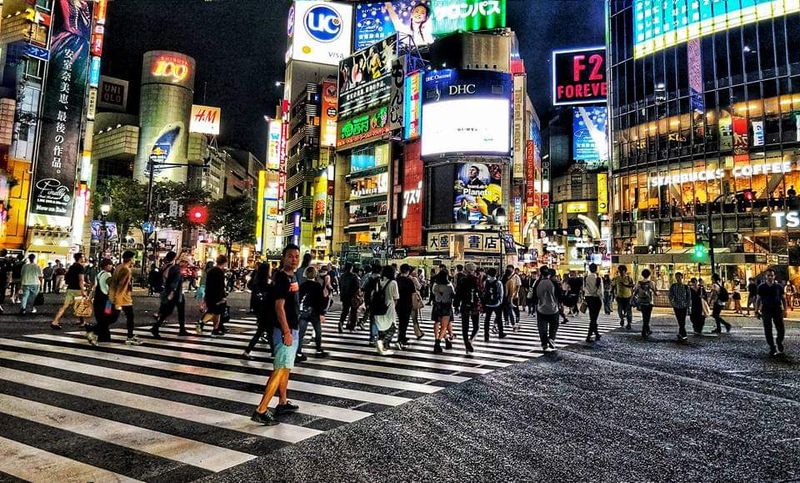
Nowhere on Earth manages to be a thousand cities at once quite like Tokyo. Step off the train in Shibuya and you are surrounded by giant screens, fashion boutiques, and the organized chaos of the world’s most famous pedestrian crossing.
Walk a few blocks and a tiny ramen shop tucked behind a vending machine feels like a secret the city kept just for you.
Shinjuku piles skyscrapers on top of underground train stations that function like small cities, with neon bright enough to make midnight look like early evening. Then take a short ride to Asakusa, where Senso-ji Temple anchors streets lined with traditional craft shops and the lingering spirit of Edo-period entertainment culture.
Nihonbashi captures the collision perfectly. It was the commercial heart of old Edo and still marks the point from which road distances across Japan are measured, yet historic knife shops and kimono merchants now share the block with gleaming office towers.
Tokyo’s tourism organization calls this layering of eras one of the city’s defining traits. The strange thing is how personal it gets once you find the right alley.
Kyoto, Japan
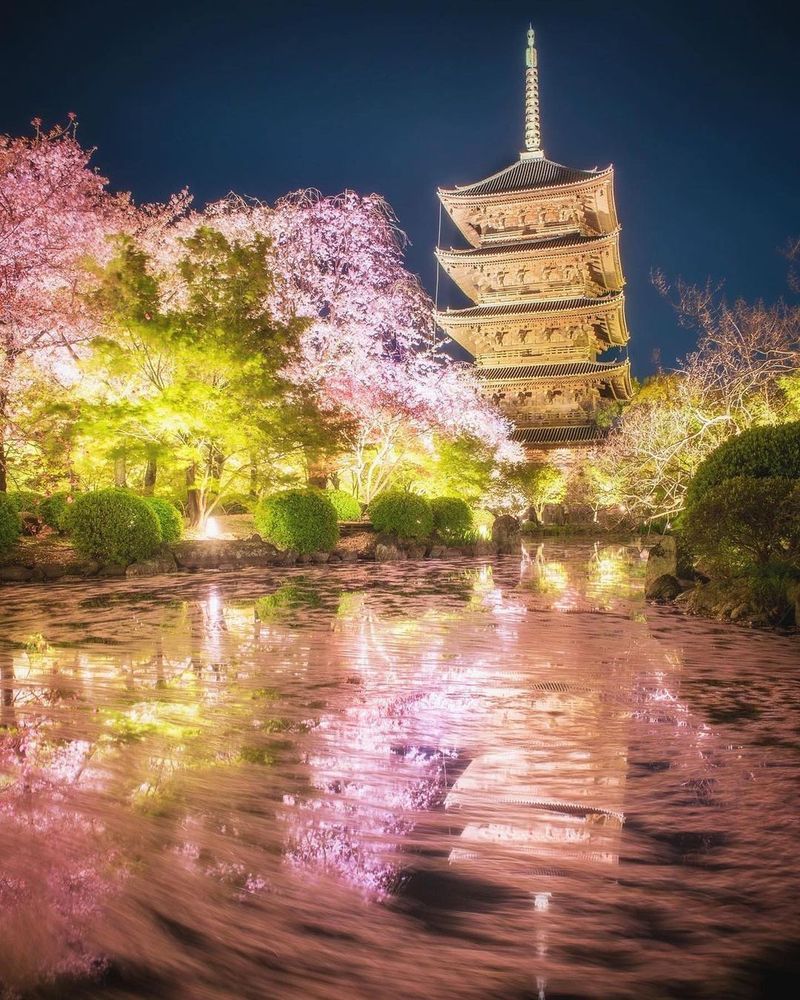
Kyoto is the city that kept refining its traditions instead of replacing them. It served as Japan’s imperial capital from 794 until 1869, and that long stretch of cultural stewardship left behind one of the densest concentrations of historic sites anywhere in the world.
The city contains over a thousand shrines and temples, including 14 UNESCO World Heritage properties within its boundaries and three more nearby.
The experience goes far beyond visiting monuments. Walk Higashiyama before the crowds arrive and wooden buildings frame stone lanes that lead toward pagodas and temple gates, with the smell of incense drifting from open doorways.
In the Gion district, traditional architecture and geiko culture survive intact within an otherwise functioning modern city.
Tea ceremony, flower arrangement, Noh theater, kimono weaving, ceramics, and seasonal festivals are still practiced here as living traditions rather than museum displays. Kyoto’s real magic is continuity.
A temple garden may be centuries old, and the train that delivers you there arrives exactly on schedule. Both feel completely natural.
Few cities make the past feel this accessible without making it feel like a performance.
Singapore
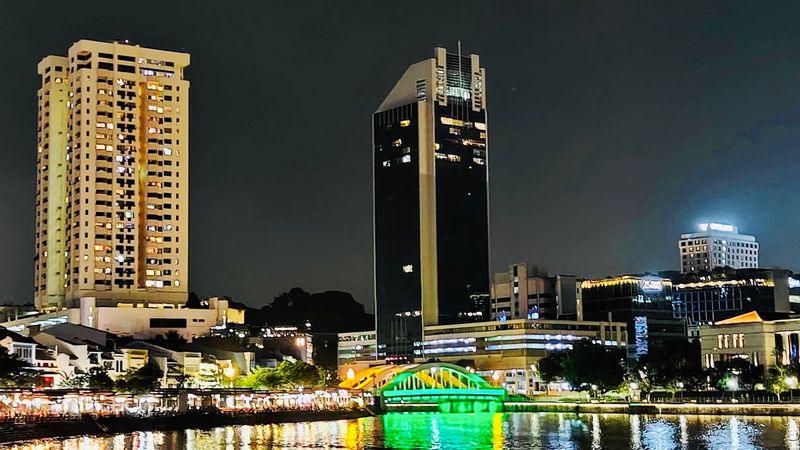
Someone in Singapore looked at a tropical island and decided to build the future there without cutting down the trees. The result is a city where glass towers rise beside rain gardens, rooftop forests soften skyscrapers, and nature is treated less like decoration and more like infrastructure.
Gardens by the Bay makes that philosophy impossible to ignore.
The Supertrees collect rainwater, incorporate solar panels, and help ventilate the conservatories below them. The Flower Dome covers 1.28 hectares and once held the Guinness record for the world’s largest glass greenhouse.
It is spectacular, and somehow the hawker centers nearby manage to be even more impressive.
Singapore’s real personality lives in its food. Chinese, Malay, Indian, Peranakan, and other culinary traditions collide across hawker centers and heritage neighborhoods.
Chinatown Complex is the city’s largest food center, Maxwell Food Centre draws crowds for chicken rice, and Tekka Centre in Little India combines a fresh market with spice shops, flower garlands, and cooking that can stop you mid-stride. Singapore feels meticulously planned right up until lunch, when things get wonderfully, deliciously complicated.
Seoul, South Korea
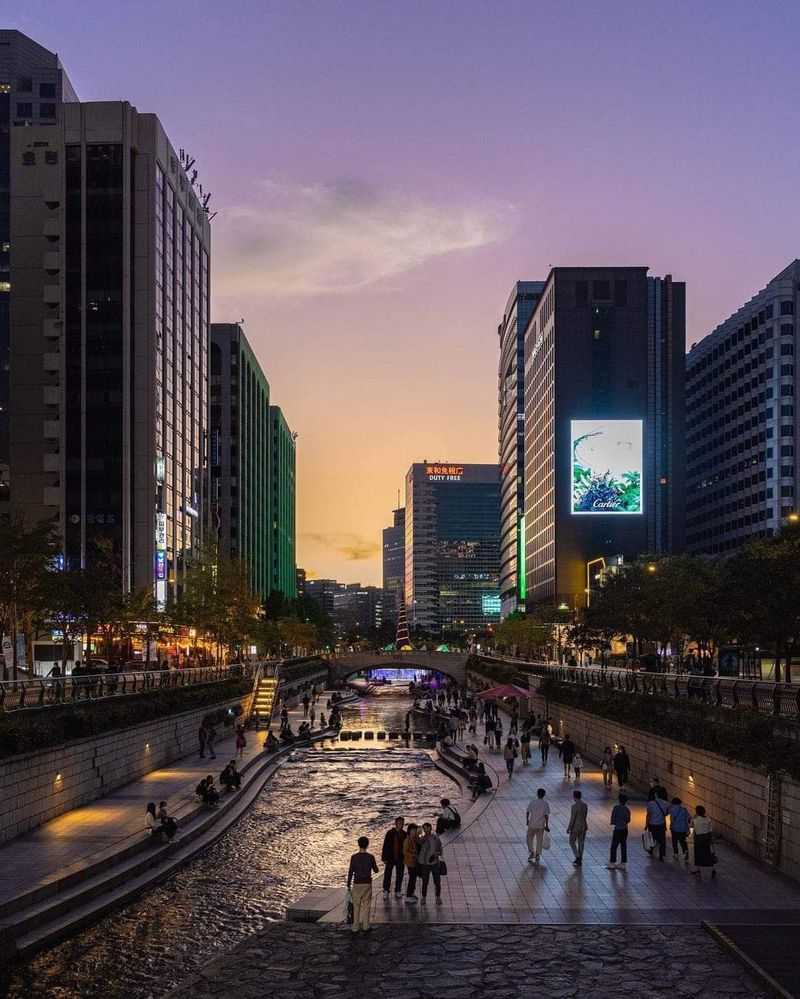
Seoul changes centuries in the time it takes to ride the subway two stops. At Gyeongbokgung Palace, visitors enter the main royal complex of the Joseon Dynasty, originally built in 1395, when the capital was still called Hanyang.
Five major Joseon-era palaces still stand in the city, each one surrounded by contemporary Seoul pressing in from every direction.
Walk a short distance from the palace district and Bukchon Hanok Village introduces hundreds of traditional Korean homes arranged along hillside lanes, their curved tile roofs creating a skyline that looks nothing like the glass towers nearby. Then go to Hongdae or Seongsu and the entire atmosphere shifts toward street performances, independent coffee shops, fashion, and the creative energy of Korean youth culture.
What makes Seoul truly unusual is how much wilderness shows up inside a capital city. Bukhansan and Bugaksan rise above the residential zones, with Bugaksan’s 6.2-kilometer trail offering sweeping views of central Seoul from forested ridges immediately above the city.
Seoul feels enormous until you look up and realize mountains are watching the whole thing from just overhead. That combination of royal history, modern energy, and real wilderness is genuinely hard to find anywhere else.
Bangkok, Thailand
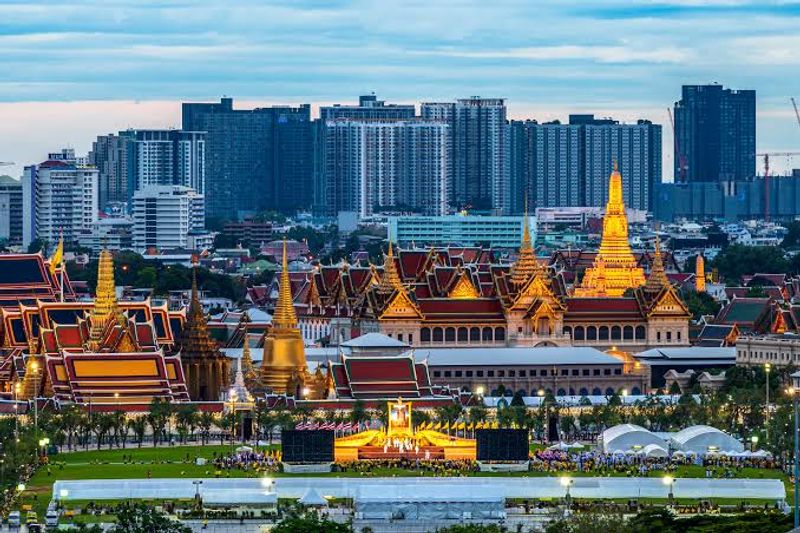
Bangkok skips the subtle introduction entirely. Arrive for the first time and the city hits you with golden temple spires, eight-lane roads, canal boats disappearing behind dense neighborhoods, and the smell of grilled meat from a cart parked in the shadow of a luxury hotel.
It is a city that refuses to exist at one volume.
At the center of Bangkok’s royal identity stands the Grand Palace. Thailand’s official tourism authority describes it as the major architectural symbol of the royal family since King Rama I established Bangkok as the capital.
The compound remains one of the most essential introductions to Thai royal and religious architecture, covering an enormous area of gilded pavilions, sacred temples, and ceremonial halls.
Away from the monuments, Bangkok’s canal culture adds another layer. Floating markets such as Amphawa turn boats into kitchens and shops, with vendors serving noodles, shellfish, coffee, and sweets directly from the water.
A polished rooftop bar can sit three floors above a street where dinner costs almost nothing. A centuries-old shrine may occupy the shadow of a shopping mall.
Traffic is genuinely chaotic, food is absolutely everywhere, and the city keeps moving through all of it without apology.
Hong Kong
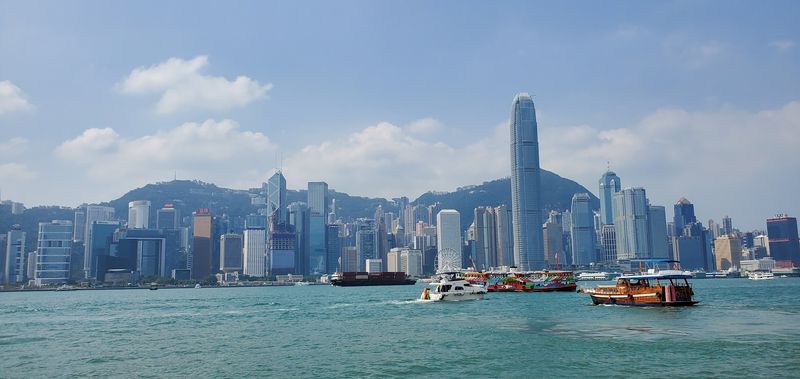
Hong Kong’s skyline is famous enough that first-time visitors might expect a purely urban experience. Then they take the tram up Victoria Peak and realize the skyscrapers are surrounded by forest.
The Peak Circle Walk loops for 3.5 kilometers through woodland at elevations up to 552 meters, with city towers, harbor water, and distant islands all visible through the trees at the same time.
The contrast gets even more dramatic on longer routes. Hong Kong Tourism Board’s Peak-to-South hike moves from glass-and-steel business districts into country parks and eventually toward views of the South China Sea.
Hong Kong has more country park land per capita than almost any major city in the world, which feels impossible until you are standing in it.
Return downtown and the city snaps back to full intensity. Dim sum restaurants, wet markets, double-decker trams, temple incense, neon signs, crowded ferry terminals, and luxury malls create a completely different experience within the same city limits.
Hong Kong’s greatest trick is proximity. Spend the morning inside a forest.
Spend the afternoon inside a skyscraper. The harbor stays visible from both, connecting everything without explaining any of it.
Jaipur, India
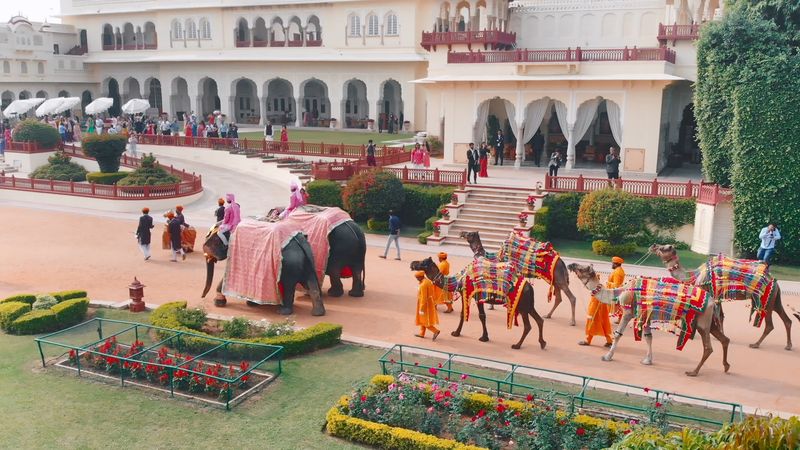
Jaipur earned its nickname before anyone thought of it as a brand. In 1876, large sections of the city were painted pink to welcome the visiting Prince of Wales, and the color stuck so completely that the Pink City identity now feels inseparable from the place itself.
The warm sandstone takes on different shades depending on the light, going from dusty rose at midday to something closer to copper as the sun drops.
The city’s origins are just as deliberate. Founded by Sawai Jai Singh II in 1727, Jaipur was designed by architect Vidyadhar Bhattacharya according to established principles of Indian urban planning.
That structured foundation gives the old city an unusual coherence, with bazaars, palaces, temples, and residential areas arranged in a way that still makes visual sense today.
Amber Palace sits about 11 kilometers outside the city, combining Rajput and Mughal architectural influences across a complex of courtyards, royal quarters, and mirrored interiors above Maota Lake. Inside Jaipur, Hawa Mahal’s honeycomb facade, City Palace, Jantar Mantar, textile markets, gem traders, and street food create a city that is intensely visual at every turn.
Jaipur does not let you forget its history. It keeps placing it directly in your path.
Luang Prabang, Laos
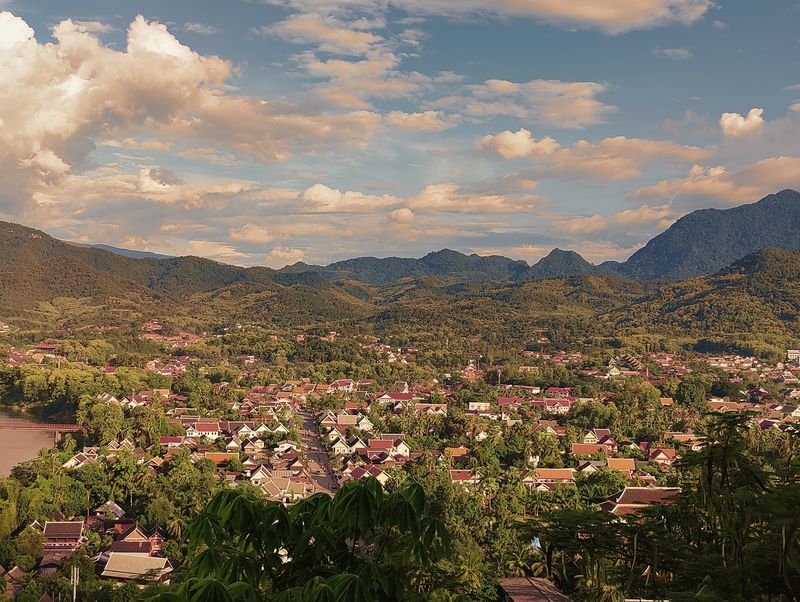
Luang Prabang operates at a frequency most cities have forgotten. Where Bangkok runs on noise and speed, Luang Prabang runs on stillness and river light.
The former royal capital sits where the Mekong and Nam Khan rivers meet, surrounded by green mountains and filled with Buddhist temples, low-rise colonial buildings, and traditional Lao wooden houses that look like they grew from the landscape rather than being placed on it.
UNESCO recognized Luang Prabang for the unusually harmonious way traditional Lao architecture and French colonial planning coexist within the same townscape. The protected historic center is small enough to explore almost entirely on foot, with temple roofs appearing above trees and monks moving between monasteries at hours when most tourists are still sleeping.
Markets operate at street level while cafes and guesthouses occupy historic buildings nearby. At sunset, travelers climb Mount Phousi or walk toward the Mekong to watch the light change over the water.
The alms-giving ceremony at dawn, where monks collect food offerings along quiet streets, remains one of the most quietly powerful experiences in Southeast Asia. Luang Prabang’s appeal is not that nothing happens.
It is that nothing here feels rushed.
Hoi An, Vietnam
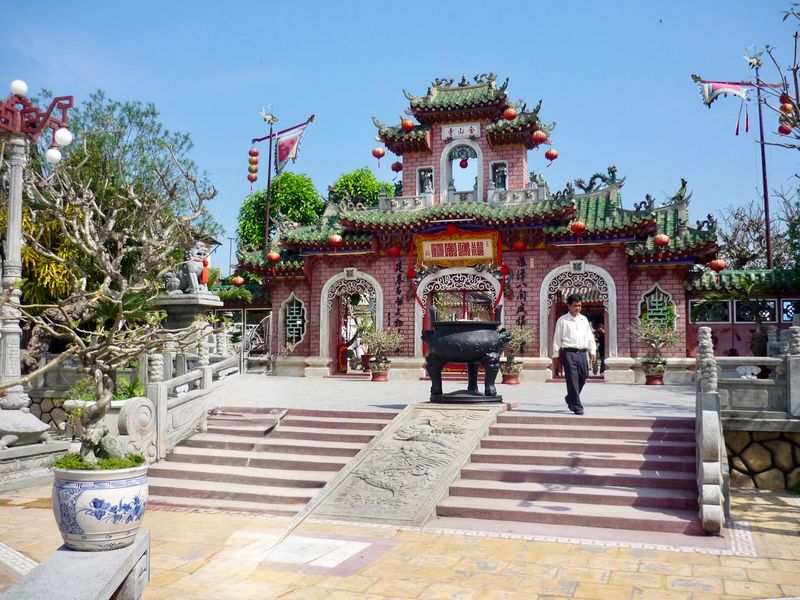
After dark, Hoi An glows. Hundreds of silk lanterns hang above narrow streets, wooden shopfronts line the old trading quarter, and the Thu Bon River reflects it all back in orange and gold.
It looks like a film set, which makes it easy to forget that the beauty is a direct result of one of Southeast Asia’s most interesting commercial histories.
Hoi An developed as a major trading port where merchants from Vietnam, China, Japan, and Europe all left architectural fingerprints. UNESCO inscribed the Ancient Town on the World Heritage List in 1999, recognizing how completely that cultural exchange is preserved in merchant houses, assembly halls, street layouts, and the famous Japanese Covered Bridge, which has stood since the early 1600s.
Food carries the same layered story. Cao lau noodles, white rose dumplings, banh mi, and fresh seafood reflect central Vietnam while quietly referencing the city’s trading past.
Evenings in the historic center can get busy with visitors, but early mornings tell a different story entirely. Shutters open, market sellers arrange produce along the riverbank, and bicycles pass through streets that feel less like a tourist attraction and more like an old town simply waking up and getting on with things.
George Town, Penang, Malaysia
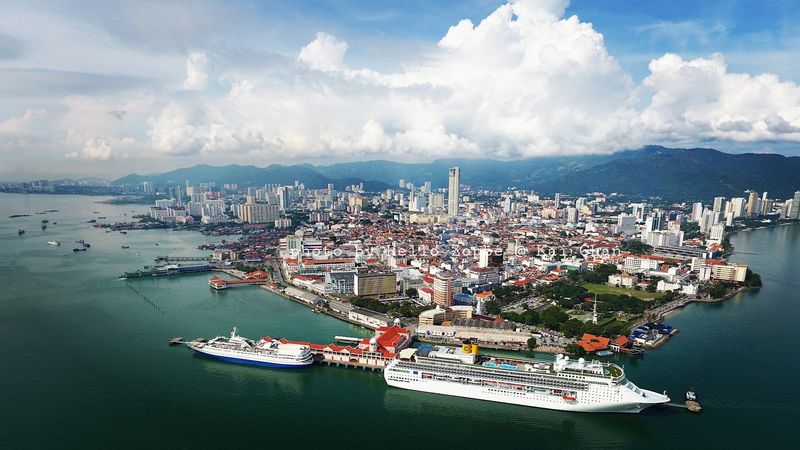
George Town might be the most delicious UNESCO World Heritage Site in Asia, and that is not a small claim. For centuries, Penang occupied a strategic position along trading routes connecting China, India, Southeast Asia, the Middle East, and Europe.
That commercial crossroads produced a city where Malay, Chinese, Indian, Middle Eastern, and European communities built neighborhoods, temples, mosques, churches, and clan houses within a few blocks of each other.
UNESCO inscribed George Town alongside Melaka in 2008, describing both as living examples of multicultural Asian trading towns shaped by centuries of exchange. The documentation specifically highlights the resulting diversity of religious buildings, ethnic quarters, languages, festivals, architecture, and food as the core of what makes these cities exceptional.
The food argument in George Town is particularly strong. Char kway teow, Penang laksa, nasi kandar, Hokkien mee, rojak, and cendol represent just the beginning of what hawker centers and coffee shops offer within a short walk of each other.
Street art added a newer visual layer to the heritage shophouses in recent years, creating a city that rewards both the history-minded and the lunch-obsessed equally. George Town may be one of the rare places where planning your day around meals qualifies as genuine cultural research.
Samarkand, Uzbekistan
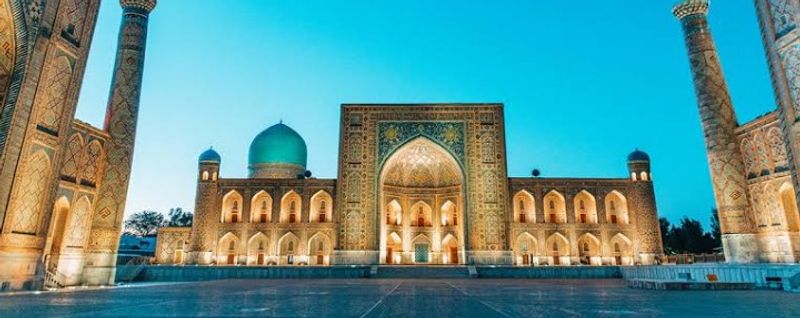
The phrase Silk Road gets used so often it can start to feel like a marketing slogan. Then you stand in Samarkand’s Registan and it becomes completely real.
Three monumental madrasas face an enormous ceremonial square, their facades covered in blue tilework, geometric patterns, inscriptions, and towering arched portals built at a scale that makes visitors feel appropriately small.
Samarkand’s history stretches across more than two thousand years, with Persian, Turkic, Mongol, Islamic, and Central Asian civilizations each leaving marks throughout the city. UNESCO inscribed Samarkand as a Crossroad of Cultures in 2001, recognizing its extraordinary role in connecting and exchanging ideas across major regions of Eurasia.
Beyond the Registan, the Gur-e-Amir mausoleum, Bibi-Khanym Mosque, Shah-i-Zinda necropolis, and the ancient settlement of Afrasiab each reveal different chapters of that long story.
What separates Samarkand from other historic cities is the unapologetic scale of ambition behind its monuments. These were not modest provincial buildings.
They were constructed by rulers who intended their capital to look like the center of civilization. For certain stretches of history, it genuinely was.
Walking the city today, that intention still comes through in every arch and every tile.
Busan, South Korea
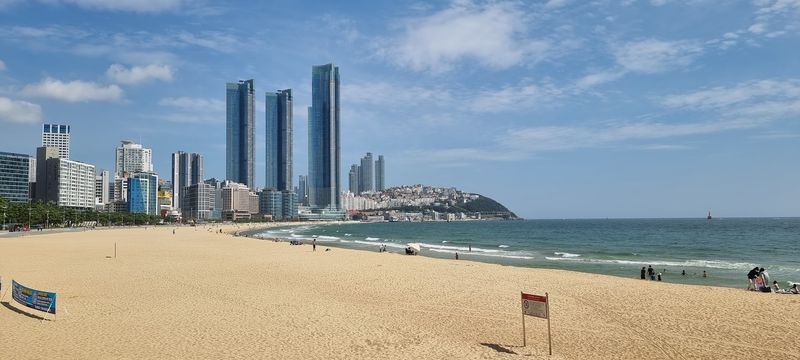
Busan is what happens when a city has almost no flat land to work with and decides to make that the whole personality. Mountains drop toward the sea, neighborhoods climb steep slopes, and the coastline alternates between sandy beaches, working ports, and dramatic rocky headlands.
The geography forces everything into close proximity, which turns out to be one of Busan’s greatest strengths.
Haeundae delivers the famous urban beach, busy enough to feel like a small city in summer. Jagalchi Market introduces Busan’s serious seafood culture, where fresh catches move from boat to table with minimal interruption.
Gamcheon Culture Village climbs a hillside in a maze of painted homes, outdoor galleries, cafes, and stairways that offer views across the rooftops toward the water below.
Haedong Yonggungsa temple adds something genuinely unusual: a Buddhist temple built directly beside the sea rather than deep in the mountains, with waves crashing against the rocks below its ceremonial gates. Busan can feel like a beach resort, working port, mountain city, food destination, and modern metropolis all within the same afternoon.
It did not grow beside the landscape so much as it adapted itself around every hill and inlet the terrain provided. That negotiation shows, and it looks great.
Taipei, Taiwan
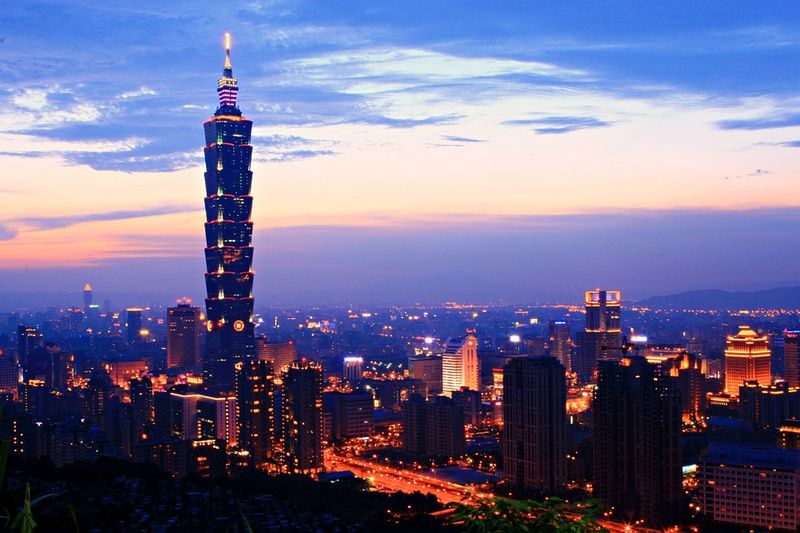
Taipei 101 makes the first impression, and it is a good one. The tower dominated the world’s tallest building rankings when it opened in 2004 and still anchors one of Asia’s most recognizable skylines.
Then you notice that volcanic mountains are visible from downtown, and the whole city starts to feel more interesting than the skyline alone suggested.
Yangmingshan National Park begins remarkably close to the urban core, offering hiking trails, volcanic scenery, grasslands, hot spring pools, and seasonal wildflowers within easy reach of the city center. Beitou adds geothermal hot springs in a neighborhood that mixes Taiwanese architecture with Japanese-era bathhouse buildings from the colonial period.
Traditional temples continue operating in dense residential neighborhoods, bringing incense, lanterns, and festival noise to streets that also have bubble tea shops and convenience stores every thirty meters.
Night markets are where Taipei really shows off. Vendors serve dumplings, beef noodle soup, pepper buns, crispy fried chicken, oyster omelets, shaved ice, and dozens of other snacks within a single block.
Taipei is unusually easy to enjoy because its contrasts sit so close together. Hike a volcanic mountain in the morning, soak in hot springs in the afternoon, then eat your way through a night market after dark.
That is a perfectly reasonable Tuesday.
Bukhara, Uzbekistan
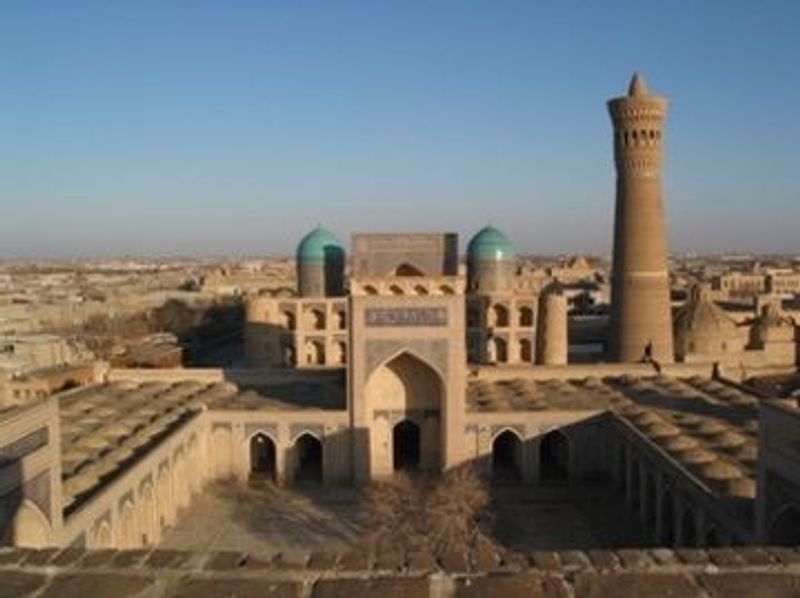
If Samarkand impresses through sheer ceremonial scale, Bukhara works through something quieter and harder to define. The historic center preserves mosques, madrasas, caravanserais, domed trading structures, courtyards, and winding streets shaped by centuries of Silk Road commerce, and it does so at a human scale that makes the whole city feel navigable rather than overwhelming.
UNESCO’s documentation of Bukhara’s protected center records an extraordinary concentration of historic structures, including numerous madrasas, caravanserais, and covered trading domes within a carefully maintained urban zone. The domed bazaars where merchants once traded jewelry, textiles, and spices still stand at key intersections, now selling crafts and embroidery to travelers who walk the same routes those merchants used.
The Lyabi-Hauz pool at the center of the old city provides a natural gathering point where locals and visitors share the same shaded benches. The Kalon Minaret rises above the rooftops, its brickwork warming from sandy beige to deep amber as evening light moves across the facade.
Unlike the grand plazas of Samarkand, Bukhara pulls you through narrow lanes and into hidden courtyards, letting the city’s trading history reveal itself gradually. You do not just admire the monuments here.
You move between them through streets that still make the whole story make sense.
Share this story