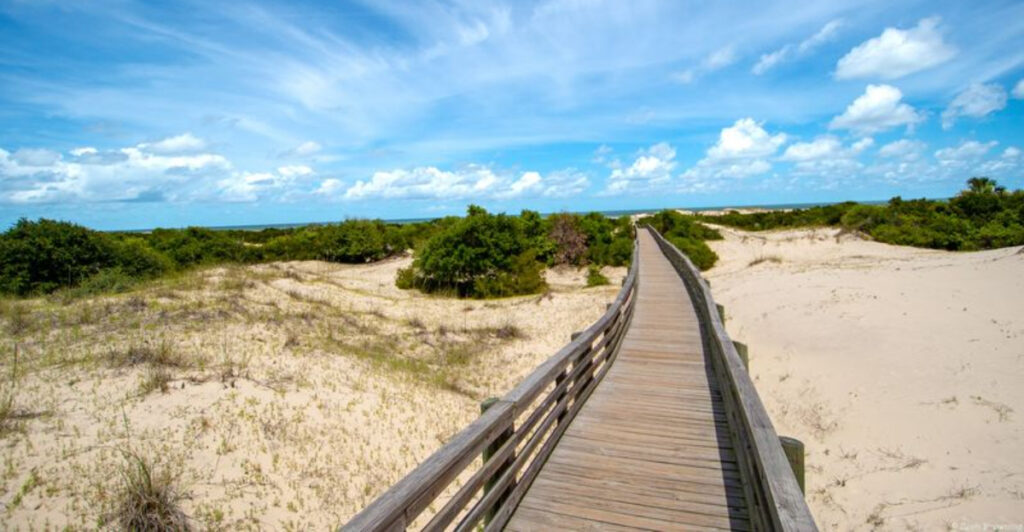
Some of the best walks in America don’t happen on mountain peaks or city streets. They happen a few feet above swampy water, winding through ancient cypress trees, salt marshes, and fields of white sand dunes.
Boardwalks make these wild, fragile places accessible to almost anyone, letting you get close to nature without damaging it. Whether you’re planning a road trip, a weekend getaway, or just looking for a new outdoor experience, these 14 boardwalks offer scenery and wildlife encounters that are genuinely hard to find anywhere else.
Pack comfortable shoes, bring water, and get ready to slow down for a little while.
Boardwalk Loop Trail, Congaree National Park, South Carolina
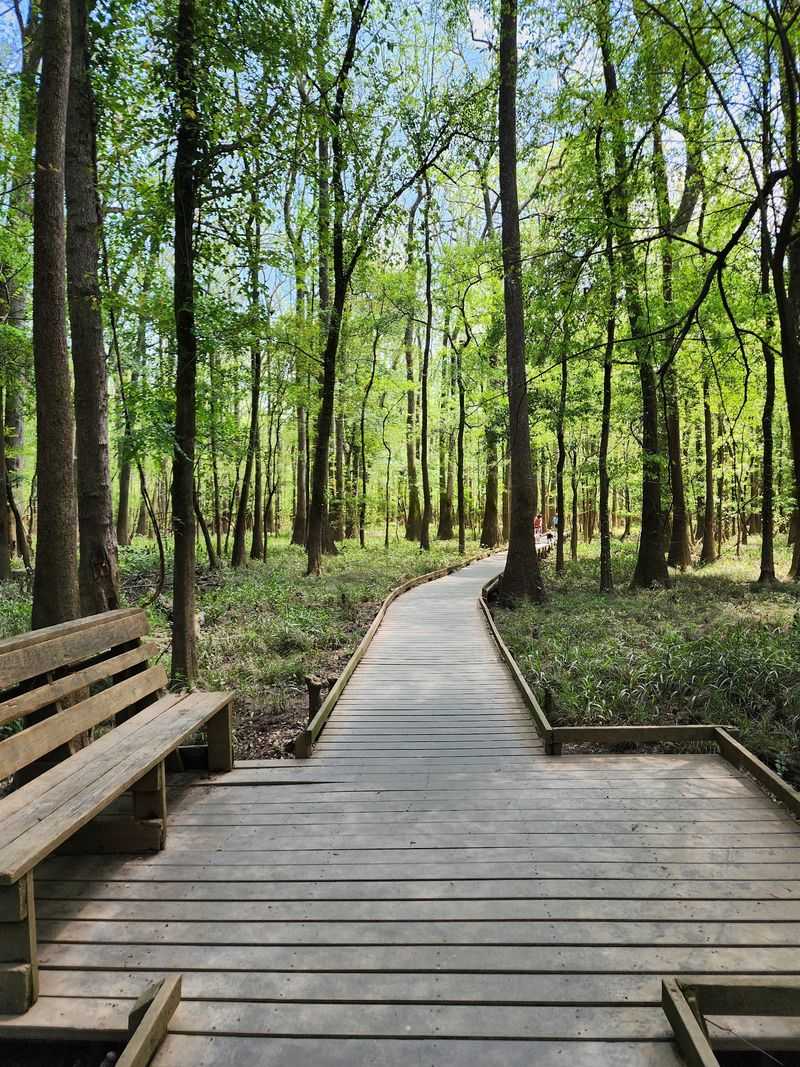
Walking through Congaree National Park feels like stepping into a world that has been quietly growing for centuries. The Boardwalk Loop Trail covers 2.6 miles beginning near the Harry Hampton Visitor Center and travels through one of the largest remaining old-growth bottomland forests in the eastern United States.
Bald cypress and water tupelo trees rise from the forest floor, some reaching extraordinary heights that make the canopy feel almost cathedral-like. Interpretive markers along the route explain the plants, wildlife, and cultural history connected to this landscape.
The trail is generally accessible, though lower sections can flood after heavy rain. Congaree posts current trail conditions and alerts on its website, so checking before you arrive is a smart habit.
The park itself is free to enter, making this one of the most rewarding no-cost nature walks available anywhere in the Southeast.
Nisqually Estuary Boardwalk, Olympia, Washington
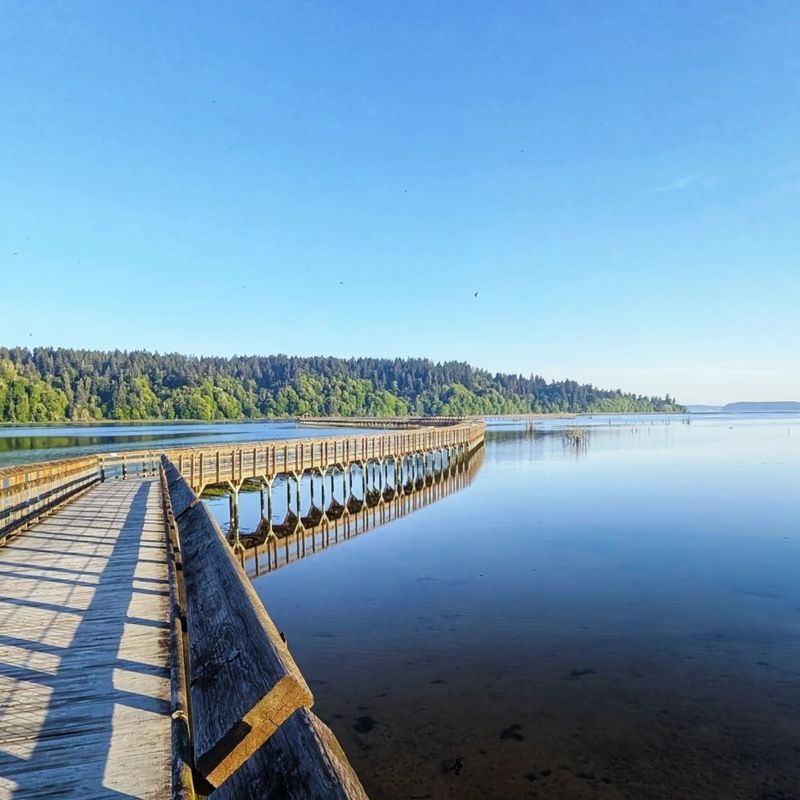
Few wildlife refuges in the Pacific Northwest offer views that shift as dramatically as the ones at Billy Frank Jr. Nisqually National Wildlife Refuge. The Nisqually Estuary Boardwalk carries visitors across tidal wetlands where the scenery changes completely depending on whether the tide is coming in or going out.
At low tide, mudflats stretch into the distance and shorebirds pick through the exposed sediment. At high tide, open water fills the channels and the marsh grasses sway.
The refuge has just over four miles of combined boardwalk and gravel trail, all relatively flat and manageable for most visitors.
Ducks, geese, great blue herons, raptors, and even river otters have been spotted along this route. During colder months, wet leaves and occasional frost can make the wooden surfaces slippery, so footwear with some grip is worth considering.
The refuge is open year-round.
Interdune Boardwalk, White Sands National Park, New Mexico
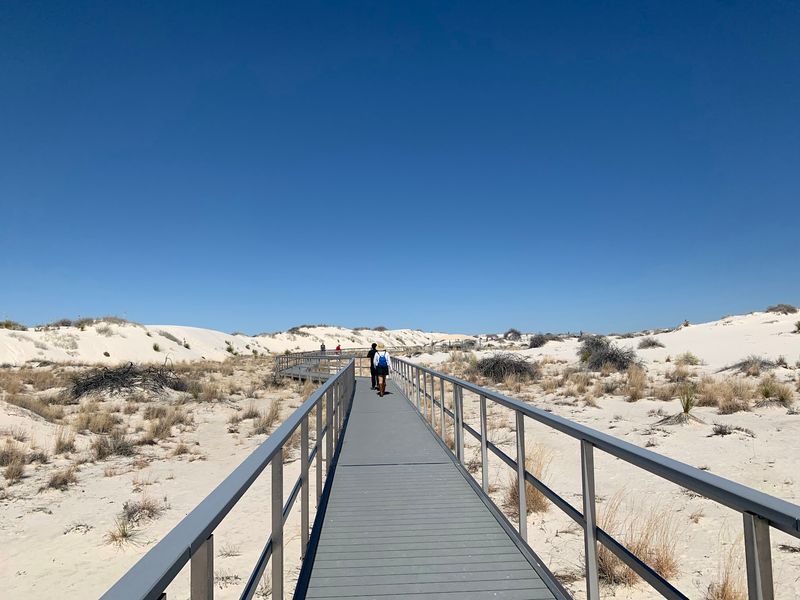
Standing in the middle of White Sands National Park, it is easy to forget you are in the middle of a desert. The landscape looks more like an arctic snowfield than a southwestern basin.
The Interdune Boardwalk travels 0.4 miles round trip through a fragile area between the dunes where plants and animals have adapted to survive constant sand movement.
The walk typically takes about 20 minutes, making it one of the most accessible and rewarding short trails in the entire National Park system. Interpretive panels explain the geology, wildlife, and vegetation in plain, easy-to-follow language.
A shade structure at the far end provides a welcome break from the intense New Mexico sun, and broad views toward the dunefield and Sacramento Mountains make it a genuinely memorable stopping point. Wind occasionally pushes sand across the walking surface, so sunglasses and closed-toe shoes are both practical choices for this one.
Blair Audubon Boardwalk, Corkscrew Swamp Sanctuary, Florida
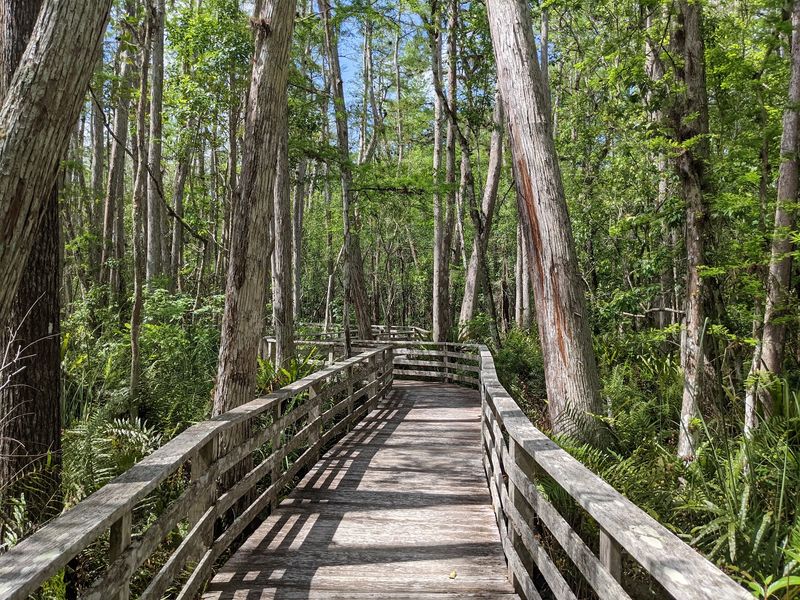
Corkscrew Swamp Sanctuary protects something genuinely rare: the largest remaining stand of old-growth bald cypress trees in the world. The Blair Audubon Boardwalk travels 2.25 miles through several distinct Southwest Florida habitats, including pine flatwoods, wet prairie, open marsh, and that remarkable ancient cypress forest.
Because the route passes through multiple ecosystems, the scenery shifts noticeably as you walk. One section might feel open and sun-drenched, while another feels shaded and still beneath towering cypress draped with Spanish moss.
Barred owls, wood storks, alligators, turtles, and seasonal wildflowers are among the wildlife and plants commonly encountered along the way.
The sanctuary is currently welcoming visitors, though admission hours vary by season and advance ticket reservations are recommended during busy periods. Corkscrew is located in Collier County and draws visitors from Naples, Fort Myers, and beyond.
The boardwalk is well-maintained and suitable for a wide range of visitors.
Kirby Storter Boardwalk, Big Cypress National Preserve, Florida
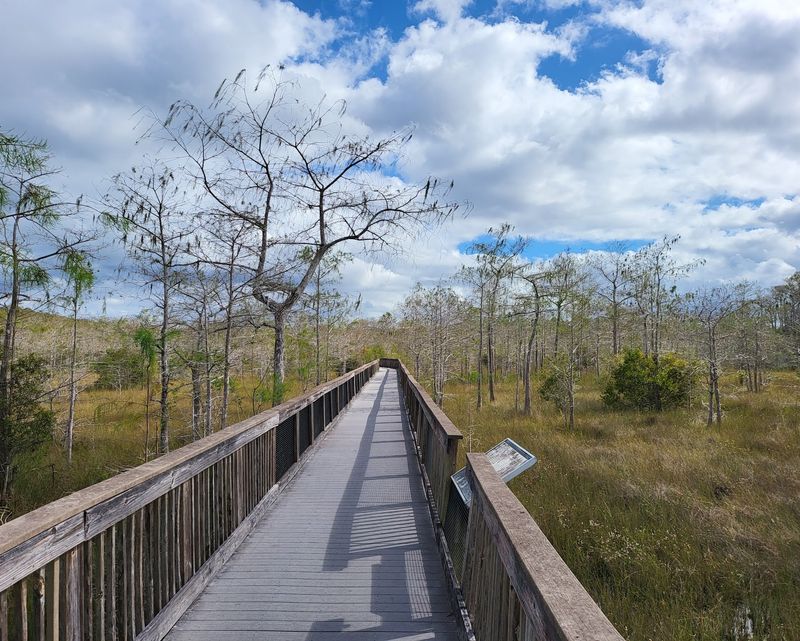
Right off the Tamiami Trail between Miami and Naples sits one of the most convenient and rewarding short boardwalks in South Florida. The Kirby Storter Boardwalk travels one mile round trip into a mature cypress strand inside Big Cypress National Preserve, and the transition from roadside parking lot to shaded wilderness happens almost immediately.
Cypress trees, ferns, and air plants line the path as it moves deeper into the strand. At the far end, an overlook faces a gator hole, a naturally deeper area where water tends to linger during Florida’s dry season.
Fish, turtles, birds, snakes, and alligators may gather around that remaining water, though wildlife sightings always depend on timing and conditions.
Picnic tables and vault toilets are available near the trailhead, which makes this a practical midpoint stop during a drive across South Florida. The boardwalk is free to access and open to the public throughout the year.
Life of the Marsh Trail, Assateague Island National Seashore, Maryland
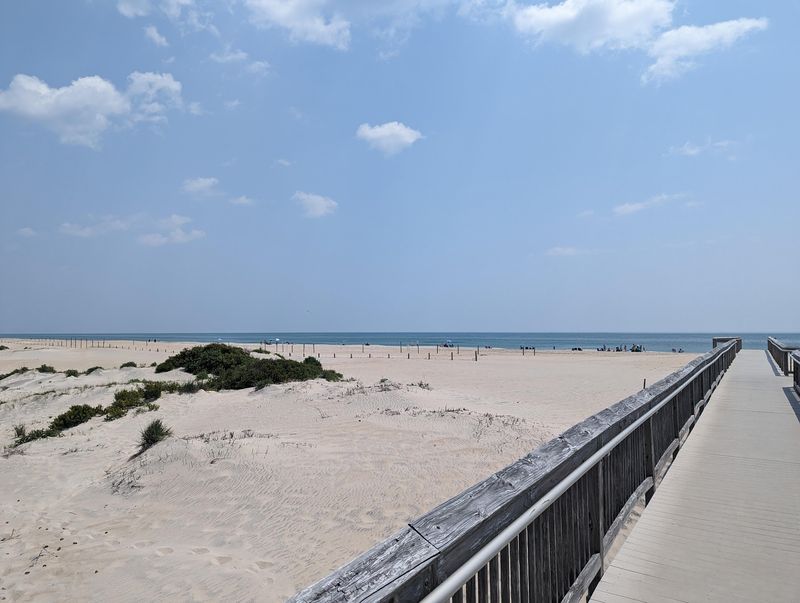
Most visitors come to Assateague Island for the wild horses and the ocean beaches, and those are absolutely worth the trip. But the Life of the Marsh Trail offers a quieter, equally rewarding experience on the bay side of the island.
This half-mile route begins near shrub thickets and transitions onto a raised wooden boardwalk with open views across the salt marsh bordering Sinepuxent Bay.
Herons, egrets, willets, terrapins, otters, and raccoons are among the animals that use this productive wetland habitat. The open setting also makes the trail one of the better spots on the island for watching the sun go down over the water.
The marsh ecosystem visible from this boardwalk supports much of the wildlife that makes Assateague so well known. For anyone who has only experienced the ocean-facing side of the island, this short walk provides a genuinely different perspective on what the seashore actually contains.
Marsh Boardwalk, Cumberland Island National Seashore, Georgia
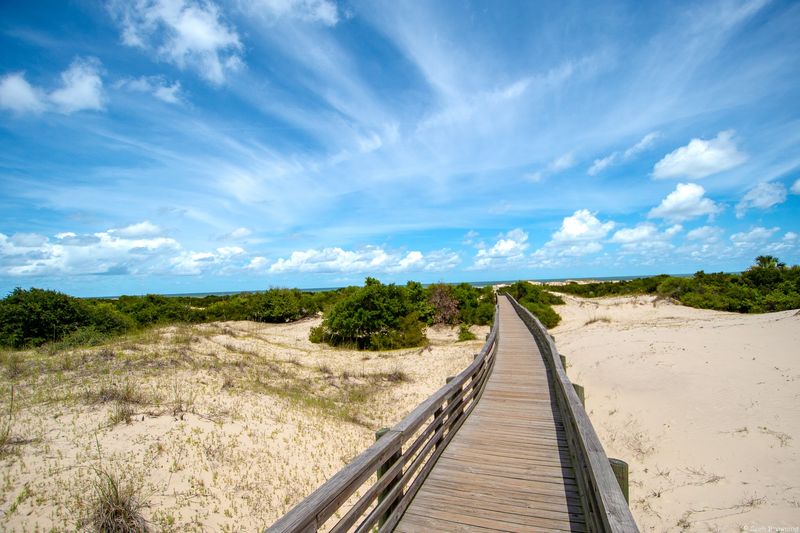
Getting to Cumberland Island requires a ferry, which means the experience starts before you even step foot on the boardwalk. The island has no bridges, and that deliberate separation from the mainland is part of what makes it feel so preserved.
The Marsh Boardwalk connects the area near the historic Dungeness ruins with the trail toward the beach, passing through a transition of maritime forest, salt marsh, and coastal dune vegetation.
The raised walkway gives visitors a clear view into the marsh without disturbing the sensitive habitat below. Shorebirds and other coastal wildlife are commonly spotted along this stretch.
The boardwalk also illustrates how several completely different ecosystems can exist side by side on a single barrier island.
Visitors should arrange ferry transportation and check schedules in advance, as capacity is limited and the island sees consistent demand. Once there, the boardwalk forms a natural part of the route connecting Cumberland’s most visited historic and natural areas.
Saltmarsh Boardwalk Trail, Bombay Hook National Wildlife Refuge, Delaware
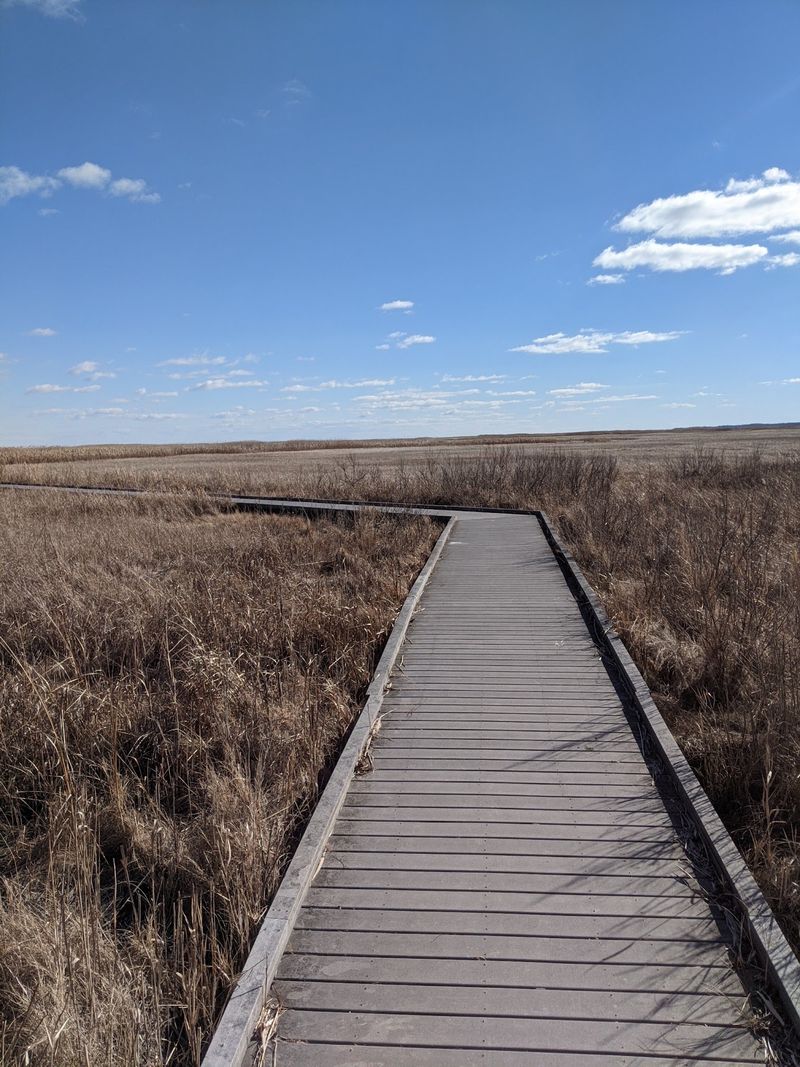
About 80 percent of Bombay Hook National Wildlife Refuge is tidal salt marsh, which tells you a lot about what kind of landscape you are visiting. The Saltmarsh Boardwalk Trail gives visitors an unusually close look at this habitat, starting in a small upland woodlot near brackish ponds before opening onto the boardwalk itself.
The approximately half-mile loop crosses the open high marsh before looping back through the trees, giving walkers a chance to experience two distinct environments in a single outing. The contrast between the shaded woodland and the exposed, wide-open wetland is noticeable and interesting.
Bombay Hook is located on Delaware’s coastal plain and is an important stop for migratory shorebirds and waterfowl during spring and fall. The broader refuge also includes freshwater impoundments managed specifically to attract migratory birds.
For birdwatchers in particular, the combination of the boardwalk trail and the refuge’s auto tour route makes for a full and rewarding visit.
Wetland Walkway, Sabine National Wildlife Refuge, Louisiana
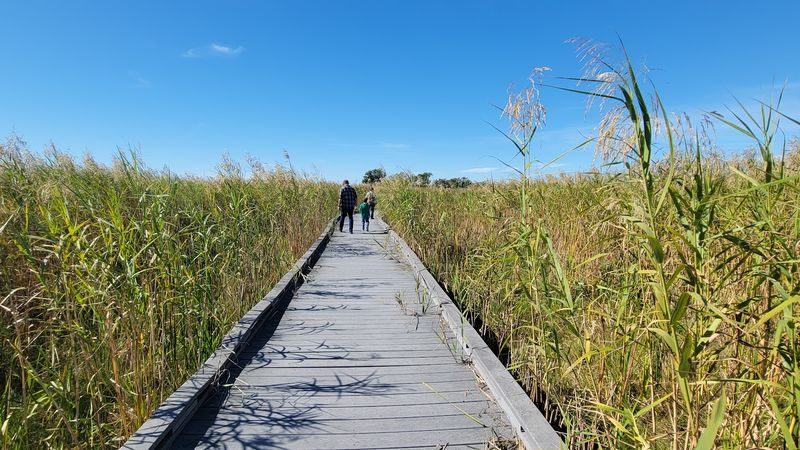
Southwestern Louisiana holds some of the most expansive coastal marsh in the entire country, and the Wetland Walkway at Sabine National Wildlife Refuge puts visitors right in the middle of it. The 1.5-mile trail and boardwalk sits close to State Highway 27, with parking and visitor facilities available near the entrance.
The route passes through freshwater, brackish, and saline marsh environments, which means the plant communities and wildlife shift as you move along the path. Alligators are a regular presence, and the open wetlands attract a wide variety of birds throughout the year.
Observation areas along the route give visitors places to pause and scan without crowding the trail.
Because the walkway is fully exposed to sun, heat, and Louisiana’s sometimes dramatic weather, bringing water and checking current refuge conditions before visiting is genuinely important. The refuge is managed by the U.S.
Fish and Wildlife Service and is open to the public at no charge.
Asilomar Dunes Boardwalk, Pacific Grove, California
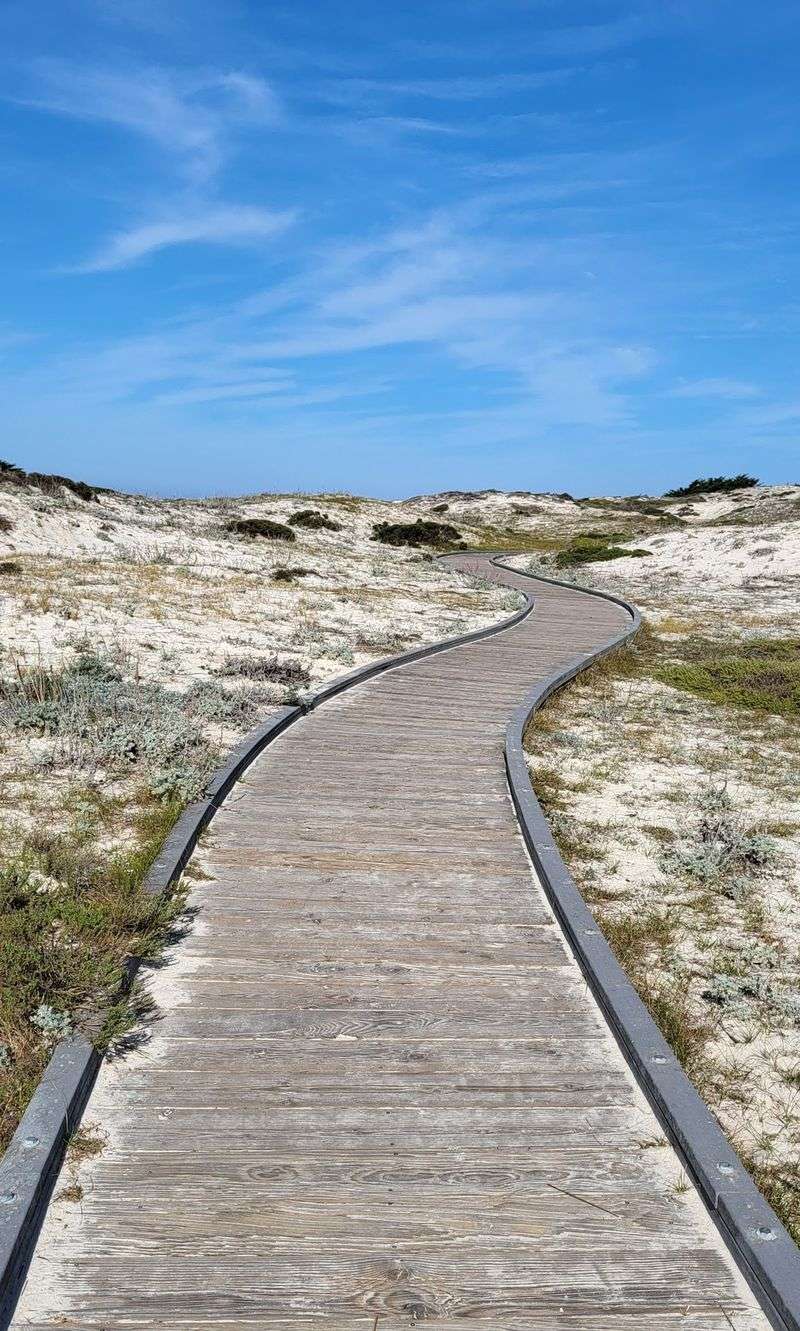
The Monterey Peninsula is already one of the most visually striking stretches of California coastline, and the Asilomar Dunes Boardwalk adds another layer to what makes it worth visiting. The quarter-mile boardwalk crosses a protected coastal dune habitat near Asilomar State Beach, allowing visitors to walk through native vegetation and seasonal wildflowers without damaging the fragile dune system underneath.
The surrounding preserve covers roughly 25 acres of restored dunes that have been carefully managed to recover from decades of foot traffic and invasive plants. Benches along the route offer good spots to watch for migrating whales offshore or simply enjoy the view toward the Pacific.
Accessible parking is available near the trailhead on Sunset Avenue. Visitors can also extend their outing by connecting with the nearby Asilomar Coast Trail, which follows the rocky shoreline and adds additional ocean views to the experience.
Together, the two routes make a satisfying and scenic coastal walk.
Marsh Boardwalk Trail, Cape May National Wildlife Refuge, New Jersey
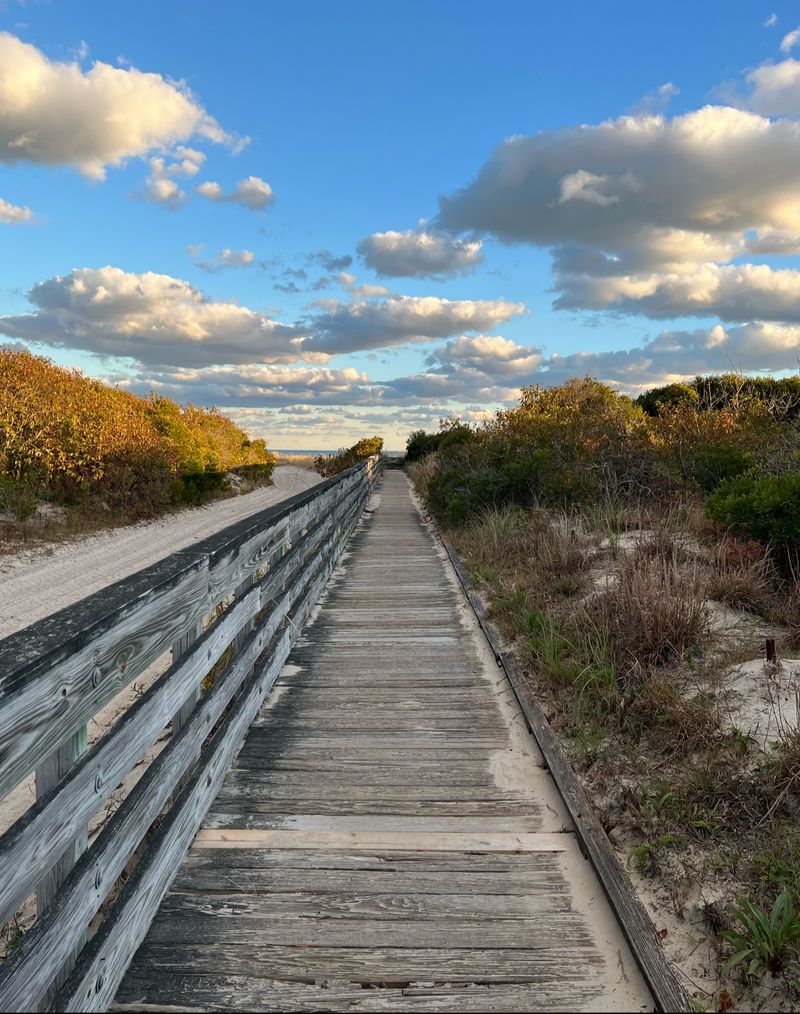
Cape May, New Jersey is already legendary among birdwatchers, and the Marsh Boardwalk Trail at the Two Mile Beach Unit of Cape May National Wildlife Refuge fits right into that reputation. The accessible boardwalk extends approximately 500 feet across coastal habitat before reaching an observation platform with open views across the salt marsh.
Clapper rails are a particular highlight here. These secretive marsh birds are often heard calling from dense vegetation long before they are ever seen, which gives the walk an almost treasure-hunt quality for patient visitors.
The boardwalk itself is only about 0.1 miles long, making it a realistic stop even for travelers with limited time.
The Two Mile Beach Unit can be combined with nearby beaches and other refuge trails scattered across the southern end of the Cape May Peninsula. For anyone passing through the area during spring or fall migration, adding this short boardwalk to the itinerary costs almost nothing and delivers a lot.
Horicon Marsh Boardwalk, Wisconsin
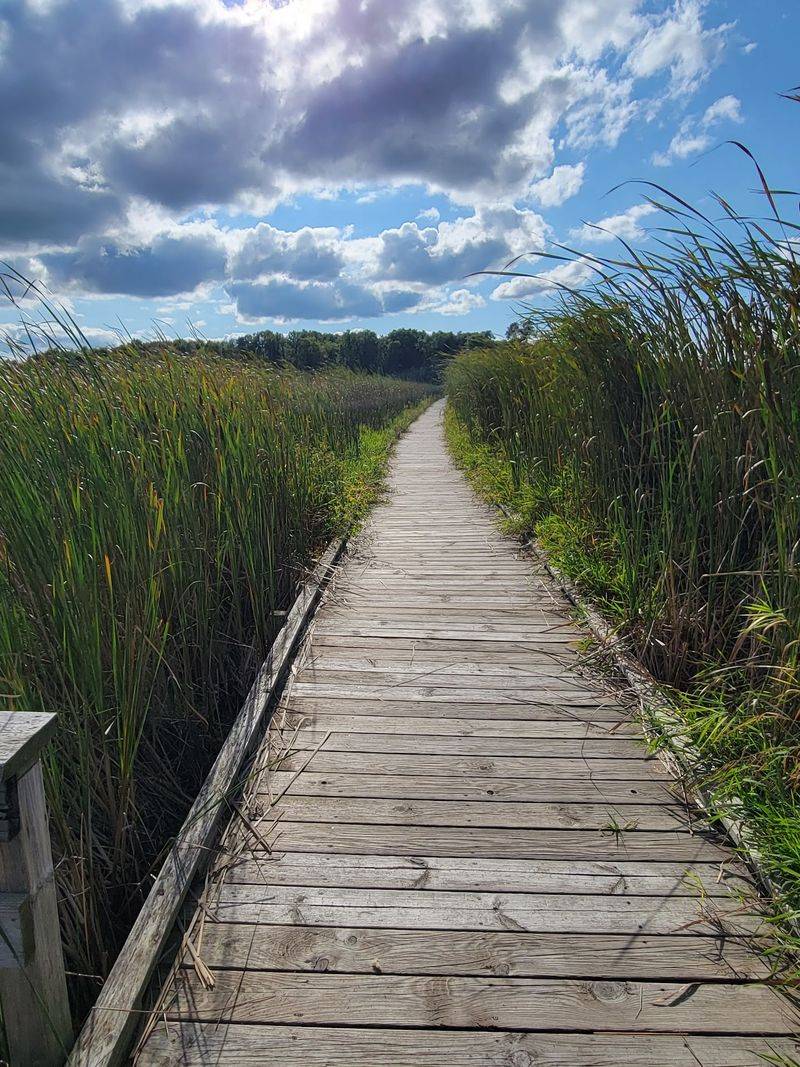
Horicon Marsh is one of the largest freshwater cattail marshes in the United States, and the boardwalk at Horicon National Wildlife Refuge gives visitors a direct way to experience it. The trail leads out into the open marsh before looping back through an oak forest, which means a single walk covers two noticeably different environments.
The marsh section draws serious birdwatchers, especially during spring and fall migration when the refuge can host impressive concentrations of waterfowl and shorebirds. The wooded section is known for its woodland wildflower displays in May, which adds a seasonal reason to time a visit carefully.
The broader refuge offers additional trails, overlooks, and wildlife-viewing options beyond the boardwalk loop. Conditions and animal activity vary significantly by season, and the experience in spring migration looks nothing like a quiet summer afternoon.
Located in east-central Wisconsin, Horicon is accessible from both Milwaukee and Madison for a manageable day trip.
Wakodahatchee Wetlands Boardwalk, Delray Beach, Florida
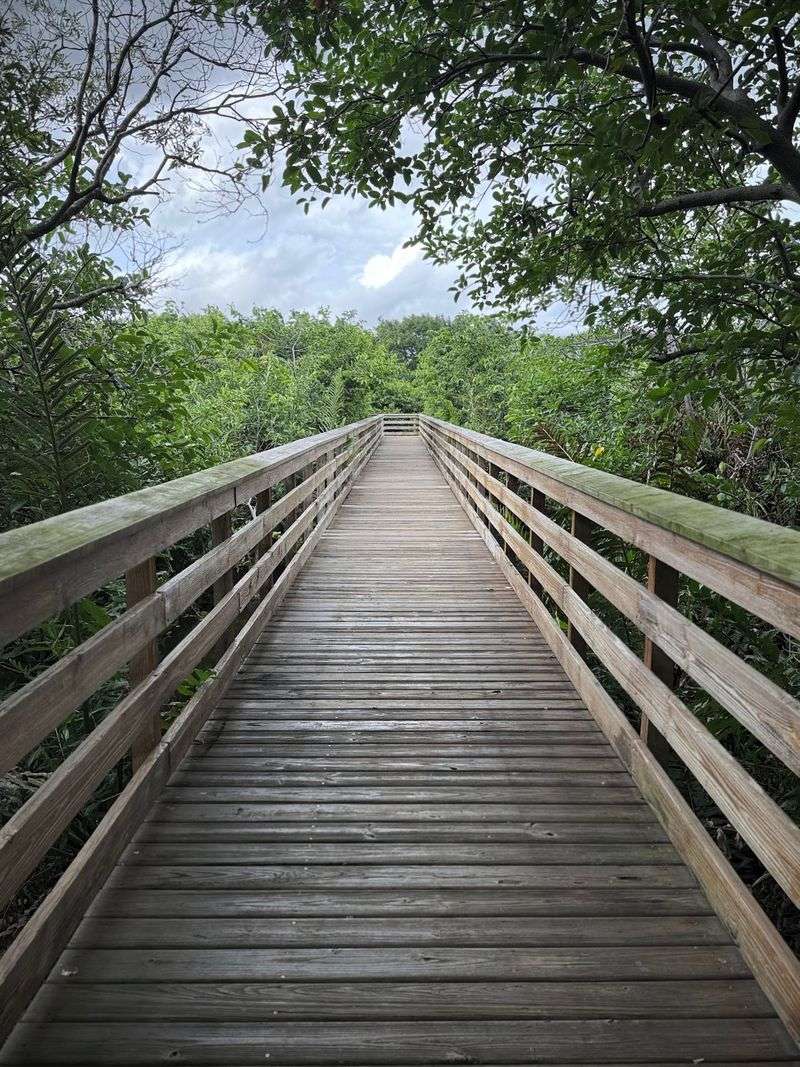
Wakodahatchee Wetlands in Delray Beach is one of those places that surprises people. Palm Beach County built this constructed wetland on former wastewater utility property, using reclaimed water to support a functioning habitat filled with open ponds, small islands, shrubs, and nesting trees.
The result is one of the most wildlife-rich boardwalk experiences in South Florida.
The approximately three-quarter-mile route provides close-up views of nesting and roosting birds that would be nearly impossible to observe this clearly anywhere else. Anhingas, herons, ibis, cormorants, spoonbills, and many other species use the site actively.
Turtles and alligators are also common sightings from the raised walkway.
Because most of the boardwalk is exposed, early morning visits tend to offer cooler temperatures and higher wildlife activity. Wakodahatchee is free to visit and open to the public most days of the week, though it is worth checking current hours before making the drive.
Parking is available on-site.
Cranesville Swamp Boardwalk, Maryland And West Virginia
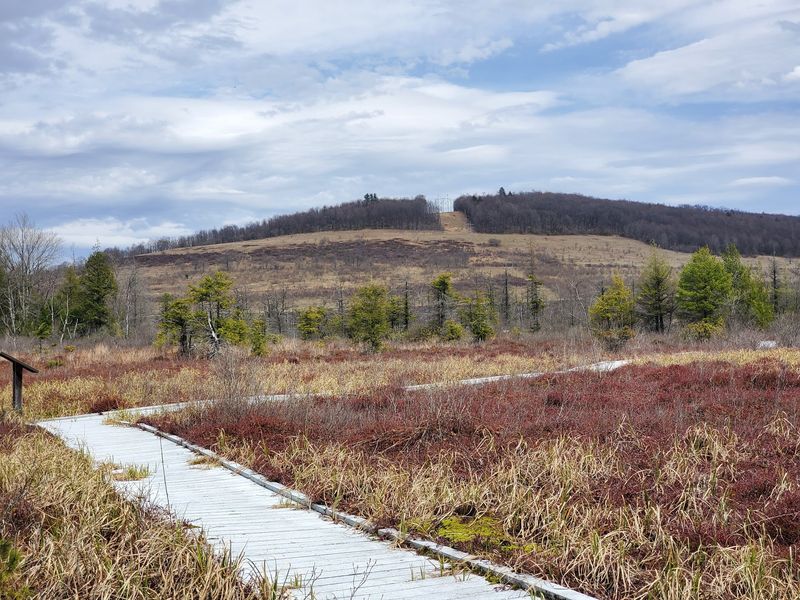
Cranesville Swamp Preserve exists because of a geographic quirk. Cold air pooling in a high-elevation basin near the Maryland and West Virginia border, combined with unusual drainage patterns, has created wetland conditions more typical of areas hundreds of miles farther north.
The result is a rare peatland ecosystem with plants that have no business being this far south.
A 1,500-foot boardwalk and five trails allow visitors to explore the preserve’s wetlands and surrounding forest without disturbing the soft, waterlogged ground. Red spruce, hemlock, and peatland vegetation cover the landscape, giving Cranesville a distinctly northern feel even in summer.
The Nature Conservancy maintains the preserve for both conservation and public access. Staying on marked paths is strongly encouraged because the wetland habitats are sensitive to foot traffic and can be permanently damaged by off-trail exploration.
Cranesville is a relatively quiet destination that rewards visitors who appreciate unusual natural history and landscapes that genuinely feel unlike anything else nearby.
Share this story