Spain is full of surprises hiding just beyond its famous cities. Tucked into mountains, perched on cliffs, and squeezed beside ancient rivers are small towns that look like they belong on a postcard.
These places carry centuries of history in their stone walls, whitewashed lanes, and harbor-front squares. From the green north to the sun-baked south, Spain’s lesser-known towns offer some of the most jaw-dropping scenery in all of Europe.
Albarracín
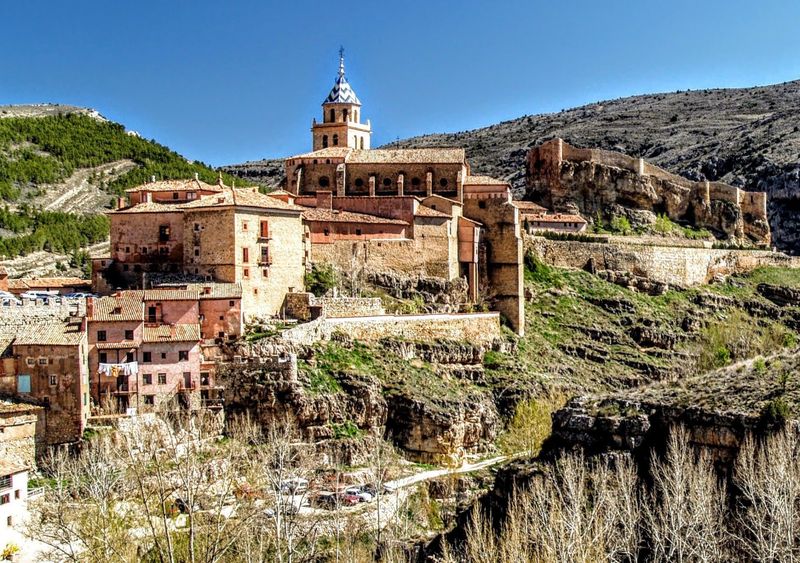
Standing above the Guadalaviar River, Albarracín looks less like a real town and more like something a movie director dreamed up. Its pinkish stone buildings glow warm in the afternoon light, stacked tightly beneath one of Spain’s most impressive medieval wall systems.
The Andador Tower alone dates back to the 10th century, giving the skyline a serious dose of ancient drama.
Once the capital of its own independent Taifa kingdom, Albarracín has layers of history from Muslim, Christian, and Roman periods all folded into a surprisingly small area. Narrow lanes twist upward to Plaza Mayor, where the views across the river valley reward every step of the climb.
The surrounding mountains add a rugged, remote quality that makes the whole place feel genuinely off the beaten path.
Outside town, the Albarracín Cultural Park protects post-Palaeolithic rock art left by people who clearly had excellent taste in scenery. A Roman aqueduct once stretched roughly 25 kilometers to Cella, proving this area has been worth settling for a very long time.
Albarracín is protected as a Property of Cultural Interest, and one look explains exactly why.
Ronda
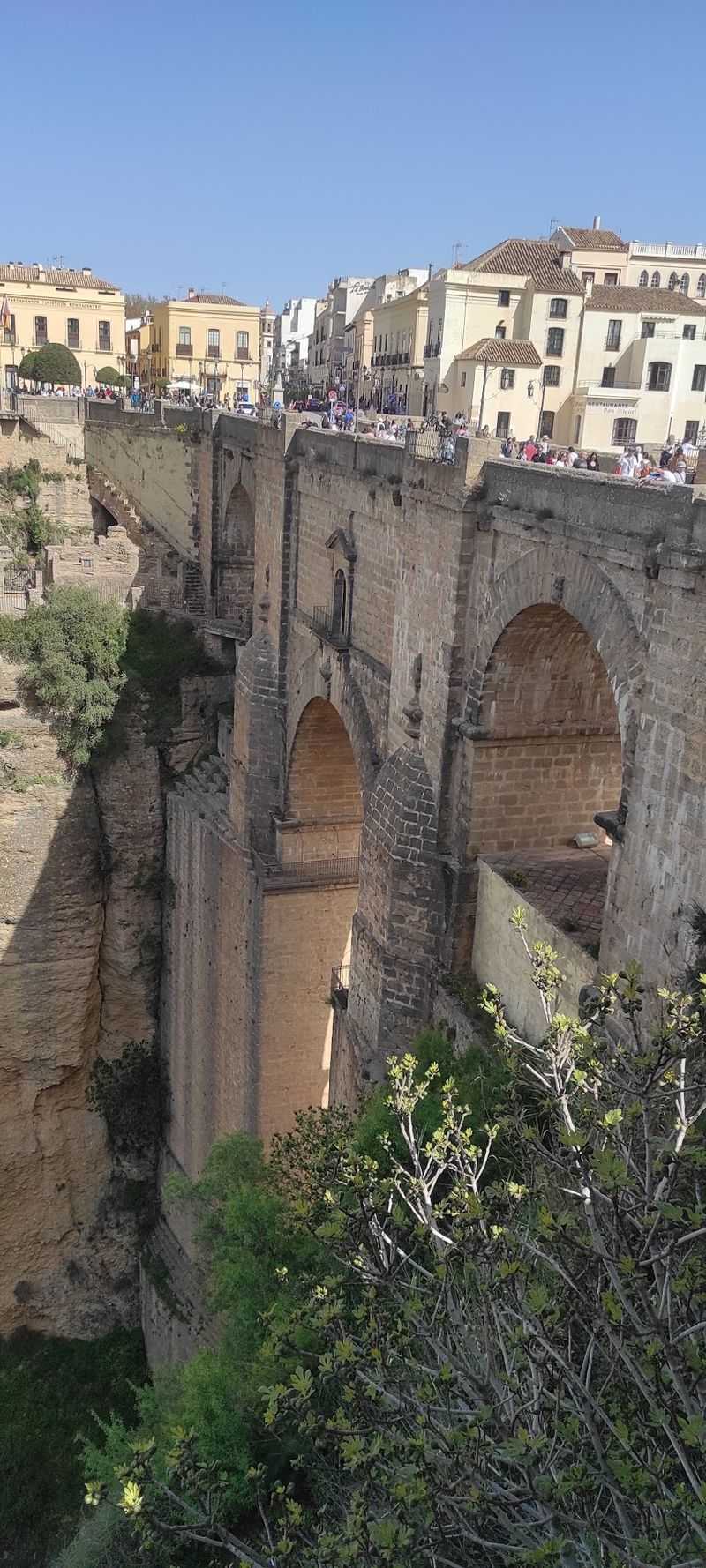
Ronda has a gorge that stops people mid-sentence. El Tajo drops more than 100 meters straight down, carved by the Guadalevín River, and the town simply built itself on both sides of it like nothing unusual was happening.
The Puente Nuevo bridge connecting the two halves is one of those structures that makes you stop and just stare for an embarrassingly long time.
The older southern quarter still carries strong Islamic influences in its street layout, while the newer section grew mainly from the 16th century onward. Together they create a town where medieval atmosphere and sweeping mountain views exist in the same glance.
Celts, Phoenicians, Romans, and Muslims all left their marks here before the Catholic Monarchs added their chapter to the story.
Ronda sits high in the Serranía de Ronda, which means the surrounding countryside is just as impressive as the town itself. The mountains of Málaga province stretch in every direction, and the Costa del Sol is surprisingly close for something that feels so removed from beach-resort life.
Ronda is the kind of place that earns its reputation without even trying.
Cudillero
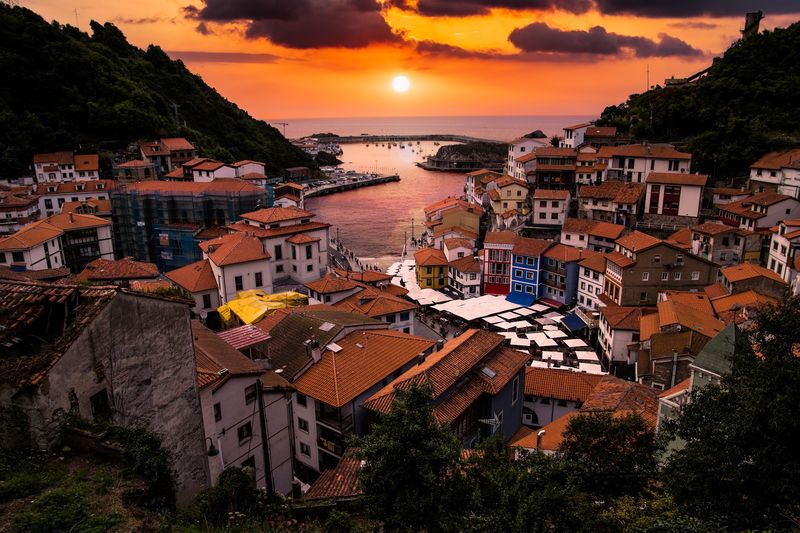
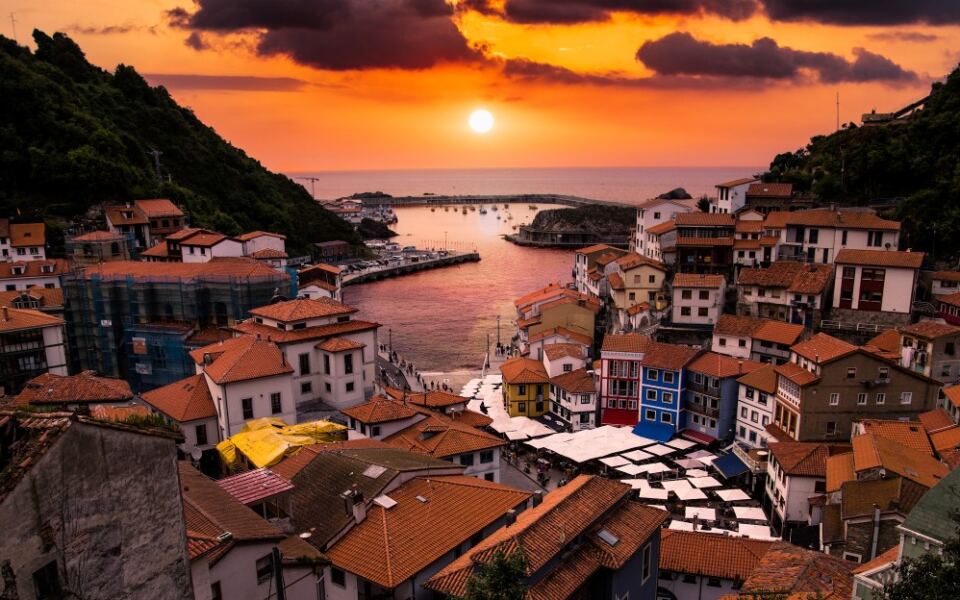
Cudillero looks like someone tilted a box of colored building blocks and let them tumble down a cliff toward the sea. Houses in shades of yellow, blue, and terracotta cling to an almost vertical horseshoe of rock surrounding a working fishing harbor.
This is Asturias at its most theatrical, and the town knows it.
Spain’s tourism authority recommends following the official viewpoint route, hitting spots like La Garita, La Atalaya, El Pico, and the lighthouse to fully appreciate just how tightly this community is wedged between mountain and ocean. The 16th-century parish church adds Baroque carvings to the mix, while the Humilladero chapel holds the title of oldest surviving building in town.
Every corner seems to offer a new angle worth photographing.
Seafood taverns crowd the cobbled waterfront square, and the menu reflects the harbor’s daily catch rather than tourist expectations. Cudillero is a working fishing port first and a scenic attraction second, which is exactly what gives it such an honest, unpolished charm.
The Atlantic coast of northern Spain rarely shows itself this dramatically, and Cudillero is the best argument for heading north instead of south.
Frigiliana
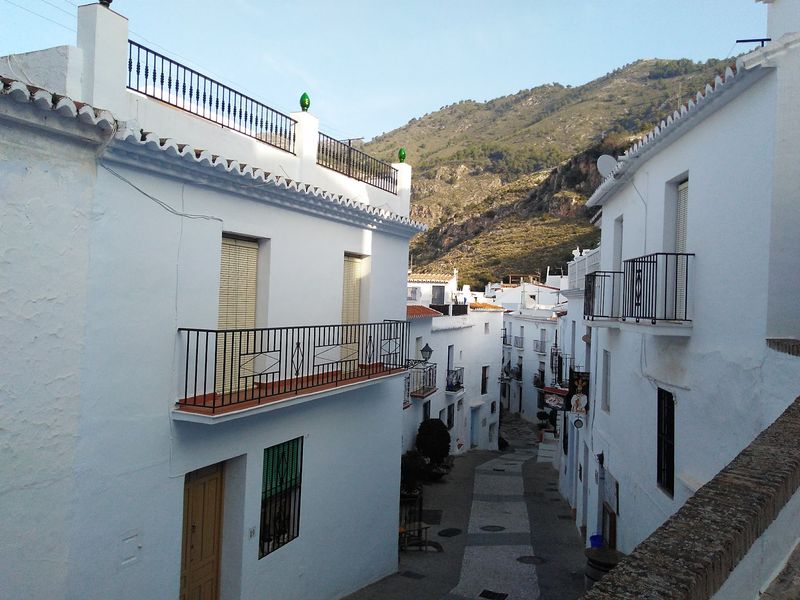
Frigiliana is so white it practically glows on a sunny day. Perched on the lower slopes of the Sierra de Almijara above Málaga’s coast, the village wraps visitors in a maze of narrow lanes that twist uphill, become staircases, duck under covered passages, and squeeze through old defensive gateways without warning.
The street plan is a direct inheritance from the Islamic period, and it has aged beautifully.
Ceramic panels scattered throughout the historic center tell the story of conflicts between Moriscos and Christian forces at the Peñón de Frigiliana, turning a walk through the village into an open-air history lesson. The 16th-century Palace of the Counts of Frigiliana was later converted into a sugar mill, and it still produces traditional cane syrup today.
That combination of medieval politics and local agriculture gives Frigiliana more depth than its picture-perfect appearance might suggest.
From the higher streets, the view stretches all the way to the Costa del Sol, creating a striking contrast of white architecture, rugged mountain slopes, and distant blue sea. Few Andalusian villages manage to look this good from both inside and outside.
Frigiliana earns every one of its many glowing reviews.
Cadaqués
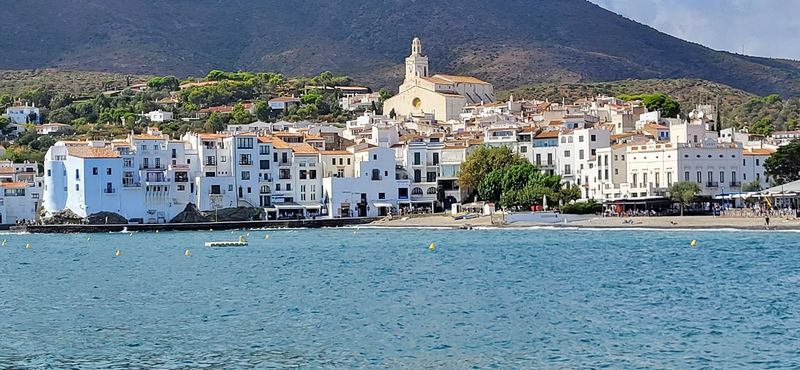
Salvador Dalí chose Cadaqués as his home for a reason, and one visit makes that decision feel completely obvious. Tucked deep into Catalonia’s Cap de Creus peninsula, this white village sits around a rocky bay where the Pyrenean foothills meet a coastline of wind-shaped cliffs, hidden coves, and choppy Mediterranean water.
The scenery here is wild in a way that most of Spain’s coast has long since traded away for resort development.
The Church of Santa María watches over the bay with an elaborate Baroque altarpiece inside that surprises most visitors expecting something simpler. The entire surrounding landscape falls within Cap de Creus Natural Park, protecting the raw, rocky character that has attracted artists, writers, and curious travelers for generations.
Dalí’s former home at nearby Portlligat is now a museum well worth the short walk.
Galleries and small museums keep the artistic tradition alive in a town that still operates as a genuine fishing community. The harbor fills with small boats, and the waterfront restaurants serve fresh catch with minimal fuss.
Cadaqués manages to be both culturally rich and visually spectacular without feeling like it is performing for tourists, which is increasingly rare along the Mediterranean.
Aínsa
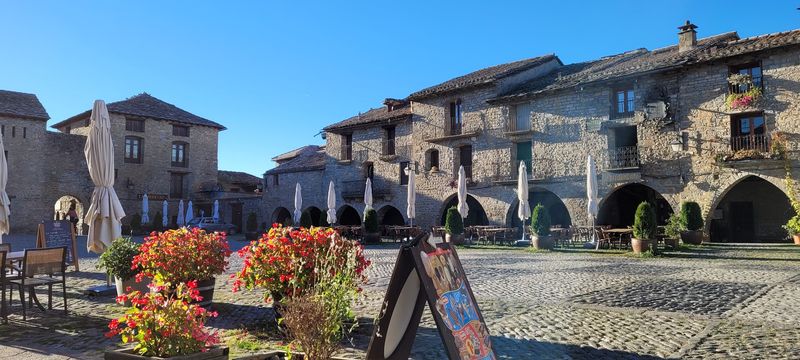
Aínsa has been sitting on its hilltop in the Pyrenean foothills since before most European countries had their current names. Once the capital of the historic kingdom of Sobrarbe, it joined the Kingdom of Aragón in the 11th century and has been one of the region’s most complete medieval towns ever since.
The old quarter carries an official Historic-Artistic Site designation, which feels well-earned the moment you step through the old gateway.
Plaza Mayor is the kind of square that makes you want to sit down and stay for several hours. Arcaded buildings line every side, creating shaded walkways that have sheltered traders, pilgrims, and wandering travelers for centuries.
The Romanesque Church of Santa María dates largely from the first half of the 11th century, adding serious architectural weight to an already impressive collection of stone buildings.
The castle enclosure is described by Spain’s tourism authority as almost as large as the rest of the historic village, which gives a sense of just how seriously medieval residents took their defense. Mountain peaks frame the entire scene, reminding visitors that the Pyrenees are very close indeed.
Aínsa is compact, coherent, and genuinely transporting in a way that larger historic towns rarely manage.
Valldemossa
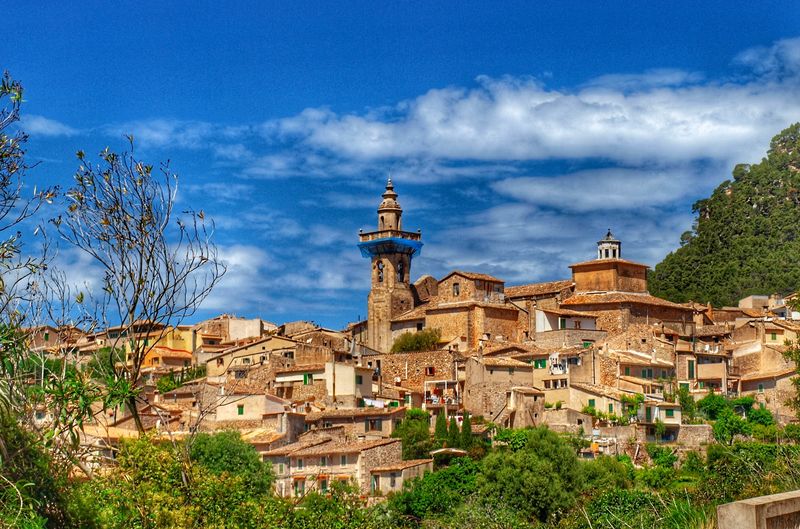
Honey-colored stone, mountain air, and almond groves in bloom: Valldemossa has a look that feels almost unfairly beautiful. Sitting around 400 meters above sea level in Mallorca’s Serra de Tramuntana, the village combines steep lanes, religious buildings, and carefully tended gardens in a setting that feels nothing like the island’s beach-resort reputation.
Just a few kilometers away, the Tramuntana range drops sharply toward the Mediterranean, creating a landscape of dramatic contrasts.
The village is roughly 17 kilometers from Palma, which makes it easy to reach but far enough to feel genuinely removed from the capital’s energy. Olive trees and almond groves spread across the surrounding slopes, changing color with the seasons and giving the landscape a painterly quality that has drawn visitors for well over a century.
Port de Valldemossa, below the main village, retains an older fishing character beneath pine-covered cliffs.
Valldemossa also works well as a base for exploring Mallorca’s mountainous northwest. Nearby Deià and Sóller offer their own distinct personalities, and the combination of mountain roads, coastal views, and stone villages makes the whole area feel like a different island from the one most package holidays advertise.
Quiet, layered, and genuinely lovely.
Morella
Morella announces itself from miles away. A rocky hill rises sharply from the surrounding plain in northern Castellón, with a castle planted firmly on top and medieval walls wrapping around the town below like a stone belt.
The silhouette is one of eastern Spain’s most recognizable, and it only gets better as you get closer.
Spain’s tourism authority calls Morella an exceptional example of a Gothic town, and a walk through the walled interior backs that up without argument. Stepped streets pass the Gothic Church of Santa María la Mayor, the 13th-century Convent of San Francisco, and solid medieval civic buildings that have been doing their jobs for seven or eight centuries.
The Santa Llúcia aqueduct survives outside the walls, adding Roman-era engineering to an already impressive roster.
Archaeological interest here goes back much further than the medieval period. Rock paintings at nearby Morella la Vella stretch human presence in this landscape deep into prehistory.
A circular walking route around the mountain lets visitors see the walls, towers, and surrounding uplands from angles the main streets never reveal. Morella rewards patience and a comfortable pair of shoes in equal measure.
Alquézar
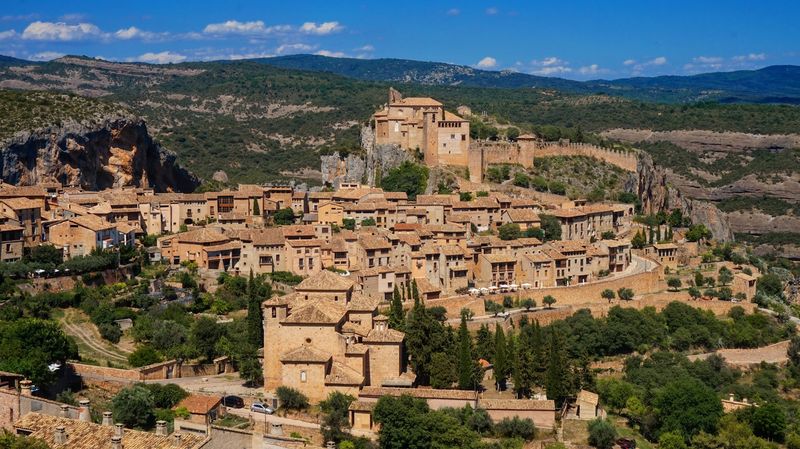
Alquézar is the kind of place where the town and the landscape compete for your attention and neither one wins, because both are extraordinary. Perched on a rocky outcrop in the foothills of the Pyrenees, the village sits within Sierra y Cañones de Guara Natural Park, where deep limestone canyons cut through the terrain in every direction.
The combination of medieval architecture and geological drama is genuinely hard to match.
Stone houses cluster beneath a castle and the Collegiate Church of Santa María la Mayor, whose Romanesque cloister contains carved capitals that art historians travel long distances to examine. Below the village, the Vero River has carved gorges popular with hikers, mountain bikers, canyoners, and horseback riders who use Alquézar as their base for exploring the park.
The nearby Cultural Park of the River Vero protects prehistoric rock art recognized by UNESCO.
Alquézar also sits within the Somontano wine region, which means vineyards and agricultural landscapes soften the edges of an otherwise rugged setting. Local restaurants serve regional food alongside wines from the surrounding area, offering a pleasant reward after a day spent scrambling through canyons.
Few Spanish villages pack this much variety into such a small footprint.
Besalú
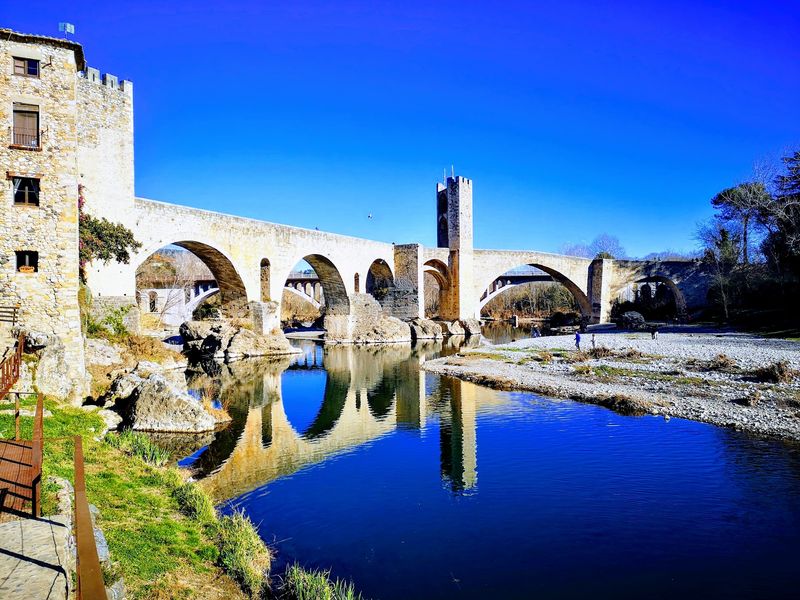
The approach to Besalú across its 12th-century Romanesque bridge is one of Catalonia’s great arrival moments. The Fluvià River flows beneath the arched stone crossing, and the cobbled streets of one of the region’s most concentrated medieval townscapes wait on the other side.
Very few towns in Spain deliver such a strong first impression within the first ten steps.
Besalú once had a significant Sephardic community, and medieval ritual baths connected to Jewish religious practice survive within the historic quarter, making this a rare and tangible link to a community that shaped much of medieval Iberian life. Churches including Sant Pere, Santa María, and Sant Vicenç layer Romanesque and Gothic architecture through the streets in a way that rewards slow, unhurried exploration.
The town is officially recognized as a Historic-Artistic Site.
The setting extends the appeal well beyond stone walls. La Garrotxa surrounds Besalú with volcanic terrain, woodland, and the eastern foothills of the Pyrenees, all within easy reach of the Volcanic Zone of La Garrotxa Natural Park.
The combination of medieval heritage, river scenery, and genuinely unusual geology makes Besalú more than a pretty face. It is a proper destination with real depth.
Vejer de la Frontera
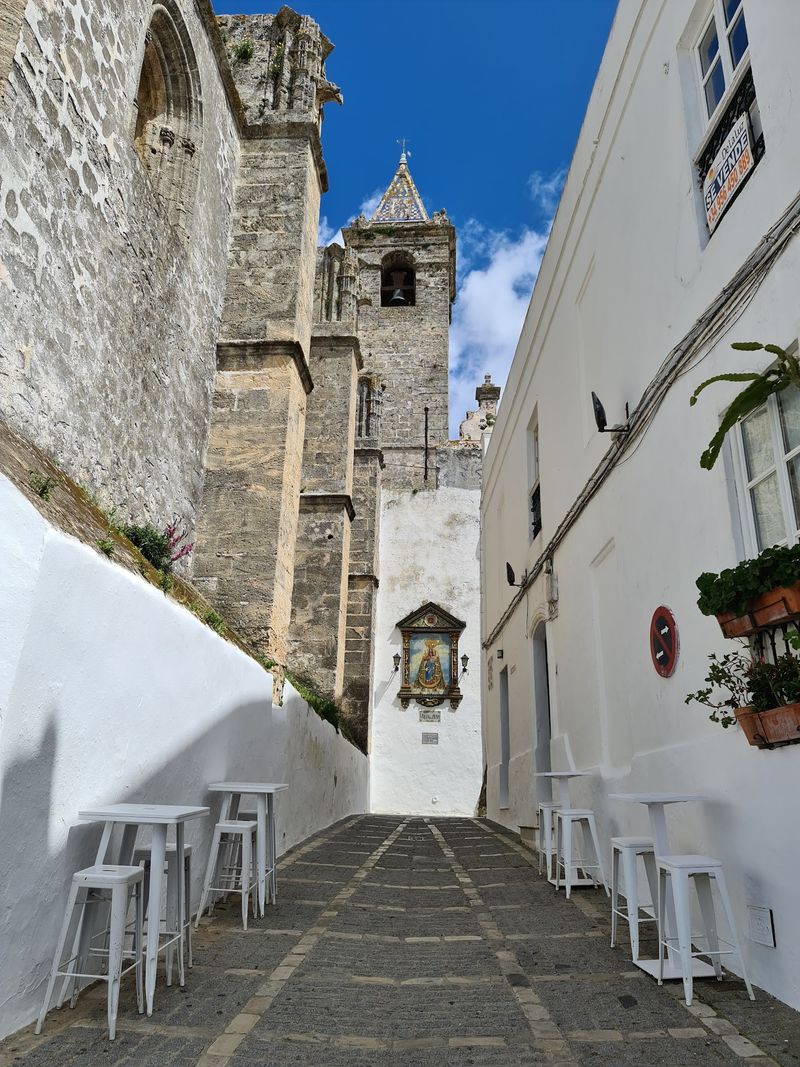
Vejer de la Frontera sits on its hill above the Cádiz coast with the quiet confidence of a town that knows exactly how good it looks. Whitewashed buildings form a compact, slightly dizzying maze inside surviving defensive walls, and the whole place carries a strong Arab-Andalusian character that centuries of subsequent history have done little to erase.
Narrow winding lanes, enclosed courtyards, and shaded archways create an atmosphere that is genuinely immersive.
The town was declared a Historic-Artistic Site in 1976 and received Spain’s First National Town Beautification Award two years later, both recognitions that feel entirely justified on arrival. Key landmarks include an 11th-century castle, the old Jewish quarter, Segur Arch, and the Church of Divino Salvador, each adding a different layer to a place already rich in architectural interest.
The elevated position means views across surrounding farmland toward the Atlantic arrive unexpectedly around corners.
Vejer belongs to the classic tradition of Andalusia’s pueblos blancos, the white villages scattered across the region’s hills and ridges, but it carries more urban energy than many of its smaller counterparts. Good restaurants, independent shops, and a lively local culture give the town a lived-in vitality that purely touristic places sometimes lack.
Vejer rewards those who stay longer than a single afternoon.
Santillana del Mar
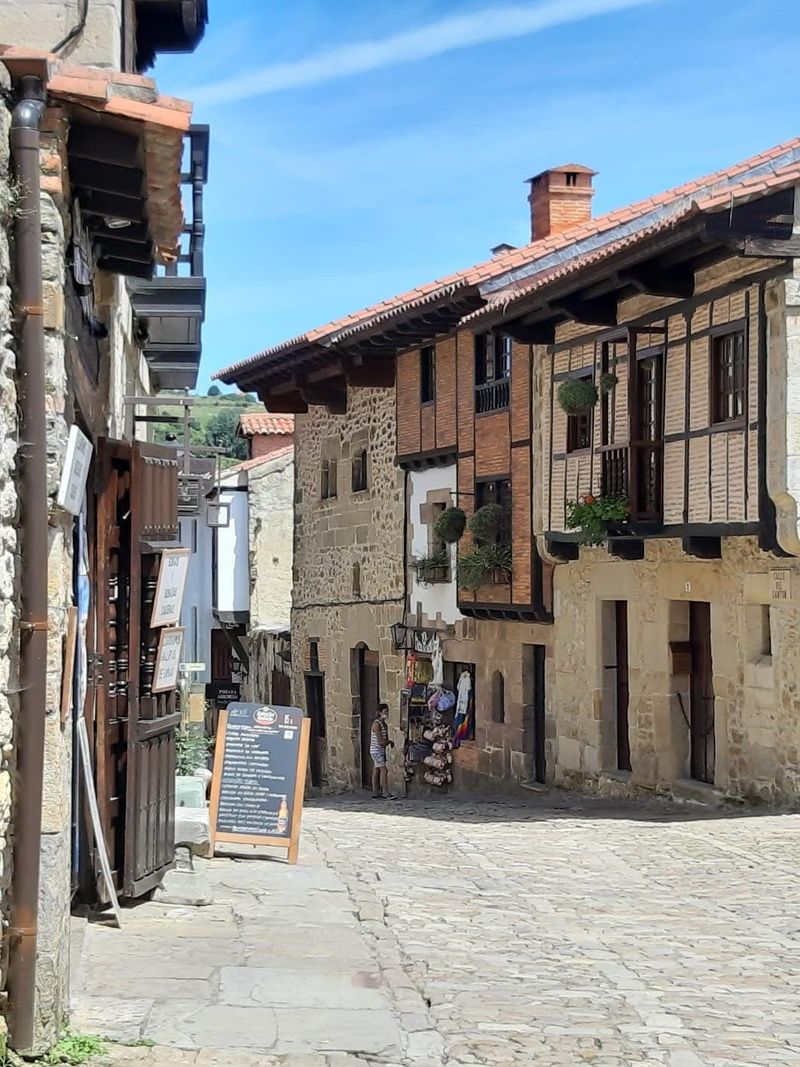
Despite its name, Santillana del Mar sits a short distance from the actual sea, but nobody seems to mind once they see the streets. Cantabria’s most coherent medieval and Renaissance townscape unfolds around the Collegiate Church of Santa Juliana, a Romanesque complex that has anchored the community since the early medieval period.
Stone lanes, defensive towers, and Renaissance palaces fill a historic center officially designated a National Monument.
Santillana also sits along the northern route of the Camino de Santiago, which means pilgrims have been passing through for centuries, adding a layer of spiritual and cultural significance to what is already a visually impressive place. The surrounding Cantabrian countryside is lush and green in a way that feels like a different Spain from the sun-scorched south.
Rolling hills, Atlantic moisture, and ancient stone combine into something quietly spectacular.
The real archaeological headline is just outside town. Altamira Cave contains Paleolithic art of international importance, included on UNESCO’s World Heritage List and considered among the finest examples of prehistoric painting anywhere in the world.
A reproduction cave allows visitors to experience the art without damaging the original. Santillana packages an extraordinary amount of history into a community small enough to walk across in twenty minutes.
Comillas
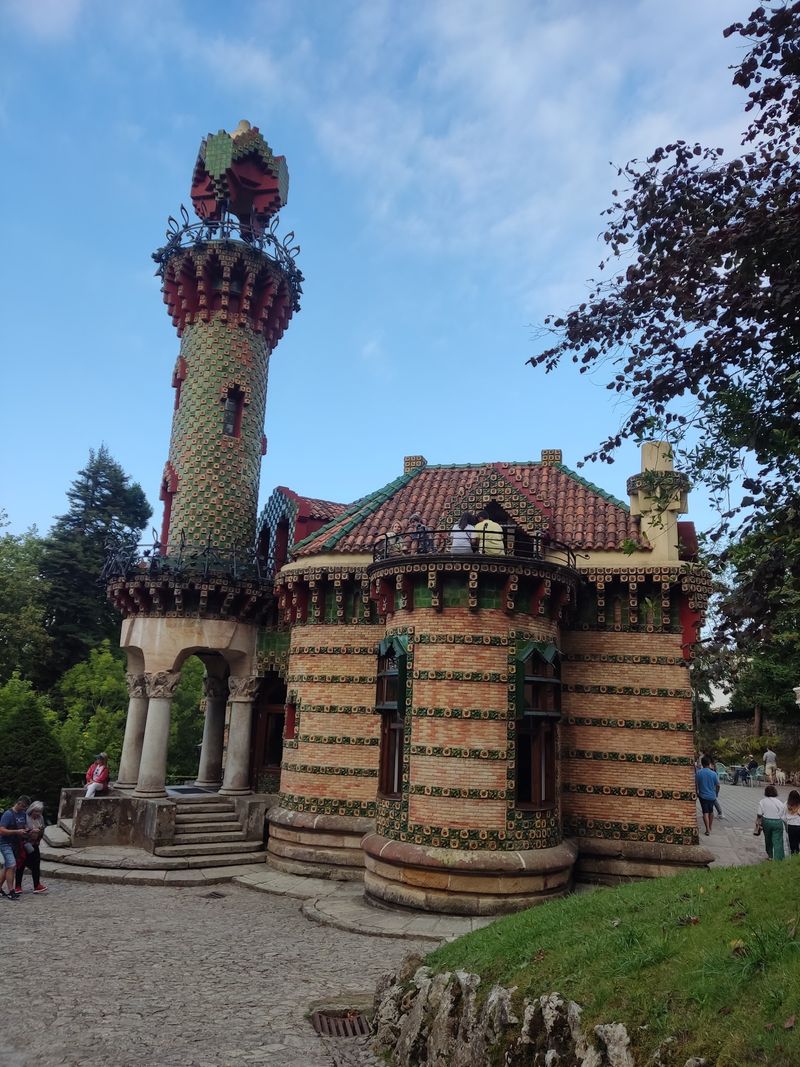
Comillas is the town that quietly asks: what if a small seaside village in northern Spain had a Gaudí building? The answer is El Capricho, one of the architect’s rare works outside Catalonia, decorated with colorful ceramic sunflower tiles and featuring a distinctive portico that looks like nothing else in Cantabria.
It is genuinely startling to turn a corner in a small coastal town and find it sitting there.
The historic center carries a Historic-Artistic Site designation, and other major landmarks include the Neo-Gothic Sobrellano Palace and the hilltop Pontifical University, making the town architecturally eclectic in a way that rewards curious visitors willing to look beyond the beach. Fine sandy beaches are just minutes away, and Oyambre Natural Park stretches along the coast with dunes, cliffs, wetlands, an estuary, and important bird habitats forming a broad and varied landscape.
The Bay of Biscay provides the backdrop for all of it, with Atlantic light and green Cantabrian hills completing a scene that feels very different from Spain’s Mediterranean image. Comillas is small enough to explore thoroughly in a day but interesting enough to justify staying longer.
Architecture fans and nature lovers rarely find themselves in the same town this well served.
La Alberca
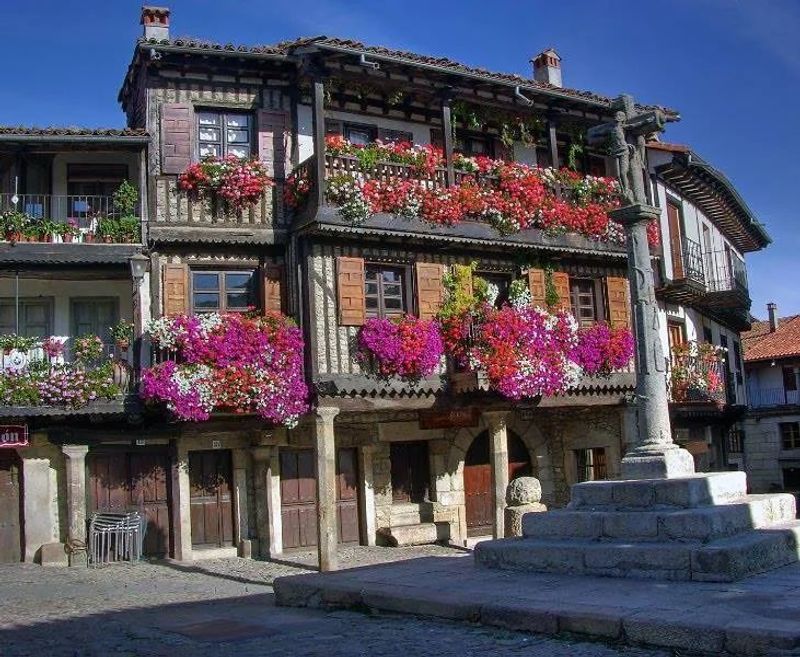
La Alberca looks like it was built by people who had never heard of straight lines or matching facades, and that is precisely what makes it so compelling. Timber framing, projecting upper stories, rough stone, and centuries-old painted inscriptions cover the buildings lining narrow streets in Salamanca province’s most distinctive village.
The architecture here belongs to a tradition of rural building quite unlike the whitewashed south or the granite towns of the meseta.
Spain’s official tourism authority identifies La Alberca as the first rural settlement in the country to receive a National Historic Monument designation, a distinction that reflects how well the village has preserved its original character. The historic center leads to Plaza Mayor, where arcaded buildings still surround the community’s main social space in a layout that has changed very little over the centuries.
The 18th-century parish church contains an older 16th-century granite pulpit and a Gothic processional cross worth seeking out.
The surrounding Sierra de Francia landscape adds forested mountain scenery to a village already rich in architectural interest. Chestnut trees, stone walls, and quiet mountain roads spread across the surrounding hills, creating a green, rustic atmosphere that feels genuinely remote.
La Alberca offers a side of Spain that surprises most visitors who assumed they already knew what the country looked like.
Share this story