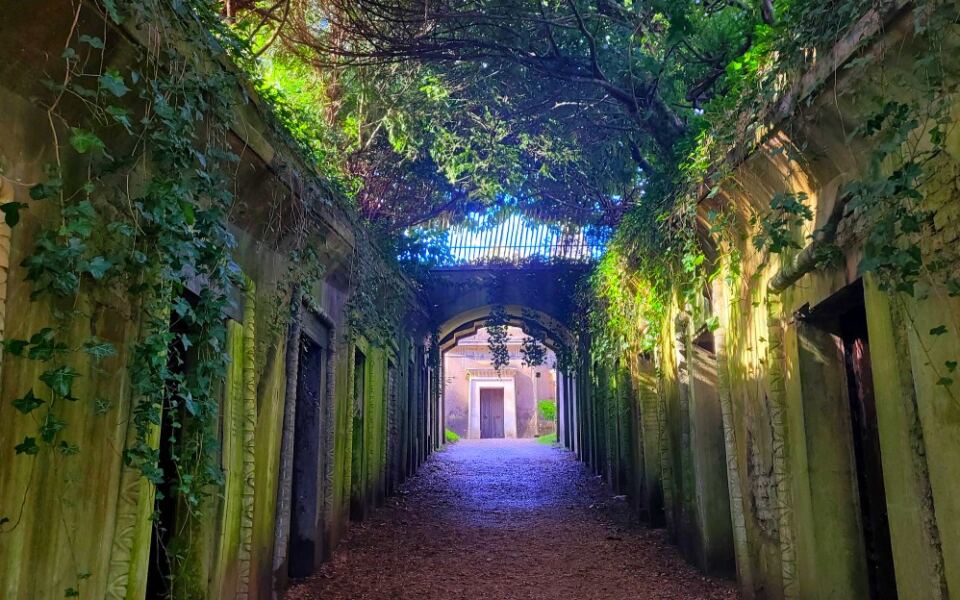
Most nightmares stay safely inside a book, right where we left them on the nightstand. A few of them, though, have real addresses, gift shops, and visiting hours.
Writers have always borrowed from the world around them, and some of the scariest settings in fiction started as actual hotels, cemeteries, ruined churches, and lonely stretches of land. Bram Stoker climbed real stone steps before he sent a vampire up them.
Stephen King checked into a real room before he invented a very bad one. The best part is that you can follow in their footsteps without meeting any of their monsters.
This list covers places in America and Europe where famous horror stories were born, set, or inspired. Each stop includes a bit of history, the book connection, and practical tips for planning a visit.
Some spots are cheerful about their spooky reputation and offer tours. Others are quiet landscapes that let your imagination do the heavy lifting.
Bring a sense of humor, comfortable shoes, and maybe a flashlight for good measure. Keep reading to find out which place helped create one of the most famous hotels in horror and which town still points visitors toward a certain storm drain.
1. The Stanley Hotel, Estes Park, Colorado
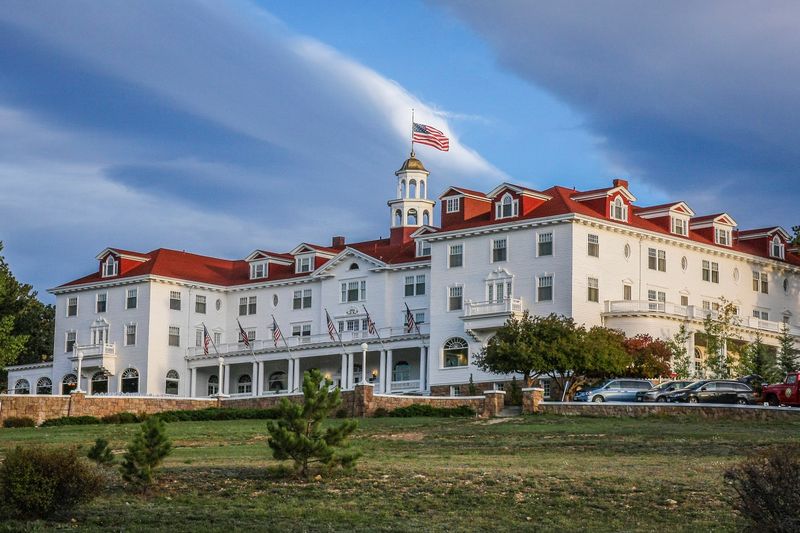
Room 217 is one of the most requested hotel rooms in Colorado, and a famous author is to blame.
Stephen King and his wife, Tabitha, checked in during October 1974. The hotel was closing for the season, and they were the only overnight guests.
That empty stay, plus a dream King had about his son, led to The Shining in 1977. The fictional Overlook is not an exact copy, but the long hallways and empty dining room clearly left a mark.
Freelan Oscar Stanley opened the 140-room hotel in 1909. It was one of the first fully electrified hotels in the country, powered by his own hydroelectric plant.
Today, visitors can book a 60-minute ghost tour or a 90-minute Spirit Tour that includes Room 217 and an underground tunnel. Brave guests can try a three-hour paranormal investigation.
Book early for fall dates.
2. Whitby Abbey, Whitby, England
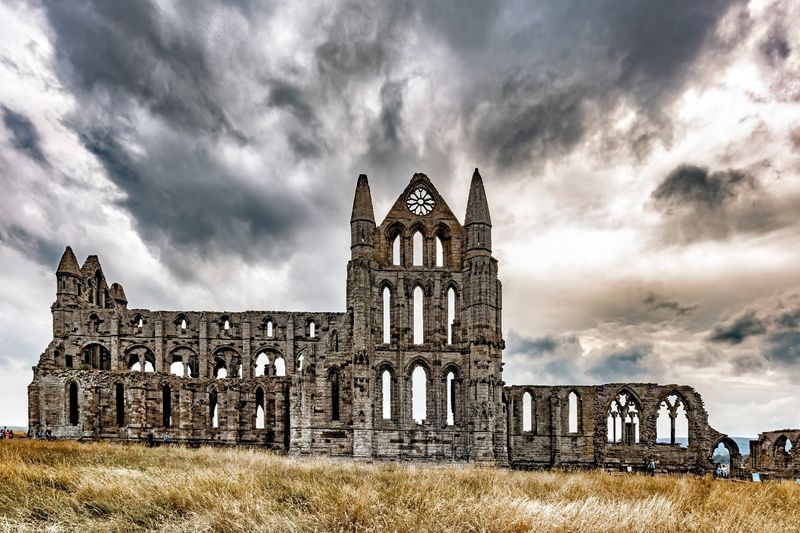
Count Dracula did not arrive in England by airplane. He came ashore in a small Yorkshire fishing town.
Bram Stoker visited Whitby in 1890 and took plenty of notes. The abbey ruins, the churchyard, the harbor, and the famous 199 steps all found a place in Dracula.
In the novel, the ship Demeter runs aground here with a very unwelcome passenger. Readers who know the book will recognize much of the town right away.
The climb up the 199 steps is the classic way to reach the abbey. Count them if you like, since locals say everyone gets a different number.
English Heritage runs the abbey site, and an entry ticket gets you into the ruins and a small visitor center. The town also hosts popular Gothic weekends, so check the calendar if you want company in black capes.
3. Bran Castle, Bran, Romania
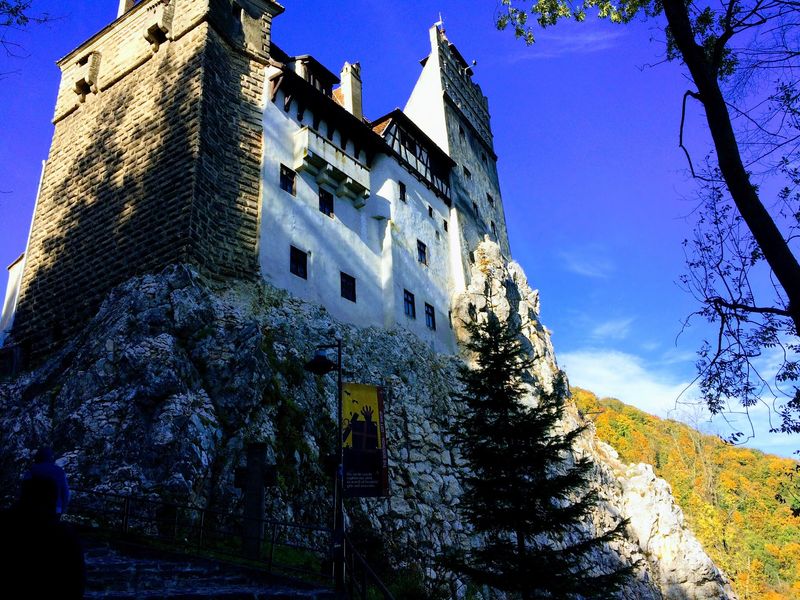
Here is a twist worthy of a vampire novel. Bram Stoker never set foot in Romania.
Count Dracula’s castle in the book was completely made up. Even so, Bran Castle is sold around the world as the home of the famous count.
The connection comes from Stoker’s research. He read descriptions of Transylvania, and Bran’s dramatic hilltop position matched the kind of fortress he imagined.
The castle itself is honest about all this. Its exhibits explain the legend and the real history, including its royal past with Queen Marie of Romania.
Visitors climb narrow staircases and tour rooms filled with old furniture and weapons. A secret passage connects two floors, which is a fun bonus.
Go early in the morning to beat tour buses. The market at the base sells plenty of Dracula souvenirs, from mugs to fake fangs.
4. Bangor, Maine
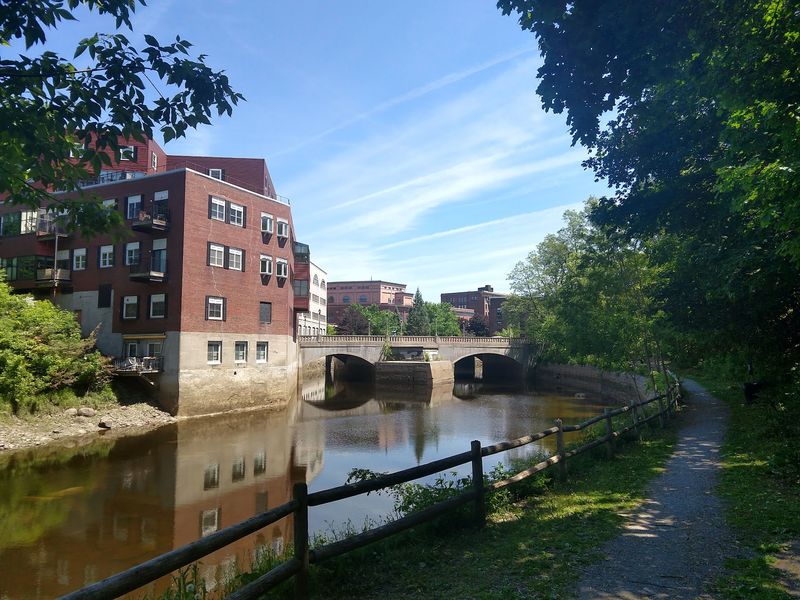
Few towns would brag about a storm drain, but Bangor makes an exception.
Stephen King lived here for decades, and the city helped inspire Derry. That fictional town shows up in many of his books, most famously in It.
Visit Maine even points fans to the drain at Union and Jackson Streets. It is linked to the opening scene where Georgie meets Pennywise.
Do not worry, the only thing waiting there is street runoff. Red balloons are optional and probably a bad idea.
King’s red Victorian house on West Broadway is a popular photo stop. It has a fancy iron fence decorated with bats and spiders.
Remember that it is a private property, so admire it from the sidewalk. Local guided tours cover dozens of King spots, including the standpipe and the giant Paul Bunyan statue downtown.
5. Highgate Cemetery, London, England
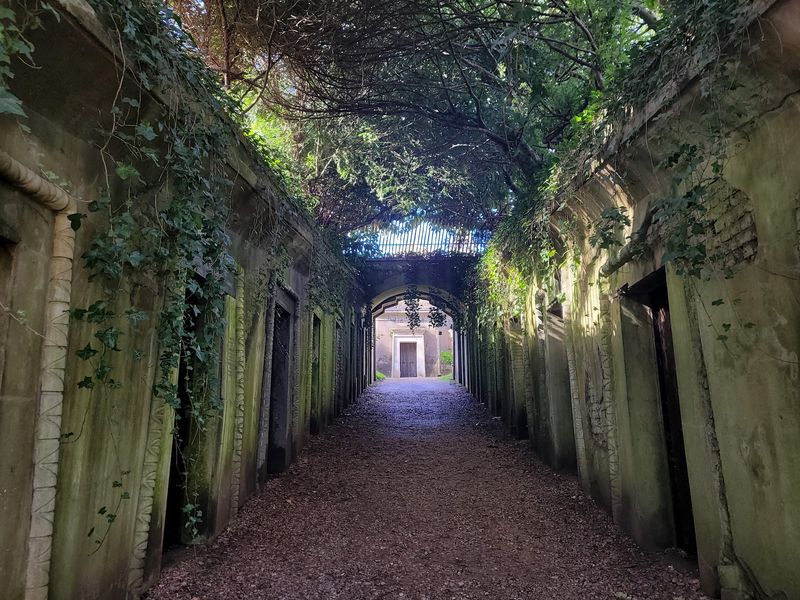
Some authors research from a library chair. Audrey Niffenegger became a tour guide instead.
She worked at Highgate while writing Her Fearful Symmetry, a supernatural novel set right beside and inside this cemetery. Her insider knowledge shows in the book.
Highgate opened in 1839 and quickly became a fashionable resting place for Londoners. Victorian families built elaborate tombs, stone angels, and grand mausoleums.
Nature has been taking over ever since. Ivy and trees now wrap around many old monuments.
The cemetery is split into two sides. The East Cemetery is easier to explore on your own, and Karl Marx has a large memorial there.
The West Cemetery usually requires a guided tour, and it is worth it. Guides lead visitors to the Egyptian Avenue and the circle of tombs called the Circle of Lebanon.
Book ahead, since tours often sell out.
6. Mary Shelley’s House of Frankenstein, Bath, England
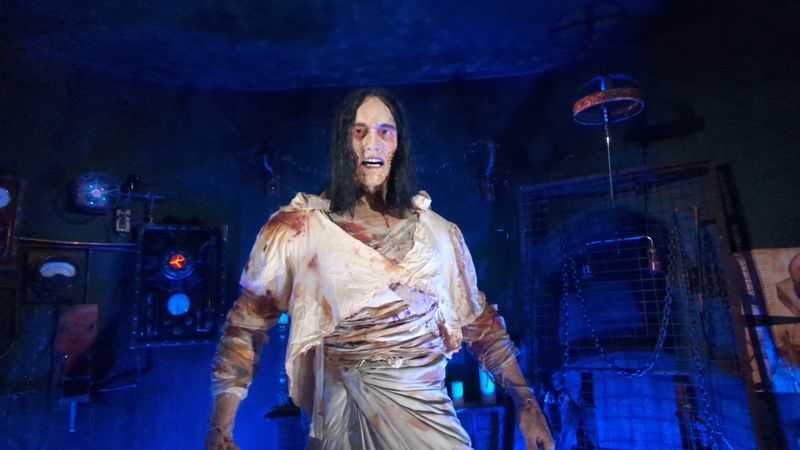
Most places on this list inspired a story. This attraction flips the script.
Mary Shelley wrote a big part of Frankenstein in Bath during 1816 and 1817. Her real lodgings at 5 Abbey Churchyard no longer exist in their original form.
So the city built something new. Mary Shelley’s House of Frankenstein tells the story of her life, her famous novel, and the creature’s long career in pop culture.
Rooms cover her family, her travels, and the science that fascinated readers in her time. Rare editions and film memorabilia add extra fun.
The basement holds the darkest experience in the building. Younger kids may want to skip it.
A highlight is an eight-foot creature built from Shelley’s own description. It looks nothing like the green movie monster with bolts in his neck, which surprises many guests.
7. The House of the Seven Gables, Salem, Massachusetts
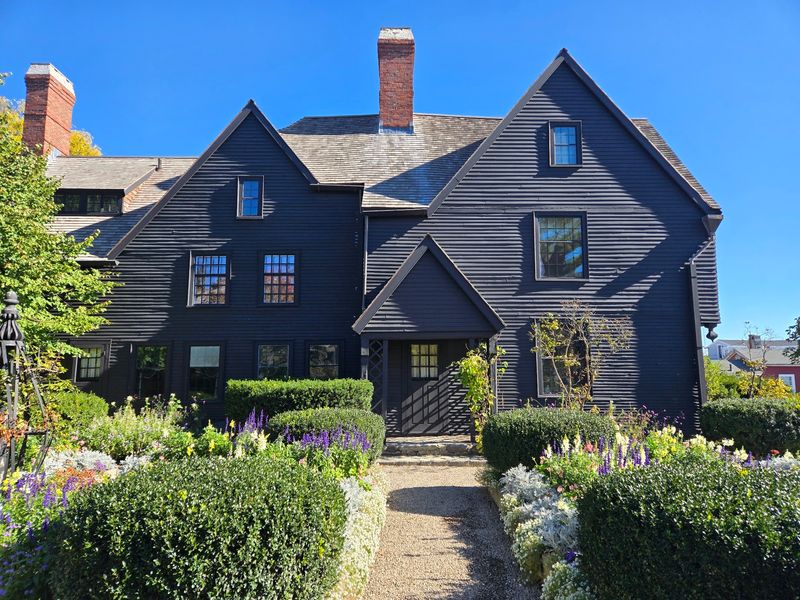
Count the rooftops, and you will find the title of a famous Gothic novel.
Nathaniel Hawthorne published The House of the Seven Gables in 1851. The story follows a family weighed down by an old curse and a gloomy mansion.
He did not invent the house. It stands on Salem Harbor, built in 1668 for a merchant named John Turner.
Hawthorne visited his cousin there, and the house stuck in his mind. Today it is a museum, which means you can walk through the actual rooms.
Tour guides point out a hidden secret staircase that climbs inside the chimney. It is narrow, so watch your head.
Hawthorne’s birthplace was moved to the same grounds. Salem gets extremely busy in October, so a spring or summer trip means shorter lines and easier parking.
8. Paris Catacombs, Paris, France
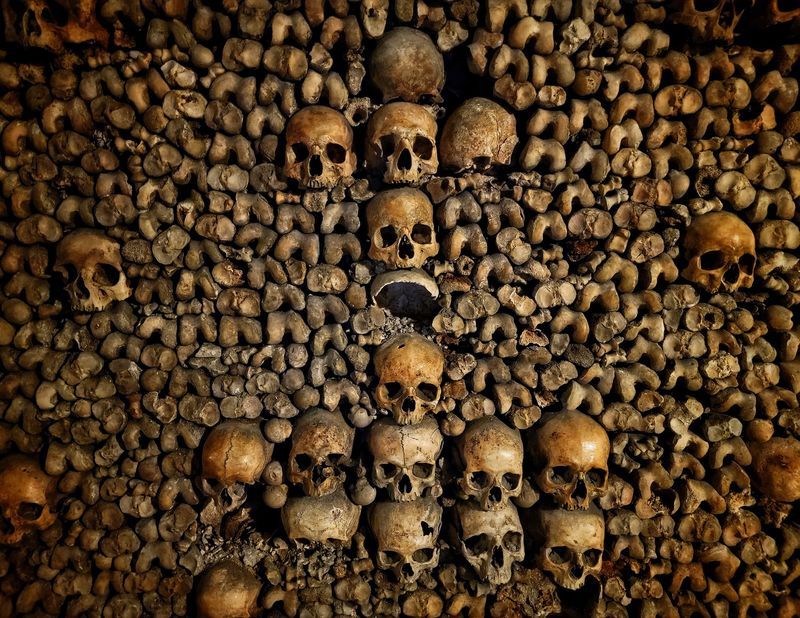
Twenty meters under the busy streets of Paris, the walls are made of something unusual. They are made of bones.
The Catacombs hold the remains of several million people. In the late 1700s, overcrowded city cemeteries were emptied and moved into old stone quarries.
Workers arranged skulls and bones into neat patterns along the galleries. The result is one of the strangest museums in the world.
Horror writers love this underground maze. Many modern novels use it as a setting for characters who get lost in the dark.
Real visitors stay on an official route of about 1.5 kilometers. There are around 130 steps down and over 100 back up, so wear good shoes.
The Catacombs are open Tuesday through Sunday. Booking a timed ticket online is strongly recommended, since walk-up lines can stretch around the block.
9. Sleepy Hollow, New York
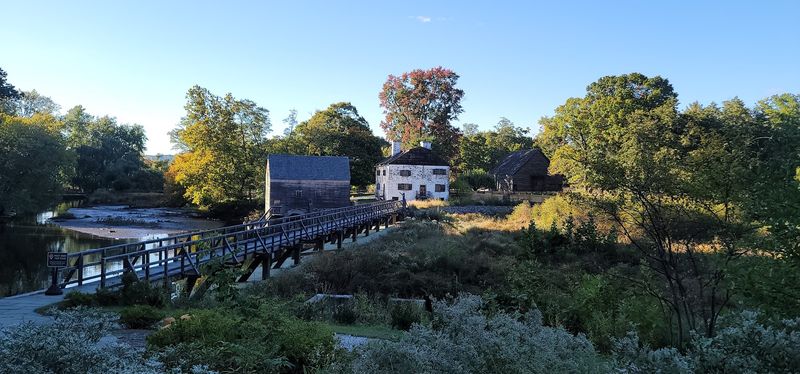
Technically, it is a short story and not a novel. Leaving out the Headless Horseman would still be a crime against horror fans.
Washington Irving published The Legend of Sleepy Hollow in 1820. He turned this Hudson Valley village into the home of nervous schoolteacher Ichabod Crane.
The village took the name seriously. North Tarrytown officially became Sleepy Hollow in 1996.
Sleepy Hollow Cemetery is the top stop. Irving himself is buried there, and the cemetery offers a tour dedicated to the writer and his famous tale.
The Old Dutch Church nearby appears in the story. It dates to the late 1600s.
October brings parades, lantern displays, and plenty of horseman reenactments. Weekends get crowded, so weekday visits are smart.
The village sits about an hour north of New York City by train.
10. Mount Hope Cemetery, Bangor, Maine
Movie fans may recognize this spot before book fans do, and there is a good reason.
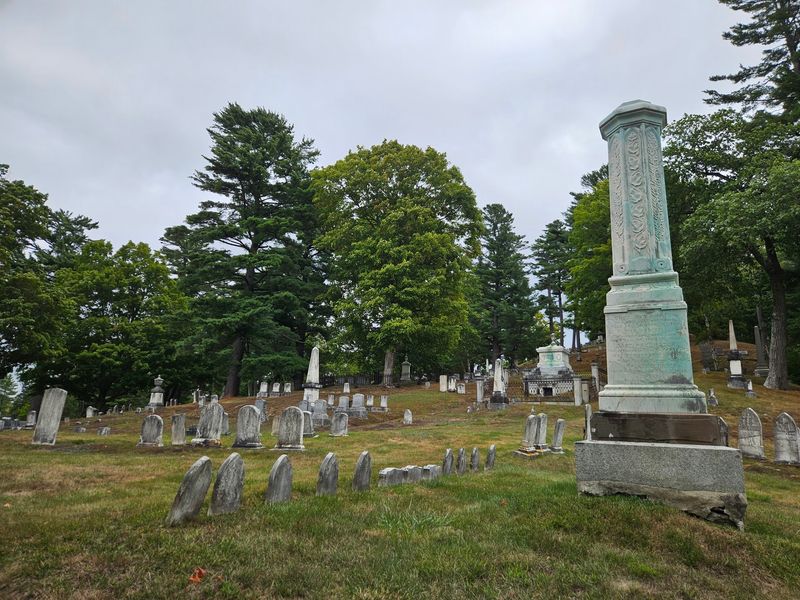
Mount Hope Cemetery is linked to Pet Sematary mainly through the 1989 film. The movie shot cemetery scenes here, and Stephen King even made a small appearance as a minister.
The cemetery was not the literal setting in King’s novel. Keeping that book-versus-film difference clear will impress any tour guide.
Mount Hope opened in 1834, long before King started writing. It is one of the oldest garden cemeteries in the United States.
Its winding roads, old monuments, and wooded sections make it a calm and pretty stroll. Visit Maine lists it among Bangor’s main Stephen King landmarks.
Pair it with a visit to King’s house and the storm drain downtown for a full Derry day.
11. Geneva and Lake Geneva, Switzerland
Bad weather has never been more useful to literature.
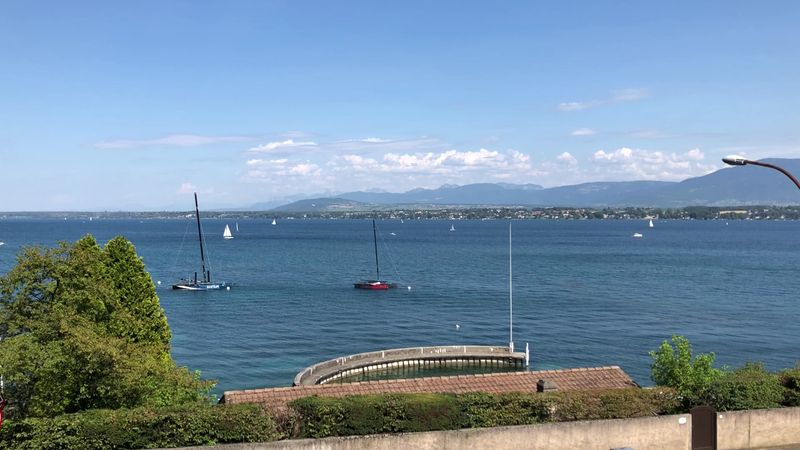
The summer of 1816 was famously gloomy because of a volcanic eruption far away. Mary Shelley was staying near Lake Geneva with Percy Shelley, Lord Byron, John Polidori, and Claire Clairmont.
Stuck indoors, Byron suggested a ghost story contest. Mary’s idea grew into Frankenstein, and Polidori wrote one of the first modern vampire tales.
The group gathered at Villa Diodati in Cologny. The house is private, but you can see it from the road and the lake.
Geneva also appears in the novel itself. Victor Frankenstein grows up there and later travels through the Alps around Chamonix.
A lake cruise gives a great view of the shoreline. Hikers can explore the same mountain scenery where Victor meets his creature on a glacier.
12. Edinburgh Old Town, Edinburgh, Scotland
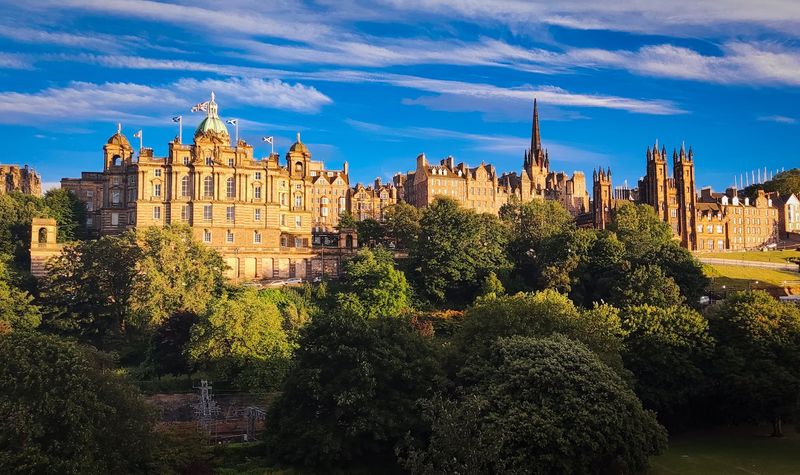
Respectable by day and mysterious by night, Edinburgh had a split personality long before Dr Jekyll did.
Robert Louis Stevenson grew up in this city. He knew its steep alleys, called closes, and its history of grave robbers and medical schools.
Strange Case of Dr Jekyll and Mr Hyde is set in Victorian London, not Edinburgh. Still, many readers see the Scottish city in its themes of a good public face hiding darker habits.
One local legend helped too. Deacon William Brodie was a respected cabinetmaker by day and a burglar by night in the 1700s.
A pub on the Royal Mile now carries his name. The underground vaults and Mary King’s Close offer guided tours of hidden streets beneath the city.
Greyfriars Kirkyard is a short walk away and free to explore.
13. Dartmoor, Devon, England
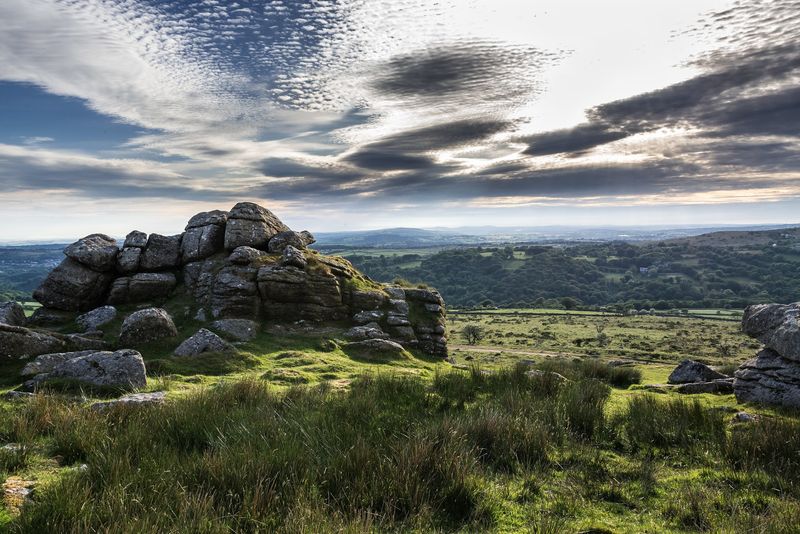
Sherlock Holmes solved the case, but the landscape stole the show.
Arthur Conan Doyle set The Hound of the Baskervilles on Dartmoor in 1902. Bogs, lonely houses, and ancient stone circles make the moor almost a character in the story.
Dartmoor is a national park covering about 954 square kilometers. It is packed with granite hilltops called tors and Bronze Age ruins.
Hound Tor is a favorite stop for fans. Locals link it to the legend of a spectral black dog that may have inspired Doyle.
The moor has real bogs, so stick to marked paths. Fog can roll in quickly, and a map or GPS app is a must.
On a gray day, a giant glowing hound seems slightly less silly. The town of Princetown has a helpful visitor center to start your trip.
14. New Orleans French Quarter, New Orleans, Louisiana
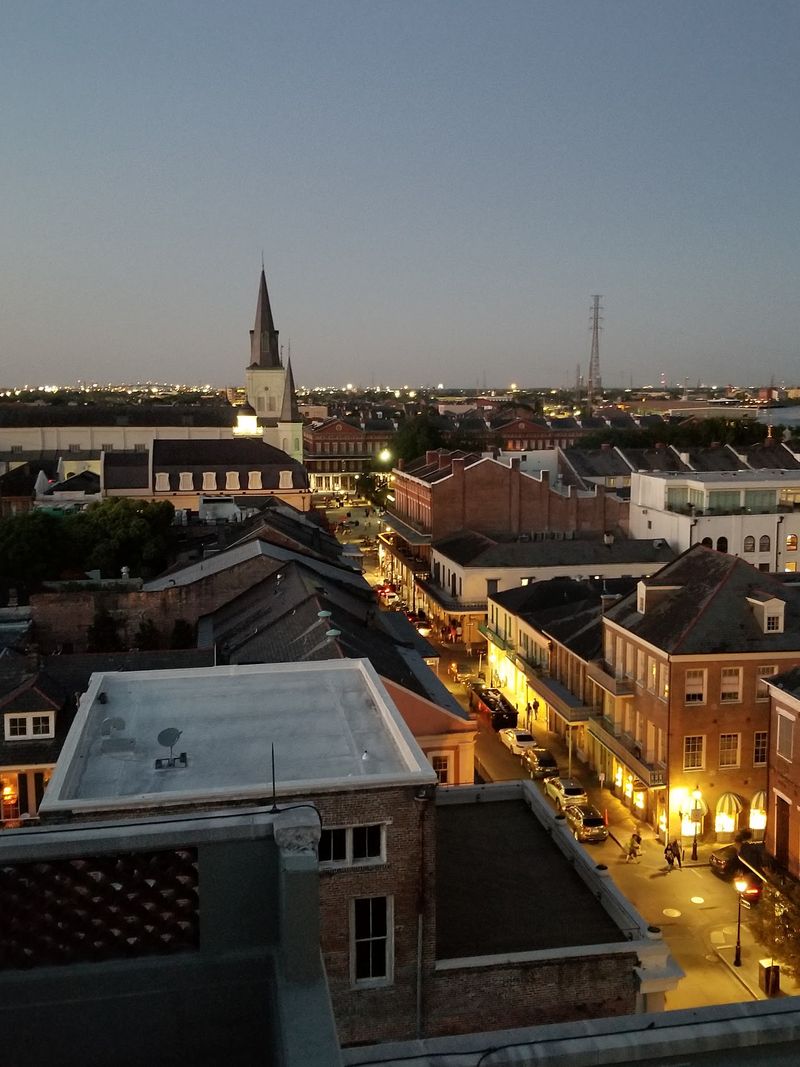
Vampires in New Orleans seem perfectly normal now, and Anne Rice made it happen.
Interview with the Vampire came out in 1976. Rice filled it and later Vampire Chronicles books with the city’s houses, cemeteries, and long history.
Rice was born in New Orleans and lived there for many years. Her love for the city shows on almost every page.
The French Quarter is the easiest place to see her world. Iron balconies, hidden courtyards, and narrow streets match the scenes readers picture.
Keep in mind that fictional homes are not real addresses. Lestat did not actually rent an apartment on Royal Street.
Several local companies offer vampire-themed walking tours. Nearby St. Louis Cemetery No. 1 requires an official guided tour to enter.
The Garden District, where Rice once lived, is a short streetcar ride away.
Share this story