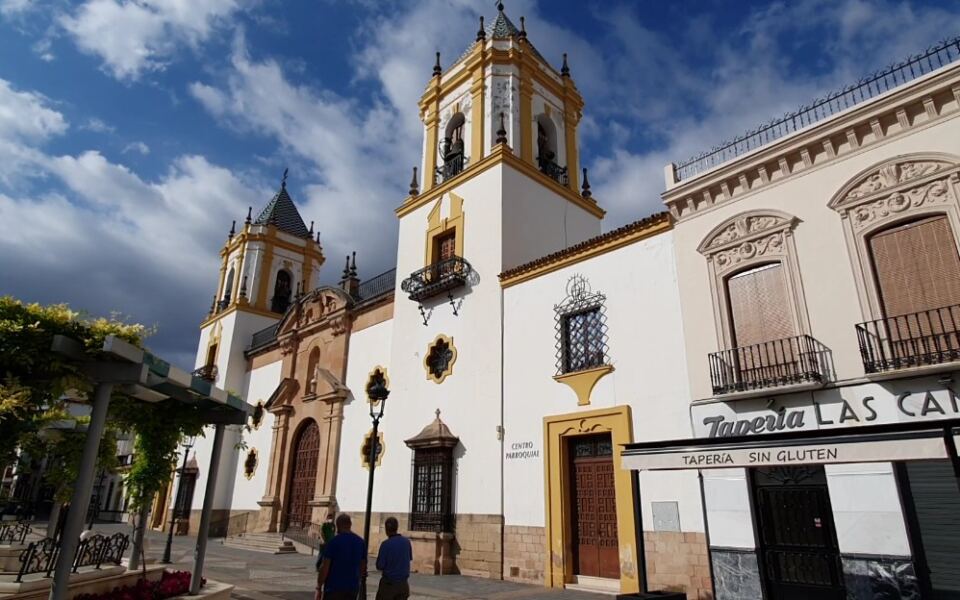
Spain holds a secret that most tourists only scratch the surface of: a thousand years of Islamic civilization left behind cities, fortresses, and neighborhoods that still shape the country today. From hilltop citadels in Andalusia to brick-tower towns in Aragon, the architectural fingerprints of Al-Andalus are everywhere once you know where to look.
Whether it is a carved plaster arch tucked inside a church or an entire medina street plan that has survived eight centuries, these places tell a story that no textbook can quite capture. Pack your curiosity and comfortable shoes, because these 14 towns are about to rewrite everything you thought you knew about Spanish history.
Granada, Andalusia
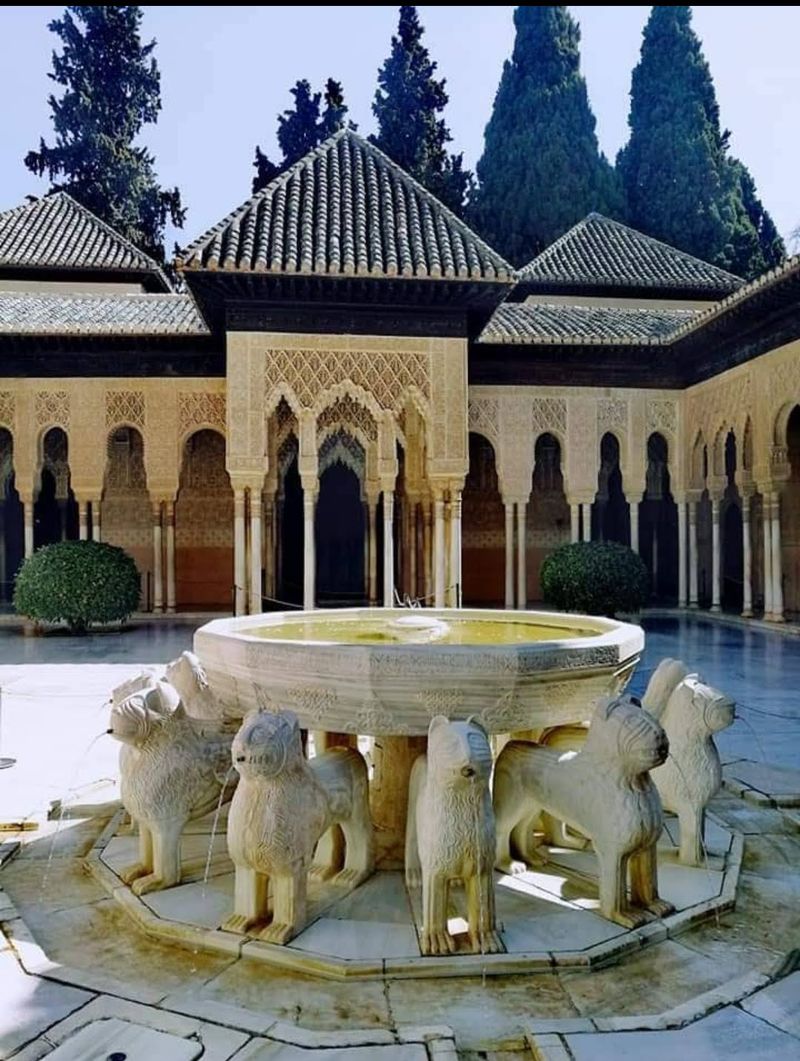
Somewhere between a fortress and a dream, the Alhambra sits above Granada like a crown nobody ever took off. Built and expanded by Nasrid rulers during the 13th and 14th centuries, it is the only fully preserved palatine city from Islamic Spain.
Royal apartments, reflecting pools, horseshoe arches, and intricate stucco carvings cover nearly every surface inside.
UNESCO has recognized the Alhambra as an extraordinary survival, noting that nothing else from this period comes close to its completeness. The nearby Generalife gardens served as the royal country retreat, full of water channels and shaded walkways designed to cool the summer air.
Cross the Darro River and the Albaicin neighborhood offers a completely different experience. Narrow lanes wind between whitewashed walls, small plazas appear without warning, and traditional courtyard houses called cármenes hide lush gardens behind plain exteriors.
Granada held out as the last Muslim-ruled city on the Iberian Peninsula until 1492, which partly explains why so much survived intact. Few cities on earth carry that weight of history so gracefully.
Córdoba, Andalusia
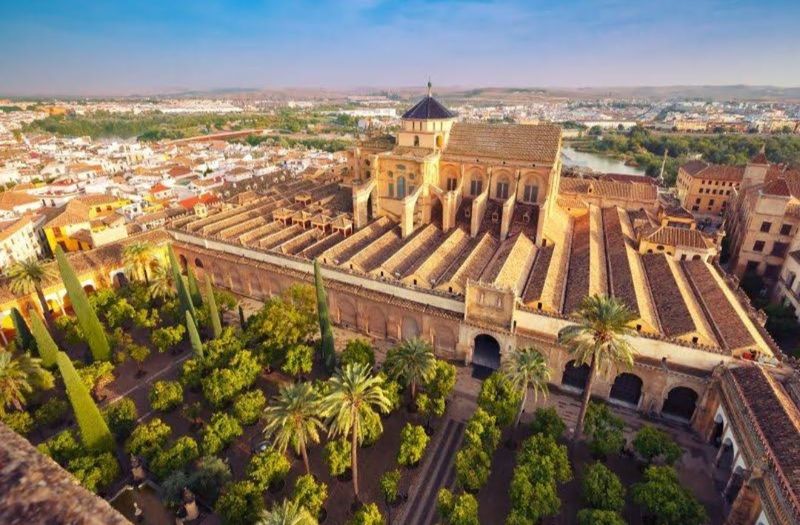
Walking into the Great Mosque of Córdoba feels like stepping inside a forest made of stone. Hundreds of columns support double-tiered arches striped in red and white, creating a rhythm that seems to go on forever.
Abd al-Rahman I began construction in 785, and later caliphs kept expanding it until it became one of the largest mosques in the medieval world.
Córdoba was the capital of the Umayyad Caliphate in Iberia and ranked among Europe’s most sophisticated cities at its peak. The mosque’s mihrab alone is worth the trip, decorated with gold mosaics and carved stone that Byzantine craftsmen helped produce.
After Christian conquest, a cathedral was inserted into the center of the building rather than demolishing it, creating a hybrid monument unlike anything else on the planet.
Beyond the mosque, Córdoba rewards slow exploration. The old Jewish quarter, the Roman bridge, flower-filled courtyards, and the ruined palace-city of Medina Azahara just outside town all add chapters to the same story.
Córdoba proves that architectural greatness rarely belongs to just one civilization.
Toledo, Castilla-La Mancha
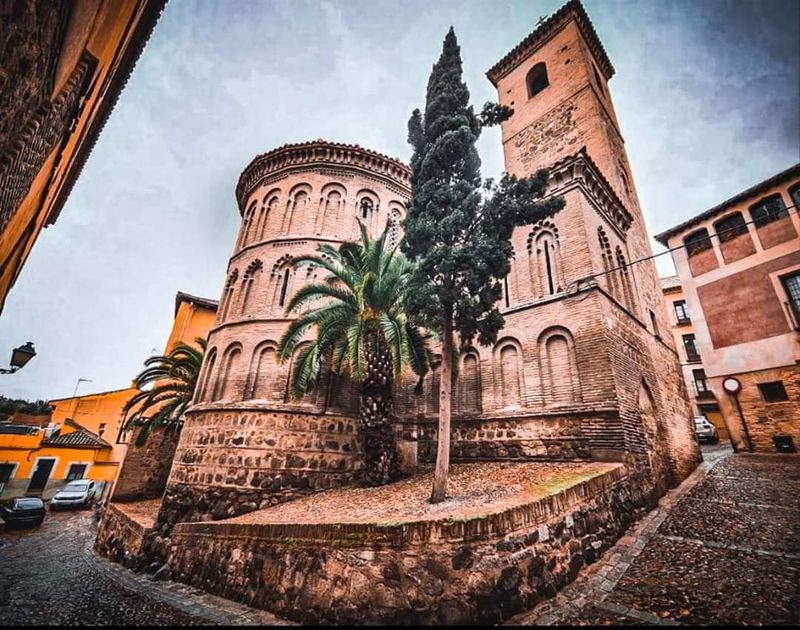
Toledo is basically a living textbook on medieval coexistence, except far more interesting than any textbook you have ever read. Three faiths shaped this hilltop city over centuries, and their overlapping architectural contributions are still readable in the stone today.
UNESCO specifically points to Toledo as one of the birthplaces of the Mudéjar style, where Islamic building techniques were absorbed into Christian and Jewish structures after the Reconquista.
The Mosque of Cristo de la Luz, built around the year 999, is one of the oldest Hispano-Islamic monuments still standing in Spain. Its nine small domed bays and horseshoe arches have survived more than a thousand years of history with remarkable dignity.
Nearby, the Puerta del Sol gateway and several church towers show how Mudéjar brickwork became the default decorative language of Toledo’s medieval builders.
Spain’s tourism authority points out that a visitor can walk from a 10th-century mosque to a Gothic cathedral to a historic synagogue within just a few minutes. That density of layered history makes Toledo genuinely difficult to compare to anywhere else.
Every corner seems to hold another quiet architectural surprise.
Ronda, Andalusia
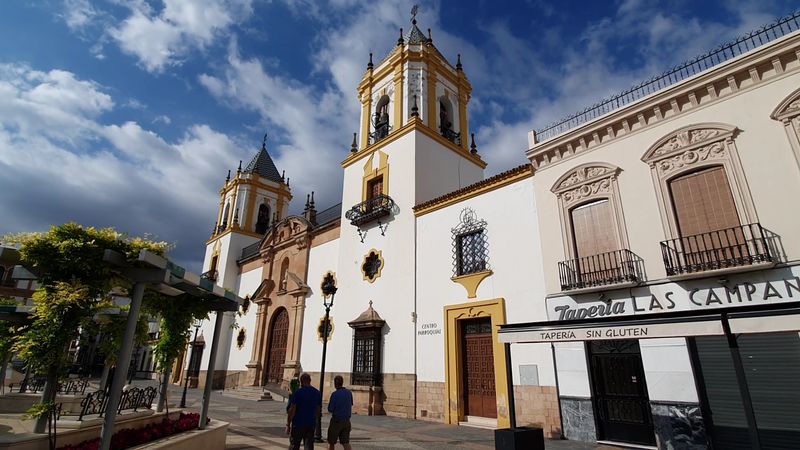
Everyone photographs the gorge, but the real story in Ronda hides in the older part of town on the south side of the Guadalevín River. This neighborhood preserves an Arab street pattern that has barely changed since the town served as a major Muslim stronghold before the Catholic Monarchs took it in 1485.
Gates, walls, and baths still outline the shape of the medieval settlement.
The 13th-century Arab Baths rank among the best-preserved Islamic bathhouses in Spain, with star-shaped skylights that punch small pools of light onto the stone floors below. Nearby, the minaret of a former mosque was later incorporated into the Church of San Sebastián, giving it an architectural double identity that Ronda wears without apology.
Santa María la Mayor church contains even more obvious traces of the earlier great mosque, including a surviving mihrab arch and minaret elements that were simply built around rather than removed. The Almocábar Gate shows how seriously Ronda’s builders took the natural defensibility of the site.
Ronda’s gorge may be the headline, but its Islamic architectural layers are the real long-form story worth reading carefully.
Carmona, Andalusia
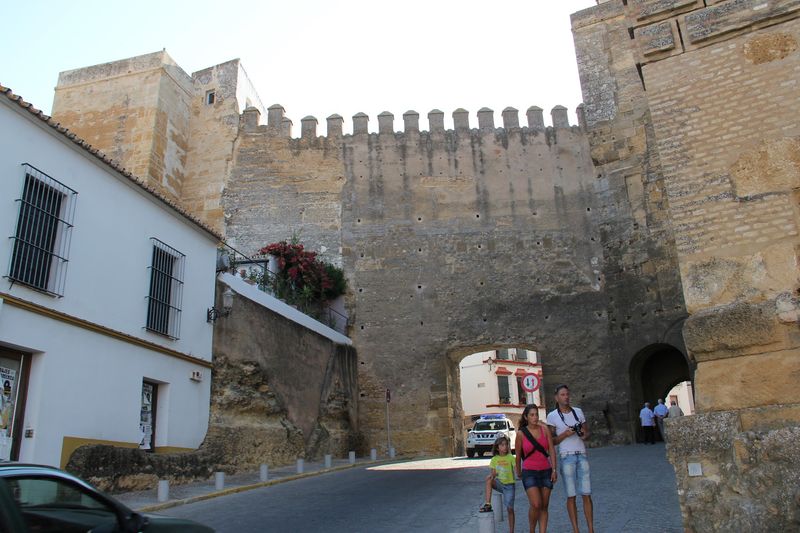
Carmona sits on a flat-topped hill like a town that decided centuries ago it had found the perfect spot and never left. Spain’s tourism authority describes its old center as retaining the look and feel of an Arab medina, with narrow streets coiling through a fortified settlement that Phoenicians, Romans, Muslims, and Christians all claimed at different points in history.
That layered ownership is exactly what makes Carmona so architecturally rich.
At the town’s highest point, the Alcázar del Rey Don Pedro has its roots in the Muslim period, when taifa rulers maintained a palace there. Pedro I of Castile later reworked the structure, but the Islamic foundation remained.
The result is a building that quietly spans two civilizations without making a fuss about it.
Mudéjar architecture continued to appear in Carmona well after Christian conquest. The Church of San Felipe is a particularly clear example, and numerous houses built between the 15th and 17th centuries display decorative brickwork and carved details rooted in Islamic craftsmanship.
Roman gates at the town’s entrance add yet another layer to an already overcrowded timeline. Carmona rewards visitors who slow down enough to notice the details hiding in plain sight.
Frigiliana, Andalusia
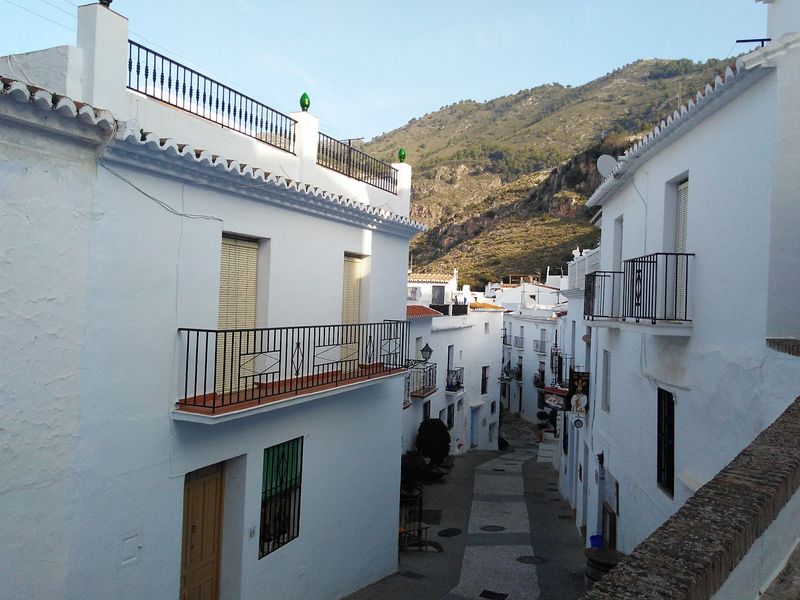
Frigiliana proves that you do not need a grand palace to feel the weight of Moorish history. The entire old quarter, known as the Barribarto, is itself the monument.
Spain’s tourism authority states plainly that the structure and appearance of this neighborhood derive from the Arab period, making it one of the most intact examples of an Andalusian village plan anywhere in the country.
Whitewashed houses climb the Sierra de Almijara in tight terraces, connected by stepped lanes so narrow that two people with backpacks have to negotiate passing. Covered passageways called arcos link sections of the neighborhood, while small gateways once allowed residents to seal off individual streets during times of trouble.
The logic of the layout is defensive, communal, and beautifully adapted to the steep hillside terrain.
Ceramic panels installed throughout the old quarter tell the story of the Morisco uprisings, conflicts that erupted after Muslim converts to Christianity refused to abandon their cultural traditions in the 16th century. Frigiliana is therefore not just about how buildings look but about the human stories embedded in the walls.
Small, intimate, and quietly powerful, it is a place that tends to stay with visitors long after they leave.
Vejer de la Frontera, Andalusia
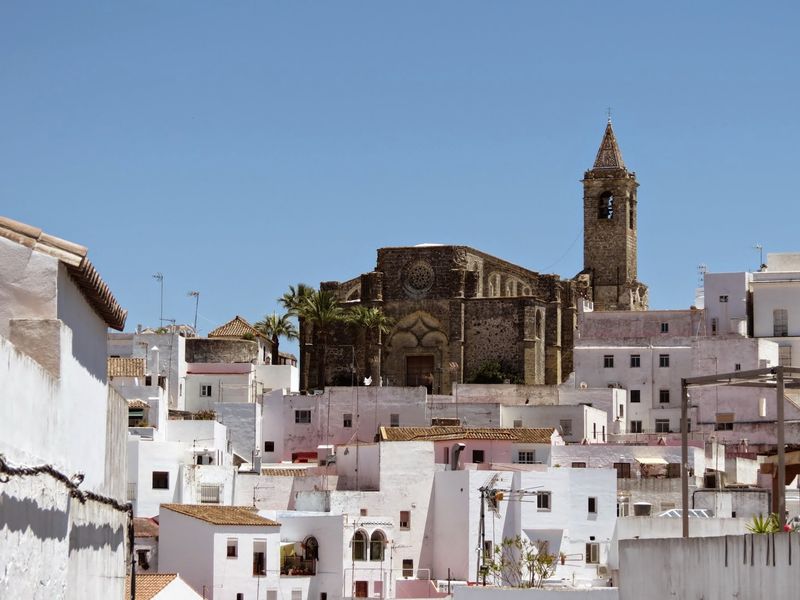
Perched on a rocky hill above the Cádiz countryside, Vejer de la Frontera looks like someone painted a medieval town white and forgot to tell it that centuries had passed. Declared a Historic-Artistic Site in 1976, its old center is recognized by Spain’s tourism authority as one of the finest surviving examples of Arab-Andalusian vernacular architecture in the south of the country.
That is a fancy way of saying the whole town feels like a living artifact.
Inside the old walls, houses press tightly together along streets that twist and narrow for reasons that have everything to do with shade, privacy, and keeping out trouble. The medieval castle at the heart of the settlement dates substantially from the 11th century and still anchors the skyline.
Gates and arches define the historic enclosure just as they did when Muslim rulers controlled the surrounding territory.
Christian buildings were added after the Reconquista without erasing the earlier urban framework, leaving Vejer with a genuinely layered character. The mix of Islamic town planning and later architecture creates a streetscape that feels organic rather than designed.
Vejer rewards wandering without a map, because the best discoveries tend to appear only when you stop looking for them.
Mojácar, Andalusia
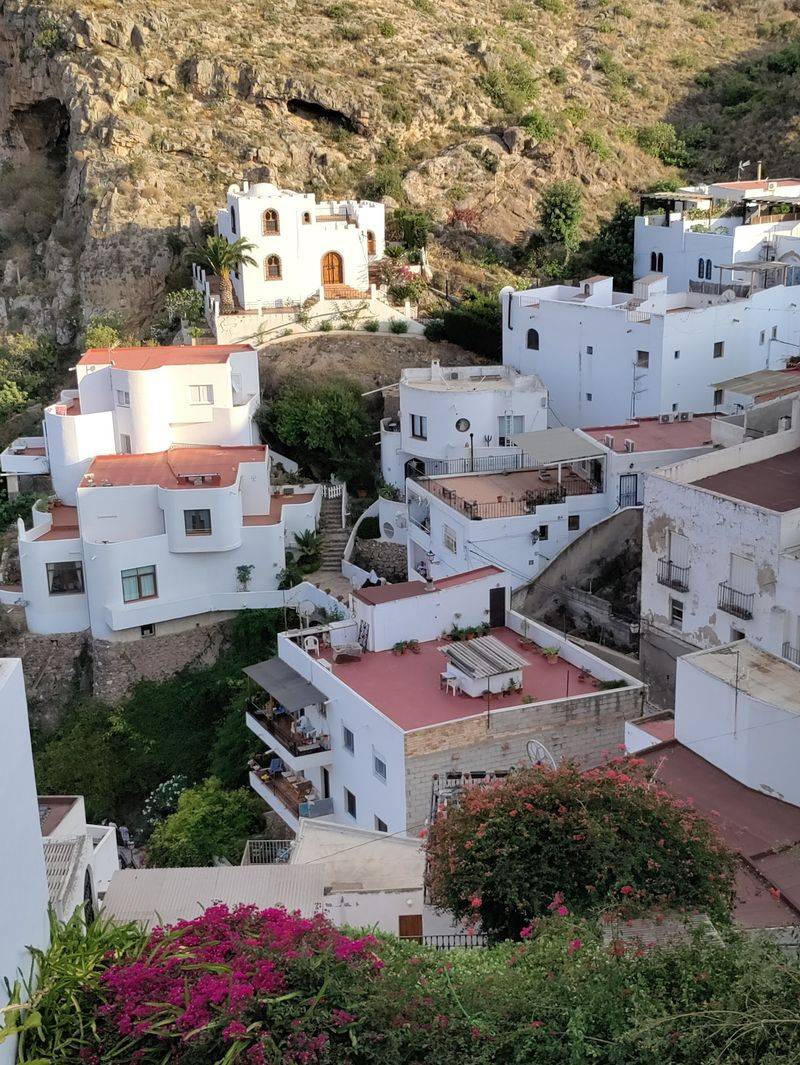
Mojácar climbs its hill above the Almería coast in a tumble of white cubes, terraces, and stairways that look almost accidental from a distance but reveal careful logic up close. Spain’s official tourism site describes the historic center as preserving a structure shaped by Moorish influence, with tiered development and hidden corners adapted to the demands of steep, defensible terrain.
Every twist in the street has a reason rooted in centuries of practical necessity.
The surviving city gate and a fortified tower are reminders of Mojácar’s older defensive identity. The hill was strategically important long before the 15th-century castle site took shape, and the settlement’s layout still reflects priorities that had nothing to do with scenic Instagram angles.
After the end of Muslim rule, the Church of Santa María was built in a fortified style that acknowledged the town was still very much on a frontier.
Mojácar’s contribution to this list is not a single spectacular monument but rather the clarity with which its urban form still shows centuries of Moorish settlement logic. The hill shaped the town, and the town shaped itself around the hill, producing a relationship between architecture and landscape that feels entirely natural.
That kind of honest adaptation is its own form of beauty.
Guadix, Andalusia
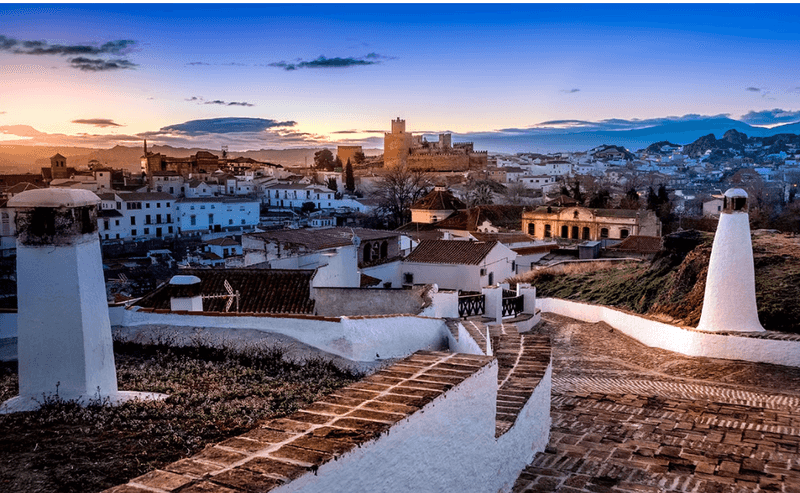
Guadix might be the only town in Spain where you can stand next to a Moorish fortress, admire a Mudéjar church tower, and then watch someone emerge from a cave house that has been occupied for five hundred years. The 11th-century Arab alcazaba crowns the hill above town and is protected as a national monument, offering a commanding view over the surrounding landscape that explains exactly why it was built there.
After Christian conquest, Islamic building traditions did not simply pack up and leave. Churches including Santiago, San Francisco, and Santo Domingo all incorporate Mudéjar elements, particularly wooden ceiling work and decorative towers that owe more to Islamic craftsmen than to anything coming out of Rome or Paris.
Guadix Cathedral itself rose partly over the remains of an earlier mosque, making the ground beneath it as historically loaded as the building above.
The famous cave-house neighborhoods add a layer that exists nowhere else on this list. Thousands of people still live in homes carved into the soft volcanic rock of the surrounding hills, a tradition that predates the Islamic period but continued through it.
Guadix rewards visitors who resist the urge to rush, because its architectural layers reveal themselves slowly and generously.
Baza, Andalusia
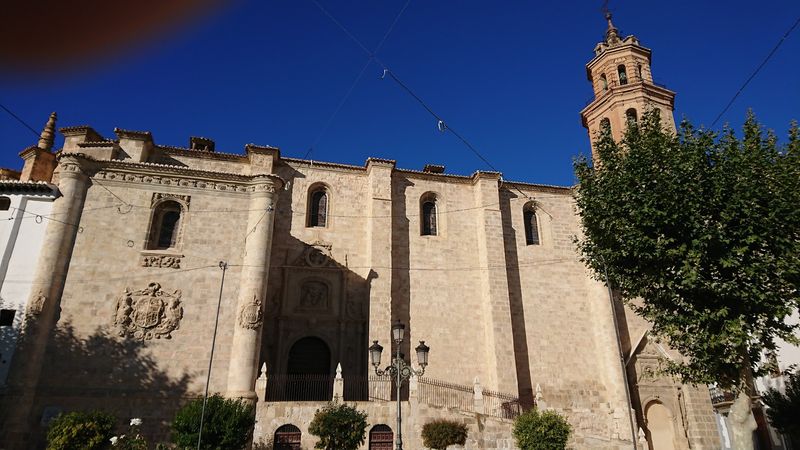
Baza does not get the tourist crowds that Granada attracts, which is precisely what makes walking its older streets feel like a genuine discovery. Spain’s tourism authority still identifies the historic core as the Moorish part of town, composed of the former medina, alcazaba remnants, and old Arab quarters.
Narrow streets survive around defensive wall fragments that have been quietly standing since the medieval period.
Surviving Moorish baths add physical texture to what might otherwise be an abstract historical claim. After the Reconquista, builders in Baza continued using Islamic craftsmanship within Christian structures rather than abandoning it.
The Church of Santiago is a standout example of Mudéjar style, and the former collegiate church of Nuestra Señora Santa María de la Encarnación occupies the site of an earlier mosque.
What Baza offers that larger cities cannot is a sense of what everyday urban life in southeastern Al-Andalus actually looked like beyond royal palace complexes. The scale is human, the streets are real, and the history has not been buffed to a tourist shine.
For anyone genuinely curious about how ordinary Moorish towns were organized and inhabited, Baza is one of the most honest answers available in Andalusia today.
Alcalá la Real, Andalusia
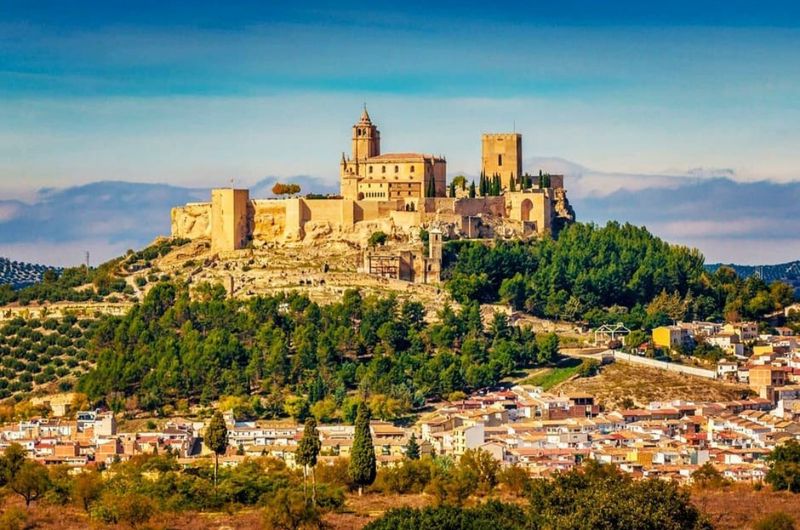
La Mota Fortress is the kind of place that makes you reconsider how dramatic everyday medieval life must have been. Sitting on a commanding hill above Alcalá la Real, it controlled the contested frontier between the kingdoms of Granada and Castile for more than 150 years.
Spain’s tourism authority notes that the fortified complex follows the classic organization of a Muslim city, with separate defensive, residential, and religious zones contained within multiple rings of walls.
The perimeter of La Mota was among the most extensive in Al-Andalus, which gives you a sense of how seriously its builders took the strategic importance of the location. Inside those walls, the ruins of houses, mosques, baths, and later Christian buildings create a layered site that feels more like an archaeological park than a single monument.
The Abbatial Priory Church was added after Christian conquest but sits within the older Islamic urban framework.
Alcalá la Real explains something that glossier Moorish sites sometimes obscure: frontier architecture was fundamentally about survival, territory, and control, not just beauty. The elegance of La Mota comes from its purposefulness.
Every wall and tower was placed exactly where it needed to be, and that functional clarity still reads clearly from the hill today.
Baños de la Encina, Andalusia
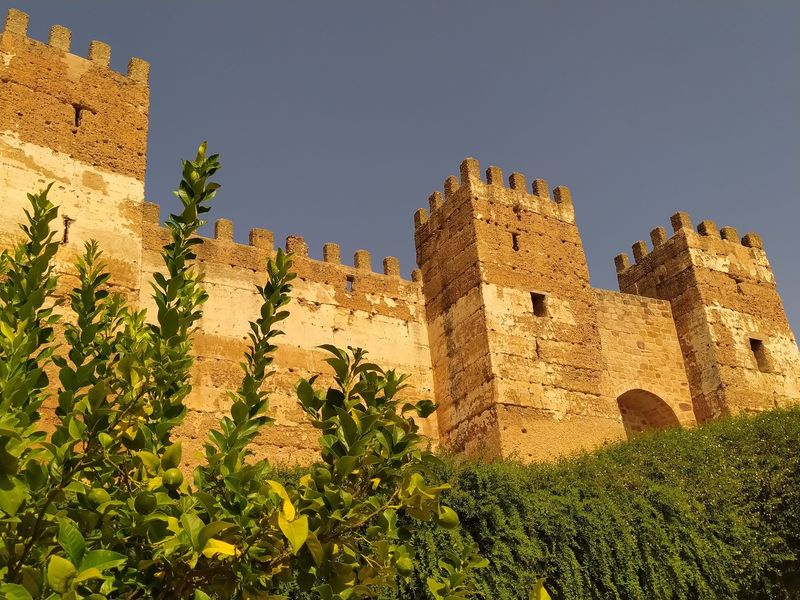
If you want to see what early Islamic military architecture looked like before the decorative refinements of the Nasrid period, Baños de la Encina is your answer. The fortress here was built in the 10th century under Umayyad rule, and it has survived in genuinely impressive condition.
An elliptical enclosure lined with 14 square towers and topped with crenellated walls sits on a hill at the edge of the Sierra Morena with quiet authority.
There is something almost elemental about the castle at Baños de la Encina. No elaborate tilework, no carved stucco ceilings, no reflecting pools.
Just stone, height, and geometry working together to make a point about military power. A later keep was added to the complex, but the Umayyad bones of the structure are clearly visible and give the site a raw historical honesty that more famous monuments sometimes lack.
The town that grew below the fortress accumulated churches, noble houses, and Baroque buildings after Christian conquest, creating a pleasant contrast between the stark medieval stronghold above and the more relaxed historic town below. Baños de la Encina shows how a Muslim frontier fortress became the nucleus around which centuries of later Spanish town life continued to organize itself.
Albarracín, Aragón
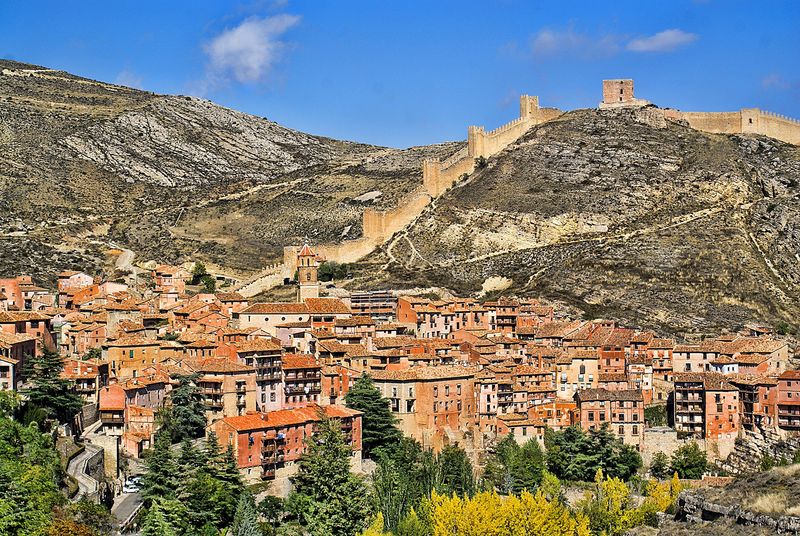
Albarracín is the kind of place that appears in travel writing so often that you might assume the reality cannot live up to the description. It absolutely does.
Once the capital of an independent taifa kingdom, this small Aragonese town is wrapped in defensive walls whose oldest sections date back to the 10th century, according to Spain’s tourism authority. The bastion and Andador Tower are among the most tangible surviving reminders of that Islamic political era.
During the 11th century, the taifa rulers of Albarracín expanded the walls to enclose additional neighborhoods as the town grew. Later Christian rulers added further towers and fortifications, making the defensive circuit a multi-century collaboration between very different political regimes.
The result is not a museum recreation but a genuine working archaeology of power and place.
Inside the walls, steep lanes twist between earth-toned houses above the Guadalaviar River, creating a streetscape that feels carved rather than built. The pink-red stone of the local geology gives Albarracín a warm color palette unlike any other town on this list.
Its survival as an intact fortified settlement demonstrates that the architectural world of Moorish Spain extended well beyond Andalusia into the northern reaches of Islamic Iberia, where the frontier was just as contested and just as creatively built.
Calatayud, Aragón
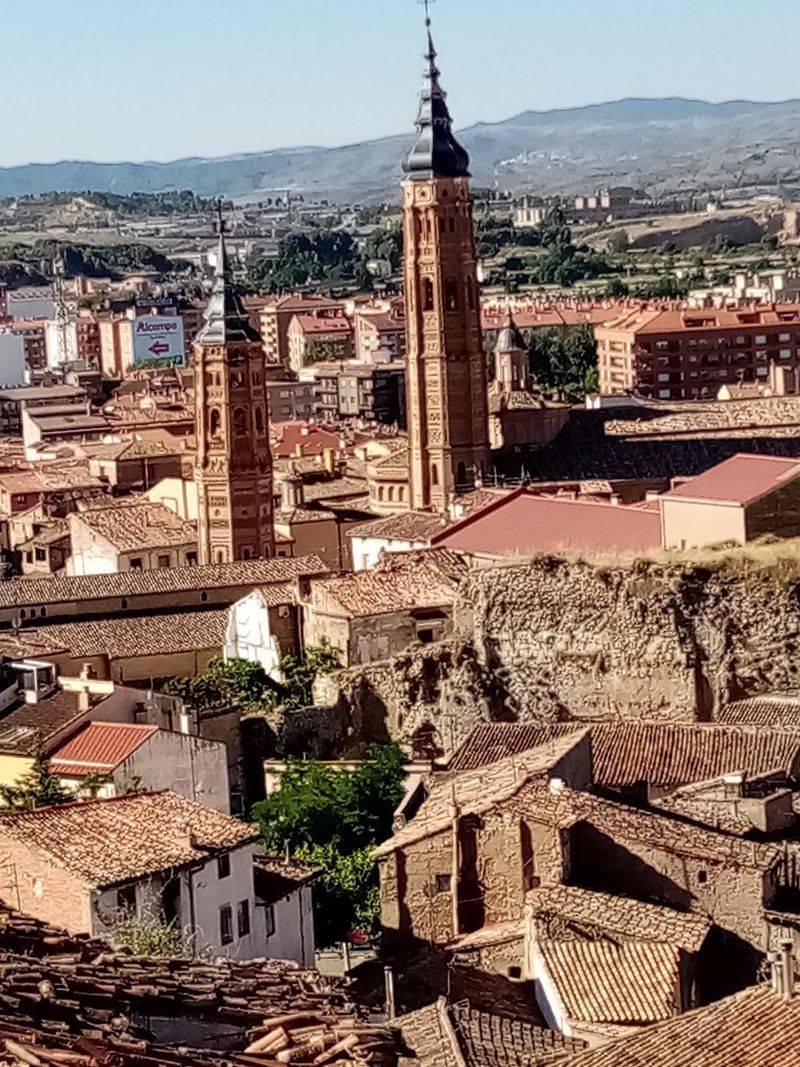
The name Calatayud is itself a piece of history: it comes from Qal’at Ayyub, meaning the Castle of Ayyub, the name given to the settlement after Muslim expansion reached this part of Aragón in the early 8th century. Above the modern town, a network of five Arab-period castles survives on the hills, and Spain’s tourism authority describes it as one of the oldest defensive systems from Muslim Spain still visible anywhere in the country.
After Christian conquest, Calatayud became a showcase for Mudéjar architecture at its most accomplished. The Collegiate Church of Santa María preserves a Mudéjar apse, cloister, and tower that together form part of UNESCO’s World Heritage designation for Aragonese Mudéjar.
The tower follows the structural logic of an Islamic minaret while being covered in geometric brick patterns and glazed ceramic decoration that would not look out of place in a mosque.
Calatayud is a perfect final stop on any tour of Moorish Spain’s architectural legacy because it shows the tradition completing its transformation. Islamic military origins at the top of the hill, Islamic artistic tradition reborn inside a Christian church in the valley below.
The craftsmen changed employers, but the skills, the geometry, and the visual intelligence stayed exactly the same.
Share this story