Madrid is the kind of city that sneaks up on you. One minute you are standing in front of a royal palace, and the next you are squeezed into a tiny bar eating the best croquettes of your life.
From world-class art museums to late-night tapas crawls, the Spanish capital packs an extraordinary amount of experience into every corner. Whether this is your first visit or your fifth, Madrid has a way of making every trip feel like something worth repeating.
Walk Through the Royal Palace of Madrid
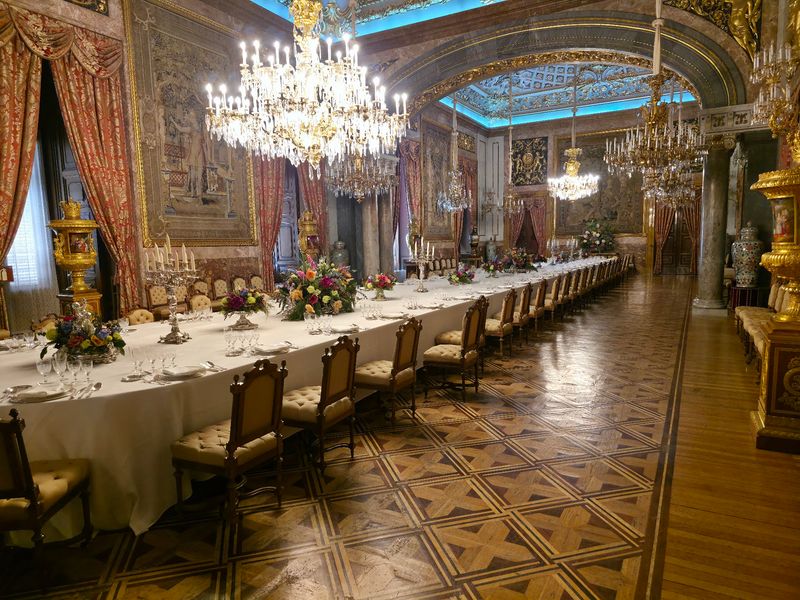
Few buildings in Europe make your jaw drop quite as fast as the Royal Palace of Madrid. With more than 3,000 rooms, it is one of the largest royal palaces on the continent, and every room seems to be competing to be the most extravagant.
The interiors include lavish state rooms decorated with works connected to Velazquez, Goya, and Caravaggio. Spain’s royal family no longer lives here, but the palace still hosts official state functions, which means it carries real historical weight alongside its visual spectacle.
Visiting hours change by season. As of 2026, summer hours run roughly 10 a.m. to 7 p.m.
Monday through Saturday. The official self-guided route takes about 45 minutes, but curious visitors will want more time.
After your visit, walk around Plaza de Oriente and head toward the gardens for some of the most impressive exterior views the palace has to offer.
Spend a Few Hours With the Masters at the Prado
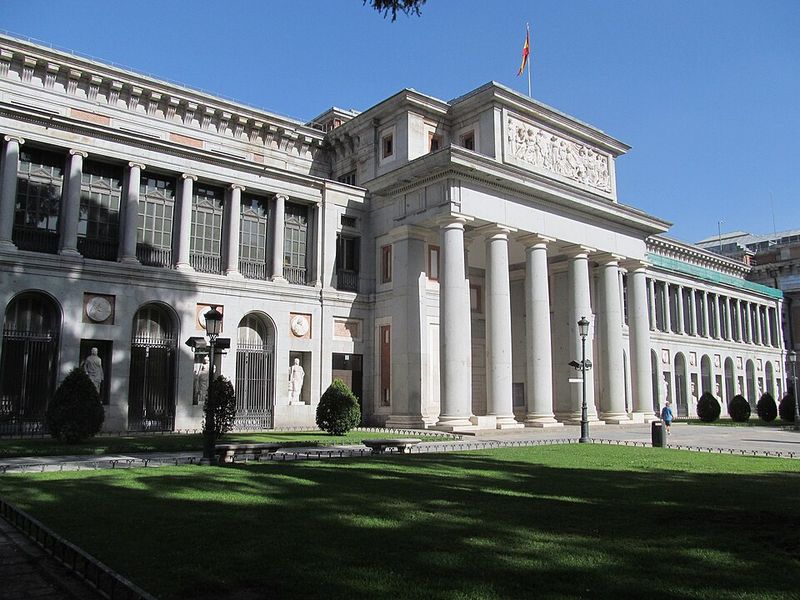
Skipping the Prado while visiting Madrid would be like visiting Paris and ignoring the Eiffel Tower. The Museo Nacional del Prado is one of Europe’s most important art museums, and its collection is staggering in both size and quality.
Velazquez, Goya, El Greco, Rubens, Titian, and Bosch are all here. Trying to see everything in one go is a guaranteed recipe for sore feet and mental overload.
The Prado itself offers one-, two-, and three-hour suggested itineraries, which makes it far easier to focus on highlights rather than wandering aimlessly through hundreds of rooms.
As of 2026, general admission is 15 euros, and entry to the permanent collection is free during the final two hours before closing. The museum is typically open 10 a.m. to 8 p.m.
Monday through Saturday. If you only seek out one painting, make it Velazquez’s Las Meninas.
It is the kind of artwork that stays with you long after you have left the building.
Wander Through El Retiro Park
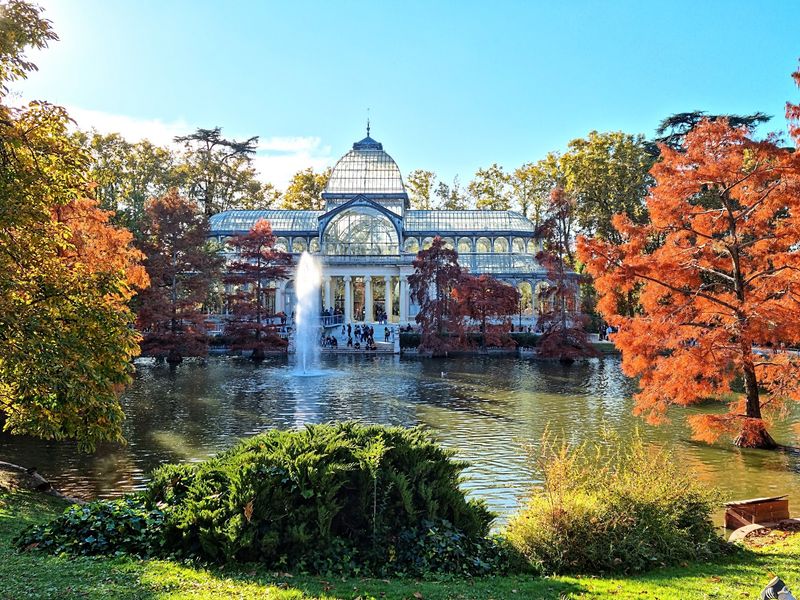
Right in the middle of one of Europe’s busiest capitals, El Retiro Park feels like the city remembered to breathe. Broad avenues, shaded gardens, monumental fountains, and a boating lake where you can rent rowboats all sit within easy reach of the center.
The park forms part of Madrid’s UNESCO-listed Paseo del Prado and Buen Retiro cultural landscape. Its most photographed structure is the Palacio de Cristal, a beautiful glass-and-iron pavilion perched beside a small lake that catches light in every direction.
Here is the thing about Retiro: it rewards slowing down. Buy a cold drink from one of the vendors, find a bench under the trees, and watch Madrileños walk their dogs, argue cheerfully, or simply sit and do nothing.
You do not need a checklist here. Give yourself at least an hour with no particular destination and no pressure to tick off sights.
That unscheduled hour might end up being one of your favorite parts of the whole trip.
Explore Madrid’s Golden Triangle of Art
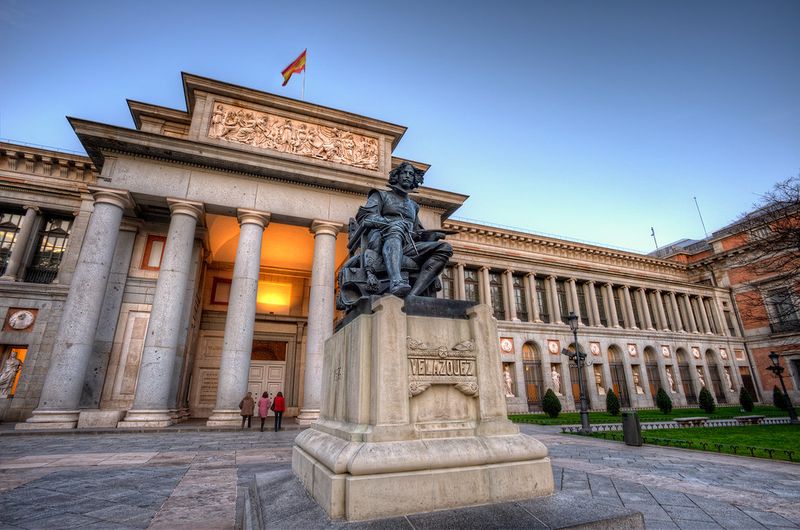
Three world-class museums. One short walk.
That is the basic math of Madrid’s Paseo del Arte, and it is a deal that very few cities on earth can match.
The Prado handles the old masters. The Thyssen-Bornemisza bridges the gap between historical European painting and more modern movements.
The Reina Sofia moves into 20th-century and contemporary art, and it is internationally famous as the permanent home of Picasso’s Guernica, one of the most powerful paintings ever made.
Trying to visit all three museums properly in a single day is technically possible but practically exhausting. A smarter approach is to pick one per day and use the surrounding neighborhood for walking, coffee, and a visit to Retiro Park.
Madrid earns its reputation as one of Europe’s great art capitals not just because of individual masterpieces, but because these three institutions sit within a kilometer of each other. You can move between completely different artistic eras without once hailing a cab or boarding a metro.
Eat Your Way Through La Latina
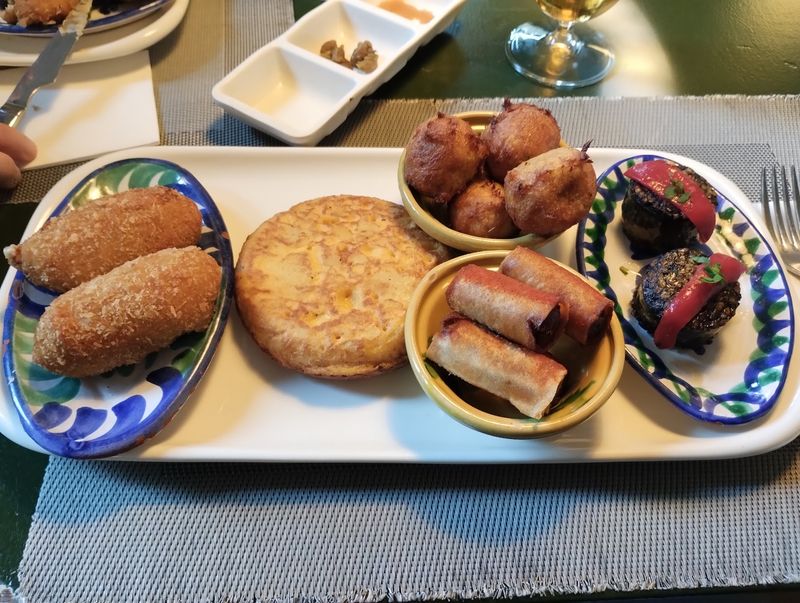
Forget the idea of sitting down at one restaurant and calling it dinner. In La Latina, the meal is a moving event, and that is entirely the point.
The neighborhood’s Cava Baja street is famous for its dense run of traditional taverns, each one worth a stop for a drink and a small plate before moving on. Look for tortilla espanola, croquetas, patatas bravas, cured meats, cheeses, and olives.
Larger raciones designed for sharing are everywhere too, if you want something more substantial between stops.
Classic drinks for a tapas crawl include a small draft beer, a glass of wine, sherry, or vermouth. The goal is not to find the single best tapa in Madrid.
The goal is movement, variety, and the pleasure of discovering that the tiny bar three doors down from the famous one is actually better. La Latina is also surrounded by other strong tapas neighborhoods including Barrio de las Letras and Lavapies, so you have plenty of room to keep exploring well into the evening.
Stand in the Middle of Plaza Mayor
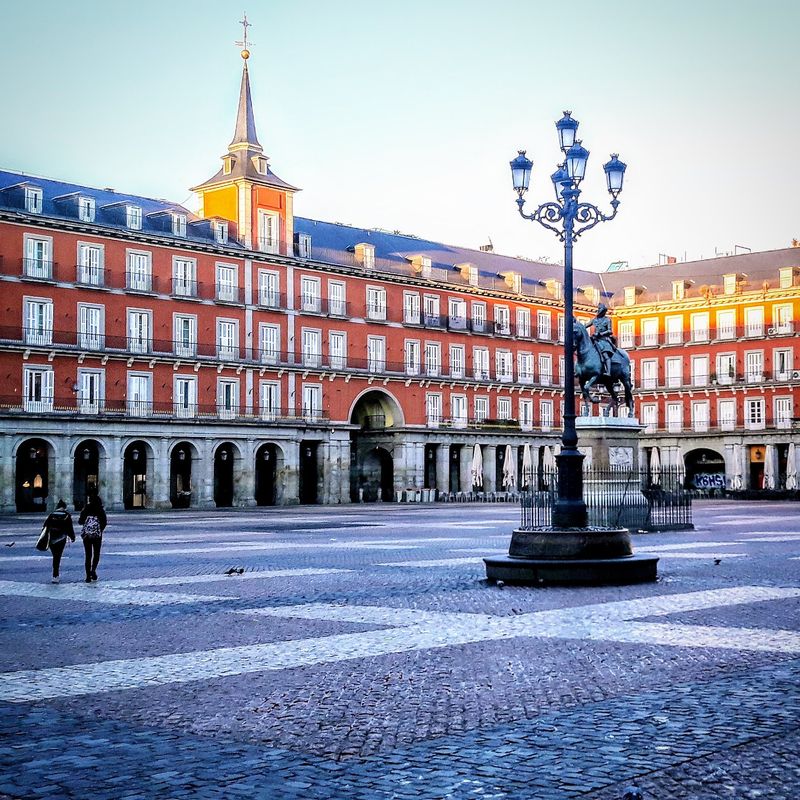
Madrid’s Plaza Mayor has hosted markets, bullfights, royal ceremonies, and centuries of ordinary city life, and it still manages to feel like a genuinely grand space rather than just a tourist backdrop.
The enclosed square is one of the most recognizable places in the historic center. Walk beneath its archways, look up at the red facades, and then continue through the surrounding streets toward Puerta del Sol or deeper into the old Austrias district.
This is also the perfect place to try one of Madrid’s simplest and most satisfying specialties: the bocadillo de calamares, a fried calamari sandwich that has been associated with bars around the square for decades.
You do not need to spend hours at Plaza Mayor. Its real value is as the starting point for a longer walk through old Madrid.
The streets radiating outward from the square lead quickly into quieter, more local territory where the pace slows and the crowds thin. Give yourself 20 minutes in the square itself and then follow your curiosity in any direction.
Browse Mercado de San Miguel and Then Keep Exploring
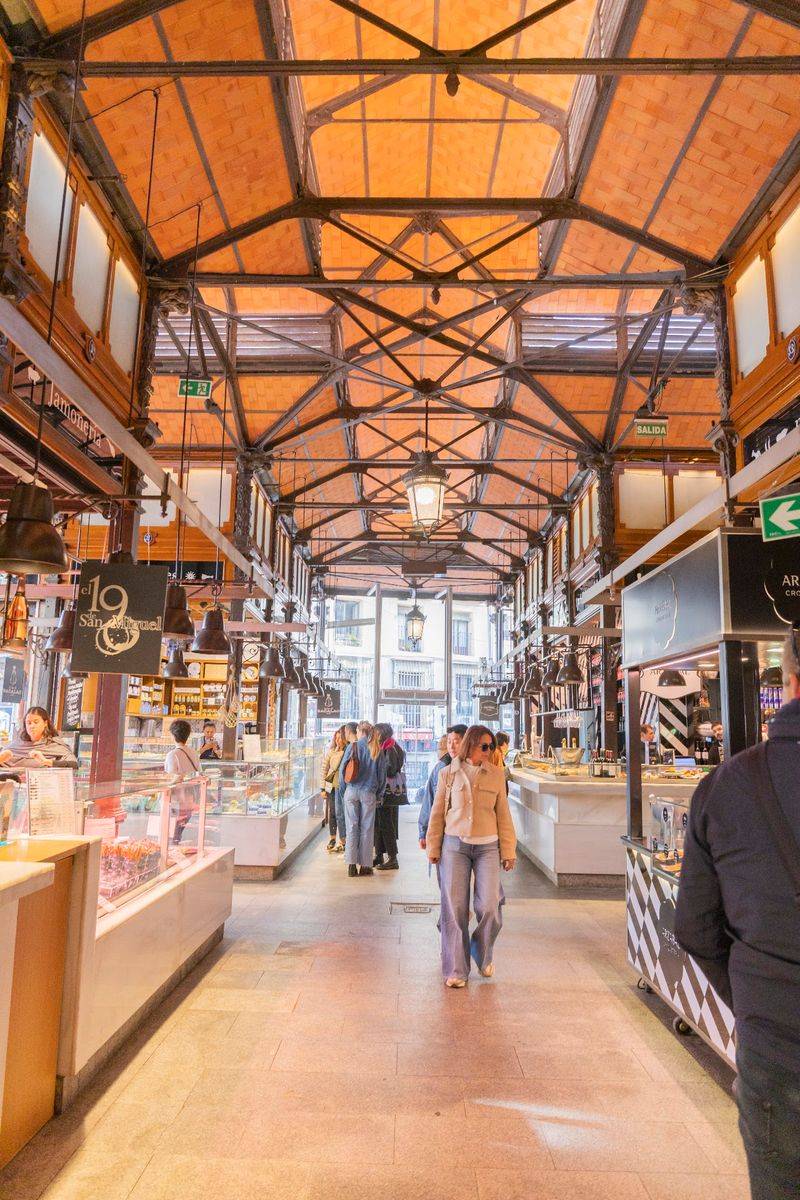
Mercado de San Miguel is one of those places that looks almost too good to be real. The glass-and-iron structure dates to 1916, and the interior is packed with stalls selling seafood, cheeses, cured meats, pastries, wine, and a rotating selection of prepared dishes.
It sits just steps from Plaza Mayor, which makes it an obvious first stop after exploring the square. Be honest with yourself about what it is: a beautiful, mostly tourist-oriented gastronomic marketplace rather than a traditional neighborhood market.
That does not make it bad. The food quality is generally solid, and it is a genuinely useful introduction to Spanish ingredients and flavors.
The smarter play is to treat San Miguel as a warm-up rather than the main event. Madrid has a much wider network of local markets and tapas areas spread across neighborhoods like Lavapies, Chamberi, Salamanca, and Carabanchel.
Sample something delicious at San Miguel, take a few photos of the architecture, and then go find the place two streets over where locals are actually having lunch without a camera in sight.
Watch the Sunset From the Temple of Debod
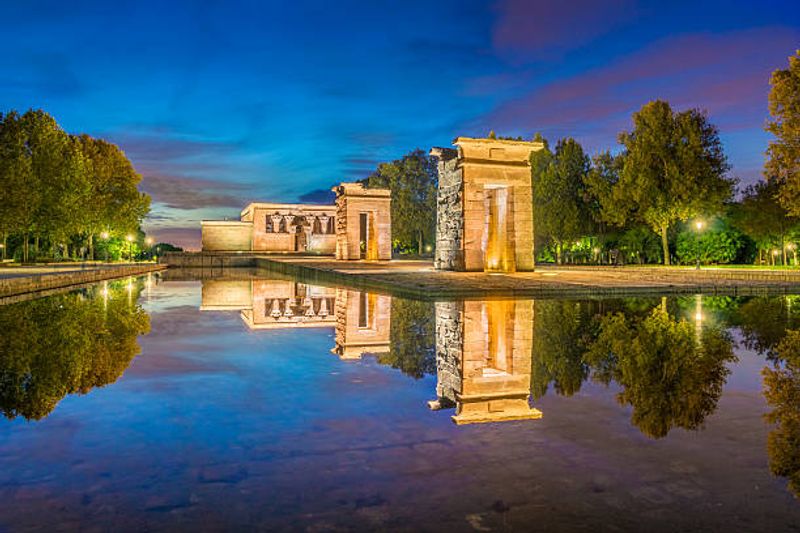
Madrid contains an ancient Egyptian temple, and somehow that fact still surprises people every time. The Temple of Debod was gifted to Spain by Egypt in 1968 as a gesture of gratitude for Spanish archaeological work, and today it stands in a park just west of Plaza de Espana.
The elevated setting provides broad views toward the western skyline, Casa de Campo, and the surrounding hills, which is why it has become one of the city’s most popular sunset spots. The combination of ancient stone, reflecting pool, and a sky turning shades of orange and pink is genuinely hard to photograph badly.
Arrive before the sun actually sets rather than at the last minute. The park fills up quickly when the weather cooperates, and finding a good spot takes a few minutes.
Even if interior access is limited during your visit, the exterior and the views are worth the walk on their own. Afterward, the route toward Plaza de Espana, Gran Via, or the Royal Palace is easy on foot and passes through some of the city’s most interesting street-level architecture.
Experience a Proper Flamenco Performance
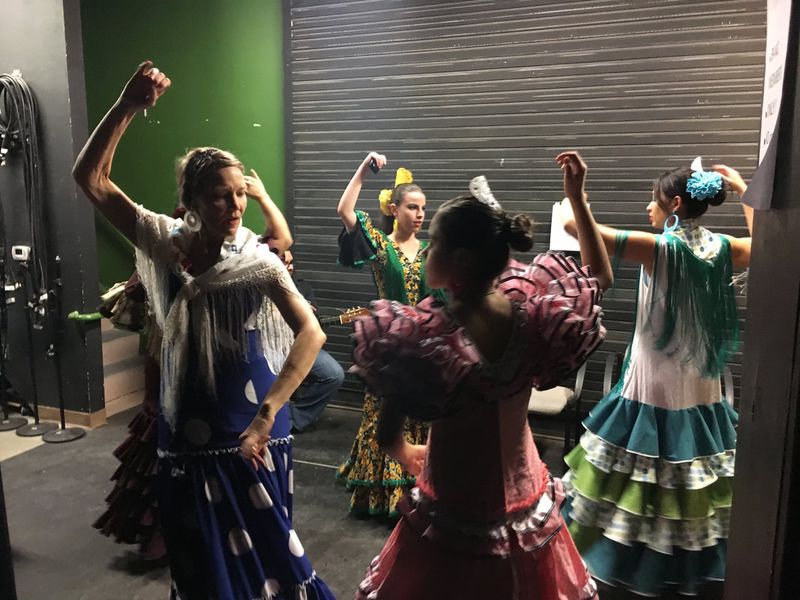
Flamenco was not born in Madrid, but the city became one of the art form’s most important stages, and today some of the best performances in Spain happen right here in the capital.
A good flamenco show is nothing like the tourist stereotype. When the room is small, the lighting is low, and the performers are close enough to feel the floor shake beneath their feet, the emotional intensity can be genuinely overwhelming.
Voice, guitar, rhythm, and dance combine into something that operates on a frequency that bypasses rational thought entirely.
The key is choosing the right venue. Look for established tablaos with serious performers rather than picking the show with the most aggressive advertising near the main tourist squares.
Dinner packages are common at many venues, but they are not always necessary. Sometimes the most memorable experience is simply ordering a drink, sitting close to the stage, and letting the performance do everything else.
Madrid’s tourism authority consistently highlights flamenco as one of the capital’s signature cultural events, and for good reason. One quality performance changes how you think about the art form permanently.
Walk Gran Via After Dark
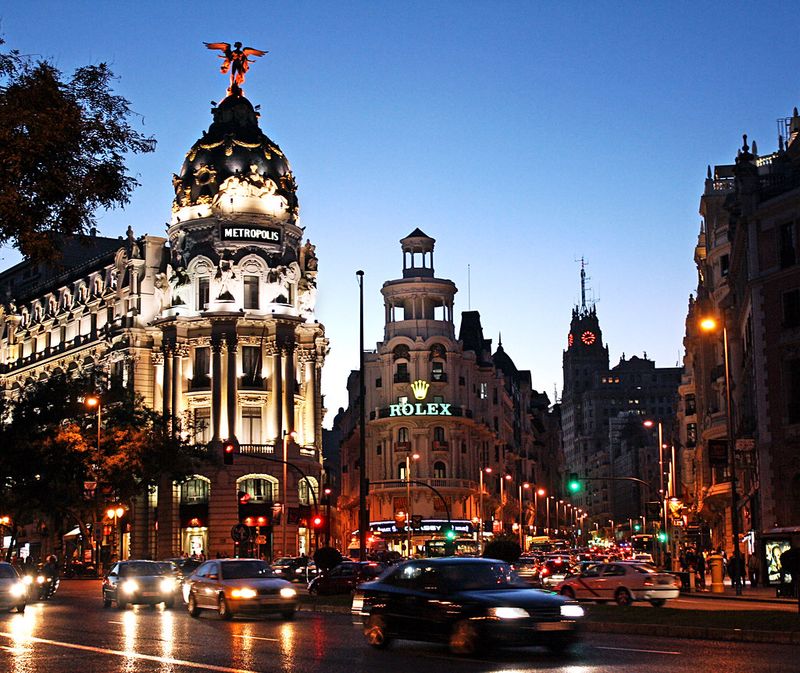
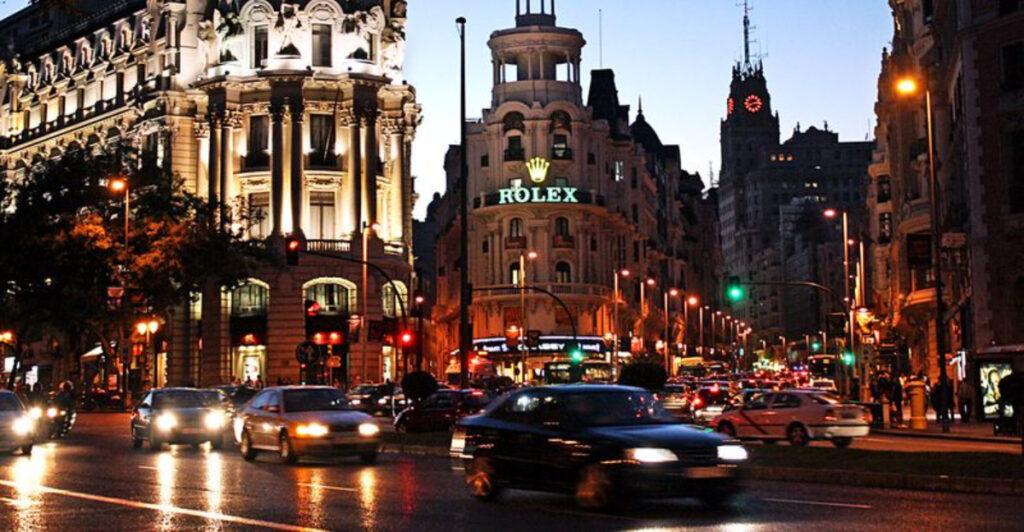
During the day, Gran Via is loud, crowded, and slightly overwhelming. After dark, it transforms into something much more interesting.
The avenue is lined with grand early 20th-century architecture, hotels, theaters, cinemas, and shops, and when the buildings are lit up against a dark sky, the whole street takes on a cinematic quality that is hard to replicate anywhere else in the city. Walk from near Plaza de Espana toward the center and make a point of looking up rather than only at the storefronts.
The upper floors and rooftop lines of these buildings are where the real architectural drama lives.
Several rooftop bars in and around Gran Via offer elevated views across the city, and Madrid’s tourism authority regularly highlights panoramic viewpoints as a major part of the capital experience. Gran Via is also a natural gateway into the Malasana and Chueca neighborhoods, both of which come alive well after 10 p.m.
Madrid’s nightlife runs on a schedule that baffles most visitors at first. Dinner at 9 p.m. is perfectly normal.
Heading out at 11 p.m. is not considered late. Gran Via after dark is where that rhythm starts to make sense.
Get Lost in Malasana and Chueca
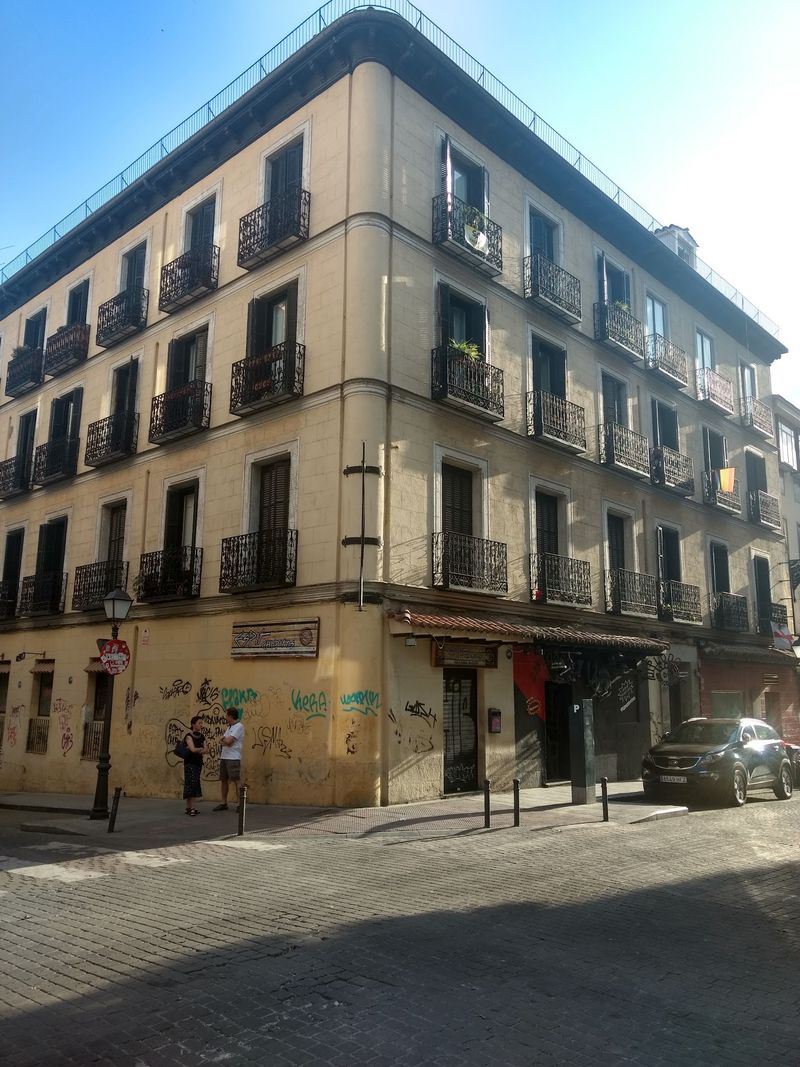
Some cities hide their personality behind famous monuments. Madrid keeps a large portion of its best self tucked into its neighborhoods, and Malasana and Chueca are two of the finest examples.
Malasana built its reputation on counterculture. It was the center of the Movida Madrillena, the creative explosion that followed Spain’s transition to democracy in the late 1970s, and that spirit of independence still runs through its independent shops, vintage stores, cafes, and bars.
Nearby Chueca is equally lively, with restaurants, fashion boutiques, and one of the strongest LGBTQ+ identities of any neighborhood in Europe.
Neither area requires a fixed sightseeing plan. Pick a street, turn whenever something catches your eye, stop for coffee or vermouth or a small plate, and then keep walking.
Madrid’s official tourism guide groups both neighborhoods among the city’s most dynamic areas for contemporary tapas and nightlife, and that assessment is accurate. The best discoveries in Malasana and Chueca are the ones you stumble across by accident, which means the only real strategy is to wander without a deadline.
Have Churros With Chocolate
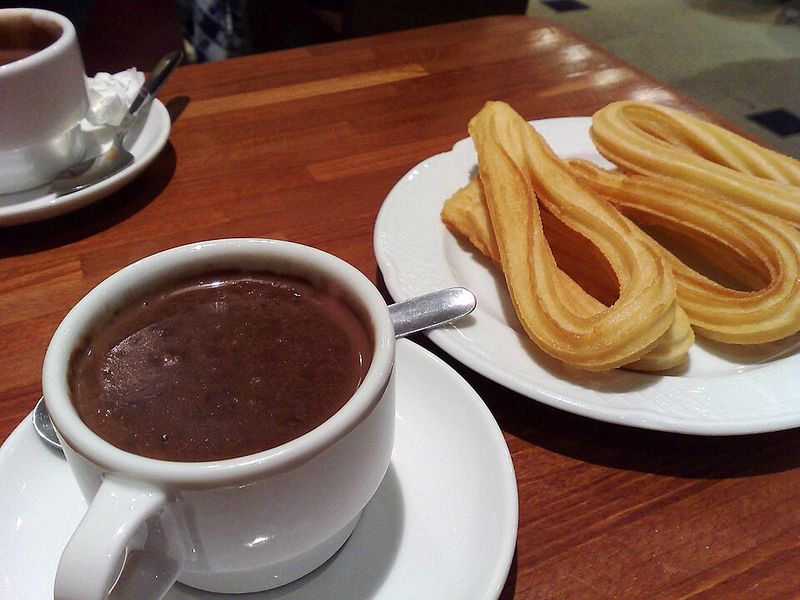
Madrid has elevated dipping fried dough into thick hot chocolate to something that feels less like a snack and more like a cultural institution. Churros con chocolate works at breakfast, works as a late-night recovery meal after a long evening out, and honestly works at almost any hour in between.
The classic version is simple: crisp churros or thicker porras, served alongside a cup of intensely rich, almost pudding-thick hot chocolate built specifically for dipping. Several historic chocolaterias operate in central Madrid, and the city’s official tourism materials highlight its long-standing cafe and artisan chocolate traditions as a genuine part of the capital’s culinary identity.
A useful quirk about this particular Madrid tradition is that there are no real rules about timing. Madrileños eat churros after a night out just as happily as they eat them before work.
Do not stress about finding the most famous spot or arriving at a specific hour. Find a place that looks busy with locals, order a full serving, and eat them while they are still hot.
Cold churros are a disappointment that no amount of chocolate can fully rescue.
See the City From Campo del Moro
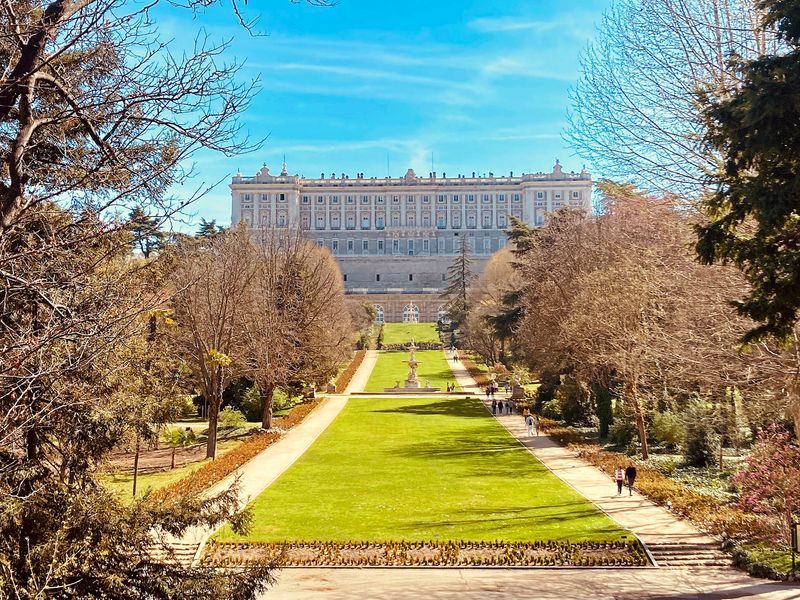
Most visitors photograph the Royal Palace from the front, which gives you a perfectly good image and roughly the same shot as everyone else who has ever visited Madrid. Campo del Moro offers something considerably more dramatic.
The landscaped gardens sit below the western side of the palace, and from the right spot on the main pathway, the enormous stone facade rises above the trees in a way that feels almost theatrical. The grounds include manicured lawns, shaded paths, and fountains, and the whole space is significantly calmer than the busy plazas on the palace’s other sides.
The Royal Palace’s official information specifically lists Campo del Moro among the gardens associated with the complex, so it is not a hidden secret. What it is, though, is consistently less crowded than it deserves to be.
If your itinerary includes a palace visit, build in extra time afterward to walk through these gardens rather than rushing straight to the next item on your list. Madrid generally rewards the moments when you slow down and look at something from an angle you were not originally planning to use.
Finish the Day With a Madrid-Style Tapas Crawl
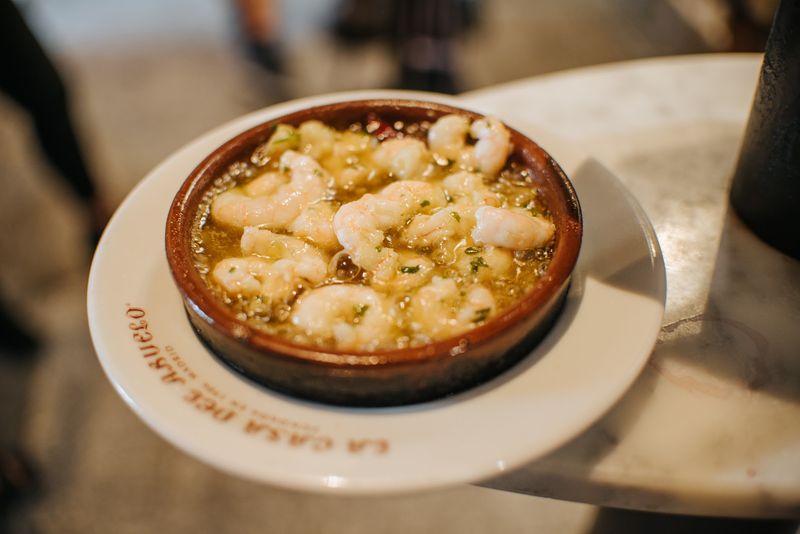
The perfect Madrid evening does not end with a 6 p.m. dinner reservation. It ends gradually, across several bars, with no fixed schedule and a very flexible definition of when the meal is technically over.
Start with vermouth at a traditional bar. Move somewhere else for a small beer and a plate of croquetas.
Order patatas bravas, tortilla, jamón, or a shared cheese board at a third stop. By that point, dinner has either already happened or you are just getting started, and both outcomes are completely acceptable.
La Latina is the classic crawl neighborhood, but Barrio de las Letras, Lavapies, Chamberi, the Ibiza area near Retiro, Malasana, and Chueca all have strong tapas traditions of their own. Madrid’s official tourism guide notes that tapas range from simple complimentary snacks to elaborate small dishes, with larger raciones designed for sharing.
That variety captures something essential about the city itself. Madrid is not a place where you visit one landmark, eat one famous dish, and consider the job done.
It keeps offering more, and the best response is to keep saying yes.
Share this story