
Some airports are so busy that they never truly sleep. Every minute of every day, planes land and take off, thousands of bags roll through conveyor belts, and travelers from every corner of the world rush to catch their next flight.
These airports are the heartbeat of global travel, moving millions of people between continents, cities, and cultures. Whether you are a frequent flyer or a first-time traveler, the sheer scale of these places will absolutely blow your mind.
Hartsfield-Jackson Atlanta International Airport (ATL) – Georgia, USA
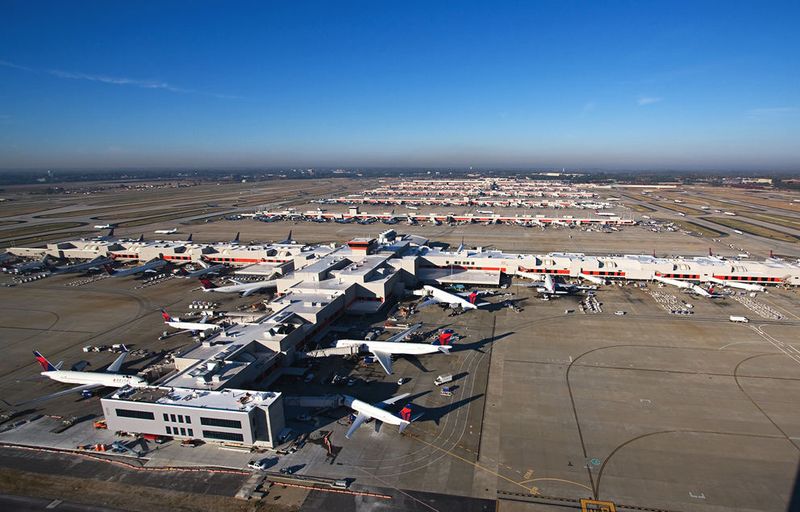
Over 106 million passengers passed through Atlanta in 2025, making it the undisputed king of the world’s busiest airports. That number is roughly equivalent to one-third of the entire United States population walking through a single building in just one year.
Atlanta has held this title for more than two decades straight, which is an achievement no other airport has managed to match.
Its secret weapon is geography. Sitting right in the middle of the eastern United States, Atlanta is perfectly placed for connecting flights heading in every direction.
Delta Air Lines calls ATL home, and its massive hub operation means thousands of daily connecting passengers flow through the terminals like clockwork.
The airport has five runways and two parallel terminal buildings linked by an underground train. Travelers can get between concourses in just minutes without ever stepping outside.
Despite its enormous size, ATL consistently moves passengers efficiently. If you have ever had a connection in Atlanta, you already know that the underground train is your best friend when you have 45 minutes to spare.
Dubai International Airport (DXB) – United Arab Emirates
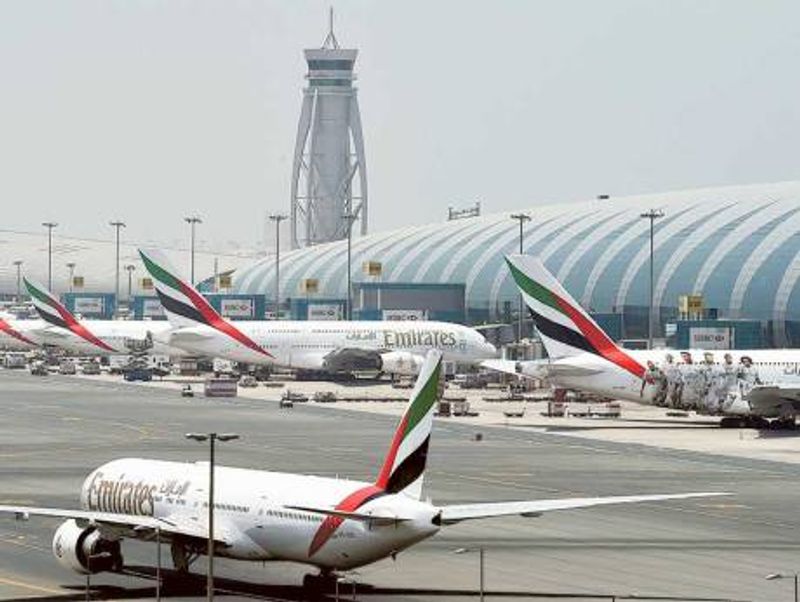
No airport on the planet handles more international passengers than Dubai International Airport. Over 95 million travelers passed through DXB in 2025, and the majority of them were crossing international borders rather than just hopping between domestic cities.
That distinction makes Dubai uniquely impressive compared to most competitors on this list.
Emirates Airline is the engine behind Dubai’s aviation dominance. The airline operates one of the largest fleets of wide-body aircraft in the world, linking Dubai to six continents with daily flights.
When Emirates lands a flight, hundreds of passengers instantly need connections, shops, restaurants, and lounges, and DXB delivers all of it at world-class quality.
Terminal 3 is entirely dedicated to Emirates and is one of the largest airport buildings ever constructed. Walking its full length without a moving walkway would genuinely tire you out.
The airport also features a hotel, swimming pool, and a genuinely impressive duty-free mall that tempts even the most disciplined shopper. Dubai sits almost perfectly between East and West, making it the ultimate layover city for travelers connecting between Europe, Asia, Africa, and beyond.
Tokyo Haneda Airport (HND) – Japan
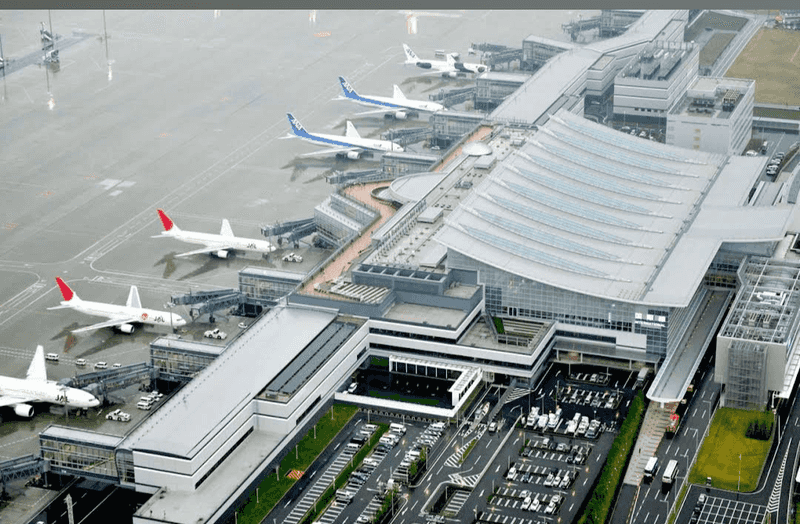
Japan runs its airports the way it runs its bullet trains: with pinpoint precision and zero tolerance for chaos. Haneda handled nearly 92 million passengers in 2025, and it did so while maintaining one of the cleanest, most organized airport environments anywhere in the world.
Travelers consistently rate it among the best airports on the planet, not just the busiest.
Haneda sits remarkably close to central Tokyo, which is a huge advantage over many major city airports that are located far from downtown. The airport serves a massive volume of domestic Japanese flights, connecting Tokyo to cities like Osaka, Sapporo, and Fukuoka multiple times every hour.
International routes have expanded significantly in recent years, giving Haneda a growing global footprint.
One of the most charming features is the observation deck on the rooftop of Terminal 2. On a clear day, you can spot Mount Fuji rising in the distance while planes taxi below.
The airport also has a traditional Japanese street food area inside the terminal where travelers can grab authentic ramen before boarding. Haneda proves that an airport can be enormous and still feel calm, welcoming, and genuinely enjoyable to spend time in.
Dallas/Fort Worth International Airport (DFW) – Texas, USA
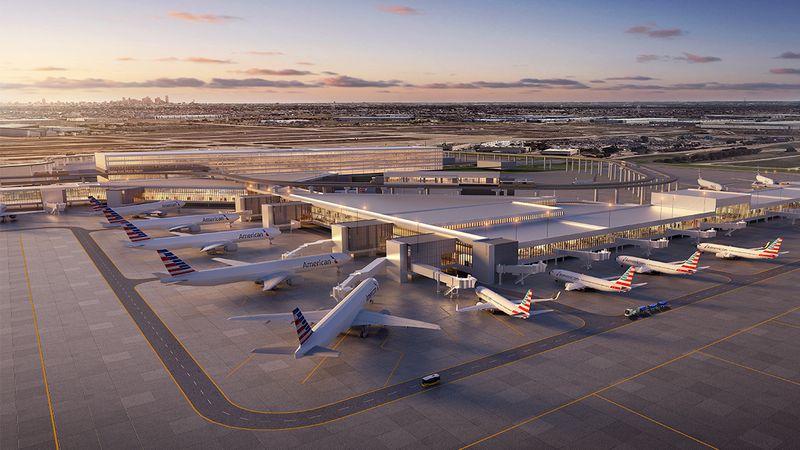
Everything really is bigger in Texas, and DFW is living proof. Serving over 85 million passengers in 2025, Dallas/Fort Worth International Airport covers more land area than Manhattan island.
That is not a joke. The airport is so large it has its own ZIP code, its own fire department, and its own highway system running through the middle of it.
American Airlines makes DFW its largest hub, which means the airport handles a staggering number of connecting passengers every single day. Flights radiate outward from DFW to virtually every major city in the United States and dozens of international destinations.
For many American travelers, DFW is simply the airport they pass through on the way everywhere else.
The Skylink train system connecting all five terminals is one of the most impressive pieces of airport infrastructure in the country. It runs 24 hours a day and can move passengers between the farthest terminals in under ten minutes.
Recent renovations have brought updated restaurants, faster security lanes, and better passenger lounges throughout the complex. DFW also handles a surprising amount of international cargo, making it a crucial economic engine for the entire Dallas-Fort Worth metropolitan region.
Shanghai Pudong International Airport (PVG) – China
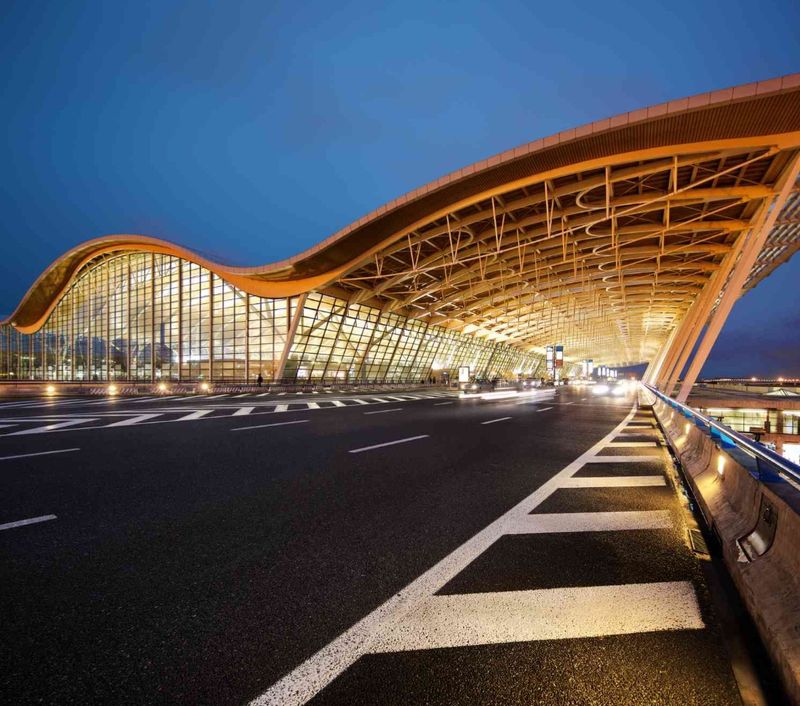
China’s aviation sector roared back to life after years of pandemic restrictions, and Shanghai Pudong was right at the front of that recovery. Nearly 85 million travelers passed through PVG in 2025, pushing it firmly into the top five busiest airports in the world.
For a country with 1.4 billion people hungry to travel, that number makes perfect sense.
Pudong serves as Shanghai’s primary international gateway, handling long-haul flights to Europe, North America, Australia, and across Asia. China Eastern Airlines operates its main hub here, providing connections across an enormous domestic network as well as international routes.
The airport has two main terminal buildings and is continuing to expand with additional infrastructure projects already underway.
One fun fact: Shanghai Pudong is connected to the city center by the world’s fastest commercial train, the Maglev. It reaches speeds of 431 kilometers per hour, covering the 30-kilometer journey in just seven minutes.
That alone makes arriving at Pudong a memorable experience. The terminals themselves are modern, spacious, and packed with dining options ranging from traditional Chinese cuisine to international fast food chains.
As China’s middle class continues to grow, Pudong’s passenger numbers are expected to climb even higher in the years ahead.
Chicago O’Hare International Airport (ORD) – Illinois, USA
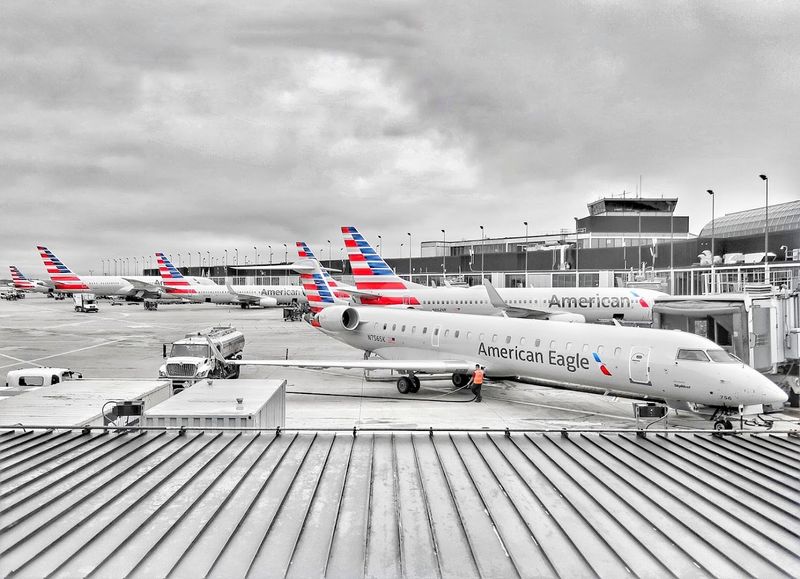
No airport in the world moves more planes than O’Hare. While Atlanta beats it on raw passenger numbers, Chicago O’Hare claims the title of busiest airport by aircraft movements, meaning more takeoffs and landings happen here than anywhere else on Earth.
Nearly 85 million passengers traveled through ORD in 2025, but the real story is the almost 900,000 aircraft operations recorded annually.
O’Hare is a joint hub for both United Airlines and American Airlines, which creates an unusually complex and dense flight schedule. Having two major legacy carriers operating massive hub operations at the same airport is rare globally, and it makes ORD one of the most operationally challenging airports in aviation.
Delays at O’Hare ripple across the entire national air traffic system like a stone dropped in still water.
The airport is currently undergoing a multi-billion dollar renovation called the O’Hare 21 project, which will add new gates, modernize terminals, and improve the overall passenger experience significantly. Terminal 3’s neon-lit pedestrian tunnel connecting concourses B and C has become something of a cult classic among frequent flyers.
Chicago’s central location in the Midwest makes ORD an ideal connecting point, and its importance to American aviation cannot be overstated.
London Heathrow Airport (LHR) – England
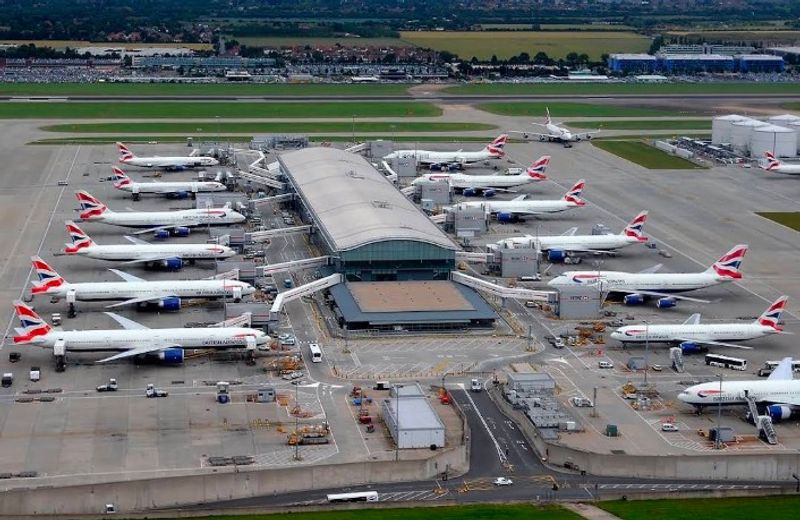
Heathrow has been Europe’s busiest airport for so long that it almost feels like a law of nature. More than 84 million passengers traveled through LHR in 2025, reinforcing its position as the continent’s most important international gateway.
British Airways operates its primary hub here, connecting London to hundreds of destinations across every inhabited continent.
What makes Heathrow especially significant is the quality of its long-haul connections. The airport excels at linking North America to Europe and onward to Asia and Africa, making it a crucial transfer point for business travelers and tourists alike.
Many global executives consider a Heathrow connection a routine part of their travel schedule rather than an inconvenience.
Terminal 5 is widely regarded as one of the best airport terminals in the world, offering smooth check-in, fast security, and an excellent selection of restaurants and shops. The terminal was designed specifically for British Airways and handles tens of millions of passengers per year on its own.
Heathrow has long faced pressure to build a third runway to handle growing demand, a debate that has involved politicians, environmentalists, and airlines for over two decades. For now, it operates at near-maximum capacity, which is both a testament to its popularity and a challenge for its future growth.
Istanbul Airport (IST) – Turkiye
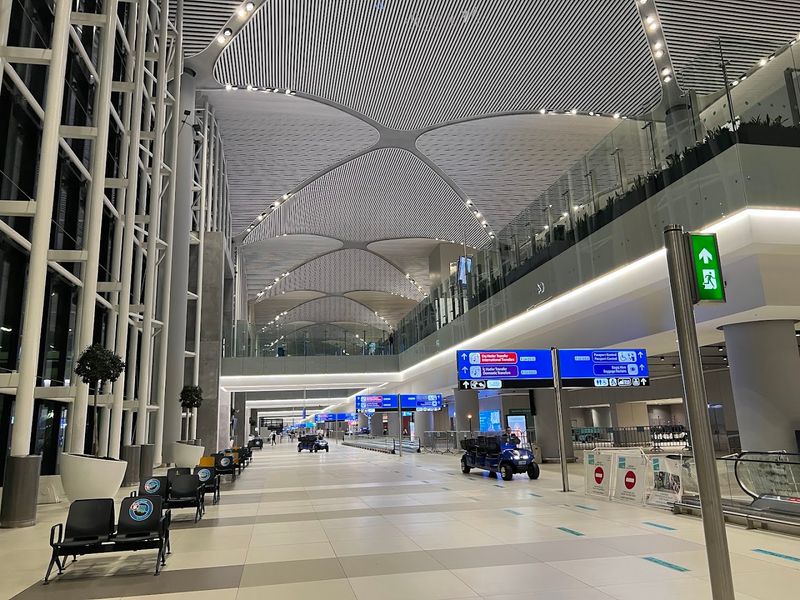
Opened only in 2018, Istanbul Airport has already become one of the most important aviation hubs on the planet. Handling over 84 million passengers in 2025, IST has grown at a pace that has genuinely surprised the aviation industry.
Turkish Airlines operates one of the most extensive international networks of any airline in the world, and Istanbul Airport is the beating heart of that operation.
The airport’s location is its greatest strategic advantage. Istanbul sits right on the boundary between Europe and Asia, making it a natural refueling stop for flights traveling between the two continents.
Turkish Airlines has capitalized on this geography brilliantly, offering one-stop connections to cities that would otherwise require multiple layovers through busier hubs like London or Dubai.
The terminal building itself is genuinely jaw-dropping. Its massive curved roof spans an area so large that you could fit several city blocks inside it comfortably.
The duty-free shopping area is among the largest in the world, and the food court offers an extraordinary variety of Turkish and international cuisine. Istanbul Airport replaced the older Ataturk Airport entirely and was designed from the ground up with future expansion in mind.
Plans are already in place to eventually make it the largest airport in the world by capacity.
Guangzhou Baiyun International Airport (CAN) – China
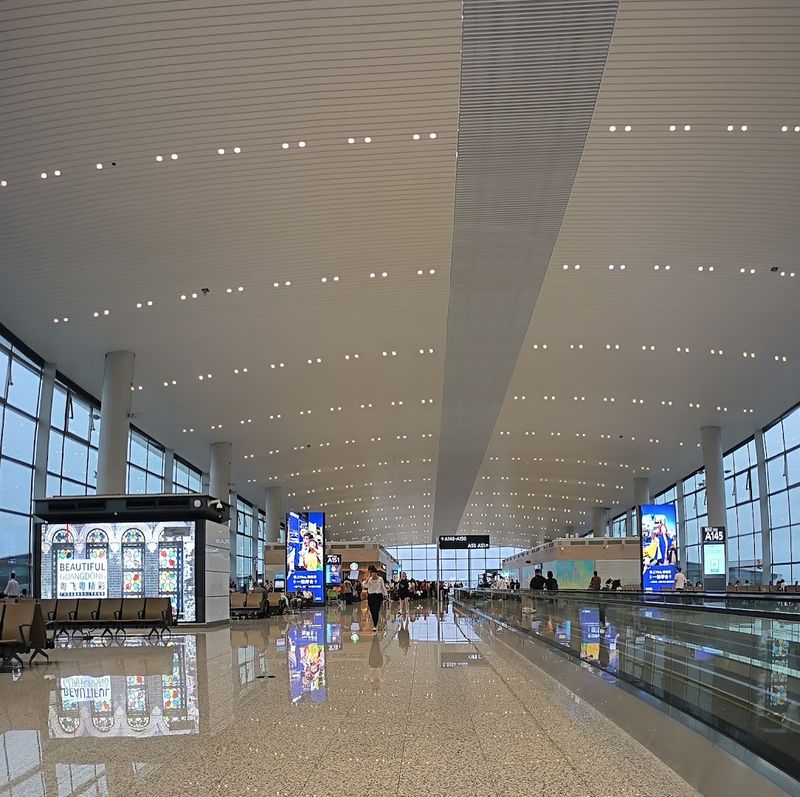
Southern China’s aviation powerhouse welcomed more than 83 million travelers in 2025, and Guangzhou Baiyun continues to grow at a pace that reflects China’s insatiable appetite for air travel. The airport serves as the main hub for China Southern Airlines, the country’s largest carrier by fleet size, which operates an enormous domestic network alongside international routes across Asia, Europe, and beyond.
Guangzhou itself is one of China’s most important industrial and trade cities, which drives significant business travel demand through the airport. The Canton Fair, one of the world’s largest trade expos, brings hundreds of thousands of international business visitors to the city twice a year, creating predictable spikes in passenger traffic that the airport handles smoothly.
Baiyun recently opened a brand-new second terminal building, dramatically increasing its capacity to handle future growth. The new terminal features wide open spaces, natural light flooding through massive glass panels, and a seamless baggage handling system designed to reduce wait times.
Guangzhou’s airport also benefits from excellent rail connections to the city center and high-speed rail links to nearby Shenzhen and Hong Kong. As China’s Pearl River Delta region continues to develop economically, Baiyun’s passenger numbers are expected to keep climbing steadily year after year.
Denver International Airport (DEN) – Colorado, USA
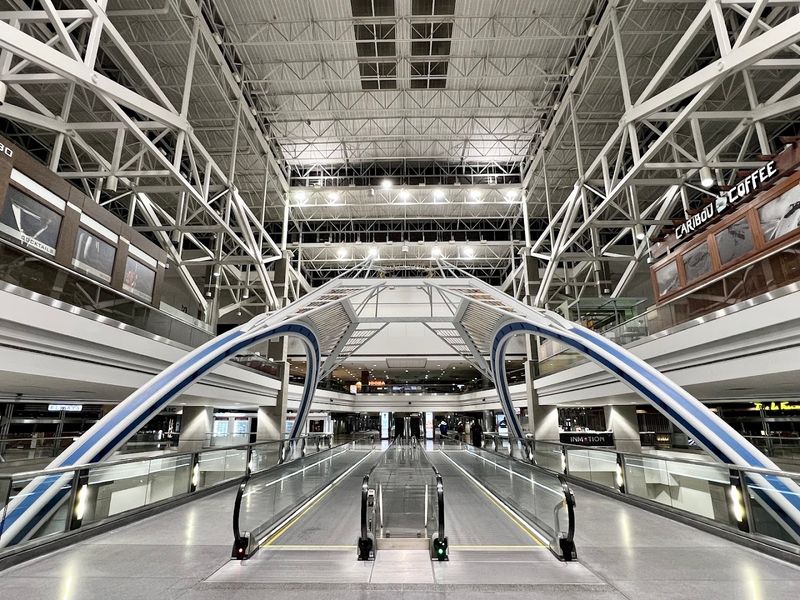
That unmistakable white tent-shaped roof rising from the Colorado plains is one of the most recognizable airport silhouettes in the entire world. Denver International Airport handled over 82 million passengers in 2025, making it one of America’s busiest domestic hubs and a major connecting point for travelers heading to mountain destinations across the western United States.
DEN is the largest airport in the United States by land area, covering an astonishing 53 square miles. That size was intentional from the start, designed to allow future expansion without displacing neighboring communities.
United Airlines runs its second-largest hub here, offering connections across the country and to international destinations in Europe, Mexico, and beyond.
The airport has developed a surprisingly vibrant arts scene inside its terminals. Over 40 permanent art installations are scattered throughout the building, ranging from large-scale murals to quirky sculptures, including the famous blue mustang statue outside the main entrance that locals have affectionately nicknamed Blucifer.
Denver sits at 5,280 feet above sea level, meaning planes take off at higher speeds here than at most airports due to the thinner air. First-time visitors sometimes notice the slightly longer runway rolls before liftoff, which is a small but fascinating quirk of high-altitude aviation.
Indira Gandhi International Airport (DEL) – Delhi, India
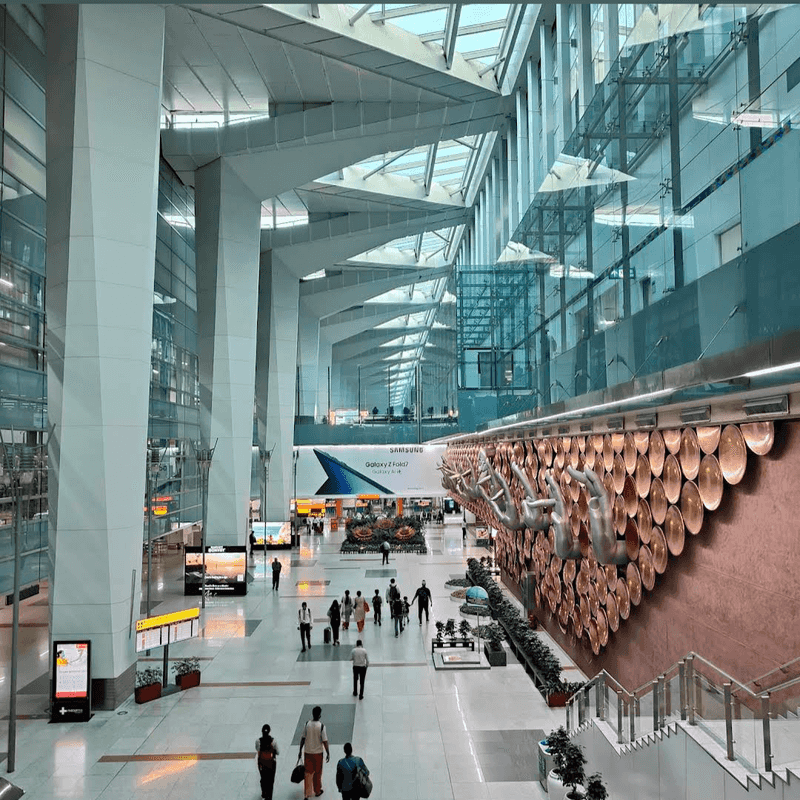
India’s aviation market is one of the fastest-growing in the world, and Delhi’s Indira Gandhi International Airport sits right at the center of that explosive expansion. More than 78 million passengers traveled through DEL in 2025, a number that reflects both India’s enormous population and its rapidly growing middle class with money and desire to travel.
Analysts predict Delhi could crack the global top five within the next decade.
Terminal 3 is a genuine showpiece of modern airport architecture. Opened in 2010 ahead of the Commonwealth Games, it features a stunning interior with high ceilings, natural light, and an impressive collection of Indian art and cultural displays.
The terminal was designed to handle 34 million passengers annually on its own, though actual demand has long since surpassed that original projection.
IndiGo, India’s largest low-cost carrier, operates heavily out of Delhi, driving enormous domestic traffic across the subcontinent. International connections link the airport to the Middle East, Southeast Asia, Europe, and North America.
The airport has been investing heavily in infrastructure upgrades, including a new runway and expanded terminal capacity. Delhi also plans to develop a second airport in the coming years to relieve pressure on DEL as passenger demand continues its remarkable upward trajectory.
Los Angeles International Airport (LAX) – California, USA
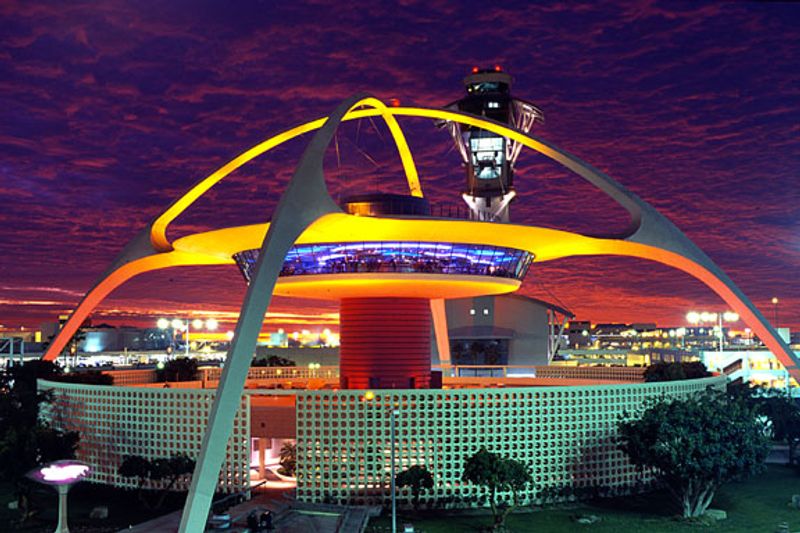
Sunsets over the Pacific look spectacular from the LAX tarmac, and millions of travelers get a glimpse of that view every year. Los Angeles International Airport remains one of the premier international gateways in the Western Hemisphere, connecting Southern California to Asia, Latin America, Europe, and the Pacific Islands with an impressive range of daily flights.
LAX consistently ranks among the top fifteen busiest airports globally despite years of ongoing construction and renovation work.
The airport serves as a major hub for both United Airlines and American Airlines while also being a significant base for Alaska Airlines and numerous international carriers. Its Pacific Rim connections are particularly strong, with multiple daily flights to Tokyo, Seoul, Sydney, Beijing, and other major Asian cities.
For travelers heading across the Pacific, LAX is often the logical starting point.
The iconic Theme Building at the center of the airport, which looks like a flying saucer on stilts, was built in 1961 and remains one of the most photographed airport structures in the world. A multi-billion dollar modernization program called LAX Transformation is currently reshaping the entire airport campus, adding an automated people mover train, a consolidated rental car facility, and updated terminal interiors.
When complete, the upgraded LAX promises to match its world-class passenger volume with a genuinely world-class experience.
Paris Charles de Gaulle Airport (CDG) – France
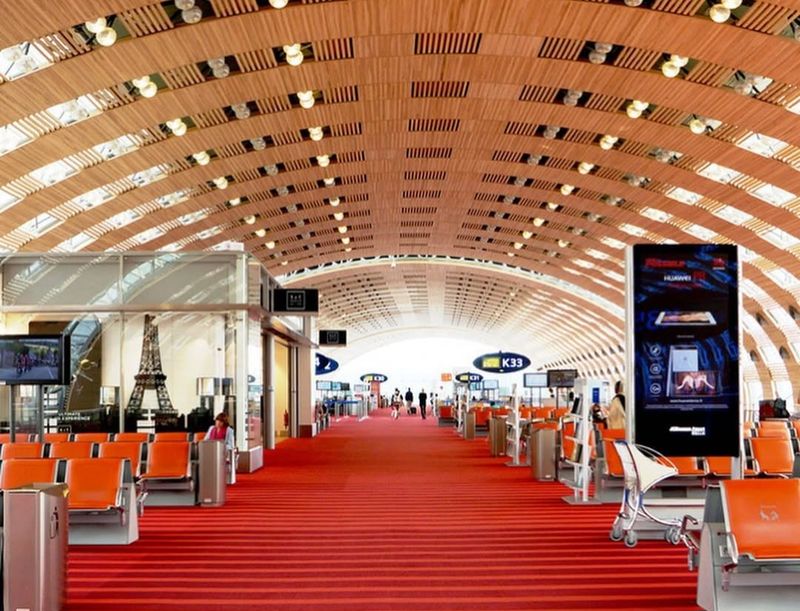
There is something unmistakably French about Charles de Gaulle Airport, from the croissants in the terminal cafes to the sleek architectural curves of Terminal 2E. CDG is the largest airport in France and one of the most important long-haul hubs in all of Europe, welcoming tens of millions of international passengers every year.
Air France operates its global hub here, connecting Paris to destinations on every continent with a network that rivals any airline in the world.
The airport is named after Charles de Gaulle, the legendary French general and statesman who led France through some of its most turbulent historical moments. It opened in 1974 and has expanded steadily ever since, adding terminals and runways to keep pace with surging demand.
Today it covers an enormous area northeast of Paris and is connected to the city center by the RER B commuter rail line, making it relatively accessible despite its size.
CDG is particularly popular as a transit hub for travelers connecting between North America and Africa, a route where Air France has historically dominated. The airport also serves as a key entry point for the millions of tourists who visit Paris each year, making it one of the most culturally significant arrival points in global travel.
Terminal 2F is beloved by frequent flyers for its efficient layout and quality dining options.
Amsterdam Airport Schiphol (AMS) – Netherlands
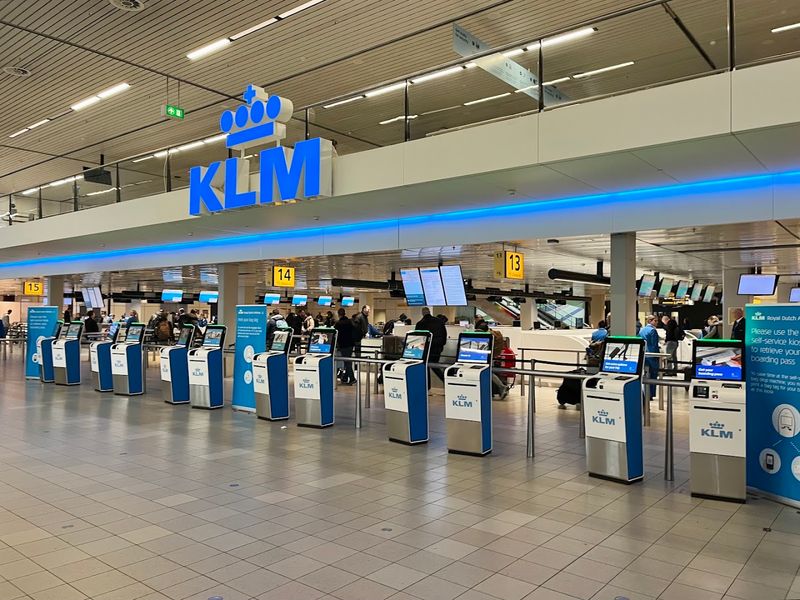
Schiphol is the airport that quietly gets everything right. Amsterdam’s main airport consistently earns top marks for efficiency, cleanliness, and passenger experience, all while handling an enormous volume of travelers connecting between Europe and the rest of the world.
KLM Royal Dutch Airlines calls Schiphol home, operating a sprawling global network from this single-terminal airport that stretches across multiple piers.
One of Schiphol’s most charming quirks is that it operates as a single integrated terminal rather than multiple separate buildings. Passengers can walk between all departure gates without ever leaving the main building, which makes connections remarkably straightforward compared to airports where travelers must take trains or buses between terminals.
The design keeps the airport feeling manageable even when it is handling millions of passengers.
Schiphol sits below sea level, which is a fascinating geographical detail most travelers never think about while racing to their gate. The airport has a branch of the Rijksmuseum inside its secure departure area, allowing travelers to view genuine Dutch master paintings between flights, a touch of culture that very few airports anywhere can match.
Schiphol also has an impressive casino, multiple hotel connections, and direct rail links to Amsterdam Centraal station. For a country as small as the Netherlands, Schiphol punches extraordinarily far above its weight in global aviation.
Singapore Changi Airport (SIN) – Singapore

Asking travelers to name the world’s best airport almost always produces the same answer: Changi. Singapore’s crown jewel of aviation served nearly 70 million passengers in 2025 while simultaneously being voted the world’s best airport for the twelfth time by Skytrax, the aviation industry’s most respected passenger satisfaction survey.
The numbers and the reputation reinforce each other perfectly.
The Jewel Changi Airport complex, which opened in 2019, took things to a completely new level. A 40-meter indoor waterfall called the Rain Vortex cascades down from a domed glass roof surrounded by lush tropical gardens, walking trails, and hundreds of shops and restaurants.
It is less an airport terminal and more a destination in its own right, and plenty of Singaporeans visit just to spend the day there even without a flight to catch.
Beyond the spectacle, Changi runs with exceptional operational efficiency. Baggage delivery times are among the fastest in the world, immigration queues move quickly, and the airport’s free transit hotel and entertainment options make long layovers genuinely pleasant.
Singapore Airlines and Scoot use Changi as their primary hub, providing strong connections across Asia, Australia, and beyond. Changi proves conclusively that an airport does not have to sacrifice comfort or beauty to handle massive passenger volumes at the highest possible standard.
Share this story