Some of the most jaw-dropping rooms in America seat fewer people than a school cafeteria. Big cathedrals get most of the attention, but smaller chapels often pack in far more surprises per square foot.
One has a stream running down the aisle. Another has a staircase that spins twice with no obvious means of support.
A third was shipped across an ocean, stone by stone, and rebuilt on a college campus. The designers behind these spaces played with glass, timber, brick, tile, and even water to make visitors stop in the doorway and look up.
Some sit deep in the woods, while others hide in plain sight on busy university grounds. This list covers fifteen of them, spread across the country, with real numbers, quirky history, and practical tips for anyone planning a visit.
You will learn which chapel has a quarter million pieces of stained glass, which one uses its own cross as a support beam, and why a few tour guides happily hand out binoculars. Bring curiosity and comfortable shoes, because many of these places reward slow looking.
Keep reading, and your next road trip might gain a few very unexpected stops.
1. Thorncrown Chapel, Eureka Springs, Arkansas
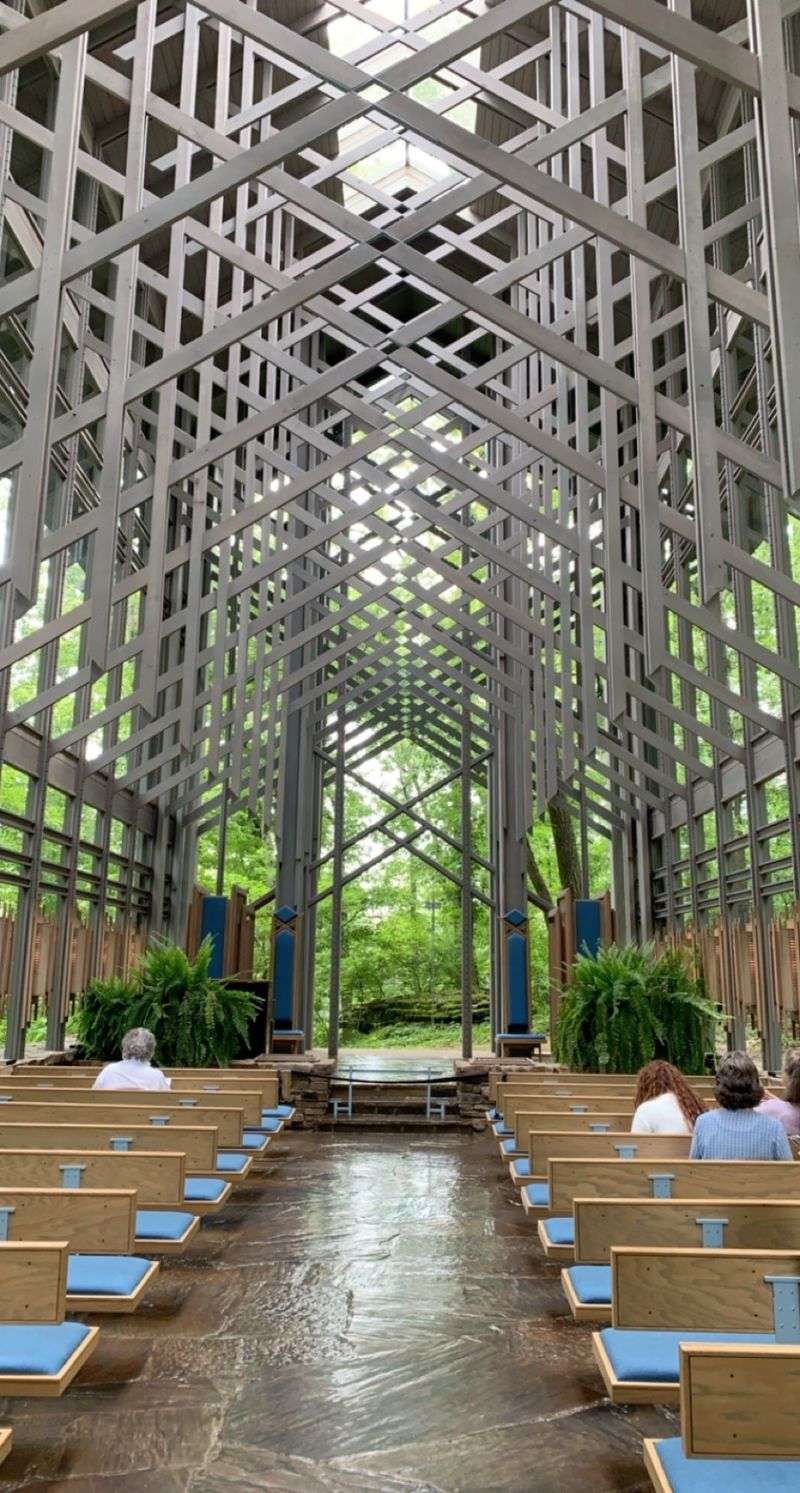
Count the windows and you will be at it for a while, since there are 425 of them. Architect E.
Fay Jones designed this 48-foot-tall chapel in the Ozark woods so the forest would serve as its walls.
More than 6,000 square feet of glass surround the pews. The wooden framework repeats in crisscross patterns overhead, giving the space a tall, cathedral-style rhythm without blocking the trees.
Jones built it with materials small enough to carry along a narrow path, so heavy machinery would not damage the woods. That choice kept the setting nearly untouched.
The chapel opened in 1980 and later earned major recognition from the American Institute of Architects. Today it ranks among the most admired American buildings of its era.
Visit on a weekday morning for smaller crowds. Each season changes the view outside, so a return trip in autumn or winter shows you a whole new chapel.
2. Mildred B. Cooper Memorial Chapel, Bella Vista, Arkansas
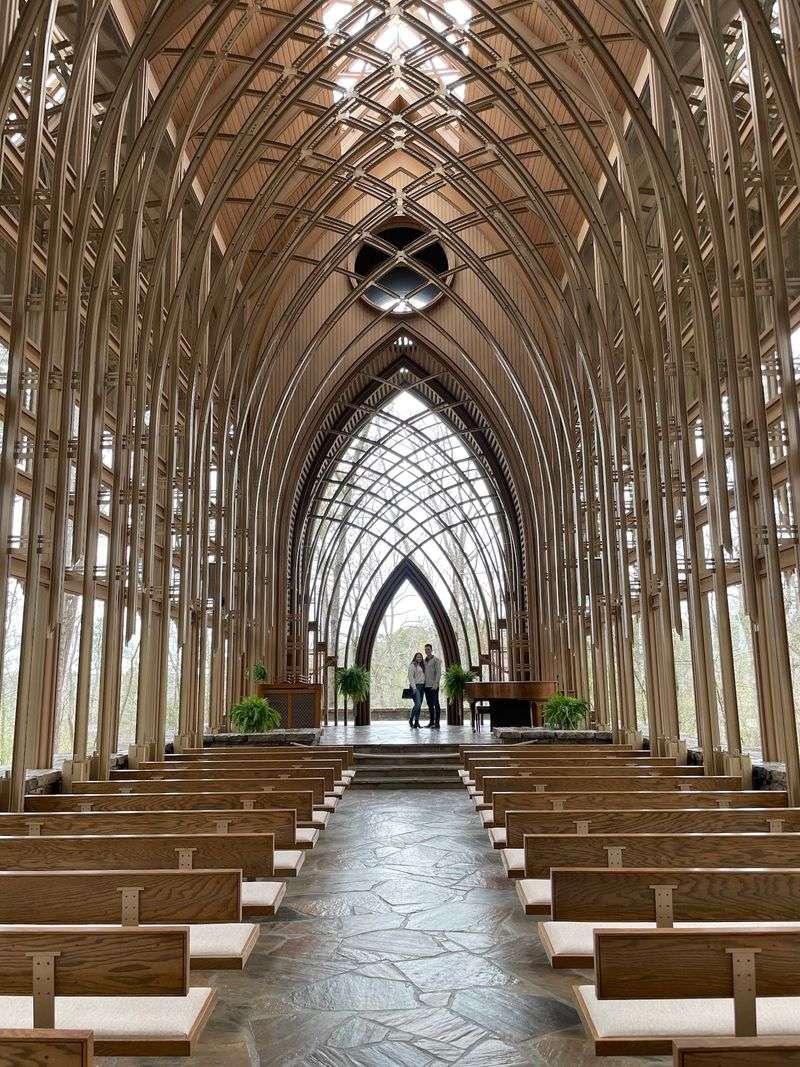
Gothic cathedrals in Europe took centuries to build, but Arkansas managed a woodland version in a fraction of the time. E.
Fay Jones and Maurice Jennings designed this chapel around 15 main pointed arches that rise roughly 50 feet.
About 31 tons of steel support the structure. More than 4,400 square feet of glass wrap the sanctuary, so the trees outside fill almost every view.
Native limestone and flagstone cover the floor, tying the room to the local landscape. On sunny days, leaf shadows travel slowly across the stones.
The chapel sits near Lake Norwood and is a favorite spot for weddings. It is also air-conditioned, which counts as a small miracle during an Arkansas summer.
Check the schedule before driving out, since private events can close the doors. Free public visiting hours are common, but planning ahead saves a wasted trip.
3. Chapel of the Holy Cross, Sedona, Arizona
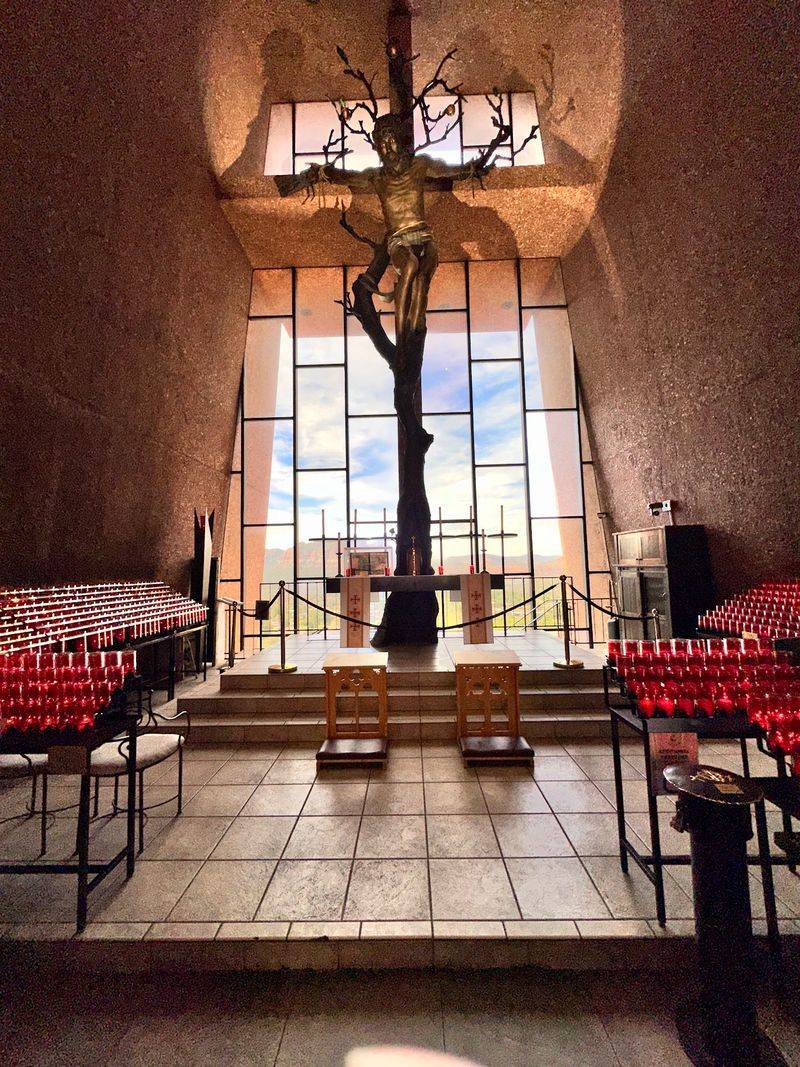
Here is a cross that holds up more than faith. The giant cross in the chapel’s front wall also works as a major structural support for the building.
Completed in 1956, the chapel rises directly out of Sedona’s red-rock buttes. Artist Marguerite Brunswig Staude came up with the idea, and architects August K.
Strotz and Richard Hein helped bring it to life.
Inside, the decor stays simple on purpose. Plain pews and a modest altar keep your attention on the cross and the dramatic cliffs beyond the tall window.
The space holds only about 150 people, yet the views make it seem much bigger. In 1957, the design earned an Award of Honor from the American Institute of Architects.
Parking is limited and fills fast. Arrive early, and expect a short uphill walk from the lot to the entrance.
4. Loretto Chapel, Santa Fe, New Mexico
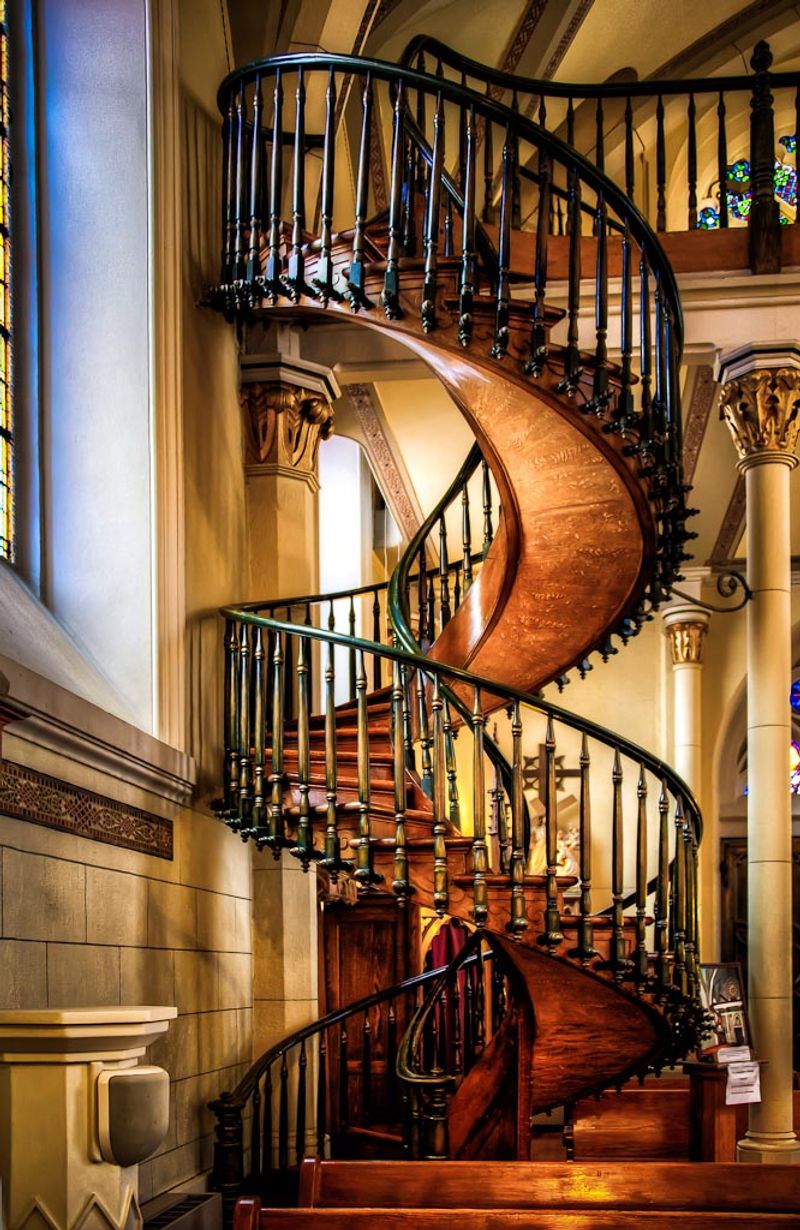
One staircase has kept people talking in Santa Fe for well over a century. Inside this Gothic-style chapel, a wooden spiral staircase makes two complete 360-degree turns on its way up to the choir loft.
It has no obvious central pole holding it up. That detail fueled plenty of legends about the mystery carpenter who built it.
The stories are fun, but the woodworking alone deserves the spotlight. The precise curves show skill that would impress any modern builder.
Look beyond the stairs too. Original stained-glass windows and an ornate altar add color and detail to the compact room.
The chapel now operates as a private museum, so a small admission fee applies. Visitors can no longer climb the famous staircase, but a close look from the floor still delivers.
Morning visits usually mean more space to admire it.
5. St. Joan of Arc Chapel, Milwaukee, Wisconsin
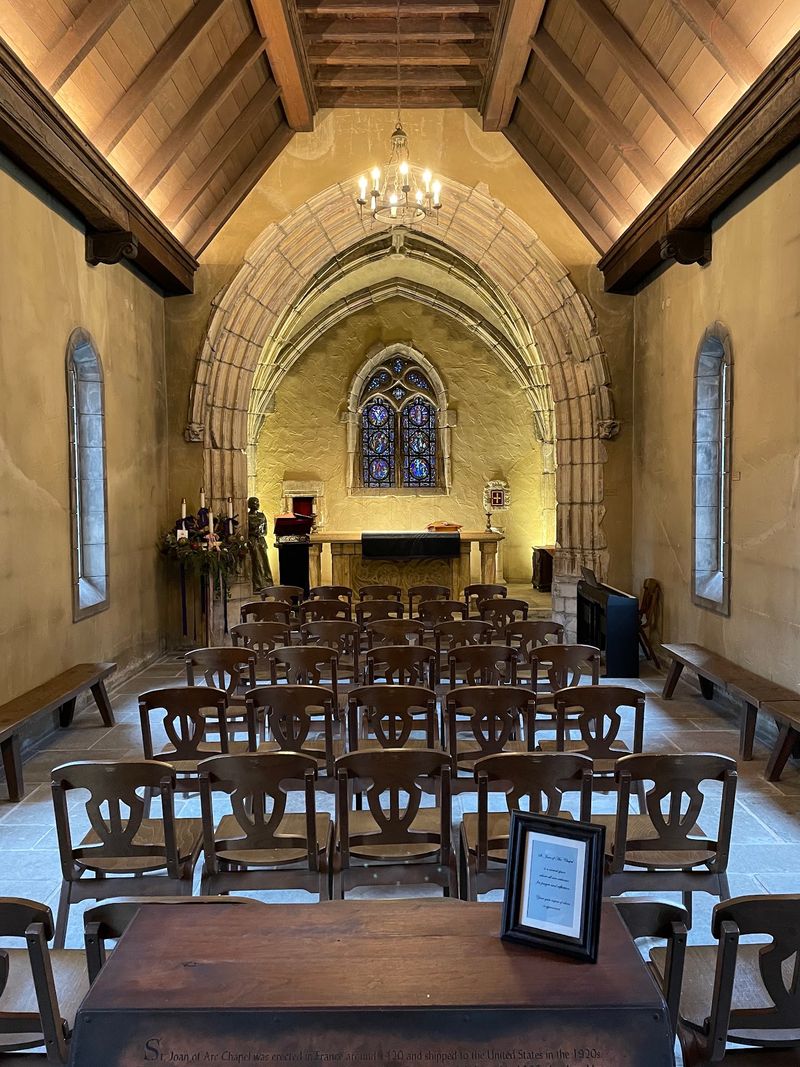
Few buildings on any American campus are older than the country itself. This small stone chapel was built in medieval France, then moved and reconstructed in Milwaukee.
It now stands on Marquette University’s campus, surrounded by much newer buildings. The contrast makes the chapel stand out right away.
Inside, thick walls, Gothic details, and historic religious art give the room an Old World character. The scale stays intimate, so every carving and window is easy to study up close.
One stone near the altar carries a famous tradition. Joan of Arc is said to have prayed before it, and it supposedly remains colder than the stones around it.
The chapel still hosts regular services and campus events. Check Marquette’s website for visiting hours, and consider a guided tour to learn more about the long journey from France to Wisconsin.
6. Holy Family Shrine, Gretna, Nebraska
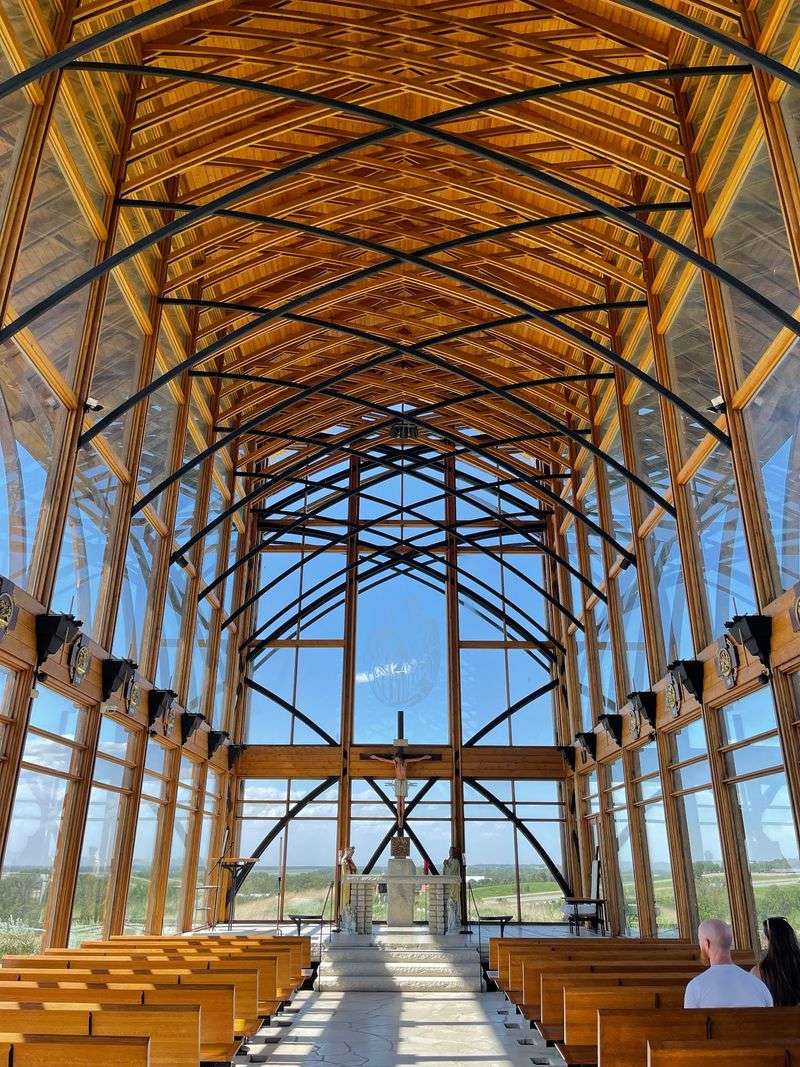
Most churches ask you to leave wet shoes at the door, yet this one brings the water inside. A stream enters the Holy Family Shrine and splits along both sides of the aisle.
Small limestone bridges lead to the pews. The water finally reaches a pool beneath the altar, a detail meant to bring baptism to mind.
Glass walls surround the sanctuary, framed by wooden trusses about 45 feet high. Their shape is meant to recall stalks of wheat on the Nebraska plains.
Above the altar, an etched image of the Holy Family appears in the glass. From inside, the figures seem to look down from the sky.
The shrine sits right beside Interstate 80, which makes it an easy stop on a cross-country drive. A visitor center with a gift shop stands nearby.
7. Anthony Chapel, Hot Springs, Arkansas
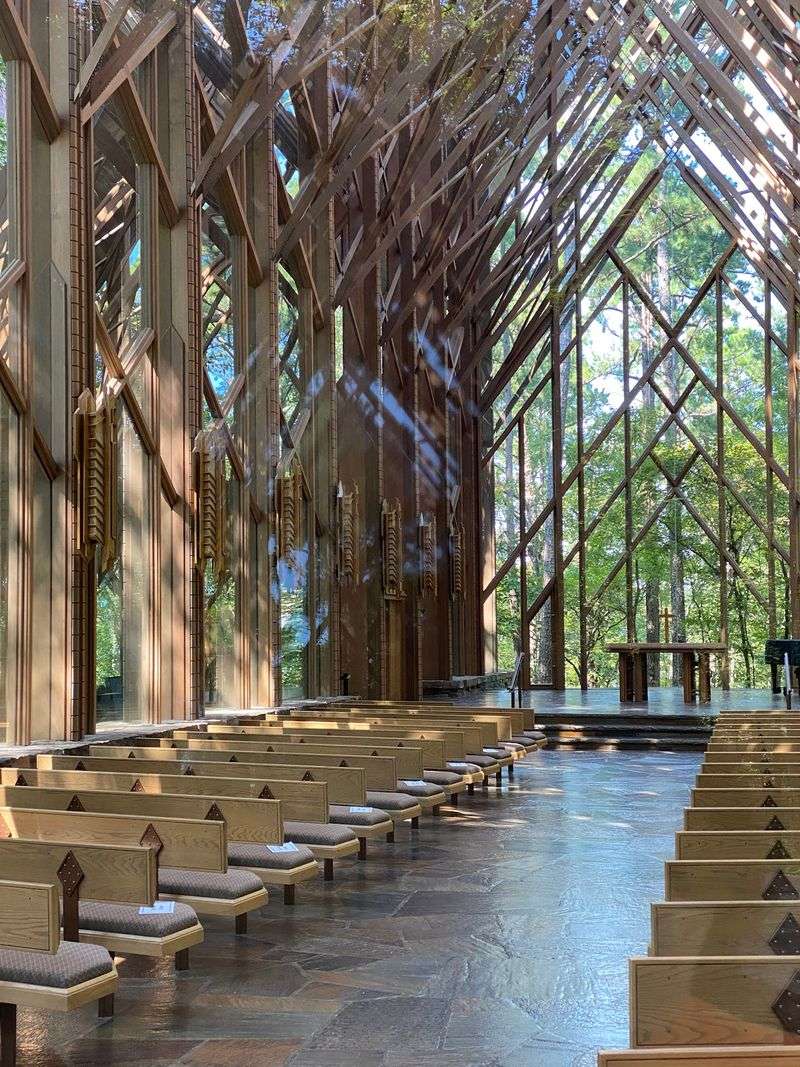
Arkansas clearly has a habit of building chapels out of glass and timber, and this one might be the tallest of the bunch. Anthony Chapel stands inside Garvan Woodland Gardens, part of the University of Arkansas system.
Massive yellow-pine columns climb toward a 57-foot ceiling. Floor-to-ceiling windows and skylights pull the surrounding woodland into the room from nearly every angle.
The best seat in the house is actually no seat at all. Stand in the center aisle and look straight up to see the overhead wooden framework at its most impressive.
The chapel is a popular wedding venue, so weekends can get busy. A separate bell tower stands nearby and is worth a short detour.
Entry to the chapel comes with admission to the gardens. Plan extra time for the trails, because the grounds hold far more than one striking building.
8. Chapel of St. Basil, Houston, Texas
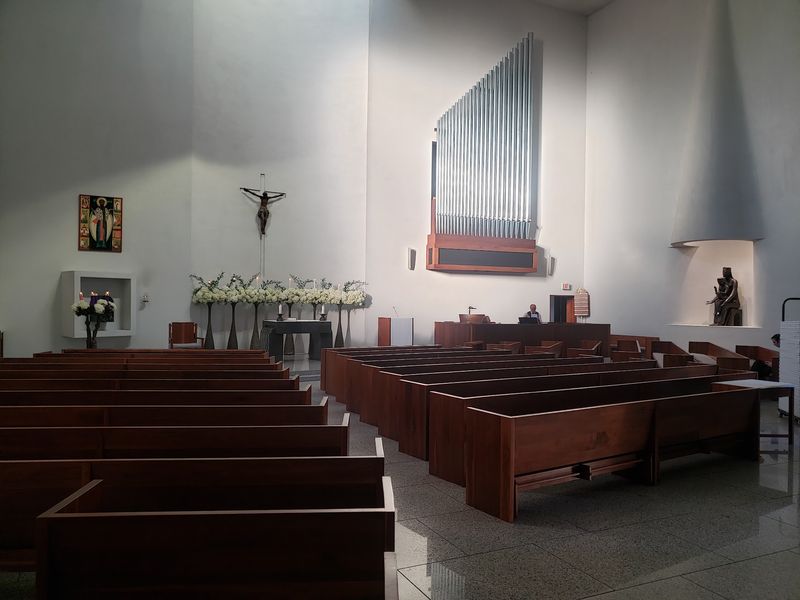
Geometry class finally pays off in Houston. Architect Philip Johnson built this 1997 chapel at the University of St. Thomas from three basic shapes: a cube, a dome, and a slicing plane.
That plane is made of black granite and cuts right through the white building. It is hard to miss and impossible to forget.
Inside, decoration stays at a minimum. A skylight above lights the altar, while a tall, uneven glass cross splits one wall.
The layout breaks a few rules too. The entrance faces the tabernacle rather than the altar, and the altar sits slightly off-center.
Many visitors describe the room as a sculpture you can walk inside. Plan a quick stop at the nearby Menil Collection and Rothko Chapel, since all three make a perfect afternoon of art and architecture.
9. Princeton University Chapel, Princeton, New Jersey
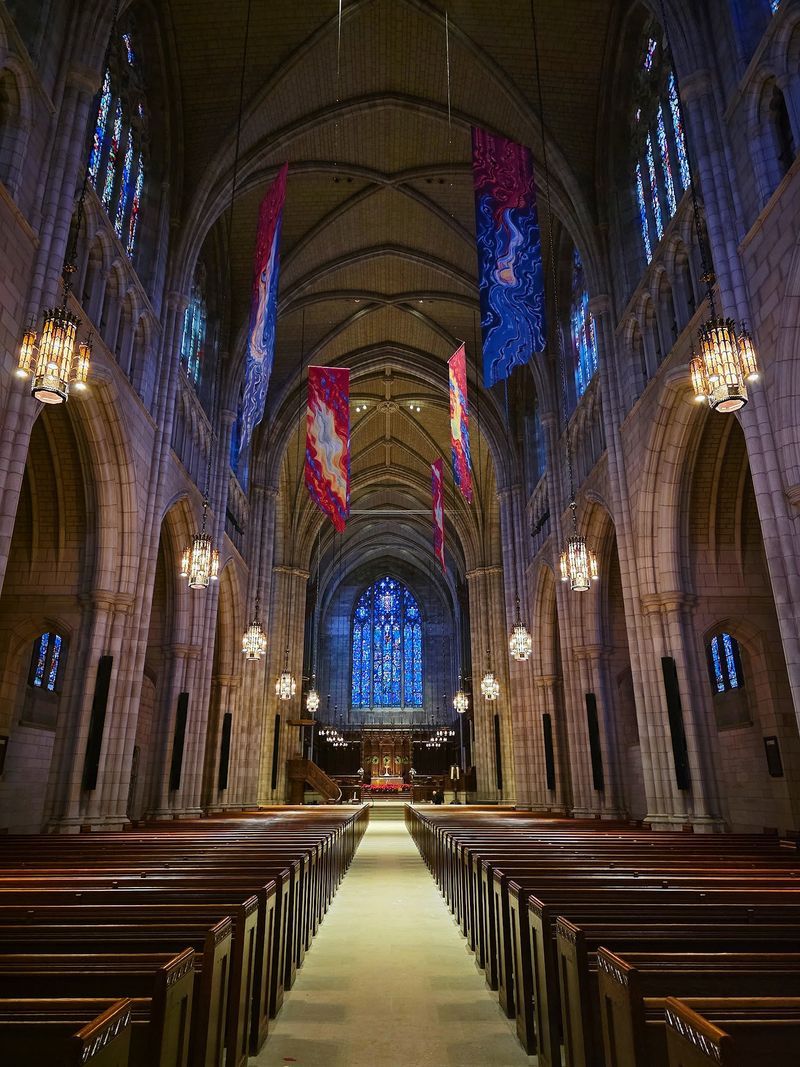
Binoculars are not standard chapel gear, but on some Princeton tours, they are welcome. The detail overhead is simply too much for the naked eye.
Designed by Ralph Adams Cram and finished in 1928, the chapel brings English Gothic style to a New Jersey campus. Its nave rises 74 feet.
Stained glass, carved wood, and stone masonry fill nearly every surface. The imagery mixes biblical figures with philosophers, poets, and scholars.
Some of the history hides in plain sight. The carved pews were made from wood originally set aside for Civil War gun carriages, and the pulpit dates to 16th-century France.
The chapel is generally open to visitors when no service is happening. Spend a few minutes reading the windows, since many tell full stories from left to right.
10. St. Paul’s Chapel, New York City, New York
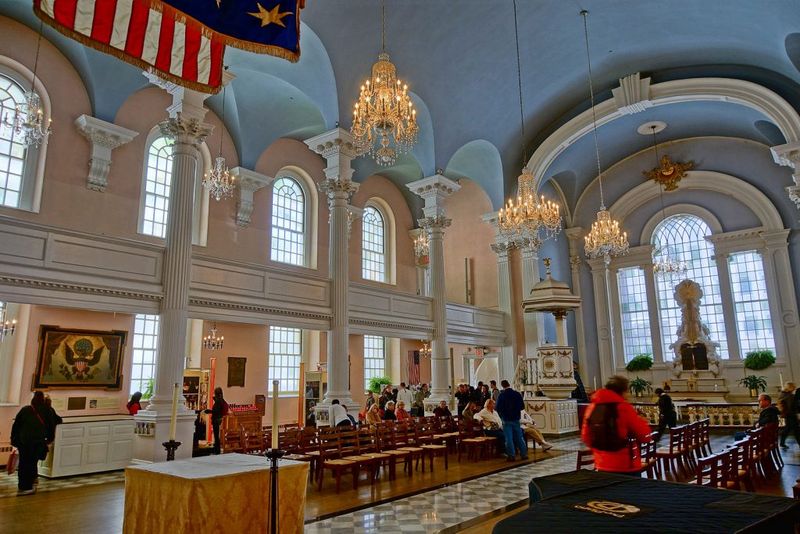
Columbia students can walk past this chapel daily without guessing what is inside. Built between 1904 and 1907, it was designed by the firm Howells and Stokes in an Italian Renaissance style.
The floor plan forms a Greek cross. Above the center rises a dome with sixteen arched stained-glass windows.
The real headliner is the tile. Guastavino tilework covers the dome in neat, repeating patterns, paired with salmon-colored brick.
Nearly all the color in the room comes from these building materials rather than paint. That approach was unusual for churches of the time.
A major restoration from 2017 to 2019 cleaned and repaired the tile, windows, and parts of the dome. The chapel also hosts concerts, which offer a great excuse to see the interior during an evening visit.
11. MIT Chapel, Cambridge, Massachusetts
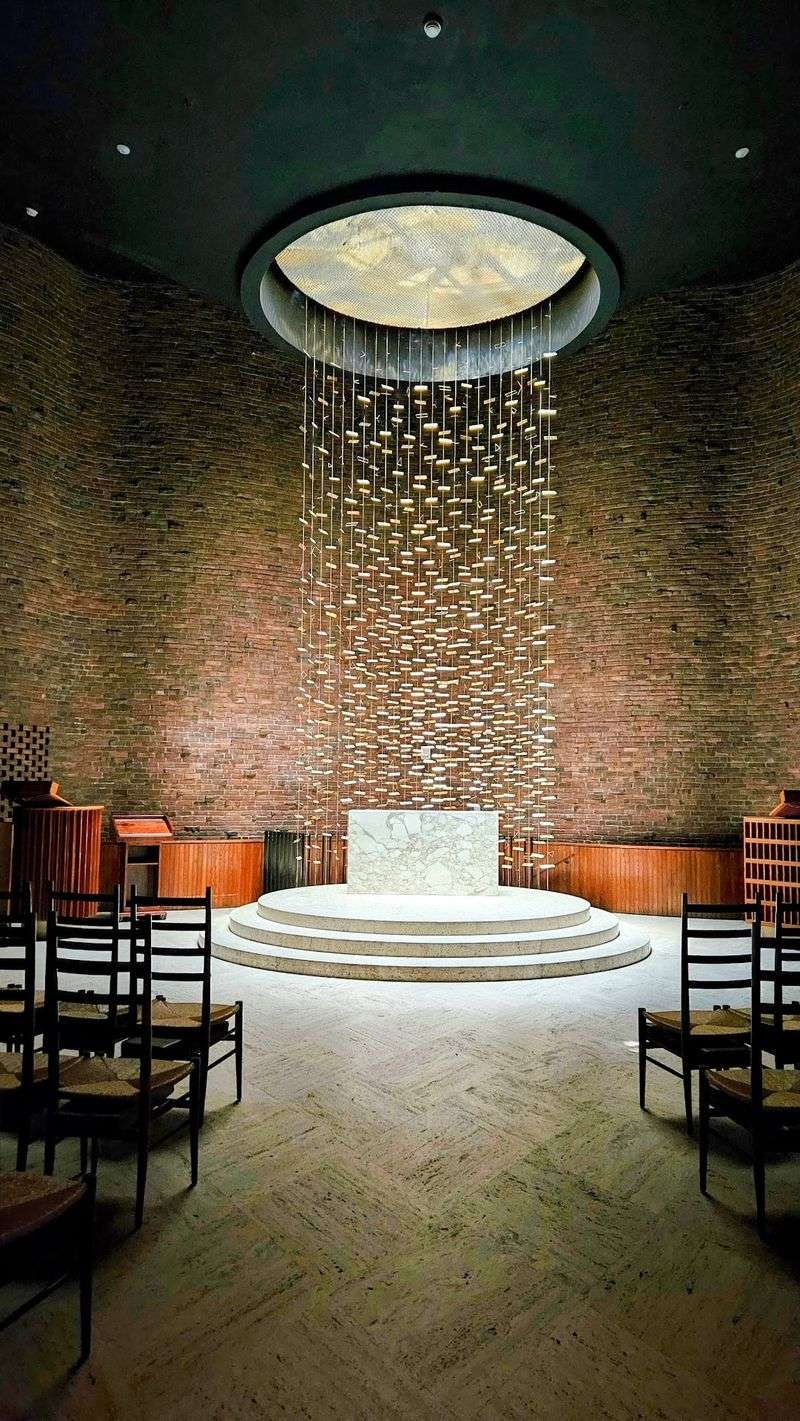
Judge this chapel by its cover and you will miss the whole point. From the outside, Eero Saarinen’s 1955 design looks like a plain brick cylinder with no windows.
Inside, the brick walls wave in and out around a round room. A single skylight above the marble altar provides the main light.
Hanging below that opening is a metal screen by sculptor Harry Bertoia. Hundreds of small metal pieces catch the daylight as it falls toward the altar.
A shallow moat surrounds the building. Low arches at the base of the walls let reflected light from the water reach the room.
The chapel is nondenominational and open to people of all backgrounds. It sits next to Kresge Auditorium, another Saarinen design, so architecture fans can see two buildings in one stop.
12. Madonna Della Strada Chapel, Chicago, Illinois
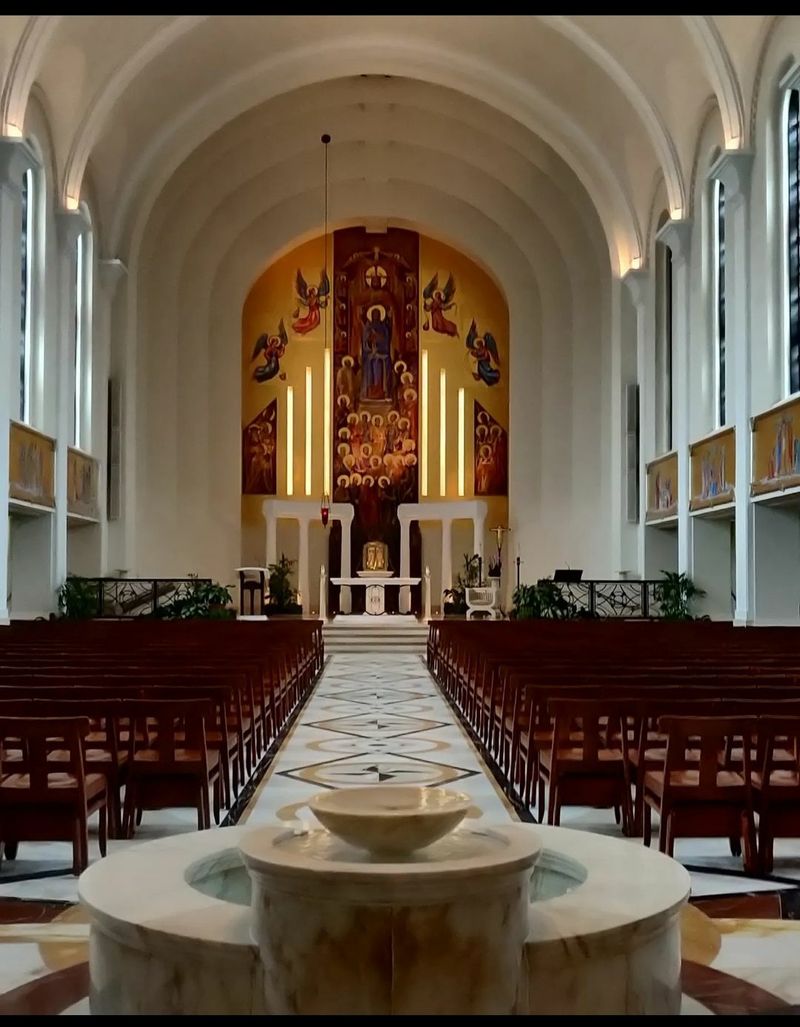
Art Deco usually shows up in skyscrapers and movie palaces, not chapels. Loyola University Chicago went another way in 1943 with this lakeside building designed by Andrew Rebori.
The chapel overlooks Lake Michigan on the university’s lakeshore campus. Its sleek lines set it apart from the many Gothic Revival chapels found at older American schools.
Behind the altar, a large fresco by Melville Steinfels shows Mary crowned as Queen of Heaven and Earth. Stained glass windows add more color along the walls.
Do not skip the side shrine. Blue, white, and gold mosaic surrounds an image of Madonna della Strada, Italian for Our Lady of the Way.
Italian marble floors, plasterwork, and decorative iron round out the design. Pair a visit with a walk along the lakefront path right outside.
13. Heinz Memorial Chapel, Pittsburgh, Pennsylvania
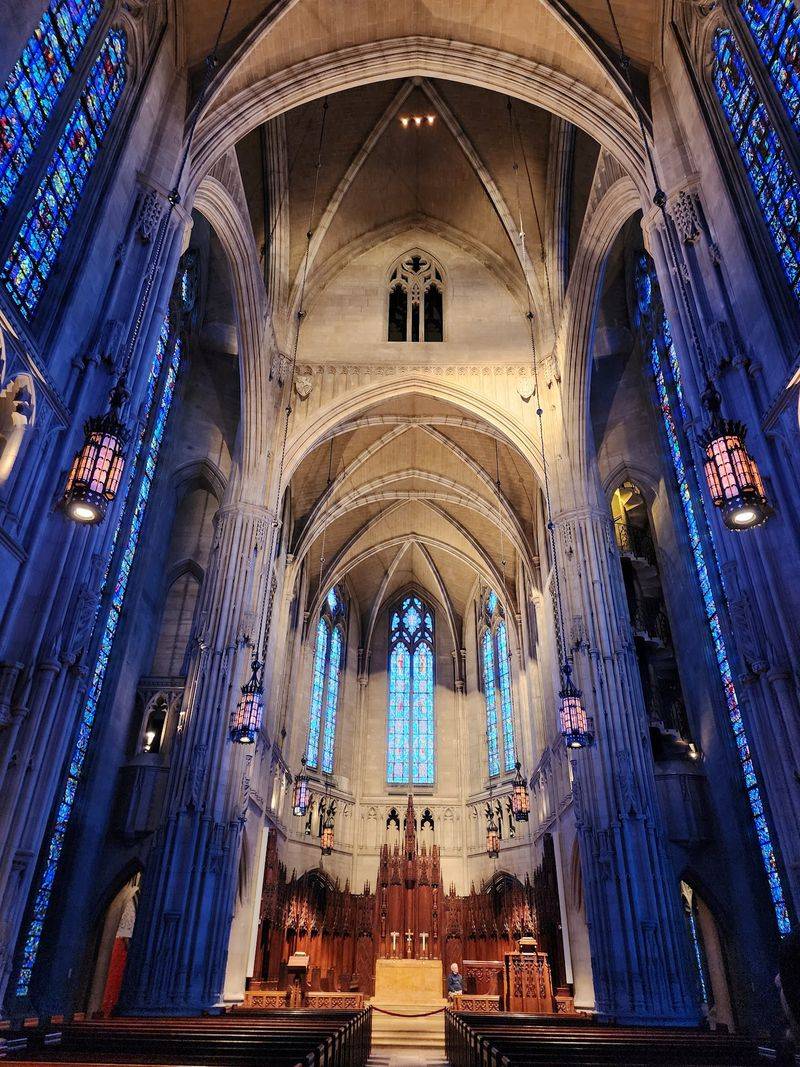
About 250,000 pieces of glass went into the 23 windows of this neo-Gothic chapel. Charles Connick designed them, and the result keeps visitors looking up for a long time.
Hundreds of figures appear in the glass. You can spot Isaac Newton, William Shakespeare, Abraham Lincoln, Joan of Arc, and Florence Nightingale.
The transept windows stand about 73 feet tall. They also feature equal numbers of women and men, a forward-thinking choice for the 1930s.
Stone vaulting, carved oak, and wrought iron fill in the rest of the room. Even the entrance doors are impressive, weighing around 800 pounds each.
The chapel stands on the University of Pittsburgh campus near the Cathedral of Learning. Free admission makes it easy to visit, so bring a phone with a good zoom to catch the tiny faces in the glass.
14. Duke University Chapel, Durham, North Carolina
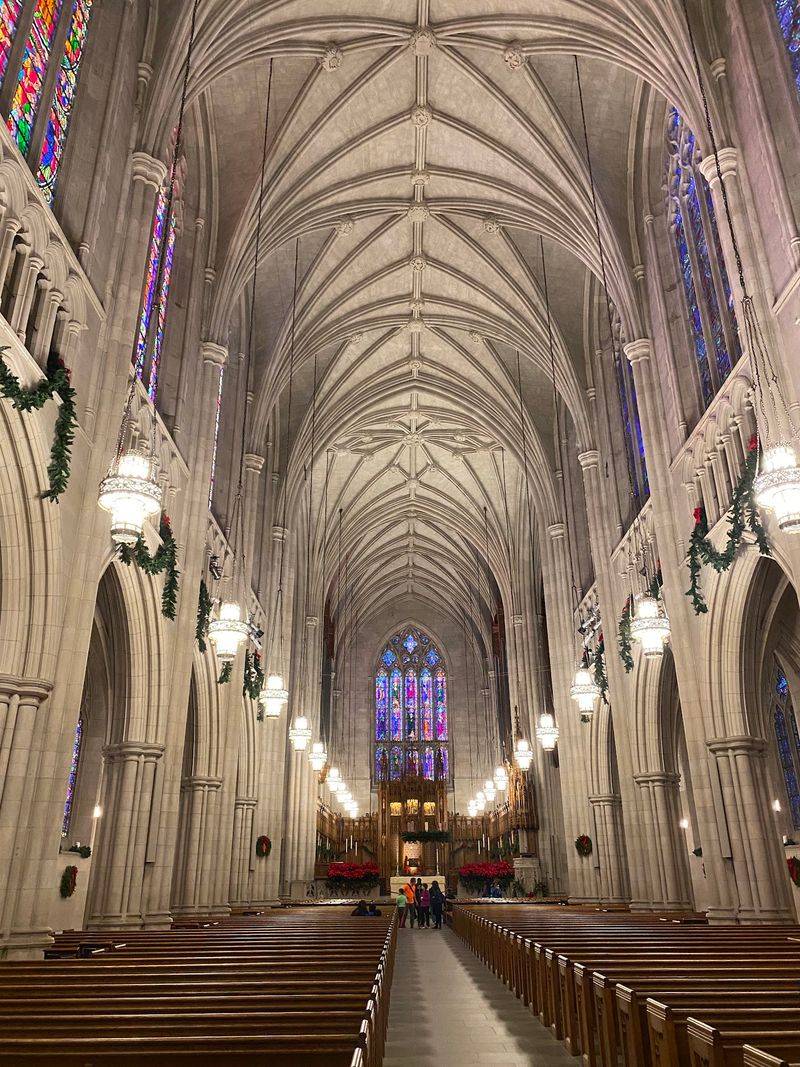
More than a million pieces of glass make up the 77 stained-glass windows here. Between 800 and 900 figures appear in them, and 301 are larger than life.
The upper windows show stories from the Hebrew Scriptures. The lower windows cover New Testament scenes, so the walls read almost like an illustrated book.
Architect Julian Abele designed the chapel in English Gothic style. Tall stone arches and long rows of carved seating stretch toward the altar.
The stone itself has a local story. Hillsborough bluestone from a nearby quarry appears in 17 different shades, paired with Indiana limestone and Guastavino tile.
Regular public hours make visiting simple. Services, organ recitals, and choir performances keep the chapel busy, so check the calendar if you want to hear one of its famous organs.
15. Our Lady of Victory Chapel, St. Paul, Minnesota
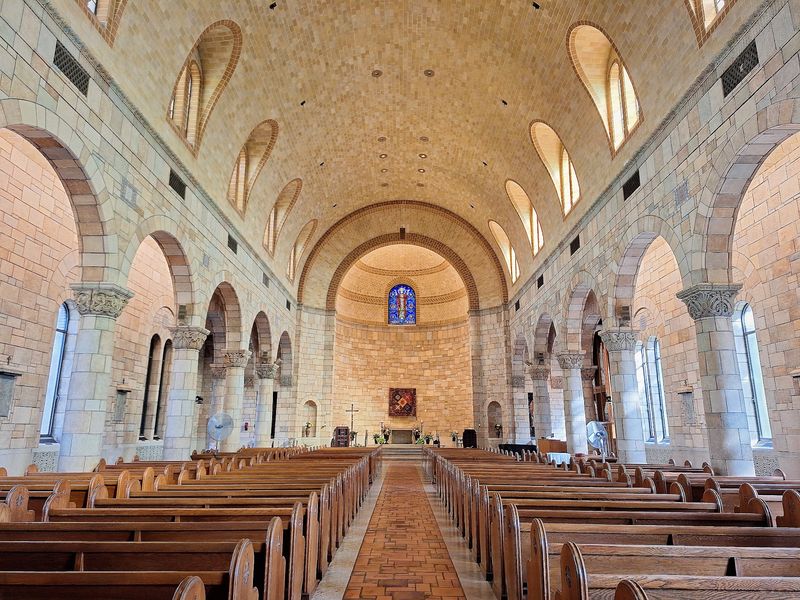
Saving a detail lover’s favorite for last feels right. This chapel at St. Catherine University packs symbols into nearly every surface.
Behind the altar, Christ the King appears in stained glass. It serves as the main focal point and draws attention to the front of the sanctuary.
Ornate tile designs run throughout the room. Many include symbols tied to Christianity, while others honor the humanities, such as learning and the arts.
That mix fits a university setting well. Students and visitors can spend a good while matching each symbol to its meaning.
A high barrel-vaulted ceiling gives all this decoration plenty of space. The room ends up feeling grand and detailed at the same time.
The chapel hosts services, concerts, and campus events. Call ahead or check the university website, then take your time studying the tiles one panel at a time.
Share this story