Imagine a giant temple that was not built from stacked stones but chiseled out of one huge hill. That is the Kailasa Temple at Ellora, made over 1,200 years ago by Rashtrakuta artists.
Its size, its stories in stone, and its clever planning still leave visitors speechless. Here are fifteen features that show why it is so special.
One Mountain, One Temple
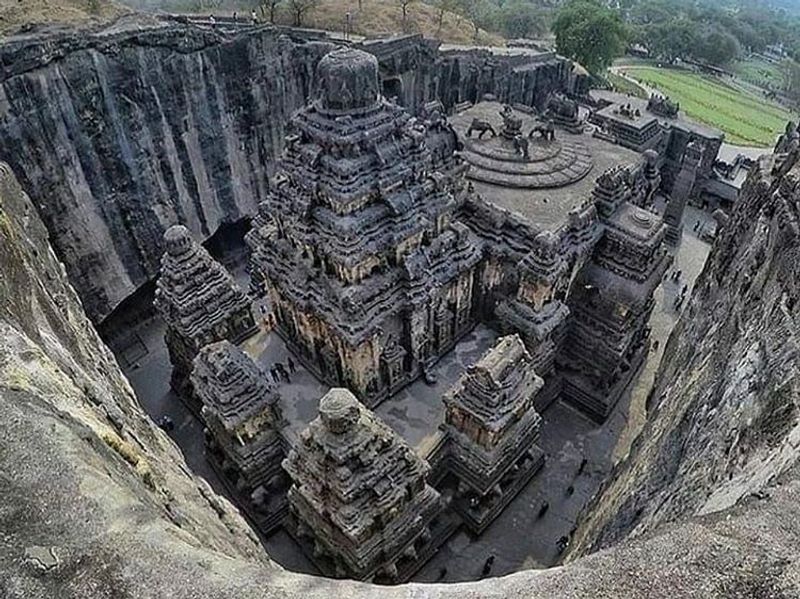
Most temples are built by piling stones on top of each other. Kailasa took the opposite road.
Artisans started with a solid basalt hill and removed everything that was not the temple.
No separate blocks were hauled in and stacked. The walls, towers, pillars and shrines all belong to the same rock as the ground beneath your feet.
Run your hand along a wall and you are touching the mountain itself.
Reviewers often say that photos cannot capture the feeling. You step through the entrance, look up, and your brain needs a moment to accept what it sees.
Many visitors simply stand still for a minute before they say a word.
The site sits in Verul, in the Ellora complex, and is known as Cave 16. It is widely described as the largest single monolithic excavation in the world.
That title is earned in every direction you look, from the courtyard floor to the tallest tower above.
Carved From the Top Down
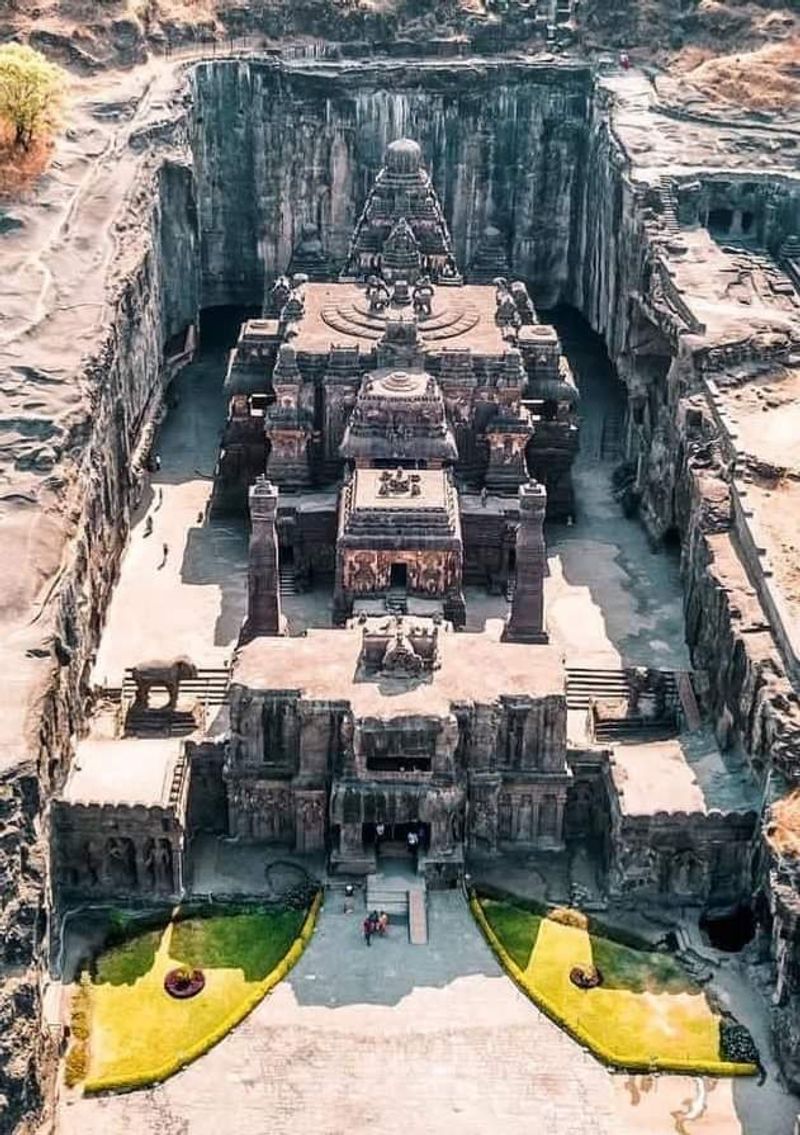
Here is a puzzle that would make any builder sweat. If you carve a mistake in stone, you cannot glue it back.
So the Rashtrakuta craftsmen began at the very top of the hill and worked downward.
Scaffolding was never needed for the upper parts, because they were finished first. Huge blocks were left untouched for a while, then shaped later into the porch, free-standing pillars and side shrines.
Every cut had to be planned in advance.
The main shrine ended up on what became the upper level, because the lower floor was cut out from beneath it. All of this came from careful thinking and steady hands, with no room for second tries.
Visitors suggest climbing the path on the right side of the complex. From there you can look down on the whole layout and see how the carving flowed, level by level, from the roof to the ground.
Around 400,000 Tons of Missing Rock
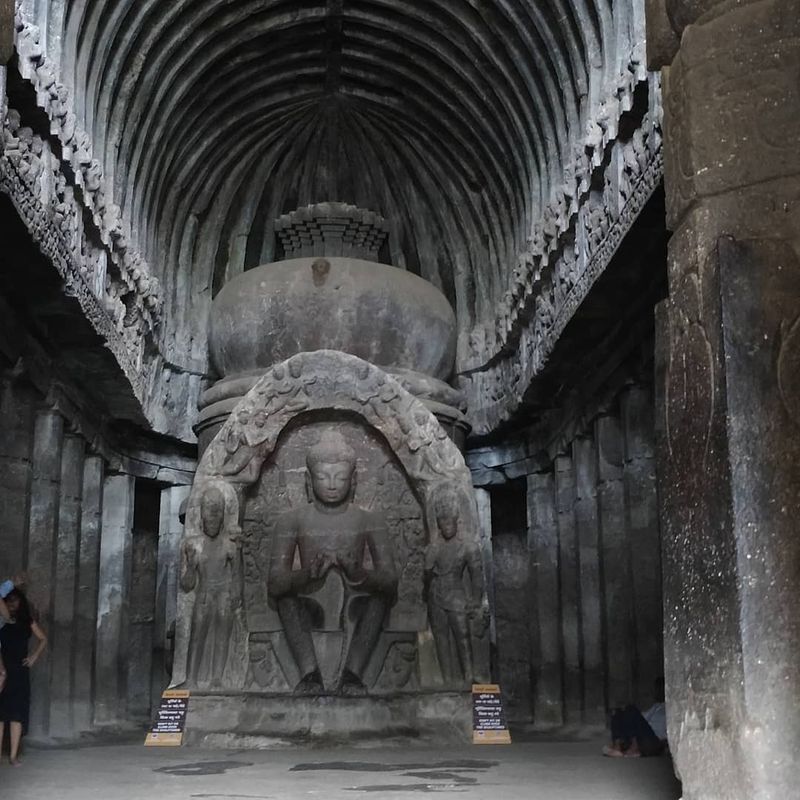
Try to picture a mountain of rubble the size of a small town. Estimates say roughly 400,000 tons of basalt were removed to reveal the temple.
Some sources quote about 85,000 cubic metres of rock.
That is a great deal of stone to shift with hammers and chisels. Hard Deccan basalt does not give up easily, so the work demanded patience across many seasons.
Folklore adds a fun twist. One story says the sage Parshuram ate the stones because throwing away pieces of Shiva’s temple felt disrespectful.
Whether you love the legend or prefer the facts, the numbers are hard to imagine.
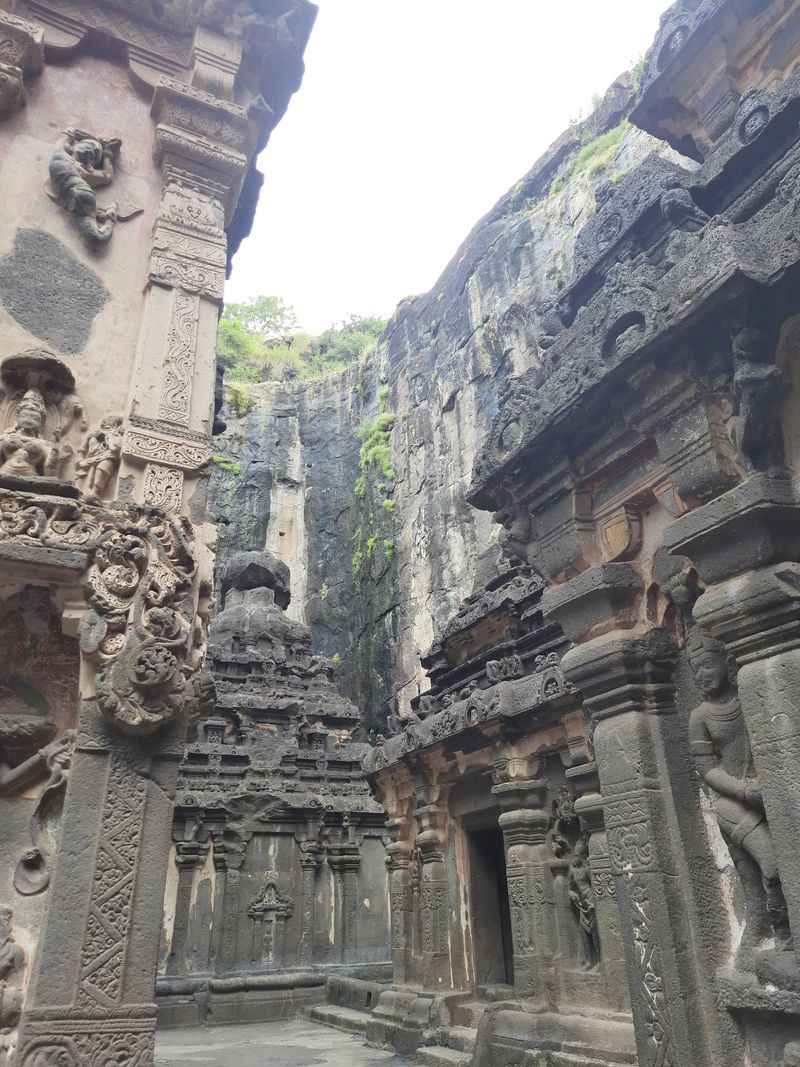
When you stand in the open courtyard, notice the tall rock walls around you. Those walls are the edge of the great pit that artisans dug out, and they hold a silent record of all that missing stone.
A Home for Lord Shiva on Mount Kailash
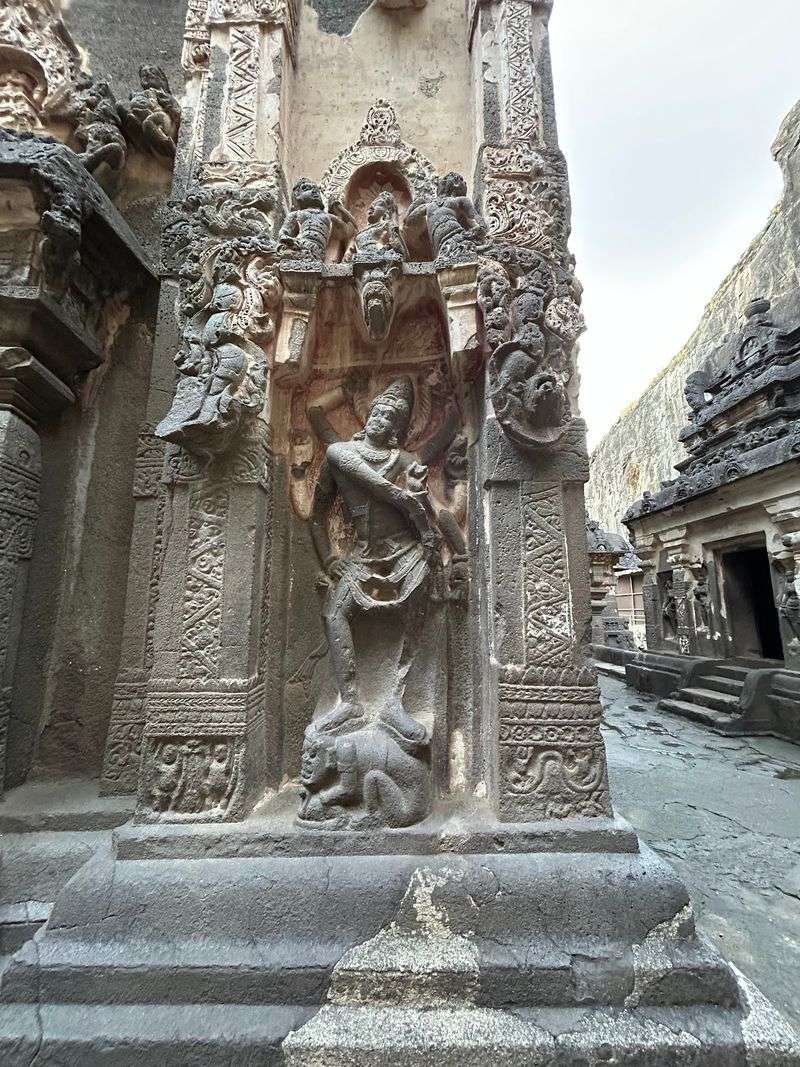
Some temples honor a god. This one recreates his home.
Kailasa is dedicated to Lord Shiva and designed to resemble Mount Kailash, the snowy peak where he is said to live.
The temple’s towers, known as sikharas, were once covered in white plaster. That coating gave the look of snow-covered peaks, which must have been dazzling under the Deccan sun.
Devotees often describe a deep calm inside the complex. One visitor wrote that it felt like more than sightseeing, and that Har Har Mahadev came naturally to the lips.
Whether you visit for faith or for curiosity, the idea behind the design adds meaning to every step. You are not just walking through a monument.
You are wandering through a mountain paradise shaped in stone.
The Rashtrakuta Kings Behind It
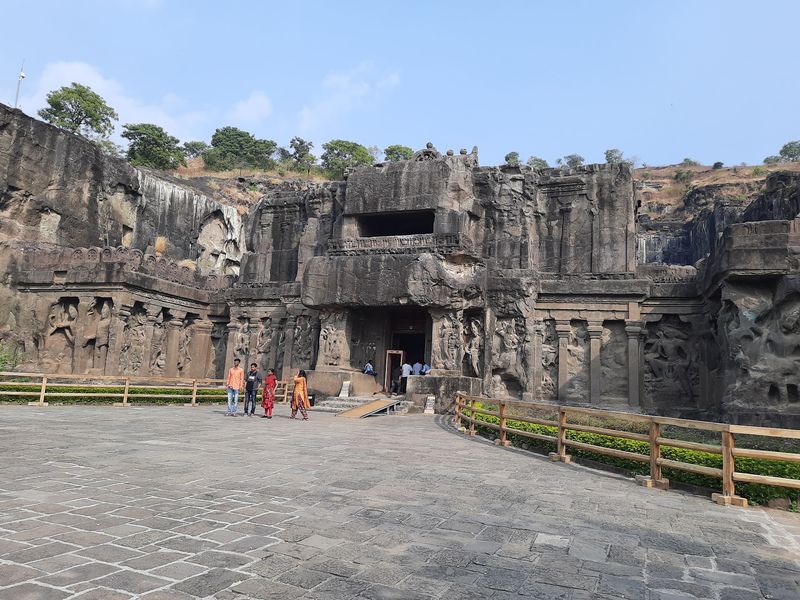
Behind every great monument stands a patron with big ambitions. Kailasa is linked to the Rashtrakuta dynasty, with work starting under Dantidurga in the 8th century and growing under Krishna I.
Some visitors point out something remarkable. A dynasty with southern roots created this wonder in western India, showing how art and culture traveled across regions.
Historians debate how many years it took and how many generations were involved. One reviewer guessed the plan passed from one generation of artists to the next until the job was done.
Another claimed only a dozen years, though most experts expect a much longer effort.
Either way, the royal support was huge. Such a project needed skilled workers, steady funds and a clear vision, and the Rashtrakutas supplied all three.
The Sixteen-Pillar Rang-Mahal
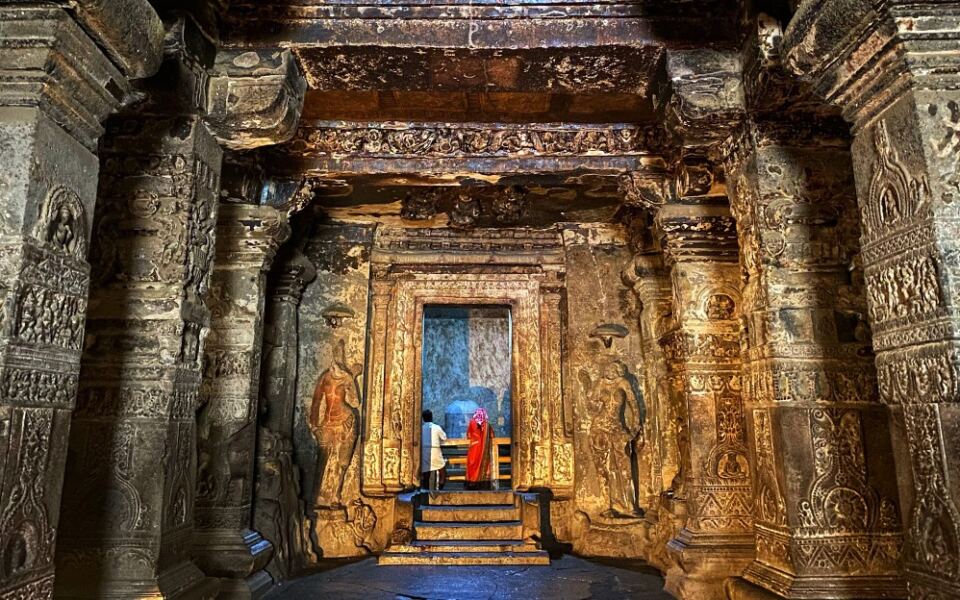
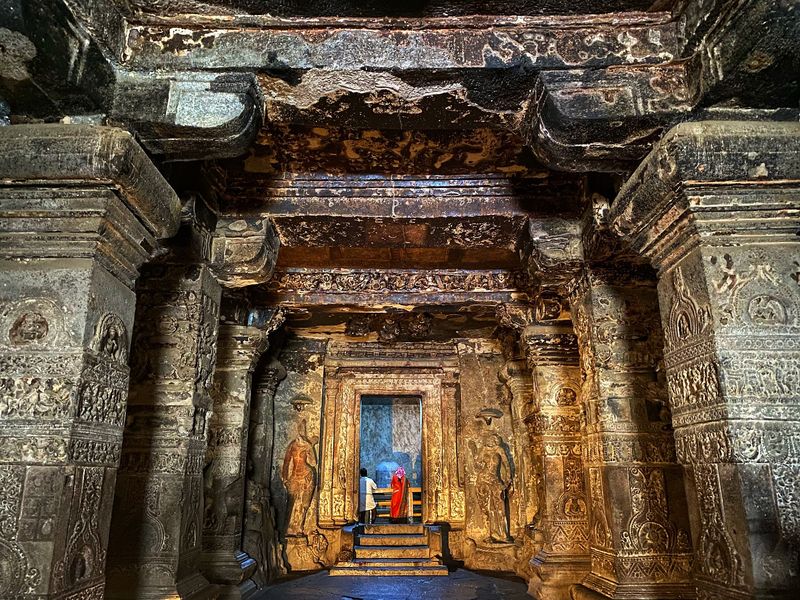
Step into the main hall and count the pillars. There are sixteen big square ones, set in four groups of four, leaving open space at the center.
The hall measures about 15 metres by 11 metres. Its flat ceiling is split into nine compartments by stone beams, and a large round lotus medallion blooms in the middle.
Look closely at the pillars. They carry figures of musicians, dancers and dwarfs, which adds a festive feel to a sacred place.
Porches guard all four sides, so the hall opens to each direction. It makes a cool, shaded pause in the middle of your tour, and a great spot to tilt your head back and study the ceiling.
Ganga and Yamuna at the Gateway
A polite welcome is carved right into the doorway. The river goddesses Ganga and Yamuna stand on the door jambs, and they are meant to cleanse visitors with their sacred waters.
Just inside sit two sages, Vyasa and Valmiki. Vyasa is credited with the Mahabharata, and Valmiki with the Ramayana.
The entry complex is about 50 metres long and 33 metres wide, so it is a proper front door for a proper mountain. Take your time here, because the small details are easy to rush past.
Crowds can gather at the gate, especially on weekends. Early morning visits give you a calmer moment to study the figures before the day gets busy.
Gods at the Porch
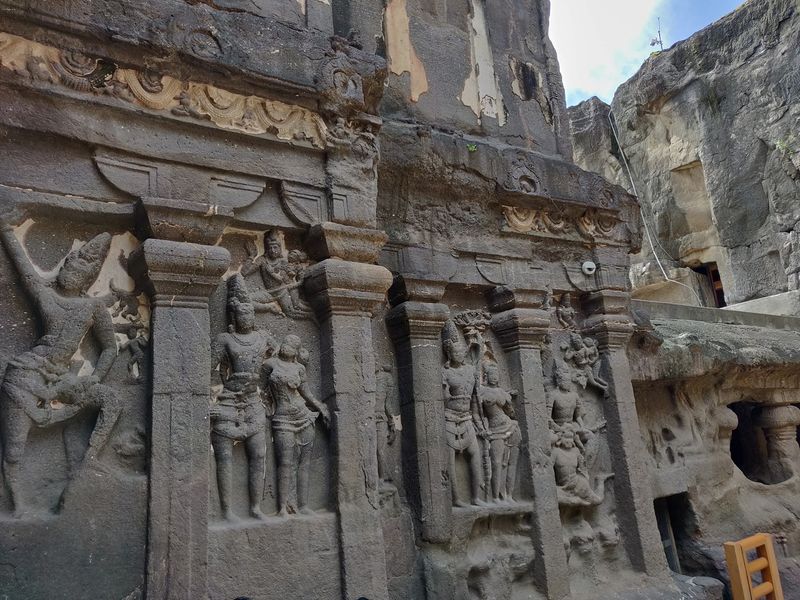
The porch feels like a reception party in stone. Four columns show the vase-and-foliage pattern, a symbol of fertility and plenty.
On either side of the doorway you will find Kubera, the god of wealth, along with conch shells and lotuses. Ganesh, the elephant-headed lord of good fortune, stands on the left.
Durga, who fought demons, appears on the right.
Kids usually spot Ganesh first. Adults tend to linger over the fine lotus work.
Each figure was carved directly from the same rock as the walls. That means every curve and crown had to be cut with care, since there was no spare block to swap in if something went wrong.
Ramayana and Mahabharata in Stone
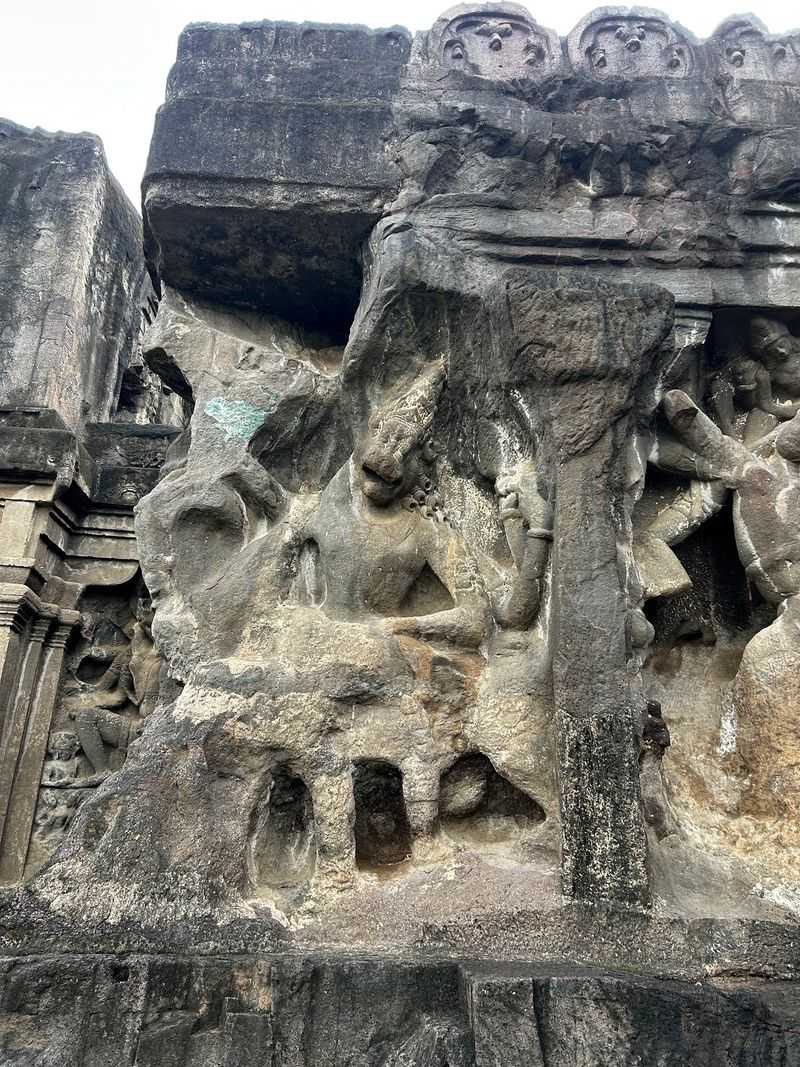
Walk the corridors and you will find a story on every wall. Panels show episodes from the Ramayana and the Mahabharata, carved scene by scene.
One reviewer compared the walk to reading a living history book. The panels are packed with heroes, animals and dramatic moments, so you can follow the tales even without a guide.
Some sculptures have been damaged over the centuries, and visitors mention that invaders harmed many of them. Even so, plenty of detail survives.
Bring a guide or read up before you go. Knowing the stories makes the carvings pop, and you will start to recognize characters around every corner.
Ravana Shakes Mount Kailash
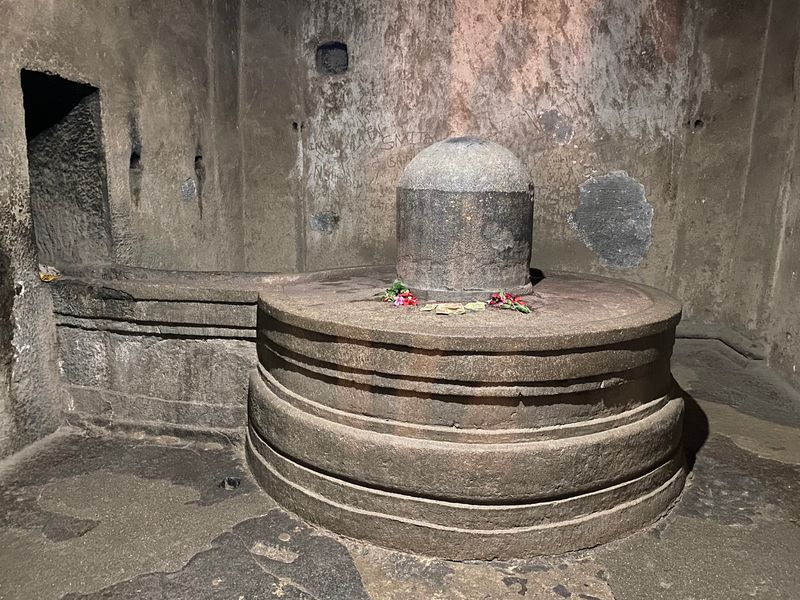
Picture a ten-headed king trying to lift a mountain. That is the drama carved into one of the most loved panels at Kailasa.
Ravana heaves at Mount Kailash with his many arms. Lord Shiva calmly presses the mountain down with his thumb or toe, and the mighty king is stopped.
The scene blends power, balance and humor, and visitors call it unforgettable. The figures seem to strain and sway inside the stone.
Give yourself a few minutes to study it from different angles. The shadows change as the sun moves, and the carving reveals new lines each time you look.
Vishnu’s Avatars on the Walls
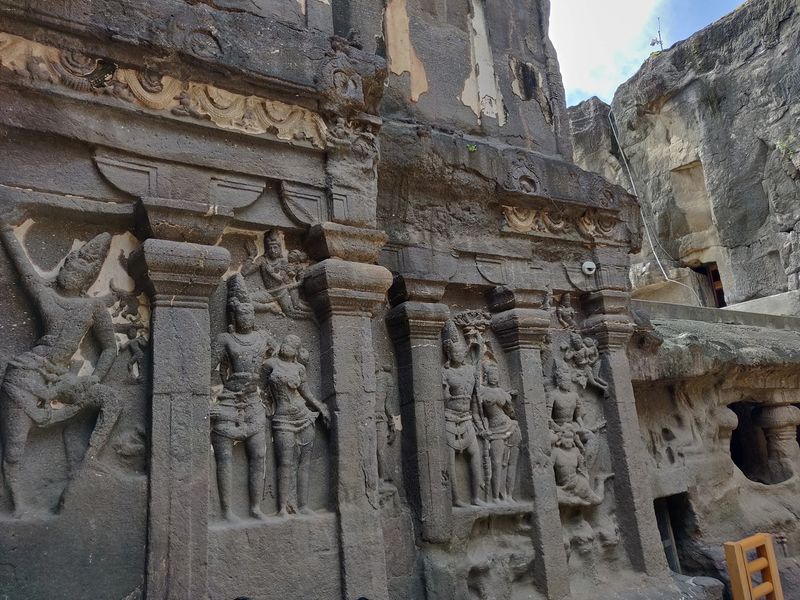
Shiva is the star here, but Vishnu gets his moments too. Sculptures of his avatars appear on the walls, including Varaha and Narasimha.
Narasimha, the fierce man-lion, looks ready to leap out of the stone. Varaha, the boar form, is shown in a powerful and lively pose.
The mix of deities shows how open the art of this era was. Devotion to several gods lived side by side in the same sacred place.
Bring a zoom lens or a good phone camera. Many of these reliefs sit higher on the walls, and the finer details are easier to enjoy when you can get a closer look.
Dravidian Style in Western India
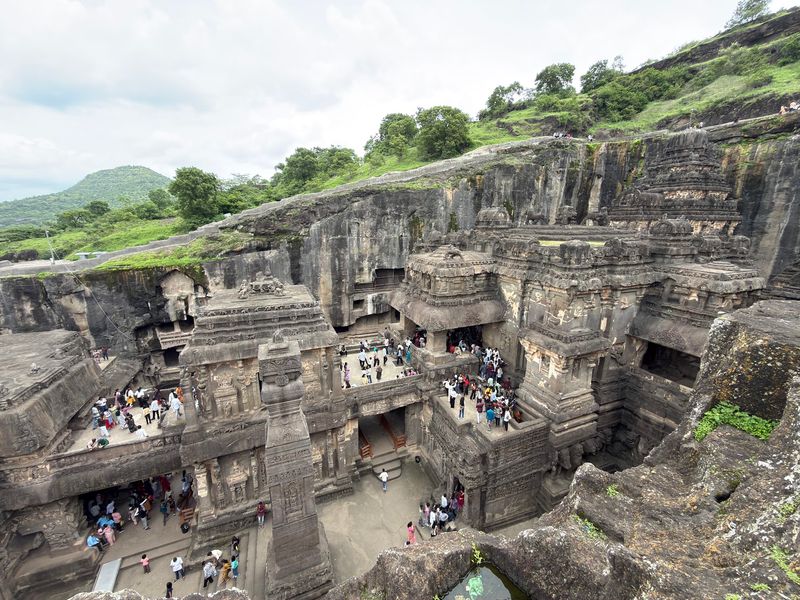
Something looks a little different here compared with the nearby caves. The overall style of Kailasa is Dravidian, a look more often linked with the south.
The tower rises about 29 metres above the courtyard in neat tiers. Its shape and proportions bring to mind great temples from far away regions.
That mix makes Ellora special. You can see northern motifs in the porch columns and southern form in the tower, all in one place.
If you enjoy architecture, pause and compare the tower with the caves next door. The contrast shows how varied the artistic ideas of that time really were.
Elephants and Giant Guardians
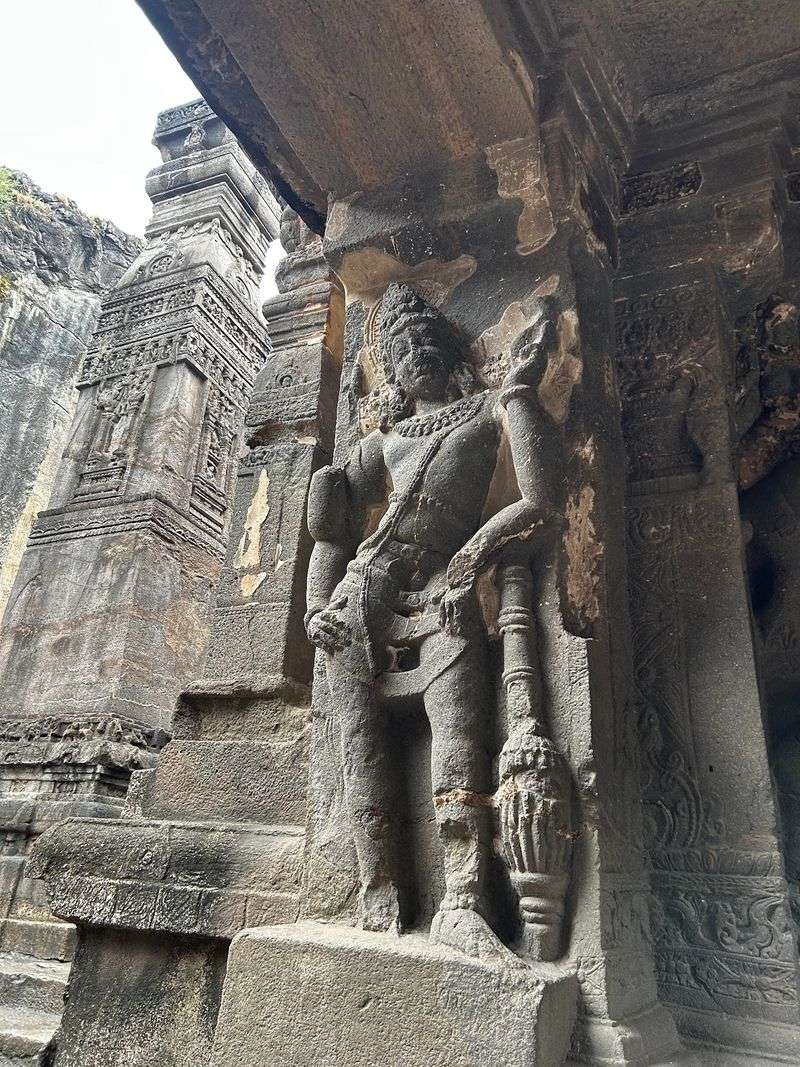
Big animals hold up big buildings, at least in art. Stone elephants line the lower parts of the temple, looking as though they carry the whole structure on their backs.
Nearby, free-standing pillars and tall carved columns rise from the courtyard. Each one was left as solid rock while the ground around it was cut away.
Reviewers mention elephants again and again, along with mythical creatures and deities. The level of detail seems almost too sharp for something carved with hand tools.
Stand beside one of the elephants for a photo. It gives a good sense of scale, and you will quickly see how small a person looks next to this stonework.
A Cool Retreat From the Heat
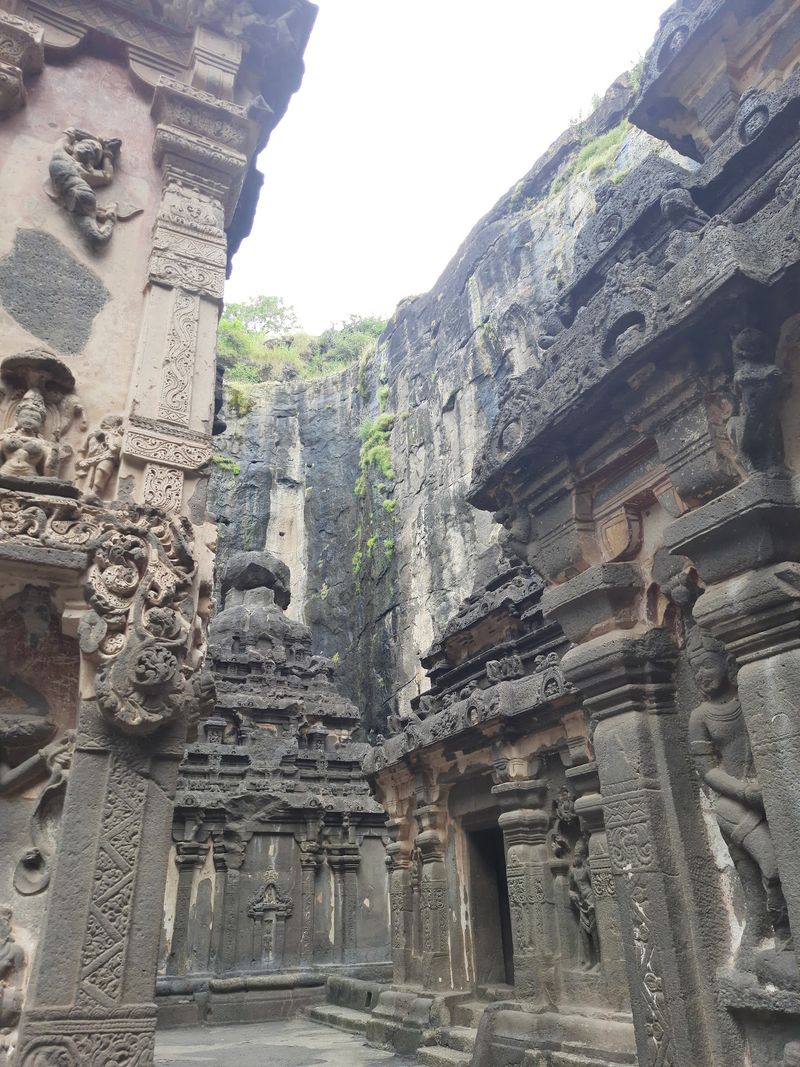
Summers in Maharashtra can be fierce. Yet one visitor noted that the temple stays cool even in peak heat, thanks to its thick stone and shaded halls.
Still, a smart plan helps. Arrive at 7 am when the gates open, and you will find gentler air and fewer people.
Monsoon and winter are popular too. Streams fill up, the hills turn green, and waterfalls appear around the Ellora area.
Wear comfortable shoes and carry water. Budget two to four hours for the wider Ellora site, and remember the temple complex is closed on Tuesdays.
UNESCO Fame and a Budget-Friendly Ticket
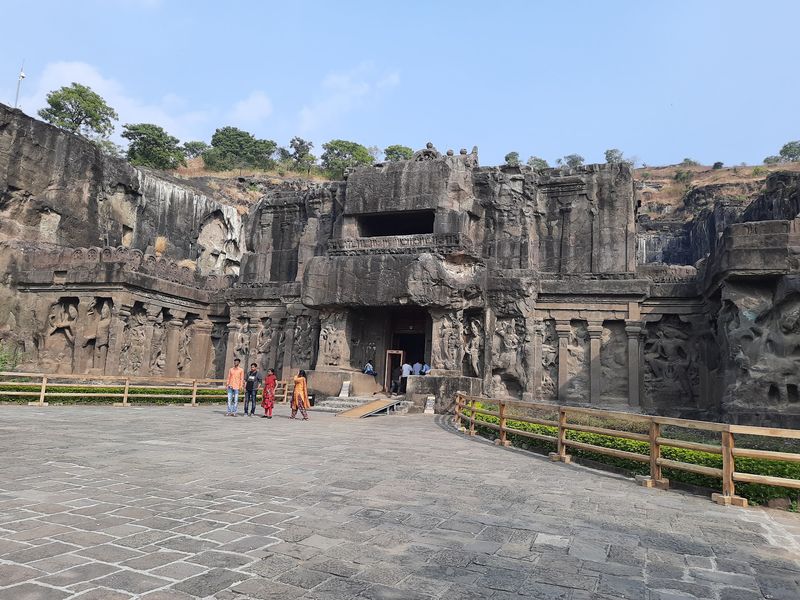
Great things do not always cost a fortune. Reviewers mention an entry fee of about 40 rupees for Indian visitors, and about 600 rupees for foreign tourists.
Ellora is a UNESCO World Heritage Site with 34 open caves, covering Buddhist, Hindu and Jain art. Kailasa, Cave 16, is the crown jewel of the lot.
The temple is well kept by the Archaeological Survey of India, with clear paths and signs. Some visitors wish for better management and more chances for worship, so expect a mix of views.
The site lies near Chhatrapati Sambhaji Nagar, close to the Samruddhi highway Verul exit. Weekdays are quieter, and food stalls outside the gate are handy after your walk.
A Legacy That Still Humbles Visitors
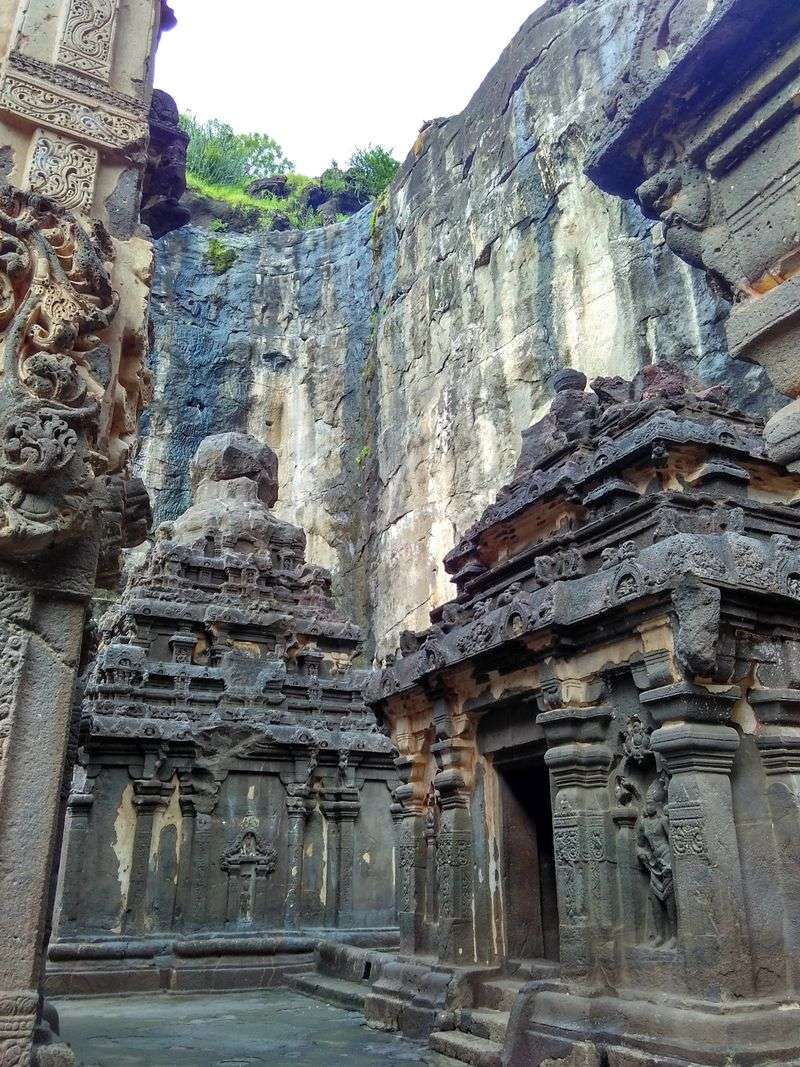
After more than twelve centuries, the temple still makes people go quiet. Reviewers call it humbling, breathtaking and a true wonder.
One visitor felt proud of the ancient artists, and also thoughtful about how such a marvel came to be damaged. That mix of awe and reflection is common here.
Everyone seems to agree on one thing. You should see it at least once in your life, because pictures simply do not do it justice.
Leave plenty of time, and let your eyes wander. The more you look, the more you notice, and a single hour can still leave half the details undiscovered.
Share this story