Some bridges do more than connect two sides of a river. They become the face of an entire city, the image people picture first when they hear a place’s name.
From a wooden covered bridge in Switzerland to a rope crossing above the Atlantic, these structures carry history, culture, and beauty all in one span. This list covers 15 bridges from around the world that are so tied to their towns, you simply cannot think of one without the other.
Whether you are planning a trip, building a bucket list, or just love a great travel read, these bridges are worth knowing about.
Stari Most, Mostar, Bosnia and Herzegovina
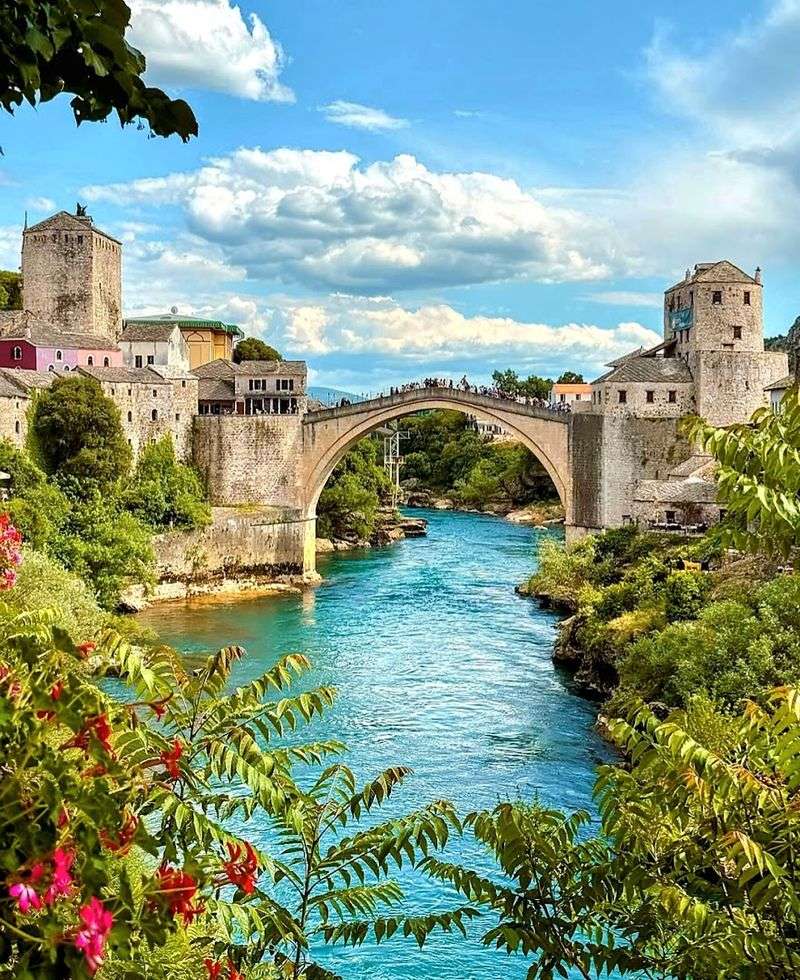
Few bridges in the world carry as much emotional weight as Stari Most in Mostar. The elegant stone arch crosses the Neretva River in a single graceful curve, and the pale stone contrasts beautifully with the emerald water below.
It is the defining image of the city, and most visitors recognize it instantly.
Stari Most is part of the Old Bridge Area of the Old City of Mostar, a UNESCO-listed historic zone that preserves the Ottoman-era character of the surrounding streets and architecture. After its destruction in the 1990s, the bridge was carefully rebuilt and reopened in 2004, giving it both visual beauty and deep historical meaning.
Walk the old town cobblestones, find a terrace above the river, and take in the view from several angles around the Neretva. The bridge looks different at every hour, and every angle delivers something worth photographing.
Puente Nuevo, Ronda, Spain
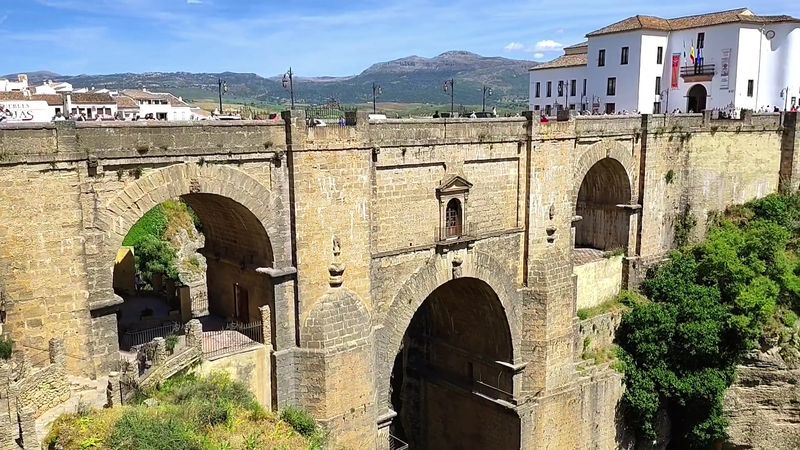
Standing at the edge of El Tajo gorge in Ronda and looking up at Puente Nuevo is one of those travel moments that genuinely stops you in your tracks. The stone bridge rises straight out of the cliffside, connecting the older and newer parts of the city across a gorge that drops more than 100 meters below.
It is not subtle.
Ronda’s official tourism site calls Puente Nuevo the best-known image of the city, and that reputation is well earned. The bridge was completed in 1793 after nearly four decades of construction, replacing an earlier version that collapsed.
That history adds another layer to an already dramatic structure.
The most rewarding views are not from the bridge itself but from the gorge paths below, where the full scale of the structure becomes clear. Old streets, white buildings, and canyon scenery make Ronda one of the most visually striking bridge towns in all of Europe.
Chapel Bridge, Lucerne, Switzerland
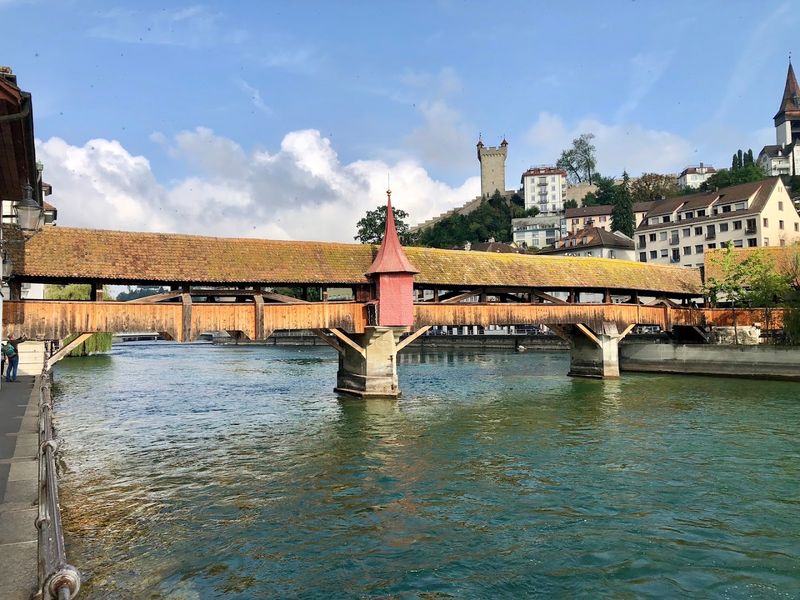
Lucerne’s Chapel Bridge, known locally as Kapellbrucke, is one of those landmarks that immediately explains why a city is famous. The covered wooden bridge crosses the River Reuss beside the octagonal Water Tower, and together they create the postcard image most people associate with Lucerne the moment they arrive.
The bridge has roots going back to the 14th century, and inside the covered walkway hang painted triangular panels depicting scenes from Lucerne’s history. After a fire in 1993 damaged much of the structure, it was restored and remains one of the most visited sites in Switzerland.
The flower boxes along the railing add a seasonal charm that changes throughout the year.
Morning light tends to bring out the best reflections in the Reuss, with old town buildings and the distant Alps framing everything behind the bridge. Local tourism consistently lists it as the city’s top photo subject, and it is easy to understand why.
Kintaikyo Bridge, Iwakuni, Japan
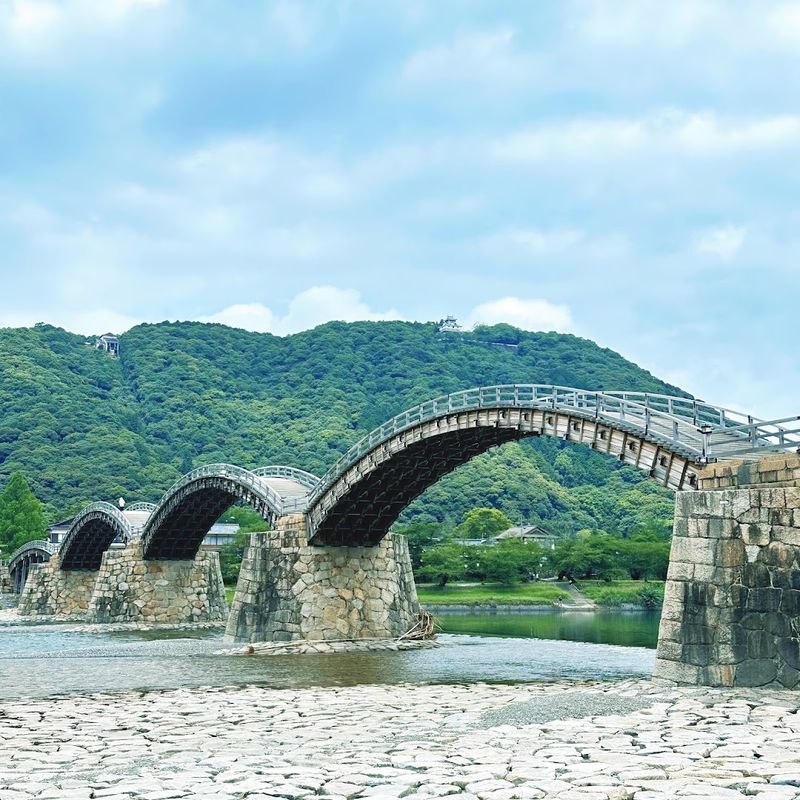
Kintaikyo Bridge in Iwakuni is one of Japan’s most graceful wooden landmarks, and its five high arches create a rhythmic, wave-like shape over the Nishiki River that looks almost too perfect to be real. Cherry blossom season turns the surrounding riverbanks pink, making the bridge one of Japan’s most photographed spring destinations.
Japan’s official tourism resources note that the bridge was originally built without nails, using traditional joinery techniques with Japanese cypress, chestnut, and oak. The current structure follows those same craftsmanship principles.
It was first built in 1673 and has been reconstructed and maintained over the centuries to preserve its original form.
Visitors to Iwakuni typically pair the bridge with a visit to Iwakuni Castle, which sits on the hillside above the river and can be reached by ropeway. The combination of the castle, the bridge, and the river scenery makes this one of the most complete bridge-focused day trips in the country.
Japanese Covered Bridge, Hoi An, Vietnam
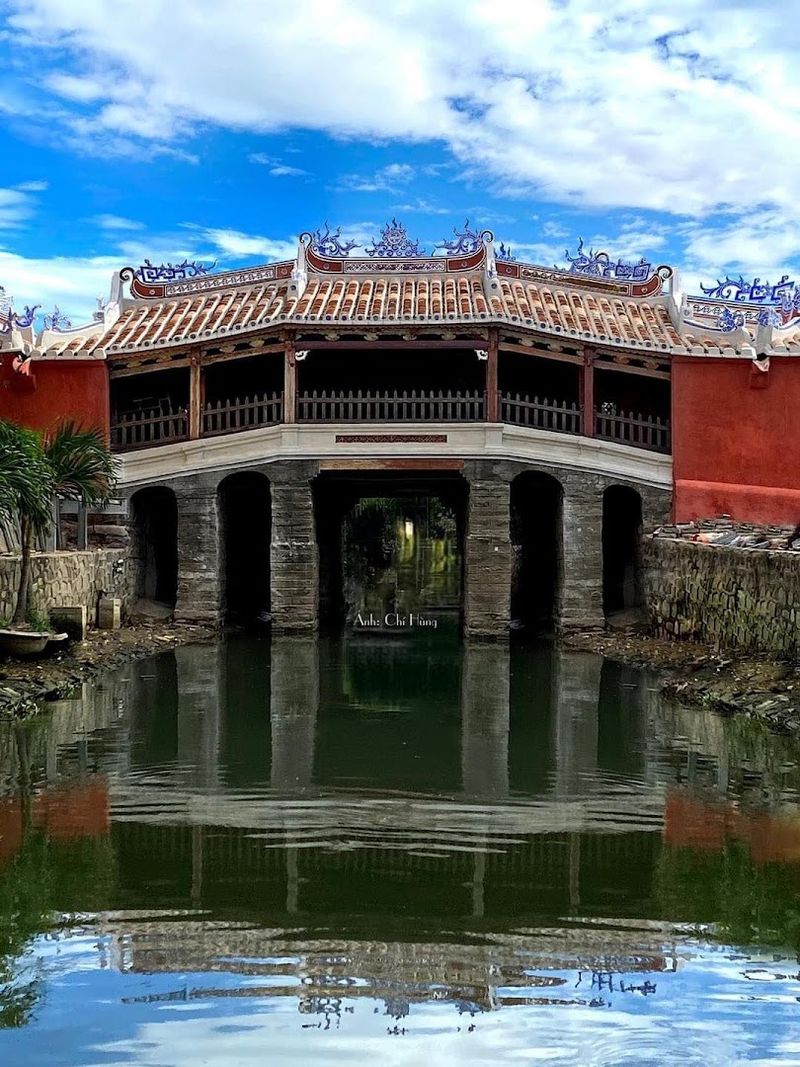
The Japanese Covered Bridge in Hoi An is small by most bridge standards, but its character is outsized. Built in the 17th century by the Japanese merchant community, it sits in the heart of Hoi An’s ancient town and has long been one of its most recognizable symbols.
Its tiled pagoda-style roof, carved details, and compact wooden frame fit naturally into the lantern-lit streets around it.
After years of restoration work, the bridge officially reopened in August 2024, making it fully accessible again as a historic stop inside the UNESCO-listed old town. The reopening was a significant moment for Hoi An, since the bridge appears on the 20,000 Vietnamese dong banknote and holds deep cultural importance for the city.
For travelers who appreciate bridges with meaning rather than just scale, this one delivers. Walking through it feels like stepping directly into the trading-port history that shaped Hoi An into what it is today.
Pont des Amours, Annecy, France
Annecy already has a lot going for it. The old town canals, the alpine lake, the mountain backdrop, the pastel-colored buildings along the water.
Pont des Amours adds one more reason to linger a little longer on a lakeside walk.
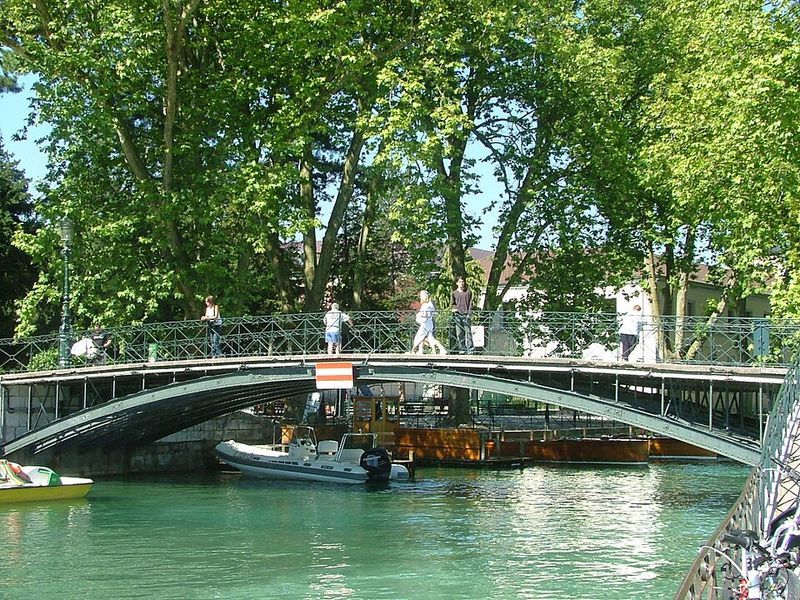
The bridge links the edge of Lake Annecy with the Jardins de l’Europe and frames a view that includes calm water, moored boats, tree-lined banks, and the Alps rising in the distance. Local tourism sources consistently list it among the city’s most photographed spots, alongside the Palais de l’Isle prison landmark nearby.
It is not a grand engineering monument, and that is entirely the point.
Its appeal comes from the setting rather than the structure itself. The bridge works as a quiet pause in an already scenic town, offering a clean, open view that feels effortless.
If you are building a walking route through Annecy’s old town, this crossing belongs on it.
Pont Valentré, Cahors, France
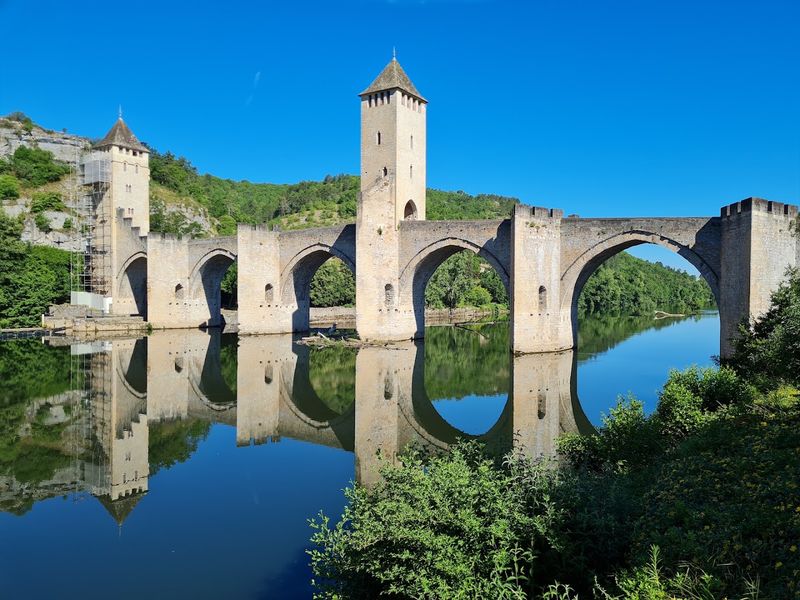
Pont Valentré crosses the Lot River in Cahors with three fortified stone towers and pointed Gothic arches, and the result looks less like a bridge and more like a castle wall stretched across the water. It is one of the most striking medieval structures in southern France, and it has anchored Cahors visually for centuries.
Construction began in 1308 and continued for several decades, which partially explains why the towers feel so intentional and solid. The bridge is also part of the UNESCO World Heritage routes of Santiago de Compostela in France, connecting its history to the broader pilgrimage tradition of the region.
Cahors-Lot Valley tourism describes it as the city’s most famous monument.
The best approach is to walk across it first, then find the riverbank viewpoints where the full reflection appears in the Lot. Early morning or late afternoon light hits the towers at an angle that makes the whole structure look like it belongs in a medieval illustration.
Bastei Bridge, Rathen, Germany
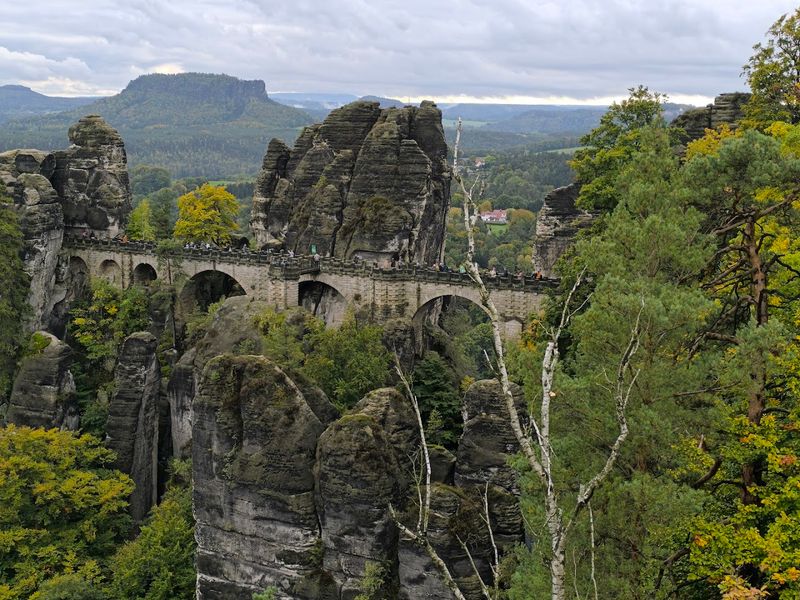
Bastei Bridge does not fit the typical image of a town bridge, and that is exactly what makes it worth the trip. Located near the small spa town of Rathen in the Saxon Switzerland region, the stone bridge connects sandstone rock formations high above the Elbe Valley, with views stretching across cliffs, forest, and river scenery far below.
Saxon Switzerland tourism notes that the current stone bridge is 76.5 meters long and replaced an earlier wooden structure in 1851. The surrounding rock formations, called the Bastei, rise about 194 meters above the Elbe and offer multiple viewpoints beyond the bridge itself.
It is a geological setting that happens to have a bridge running through it, rather than the other way around.
Rathen serves as the base for reaching the Bastei area, with ferry crossings and marked trails leading up from the riverside town. Hikers and photographers return here repeatedly because the scenery changes with every season and every weather condition.
Carrick-a-Rede Rope Bridge, Northern Ireland
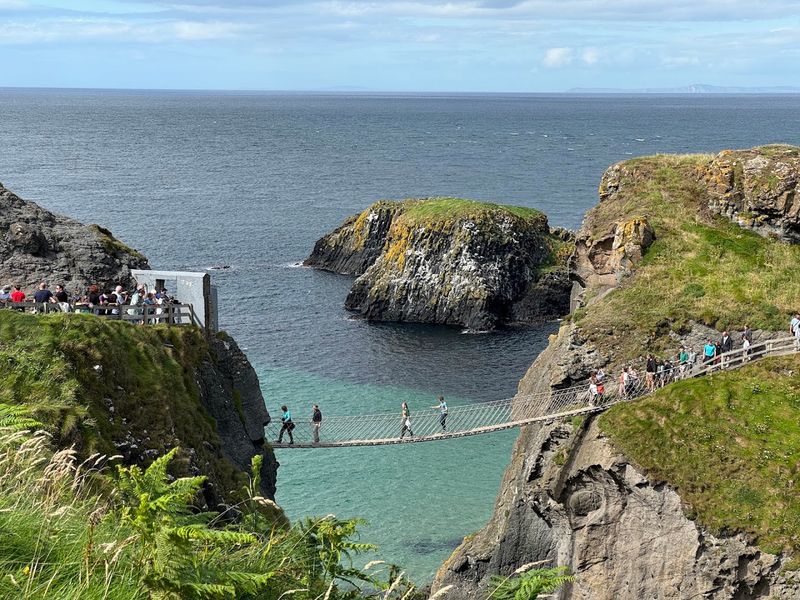
Carrick-a-Rede Rope Bridge near Ballintoy on Northern Ireland’s Causeway Coast is not the kind of bridge you cross without noticing. It is suspended above the Atlantic, swaying gently as you walk, with open ocean below and sea cliffs on both sides.
The bridge connects the mainland to Carrick-a-Rede Island, a small rocky outcrop that was historically used by salmon fishermen.
The National Trust, which manages the site, notes the rope bridge was first erected more than 250 years ago and now operates as a ticketed visitor experience with facilities and a staffed crossing. Because the bridge is exposed to coastal weather conditions, it occasionally closes when winds are too strong, so checking availability ahead of a visit is practical advice worth following.
The wider Causeway Coast setting adds to the experience, with the Giant’s Causeway, White Park Bay, and the Antrim coast road all within reasonable reach. On a clear day, the views from the bridge and surrounding cliffs extend toward Scotland.
Old Bridge, Besalu, Catalonia, Spain
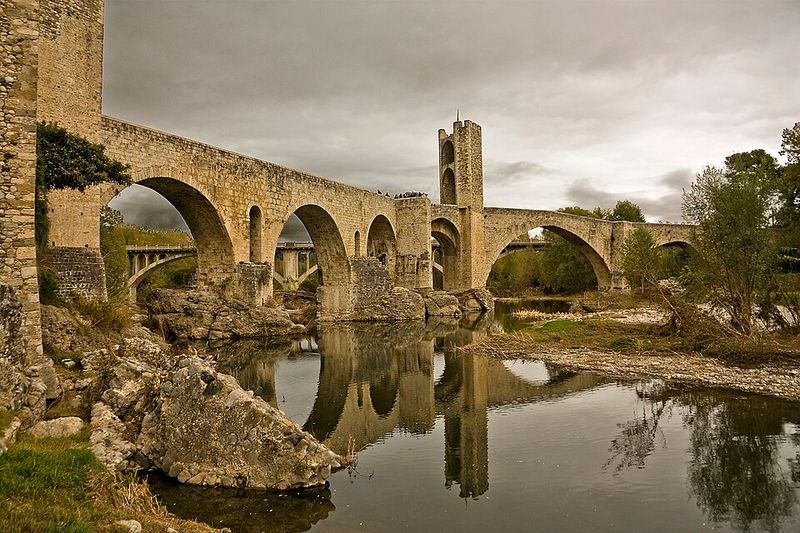
Besalu is the kind of medieval Catalan town that feels almost too well-preserved to be real, and its Old Bridge sets the tone before you even enter the historic center. The stone bridge crosses the Fluvia River with multiple arches and includes a fortified gatehouse mid-span, giving arrivals a dramatic, angled approach into the old town.
Catalonia tourism sources describe it as the most emblematic image of Besalu, which is saying something given the Romanesque architecture, Jewish heritage sites, and preserved streets waiting on the other side. The bridge likely dates to the 11th or 12th century, though it has been rebuilt and reinforced over time after flood damage.
Photographers tend to shoot it from the riverbank below, where the full length of the arches and the gatehouse tower line up clearly against the surrounding landscape. Once across, the town reveals a compact historic center that rewards slow, unhurried walking.
Roman Bridge, Cangas de Onis, Asturias, Spain
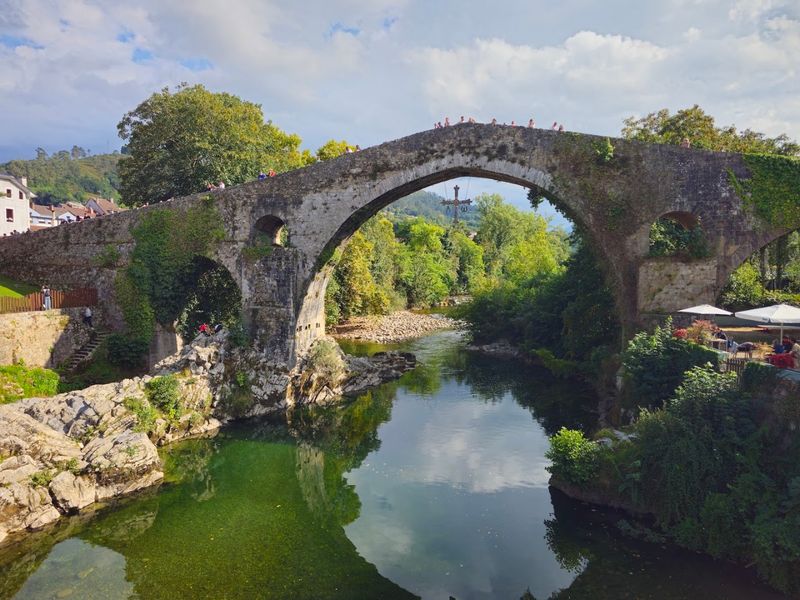
The bridge in Cangas de Onis is widely called the Roman Bridge, though historians generally place its construction in the medieval period rather than Roman times. Whatever its true origins, the structure over the Sella River has become one of the most recognized images in all of Asturias, and the Victory Cross hanging from its central arch makes it instantly identifiable.
The mountain setting adds to the appeal. Cangas de Onis sits at the edge of the Picos de Europa, and local tourism positions the town as a gateway to Covadonga and the iconic mountain lakes nearby.
The bridge works naturally as a first stop before heading deeper into the national park.
Walking across it takes only a minute, but the view from the riverbank below is the one most people remember. The arch, the cross, the green mountains behind, and the clear river water combine into a scene that captures northern Spain’s landscape character better than almost anything else in the region.
Romanesque Bridge, Puente la Reina, Navarre, Spain
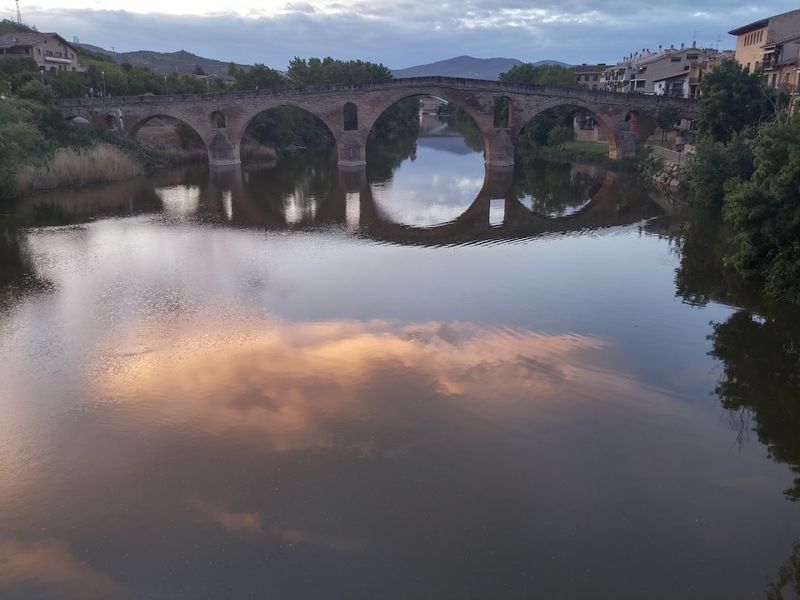
The name Puente la Reina translates directly to Queen’s Bridge, so the town’s identity has always been tied to this crossing. Located in Navarre and sitting at the point where several Camino de Santiago pilgrimage routes historically converge, the town has welcomed travelers for over a thousand years.
Spain’s official tourism site describes Puente la Reina as a key staging post on the Pilgrim’s Route, and the Romanesque bridge over the Arga River remains its defining image. The bridge has six arches, a narrow stone roadway, and a straightforward design that prioritizes function over decoration.
That simplicity is part of what makes it feel so timeless.
Every day, pilgrims and visitors cross it heading westward toward Santiago de Compostela, continuing a journey that generations before them have made on the same stones. For anyone walking or driving the Camino route, this bridge is not just a photo stop.
It is a landmark with genuine historical weight behind every step.
Ponte Vecchio, Florence, Italy
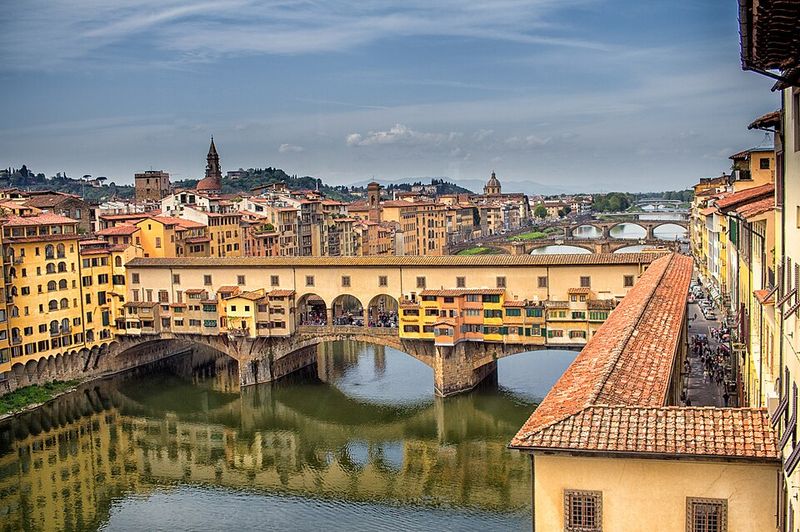
Ponte Vecchio is not just the oldest bridge over the Arno River in Florence. It is also a street, a market, and a skyline element all at once.
The bridge has been lined with small shopfronts since the 16th century, when Grand Duke Ferdinando I decreed that the butchers previously working there be replaced by goldsmiths and jewelers. That tradition continues today.
Visit Tuscany describes Ponte Vecchio as the symbol of the Tuscan capital, and the bridge appears in countless images of Florence’s famous skyline. Walking across it means moving through a narrow corridor of shops, with glimpses of the Arno visible through gaps between the buildings.
It is a sensory experience built into a historic structure.
The best views of the bridge come from the nearby riverbanks or from the Santa Trinita Bridge slightly upstream. Late afternoon light turns the warm stone and painted facades into shades of amber and gold, with the river carrying the reflections downstream.
Rialto Bridge, Venice, Italy
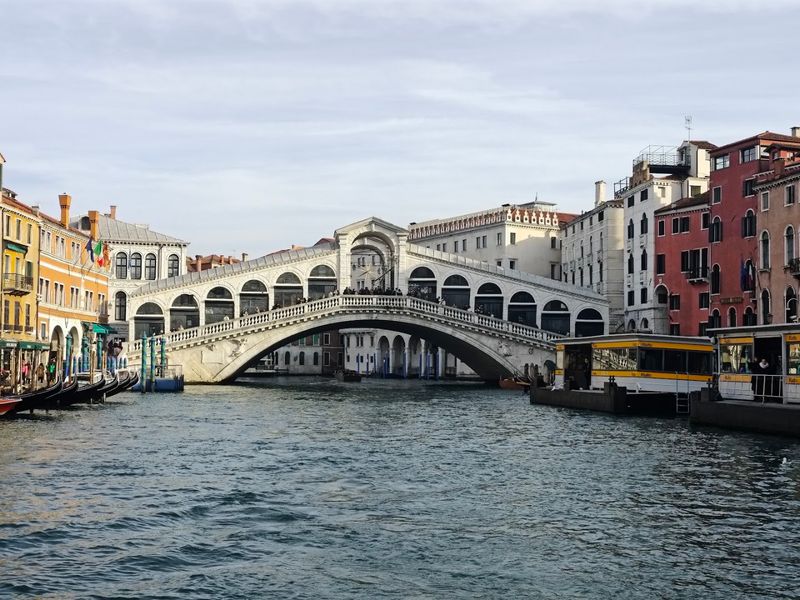
Venice has more than 400 bridges, but Rialto is the one that most clearly defines the Grand Canal view. Built between 1588 and 1591, it was Venice’s first permanent stone crossing of the Grand Canal, replacing earlier wooden and pontoon structures that had served the city for centuries.
The single white stone arch spans 48 meters and rises high enough for boats to pass underneath.
Venice tourism sources describe it as the oldest and most famous bridge over the Grand Canal, with covered arcades of shops running along both sides of the crossing. It sits in the Rialto Market district, one of Venice’s most active commercial areas, which means the area around it stays busy from early morning through evening.
The best views of the bridge come from the water itself, either from a vaporetto water bus or from a gondola moving along the Grand Canal. From the top of the bridge, the sweep of the Grand Canal in both directions remains one of Venice’s most iconic panoramas.
Cloak Bridge, Cesky Krumlov, Czech Republic
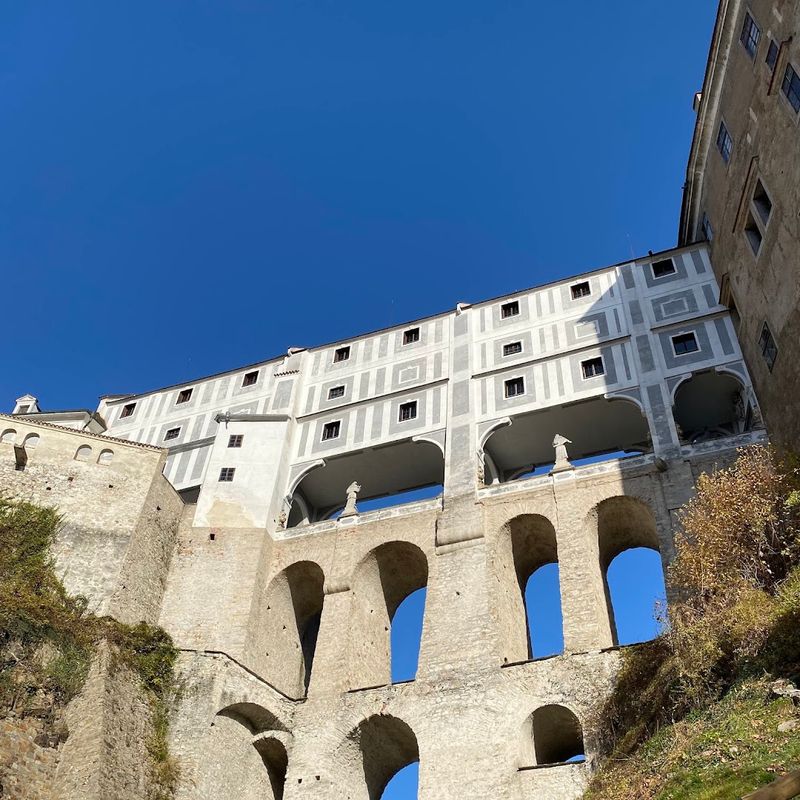
Cesky Krumlov already ranks among the most atmospheric small historic towns in Central Europe, but the castle complex sitting above the old town takes it further. The Cloak Bridge, which connects separate sections of Cesky Krumlov Castle across a deep vertical gap, gives the complex an almost theatrical quality that you cannot fully appreciate until you see it from the town below.
The official castle site describes Cesky Krumlov Castle as one of Central Europe’s most important architectural monuments, with preserved development spanning the 14th to the 19th century. The Cloak Bridge itself is a multi-story structure with a covered arcade running across the top, built in the Baroque style and integrated into the castle’s overall design rather than standing as a separate landmark.
Visitors explore the castle grounds, courtyards, and garden terraces, while the old town below offers cobbled streets, the bending Vltava River, and layered views of towers and red rooftops at every turn. The bridge is best seen from the town’s riverside paths.
Share this story