South America’s coastlines are some of the most jaw-dropping on the planet, stretching from sun-baked Pacific deserts to lush Atlantic rainforest bays. Whether you’re into surfing, whale watching, colonial history, or just finding the perfect plate of fresh seafood, these coastal towns have something for everyone.
From Peru’s warm northern beaches to Argentina’s wildlife-packed Patagonian shores, each stop on this list tells a completely different story. Pack your bags and get ready to explore 15 of the most stunning coastal towns on both sides of the continent.
Mancora, Peru
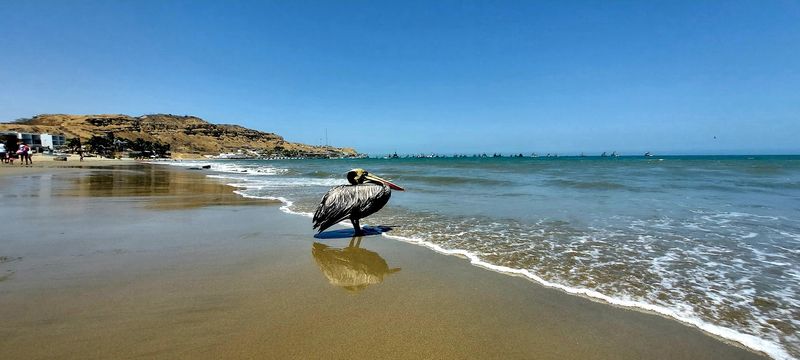
Warm water, consistent waves, and some of the best ceviche on the continent make Mancora one of Peru’s most beloved beach towns. Sitting near Peru’s northern border, it enjoys temperatures around 31-32 degrees Celsius, which is unusually tropical for a country most people associate with mountains and cold Pacific currents.
Mancora started as a quiet fishing village, and you can still spot local boats heading out at dawn between the surf schools and hammock bars. The beach is wide and sandy, offering long Pacific views that seem to stretch forever on clear afternoons.
Nearby Los Organos provides a calmer, less crowded alternative if you want more sea and fewer crowds.
Surfers love the reliable breaks, while non-surfers are perfectly happy lounging under thatched umbrellas with a cold drink. The sunset here turns the sky shades of orange and pink that feel almost theatrical.
Seafood restaurants line the main strip, serving freshly caught fish with local sauces that beat any resort buffet by miles. Mancora is the kind of place that makes it genuinely hard to book your return flight home.
Paracas, Peru
Forget everything you think a beach town looks like, because Paracas rewrites the rulebook completely. Sitting where Peru’s coastal desert meets the Pacific Ocean, this town is surrounded by ocher cliffs, red-tinted beaches, and barren headlands that look more like a Mars landing than a typical seaside getaway.
Just outside town, Paracas National Reserve protects one of South America’s most striking marine environments. Boat trips regularly head out toward the Ballestas Islands, where sea lions bark from every rock, Humboldt penguins shuffle along ledges, and massive seabird colonies create a noise level that would make any city dweller feel right at home.
On the way to the islands, boats pass the enormous Candelabro geoglyph carved into a coastal hillside, a mysterious figure that has puzzled researchers for decades. Back on shore, the powerful winds that gave the area its name can kick up dramatically in the afternoons, which is perfect for kite enthusiasts and terrible for anyone trying to eat a sandwich outside.
Paracas is proof that South America’s Pacific coast is far more visually diverse than most travelers ever expect to discover.
Puerto Lopez, Ecuador
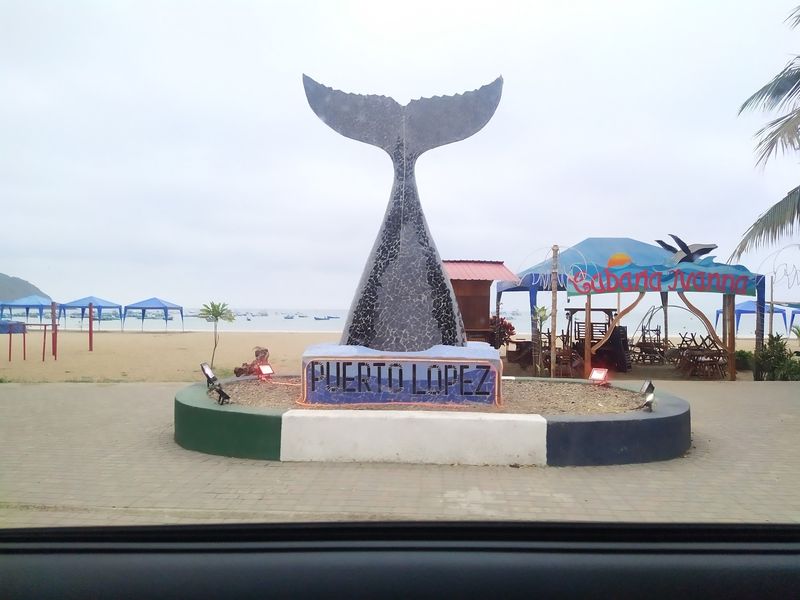
Every year between June and September, Puerto Lopez transforms into one of the best whale-watching destinations on the entire Pacific coast. Humpback whales migrate into Ecuadorian waters to breed and give birth, and the boat excursions departing from this small working town get you genuinely close to these giants without feeling gimmicky or overcrowded.
Puerto Lopez is also the main gateway to Machalilla National Park, Ecuador’s only coastal national park, which protects beaches, dry tropical forest, and marine ecosystems all in one package. Isla de la Plata sits offshore and earns its nickname, the mini-Galapagos, thanks to blue-footed boobies, frigatebirds, and sea turtles that seem entirely unbothered by curious visitors.
Los Frailes beach, tucked inside the park, is consistently rated among Ecuador’s most beautiful, with protected turquoise water framed by dry tropical vegetation. The town itself remains authentically tied to fishing, so the restaurants serve whatever came off the boats that morning rather than a laminated tourist menu.
Ceviche here is a serious business, made with fresh catch and local citrus that cuts right through the heat of the afternoon. Puerto Lopez is a rare combination of wildlife, wilderness, and real coastal life.
Bahia Solano, Colombia
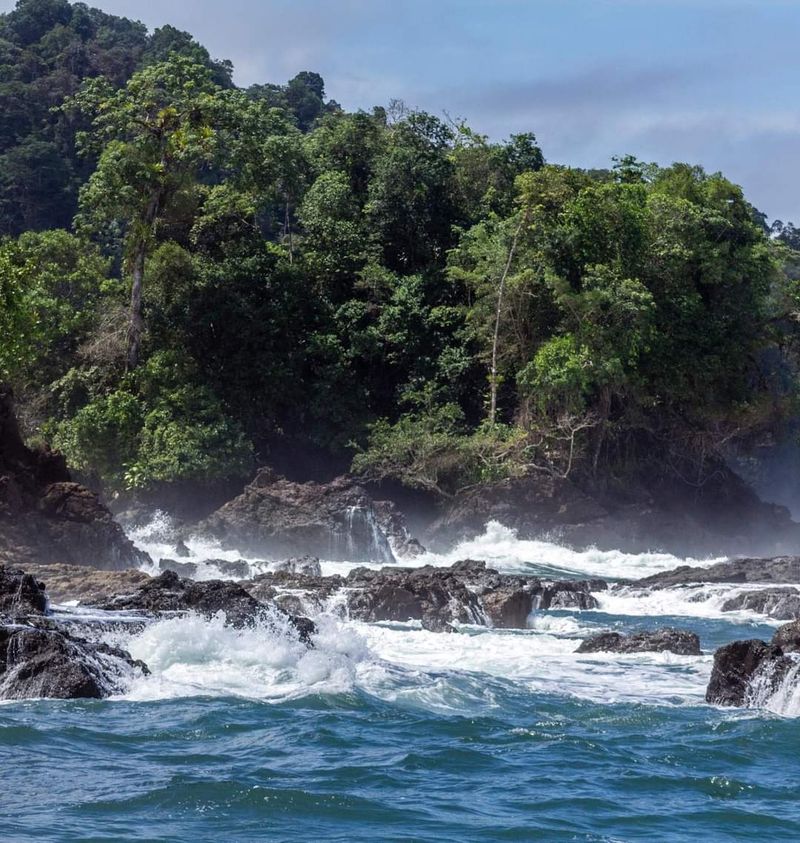
Bahia Solano might have the most dramatic backdrop of any coastal town in South America. Thick Choco rainforest rolls down from steep mountains and practically falls into the Pacific, with waterfalls, rivers, and dark volcanic beaches filling in every gap.
It looks like the kind of place a filmmaker would invent, except it is completely real.
Between July and October, humpback whales travel thousands of miles from Antarctic waters to breed and raise calves in the warmer Colombian Pacific, making Bahia Solano one of the continent’s top whale-watching bases. The season coincides with calmer weather, so excursions on the water are genuinely spectacular rather than just wet and bumpy.
Nearby El Valle adds even more reasons to linger, with Playa Almejal offering a stunning stretch of rainforest-backed beach, plus river excursions and turtle nesting habitat. Hiking trails connect the area toward Utria National Natural Park, where pristine inlets and extraordinary biodiversity reward anyone willing to put in the effort.
Getting to Bahia Solano requires a small plane or a long boat ride, which is honestly part of its appeal. The journey filters out casual visitors and keeps the place feeling wild, unhurried, and magnificently untouched.
Pichilemu, Chile
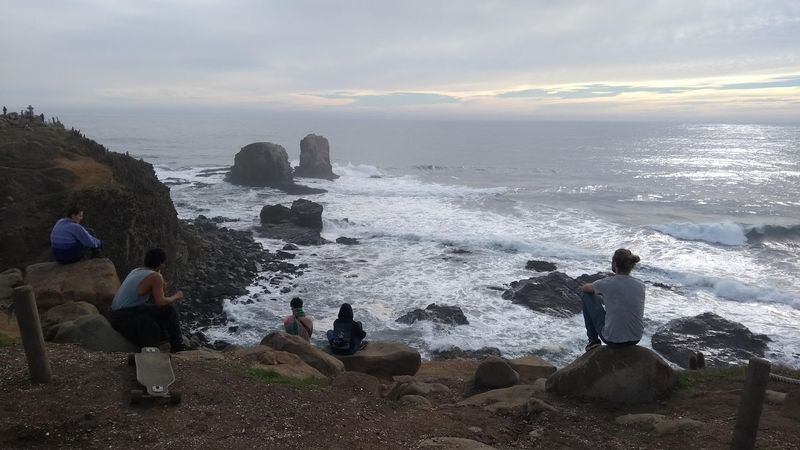
Punta de Lobos is the kind of wave that surfers describe in hushed, reverent tones. This powerful left-breaking point break near Pichilemu has earned World Surfing Reserve status, putting the town firmly on the global surf map alongside legendary spots in Hawaii and Australia.
Watching experienced riders navigate it from the clifftop viewpoint is genuinely thrilling even if you have never touched a surfboard in your life.
Pichilemu is not a one-trick surf town, though. Barrio Ross preserves European-influenced resort architecture from the town’s earlier life as a fashionable seaside retreat for Chile’s wealthier families, giving the streets a faded elegance that contrasts nicely with the surf culture surrounding it.
The nearby Cahuil salt flats still produce artisanal salt using traditional methods passed down through generations of local families.
Central Chile’s Pacific coast looks and feels completely different from tropical beach destinations. Summers are dry and mild, usually hovering around 20-25 degrees Celsius, and rocky headlands combined with cool ocean water give the coastline a rugged, windswept quality that feels refreshingly raw.
Seafood restaurants near the shore serve razor clams, locos, and freshly grilled fish that pair perfectly with a cold Chilean beer and a view of the Pacific horizon.
Zapallar, Chile
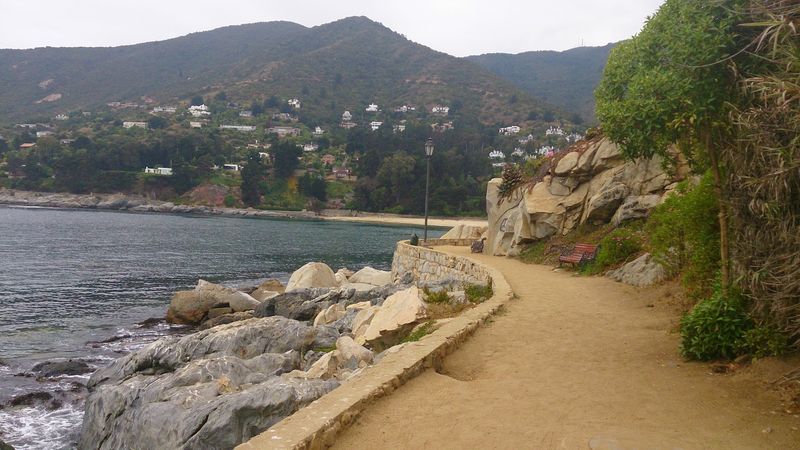
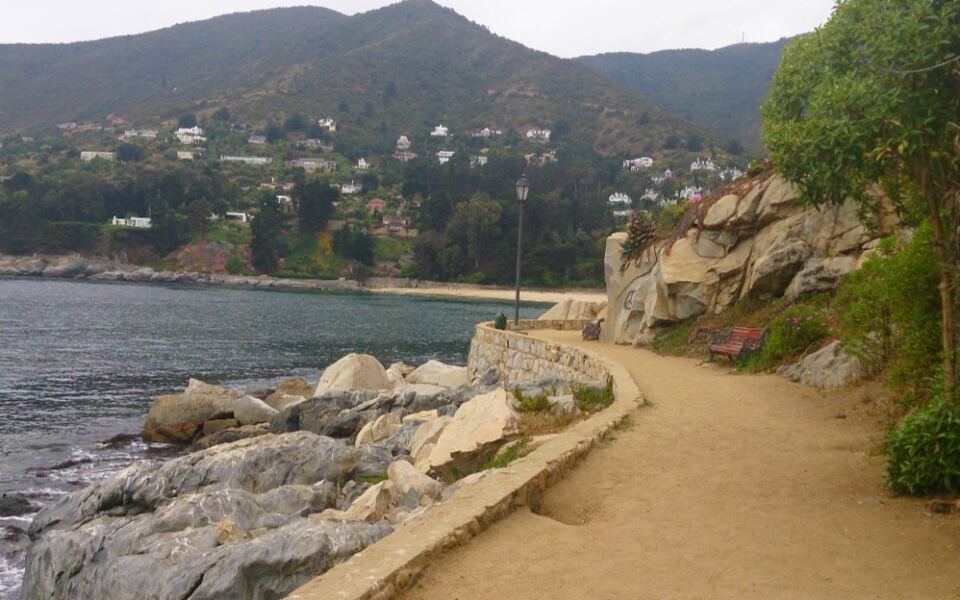
Tucked between forested hills and rocky Pacific coves, Zapallar has the kind of sheltered, storybook appearance that makes you want to immediately cancel any other travel plans you had. Stone houses and manicured gardens wrap around a compact crescent of sand, while a coastal footpath follows the rocky shoreline with uninterrupted ocean views that absolutely nobody gets tired of.
Unlike Chile’s larger, busier resort cities, Zapallar operates at a deliberately smaller scale. The town sits alongside Maitencillo and Papudo as part of a stretch of central Chilean coast offering diving, snorkeling, and sport fishing in waters that feel genuinely wild rather than packaged for tourists.
Seals occasionally appear on the rocks, and the bird life along the shore is reliably entertaining.
One thing that surprises first-time visitors is how the beaches here sit between steep rock formations rather than spreading across flat, endless sand. The result is a series of sheltered pockets of coast, each with its own character and view.
The water is cool and invigorating rather than tropical, which keeps the crowds manageable and the atmosphere calm. Zapallar rewards travelers who appreciate scenery over spectacle, and who find beauty in a quiet bay rather than a packed resort strip.
Castro, Chile
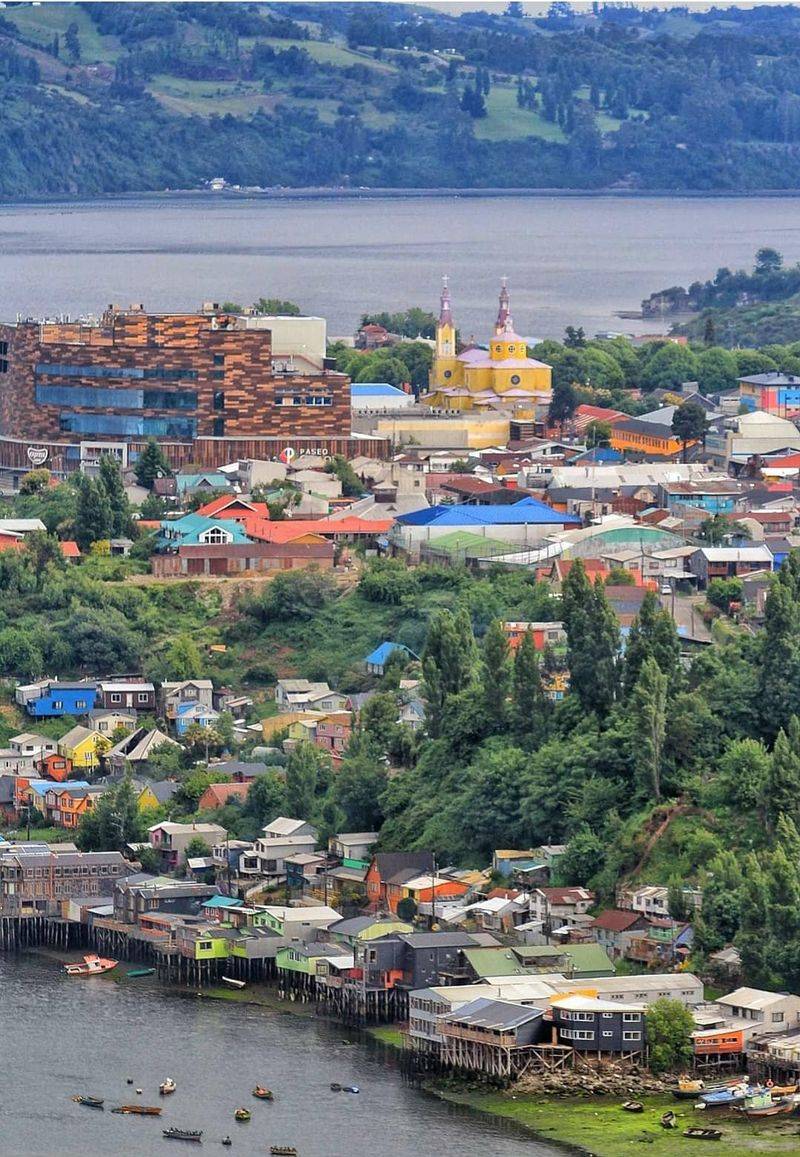
Castro is the kind of place that makes your camera work overtime before you have even found a place to eat breakfast. Its famous palafitos, brightly painted wooden houses perched on stilts above the tidal shoreline, are among the most photographed architectural sights in all of Chile.
They reflect a community historically built around boats, fishing, and a daily relationship with the rising and falling sea.
In the town center, San Francisco Church represents another remarkable Chiloe tradition. The monumental wooden church is part of a UNESCO-listed group of historic churches created through the interaction of European missionary design and local timber-building craft.
Walking through Castro feels like moving between two very different eras of history without any warning.
Chiloe Island itself extends the experience well beyond the town limits. Evergreen temperate forests, rough Atlantic-facing coastlines, wetlands, and small villages where seafood and traditional dishes like curanto remain central to everyday life surround Castro on all sides.
Salmon farming dots the fjords, and local mythology involving witches, sea creatures, and shape-shifters adds a genuinely fascinating cultural layer to the landscape. Castro earns its place on this list not just for its looks, but for offering a coastal culture that exists nowhere else on earth.
Paraty, Brazil
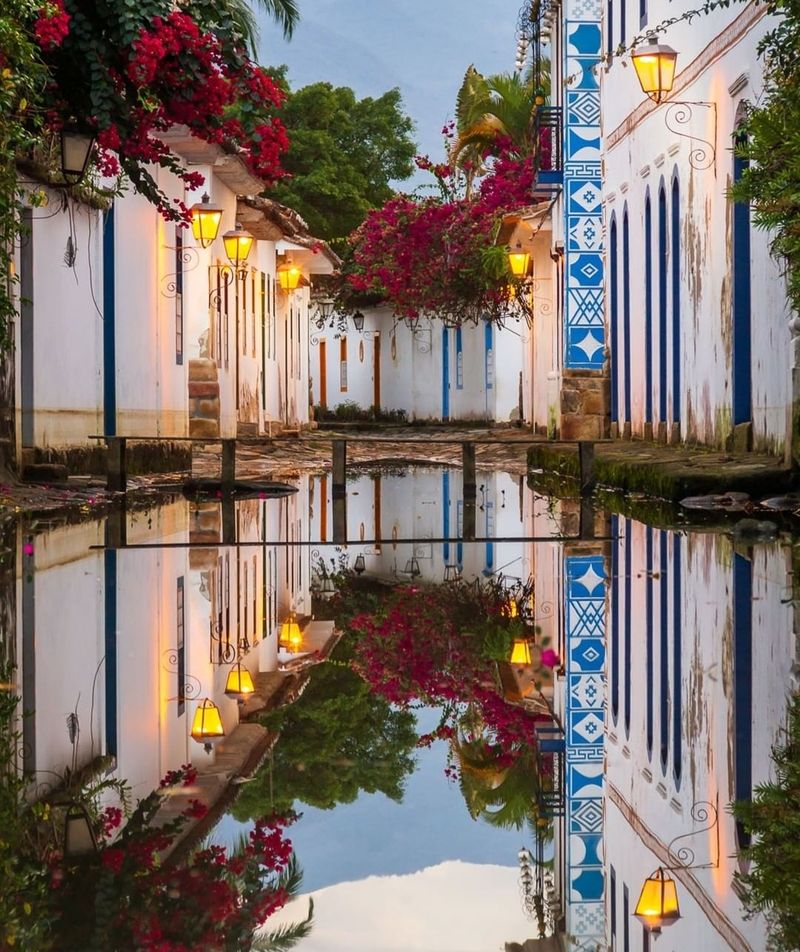
At high tide in Paraty, the sea actually creeps through the old stone streets of the colonial center, turning the historic quarter into something that looks like a miniature Venice surrounded by tropical mountains. The town was founded in the 17th century and preserves whitewashed buildings, centuries-old churches, and a waterfront that once served as a critical link between Brazil’s gold-producing interior and the Atlantic trade routes.
Since 2019, Paraty and its surrounding landscape have been recognized as a mixed UNESCO World Heritage property, covering both the historic center and the Atlantic Forest that rises dramatically behind the town. That forest is one of the world’s most biodiverse ecosystems, and hiking trails push up into it from practically every direction around the settlement.
Out on the water, boats reach secluded beaches and small islands scattered throughout the bay, many of which are reachable only by sea. Nearby Saco do Mamangua extends roughly eight kilometers inland between steep tropical slopes, creating a sheltered coastal fjord that feels almost impossibly quiet.
Paraty also has a thriving food and literary scene, hosting an internationally known book festival each year that fills the town’s bars and squares with writers, readers, and a surprisingly lively atmosphere for a colonial-era port town.
Buzios, Brazil
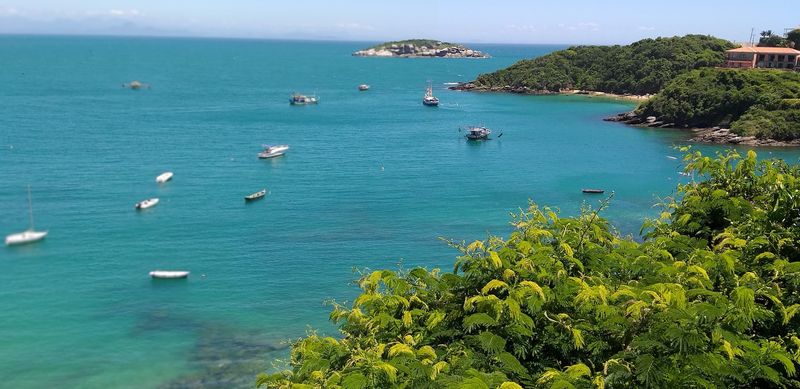
Brigitte Bardot discovered Buzios in 1964 and reportedly told everyone she knew about it, which in hindsight was either very generous or a slightly unfortunate decision for the locals. The French actress’s visit transformed a quiet fishing village into one of Brazil’s most fashionable Atlantic destinations, and the Orla Bardot waterfront promenade still commemorates that moment with a bronze statue that tourists photograph constantly.
What makes Buzios genuinely special beyond its celebrity history is its geography. The small peninsula juts roughly 170 kilometers from Rio de Janeiro and packs more than 20 beaches into a surprisingly compact area, each with a completely different personality.
Geriba draws surfers, Ferradura offers calm water ideal for families, and Manguinhos and Rasa cater to wind sport enthusiasts who arrive with kites and windsurfing gear.
Rocky headlands repeatedly divide the coastline into smaller sheltered bays, which prevents the whole peninsula from merging into one long urbanized strip. Rua das Pedras concentrates restaurants, boutiques, and nightlife in a pedestrian-friendly stretch that stays lively well into the evening.
Buzios manages the rare trick of being simultaneously upscale and genuinely enjoyable, offering beautiful scenery without taking itself so seriously that it stops being fun to visit.
Praia do Forte, Brazil
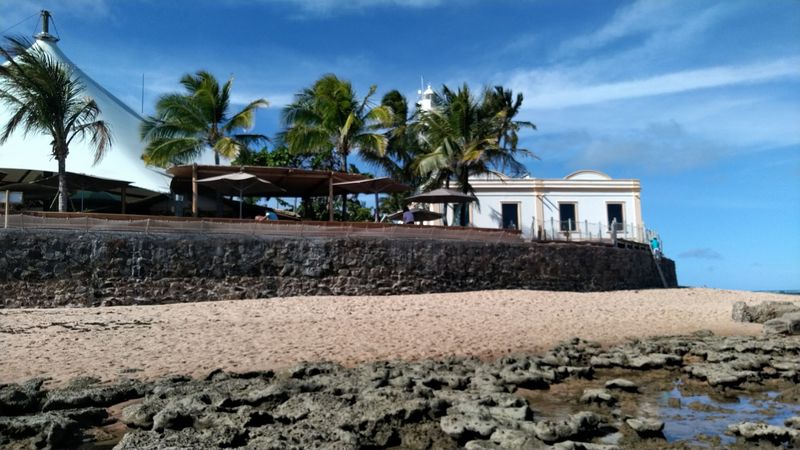
Praia do Forte pulls off something that most beach towns only manage to fake: it genuinely feels like a real village that happens to have excellent beaches rather than a resort that added a few fishing nets as decoration. The pedestrian-friendly center sits close to palm-lined sand, clear water, and reef systems, creating a compact, walkable setting that rewards slow exploration more than rushed sightseeing.
Between July and October, humpback whales pass through the waters along Bahia’s coast, bringing authorized watching excursions that add serious wildlife appeal to an already appealing destination. On land, the Garcia d’Avila complex stands as one of the most important remnants of early Portuguese colonization in Brazil, with ruins of a massive fortified estate built by one of the country’s earliest landowners rising from a hill just outside town.
The combination of colonial history, marine wildlife, Bahian cuisine, and reef-protected swimming makes Praia do Forte genuinely versatile for different types of travelers. Local restaurants serve moqueca, acaraje, and fresh fish with the kind of confidence that comes from knowing the ingredients are excellent.
The town has developed its visitor infrastructure thoughtfully enough that it feels polished without feeling plastic, which is a harder balance to strike than most coastal destinations realize.
Ilheus, Brazil
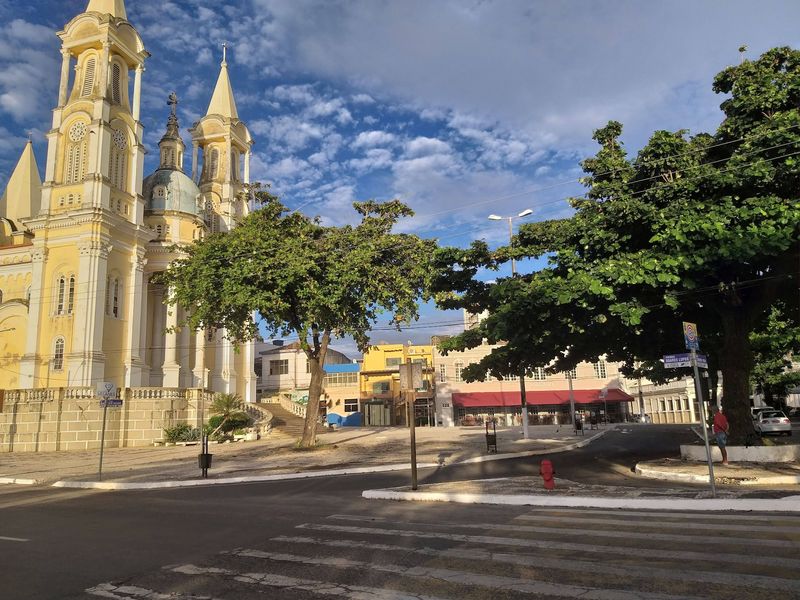
Jorge Amado set many of his most celebrated novels in and around Ilheus, and reading them before visiting this Bahian city makes the whole place feel like walking through a living book. The streets, the characters, and the social tensions he described so vividly in the early 20th century left a cultural fingerprint on Ilheus that tourism has not managed to scrub away, which is genuinely refreshing.
The city sits at the center of Brazil’s historic cocoa country, and visitors can tour working cacao farms and bean-to-bar chocolate production facilities that explain how this region once supplied a significant portion of the world’s chocolate. It is an agricultural history that shaped everything from the architecture of the city center to the inequalities Amado wrote about so passionately throughout his career.
Then there is the coastline, which Visit Brasil describes as more than 70 kilometers long, making it the lengthiest municipal shoreline in Bahia. Beaches range from developed southern stretches popular with locals to quieter northern areas backed by rivers and surviving Atlantic Forest fragments.
Afro-Bahian cuisine, seafood, live music, and a genuinely layered cultural identity make Ilheus feel like a destination that rewards curiosity rather than just rewarding people who want to lie on a beach and switch off entirely.
Piriapolis, Uruguay
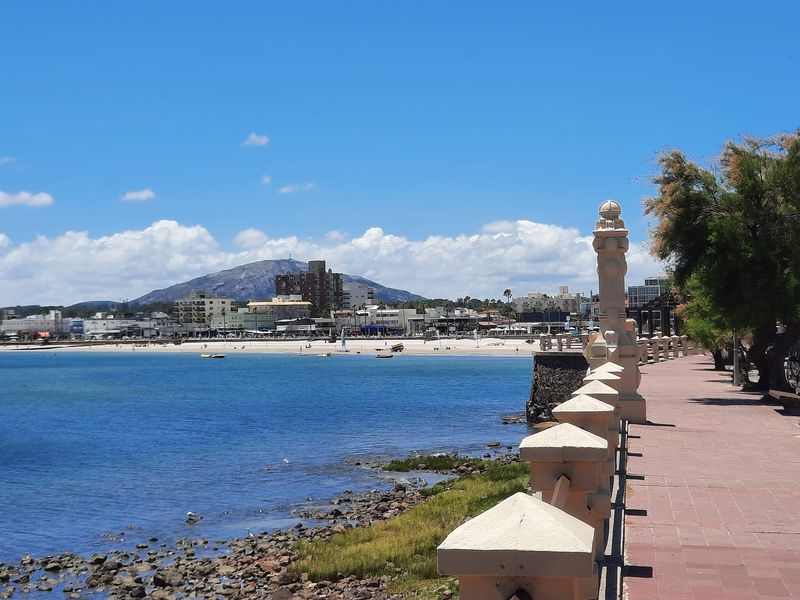
Francisco Piria had big dreams and the energy to build them. In 1893, the Uruguayan entrepreneur founded Piriapolis from scratch during the Belle Epoque, envisioning a planned seaside resort for affluent visitors from Uruguay and Argentina who wanted somewhere beautiful to spend their summers.
His legacy survives in the enormous Argentino Hotel, Piria Castle, and a long waterfront promenade that still carries the optimistic spirit of the original vision.
The geography sets Piriapolis apart from Uruguay’s flatter coastal stretches. Low hills wrap around approximately 25 kilometers of beaches, creating elevated viewpoints over the Atlantic that most Uruguayan beach towns simply cannot offer.
That combination of ocean views and hilltop perspectives gives the town an unusually layered visual character for this part of the continent.
The harbor attracts sea lions that lounge on the dock with the casual confidence of animals who know exactly who runs the place. Boating and fishing remain popular, and the water along this stretch of coast is clear enough for snorkeling in calmer conditions.
Piriapolis has a nostalgic, slightly faded elegance that fans of early 20th-century resort architecture find deeply appealing. It is less flashy than Punta del Este but more interesting, and its unhurried pace suits travelers who prefer charm over spectacle.
Cabo Polonio, Uruguay
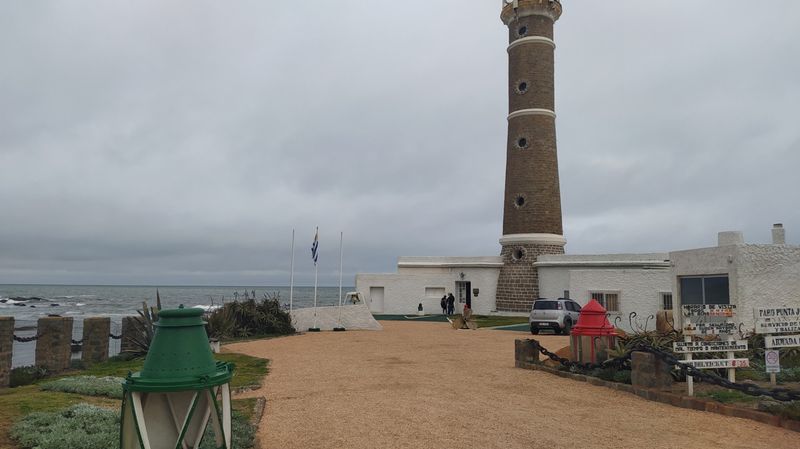
Getting to Cabo Polonio is part of the experience, and that is not a throwaway travel cliche. Reaching the settlement requires crossing roughly seven kilometers of protected dunes in authorized all-terrain vehicles, or arriving on foot or horseback if you really want to commit to the spirit of the place.
The journey filters out anyone who is not genuinely curious, which means the village stays wonderfully low-key even during summer.
The surrounding national park protects Uruguay’s largest surviving mobile-dune system, with individual dunes topping 20 meters in height. A lighthouse built in 1881 rises above the rocky cape, and nearby islands support almost half of Uruguay’s entire sea lion and fur seal populations.
The noise and smell of those colonies hits you before you even reach the shore, which is oddly one of the most memorable sensory experiences the Uruguayan coast offers.
Only around 70 people live in Cabo Polonio permanently, though that number swells dramatically when summer arrives and backpackers and adventurous travelers descend on the dunes. There is minimal conventional infrastructure, no paved streets, and limited electricity, which sounds like a hardship but mostly just makes the two broad Atlantic beaches feel even more spectacular.
Cabo Polonio is genuinely unlike anywhere else on this list, or anywhere else in South America.
Puerto Madryn, Argentina
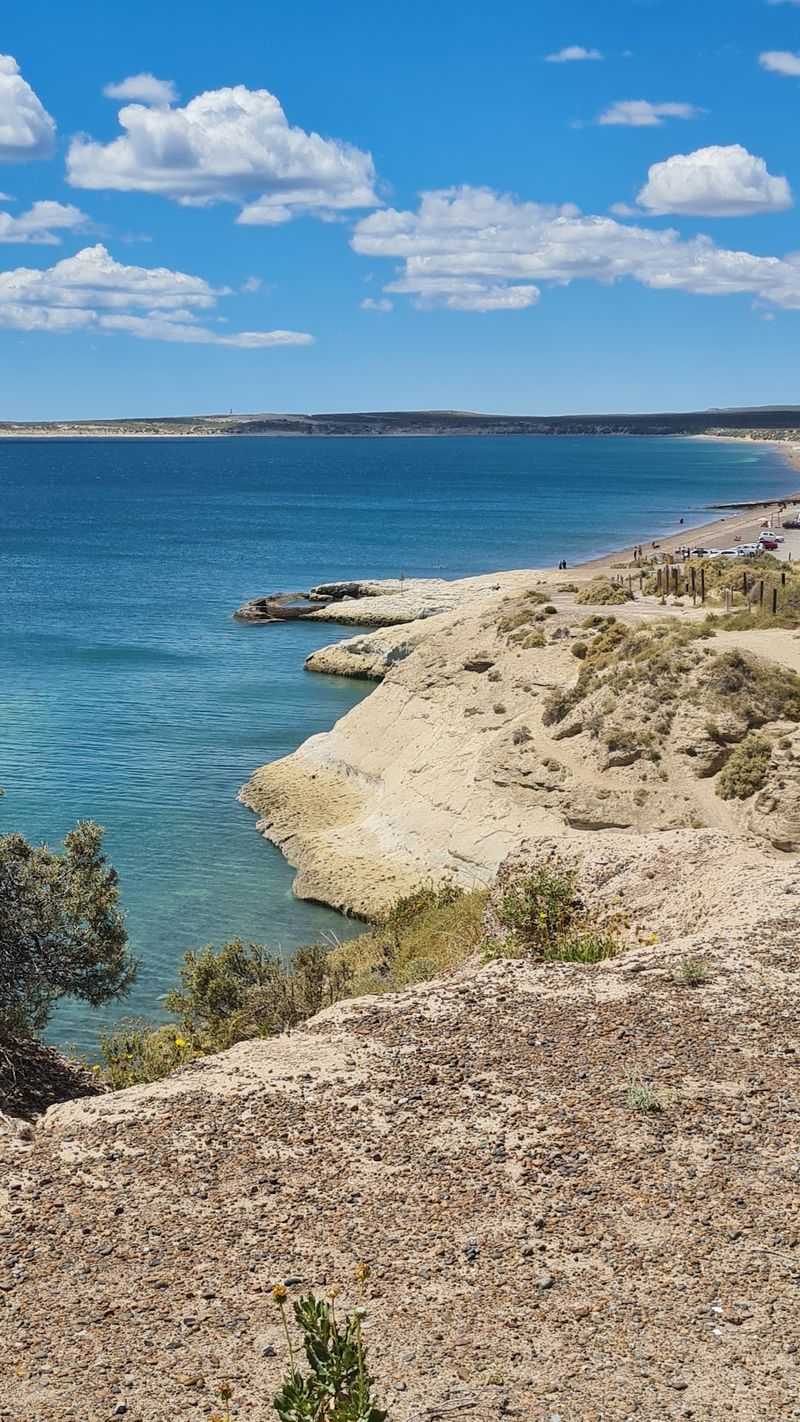
Southern right whales approach so close to shore near Puerto Madryn that you can sometimes watch them from the beach without any boat at all. At El Doradillo, about 15 kilometers from town, land-based whale watching during migration season produces the kind of encounters that most wildlife destinations can only promise in their brochures.
Seeing an animal the size of a school bus roll casually past you in shallow water is a perspective-adjusting experience.
Puerto Madryn faces the Golfo Nuevo on Argentina’s Patagonian Atlantic coast, where deep blue water meets an almost treeless steppe in a visual contrast that is striking the moment you arrive. The town serves as the principal gateway to UNESCO-listed Peninsula Valdes, one of the world’s great wildlife destinations, and September through November is particularly strong because whales, penguins, dolphins, sea lions, and orcas can all overlap during that window.
Argentina has designated Puerto Madryn as the country’s national diving capital, which makes sense given the rich marine life concentrated in and around the gulf. Wrecks, kelp forests, and diverse sea life reward divers of all experience levels.
The town itself is well-organized for visitors, with good accommodation options and restaurants serving Patagonian lamb alongside fresh Atlantic seafood that reflects both the land and sea surrounding it.
Puerto Piramides, Argentina
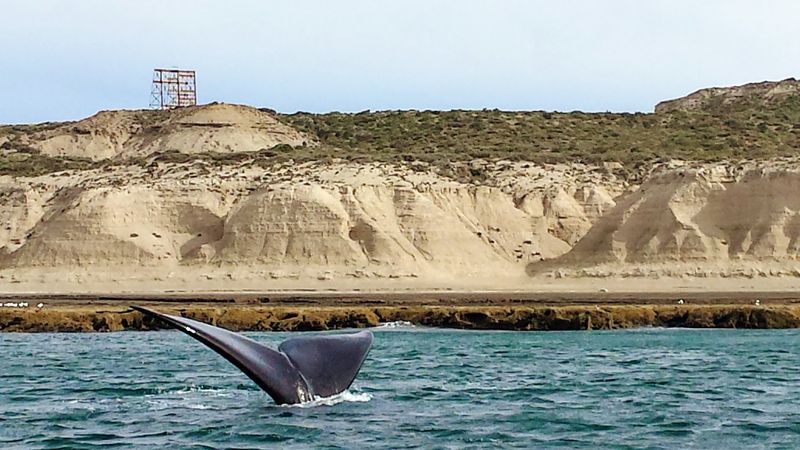
Puerto Piramides has the distinction of being the only town inside Peninsula Valdes, and it wears that status with a kind of quiet, unhurried confidence that suits the enormous Patagonian landscape surrounding it. The settlement sits below arid cliffs beside a protected bay, and whale-watching boats depart directly from the beach rather than from a formal harbor, which gives the whole operation a refreshingly no-fuss character.
Southern right whales gather around the peninsula from June into early December, with peak concentrations around September and October when mothers and calves are most active near the surface. Watching a calf breach repeatedly while its enormous mother floats nearby is the kind of scene that makes even seasoned wildlife travelers go completely silent for a few minutes.
Peninsula Valdes extends the experience far beyond whales. Elephant seals haul themselves onto beaches in comical, chaotic piles, Magellanic penguins shuffle between their burrows in enormous colonies, guanacos trot across the steppe, and seasonal orca activity near Punta Norte produces some of the most dramatic predator behavior visible anywhere on earth.
Puerto Piramides itself has only a handful of streets, a few restaurants, and very little pretension, which makes it the perfect base for focusing entirely on the extraordinary wildlife reserve that surrounds it on every side.
Share this story