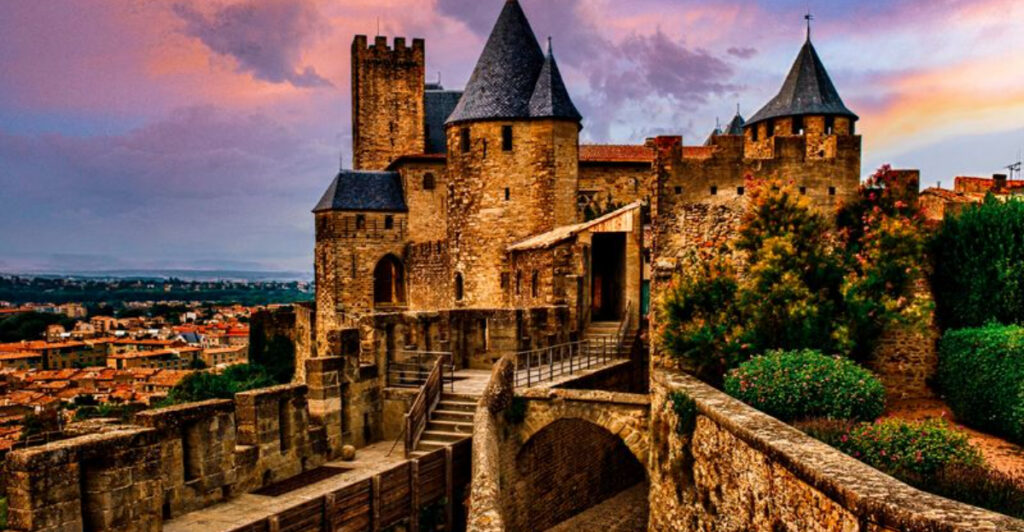
Some places refuse to let history fade quietly into the background. Scattered across Europe and beyond, a handful of towns have held onto their medieval streets, walls, and buildings so well that walking through them feels like stepping into another century.
These destinations are not recreations or theme parks. They are living, breathing communities where ancient stone and modern life exist side by side, and where the Middle Ages are never far from view.
Tallinn, Estonia
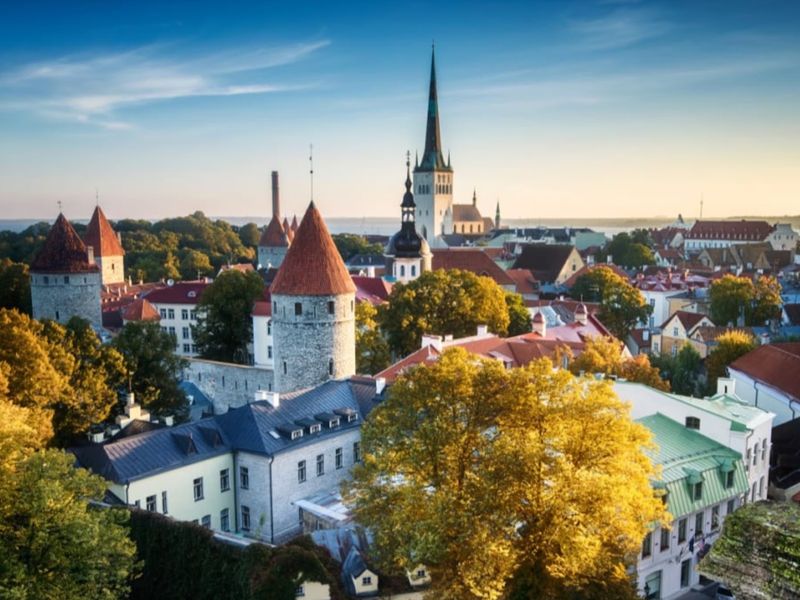
Climb the limestone cliffs of Toompea Hill and you will see why travelers keep coming back to Tallinn. The city’s medieval skyline, packed with pointed spires, round defensive towers, and red-tiled rooftops, looks like it was lifted straight from a history book.
Few European capitals have managed to hold onto this much of their original medieval fabric.
Tallinn thrived as a Hanseatic trading hub between the 13th and 16th centuries, and the old town still carries that merchant-city energy. Cobblestone streets wind between guild halls, Gothic churches, and centuries-old merchant houses.
The defensive walls and towers are so well preserved that visitors can walk long stretches of the ramparts.
UNESCO recognized Tallinn’s historic center as an exceptionally complete example of a northern European medieval trading city. The town hall square, surrounded by Gothic and Renaissance buildings, remains the social heart of the old town.
Winter or summer, Tallinn delivers one of the most authentic medieval atmospheres anywhere on the continent. Pack comfortable shoes because those cobblestones are no joke.
Carcassonne, France
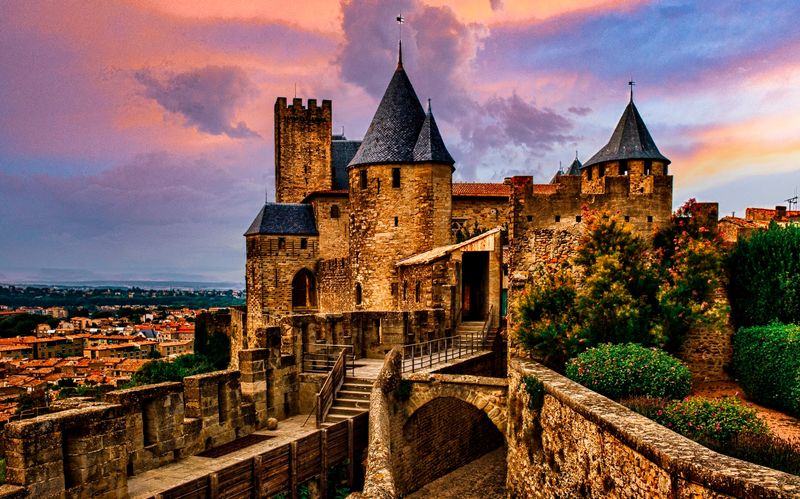
From a distance, Carcassonne looks less like a real town and more like a fantasy fortress that somehow wandered out of a storybook. Two enormous rings of walls, bristling with 52 towers and punctuated by fortified gates, crown a hilltop above the Aude River in southern France.
Very few medieval fortifications anywhere in the world match its scale or drama.
The site has been inhabited since Roman times, but its famous double-walled defenses took shape during the 12th and 13th centuries. The 19th-century architect Viollet-le-Duc oversaw significant restoration work, which remains a topic of debate among historians.
Some of his choices were creative interpretations rather than strict historical reconstructions.
Still, Carcassonne delivers a genuinely powerful experience. Narrow lanes wind through the citadel between old houses, churches, and the impressive Chateau Comtal.
UNESCO added it to the World Heritage List in 1997. The lower town, known as the Bastide Saint-Louis, adds another layer of medieval history across the river.
Visiting at dawn, before the tour buses arrive, gives you the best chance of experiencing the citadel’s haunting quietness firsthand.
San Gimignano, Italy
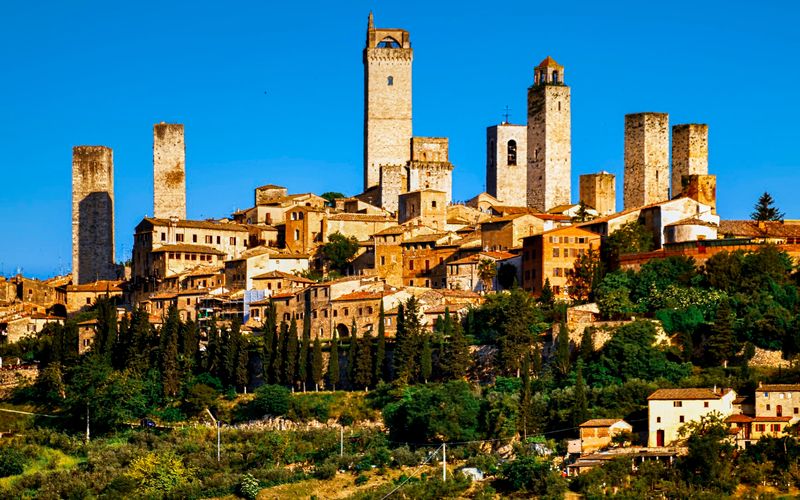
Fourteen stone towers still pierce the Tuscan sky above San Gimignano, making this hilltop town one of the most photographed medieval skylines in the world. At the height of the town’s prosperity in the 13th century, there were more than 70 of these towers.
Wealthy families built them taller and taller, essentially competing in the world’s earliest recorded game of architectural one-upmanship.
Two rings of defensive walls still encircle the historic center, which is filled with Romanesque churches, noble residences, frescoed buildings, and a street layout that has barely changed in centuries. Piazza della Cisterna, with its ancient well at the center, is one of Italy’s most charming medieval squares.
The town sits along the old Via Francigena pilgrimage route, which brought merchants and travelers through for centuries.
San Gimignano joined the UNESCO World Heritage List in 1990. The local saffron and white wine, Vernaccia di San Gimignano, are worth trying while you are there.
The town gets busy during peak summer months, so an early morning or late afternoon visit rewards you with quieter streets and better light for photographs. The towers look especially striking against an orange evening sky.
Rothenburg ob der Tauber, Germany
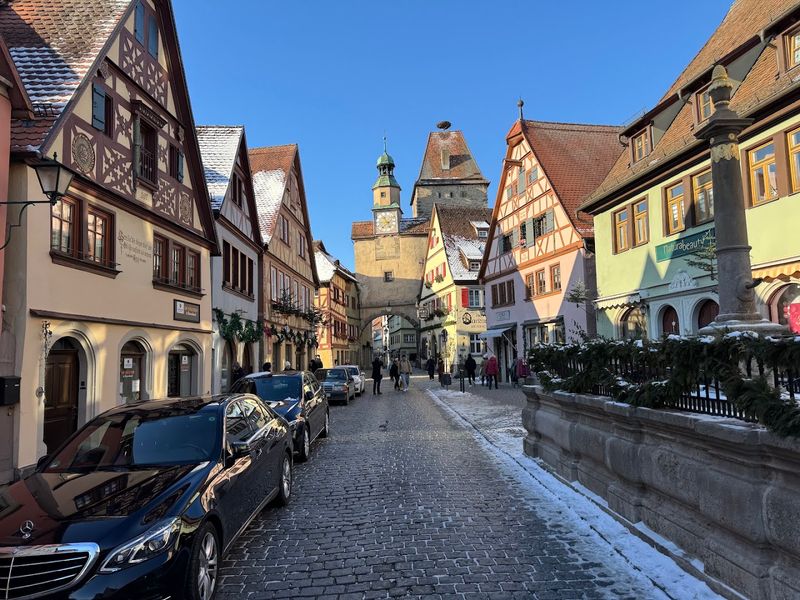
Rothenburg ob der Tauber is so perfectly preserved that first-time visitors sometimes wonder if it is real. Half-timbered houses in shades of cream, ochre, and terracotta line streets that have barely changed since the 16th century.
The town sits high above the Tauber River valley behind a nearly complete ring of fortified walls, complete with covered walkways that visitors can stroll along.
Here is the twist: Rothenburg’s extraordinary preservation is largely the result of misfortune. After losing its political importance following the Thirty Years War in the 17th century, the town simply could not afford to modernize.
What seemed like economic stagnation turned out to be the best thing that ever happened to its architecture.
Today the town draws visitors from around the world, especially along the famous Romantic Road tourist route through Bavaria. The medieval crime museum, the Christmas market, and the Plonlein, a famously photogenic street junction with a half-timbered house wedged between two towers, are highlights.
Rothenburg also has an excellent night watchman tour that brings the town’s darker history to life after dark. It is touristy, absolutely, but for very good reason.
Cesky Krumlov, Czechia
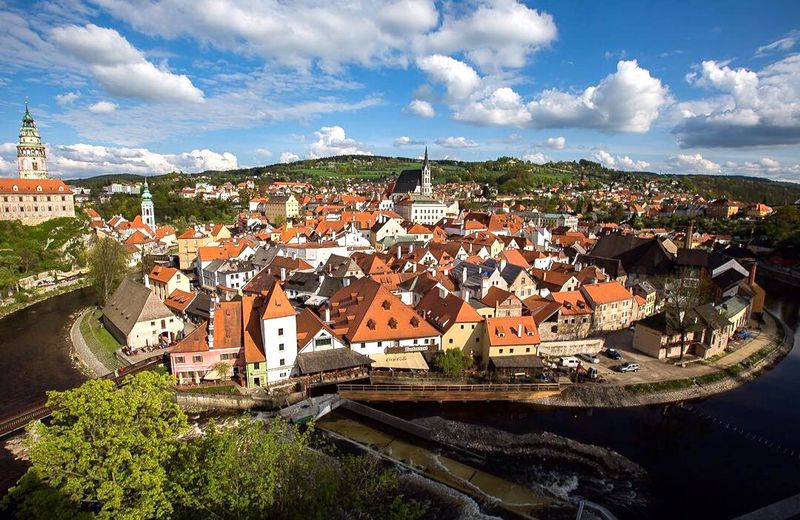
The Vltava River bends so dramatically around Cesky Krumlov that the town is almost entirely encircled by water, giving it the look of a natural island fortress. Painted facades in shades of pink, yellow, and green line the sloping lanes of the historic center, while an enormous castle complex dominates the hill above.
It is one of Central Europe’s most visually striking medieval towns.
The castle itself is the second largest in the Czech Republic after Prague Castle. Its history stretches back to the 13th century, and it passed through the hands of powerful noble families including the Rosenbergs and the Schwarzenbergs.
The castle theater, with its remarkably intact Baroque stage machinery, is considered one of the best-preserved in Europe.
UNESCO added Cesky Krumlov to its World Heritage List in 1992, recognizing it as an outstanding example of a small Central European town whose architectural heritage survived centuries of gradual, careful development. The town hosts a popular Renaissance festival each summer that draws thousands of costumed participants and visitors.
Wandering the lanes at dusk, when the tour groups have thinned out and the lanterns flicker on, is genuinely magical. The atmosphere earns every bit of its reputation.
Bruges, Belgium
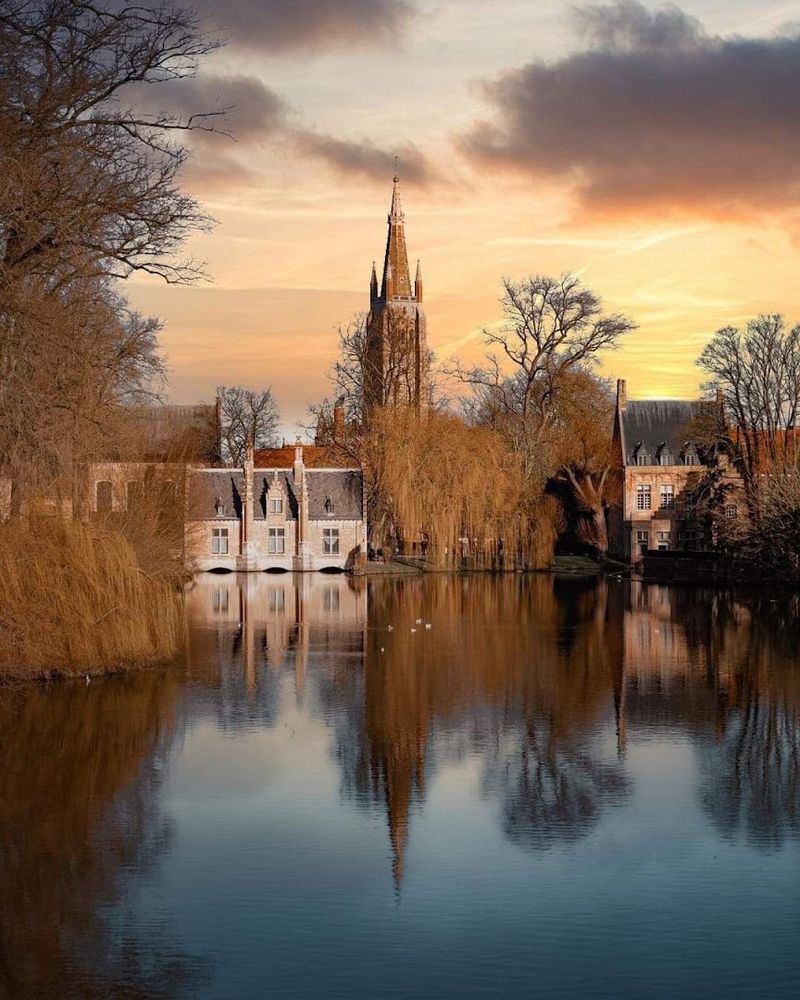
Bruges earned the nickname ‘the Venice of the North’ long before Venice became a cliche comparison, and honestly, it holds up. Canals thread through a compact historic center packed with Gothic churches, stepped-gable merchant houses, cobblestone squares, and medieval almshouses.
The city was one of the wealthiest trading centers in medieval Europe, and the architecture reflects that extraordinary prosperity.
During the 15th century, Bruges was home to a thriving Flemish art scene. Jan van Eyck lived and worked here, and several of his paintings still hang in the Groeninge Museum in the city center.
The Belfry of Bruges, a medieval bell tower rising 83 meters above the Markt square, has kept watch over the city since the 13th century.
UNESCO recognized the historic center of Bruges as a World Heritage Site in 2000, noting that its original Gothic buildings have remained central to the town’s identity. The city is compact enough to explore on foot or by bicycle, and getting slightly lost in the smaller back streets is genuinely recommended.
The Belgian chocolate shops and breweries scattered throughout the old town make getting lost considerably more enjoyable. Arrive early on weekday mornings for the quietest experience.
Rhodes Old Town, Greece
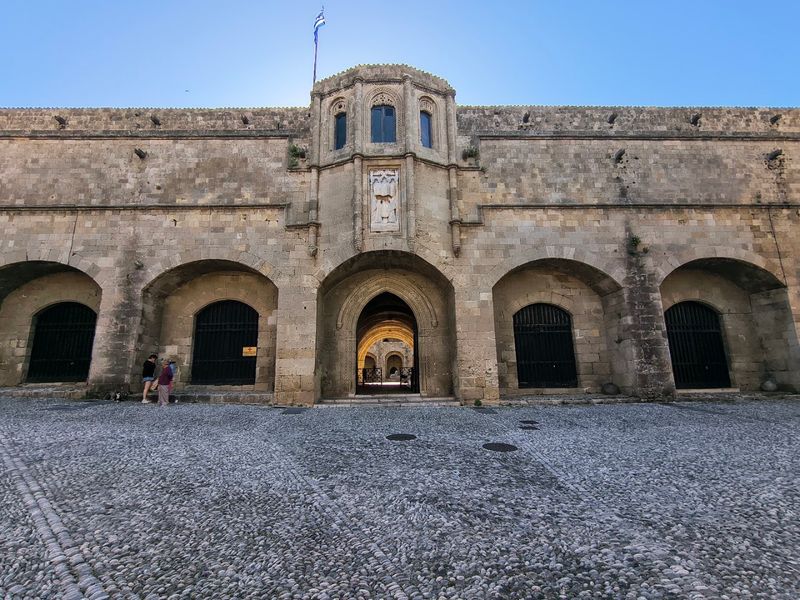
Walking through the gate of Rhodes Old Town feels like crossing a genuine boundary between centuries. Massive limestone walls, up to 12 meters thick in places, surround a medieval city that the Knights of St. John built into one of the most formidable fortresses in the eastern Mediterranean.
The sheer scale of the fortifications is breathtaking even today.
The Knights arrived in 1309 and spent more than two centuries transforming Rhodes into a military stronghold. The famous Street of the Knights, lined with the inns of different national groups of the Order, remains one of the best-preserved medieval streets in all of Europe.
After the Ottomans took the city in 1522, mosques, baths, and bazaars were added, creating a fascinating architectural layering.
UNESCO added Rhodes Old Town to the World Heritage List in 1988. Inside the walls you will find churches, palaces, fountains, Byzantine ruins, and Ottoman structures all packed into a dense, labyrinthine street pattern.
The Grand Master’s Palace, heavily restored in the 20th century, dominates the highest point of the town. Evening in the old town, when the day-trippers have returned to their cruise ships, is when the place truly comes alive with its own quiet energy.
Dubrovnik, Croatia
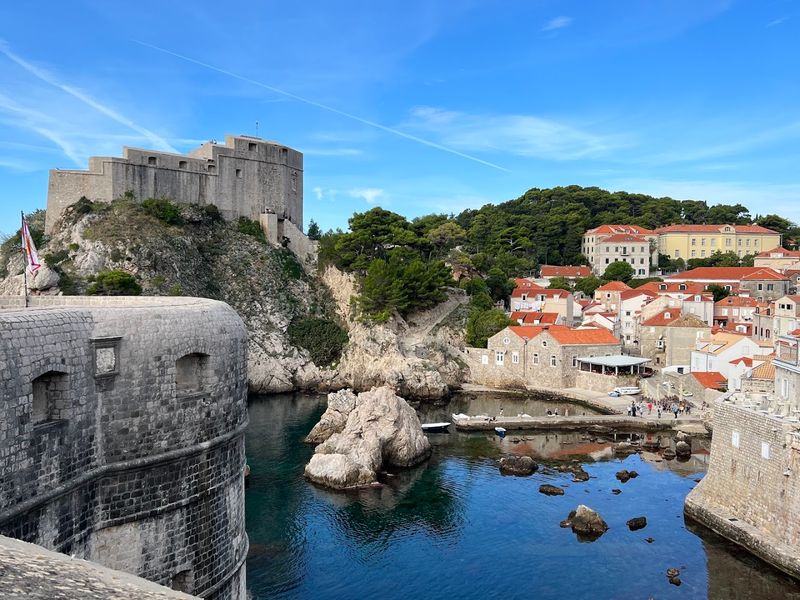
George Bernard Shaw once called Dubrovnik the ‘pearl of the Adriatic,’ and for once, a famous travel quote actually understates the case. The old city rises directly from the sea behind some of the most impressive medieval walls in Europe, forming a compact urban island of orange rooftops, marble streets, and centuries of history.
The walls stretch nearly two kilometers and can be walked in their entirety.
Dubrovnik was the capital of the Republic of Ragusa, a small but remarkably sophisticated maritime state that maintained its independence for centuries through clever diplomacy. The republic abolished the slave trade in 1416, making it one of the first places in Europe to do so.
Gothic, Renaissance, and Baroque buildings crowd the streets inside the walls, built and rebuilt after a catastrophic earthquake in 1667.
UNESCO inscribed Dubrovnik in 1979, and the city has since become one of the most visited historic towns in Europe. Game of Thrones fans will recognize several locations from their favorite show filmed here.
The Stradun, the main limestone-paved street, glows brilliantly white in afternoon sunlight. Visiting outside of peak summer season makes the experience significantly calmer and more rewarding for everyone involved.
Obidos, Portugal
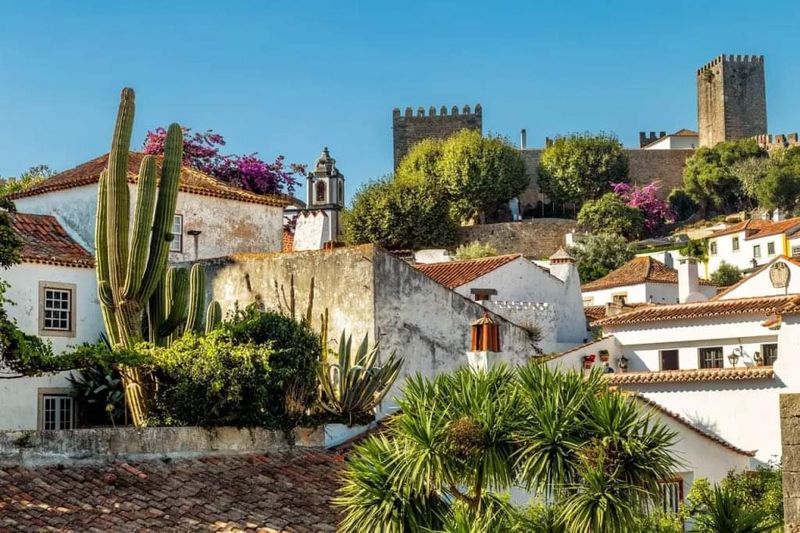
Obidos is the kind of place that makes you wonder why anyone would ever leave. The entire town sits inside a ring of medieval walls, and the streets within are so photogenic that the town has appeared in countless travel magazines and photography books.
Whitewashed houses decorated with blue and yellow painted borders line the lanes, and bougainvillea spills over old stone walls in vivid bursts of color.
The town has a sweet claim to fame beyond its architecture. Obidos is home to ginjinha, a sour cherry liqueur traditionally served in a small cup made of chocolate.
Eating the cup after finishing the drink is entirely encouraged and extremely satisfying. The town has been associated with the Portuguese royal family since the 13th century, when King Dinis gave it as a wedding gift to his queen.
A castle overlooks the town and has been converted into a pousada, a historic inn where guests can sleep within the medieval walls. The walkable ramparts provide panoramic views across terracotta rooftops and surrounding countryside.
Obidos is small enough to explore in a single day, but the atmosphere is relaxed enough that lingering longer feels completely natural. It consistently ranks among Portugal’s most beloved historic towns for good reason.
Pingyao, China
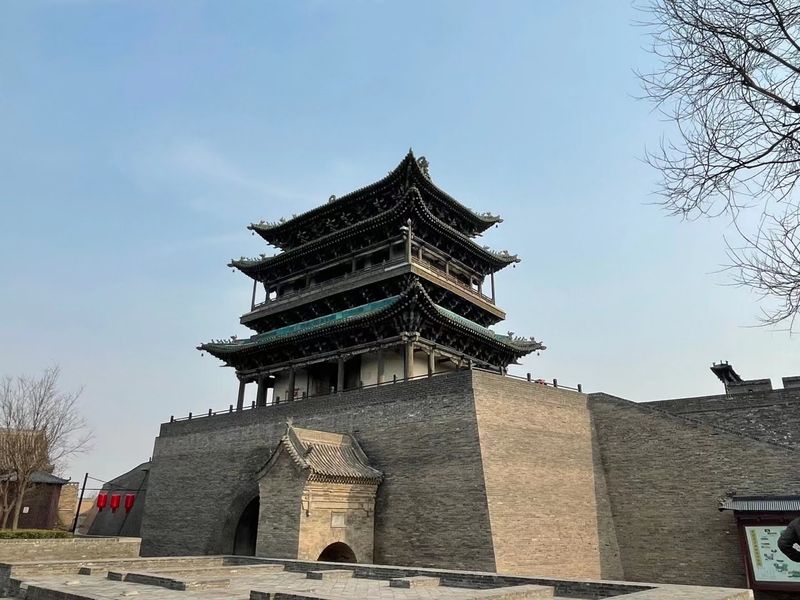
Pingyao is proof that China’s medieval heritage is just as spectacular as anything Europe has to offer. This ancient city in Shanxi Province retains one of China’s best-preserved examples of a traditional Han Chinese fortified town, complete with an extensive wall system, gates, watchtowers, courtyard homes, temples, and historic commercial streets.
The city wall stretches six kilometers and dates primarily from the 14th century.
Pingyao became wealthy during the Qing Dynasty as a center of Chinese banking and finance. The Rishengchang Exchange Shop, established here in 1823, is considered the first draft bank in Chinese history.
The town’s financial importance declined in the early 20th century, and that economic slowdown helped preserve its historic urban fabric much the same way Rothenburg’s misfortunes preserved its own.
UNESCO added Pingyao to the World Heritage List in 1997, recognizing it as an outstanding example of a Han Chinese city. The original street layout, dating back more than five centuries, remains clearly readable today.
Staying overnight inside the old city at a traditional courtyard guesthouse is strongly recommended. The lanes quiet down significantly after dark, and the lantern-lit streets reveal a side of Pingyao that daytime crowds make easy to miss.
Trogir, Croatia
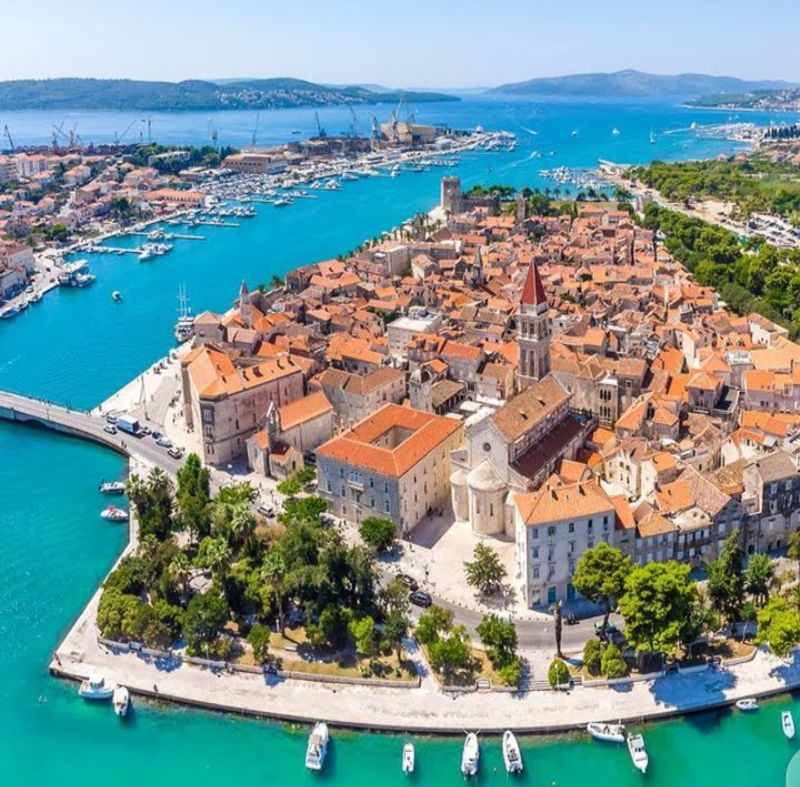
Trogir is an architectural time capsule floating on a tiny island just off Croatia’s Dalmatian coast. The town is so densely packed with historic buildings that there is almost no room for modern construction, which turns out to be the best urban planning decision anyone never actually made.
Streets barely wide enough for two people walking side by side lead through layers of history deposited over more than two thousand years.
The street grid itself dates back to the Hellenistic period, making Trogir one of the oldest continuously inhabited urban centers on the Adriatic. Medieval Croatian churches, Romanesque and Gothic architecture, Venetian loggia buildings, and Renaissance palaces crowd the compact center.
The Cathedral of St. Lawrence, with its intricately carved Romanesque portal, is considered one of the finest examples of Romanesque-Gothic architecture in the eastern Adriatic region.
UNESCO recognized Trogir in 1997 as a remarkable example of continuous urban development shaped by successive cultures. The town connects to the mainland and to the island of Ciovo by two short bridges.
Sitting at a waterfront cafe watching boats drift past the old city walls is one of those simple pleasures that makes travel feel genuinely worthwhile. Trogir rewards slow, unhurried exploration above everything else.
Bamberg, Germany
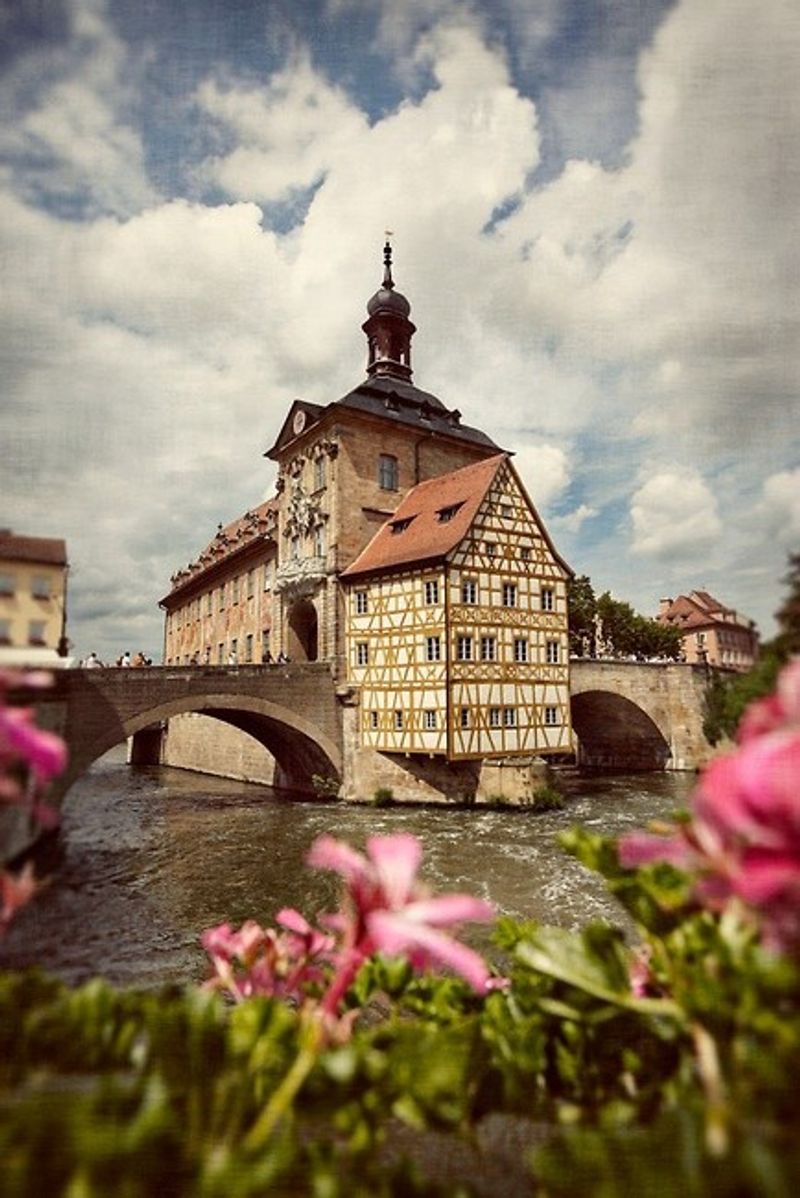
Bamberg does not have a single dramatic fortress or famous tower to anchor its identity. Instead, it has something arguably more impressive: an entire medieval city that survived World War II virtually intact, spread across seven hills and two river islands in northern Bavaria.
The result is one of Germany’s largest and most coherent historic urban landscapes.
The city developed during the early medieval period and became an important ecclesiastical center. The Bamberg Cathedral, begun in 1004, houses the tomb of Emperor Henry II and the famous Bamberger Reiter, a mysterious equestrian statue carved in stone around 1235 whose identity has never been definitively established.
Historians have been arguing about it for centuries, which seems fitting for a town this old.
UNESCO inscribed Bamberg in 1993, recognizing it as an outstanding Central European town with an exceptional number of surviving medieval and early modern buildings. The area known as Little Venice, where colorful fishermen’s houses line the banks of the Regnitz River, is one of the most photographed corners of the old town.
Bamberg is also famous for its smoked beer, Rauchbier, a local specialty brewed in the city for centuries. It is an acquired taste, but an honest one.
Kutna Hora, Czechia
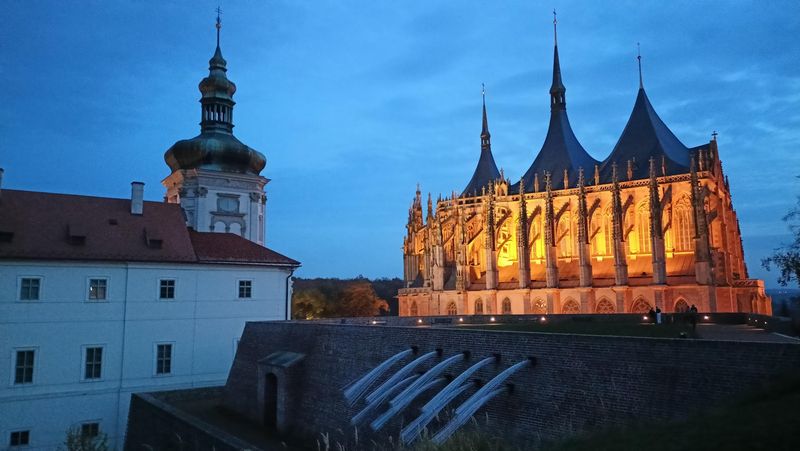
Silver made Kutna Hora one of the most powerful cities in medieval Central Europe, and the architecture it funded is still standing to prove it. At its peak in the 14th century, this Bohemian mining town was producing roughly one-third of all the silver mined in Europe.
That kind of wealth builds cathedrals, and Kutna Hora’s Cathedral of Saint Barbara is one of the most beautiful Gothic churches on the continent.
The cathedral, begun in 1388 and not completed until 1905, features spectacular vaulted ceilings, flying buttresses, and stained glass windows that flood the interior with colored light. The town’s historic center also includes the Italian Court, a former royal mint where silver coins were struck for the Bohemian kingdom.
Winding streets connect Gothic churches, old residences, and buildings directly tied to the medieval mining industry.
UNESCO added Kutna Hora to the World Heritage List in 1995. A short walk from the historic center, the Sedlec Ossuary contains human bones arranged into elaborate decorations, including a chandelier reportedly made from every bone in the human body.
It is genuinely unsettling and absolutely fascinating in equal measure. Kutna Hora rewards visitors who look beyond the famous cathedral and explore the quieter corners of this remarkable former boom town.
Banska Stiavnica, Slovakia
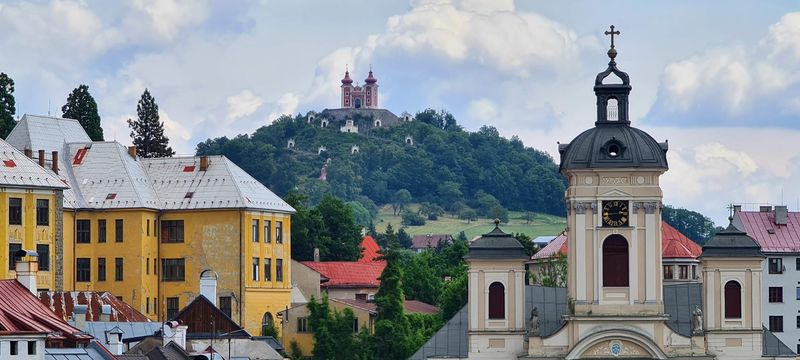
Tucked into the forested Stiavnica Mountains of central Slovakia, Banska Stiavnica is the kind of place that genuinely surprises visitors who stumble upon it. The town grew wealthy from gold and silver deposits discovered here in the early medieval period, eventually becoming one of the most important mining centers in the entire Habsburg Empire.
The engineering innovations developed here influenced mining industries across Europe for centuries.
Steep, winding streets connect a remarkable collection of historic buildings including two castles, multiple churches, a town hall, baroque townhouses, and the remains of an extensive mining infrastructure. The Old Castle dates to the 12th century, while the New Castle was built in the 16th century as a defensive watchtower against Ottoman raids.
The combination of medieval urban design and industrial heritage is genuinely rare anywhere in the world.
UNESCO added Banska Stiavnica to the World Heritage List in 1993. The town also hosts a historic open-air mining museum and a network of underground tunnels that visitors can explore.
Despite its remarkable heritage, Banska Stiavnica remains far less visited than better-known Central European destinations, which means shorter queues, lower prices, and a more authentic local atmosphere. For travelers who enjoy discovering places before they become crowded, this one belongs at the top of the list.
Mdina, Malta
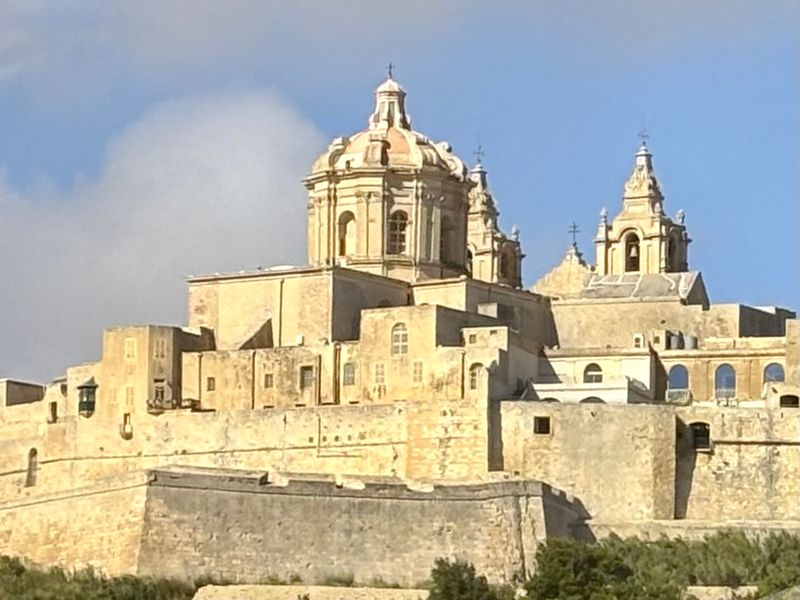
They call Mdina the Silent City, and on a quiet weekday morning the nickname earns its place completely. The sound of traffic fades the moment you pass through the monumental baroque gate, replaced by the soft echo of footsteps on ancient stone.
Only around 300 people actually live inside the walls, making Mdina one of the smallest and most atmospheric inhabited medieval towns anywhere in the world.
The city sits on a fortified hilltop in the center of Malta, and its origins stretch back to the Bronze Age. Arab rulers gave the town its current name, meaning ‘walled city,’ during the medieval period.
After the Knights of St. John arrived in Malta in 1530 and established their base in Valletta, Mdina gradually retreated into its quiet, aristocratic identity. The noble families who remained built elegant palaces that still line the narrow lanes today.
The architecture reflects a fascinating mix of Arab, Norman, medieval, and Baroque influences layered across centuries of continuous occupation. The Cathedral of Saint Paul, the Palazzo Falson, and the city’s network of narrow lanes and hidden courtyards reward slow, careful exploration.
Visiting at dusk, when the golden limestone walls catch the last light of the day, transforms Mdina into something genuinely otherworldly. No photograph quite captures how it actually feels to be there.
Share this story