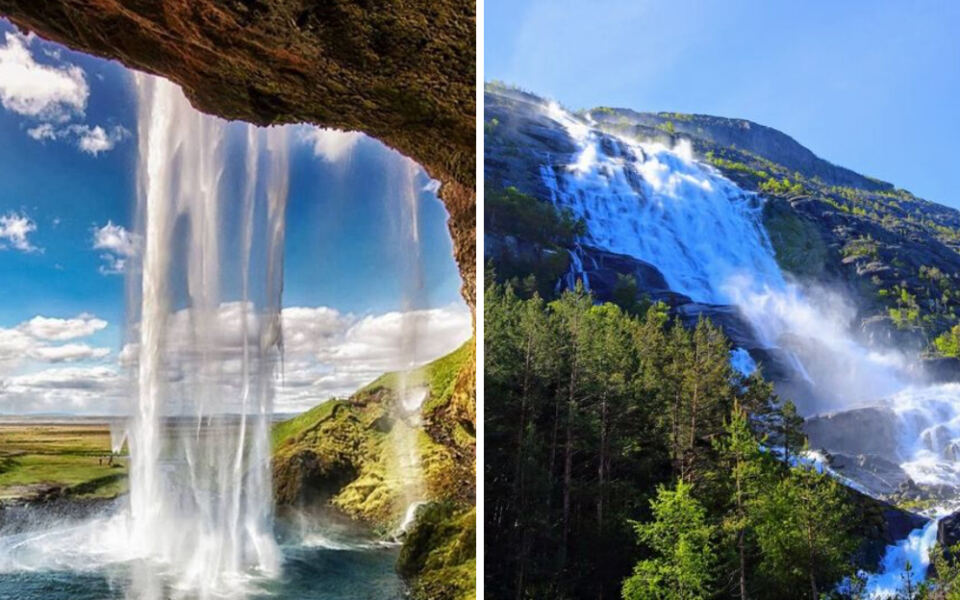
Europe hides some of the most jaw-dropping waterfalls on the planet, and most people have no idea they exist. From Iceland’s volcanic canyons to Norway’s towering fjord cascades, the variety is almost impossible to believe.
Some plunge hundreds of meters in a single free fall, while others spread across wide riverbeds in a maze of pools and channels. Whether you are a casual traveler or a serious hiker, these 15 waterfalls offer experiences that go far beyond a quick photo stop.
Krimml Waterfalls, Austria
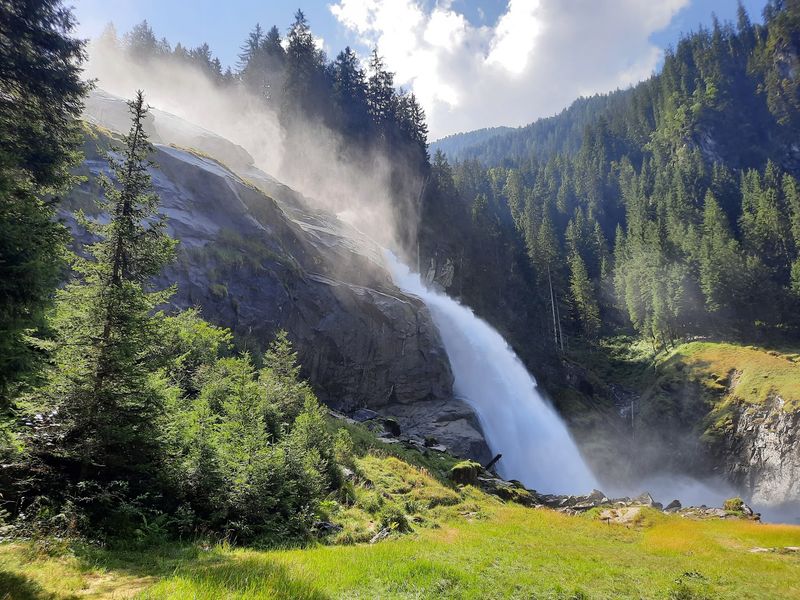
Austria’s Krimml Waterfalls hold the title of the highest waterfall in Europe, and every meter of that 380-meter drop earns its reputation. The cascade tumbles in three separate stages through Hohe Tauern National Park, giving visitors multiple chances to feel genuinely small next to falling water.
A four-kilometer trail winds beside the entire descent, connecting overlooks at each level. The lowest section is only about 10 to 15 minutes from the parking area, making it accessible even for casual walkers.
Reaching the upper viewpoints requires more effort, but the views keep improving with every switchback.
Summer brings the most dramatic conditions, when snowmelt from surrounding Alpine peaks can roughly triple the normal water volume. The spray is constant and heavy, and the surrounding forest feels increasingly wild the higher you climb.
Krimml is not a single waterfall moment you tick off a checklist. It is an entire hiking experience built around falling water, and the difference between arriving and leaving is usually the difference between impressed and genuinely amazed.
Dettifoss, Iceland
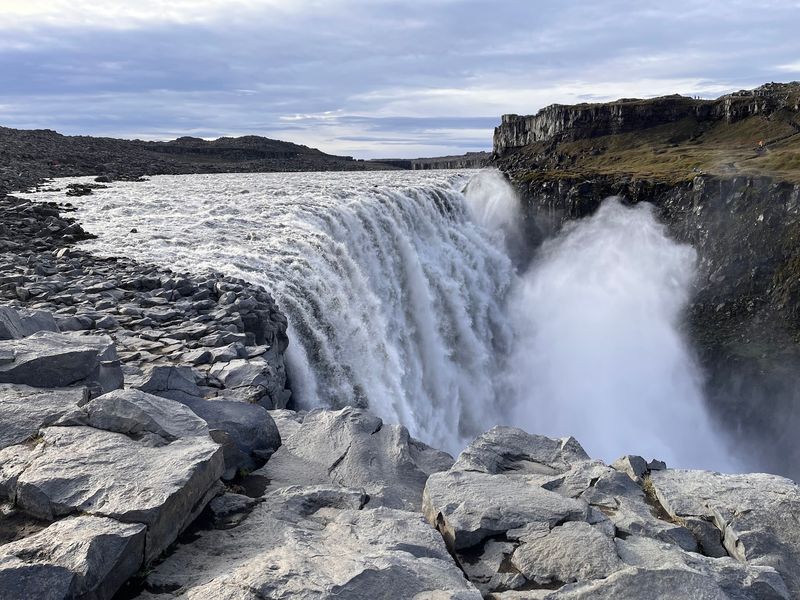
Raw power is the only way to describe Dettifoss. At roughly 45 meters tall, it is not the highest waterfall on this list by a long stretch, but Vatnajokull National Park identifies it as the most powerful waterfall in all of Europe, and standing near it makes that claim feel completely believable.
The Jokulsá á Fjollum River, carrying sediment-heavy glacial water, crashes across a roughly 100-meter-wide edge and drops into the Jokulsárgljúfur canyon below. The vibration travels through the ground, and park information notes that visitors can feel the rock trembling beneath their hands.
Dark volcanic cliffs, sediment-grey water, and a largely treeless landscape strip away anything soft or welcoming about this place. Two viewpoints exist on opposite sides of the canyon, each offering a different angle on the chaos below.
The western route involves a shorter marked walk from the parking area. Dettifoss does not look like water falling.
It looks like geology happening in real time, and the prehistoric feeling of the place stays with you long after the sound fades.
Vøringsfossen, Norway
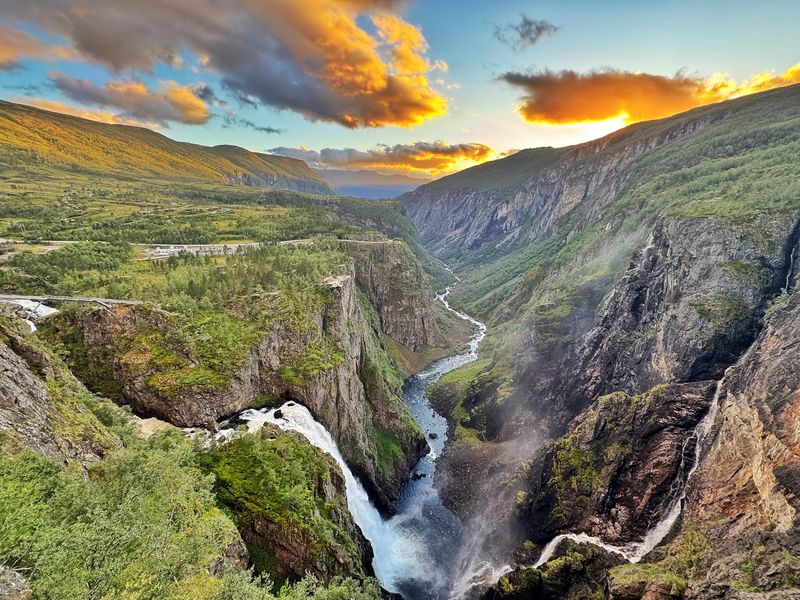
Norway has more spectacular waterfalls than most countries have rivers, so being called the most famous one in the country is a serious achievement. Vøringsfossen earns that reputation by dropping 182 meters from the Hardangervidda plateau into the Mabodalen valley, disappearing into a canyon so deep that the bottom seems almost theoretical.
Recent upgrades completed in 2024 added new viewing platforms, connecting paths, and a striking step bridge that lets visitors look directly into the gorge from several angles. That kind of access changes everything about how a waterfall can be experienced.
The canyon is genuinely half the attraction. Walk toward one of the overlooks and the land simply drops away without warning, revealing the waterfall plummeting toward a valley floor framed by mountain ridges extending in every direction.
Many waterfalls reward you with one good photograph. Vøringsfossen rewards you with a series of completely different perspectives depending on where you stand, which is why visitors tend to linger much longer than they planned.
Mardalsfossen, Norway
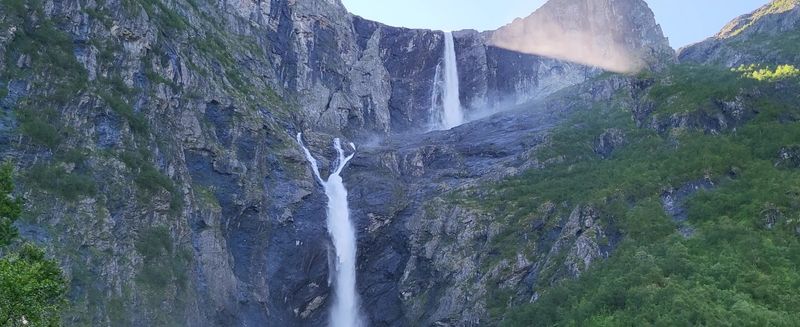
Seeing the full length of Mardalsfossen in a single glance is nearly impossible, and that is actually part of the experience. The waterfall descends approximately 655 meters through the Eikesdalen landscape, including a free-fall section of about 297 meters that is among the longest uninterrupted drops on the continent.
There is one detail that changes everything about planning a visit: the flow is seasonal. Water is regulated for hydroelectric production, and the main summer release runs from June 20 through August 20.
Outside that window, the full spectacle simply does not exist.
During the release period, water pours from a high mountain plateau over enormous cliffs into a deep green valley below. Approaching on foot gradually reveals the scale, which the distance initially disguises.
From far away, Mardalsfossen looks like a pale scratch on the cliff face. Walk closer and the pale scratch becomes a roaring column of water wider and louder than anything the first view suggested.
Timing your visit correctly is not optional here. It is the entire difference between an impressive hike and an unforgettable one.
Grande Cascade de Gavarnie, France
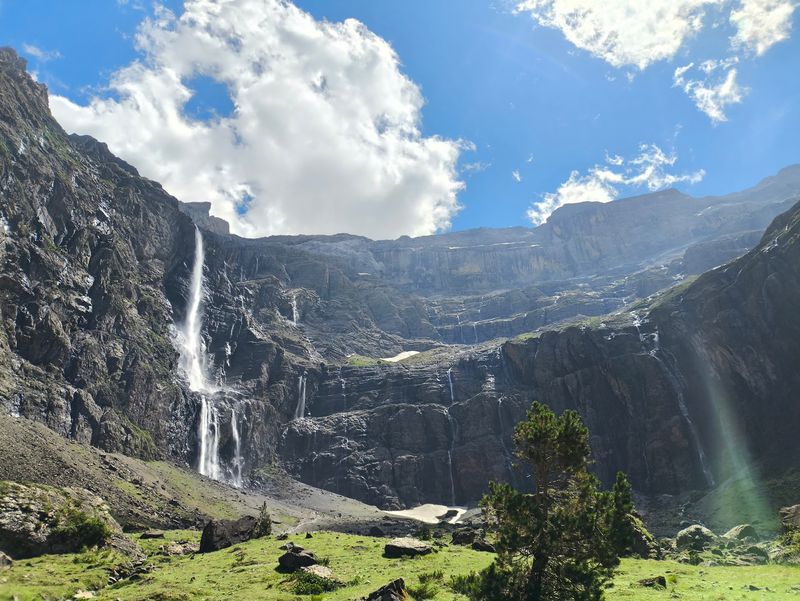
The Grande Cascade de Gavarnie drops approximately 422 meters from the upper cliffs of the Cirque de Gavarnie, making it one of the tallest waterfalls in France. That number sounds impressive on paper, but nothing prepares you for what it looks like in person.
The cirque itself is the real spectacle. A vast semicircle of Pyrenean cliffs rises toward 3,000 meters near the French-Spanish border, curving around the valley like a natural amphitheater.
Remnant glaciers cling to the upper walls, and the waterfall forms the headwaters of the Gave de Gavarnie river far below.
From photographs, the cascade appears as a thin white line against grey rock. Stand at the base of the cirque and the thin white line is suddenly a column of water falling farther than most skyscrapers are tall.
Visitors approach along the valley floor from the village of Gavarnie, and the waterfall grows progressively larger with every step forward. The combination of geological scale, high-altitude setting, and sheer visual drama makes Gavarnie one of those rare places where the reality is actually bigger than the expectation.
Seven Sisters Waterfalls, Geirangerfjord, Norway
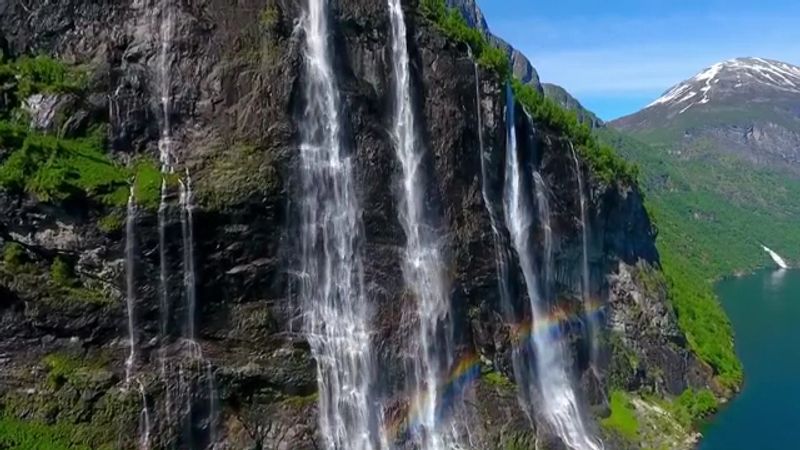
Seven waterfalls tumbling side by side down a sheer cliff directly into a UNESCO-listed fjord sounds like something someone invented. It is completely real, and the Seven Sisters of Geirangerfjord are every bit as dramatic as the description suggests.
The seven streams descend roughly 250 meters each, fed by snowmelt from the mountains above. Visit Norway notes that they are usually most impressive from May through July, when meltwater and rainfall combine to push the volume higher.
Across the water sits another waterfall called the Suitor, creating a scene so theatrical it almost feels staged.
The best viewpoint is not on land. A ferry, sightseeing boat, or kayak allows visitors to approach from fjord level, where the true height of the surrounding cliffs becomes obvious in a way that no photograph captures.
Abandoned farms visible on the ledges above add a quiet, almost melancholy layer to an already extraordinary setting. Few waterfalls on Earth come with an approach this dramatic, and the combination of water, fjord, mountains, and history makes the Seven Sisters genuinely hard to leave.
Skógafoss, Iceland
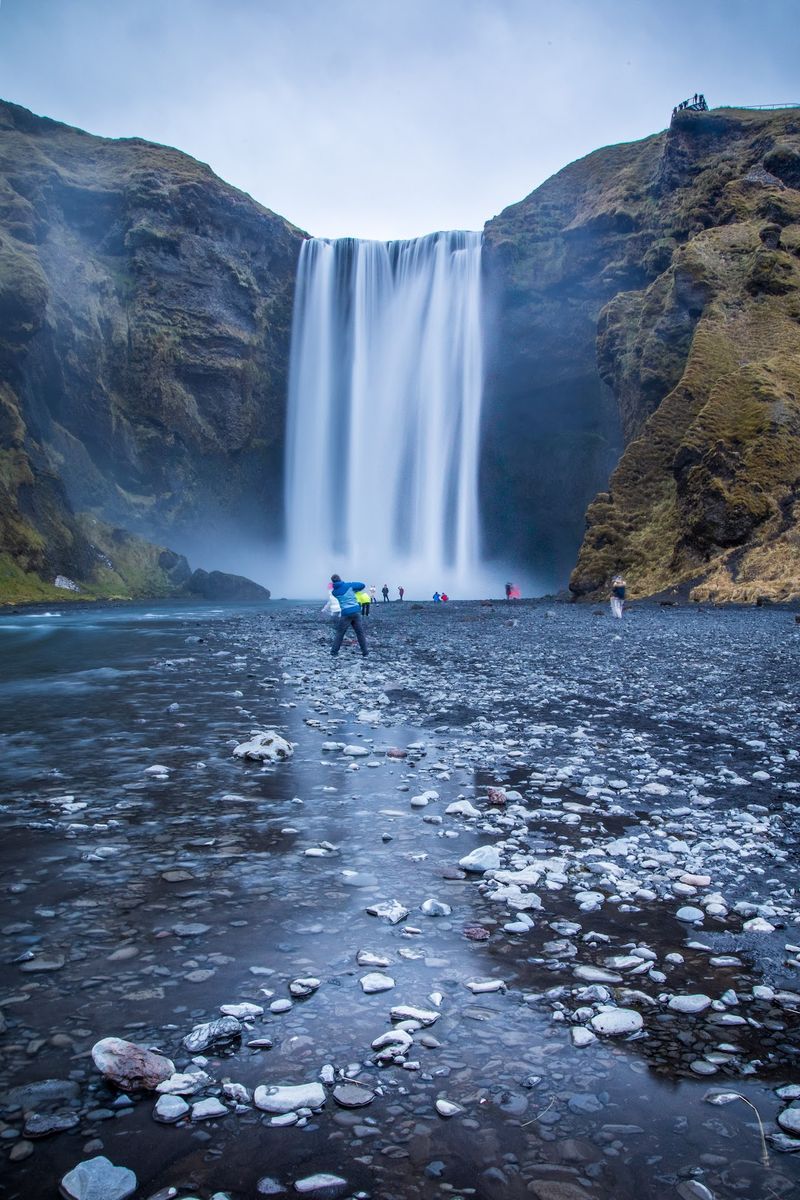
Skógafoss is almost aggressively photogenic, and it knows it. A wide, clean curtain of water drops 60 meters from an old sea cliff near the village of Skógar, landing on a broad flat riverbed where visitors can walk close enough to feel the spray settle on their skin.
Unlike many waterfalls that split into multiple narrow channels, Skógafoss often forms one solid rectangular wall of white water. On sunny days, mist from the base regularly produces rainbows, and the cliff framing the falls creates a natural backdrop that requires almost no effort to photograph well.
Visitors who stop at the base and call it done are missing half the story. A staircase climbs beside the falls to an upper viewpoint, and from there the Skóga River continues inland through a gorge containing more than 20 additional waterfalls.
That trail transforms Skógafoss from a roadside attraction into the opening chapter of a much larger landscape. Arriving here is easy.
Deciding when to leave is the harder part, especially when the afternoon light hits the mist at just the right angle.
Rhine Falls, Switzerland
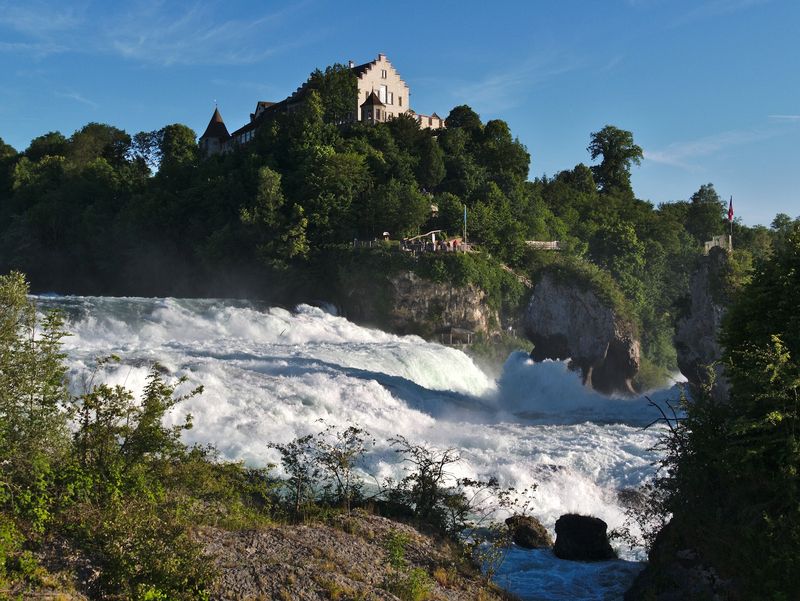
Rhine Falls does not look imposing on a map. At 23 meters tall, it barely registers as a notable drop compared with the giants on this list.
Then you see the volume of water involved, and the scale becomes something else entirely.
Near Schaffhausen, the Rhine spreads to approximately 150 meters wide before collapsing over the edge, producing what Switzerland Tourism identifies as the largest waterfall in Europe by volume. The sound arrives before the view does, a constant low roar that grows louder with every step toward the riverbank.
The experience here is unusually interactive. Visitors can watch from platforms beside Laufen Castle, walk trails around the river, or take a boat out toward the rocky outcrop standing in the middle of the torrent.
Getting close to that central rock completely changes how the falls feel, because the water is not just falling in front of you. It is falling on three sides at once.
Rhine Falls proves convincingly that height rankings alone miss the point. Twenty-three meters of the Rhine River is an entirely different creature from twenty-three meters of a mountain stream.
Cascata delle Marmore, Italy
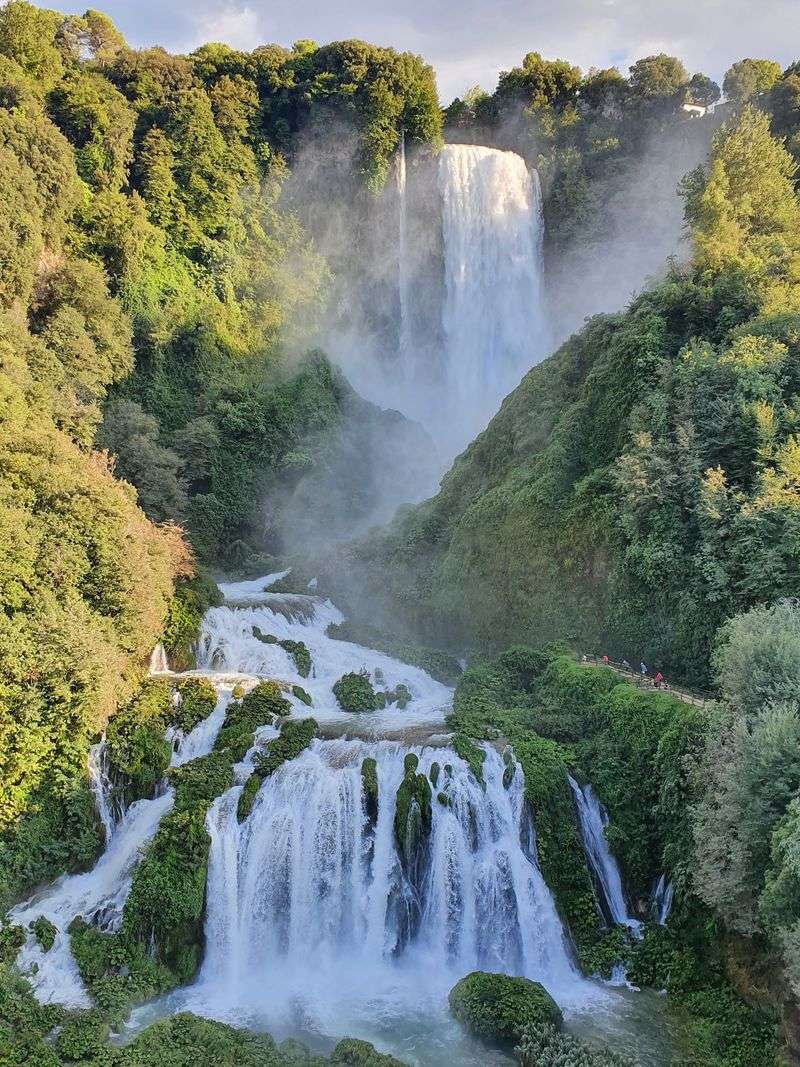
Most waterfalls were shaped by geology over millions of years. Cascata delle Marmore was shaped by a Roman consul in 271 BC.
Manius Curius Dentatus ordered a channel built to drain marshy water from the Velino basin toward the Nera River, and centuries of additional engineering eventually produced the three-stage cascade seen today.
The combined drop reaches about 165 meters, and the surrounding forest and rock walls make it look convincingly natural at first glance. The human origin tends to come as a genuine surprise to visitors who did not read up beforehand.
Flow is regulated for hydroelectric production, so checking the official release schedule before visiting is genuinely important. Several trails connect upper and lower viewpoints, allowing visitors to experience the spray, forest, and noise from multiple angles throughout the site.
The result is one of Europe’s strangest landmarks: a waterfall that looks ancient and wild but was deliberately engineered more than two millennia ago. Visiting feels like standing inside a piece of Roman infrastructure that somehow became more beautiful than anything its builders probably imagined when they first broke ground.
Savica Waterfall, Slovenia
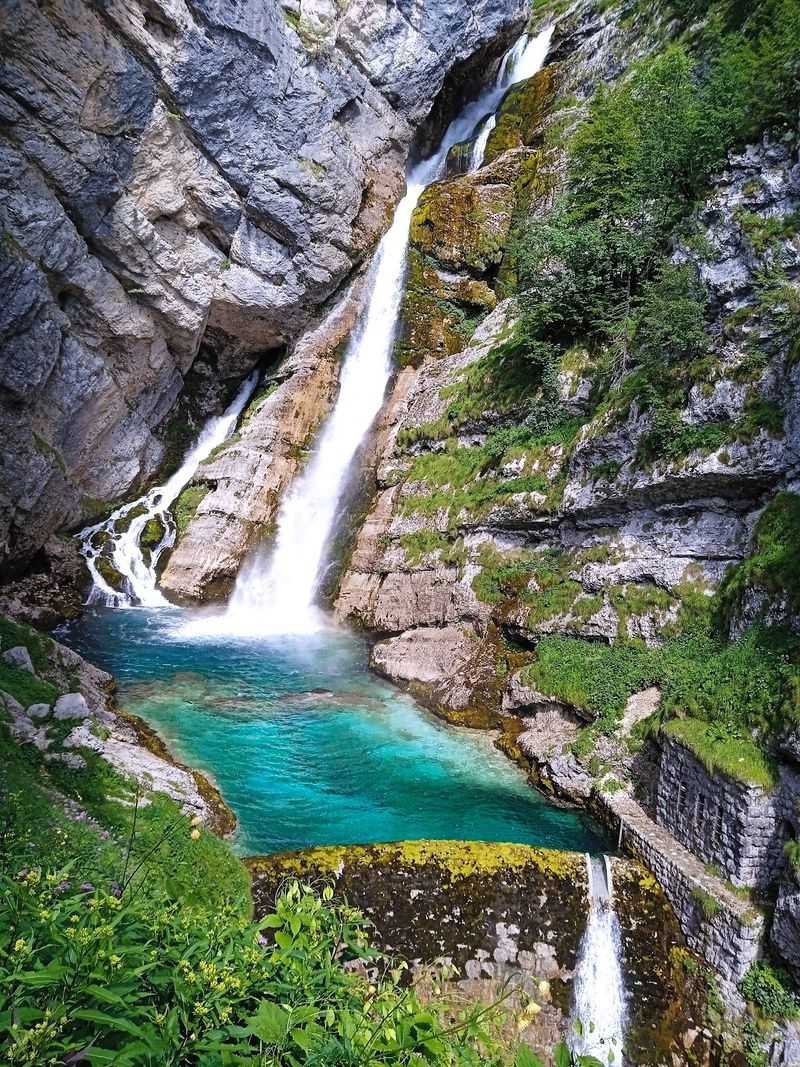
Savica Waterfall has a shape that stops people mid-step. Water emerges from the limestone beneath the Komarca cliffs near Lake Bohinj and splits into two streams before plunging 78 meters into an emerald pool below.
That distinctive A-shaped form is unlike almost anything else in Alpine Europe.
The geology adds an invisible layer of interest. Water reaches Savica through an underground karst system connected to the Triglav Lakes Valley, meaning the falls are the surface expression of a much larger hidden network of channels and caves beneath the mountains.
Savica also carries real cultural weight in Slovenia. The waterfall inspired France Preseren, the country’s most celebrated poet, and it remains one of the defining natural landmarks of the Bohinj region.
A climb leads to the main viewing platform beneath steep rock walls, and the waterfall is especially powerful after heavy rainfall or during periods of strong mountain runoff. Compared with Norway’s giants, Savica feels intimate.
But the color of that pool, the shape of the falls, and the setting beneath limestone cliffs make it one of the most visually striking waterfalls anywhere in Central Europe.
Vettisfossen, Norway
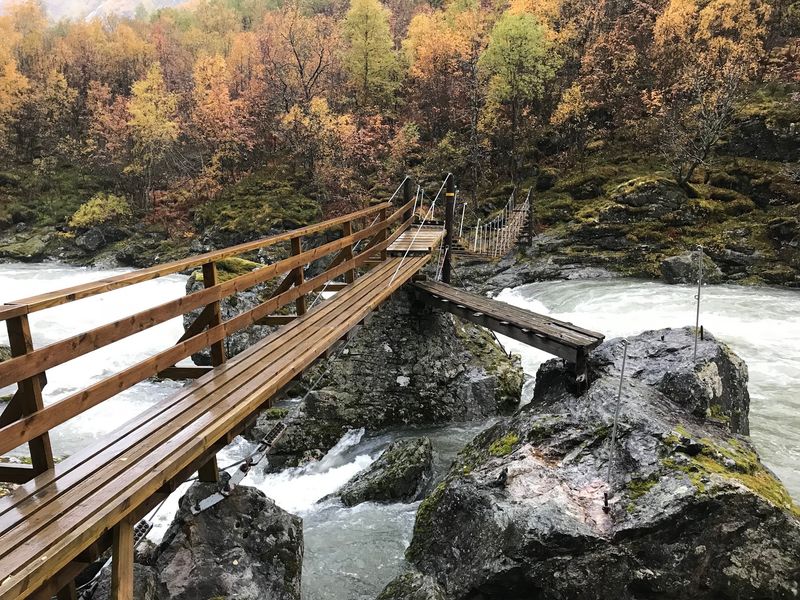
Vettisfossen is not for travelers looking for a car park and a short stroll. Reaching this waterfall requires hiking through the Utladalen valley from the Hjelle area, covering roughly 12 kilometers depending on your chosen route.
The effort is the whole point.
The reward is a 275-meter uninterrupted free fall, which Visit Norway identifies as the highest protected, unregulated waterfall in the country. That unregulated status matters more than it might seem.
Many Norwegian waterfalls have been altered or partially diverted for hydroelectric production. Vettisfossen has been protected since 1924 and flows entirely on its own terms.
The surrounding landscape operates at a scale that makes the waterfall feel like a natural conclusion rather than an isolated attraction. Jotunheimen rises beyond the valley, with dozens of peaks exceeding 2,000 meters.
By the time Vettisfossen appears against the cliff face, the hike has already delivered hours of increasingly dramatic scenery. The falls are the exclamation point at the end of a very long, very rewarding sentence.
Serious hikers consistently rank Utladalen among Norway’s best valley walks, and Vettisfossen is the main reason why.
Peričnik Waterfall, Slovenia
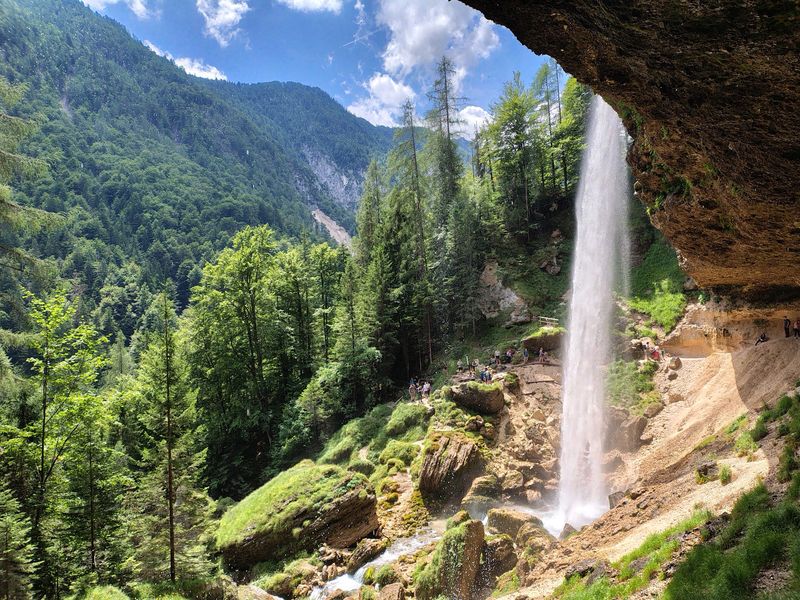
Walking behind a waterfall sounds like a gimmick until you are actually standing there. Peričnik Waterfall in Slovenia’s Vrata Valley offers exactly that experience, and it turns out to be one of the most memorable things you can do near any waterfall in Europe.
The lower cascade drops 52 meters while a separate 16-meter waterfall sits above it. A path curves behind the main fall, placing visitors between the rock wall and the cascade itself.
The valley appears through a moving curtain of spray, and the sound of water crashing a few feet in front of your face is something no photograph communicates accurately.
Conditions can be slippery and genuinely wet, so proper footwear is not a suggestion. When water levels are strong, the spray reaches far enough behind the falls to soak anyone who lingers.
The Julian Alps provide the backdrop beyond the valley, and the route into Vrata passes some of the most dramatic mountain scenery in Slovenia. Peričnik is not the tallest waterfall here or the most powerful.
It wins purely on proximity, and proximity to falling water at that scale is a category of its own.
Skradinski Buk, Croatia
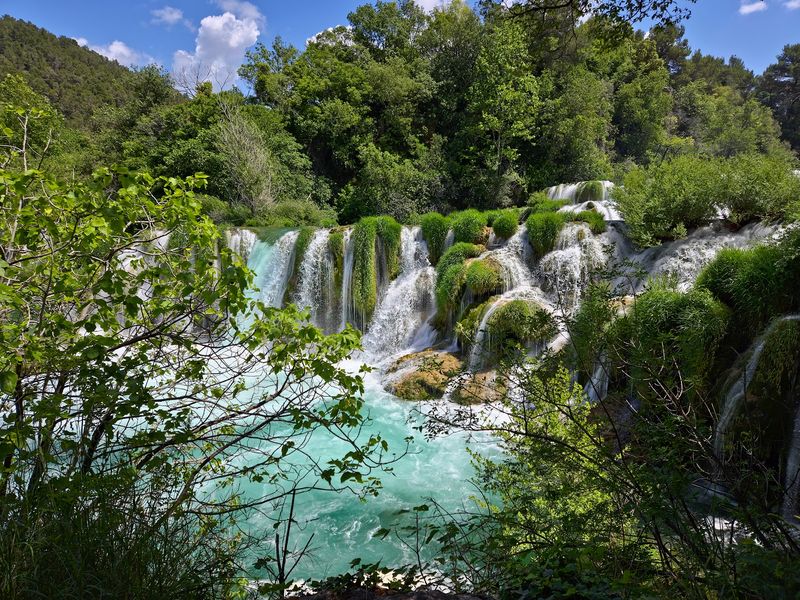
Forget the single dramatic plunge. Skradinski Buk is something different entirely.
Located in Krka National Park, it is the longest and most visited waterfall system on the Krka River, a sprawling landscape of travertine barriers, islands, channels, pools, and cascades that stretches across the riverbed rather than dropping straight down.
Wooden trails and bridges weave through the entire system, bringing visitors close to sections where water separates around vegetation and limestone formations before rejoining downstream. Historic watermills dot the landscape, their preserved structures reflecting centuries of rural life built around the river’s energy.
The beauty at Skradinski Buk comes from complexity rather than height. You are not watching one waterfall from a single viewpoint.
You are walking through an entire living river system that refuses to settle down. Seasonal boat and shuttle connections operate from park entrances, making access straightforward throughout the year.
The turquoise color of the pools is a product of the mineral-rich water and travertine geology, and it photographs almost too well to look real. Croatia does not always appear on waterfall lists, but Skradinski Buk absolutely deserves a place on this one.
Langfoss, Norway
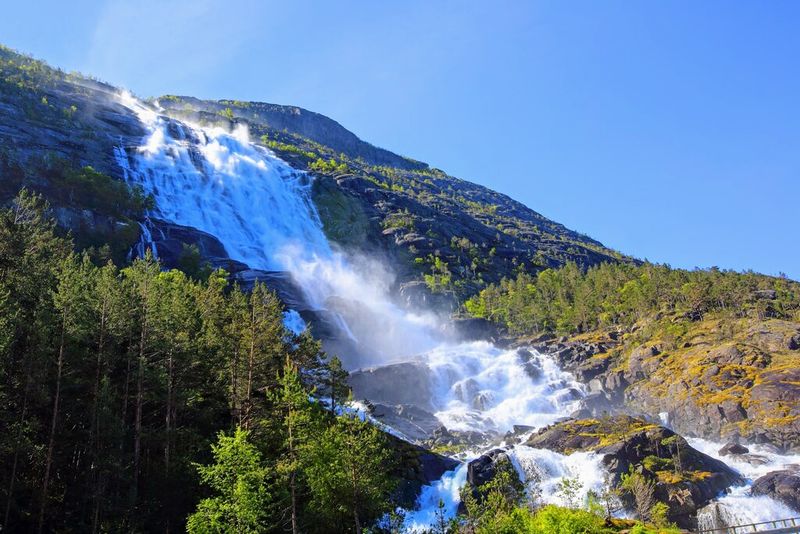
Langfoss does something that most waterfalls cannot manage: it makes the mountain look like it is actively pouring itself into the sea. Descending roughly 600 meters down the mountainside into Akrafjord, it fans and races across dark rock rather than falling in a single narrow channel, creating a broad, textured appearance that fills an enormous section of the cliff face.
The road passes close to the base, which makes the waterfall surprisingly accessible for something this tall. Pulling over and stepping out of a car to stand beneath 600 meters of cascading water with a fjord stretching behind you is an experience that western Norway delivers with almost casual frequency.
Hikers can push further and climb toward upper viewpoints, where the perspective reverses and Akrafjord spreads out far below while the water rushes past. That combination of vertical drama and horizontal fjord scenery is about as Norwegian as scenery gets.
Langfoss does not require an engineered viewing platform or a visitor center to make an impression. The mountain already arranged everything.
You just have to show up and look up, which is honestly the easiest instruction any waterfall has ever given.
Seljalandsfoss, Iceland
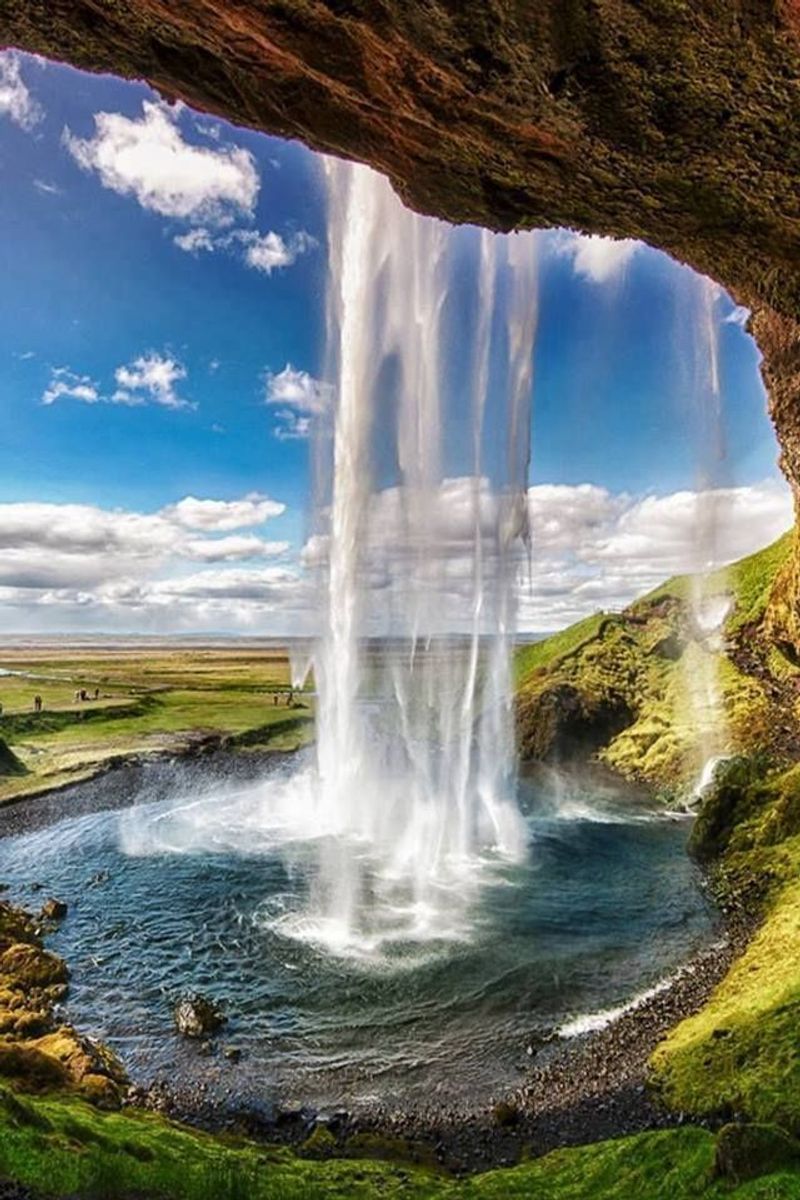
Seljalandsfoss has one trick that earns it a permanent spot on every Iceland itinerary: you can walk behind it. A footpath curves into the recessed rock behind the cascade, placing visitors between a basalt wall and a 60-meter curtain of falling water.
The open South Iceland landscape appears through the spray on the other side.
Expect to get wet. That is not a warning so much as a description of the activity.
The spray reaches the path in all but the driest conditions, and in windy weather it reaches considerably further. Evening light can turn the mist golden, which explains why so many photographers camp near the base waiting for the right moment.
Seljalandsfoss sits conveniently close to Iceland’s Ring Road and is frequently paired with nearby Skógafoss on the same day trip. The two waterfalls could not feel more different.
Skógafoss confronts you with raw power from a distance. Seljalandsfoss pulls you into the experience itself, wrapping the falling water around the visit rather than keeping it at arm’s length.
That difference in how a waterfall can be experienced is exactly why both deserve to be on this list.
Share this story