Some places on Earth look like they were pulled straight out of a fantasy novel. Monasteries built into cliffsides, rising from rocky pinnacles, or hidden deep in mountain valleys have fascinated travelers for centuries.
These sacred sites were not just built for beauty. They were designed for prayer, study, and survival in some of the most remote corners of the world.
From the fog-wrapped peaks of Bhutan to the painted streets of Peru, each monastery on this list carries a story worth knowing. Whether you are a history lover, a curious traveler, or someone who simply appreciates incredible architecture, this list covers fifteen real places that remind you how extraordinary human dedication can be.
Keep reading, because a few of these will genuinely surprise you.
Paro Taktsang, Paro Valley, Bhutan
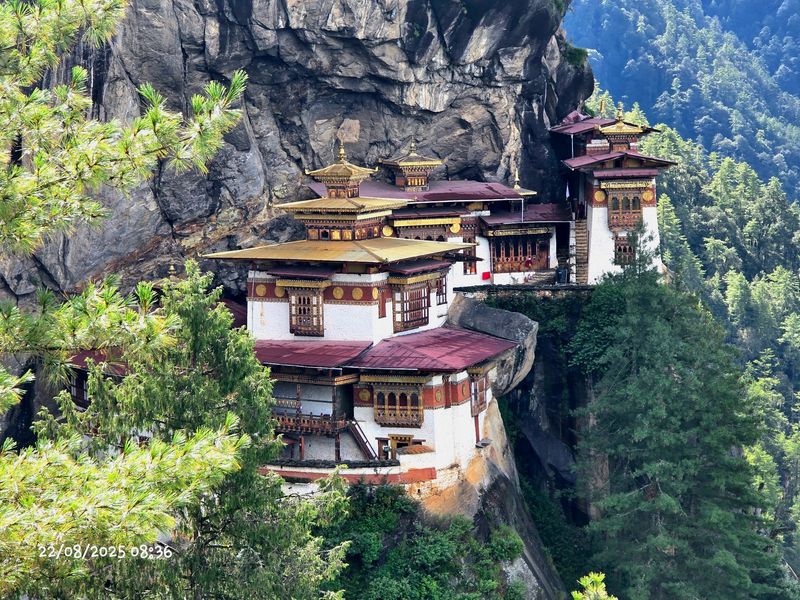
Clinging to a sheer cliff at roughly 3,120 meters above sea level, Paro Taktsang earns its famous nickname, the Tiger’s Nest, without any argument. The white-walled buildings and golden roofs appear to defy gravity, stacked against dark rock as if placed there by something other than human hands.
The site is connected to Guru Rinpoche, who is traditionally believed to have meditated here centuries before the present complex was built in 1692. Reaching it requires a steep hike through pine forest, followed by stone steps that pass a waterfall along the way.
The climb takes most visitors between two and four hours depending on pace and fitness level.
Photography is generally restricted inside the temples, so the experience is more personal than most tourist attractions. The monastery and its hiking route remain active and open to visitors as of 2026, making it one of Bhutan’s most rewarding destinations for those willing to make the ascent.
Great Meteoron Monastery, Meteora, Greece
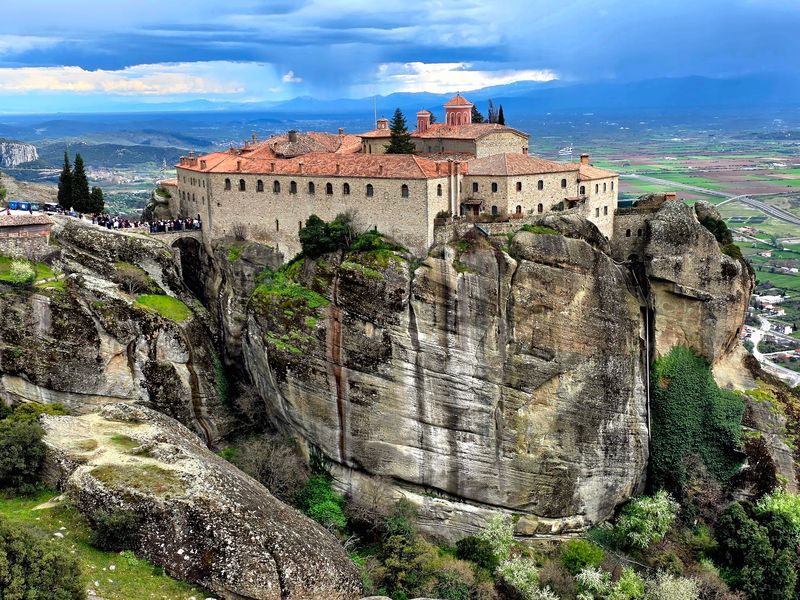
Standing on the highest and largest of Meteora’s inhabited rock formations, Great Meteoron Monastery looks as though it was placed there by accident and somehow stayed. Founded around 1340 by Saint Athanasios the Meteorite, it grew into one of the most significant Orthodox Christian centers in the entire region.
Inside, visitors can see historic frescoes, religious manuscripts, a traditional monastic kitchen, former monks’ cells, and a church dedicated to the Transfiguration of Christ. The combination of sacred art and medieval daily life makes the interior as interesting as the dramatic exterior view from below.
Great Meteoron is one of six functioning monasteries currently open to visitors at Meteora. Its schedule shifts between summer and winter, and it typically closes on certain weekdays throughout the year.
Checking the most current timetable before making the climb is strongly recommended, since the entrance hours can change without much advance notice.
Mont-Saint-Michel Abbey, Normandy, France
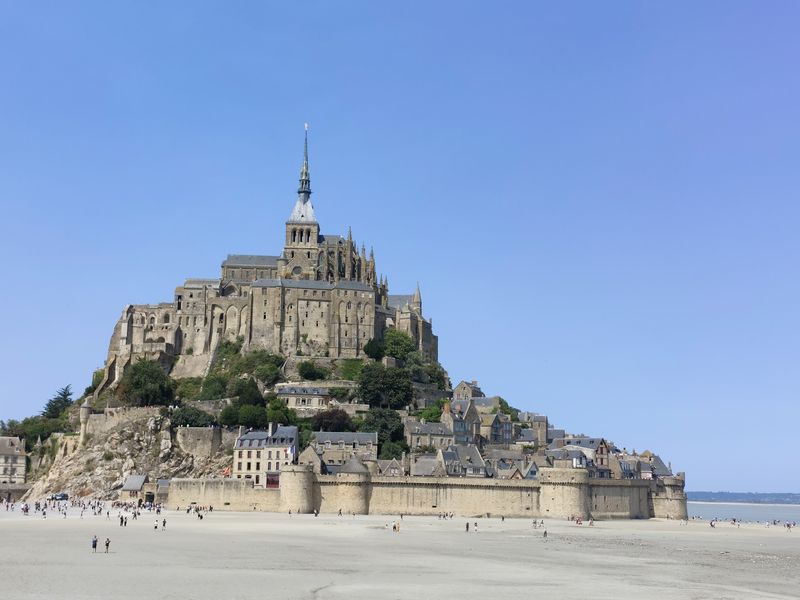
Few silhouettes in Europe are as instantly recognizable as Mont-Saint-Michel rising above the tidal flats of Normandy. The abbey sits at the very top of a steep island settlement, with towers, walls, halls, and narrow passages layered on top of each other over many centuries of construction.
Visitors can explore the abbey church, the Gothic cloisters, the refectory, and the remarkable complex of buildings known as La Merveille. The architectural mix of religious, military, and medieval styles is something you genuinely cannot find compressed into a single site anywhere else in France.
The island is accessible year-round, while the abbey itself operates on a ticketed schedule and closes occasionally for holidays or special ceremonies. Both self-guided and guided visits are available.
During high tide, the water surrounds the island completely, which creates the floating-fortress effect that has made Mont-Saint-Michel one of the most photographed places in the country.
Sumela Monastery, Trabzon Province, Turkiye
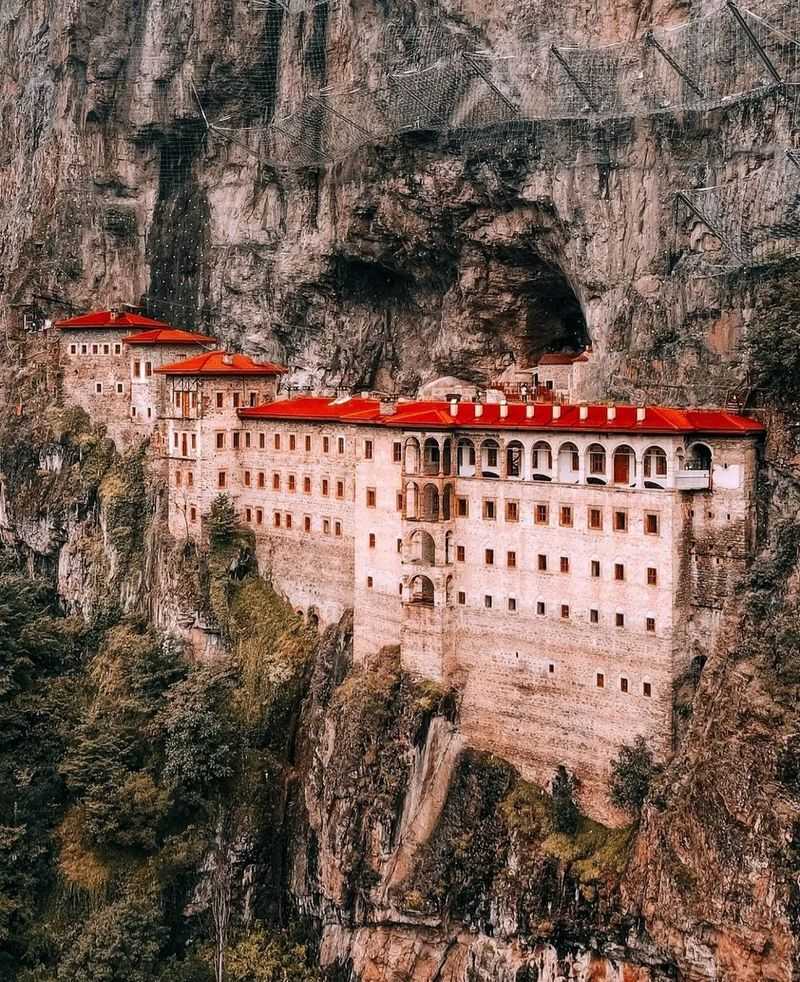
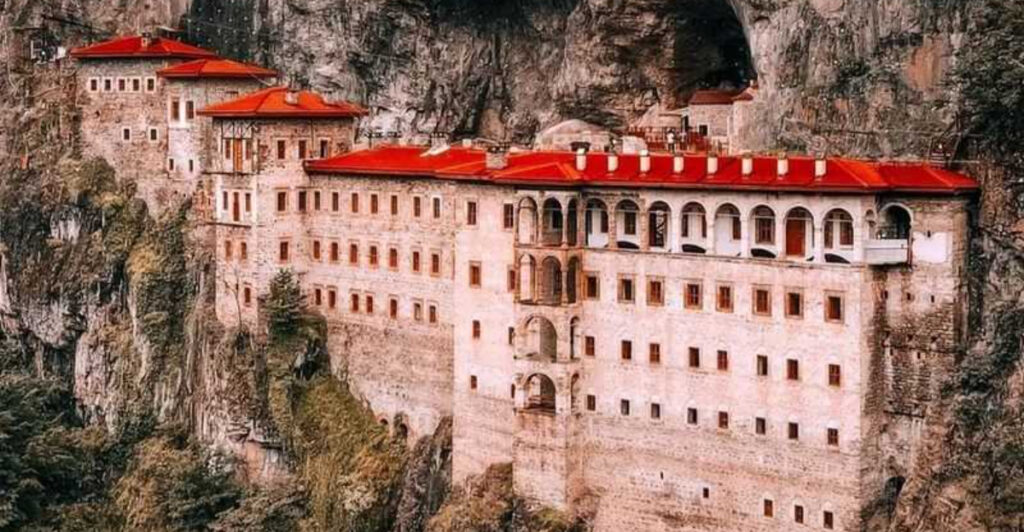
Pressed against a nearly vertical cliff inside Altindere Valley National Park, Sumela Monastery looks less like a building and more like something the mountain grew on its own. Forested peaks surround the site on every side, and the rock face behind the complex is as much a part of the architecture as any wall built by human hands.
Tradition links the monastery’s founding to the Byzantine period, though most of what visitors see today reflects later rebuilding and expansion across many generations. The site includes chapels, courtyards, student rooms, a library, an aqueduct, and the fresco-covered Rock Church, which gives a clear picture of how a large religious community once operated in such an isolated setting.
Following extensive restoration and stabilization work, Sumela now operates as a museum attraction. Access conditions can change due to ongoing maintenance, falling-rock prevention efforts, or winter weather, so checking current visitor information before traveling to Trabzon is worth doing.
Rila Monastery, Rila Mountains, Bulgaria
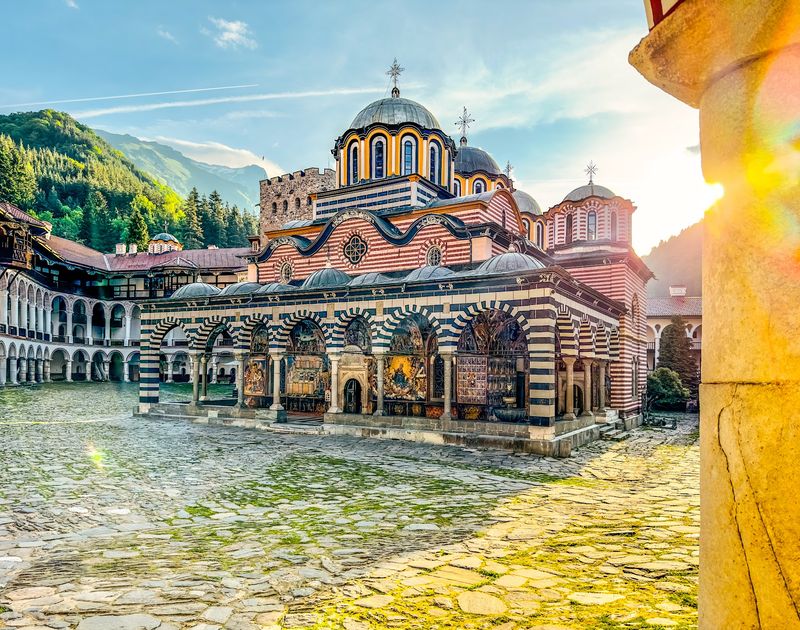
Tucked into a forested valley in Bulgaria’s Rila Mountains, this monastery is one of Eastern Europe’s most visually striking religious sites. The striped arcades, vivid exterior frescoes, domed church, and medieval stone tower come together in a way that feels both ancient and surprisingly alive.
The monastery traces its roots to the 10th century and Saint John of Rila. After a serious fire, most of the present complex was rebuilt between 1834 and 1862.
During centuries of foreign rule, its architecture and artwork became powerful expressions of Bulgarian cultural identity, which is a role the site still carries today.
Rila remains an active Orthodox monastery and a UNESCO World Heritage Site that welcomes pilgrims and general visitors throughout the year. Some museum spaces and interior areas operate on separate schedules from the main courtyard and church, so planning a few extra hours gives you time to see the full complex without rushing.
Ostrog Monastery, Montenegro
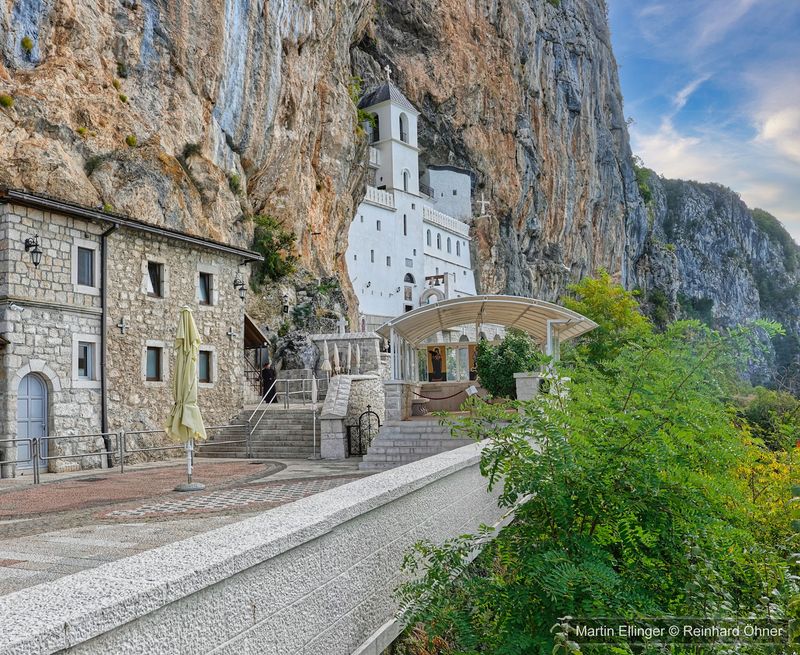
Ostrog Monastery appears to have been pressed directly into a pale vertical cliff above Montenegro’s Zeta Valley, which makes it one of the most visually arresting religious sites in the entire Balkans. The Upper Monastery contains whitewashed buildings, cave churches, colorful mosaics, and the relics of Saint Basil of Ostrog, who founded the community here in the 17th century.
Orthodox Christians make up the largest group of pilgrims who visit, but travelers of many different backgrounds make their way up the mountain throughout the year. A winding road and a walking path connect the Lower and Upper monasteries, with wide valley views opening up as you climb.
Ostrog is an active religious community and remains open daily. Major feast days can bring large crowds and temporary traffic restrictions on the mountain road, so arriving early or on a quieter weekday generally makes for a smoother visit to this remarkable cliffside site.
Tatev Monastery, Syunik Province, Armenia
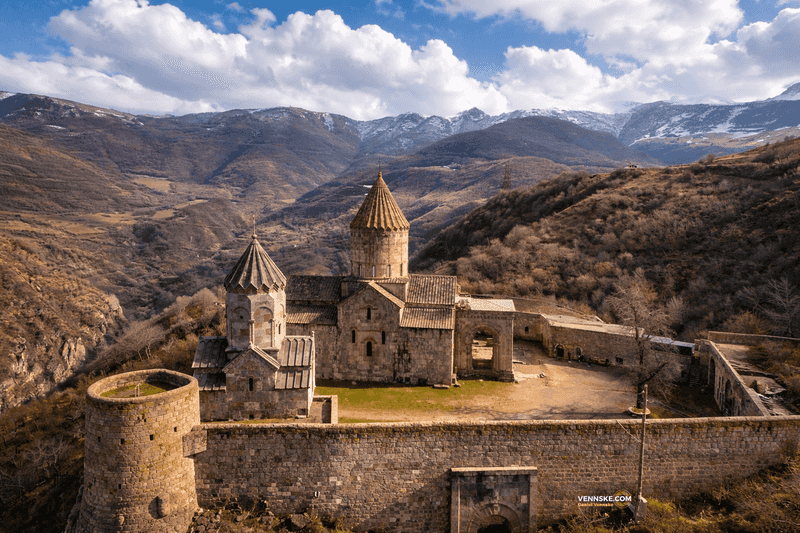
Perched on the edge of a high plateau above Armenia’s Vorotan Gorge, Tatev Monastery already has an impressive setting from the ground. The approach aboard the Wings of Tatev aerial tramway, which stretches over the gorge for more than five kilometers, turns the journey into an experience all by itself.
Founded in the ninth century, Tatev grew into a major medieval center for religion, scholarship, manuscript production, and the arts. Its principal buildings include the Church of Saints Paul and Peter, the Church of Saint Gregory, fortified defensive walls, and the Gavazan, an unusual swinging column with historical and symbolic significance that still stands in the monastery courtyard.
Restoration efforts over recent years have helped revive the site and its monastic traditions. Visitors can currently reach Tatev either by road or cable car, though the tramway operates on a set schedule and weather conditions can occasionally affect service on a given day.
Geghard Monastery, Kotayk Province, Armenia
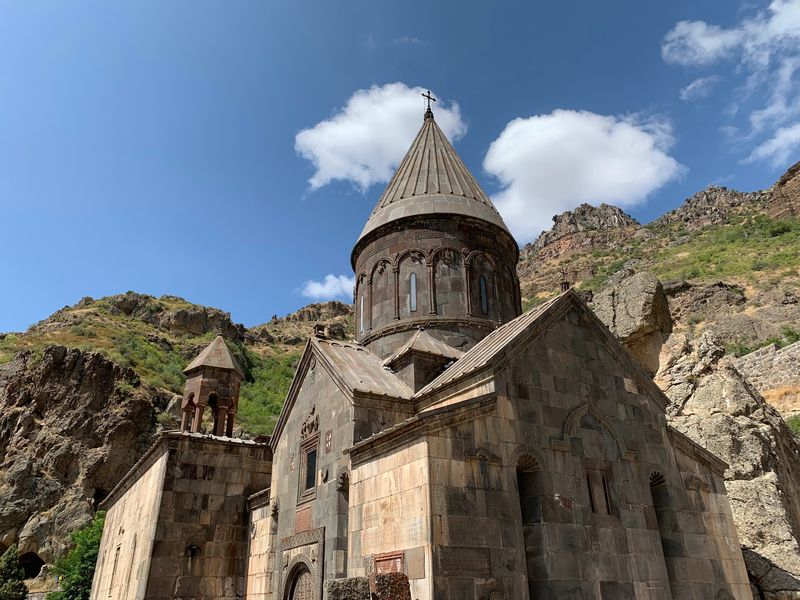
Part of what makes Geghard Monastery so unusual is that it is not entirely built, it is partly carved. Rock-cut chapels with sculpted crosses, shadowy interiors, and remarkable natural acoustics sit alongside more conventional stone construction, creating a complex that feels genuinely unlike anything else in the region.
A monastery existed at this site from the early Christian period in Armenia, though most of the surviving structures date from the 12th and 13th centuries. The name Geghard refers to the holy lance traditionally connected to the crucifixion of Jesus, a relic once kept here that gave the entire complex its identity and spiritual importance.
High cliffs close in around the monastery on multiple sides, creating a secluded atmosphere that persists even during busy visitor periods. Geghard remains an active place of worship, and visitors are welcome, though respectful clothing and quiet behavior are expected throughout the site.
It sits within a reasonable drive from Yerevan.
Tawang Monastery, Arunachal Pradesh, India
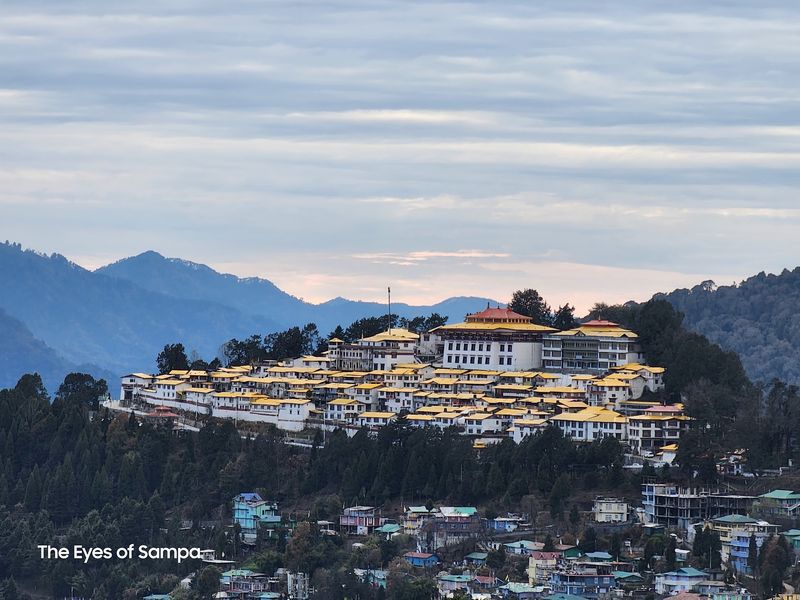
Rising above a Himalayan valley near India’s borders with Bhutan and Tibet, Tawang Monastery is one of the largest Buddhist monasteries in India and a key center of the Gelug school of Tibetan Buddhism. Its founding in the 17th century placed it at a crossroads of religious and cultural traditions that still shape the region today.
The fortified complex contains assembly halls, monks’ residences, prayer rooms, a substantial collection of manuscripts and religious artwork, and a large gilded image of the Buddha. Mountain ridges and scattered settlements fill the surrounding landscape, and the view on a clear day is genuinely striking.
Tawang continues to function as both a religious and educational center while also receiving visitors. Travelers must obtain the required Inner Line Permit before entering Arunachal Pradesh, since the region has specific access regulations.
Mountain road conditions can also change significantly depending on the season, so checking before departure is a practical step.
Key Monastery, Spiti Valley, India
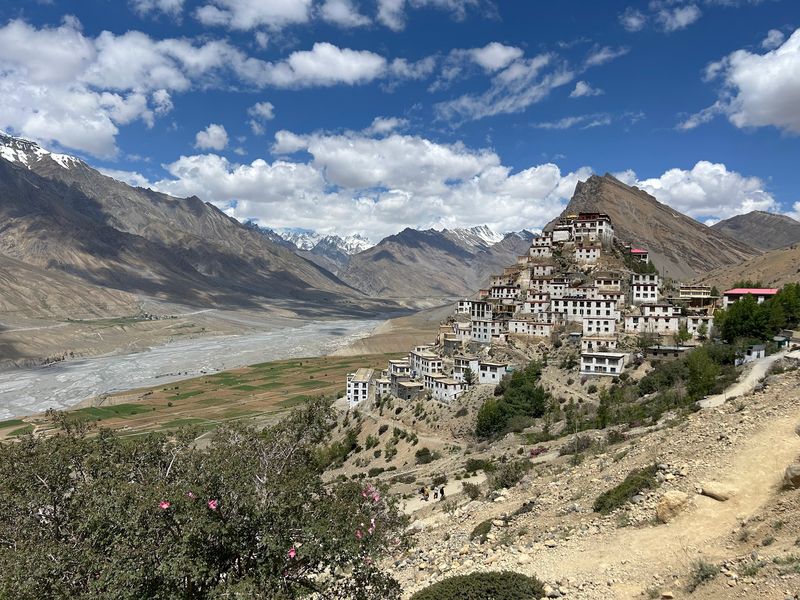
At roughly 4,100 meters above sea level, Key Monastery sits on a hilltop above the Spiti River like a compact fortress that grew one layer at a time. Its white and earthen buildings climb upward in irregular tiers connected by narrow staircases, small doorways, dark corridors, and prayer chambers that seem to fold into each other.
Key is the largest monastery in Spiti Valley and serves as an active training center for Buddhist monks. Its collection includes murals, thangkas, manuscripts, ceremonial objects, and traditional musical instruments, which together give a detailed picture of the religious and scholarly traditions practiced here across centuries.
The high-altitude desert surrounding the monastery adds to the sense of remoteness that defines the Spiti Valley experience. Most visitors reach Key by road from the town of Kaza during the warmer months.
Winter brings heavy snowfall and road closures that can make access difficult or completely cut off for extended periods.
Shaolin Monastery, Henan Province, China
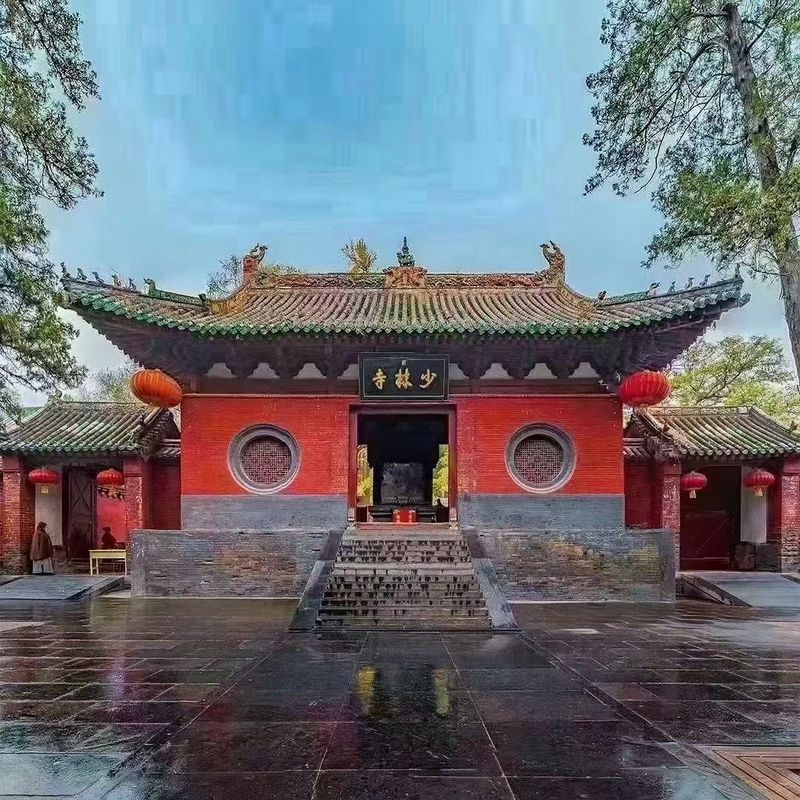
Located at the foot of Mount Song, Shaolin Monastery carries a reputation that travels far beyond China’s borders. It is internationally associated with Chan Buddhism and the development of Shaolin kung fu, a combination that has made it one of the most recognized religious sites in the world.
The original monastery was established during the fifth century, though fires and periods of rebuilding have changed the complex significantly over time. Visitors can walk through the principal temple axis and explore the nearby Pagoda Forest, where hundreds of stone and brick stupas commemorate generations of monks who lived and practiced here.
Martial arts demonstrations are presented within the broader scenic area, adding a layer of living cultural history to the visit. The monastery continues to operate as both a religious institution and a public attraction.
Advance online reservations have become increasingly important during busy travel periods, so booking ahead before making the trip to Henan is a smart move.
Batalha Monastery, Batalha, Portugal
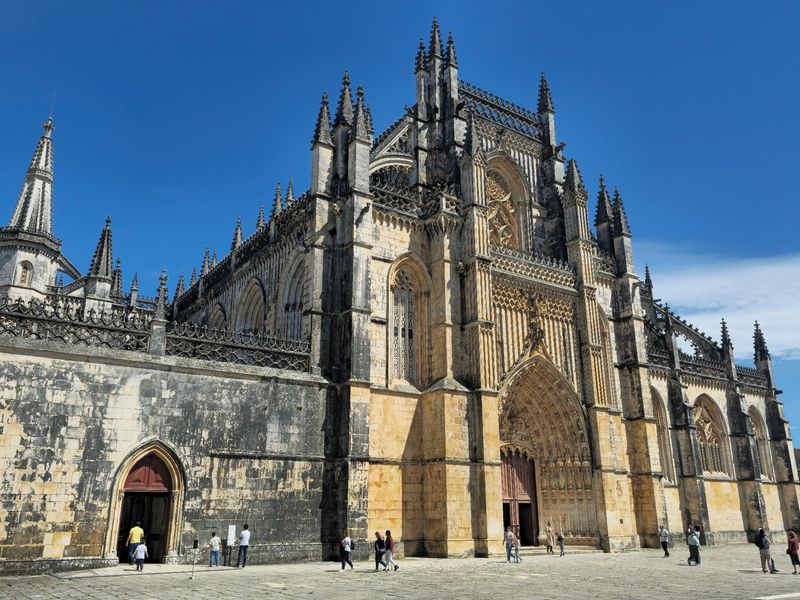
Built to commemorate Portugal’s victory at the Battle of Aljubarrota in 1385, Batalha Monastery is one of the finest examples of Gothic architecture anywhere in Europe. The pale limestone walls, elaborate pinnacles, carved portals, and enormous windows give the building a lightness that feels almost unexpected for something built to mark a military triumph.
Visitors can walk through the Royal Cloister, the Founder’s Chapel, various monastic rooms, and the roofless Unfinished Chapels. That last section contains some of the most intricate stonework in the entire complex, framing open sky where a completed ceiling was originally planned but never finished, which creates one of the more memorable visual moments in Portuguese heritage tourism.
Batalha also serves as a royal pantheon and national memorial. The monastery remains open as a public monument with regular ticketed visiting hours daily.
It is located in the small town of Batalha, roughly an hour north of Lisbon, making it an accessible day trip for most travelers.
Alcobaca Monastery, Alcobaca, Portugal
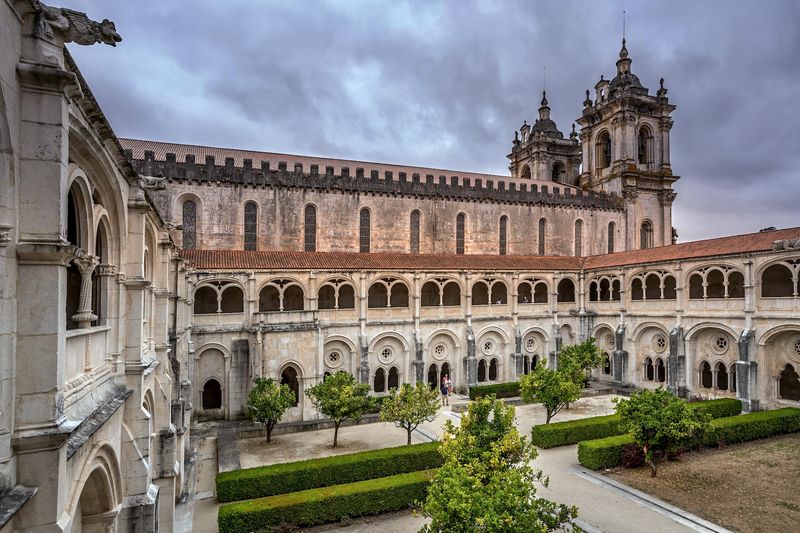
Scale is the first thing you notice at Alcobaca Monastery. Founded in the 12th century under Portugal’s first king, Alfonso Henriques, it became one of the country’s most powerful monastic institutions and one of the purest examples of Cistercian Gothic architecture in the Iberian Peninsula.
The church contains the elaborately carved tombs of King Pedro I and Ines de Castro, whose story became one of Portugal’s most enduring historical romances. Beyond the church, the complex opens into a cloister, refectory, monks’ hall, dormitory, and a remarkable medieval kitchen equipped with an enormous stone chimney and a water channel that once ran directly through the room.
Alcobaca remains open as a UNESCO-listed public monument throughout the year. Visiting hours are generally longer between April and October, making spring and early autumn good times to plan a trip.
The town of Alcobaca itself is small and easy to navigate, with the monastery dominating the central square.
Monastery of Hosios Loukas, Boeotia, Greece
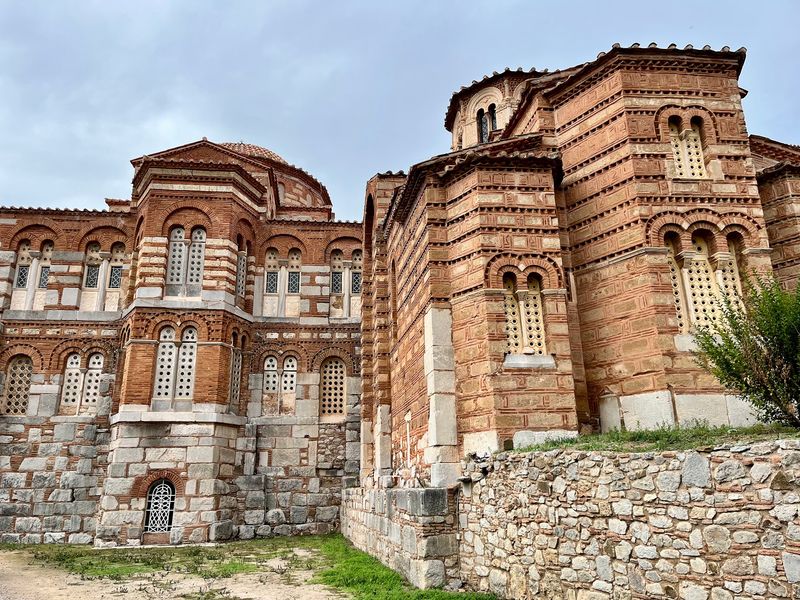
Set among olive groves at the foot of Mount Helicon, Hosios Loukas offers a quieter and more reflective experience than many of Greece’s busier archaeological sites. The stone complex developed around the tomb of Saint Luke of Steiris, a 10th-century hermit whose reputation for holiness drew followers and eventually a full monastic community.
Its two connected churches contain marble floors, carved decoration, wall frescoes, and glittering mosaics created during the Middle Byzantine period. The quality and preservation of the interior decoration place Hosios Loukas among the most important examples of Byzantine art still accessible to the public in Greece today.
The monastery remains a functioning religious community and an established heritage site promoted by Greece’s national tourism organization. Visiting hours can shift during religious services and major holidays, so checking the current schedule before making the drive through Boeotia is a reasonable precaution.
The surrounding landscape and relative calm make it worth the extra planning effort.
Santa Catalina Monastery, Arequipa, Peru
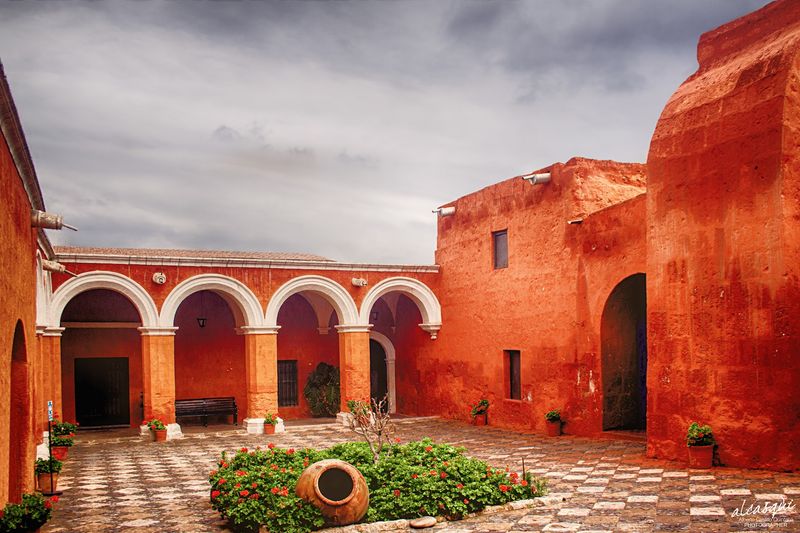
Walking through Santa Catalina Monastery feels more like exploring a small walled city than visiting a single religious building. Its narrow lanes, open courtyards, fountains, chapels, kitchens, and living quarters are painted in intense shades of blue, white, and burnt orange, creating one of the most photogenic heritage sites in South America.
Founded in 1579, this Dominican convent covers approximately 20,000 square meters in the historic center of Arequipa. Much of the complex was opened to the public in the 20th century, while a smaller community of nuns continues its contemplative life in a private section that remains closed to visitors.
Independent exploration and guided tours are both available, and occasional evening openings allow visitors to see the cloisters lit by lantern light, which changes the atmosphere of the space considerably. The official monastery site provides current tickets, operating hours, and visitor services.
Arequipa’s city center surrounds the complex, making it easy to combine with other nearby attractions.
Share this story