Europe is packed with sacred places that are far older than most people guess. Greeks and Romans raised grand temples to their gods, and later builders added monasteries and churches on cliffs, islands and mountains.
Some buildings even changed religions, leaving layers of history in the same walls. Come along and see how faith shaped art, power and daily life for over two thousand years.
Parthenon – Athens, Greece
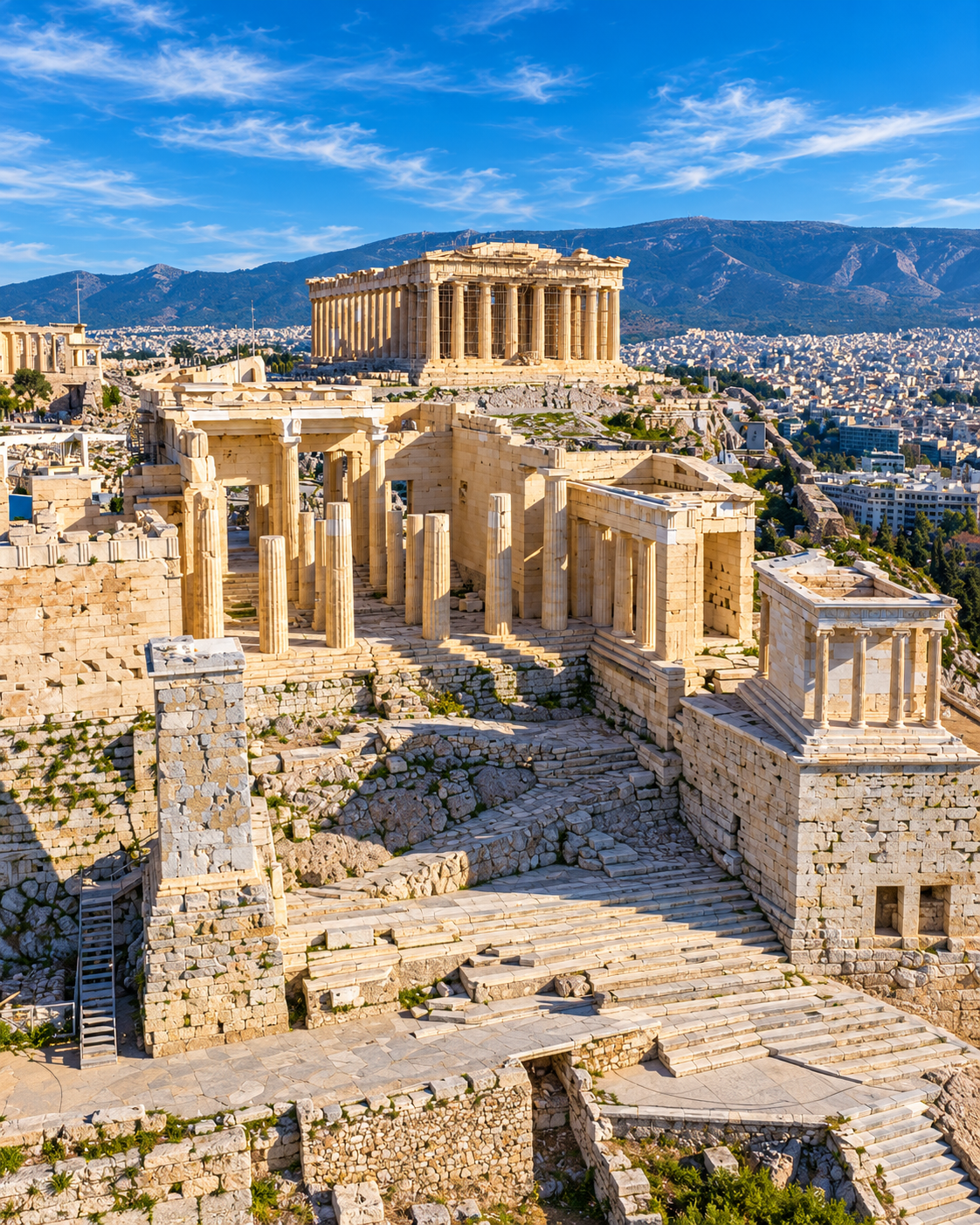
Standing on a rocky hilltop, the Parthenon has been watching over Athens for about 2,450 years. Builders finished it between 447 and 432 BCE, during a huge construction boom led by the leader Pericles.
Athens had just beaten Persia, and the city wanted to show off.
The temple honored Athena, the goddess who protected the city. Inside once stood a gigantic statue of her, made under the direction of the sculptor Pheidias.
Imagine walking in and meeting that stare.
The Acropolis was a sacred place long before the Parthenon arrived. Worshippers had gathered there for centuries, so the new temple joined a very old tradition.
UNESCO calls the site an exceptional witness to ancient Greek religion.
Visitors today can still see the tall columns and the famous sculpted decorations, though many pieces now live in museums. Go early in the morning to beat the heat and the crowds.
Wear shoes with good grip, because the marble paths are polished smooth by millions of feet. The view over Athens is a bonus that makes every step feel worth it.
Temple of Apollo at Delphi – Greece
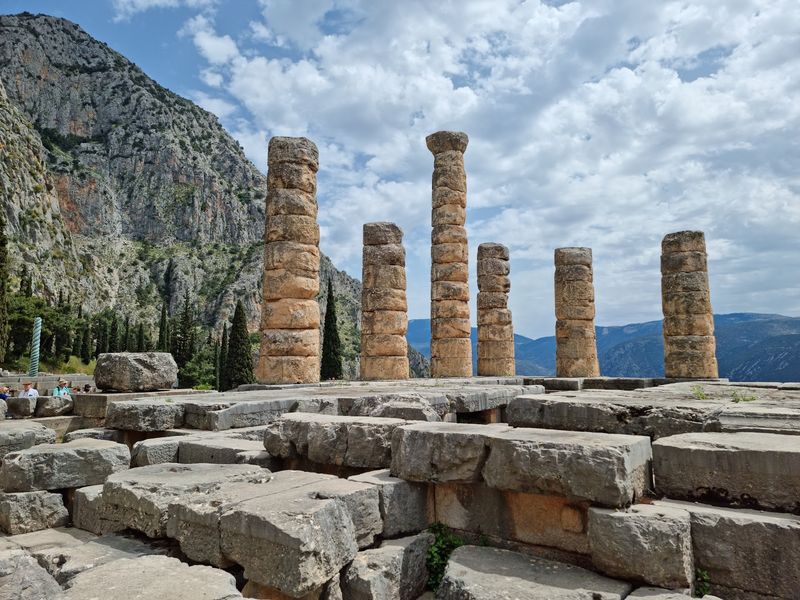
Want to know your future? Ancient Greeks climbed a steep mountain to ask a priestess.
Delphi was believed to be the center of the world, and the Temple of Apollo sat at its heart.
The priestess was called the Pythia. She delivered the god’s answers, and kings, generals and ordinary travelers all lined up for advice.
Her words shaped wars, new colonies and big political choices.
Delphi grew especially powerful from the sixth century BCE onward. The temple you see now mostly dates from the fourth century BCE, but older temples stood on the same spot before it.
UNESCO describes the site as the religious center and symbol of unity of the ancient Greek world.
The ruins sit on a dramatic slope with views over olive groves and valleys. Walk the Sacred Way slowly, because the path climbs past treasuries built by different Greek cities.
Bring water and a hat, since shade is rare. Save some energy for the museum, where famous statues add even more life to the story.
Temple of Hephaestus – Athens, Greece
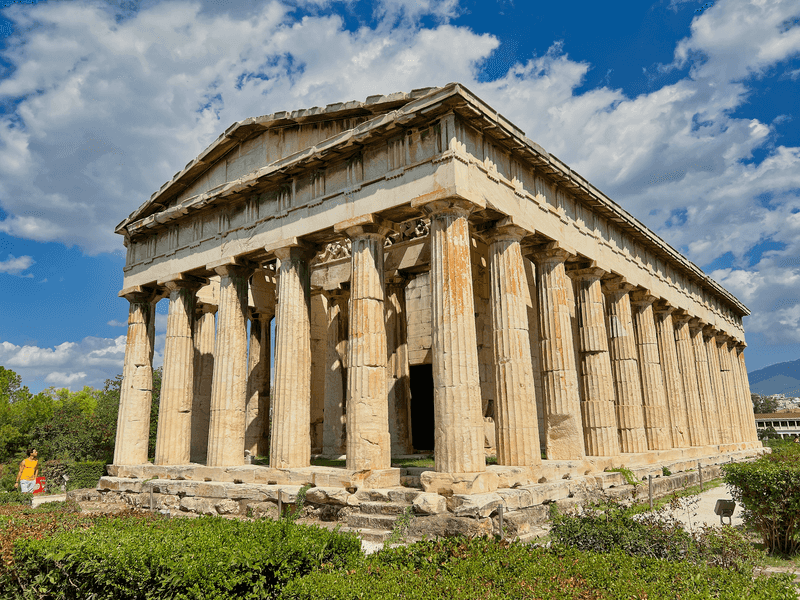
Most ancient temples are missing a roof, a wall or half their columns. The Temple of Hephaestus is the happy exception.
It is among the best-preserved Greek temples anywhere, and its Doric colonnade still stands in good shape.
Builders worked on it during the fifth century BCE. It honored Hephaestus, the god of metalworking, and Athena Ergane, a form of Athena linked to craftspeople.
That makes sense, since workshops once buzzed all around the hill.
Picture blacksmiths and potters stopping by to ask for a little divine help with their daily work. The temple sat right beside the busy marketplace, so it was part of everyday life, not just holy days.
Because so much remains, this is the best place to see how a complete Greek temple looked. Visit the Ancient Agora below and walk up for a closer view.
Late afternoon light turns the stone a soft gold, which photographers love. Pack a bottle of water, since the site has little shade and the hill can feel warm.
Temple of Poseidon at Cape Sounion – Greece
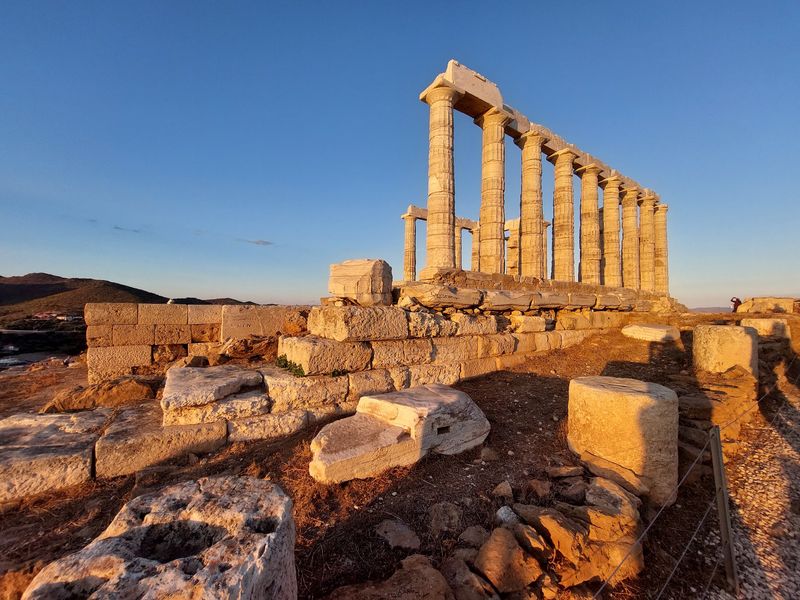
Sunset here comes with a side of gasps. The marble columns of the Temple of Poseidon stand on a cliff at the southern tip of Attica, with the Aegean Sea spread out below.
Builders raised the surviving temple in the fifth century BCE, when Athens spent big on sacred buildings. It was dedicated to Poseidon, the god of the sea.
Sailors coming or going from the region could spot it from far out on the water.
That was no accident. A shining white temple on a headland was a perfect place to ask for safe travels.
Greek trade, war and myths all depended on these waters.
Today the setting is one of the most memorable in Greece. Plan your visit for the hour before sunset, but arrive early because the site fills up.
The drive from Athens along the coast takes around an hour and a half. Bring a light jacket, since the wind on the cliff can surprise you even on warm days.
Valley of the Temples – Agrigento, Italy
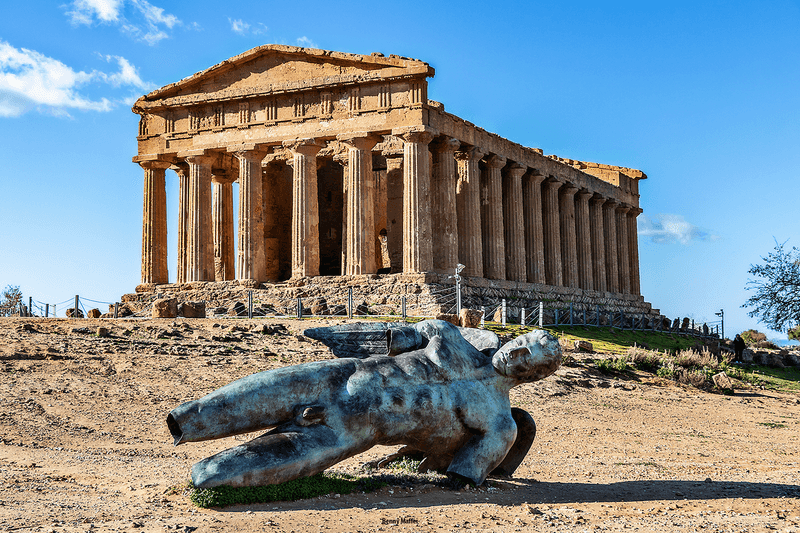
Greece is not the only place to find great Greek temples. Sicily has a whole ridge of them.
The Valley of the Temples in Agrigento holds one of the most impressive collections anywhere.
The city began as the Greek colony of Akragas in the sixth century BCE. It grew rich and became a leading center of the Mediterranean.
Its leaders built huge Doric temples along a sacred ridge, linked with Hera, Heracles, Zeus and Concordia.
The Temple of Concordia steals the show. It is so well preserved that it looks almost ready for a ceremony.
UNESCO describes the temples as outstanding monuments of Greek art and culture.
Spring is a lovely time to visit, when almond blossoms frame the golden stone. In summer, go early or in the evening, when the temples are lit up and the air is cooler.
Wear a hat and comfortable shoes, because the site is large and the walking adds up. A slow stroll feels like time travel with a Sicilian breeze.
Maison Carrée – Nîmes, France
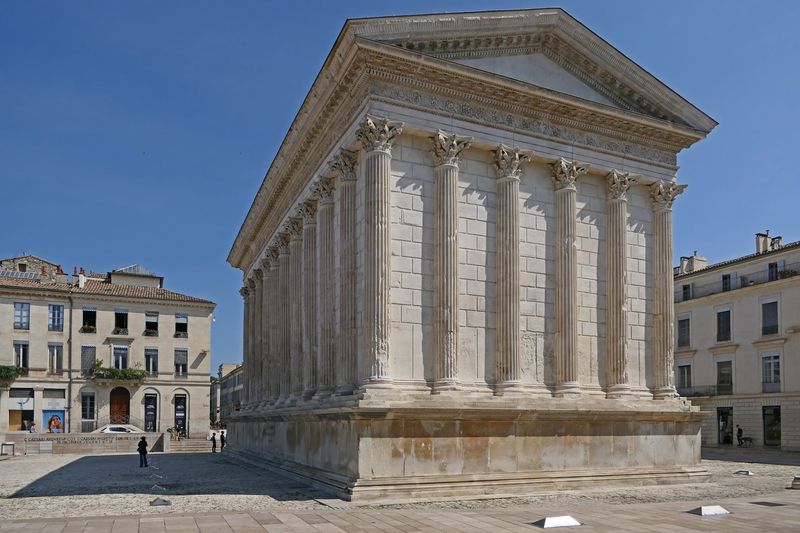
Here is a temple that served as a political message in stone. The Maison Carrée in Nîmes was built in the first century CE, in the Roman colony of Nemausus.
It was tied to worship of the emperor’s family.
The temple was dedicated to Gaius and Lucius Caesar, the adopted heirs of Emperor Augustus. Building it showed loyalty to Rome and reminded locals who was in charge.
Religion and politics were basically roommates.
Its tall podium, deep porch and graceful Corinthian columns became a model for later architects. Builders copied the look for centuries.
UNESCO calls it one of the best-preserved Roman temples linked to the imperial cult.
Today you can stand in the plaza and admire it from every side. Inside, a short film tells the story of the city.
Visit in the evening when the stone glows warm, then wander to the nearby Roman arena for more ancient sights. A combined ticket often saves money, so check at the ticket desk.
Pantheon – Rome, Italy
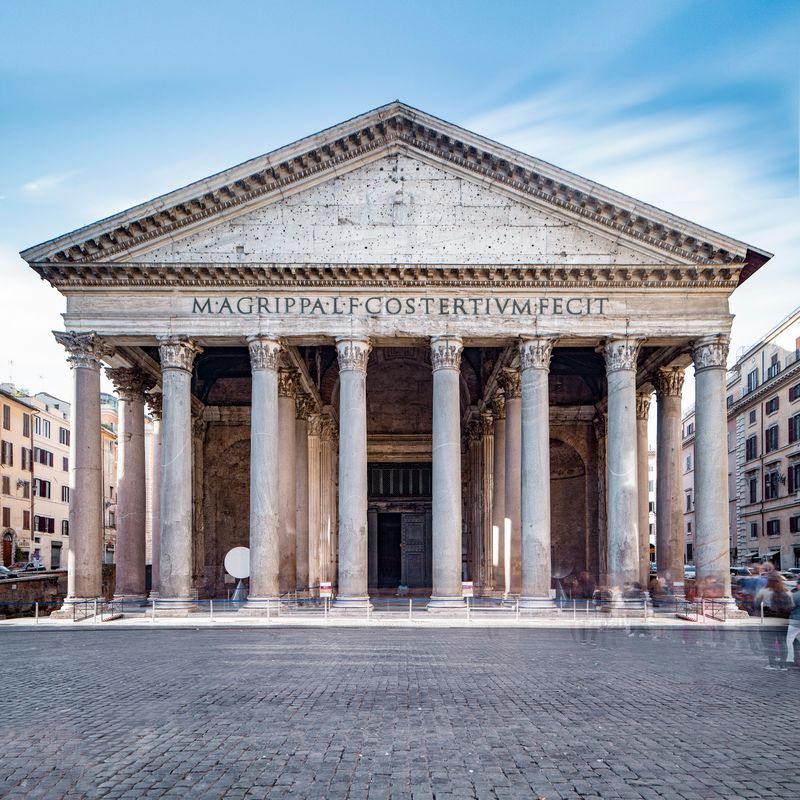
Look up, and a circle of sky looks back. That open eye in the roof, called the oculus, makes the Pantheon one of the most amazing interiors from ancient Rome.
Emperor Hadrian rebuilt the temple in the second century CE. Its giant concrete dome still impresses engineers today.
Experts still debate the exact rituals once held inside, but the name connects it with Rome’s many gods.
In the seventh century it became a Christian church. That change likely saved it, since many other ancient temples were stripped or torn down.
Few buildings can claim two religious lives under one roof.
On a sunny day a beam of light slides around the walls like a slow spotlight. Rain sometimes falls through the oculus, and drains in the floor handle it.
Arrive early to avoid long lines, and check current entry rules before you go. Take a moment to stand quietly in the center and just look around.
Hagia Sophia – Istanbul, Türkiye
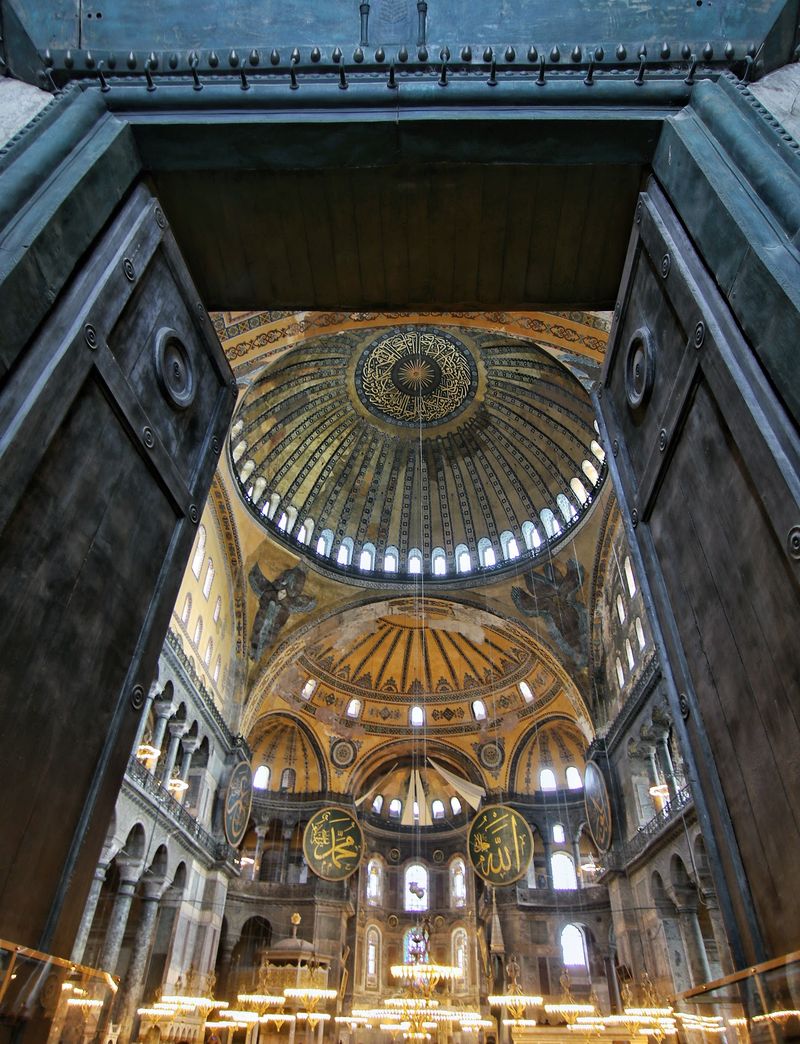
Few buildings have changed hats as often as Hagia Sophia. Emperor Justinian I had it finished in 537 as the great cathedral of Constantinople.
Its huge dome and glowing interior were a marvel of Byzantine engineering. Builders made it feel as if the roof floated.
Churches and mosques copied its ideas for centuries afterward.
After the Ottoman conquest in 1453, it became a mosque, and minarets and Islamic features were added over time. Later it served as a museum, and then returned to mosque use.
UNESCO calls it a unique Byzantine masterpiece.
Layers of history show in the walls, from golden mosaics to large calligraphy panels. Dress modestly and be ready to remove your shoes when you enter.
Check current visiting hours and ticket rules, because they can change. Go early in the day for softer crowds and beautiful light under the dome.
Meteora Monasteries – Greece
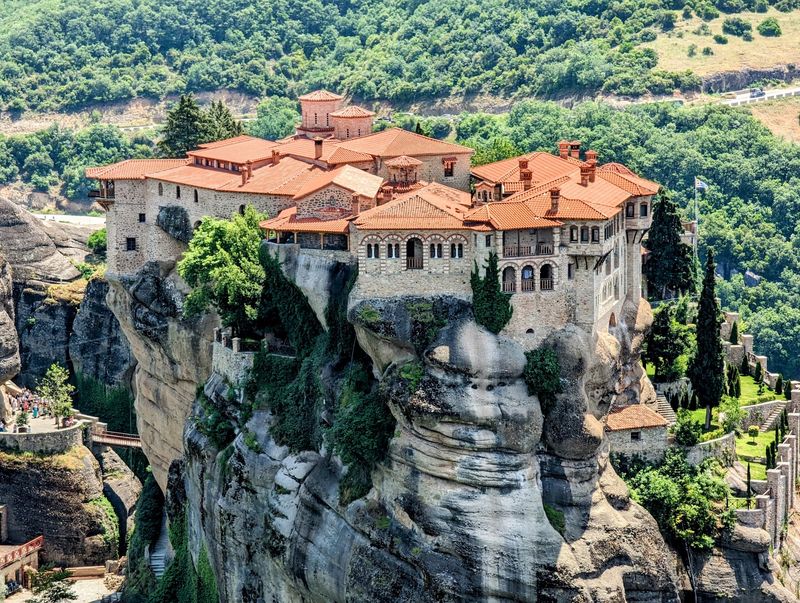
Some people say they need space. The monks of Meteora took it literally.
Beginning around the 11th century, hermits settled among towering sandstone pillars in central Greece.
Later, communities built monasteries right on the summits, often hundreds of feet above the plains. In total, twenty-four monasteries eventually clung to these rocks.
Early visitors reached them by ladders and baskets pulled on ropes.
The building boom came during a revival of monastic life in the 14th and 15th centuries. Only a few monasteries still house communities today.
UNESCO describes the place as a natural landscape turned into a home for prayer and meditation.
Inside, frescoes helped shape later Orthodox painting. Today, stairs carved into the rock make the climb much easier.
Wear long pants or a skirt and cover your shoulders, as monasteries have dress rules. Closing days differ for each monastery, so plan ahead.
Sunset viewpoints are fantastic, but sunrise is quieter.
Rila Monastery – Bulgaria
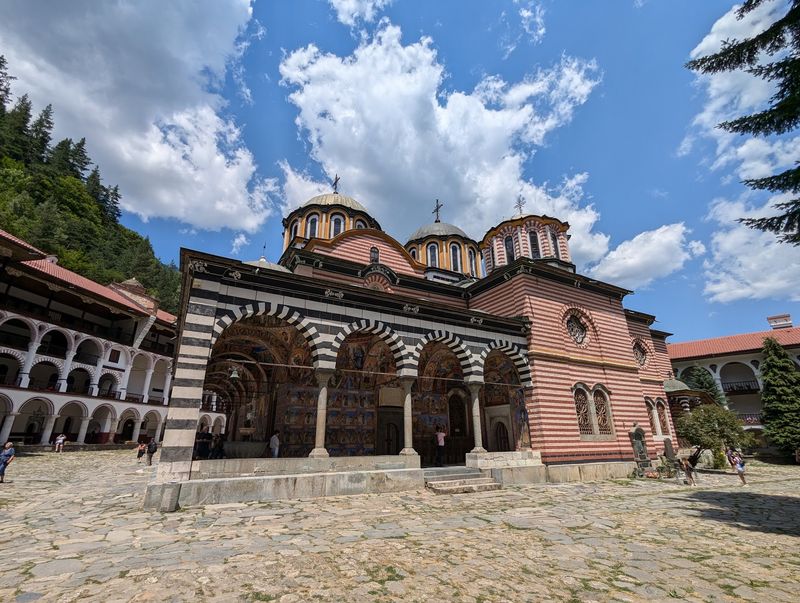
Stripes of red, black and white greet you the moment you step through the gate. Rila Monastery has been a spiritual and cultural center for roughly a thousand years.
It began with St. John of Rila, a hermit in the 10th century. His simple home and tomb became a pilgrimage destination.
Followers gathered, and a community slowly grew in the mountain forest.
A fire destroyed much of the complex in the early 19th century, but people rebuilt it into the colorful ensemble you see today. Arched galleries circle a central church covered in bright frescoes.
UNESCO describes Rila as a symbol of Bulgarian identity during centuries of Ottoman rule.
Look closely at the paintings, where saints, angels and devils fill every inch. Bring a jacket, since mountain air stays cool even in summer.
Try the warm bread sold by the monastery bakery nearby. Most visitors come from Sofia, and a full day gives time to walk the quiet forest trails too.
Studenica Monastery – Serbia
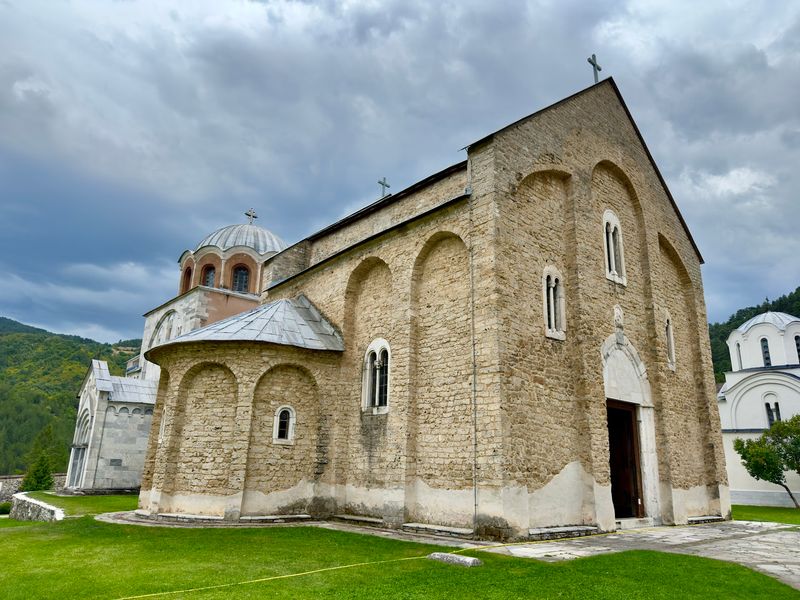
White marble is rare in monastery building, and that is part of Studenica’s charm. Stefan Nemanja, who founded the medieval Serbian state, established it in the late 12th century.
The Church of the Virgin gleams in the valley. Its design mixes Byzantine traditions with Romanesque touches from the Adriatic world.
Builders blended two styles into something new.
Inside, medieval frescoes rank among the finest surviving Serbian and Byzantine paintings. Faces look surprisingly lifelike for something painted so long ago.
The monastery is also tied to Saint Sava, who helped create the independent Serbian Orthodox Church.
UNESCO calls Studenica the largest and richest of Serbia’s Orthodox monasteries. It is still active, so visitors should be quiet and respectful.
Cover your shoulders and knees before going in. The location is remote, so renting a car or joining a tour from Belgrade makes the trip easier.
Allow time to sit in the grounds and enjoy the peaceful hills.
Speyer Cathedral – Germany
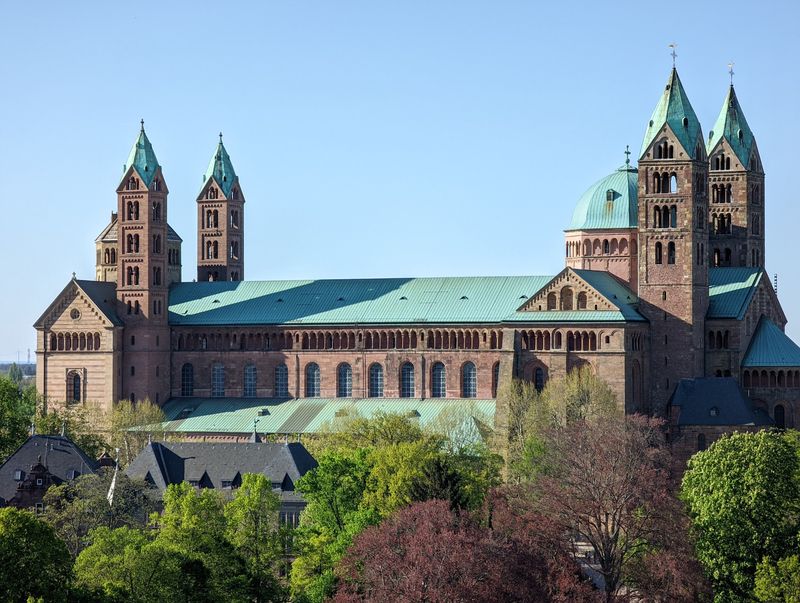
Emperors liked their tombs big, and Speyer delivered. Conrad II founded this massive Romanesque basilica in 1030, and later rulers made it even larger.
For nearly three centuries, it served as a burial place for German kings and Holy Roman emperors. Their resting places lie in an enormous crypt that still impresses visitors.
Walking down feels like entering a stone vault of history.
The vaulted interior influenced Romanesque architecture across the region. UNESCO calls Speyer the largest surviving Romanesque church in the world.
It also describes it as a deliberate show of imperial power under the Salian dynasty.
So the cathedral was both a house of prayer and a giant message about who ruled. Today the red sandstone walls glow warmly in afternoon sun.
Do not skip the crypt, which is often the highlight of a visit. The Rhine town itself is pleasant for a stroll, with cafes and a nearby museum on Roman and medieval history.
Chartres Cathedral – France
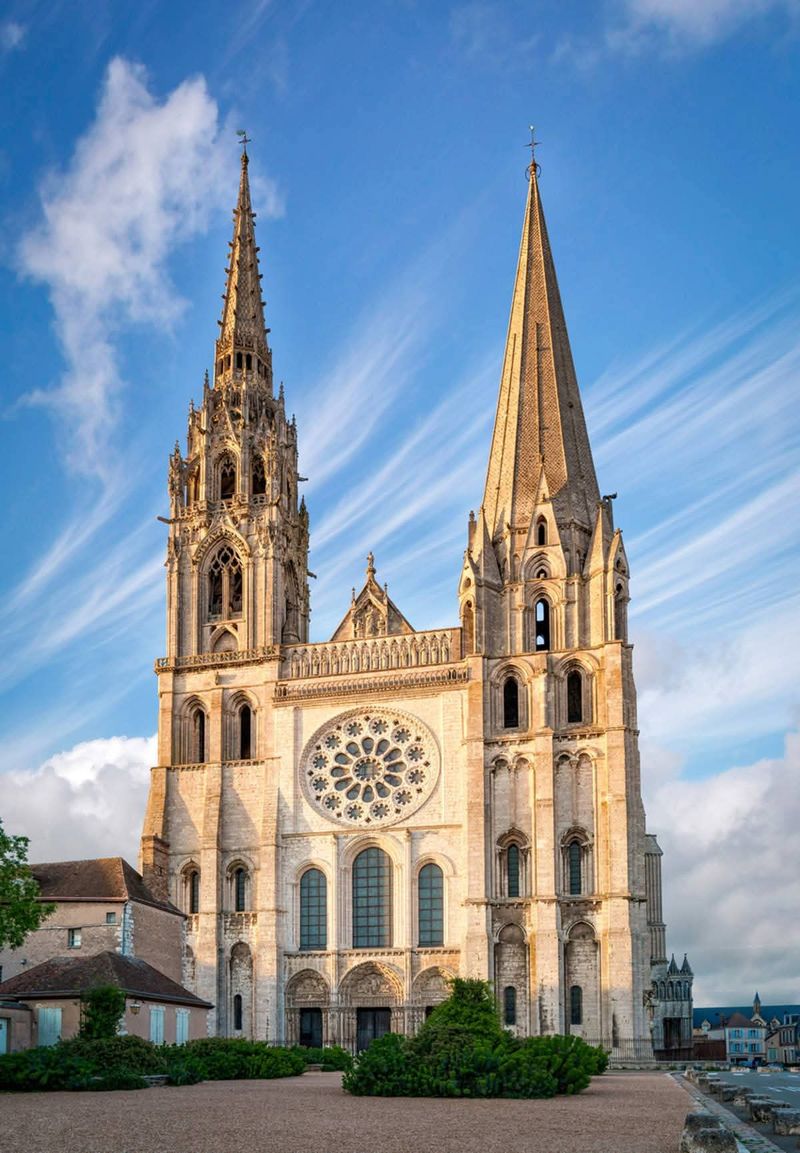
Blue light pours through the windows at Chartres, and many visitors simply stop talking. This cathedral is one of the most complete examples of Gothic architecture anywhere.
Most of it dates from the late 12th and early 13th centuries. Builders created soaring vaults, carved doorways and a remarkable set of stained-glass windows.
Many of them have survived for around 800 years.
Pilgrims came in huge numbers because of devotion to the Virgin Mary and the cathedral’s treasured relics. UNESCO notes it was among the most important pilgrimage sites of medieval Western Christianity.
Its mix of stone, sculpture and glowing color influenced churches all over Europe. A visit works best on a sunny day, when the windows are at their brightest.
Bring binoculars to spot small details in the glass high above. Look at the floor too, where a stone labyrinth is open to walkers on certain days.
Chartres is an easy day trip from Paris by train.
Mont-Saint-Michel Abbey – France
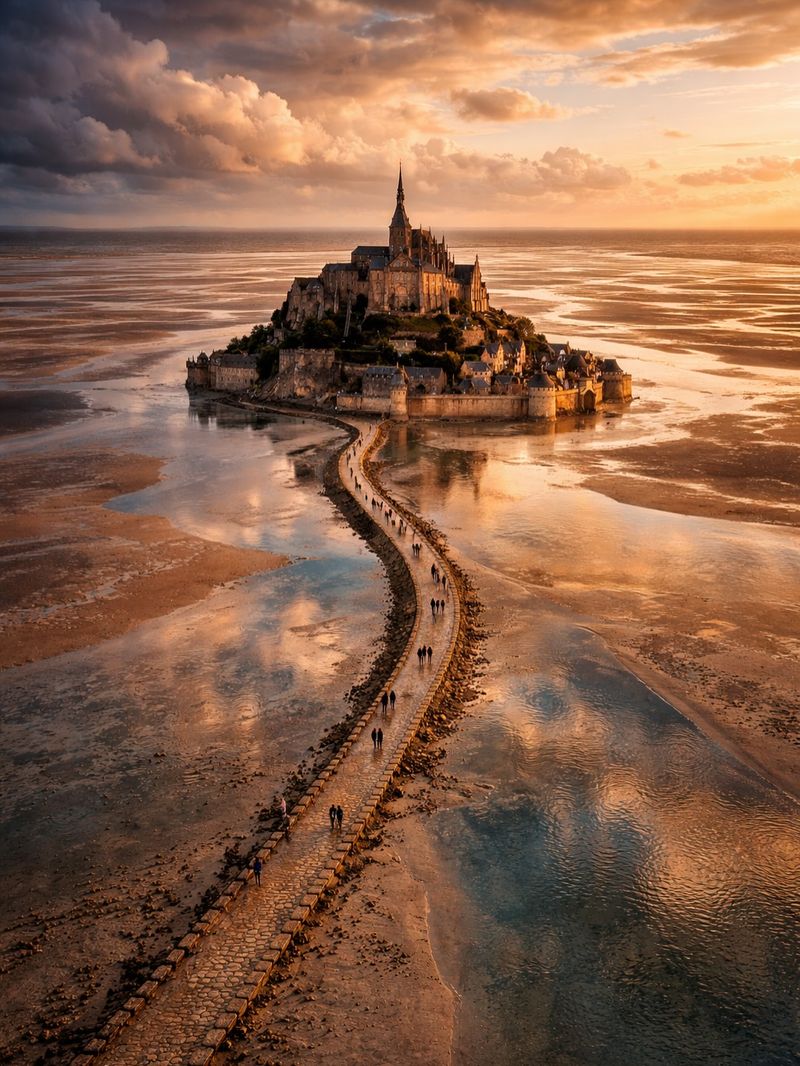
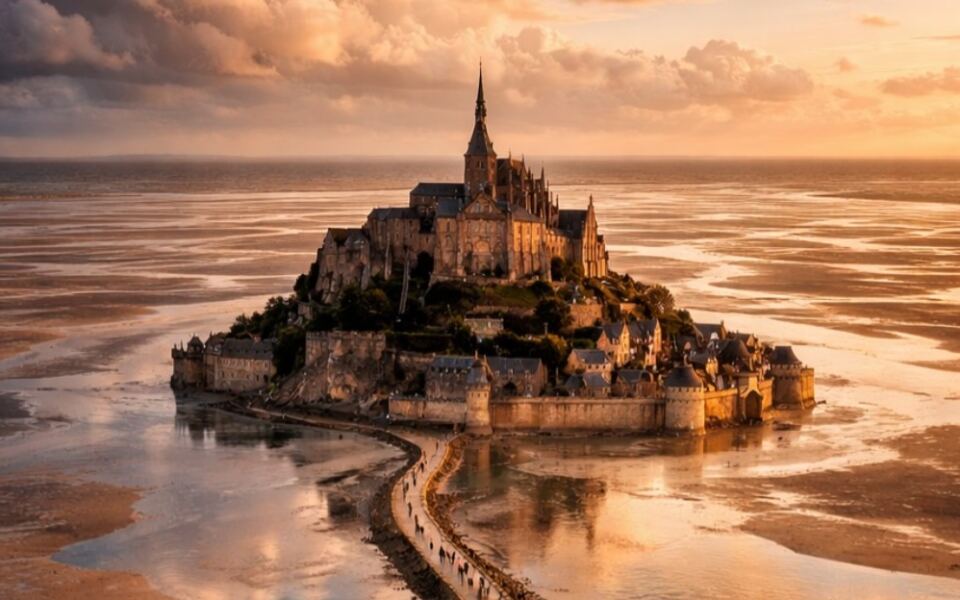
Twice a day, the sea tries to turn this place into an island. Mont-Saint-Michel rises from the tidal flats between Normandy and Brittany, and it looks almost unreal.
A religious community grew around a sanctuary to the Archangel Michael. Over time, a vast Benedictine abbey crowned the rock.
Builders had to fit churches, cloisters and monastic rooms onto a steep slope.
Pilgrims flocked here, and strong walls later made the island a fortress. UNESCO calls it the Wonder of the West.
It describes the building work between the 11th and 16th centuries as a technical and artistic tour de force.
Walk up the narrow main street, then keep climbing to the abbey at the top. Check the tide schedule, because high tides are a spectacle.
Wear comfortable shoes, since the stone steps are many and uneven. Staying overnight lets you see the island glow after the day crowds leave, and that is worth the extra effort.
Santiago de Compostela Cathedral – Spain
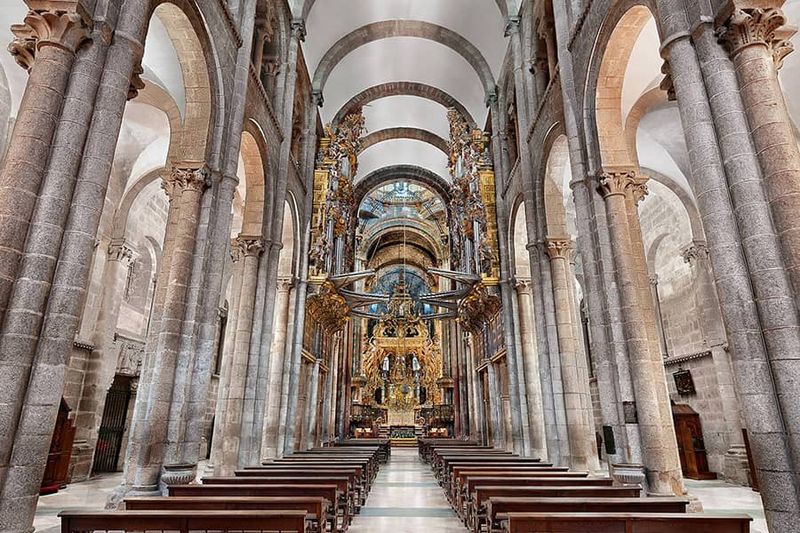
Tired boots and happy faces fill the square in front of this cathedral. For over a thousand years, pilgrims have walked across Europe to reach Santiago de Compostela in northwestern Spain.
The cathedral was built around a shrine linked to the remains of the Apostle St. James. That shrine turned the city into one of medieval Christianity’s greatest pilgrimage centers.
Walkers came from France, Germany, England and beyond.
The Romanesque heart of the church later gained Gothic and Baroque additions. The dramatic Baroque front now towers over the main square.
The pilgrim routes also carried ideas, art and building styles across the continent.
UNESCO describes the city as one of Christianity’s great holy places and the cathedral as a masterpiece of Romanesque art. Go inside to see the Portico of Glory and the silver tomb.
Pilgrims often attend the noon Mass, so arrive early for a seat. Even if you did not walk the Camino, the atmosphere feels like a giant celebration.
Share this story