South America does not do wilderness in half measures. From the steaming depths of the Amazon to the frozen edges of Patagonia, this continent holds some of the most jaw-dropping landscapes on the planet.
Whether you are chasing wildlife, waterfalls, or skies full of stars, the adventures here are the kind that stick with you for life. These 15 experiences capture the continent at its biggest, strangest, and most unforgettable.
Trek the W Circuit in Torres del Paine, Chile
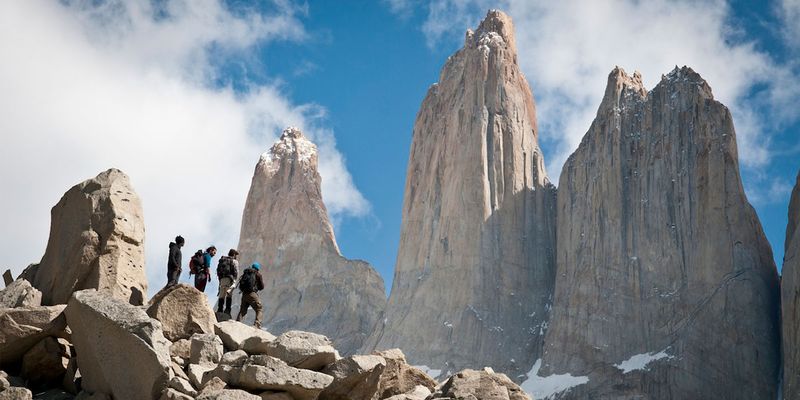
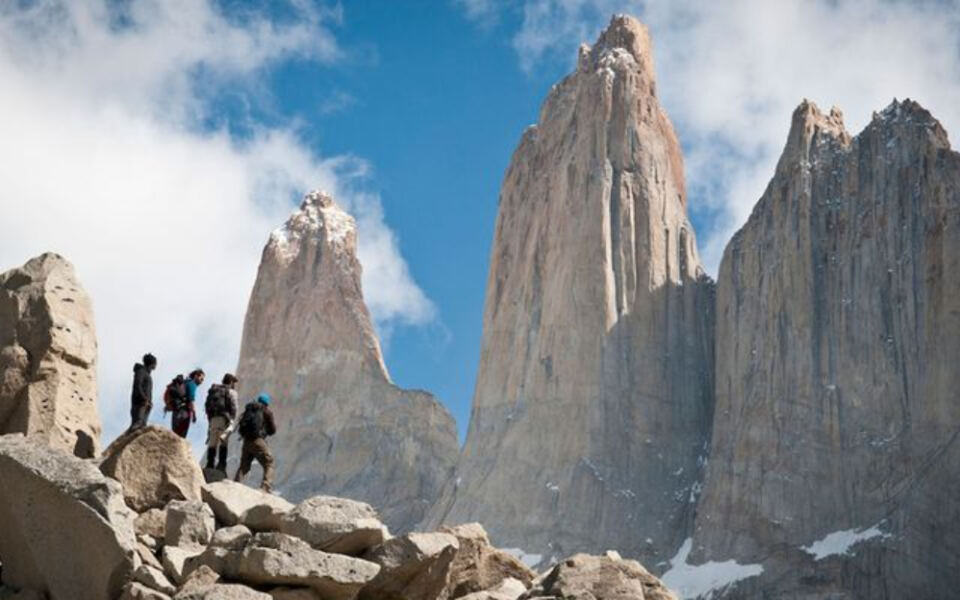
Few hiking routes on Earth open with a view this good and just keep getting better. The W Circuit covers roughly 70 kilometers through Torres del Paine National Park, connecting the Ascencio Valley, French Valley, Grey Glacier, and the iconic granite towers that have become symbols of wild Patagonia.
Chile’s tourism authority recommends about five days for the classic route.
Each day brings a completely different landscape. Hikers move through lenga forest, cross open lakeshores, and scramble toward hanging glaciers before the route swings toward enormous Grey Glacier.
Guanacos graze near the trail without much concern for passing visitors, while condors circle overhead on thermal currents.
The legendary Patagonian wind is not a rumor. Gusts can hit without warning, turning a pleasant morning walk into a full-body workout.
That unpredictability is part of what makes this trail feel genuinely wild rather than just scenic. Reaching Base Torres at dawn and watching the granite peaks turn orange and red as sunlight hits them is one of those moments that makes the early alarm clock completely worth it.
Snorkel With Wildlife in the Galapagos, Ecuador
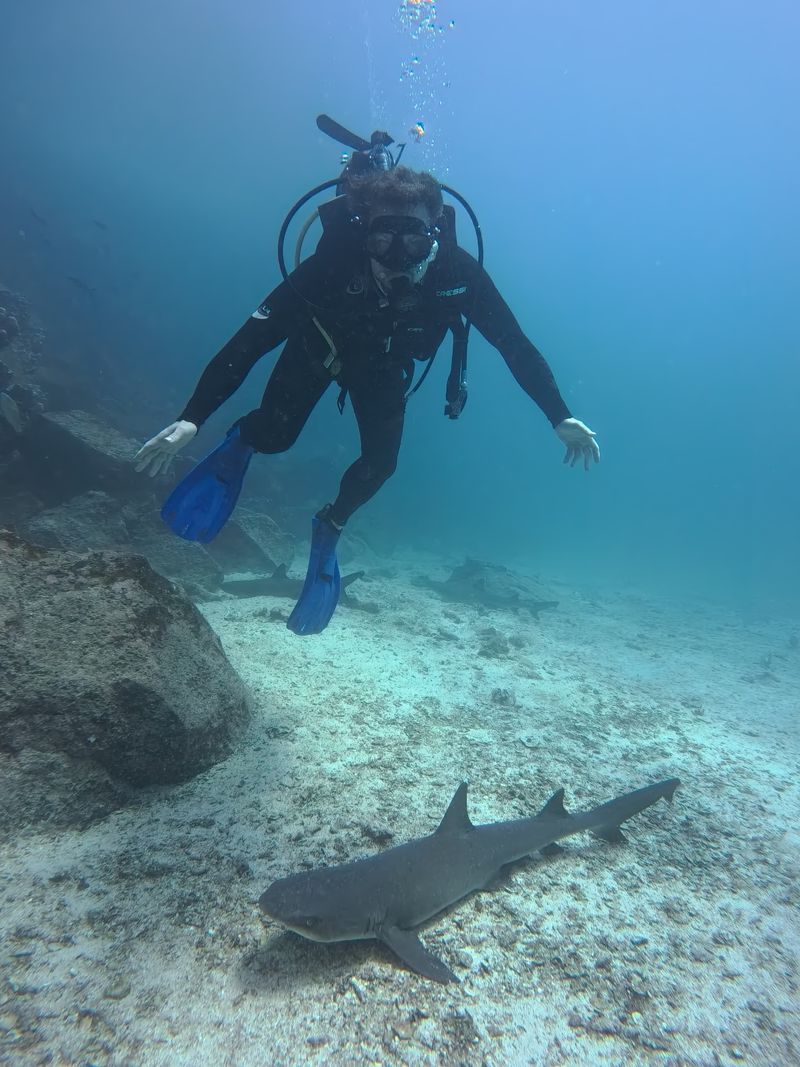
Nowhere else on Earth will a sea lion casually decide to swim circles around you just to say hello. The Galapagos Islands sit where three ocean currents collide, creating an underwater world packed with marine iguanas, penguins, sea turtles, rays, reef sharks, and enormous schools of colorful fish.
UNESCO calls the archipelago a living museum of evolution, and that description holds up the moment you put on a mask.
Above the surface, the islands are equally surreal. Giant tortoises move through volcanic landscapes at their own unhurried pace.
Marine iguanas sneeze salt and pile on top of each other like scaly throw pillows. Blue-footed boobies perform their famously awkward courtship dances with complete confidence.
The animals here have no natural fear of humans, which creates encounters that feel almost too good to be real. Ecuador’s tourism authority promotes snorkeling and diving with sea lions, sharks, turtles, and rays as signature experiences.
You are not visiting a wildlife park. You are simply showing up in the neighborhood where these creatures have always lived, and they are genuinely unbothered by your presence.
Stand Beside Perito Moreno Glacier, Argentina
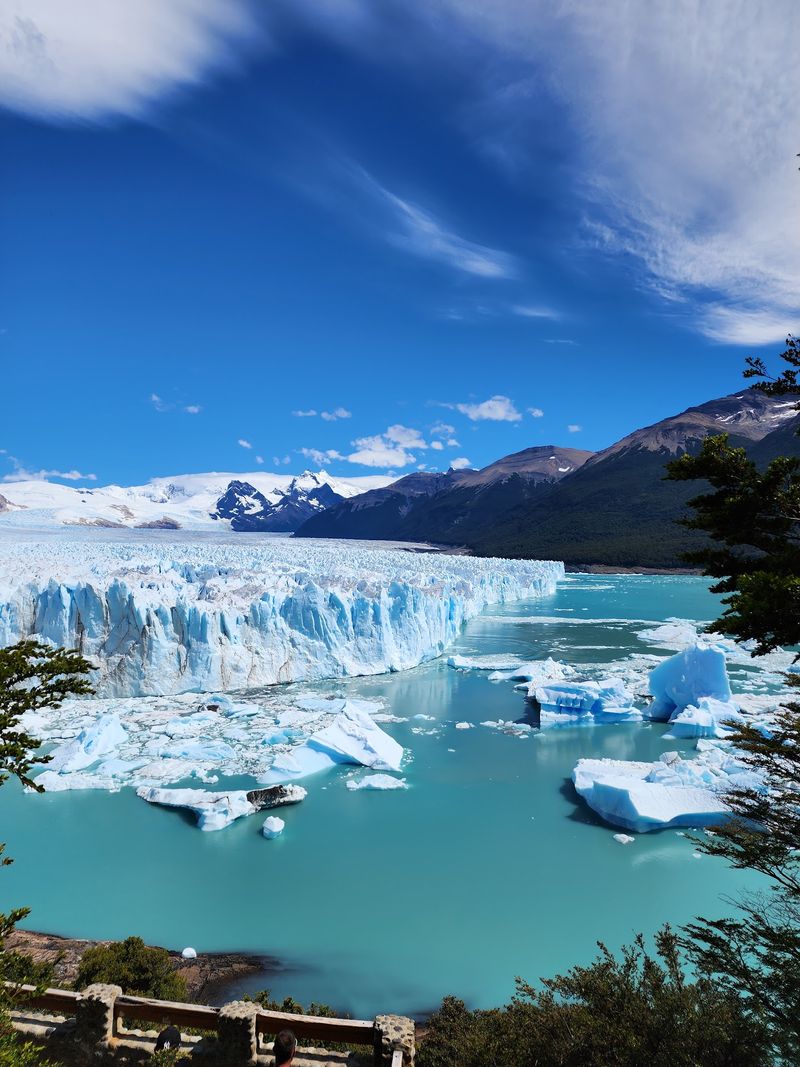
Most glaciers require a serious expedition to reach. Perito Moreno lets you walk right up to it on boardwalks, which makes the experience no less astonishing.
The glacier’s exposed front rises up to 60 meters above Lake Argentino, and it actively advances, cracks, and drops enormous blocks of blue ice into the water with sounds like distant cannon fire.
Located inside UNESCO-listed Los Glaciares National Park, Perito Moreno flows from the South Patagonian Ice Field, one of the largest freshwater reserves outside the polar regions. Boat excursions bring visitors close to the ice wall, and authorized guided excursions can take properly equipped travelers onto sections of the glacier itself.
UNESCO notes that roughly half the park is covered by glacial ice.
What separates this glacier from a simple frozen photo opportunity is the constant motion. The ice groans, shifts, and occasionally launches dramatic calvings that send waves across the lake.
Standing on the boardwalk while a building-sized chunk of ice crashes into the water below is the kind of experience that makes your brain recalibrate its sense of scale. Patience is rewarded here almost every time.
Walk Into the Spray at Iguazu Falls, Argentina and Brazil
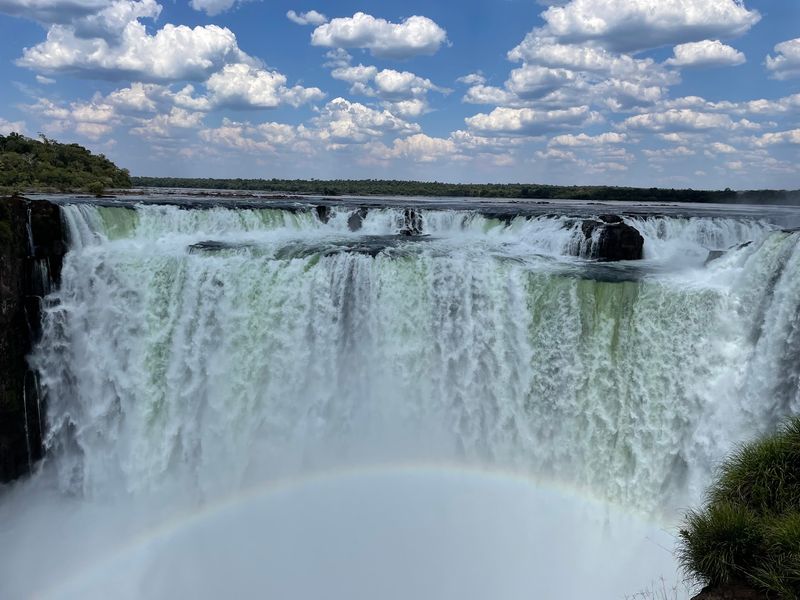
Standing at the edge of Devil’s Throat is less like watching a waterfall and more like standing at the edge of the world. Across nearly three kilometers, the Iguazu River breaks into hundreds of cascades and drops as much as 80 meters through dense subtropical forest along the Argentina-Brazil border.
UNESCO ranks it among the most spectacular waterfall systems on the planet.
The Argentine side gives visitors a network of elevated walkways weaving among islands and leading right up to individual falls. The Brazilian side offers the sweeping panoramic view that ends up on most postcards.
Both are worth visiting if time allows, because they genuinely show two completely different sides of the same astonishing system.
Beyond the water, the surrounding rainforest matters enormously. More than 2,000 plant species grow in the protected area, alongside tapirs, giant anteaters, caimans, ocelots, and toucans.
Coatis wander the paths with the confidence of animals that know exactly who runs this park. Photographs capture the scale reasonably well.
What they cannot capture is the roar, the spray hitting your face, and the slightly surreal feeling of standing inside one of Earth’s most powerful landscapes.
Enter the Amazon by Canoe, Peru
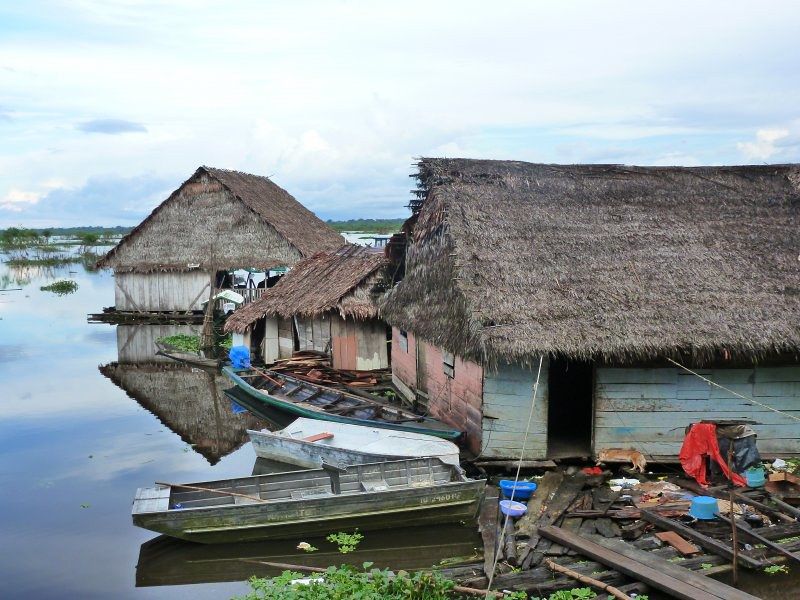
The Amazon does not reveal itself all at once. It unfolds slowly, one bend in the river at a time.
Peru offers outstanding access through areas like Tambopata and Manu, where river travel, wildlife hikes, and canoe excursions take visitors deep into humid tropical forest that feels genuinely ancient. Peru’s tourism authority describes Tambopata as lush rainforest packed with wildlife at every level.
Manu takes the wilderness experience further. UNESCO has recognized the park for containing an exceptional range of ecosystems stretching from high Andean grasslands through cloud forest into tropical lowland rainforest.
Around 850 bird species have been recorded in the area, alongside giant otters, black caimans, ocelots, and an almost incomprehensible variety of plant life.
Canoe travel puts travelers at water level, which is exactly where the action happens. A giant river otter surfaces nearby.
A troop of squirrel monkeys moves through the canopy above. Something large and unidentified splashes in the shallows before disappearing.
At night, the forest does not go quiet. It simply switches to a different and considerably louder soundtrack.
The Amazon rewards patience, curiosity, and a genuine willingness to slow down.
Search for Jaguars in the Pantanal, Brazil
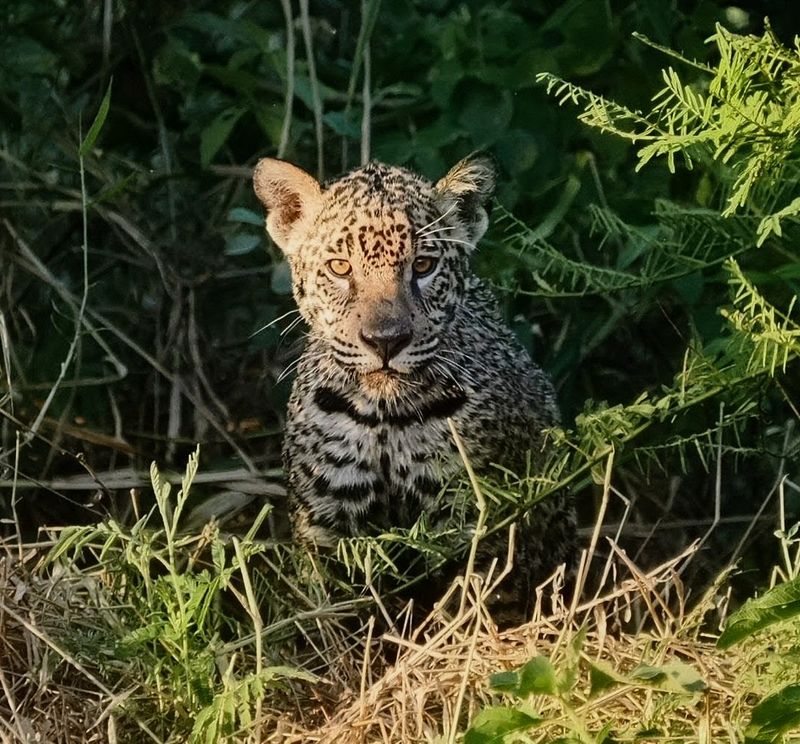
The Pantanal is the place where people who have been on African safaris suddenly understand they had not seen everything. This immense seasonal wetland spreads across Brazil and into Bolivia and Paraguay, and the annual flood cycle concentrates wildlife along riverbanks in ways that make sightings almost inevitable.
UNESCO lists giant anteaters, giant otters, marsh deer, hyacinth macaws, and giant armadillos among the species found here.
Jaguars are the headline act, and the Pantanal is widely considered the best place on Earth to see them in the wild. Boat safaris along the Cuiaba River in the northern Pantanal offer some of the most reliable jaguar viewing available anywhere.
Instead of scanning open savanna, travelers watch riverbanks where jaguars hunt capybaras and caimans with remarkable efficiency.
Capybaras are everywhere, caimans line the banks in the hundreds, and giant otters argue loudly over fish while tourists try to photograph them. The landscape shifts dramatically between wet and dry seasons, which means no two visits ever feel quite the same.
For wildlife photography, the northern Pantanal during the dry season offers extraordinary light, accessible riverbanks, and animals that have learned to ignore the boats entirely.
Drive Across Salar de Uyuni, Bolivia
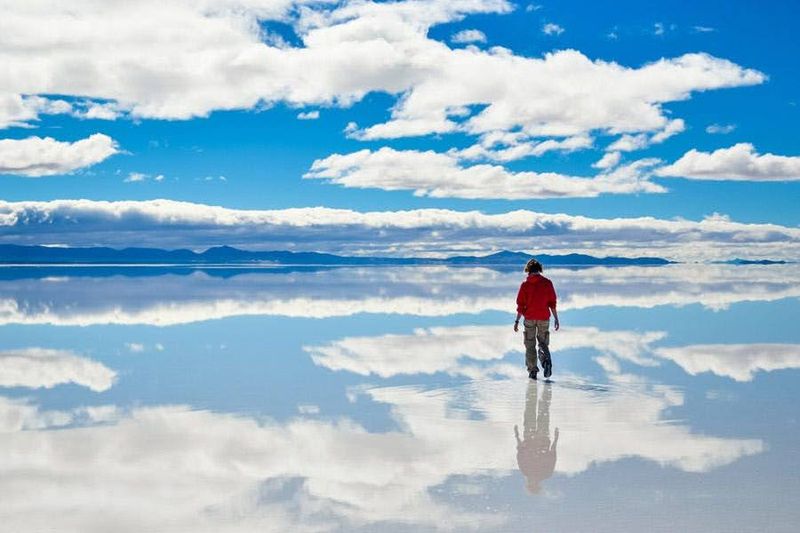
At over 10,500 square kilometers and sitting at roughly 3,663 meters above sea level, Salar de Uyuni is the kind of place that makes your brain quietly give up trying to find the horizon. During the dry season, the surface crystallizes into hexagonal salt patterns stretching endlessly in every direction.
During parts of the rainy season, a thin layer of water turns the entire flat into a mirror so perfect that standing on it feels like floating in the sky.
The adventure does not stop at the salt. Multi-day 4×4 journeys continue south through Eduardo Avaroa Reserve, passing flamingos on vivid red and green high-altitude lagoons, steaming geysers at dawn, hot springs, and volcanic formations that look borrowed from another planet.
Bolivia’s tourism authority specifically promotes this extended route for its combination of landscapes and wildlife.
The logistics require planning, but the payoff is extraordinary. Sunrise on the salt flat, when the sky turns pink and the reflection doubles every color, is one of those visual experiences that photographs struggle to do justice.
Bring warm layers regardless of the season. The altitude and wind work together to make the temperature considerably colder than it first appears.
Stargaze in the Atacama Desert, Chile
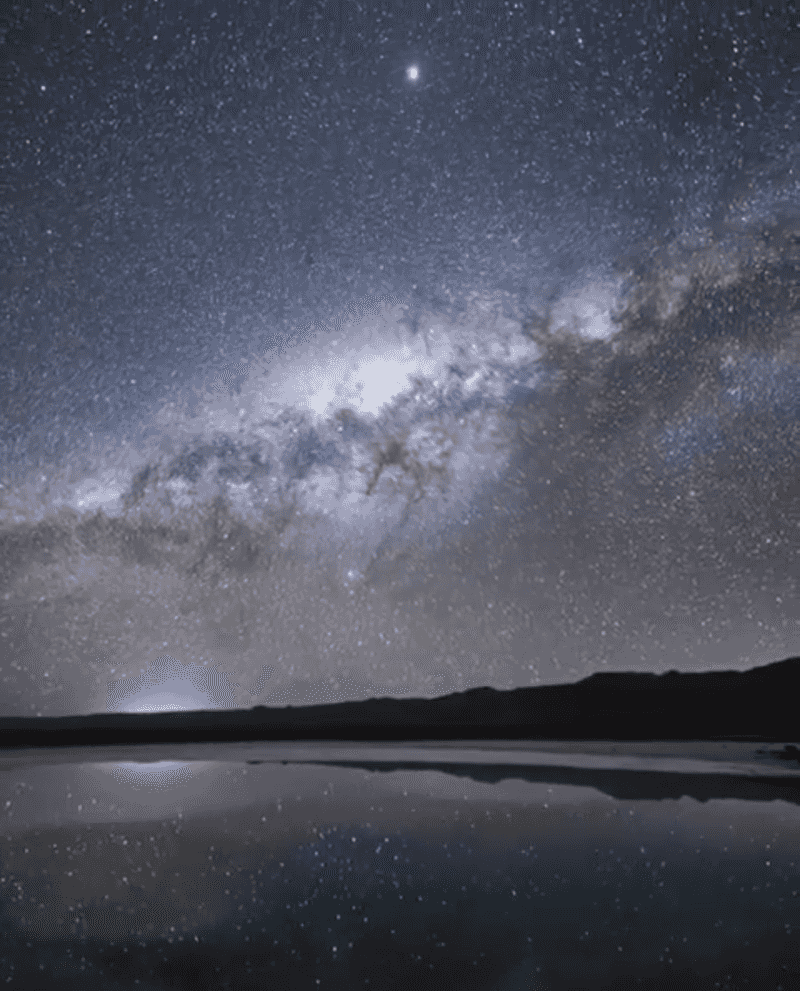
The Atacama Desert saves its most spectacular performance for after dark. San Pedro de Atacama sits in what Chile Travel describes as the world’s driest desert, surrounded by salt flats, volcanic peaks, and high-altitude lagoons that already make daytime here extraordinary.
But when the sun drops and the sky clears, the Milky Way appears with a clarity that can stop conversation completely.
Chile’s tourism authority considers the country one of the world’s premier stargazing destinations, and the Atacama is the crown jewel of that reputation. Light pollution is minimal, elevation is high, and the air is exceptionally dry.
Organized night tours use professional telescopes and knowledgeable guides who point out star clusters, nebulae, and galaxies that most people have only ever seen in textbooks.
The full Atacama experience layers several extremes into a single trip. Wake before dawn to watch El Tatio geysers steam against a cold sky.
Hike across Moon Valley’s alien landscape in the afternoon. Spot flamingos on Laguna Chaxa at golden hour.
Then spend the evening looking straight up at a sky so dense with stars it almost feels crowded. The desert is empty in the best possible way.
Approach Angel Falls Through Canaima, Venezuela
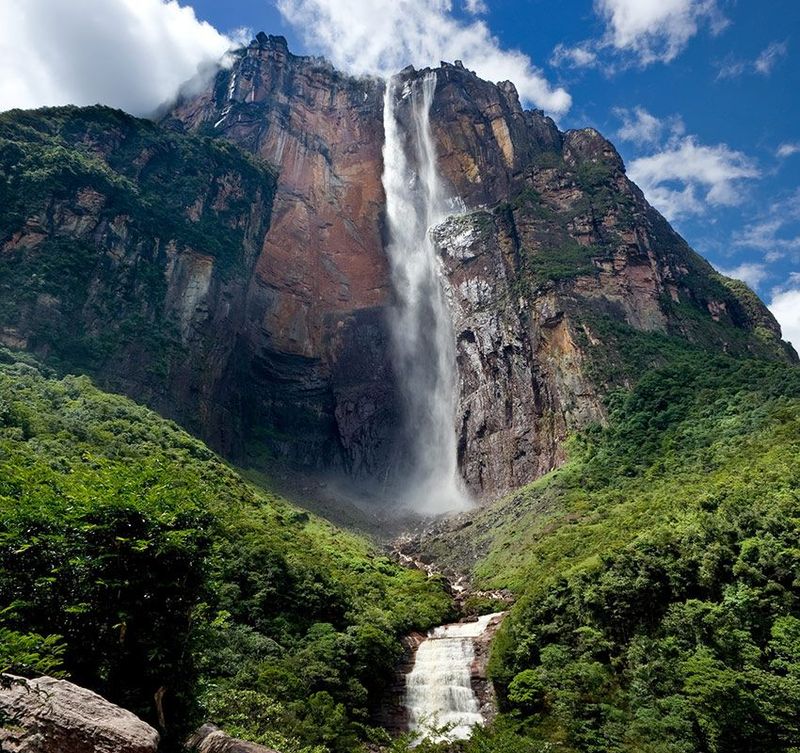
At 979 meters, Angel Falls does not just fall. It practically evaporates before it reaches the bottom.
UNESCO documentation identifies it as the world’s highest waterfall, dropping from the top of Auyan-tepui inside Canaima National Park, a landscape built around ancient sandstone plateaus called tepuis that rise like enormous flat-topped islands above tropical forest and savanna.
The tepuis themselves may be the most extraordinary part of the experience. These formations are among the oldest geological structures on Earth, and their isolation has produced unique ecosystems found nowhere else.
The broader Canaima park, also a UNESCO World Heritage site, covers nearly three million hectares of some of Venezuela’s most remote and visually striking terrain.
Reaching Angel Falls traditionally involves a combination of small aircraft and river boat travel rather than a simple drive to a car park. That remoteness is central to the experience.
Travelers should carefully review current security conditions, transportation options, entry requirements, and official travel advisories before planning a visit, as the situation in Venezuela requires thorough preparation. For those who make the journey, the reward is seeing a waterfall so tall it looks like it belongs in a different era of Earth’s history.
Watch Andean Condors Over Colca Canyon, Peru
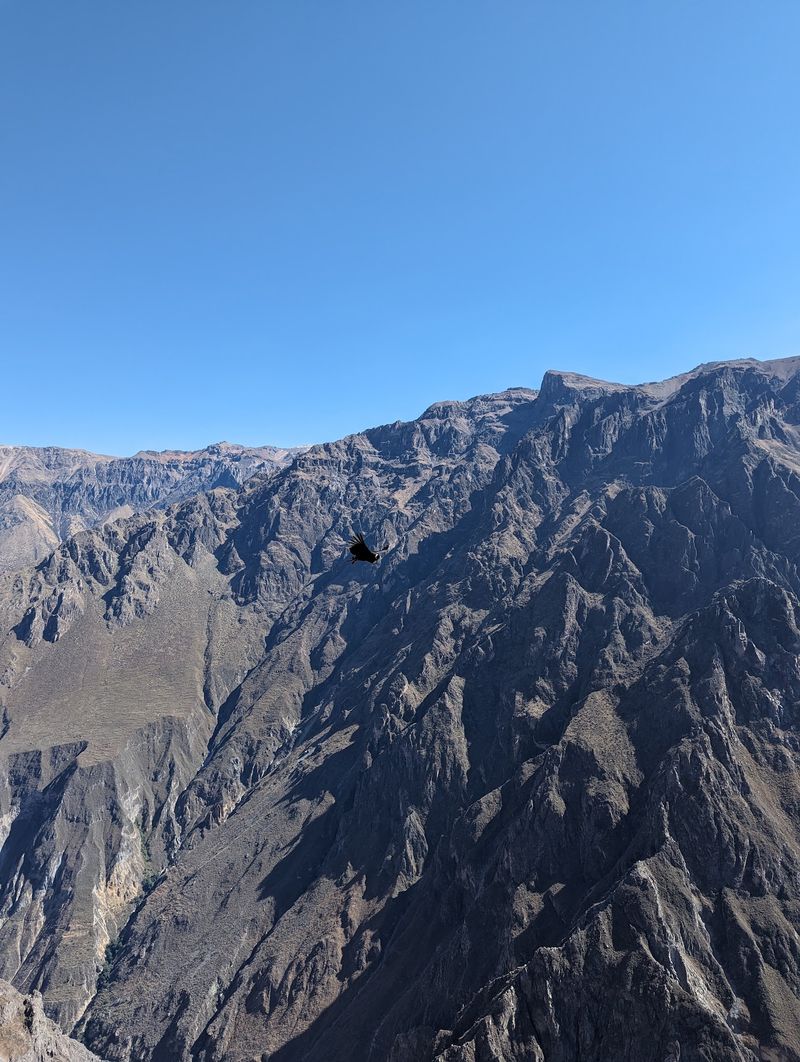
Seeing an Andean condor in a photograph is one thing. Watching one climb out of a canyon on a thermal current, wings spread nearly three meters wide, is a genuinely humbling experience.
Colca Canyon, outside Arequipa, is one of South America’s deepest canyons and one of the most reliable places on the continent to observe condors at close range as they rise with the morning air.
Peru’s official tourism material calls Colca the realm of the condor, and the Cruz del Condor viewpoint is where most visitors gather in the early morning hours. Condors typically begin rising when the warming air creates thermals strong enough to carry their considerable weight without effort.
On a good morning, multiple birds can be visible at once, circling at eye level or even below the viewpoint.
The canyon offers far more than one viewpoint, though. Terraced agricultural slopes descend into enormous valleys beneath snow-capped Andean peaks, and villages throughout the area preserve cultural traditions that predate Spanish arrival by centuries.
Treks drop from the rim to settlements far below and climb back through thin mountain air. The condors provide the drama, but the canyon itself provides the depth, in every sense of the word.
Hike Toward Cotopaxi’s Snow Line, Ecuador
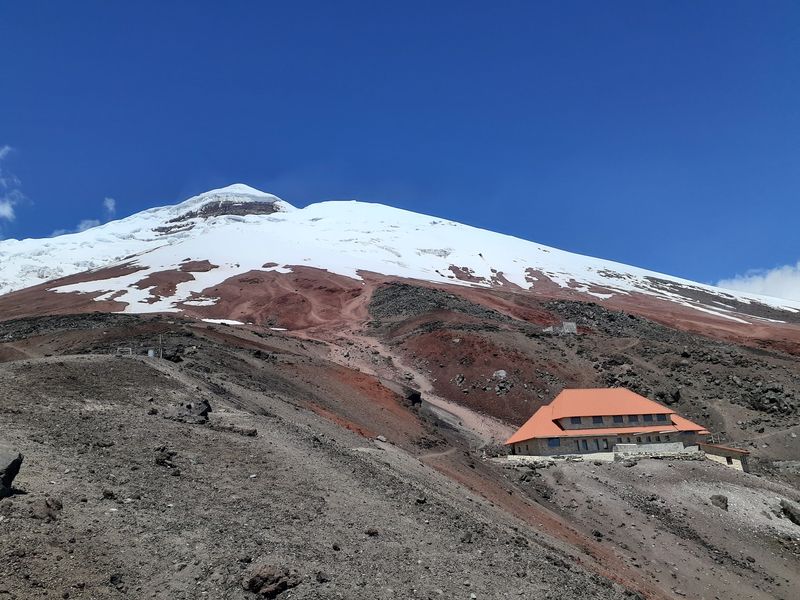
Cotopaxi is the kind of volcano that makes you understand why ancient cultures considered mountains sacred. Its near-perfect symmetrical cone rises to 5,897 meters, making it Ecuador’s second-highest peak and one of the world’s highest active volcanoes.
The snow line sits well above the clouds on most mornings, and even a partial view of the summit from the surrounding paramo feels like something earned rather than simply observed.
Full summit attempts require genuine mountaineering experience, proper equipment, and professional guides. Ecuador’s tourism authority highlights the José Rivas Refuge at 4,864 meters as a major hiking goal, along with mountain biking across the volcanic plains and horseback riding through the national park.
Limpiopungo Lagoon offers a quieter way to experience the landscape without the altitude demands of the upper slopes.
The paramo ecosystem surrounding the volcano is striking in its own right. Wild horses graze across open plains beneath the cone.
Clouds race across the sky and change the light every few minutes. The air thins noticeably above 4,000 meters, turning what looks like a gentle slope on a map into a genuine cardiovascular challenge.
Cotopaxi does not need to erupt to make an impression. Simply existing at that scale is enough.
See the Rainbow River of Cano Cristales, Colombia
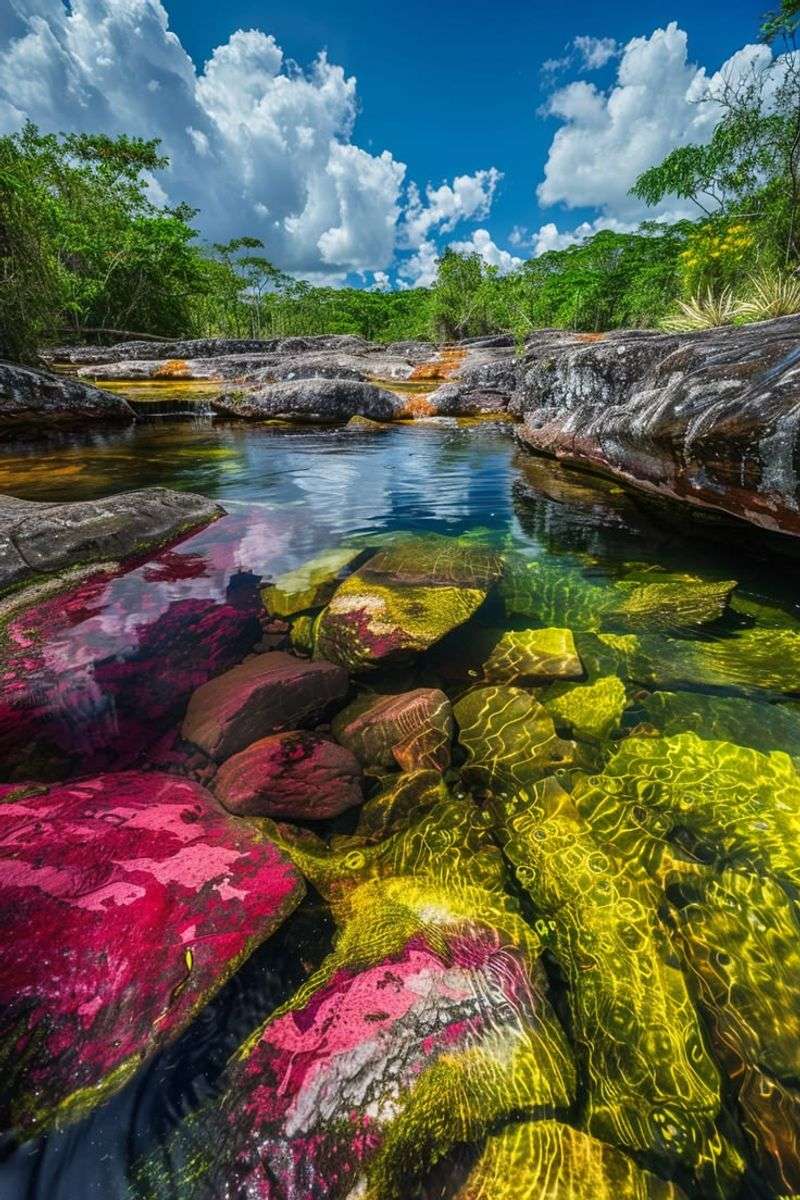
For a few months each year, Cano Cristales does something that rivers are not supposed to do. Vivid shades of red, yellow, green, and blue appear across the riverbed, created by aquatic plants called Macarenia clavigera that bloom when water levels and sunlight conditions align perfectly.
Colombia’s tourism authority calls it the River of Five Colors and recommends roughly June through November as the best window for seeing the display.
Getting there is part of the commitment. La Macarena is the gateway town, and all visits are conducted through registered guides in a protected ecological zone.
The surrounding Sierra de la Macarena sits at a biological crossroads between the Andes, the Amazon basin, and the eastern plains, giving the broader landscape exceptional biodiversity. River dolphins, monkeys, turtles, and ancient Guiana Shield rock formations are all part of the wider area.
The river itself is relatively small, which makes the colors feel even more concentrated and surprising. Swimming in certain sections is permitted, and floating in vivid red water surrounded by clear jungle pools is an experience with no obvious comparison.
Cano Cristales is genuinely one of those places that sounds exaggerated until you are actually standing in it, wondering how something this colorful occurs naturally.
Walk Between Dunes and Lagoons at Lencois Maranhenses, Brazil
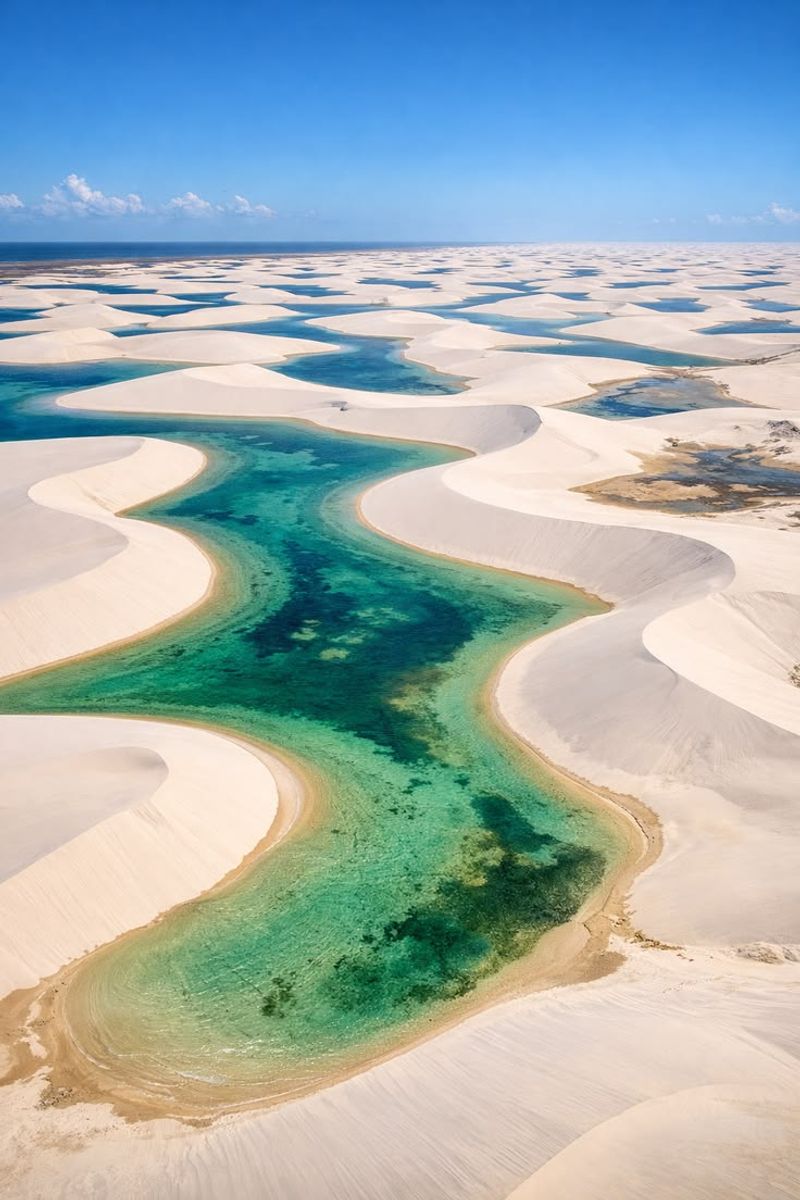
Lencois Maranhenses looks like a desert that forgot to check the weather forecast. Enormous white dunes roll across northeastern Brazil, but seasonal rainfall fills the low points between them with brilliant blue and green freshwater lagoons that practically glow against the pale sand.
UNESCO added the national park to the World Heritage List in 2024, recognizing a landscape of more than 156,000 hectares that includes roughly 90,000 hectares of dunes mixed with temporary and permanent lagoons.
The contradiction is what makes this place so hard to categorize. Visually it resembles one of the driest environments on Earth.
Yet the lagoons are cool, clear, and genuinely swimmable, making a walk through the dunes feel like a treasure hunt where the prize is a private swimming pool hidden behind the next ridge. Wind constantly reshapes the sand, and the lagoons expand and shrink with the seasons.
UNESCO describes the system as highly dynamic, with the landscape measurably changing from year to year. No two visits look exactly alike, which gives the park a living quality that static natural monuments cannot match.
The best time to visit is typically between July and September, when lagoons are full and the contrast between white sand and blue water is most dramatic. Sunrise here, with the dunes turning gold, is quietly extraordinary.
Explore Malpelo Marine Sanctuary, Colombia
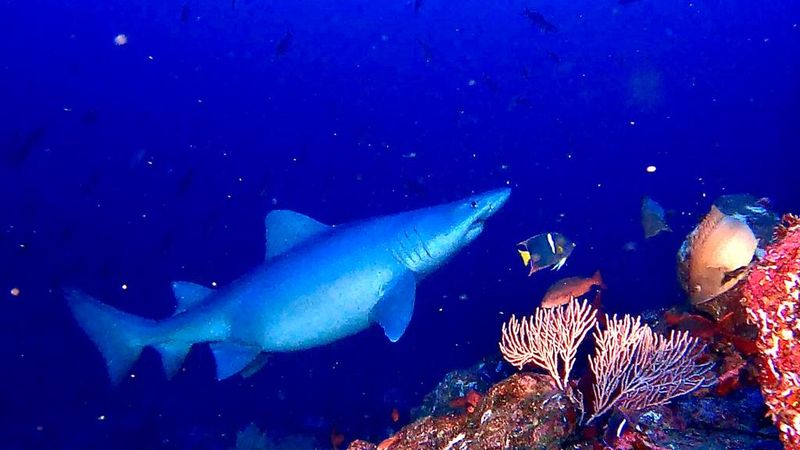
Malpelo is not a dive site you stumble across. Located roughly 500 kilometers off Colombia’s Pacific coast, this remote rocky island requires a liveaboard voyage of several days just to reach it.
That effort filters out casual visitors and leaves behind one of the most pristine marine environments in the eastern Pacific. Colombia Travel describes the UNESCO-listed sanctuary as a premier ecotourism destination for experienced divers.
The wildlife here operates on a scale that is genuinely difficult to process underwater. Large aggregations of silky sharks and scalloped hammerheads are among the headline encounters, but the site also hosts whale sharks, manta rays, giant groupers, moray eels, and dense schools of fish that can block out the light.
The currents are strong and conditions are not always gentle, which is exactly why the marine life thrives in such abundance.
Malpelo rewards divers with the kind of underwater experience that makes every other dive feel slightly ordinary afterward. The island’s sheer isolation means the ocean around it behaves the way oceans did before widespread fishing pressure changed everything.
Operators offering trips here are specialized and vetted, and booking well in advance is essential. For experienced underwater adventurers, this is South America’s most extraordinary blue-water encounter.
Trek Patagonia National Park’s Remote Steppe, Argentina
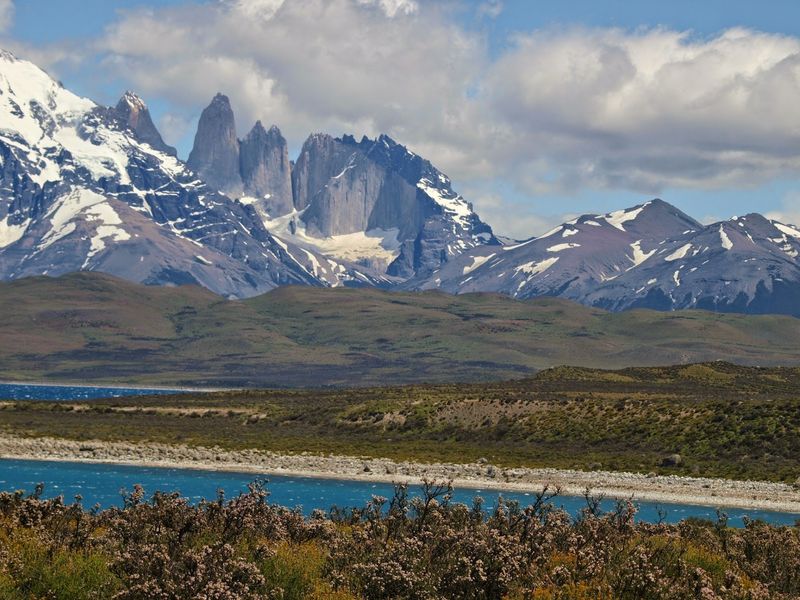
While Torres del Paine collects most of Patagonia’s international attention, Argentina’s Patagonia National Park offers something the famous Chilean circuit simply cannot: genuine solitude. Located around the Buenos Aires Lake plateau in Santa Cruz Province, the park covers more than 300,000 hectares of cold, dry steppe, deep valleys, and high-altitude lagoons that Argentina’s tourism authority describes as almost lunar in character.
Wildlife here includes native species adapted to the harsh open landscape, including the endangered hooded grebe, which uses the park’s high lakes for breeding. Guanacos move across the steppe in groups, and Andean condors are a regular presence overhead.
The terrain rewards slow travel and genuine attention rather than a rapid march between viewpoints.
Nearby adventures extend the experience considerably. The Pinturas River canyon holds UNESCO-listed Cueva de las Manos, where hand stencils painted more than 9,000 years ago cover the rock walls in one of South America’s most remarkable archaeological sites.
Mount Zeballos, Lake Posadas, and views toward Mount San Lorenzo add further depth to the region. Argentina’s official guidance recommends two to four days and advises packing for very low temperatures.
This is Patagonia with no shortcuts taken and no edges smoothed off for comfort.
Share this story