Some university campuses feel less like places to study and more like movie sets. Gothic towers, ivy-covered courtyards, grand libraries, mountain backdrops, and futuristic architecture have made many of these institutions filming locations for fantasy worlds, period dramas, and Hollywood blockbusters.
Whether centuries old or strikingly modern, these campuses are destinations in their own right. Get ready to wish you had enrolled somewhere a little more spectacular.
University of Oxford, Oxford, England
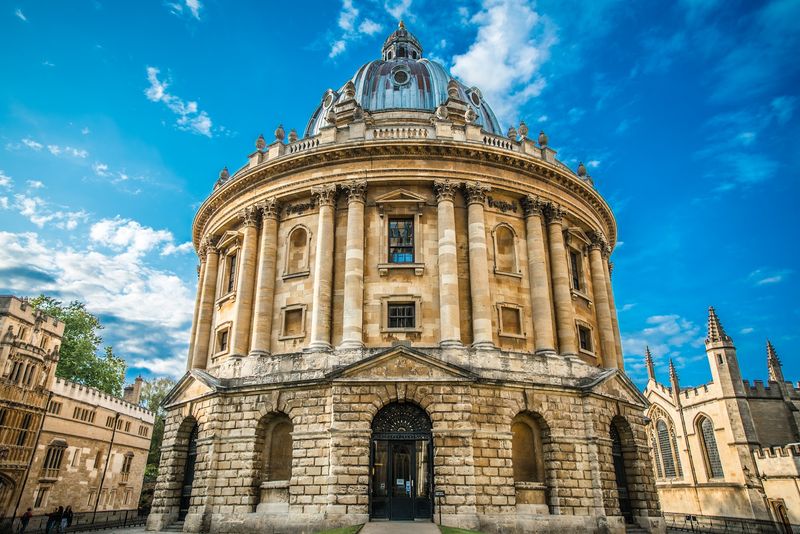
Walking through Oxford feels like stepping into a living history book. The medieval stone colleges, candlelit halls, and ancient cloisters have made this campus one of the most filmed university settings on Earth.
Harry Potter fans will recognize the Bodleian Library’s Divinity School, which doubled as Hogwarts’ infirmary, and Christ Church’s dining hall inspired the Great Hall itself.
Oxford has over 40 individual colleges, each with its own distinct architectural personality. Some look like castles, others like cathedrals, and a few look like both at the same time.
The Radcliffe Camera, a circular domed library built in 1749, is possibly the most photographed building on campus.
Students here study under painted ceilings and carved wooden beams that are centuries old. Tourists flock to Oxford year-round just to wander its lanes and peek through iron gates.
Beyond the films, the real magic is that actual students walk these corridors every single day, backpacks over their shoulders, as if the setting is completely normal to them.
University of Cambridge, Cambridge, England
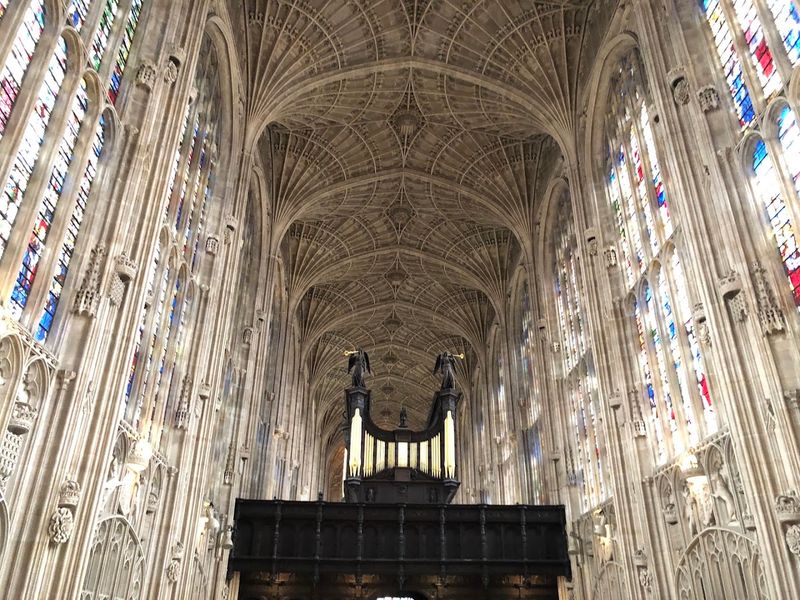
King’s College Chapel has stood beside the River Cam since the 1400s, and it still stops people in their tracks today. The soaring fan-vaulted ceiling inside is considered one of the greatest achievements in Gothic architecture anywhere in the world.
Standing beneath it, you might forget you are technically inside a university.
Cambridge is made up of 31 colleges, each tucked behind ancient gates with their own courtyards and chapels. The Mathematical Bridge, connecting two parts of Queens College over the Cam, has inspired so many myths about its construction that the truth almost feels like a letdown.
Students here have traditionally punted along the river between lectures, which is arguably the most charming commute in higher education.
Several films have used Cambridge as a backdrop, including The Theory of Everything and Chariots of Fire. The city itself wraps around the university in a way that makes it difficult to tell where campus ends and town begins.
Every cobblestone seems to have a story attached to it, and the whole place hums with centuries of brilliant, restless minds.
Trinity College Dublin, Dublin, Ireland

The Long Room at Trinity College Dublin is the kind of library that makes you want to read every single book in it. Stretching 65 meters from end to end, lined with 200,000 of the oldest books in Ireland, and crowned by a barrel-vaulted ceiling, it inspired the Jedi Archives in Star Wars.
That alone earns it a spot on this list.
Founded in 1592 by Queen Elizabeth I, Trinity sits in the heart of Dublin and draws over a million visitors each year to see the Book of Kells, an illuminated medieval manuscript on permanent display. The cobblestone square at the front of campus, called Front Square, is surrounded by Georgian and Victorian buildings that feel stately and slightly theatrical all at once.
Students here share their campus with tourists who are genuinely awestruck by the surroundings. The contrast is delightful.
Trinity has educated philosophers, poets, playwrights, and politicians, and its walls seem to hold the echoes of every one of them. Wandering the grounds on a foggy Dublin morning, it is easy to feel like you have walked into a period drama set in a world slightly more elegant than your own.
University of Sydney, Sydney, Australia
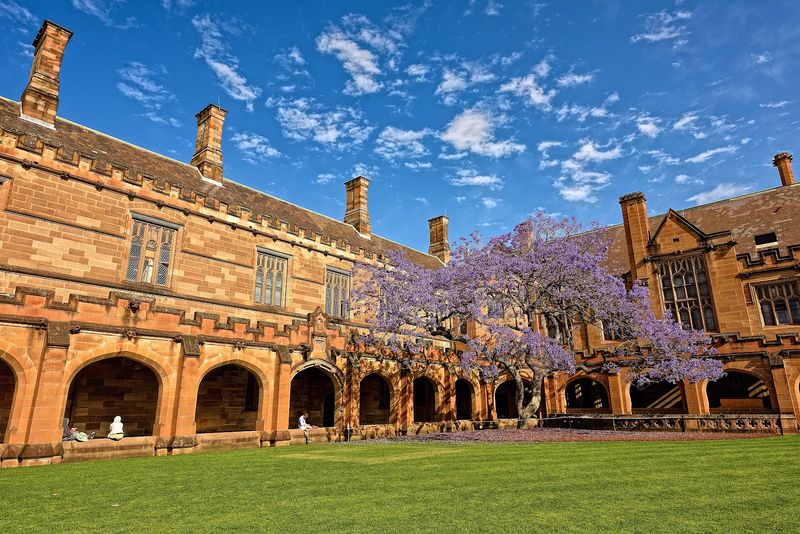
Gargoyles perched on sandstone towers, stained glass catching the Australian sun, and sprawling green lawns in the middle of a modern city. The University of Sydney’s Quadrangle looks so much like an English castle that first-time visitors sometimes do a double take when they spot a surfboard leaning against a bicycle nearby.
Built in 1850 in the Gothic Revival style, the Quad was designed to echo the grandeur of Oxford and Cambridge. It largely succeeded.
The Great Hall inside seats over 700 people beneath a hammer-beam ceiling that took craftsmen years to complete. The campus regularly appears on lists of the world’s most beautiful universities, and it is hard to argue with that assessment.
Beyond the Quadrangle, the campus spreads across 72 hectares and includes museums, art galleries, and botanical gardens. The Nicholson Museum houses one of the largest collections of ancient antiquities in the Southern Hemisphere, which feels like a genuinely unexpected bonus for a Tuesday afternoon between classes.
Sydney itself is already one of the world’s most visually dramatic cities, and this campus fits right into that tradition with zero apologies.
University of Cape Town, Cape Town, South Africa

Table Mountain does not just sit behind the University of Cape Town. It looms.
It dominates the skyline with a flat-topped authority that makes every photo of this campus look like it was art-directed by someone with excellent taste. No other university in the world has a UNESCO World Heritage Site as its backdrop in quite this way.
The main campus is built on the slopes of Devil’s Peak, meaning students walk uphill between lectures with one of the world’s most recognizable mountains watching over them. The historic buildings are classical in style, white and stately, and they contrast beautifully against the dramatic natural scenery surrounding them.
The Jameson Hall, with its grand columns and wide steps, is particularly striking.
UCT is also Africa’s highest-ranked university, which means the stunning setting comes with serious academic credentials. The campus has a reputation for producing leading researchers, activists, and thinkers across every discipline.
On clear days, students can see across Cape Town all the way to the ocean from certain parts of campus. Studying here must feel like a constant reminder that the world is genuinely, spectacularly large.
Stanford University, Stanford, California
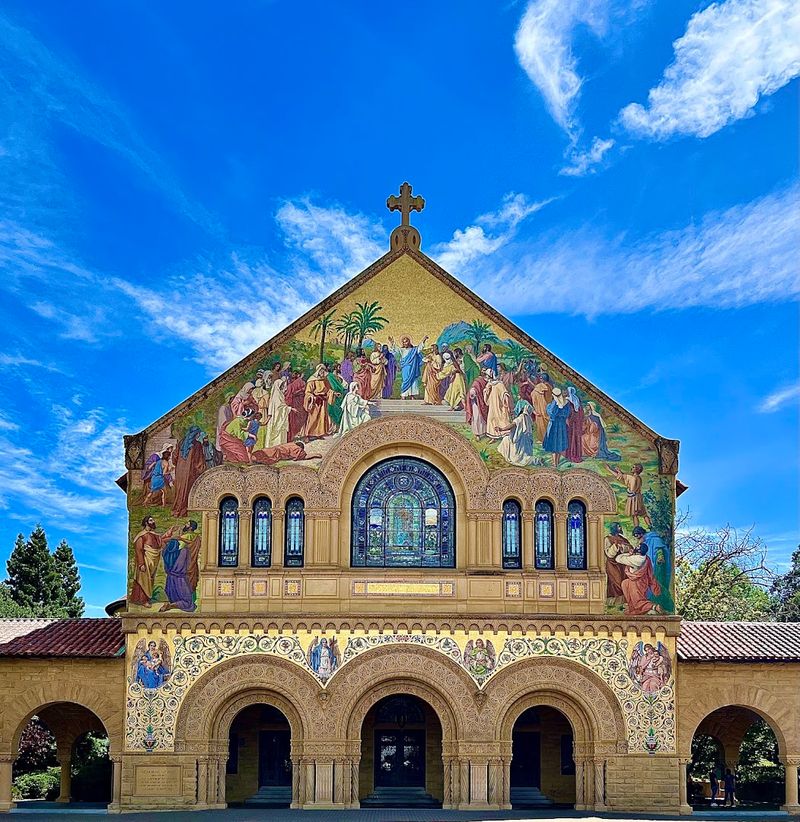
Stanford smells like warm stone, cut grass, and ambition. The palm-lined paths leading to the Main Quad have a relaxed confidence about them that feels distinctly Californian, as if the campus knows it is beautiful and has simply decided not to make a big deal about it.
Memorial Church, with its intricate mosaic facade, anchors the whole scene like a movie prop that turned out to be real.
The campus covers over 8,000 acres, making it one of the largest university campuses in the United States. Romanesque arches, terracotta roof tiles, and golden sandstone buildings give Stanford a warm, sun-drenched consistency that looks spectacular in any season.
Several films have used the campus as a backdrop, and it has appeared in TV shows including The Social Network, which was partially filmed here.
What makes Stanford particularly cinematic is the combination of architectural elegance and open space. There are no cramped urban streets crowding the buildings.
Everything breathes. Students cycle across wide plazas and past sculpture gardens, and the whole campus feels like it was designed by someone who genuinely believed education should happen somewhere beautiful.
Spoiler alert: it really does make a difference.
University of Coimbra, Coimbra, Portugal

Perched on a hilltop above the Mondego River, the University of Coimbra has been shaping Portuguese intellectual life since 1290, making it one of the oldest universities in continuous operation in the world. That is not a boast.
That is just a Tuesday for Coimbra. The campus became a UNESCO World Heritage Site in 2013, which seems almost inevitable given how much history is packed into every square meter.
The Joanina Library is the crown jewel of the campus, a baroque masterpiece built between 1717 and 1728. Its gilded bookshelves, painted ceilings, and carved wooden galleries house over 300,000 books, some dating back to the 15th century.
A colony of bats lives inside the library and is encouraged to stay because they eat the insects that would otherwise damage the ancient manuscripts. That detail alone deserves applause.
Students here wear traditional black cloaks called capas, a centuries-old academic tradition that gives the campus a theatrical atmosphere even on ordinary days. The annual Queima das Fitas festival, celebrating the end of the academic year, transforms the hilltop into something resembling a very elegant party.
Coimbra rewards visitors who take the steep climb to the top with views that are genuinely hard to leave.
Yale University, New Haven, Connecticut
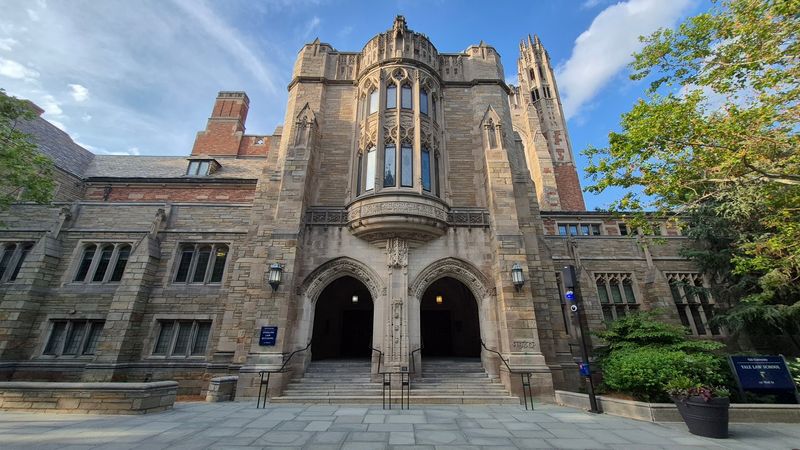
Yale looks like someone took a medieval European university, shipped it to Connecticut, and forgot to tell anyone it was supposed to be modern. The Collegiate Gothic architecture dominates the central campus with carved stone arches, dark wood paneling, and gargoyles that seem to judge passersby with quiet disapproval.
It is spectacular and slightly intimidating, which is probably the intended effect.
Sterling Memorial Library was deliberately designed to resemble a cathedral, complete with nave, aisles, and stained glass windows. The architect wanted it to feel like a place of reverence for knowledge.
Students studying there often report that it actually works. The Beinecke Rare Book Library, built from translucent marble panels, glows from the inside on sunny days like a lantern filled with ancient texts.
Yale’s campus has appeared in films including Indiana Jones and the Kingdom of the Crystal Skull and The Skulls. Its residential colleges each have their own dining halls, courtyards, and traditions, giving the campus a layered, almost secretive quality.
Walking through Old Campus on a foggy October morning, surrounded by stone walls and turning leaves, feels less like visiting a university and more like being handed a key to somewhere most people never get to go.
University of Glasgow, Glasgow, Scotland
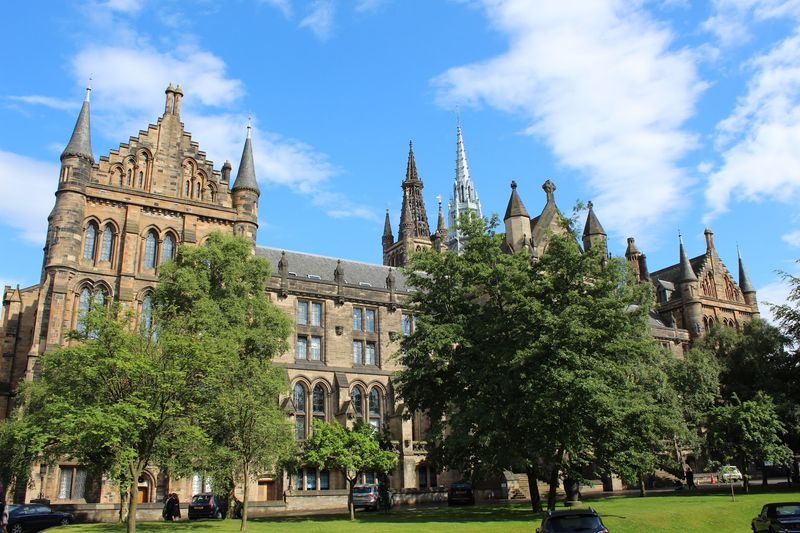
If Hogwarts had a Scottish cousin, it would be the University of Glasgow. The main building, designed by Sir George Gilbert Scott and completed in 1870, rises from Gilmorehill with the kind of Gothic drama that makes people reach for their cameras before they have even processed what they are looking at.
The cloisters below the main tower are among the most photographed university spaces in the United Kingdom.
Filming crews have noticed too. The campus has appeared in productions including Cloud Atlas and various television dramas, and it regularly draws comparisons to fictional magical schools from people who have never actually attended a fictional magical school.
The Bute Hall inside the main building features elaborate stained glass and an ornate hammer-beam ceiling that could comfortably host a royal banquet.
Glasgow as a city is gritty, creative, and full of character, which makes the contrast with this grand Victorian campus all the more striking. Students here study under stone arches that have seen over 150 years of Scottish weather, academic debate, and late-night revision sessions.
The university also has a free museum on campus, the Hunterian, which contains works by Rembrandt and Whistler. Finding a Rembrandt between lectures is a genuinely unusual perk.
Peking University, Beijing, China
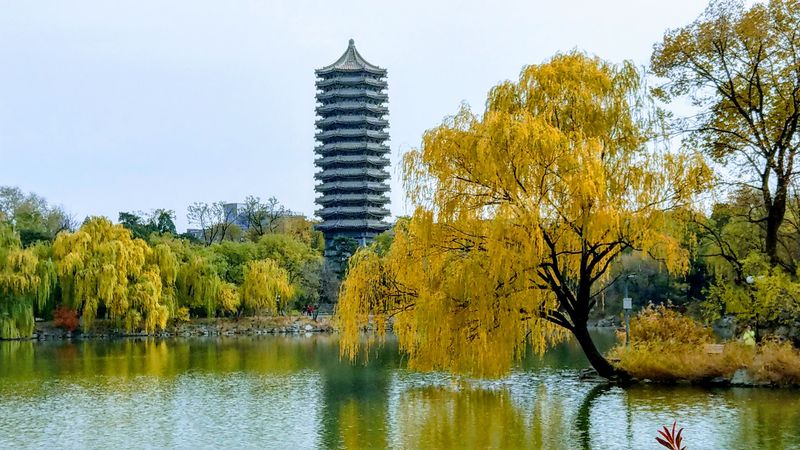
Weiming Lake sits at the heart of Peking University like a secret the campus has been keeping for over a century. Weeping willows trail into the water, stone bridges arch over calm reflections, and traditional Chinese pavilions dot the shoreline in a way that feels more like a classical garden painting than a place where final exams happen.
The effect is genuinely calming, which might be intentional.
Founded in 1898, Peking University occupies the former site of royal gardens from the Qing Dynasty, which explains why the grounds feel so deliberately beautiful. Historic pagodas, moon gates, and ornamental rockeries are woven between modern academic buildings in a combination that somehow works.
The Edgar Snow Garden, named after the American journalist who befriended Mao Zedong, adds an unexpected layer of international history to the landscape.
PKU is consistently ranked among Asia’s top universities, and its campus attracts visitors who simply want to wander the gardens even without any academic purpose. Spring brings cherry blossoms that turn the lakeside paths into something from a nature documentary.
Students cycling between lectures past centuries-old pavilions seem blissfully unaware of how remarkable their daily commute actually looks from the outside looking in.
Nanyang Technological University, Singapore
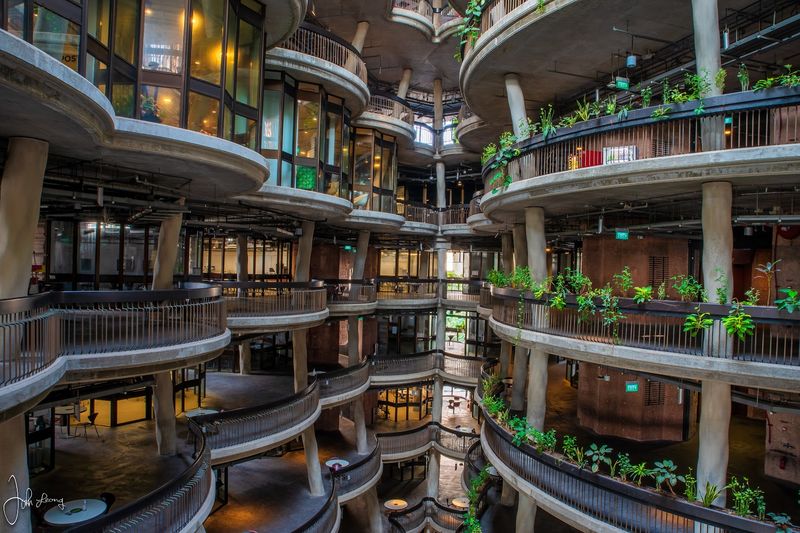
The Hive looks like a building from a film about a future where architects finally stopped caring about right angles. NTU’s most famous building stacks 12 circular pods into a beehive-inspired tower surrounded by tropical greenery, and it won awards so fast after its completion in 2015 that the architecture world barely had time to catch its breath.
It was designed by Thomas Heatherwick, the same person behind London’s Garden Bridge concept and the New York Vessel.
NTU consistently ranks among the world’s top universities for engineering and technology, and its campus reflects that forward-thinking identity at every turn. The School of Art, Design and Media building disappears into a grassy hillside, with its green roof blending into the surrounding landscape so seamlessly that you can walk over the top of it without realizing there is a building underneath.
Solar panels, rainwater harvesting systems, and energy-efficient designs are built into the infrastructure throughout.
The campus sits within lush tropical vegetation, giving the whole place a humid, vibrant energy that feels nothing like a traditional university setting. Students here are surrounded by architecture that challenges assumptions about what a building is supposed to look like.
If any campus earns the description sci-fi, it is this one, and it earns it without even trying particularly hard.
Cornell University, Ithaca, New York
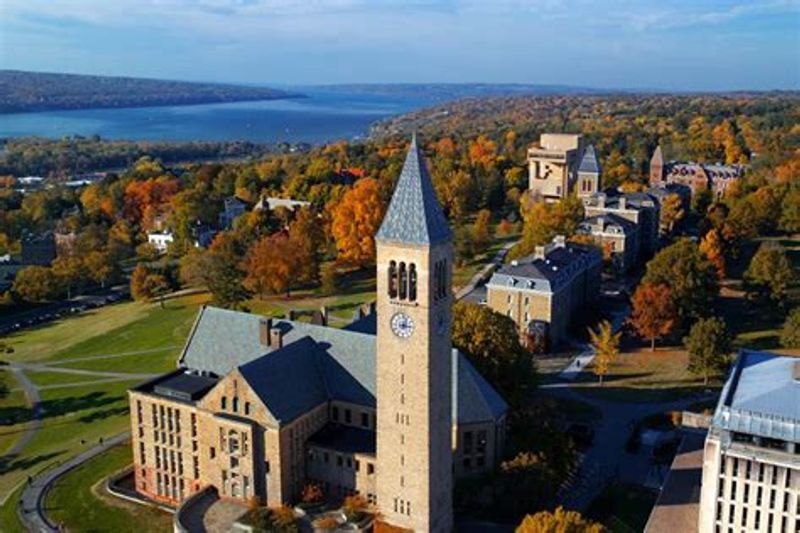
Cornell sits on a ridge above two gorges, and the campus has the audacity to make this seem completely normal. Students walk to class past waterfalls.
The view from Arts Quad on a clear autumn day, looking out over Cayuga Lake with the hills rolling beyond it, is the kind of view that makes people stop mid-sentence just to stare. The natural scenery does not compete with the architecture here.
They cooperate.
The university was founded in 1865 by Ezra Cornell, who famously declared he wanted to found an institution where any person could find instruction in any study. That openness shaped a campus that mixes Gothic stone buildings with brutalist concrete structures and modern glass facilities without any apparent concern for architectural consistency.
Somehow it works beautifully. McGraw Tower, which chimes hourly across the quad, adds a soundtrack to match the scenery.
Gorge hiking trails run directly through the campus, meaning students can go for a waterfall walk between their morning lecture and afternoon seminar. Buttermilk Falls and Taughannock Falls are both within easy reach.
Cornell also has its own hotel, winery, and working farm on campus, which gives it a self-contained quality that feels less like a university and more like a very academically overachieving small town.
University of Notre Dame, Notre Dame, Indiana
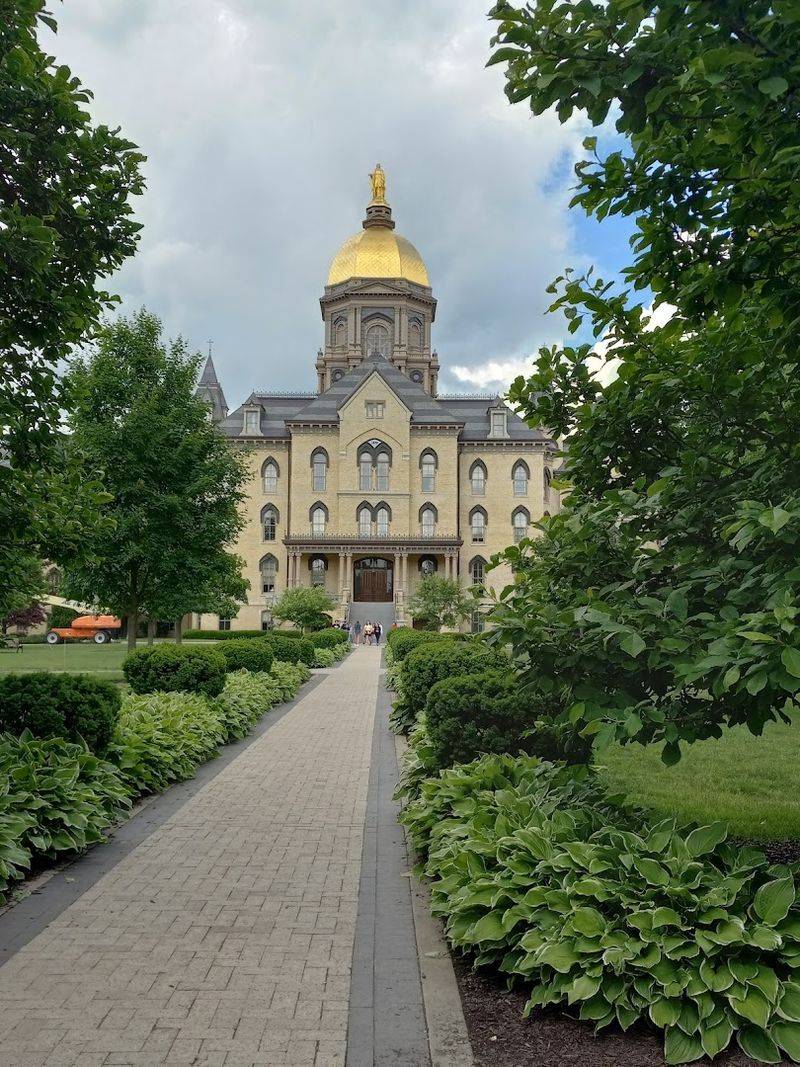
The Golden Dome is covered in 23.9-karat gold leaf, and on a sunny Indiana afternoon it is visible from miles away. Notre Dame’s administration building wears its dome like a crown, and the campus beneath it arranges itself with the kind of confident symmetry that suggests someone planned every sightline carefully.
Which they did. The result is one of the most photographed university campuses in the United States.
The Basilica of the Sacred Heart stands beside the dome with equal authority, featuring stunning stained glass windows and a bell tower that marks the hours for the whole campus. The two buildings together create a skyline that feels more European than Midwestern, which is part of what makes Notre Dame so visually distinctive from every other major American university.
Football Saturdays transform the campus into something else entirely, with over 80,000 fans filling Notre Dame Stadium while the Golden Dome gleams overhead. The campus lakes, tree-lined paths, and carefully maintained gardens keep things beautiful even outside of game days.
Notre Dame has appeared in films including Rudy, which told the story of a walk-on football player and became one of the most beloved sports movies ever made. The campus was basically a character in that film, and it played the role perfectly.
McGill University, Montreal, Canada
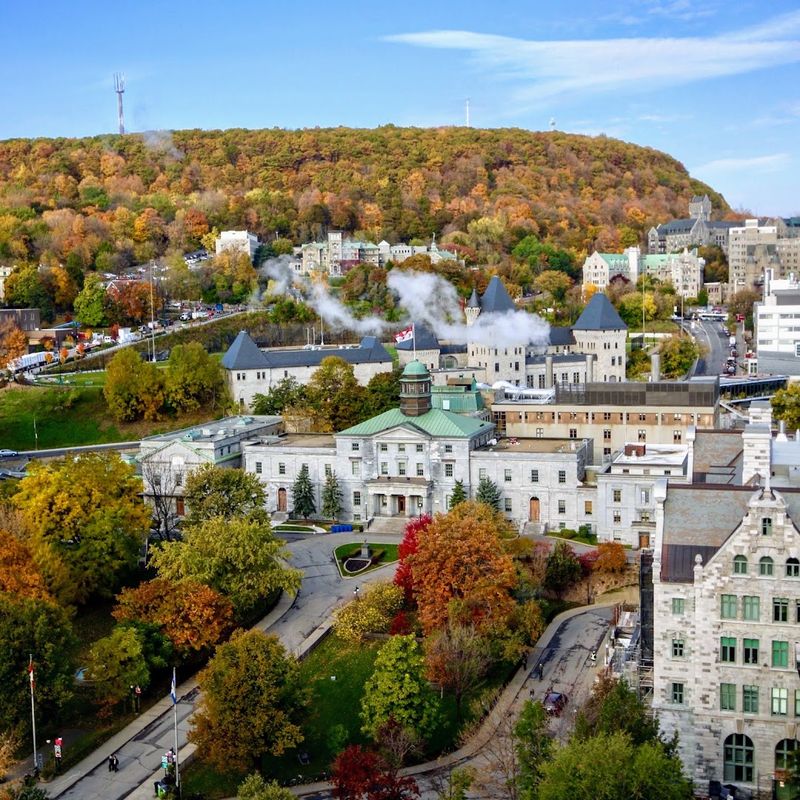
McGill sits at the foot of Mount Royal like it was placed there specifically for dramatic effect, which, to be fair, it essentially was. The university’s founders chose the site in the 1820s because the hillside setting was considered appropriately impressive for a serious institution of learning.
Over 200 years later, the limestone buildings framed by the mountain above and the city below still deliver on that original promise.
The Roddick Gates at the main entrance open onto a long central pathway leading up toward the Arts Building, with Mount Royal rising behind it. In winter, the whole scene transforms into something from a snow globe.
In autumn, the maple trees along the path turn orange and red in a way that feels almost theatrical. McGill manages to look cinematic in every season, which is an impressive achievement for a Canadian university that also has to survive February.
The campus includes the Redpath Museum, one of Canada’s oldest natural history museums, housed in a beautiful Victorian building that looks like it belongs in a Jules Verne novel. McGill has educated numerous Nobel Prize winners, prime ministers, and astronauts.
The combination of genuine academic prestige and a campus this visually striking makes it one of North America’s most compelling universities to visit, even for people who have no intention of enrolling.
University of Greenwich, London, England
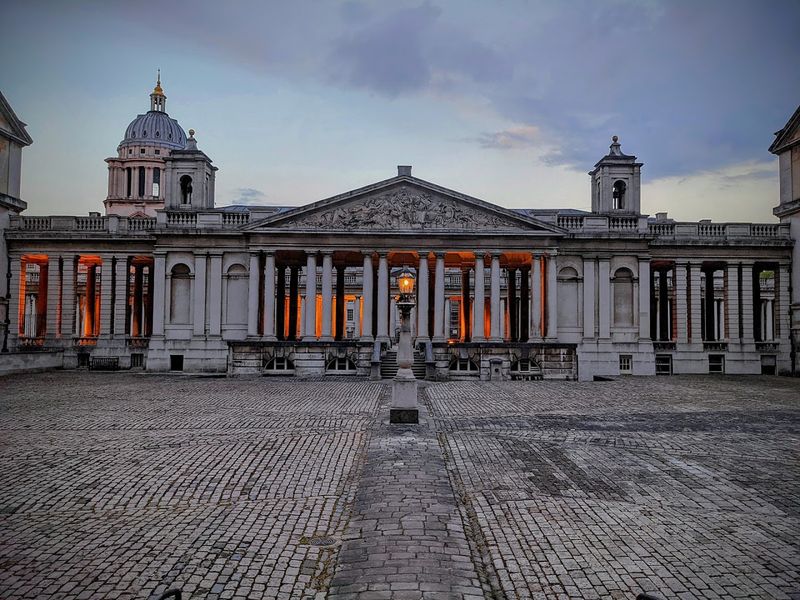
Almost every film that needs a grand, palatial London exterior eventually ends up here. The University of Greenwich occupies the Old Royal Naval College, a baroque masterpiece designed by Sir Christopher Wren and completed in the early 1700s.
Its twin domed buildings and sweeping riverside colonnades have appeared in Pirates of the Caribbean, Skyfall, Les Miserables, Thor: The Dark World, The Dark Knight Rises, and dozens of other productions. The campus is essentially a professional movie set that also teaches students.
The Painted Hall inside the King William Court is sometimes called the Sistine Chapel of Britain. Sir James Thornhill spent 19 years painting its elaborate ceiling and walls, completing the work in 1727.
Nelson’s body lay in state there in 1805 following the Battle of Trafalgar. The room is staggering in scale and detail, and it regularly leaves first-time visitors completely speechless.
Standing between the two domed buildings and looking across the Thames toward Canary Wharf creates one of the most striking visual contrasts in London: ancient baroque grandeur facing off against gleaming modern skyscrapers across a wide stretch of river. The view in both directions is extraordinary.
Students here walk through one of the most historically significant architectural spaces in Britain every single day, which must make even a bad morning feel slightly more epic.
Share this story