Europe is home to some of the most visually stunning cities on the planet, where color is not just decoration but a piece of living history. From canal-side painted houses to tile-covered church facades, each city tells its story through a unique palette.
Whether you are planning your first European trip or adding to a growing list of destinations, these cities will give you plenty of reasons to pack your bags. Get ready to see Europe in full, glorious color.
Porto, Portugal
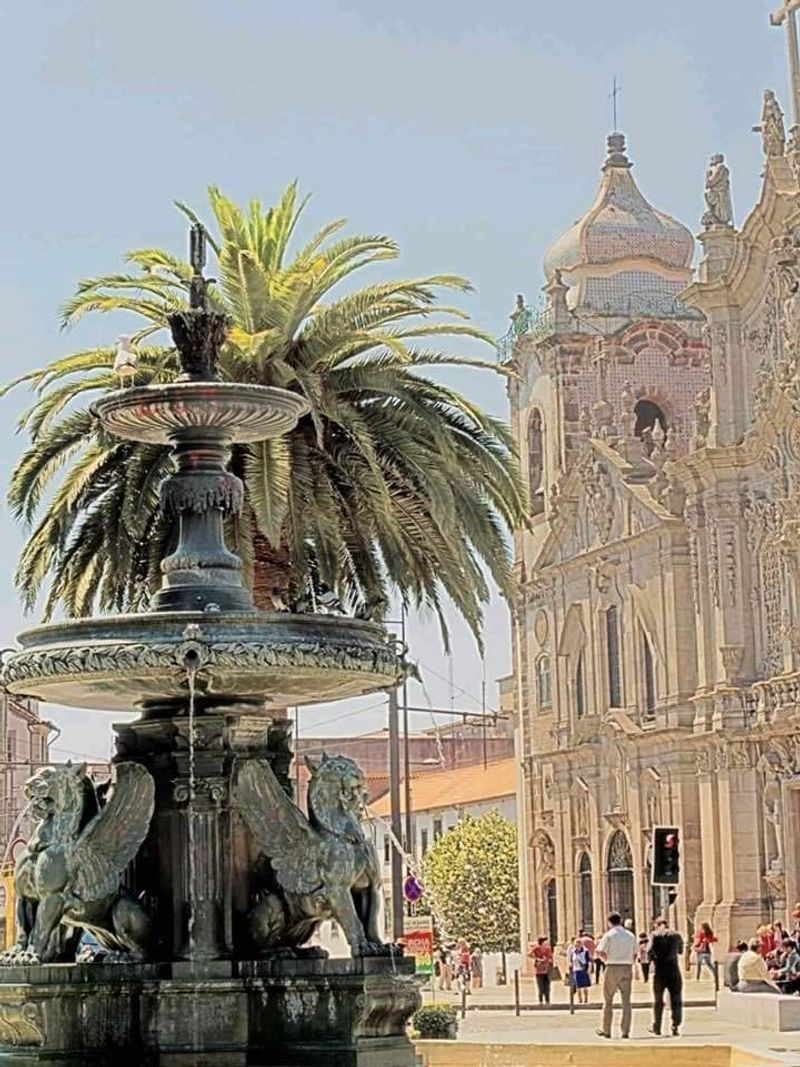
Standing on the bank of the Douro River and looking up at Porto’s Ribeira district feels like staring at a giant, crumbling painting. Narrow houses in yellow, red, cream, blue, and green stack on top of each other, climbing steep hillsides with cheerful disregard for order.
The effect is chaotic in the best possible way.
Porto’s UNESCO-listed historic center officially recognizes these colorful facades as a defining feature. Tile-covered churches add extra texture, especially the blue-and-white panels at the Capela das Almas.
Sao Bento railway station takes things further with 20,000 azulejo tiles covering its grand interior walls.
Crossing the Dom Luis I Bridge gives you a bird’s-eye view of the whole colorful riverfront at once. From Vila Nova de Gaia on the opposite bank, entire layers of painted facades appear simultaneously, which makes Porto’s color feel more like a landscape than a neighborhood.
Traditional rabelo boats floating below complete a scene that photographers struggle to fit into a single frame.
Copenhagen, Denmark
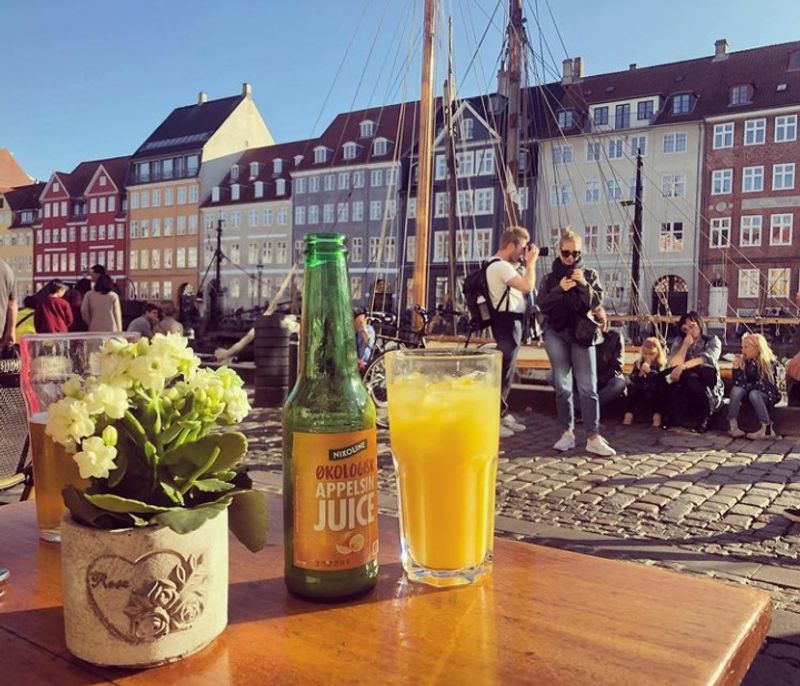
Nyhavn is so photogenic it almost feels unfair to other waterfronts. Copenhagen’s famous old harbor lines up rows of 17th-century merchant houses painted in bold reds, yellows, oranges, and blues, squeezing together beside the canal like a crowd at a festival.
Historic wooden ships moor right at their doorsteps.
What makes Nyhavn extra interesting is that it started as a working commercial port, not a tourist showpiece. Goods arrived here, sailors drank here, and Hans Christian Andersen lived at three different addresses along this very canal.
The literary connection adds a storybook quality that the colorful facades already suggest.
On a clear day, the painted houses reflect in the canal water below, doubling the color and making it nearly impossible to take a bad photograph. Restaurants and cafes now fill the ground floors, so you can sit outside with a coffee or a cold Carlsberg and enjoy the view at full leisure.
Copenhagen earns its reputation as one of Europe’s most livable cities, and Nyhavn is a big part of why visitors leave wishing they could stay longer.
Gdansk, Poland
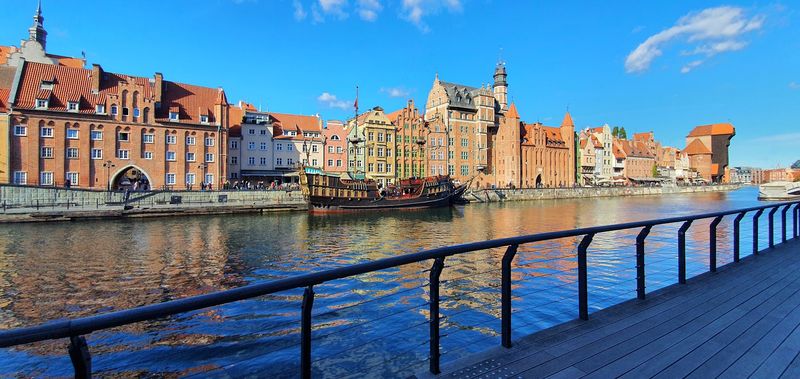
Gdansk’s Long Market is basically a greatest hits album of European architectural styles, all crammed onto one spectacular street. Gothic, Renaissance, Baroque, and later fashions each left their mark on more than 80 decorated merchant houses, giving the corridor a visual richness that takes a while to fully absorb.
Narrow facades in pastel blues, greens, reds, oranges, and creams compete for attention beneath ornate gables.
The backstory here adds real weight to the beauty. Much of central Gdansk was destroyed during World War II, and the meticulous postwar reconstruction of this historic streetscape represents an extraordinary act of cultural determination.
Walking through it today, knowing that fact, makes the colors feel almost defiant.
Neptune’s Fountain anchors the square with a theatrical bronze flourish, while the Main Town Hall provides monumental scale at one end. The whole ensemble rewards slow exploration rather than a quick walk-through.
Side streets branching off the main route reveal quieter versions of the same decorative tradition, with carved doorways, painted details, and centuries of merchant pride visible in every restored facade. Gdansk is frequently overshadowed by Krakow on Polish travel itineraries, which makes it an even more satisfying discovery.
Lisbon, Portugal
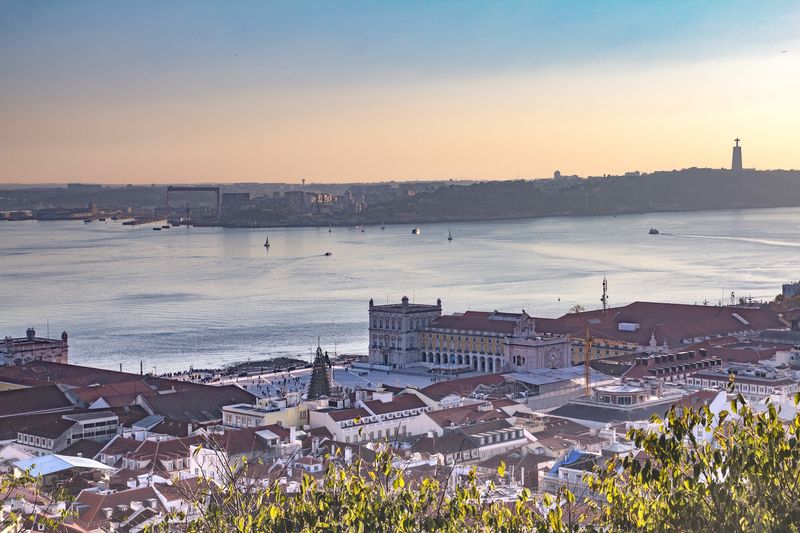
Lisbon is the only city in the world where you can legitimately get lost staring at a wall and consider it a productive afternoon. Azulejo tiles appear on facades, palaces, stations, churches, and private homes throughout virtually every neighborhood, covering surfaces with patterns ranging from traditional blue-and-white scenes to bold geometric multicolor designs.
The tradition is centuries old and shows no signs of slowing down.
Beyond the tiles, Lisbon layers color through its architecture. Yellow, pink, terracotta, and blue facades climb the city’s famously steep hills in Alfama, Mouraria, and Chiado, while the iconic yellow trams add a moving streak of gold through narrow streets.
The city changes mood depending on the angle of the light, going from warm amber at midday to deep orange at sunset.
Travelers who want to understand the history behind the decoration can visit the National Tile Museum, which holds an impressive collection tracing azulejo styles across centuries. For everyone else, simply walking the city is its own education.
Lisbon rewards wandering more than almost any European capital, because turning a random corner almost always reveals another tiled facade or painted wall worth stopping for. Bring comfortable shoes and a full phone battery.
Barcelona, Spain
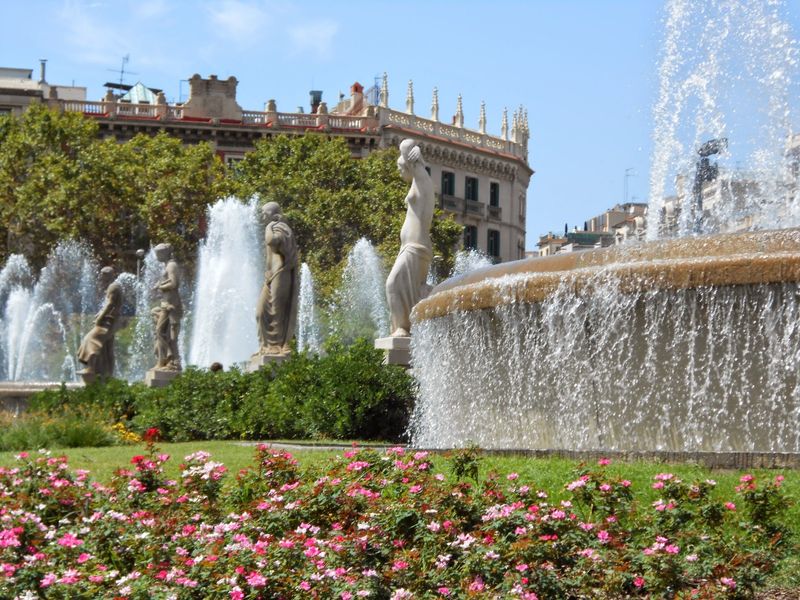
Barcelona has a secret weapon that no other city on this list can claim: Antoni Gaudi. His colorful trencadis mosaics, made from broken ceramic tile fragments, have become as inseparable from Barcelona’s identity as the Sagrada Familia’s towers or the smell of fresh churros in the morning.
Park Guell gives you the most concentrated dose, covering the famous serpentine bench, decorative rooftops, and fantastical structures with shimmering fragments in blues, greens, yellows, and oranges.
Casa Batllo takes the same approach to a residential building, wrapping its facade in colored glass and ceramic pieces that shift appearance depending on the light and your angle of view. The Sagrada Familia adds yet another dimension, projecting kaleidoscopic patterns through stained glass windows onto the interior stone.
Each Gaudi building feels like its own color experiment.
Barcelona beyond Gaudi is also worth noting. Modernisme architecture scattered across the Eixample district, the sensory overload of La Boqueria market, street murals in Gracia, and the warm Mediterranean light hitting narrow Gothic Quarter streets all contribute to a city that earns its place on every visual bucket list.
Gaudi gets the headlines, but Barcelona’s color runs much deeper than any single architect.
Nice, France
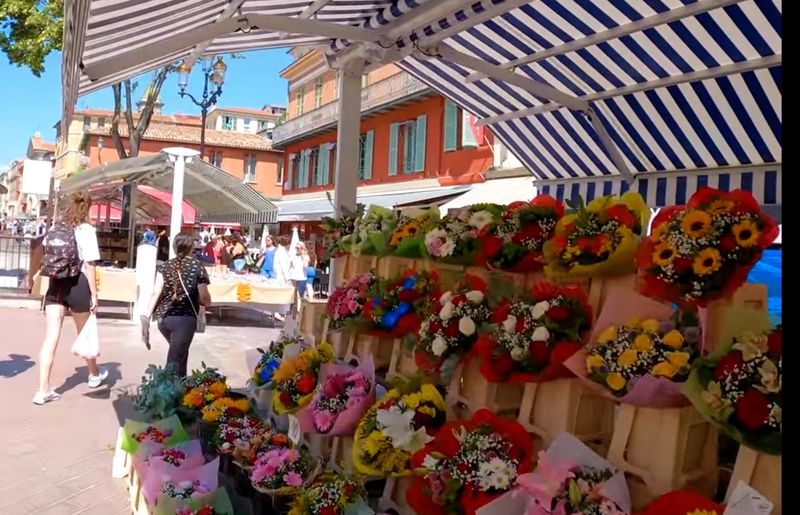
Old Nice smells like lavender, sounds like a mix of French and Italian, and looks like someone turned the color saturation up to maximum. Buildings painted in ochre, yellow, orange, pink, and warm pastels crowd narrow streets where shutters clatter open each morning to catch the Cote d’Azur sun.
The Italian influence is not accidental: Nice spent centuries under Savoyard and then French rule, and the architecture reflects both.
Place Rossetti wraps Sainte-Reparate Cathedral in a ring of pastel buildings that glow especially beautifully in the late afternoon. A short walk away, Place Massena shifts the palette dramatically with deep red facades and bold black-and-white paving beneath bronze statues.
Nice manages to contain several distinct color personalities within a compact old town.
The Cours Saleya flower market brings temporary color through mountains of blooms, fruit, vegetables, and awnings every morning except Monday, when antique dealers take over instead. Sun-faded walls, Baroque church facades, shaded arcades, and the blue Mediterranean framing the eastern end of the Promenade des Anglais make Nice one of France’s most visually generous cities.
Budget at least two full days to appreciate it properly, and try to arrive on a Tuesday or Saturday morning for the full market experience.
Prague, Czechia
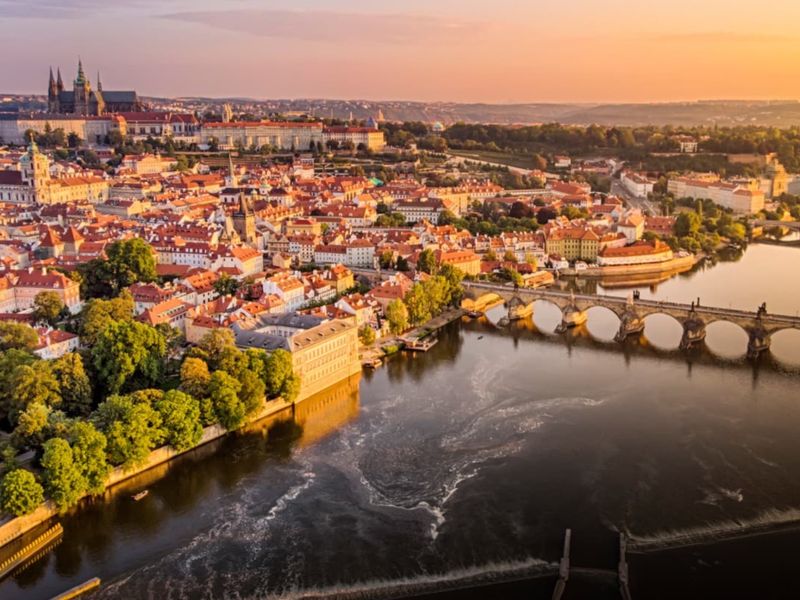
Prague plays a different color game than most cities on this list, and it wins. Rather than bold primaries, the historic center works in pale pinks, soft yellows, sage greens, creams, and powder blues, setting them against dark Gothic towers and a sea of red-tiled roofs.
The restraint makes the overall effect surprisingly powerful, especially when seen from above.
Old Town Square contains architecture from multiple centuries side by side, including Gothic, Renaissance, Baroque, Rococo, and neo-Baroque buildings. Many of them have medieval cores hidden beneath later facades, meaning the square’s appearance reflects generations of rebuilding rather than any single planned design.
The dark twin spires of the Church of Our Lady before Tyn create a moody contrast against all those soft pastels.
Climbing the Old Town Hall tower gives you a panoramic view across a rolling landscape of red roofs, green church spires, and colorful facades that stretches well beyond the historic center. Prague rewards that elevated perspective more than almost any city in Central Europe.
The Astronomical Clock on the tower’s exterior is also worth timing your visit around, even if the hourly mechanical show is shorter than first-time visitors expect. The city’s color is subtle but completely unforgettable.
Tallinn, Estonia
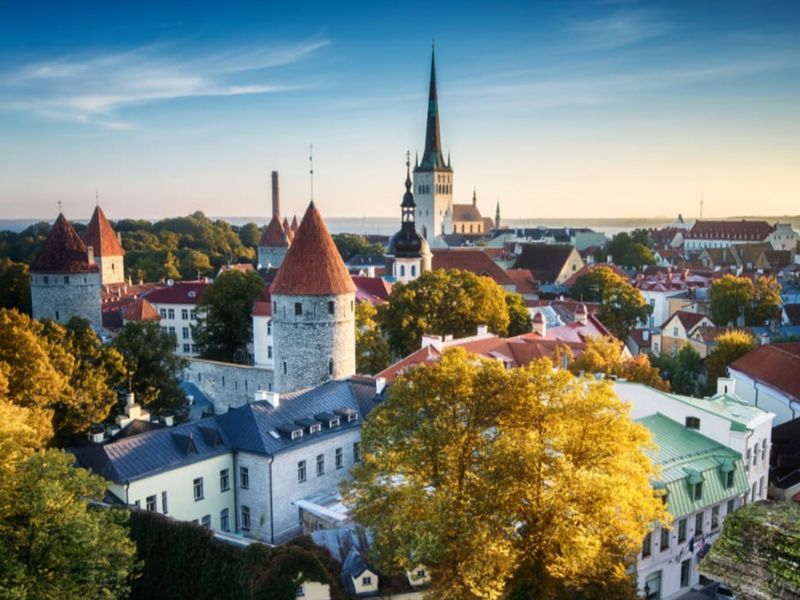
Nobody expects a medieval Baltic city to be this cheerful, and Tallinn absolutely loves proving people wrong. Its UNESCO-listed Old Town preserves one of the most complete medieval urban environments in Europe, with cobblestone streets, city walls, towers, and merchant buildings dating from the 13th through 16th centuries.
The pastel facades scattered among all that ancient stonework come as a genuine and pleasant surprise.
Town Hall Square sits at the heart of the old town, surrounded by pale yellow, cream, and ochre buildings that give the medieval square an unexpectedly warm atmosphere. The Gothic Town Hall itself is more austere, but the surrounding buildings soften the overall impression considerably.
Narrow lanes branching off the square reveal quieter versions of the same mix of old stone and painted plaster.
Toompea hill above the lower town offers the best panoramic view, looking down over a dense skyline of red roofs, green spires, and defensive towers. The Kalamaja district outside the medieval walls adds yet another layer with traditional wooden houses painted in blues, yellows, and greens.
Tallinn somehow manages to feel simultaneously northern and strict, medieval and warm, all within a walkable area that most visitors can cover comfortably in a single energetic day.
Ljubljana, Slovenia
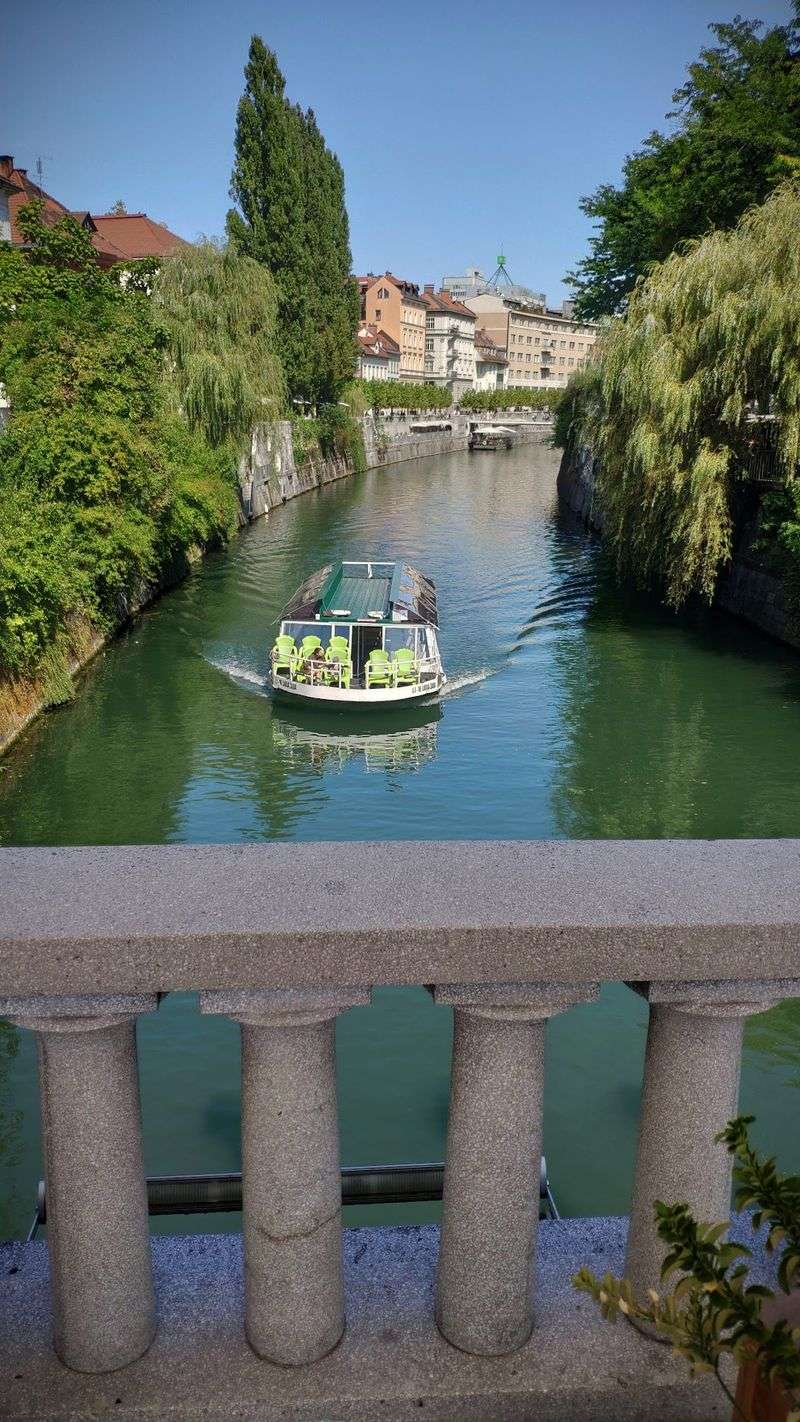
Ljubljana might be the most underrated capital city in Europe, and its color is a big part of what makes that such a puzzling oversight. The compact pedestrian center combines Baroque facades with exuberant Art Nouveau and Secession-style decoration, creating a street-level experience that shifts style every half block.
Everything feels close together, which makes the visual contrasts even more enjoyable.
The Cooperative Business Bank building on Miklosiceva Street is the showstopper: a strong coral-red exterior covered in geometric patterns inspired partly by carnations. Many of the city’s Secession-style buildings cluster near this street and around Preseren Square, making them straightforward to explore on foot without a detailed map.
The pink facade of the Franciscan Church beside the square adds another bold color note.
Green embankments line the Ljubljanica River through the center, creating a natural frame for the colorful buildings reflected in the water. Market awnings, outdoor cafe furniture, painted historic buildings, and Ljubljana Castle perched on the hill above complete a cityscape that punches well above its size.
Slovenia’s capital rewards slow walking and frequent stops, especially along the riverbanks where the combination of architecture, water, and greenery produces one of Central Europe’s most pleasant urban environments.
Valencia, Spain
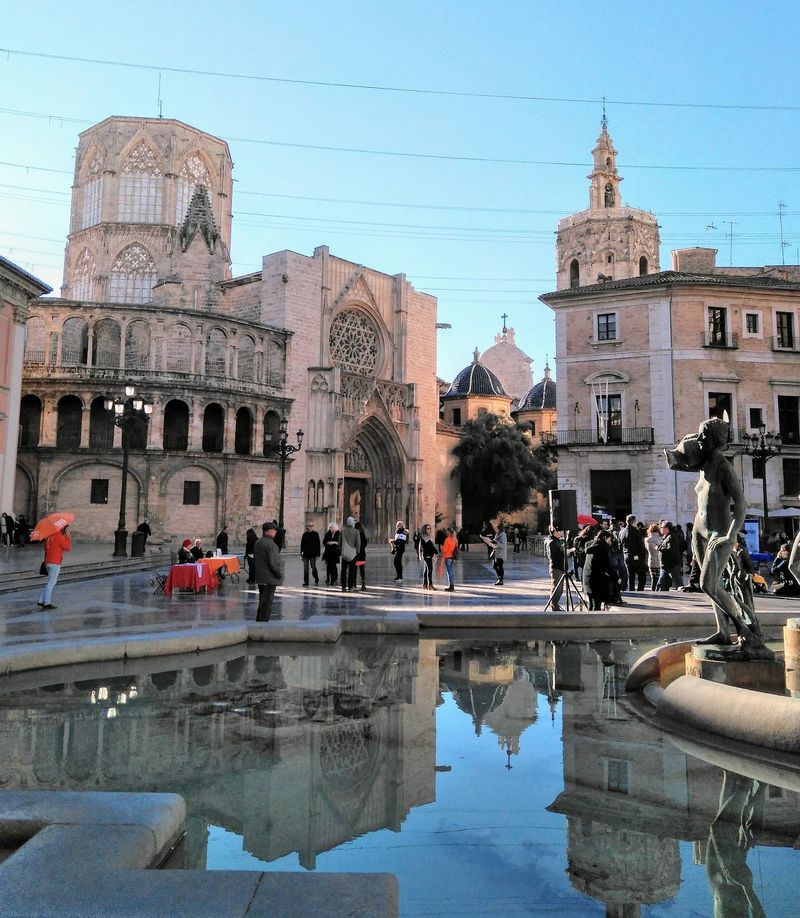
Valencia has more layers of color than most visitors realize before they arrive. The early-20th-century Colon Market features a richly decorated facade loaded with ceramic details typical of the Valencia region, while the enormous Central Market combines tiles, stained glass, ironwork, and the vivid natural colors of more than 250 stalls filled with citrus, vegetables, spices, and fresh seafood.
Both buildings are architectural events, not just shopping venues.
The city also made a bold contemporary color decision in 2010, when the Russafa Market received graduated exterior colors that turn its brutalist walls into a kind of large-scale architectural color chart. It sounds unlikely on paper but works surprisingly well in person.
Valencia has never been shy about mixing historical and modern approaches to color.
Tiled domes catch sunlight across the city center, painted facades warm the older neighborhoods, and the gleaming white structures of the City of Arts and Sciences provide a futuristic contrast on the southern edge of town. Street art in Russafa adds another contemporary dimension.
Valencia rewards visitors who move beyond the old town and explore its different neighborhoods, because the city’s visual character changes significantly from one district to the next. The oranges growing along city streets are a bonus detail.
Stockholm, Sweden
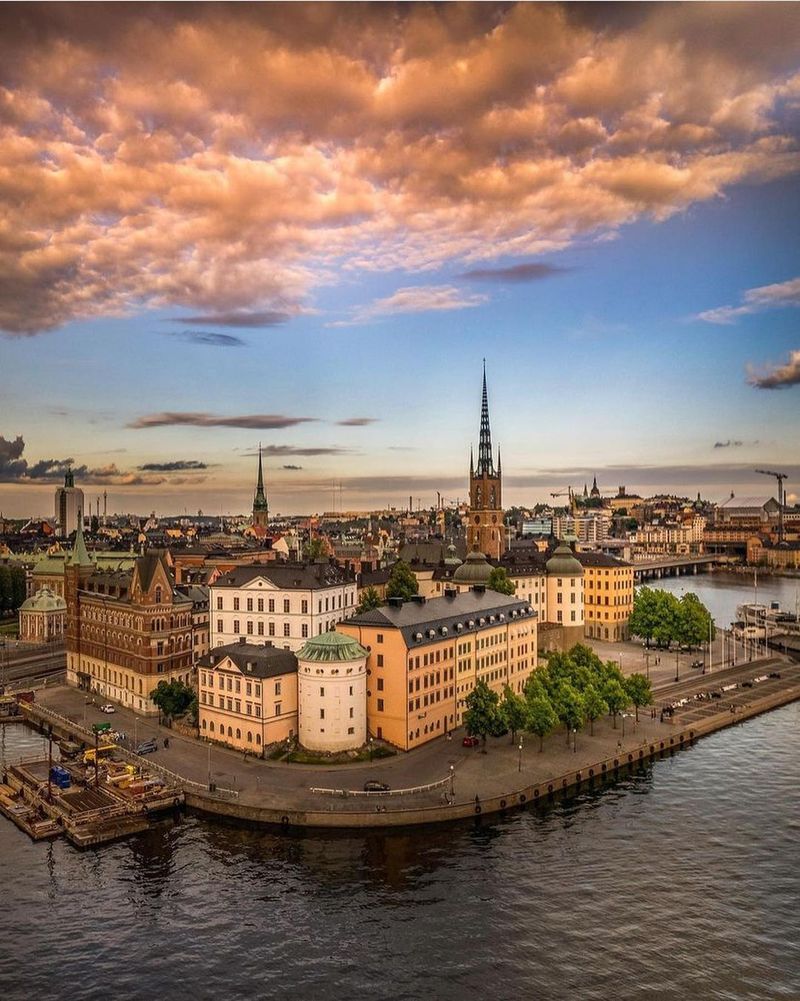
Stockholm’s Stortorget has been making jaws drop since the early 15th century, which is roughly when the square was first documented. The narrow historic buildings lining its western side appear in strong shades of red, yellow, orange, and green, packed tightly together above the cobblestones like a Scandinavian version of a Mediterranean waterfront.
Visit Stockholm calls these facades among the most photographed buildings in the entire city, which is saying something in a capital full of beautiful architecture.
Gamla Stan developed from Stockholm’s medieval core and spreads across an island connected to the mainland and neighboring islands by bridges. The island setting means the colorful buildings are frequently framed by water, boats, church towers, and the surrounding cityscape.
Walking through the winding cobblestone streets of the old town feels genuinely different from any other Scandinavian city center.
Because Gamla Stan is an island, elevated views from nearby Sodermalm or Skeppsholmen reveal the whole district surrounded by water, which makes the color palette feel even more concentrated and vivid. The Royal Palace anchors one end of the island, while smaller squares, medieval lanes, and independent shops fill the interior.
Stockholm gives the classic European old town a distinctly northern interpretation that manages to feel both ancient and perfectly stylish at the same time.
Valletta, Malta
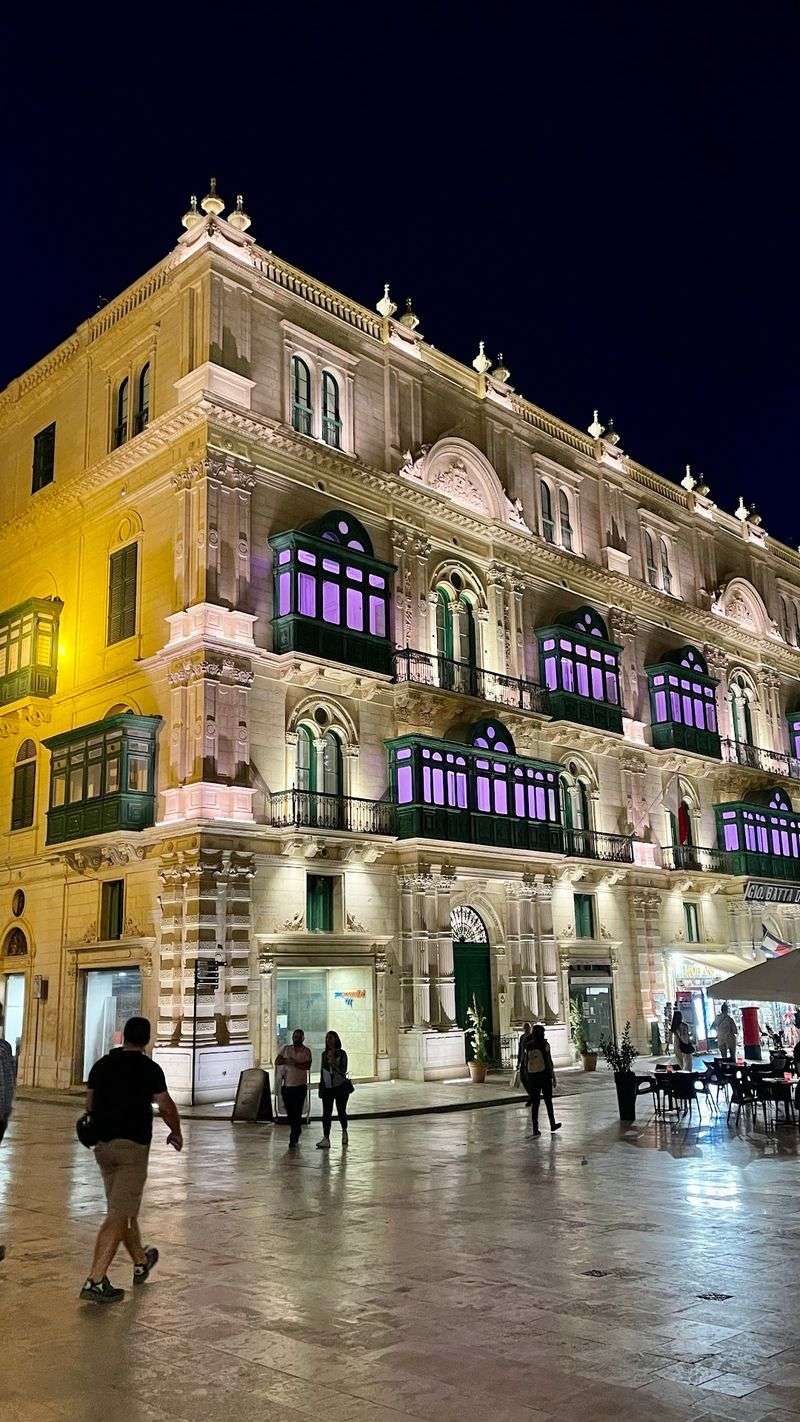
Valletta makes its color case without ever painting an entire facade, which is what makes it so interesting. The city’s dominant building material is warm honey-colored limestone, and against that pale, sun-bleached background, the painted wooden balconies, shutters, and doors pop with extraordinary vividness.
Traditional enclosed Maltese balconies appear in greens, blues, reds, and burgundies, projecting from upper floors all along the narrow streets.
The city’s cultural heritage organization specifically highlights South Street architecture as characteristic of Valletta’s streetscape, where colorful doors, windows, and balconies layer onto the limestone facade in ways that feel both Mediterranean and distinctly Maltese. No other city in Europe uses this particular combination of pale stone and painted woodwork quite so effectively.
Seasonal religious festivals transform the streets further, hanging banners, lights, flowers, and elaborate decorations between buildings for days at a time. At the end of many sloping streets, the deep blue Mediterranean appears like a painted backdrop.
Valletta is also the smallest EU capital city, which means its entire historic center can be explored on foot in a couple of hours. That compact scale makes the colorful details feel even more concentrated and rewarding to discover one narrow street at a time.
Wroclaw, Poland
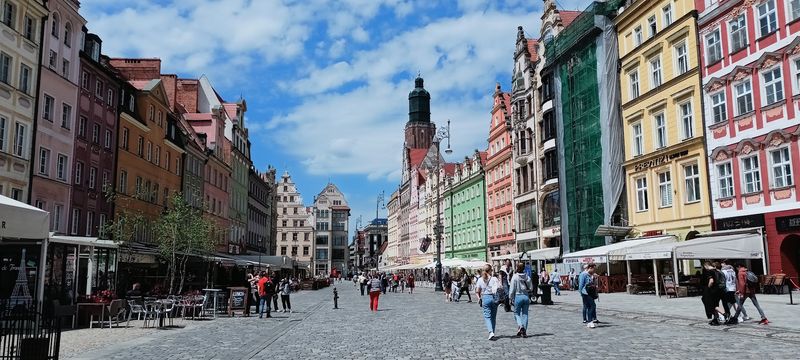
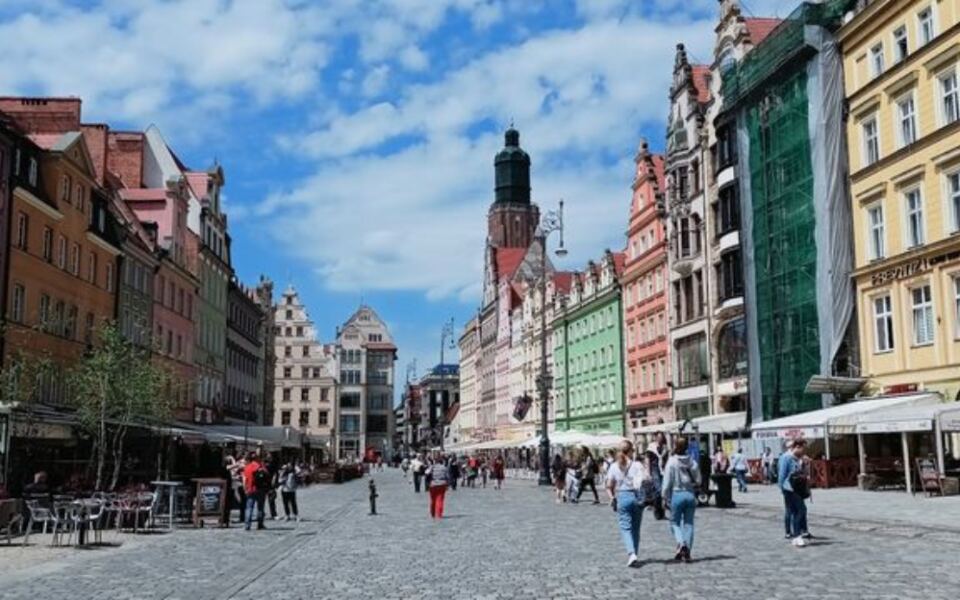
Wroclaw’s Market Square is what happens when 60 historic townhouses each decide to have a completely different personality. Every facade brings its own combination of color, gables, decorative details, and architectural history, creating one of Central Europe’s most photogenic and genuinely joyful city centers.
The Gothic Town Hall anchors the square with serious medieval authority while the surrounding buildings do their best to steal the show.
Like Gdansk, Wroclaw carries a complicated history beneath its cheerful surface. Much of the city was heavily damaged during World War II, so the bright historic center visitors see today also reflects decades of careful reconstruction and restoration.
The effort involved makes the colorful result feel especially meaningful rather than simply decorative.
Beyond the architecture, Wroclaw scattered more than 400 small bronze dwarf statues across the city, turning exploration into an urban treasure hunt that appeals equally to children and adults who refuse to act their age. Finding them requires wandering side streets and looking at ground level, which conveniently leads to discovering quieter corners of the colorful old town that most visitors miss entirely.
Wroclaw has a lively university population that keeps the cafe scene strong, giving the colorful historic center an energetic, lived-in atmosphere that feels nothing like a museum piece.
Reykjavik, Iceland
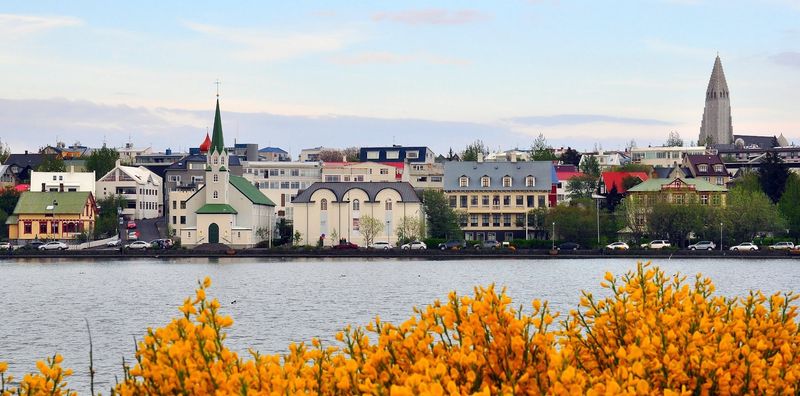
Reykjavik figured out something clever: when your natural surroundings include dark volcanic rock, gray ocean, and months of winter snow, you paint your houses as bright as possible and commit to the decision completely. Downtown Reykjavik is packed with corrugated metal houses painted in reds, blues, yellows, greens, and other bold shades that stand out dramatically against Iceland’s frequently moody skies.
The result is a city that looks like it is actively refusing to be gloomy.
Rainbow Street, officially called Skolavordustigur, adds a literal painted rainbow along the road leading up to Hallgrimskirkja, the landmark church whose concrete tower dominates the city skyline. Murals and street art appear throughout central neighborhoods, while the Old Harbour area adds painted commercial buildings beside the sea.
Reykjavik layers its color across multiple artistic traditions simultaneously.
The city’s compact size is a genuine advantage here. The entire downtown can be crossed on foot in well under half an hour, meaning visitors encounter most of the colorful architecture without needing buses, taxis, or careful navigation.
Combining the painted houses, street art, Rainbow Street, and harbour views into a single morning walk is completely realistic. Reykjavik also has excellent coffee shops every few blocks, which makes that morning walk even more enjoyable in the colder months.
Innsbruck, Austria
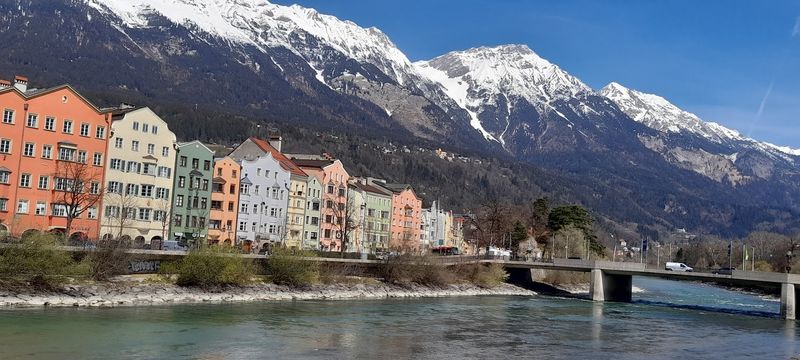
Innsbruck offers something no other city on this list can match: a row of colorful painted houses with a 2,000-meter mountain range rising directly behind them. The Mariahilf and St. Nikolaus neighborhoods across the Inn River contain a famous lineup of brightly painted historic buildings in turquoise, yellow, pink, and orange, and the Nordkette mountains serve as an absurdly dramatic backdrop.
Innsbruck’s tourism authority identifies this ensemble as one of the city’s most photographed motifs, and the view earns that description without any exaggeration.
Parts of the Mariahilf area date to the 15th century, giving the colorful facades genuine historical depth rather than a renovated-for-tourism feel. The old town on the opposite bank adds pastel facades, Baroque architectural details, and the glittering Golden Roof, a famous oriel window covered in 2,657 gilded copper tiles that catches sunlight in spectacular fashion.
Innsbruck works as a year-round destination because its color palette changes with the seasons. Summer brings green riverbanks and clear mountain views.
Winter adds snow to the peaks and rooftops, turning the colorful houses into foreground details against a white Alpine landscape. Either version is worth the trip.
The city is also small enough to explore entirely on foot, which makes the contrast between painted facades and mountain scenery feel immediate and slightly surreal at every turn.
Share this story