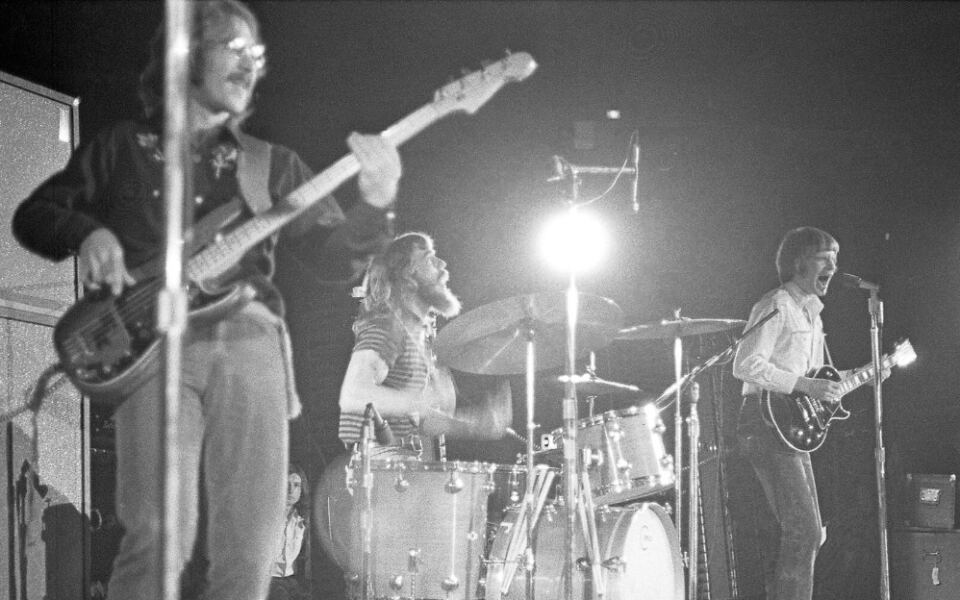
Between 1962 and 1977, millions of Americans learned guitar from songbooks, radio hits, and friends who knew a few more chords than they did. The folk revival filled college dorms with acoustic guitars, the British Invasion sent teenagers to music stores, and the 1970s turned country rock and soft rock into radio staples.
Many of the biggest songs from those years were built on just three or four basic chords. That was no accident, because songwriters often wrote for voices and stages, not for showing off.
A beginner today can still play hits that once topped the Billboard Hot 100 with nothing more than a few open chord shapes and a steady strum. In this list, you will find songs from folk, garage rock, reggae, country, and Southern rock, along with chart facts, simple chord suggestions, and practical tips for each one.
Grab a guitar, tune it up, and start with whichever decade you remember best.
1. Love Me Do by The Beatles (1962)
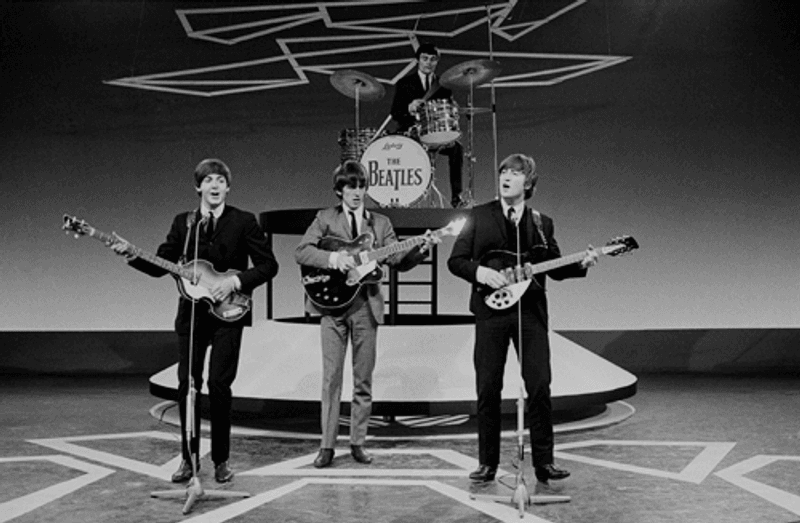
Every musical empire needs a humble first step. For the Beatles, it was Love Me Do, their debut British single from October 1962.
It reached No. 17 in the UK at first. Then Beatlemania crossed the Atlantic, and the song hit No. 1 on the Billboard Hot 100 in 1964.
John Lennon’s harmonica part gets most of the attention. The guitar side, though, is wonderfully modest.
Much of the song uses just G and C, with D showing up in the middle section. That makes it one of the friendliest Beatles tunes for new players.
Begin with slow downstrums so each chord rings clearly. Add a rhythm pattern only after your changes stop buzzing.
Fun fact: Ringo Starr was replaced by a session drummer on one version of the recording. He played tambourine instead.
2. Ring of Fire by Johnny Cash (1963)
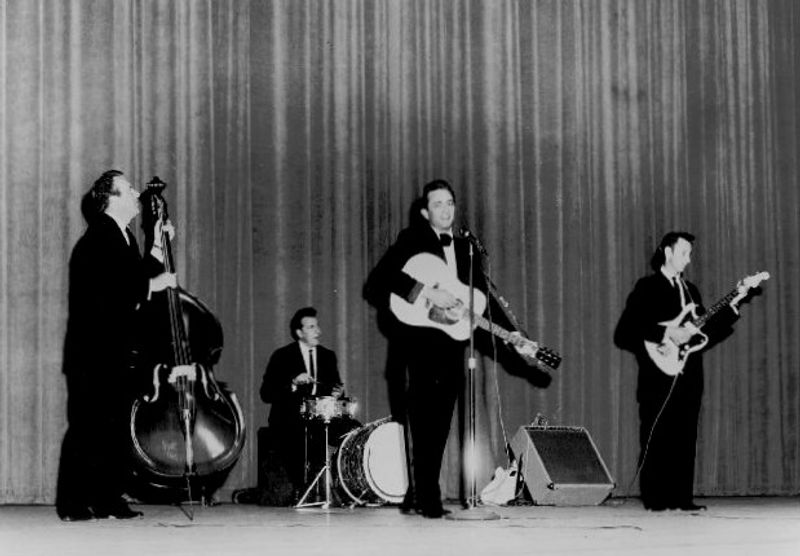
Trumpets were not supposed to show up on country records in 1963. Johnny Cash added them anyway, and Ring of Fire became one of his signature hits.
The song was written by June Carter and Merle Kilgore. It topped the country charts and reached No. 17 on the Billboard Hot 100.
Behind that mariachi-style horn line sits a very simple guitar part. A beginner version uses G, C, and D.
The rhythm is steady and easy to count. That helps new players work on keeping time, a skill many beginners skip.
Try a basic boom-chick strum. Hit the low string on the first beat, then brush the rest of the strings on the second.
Cash’s style was famously plain, so you do not need fancy fills. A firm, even rhythm will sound right at home.
3. A Horse with No Name by America (1971)
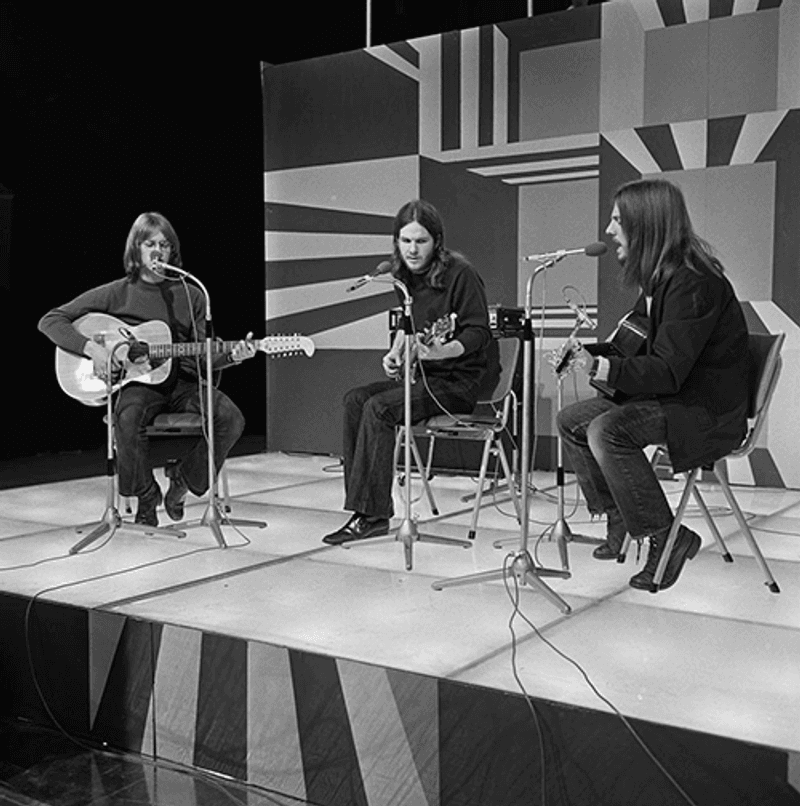
Two chords. That is the whole secret behind one of the biggest folk rock hits of the early 1970s.
America first released A Horse with No Name in 1971 in the UK. By 1972, it was No. 1 in the United States, even knocking Neil Young’s Heart of Gold out of the top spot.
Guitar teachers often list it among the easiest classic songs to play. The usual arrangement swaps between Em and a chord written as D6/9/F#.
That second name looks scary on paper. In practice, it is a simple shape that keeps two fingers anchored on the high strings.
Because the pattern barely changes, you can focus on rhythm. Keep your strumming light and steady.
Some radio stations once mistook the lyrics for something else and banned the song. The band insisted it was simply about a desert.
4. Blowin’ in the Wind by Bob Dylan (1963)
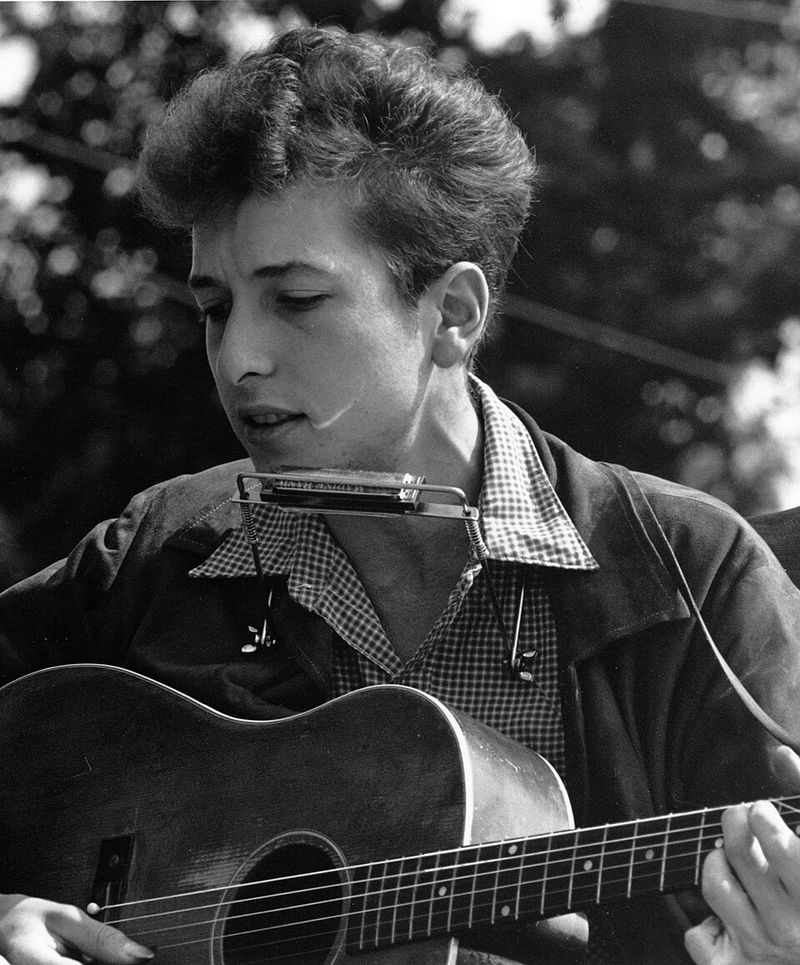
A 21-year-old songwriter reportedly finished this one in about ten minutes. Bob Dylan wrote Blowin’ in the Wind in 1962, and it appeared on The Freewheelin’ Bob Dylan in 1963.
Its questions about peace and freedom made it a key song of the civil rights movement. Peter, Paul and Mary’s cover reached No. 2 on the Billboard Hot 100 that same year.
Dylan wanted songs regular people could sing. In the key of G, a beginner can play it with G, C, and D.
The chords change slowly, which leaves plenty of room to sing at the same time. That balance is harder than it sounds for new players.
Start with one strum per beat.
Later, try simple fingerpicking. Folk players at coffeehouses in Greenwich Village often used that style, and this song suits it perfectly.
5. Have You Ever Seen the Rain by Creedence Clearwater Revival (1971)
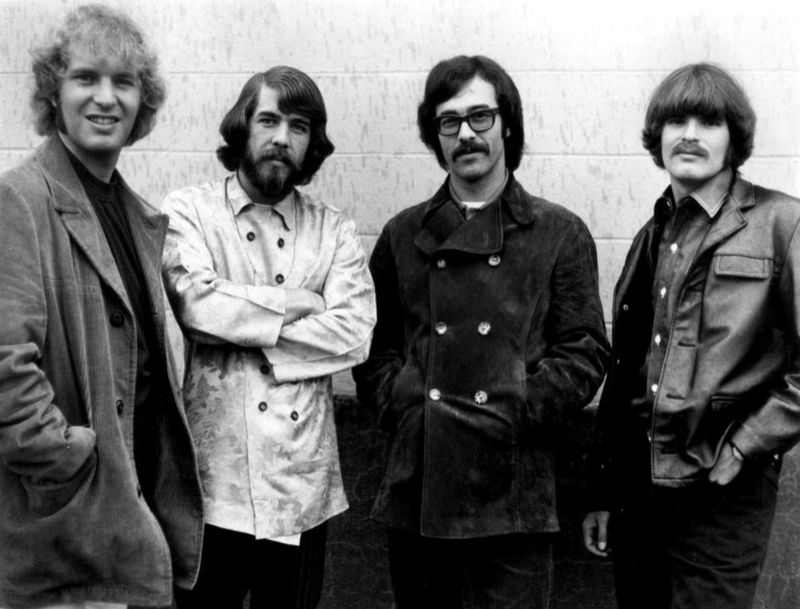
Creedence Clearwater Revival had a second side, and it was surprisingly thoughtful. Have You Ever Seen the Rain first appeared on the 1970 album Pendulum.
Released as a single in 1971, it reached No. 8 on the Billboard Hot 100. John Fogerty later explained that the song reflected tension inside the band at the time.
The chord list is short: C, G, Am, and F. The F chord is the usual troublemaker for beginners.
Here is a helpful shortcut. Play an Fmaj7 shape instead, which skips the full barre and still fits the song.
The steady tempo is great practice for switching between major and minor chords. Pay attention to the move from Am to F, since it appears often.
Once the chorus clicks, the verses follow quickly. Compared with the band’s faster rockers, this one feels like a calm afternoon.
6. Leaving on a Jet Plane by Peter, Paul and Mary (1969)
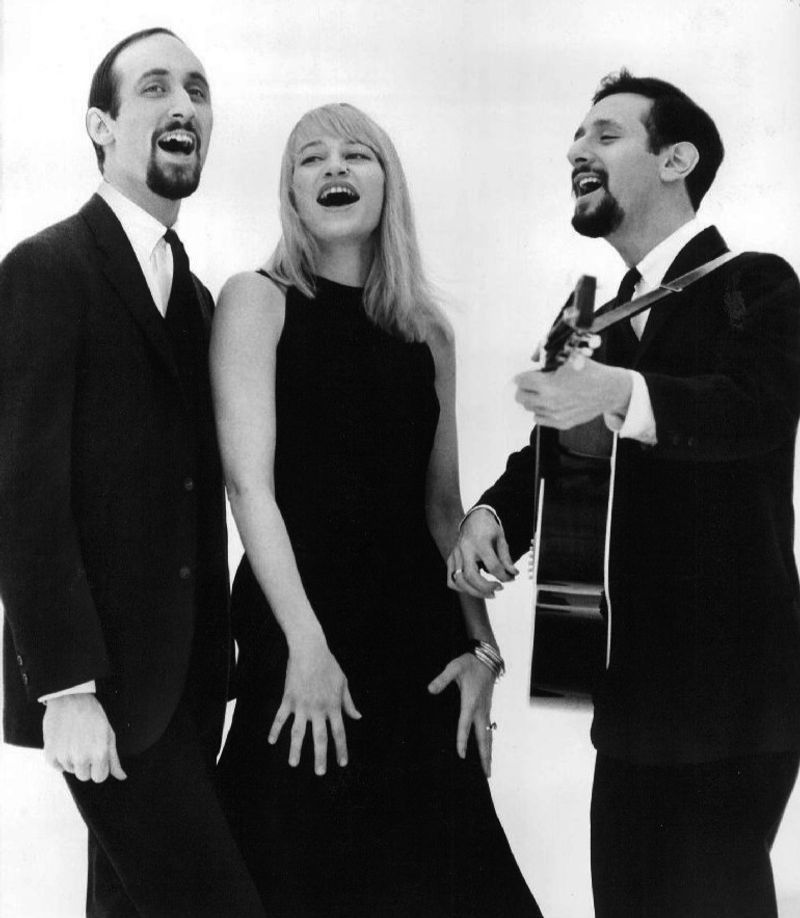
John Denver was still mostly unknown when he wrote a song first titled Babe, I Hate to Go. That was 1966.
Peter, Paul and Mary recorded it as Leaving on a Jet Plane. By December 1969, their version sat at No. 1 on the Billboard Hot 100, the trio’s only chart-topper.
The success also helped launch Denver’s own career. Few songwriters get that kind of boost from someone else’s recording.
For guitarists, the key of G works nicely with G, C, and D. Some songbooks use the key of A instead, with A, D, and E.
Pick whichever fits your voice better. Both versions move slowly enough for smooth chord changes.
After you know the shapes, try gentle fingerpicking. The trio’s harmonies made the chorus a favorite for group singing, so invite a friend or two.
7. Sweet Home Alabama by Lynyrd Skynyrd (1974)
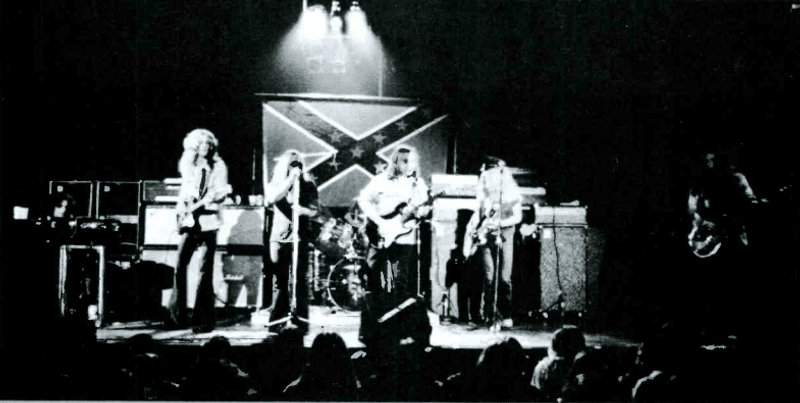
Ask a room of guitarists to name a famous opening riff, and this one will come up quickly. Lynyrd Skynyrd released Sweet Home Alabama in 1974.
It reached No. 8 on the Billboard Hot 100. The song was partly a response to Neil Young’s tracks Southern Man and Alabama.
Its lyrics touch on Southern politics and history, and listeners have debated their meaning for decades. Musically, though, the foundation is simple.
The core progression is D, C, and G, repeated through most of the song. That loop sits under all the layered guitar parts on the record.
Learn the strummed chords first. Once those feel natural, try the famous intro riff, which is built around the same three shapes.
Many players are surprised to learn they have been hearing just three chords all along.
8. Bad Moon Rising by Creedence Clearwater Revival (1969)
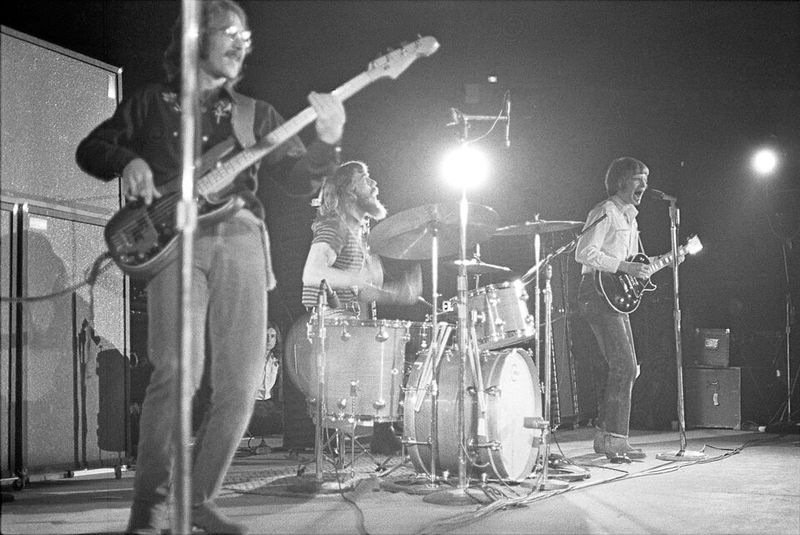
John Fogerty had a knack for turning worried lyrics into toe-tapping music. Bad Moon Rising, released by Creedence Clearwater Revival in 1969, proves that point better than almost anything else in the band’s catalog.
The single climbed to No. 2 on the Billboard Hot 100. Its happy rhythm and gloomy warning about trouble ahead make for one of rock’s funniest mismatches.
Guitar students love it for a simple reason. A beginner version needs only three chords: D, A, and G.
The progression repeats in a predictable loop, so you can stop staring at a chord chart after a few run-throughs. Start with plain downstrums on each beat.
Once the changes feel smooth, switch to a down-up pattern for extra bounce. Keep the tempo modest at first, then speed up slowly.
Most people sing the chorus before they even realize they know it.
9. Three Little Birds by Bob Marley and the Wailers (1977)
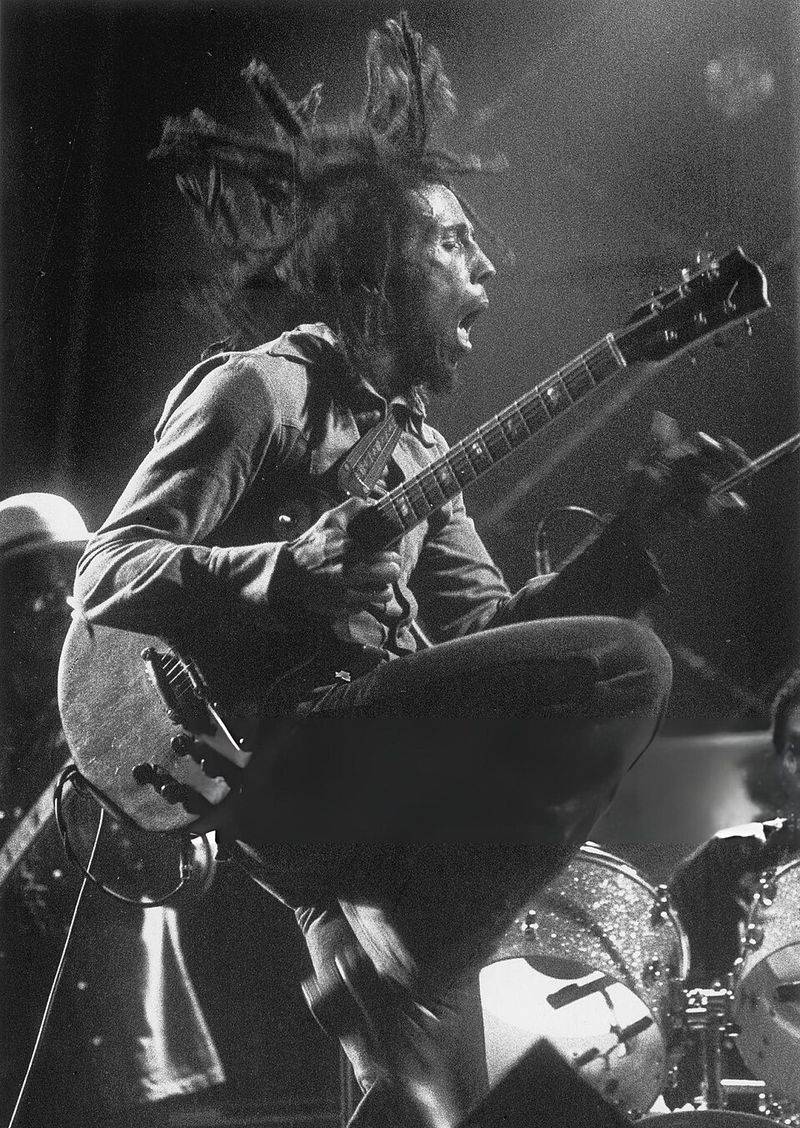
Don’t worry about a thing. That line from Three Little Birds has appeared on T-shirts, posters, and stadium speakers for decades.
Bob Marley and the Wailers recorded the song for the 1977 album Exodus. Time magazine later named Exodus the best album of the 20th century.
Chord-wise, this is a gift to beginners. A common version uses only A, D, and E.
The real lesson here is rhythm. Reggae guitar usually stresses the offbeats, the spaces between the counts you would tap in rock music.
Try counting one-and-two-and. Strum short, crisp chords only on each and, then mute the strings with your palm.
It may feel strange for a few days. Stick with it, because learning that skank rhythm will make you a more flexible player in any style.
10. Knockin’ on Heaven’s Door by Bob Dylan (1973)
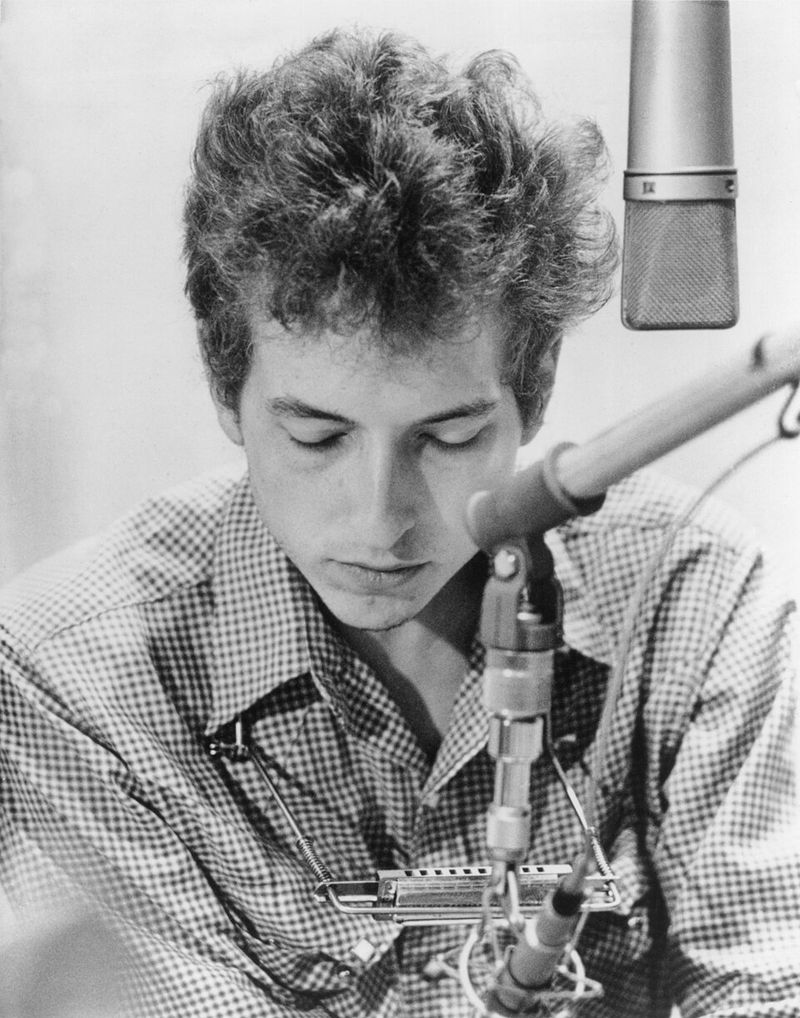
Hollywood asked Bob Dylan for some soundtrack music in 1973. He delivered one of his most covered songs.
Knockin’ on Heaven’s Door was written for the Western film Pat Garrett and Billy the Kid, in which Dylan also had a small acting role. The single reached No. 12 on the Billboard Hot 100.
The arrangement is short and loops nicely. Most beginner charts use G, D, Am, and C.
Each chord gets plenty of time, so this is a strong song for practicing clean switches. The G to D move is especially useful in hundreds of other songs.
Start with simple strums, then experiment with fingerpicking.
Eric Clapton and Guns N’ Roses both recorded famous versions. Dylan’s original, though, remains the easiest model for a relaxed acoustic performance at home.
11. Take Me Home, Country Roads by John Denver (1971)
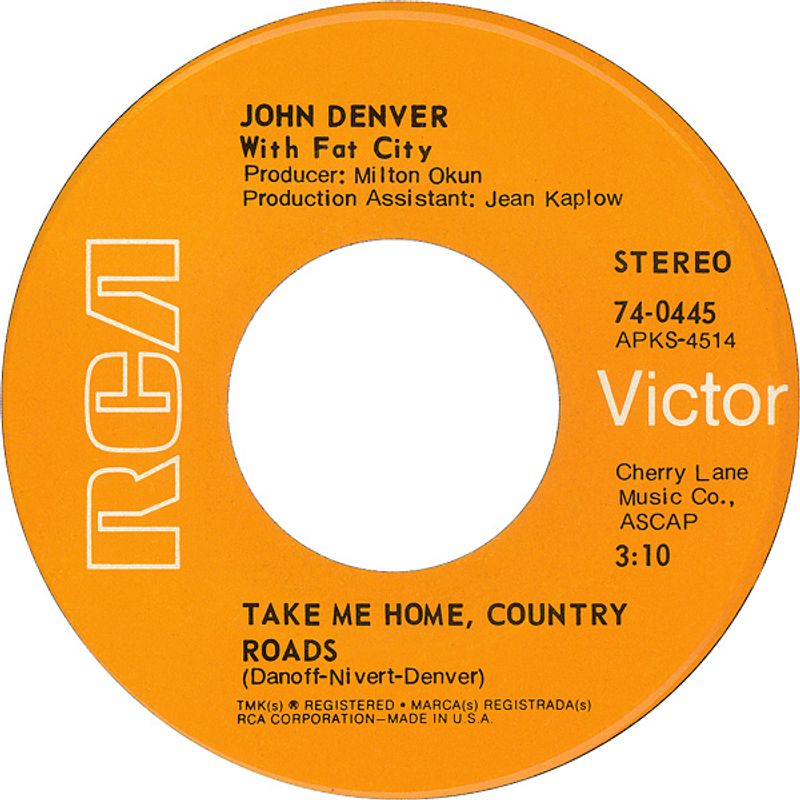
West Virginia got an unofficial anthem in 1971, and it came from a singer born in New Mexico. John Denver co-wrote Take Me Home, Country Roads with Bill Danoff and Taffy Nivert.
The song reached No. 2 on the Billboard Hot 100. In 2014, West Virginia made it one of its official state songs.
For guitar players, the appeal is practical. A typical beginner arrangement uses G, Em, D, and C, with an extra chord in some versions.
The moderate tempo gives you time to move your fingers without panic. The trickiest moment is usually the switch from G to Em, which only needs two fingers to move.
Practice that change on its own for a minute or two.
Then play the chorus slowly. Crowds at West Virginia University football games still sing it together, so expect company.
12. Wild Thing by The Troggs (1966)
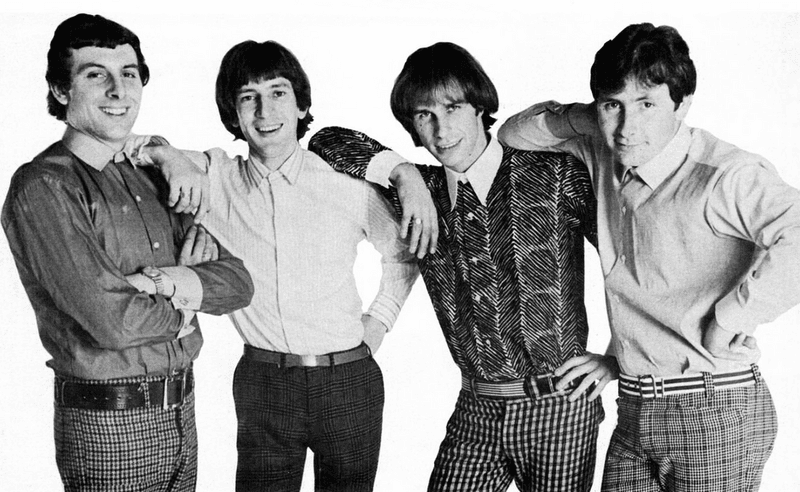
Garage bands across America found their favorite song in the summer of 1966. Wild Thing by the Troggs hit No. 1 on the Billboard Hot 100 that year.
Songwriter Chip Taylor wrote it, and another band recorded it first with little success. The Troggs, a group from Andover, England, turned it into a hit.
The main chords are A, D, and E. The rhythm is direct and does not ask for fancy picking.
Open chords work fine. For a heavier sound, try power chords, which use just two or three strings.
One odd detail stands out on the record. The famous solo was played on an ocarina, a small wind instrument.
Jimi Hendrix gave the song a wild new life at the Monterey International Pop Festival in 1967. Proof that three chords can travel far.
13. The Joker by Steve Miller Band (1973)
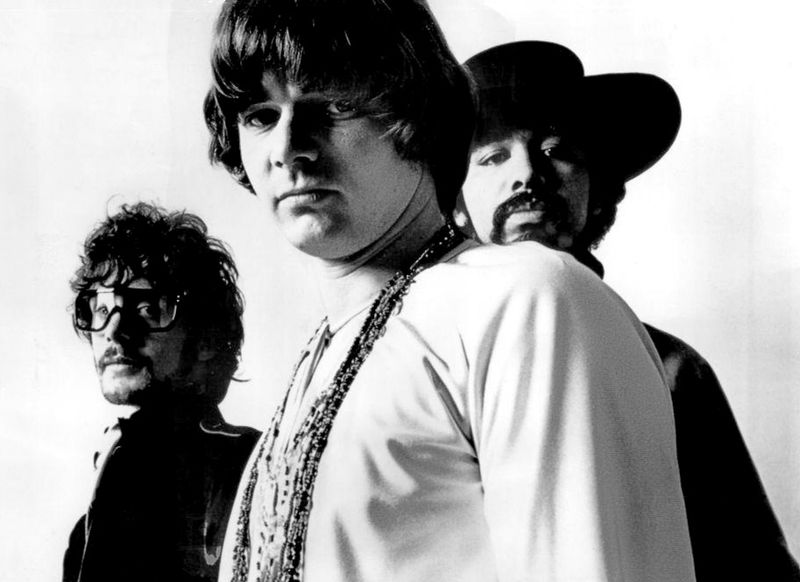
Some people call him the space cowboy. Steve Miller packed that line, plus a few other made-up nicknames, into The Joker.
Released in 1973, the song reached No. 1 on the Billboard Hot 100 in January 1974. It returned to the top of the UK chart in 1990 after appearing in a Levi’s jeans commercial.
The original recording sits in the key of F, using F, B-flat, and C. Those are tough barre chords for newcomers.
Good news: you can move the whole thing to G, C, and D. It sounds nearly the same and is much easier on your fingers.
The slide guitar effects on the record take more skill. Skip them at first and focus on the lazy, swinging rhythm.
Once the three-chord loop feels relaxed, the song basically plays itself.
14. Me and Bobby McGee by Janis Joplin (1971)

Kris Kristofferson got the title from a producer’s secretary named Barbara McKee. He and Fred Foster turned the name into one of the great road songs.
Roger Miller recorded it first in 1969. Janis Joplin’s version, released in early 1971 on the album Pearl, became a No. 1 hit on the Billboard Hot 100.
The story follows two travelers hitchhiking across the country before parting ways. Joplin starts softly, then builds into a lively sing-along finish.
A simplified arrangement uses G, C, D, A, and E. The song shifts from G to A partway through.
That key change is a great next step for beginners who already know basic progressions. If it feels like too much, stay in one key until you are ready.
Harmonica optional, enthusiasm required.
15. Take It Easy by Eagles (1972)
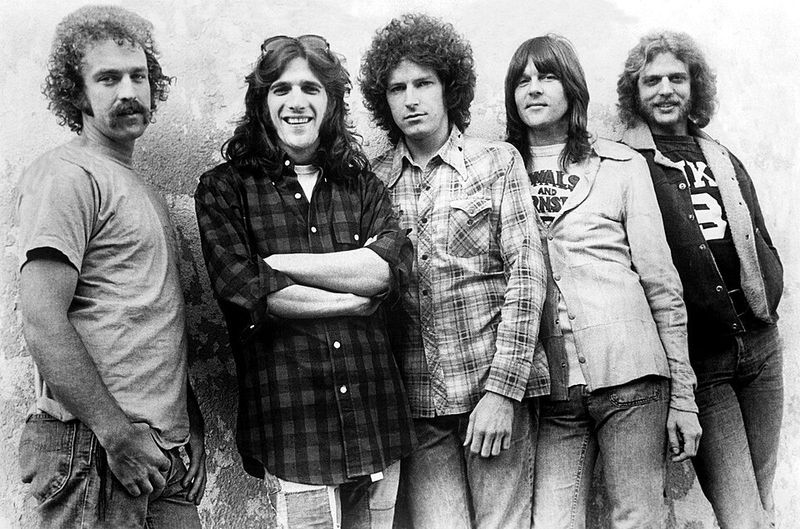
A street corner in Winslow, Arizona became a tourist stop because of one lyric. Take It Easy, released in 1972, was the Eagles’ very first single.
Jackson Browne started the song and got stuck on the second verse. Glenn Frey finished it, and the single reached No. 12 on the Billboard Hot 100.
Winslow now has a Standin’ on the Corner Park, complete with a statue. Not bad for a few words in a chorus.
Beginners can play a simplified version with G, C, D, and Em. Fuller arrangements add a few extra chords later.
The steady beat is ideal for building consistent strumming. Work on the main progression before tackling the banjo and guitar details on the record.
The chorus is built for groups. Hand out lyric sheets and let everyone join.
Share this story