France has a way of hiding its most beautiful places down winding country roads and up steep hillside paths. Its villages tell stories through stone walls, flower-filled lanes, and centuries-old traditions that have somehow survived into the modern world.
From the lavender-scented hills of Provence to the granite harbors of Normandy, each corner of rural France has its own personality. These 15 villages prove that the French countryside is just as magical as the big cities everyone already knows.
Gordes, Provence
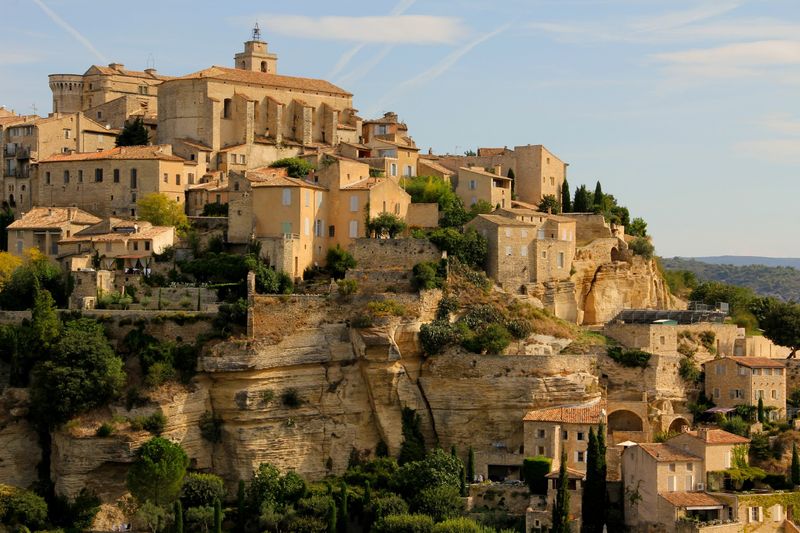
Perched like a crown above the Luberon valley, Gordes is the kind of village that makes people stop their cars just to stare. Pale stone houses stack on top of each other in tight, dramatic layers, rising from vineyards and olive groves toward a sky that always seems bluer here than anywhere else in France.
The village has been drawing painters, photographers, and wandering travelers for decades, and it is easy to understand why the moment you see it.
Wandering through Gordes takes no particular plan. Narrow lanes twist between old stone walls, opening suddenly onto viewpoints that stretch across the entire Luberon landscape.
Every corner reveals a fountain, a carved doorway, or a tiny square shaded by plane trees.
Just a few kilometers away, the Cistercian Abbaye Notre-Dame de Senanque sits quietly in a valley surrounded by lavender fields. The abbey is one of the most photographed spots in all of Provence, and visiting it alongside Gordes makes for an unforgettable afternoon.
Gordes is popular, but its beauty is completely earned.
Riquewihr, Alsace
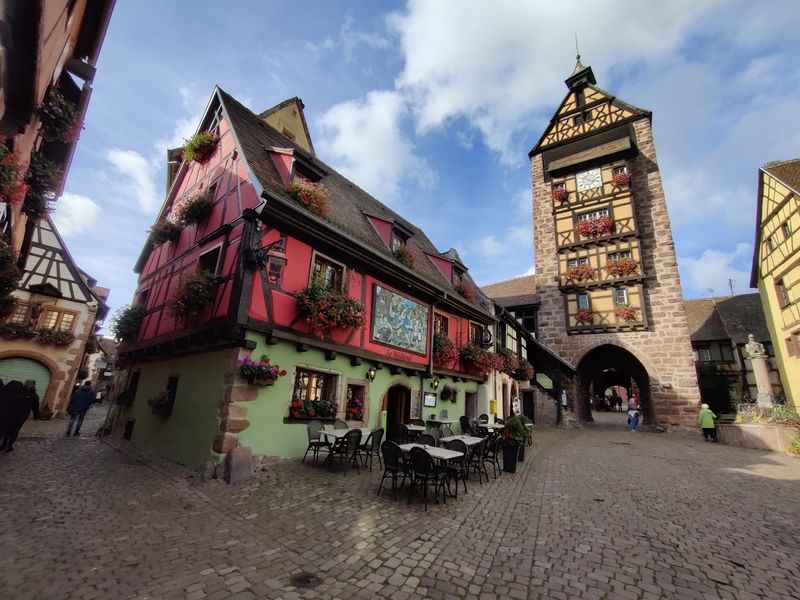
Called the pearl of the vineyards, Riquewihr wears that title without any embarrassment. Sitting between the Vosges Mountains and the Alsace plain, this compact medieval village is wrapped in ramparts, watched over by old watchtowers, and surrounded on almost every side by vines that have been producing wine here for centuries.
The relationship between the village and its vineyards is not decorative. It is the reason Riquewihr exists and the reason it still looks the way it does.
Step inside the old walls and the streets narrow quickly, pressing colorful half-timbered facades close together beneath steep tiled roofs. Flower boxes overflow from upper windows, wine cellars hide behind arched doorways, and paved courtyards appear unexpectedly between buildings.
Walking slowly is the only sensible option.
Outside the ramparts, vines begin almost immediately, climbing the gentle slopes toward the hills. Autumn brings the harvest season, when the village buzzes with activity and the surrounding landscape turns gold and amber.
Riquewihr is one of those places that looks like it was designed specifically for postcards, yet somehow still feels completely genuine when you are standing in the middle of it.
Eguisheim, Alsace
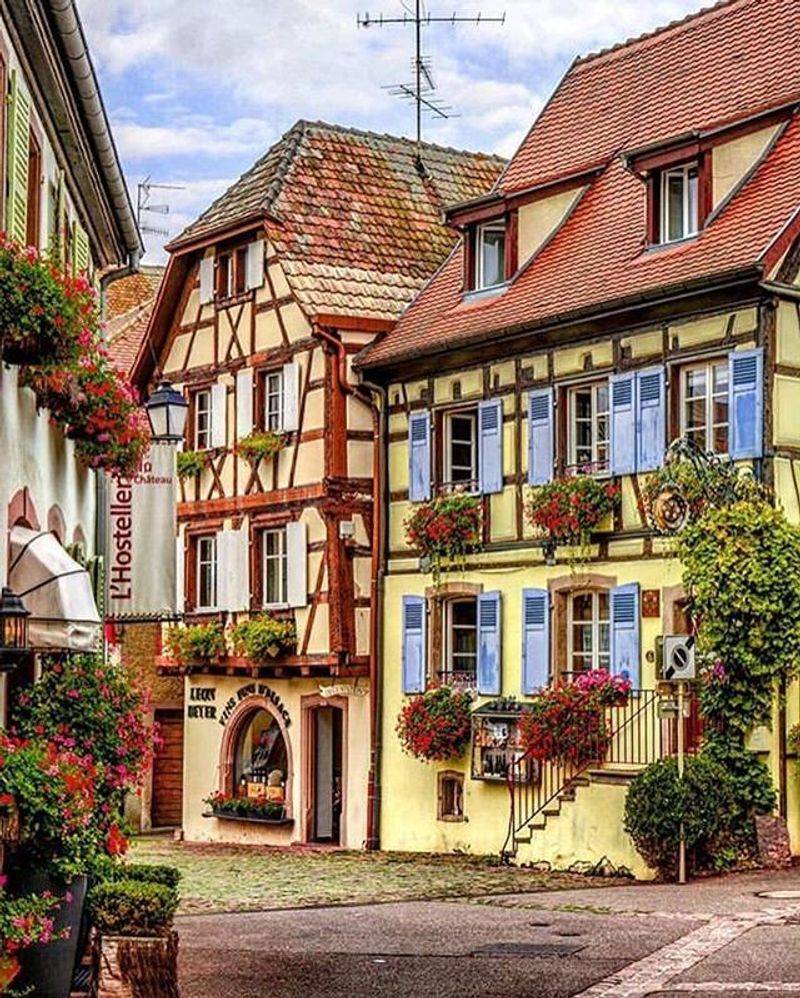
In 2013, the French public voted Eguisheim their favourite village in the entire country, and walking its streets for even ten minutes makes that result feel completely logical. Built in an unusual roughly circular pattern, the village arranges its lanes in concentric rings, so exploring it feels a bit like slowly unwinding a colorful spool of thread.
Every turn reveals another brightly painted half-timbered facade, another carved fountain, another tiny courtyard hiding behind a low wooden gate.
Located near Colmar, Eguisheim is deeply embedded in Alsace wine culture. Vineyards press right up to the village edge, and wine cellars tucked beneath old houses have been producing local varieties for generations.
During harvest season, the whole village smells faintly of fermenting grapes, which is not at all unpleasant.
The floral displays here are genuinely impressive. Window boxes, hanging baskets, and trailing plants soften the stone and timber facades throughout spring and summer, making Eguisheim look almost impossibly cheerful.
The village is compact enough to explore completely on foot in an hour, but most visitors find reasons to linger considerably longer. Nearby Colmar makes a natural base for combining both destinations in a single visit to the Alsace wine route.
Rocamadour, Occitanie
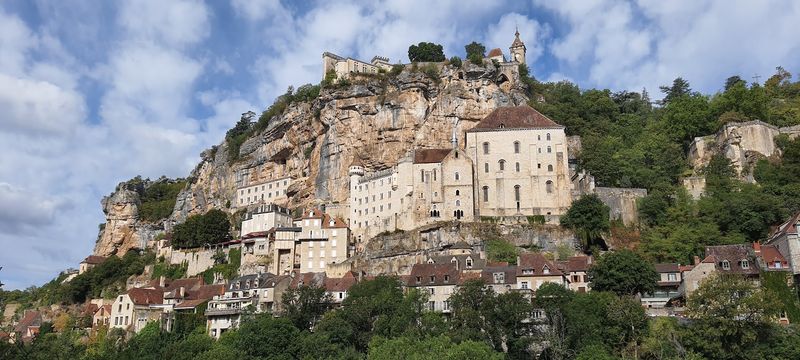
Rocamadour does not sit on a hill. It climbs one, and then keeps going.
Built in successive levels against a limestone cliff roughly 150 meters above the Alzou canyon, this extraordinary village stacks houses at the bottom, medieval sanctuaries in the middle, and fortifications at the very top. The effect from a distance is genuinely jaw-dropping, as though someone decided that flat ground was far too boring a place to build a settlement.
Pilgrims have been making their way here for centuries, drawn by the Chapel of Notre-Dame and its 12th-century Black Madonna. The traditional Pilgrims Stairway climbs 216 steps to reach the sanctuary level, and many historical visitors completed the climb on their knees as an act of devotion.
Today most people use the elevator, which feels slightly less dramatic but considerably more practical.
Rocamadour sits along routes historically connected with the pilgrimage to Santiago de Compostela, giving it a spiritual weight that goes beyond its remarkable appearance. The canyon below offers walking trails and river scenery, while the surrounding Quercy countryside adds further depth to a visit.
Few places in France create a first impression as immediate and overwhelming as Rocamadour seen from across the valley.
Saint-Cirq-Lapopie, Occitanie
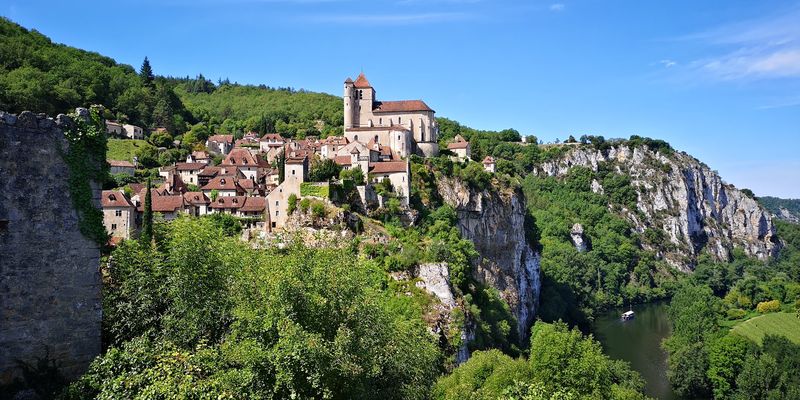
Saint-Cirq-Lapopie has a habit of making people feel like they have stumbled into a painting. Stone houses with steep, irregular rooftops crowd along narrow lanes above the Lot River, while the fortified upper village surveys a landscape so deeply wooded and dramatically carved that it barely seems real.
The village won the very first edition of Le Village Prefere des Francais in 2012, which says something about how powerfully its medieval atmosphere resonates with people who have seen a lot of French villages.
Artists noticed this place long before the television voting shows did. Surrealist writer Andre Breton was so captivated by Saint-Cirq-Lapopie that he kept a house here for years, describing it as a place that made him stop wanting to be anywhere else.
That kind of reaction is not unusual among visitors.
The surrounding Causses du Quercy landscape adds practical reasons to stay longer. Hiking trails follow the river valley and climb the limestone plateaus above, while kayaking on the Lot provides a completely different perspective on the cliffs the village stands upon.
The combination of medieval architecture, dramatic scenery, and genuine artistic history makes Saint-Cirq-Lapopie one of the most layered and rewarding villages in southern France.
Moustiers-Sainte-Marie, Provence
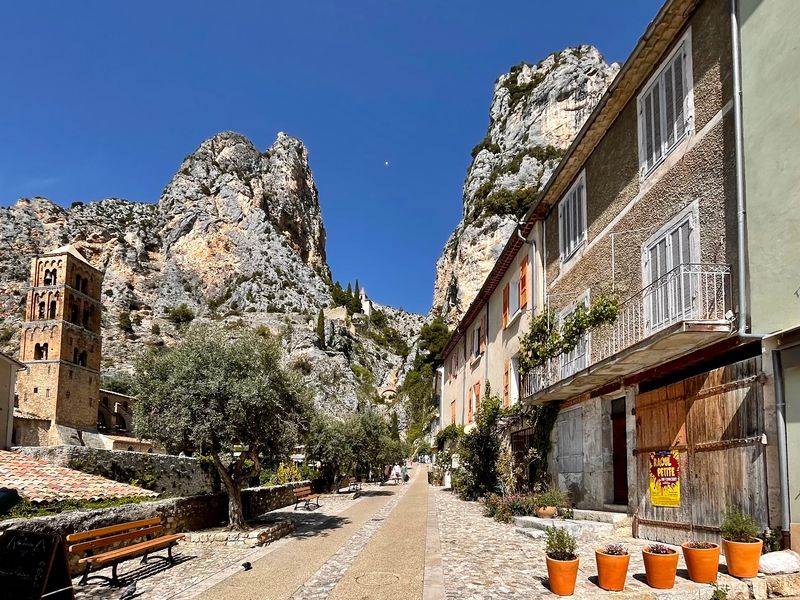
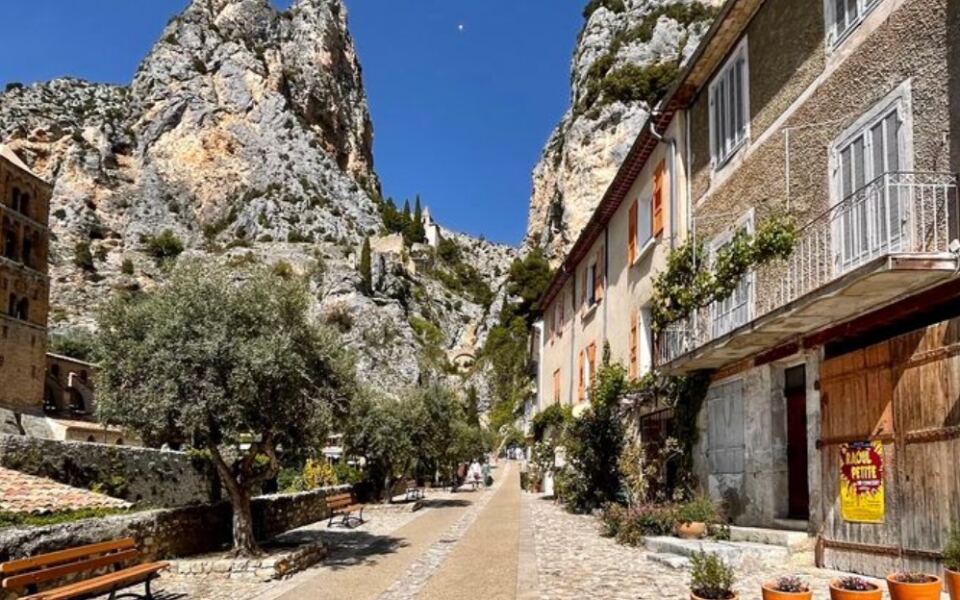
Tucked into a narrow gap between two towering limestone cliffs, Moustiers-Sainte-Marie looks like a village that the mountains simply forgot to close the door on. Water tumbles down from the rock face above and feeds a series of fountains that run through the settlement, giving it a constant gentle soundtrack that no amount of tourist traffic can drown out.
France describes it as an eagle-nest-like medieval village, which is accurate, though it undersells the sheer drama of the setting.
The village is equally famous for its faience, a tradition of glazed decorative earthenware that stretches back roughly three centuries. A dedicated museum traces the history and technique of this craft, and local workshops still produce pieces in traditional styles.
Buying a bowl or a plate here feels considerably more meaningful than picking up a generic souvenir.
Above the rooftops, a steep path climbs to a chapel perched against the cliff, while a famous star suspended on a chain stretches between the two rocky peaks overhead. The story behind that star involves a medieval knight and a vow made during the Crusades.
Moustiers also sits close to the Verdon Gorge and Provence lavender country, making it an excellent base for exploring one of France’s most spectacular natural regions.
Les Baux-de-Provence, Provence
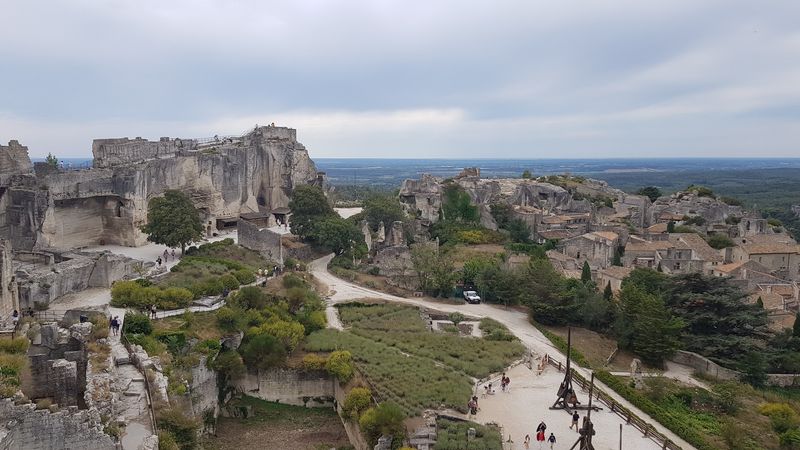
With only a few hundred permanent residents, Les Baux-de-Provence punches considerably above its weight when it comes to history and atmosphere. Occupying a rugged rocky spur in the Alpilles, the village looks out over olive groves and open Provencal countryside from a position that once gave its medieval lords enormous strategic power.
That power is long gone, but the ruins of Chateau des Baux remain, along with 22 protected historic monuments crammed into a settlement you can walk across in about fifteen minutes.
The cobblestone lanes winding between pale stone buildings are lined with art galleries, local craft shops, and the occasional restaurant terrace with views that stretch to the horizon. The medieval quarter feels genuinely ancient, not reconstructed or prettified for tourism, which gives Les Baux a rawness that softer Luberon villages sometimes lack.
Below the village, former limestone quarries have been transformed into the Carrieres des Lumieres, an immersive art space where enormous projections cover every surface of the cavernous interior. The contrast between the ancient ruins above and this contemporary cultural attraction below is surprisingly satisfying rather than jarring.
Les Baux rewards visitors who take time to explore both the historic village and its dramatic rocky surroundings on foot.
Collonges-la-Rouge, Correze
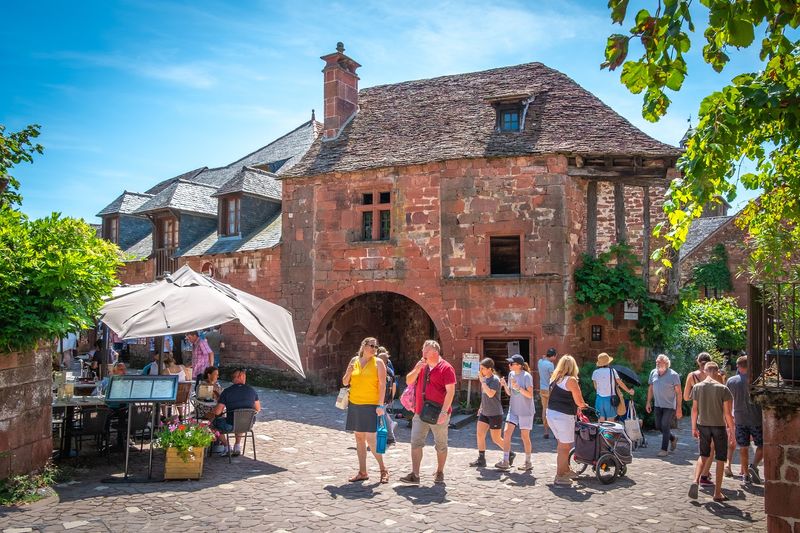
Collonges-la-Rouge stops visitors in their tracks before they have even read a single information board. The entire village is built from red sandstone containing iron oxide, and that mineral gives every facade, church, manor house, and fortified tower a color somewhere between deep amber and genuine crimson.
Against the surrounding green countryside of Correze, the effect is so striking that first-time visitors sometimes wonder briefly whether the color is real or a trick of the light. It is completely real.
The 12th-century octagonal bell tower of Saint-Pierre Church rises above the rooftops as the village’s most recognizable landmark, while a historic covered market occupies the central square. Old manor houses with round towers and carved doorways line the lanes, reflecting a period when Collonges was a prosperous stopping point on an important trade route.
Collonges holds a special place in French village-preservation history. Its former mayor was instrumental in founding the Les Plus Beaux Villages de France association, the network that now recognizes more than 180 communities across the country for exceptional heritage.
Visiting Collonges is therefore not just seeing a beautiful place. It is standing inside the village that helped inspire a national movement to protect and celebrate rural French architecture for future generations.
Yvoire, Haute-Savoie
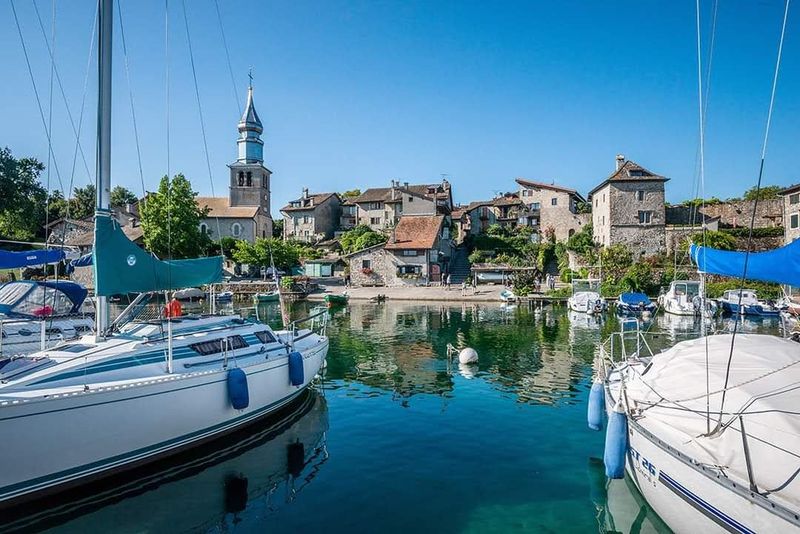
Most medieval villages in France are surrounded by fields, forests, or cliffs. Yvoire is surrounded by a lake, and not just any lake.
Sitting on the southern shore of Lake Geneva in Haute-Savoie, this compact fortified settlement looks across the water toward mountain peaks that seem to belong to a completely different kind of landscape. The combination of medieval stonework and Alpine lake views gives Yvoire an atmosphere that surprises almost everyone who visits it for the first time.
Stone gateways, old houses draped in climbing roses, flower-filled lanes, and a small working harbor all pack into a village that takes less than an hour to walk through completely. The chateau and surviving sections of medieval wall remind visitors that Yvoire was once a serious strategic fortification rather than a picturesque lakeside destination.
Lake cruises depart from the harbor, connecting Yvoire with other towns on both the French and Swiss shores of Lake Geneva. Waterside restaurants serve fresh fish from the lake, and the Garden of Five Senses provides an unusual horticultural attraction within the old walls.
Yvoire works well as a slower alternative to the larger and busier resort towns scattered around the lake, offering genuine medieval character alongside some of the region’s most spectacular water and mountain scenery.
Locronan, Brittany
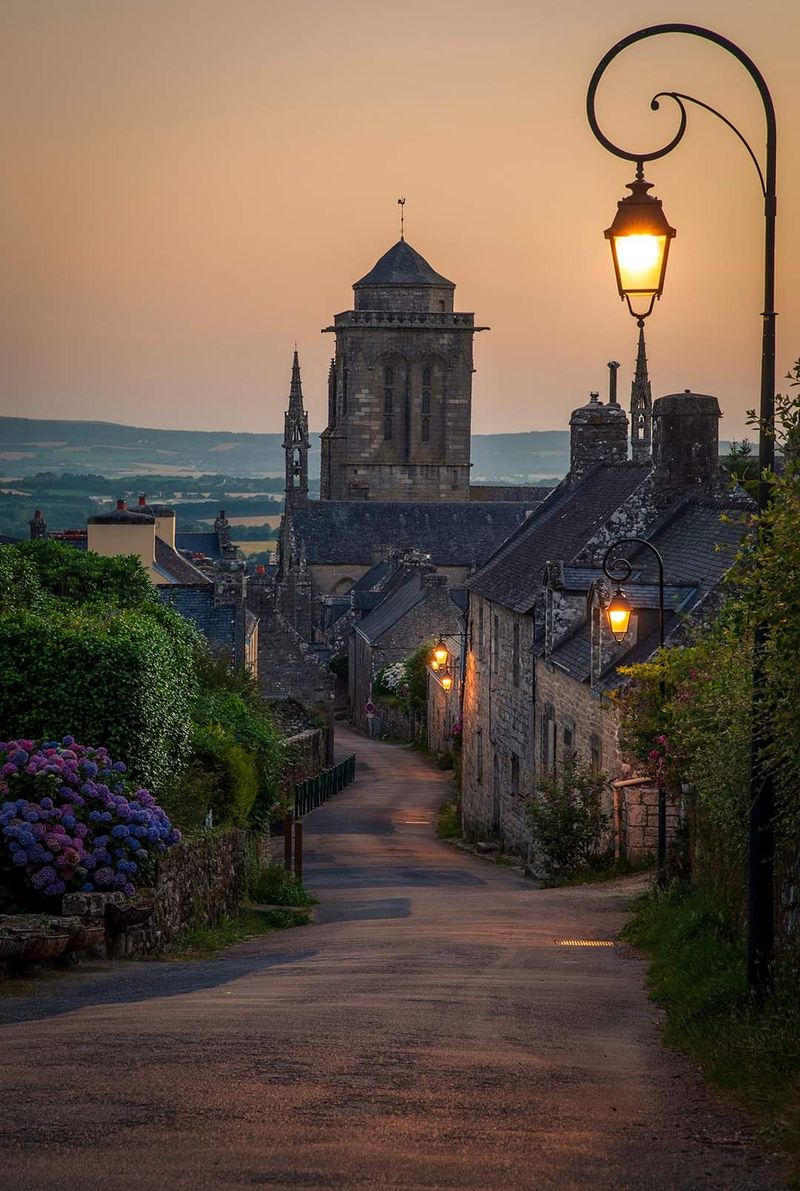
Locronan looks like Brittany feels: solid, slightly austere, and quietly magnificent. Gray granite houses from the Renaissance period surround a large central square, and the overall impression is of a place that was built to last rather than to charm.
It has managed to do both. The village’s earlier connections with Celtic traditions eventually gave way to Christian associations with Saint Ronan, whose memory is still honored through the Tromenies, pilgrimage processions that follow an ancient route through the surrounding countryside.
The substantial stone buildings lining the square were funded by a prosperous sailcloth industry that once supplied canvas to the ships of the French royal navy. When that industry collapsed, Locronan’s economy suffered badly, but the grand houses remained standing, which is why the village looks today much as it did several centuries ago.
Locronan does not have the warm honey tones of Provence or the painted cheerfulness of Alsace. Its beauty is cooler and more considered, built from materials that suit the Atlantic light and the rapidly shifting Breton skies.
Film and television productions have used it as a location repeatedly, drawn by a streetscape so intact that modern additions barely register. Walking across the central square on a quiet morning, with mist still clinging to the granite, is a genuinely atmospheric experience.
Conques, Aveyron
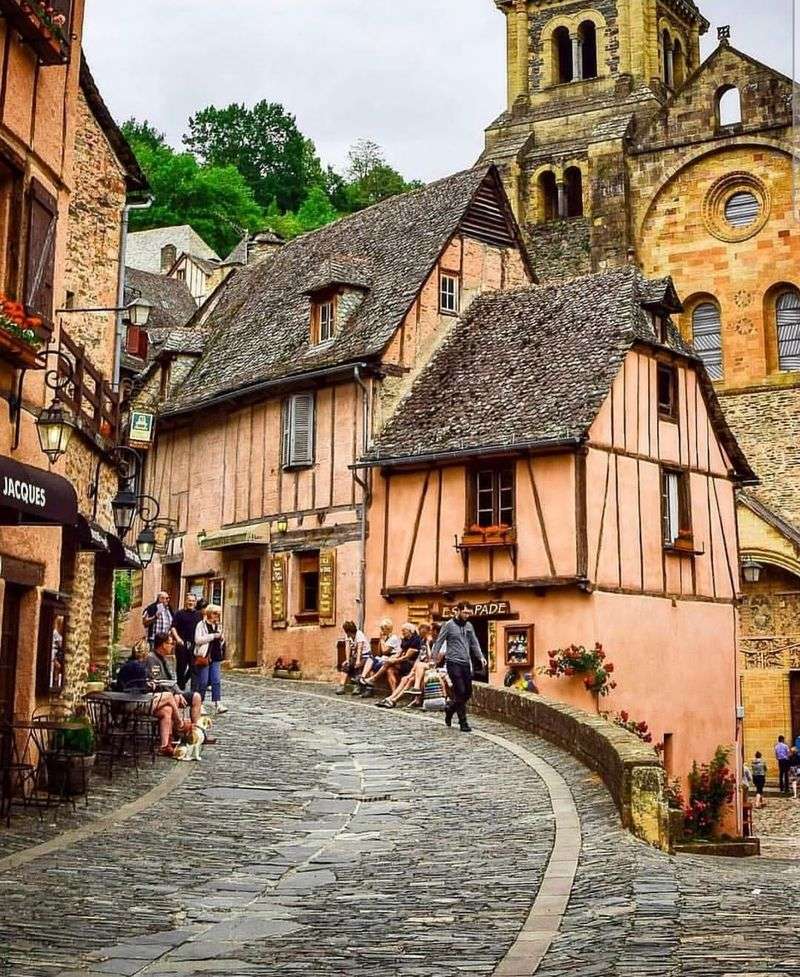
Hidden in a narrow wooded valley in Aveyron, Conques has been drawing pilgrims for roughly a thousand years, and the village has not changed its approach to hospitality much in all that time. Stone and timber houses with steep roofs press close around the Abbey Church of Sainte-Foy, creating a settlement that feels compressed and intimate rather than sprawling.
The abbey itself is one of the finest examples of Romanesque architecture in France, and its treasury contains medieval reliquaries that rank among the most extraordinary surviving examples of early Christian craftsmanship.
French artist Pierre Soulages designed the abbey’s modern stained-glass windows, and they manage the difficult trick of feeling completely contemporary while respecting the ancient space they inhabit. Natural light filters through them in ways that change throughout the day, making the interior worth visiting more than once.
Conques sits on routes historically connected with the pilgrimage to Santiago de Compostela, and walkers still pass through today carrying the traditional scallop shell symbol of that journey. The village’s folded valley location means it reveals itself gradually rather than all at once, which suits its atmosphere perfectly.
Arriving on foot from the surrounding hills, with the abbey tower appearing through the trees, is one of rural France’s most memorable approaches to any village.
Barfleur, Normandy
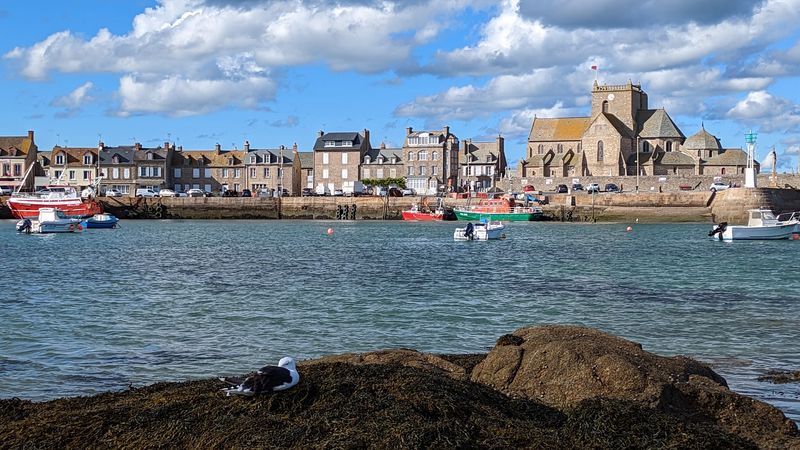
Barfleur smells of salt, seaweed, and the particular freshness that only comes from a coastline facing the English Channel at full force. This traditional Norman fishing village sits on the northeastern tip of the Cotentin Peninsula, where sturdy granite houses cluster around a harbor that still sees working fishing boats rather than just pleasure craft.
There is nothing pretentious about Barfleur, and that straightforwardness is precisely what makes it so appealing to visitors looking for somewhere that has not been polished into a theme-park version of itself.
The local specialty is blondes de Barfleur mussels, served in restaurants around the harbor in ways that range from classic mariniere to preparations with local cider. Eating them while looking out at the water feels like the correct and only sensible approach.
Nearby, the Gatteville lighthouse is one of the tallest in France and provides a landmark visible from considerable distance along the exposed coastline.
Barfleur has historical connections with the Norman conquest era and later Anglo-French conflicts, giving it a depth that goes beyond its modest size. The light here changes constantly, moving from bright silver to deep gray within the space of an hour, and that shifting quality gives the granite village a different character morning, afternoon, and evening.
Photographers tend to stay longer than they planned.
Vezelay, Burgundy
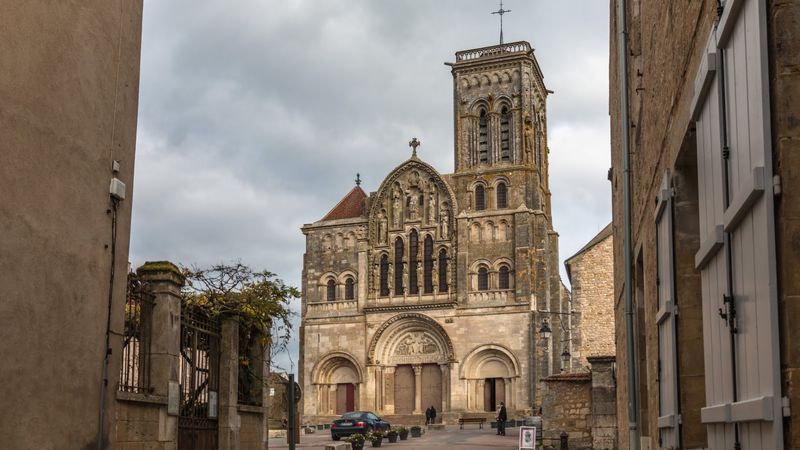
Burgundy is full of beautiful hills, but the locals have been calling Vezelay’s the Eternal Hill for so long that the name has stuck without anyone feeling the need to argue about it. The village climbs steadily from its lower gateway toward the Romanesque Basilica of Sainte-Marie-Madeleine at the top, and that uphill walk through centuries of accumulated history is one of the most satisfying approaches to any religious building in France.
The basilica became one of medieval Christianity’s great pilgrimage centers in the 11th century, drawing crowds that would have overwhelmed a village this size.
Historic houses from several architectural periods line the main street, while surviving gates and ramparts give Vezelay the appearance of a fortified hill settlement that has simply never stopped being inhabited. Art galleries and small shops now occupy many of the old stone buildings, mixing contemporary culture with medieval atmosphere in a way that feels natural rather than forced.
The view from the basilica terrace stretches across vineyards and the rolling countryside of Burgundy and the Morvan regional park. On clear days the landscape unfolds in every direction, demonstrating exactly why a hilltop position like this was so strategically and spiritually significant for so many centuries.
Vezelay rewards a full afternoon of slow exploration rather than a quick stop.
Lourmarin, Provence
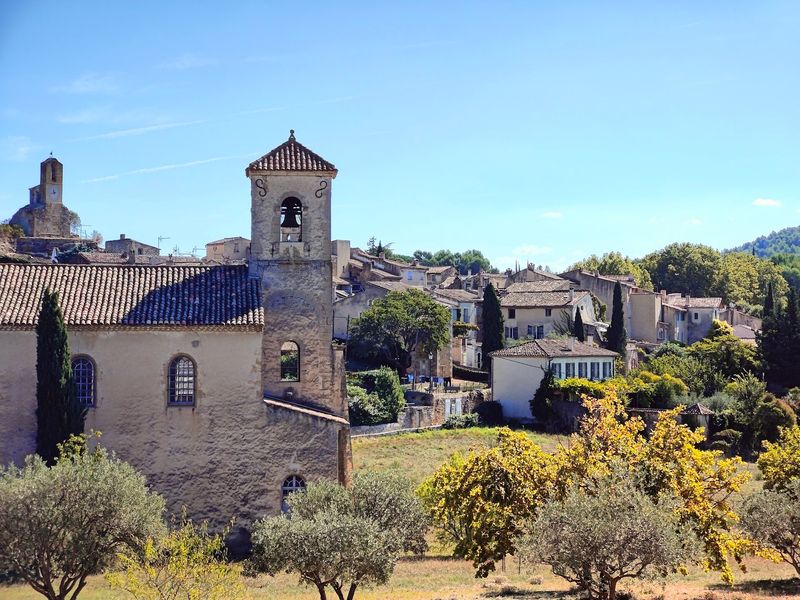
Not every great Provencal village needs to cling to a cliff or crown a dramatic hilltop to earn its reputation. Lourmarin makes its case more quietly, spread across a gentle Luberon landscape of vineyards, orchards, olive groves, and low mountains that feel welcoming rather than imposing.
Shaded lanes, small squares with fountain sounds, cafe terraces, and a compact center full of galleries and food shops give the village an unhurried rhythm that is genuinely difficult to leave behind once you have settled into it.
Albert Camus, one of France’s most celebrated writers, chose Lourmarin as his home and is buried in the village cemetery. That connection gives the place a literary weight that sits alongside its more sensory pleasures without overwhelming them.
The Renaissance chateau just outside the village center is open to visitors and provides an elegant architectural counterpoint to the informal charm of the lanes inside.
Markets, local wine, plane trees casting shade over stone pavements, and countryside beginning just beyond the last house on every street: Lourmarin captures something about Provence that is harder to photograph than a dramatic panorama but arguably more representative of how people actually live here. It is a village built around everyday pleasures rather than spectacle, and that turns out to be more than enough.
Roussillon, Provence
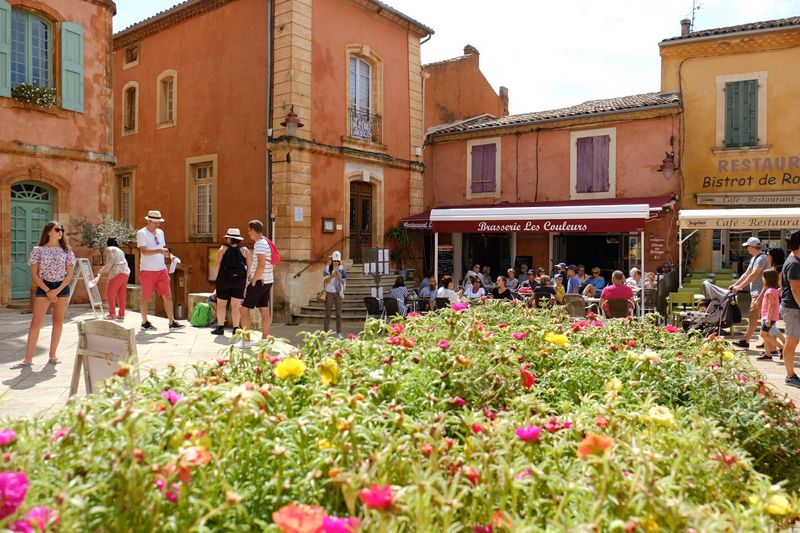
Roussillon operates by a completely different color palette from every other village in France. Standing among its buildings for the first time, surrounded by facades ranging from pale yellow through burnt orange to deep terracotta red, feels slightly surreal until you realize that the ground beneath your feet is the same color as the walls around you.
The village sits atop one of Europe’s largest ochre deposits, and for centuries those pigments were mined commercially and exported across the continent to color paints, dyes, and building materials.
The former quarries outside the village have become a walking trail called the Sentier des Ocres, where eroded cliffs and canyons glow in colors so vivid that France’s tourism authority compares the landscape to the American Southwest. That comparison is not exaggerated.
Walking through the ochre formations on a sunny afternoon, with pine trees framing bright red rock against a deep blue Provencal sky, produces a landscape that feels genuinely foreign and completely extraordinary.
Back in the village itself, the warm-colored facades create one of the most visually distinctive streetscapes in southern France. Every surface seems to absorb and radiate light differently depending on the time of day, making Roussillon particularly rewarding to visit in the golden hours of early morning or late afternoon.
The Luberon countryside surrounding it adds further beauty to an already remarkable destination.
Share this story