Europe is packed with landmarks you have probably already seen a hundred times on screens, in textbooks, and on travel posters. But there is a massive difference between recognizing a place and actually standing in front of it.
Photos simply cannot capture the real size, the sounds, the surrounding landscape, or the tiny details that make these places extraordinary. These 15 European landmarks are famous for good reason, and every single one of them hits differently when you are actually there.
Sagrada Familia, Barcelona, Spain
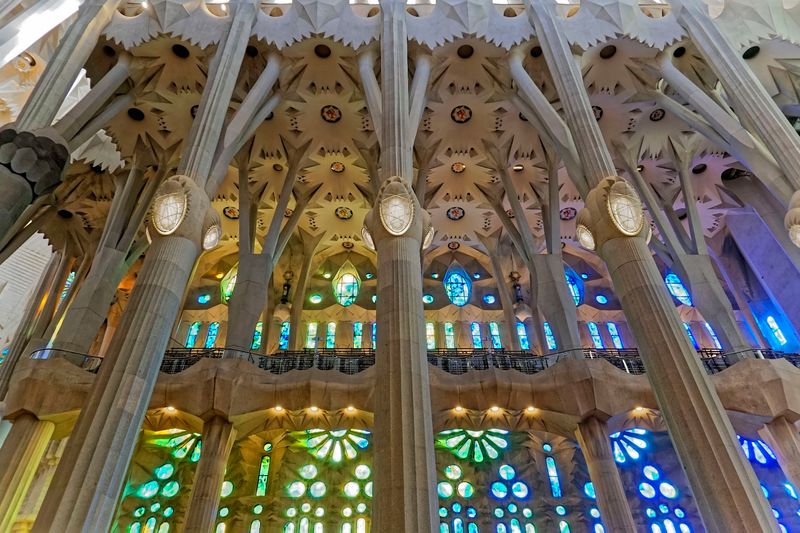
Walking into the Sagrada Familia feels less like entering a church and more like stepping inside a living forest made of stone. The columns branch upward and spread across the ceiling in patterns that seem almost biological rather than architectural.
Antoni Gaudi designed every detail with obsessive care, and the result is unlike any other building on Earth.
Stained glass windows on both sides of the nave throw waves of colored light across the interior, shifting as the sun moves throughout the day. The colors change from warm golden tones in the morning to cool blues in the afternoon.
No photograph captures the way that light actually moves across the stone.
Construction began in 1882, and the project is still ongoing more than 140 years later. The Nativity facade and crypt have been UNESCO-listed since 2005 as part of the Works of Antoni Gaudi designation.
Visitors often say the outside prepares them for something impressive, but the inside is what genuinely stops them in their tracks.
Eiffel Tower, Paris, France
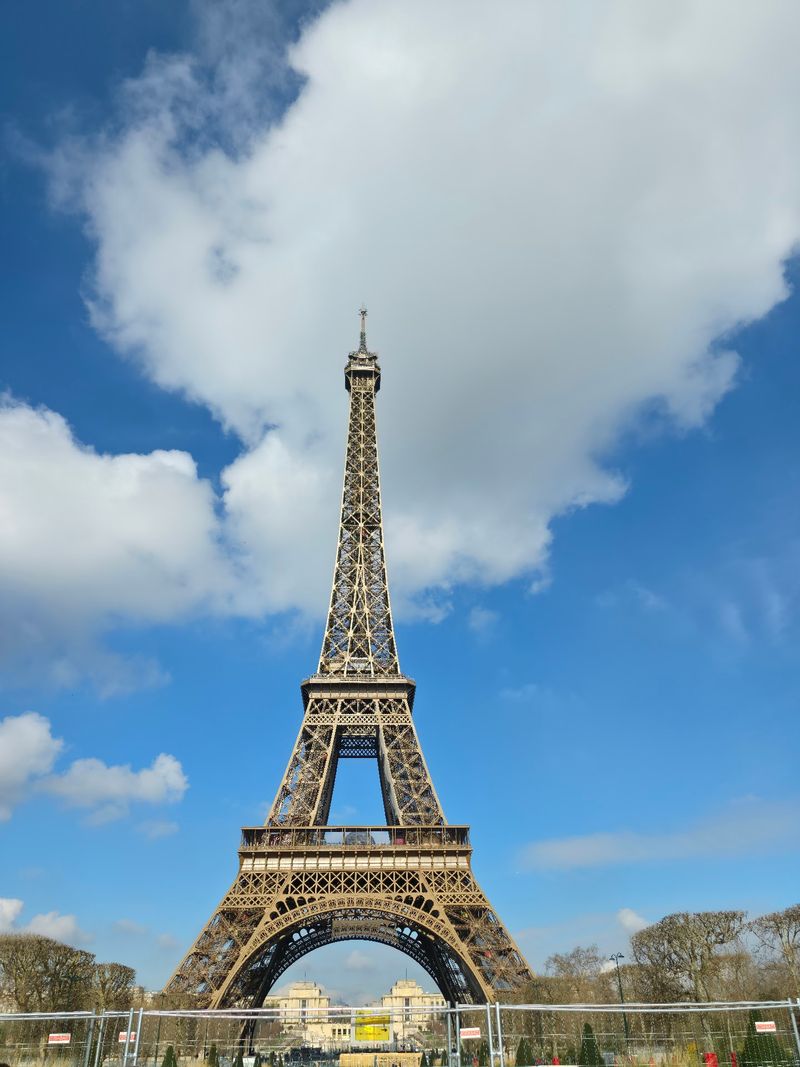
Most people think they already know what the Eiffel Tower looks like. Then they stand underneath it and realize their mental image was about half the actual size.
The structure rises roughly 300 meters, and when you are standing directly beneath the base, the elegant silhouette from travel brochures transforms into a massive industrial lattice of iron beams, arches, and rivets.
It was the world’s tallest building when it opened for the 1889 Exposition Universelle, a record it held until the Empire State Building opened in 1931. That puts its engineering achievement in serious perspective.
Nothing so tall had been built since the Great Pyramid of Giza at the time of its completion.
Riding to the top changes the experience completely. Paris spreads in every direction below, with the Seine, Sacre-Coeur, and the Arc de Triomphe forming one enormous connected urban landscape.
The tower is one of the most photographed structures in the world, yet visitors consistently report that seeing it in person still manages to feel like a genuine surprise.
Colosseum, Rome, Italy
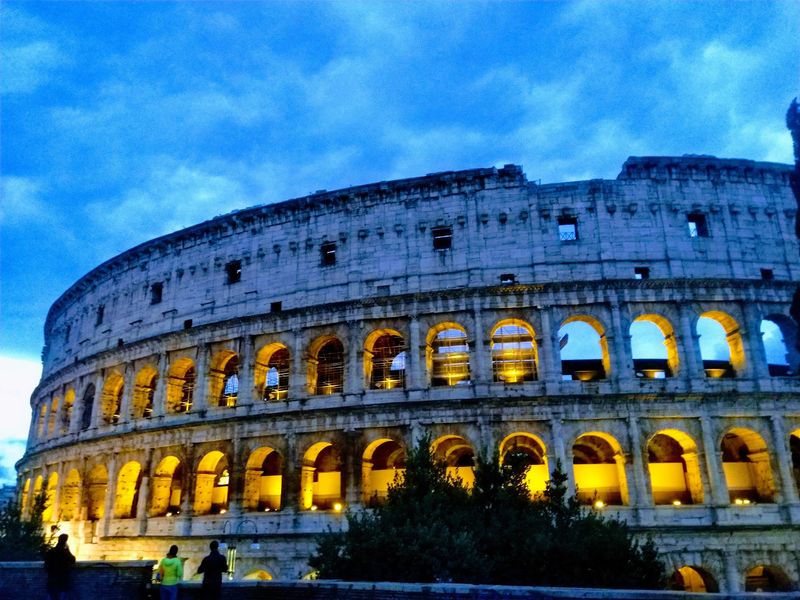
Forget what you think you know from movie backdrops and textbook photos. The Colosseum is not just a ruined stadium sitting politely in the middle of Rome.
It is embedded within an entire archaeological landscape that includes the Roman Forum and Palatine Hill, all managed together as the Colosseum Archaeological Park.
From the upper seating levels, the engineering of the structure finally starts making sense. You can see how thousands of spectators were once routed through different corridors and tiers, with the whole system designed to fill and empty the amphitheater efficiently.
The exposed underground tunnels beneath the old arena floor reveal the hidden infrastructure that made the spectacles possible.
UNESCO recognizes the Colosseum as one of the central surviving monuments within Rome’s historic center, a city containing almost three millennia of layered architectural history. The astonishing part is not simply that the building is ancient.
It is that so much of it survived earthquakes, stone-robbing, centuries of neglect, and the constant pressure of a living city growing up around it on all sides.
Acropolis of Athens, Greece
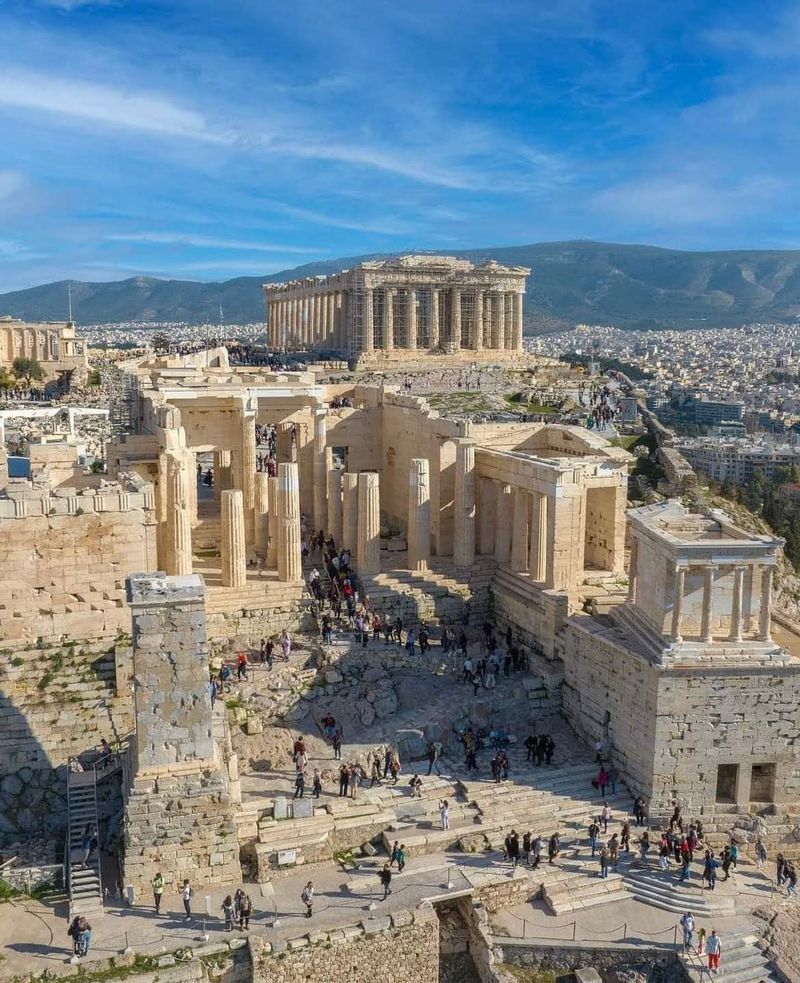
Forget the isolated white temple floating against a blue sky that appears in most textbooks. The Acropolis is not isolated at all.
It rises on a rocky hill about 156 meters above the city, and modern Athens spreads beneath it in every direction, creating a relationship between ancient monument and living metropolis that no aerial photograph fully communicates.
The experience builds gradually. First comes the climb, then the monumental Propylaea gateway, and only after passing through does the full scale of the Parthenon reveal itself alongside the Erechtheion and the Temple of Athena Nike.
UNESCO calls the Acropolis the most complete surviving ancient Greek monumental complex anywhere in the world.
The major monuments were built during Athens’ remarkable fifth-century BC construction program under Pericles, with architects and artists including Pheidias, Iktinos, and Kallikrates contributing to the project. Turning away from the marble temples and looking outward is its own reward.
The view across the city from that height is dramatic in a way that makes the strategic importance of this particular rock completely obvious.
Alhambra, Granada, Spain
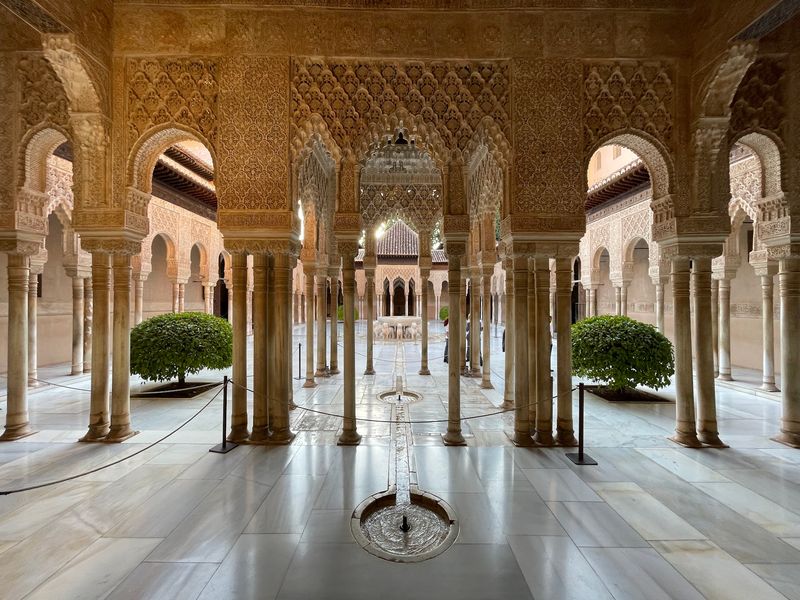
From outside, the Alhambra looks like a serious hilltop fortress, all thick walls and defensive towers. That restrained exterior is one of the great architectural misdirections in Europe.
Step through the gates and the architecture shifts into something almost impossibly delicate, with carved stucco, geometric tilework, wooden ceilings, and water features filling room after room after courtyard.
The complex preserves the only surviving palatine city of the Islamic period in this form and is considered the finest remaining expression of Nasrid architecture anywhere. Its neighboring Generalife served as the seasonal garden retreat of the Nasrid emirs during the 13th and 14th centuries, adding yet another layer of beauty to an already extraordinary site.
Some of the most memorable details are surprisingly small. Patterns that appear almost plain from a distance reveal extraordinary complexity up close.
Water channels reflect entire arcades. Openings in walls frame views of Granada and the surrounding landscape as though they were deliberately composed paintings.
The Alhambra is famous as a palace, but standing inside it feels more like wandering through an entire architectural universe that someone built specifically to astonish you.
Mont-Saint-Michel, Normandy, France
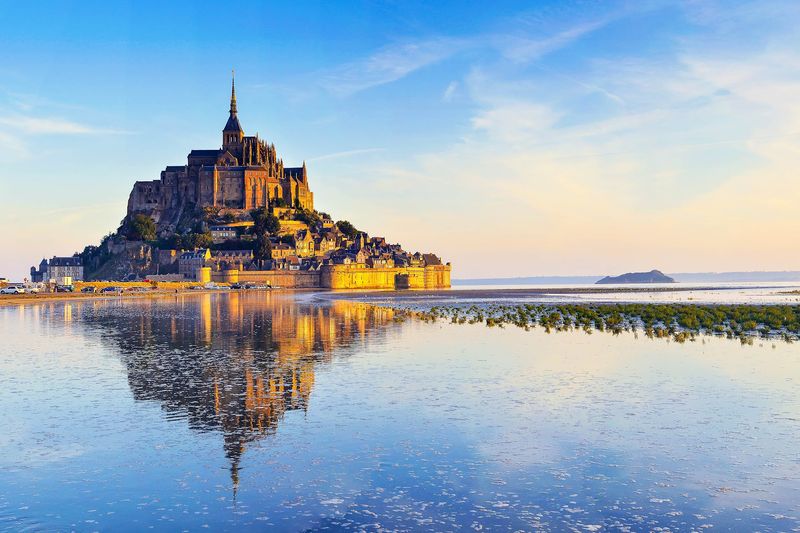
Seeing Mont-Saint-Michel appear on the horizon for the first time is genuinely strange. It looks too theatrical to be real, like someone dropped a Gothic abbey and a medieval village onto a rock in the middle of a tidal bay and forgot to explain why.
UNESCO calls it the Wonder of the West, and that description starts making sense before you even get close.
The abbey itself was constructed between the 11th and 16th centuries, adapted to an exceptionally difficult natural site by generations of builders who had to account for the tides, the geology, and the sheer ambition of what they were attempting. From a distance, the whole island looks like one enormous building.
Up close, it becomes a vertical town with narrow lanes, defensive walls, stone houses, steep stairways, and the abbey rising above everything.
The tides dramatically change the surrounding landscape throughout the day. At certain times, the bay around the island is almost entirely dry.
At others, water surrounds the rocky islet completely. Mont-Saint-Michel is not a landmark placed in beautiful scenery.
The landmark and the scenery are genuinely the same thing, and separating them would ruin both.
Neuschwanstein Castle, Bavaria, Germany
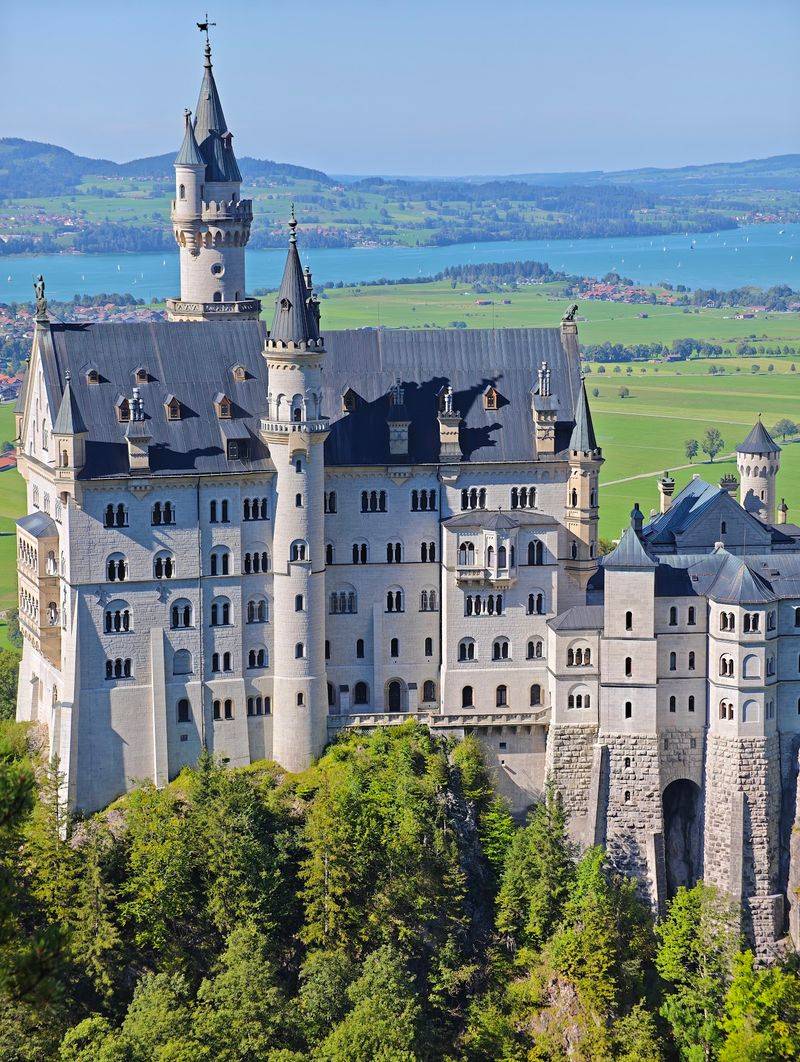
Neuschwanstein looks so convincingly like a fairy-tale castle that standing in front of it in real life feels almost disorienting. The brain keeps trying to categorize it as a movie set or a theme park attraction rather than an actual building that someone actually commissioned and actually built.
King Ludwig II ordered its construction as a private retreat, drawing on medieval architecture, German legends, and Wagner’s operas for inspiration.
UNESCO added Neuschwanstein to the World Heritage List in 2025 alongside Ludwig’s other major palace creations, describing them as carefully integrated into landscapes of exceptional natural beauty and conceived as elaborate artistic worlds rather than conventional royal residences. That landscape piece matters enormously.
Mountains rise behind the castle, lakes fill the valleys below, and dense forest surrounds the rocky ridge on which the palace sits.
The interior replaces any remaining medieval restraint with theatrical decoration and elaborate fantasy sequences painted across ceilings and walls. Construction began in 1869, which means Neuschwanstein is not genuinely medieval despite looking the part convincingly.
One man tried to physically build a dream into the Bavarian Alps, and the result is a place that photographs can suggest but never fully explain.
Pena Palace, Sintra, Portugal
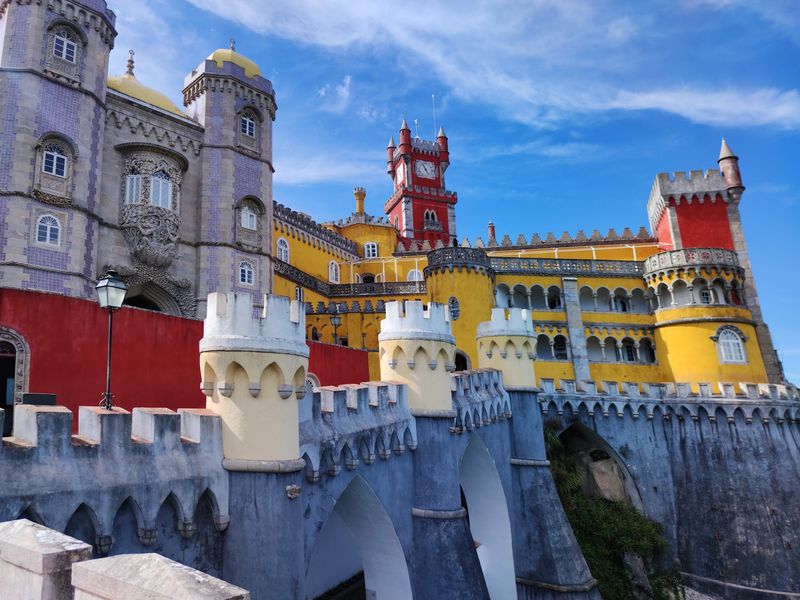
Bright yellow walls. Crimson towers.
Decorative stonework that borrows from Gothic, Moorish, Egyptian, and Renaissance traditions all at once. Pena Palace looks like a building that could not decide what century it wanted to belong to and enthusiastically committed to all of them simultaneously.
That eclecticism was completely intentional.
Around 1840, King Ferdinand II transformed the ruins of a medieval monastery into a Romantic palace that reflected his personal vision of architecture as theatrical art. He surrounded the palace with an extensive park filled with exotic trees, winding paths, water features, and deliberately picturesque structures.
UNESCO considers Sintra the first major center of European Romantic architecture, with Pena occupying a particularly dramatic peak in the wooded Serra de Sintra hills.
Photographs of the palace itself are impressive, but they rarely include the full picture. Terraces open toward distant hills and the wide Atlantic coastal region beyond.
The forest seems to swallow portions of the complex from certain angles. Approaching through the wooded park before the palace suddenly appears above the treeline is an experience photographs simply cannot replicate.
The building is striking. Its placement in that landscape is what makes visitors remember it for years afterward.
St. Peter’s Basilica, Vatican City
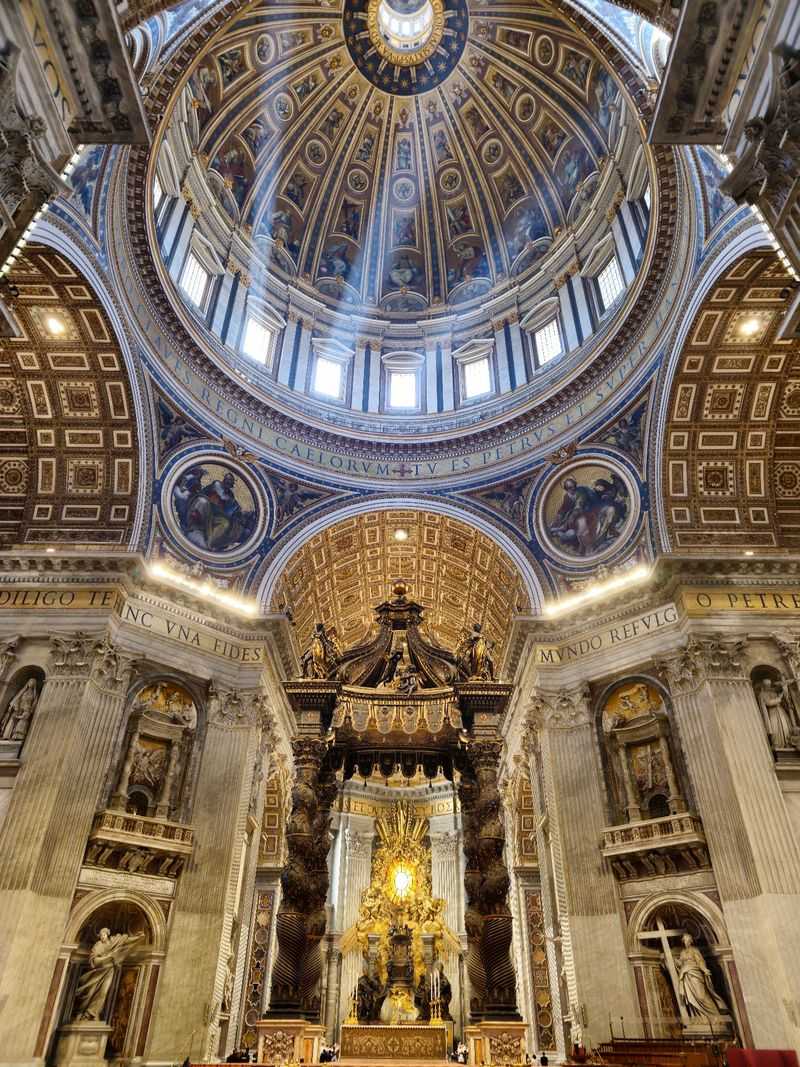
St. Peter’s Square is impressively large. Then you walk through the doors into the basilica and the square starts to feel like it was just a warm-up exercise.
The building measures approximately 187 meters long, and the top of Michelangelo’s dome rises roughly 136 meters above the floor. Those numbers are technically accurate and still somehow fail to prepare you for the actual experience.
The architecture is so carefully proportioned that the true scale hides itself until a specific moment. That moment usually arrives when you notice how small other visitors look standing beside Bernini’s enormous bronze baldachin, or how far away the apse appears from the entrance.
Michelangelo designed the dome, which Giacomo della Porta and Domenico Fontana completed. Its interior contains approximately 3,000 square meters of mosaic decoration.
Vatican sources identify the basilica as built directly above the traditional tomb of Saint Peter, a site visited by Christians since ancient times. Whether you approach St. Peter’s as an act of faith, an architectural study, or a curiosity about art history, the experience delivers something that cannot be reproduced on a screen.
The scale is simply too honest to be compressed into a photograph without losing most of what makes it remarkable.
Edinburgh Castle, Scotland
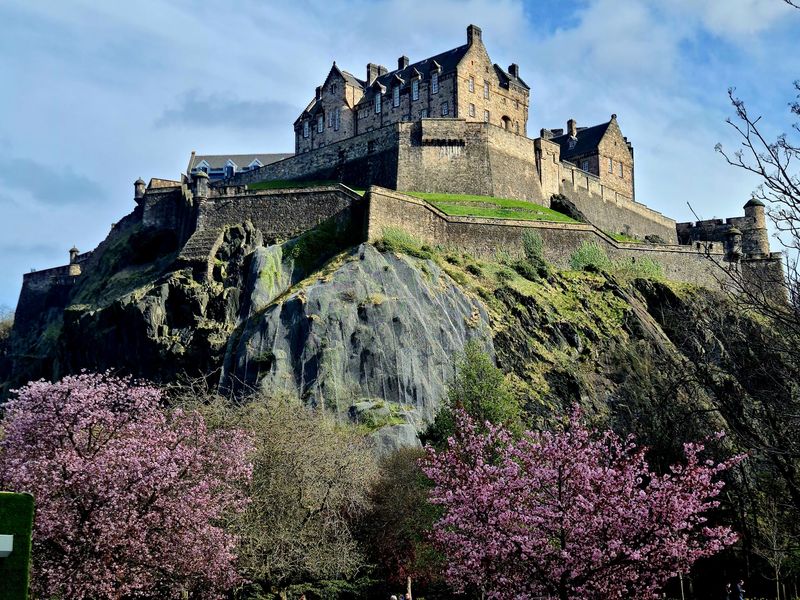
Some buildings sit in a landscape. Edinburgh Castle owns one.
The fortress rises from Castle Rock above the medieval Old Town and dominates the Edinburgh skyline so completely that the entire city seems to have organized itself around the presence of that particular rock. Approaching from Princes Street makes the elevation almost comically obvious, with the castle looming above the gardens and the surrounding lower streets.
UNESCO describes the Old Town as stretching along a high ridge from the castle toward Holyrood and highlights the striking combination of Edinburgh’s dramatic topography, medieval urban fabric, and the elegant neoclassical New Town developed later. Walking upward through the Old Town means passing narrow closes and centuries of stone buildings before the esplanade opens up and the castle fills the view ahead.
The direction reverses completely once you are inside the walls. Views open across Edinburgh’s rooftops toward the surrounding hills, the monuments of Calton Hill, and the distant Firth of Forth.
The castle itself holds centuries of Scottish history within its walls. What elevates the visit beyond a history lesson is seeing why generations of people chose this specific piece of rock and understanding immediately that they had no other reasonable choice.
Tower Bridge, London, England
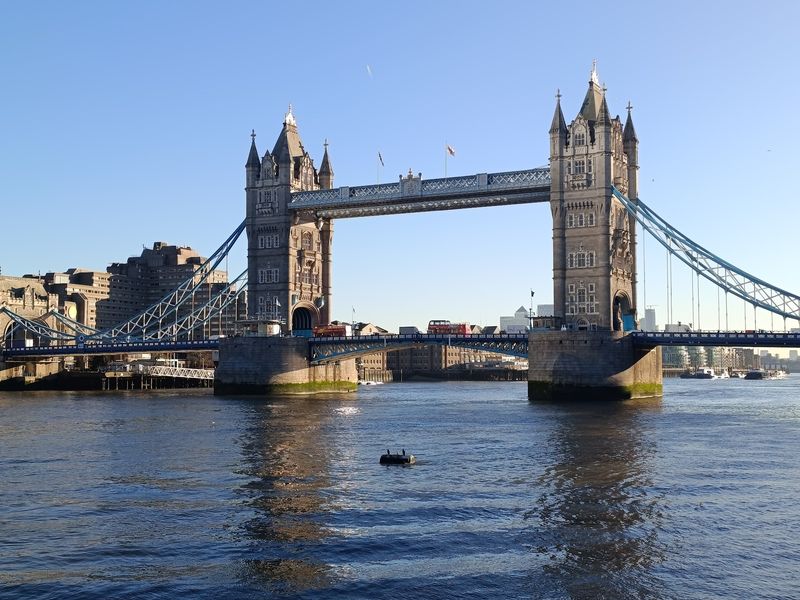
First-time visitors to London regularly photograph Tower Bridge and caption it as London Bridge. In person, the confusion becomes harder to understand.
Tower Bridge is a Victorian Gothic spectacle of two enormous towers, suspended high-level walkways, and a movable roadway that still opens today, more than 130 years after it was completed in 1894.
Walking across at street level already reveals details that distant photos miss. Going up into the high-level walkways is better still.
Those walkways sit approximately 42 meters above the Thames and include glass-floor sections that look directly down toward river traffic below. The Victorian Engine Rooms at the south end show how the original steam-powered lifting machinery worked before it was converted to electricity.
Visit London reports that the bridge is still raised around 800 times each year to allow tall vessels through. Watching the road actually split and rise is the moment that reframes everything.
Tower Bridge looks like a decorative Victorian landmark built to impress tourists. Seeing it open reminds you that it was always also a working piece of engineering designed to keep one of the world’s busiest rivers moving.
Both things are true at the same time, and that combination is genuinely impressive.
Dubrovnik Old City Walls, Croatia
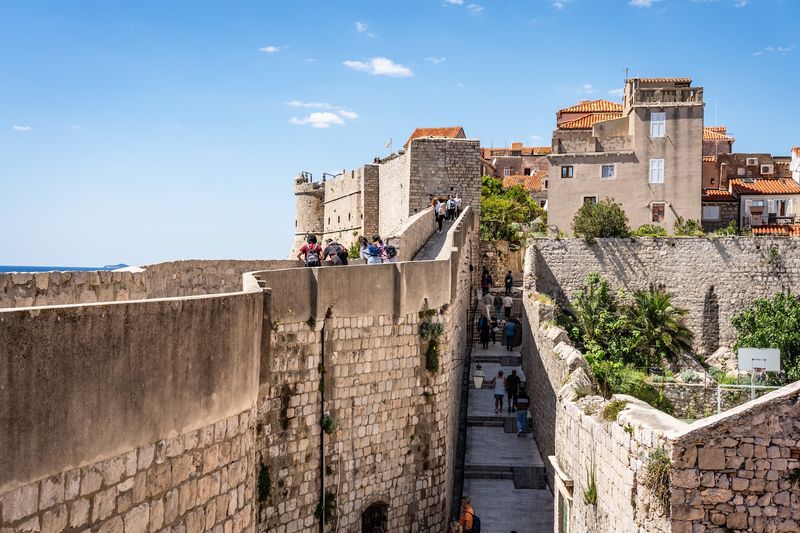
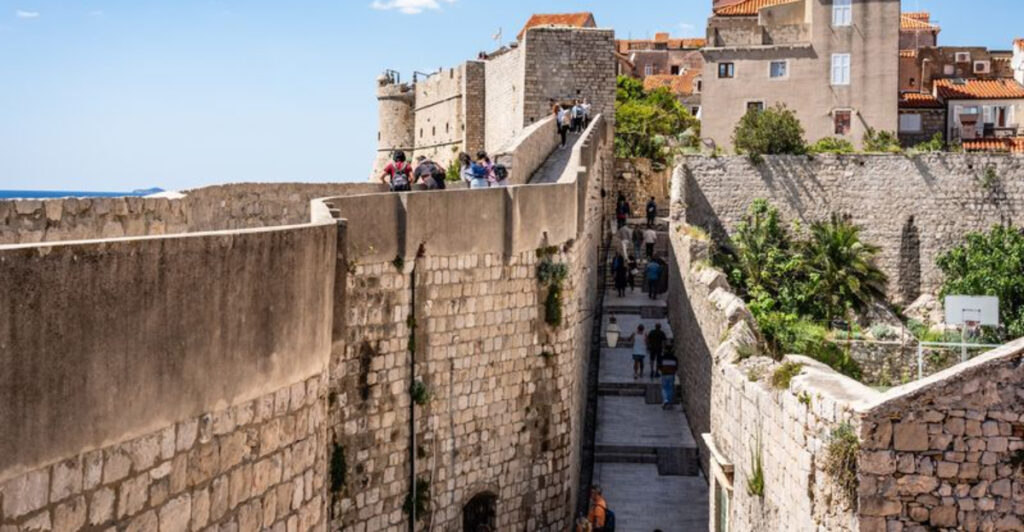
The walls of Dubrovnik look solid and impressive from street level. Walk up onto them and the entire city rearranges itself into something you could not have predicted from below.
The historic center became an important Mediterranean maritime power from the 13th century onward, and it has been on UNESCO’s World Heritage List since 1979, recognized for its Gothic, Renaissance, and Baroque layers that survived earthquakes, wartime damage, and centuries of heavy use.
From the elevated fortifications, all of those historical layers appear simultaneously. Terracotta rooftops fill the interior of the walled city.
Church domes and towers break the roofline between narrow stone streets below. On the outer side of the wall, the Adriatic is an almost unreasonably vivid shade of blue, broken by rocky coastline and the forested island of Lokrum sitting just offshore.
Walking the full perimeter of the walls means constantly switching perspective between urban history on one side and open sea on the other. That contrast is what aerial photographs hint at but cannot fully reproduce.
Dubrovnik at street level is a genuinely beautiful medieval city. From the walls, it becomes something more complete, a single composition where the architecture, the geography, and the water all contribute equally to the overall effect.
Charles Bridge, Prague, Czechia
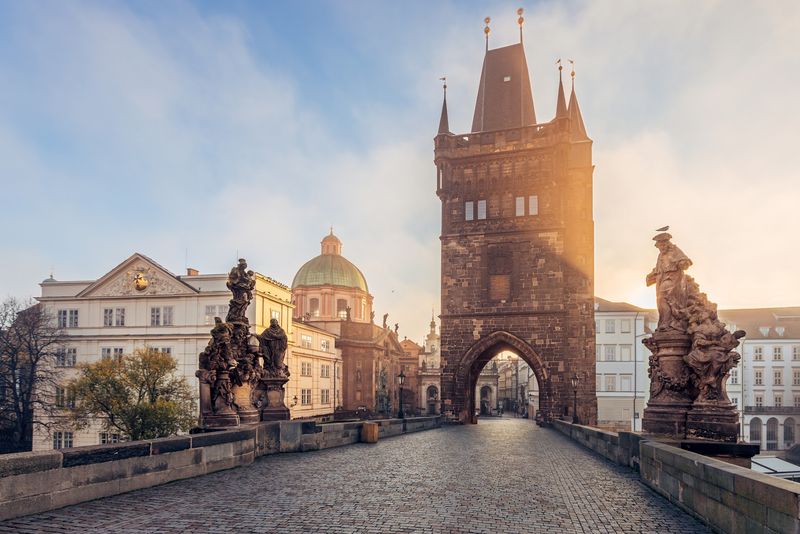
Judging Charles Bridge from a photograph is genuinely difficult, because the photographs almost always focus on one thing: the statues, the towers, or the crowds. The actual experience of standing on the bridge is about the entire city surrounding you from every angle at once, which is something a single frame cannot communicate no matter how wide the lens.
The Gothic bridge forms part of Prague’s UNESCO-listed historic center and belongs to the major 14th-century architectural transformation associated with Holy Roman Emperor Charles IV. UNESCO highlights the bridge alongside Prague Castle, St. Vitus Cathedral, and the historic palaces that helped make medieval Prague one of Europe’s most important cultural capitals.
Stand near the center of the bridge and turn slowly. Prague Castle rises over Mala Strana on one side.
Gothic towers frame the entrance toward the Old Town on the other. The Vltava carries boats beneath the stone arches below.
Musicians play, light shifts, church bells ring from different directions, and the whole scene has a theatrical quality that feels slightly unreal. Timing matters here.
At midday the crowds are dense. At sunrise, the bridge belongs to a quieter version of the city, and the effect is genuinely something else.
Stonehenge, Wiltshire, England
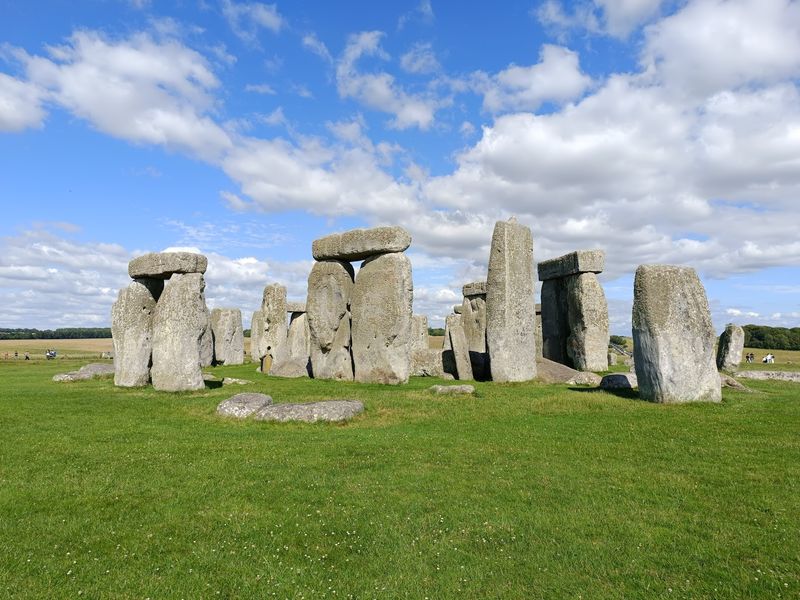
Stonehenge has a reputation problem. Photographs without any people or objects nearby give very little sense of scale, and some visitors arrive expecting something larger than what they find.
Then they walk closer and the math starts working differently in their heads. The biggest stones weigh more than 40 tons.
Some of the material was transported from Wales, hundreds of kilometers away, thousands of years before wheeled vehicles existed in Britain.
UNESCO calls Stonehenge the most architecturally sophisticated prehistoric stone circle in the world. The monument also belongs to a much larger prehistoric landscape that includes burial mounds, earthworks, Durrington Walls, and ceremonial avenues developed over roughly two millennia between about 3700 and 1600 BC.
The circle you see is only one piece of a far more complex ancient site.
Standing in front of the stones in person generates questions that photographs simply do not raise with the same urgency. How were those lintels lifted precisely into position?
Why does the monument align with solar events at midsummer and midwinter? Who made these decisions and why?
The mystery becomes significantly more persuasive once you can see the stones occupying the open Wiltshire landscape with no modern context nearby to dilute the strangeness of their presence.
Palace of Versailles, France
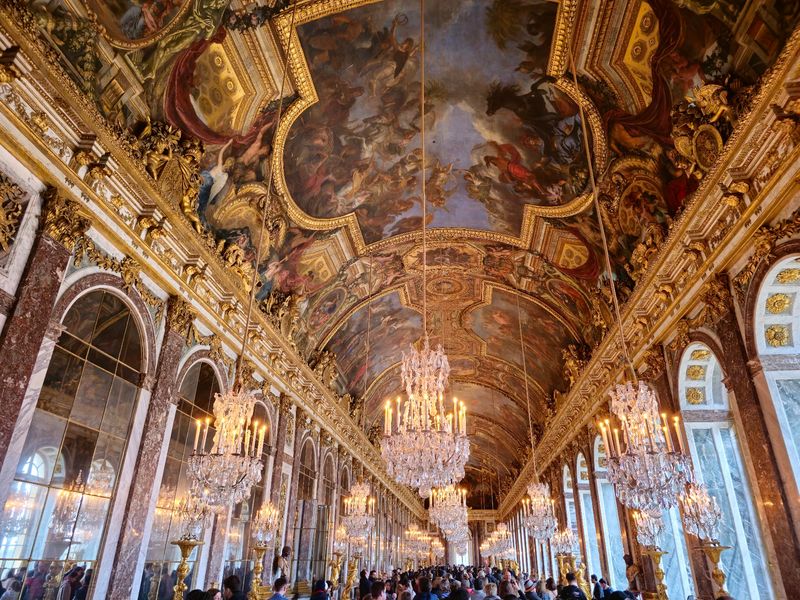
Versailles is not simply a large palace. It is a carefully engineered statement about power, wealth, and control, built at a scale designed to make every visitor feel small by comparison.
The estate served as the principal residence of French monarchs from Louis XIV through Louis XVI and influenced royal architecture and garden design across Europe for more than a century.
The Hall of Mirrors earns most of the photographs, and it genuinely delivers in person. But focusing only on that one room means missing the full scale of what Louis XIV actually built.
Royal apartments lead into galleries, chapels, ceremonial halls, courtyards, and eventually the gardens outside. UNESCO’s World Heritage property covers 1,070 hectares, with the wider protected buffer zone extending considerably beyond that.
The gardens designed by Andre Le Notre use long axes, canals, fountains, and precisely controlled geometry to extend the palace visually almost to the horizon. Standing at the top of the garden steps and looking outward, the landscape seems to continue forever in a straight line.
Versailles photographs beautifully, but photographs always crop the view somewhere. Being there means seeing an estate where the architect of the gardens genuinely tried to make the view feel infinite, and very nearly succeeded.
Share this story