Most buildings follow rules. Somebody draws up a plan, a team follows it, and the result looks more or less like everything around it.
But scattered across the world are places where someone looked at an empty field, a desert hillside, or a patch of jungle and decided that ordinary was simply not an option. These are the places that get built over decades, sometimes by a single pair of hands, often without formal training, and almost always without anyone else believing they could actually be done.
The 15 places in this list range from a postman’s stone palace in rural France to a living, growing temple in Thailand, and every single one of them started with a person who had a bigger idea than most people thought was reasonable. Get ready, because some of these will genuinely surprise you.
1. Palais Idéal du Facteur Cheval, Hauterives, France
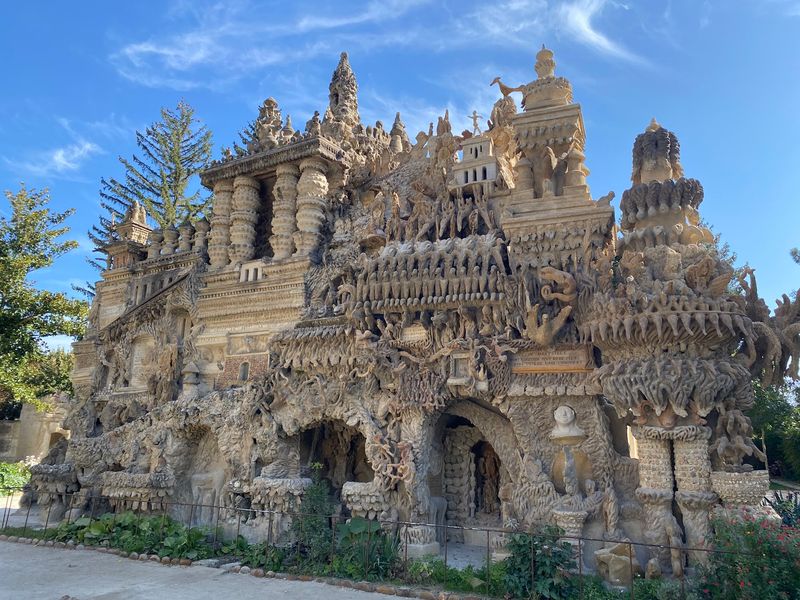
A French postman named Ferdinand Cheval tripped over an unusually shaped stone on his mail route in 1879 and decided, on the spot, that he would build a palace. Over the next 33 years, he collected stones during his daily 18-mile rounds and used them to construct towers, grottoes, sculpted animals, and elaborate facades in his garden in Hauterives.
The finished structure stands 12 meters high and 26 meters long, blending influences from Egyptian temples, Hindu sanctuaries, Swiss chalets, and medieval castles into one dense, remarkable composition. Cheval even inscribed defiant mottos on the walls, including a note that 10,000 days and 93,000 hours of effort went into the project.
Declared a historical monument in 1969, the palace now attracts over 120,000 visitors annually. Tickets can be booked online, with a small discount per ticket for advance purchases.
2. Bishop Castle, Rye, Colorado
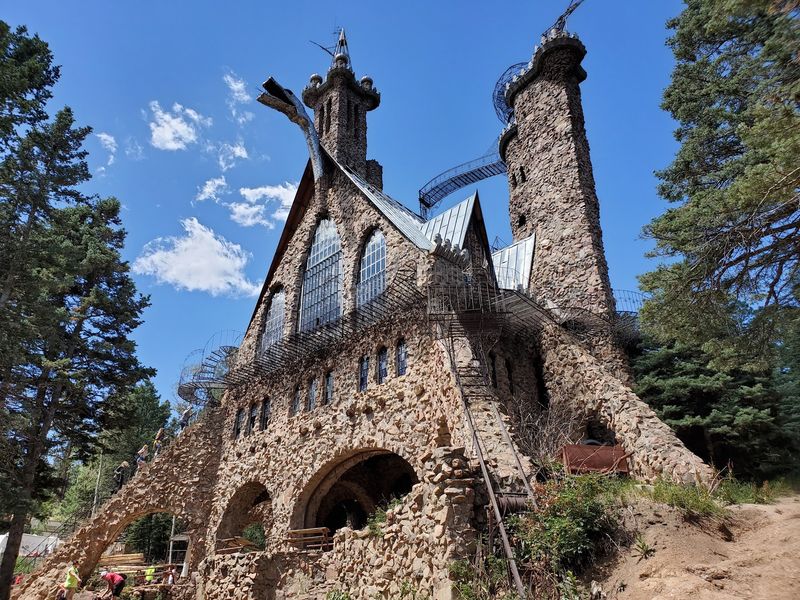
What began as a simple family cabin on a small patch of Colorado mountain land turned into one of the most unexpected structures in the American West. Jim Bishop started building with stone as a teenager in the 1960s, and the project never really stopped growing.
Today the property features stone towers that rise several stories, hand-forged iron bridges, stained glass panels, steep interior staircases, and a large metal dragon mounted near the top of the main tower. The construction remains entirely the work of one man, and that handmade quality is visible in every corner.
Visitors can explore most of the structure free of charge, though the exposed heights and unconventional staircases make this a place where you genuinely pay attention to where you put your feet. The rough, unfinished quality is a big part of the appeal.
3. Nek Chand’s Rock Garden of Chandigarh, Chandigarh, India
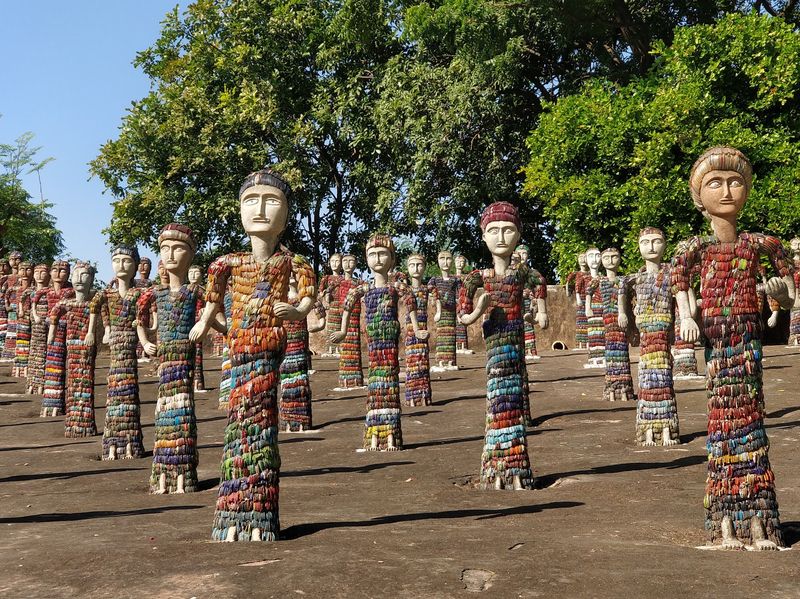
Nek Chand started his secret project in 1958 on government land outside Chandigarh, working at night and in secret because what he was doing was technically unauthorized. Using broken ceramics, discarded electrical waste, and other salvaged objects, he built figures, pathways, waterfalls, and mosaic-covered walls across a growing stretch of forest.
By the time authorities discovered the garden in 1975, it covered 12 acres and was already too impressive to demolish. The government not only spared it but gave Chand a salary and a team of workers to help him continue expanding.
Today the Rock Garden covers 40 acres and draws millions of visitors each year, making it one of India’s most visited sites after the Taj Mahal. The sculptures made from old crockery and tiles remain its most photographed feature, and the sheer number of figures on display is genuinely astonishing.
4. Forestiere Underground Gardens, Fresno, California
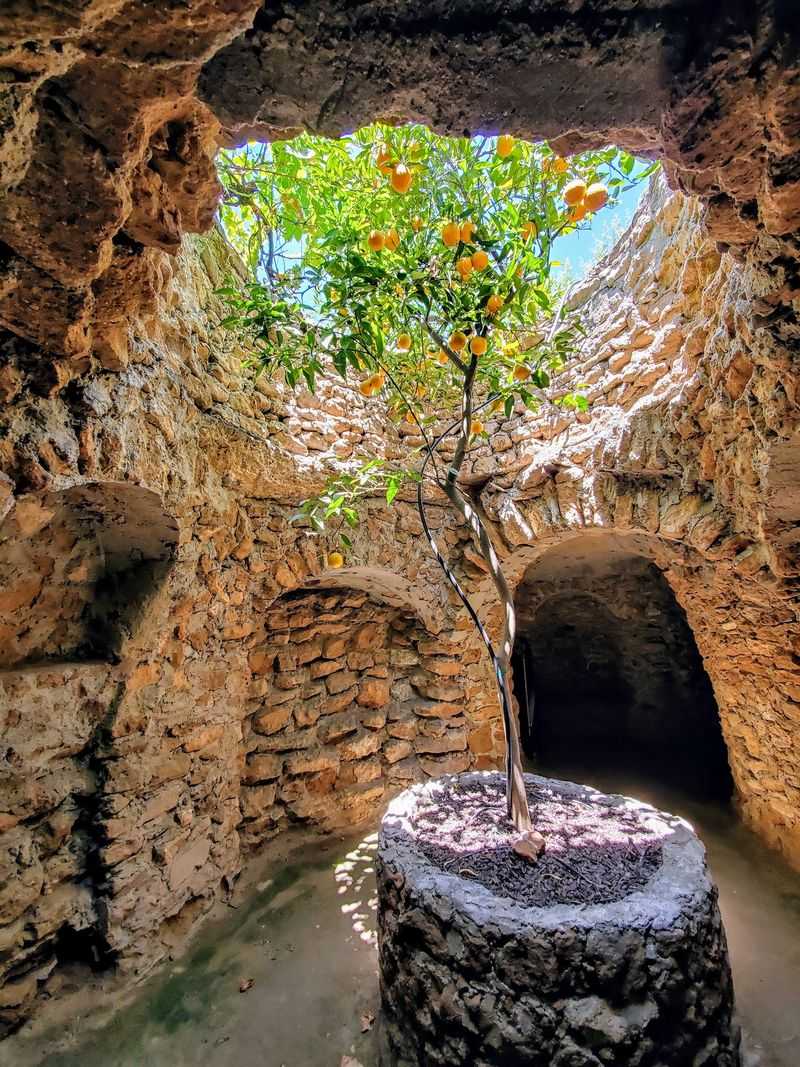
Baldassare Forestiere arrived in California from Sicily in 1901 expecting to farm, but the hard clay soil near Fresno had other ideas. Rather than give up, he borrowed techniques from ancient Roman construction and began digging downward, creating a personal underground world that eventually covered around ten acres.
Over roughly 40 years of work, he excavated more than 100 rooms, passageways, and open courtyards. He designed skylights and openings at precise angles to bring sunlight to citrus trees, grapevines, and other plants growing below ground level, some of which are still alive today.
Tours of the gardens run during the season, giving visitors a chance to walk through spaces that feel genuinely unlike anything above ground. The deeper sections in particular make it hard to believe that one person conceived and excavated the whole network largely by hand.
5. Coral Castle Museum, Homestead, Florida
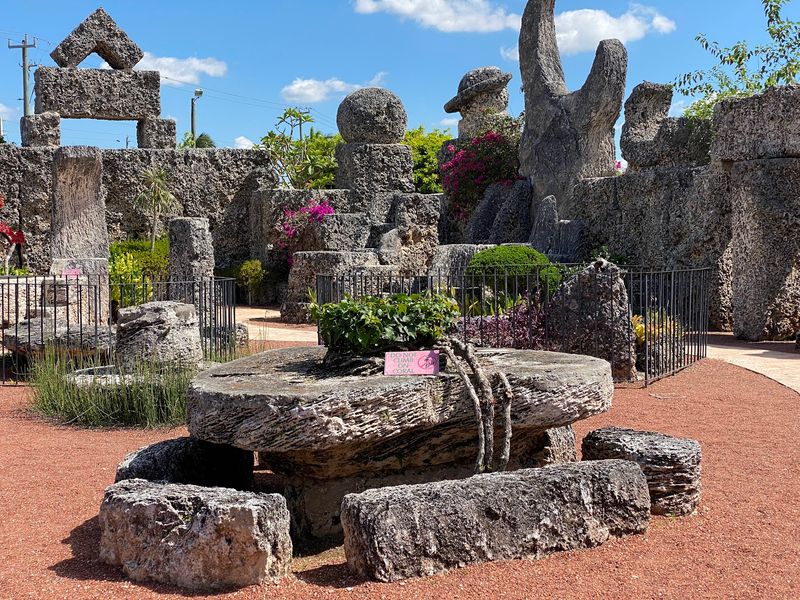
Edward Leedskalnin was a Latvian immigrant who, between 1923 and 1951, quarried, moved, and carved more than 1,100 tons of coral limestone entirely by himself to create a remarkable stone complex in South Florida. Nobody ever reliably witnessed how he moved the largest pieces, some of which weigh several tons.
The property includes carved stone furniture, a functioning stone gate that once swung open with minimal effort despite weighing nine tons, a sundial, a crescent moon fountain, and a collection of stone sculptures. It does not look like a castle in the traditional sense, but the scale of the stonework is hard to argue with.
The museum is open to visitors daily in Homestead, and the mystery surrounding Leedskalnin’s methods remains a popular topic of discussion. The physical evidence of his work is impressive regardless of which explanation for his techniques you find most convincing.
6. Las Pozas, Xilitla, San Luis Potosí, Mexico
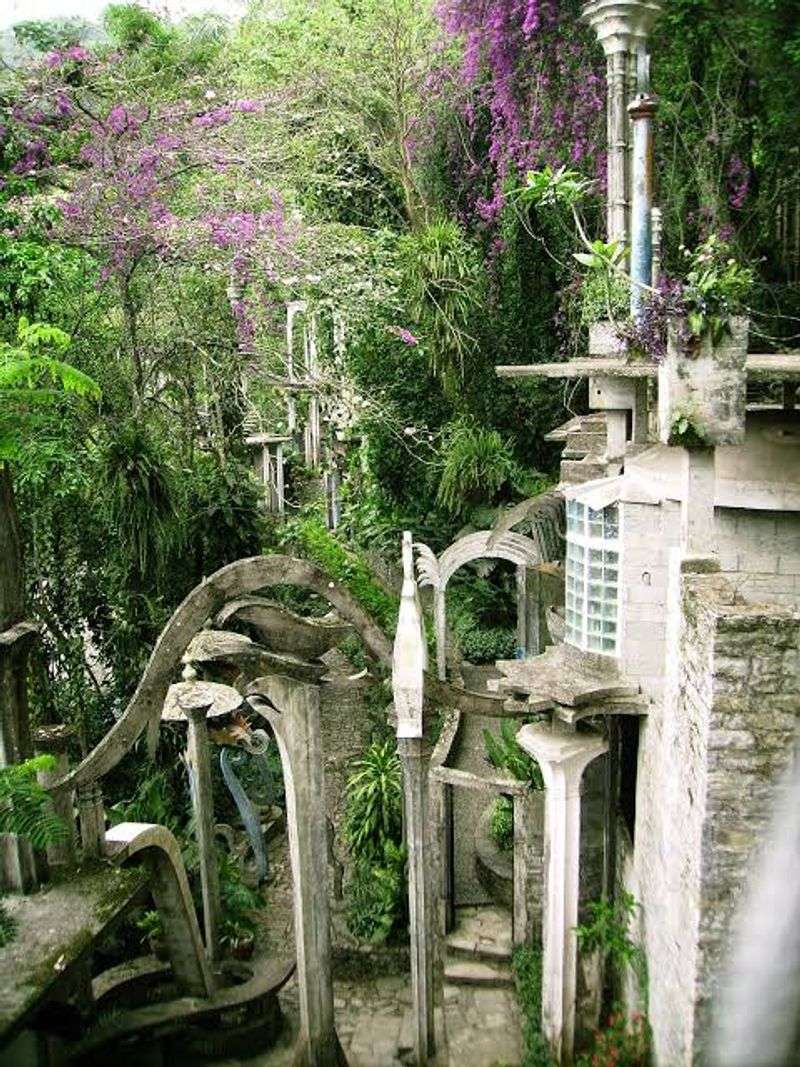
British poet Edward James had more money than most people and considerably stranger ideas about what to do with it. After a 1962 frost destroyed his rare orchid collection in the subtropical highlands of San Luis Potosi, he responded by commissioning a series of concrete structures that had no practical purpose whatsoever, and that was entirely the point.
Over the following decades, James and local workers built staircases that end in open sky, columns that support nothing, arches framing views of jungle canopy, and platforms at various heights connected by winding paths. The concrete forms and the surrounding vegetation have grown so intertwined that separating garden from architecture is genuinely difficult.
Las Pozas covers around 80 acres and remains one of the most striking examples of Surrealism applied to a real landscape. Visitors can walk the paths and climb some of the structures, which makes the experience feel more participatory than a conventional art museum.
7. Salvation Mountain, Niland, California
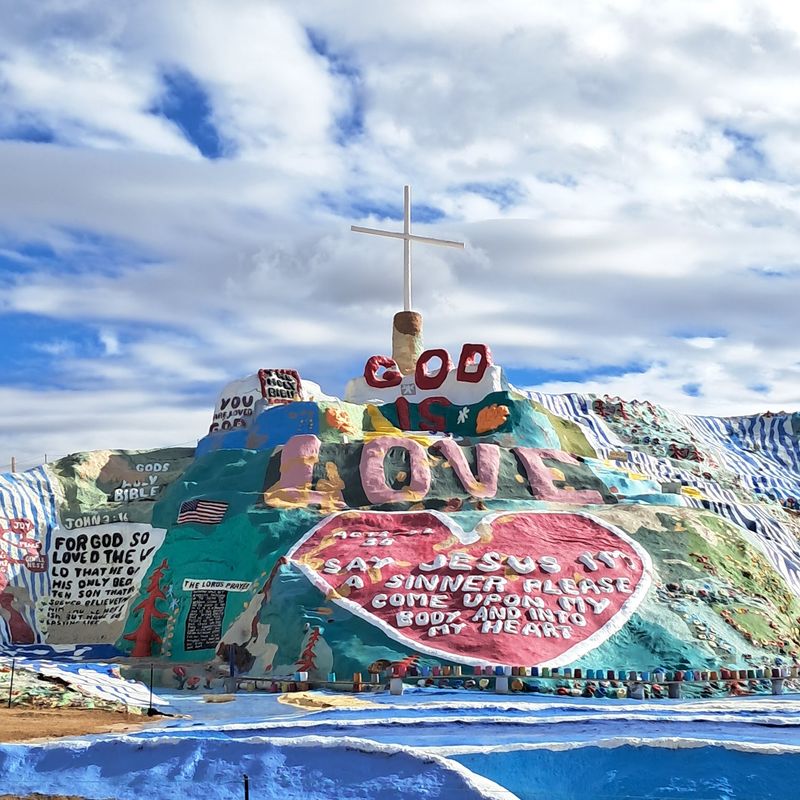
Leonard Knight arrived near the Salton Sea in the early 1980s intending to stay briefly, but a project he started in the desert kept him there for decades. Using adobe, donated paint, straw, tires, and whatever other materials came his way, he built and rebuilt a hillside covered in religious messages, painted flowers, and vivid geometric patterns.
The mountain is roughly 50 feet tall and 150 feet wide, and Knight repainted and repaired it continuously until his health prevented further work in 2011. The layers of paint built up over the years give the surface a thick, almost sculptural quality in places.
Visiting is free, and the site is open from sunrise to sunset throughout the year. Against the flat, muted tones of the surrounding desert, the concentrated color of Salvation Mountain creates a visual contrast that is immediately obvious from a considerable distance away.
8. Crazy House, Da Lat, Lâm Đồng, Vietnam
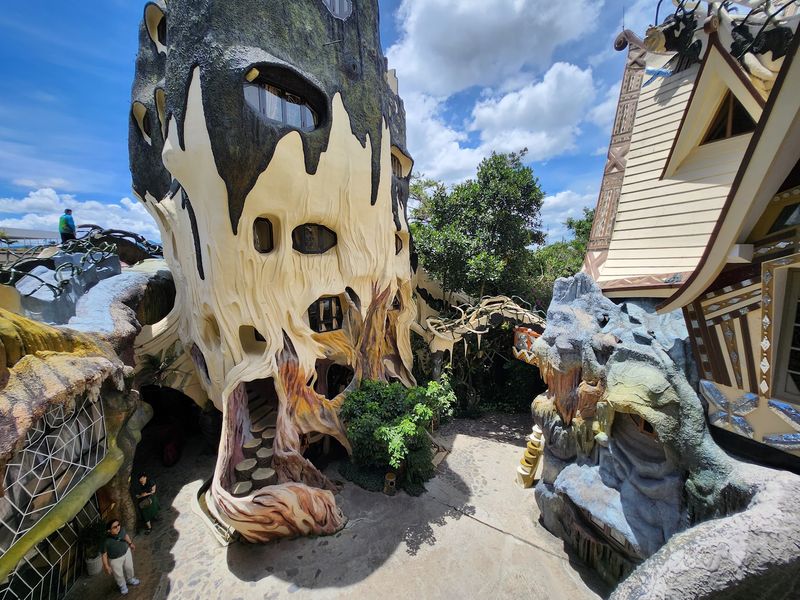
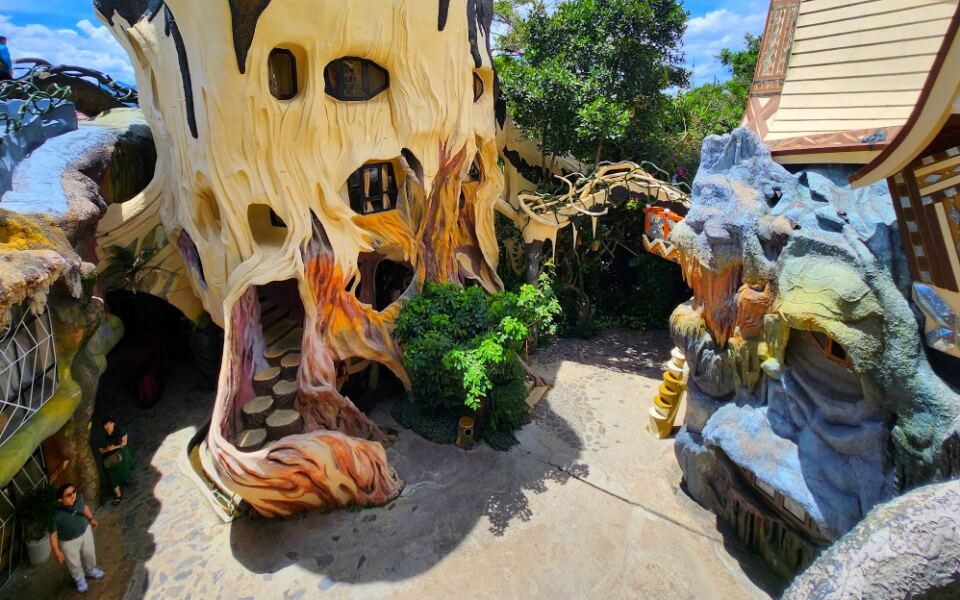
Architect Dang Viet Nga trained in Moscow and returned to Vietnam with ideas that were never going to fit inside a standard building brief. Her project in Da Lat, which she began in 1990, ignores straight lines almost completely in favor of curved walls, organic forms, sculpted tree-like columns, and rooms that seem to grow out of one another.
The building covers multiple levels connected by narrow bridges and winding external staircases, with each room given a different animal or nature theme. Some rooms have windows shaped like spiderwebs, while others are tucked inside structures that look more like cave systems than hotel accommodation.
Crazy House continues to operate as a working guesthouse, which means paying guests can actually sleep inside the architecture rather than just photograph it from outside. Visitor reviews number in the thousands, and the property remains one of Da Lat’s most recognizable attractions.
9. Pasaquan, Buena Vista, Georgia
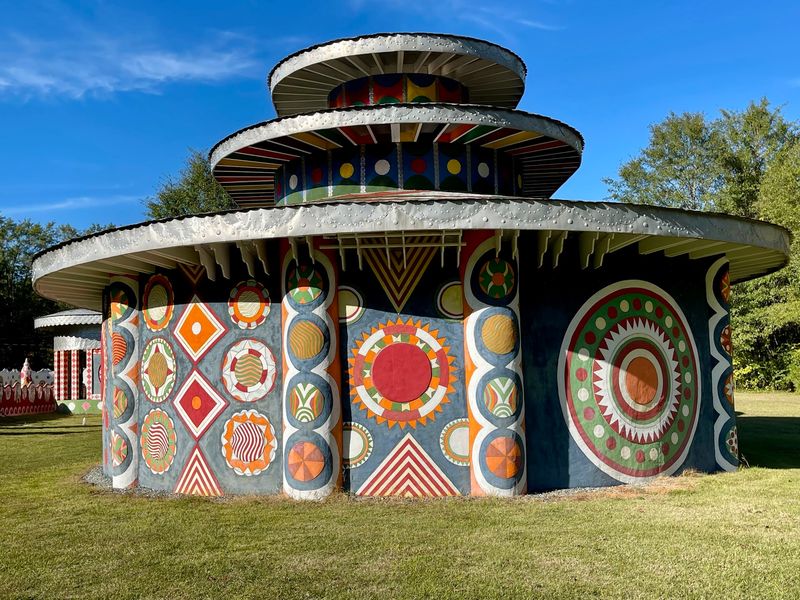
Eddie Owens Martin grew up poor in rural Georgia, left for New York City as a teenager, and returned decades later with a vision for transforming his family’s property into something unlike anything else in the American South. He called himself St. EOM and began work on Pasaquan in 1957, continuing for roughly 30 years.
The seven-acre site filled with painted concrete walls covered in bold geometric patterns, large figurative sculptures, ceremonial structures, and symbolic imagery drawn from Martin’s own invented spiritual system. The color palette is intense, and the density of decoration across every surface is remarkable.
Columbus State University took over stewardship of Pasaquan after Martin’s passing and oversaw a major restoration completed in 2016. The site is open on Fridays, Saturdays, and Sundays during its regular season, giving visitors a chance to see one of the most complete outsider art environments in the country.
10. Winchester Mystery House, San Jose, California
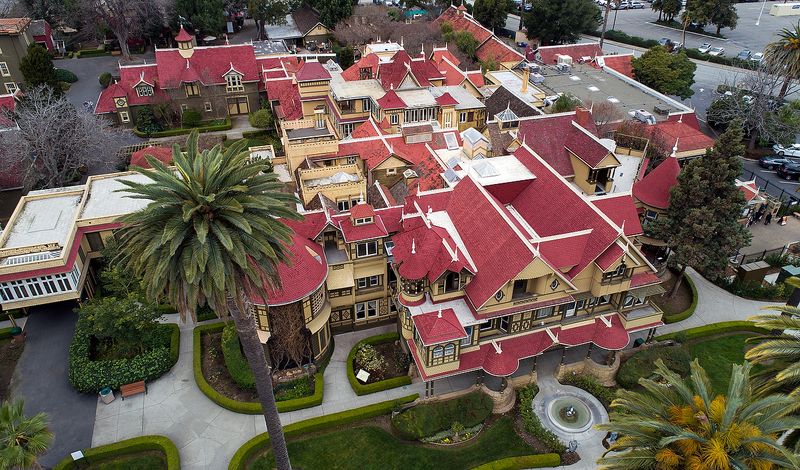
Sarah Winchester inherited a significant fortune from the Winchester rifle company and used a large portion of it to fund continuous construction on her San Jose property from 1884 until 1922. The result is a mansion with 160 rooms, 2,000 doors, 10,000 windows, 47 fireplaces, and several staircases and doors that lead directly into walls or open to significant drops.
Whether the unusual layout was deliberate, the result of ongoing changes without a master plan, or something else entirely is a question that has fueled speculation for over a century. The house itself does not answer the question, but it does provide an extraordinary amount of architectural strangeness to consider.
Daily tours run at the South Winchester Boulevard property, and the mansion remains one of San Jose’s top attractions. The sheer size and complexity of the building make it worth visiting even if you have no interest in the legends surrounding its construction.
11. Sagrada Família, Barcelona, Spain
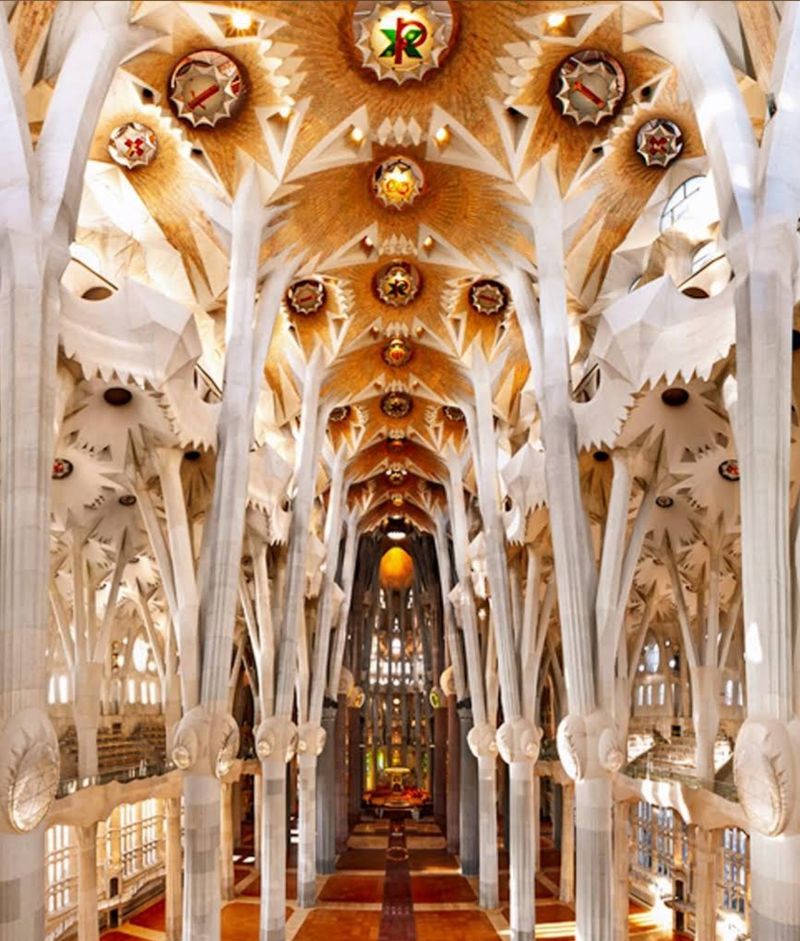
Construction on Antoni Gaudi’s famous basilica began in 1882, and the building is still not finished. That fact alone says something remarkable about the scale of what Gaudi designed, a structure so complex and so detailed that it has outlasted its architect by nearly a century and continues to require the work of contemporary stonemasons, sculptors, and engineers.
The interior features columns that branch like trees toward the ceiling, creating a forest-like effect across the nave. The facades each tell a different part of a biblical story through dense carved figures, and the towers, when complete, will reach 172 meters, making the basilica the tallest church in the world.
Visitor numbers at the Sagrada Familia run into the millions annually, and timed entry tickets are required. Despite being permanently under construction, it functions as an active basilica and a fully operational tourist attraction at the same time.
12. House on the Rock, Spring Green, Wisconsin
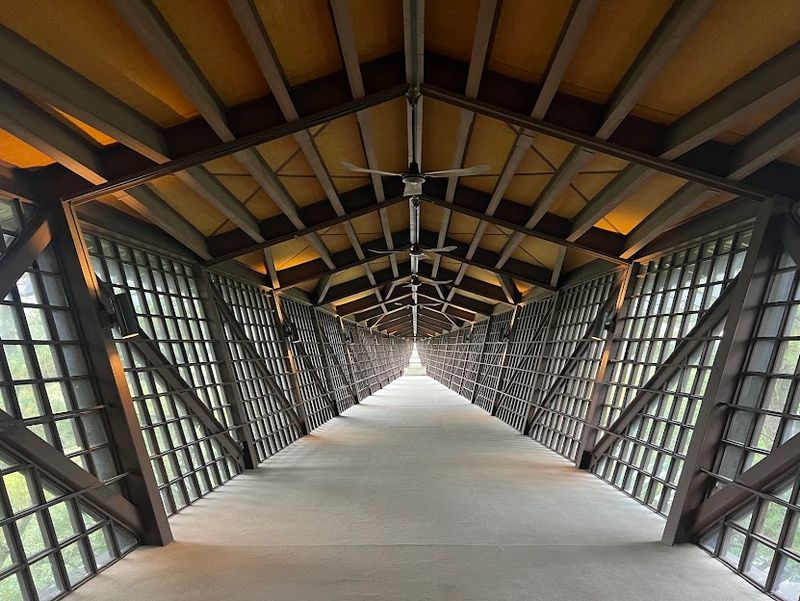
Alex Jordan built an unusual house on a 60-foot chimney of rock in the Wisconsin countryside during the 1940s, and then kept adding to it for the rest of his life in ways that nobody had quite anticipated. The property now contains a series of rooms and buildings filled with mechanical musical instruments, suits of armor, model ships, an enormous indoor carousel, and thousands of other collected objects.
The Infinity Room is probably the most famous single feature, a narrow glass-enclosed corridor that extends 218 feet out over the valley below with no external support. Standing at the far end and looking down through the glass floor panels is not an experience most visitors forget quickly.
The attraction remains open in Spring Green, though different sections are available at different times of year. First-time visitors consistently report being surprised by how much there is to see, and how long it actually takes to get through the whole property.
13. Hundertwasser House, Vienna, Austria
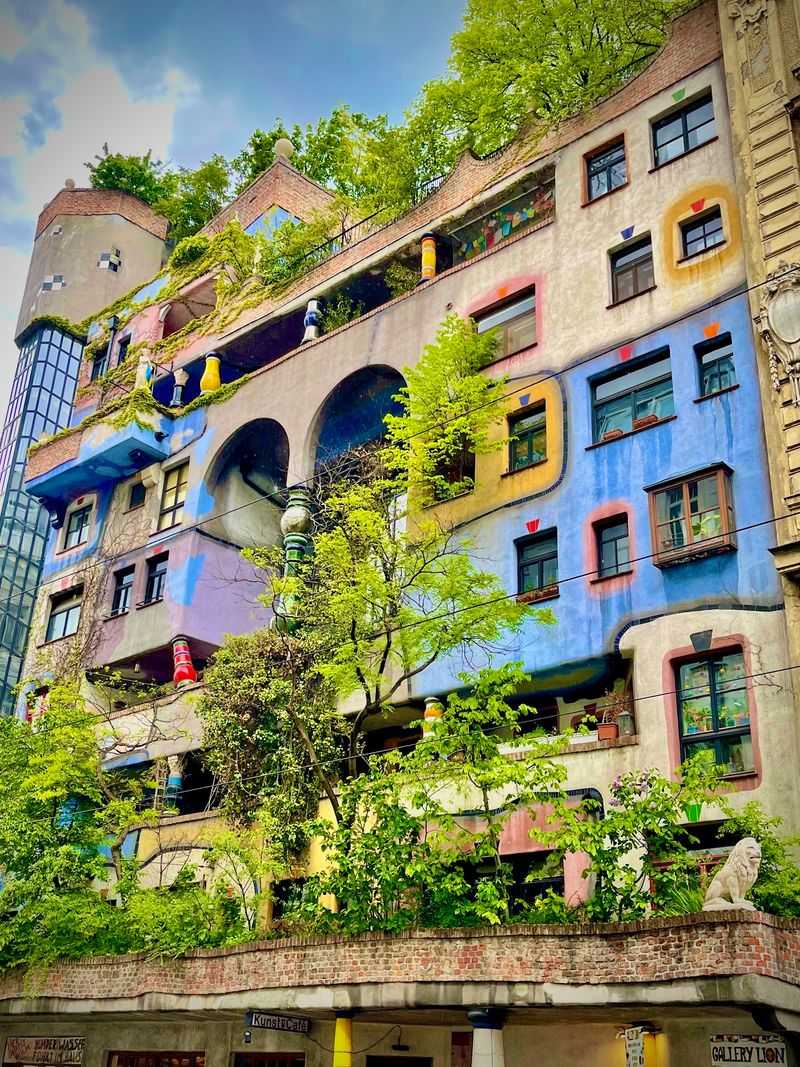
Friedensreich Hundertwasser reportedly said that the straight line is godless, and his Vienna apartment building makes that philosophy visible from the street. Completed in 1986, the Hundertwasserhaus features an uneven, rolling facade, mismatched windows of various sizes, ceramic columns in bright colors, and more than 250 trees and shrubs growing from balconies and rooftop terraces.
The building was commissioned by the City of Vienna as social housing, which makes it unusual among architectural landmarks. The apartments are occupied by real residents, so the interior is not open to the public, but the exterior alone draws a steady stream of visitors year-round.
The nearby Hundertwasser Village, a converted former stable building redesigned by the artist, offers a closer look at his style and includes shops and a cafe. Together, the two buildings represent one of the most accessible concentrations of Hundertwasser’s work in the city.
14. Castillo de Colomares, Benalmádena, Andalusia, Spain
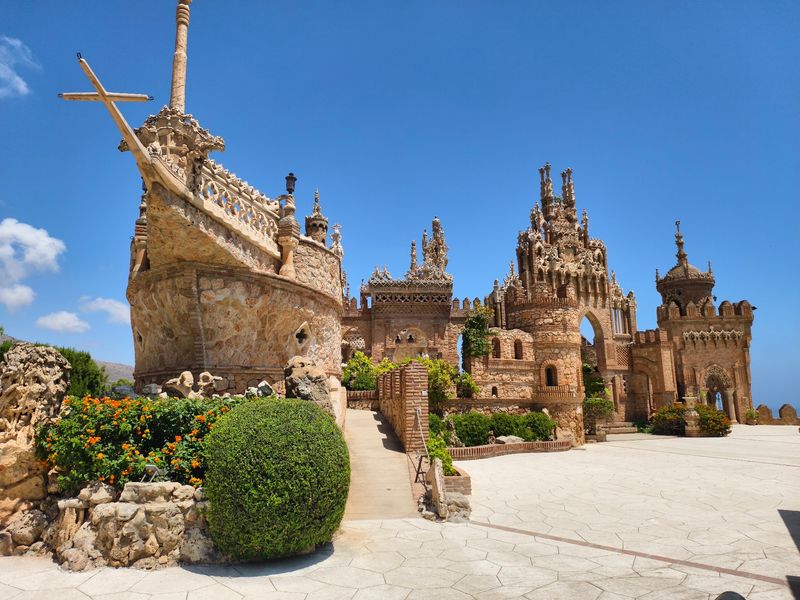
From a distance, Castillo de Colomares looks like it has been standing on its Andalusian hillside for several centuries. The towers, arches, crenellations, and decorative stonework all suggest a medieval fortress with a long history, which makes it genuinely surprising to learn that construction only began in 1987.
The castle was built by local doctor Esteban Martin Martin as a tribute to Christopher Columbus and the history of the encounter between Europe and the Americas. It holds a Guinness World Record as the world’s largest monument dedicated to Columbus, covering around 1,500 square meters.
Visitors can explore the site Tuesday through Sunday during its regular opening hours. The small chapel inside the castle is recognized as the world’s smallest church and can hold just a handful of people at a time, which creates an interesting contrast with the theatrical scale of the exterior.
15. Wat Rong Khun, Chiang Rai, Thailand
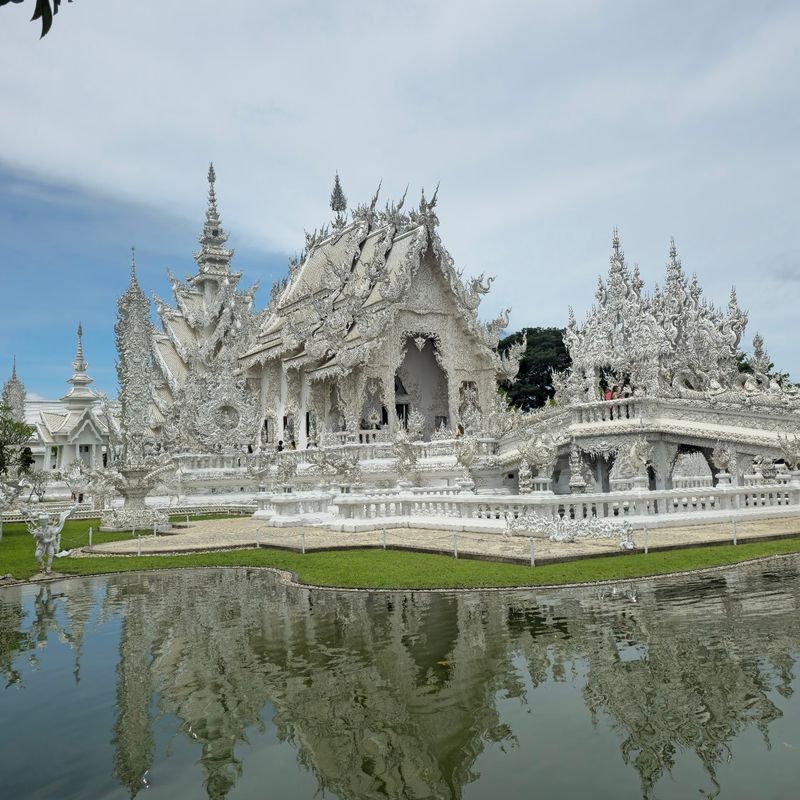
Artist Chalermchai Kositpipat purchased the original dilapidated temple site in Chiang Rai in 1997 and began rebuilding it entirely according to his own design, using his personal funds and donating the finished work to the nation. The result is a temple that looks unlike any other Buddhist site in Thailand.
Every surface of the main building is covered in white plaster embedded with mirror fragments, creating a reflective exterior that catches light from every angle. The bridge leading to the entrance passes over a pool and is flanked by hundreds of sculpted hands, representing souls seeking liberation, in a detail that visitors consistently find striking and unusual.
The temple is an active religious site as well as a major tourist attraction, and Kositpipat has stated that construction will continue for his lifetime. Tens of thousands of visitor reviews confirm it as one of the most visited sites in northern Thailand.
Share this story