Bridges do a lot more than connect two pieces of land. Behind every cable, arch, and steel beam, there is often a gripping story involving human ambition, disaster, political change, or sheer stubbornness in the face of impossible odds.
The fifteen bridges on this list were chosen because each one carries a remarkable tale that goes far beyond its physical structure. Whether they changed history, survived catastrophe, or sparked national conversations, these crossings have earned their place in the American story.
Golden Gate Bridge, California
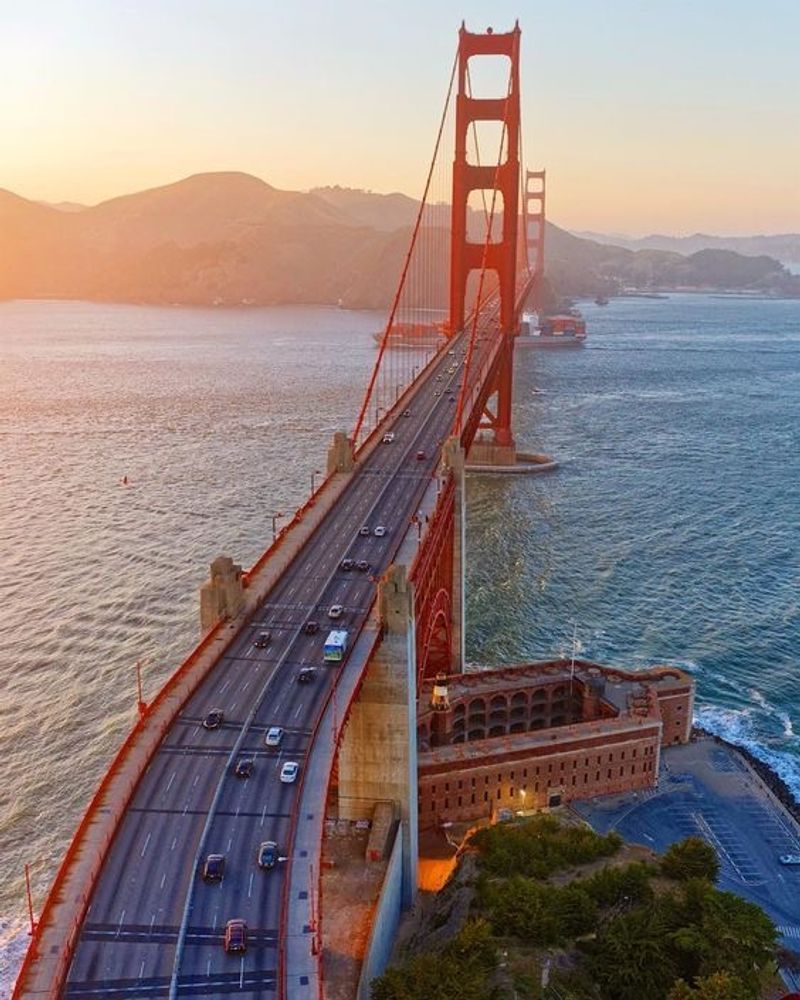
Standing at the edge of San Francisco Bay and staring up at those 746-foot towers is genuinely humbling. When construction began on January 5, 1933, many engineers publicly doubted the project could be built safely.
Deep water, brutal tidal currents, thick fog, howling winds, and the nearby San Andreas Fault all made the site one of the most hostile imaginable for a suspension bridge.
The workforce powered through those challenges during the darkest years of the Great Depression. Chief engineer Joseph Strauss insisted on safety nets beneath the bridge, which saved the lives of 19 workers who fell and survived.
Eleven men still died during the four-year build.
When the bridge opened to pedestrians on May 27, 1937, roughly 200,000 people walked across it before vehicles were allowed on May 28. Its 4,200-foot main span held the world record for suspension bridges for 27 years.
Today it handles about 10 million vehicle crossings annually and remains one of the most photographed structures on Earth.
Brooklyn Bridge, New York
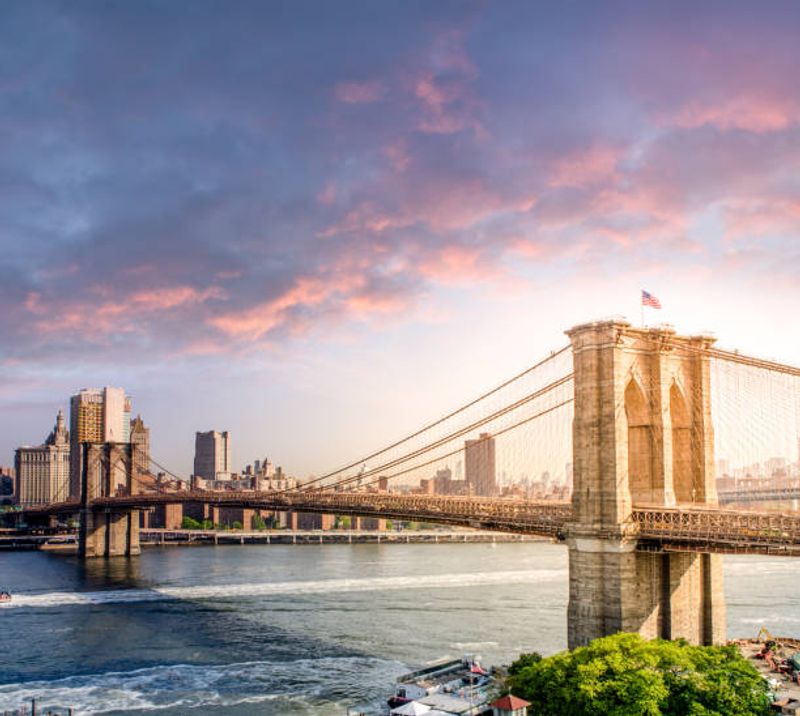
John A. Roebling never saw his greatest masterpiece completed.
The designer of the Brooklyn Bridge suffered a foot injury on the job site in 1869, developed tetanus, and died before construction truly got underway. His son Washington Roebling took over, then spent years bedridden after developing decompression sickness from working in the pressurized underwater caissons.
Washington’s wife Emily then became the bridge’s public face, learning advanced mathematics and engineering theory to relay instructions between her husband and the construction crew. She was the first person to cross the finished bridge on May 24, 1883, carrying a rooster as a symbol of victory.
The 1,595.5-foot main span made it the world’s longest suspension bridge at the time.
Tragedy struck again just six days after opening when a woman stumbled on the steps, triggering a panic. The resulting stampede killed 12 people and injured 36 others.
Despite its difficult beginning, the Brooklyn Bridge became the first permanent link between Manhattan and Brooklyn, and it still carries traffic today, more than 140 years later.
Tacoma Narrows Bridge, Washington
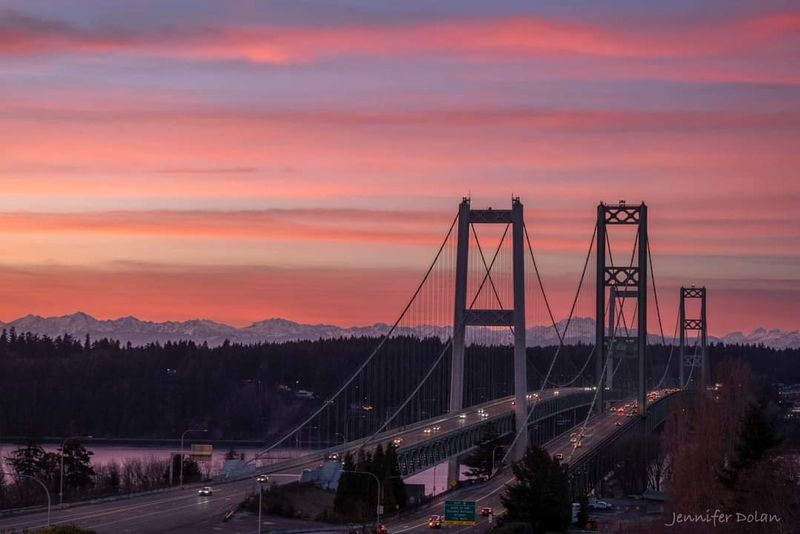
For four months in 1940, commuters in Washington State drove across a bridge that visibly rippled beneath their tires. The original Tacoma Narrows Bridge earned its nickname “Galloping Gertie” almost immediately after opening on July 1, 1940, because its slender roadway deck bounced and swayed even in moderate winds.
Some drivers reportedly felt seasick crossing it.
On November 7, 1940, winds of roughly 40 mph pushed the deck into violent twisting oscillations that grew worse by the minute. A civil engineering professor named Leonard Coatsworth barely escaped his car before the roadway buckled beneath it.
His cocker spaniel, Tubby, became the only casualty, remaining in the car as sections of the bridge broke apart and plunged into Puget Sound.
The collapse was captured on film and became one of the most studied engineering failures in history. It completely changed how designers think about aerodynamic forces on long-span bridges.
A replacement bridge opened in 1950, and a second parallel span followed in 2007. The wreckage of Galloping Gertie still rests on the floor of Puget Sound and was added to the National Register of Historic Places in 1992.
Mackinac Bridge, Michigan
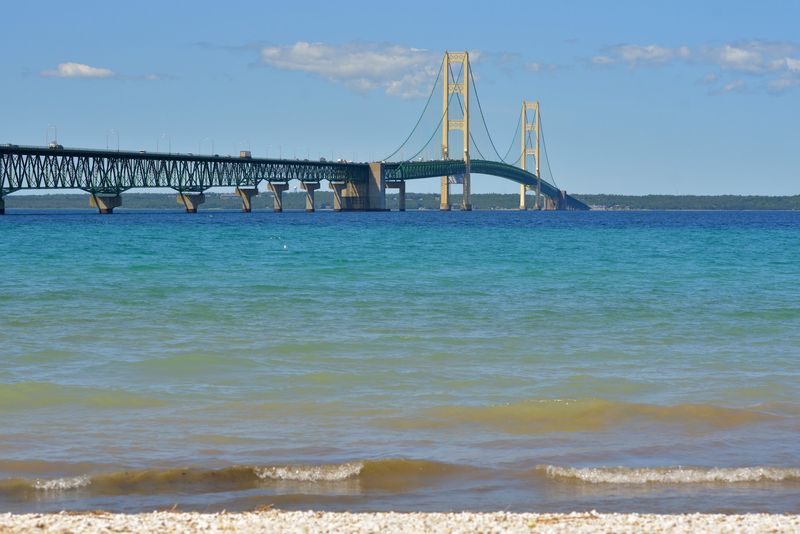
Michiganders waited a very long time for this one. Serious proposals to bridge the Straits of Mackinac appeared as far back as the 1880s, but the project kept getting shelved because no one could figure out how to pay for something so massive.
For decades, ferries were the only option connecting the Upper and Lower Peninsulas, and in peak summer months the wait for a ferry could stretch for hours.
The financing breakthrough finally came when investors purchased $99.8 million in bonds, allowing construction to begin in May 1954. Designer David B.
Steinman oversaw a project that employed about 3,500 workers at its peak. Five workers died during construction, a relatively low number for a project of this scale.
The “Mighty Mac” opened on November 1, 1957, and immediately transformed life in Michigan. At 26,372 feet from end to end, it is one of the longest suspension bridges in the Western Hemisphere.
Its towers climb 552 feet above the water. Every Labor Day weekend, the bridge closes to vehicles so thousands of walkers can cross it on foot, a tradition that draws crowds from across the Midwest each year.
Edmund Pettus Bridge, Alabama
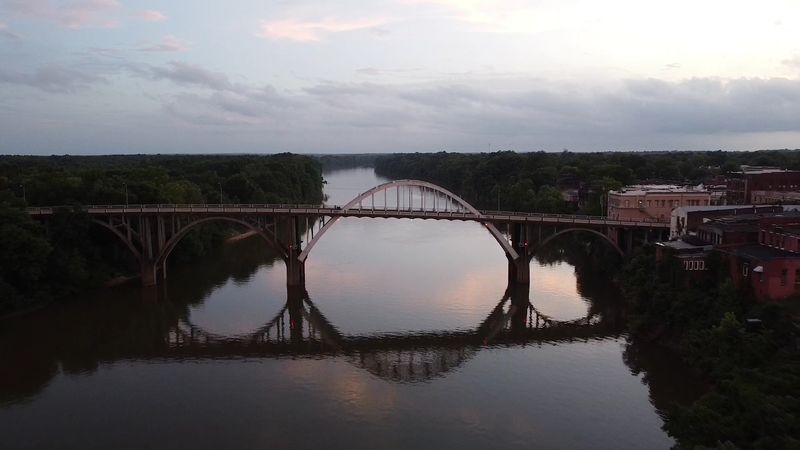
No engineering record makes this bridge famous. On March 7, 1965, about 600 peaceful demonstrators marched across the Edmund Pettus Bridge in Selma, Alabama, heading toward Montgomery to demand voting rights for Black Americans.
What waited for them on the other side changed the country.
Alabama state troopers and a posse of local officers met the marchers at the foot of the bridge and attacked them with clubs, tear gas, and horses. Dozens were beaten and hospitalized.
Television cameras captured everything, and the footage aired nationally that evening. The public reaction was immediate and furious.
The day became known as Bloody Sunday, and the images helped push Congress toward action. A court-protected march restarted on March 21, eventually gathering roughly 25,000 participants who completed the journey to Montgomery.
President Lyndon B. Johnson signed the Voting Rights Act of 1965 less than five months later.
The bridge, ironically named after a Confederate general and Ku Klux Klan leader, became a permanent symbol of the civil rights movement. Congressman John Lewis, who was beaten that day, crossed the bridge annually until his death in 2020.
New River Gorge Bridge, West Virginia
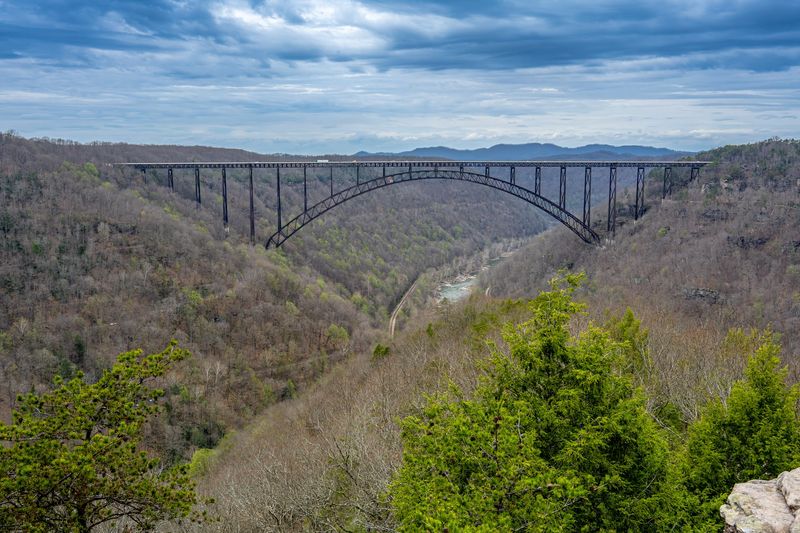
Before October 1977, getting across West Virginia’s New River Gorge meant winding down narrow mountain switchbacks for 40 to 45 minutes just to reach the other side. The new bridge cut that trip to under a minute.
The time savings alone sounds like a minor convenience until you realize how many people made that drive every single day.
Construction workers faced the unusual challenge of assembling enormous steel sections 876 feet above the river. They used cable-supported trolleys to carry pieces across the gorge before the arch was complete.
The 1,700-foot steel arch was the longest of its kind in the world when it opened and remains the longest single-span steel arch in the United States.
The bridge’s cultural life expanded in 1980 when Bridge Day was created, an annual October festival where the highway closes and BASE jumpers legally leap from the deck. Thousands of spectators line the bridge and gorge rim to watch.
The New River Gorge National Park, established in 2020, now draws visitors from around the world, and the bridge is easily its most iconic image. Few highway structures anywhere double as a festival venue quite this dramatically.
Sunshine Skyway Bridge, Florida
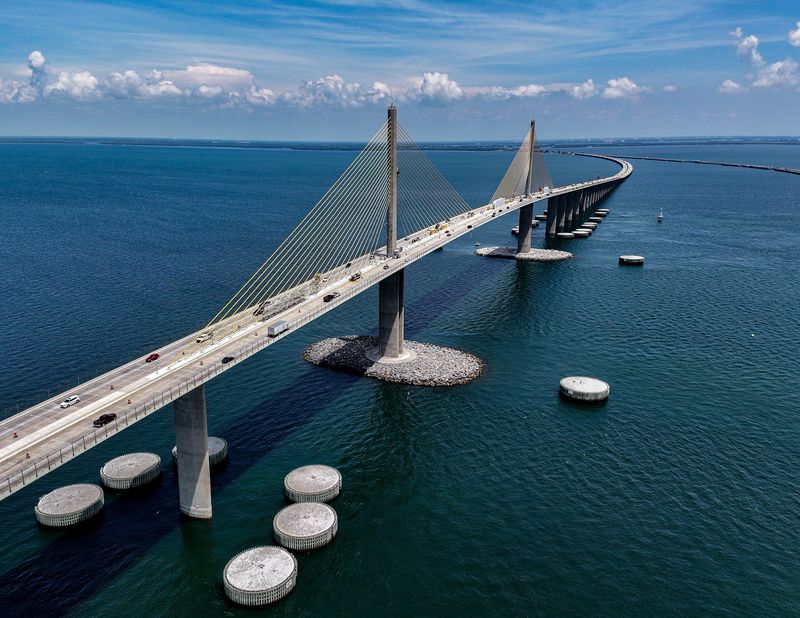
The Sunshine Skyway that drivers cross today exists because of a catastrophe that claimed 35 lives. On May 9, 1980, the freighter MV Summit Venture was navigating Tampa Bay in near-zero visibility from a sudden violent storm.
Captain John Lerro had almost no warning before his ship struck a support column of the existing southbound span.
A section of the bridge collapsed instantly. Vehicles on the roadway, including a Greyhound bus, several cars, and a truck, plunged into Tampa Bay.
It remains one of the deadliest bridge disasters in American history. The accident forced a national rethinking of how bridge piers should be protected from ship strikes.
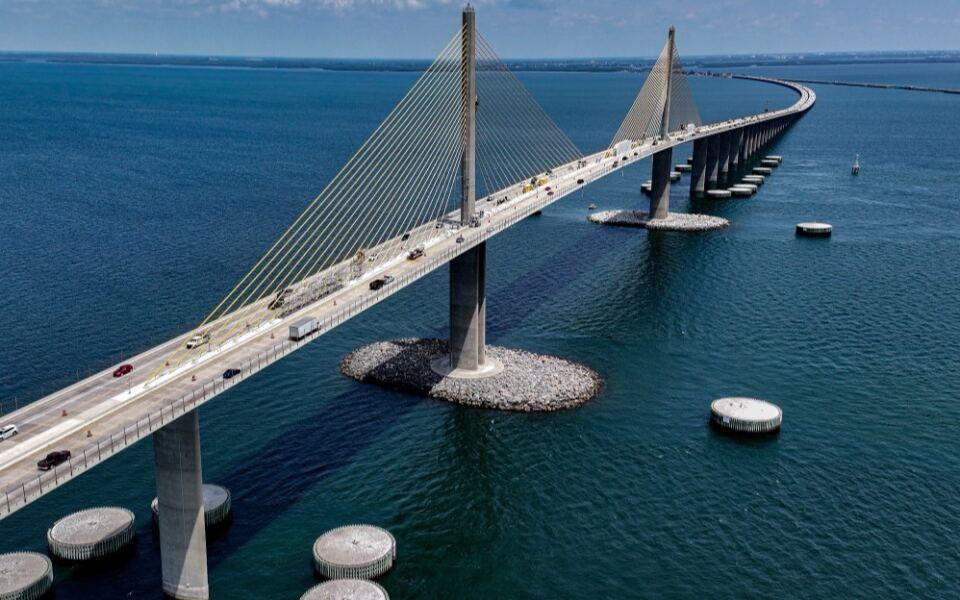
Rather than patch the damaged structure, Florida replaced the old bridges entirely. Construction on the new cable-stayed crossing began in 1982, and the Bob Graham Sunshine Skyway Bridge opened on April 20, 1987, at a cost of about $244 million.
The old approach sections were preserved and converted into fishing piers, giving anglers some of the best spots in the bay. Standing on those piers today, you are literally standing on pieces of the bridge that collapsed 40 years ago.
Navajo Bridge, Arizona
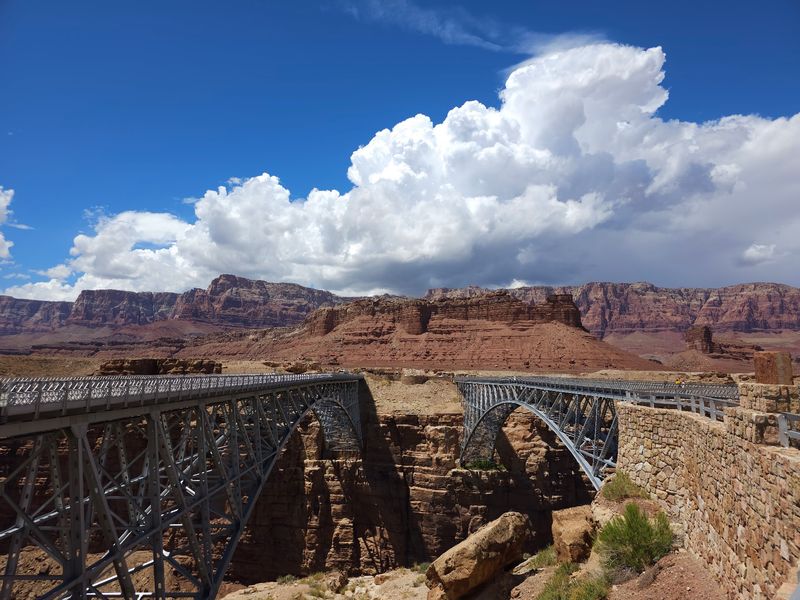
Picture being stranded in the Arizona desert, needing to cross the Colorado River, and learning your only option is an 800-mile detour around the Grand Canyon. That was the reality for travelers in 1928 after the Lees Ferry ferry sank in an accident that killed three men, leaving the river crossing completely unusable for months.
The disaster actually accelerated the push to finish a permanent bridge that had been under construction since 1927. When Navajo Bridge finally opened in January 1929, it stood 467 feet above the Colorado River, making it the world’s highest steel arch bridge at the time.
It was the only automobile crossing of the Colorado River for hundreds of miles in either direction.
A wider companion bridge opened right beside it in 1995 to handle modern vehicle traffic, while the original 1929 structure was preserved as a pedestrian walkway. Walking across the older span today offers an unobstructed view straight down to the river and is genuinely not recommended for anyone with a fear of heights.
California condors, one of North America’s most endangered birds, frequently roost on the bridge and the surrounding Marble Canyon cliffs, making it an unexpected wildlife viewing spot.
Chesapeake Bay Bridge-Tunnel, Virginia
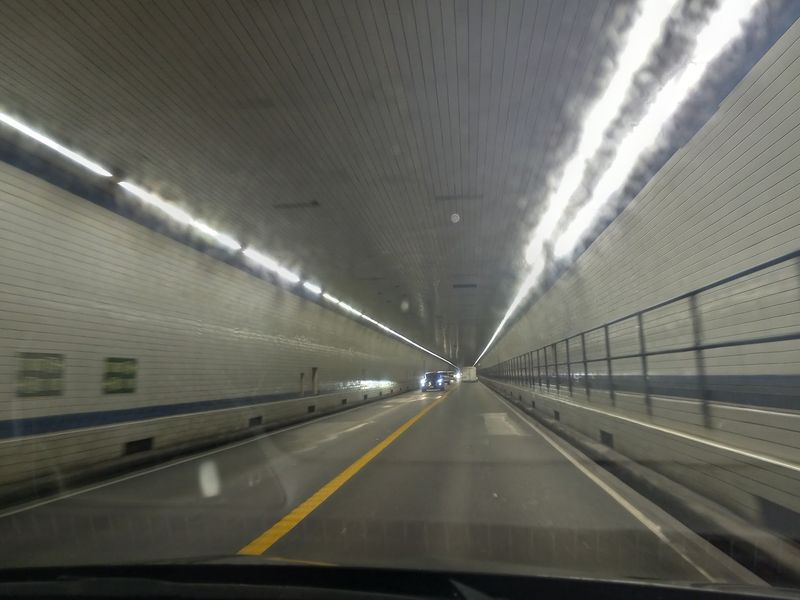
Most bridge projects involve a lot of concrete and steel. This one also required building four artificial islands in the middle of Chesapeake Bay and drilling two tunnels under the water so that naval ships could pass overhead.
The Chesapeake Bay Bridge-Tunnel is genuinely unlike any other transportation structure in the United States.
Before it opened in 1964, ferries were the only practical way to travel between Virginia’s Eastern Shore and the Norfolk-Virginia Beach area. The ferry crossing was slow and could be disrupted by weather.
Replacing it required $200 million in revenue bonds, with no direct funding from local, state, or federal taxes for the original project.
Construction took just 42 months, an impressive pace for something this complex. The full crossing stretches 17.6 miles from shore to shore.
A parallel bridge tunnel system opened in 1999 to handle growing traffic, and additional tunnel capacity has been added since. The structure has won engineering awards and is sometimes called one of the Seven Engineering Wonders of the Modern World.
Visitors can stop at a restaurant and fishing pier built on one of the artificial islands, which sits completely surrounded by open ocean water.
Chain of Rocks Bridge, Missouri and Illinois
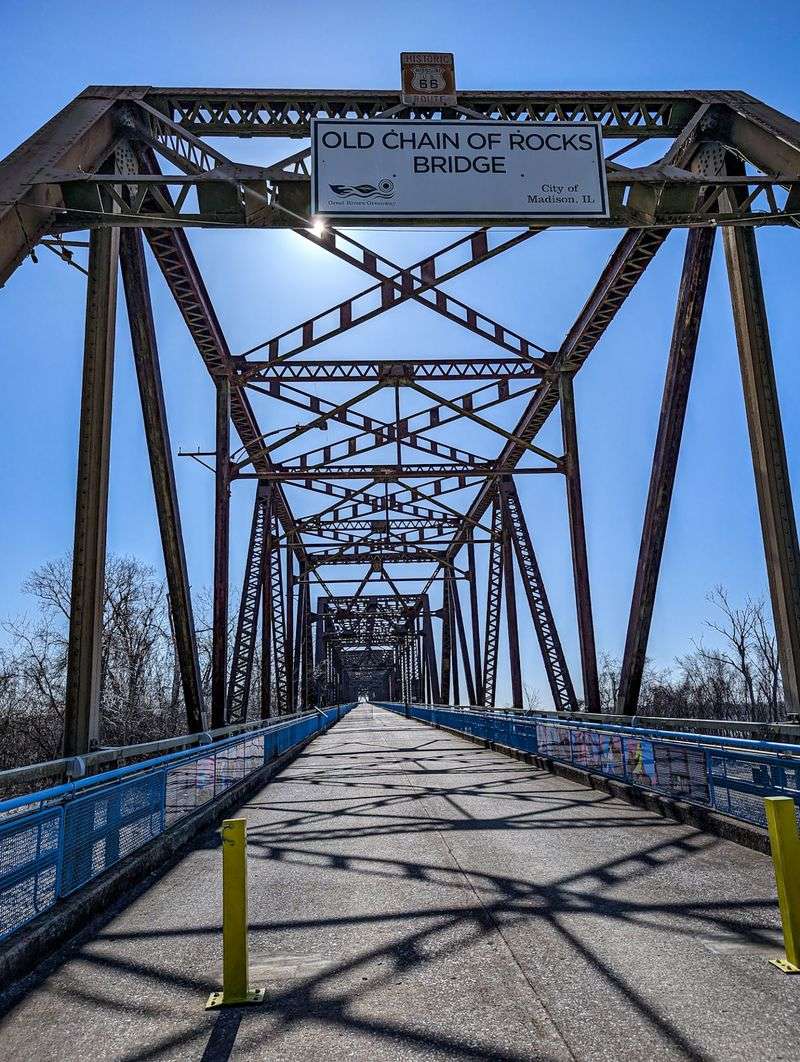
Every bridge crosses in a straight line. Except this one.
The Chain of Rocks Bridge has a sharp 30-degree bend right in the middle of its span over the Mississippi River, making it one of the strangest-looking highway bridges ever built. The bend was not a design mistake but a practical compromise: riverboat operators objected to the original alignment, and engineers discovered unsuitable bedrock in the planned pier locations.
The bridge opened in 1929 and joined Route 66 in 1936, carrying thousands of cross-country travelers toward the American West. During World War II, the bridge’s red sections were painted green to reduce its visibility from the air in case of enemy aircraft.
It closed to vehicles in 1968 after a newer bridge made it obsolete.
Demolition was seriously considered, but low scrap-steel prices in the 1970s made tearing it down more expensive than leaving it standing. That fortunate economic quirk saved the structure.
Restoration work transformed it into a pedestrian and bicycle bridge, which reopened in 1999. The mile-long walk across offers sweeping views of the Mississippi and a chance to stand on actual Route 66 pavement above the river.
The bridge is now listed on the National Register of Historic Places.
Kinzua Viaduct, Pennsylvania
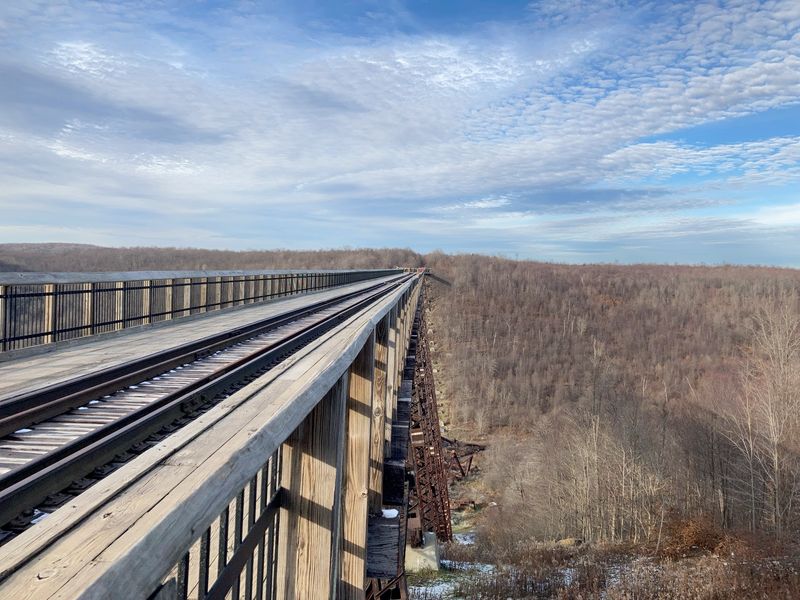
When it was completed in 1882, the Kinzua Viaduct was the tallest railroad bridge in the world, and engineers were so proud of it that they bragged it had been built in just 94 days. The original iron structure rose 301 feet above Kinzua Creek and stretched 2,053 feet across the valley in northwestern Pennsylvania.
By 1900, heavier locomotives demanded a full rebuild in steel, which a crew completed in a remarkable 105 days.
For over a century the viaduct carried trains and later drew tourists. Then on July 21, 2003, an F1 tornado tore through the valley and ripped 11 of the bridge’s 20 towers from their foundations, throwing them into the gorge below.
The destruction happened in minutes.
Pennsylvania faced a choice: clean up the wreckage or preserve it. They chose to preserve it.
The twisted towers were left where they fell as a permanent exhibit on the power of nature. Six surviving towers were incorporated into the Kinzua Skywalk, which opened in 2011.
Visitors walk out onto a cantilevered observation deck 225 feet above the valley floor, peer through a partial glass floor, and look down at the mangled steel below. It is one of the most unexpectedly moving experiences in any state park.
George Washington Bridge, New York and New Jersey
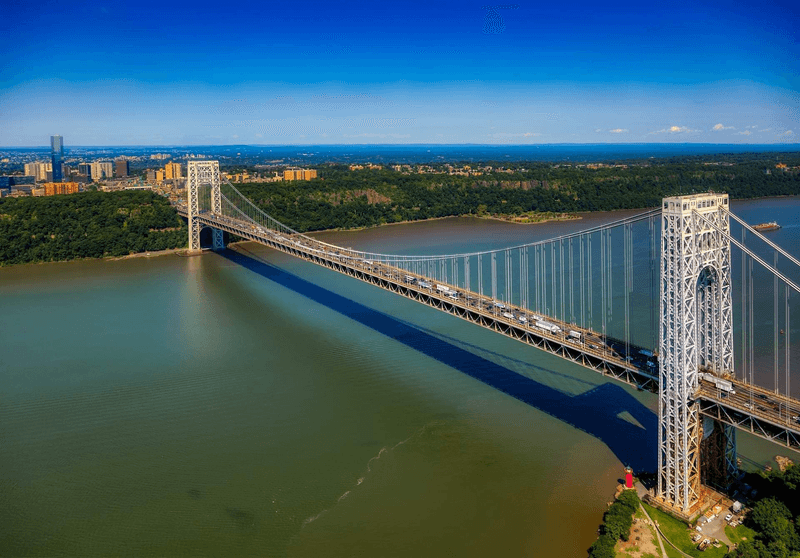
When engineer Othmar Ammann proposed a suspension bridge across the Hudson River, some critics thought he was being wildly overambitious. He proved them wrong in spectacular fashion.
The George Washington Bridge opened on October 25, 1931, eight months ahead of schedule and about $1 million under its $60 million budget, which almost never happens with megaprojects of any era.
Its main span of 3,500 feet was the longest suspension-bridge span in the world on opening day, nearly doubling the previous record. The towers were originally supposed to be clad in granite and concrete to give them an architectural finish, but the Great Depression forced budget cuts and the bare steel was left exposed.
Many people ended up preferring the industrial look.
A second roadway level was added in 1962, transforming it into a double-deck crossing. Today the Port Authority describes the GWB as the world’s busiest motor vehicle bridge, handling over 100 million crossings per year.
Its towers rise 604 feet above the Hudson River. A small lighthouse sits beneath the New York tower, made famous by a children’s book called “The Little Red Lighthouse and the Great Gray Bridge,” published in 1942 and still beloved today.
Astoria-Megler Bridge, Oregon and Washington
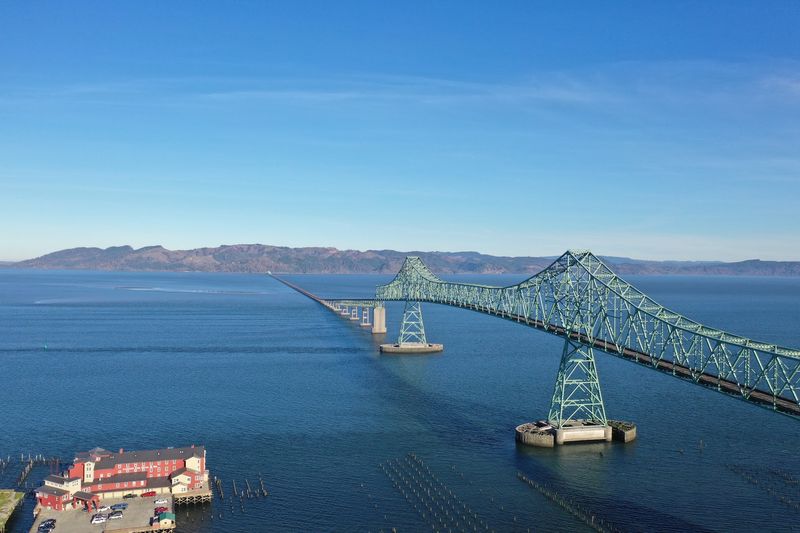
For most of the 20th century, the Pacific Coast Highway had a frustrating gap right at the mouth of the Columbia River. Drivers heading up or down the coast had to stop at Astoria, Oregon, load their cars onto a ferry, and wait.
Strong currents and stormy Pacific weather made that ferry service unreliable, and the crossing could be cancelled without much warning.
Oregon approved its portion of a bridge in 1956, but construction did not begin until the early 1960s. Steel sections were prefabricated in Vancouver, Washington, floated downriver on barges, and lifted into position above the water.
The logistics required for a 4.1-mile crossing over one of the most powerful rivers in North America were genuinely staggering.
The bridge opened on August 27, 1966, and the Astoria ferry ran its final trip the same day. What had been a roughly 30-minute ferry crossing became a six-minute drive.
The Astoria-Megler Bridge completed the final missing link in U.S. Route 101, allowing an uninterrupted coastal drive from the Mexican border all the way to the Olympic Peninsula in Washington.
Driving across it on a clear day, with the river spreading out in every direction, feels like crossing into a different world.
Bixby Creek Bridge, California
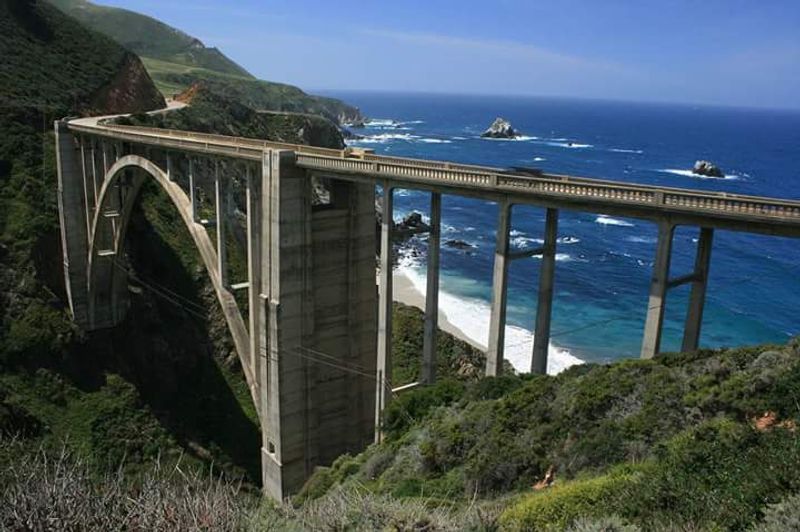
If you have ever seen a California travel photo that made you want to drop everything and drive Highway 1, there is a decent chance Bixby Creek Bridge was in it. The 714-foot concrete open-spandrel arch bridge sits along one of the most rugged stretches of coastline in North America, and it has been charming photographers since 1932.
Building it was far from easy. The Big Sur coast had no roads worthy of the name before this project, and workers had to haul materials to remote canyon sites with very limited access.
Bixby Creek Bridge was completed several years before the full coastal highway connecting Carmel to Morro Bay was finished. That larger Highway 1 project began in 1919 and required 33 separate bridges across its 139-mile length.
The full highway opened in 1937, with President Franklin D. Roosevelt attending the grand opening ceremony in 1938.
Caltrans now identifies Bixby Creek Bridge as one of the most photographed man-made structures in the United States. A small pullout on the north side of the bridge draws cars at nearly every hour of daylight, with visitors jostling for the perfect angle.
The bridge earned its fame honestly, surviving decades of coastal storms, earthquakes, and an endless stream of admiring cameras.
Chesapeake Bay Bridge, Maryland
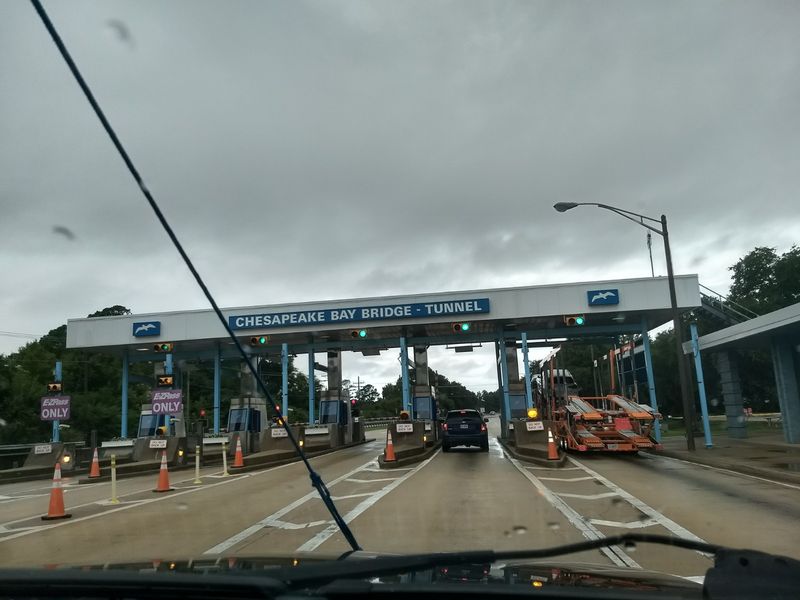
Maryland’s Chesapeake Bay once split the state in a way that shaped entire communities. The Eastern Shore felt genuinely cut off from the rest of Maryland, with ferries providing the only practical crossing.
Those ferry routes were slow, limited by weather, and completely unable to keep up with postwar automobile traffic that was growing by the year.
The first William Preston Lane Jr. Memorial Bridge, almost universally called the Chesapeake Bay Bridge, opened on July 30, 1952. At the time it ranked among the world’s longest continuous over-water steel structures, stretching nearly 4.4 miles across the bay.
About 1.1 million vehicles used it in the first year alone, a number that confirmed just how desperately the crossing had been needed.
Traffic grew so quickly that a second parallel span was added in 1973, by which point annual crossings had reached roughly 7.3 million. By 2021, the two spans together were handling about 26.6 million crossings per year.
The bridge is notorious among Marylanders for summer beach traffic, with backups that can stretch for miles on hot weekends. A free driver assistance program exists for people who are too anxious to drive across it themselves, which says something about how imposing the crossing still feels.
Share this story