There is something genuinely exciting about standing at the edge of a field and seeing rows of color stretch all the way to the horizon. Flower farms across America offer exactly that kind of experience, and more of them are open to visitors than most people realize.
From California’s coastline to the hills of Virginia and the shores of New England, these farms welcome guests to walk the rows, pick their own stems, and take home a bouquet they actually put together themselves. Whether you are planning a spring road trip, a summer weekend outing, or just looking for a seasonal activity that gets you outside, this list covers 15 real working flower farms worth adding to your travel plans.
The Flower Fields, Carlsbad, California
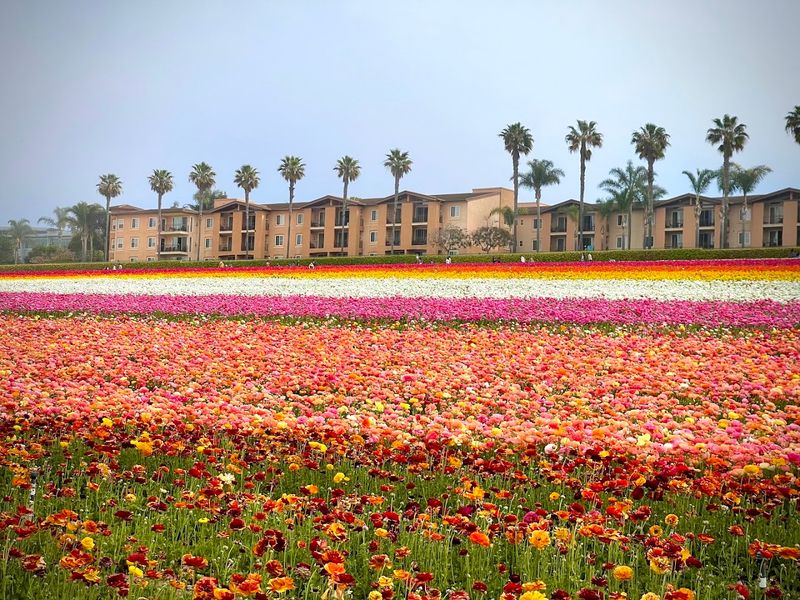
Few flower destinations in America match the sheer scale of The Flower Fields in Carlsbad. Spread across 55 acres of Southern California hillside, the farm produces around 80 million ranunculus blooms every spring, arranged in bold bands of red, orange, yellow, pink, purple, and white.
The display is visible from a distance before you even walk through the entrance.
Walking paths wind through the fields so visitors can get close to the blooms at ground level. Wagon rides, sweet pea mazes, and family-friendly activities round out the experience during the spring season.
The farm’s proximity to the coast gives it a mild climate that supports a long and reliable bloom window each year.
This is not a small garden stop or a boutique farm. The Flower Fields is one of the most recognized ranunculus displays in the world, and the scale of color it delivers during peak season is genuinely hard to match anywhere else in the country.
Holland Ridge Farms, Cream Ridge, New Jersey
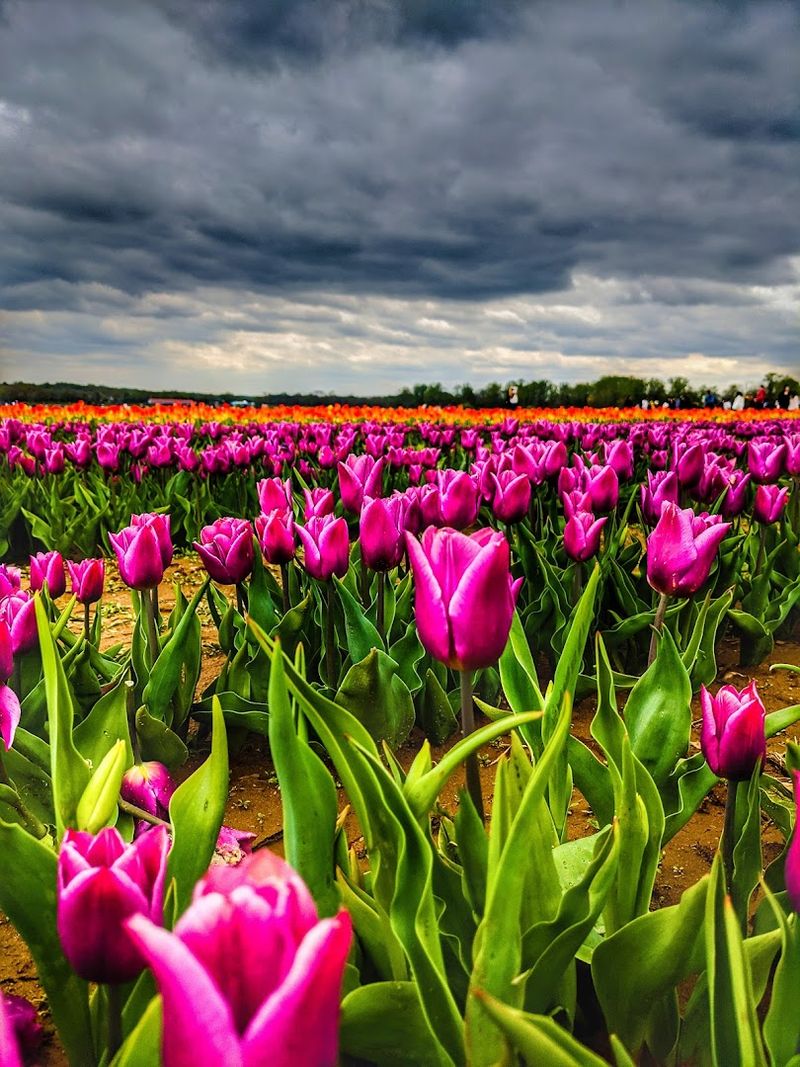
Holland Ridge Farms brings a Dutch-inspired flower experience to the New Jersey countryside, and it does it on a scale that surprises first-time visitors. The farm’s spring tulip event features more than 8 million tulips planted across the fields, making it one of the largest tulip displays on the East Coast.
Walking through those rows during peak bloom feels less like a farm visit and more like stepping into a flower field postcard.
The fall season brings its own version of the experience, with sunflowers, dahlias, gladiolus, and wildflowers replacing the spring tulips. Food trucks, floral photo props, and u-pick options are part of what makes the event dates especially popular with families and photographers.
For readers in the Mid-Atlantic region who want actual rows of flowers rather than a manicured garden bed, Holland Ridge Farms is a strong and well-organized choice that delivers real color across a working agricultural landscape.
Burnside Farms, Nokesville, Virginia
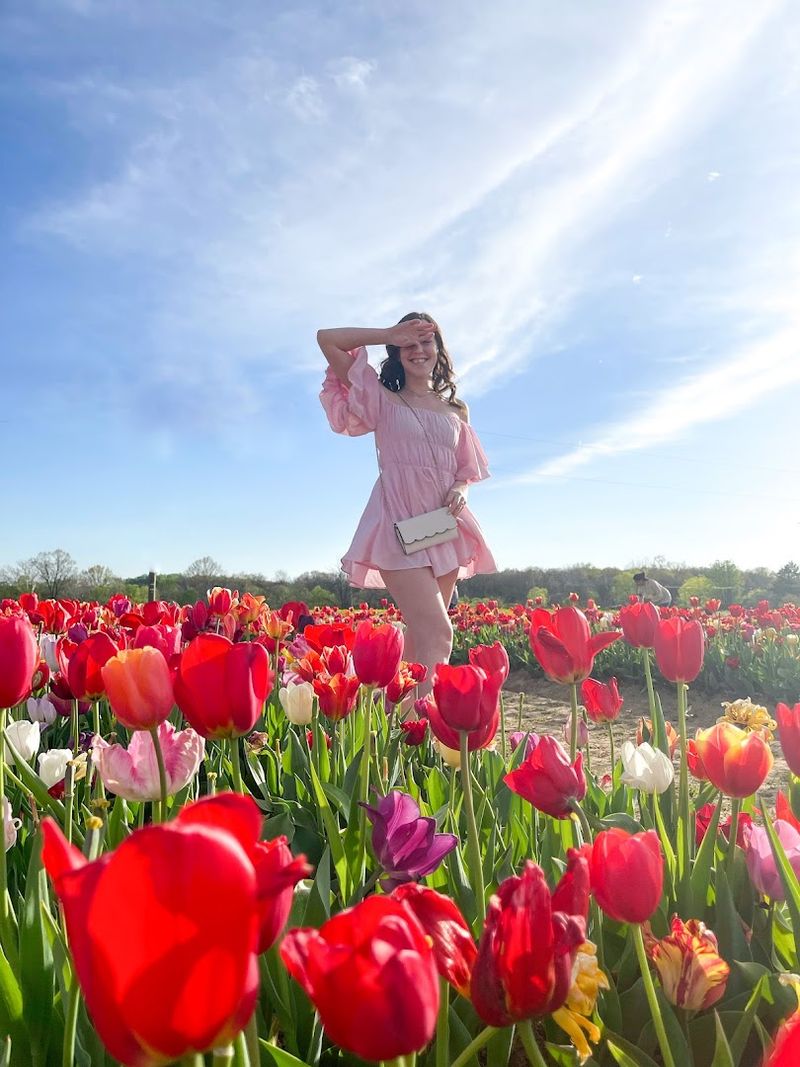
Burnside Farms in Nokesville runs two of Virginia’s most colorful seasonal events back to back each year. In spring, the farm plants more than two million tulips and daffodils across 20 acres, creating one of the most photographed flower landscapes in the state.
The spring season typically draws large crowds, so arriving early on weekdays is a smart move.
Summer shifts the entire farm into sunflower mode. The 2026 summer season is scheduled to run July 12 through August 9, with 78 acres of sunflowers planted in staggered sections so the fields stay at peak color for several weeks rather than just a few days.
That staggered approach is one of the things that sets Burnside apart from farms with a single short bloom window.
Both seasons include walking paths through the rows. The farm’s location in Prince William County makes it accessible from Northern Virginia and the Washington, D.C. area without a long drive.
Wooden Shoe Tulip Farm, Woodburn, Oregon
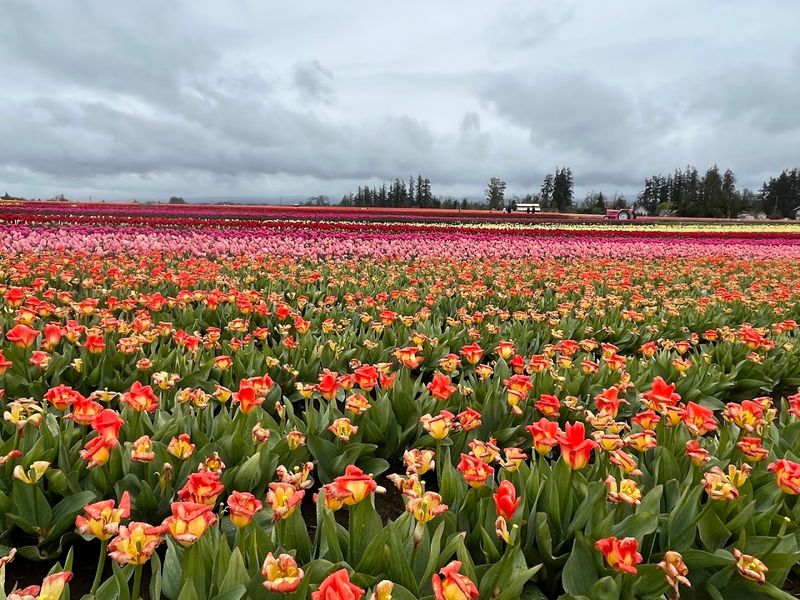
Wooden Shoe Tulip Farm in Woodburn has been drawing visitors to the Willamette Valley for decades, and its annual tulip festival remains one of the most anticipated spring events in the Pacific Northwest. The farm stretches across open farmland with views of Mount Hood visible on clear days, which gives the whole experience a natural backdrop that most flower farms simply cannot offer.
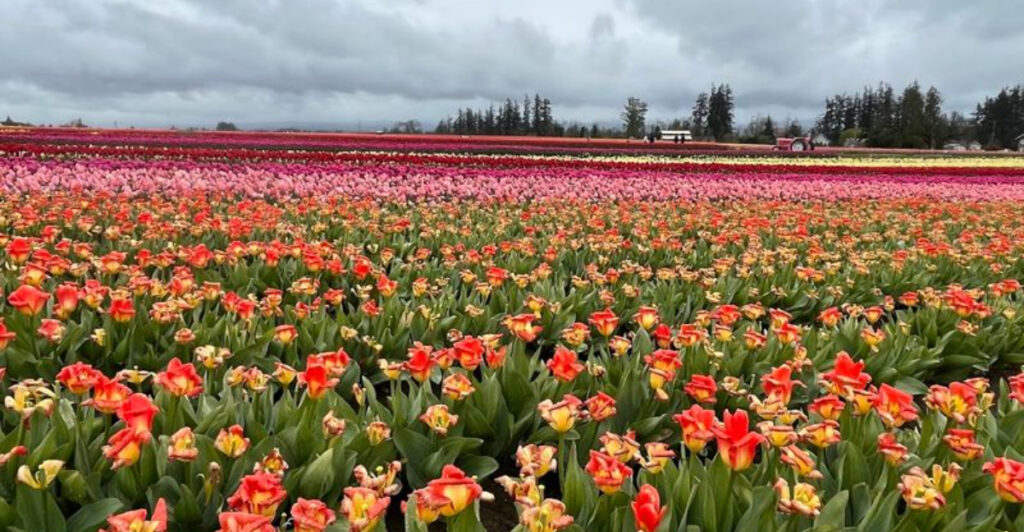
Rows of tulips in dozens of colors fill the fields during the festival season, and the farm sets up photo spots, food vendors, and farm activities to complement the walking experience. Past seasons have featured around a million tulips across dozens of acres, though exact numbers shift year to year depending on planting.
For Oregon residents and road-trippers passing through the valley, Wooden Shoe is a well-established stop with a genuine farm feel. The combination of open farmland, mountain views, and spring color keeps it relevant year after year on Pacific Northwest travel lists.
Tulip Town, Mount Vernon, Washington
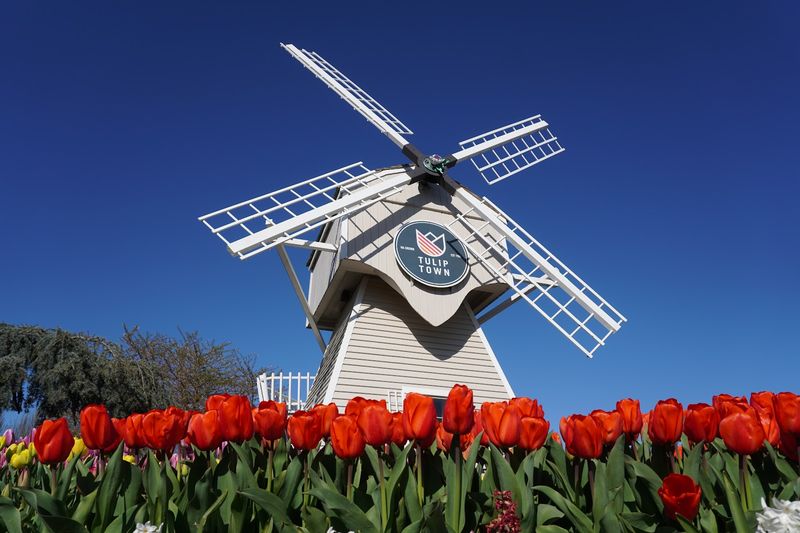
Tulip Town sits in the heart of Skagit Valley, which transforms into one of the most colorful agricultural landscapes in the country every April. The farm is one of the primary stops during the annual Skagit Valley Tulip Festival, a regional event that draws visitors from across the Pacific Northwest and well beyond.
Display gardens, gift shops, and u-pick fields make it a full afternoon destination rather than a quick drive-by.
The Skagit Valley itself is worth understanding as context. The flat farmland surrounded by mountains creates conditions that tulips and daffodils thrive in, and the scale of color across the valley during peak bloom is something that photographs cannot fully capture.
Tulip Town gives visitors a structured place to experience that color up close.
Mount Vernon is about an hour north of Seattle, making this a practical day trip for city visitors. Timed entry and advance planning are recommended during peak festival weekends when crowds are at their highest.
Wicked Tulips Flower Farm, Preston, Connecticut
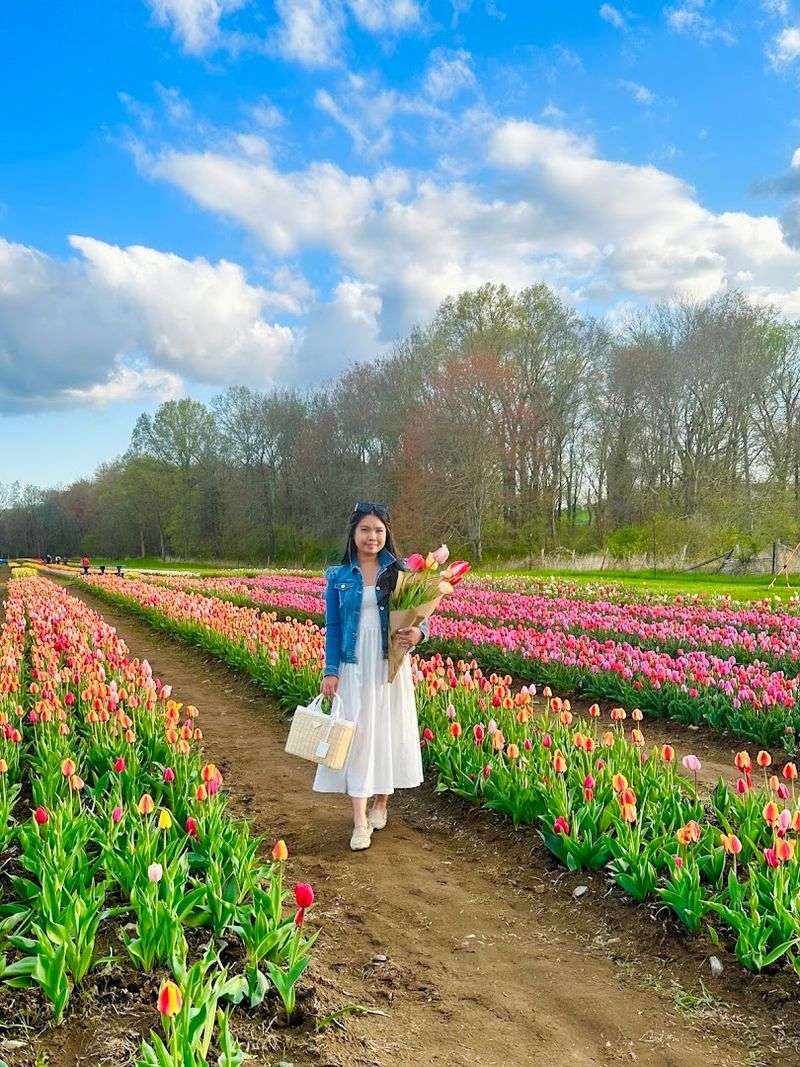
Wicked Tulips Flower Farm earns its name by offering one of the most impressive tulip selections in New England. The Preston location is the largest of the company’s three farms and opened in 2021, with more than 75 tulip varieties available during the spring u-pick season.
Visitors purchase timed entry tickets, which keeps the fields from becoming overcrowded and makes the picking experience more enjoyable for everyone.
The farm grows more than 1.5 million tulip plants across all of its locations, and the Preston site carries the bulk of that planting. Walking through the rows during peak bloom reveals a full spectrum of colors and petal shapes, from classic single blooms to ruffled parrot varieties.
Spring tulip timing in Connecticut is weather-dependent and can shift by a week or two in either direction. Checking the farm’s current bloom updates before booking tickets is a practical step that saves a wasted trip if the bloom is running early or late that year.
Texas Tulips, Pilot Point, Texas
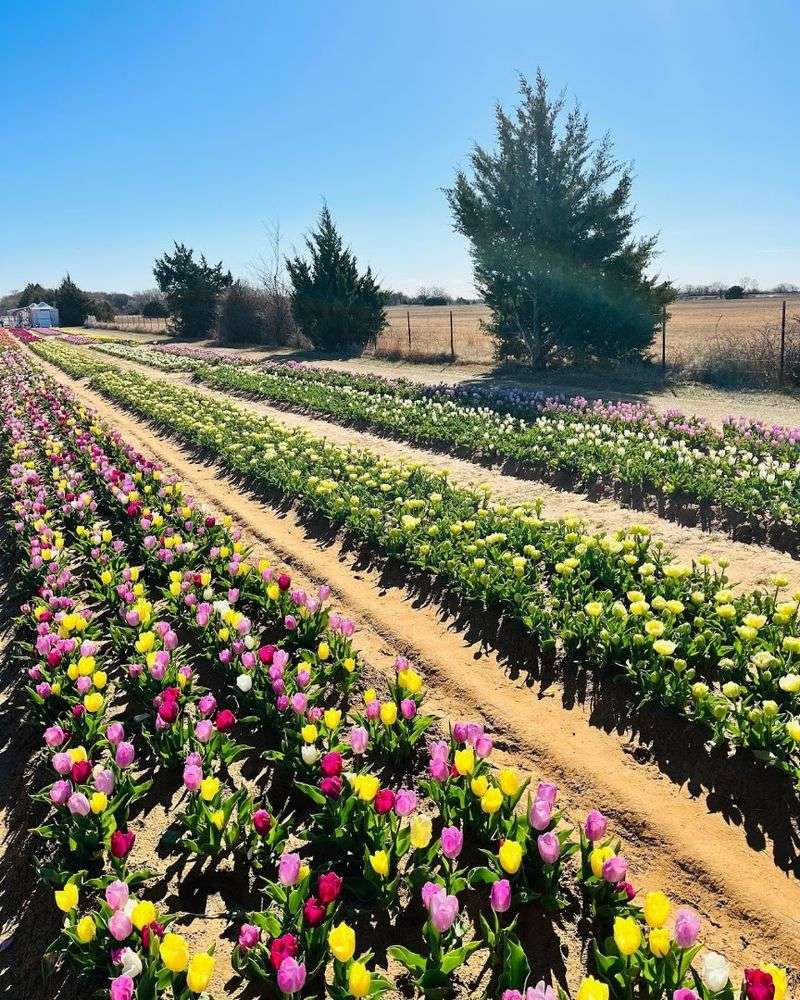
Most people do not think of North Texas when they picture tulip fields, which is exactly what makes Texas Tulips in Pilot Point a genuinely surprising find. The farm offers a u-pick tulip experience during the spring bloom season, letting visitors walk the rows and choose their own stems from a selection of colorful varieties.
It is one of the few places in the South where you can get the Dutch tulip field look without traveling to the Pacific Northwest or the Northeast.
Timing is everything with tulips, and Texas Tulips is no exception. The bloom window in North Texas can be shorter than farms in cooler climates, and weather plays a big role in when the fields peak each season.
Checking the farm’s current bloom updates before making the drive from Dallas or Fort Worth is strongly recommended.
For Texas readers who want a flower field experience close to home, this is a practical and photogenic option that fits the spring weekend outing format well.
Swan Island Dahlias, Canby, Oregon
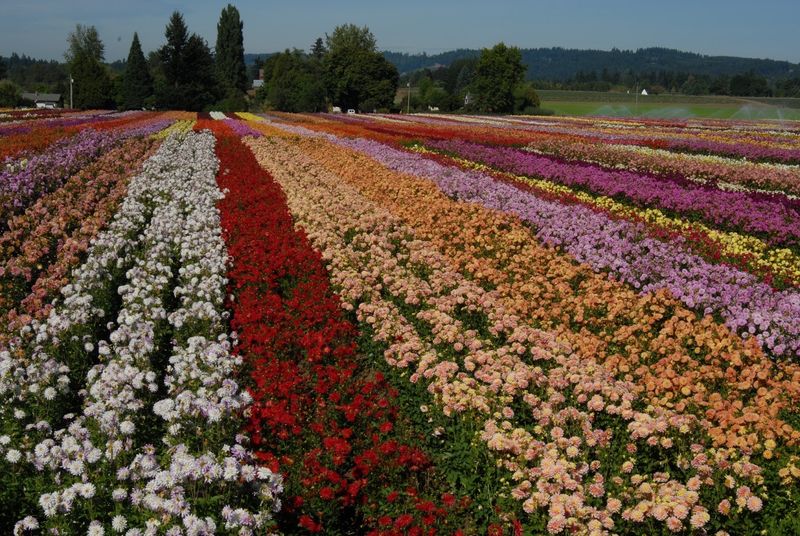
Swan Island Dahlias in Canby shifts the conversation away from tulips and sunflowers and into the sculptural, late-summer world of dahlias. The farm calls itself the nation’s largest and leading dahlia grower, and the variety on display during its Annual Dahlia Festival backs that claim up.
The 2026 festival runs August 1 through September 30, Wednesday through Sunday and Labor Day.
Admission and parking are free, which removes one of the usual barriers to a farm visit. Food trucks, live music on weekends, hands-on classes, and a year-round Mercantile give the experience layers beyond simply walking the rows.
The dahlias themselves range from dinner-plate varieties the size of a salad plate to intricate ball and cactus forms in every color imaginable.
For travelers who have already done the tulip festivals and want something different, Swan Island offers a late-season flower experience that runs for two full months. That extended window makes scheduling much easier than trying to catch a two-week tulip bloom.
Southern Hill Farms, Clermont, Florida
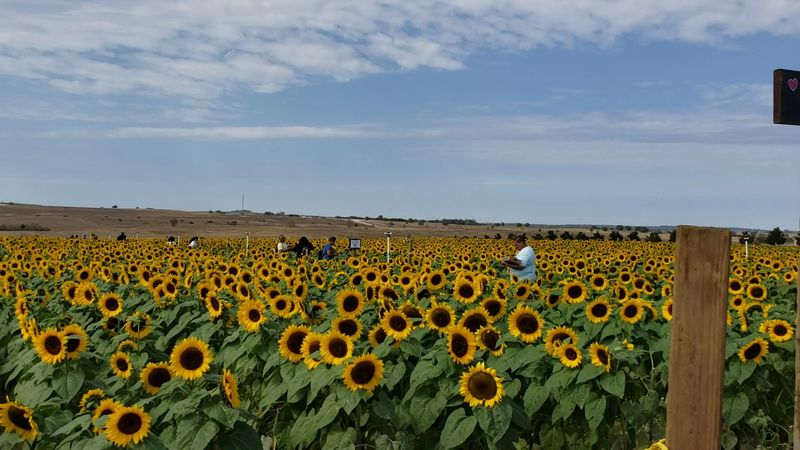
Florida is not the first state most people associate with flower farms, but Southern Hill Farms in Clermont runs a u-pick flower program that works across multiple seasons. The 120-acre family-owned farm offers pick-your-own sunflower events in winter, spring, and fall, along with u-pick zinnias and other seasonal blooms throughout the year.
That multi-season calendar is the real advantage here.
The farm provides scissors and bouquet bags during flower picking events, so visitors arrive without needing to bring any tools. Walking through the rows and selecting individual stems is a hands-on activity that works well for families, couples, and solo visitors looking for an outdoor afternoon that results in something tangible to take home.
Clermont sits about 25 miles west of Orlando, making Southern Hill Farms a reasonable option for central Florida residents and visitors who want a nature-based activity outside of the theme park circuit. Checking the farm’s current event calendar before visiting ensures the flowers are in active picking season.
Godfrey’s Farm, Sudlersville, Maryland
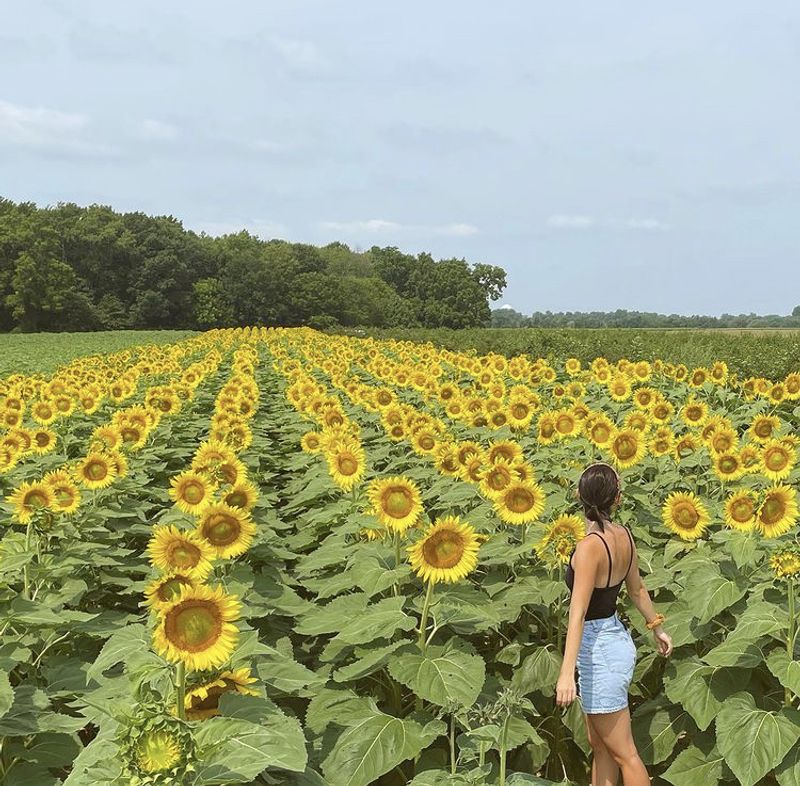
Godfrey’s Farm in Sudlersville on Maryland’s Eastern Shore keeps its flower field open from late June through August, giving visitors a generous summer window to come out and pick annual blooms. The sunflower field typically opens around late July to early August, adding a bold seasonal highlight to the already colorful picking rows.
The farm provides gallon buckets, and visitors bring or buy their own snips.
What makes Godfrey’s a practical choice for Maryland readers is that the flower experience fits naturally into a broader farm visit. The property also offers seasonal pick-your-own strawberries, peaches, and other crops, so a trip to the flower field can easily become a full morning of farm activity rather than a single-purpose stop.
The Eastern Shore location puts it within reach of visitors from Annapolis, Baltimore, and Delaware. It is a quieter, more rural alternative to the larger festival-style flower farms, and that lower-key atmosphere is genuinely part of its appeal for people who prefer a relaxed outing.
Harmony Harvest Farm, Weyers Cave, Virginia
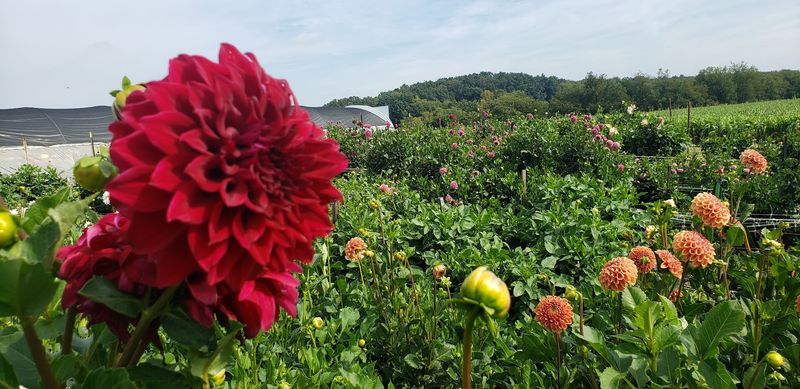
Harmony Harvest Farm operates on the honor system, which immediately sets it apart from every ticketed flower festival on this list. Visitors pick up a cup at the Flower Stand, borrow snips from the farm, fill the cup with blooms from the rows, and pay based on what they take.
The farm stays open for flower picking from June until the first fall frost, giving it one of the longer seasonal windows of any farm on this list.
Beyond the everyday picking experience, Harmony Harvest also runs specialty u-pick events for flowers like dahlias and peonies, which can be reserved online. Farm tours are available as well, offering a closer look at how the growing operation works from planting through harvest.
Located in the Shenandoah Valley near Weyers Cave, the farm sits in a scenic rural setting that feels genuinely removed from the crowds that larger festival farms attract. For visitors who want color without the event-day chaos, this is a well-suited alternative.
Cross Street Flower Farm, Norwell, Massachusetts
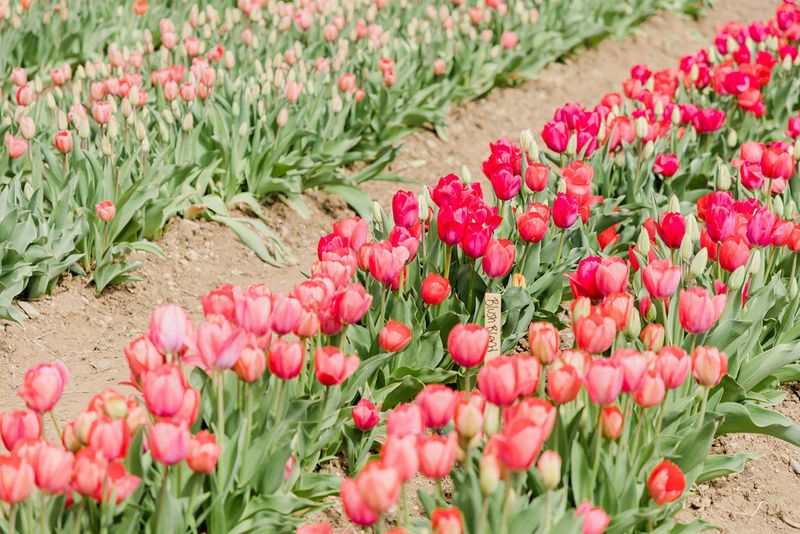
Cross Street Flower Farm in Norwell brings a structured flower-picking experience to the South Shore of Massachusetts, filling a gap in a region where farm-based flower activities are not as common as in other parts of the country. The farm has appeared in recent national coverage of u-pick bouquet destinations, recognized for offering visitors the chance to walk seasonal rows and build their own arrangements from fresh-cut stems.
The appeal here is accessibility. Norwell is not a long drive from Boston or the South Shore communities, and the farm-based setting gives it a more relaxed, rural feel than anything you would find at a garden center or flower shop.
Creating a bouquet from what is actually growing in the ground is a different experience than buying one pre-arranged.
For New England readers who want a smaller, quieter flower farm visit rather than a massive festival field, Cross Street offers that kind of low-key seasonal outing. Checking their current bloom schedule before visiting is always a good idea.
Omena Cut Flowers, Suttons Bay, Michigan
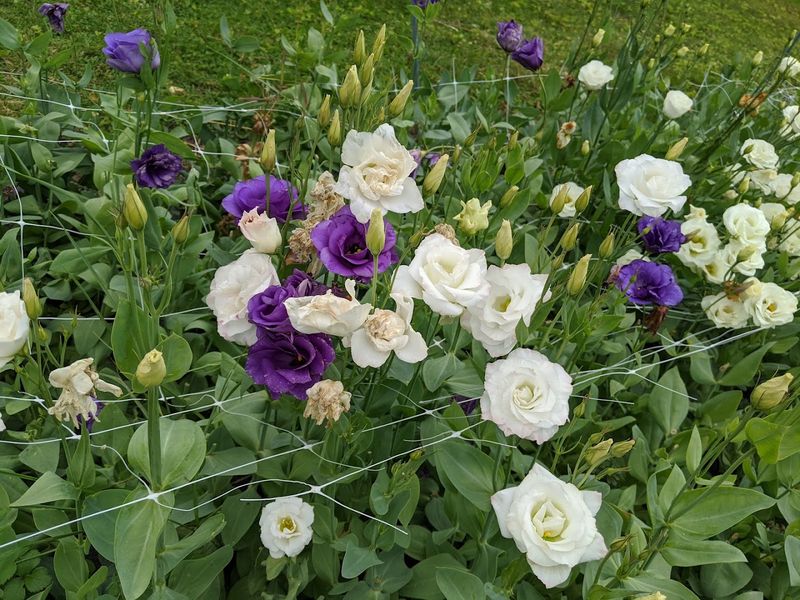
Running on a pure honor system from May through October, Omena Cut Flowers in Suttons Bay gives visitors five full months to show up, borrow snips, grab a free container, and pick from more than 40 flower varieties. There are no tickets, no timed entry windows, and no event-day crowds to navigate.
You simply arrive, walk the rows, choose what you like, and pay by the stem.
That self-service format makes Omena Cut Flowers one of the most flexible flower farm options on this entire list. Whether you are there on a Tuesday morning in June or a Sunday afternoon in September, the experience is available and unhurried.
The variety of blooms across the season means the field looks different every time you visit.
The farm sits near Suttons Bay on the Leelanau Peninsula, one of the most scenic stretches of northern Michigan. Pairing a flower stop here with a drive along the peninsula’s small towns and lake views turns it into a full and worthwhile day outing.
Buttonwood Farm, Griswold, Connecticut
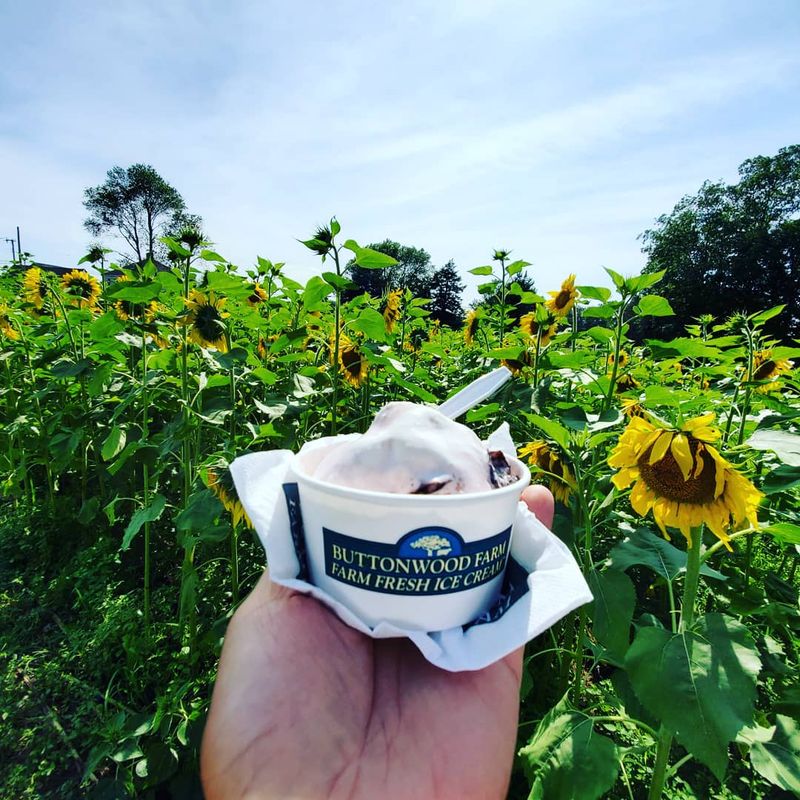
Buttonwood Farm in Griswold is best known for one thing in summer: sunflowers. More than 14 acres of them bloom across the farm’s fields, typically peaking in July and drawing visitors who come specifically to walk the rows and pick stems.
The scale of 14-plus acres of sunflowers in one place is larger than most people expect from a Connecticut farm.
Beyond the picking experience, Buttonwood is also recognized for its Sunflowers for Wishes fundraiser, a community-supported initiative that has given the sunflower fields a purpose beyond photography and bouquets. That added layer of meaning turns a pleasant farm visit into something with a bit more weight behind it.
Griswold is in eastern Connecticut, within reasonable driving distance from Hartford, Providence, and coastal communities. For midsummer visitors looking for a Connecticut outdoor activity that produces a tangible result, picking sunflowers at Buttonwood is a practical and visually rewarding option that fits the season well.
Denver Downs Farm, Anderson, South Carolina
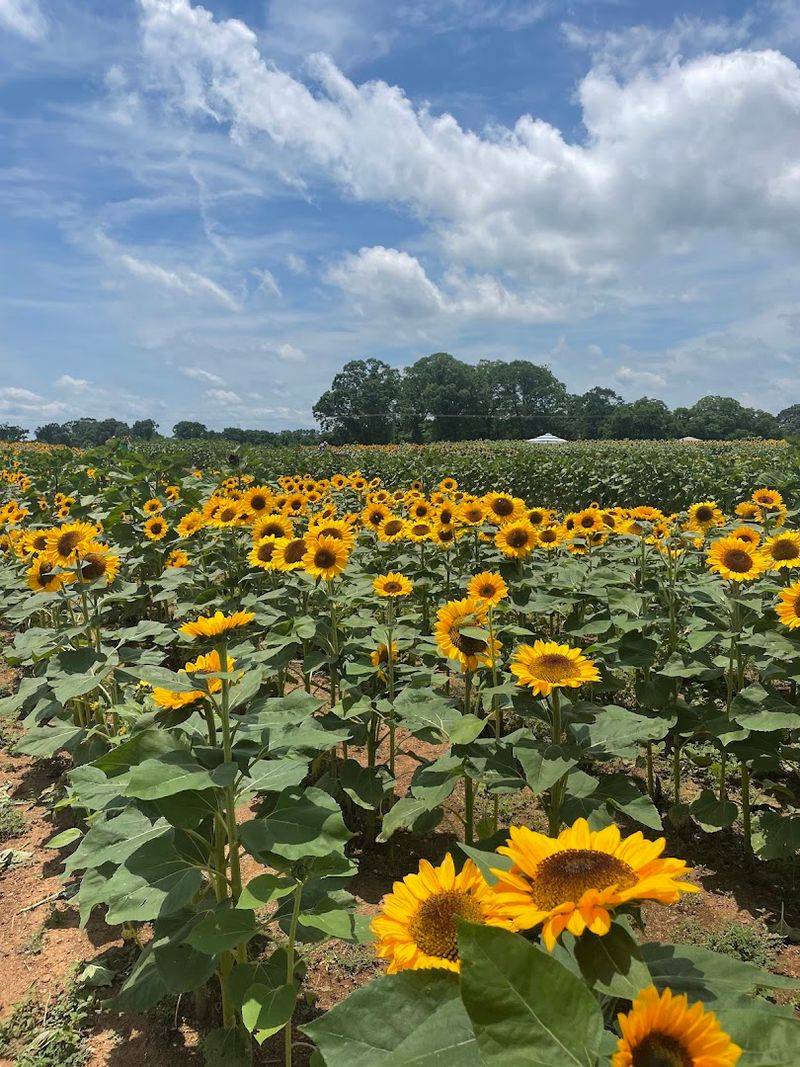
Denver Downs Farm in Anderson has been a working farm since the 1800s, which gives it a depth of history that most seasonal flower destinations simply do not have. The farm hosts a Sunflower Festival each summer, drawing visitors to its bright fields for blooms, music, and farm-based activities.
Southern Living has highlighted Denver Downs among the best sunflower destinations in the South, which reflects its regional reputation.
The festival format means the visit is built around more than just walking the rows, though the sunflower fields themselves are the main draw. The combination of a historic working farm and a seasonal flower event makes Denver Downs a more layered stop than a field that was planted purely for photography purposes.
Anderson sits in the Upstate South Carolina region, close to the Georgia border and within a reasonable drive from Greenville and Clemson. For Southeast readers who want a summer flower field with genuine farm character, Denver Downs delivers both the color and the context.
Share this story