Food markets have always been the beating heart of a city, feeding neighborhoods and connecting communities through fresh ingredients and local flavors. Over time, some of these markets have grown into full-blown travel destinations, drawing visitors from around the world who come not just to shop but to taste, explore, and experience a place through its food.
From ancient covered halls in Barcelona to sleek glass buildings in Rotterdam, each market on this list tells a delicious story about the city it calls home. Whether you are a seasoned traveler or simply a curious food lover, these 15 markets are guaranteed to make you hungry for your next adventure.
Borough Market, London, England
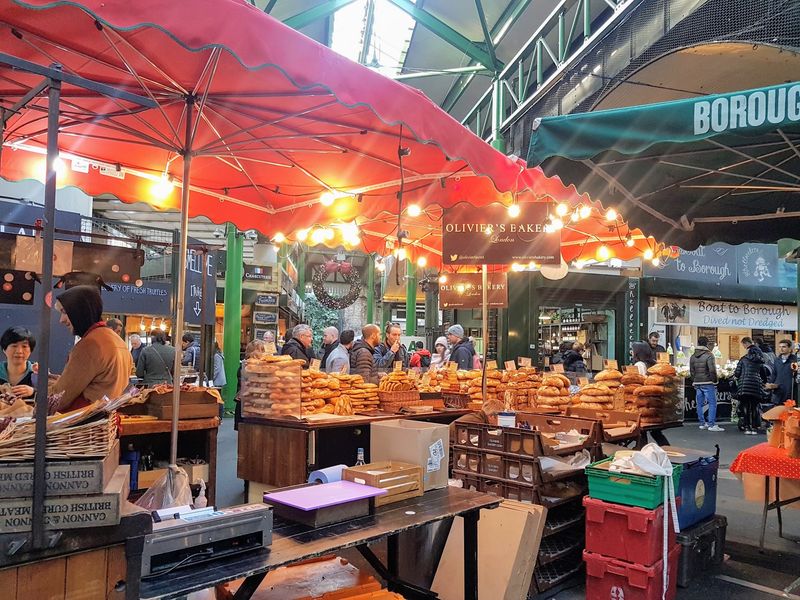
Stepping under Borough Market’s iron-and-glass canopy feels like entering a cathedral built entirely for food lovers. With roots stretching back nearly 1,000 years, this London institution near Southwark has seen medieval traders, Victorian wholesalers, and modern artisan bakers all call it home.
That layered history gives the market a texture no purpose-built food hall can replicate.
A 1998 Food Lovers’ Fair sparked its modern reinvention, turning a struggling wholesale center into one of Britain’s most celebrated specialty markets. Today, stalls overflow with aged cheeses, sourdough loaves, charcuterie, fresh seafood, and street food from around the world.
The smell of frying bacon and freshly ground coffee hits you before you even reach the entrance gates.
Borough sits right next to London Bridge, making it easy to combine with a walk along the South Bank. Weekday visits are noticeably calmer than weekends, when the crowds can make navigation tricky.
Locals still shop here regularly, which keeps the market grounded despite its enormous international fame.
La Boqueria, Barcelona, Spain
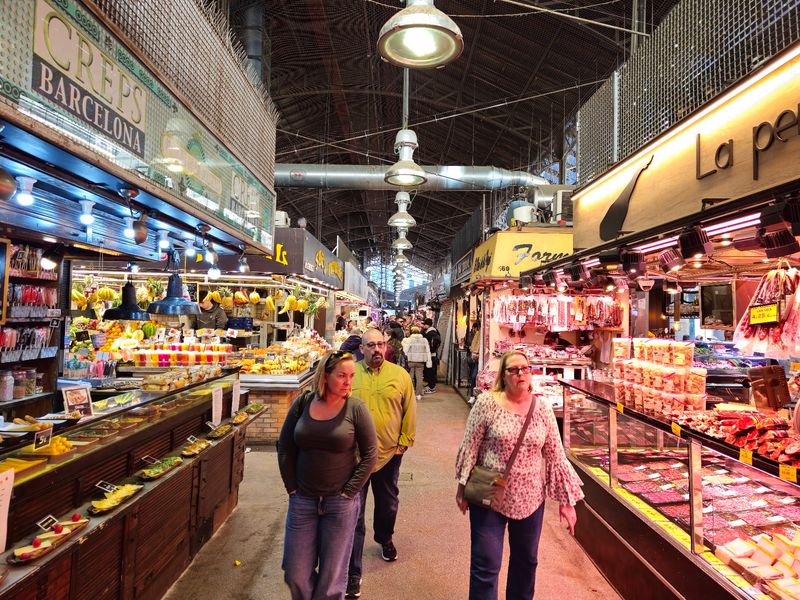
Few market entrances in the world are as dramatic as La Boqueria’s mosaic-tiled gateway opening off the busy Rambla. Records of meat and produce trading on this stretch of Barcelona date back to 1217, making it one of Europe’s oldest continuously evolving food markets.
The current covered structure gives the chaos inside a surprisingly elegant frame.
Stalls are piled high with Iberian ham, glistening seafood, tropical fruits, local vegetables, handmade sweets, and prepared snacks that draw as many smartphone cameras as hungry mouths. The central fish and seafood counters are a particular spectacle, with vendors arranging their catch like jewelers displaying precious stones.
Popularity has brought real pressure. Crowds peak sharply during tourist season, and some longtime local vendors have relocated as foot traffic shifted toward prepared foods and tourist-friendly snacks.
Still, La Boqueria remains worth visiting early in the morning, when Barcelona residents shop alongside visitors and the market feels closest to its authentic self. Arriving before 9 a.m. transforms the whole experience.
Pike Place Market, Seattle, Washington
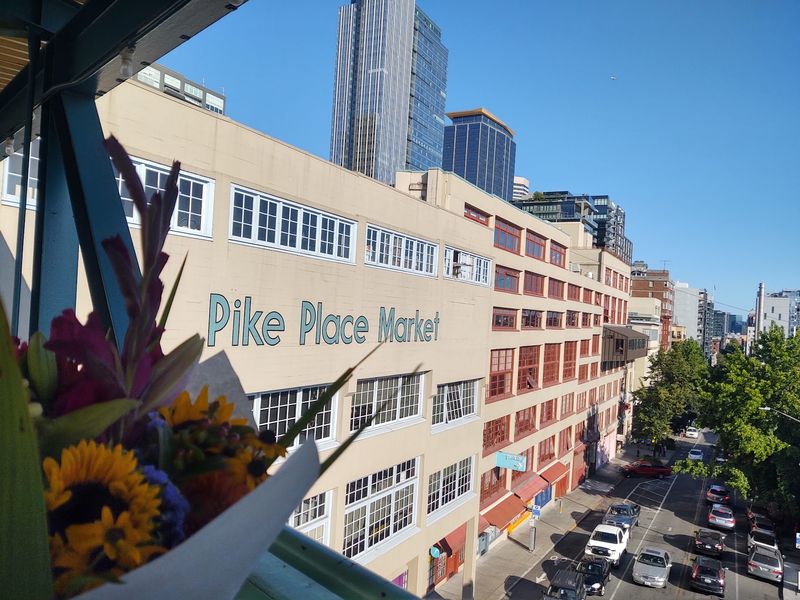
On August 17, 1907, only a handful of farmers showed up for Pike Place Market’s opening day. By lunchtime, every last vegetable was sold.
That explosive debut set the tone for what would become one of the most beloved public markets in American history, perched above Seattle’s waterfront with views that make the whole experience feel cinematic.
The fish toss at the Pike Place Fish Company is the market’s most photographed moment, with workers hurling whole salmon across the counter while tourists gasp and cheer. Beyond the spectacle, the market spans nine historic acres filled with farmers, craftspeople, bakeries, cheese shops, flower stalls, and dozens of independent restaurants.
It is genuinely one of the few places where you can buy breakfast ingredients and eat a full meal within the same short walk.
In the 1960s, residents voted to save the market from a demolition plan that would have replaced it with hotels and offices. That grassroots victory preserved not just a building but an entire neighborhood identity.
The market’s survival story is almost as compelling as its smoked salmon.
Tsukiji Outer Market, Tokyo, Japan
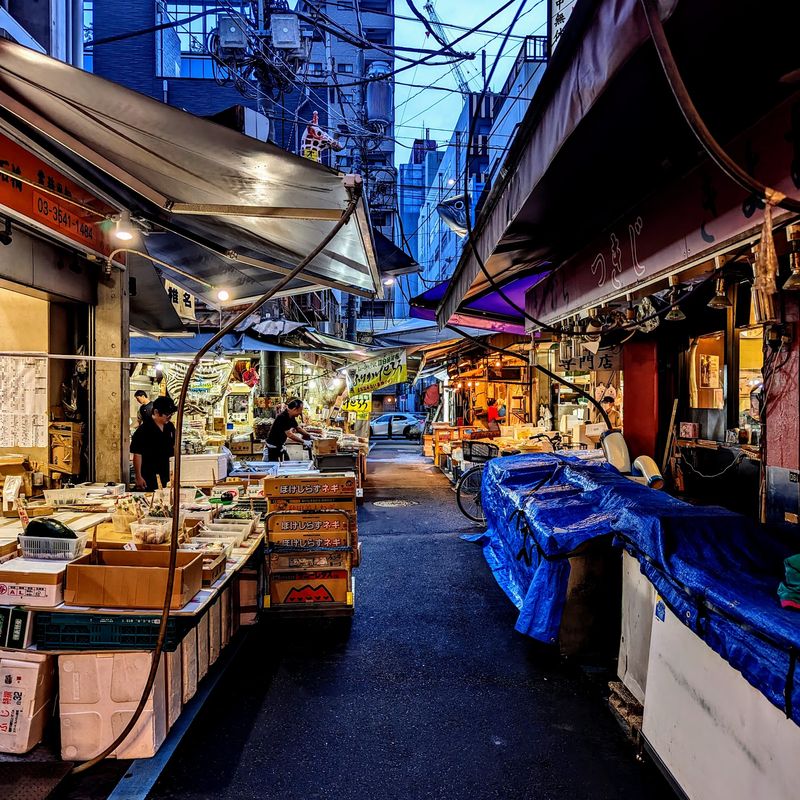
Tokyo’s Tsukiji market was literally born from disaster. The 1923 Great Kanto Earthquake wiped out the old Nihonbashi fish market, forcing traders to relocate to Tsukiji, where the new central wholesale facility opened in 1935.
The Outer Market grew up around it like a living ecosystem, filling every lane with knives, dried goods, tea, seasonings, and the freshest seafood imaginable.
When Tokyo’s wholesale operations moved to Toyosu in 2018, many feared Tsukiji would fade. Instead, the Outer Market kept going strong.
Visitors today can eat sushi and sashimi bowls at tiny counters barely wide enough for two people, watch vendors slice tamagoyaki on long rectangular pans, and browse shops selling professional-grade Japanese kitchen knives that chefs fly in specifically to purchase.
Mornings are the magic hour here. The lanes fill up quickly with a mix of culinary tourists, food professionals, and curious locals, all moving at a pace that somehow feels both urgent and relaxed.
Budget around two hours for a proper visit, and arrive hungry because resisting the grilled shellfish at the open-air stalls is essentially impossible.
Mercado de San Miguel, Madrid, Spain
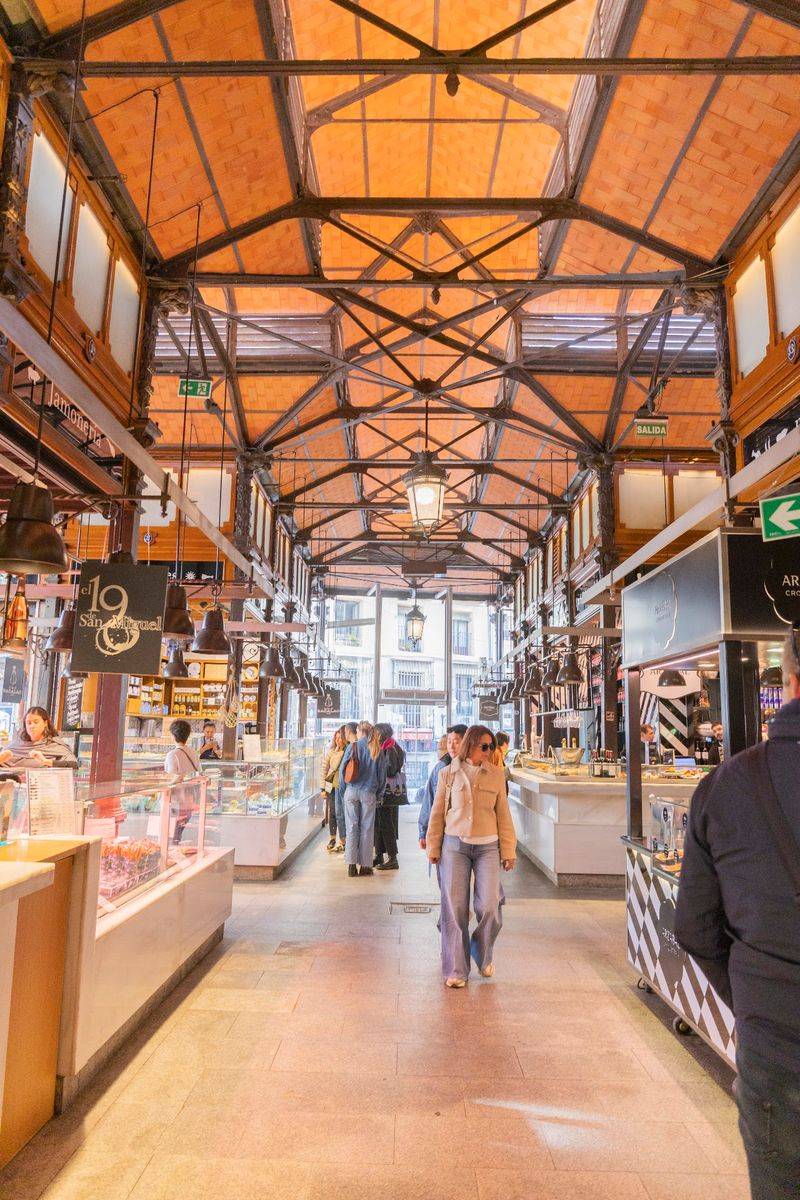
Madrid’s Mercado de San Miguel wears its 1916 cast-iron frame like a very stylish suit. The building’s elegant structure, with arched glass panels flooding the interior with natural light, is one of the finest surviving examples of early 20th-century iron market architecture in Spain.
When it reopened in 2009 as the city’s first gourmet market, the combination of gorgeous bones and excellent food proved irresistible.
More than 10 million visitors pass through annually, according to Madrid’s tourism organization, which makes it one of Europe’s busiest food destinations by any measure. Inside, visitors sample Iberian ham carved tableside, fresh oysters, regional cheeses, croquetas, pastries, and a rotating cast of Spanish wines poured at small standing bars.
The atmosphere sits somewhere between a tapas crawl and a very elegant food festival held indoors.
Honestly, San Miguel functions less like a grocery market and more like a tasting tour of Spain compressed into one beautiful room. It works best as an early evening stop, when the energy picks up and the wine starts flowing more freely.
Go hungry, bring a small group, and plan to stay longer than you originally intended.
Reading Terminal Market, Philadelphia, Pennsylvania
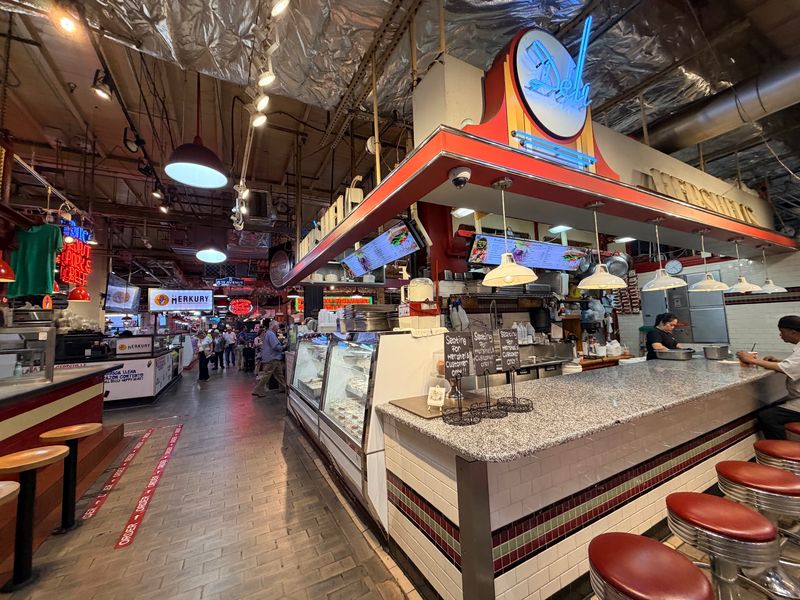
Reading Terminal Market has one of the best origin stories in American food history. When railroad planners needed to build a terminal above an existing market district in 1892, merchants refused to simply disappear.
The compromise was brilliantly practical: put the market directly under the train shed, letting shoppers and commuters share the same enormous building. Trains rumbled overhead while vendors sold cheese below.
Today more than 80 merchants operate in this Philadelphia landmark, including produce sellers, butchers, fishmongers, bakeries, prepared-food counters, and the famous Pennsylvania Dutch operators who drive in from Lancaster County each week. The Pennsylvania Dutch section alone is worth the visit, offering scrapple, shoofly pie, whoopie pies, and roast chicken at prices that feel refreshingly honest.
Around 100,000 people pass through the market during a typical week, a mix of downtown office workers, tourists exploring the historic city center, and serious home cooks stocking up for the weekend. The market’s location near the Pennsylvania Convention Center and the city’s main Amtrak station makes it a natural stop for anyone passing through Philadelphia.
Few cities have a market this good this close to a train station.
Queen Victoria Market, Melbourne, Australia
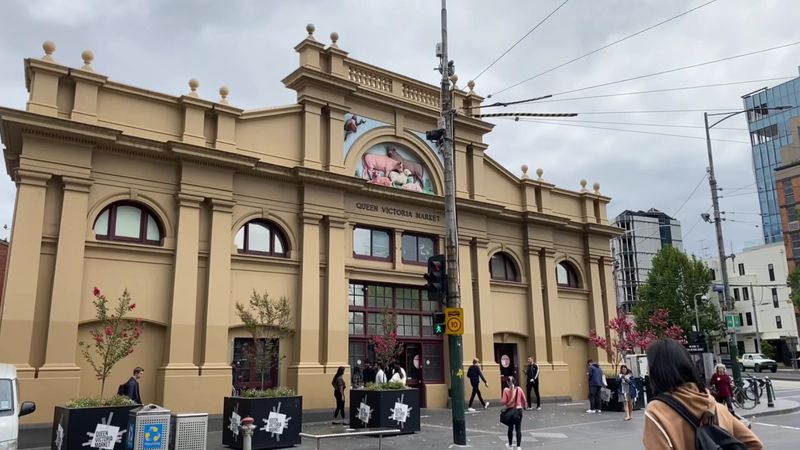
Queen Victoria Market sits on land that was once, rather unexpectedly, a cemetery. Before it officially opened on March 20, 1878, the site had served as a burial ground, a livestock yard, and a wholesale produce facility, giving it one of the more colorful pre-market histories of any shopping destination in the world.
Today it covers two full city blocks and hosts more than 600 small businesses.
Melbourne residents treat it as a genuine part of daily life rather than a tourist stop, which is part of what makes it special. The sheds contain separate sections for meat and seafood, deli goods, fresh produce, and a large outdoor general merchandise area selling clothing, accessories, and souvenirs.
That variety keeps both locals and visitors circling the market for hours without retracing steps.
Queen Victoria Market holds a place on Australia’s National Heritage List, recognizing it as the largest and most intact Victorian-era market complex remaining in the country. Night markets held during summer evenings add a completely different energy, with street food, live music, and warm Melbourne nights creating an atmosphere that regular morning markets simply cannot match.
It is a place that genuinely rewards repeat visits.
Mercado Central, Valencia, Spain
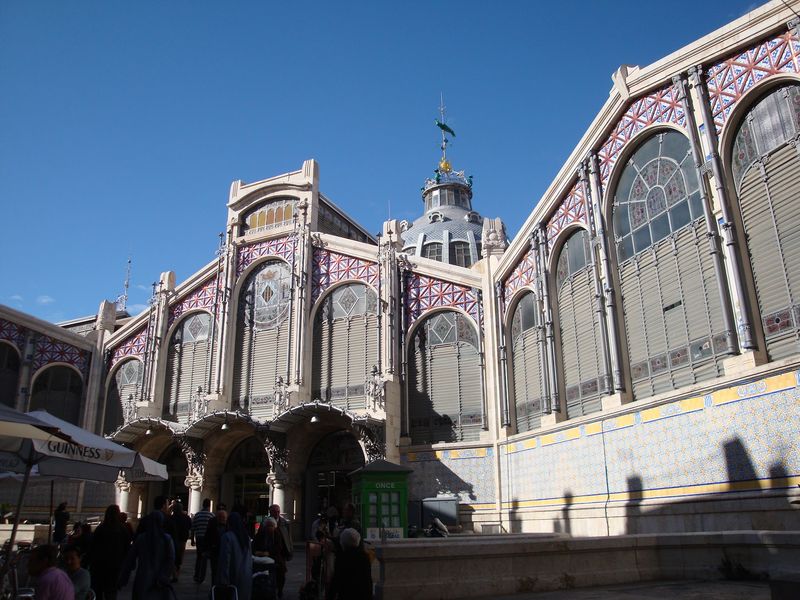
Valencia’s Mercado Central is the kind of building that makes you stop walking and simply stare upward. Opened on March 15, 1928, after more than 17 years of construction, the structure combines iron, glass, stone, and brilliantly colored ceramic tiles across more than 8,000 square meters of Valencian Modernist architecture.
It remains one of the largest covered fresh-food markets in Europe, and it looks like a palace built specifically for groceries.
About 1,000 workers operate across roughly 250 stalls, collectively selling around 20,000 different products on any given market day. Fresh fish from the Mediterranean, meat, produce from Valencia’s surrounding farmland called the huerta, cured products, and baked goods keep the market functioning as a real working marketplace even as its luminous domes and ornate details attract sightseers.
The market sits directly across from Valencia’s Silk Exchange, a UNESCO World Heritage Site, making the surrounding neighborhood one of the most architecturally rewarding short walks in Spain. Visiting on a weekday morning gives the best combination of full stalls and manageable crowds.
Grab a freshly squeezed orange juice from one of the produce vendors and take a slow lap around the building before shopping.
Grand Central Market, Los Angeles, California
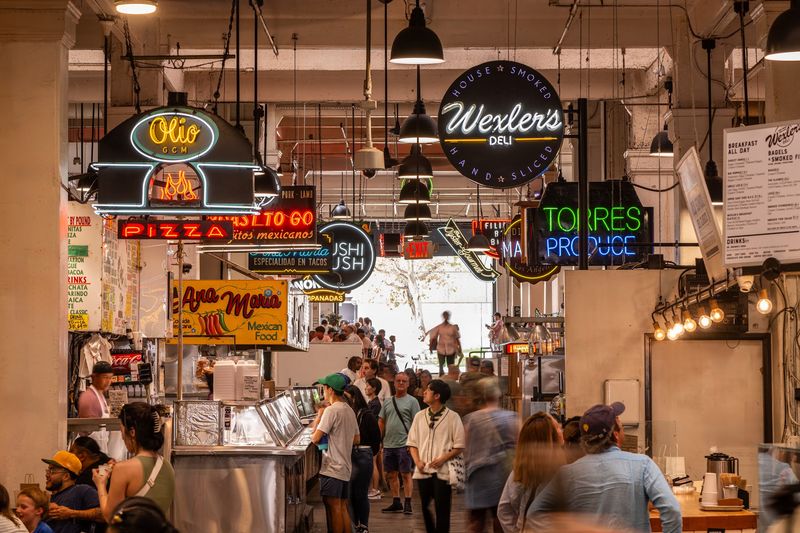
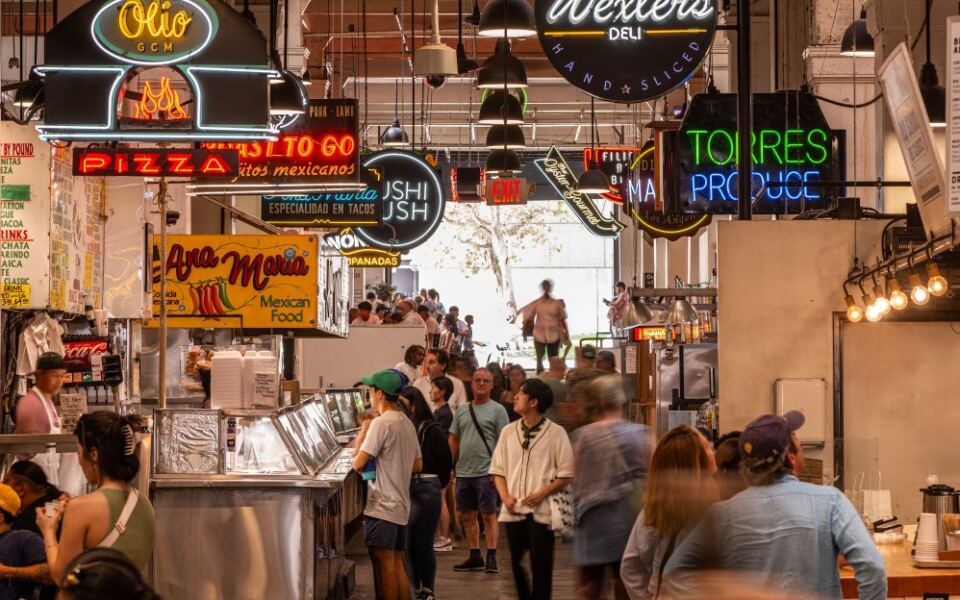
Grand Central Market has been feeding downtown Los Angeles since October 1917, which means it predates the Hollywood sign, the freeways, and most of the cultural mythology that surrounds the city. Opened in the Homer Laughlin Building and promoted as the finest public market on the Pacific Coast, it has spent more than a century adapting to the neighborhoods and communities that surround it.
About 40 stalls currently fill the ground floor with a genuinely diverse range of food traditions, including Mexican, Chinese, Filipino, Central American, and American cuisines. Longstanding vendors who have operated for decades share the space with newer restaurants and chefs bringing fresh concepts to the century-old hall.
That layering of generations gives Grand Central Market a living quality that newer food halls struggle to achieve.
Its location on Broadway in downtown Los Angeles puts it near Angels Flight, the Bradbury Building, and the city’s historic core, making it a natural anchor for an afternoon exploring the area on foot. The market gets busy during lunch hours on weekdays, when nearby office workers fill the narrow aisles.
Weekend visits bring a slower, more exploratory pace that lets you actually taste things without rushing.
St. Lawrence Market, Toronto, Canada
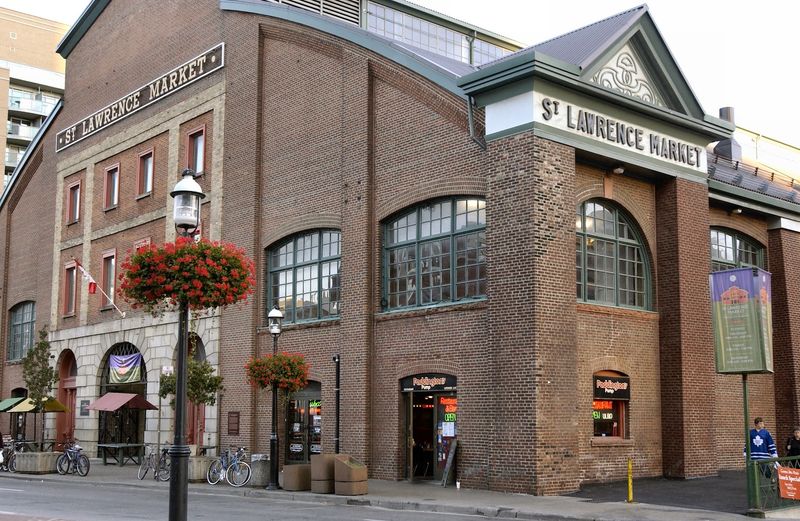
Toronto’s St. Lawrence Market has been part of the city’s identity since 1803, which means it has been around longer than Canada itself as a confederation. That deep local history shows in the market’s layout, its vendors, and the Saturday farmers market that continues to draw producers from the surrounding region each week.
Some things here feel genuinely unchanged across generations.
Around 120 vendors, merchants, and artisans fill the complex with meat, fish, cheese, produce, baked goods, specialty foods, and prepared meals. The peameal bacon sandwich served at Carousel Bakery has become one of Toronto’s most famous food items, drawing lines on weekend mornings that snake through the main hall.
It is salty, satisfying, and completely worth the wait.
What keeps St. Lawrence feeling real rather than theatrical is the balance between everyday shopping and visitor interest. The South Market runs daily with permanent vendors, while the Saturday farmers market upstairs connects the city to its agricultural surroundings.
Travelers encounter Canadian ingredients alongside foods reflecting Toronto’s remarkably diverse immigrant communities, all within a historic neighborhood close to the waterfront. The market earns its reputation without ever feeling like it is performing for an audience.
Chelsea Market, New York City, New York
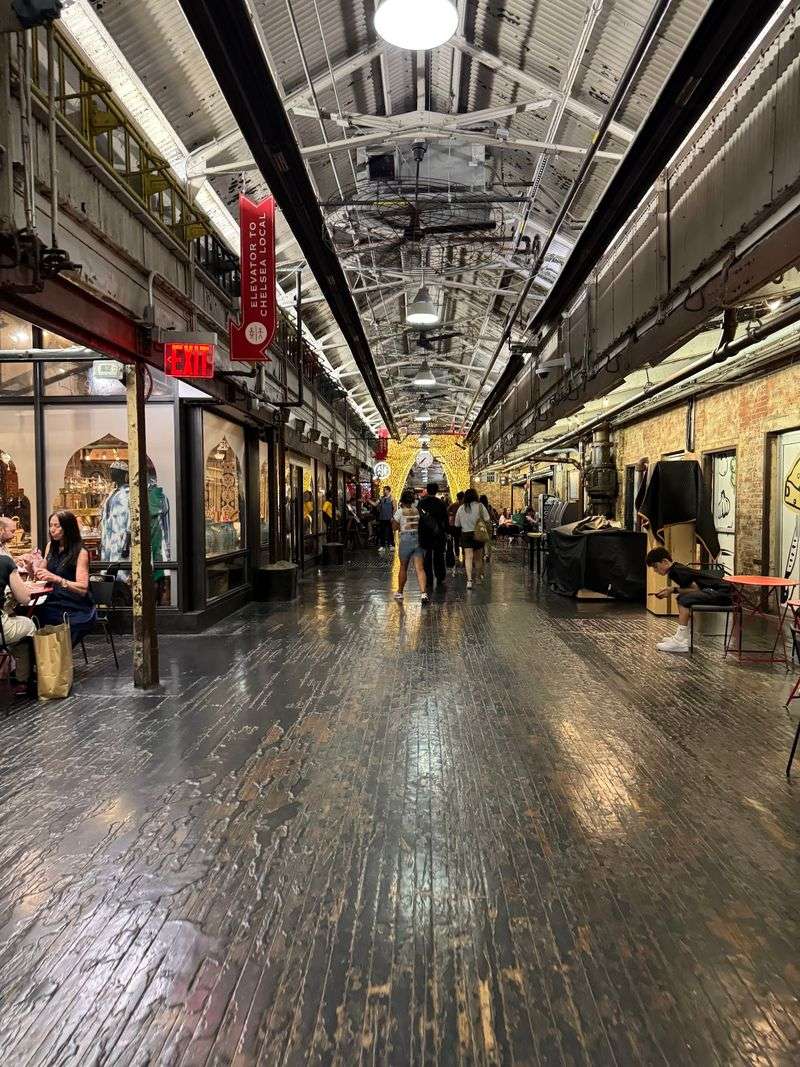
Before Chelsea Market existed, the building made cookies. The National Biscuit Company, later known as Nabisco, operated its factory in this Manhattan block, baking Oreos and other snacks while the Meatpacking District hummed with food and freight activity around it.
The High Line freight railway ran directly past the building, connecting it to the industrial food network that once defined the neighborhood.
Today the reclaimed brick complex houses specialty food shops, restaurants, a seafood market, a wine shop, a cheese counter, and retail businesses spread across a series of interconnected passageways. Chelsea Market draws roughly six million visitors per year, according to the market, making it one of New York’s most visited indoor food destinations.
The building’s industrial bones, exposed brick, old structural columns, and overhead pipes, remain deliberately visible throughout.
Its location directly beneath the High Line elevated park creates a natural visitor loop. People walk the park, descend into the market, eat something spectacular, and head back up.
The crowds can be genuinely overwhelming on weekend afternoons, so a weekday visit rewards patience with shorter lines and a calmer atmosphere. The Lobster Place seafood counter alone is worth planning your schedule around.
Mercato Centrale, Florence, Italy
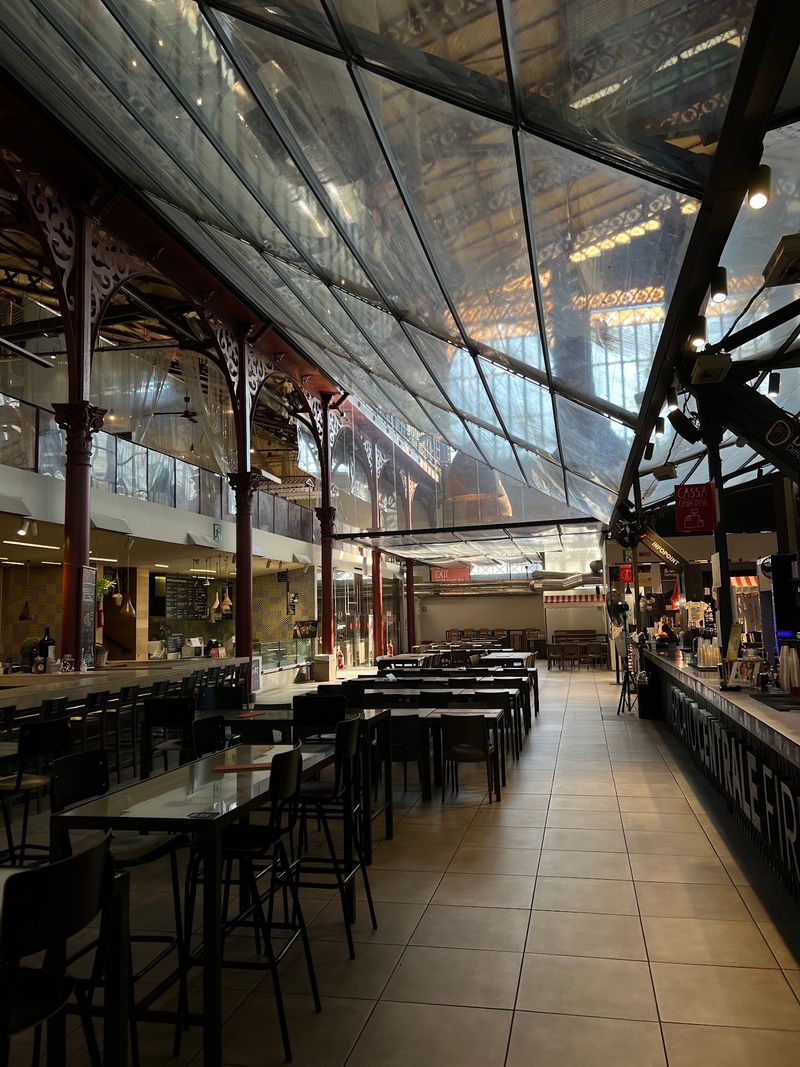
Giuseppe Mengoni, the architect who designed Milan’s famous Galleria Vittorio Emanuele II, also gave Florence this iron-and-glass beauty near the Basilica of San Lorenzo. Opened in 1874 during a period of major urban transformation, Mercato Centrale was inaugurated alongside an international horticultural exhibition, which set an appropriately grand tone for a building that has been feeding Florentines ever since.
The ground floor still operates as a traditional working market, with more than 100 food businesses including butchers, bakers, produce sellers, fishmongers, and delicatessens. The smell of fresh pasta, cured meats, and aged cheese mingles together in a way that feels entirely specific to Florence.
Locals shop here regularly for weekly groceries, keeping the market honest and authentic even as tourism surrounds it.
Upstairs, a modern food hall redevelopment created a tourism-friendly dining space where visitors eat Tuscan pasta, ribollita, bistecca, and other Italian specialties at communal tables. The pairing of a traditional market below and a curated dining hall above makes Mercato Centrale an interesting study in how old and new market cultures can share a single building without canceling each other out.
It is one of the smarter renovations in European market history.
Markthal, Rotterdam, Netherlands
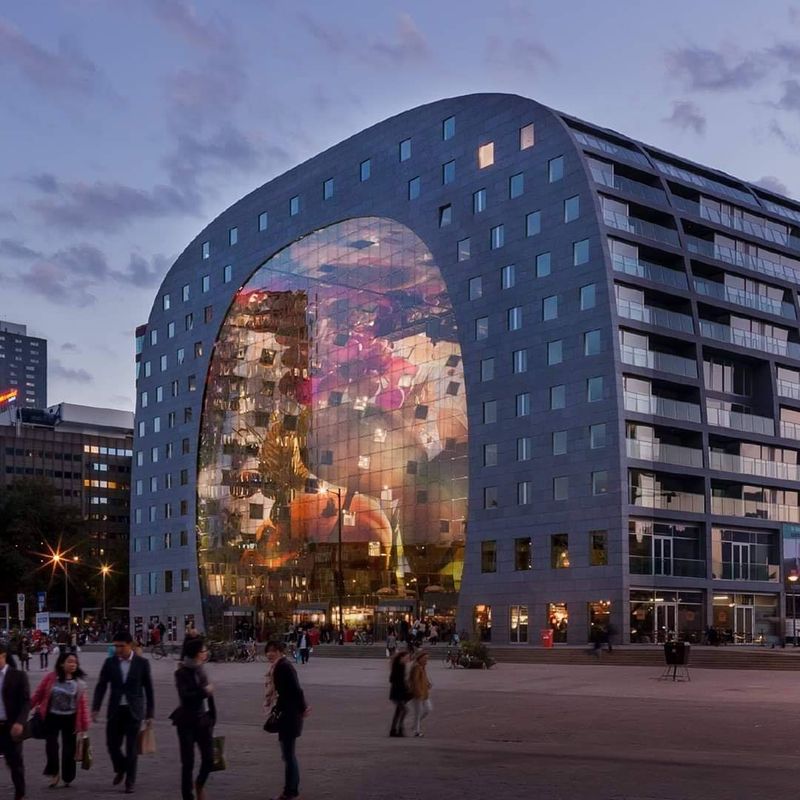
Queen Maxima opened Rotterdam’s Markthal on October 1, 2014, and the building immediately became one of the most talked-about pieces of food infrastructure in Europe. Designed by the architecture firm MVRDV, its horseshoe-shaped arch wraps 228 residential apartments around a covered food market below, creating a hybrid structure that had never quite been tried at this scale before.
The people who live there literally look down at the market from their windows.
The ceiling is the first thing that stops visitors in their tracks. A massive artwork called the Horn of Plenty covers roughly 11,000 square meters of the vaulted interior with giant, colorful depictions of fruits, vegetables, seeds, and insects.
More than 100 food stalls and restaurants operate underneath this visual spectacle, selling Dutch cheeses, fresh produce, baked goods, seafood, and international foods.
Archaeological discoveries made during construction are displayed beneath the hall, adding an unexpected layer of history to one of Europe’s most modern market buildings. Rotterdam rebuilt itself from near total wartime destruction into a city that embraces bold architecture, and Markthal embodies that spirit perfectly.
Even visitors who are not particularly interested in food tend to spend longer inside than they planned, simply because the building itself is so genuinely surprising.
Time Out Market Lisboa, Lisbon, Portugal
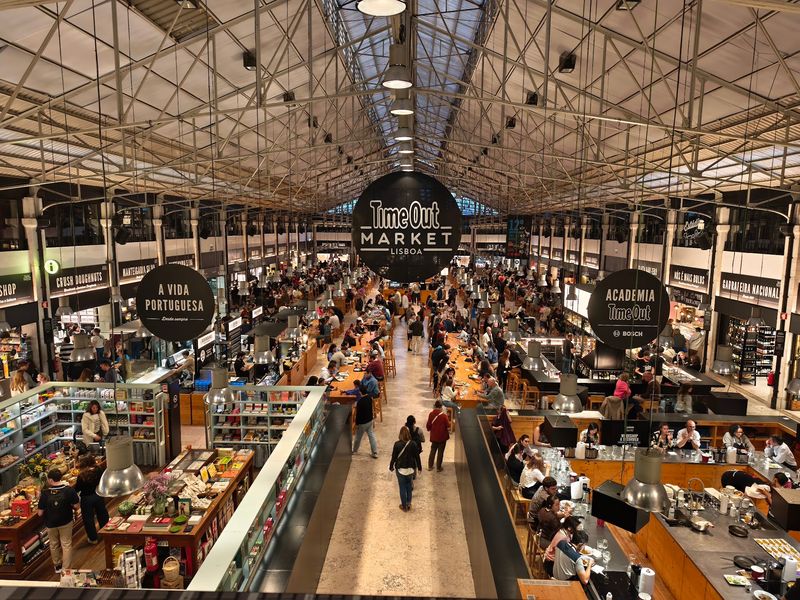
The building that houses Time Out Market Lisboa has been feeding Lisbon since the 19th century, but the market’s current identity arrived in 2014 when the team behind Time Out Lisboa transformed part of the historic Mercado da Ribeira into a curated dining hall. The concept was simple and turned out to be enormously influential: gather the city’s best chefs and food businesses under one roof, selected by editors who actually know the local food scene.
Today the hall contains 26 restaurants, eight bars, around a dozen shops, an events venue, and a cooking academy, all operating inside a building with genuine architectural character. Portuguese classics sit alongside contemporary cooking from chefs who would normally require a reservation weeks in advance.
Sharing a long communal table while eating grilled fish, pasteis de nata, and local wine feels both casual and special at the same time.
Traditional fresh-food trading still survives in a separate section of the Mercado da Ribeira, creating a revealing contrast between an old municipal market and a carefully assembled modern dining destination. Time Out Market Lisboa effectively became the prototype for similar markets the company later opened in other cities worldwide.
Visiting the original feels like seeing the blueprint that changed how food halls are designed and curated globally.
Torvehallerne, Copenhagen, Denmark
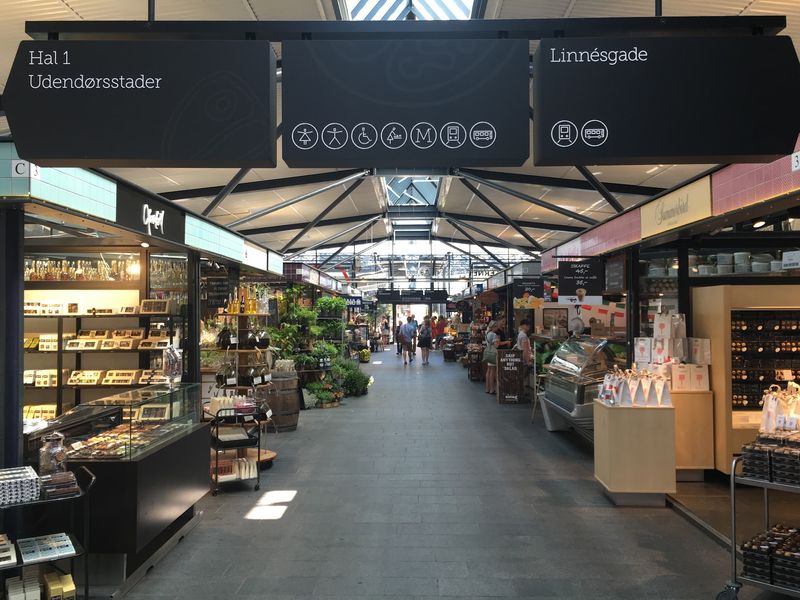
Torvehallerne pulls off something that many modern food halls fail to achieve: it feels equally comfortable for a Copenhagen resident picking up Tuesday groceries and a visitor tasting Danish food for the first time. Located beside busy Norreport Station, the two glass market halls and surrounding outdoor stalls blend fresh produce, specialty groceries, flowers, coffee, cheese, and small restaurant counters into a market that genuinely serves the city it occupies.
Danish open-faced sandwiches called smorrebrod, buttery pastries, porridge topped with seasonal fruit, fresh oysters, and local cheeses all appear among the vendors. The coffee culture here is particularly serious, with several stalls competing for the title of best cup in a city that takes espresso very personally.
On cold mornings, the glass halls trap warmth while vendors pile out seasonal root vegetables and cured fish that look like they were arranged by a food stylist.
Visit Copenhagen describes Torvehallerne as popular with locals and tourists alike, which is exactly the kind of balance that keeps a market feeling authentic rather than staged. Its position beside one of Copenhagen’s main transport hubs makes a quick visit easy to fit into any itinerary.
Budget an hour minimum, because leaving after one pastry is far harder than it sounds.
Share this story